

Business
AT&T: Verizon's 27% Outperformance Sets Up A Solid Entry Point



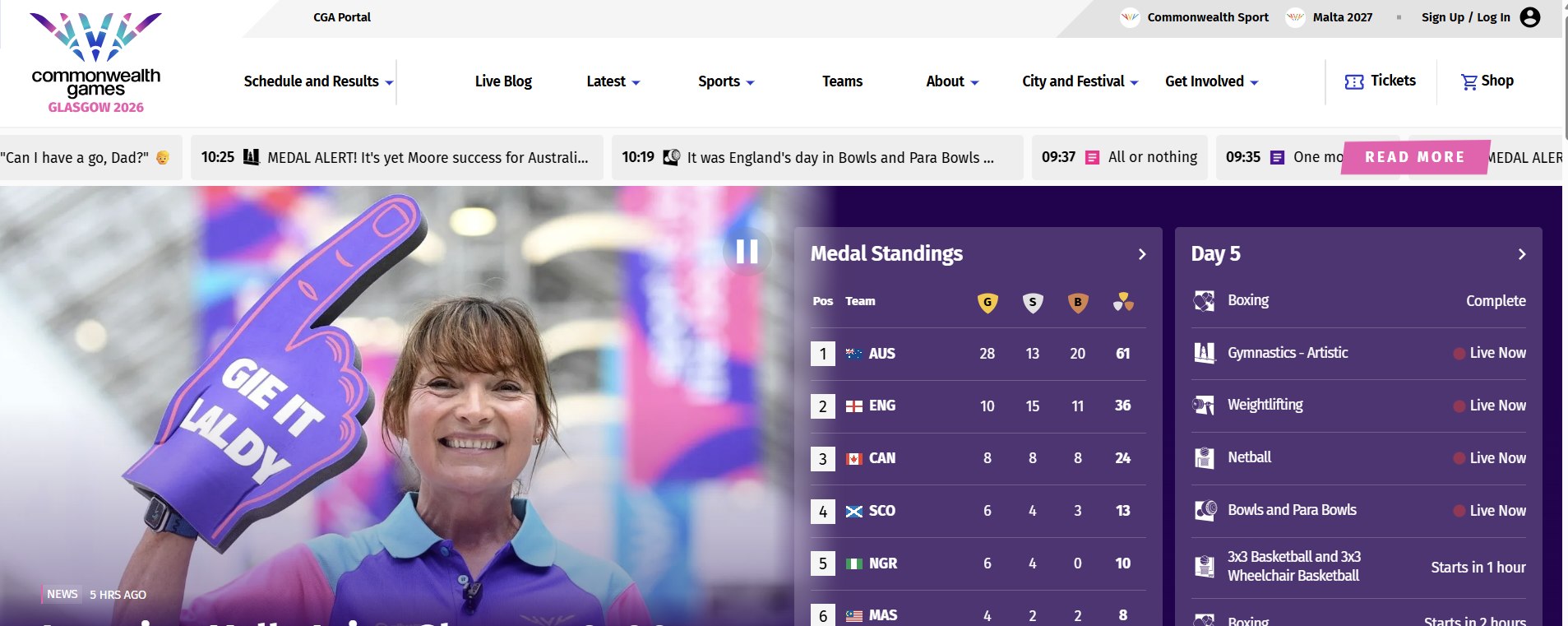
The 2026 Commonwealth Games are underway in Glasgow, Scotland, bringing together athletes from across the Commonwealth of Nations for a 10-day, 10-sport competition that runs through the first weekend of August. Here’s a full breakdown of the schedule, venues and events for this year’s Games.
When and Where the Games Are Being Held
The Glasgow 2026 Commonwealth Games run from Thursday, July 23, when the opening ceremony took place, through Sunday, Aug. 2, 2026, in Glasgow, Scotland. The event marks the fourth time Scotland has hosted the Commonwealth Games, following the 1970 and 1986 editions in Edinburgh and the 2014 Games, which were also held in Glasgow.
Officially known as the XXIII Commonwealth Games, this year’s competition also carries added historical significance. The 2026 Commonwealth Games will be the first to be held since the death of Queen Elizabeth II and the accession of King Charles III as Head of the Commonwealth.
A Scaled-Back but Still Global Field
This year’s Games feature a more streamlined program than previous editions, though the event still draws a substantial international field. The Games are expected to bring together 74 Commonwealth Games Associations and roughly 3,000 athletes competing across 215 medal events in 11 sports total, with competitors representing their nations and territories under their own flags. According to organizers, the athletes will compete across four venues situated within an eight-mile corridor in Glasgow, a compact footprint designed to make the event more accessible and appealing for spectators.
A Streamlined 10-Sport Program
Due to the scaled-back nature of the 2026 Games, several sports that have featured in previous editions were excluded from this year’s official roster, including cricket, hockey, badminton, wrestling, squash and rugby sevens. In their place, organizers built a 10-sport program, including six fully integrated Para Sports, which they describe as featuring the largest-ever Para Sport medal event program in Commonwealth Games history.
Athletics: The Heart of the Games
Athletics remains the centerpiece of the Commonwealth Games program, as it has been since the sport’s introduction at the 1911 Inter-Empire Games, the recognized precursor to the modern Commonwealth Games. Track and field events are being held at Scotstoun Stadium in Glasgow from July 27 through Aug. 1.
This year’s athletics program includes several notable changes from past Games. Out-of-stadium events have been dropped for this edition, but organizers have reintroduced the mile race, branded as the Commonwealth Mile for both men and women, connecting to the sport’s strong Commonwealth tradition, along with the introduction of a new mixed 4×400-meter relay event. A record program of 16 para-athletics events is also being contested as part of this year’s Games.
Tuesday, July 28, marks a particularly high-profile day on the athletics calendar, featuring a showdown among sprinters in the men’s 100-meter heats and semifinals, along with continued competition in the 200-meter and 400-meter events.
Swimming and Aquatics
Swimming remains one of the Games’ most closely watched events, with competition unfolding across the first week of the schedule. Tuesday’s fifth day of competition features notable swimmers including Kyle Chalmers and other top international competitors in the pool, part of an ongoing swimming program that has drawn significant attention throughout the Games’ opening days.
3×3 Basketball
Among the sports carried over from the previous Games, 3×3 basketball is being staged at the SEC Centre in Glasgow between July 24 and 29, marking the discipline’s second appearance at the Commonwealth Games following its debut at the last edition. This year’s competition has been expanded, with the able-bodied tournaments growing to 12 teams each and the wheelchair basketball tournaments expanding to eight teams each, reflecting organizers’ emphasis on the Para Sport program.
Track Cycling
Cycling events will close out the Games’ second week, held exclusively on the track this year rather than including road cycling events as in past editions. Track cycling is being held at the Sir Chris Hoy Velodrome in Glasgow from July 30 through Aug. 2, marking the 22nd appearance of cycling at the Commonwealth Games, with both able-bodied and para-cycling categories contested across the four-day competition window.
Lawn Bowls
Lawn bowls also returns to this year’s program with a notable format change from previous Games. The competition is being held at the SEC Centre from July 24 through Aug. 2, marking the 22nd time bowls has featured at the Commonwealth Games, having appeared in every edition except 1966. This year’s competition is being contested in an indoor format for the first time in the event’s history, alongside a reduced overall program compared with past Games.
Venue Overview
Beyond the venues already mentioned, the SEC Centre in Glasgow is hosting multiple sports simultaneously throughout the Games, including 3×3 basketball, indoor bowls, boxing and judo, reflecting the compact, multi-venue approach organizers have taken to keep the footprint of this year’s event contained within Glasgow’s city limits.
How to Follow the Schedule
Fans looking to track daily events throughout the remainder of the Games can consult the day-by-day schedule published on the official Glasgow 2026 website, which breaks down sessions by sport, venue and time, using local Glasgow time throughout the competition. Broadcast coverage has also been organized to provide what organizers describe as an action-packed schedule spanning each day of competition, given the proximity of the various venues to one another.
With the Games now in their second week, competition continues to build toward its conclusion on Aug. 2, when the final events in cycling, athletics and lawn bowls are scheduled to wrap up, followed by the closing ceremony. Fans following along in the coming days can expect continued high-profile athletics finals at Scotstoun Stadium, medal rounds in 3×3 basketball at the SEC Centre, and the start of track cycling competition at the Sir Chris Hoy Velodrome as the 2026 Commonwealth Games move into their final stretch.
Business
Apple briefly tops $5 trillion in market value, second after Nvidia; unveils iPhone leasing scheme

Shares climbed as high as $342.89, lifting Apple’s valuation to $5.036 trillion. The stock later pared gains, and was trading 0.2% higher at $337.70, giving the company a market capitalisation of about $4.96 trillion.
Apple became the world’s most valuable company earlier this month, overtaking Nvidia, which had held the top spot since June 2025 and was the first company to cross the $5 trillion mark.
Apple’s rally this year has been fueled by strong product demand and its decision to avoid the costly AI spending race that has strained cash flow at Big Tech rivals.
After struggling to develop competitive AI models in-house, Apple turned to Google’s technology to power new services, including a revamped Siri. The approach has helped it avoid the heavy infrastructure costs that have raised investor concerns about returns on soaring data-center investment.

Demand has also benefited from Apple’s decision to keep iPhone prices unchanged last month while raising prices for MacBooks and iPads. Analysts said buyers rushed to purchase its flagship device ahead of expected price increases later this year.
The iPhone maker also launched a US device-leasing program on Tuesday through payments provider Klarna. Monthly payments start at $17.99 for an iPhone, $11.99 for an Apple Watch or iPad and $24.99 for a Mac.”Apple has resisted the AI spending race, betting that customer experience – not infrastructure investment – will ultimately determine the winners,” said Dipanjan Chatterjee, vice president and principal analyst at Forrester.
“The new leasing program is a clever response: it doesn’t reduce the price of an iPhone, but it changes how consumers perceive the cost by replacing sticker shock with a predictable monthly payment.”
Including Tuesday’s gains, Apple shares have risen 24% this year, comfortably outperforming the other six members of the “Magnificent Seven.”
Apple is scheduled to report third-quarter results after Thursday’s market close, with analysts expecting revenue to rise more than 15% from a year earlier.
Apple shares have climbed over 20% in the last one month and 58% over one year.

First Commonwealth Financial Corp stock hits all-time high at 21.41 USD
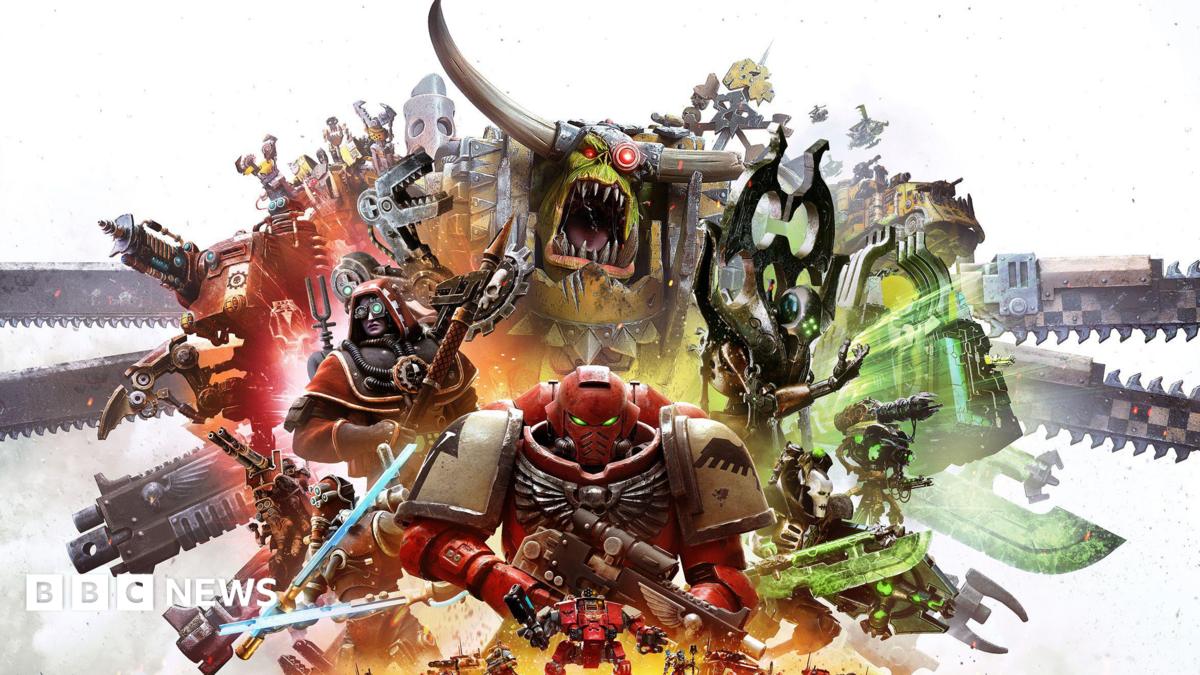
The news about Games Workshop’s screen adaptations came in its annual financial report, external, where it announced record-high results.
It said pre-tax profit was up 4.9% to a record £275.7m for the fiscal year.
Last year, there had been concerns the company’s models, which are manufactured at its headquarters in Nottingham, would be hit by US president Donald Trump’s tariffs.
Chief executive Kevin Rountree said the company had paid about £12m in tariffs, but was able to reclaim £7.8m following a US Supreme Court ruling.
Following changes to US rules, Rountree said, the company expected to pay about £13m in tariffs in the next business year, and would continue trying to boost efficiency to save money.
“Unlike some companies, we do not consider tariffs as an exceptional item, but rather part of the uncertainty of operating globally,” he said.
Rountree also doubled down on Games Workshop’s stance on Gen AI.
He said the company does not use it in “our product design nor on the creation of our IP, this will protect the integrity and ownership of our IP”.
However, he said it was “difficult for us to say we are not using AI outside of the Warhammer studio” because tools appear to be “automatically included in third party software whether we like it or not”.
It was “something we are just going to have to potentially live with and monitor carefully,” he added.

Critics have offered starkly divided reactions to “Spider-Man: Brand New Day,” the fourth Tom Holland-led entry in the franchise, with reviews ranging from enthusiastic praise for the film’s more mature tone to sharp criticism that it fails to deliver on its ambitions. The movie hits theaters July 31, with critic reviews now unembargoed following months of anticipation.
Directed by Destin Daniel Cretton, best known for “Shang-Chi and the Legend of the Ten Rings,” the film follows Peter Parker into a new phase of adulthood after the events of “Spider-Man: No Way Home,” in which the people who love him no longer remember who he is.
Praise for Tom Holland’s Evolution
Several reviewers pointed to Holland’s performance as a clear high point of the film, describing his portrayal as a meaningful evolution from earlier installments. One review from The Northern Rivers Times described the film as a thrilling, emotional and confident return for Marvel’s most popular hero, calling it one of the standout superhero films of 2026 and praising Holland’s performance as arguably his strongest turn as Spider-Man yet, noting that the teenage uncertainty of earlier films has given way to a more mature hero carrying real emotional weight.
RogerEbert.com’s Brian Tallerico offered a similarly positive assessment of Holland’s dramatic range, writing that the actor proves more than capable of handling the shift from what he called “Spider-Boy” toward a fuller “Spider-Man,” even as he found the surrounding film ultimately more transitional than impactful.
A More Grounded, Darker Tone
Multiple reviews highlighted the film’s shift toward a grittier, more grounded aesthetic compared with previous entries in Holland’s run. The film embraces a darker, more grounded tone without sacrificing the humor, heart and exhilarating action that have defined Holland’s Spider-Man, according to one review, a sentiment echoed by DiscussingFilm’s assessment that the movie returns to Spider-Man’s street-level comic roots while still delivering spectacular, largely practical action sequences.
Strong Action, According to Multiple Critics
The film’s action sequences drew consistent praise across several reviews, even from critics who had more mixed feelings about the overall story. DiscussingFilm described the swinging sequences as a shot of adrenaline, highlighting a sequence involving Spider-Man sliding across skyscrapers and shifting in and out of first-person perspective, while noting that a significant portion of the effects appeared to be achieved practically rather than through computer generation.
A More Critical Take From Variety and IndieWire
Not every review was positive, with some prominent critics expressing significant reservations about the film’s execution despite its ambitions. Variety’s chief film critic, Owen Gleiberman, described the movie as a “mature” but arduous adventure that, despite good action, tries too hard, characterizing Cretton’s effort to craft a thoughtful, humane comic-book film as ultimately detracting from its own goals.
IndieWire’s review was considerably harsher, arguing that the film fails to fully capitalize on its premise, framing its story about Peter Parker and MJ overcoming mass amnesia as falling short of a truly satisfying resolution to the franchise’s ongoing arc.
A Story Grappling With Grief and Isolation
Several reviewers focused on the film’s thematic ambitions, noting that it pushes Holland’s version of the character into more emotionally complex territory than previous installments. RogerEbert.com described the film as centering on the classic tension between heroism and difference in a way that feels newly resonant for this version of Peter Parker, one who now understands grief and heartbreak more directly than in earlier films, even as the review noted that the filmmakers seemed hesitant to fully develop some of their strongest ideas.
A Deep Supporting Cast
The film brings back key figures from Holland’s prior Spider-Man films while introducing several notable new additions to the Marvel Cinematic Universe roster. Zendaya returns as MJ, and Jacob Batalon reprises his role as Ned, joined by newcomers including Sadie Sink in a closely guarded role, Jon Bernthal as Frank Castle, also known as The Punisher, Mark Ruffalo as Bruce Banner, Michael Mando returning as Mac Gargan, also known as Scorpion, and Tramell Tillman in a significant supporting role.
Early Social Media Reactions Skewed Positive
Ahead of the formal critic reviews, early social media reactions from those who attended advance screenings were largely enthusiastic, offering a preview of the more positive critical response that would follow for some outlets. One entertainment journalist wrote that watching the film felt like a throwback to the kind of effortlessly charming, entertaining movies that defined an earlier era of the Marvel Cinematic Universe, while another reviewer described Cretton as bringing viewers back to a side of Spider-Man not fully explored since Sam Raimi’s earlier films in the franchise.
Other early reactions specifically praised the film’s emotional ambition, with one described feeling the movie balanced several storylines that ultimately came together effectively, even while acknowledging it could feel overwhelming at points. Another reviewer singled out Sadie Sink’s storyline as particularly weighty within the film’s broader narrative.
Box Office Expectations Are High
Beyond the reviews themselves, industry trackers are projecting a major opening weekend for the film once it debuts in theaters. The film is tracking to have the biggest opening weekend of any movie released in 2026, according to Forbes, positioning it as one of the most closely watched box office events of the year regardless of the mixed critical reception.
With “Spider-Man: Brand New Day” set to open in theaters Thursday, July 31, audiences will soon have the chance to weigh in on a film that has already generated a notably wide range of critical opinion, from those who see it as a genuine evolution for Holland’s Spider-Man to others who view it as an overstuffed, occasionally frustrating entry in an increasingly crowded franchise. Whether the film’s box office performance ultimately aligns with its high pre-release tracking numbers may hinge on how audiences respond to the more mature, grief-focused direction that has divided critics ahead of its release.

Stock exchanges BSE and NSE are introducing the system for stocks with F&O contracts. It is a structured trading window held at the end of the trading day. During this period, market participants place buy and sell orders to determine a single closing price for a security through an auction-based mechanism.
Kamath explained that this is not a new concept globally, as major exchanges including the New York Stock Exchange (NYSE) and London Stock Exchange (LSE) already use versions of a closing auction to determine closing prices. “Today, the closing price of a stock in India is based on the volume-weighted average price of trades during the last 30 minutes. Under CAS, buy and sell orders will instead be collected and matched at a single equilibrium price,” the Zerodha CEO said in a post on X.
The change is aimed at addressing two issues, according to Nithin Kamath. First, passive funds tracking indices have to execute large orders near the end of the day to match the closing price, and these orders can move prices while they are being executed, increasing tracking error. This will likely be resolved through the CAS system.
Secondly, large orders placed in the final few minutes can disproportionately influence the closing prices of stocks and, in turn, the indices they are part of, Kamath noted. Since CAS pools all orders and matches them at a single price, influencing the close becomes harder, he added.
Also read | Should investors increase allocation to small, midcaps? Motilal Oswal Private Wealth explains why
Different market timings for what you are trading
The Zerodha CEO highlighted that this means that the Indian stock market will now see three different market end times depending on what the investor is trading. Stocks with F&O contracts will stop continuous trading at 3:15 pm and move into CAS, while all other stocks will continue trading until 3:30 pm. Index and stock F&O contracts meanwhile will trade until 3:40 pm.
“Now that broking is listed and people are looking more closely at the business, the honest bit: this will probably knock off some revenue, perhaps around 1–5% of brokerage income,” he said, adding that the more immediate challenge however would be explaining why different parts of the market now appear to close at different times. “We’re braced for the flood of questions,” he said.
Things get a little more complicated from Monday, August 3.
Exchanges are introducing a Closing Auction Session, or CAS, for stocks with F&O contracts. This isn’t a new concept globally. Major exchanges such as the New York Stock Exchange (NYSE) and London Stock Exchange (LSE)… pic.twitter.com/8kMSyv72xr
— Nithin Kamath (@Nithin0dha) July 28, 2026




 ETPrime Membership














Stories you might be interested in
Business
McDonald’s Stock Rises 2% as Investors Position Ahead of August 4 Earnings Amid Broader Blue-Chip Rally

McDonald’s Corp. shares climbed Tuesday, rising 2.27% to $276.80, adding $6.15 as the fast-food giant benefited from a broader rally among traditional blue-chip stocks even as its own earnings report remains a week away.
The gains came as part of a strong session for the Dow Jones Industrial Average, which climbed alongside several consumer-facing companies reporting strong quarterly results, even as investors positioned ahead of what is expected to be a closely watched earnings report from McDonald’s on Aug. 4.
A Key Earnings Date on the Horizon
McDonald’s is scheduled to announce its second-quarter 2026 earnings before the market opens on Tuesday, Aug. 4. Ahead of that report, analysts expect the company to post a profit of roughly $3.33 to $3.34 per share on a diluted basis, up between 4.4% and 4.7% from the $3.19 per share reported in the same quarter a year earlier. Consensus revenue estimates for the quarter stand near $7.14 billion to $7.16 billion, reflecting growth of approximately 4.3% to 4.6% year over year.
Expectations for a Slowdown in Comparable Sales
Despite the anticipated earnings growth, analysts are bracing for a notable deceleration in one of the company’s most closely watched metrics heading into the report. Management has signaled a meaningful deceleration in comparable sales from the first quarter’s 3.9% pace, driven largely by a tough comparison against last year’s Minecraft-themed Happy Meal promotion, which drove unusually strong performance in April 2025. KeyBanc has projected U.S. same-store sales growth of just 0.5% for the quarter, well below the broader consensus estimate of 1.1%, citing softer trends across the broader restaurant industry.
Low-Income Consumer Pressure Remains a Concern
A persistent theme in recent analyst commentary has centered on how McDonald’s core customer base is responding to ongoing economic pressures. Recent executive commentary and transaction data indicate a structural pullback from households earning under $45,000, suggesting that the brand’s historical positioning as a value leader is not fully insulating it from broader shifts in discretionary spending. Consumer confidence has weakened amid persistent inflation and elevated gas prices, squeezing the lower-income households that form a core part of McDonald’s customer base.
A Difficult Stretch for the Stock in 2026
Tuesday’s gains offer a bright spot in what has otherwise been a challenging year for McDonald’s shareholders. The stock is down roughly 7.9% since the beginning of the year, trading well below its 52-week high of $341.06 set in February 2026, a decline of nearly 20% from that peak. The stock has also touched a new 52-week low in recent weeks, driven by weak customer traffic and rising costs.
A Wave of Price Target Cuts From Wall Street
Several major Wall Street firms have trimmed their price targets on McDonald’s stock in the weeks leading up to the earnings report, even while largely maintaining bullish overall ratings. UBS analyst Dennis Geiger lowered the firm’s price target on McDonald’s to $340 from $365 while keeping a Buy rating on the shares. Other firms followed a similar pattern, including BTIG, which cut its target to $350 from $370, Citi, which lowered its target to $335 from $375 ahead of the earnings report, Deutsche Bank, which reduced its target to $325 from $350, and Evercore ISI, which lowered its target to $320 from $350. Despite the wave of target reductions, the average analyst rating on the stock has remained a “Buy,” with a 12-month price target implying meaningful upside from recent trading levels.
Other Headwinds Cited by Analysts
Beyond consumer spending pressures, analysts have flagged additional challenges weighing on McDonald’s outlook heading into the report. Ongoing boycotts related to Middle East conflicts continue to negatively impact the company’s International Developmental Licensed segment, with management signaling that these regional pressures will likely persist through the remainder of the fiscal year. Sector-specific minimum wage hikes in key domestic markets, particularly California, are also forcing defensive pricing strategies that risk further alienating price-sensitive customers.
Focus Areas for the Upcoming Report
Investor attention heading into next week’s report is expected to center on several specific areas of McDonald’s business beyond the headline sales and earnings figures. Investor attention will center on margin resilience, the performance of the new McValue platform, and early results from the McCafé beverage expansion, according to one earnings preview. U.S. company-operated margins have underperformed expectations in recent quarters, prompting management focus on operational improvements and potential refranchising strategies.
A Long Track Record of Dividend Growth
Despite the near-term challenges, McDonald’s has maintained one of the most consistent dividend track records in the restaurant industry, a factor some investors point to as a stabilizing force for the stock. The company’s board of directors declared a quarterly cash dividend of $1.86 per share, payable on Sept. 16, 2026, continuing a streak that reflects 50 consecutive years of dividend increases, a run that management has pointed to as demonstrating the company’s long-term financial stability even amid near-term operational headwinds.
Full-Year Targets Remain in Place
Despite the anticipated near-term deceleration in comparable sales, McDonald’s has continued to stand by its broader financial targets for the year. Full-year 2026 financial targets have been reaffirmed by the company, with foreign currency expected to contribute between 20 and 30 cents to earnings per share for the year, alongside continued focus on expanding the company’s value platform and beverage offerings, including a new partnership tied to the FIFA World Cup.
With McDonald’s earnings report now just about a week away, investors are likely to treat the coming days as a positioning window ahead of what could be a pivotal update on how the company’s core low-income customer base and value-menu strategy are performing amid a challenging consumer spending environment. Given the string of price target reductions from major Wall Street firms even as overall ratings remain positive, the Aug. 4 report is expected to serve as an important test of whether McDonald’s can demonstrate margin resilience and stabilizing traffic trends, or whether the concerns already reflected in analysts’ lowered price targets will be validated by the company’s actual results.

The charge reflected higher engineering costs associated with delivering two delayed US presidential aircraft in 2028 and contributed to a second-quarter net loss of $428 million.
The aircraft maker’s shares rose 5% in midday trading despite the Q2 loss, as investors focused on improving production and stronger cash flow. Its core loss of 76 cents per share was wider than analysts’ estimate of a 30-cent loss but narrower than the $1.24-per-share loss recorded a year earlier, according to LSEG data.
Boeing generated $631 million in free cash flow, reversing a $200 million outflow in the second quarter of 2025, partly due to stronger-than-expected customer payments. The company maintained its full-year free cash flow forecast of $1 billion to $3 billion, which would mark its first positive annual result since 2023, as it ramps up production of its best-selling 737 MAX jets.
Boeing also lifted capital spending year-on-year in the quarter, mainly to expand 787 production in South Carolina and military jet output near St. Louis, Missouri. It is separately working to deliver two 747-8 jets as Air Force One under a $3.9 billion fixed-price 2018 contract — now four years late and over $1 billion above budget. President Donald Trump has meanwhile been using a Qatari-donated 747-8 in the role, though he said this month it would soon be pulled for upgrades over security concerns, according to a Reuters report.
Also Read | Coca-Cola shares surge 7% as earnings beat lifts outlook
Meanwhile, Boeing is raising monthly production of its best-selling 737 MAX jets from 42 to 47 aircraft, a crucial step in its financial recovery after years of crises left the company with nearly $26 billion in net debt and damaged its reputation.
The aircraft aims to increase output to 52 jets a month by early next year and eventually reach 57. CEO Kelly Ortberg said hitting the final target would require stronger supplier performance and a smooth ramp-up in key areas, including 737 wing assembly.
For the 787, Ortberg said GE Aerospace’s engine deliveries remain the biggest constraint on Boeing’s goal of producing 10 aircraft a month. Boeing is working with GE on a recovery plan after engine shipments fell behind schedule during the first half.

S&P 500 climbs as investors await tech earnings

President Donald Trump told “Fox & Friends” on Tuesday that tariffs imposed by his administration have made the U.S. “a fortune.”
President Donald Trump defended his administration’s tariffs on Tuesday ahead of November’s midterm elections, telling “Fox & Friends” in an interview that they are bringing “a fortune” into the United States.
Trump made the remark as his administration is set to impose new tariffs of 10% and 12.5% on imports from 60 trading partners beginning Friday as a temporary global tariff expires.
“Are you worried that the tariffs that you put forward over the last couple of days will hurt the economy as they adjust in bringing manufacturing home?” the president was asked by host Brian Kilmeade.
“No, because it’s bringing hundreds of billions of dollars,” Trump responded. “I was at General Motors yesterday. They have the best year. They have the most trucks, the most cars. The tariffs have saved General Motors. What I’ve done to the auto business, what I’ve done to the chip business. We have chip companies now making, building hundreds of billions of dollars worth of chip plants in Arizona.”
TRUMP ADMINISTRATION UNVEILS NEW TARIFFS ON 60 TRADING PARTNERS AS TEMPORARY DUTIES EXPIRE

President Donald Trump delivers remarks at General Motors’ Milford Proving Ground in Milford, Michigan, on Monday, July 27, 2026. (Brendan Smialowski/AFP via Getty Images)
“We are going to end up with 40 to 50% of the chip business from nothing in a year and a half from now,” the president added.
Trump also said, “It’s a shame that I have to go a harder way for the tariffs because the Supreme Court, in a very close decision, you know, ruled against me.”
The Supreme Court in February had struck down Trump’s “reciprocal” tariffs of 10% to 50% that were imposed last year. In response, Trump implemented a temporary 10% global tariff under Section 122 of the Trade Act of 1974 that expires at 12:01 a.m. ET Friday.
The Office of the U.S. Trade Representative announced Thursday that the new tariffs, imposed under Section 301 of the Trade Act of 1974, will take effect immediately after the temporary duties expire.
TRUMP UNVEILS PHASED TARIFFS ON GENERIC DRUGS TO BOOST US PRODUCTION

President Donald Trump delivers remarks on reciprocal tariffs during an event in the Rose Garden in 2025. (Brendan Smialowski/AFP via Getty Images)
Canada, Mexico, India and the United Kingdom are among the trading partners that will face a 10% tariff. Taiwan and the European Union, meanwhile, are slated to face a 12.5% tariff.
“Now I have other ways of doing the same thing. But it’s a more cumbersome process, you know, the way of doing it. But the tariffs have made this country a fortune,” Trump said. “It made the country rich. And I stopped eight wars, I would say five of them because of tariffs. The threat of tariffs stopped India and Pakistan from going into a nuclear war. The threat of tariffs stopped numerous other countries from going to war. These tariffs — it’s the greatest thing. And only the really smart people or the people that are nonpolitical and that get it, talk about it. The Democrats know how good it’s been.”
“We have the hottest car business. We’re right now building more car plants than at any time in our history. Toyota just left Mexico. They’re building, they just announced, they’re building a $12 billion worth of plants in the United States,” Trump said. “All because they want to avoid tariffs. They have no tariffs if they build their product here.”
The Trump administration has decided not to extend the U.S.-Mexico-Canada Agreement (USMCA) and will instead pursue independent trade deals with Canada and Mexico.

President Donald Trump makes an announcement on American nuclear innovation in the Oval Office at the White House on July 24, 2026, in Washington. (Eric Lee/Getty Images)
CLICK HERE TO READ MORE ON FOX BUSINESS
When asked Tuesday if he was looking to update the USMCA, Trump said: “I don’t care. I mean I don’t really want to, I’d rather have, I’d rather be independent. Here’s the thing. Mexico and Canada need us. We don’t need them. The deal is important for them. It’s not important for us.”
FOX Business’ Michael Sinkewicz, Eric Revell, Edward Lawrence and Sophia Compton contributed to this report.

Claude: Build Financial Dashboards in Minutes (2026)

Tom Bateman spotted filming Netflix thriller The Woods in Bolton

Dates, Sports and Venues for Glasgow’s 10-Day Event in Scotland


-

 Fashion4 days ago
Weekend Open Thread: Brooks Brothers
-
 Business7 days ago
New Jersey voter registration controversy explained: How 6,600 noncitizens got on the rolls, and what happens next
-

 Tech2 days ago
Intel is reversing course and bringing hyper-threading back to its server chips
-
 Sports2 days ago
Commonwealth Games boxing: Jadumani Singh seals dominant 5-0 win over Pakistan’s Sumama Rehman to enter quarter-finals | Commonwealth Games News
-

 Crypto World6 days ago
Ethics, other provisions in crypto Clarity Act to be further discussed
-

 Politics1 day ago
Luke Littler dismantles Gerwyn Price to retain title in Blackpool
-

 Sports5 days ago
2026 3M Open leaderboard: Scottie Scheffler finds putter in Round 1, sits three back
-

 Fashion5 days ago
16 Dresses for the High Summer Event
-

 Politics11 hours ago
The Part of the Electric Transition Nobody Wants to Discuss
-

 News Videos5 days ago
The Peugeot Family: How 200 Years of an “Old Money” Dynasty Died in A Boardroom
-

 Politics2 days ago
Spain sweeps the board at 2026 World Cup with individual awards
-
 Entertainment4 days ago
A New Post-Apocalyptic Gundam Anime Series Blasts Into SDCC
-

 News Videos2 days ago
BITCOIN JUST ENTERED THIS CRITICAL ZONE…
-

 Crypto World3 days ago
Ripple bought a bank in pieces. The $4 billion audit
-

 Crypto World3 days ago
XRP Ledger adds $2.6B as RWA inflows rank second
-

 Crypto World5 days ago
Uniswap (UNI) pushes deeper into tokenized RWAs with permissioned trading pools
-

 Tech4 days ago
Anthropic launches Claude Opus 5, a cheaper AI model for coding, agents and enterprise workflows
-

 Entertainment3 days ago
Sara Gilson Killed By Husband After Viral “Pedophile” TikTok Video
-

 Crypto World7 days ago
Sablier Labs Enters Maintenance Mode, Halts Development
-

 Business5 days ago
Alliance Entertainment Holding Corporation (AENT) Discusses Evolution Into Omnichannel Distribution and Fulfillment Platform for Media and Collectibles Transcript
You must be logged in to post a comment Login