The Lenzing Group has announced plans to cease production at its Grimsby lyocell manufacturing facility by the end of 2027 as part of a global restructure, putting 215 jobs at risk
21:13, 29 Jul 2026Updated 21:14, 29 Jul 2026
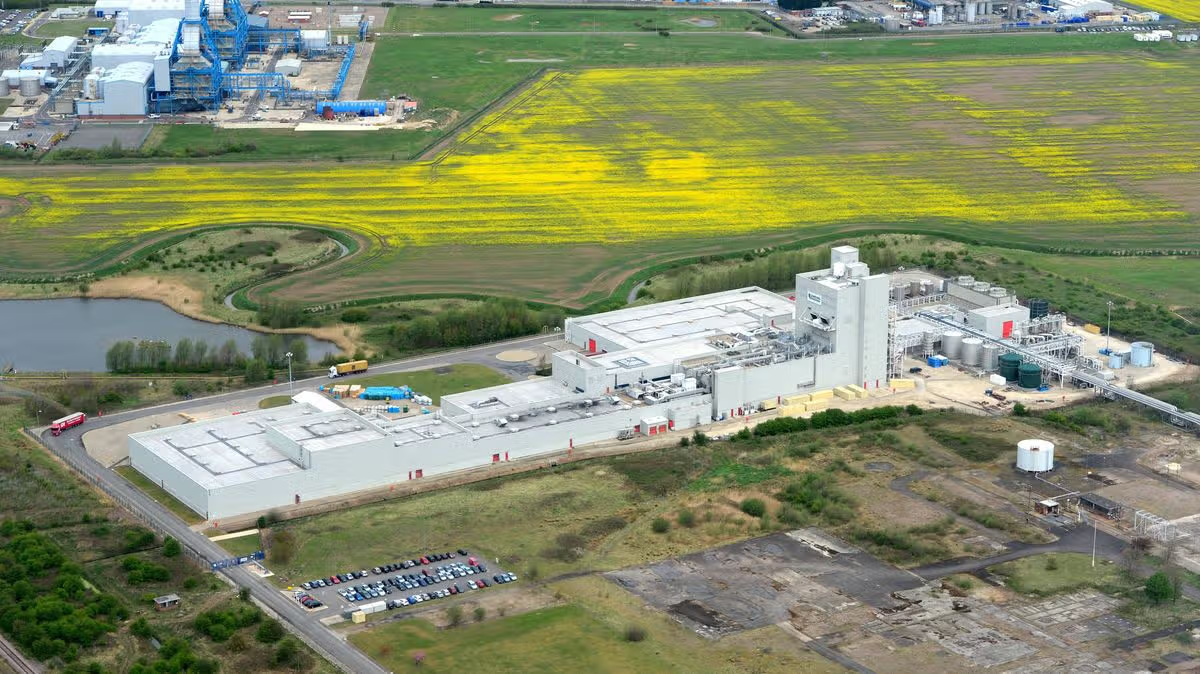
An aerial view of the Lenzing Fibres Grimsby plant(Image: Grimsby Telegraph/Pom Flying Club Ltd)
The owners of a major Grimsby employer have unveiled plans to halt production by the end of next year as part of a worldwide restructure, placing more than 200 jobs under threat.
The Lenzing Group is headquartered in Lenzing, Austria, and operates sizeable production facilities and offices in the US, China, Indonesia and at Grimsby’s Energy Park Way.
Lenzing’s manufacturing plant in Grimsby specialises in producing lyocell – a contemporary, plant-based textile made from wood pulp, widely recognised in the clothing industry under the brand name Tencel. However, group executives have announced proposals to close the facility by the end of 2027 as part of efforts to reduce its overall footprint.
The company says it will explore “strategic options” for the Grimsby plant and other affected sites in Austria and Indonesia, including their potential sale to new owners “or other value-preserving solutions”. Lenzing has confirmed that 215 people are employed at the site.
Shutting the facility would bring to a close nearly 30 years of manufacturing in the region, having originally opened under Courtaulds Fibers in 1998. Its global leadership team in Austria announced the closure as part of a new “Grow Nonwovens, Reset Textiles” strategy, which the company says has been devised to safeguard its long-term future.
Lenzing confirmed: “As part of its transformation and product portfolio optimsation, Lenzing is consolidating its fiber production footprint alongside the ongoing sale process of the Indonesian viscose site, PT South Pacific Viscose. In addition, Lenzing plans to phase out production at its fiber plants in Heiligenkreuz, Austria by end of 2026 and in Grimsby, UK by end of 2027,” reports Grimsby Live.
Georg Kasperkovitz, chief executive of the Lenzing Group, said: “With “Grow Nonwovens, Reset Textiles”, Lenzing is taking decisive steps to reposition the company for long-term success in a fundamentally changing market environment. By combining a streamlined premium product portfolio, improved competitiveness and a strong proprietary innovation pipeline, we are creating the foundation for profitable growth and a more focused, resilient Lenzing.”
He added: “At the same time, this transformation will strengthen our main production site in Lenzing, Austria, and support a sustainably profitable and competitive future for the site. In parallel, Lenzing is evaluating strategic options for the affected sites, including potential divestment or other value-preserving solutions.
“Should no viable outcome be achieved, Lenzing plans to implement a structured and orderly wind-down, with a strong focus on safety, supply reliability, and continuity for customers, as well as social and environmental responsibility. For affected employees in Grimsby, Lenzing will engage with employee representatives and relevant stakeholders regarding appropriate support and mitigation measures.”
The consolidation proposals follow Lenzing having already cut 267 jobs across several sites so far this year, generating annual savings of €25m. The company stated its plan “is designed to improve competitiveness, profitability and return on invested capital, positioning Lenzing for long‐term growth in higher‐value markets” and to “better serve the needs of brands and retailers in Western and Asian markets even better”.
Lenzing’s global headcount is anticipated to be reduced by approximately 2,000 positions by the end of next year, having employed around 8,100 members of staff at the close of 2025. The company confirmed the cuts will “primarily affect employees at the aforementioned sites in Heiligenkreuz (Austria), Grimsby (UK), and Purwakarta (Indonesia).”
The announcement is set to deliver a devastating blow to the region’s manufacturing sector, arriving five years after Lenzing Fibers Grimsby ploughed a reported £20m into a new waste water treatment plant at the site.
The company’s most recent accounts, for 2024, reveal turnover fell from £117m to £107m, though the previous year’s loss of £1.7m was turned around into an operating profit of £19m. Directors pointed to robust demand for its products while cautioning that cost pressures remained an ongoing concern.
A spokesman for Lenzing said: “Around 215 employees work at the Grimsby site. Lenzing will engage with employee representatives and relevant stakeholders regarding appropriate support and mitigation measures for the affected persons. At this point, it is too early to make definitive statements about the transition of employees within the business.”






















































You must be logged in to post a comment Login