
Crypto World
Tether Expands AI push with Lead Role in NEURA Robotics Raise

Tether is leading a funding round of as much as $1.4 billion for German tech company NEURA Robotics, deepening the stablecoin issuer’s push into artificial intelligence and robotics.
The round, which values NEURA at roughly $7 billion, is expected to include a mix of strategic and financial investors. Tether said it is leading the raise through its investment arm, which deploys capital from the company’s profits and excess reserves across sectors including AI, energy and digital infrastructure.
NEURA said it expects to integrate Tether’s Wallet Development Kit into its robotic systems, enabling machines to receive payments and execute transactions within predefined parameters. The companies also plan to deploy Tether’s QVAC AI runtime, which is designed to run models directly on devices rather than through cloud-based infrastructure.
Tweet from Paolo Ardoino, CEO of Tether. Source: Tether on X.com
Founded in 2019 and headquartered in Metzingen, Germany, NEURA Robotics develops humanoid robots, robotic arms, autonomous mobile robots and other AI-powered systems for industrial and commercial applications. It is building an ecosystem called Neuraverse, a software platform intended to connect robots, AI models, data and services.
The investment follows reports from November 2025 that Tether was considering a 1 billion euro ($1.15 billion) investment in the company. The Financial Times reported at the time that the deal could value the tech maker at between $9.3 billion and $11.6 billion, though neither company confirmed the discussions.
Today’s announcement did not disclose how much money Tether is contributing to the current funding round.
Related: Tether, Georgia plan lari-backed stablecoin GELT under new rules
Tether expands AI and payments push
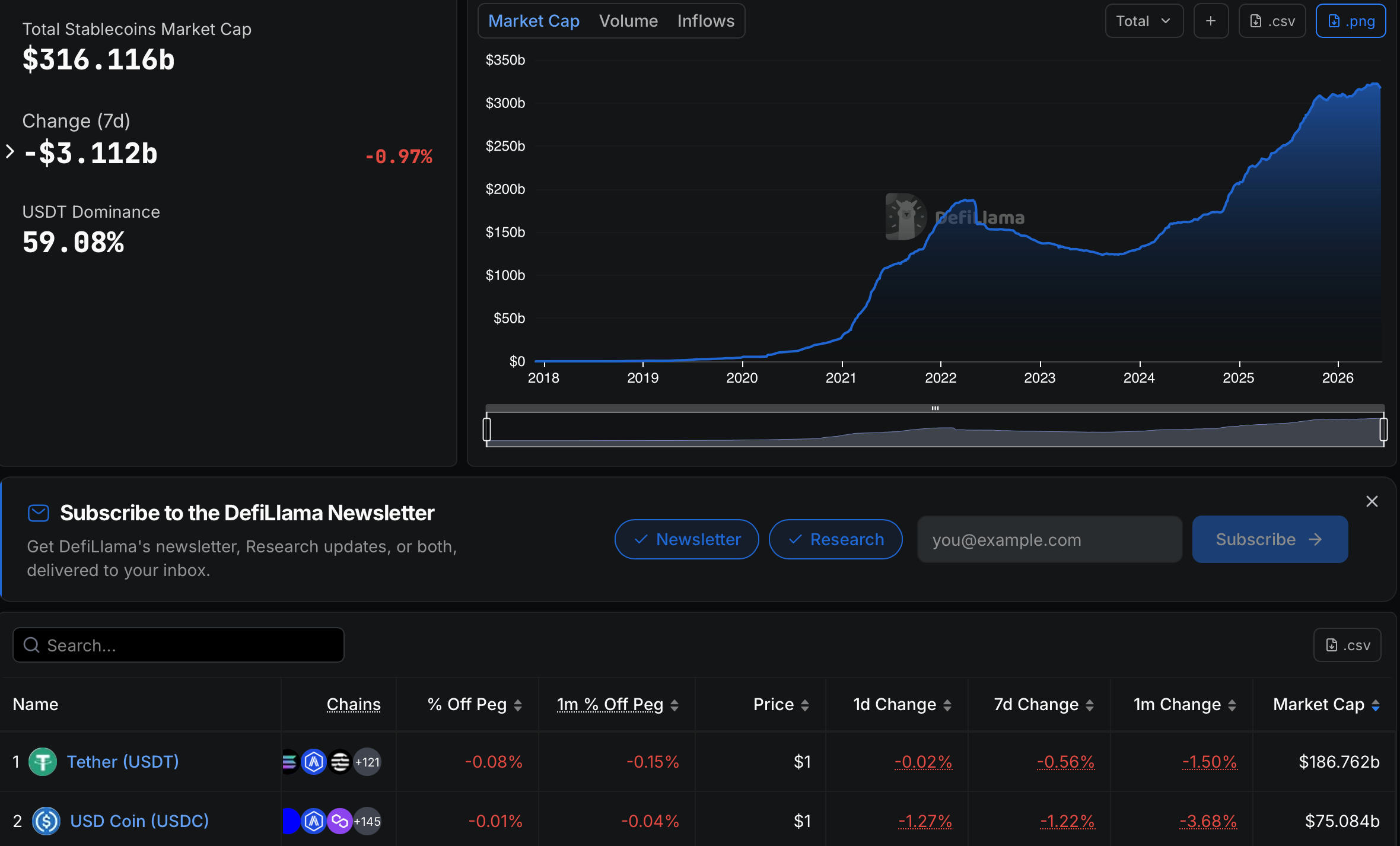
The NEURA investment is part of Tether’s broader push beyond stablecoins into artificial intelligence, payments and emerging technologies. The company reported $1.04 billion in net profit during the first quarter of 2026 and said its excess reserves reached a record $8.23 billion, providing additional capital for investments outside its core USDT (USDT) business.
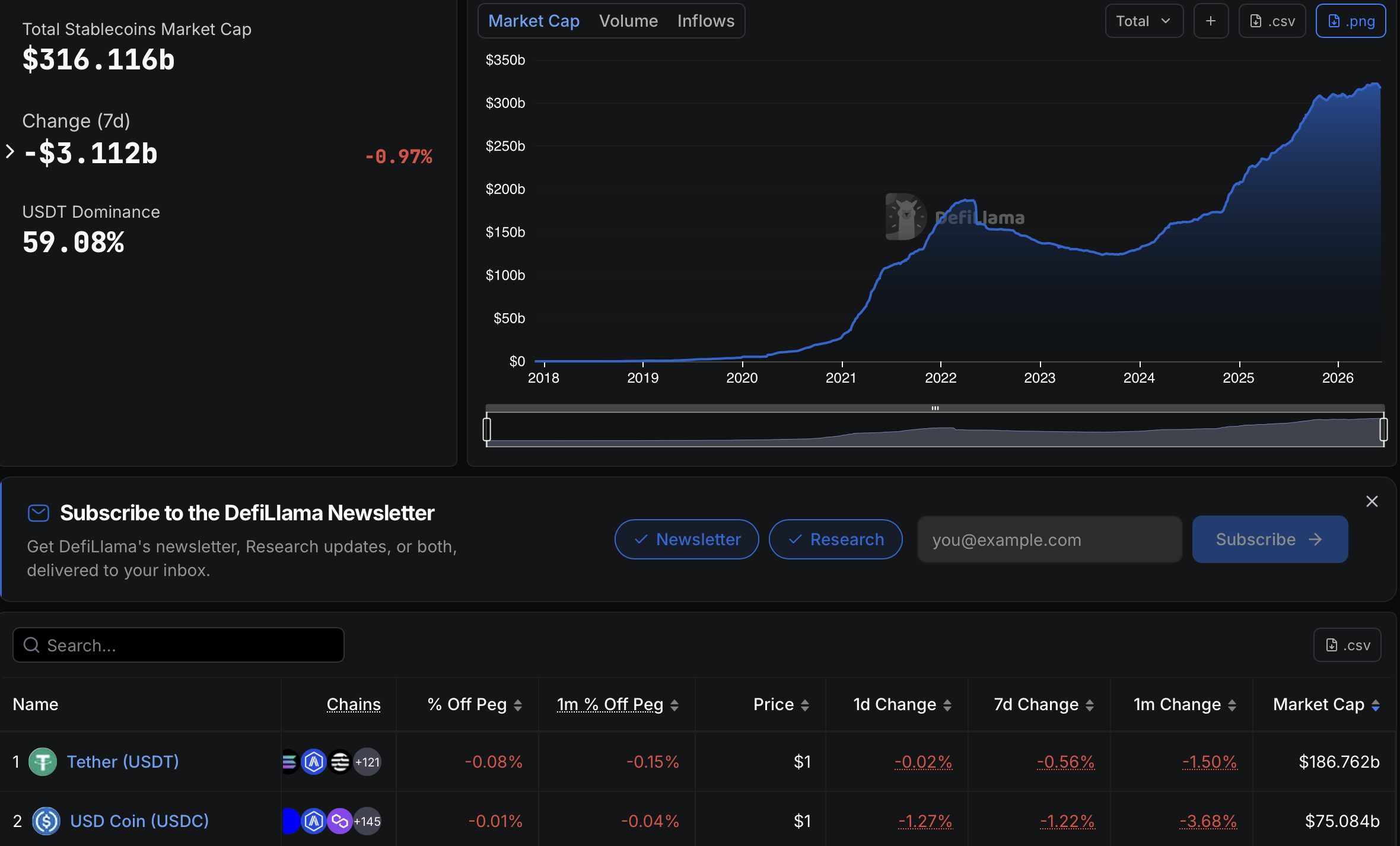
Source: DefiLlama
In recent months, Tether has accelerated its push into AI through its QVAC platform. In March, the company introduced a training framework that enables AI models to be trained and run on consumer hardware, including smartphones and non-Nvidia chips. Two months later, it unveiled QVAC MedPsy, a family of medical AI models designed to run directly on smartphones and other devices rather than through cloud-based infrastructure.
The company has also sought to expand the ecosystem around its technology stack. In May, Tether launched a grants program to fund developers building local-first AI and payment applications using its open-source tools, including QVAC and its Wallet Development Kit.
In a January 2025 interview, CEO Paolo Ardoino said AI-powered humanoid robots could become commonplace within the next decade as advances in computing and automation reshape the workforce.
Tether issues the $187 billion USDT stablecoin, which controls roughly 59% of the global stablecoin market, giving it one of the largest balance sheets in the digital asset industry.
Magazine: Kraken’s $600M stablecoin firm, Huione scandal deepens: Asia Express

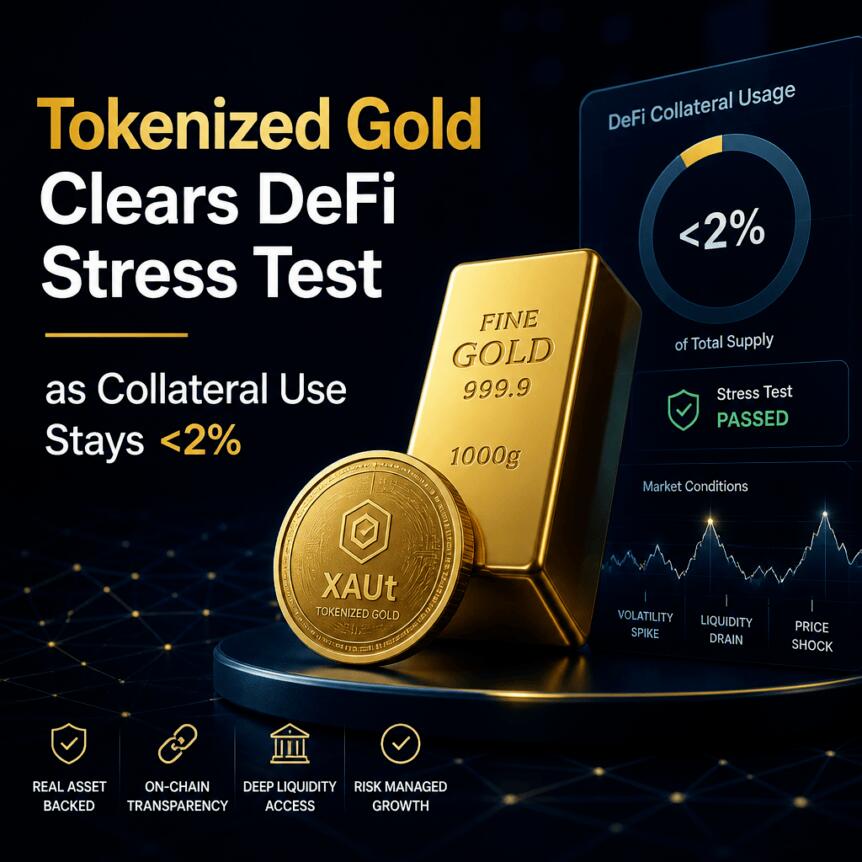
Tokenized gold has seen a surge in trading this year as physical bullion reached record levels, but most of the “on-chain” gold supply still isn’t being actively used inside DeFi. A new report by RedStone points to a clear bottleneck: only a small portion of tokenized gold is showing up as collateral in major lending protocols such as Aave v3 and Morpho.
RedStone reports that tokenized gold spot trading volume hit $90.7 billion in the first quarter, during a period when gold futures rallied to above $5,600 per troy ounce. Yet only about $63 million worth of Tether Gold (XAUT) and PAX Gold (PAXG) is currently posted as collateral on Aave v3 and Morpho—roughly 1.5% of the combined $4.2 billion market capitalization of those tokens.
Key takeaways
- Tokenized gold trading is already large, with $90.7 billion in spot volume in Q1, but on-chain DeFi usage remains limited.
- Only about $63 million of XAUT and PAXG is deployed as collateral on Aave v3 and Morpho—around 1.5% of the tokens’ combined value.
- RedStone highlights resilience under stress: Aave processed its largest cluster of XAUT liquidations without disruption on March 23.
- Gold’s drawdown—futures down more than 26% since January—has reduced demand for non-yielding assets, even as tokenized gold remains actively traded.
- The main remaining challenge for tokenized gold is not performance in DeFi, but scaling collateral adoption across protocols.
Trading is surging, but DeFi collateral is lagging
The contrast between trading activity and collateral deployment is at the center of RedStone’s assessment. Despite strong market interest in tokenized bullion, the share actually put to work in lending markets is small.
According to the report, $63 million of XAUT and PAXG combined is being used as collateral on Aave v3 and Morpho, while the tokens collectively represent $4.2 billion in market capitalization. That means a large majority of tokenized gold is moving in spot markets without translating into deeper composability—at least within the two lending venues RedStone analyzed.
RedStone frames this as an adoption gap rather than a liquidity or reliability issue. In other words, the question is less “can tokenized gold operate in DeFi?” and more “why isn’t more of it being used as DeFi collateral?”
March’s liquidation test showed it can hold up
One reason tokenized gold continues to attract attention is that it has already faced a real stress scenario in DeFi. RedStone notes that on March 23, Aave handled its largest cluster of XAUT liquidations without disruption during a sharp downturn in gold.
The liquidation wave followed a painful move in the underlying commodity. RedStone ties the event to a period where gold fell 10% over the previous week—described by JPMorgan precious metals strategist Greg Shearer as an “extremely brutal flush.”
Earlier that week, gold’s broader sell-off reflected macro pressure: expectations for higher US interest rates reduced the appeal of non-yielding assets like precious metals. Cointelegraph previously reported that gold’s digital rally mirrored rising stress around the US dollar and interest-rate expectations, underscoring how quickly the commodity complex can shift.
From an investor or DeFi participant’s perspective, this matters because collateral reliability is foundational. If tokenized bullion fails to function during volatility, protocols would face operational risk and potentially forced deleveraging. RedStone’s takeaway is that, at least in that test, the system held.
Gold’s macro headwinds haven’t vanished
Even with a strong start to the year, gold has continued to face rate-driven headwinds. RedStone notes that gold futures have declined by more than 26% since peaking in January.
The decline aligns with the broader logic that higher expected US rates can make it harder for non-yielding assets to compete. That dynamic helps explain why the commodity market can generate both volatility and skepticism—even as tokenized versions of the asset continue to draw trading interest.
For tokenized gold, the implication is straightforward: DeFi collateral won’t exist in a vacuum. When gold moves aggressively, the tokenized form must be liquid enough and operationally stable. RedStone’s March example is a reminder that performance during stress may be improving, but it doesn’t guarantee automatic growth in collateral usage.
Why collateral adoption remains the bottleneck
RedStone’s report emphasizes that tokenized gold’s next hurdle is broader DeFi adoption. Proven resilience helps, but scaling requires more than technical compatibility. It also depends on incentives, protocol support, and user demand for borrowing and leverage against tokenized RWA collateral.
The tokenized real-world assets (RWA) market has been expanding beyond gold. RedStone points to a growing ecosystem that includes areas such as private credit and tokenized US Treasurys paired with equities. Token Terminal previously reported that the sector topped $43 billion in value.
At the same time, centralized crypto exchanges are rapidly building on-ramps for tokenized assets as they attempt to bridge traditional finance and digital markets. CoinGecko data (as reported by Cointelegraph) described an emerging “crypto TradFi” market reaching $6.6 billion as of June, suggesting that distribution and access for tokenized products are improving.
That backdrop raises a key question that investors may want to track: if tokenized assets are easier to access through centralized channels, why hasn’t that translated into proportionally higher DeFi collateral usage—at least in the specific tokens and protocols RedStone cited? The report doesn’t offer a single cause, but the data clearly shows the gap.
Going forward, the most important thing for readers to watch is whether tokenized gold’s demonstrated ability to function under volatility leads to meaningful increases in collateral deployment across DeFi lending platforms—especially as the sector continues to grow and as commodity-driven volatility returns.


Leopold Aschenbrenner, the founder of hedge fund Situational Awareness, has seen his leveraged positions liquidated following a swift downturn in AI stocks.
Aschenbrenner, a former member of Sam Bankman-Fried’s FTX Future Fund team, launched his fund in 2024 and ran it up 1,000% by May this year.
However, CNBC reported Thursday that Situational Awareness had suffered “heavy losses,” needed cash for margin calls, and was consulting with investment bankers for the possibility of an orderly wind-down.
By midday, the Wall Street Journal reported that Ken Griffin’s Citadel had bought “the bulk of its stock portfolio.”
The fund was allegedly up 439% net of fees from January 1, 2026 through June 30 per a July 24 investor letter the FT cited. Then July happened.
Aschenbrenner had borrowed money to upsize his AI bets, including Sandisk, Nebius Group, and SharonAI Holdings that have each lost at least 30% during the month of July.
Leverage that multiplies gains on the way up does the same to losses on the way down. Holding a 3x leveraged portfolio in just those three stocks this month would have wiped out to $0.
Although Aschenbrenner gained notoriety for his outperforming AI bets prior to July, before he borrowed money for stock trading, he sat on the five-person team running the FTX Future Fund.
It was an effective altruism grant-making vehicle. Bankman-Fried funded it largely himself, partially using money that prosecutors proved he misappropriated from FTX customers.
Aschenbrenner joined at the vehicle’s launch in February 2022 but resigned on November 10 that year, one day before FTX filed for bankruptcy.
Another effective altruist needs more money
Aschenbrenner’s FTX Future Fund collapsed alongside FTX and Alameda Research after prosecutors exposed Bankman-Fried’s fraud.
“We were a tiny team, and then from one day to the next, it was all gone and associated with a giant fraud,” Aschenbrenner told the Dwarkesh Podcast.
After ending work with FTX’s effective altruism in 2022, Aschenbrenner went to work for OpenAI’s Superalignment team.
However, by April 2024, OpenAI had fired him over a disputed data leak. He turned the ousting into a viral manifesto, Situational Awareness.
He launched a fund of the same name with a few hundred million dollars.
Read more: FTX-funded charity Effective Ventures to shut down in the UK
The mark-to-market valuation of his hedge fund was certainly impressive prior to this month. Situational Awareness grew starter capital into an alleged $20 billion worth of assets by June, based on fleeting highs in AI stocks last month.
That valuation is nothing close to what investors in Situational Awareness will actually receive if they tried to withdraw today.
Buying Anthropic just like SBF taught him
Like Bankman-Fried taught him, Aschenbrenner bought a stake in AI company Anthropic, which grew to be worth roughly one fifth of Situational Awareness’ assets.
Concentrated allocations plus leverage can create outsized returns on the way up and equally outsized losses during downturns.
Situational Awareness was an investor in major AI stocks, includingin SK Hynix’s US listing. Those ADR shares closed Wednesday about 15% below their US offering price.
Aschenbrenner’s investor letter admitted the fund had “not been immune” to the swings, particularly in Asia, per the Financial Times. Yet he insisted the selloff had created attractive buying opportunities.
Aschenbrenner previously claimed to have allocated almost all of his personal net worth invested into his own fund. Now, after another crash, the ex-FTX philanthropist is asking for more money.
Situational Awareness’ latest SEC report of its US holdings disclosed names as of March 31, 2026. The filing listed 42 positions worth $13.7 billion. The next 13F lands in mid-August, and it will specify the precise drawdown in July.
Got a tip? Send us an email securely via Protos Leaks. For more informed news and investigations, follow us on X, Bluesky, and Google News, or subscribe to our YouTube channel.


U.S. Treasury Secretary Scott Bessent has urged senators to vote immediately on the CLARITY Act, increasing pressure on lawmakers to test support for the crypto market structure bill before the August recess.
Summary
- Bessent demanded that the Senate vote “NOW” on the CLARITY Act.
- Disputes over ethics enforcement and the BRCA provision continue to block a bipartisan agreement.
- Polymarket traders place the bill’s chance of becoming law in 2026 at about 26%.
- A negotiated ethics package could determine whether Democrats support advancing the legislation.
Bessent demands an immediate CLARITY Act vote
Bessent called on Senate leaders to bring the CLARITY Act to a vote before lawmakers leave Washington next week. In a post on X, he accused Democrats of resisting the legislation because they fear opposition from Sen. Elizabeth Warren and what he described as her “anti-crypto army.”
The Treasury secretary said Senate Majority Leader John Thune would test that theory in the coming days by forcing lawmakers to state their positions. He framed the bill as a choice between supporting US leadership in digital assets and allowing other countries to move ahead with clearer regulations.
“Will Senate Democrats be on the side of American Exceptionalism, or will they opt to cede American leadership of a global industry for fear of the bespectacled squirrel’s Left flank?”
His intervention comes as the Senate faces a narrowing legislative calendar. Thune previously said the chamber might begin the floor process before the recess but acknowledged that there may not be enough time or votes to pass the legislation during the current session. As such, missing the pre-recess window could reduce the bill’s chances of becoming law in 2026.
Ethics and BRCA disputes threaten bipartisan support
Two provisions remain central to the negotiations: restrictions involving elected officials’ crypto interests and the Blockchain Regulatory Certainty Act, or BRCA.
Some Democrats have objected to language that gives the Department of Justice sole authority to enforce the ethics provisions. They want state attorneys general and other prosecutors to have enforcement powers rather than leaving oversight entirely to the federal government.
Republican Sen. Thom Tillis is expected to send a bipartisan ethics proposal to the White House. Approval from the Trump administration could remove one obstacle and help Senate leaders attract the Democratic votes needed to advance the bill.
Republicans hold 53 Senate seats but would likely need support from at least seven Democrats to clear the chamber’s 60-vote threshold. The House passed its version of the CLARITY Act in July 2025 by a 294–134 vote, including support from 78 Democrats.
Bessent defends protections for crypto developers
Bessent also rejected claims that the BRCA language would weaken authorities’ ability to pursue money laundering and other financial crimes. The provision seeks to clarify when developers of non-custodial blockchain software must register as money transmitters.
“The Blockchain Regulatory Certainty Act — which Washington lobbyists have spun up as a boogeyman for certain groups of prosecutors and law enforcement — does nothing other than codify longstanding Treasury Department policy that’s remained consistent across Administrations,” Bessent wrote.
He argued that developers who do not take custody of customer assets have not traditionally faced registration requirements under the Bank Secrecy Act. Prosecutors remain concerned that broadly written exemptions could limit their ability to bring cases against software providers connected to illicit transactions.
Law enforcement support has nevertheless increased after revisions to the bill. The National Fraternal Order of Police reversed its earlier opposition, saying its concerns had been addressed while investigators retained the tools needed to pursue crypto crime. The Major Cities Chiefs Association has also backed the revised legislation.
Prediction-market odds fall as the recess approaches
Traders remain skeptical that the CLARITY Act will become law this year. Polymarket priced the probability at about 30% on July 30, with roughly $3 million wagered on the outcome. The odds had reached 82% in February before falling as negotiations stalled and the Senate calendar tightened. Polymarket data also showed traders narrowly favoring an eventual Senate vote total above 50.
Bitcoin, meanwhile, traded near $64,767 after moving between $63,252 and $65,040 during the day. The muted response indicates that traders are not yet treating Bessent’s demand as evidence that passage is secured.
For US investors and crypto businesses, the stakes extend beyond the immediate vote. The legislation is intended to divide oversight responsibilities between the SEC and CFTC while setting federal requirements for digital-asset intermediaries. Failure to reach an agreement would leave companies operating under the existing mix of agency actions, court decisions and state rules.
The next test is whether the White House accepts the negotiated ethics package and whether Thune schedules a procedural vote before the recess. Without enough Democratic support, Bessent’s demand may force senators to record their positions without moving the bill closer to final passage.
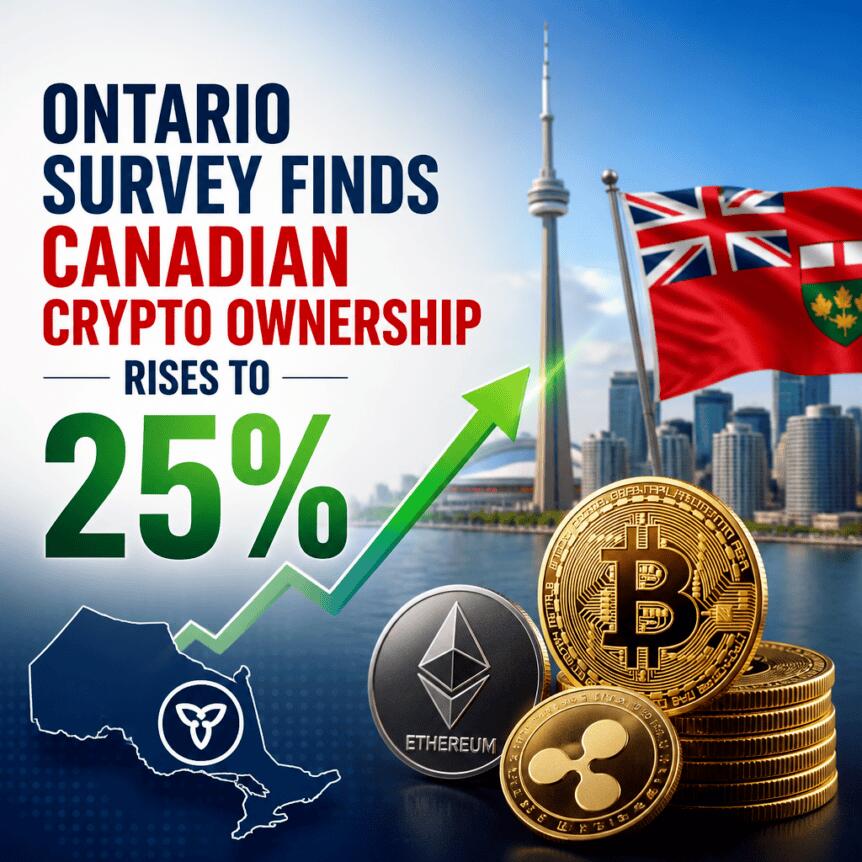
Canadian crypto participation is rising quickly, according to fresh research from the Ontario Securities Commission (OSC). The regulator’s latest survey suggests that the share of Canadians who own cryptocurrencies has climbed to 25% in 2026, up from 10% in 2023—an expansion that also coincides with broader awareness of crypto assets.
The OSC released the findings Tuesday, based on a poll of 2,360 Canadians aged 18 and over conducted between December 2025 and January 2026. The study found that 59% of respondents said they are aware of crypto assets, while 25% reported that they currently hold cryptocurrencies.
Key takeaways
- The OSC survey reports crypto ownership has reached 25% in 2026, compared with 10% in 2023.
- Awareness increased alongside ownership, with 59% of respondents indicating they know about crypto assets.
- About half of crypto owners said they check whether a platform is registered before using it.
- Despite growing caution, the OSC found widespread confusion about regulation, insurance protections, and transaction capabilities.
Ownership and awareness move upward
The OSC’s survey points to a clear jump in both familiarity and direct engagement with crypto. In 2026, a majority of respondents—59%—reported awareness of crypto assets, while one-quarter said they hold cryptocurrencies.
That shift matters for regulators because it implies crypto is moving from a niche activity toward mainstream consumer behavior. As more Canadians participate, investor protection issues typically become more urgent, particularly around how users choose platforms, understand risk, and interpret what protections (if any) apply when assets are held or transacted through a service.
OSC executive vice president of strategic regulation Naizam Kanji said the regulator expects “emerging trends and behaviors” to help it anticipate opportunities and risks, with the goal of supporting investor protection while fostering fair and efficient markets.
Checking registrations—alongside continuing misunderstandings
One of the more actionable details in the OSC findings is how some users evaluate platforms. The survey indicates that about 50% of crypto owners reported checking whether a platform is registered prior to using it.
However, the report also suggests that heightened awareness does not necessarily translate into a correct understanding of the rules that govern crypto activity in Canada. The OSC said many respondents still had “some misunderstanding” around key issues—namely regulation, insurance protections, and transaction capabilities.
For investors, this mix of behavior is significant. Register checks can be a useful step, but misunderstanding the practical meaning of registration—or assuming protections exist where they do not—can expose users to avoidable losses. The OSC’s results imply that more effective education and clearer disclosures may be needed, even as adoption rises.
How Ottawa’s crypto proposals fit the trend
The OSC’s survey lands amid ongoing policy debate in Canada about the appropriate ways to regulate different crypto-related activities. According to the report, lawmakers in Ottawa have been considering measures tailored to how cryptocurrencies are used in practice.
Earlier this year, the federal government advanced a bill that could prohibit political donations made using crypto. The government also proposed banning crypto ATMs, citing concerns about scams and money laundering. Taken together, these proposals highlight a broad regulatory theme: as crypto use grows, authorities are focusing not just on trading and custody, but also on high-risk channels that can enable fraud.
While the OSC survey focuses on awareness, ownership, and user understanding, Ottawa’s legislative direction underscores a parallel concern among policymakers—reducing harm where crypto intersects with consumers and enforcement challenges.
What to watch next for Canadian investors
The OSC’s data suggests that Canada’s crypto base is expanding while gaps in consumer understanding remain. The most important question for users and market participants is whether regulators will translate these survey insights into clearer requirements, better consumer education, and more targeted enforcement—especially in areas where misunderstanding could lead to financial harm.
As the next rounds of research and policy developments emerge, Canadians should pay close attention to how platform registration is communicated in practice, what protections users can realistically expect, and which services regulators move to restrict or supervise more tightly.
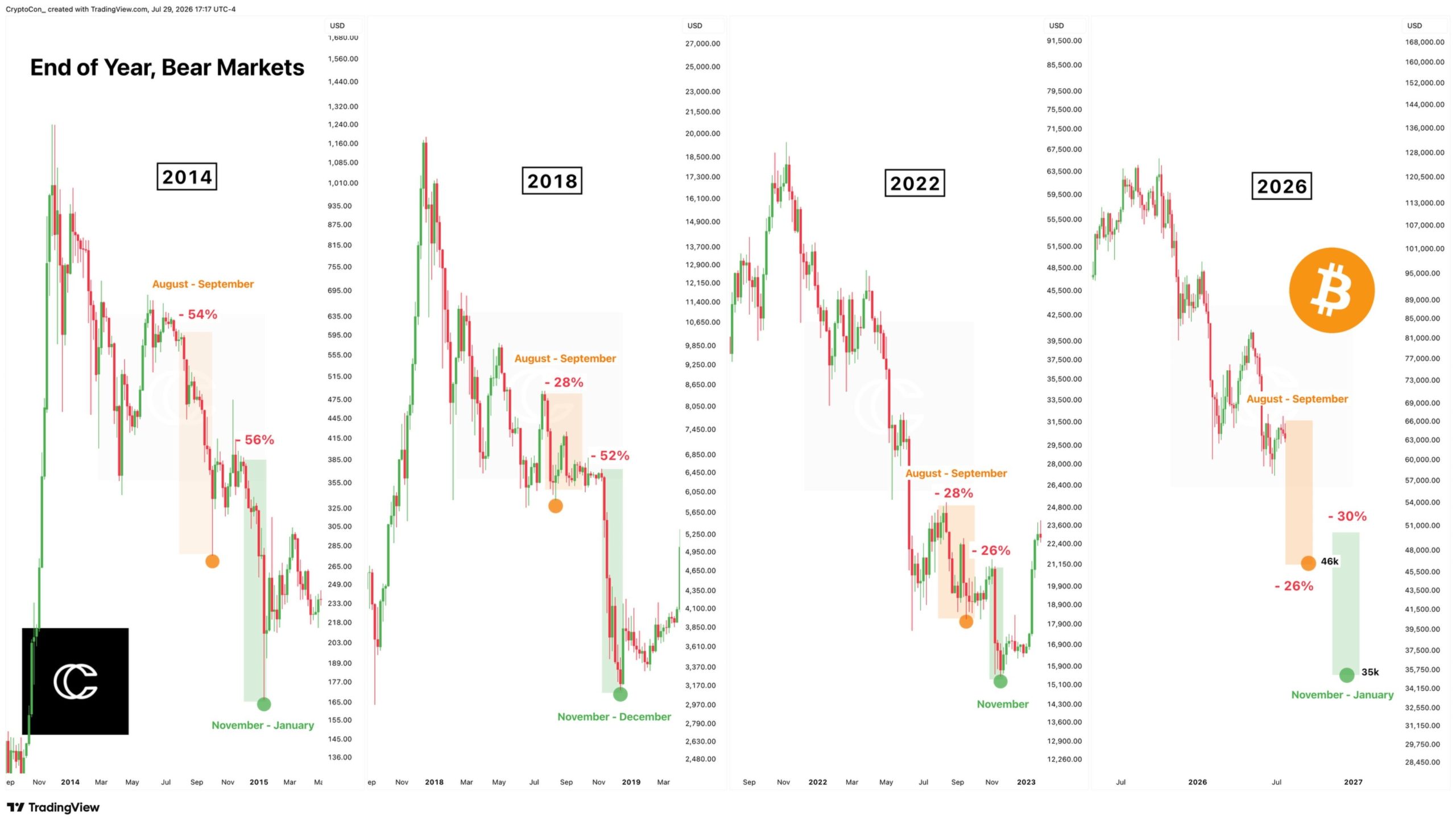
Bitcoin (BTC) trades near $64,000, roughly 49% below its October 2025 record of $126,000. Seasonal patterns from three past cycles now point to one Bitcoin final bear leg before a cycle bottom.
However, several on-chain metrics already sit at levels that marked previous generational lows. The clash between seasonal history and holder behavior will likely define the next six months for BTC.
Seasonal Roadmap Points to $46,000, Then Perhaps $35,000
Analyst CryptoCon mapped the closing months of the 2014, 2018, and 2022 bear markets against the current cycle. August and September delivered the first leg down in each case, with losses of 54%, 28%, and 28%. His projection for 2026 assumes a 26% drop to roughly $46,000.

History then adds a second, harsher leg. November through January produced declines of 56%, 52%, and 26% in past cycles. A repeat worth 30% would drag BTC near $35,000 by early 2027.
The first target aligns with earlier BeInCrypto research. A regression on shrinking final-quarter drawdowns pointed to a bottom between $44,000 and $47,000 by October. Benjamin Cowen’s recent memo reached a similar zone near $44,000.
Meanwhile, the deeper $35,000 target lands almost exactly on the 0.618 logarithmic Fibonacci level at $34,722. Even the chart’s author admits the roadmap faces resistance from on-chain data. CryptoCon wrote on X:
“It will be interesting to see how this clashes with the current building bullish divergence and some long-term metrics which are already at cycle bottom levels.”
Holder Cost Basis Compression Has Not Finished Yet
The first on-chain answer comes from the cost basis structure of Bitcoin holders. Analyst therationalroot tracks the ratio between short-term and long-term holder cost bases. Historically, every generational bottom formed when this ratio compressed to one.
The convergence points circled on the chart match the 2015 lows, the 2018 to 2019 trough, and the late 2022 capitulation. In each case, the average entry price of recent buyers fell to the level of veteran holders. Seller exhaustion followed, and accumulation phases began.

Today, the ratio falls quickly but remains above one. This supports the case for a few more months of downside, in line with the seasonal roadmap. The long-term holder cost basis also sits near $40,000, historically a magnet for final lows.
Furthermore, each cycle prints lower ratio peaks. The same dampening effect appears in the shrinking drawdowns, another sign of a maturing market.
Long-Term Holders Already Absorb More Than Miners’ Issue
Glassnode’s Long-Term Holder Market Inflation Rate measures annualized accumulation against daily miner issuance. Negative readings mean patient investors absorb more coins than miners create. The metric has stayed negative through most of 2026.
Similar readings appeared near every previous bear market floor. The deepest trough hit minus 0.15 in early 2019, while the 2022 lows reached about minus 0.06. In contrast, the current reading near minus 0.02 shows quieter but steady absorption.

Fidelity recently highlighted the same cohort, noting that long-term holder supply reached a record high. However, today’s accumulation remains milder than past capitulation troughs. A deeper buying wave into Q4 would therefore fit the historical pattern rather than break it.
Post-halving issuance is also close to zero on this scale. Holder behavior now dominates net supply, which helps explain why each bear ending grows shallower.
Price Temperature Already Reads Like a Bitcoin Final Bear Leg
The Bitcoin Price Temperature (BPT) delivers the strongest argument against $35,000. The oscillator measures how many standard deviations price sits above its four-year moving average. It currently reads near zero, with BTC hugging the long-term mean around $60,000.
Every prior cycle bottom formed in this temperature zone. The lows of 2015, 2019, March 2020, and late 2022 all printed near zero or slightly below. On this basis, Bitcoin already trades at bottom-grade valuations.

A decline to $46,000 would push the temperature to about minus one. That depth matches the undershoots of March 2020 and December 2022 almost exactly. However, $35,000 would demand the deepest undershoot since 2015, a stretch for a maturing market.
Peak temperatures keep falling as well, from 10 in 2017 to seven in 2021 and 3.5 in 2024. Three separate metrics now confirm the same dampening of Bitcoin’s cycles.
Bitcoin Final Bear Leg: What to Watch Into Q4 2026
The timing signals agree, while the depth remains contested. Seasonal history, cost basis compression, and valuation bands all point to a bottom window in Q4 2026. Three methods converge between $44,000 and $47,000, and only the seasonal extension argues for $35,000.
Traders may watch three triggers from here. The holder cost basis ratio touching one, a deeper accumulation trough, and a weekly close below $44,000 would each sharpen the picture. Until then, short-lived bounces toward $65,000 deserve caution rather than chase.
This framework is an analysis, not financial advice. Historical patterns can break, and macro shocks could still push Bitcoin outside every model discussed here.
The post Bitcoin’s Final Bear Leg: History Says $35,000, On-Chain Data Disagrees appeared first on BeInCrypto.

Aave is deprecating 50 low-adoption asset reserves across its lending markets and winding down its deployments on six blockchains.
In a July 30 post on X, founder Stani Kulechov noted that the move touches $98.1 million in supply and $15.6 million in debt and comes wrapped in two new internal rulebooks meant to keep the protocol from carrying assets nobody is really using.
Aave Commences Plan to Offboard Low Activity Reserves
“Aave is deprecating 50 low adoption asset reserves across multiple deployments,” Kulechov wrote, also citing an orderly wind-down of Aave deployments on Sonic, Scroll, zkSync, Metis, Soneium and Aptos, affecting another 25 asset reserves. He added that 21 matured Pendle PT tokens would also be retired in favor of new maturities as part of the overhaul.
According to implementation notes alongside the announcement, risk management firm LlamaRisk and Aave service providers recommended removing several inactive Aave V3 reserves together with six complete market deployments. Those positions account for $85.3 million in supplied assets and $11.5 million in debt.
The six blockchain deployments scheduled for retirement hold $12.8 million in supply and $4.1 million in debt. On Ethereum, the biggest chunk of the list is two Bitcoin liquid-staking wrappers, FBTC and eBTC, whose combined deposits have fallen from roughly $72 million six months ago to about $16 million now.
Several bridge tokens, including USDC.e and USDbC, are being cut because users have already migrated to native versions, and MaticX is being wound down simply because its issuer, Stader, is retiring the token.
On the six departing chains, LlamaRisk said each deployment now brings in under $5,000 a quarter in revenue, not enough to cover the oracle and monitoring costs of keeping it running. Deposits on those chains had already thinned out well before the vote, with Sonic falling from $28.9 million to $7.6 million and Scroll from $16.1 million to $2.2 million over the past six months.
The stated objective is to remove protocol exposure gradually, allowing users to exit positions in an orderly manner while limiting liquidation risks. Under the default wind-down process, each reserve will be frozen and its supply and borrowing caps reduced to one.
Oracle Changes Expand Review in Aave V2 and V3
The proposal will cover oracle infrastructure, in which LlamaRisk’s recommendation has identified a group of Chainlink price feeds linked to long-tail assets in Aave V2 and V3 for deprecation. Chainlink placed the links in a high or very high operational risk category because the underlying assets have lost significant adoption and liquidity, leaving insufficient trading activity for reliable pricing.
Those oracle changes will affect 10 deployments and assets worth a combined $6.76 million in supplied funds and $4.29 million in debt.
The reserve cuts land a few months after Aave moved on two separate fronts. In late May, two of its UK subsidiaries won registration from the Financial Conduct Authority to run crypto exchange and electronic money services.
Then in June, Grayscale Research put out a report estimating AAVE’s fair value near $175 within a year, well above where the token is currently trading, citing the protocol’s lending market share, its roughly 200,000 monthly users, and its push into tokenized real-world assets through its institutional market called Horizon.
The post Aave Deprecates 50 Low-Adoption Assets and Winds Down Six Chain Deployments appeared first on CryptoPotato.
Crypto World
BlockDAG’s $0.00000019 price and 22% live swap discount draw massive attention as Hyperliquid, Cardano struggle
Disclosure: This article does not represent investment advice. The content and materials featured on this page are for educational purposes only.
As Hyperliquid and Cardano face market uncertainty, BlockDAG is expanding its ecosystem with upcoming claims and staking functionality for users.
Summary
- BlockDAG launches claims and staking for early participants as Hyperliquid and Cardano face renewed market uncertainty.
- With claims and staking going live, BlockDAG expands its ecosystem while traders monitor Hyperliquid and Cardano.
- BlockDAG rolls out claims and staking features, drawing attention as Hyperliquid and Cardano struggle for momentum.
The Hyperliquid price hovers near a critical make-or-break zone as trading interest cools down. Meanwhile, the Cardano price is facing pressure after reaching very low RSI levels, with traders watching for signs of a possible recovery.
Standing far above these uncertain charts, BlockDAG (BDAG) is introducing a new stage of ecosystem development with upcoming claims and staking features. Claims for Batches 1–6 and staking are scheduled to go live within hours, adding new utility for the growing network.
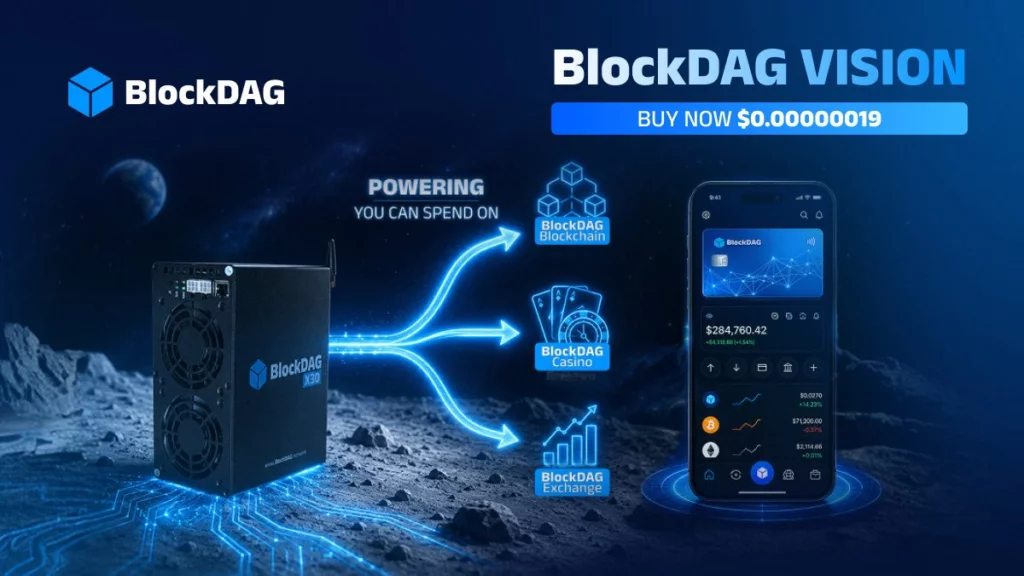
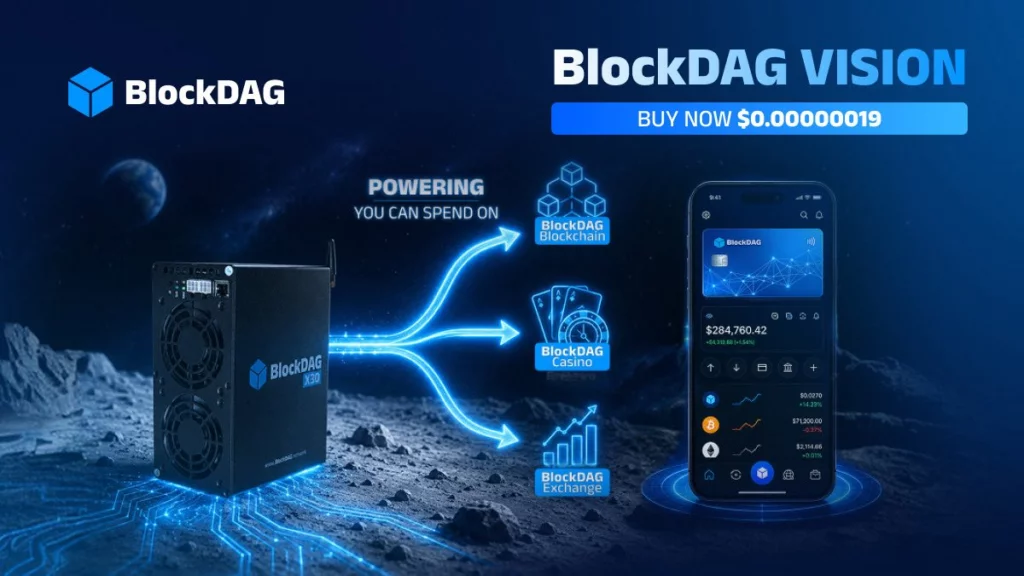
Alongside these updates, BDAG is available at a limited-time price of $0.00000019, while Live Swap remains active at 22% below the CoinMarketCap price. With continued progress across the Casino & Sportsbook, BlockDAG Exchange, Super App, and upcoming Tier 1 exchange listings, BlockDAG is building momentum around broader ecosystem growth and long-term blockchain adoption.
Hyperliquid price faces downward pressure
The Hyperliquid price sits near $60 as buying interest slows down. Right now, the token stays below its 50-day average price of $62.70, showing that momentum has cooled.
Big investors seem to be stepping back, with specialized crypto funds pulling out nearly $700,000 in a single day. On top of that, a major token holder recently moved over 395,000 HYPE to an exchange, which often signals a plan to sell.
While trading volume jumped slightly, most traders remain divided on where the market goes next. If the price falls below its $60.41 support level, it could easily drop further toward $54.19, keeping near-term risks quite high for buyers.
Cardano price holds firm above historic lows
The Cardano price is holding around $0.16 after dipping almost 2% recently. The coin sits in a support range between $0.14 and $0.17, which has helped stop deeper drops in the past.
Indicators show the market is heavily oversold, meaning selling has been intense for a long time. Some chart readers see a potential bottom pattern forming, but nothing is confirmed yet. For a real comeback, the token needs to climb past the $0.23 resistance level.
However, actual buying demand remains weak across weekly charts. If support at $0.14 fails to hold, the price risks sliding down toward $0.10, leaving the token in a shaky position for now.
BlockDAG prepares staking and claim launch
Timing can make the biggest difference when entering a high-growth opportunity, and BlockDAG is giving participants a chance to move before the crowd. BlockDAG is creating renewed attention.
BlockDAG is currently available at $0.00000019, while the Live Swap remains active at 22% below the CoinMarketCap price, giving market participants a limited timeframe to explore the latest opportunity.
The next few hours mark the launch of claims for Batches 1–6 and staking, bringing new functionality to the network. As activity builds around these updates, BlockDAG continues advancing its wider ecosystem with the Casino & Sportsbook, BlockDAG Exchange, Super App, and upcoming Tier 1 exchange listings. These developments are placing increased focus on BDAG as the project moves toward its next stage of growth.

Community growth tells the story: more than 312,000 holders, increasing by over 1,000 each day, alongside 4 million+ users on the X1 mining app and 20,000 physical miners already shipping globally.
From a technology perspective, the latest RPC upgrade processed 100,000 transactions within 24 hours, highlighting the network’s scalability. Combined with early-entry projections suggesting the potential for up to 5,000x ROI, it’s clear why many investors are viewing BDAG as one of the top crypto opportunities today.
To sum up
The Hyperliquid price continues to struggle below $62.70 as large holders move tokens, while the Cardano price rests near $0.16 in heavily oversold territory. In contrast, BlockDAG is advancing rapidly with its Live Swap active at 22% below the CoinMarketCap price.
The upcoming launch of claims for Batches 1–6 and staking adds massive utility alongside 20,000 physical miners shipped globally. Combined with its Casino, Super App, Tier 1 listings, and up to 5,000x ROI projections, BDAG stands out as the best crypto to buy. As chart conditions split between stalling tokens and expanding ecosystems, real utility continues to set the standard for long-term value.
For more information, visit the official website, presale, Telegram, and Discord.
Disclosure: This content is provided by a third party. Neither crypto.news nor the author of this article endorses any product mentioned on this page. Users should conduct their own research before taking any action related to the company.


Cointelegraph is committed to providing independent, high-quality journalism across the crypto, blockchain, AI, and fintech industries.
All news, reviews, and analyses are produced with full journalistic independence and integrity. For more details on our standards and processes, please read our Editorial Policy.
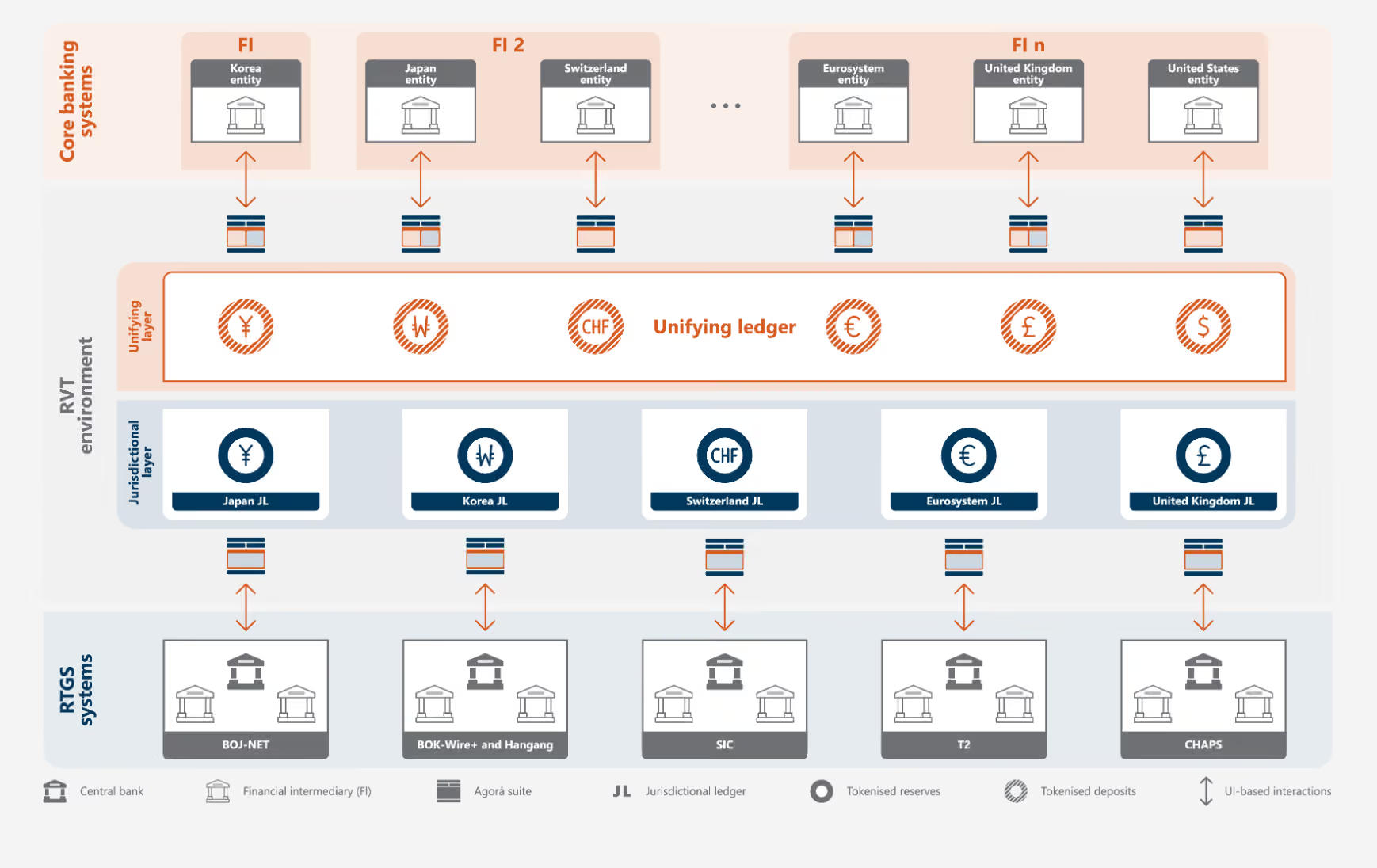
Some of the world’s biggest banks have completed real cross-border payments using tokenized money in a test led by the Bank for International Settlements (BIS), another sign that tokenization is moving into the plumbing of global finance.
Project Agorá, which brings together five central banks and 28 commercial lenders including JPMorgan, Citi, UBS, Deutsche Bank and Standard Chartered, processed roughly $1 million (CHF 800,000) in real-value transactions across six currencies — the U.S. dollar, euro, British pound, Japanese yen, Swiss franc and South Korean won.
The pilot used tokenized central bank reserves and commercial bank deposits to settle corporate, interbank payments perand foreign exchange settlements. The payments settled in an average of about 80 seconds, even though the prototype was not directly integrated with banks’ existing payment infrastructure, the BIS report said.

The project fits into a broader shift as stablecoins and tokenized assets gain traction across global finance. Asset managers have begun issuing tokenized money market and private credit funds, while stablecoins are increasingly being used for cross-border payments and corporate treasury operations.
A new model for cross-border payments
Project Agorá explores whether the same technology can modernize the infrastructure banks use to move money internationally.
Telegram founder Pavel Durov has answered Russia’s terrorism charges, accusing Moscow of punishing him for rejecting state demands for mass surveillance and censorship on the messaging app.
Rosfinmonitoring, Russia’s financial monitoring service, added Durov to its registry of terrorists and extremists on Thursday. The listing arrived one day after the Federal Security Service (FSB) opened a criminal case against him.
Durov Answers Moscow With a Meme
Durov did not rebut the allegations point by point. He posted a short statement to his Telegram channel, then followed it with a two-panel image.
“Russia has designated me as a “terrorist” for refusing its demands for mass surveillance and censorship on Telegram. Under Russian law, I’m banned from “publishing information on the Internet”. Russian officials have clearly got confused about who can ban whom from the Internet,” Durov wrote.
Follow us on X to get the latest news as it happens
The image placed his own photo, captioned terrorist, beside Taliban representatives greeting Russian Foreign Minister Sergey Lavrov, captioned respected partners. Russia’s Supreme Court removed the Taliban from that same registry in April 2025.
What the Designation Actually Changes
Russian banks must freeze the personal assets of anyone on the Rosfinmonitoring list and cut off financial services. That obligation covers Durov himself, not Telegram as a legal entity.
The FSB alleges the platform failed to delete channels, chats, and bots that Ukrainian intelligence and extremist groups used to organize attacks inside Russia. Durov, 41, now sits on the international wanted list and faces a possible life sentence. Officials had been negotiating with Telegram days earlier.
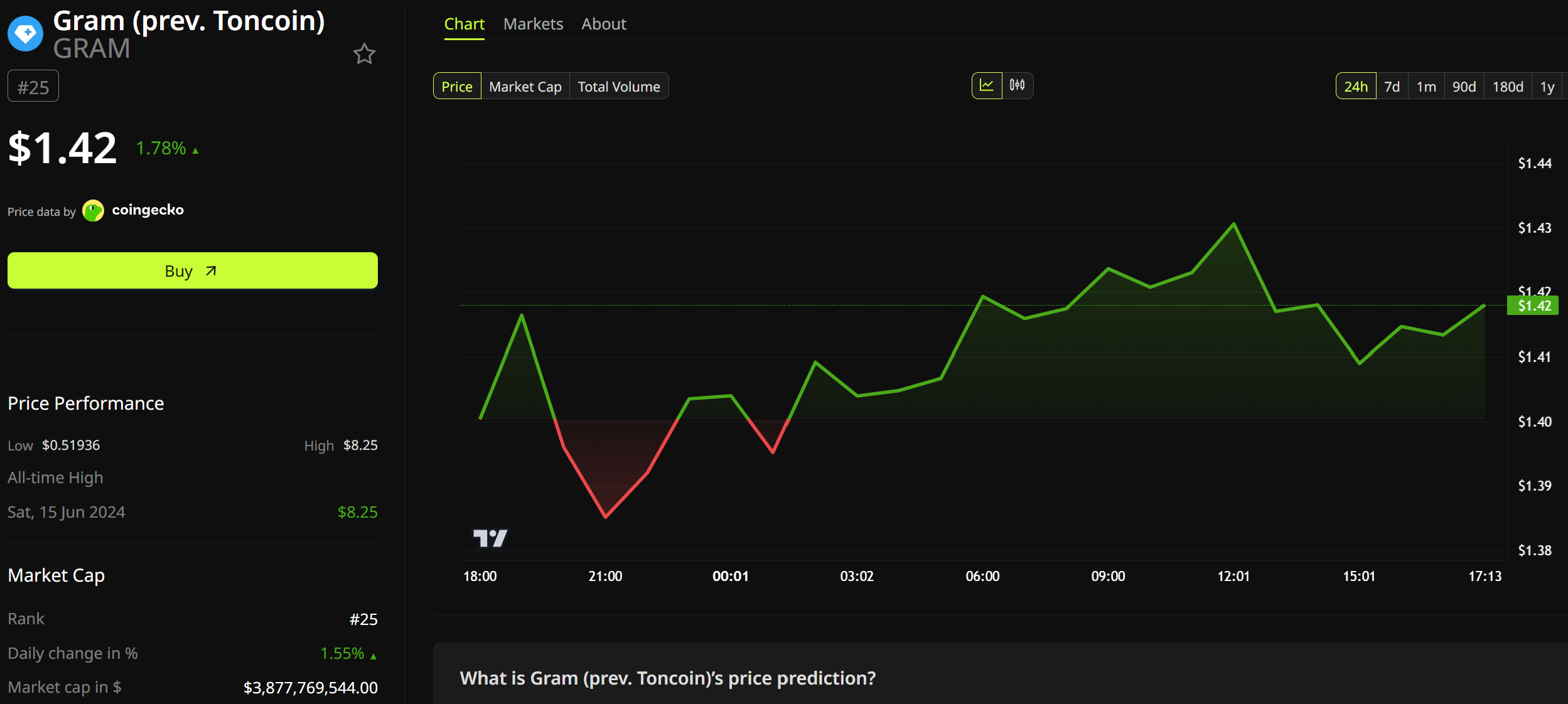
Markets shrugged. Gram (GRAM), the Telegram-linked token Durov rebranded from Toncoin in June, traded near $1.42, up 1.7% over 24 hours.

Enforcement remains the open question. Durov holds French and UAE citizenship and lives in Dubai, so any arrest would need cooperation Moscow has not yet secured. French prosecutors lifted his travel restrictions in November.
The post Telegram Founder Pavel Durov Finally Breaks Silence on Russia Charges appeared first on BeInCrypto.

‘Ted Lasso’ Is Entering a New Era on Apple TV, but This Duo Still Has Its Best Story

Diddy receives shocking new release date after prison brawl that landed him in solitary confinement
ASM International Shares Slump After Chip-Equipment Supplier’s Guidance Underwhelms


-

 Fashion6 days ago
Weekend Open Thread: Brooks Brothers
-
 Sports4 days ago
Commonwealth Games boxing: Jadumani Singh seals dominant 5-0 win over Pakistan’s Sumama Rehman to enter quarter-finals | Commonwealth Games News
-

 Business22 hours ago
Why Trees Belong on the Risk Register
-

 Tech4 days ago
Intel is reversing course and bringing hyper-threading back to its server chips
-

 Crypto World5 days ago
Ripple bought a bank in pieces. The $4 billion audit
-

 Politics3 days ago
Luke Littler dismantles Gerwyn Price to retain title in Blackpool
-
 Entertainment6 days ago
A New Post-Apocalyptic Gundam Anime Series Blasts Into SDCC
-

 Politics2 days ago
The Part of the Electric Transition Nobody Wants to Discuss
-

 News Videos4 days ago
BITCOIN JUST ENTERED THIS CRITICAL ZONE…
-

 Fashion7 days ago
16 Dresses for the High Summer Event
-

 Sports7 days ago
2026 3M Open leaderboard: Scottie Scheffler finds putter in Round 1, sits three back
-

 Business2 days ago
Major shareholder moves on Canyon
-

 News Videos7 days ago
The Peugeot Family: How 200 Years of an “Old Money” Dynasty Died in A Boardroom
-

 Crypto World4 days ago
XRP Ledger adds $2.6B as RWA inflows rank second
-

 News Videos7 hours ago
Bitcoin Enters the 3rd Stage of the Bear Market
-

 Politics4 days ago
Spain sweeps the board at 2026 World Cup with individual awards
-
 Entertainment2 days ago
‘Stargate’ Creator’s New Sci-Fi Series Returns for Season 3 Tomorrow
-

 Crypto World2 days ago
Kraken Enables Retail Access to Jersey Mike’s IPO via Tokenized Shares
-

 Tech6 days ago
Anthropic launches Claude Opus 5, a cheaper AI model for coding, agents and enterprise workflows
-

 Entertainment5 days ago
Sara Gilson Killed By Husband After Viral “Pedophile” TikTok Video
You must be logged in to post a comment Login