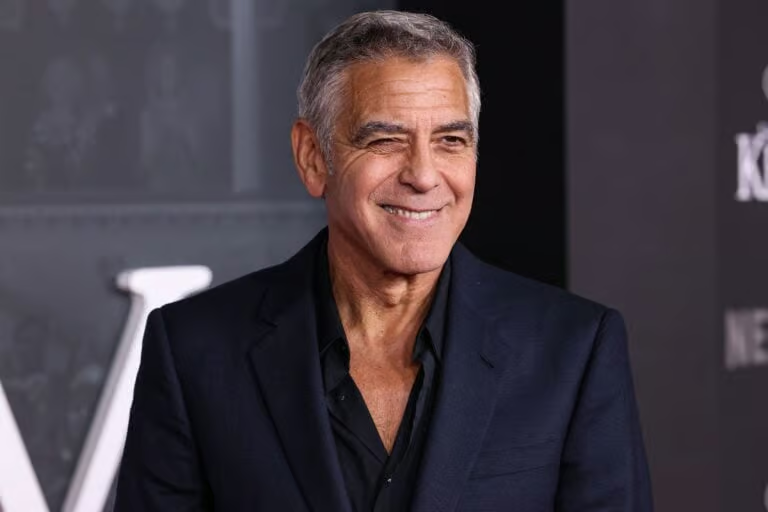
George Clooney has cast his lot with a particular actor for the highly coveted role of James Bond.
The Hollywood veteran, known for his acting and directorial achievements, recently weighed in on the next agent 007. The “Fantastic Mr. Fox” star had high praise for a man he once worked with.
The next James Bond actor has remained an open topic for years since the former star, Daniel Craig, stepped down from the role after the 2021 installment “No Time to Die.”
Advertisement
Xavier Collin/Image Press Agency/MEGA
Clooney made his allegiance known in a new interview, revealing that he is rooting for Dua Lipa’s husband, Callum Turner, to be the next Bond. The rising actor won Clooney’s heart when he starred in the 2023 movie, “The Boys in the Boat,” which the Hollywood veteran produced and directed.
Given their history, Clooney argued that Turner would make the perfect candidate for the Bond franchise. “I hope Callum ends up being the next Bond. I think he would be a great Bond,” he told Hollywood Reporter, adding:
“He’s tall and handsome and charming and British, so he’s the perfect guy to do it.”
Callum Turner Has All The Qualities The Oscar Winner Likes
MEGA
Clooney’s praises continued, with the director hailing Turner for choosing quality over “easy paychecks” when it came to his roles. He noted Turner had “done really interesting work” and managed to showcase his prowess as an actor while avoiding Hollywood drama.
“Somehow Callum has weaved his way through all of the noise and found a place where people look at him and go, ‘There’s something with this young man,’” Clooney said. He stated that it was “exciting” watching people pay closer attention to Turner.
Clooney reiterated that Turner had what it took to be a leading man. Filmmaker Will Gluck echoed similar sentiments about Turner’s qualities as a lead actor. “If you’re a guy like Callum who is really funny while also physical, and can be an action-movie hero — those are the ingredients that we used to have in movie stars,” Gluck declared.
Idris Elba Isn’t Rooting For A ‘Woke’ Bond Franchise
Eric Kowalsky / MEGA
While Clooney is rooting for Turner to be the next Bond, fans have placed bets against him, Aaron Taylor-Johnson, Harris Dickinson, and Jacob Elordi. Before these rising stars in the industry became fan favorites for the next agent 007, many had been calling for Idris Elba.
The Hollywood heartthrob’s name made waves for some time as the perfect candidate to take over Craig’s legacy, but Elba did not share the same sentiments. In an interview with GQ published on June 8, Elba stressed that he was not on board with changing the character’s race, saying:
Advertisement
“Bond is so unrealistic, so a hint of reality is good, but let’s not try and make it woke. I think you’ve got to be pure to what it is: escapism. Don’t try and answer the world’s taste. Just be Bond.”
The ‘Hobbs & Shaw’ Star Doesn’t Want A Black Person For The Role
Rudy Torres/Image Press Agency/MEGA
Elba confessed that he was flattered that many had considered him a good Bond candidate, but he did not believe a Black person should continue the franchise. He argued that Bond “was written how he was written for a reason” and realistically, some markets prefer it that way.
“Bond is big all over the world. And [audiences] won’t [all] go for a black male, an African male, playing Bond. That’s not what they like in their culture. Period,” Elba explained. Despite arguing that a black person shouldn’t play the predominantly white character, Elba changed his tune for another movie.
The veteran actor landed the part of Man-at-Arms in 2026’s “Masters of the Universe,” a cartoon character known for its ginger mustache. Elba joked that the character looked nothing like him, but he did not mind taking the role because “Man-At-Arms could be any color! He’s got green legs, for God’s sake!”
Daniel Craig Doesn’t Care Who Picks Up The Mantle Of James Bond
MEGA
While Elba believes a Black man shouldn’t be the next Bond, Craig, on the other hand, isn’t bothered. In a 2024 interview with Variety, the actor was asked whom he would like to portray Agent 007, but he bluntly replied, “I don’t care.”
Craig never expected to play Bond as long as he did, previously confessing in a 2022 interview that he thought it would be one movie. When he found out there were five installments to complete, Craig dropped a shocking request.
According to the “Spectre” star, he, the franchise’s producer Barbara Broccoli, said that he wanted to kill off his character by the end of the fifth movie, and she agreed. Craig’s wish came true in 2021 when his on-screen persona died a heroic death, per the U.K.’s The Times.
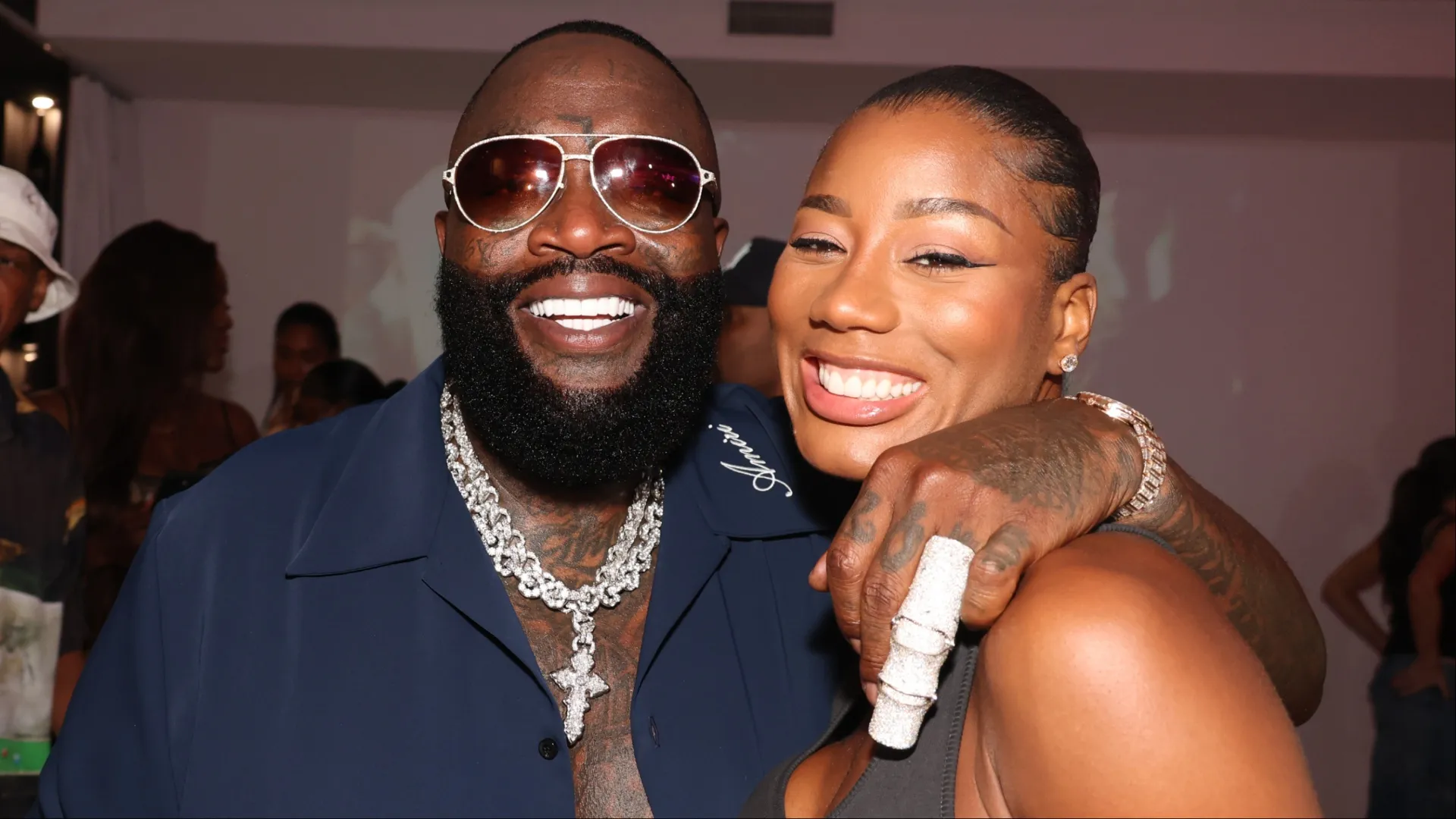
Rick Ross and his girlfriend Jazzma Kendrick are going viral with an adorable poolside video. Kendrick shared the video on her Instagram Stories on Wednesday, July 29.
Rick Ross And His Girlfriend Jazzma Kendrick Vibe While Poolside
‘Hustlin” rapper Rick Ross is outside, and fans are noting how happy he looks with his girlfriend, realtor and content creator Jazzma Kendrick. A new video shows the duo relaxing poolside, and it received more than 35,000 likes within hours of being shared on TSR’s Instagram page. In one shot, the ‘Champagne Moments’ artist is seen in the pool with a serious expression before bursting into laughter as he’s recorded. Another shot captured Ross playing with his girlfriend’s feet as she sat by the pool. Not only that, but the ‘9 Piece’ artist is also seen poolside wearing a Kool-Aid grin as he looks at a plate of lobster tails. Text over the photograph reads, “The look when the lobster is fresh off the grill 😭.”
Fans loved seeing the couple chopping it up poolside and reacted in the comment section.
User @torisweetheart2 wrote, “He’s in a happy space of his life, you can tell.”
Advertisement
@detroit_hairgoddess_____ noted, “He love her 😂😂❤️.”
User @onuteadara wrote, “Showing all his 🦷!. I love that for him 😍😂.”
@iloveyoutrav joked, “Haters gonna hate but I’m ready to be poolside showing all 32 as well 😂.”
@1sakimo added, “He looks like he be having a ball with her. She set that tone & he loves it there.”
Advertisement
Ross’ Girlfriend Also Has Him Outside For Exercise
Kendrick also has Ross exercising, and she shared a video of the duo on a walk. Ross was sporting a black T-shirt and matching sweatpants, and his boo was wearing a green Nike workout suit.
“We on it,” said Ross in the clip. “Gotta stay healthy. Let’s hustle.”
Fans were happy to see Ross getting into shape while other folks couldn’t help cutting up.
@lowkey__unique wrote, “She might get our boy to put the lemon peppa down😂🙌.”
Advertisement
User @therealkearaaa wrote, “He bout to pass out trying to be motivational 🤣🤣🤣 she just kept recording 💀.”
@_herprettylashes_ added, “I love this for him! It shows a lot about her and how she cares about his health and SHE IS OUT THERE WITH HIM!!! That shows a lot about her!”
Rapper Asks Fans To Weigh-In And An Online Debate Ensues
Ross took to Instagram to ask his fan an important question, and it prompted an online debate. The rapper asked his fans if it was okay to use their partner’s toothbrush, and the replies from our Roomies did not disappoint.
Advertisement
As he flossed his teeth, Ross asked, “If you have a relationship with someone, should you all use each other’s toothbrush?”
Most fans replied as @chefjohncartel did, who wrote,“hell naw!”
@zamorantjr wrote, “How do I unhear this?! 😭 how do I unhear this?! 😭.”
User @pinksocrazy joked, “No. I caught my man doing that & damn near went into cardiac arrest. 😭 I need some personal space, my brother. 😂 Still love him though.”
However, at least one Roomie said it was okay. “My man definitely can use mine and I definitely sometimes use his.”
When Ted Lasso returns for Season 4 this August, it won’t just be bringing AFC Richmond back to the pitch — it’ll also introduce the Lady Greyhounds, ushering in a brand-new chapter for the beloved Apple TV comedy. With new faces set to take center stage, there’s no better time to look back at the relationships that made the original three seasons so special.
Romance has always been a defining part of the series, from Ted (Jason Sudeikis) and Rebecca’s (Hannah Waddingham) will-they-won’t-they dynamic to Keeley (Juno Temple) navigating multiple romances and Colin’s (Billy Harris) deeply personal journey. But as memorable as those love stories are, Ted Lasso‘s greatest relationship was never romantic. Instead, the show’s most rewarding arc belonged to one unlikely bromance that transformed from bitter rivalry into one of television’s most heartfelt friendships.
Advertisement
Roy and Jamie Hated Each Other in ‘Ted Lasso’ Season 1
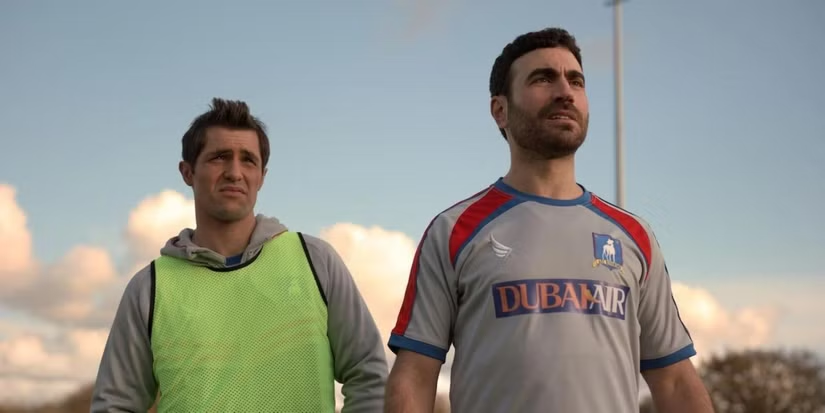
When Ted Lasso and his trusted assistant Coach Beard (Brendan Hunt) arrive in the United Kingdom to coach AFC Richmond, they meet two very prominent members of the struggling soccer team. The first is the bullish Roy Kent (Brett Goldstein) — a once-legendary star of the sport whose age and career’s worth of injuries finally catch up to him. The second is the cocky Jamie Tartt (Phil Dunster), who’s become the new star player on the team despite his braggadocious attitude and constant bullying of select team members and staff.
Advertisement
Collider Exclusive · The Sorting Hat Awaits Which Hogwarts House Are You? Gryffindor · Slytherin · Hufflepuff · Ravenclaw
Four houses. One destiny. The Sorting Hat has considered thousands of students — now it’s your turn. Answer honestly and discover where you truly belong at Hogwarts School of Witchcraft and Wizardry.
🦁Gryffindor
🐍Slytherin
Advertisement
🦡Hufflepuff
🦅Ravenclaw
Advertisement
01
What quality do you value most in yourself? Answer as honestly as you can — the Hat always knows.
Advertisement
02
A friend is being treated unfairly. What do you do? How you protect others says everything about who you are.
Advertisement
03
What does success look like to you? What you’re working toward defines who you’re becoming.
Advertisement
04
What is your greatest fear? Fear is the most honest thing about a person.
Advertisement
05
The rules say no. Your gut says go. What do you do? Every institution has rules. What you do with them is a choice.
Advertisement
06
What kind of friend are you? Who you are to the people you love is who you really are.
Advertisement
07
You look into the Mirror of Erised. What do you see? The mirror shows the deepest desire of your heart.
Advertisement
08
The Sorting Hat pauses. It whispers: “You could do well in any house. But what matters most to you — truly?” This is your tiebreaker. The Hat always listens.
Advertisement
The Sorting Hat Speaks Your House Has Been Chosen
After careful deliberation, the Sorting Hat has made its decision. This is the house your values, your instincts, and your particular way of being in the world were made for.
Advertisement
Gryffindor Tower · Scarlet & Gold
🦁 Gryffindor
You have nerve. Not the reckless kind, but the deep, quiet courage that shows up even when you’re terrified — especially then.
Advertisement
Gryffindors don’t act because they’re fearless — they act because they understand that some things are worth being afraid for.
You stand up for people when it would be easier to look away.
You charge toward what’s right even when the odds are terrible.
Harry, Hermione, Ron — the heroes of Hogwarts’s greatest chapter — all called the tower with the scarlet and gold home. And now, so do you.
Slytherin Dungeon · Emerald & Silver
🐍 Slytherin
You are driven, sharp, and utterly clear-eyed about what you want and how to get there.
Advertisement
Slytherin has long been misunderstood — painted as the house of villains when it is, at its best, the house of those who refuse to accept limits placed on them by others.
You are resourceful, strategic, and you play the long game.
You know your worth. You protect your own fiercely.
The dungeon common room with its view of the Black Lake is yours — and the ambitions that will take you further than anyone expects are yours too.
Hufflepuff Basement · Yellow & Black
🦡 Hufflepuff
You are the kind of person that makes the world genuinely better just by being in it.
Advertisement
Hufflepuff is not the “safe” house or the “leftover” house — it is the house of those with the greatest heart and the most unwavering integrity.
You show up. You work hard. You don’t need glory or recognition — you do what’s right because it’s right.
Your loyalty never wavers, even when tested.
Nymphadora Tonks, Cedric Diggory, Newt Scamander — some of the wizarding world’s finest. And now you join them.
Ravenclaw Tower · Blue & Bronze
🦅 Ravenclaw
Your mind is your greatest gift, and you’ve always known it.
Advertisement
Ravenclaws are the thinkers, the questioners, the ones who find a puzzle irresistible and a good book better company than most people.
Ravenclaw is not merely about intelligence — it’s about the love of learning, the pursuit of truth, and the rare courage to admit you don’t know something yet.
You see the world with unusual clarity and depth.
Luna Lovegood, Filius Flitwick, Rowena Ravenclaw herself — all extraordinary, all original. And so are you.
So we have a former legend who’s past his prime and a rising star who’s unimaginably arrogant. The makings of a classic sports rivalry practically writes itself, and Roy and Jamie constantly butt heads throughout the entire season. Roy is very much framed as the underdog while Jamie is the jock-esque bully, and that becomes especially true when Roy develops romantic feelings for Jamie’s then-girlfriend, Keeley. After Keeley finds out that Jamie has been unfaithful, she breaks up with the hothead and starts a relationship with the gruff yet kindhearted Roy.
Advertisement
Ted takes notice of Roy’s cavalier attitude and tries his best to rectify it, but before he can reach a breakthrough with the arrogant team member, Jamie is traded to another team in Manchester City.
Roy and Jamie Tolerated Each Other in ‘Ted Lasso’ Season 2
Brett Goldstein as Roy Kent and Phil Dunster as Jamie Tartt in Ted Lasso Season 2Image via Apple+
Season 2 of Ted Lasso represents a significant transition period for Roy and Jamie. Roy has officially left AFC Richmond behind by retiring, deciding that he’s not physically capable of competing in the sport any longer. Instead, he’s now coaching the youth soccer team of his young beloved niece, but this does little to satiate Roy’s desire to still be involved with the game of football. He then decides to take on a job as a sports broadcaster, but his signature brand of honesty and foul mouth makes that position not a great fit. Instead, he finds his way back to AFC Richmond, this time not as a player, but as an assistant coach for Ted.
Advertisement
Meanwhile, Jamie is seemingly living the high life, being a contestant on a dating show that’s clearly a parody of Love Island. When Jamie is the first contestant to be voted off the show and embarrassed in front of national television, the football player realizes that his bad-boy attitude is no longer popular among his fanbase, which has also led him to get kicked off the team he got traded to. With nowhere else to turn to, Jamie finds his way back to Ted and convinces him to let him come back to play for AFC Richmond, despite treating him and the rest of the team like dirt.
Suffice it to say, most of the team’s members and employees aren’t thrilled at Jamie’s return, especially Roy. It takes quite a lot of time, but Jamie ultimately proves to Roy and his teammates that he’s changed and matured, working to mend the bridges with the people he tormented and bullied. Roy even sees the reason behind Jamie’s past behavior when he meets Jamie’s father — an unbelievably selfish and cruel man who has been abusing his son for who knows how long. After Jamie finally delivers a well-earned punch to his father, Roy is quick to put their differences aside and comforts the upset player. We see how their relationship really evolves when Jamie confesses to Roy that he told Keeley that he’s still in love with her — instead of going ballistic on Jamie, Roy forgives him. Roy does give Jamie a solid strike after the team gets promoted but quickly hugs him as they celebrate their big win.
Roy and Jamie Become Close Friends in ‘Ted Lasso’ Season 3
Phil Dunster as Jamie Tartt and Brett Goldstein as Roy Kent in Ted LassoImage via Apple TV+
Advertisement
By Season 3, Roy and Jamie are still following the same career paths, but both are continuing to evolve as people. Roy, in particular, is going through a dramatic change in his own life, as he and Keeley have officially decided to break up, supposedly due to their incredibly busy schedules. Jamie, meanwhile, is going through a personal crisis of his own when legendary player Zava (Maximilian Osinski) joins the team and suddenly overshadows him as the star player of AFC Richmond. Both of these events mark a key turning point in their lives, but it also allows Roy and Jamie to go from teammates who tolerate each other to friends who actually like each other.
Once Zava joins the team and becomes the primary source for the team’s win streak, Jamie desperately wants to prove that he’s a better player than the pretentious new transfer. Roy senses that Jamie is self-conscious about his playing ability, and offers to train Jamie to become a better player. This requires getting up at an absurdly early hour and going for long runs in the dark, but this does put Jamie on a path to becoming a much better player. While the rest of the team takes a break to explore Amsterdam, Jamie continues his training with Roy, but even he’s able to convince his mentor to unwind and take a bit of a break. They’ve already been warming up to each other quite a bit, but after Jamie teaches Roy a few tricks himself, such as the seemingly basic task of riding a bike, it’s abundantly clear that they’ve officially gone from bitter rivals to reluctant teammates to possibly even best friends.
With Ted Lasso preparing to introduce the Lady Greyhounds in Season 4, the series is entering a new era filled with fresh relationships and dynamics. Still, Roy and Jamie’s journey from bitter rivals to genuine friends will be difficult to top.
Ted Lasso Seasons 1–3 are available to stream on Apple TV, with Season 4 premiering August 4.
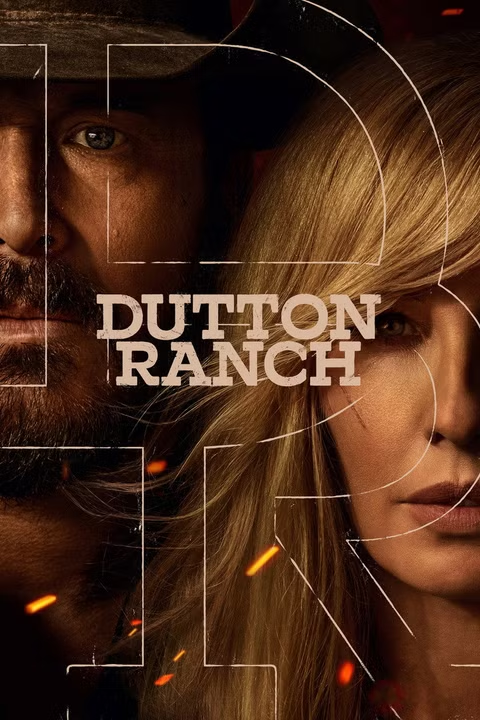
When Yellowstone wrapped, we knew that it was going to split up into other parts and run into new storylines. But its first direct sequel had a lot to live up to and, while Dutton Ranch reunited Cole Hauser and Kelly Reilly as Rip Wheeler and Beth Dutton, one key figure from the original series wasn’t making the journey with them.
While the grand poobah of Yellowstone, Taylor Sheridan, was still involved in things from a higher level, he was no longer there day to day and left Hauser and the cast to work with an entirely new creative team, and according to the actor, that made filming Season 1 a far bigger challenge than many viewers realized. Speaking to Film Inside NYC, Hauser admitted stepping onto the Dutton Ranch set without Sheridan felt like entering unfamiliar territory.
“There were challenges, you know? Not having Taylor there, for us to really kind of be able to work with these new writers, these new directors, these people… everything had changed.” Hauser said the only real sense of continuity came from returning alongside Reilly, Finn Little and longtime Yellowstone director Christina Alexandra Voros. “The only normality that we had whatsoever on set. I enjoy a challenge – it certainly was a challenge. We worked our asses off this year. The new writers that we had, we had to figure out on our feet how to really perform and tell a story. So I’m proud of what we accomplished, and I look forward to doing it again.”
Advertisement
Advertisement
Collider Exclusive · Sci-Fi Survival Quiz Which Sci-Fi World Would You Survive? The Matrix · Mad Max · Blade Runner · Dune · Star Wars
Five universes. Five completely different ways the future went wrong — or sideways, or up in flames. Only one of them is the world your instincts were built for. Eight questions will figure out which dystopia, galaxy, or desert wasteland you’d actually make it out of alive.
💊The Matrix
🔥Mad Max
🌧️Blade Runner
Advertisement
🏜️Dune
🚀Star Wars
Advertisement
01
You sense something is deeply wrong with the world around you. What do you do? The first instinct is often the truest one.
Advertisement
02
In a world of scarcity, what resource do you guard most fiercely? What we protect reveals what we believe survival actually requires.
Advertisement
03
What kind of threat keeps you up at night? Fear is useful data — if you’re honest about what you’re actually afraid of.
Advertisement
04
How do you deal with authority you don’t trust? Every dystopia has a power structure. Your approach to it determines everything.
Advertisement
05
Which environment could you actually endure long-term? Survival isn’t just tactical — it’s physical, psychological, and very much about where you are.
Advertisement
06
Who do you want in your corner when things fall apart? The company you keep is the clearest signal of who you actually are.
Advertisement
07
Where do you draw the line — if you draw one at all? Every survivor eventually faces a moment that tests what they’re actually made of.
Advertisement
08
What would actually make survival worth it? Staying alive is one thing. Having a reason to is another.
Advertisement
Your Fate Has Been Calculated You’d Survive In…
Your answers point to the world your instincts were built for. This is the universe your temperament, your survival instincts, and your particular brand of stubbornness were made for.
Advertisement
The Resistance, Zion
The Matrix
You took the red pill a long time ago — probably before anyone offered it to you. You’re a systems thinker who can’t help but notice the seams in things.
Advertisement
You’re drawn to understanding how the system works before figuring out how to break it.
You’d find the Resistance, or it would find you — your instinct for spotting constructed realities is the machines’ worst nightmare.
You function best when you have access to information and the freedom to act on it.
The Matrix built an airtight prison. You’d be the one probing the walls for the door.
The Wasteland
Mad Max
The wasteland doesn’t reward the clever or the well-connected — it rewards those who are hard to kill and harder to break. That’s you.
Advertisement
You don’t need comfort, community, or a cause larger than the next horizon.
You need a vehicle, a clear threat, and enough fuel to outrun it — and you’re good at all three.
You are unsentimental enough to survive that world, and decent enough — just barely — to be something more than another raider.
In the wasteland, that distinction is everything.
Los Angeles, 2049
Blade Runner
You’d survive here because you know how to exist in moral grey areas without losing yourself completely.
Advertisement
You read people accurately, keep your circle small, and ask the questions others prefer not to answer.
In a city where humanity is a legal designation rather than a feeling, you hold onto something that keeps you functional.
You’re not a hero. But you’re not lost, either.
In Blade Runner’s world, that distinction is everything.
Arrakis
Dune
Arrakis is the most hostile environment in the known universe — and you are precisely the kind of person it rewards.
Advertisement
Patience, discipline, and political awareness are your core strengths — and on Arrakis, they’re survival tools.
You understand that the long game matters more than any single victory.
Others come to Dune and are consumed by it. You’d learn its logic and earn its respect.
In time, you wouldn’t just survive Arrakis — you’d begin to reshape it.
A Galaxy Far, Far Away
Star Wars
The galaxy far, far away is vast, loud, and in a constant state of violent political upheaval — and you wouldn’t have it any other way.
Advertisement
You find meaning in being part of something larger than yourself — a cause, a crew, a rebellion.
You’d gravitate toward the Rebellion, or the fringes, or whatever pocket of the galaxy still believes the Empire’s grip can be broken.
You fight — not because you have to, but because standing aside isn’t something you’re capable of.
In Star Wars, that willingness is what makes all the difference.
Advertisement
Ed Harris Tried to Leave ‘Dutton Ranch’
Hauser’s comments come just days after co-star Ed Harris revealed he was initially unhappy with his role in Dutton Ranch. Harris stated in an interview that he had been “misled” on how important his role was, prior to filming, describing himself as “underused and inconsequential” during Season 1.
Harris also revealed he was “really pissed off” when a scene that he’d shot singing karaoke was cut from the final product and it was at that point, he felt like he might want to leave the series. Despite those frustrations, Harris confirmed he will return for Season 2 after being assured his character, Everett McKinney, will have “a little bit more to do.”
LisaRaye McCoy has an opinion about the Usher fan who was brought onstage during a recent concert but quickly escorted off. McCoy shared her thoughts on her new YouTube show, ‘Sh*t Chat.’
LisaRaye McCoy Says Usher Fan’s Rebuttal Was ‘A Lot’ On YouTube
Usher is currently on tour with Chris Brown in ‘The R&B TOUR,’ and LisaRaye has a popular opinion about the fan who was escorted off the stage at a recent concert. Gabrielle Cheyenne was booted off the stage in Nashville, Tennessee, for failing to participate after being selected for the fan segment.
After Usher said, “I don’t think she wants to be on stage,” he waved her off and signaled security. Fans quickly dragged Cheyenne for her lack of participation, and she clapped back with a strong statement evoking her ‘PRETTY PRIVILEGE’ and desire for Brown over Usher.
“When you go to a Chris Brown and Usher concert, we have seen it enough to know that when it comes to that part, that you know what the women have done and what is expected,” she said. “So, if you go up there and do something different, other than what’s expected, people are going to look at you like you’re the dumb one because they’re like, ‘Where the hell you been? Under a rock? Because this is what it is.’”
‘The Players Club’ star didn’t stop there, and she minced no words when she said Cheyenne should have ‘kept her a*s’ in her seat.
“So, I get that she’s got a man and that maybe she’s not that kind of girl. But if you’re not that kind of girl, then you should’ve kept your a*s sitting down in your seat. Pretty as f*ck or not. You know what i’m sayin’?… And that’s just what it is. When you’re up there, that’s a part of the show. Period. That’s what they do for that part of the show. You can’t act like you didn’t know that,” she added.
“Her rebuttal was a little much,” continued the actress. “Like, she came real strong. It was like, pretty privilege or just lady-like. It’s like, ‘Wow.’ You know what I’m sayin’? So, all of that, I was taken aback. I was like, ‘Ugh.’ It’s a lot. I think there’s a way you can get your point across with the stance that she took, this pretty privilege lady, that she could’ve had said all of this lady-like…. She opened up a can of worms, and I think that they gonna get her… the intent is unstoppable.”
Advertisement
Fans Co-Signed LisaRaye’s Comments
Fans on Instagram quickly agreed with McCoy about Cheyenne’s actions and comments, and they weren’t any easier on her than McCoy.
User @lulu_la_veganbod replied, “She knew… she went back stage for a slot & she took it 😂 it’s a lottery which performer wants you.”
@deonna_tamar added, “Agreed!! She deserves every backlash she gets solely bc of her response afterwards and towards Usher!”
User @hendersonjess added, “What Lisa said! That’s a part of the show! She could have declined. We didn’t even get to hear Usher sing “Can You Handle It” after she pulled that stunt!‼️”
Advertisement
User @t_baby83 wrote, “😂😂😂I love me some Lisa Ray!”
@mizzuniqueme13 added, “Yessss! I agreed with Lisa Ray, Ughhh👏😂.”
User @shontan_godwin_ replied, “Facts everyone knows what goes down on the stage.”
@finechina_aja wrote, “I agree!!! She knew exactly what time it was!!! Next!!!”
Advertisement
At least one user was less harsh with Cheyenne. @ellisjai_styled noted, “She wanted Chris and I don’t blame her.”
Cheyenne Clapped Back Hard At Fans, And Usher Weighed-In
After receiving backlash for her actions, Cheyenne responded on Facebook with some choice words, and it did not go over well.
“First off NOBODY is declining to go on stage,” she said. “I looked good you thought I wasnt gonna let THOUSANDS of people see me?? On the big screen, where you Will never be????… Their team approached us and moved us to VIP before the show even started !! PRETTY PRIVILEGES something you will never know about!! They dont say what youre going up there for!! Yall wanted me to get up there and f*ck him atp ?? CHATT FOLKS ARENT USED TO ANYTHING. Thats the most exciting thing that wouldve happened in yall little a** lives !! F*ck yall, DISRESPECTFULLY.”
She also told TMZ that she preferred Brown over Usher, and things would have gone down differently had she been onstage with him.
Usher reacted a few nights later during his concert in Birmingham, Alabama, on Tuesday, July 28. While bringing another fan onstage for the spicy segment, he issued a warning.
Advertisement
“Before we get started, don’t bring your a*s up here if you don’t wanna be here,” said Usher, prompting laughter from the audience. “God, don’t like ugly, but he most certainly don’t feel too good about pretty privilege, either.”
Star Wars is definitely one of those worlds, or universes, where you never really say goodbye to somebody. Characters can survive almost anything, especially in a world where being chopped in half isn’t quite the career-ending injury you might expect. But Lucasfilm has understandably taken a much more careful approach to characters whose actors have died, particularly when those performers became synonymous with their roles.
Which is why the newest chapter of The Mandalorian feels so poignant and well-handled. Two years after Carl Weathers died at the age of 76, his character Greef Karga, a huge favorite of viewers, has officially returned to Star Wars canon — although, importantly, Lucasfilm hasn’t recast the role or digitally recreated Weathers to make it happen.
Karga appears in the new comic The Mandalorian & Grogu – Danger in the Dark, a prequel story released by Mad Cave, Papercutz and Disney that leads directly into the events of The Mandalorian & Grogu, and it’s the character’s first appearance since we lost Weathers back in February 2024. The story finds Karga alive and well on Nevarro, where he’s still serving as High Magistrate and has maintained his friendship with Din Djarin and the Baby with the Magic Hands. He’s even still handing out jobs, tasking Mando and his young apprentice with dealing with a potentially explosive problem beneath the planet.
Advertisement
Advertisement
Collider Exclusive · Star Wars Quiz Which Force User Are You? Light Side · Dark Side · Or Somewhere Between
The Force is not a binary. It is a spectrum — from the serene halls of the Jedi Temple to the shadowed corridors of Sith space. Ten questions will reveal where you truly fall. The Force has always known. Now you will too.
🔵Jedi Master
🟡Padawan
🔴Sith Lord
Advertisement
⚫Inquisitor
⚪Grey Jedi
Advertisement
01
What is the Force to you? Your relationship with the Force defines everything else.
Advertisement
02
When you feel strong emotions — anger, grief, love — what do you do? The Jedi suppress. The Sith feed. Others choose differently.
Advertisement
03
The Jedi Council gives you an order you disagree with. You: How you handle authority reveals your alignment.
Advertisement
04
You are offered forbidden knowledge that could give you enormous power. The cost is crossing a moral line. You: The dark side’s pull is never more than a choice away.
Advertisement
05
Your approach to training and learning is: A student’s habits become a master’s character.
Advertisement
06
In a duel, your lightsaber fighting style reflects: Combat is the purest expression of a Force user’s philosophy.
Advertisement
07
A defeated enemy lies at your feet, powerless. You: Mercy — or its absence — is the truest test of alignment.
Advertisement
08
The Jedi Code forbids attachment. Your honest view on love and bonds: The source of the greatest falls in the galaxy.
Advertisement
09
Why do you use the Force at all? What’s the point? Purpose is the difference between a knight and a weapon.
Advertisement
10
At the final moment — light side or dark side pulling at you — what wins? In the end, every Force user faces this moment. What does yours look like?
Advertisement
Your Alignment Has Been Determined Your Place in the Force
The scores below reveal how the Force sees you. Your highest number is your true alignment. Read on to understand what that means — and what it will cost you.
Advertisement
🔵 Jedi Master
🟡 Padawan
🔴 Sith Lord
⚫ Inquisitor
Advertisement
⚪ Grey Jedi
Disciplined, compassionate, and deeply attuned to the living Force, you have walked the path long enough to understand its demands — and accept them. You lead not through authority alone, but through example. You have felt the pull of the dark side and chosen otherwise, every time. That is not certainty. That is courage.
Advertisement
You are earnest, powerful, and brimming with potential — and you know it, which is both your greatest asset and your most dangerous flaw. You act before you think, trust your gut over your training, and sometimes confuse impatience for bravery. The Masters see something in you, though. The question isn’t whether you have what it takes — it’s whether you’ll be patient enough to find out.
You are not simply dangerous — you are certain, and that is worse. You have decided what the galaxy needs, and you have decided you are the one to deliver it. Your power is genuine and formidable, earned through sacrifice that would have broken lesser beings. But examine your victories carefully. Every Sith believed their cause was righteous. The dark side’s cruelest trick is that it agrees with you.
Advertisement
You were forged in fire and reshaped by those who found you at your lowest. You serve, because service gave you structure when you had none. Your allegiance is not to an ideology — it is to survival and to the master who gave you purpose. But there is something buried beneath the conditioning. The Jedi you hunt? You recognize them. Because you remember what it felt like before the choice was taken from you.
You have looked at the Jedi Code and the Sith Code and found both of them incomplete. You walk the line not out of indecision but out of conviction — you genuinely believe both extremes miss something essential. The Jedi don’t fully trust you. The Sith think you’re wasting your potential. They’re both partially right. But so are you.
Advertisement
Advertisement
What Happened to Greef Karga After ‘The Mandalorian’?
The comic picks up on the aftermath of Gorian Shard’s assault from Season 3, with scans revealing that one of the pirate vessels destroyed during the battle was carrying armed torpedoes in underground lava tubes. Karga subsequently sends Din, Grogu, and the Anzellans to disarm them, with the adventure taking place before Mando’s eventual encounter with Colonel Ward (Sigourney Weaver).
Weathers became an integral part of The Mandalorian after Greef Karga was originally conceived as a much smaller role. He ultimately appeared throughout all three seasons and even stepped behind the camera, directing the Season 2 episode “The Siege” and Season 3’s “The Foundling.” Lucasfilm also included a tribute to the actor in The Mandalorian & Grogu. Aurebesh text appearing in the movie translates to “Weathers Apollo,” simultaneously honoring Weathers and his iconic Rocky character Apollo Creed.
The Mandalorian & Grogu – Danger in the Dark is available now.
Tom Cruise’s daughter Surihas officially dropped his last name, opting to legally go by “Suri Noelle,” her mother Katie Holmes’ middle name.
While the news has shocked many, an insider close to the family shared that Holmes was not “surprised” by it, noting that it’s not something that “happened overnight.”
Suri’s name change has also renewed scrutiny of her father Tom Cruise’s ties to the Church of Scientology, which is believed to be at the center of their estrangement.
5Nancy Rivera/MEGA
Holmes wasn’t shocked by her daughter’s decision to ditch her dad Cruise’s last name, with an insider hinting that the actress saw it coming because of how “independent” Suri strives to be.
Speaking to Page Six, the source said, “Katie wasn’t surprised by Suri’s decision to legally drop ‘Cruise’ from her last name because that’s just who Suri is.”
Advertisement
“She’s always been incredibly independent and confident in making her own choices,” the insider continued, noting, “This also wasn’t something that happened overnight. It was a decision that evolved over time, and Katie respected Suri’s process every step of the way.”
While it’s unclear when exactly Suri legally changed her name, public data reveals that she updated her information when she signed up to vote in Allegheny County, Pennsylvania, in October 2024 while she was a freshman at Carnegie Mellon University. She was 18 at the time.
By registering with the name Suri Noelle, the college student confirmed that it was her official legal identity, and according to Pennsylvania courts, all residents who register to vote are mandated to use their real name.
The Name Change Move Was ‘Entirely’ Suri’s Decision: ‘This Wasn’t Something Katie Pushed Or Encouraged’
The Page Six source further shared that Holmes never influenced her daughter into dropping Cruise’s surname, stressing that it was entirely Suri’s decision to adopt a brand new identity that sets her apart from her father.
“This wasn’t something Katie pushed or encouraged. It was entirely Suri’s decision,” the insider explained. “Katie has spent years raising Suri to think for herself and become her own person, and she’s incredibly proud of the confident, independent young woman she’s become.”
Advertisement
They continued, “She’s an adult now, and Katie has always believed those kinds of personal decisions are hers to make.”
Concluding, the source shared that “more than anything, Katie just wants Suri to be happy and live life on her own terms.”
Tom Cruise’s Daughter’s New Name Is In Tribute To Her Mother, Katie Holmes
Suri’s decision to ditch her father’s last name was first noticed in 2024 while she was still in LaGuardia High School. The unexpected shift reportedly served as a heartfelt homage to her mother Holmes, who has raised the teenager largely on her own.
“She is showing praise for her mother by using her middle name,” a source revealed to Page Six at the time, noting that Suri “wants her own identity” to live by, one entirely separate from her estranged father.
The new name initially caught the public’s eye on a casting roster for her high school production of “The Addams Family: A New Musical,” in which she played the role of Morticia Addams.
Advertisement
Her graduation program from LaGuardia High School similarly reflected the update. Furthermore, reports surfaced that her billing for the production of “Head Over Heels” by a local theater also credited her simply as “Suri Noelle.”
The Actor’s Loyalty To Scientology Strained His Relationship With His Daughter After His Split From Katie Holmes
Amid Cruise’s enduring estrangement from his daughter, experts on the Church of Scientology argue that the actor’s primary allegiance rests firmly with his religion rather than his family.
Speaking with In Touch, expert Tony Ortega noted: “Tom has proven over and over again that his No.1 loyalty is to [his religion] and David Miscavige.”
This sentiment aligns with a 2019 report from Page Six, where actress Leah Remini revealed that Cruise’s standing is unmatched. She asserted he is effectively “second to” Miscavige, the current organizational leader, and is generally “considered a deity within Scientology.”
Remini also debunked the narrative that Cruise is being held against his will by the organization. According to a NewsWeek report in 2023, she clarified that high-profile devotees willingly remain due to the extraordinary social leverage they inherit.
Advertisement
“It’s like nothing you can imagine,” Remini stated. “The amount of power they receive from this Church is like nothing in Hollywood. There is no reason for them to leave this environment.”
Cruise even once admitted in a 2013 deposition that Holmes’ worries about Scientology played a role in their divorce, as the actress, who is a devout Catholic, wanted to protect their daughter from the organization.
Tom Cruise Once Said He Would ‘Always Be There’ For His Kids
Cruise’s broken relationship with Suri today offers a staggering contrast to the picture-perfect image presented at her birth in 2006.
Back then, the movie star spoke to Vanity Fair, admitting that becoming a father was everything to him, while stressing how important it is for him to be supportive of his children.
“I always said to myself that my children would be able to depend on me and I would always be there for them and love them — that I’d never make a promise to my kids that I couldn’t keep,” Cruise insisted during the chat with the publication.
Advertisement
He further emphasized his deeply involved approach to raising kids, noting, “I’m not one of those people who believe you can spoil a child with too much love. You can never give a child too much love. There’s just no way.”
In addition to Suri, Cruise has two older children from his marriage to Nicole Kidman: Isabella, 33, and Connor, 31.
According to reports, Suri has no relationship with either half-sibling, with insiders claiming that, much like their father, Connor and Isabella’s loyalty to Scientology made it impossible for them to ever connect with Suri.
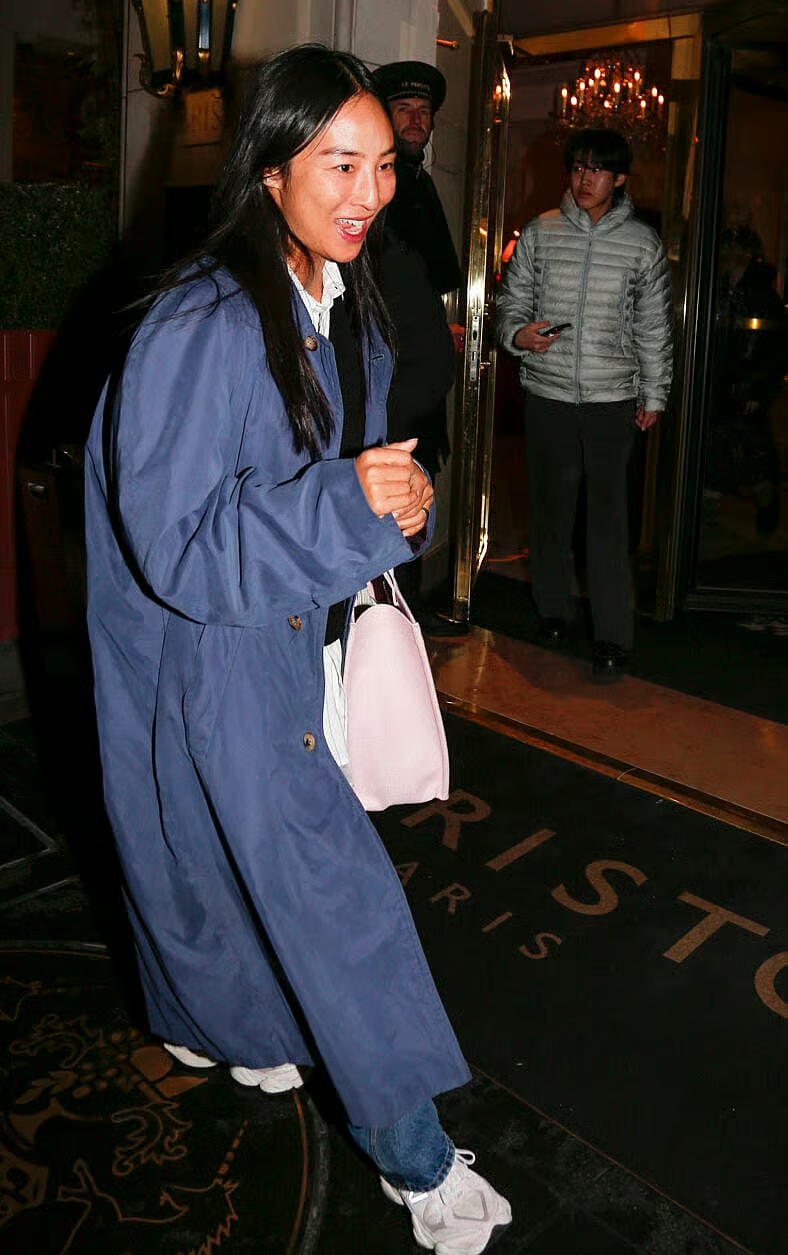
Following a string of acclaimed performances in recent years, Greta Lee is set to return to the big screen with “Late Fame.”
Speaking about the project in a recent interview, Lee described “Late Fame” as “a precious secret gem.” She also reflected on how she approached the role after replacing the film’s previously attached star, Sandra Hüller.
4Spread Pictures / MEGA
Lee’s film, “Late Fame,” had its world premiere in the Orizzonti section of the 82nd Venice International Film Festival in August 2025.
Now, nearly a year later, the movie is set to open in select U.S. theaters through Magnolia Pictures.
Advertisement
Reflecting on the film’s journey ahead of its theatrical release, Lee told The Hollywood Reporter that she is “just so appreciative” the movie was made in the first place.
“It does feel like this precious secret gem,” the “Russian Doll” star said of the project. “Certainly that feels reflected in the kind of distribution and release it’s going to have. I’m just hoping that it can find an audience. It’s one of those films that I feel like is this gift that I want people to receive and to get to see it in a theater.”
In “Late Fame,” Lee plays Gloria, an actress determined to win the attention of former poet Ed Saxberger (Willem Dafoe) after discovering his little-known collection of poetry while searching for acting opportunities.
However, Lee almost never landed the role. She stepped into the part after Sandra Hüller, who had originally been cast, withdrew from the project.
Looking back, Lee said she is grateful the opportunity came her way because she believes the role was meant for her.
Advertisement
“The idea of Gloria and who she was in my mind was so firm and so separate from anyone else, including Sandra,” she said. “It felt like it was mine — like, ‘I really want to take the plunge and run with this idea of exactly who this person is.’”
Greta Lee Says Gloria Is A Character You Rarely See Today
Lee’s enthusiasm for the role was also evident during a Q&A following the film’s screening at the Venice International Film Festival.
“It was one of those moments when I thought, ‘Oh, God, I have to play her.’ Then, when I was lucky enough to get the chance to, I couldn’t believe it,” Lee said at the time, per Deadline.
According to Lee, the kind of woman Gloria represents is rarely seen today, which is why she had extensive conversations with director Kent Jones to ensure every detail of the character felt authentic.
“The kind of woman who is incredibly nostalgic and romantic and looking to the past, looking to women like Marlene Dietrich,” Lee noted. “Those were a few of the things we tried to incorporate into the character.”
Advertisement
Greta Lee Says ‘Past Lives’ Still Touches Audiences
While it remains to be seen how “Late Fame” will be received when it arrives in theaters, Lee is still enjoying the enduring impact of her acclaimed 2023 film, “Past Lives,” which earned multiple award nominations, including a Golden Globe nomination.
Earlier this year, she revealed that people still approach her wherever she goes to share how deeply they connected with Nora Moon, the character she portrayed in the film.
Speaking about those encounters, Lee said she feels “really lucky” to have formed such a genuine connection with strangers through her work. She also recalled one particularly memorable interaction that reinforced that feeling.
Advertisement
“One of the most profound encounters I had was meeting a young person who said that they’d never been in love. And seeing the movie made them excited to fall in love. I said, ‘Good luck. It gets real screwy after that,’” Lee shared.
Greta Lee Isn’t Sure ‘Past Lives’ Will Get A Sequel
Given the success of “Past Lives,” speculation about a potential sequel has persisted. However, there has been no official announcement about a follow-up, and Lee previously admitted she remains uncertain about whether it will happen.
“While we were filming, there were many jokes about the sequel and the trilogy—giving it the full Linklater treatment. We’ll see,” the “HouseBroken” star said.
Looking ahead, Lee will return to the small screen in Netflix’s “The Last House,” which debuts on the same day as “Late Fame.” She is also attached to “The Eyes Are the Best Part,” a project being produced by Searchlight Pictures.
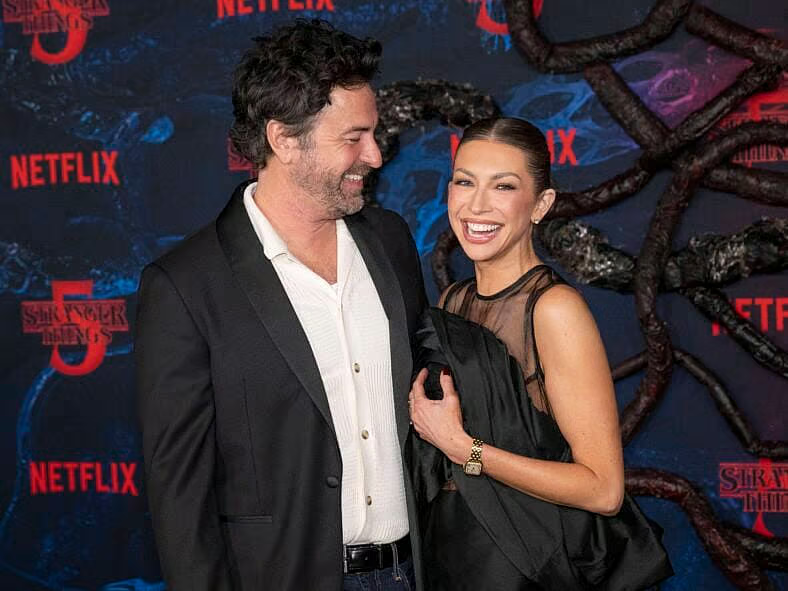
Stassi Schroeder and Beau Clark are confronting a painful disconnect in their six-year marriage. During Thursday’s premiere of the former “Vanderpump Rules” star’s new Hulu series, “House of Stassi,” Clark became emotional while admitting that he feels “angry and resentful” over the couple’s current dynamic.
The stay-at-home father revealed that Schroeder’s demanding career has left him feeling detached from his wife and that he compares their relationship to that of roommates. Despite the difficult conversation, the couple agreed to work on rebuilding their connection.
5ZUMAPRESS.com / MEGA
Clark initially opened up about his struggles during a conversation with Taylor Strecker, Schroeder’s podcast co-host. The 46-year-old explained that he is attempting to support Schroeder’s career while managing their home and caring for their two young children, five-year-old Hartford and two-year-old Messer.
“I’m trying to balance wanting her to have her space and to be able to not stress out when she’s working,” Clark shared. “But then also I’m sitting here, and I’m angry and resentful.”
Advertisement
Clark admitted that he had been “shoving it down” rather than discussing the issue directly with his wife. The approach only increased the emotional distance he felt developing between them. “I just got so detached from her that it’s like we’re roommates. I don’t feel worthy,” he confessed.
Clark became overwhelmed and cried as he discussed how deeply the change in their relationship had affected him.
Stay-At-Home Dad Struggles To Express His Feelings
During a confessional, Clark explained that his reluctance to speak up stemmed partly from his desire to avoid adding more pressure to Schroeder’s life. “I’m trying not to stress out Stassi. She’s got the show going on and her podcast. She’s got brand deals,” he told the camera.
Between her new reality series, podcast, and promotional commitments, Schroeder has become the primary breadwinner in the household while Clark focuses on raising their children. Although he had delayed addressing his feelings, Clark recognized that the couple could not continue ignoring the growing resentment.
“But Clark hoped that ‘at some point’ he would ‘find the words to just have a chat’ with Schroeder,” he said. “With Stassi, I will let her know how I’ve been feeling.”
Advertisement
Clark eventually followed through and initiated an honest conversation with his wife about the toll their family arrangement had taken on his mental health and sense of identity.
Beau Clark Compares Himself To A ‘1950s Housewife’
When Clark finally spoke to Schroeder, he explained how leaving the workforce to become a stay-at-home parent had changed the way he viewed himself. He told the reality star that he sometimes feels like “a 1950s housewife where I have my apron on and I’m cleaning everything while feeding the kids [and] sometimes that’s how I feel because we don’t have that connection all the time.”
His admission that they had begun to function like roommates visibly affected Schroeder, who became emotional as he listened. Schroeder reassured her husband that she wants him to “say things” rather than allow his frustrations to “build up” over time. She acknowledged that she needed to “make more of an effort” within their marriage and promised that they would “work through” the difficulties they were facing.
The conversation marked an important first step for the couple after Clark spent months silently attempting to balance his responsibilities with his desire to protect Schroeder from additional stress.
Although the conversation exposed serious issues in their marriage, Schroeder emphasized that Clark has consistently supported her through major changes in her life. During her own confessional, the 38-year-old reflected on the role he played as she became a mother and rebuilt her career.
“All I know is him being with me in the thick of it every day for the last five years. I became a mom, and he was with me the whole entire time,” she said.
Advertisement
Schroeder also described Clark as “supportive,” recognizing how much he had taken on while she pursued professional opportunities. However, she made it clear that his emotional struggles did not cause her to regret returning to reality television. “I’ve already been working for years to get here. I can’t just stop now because all of a sudden, Beau waited until this very moment to tell me that,” she told producers.
Rather than abandon her career, Schroeder appeared determined to find a better balance between her work and her marriage.
Stassi Schroeder And Beau Clark’s Relationship History
Schroeder began dating Clark in 2017 while she was still appearing on “Vanderpump Rules.” Their romance followed her on-and-off relationship with Patrick Meagher, which ended that same year. Schroeder also famously dated her former co-star Jax Taylor during the first season of the Bravo series.
Schroeder and Clark legally married in California in 2020, months after she was fired from “Vanderpump Rules” amid a racism scandal. The couple later celebrated with a larger destination wedding in Rome, Italy, in 2022.
They began building their family before their legal ceremony. Schroeder became pregnant with Hartford in April 2020 and welcomed her on January 7, 2021.
Advertisement
The couple announced Schroeder’s second pregnancy in March 2023 before welcoming Messer on September 7 of that year.





:max_bytes(150000):strip_icc():format(jpeg)/DonnaMills1-f957233293d841a49bbffd51e58eed04.jpg)


:max_bytes(150000):strip_icc():format(jpeg)/clueless-020224-89755159c6a843e8bbbcfa4361ad1639.jpg)















 Fashion6 days ago

 Business23 hours ago
 Tech4 days ago
 Crypto World5 days ago
 Politics3 days ago

 Politics2 days ago
 News Videos4 days ago
 Fashion7 days ago
 Sports7 days ago
 Business2 days ago
 Crypto World4 days ago
 News Videos7 hours ago
 Politics4 days ago

 Crypto World2 days ago
 Tech6 days ago
 Entertainment5 days ago
 News Videos2 days ago
You must be logged in to post a comment Login