TL;DR
Chaotic Eclipse dropped RoguePlanet, their seventh Windows zero-day, hours after Microsoft’s record Patch Tuesday. It grants SYSTEM access on fully patched machines.




Chaotic Eclipse dropped RoguePlanet, their seventh Windows zero-day, hours after Microsoft’s record Patch Tuesday. It grants SYSTEM access on fully patched machines.
Chaotic Eclipse, the security researcher Microsoft threatened with criminal prosecution, has published a seventh Windows zero-day exploit. Called RoguePlanet, it grants attackers SYSTEM privileges on fully patched Windows 10 and 11 machines. The researcher released the proof-of-concept hours after Microsoft shipped its June Patch Tuesday update, which fixed a record 200 vulnerabilities.
RoguePlanet exploits a race condition in Windows Defender’s internal processing logic. Specifically, it is a Time-of-Check to Time-of-Use (TOCTOU) vulnerability. An unprivileged user can redirect a file operation performed by Defender, which runs as SYSTEM, to execute attacker-controlled code at the highest privilege level.
“The exploit is a race condition, so it’s a hit or miss,” the researcher said. “I have managed to get a 100% success rate on some machines while it struggled to work on others.”

The 💜 of EU tech
The latest rumblings from the EU tech scene, a story from our wise ol’ founder Boris, and some questionable AI art. It’s free, every week, in your inbox. Sign up now!
Security firm ThreatLocker confirmed the flaw works and published a video demonstration. “Our initial analysis confirms that the RoguePlanet exploit is viable and performs as described,” said CEO Danny Jenkins. He added that application allowlisting can prevent the exploit from executing.
The proof-of-concept was published on a self-hosted Git repository after the researcher said Microsoft had both GitHub and GitLab repositories hosting earlier work removed. This is part of an escalating dispute. Microsoft invoked its Digital Crimes Unit against the researcher and revoked access to their Microsoft Security Response Center account.
Chaotic Eclipse has disclosed seven zero-days in a matter of months: BlueHammer, RedSun, UnDefend, YellowKey, GreenPlasma, MiniPlasma, and now RoguePlanet. Microsoft’s June Patch Tuesday fixed two of them, GreenPlasma and YellowKey, but the rest remain unpatched. The researcher says the disclosures are retaliation for how Microsoft handled the process.
“They mopped the floor with me and pulled every childish game they could,” the researcher wrote. “I was wondering if I was dealing with a massive corporation or someone who is just having fun seeing me suffer.”
The timing is pointed. Microsoft’s June Patch Tuesday was its largest ever, fixing 200 vulnerabilities including 33 rated critical and three publicly disclosed zero-days. Analysts attribute the surge in part to AI-assisted code auditing, which is finding vulnerabilities faster than defenders can patch them. RoguePlanet arriving hours after the record update underscores the gap: even the biggest patch cycle in Microsoft’s history was immediately obsolete for anyone running Windows Defender.
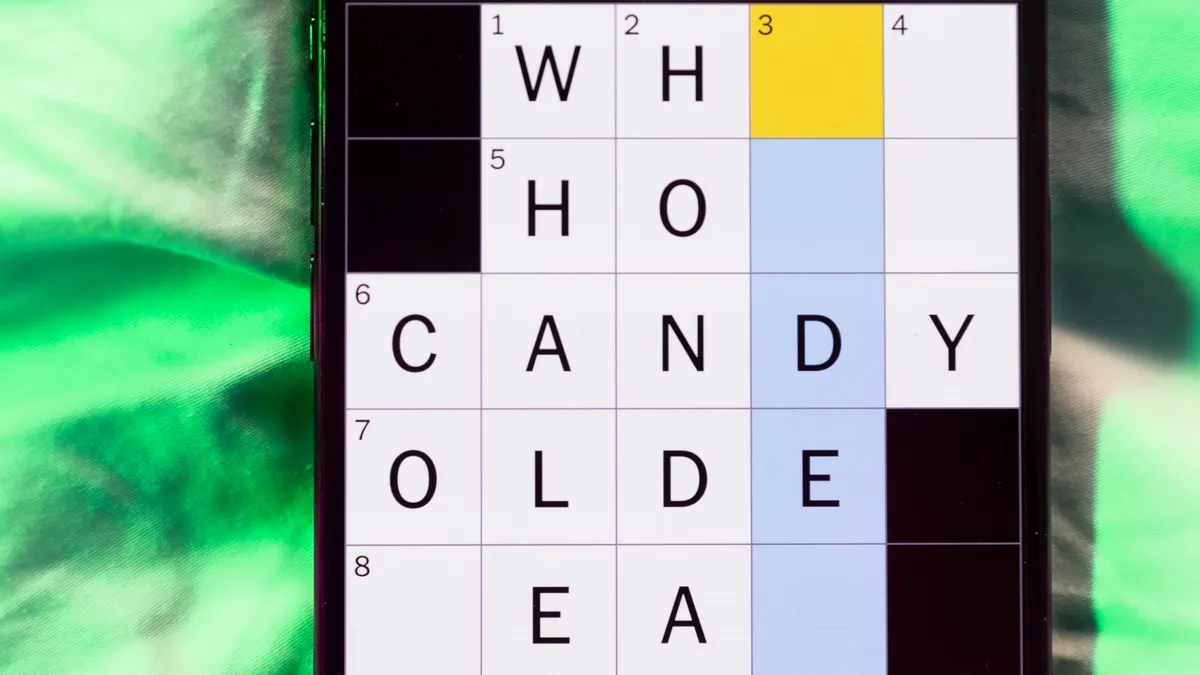
Looking for the most recent Mini Crossword answer? Click here for today’s Mini Crossword hints, as well as our daily answers and hints for The New York Times Wordle, Strands, Connections and Connections: Sports Edition puzzles.
Need some help with today’s Mini Crossword? I admit, 7-Across threw me for a bit, but I figured it out eventually. Read on for all the answers. And if you could use some hints and guidance for daily solving, check out our Mini Crossword tips.
If you’re looking for today’s Wordle, Connections, Connections: Sports Edition and Strands answers, you can visit CNET’s NYT puzzle hints page.
Read more: Tips and Tricks for Solving The New York Times Mini Crossword
Let’s get to those Mini Crossword clues and answers.
The completed NYT Mini Crossword puzzle for June 12, 2026.
1A clue: Vertical post in a doorframe
Answer: JAMB
5A clue: What “E” stands for in the musical mnemonic EGBDF
Answer: EVERY
7A clue: 6:7, e.g.
Answer: RATIO
8A clue: Rap or tap
Answer: KNOCK
9A clue: Quick puff on a joint
Answer: TOKE
1D clue: Kind of seasoning for Jamaican-style chicken
Answer: JERK
2D clue: ___-garde
Answer: AVANT
3D clue: “That makes two of us!”
Answer: METOO
4D clue: Badly missed jump shot, in hoops slang
Answer: BRICK
6D clue: Oxen’s harness
Answer: YOKE


Shion arrives when Season 3 starts on June 16.
After teasing the newest addition to the lineup of colorful characters in its team shooter earlier this week, Blizzard has released the gameplay trailer for another new damage hero. Shion will join Overwatch when its next season, the third since the Reign of Talon reboot, kicks off on June 16. This character won’t do anything to change the impression that Blizz is leaning hard on making hot heroes or that it’s starting to suffer same-face syndrome with its female lineup. But at the very least, Shion is one of the team’s most dramatic creations in a while, looking very stylish in an all-white suit paired with petite red horns and cybernetic red eyes.
Appearance-wise she might call to mind the moody Reaper character, but Shion’s kit actually feels more reminiscent of Tracer. She’s dual-wielding semi-automatic pistols as her base weapon, but can focus fire in a more powerful burst to finish off a low-health opponent. Mobility also seems core for this hero, since she has both a dash move and can ride actual motorcycle in-game. The bike seems especially satisfying, since it looks like there’s an ability for Shion to jump off and launch the vehicle forward into a rival. Her ultimate ability turns Shion into a damage-dealing vortex that can dash toward enemies.
Considering the big Overwatch reboot aims to emphasize a bigger narrative tying together the characters, it seems likely that the next lore drops will highlight story threads surrounding the Hashimoto clan where Shion is a boss. So expect more background on support heroes Kiriko and Mizuki as part of the larger drama about Vendetta’s efforts to take over the world as Talon’s new villain-in-charge.


There are existing methods to collect water from the ambient air, but most of them are large or cumbersome. Recent research by the University of Texas at Austin is taking that concept and transforming it something you could have on hand at all times. Or more literally, on your back at all times. In a study published in Scientific Advances, the team used a special textile to create a jacket capable of atmospheric water harvesting.
“We wanted to rethink the form of the technology,” said UT Austin’s Guihua Yu, one of the authors on the latest study. “If the fabric itself can collect water from air, it opens a new direction for personal and portable water access.”
The jacket used a special fabric designed to collect moisture from the air and gather it in detachable harvesting units rather than simply having the textile absorb the water. “That transport design is what allows the material to work not just in a small lab test, but in a wearable system,” added co-author Keith Johnston, also of UT Austin. The harvesters are then placed in a foldable collector piece and heated to produce drinkable water.
 University of Texas at Austin
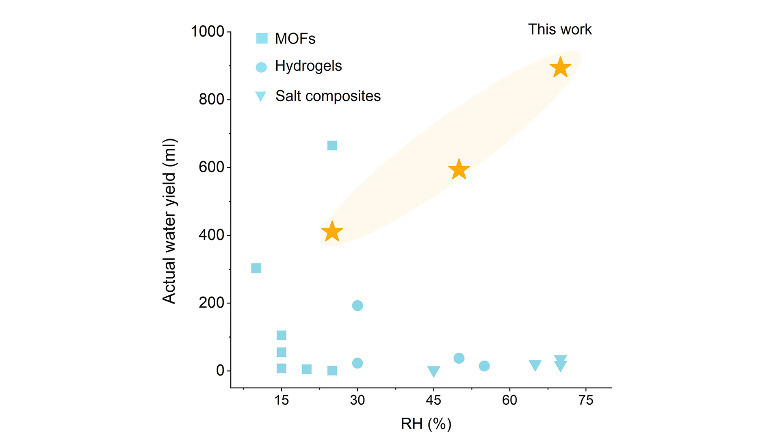
Depending on humidity levels, the jacket produced between 400 and 900 milliliters (about 14 to 30 ounces) of drinkable water per day in testing. The form factor created for this particular study was a jacket, but the investigators suggested that the same textile could be used to manufacture other objects, such as a backpack or a tent, to lend them water-collecting capabilities. The technology could have applications for medical response teams or during emergencies, particularly in remote places. On the commercial side, it could also make for some pretty useful hiking and extreme sports gear.

This article is republished from The Conversation under a Creative Commons license. Read the original article.
The American academic research engine has long been the envy of the world. Generally well-funded, labs in the United States have been able to attract the best minds who generate breakthroughs and train the next generation workforce that powers the U.S. economy. But since the start of the second Trump administration in January 2025, new federal policies have destabilized the American scientific enterprise.
The disruption generated by the Trump administration’s funding, DEI and visa policies has been well reported by the media. On an individual level, though, what do academic researchers think of all these changes and how have they been directly affected?
We are researchers affiliated with Arizona State University’s scientist opinion panel survey, known as SciOPS, a 5-year research program designed to monitor, understand and improve how scientists communicate with the public. We wanted to know more about the reality inside today’s universities as researchers grapple with Trump administration policies.
Along with our colleagues, we fielded a survey of randomly sampled members of the academic science community participating in the SciOPS panel. We obtained responses from 280 scientists from several fields, including biology, chemistry, civil and environmental engineering, computer and information science engineering, geography and public health from 131 universities.
Our results show dramatic, mostly negative, effects of federal policy changes on researchers, the research system and American competitiveness.
Any research enterprise thrives because of its ability to fund cutting-edge science and thus attract highly motivated, well-trained people. Since the second Trump administration took office in January 2025, just over half of the scientists in our survey report that their overall funding has declined.
Declines in federal funding have had knock-on effects. Around one-quarter of scientists reported that state and local and university internal funding have also declined. Another 9% reported that internal funding has increased, presumably as universities have provided emergency funds to researchers to support critical studies.
According to the scientists who responded to our survey, Trump administration policies have also affected the scientific workforce pipeline, hampering their ability to recruit internationally and domestically.
We hypothesize that these hiring issues can be related to visa and immigration policies, which make it difficult for international graduate students and postdocs to work in the U.S. or attend international conferences. Just over half of scientists in our survey reported that international students or postdocs have expressed concerns to them about deportation.
Concerns about longer-term career impacts are also to blame for trouble recruiting the next generation of researchers. Over 80% of surveyed scientists reported that graduate students or postdocs on their research team have increased concerns about future job prospects.
These impacts have taken a toll on scientists’ professional work environment and overall outlook. Over two-thirds reported more work-related stress and almost half reported increased workloads since January 2025. About half reported decreased work motivation.
We found scientists’ responses to be a mixture of resilience, acquiescence and considering an exit.
While many scientists said they were less motivated at work, most reported no change in their efforts to obtain federal research funding. Small proportions did report successfully increasing their efforts to obtain funding from non-federal sources.
Our survey also asked scientists whether they had taken any self-censoring actions since January 2025 due to concern over potential negative consequences for their work or career. Over half reported having reviewed or adjusted key words in research proposals, and almost half said they’d reframed research topics. Forty-three percent had also cautioned students or collaborators to be careful what they say publicly and more than a third had abandoned plans on one or more research topics.
Although scientists are adopting strategies to cope with the new challenges, nearly two-thirds of the scientists in our sample appear to be considering one or more other career options.
Scientists and engineers in our sample have strong opinions about the impacts of current U.S. science policy. A large majority (87%) believe the administration’s actions have influenced research priorities more than previous administrations. Most scientists in our survey had a negative opinion of the Trump administration’s overall changes to science policy.
Scientists in our sample believed that administration policies have had a negative effect on the future scientific workforce and the ability of scientists and engineers in the U.S. to produce breakthroughs and discoveries and contribute to national welfare.
Large majorities believe these policies have harmed public perceptions of the integrity of U.S. scientists (85%) and hurt public trust in science (84%).
Academic scientists’ reactions to the Trump administration’s changes to science policy are perhaps not surprising given the perceived level of threat these actions represent to the research community. What is less certain is whether the dramatic changes we are currently witnessing – cuts to grant funding, politicization of research, downsizing of federal agencies, restrictive immigration policies, attacks on the autonomy of higher education and more – are temporary or if they represent the initial phase of a transition to a new research environment with less federal support for American science.
Eric Welch is Professor and Director, Center for Science, Technology & Environmental Policy Studies at Arizona State University and Timothy P. Johnson is Professor Emeritus of Public Administration at University of Illinois Chicago
Filed Under: academics, donald trump, research, science, science policy

Looking for the most recent regular Connections answers? Click here for today’s Connections hints, as well as our daily answers and hints for The New York Times Mini Crossword, Wordle and Strands puzzles.
Today’s Connections: Sports Edition features a fun soccer topic that World Cup watchers might appreciate. If you’re struggling with the puzzle but still want to solve it, read on for hints and the answers.
Connections: Sports Edition is published by The Athletic, the subscription-based sports journalism site owned by The Times. It doesn’t appear in the NYT Games app, but it does in The Athletic’s own app. Or you can play it for free online.
Read more: NYT Connections: Sports Edition Puzzle Comes Out of Beta
Here are four hints for the groupings in today’s Connections: Sports Edition puzzle, ranked from the easiest yellow group to the tough (and sometimes bizarre) purple group.
Yellow group hint: You might build a house with them.
Green group hint: Hoops stars.
Blue group hint: Start your engines.
Purple group hint: World Cup wonders.
Yellow group: Boards.
Green group: Hall of Fame Spurs.
Blue group: Locations of famous auto races.
Purple group: Soccer skill moves.
Read more: The Best and Worst Letters for Wordle, According to the Data
The completed NYT Connections: Sports Edition puzzle for June 12, 2026.
The theme is boards. The four answers are skate, snow, surf and wake.
The theme is Hall of Fame Spurs. The four answers are Duncan, Gervin, Ginobili and Parker.
The theme is locations of famous auto races. The four answers are Daytona, Indianapolis, Le Mans and Monaco.
The theme is soccer skill moves. The four answers are nutmeg, Olimpico, rabona and stepover.
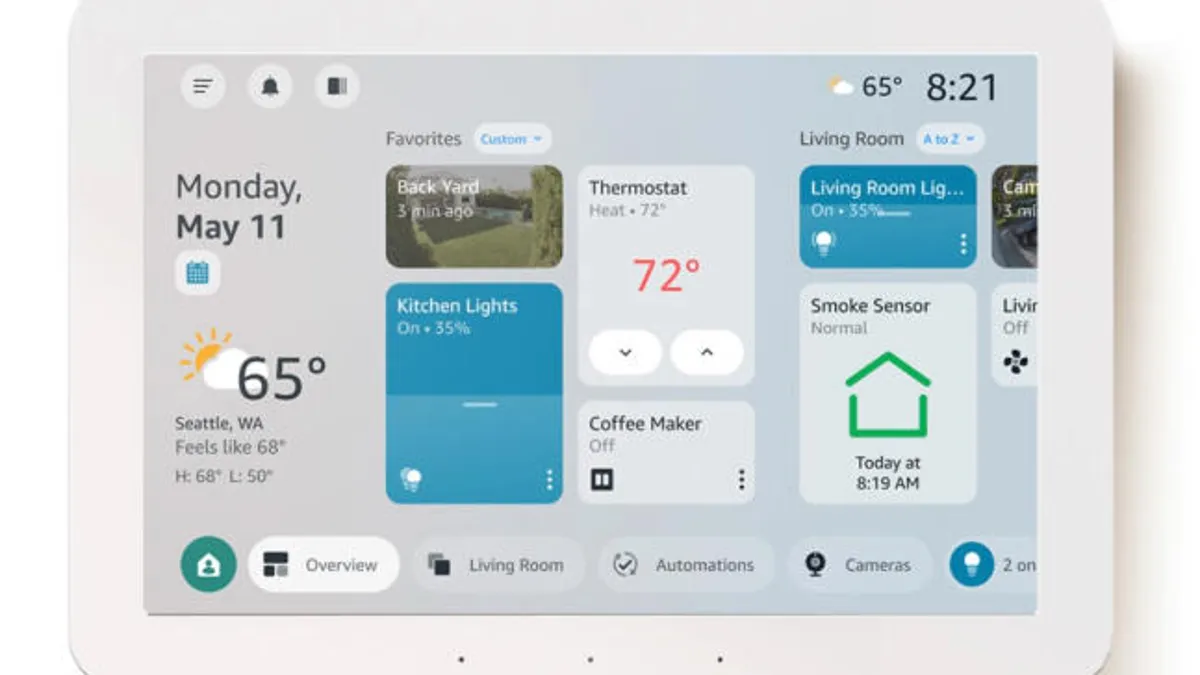
Amazon has unveiled new changes coming to its all-purpose wall-mounted display, the 8-inch Echo Hub ($180). The Hub, focused on smart home control, now has new graphics and significantly deeper customization, Amazon announced Thursday.
During normal operation, the Echo Hub usually shows controls for the devices you use the most, including those that use Matter, Zigbee, Thread and Bluetooth connections (as long as they work with Alexa). But you can also move these tiles around, enlarge or shrink them, and you can choose specific devices to add to the home screen for easier access.
A representative from Amazon didn’t immediately respond to a request for comment.
While devices are now grouped automatically by room and function, you can manually create your own groups to add a series of controls to. That includes routines that you may have previously set up.
Another innovation adds more granular controls, which is more useful than it may sound. For example, you can now access supported smart light bulbs, allowing you to dim them from 1% to 100% and to choose specific colors.
Echo Hubs can now give in-depth video information and answers with Alexa Plus and Ring AI.
If you use Alexa Plus (free with Amazon Prime or $20 per month) and have a Ring AI subscription for Ring security cameras, the Echo Hub can also provide a summary of camera events and video clips of the relevant actions (for example, delivered packages) for up to four feeds at the same time. You can also search through existing security videos directly on the Hub with Alexa voice commands.
These sound like convenient changes for the Echo Hub, but I’d look forward to them coming to Echo Show devices like mine, too. Echo Shows have traditionally had a broader focus than smart home controls, like showing video calls or TV shows, but this new customizable screen sounds better than the news and ads my Show has instead. Hopefully, Amazon will push similar features to other Echo devices.

An anonymous reader quotes a report from ZDNet: If digital sovereignty is important to you, and it certainly is in the European Union (EU), then you’ll be pleased to know that EuroOffice, a new open-source browser-based office suite alternative to Microsoft 365 and Google Workspace, has officially reached its first stable release. A coalition of EU-based companies, including Nextcloud, Ionos, and other Euro-Stack participants, is positioning Euro-Office as a cornerstone of European digital sovereignty. However, The Document Foundation (TDF), LibreOffice’s steward, accuses the project of reinforcing Microsoft’s document lock-in, which TDF argues isn’t friendly to open standards.
Setting aside the open-source politics for the moment, here’s what Euro-Office brings you. The release went live on June 9. It is, however, not a stand-alone office suite. As the software’s backers explain in a FAQ, “Euro-Office is more of an integration component. It merely handles document editing itself. Storage, as well as navigation, permissions, and sharing logic, have to be offered by a platform it is integrated in, like Proton Docs, Nextcloud Hub, or OpenProject.” So, while you can install Euro-Office on your own Linux server, you’ll need to integrate it yourself. If you’re not a Linux expert, however, don’t give up hope. Some companies have already released packaged, ready-to-install Euro-Office stacks, including Nextcloud Hub 26 Spring, Ionos’ Nextcloud Workspace, and Office.eu. These initial deployments are web-based rather than standalone desktop suites.
The goal, organizers say, is to give European organizations a way to host their office suite on EU infrastructure under EU law, while maintaining an experience familiar to Microsoft Office users. Specifically, Euro-Office is meant to be “a solution for editing documents, spreadsheets, and presentations, developed as a true sovereign community collaboration of over a dozen different organizations.” TDF’s main objection is that Euro-Office’s decision to default to Microsoft’s OOXML format undercuts its claims of European digital sovereignty, since OOXML remains closely tied to Microsoft Office behavior and control. “Compatibility is not sovereignty,” TDF warned, saying a European-branded suite that saves files in OOXML by default “is de facto an ally of Microsoft in its content lock-in strategy.”

Amazon Web Services on Thursday announced that efforts to curb water use at its data centers have made it seven times more water-efficient than the industry average.
The company says it’s 75% of the way toward its goal of being water positive by 2030, meaning for each gallon consumed at a data center, it will return a greater volume to the same community where it was drawn.
Data center operators are trying to address concerns about water and energy usage as AI adoption drives massive expansion of the facilities.
Even in Amazon’s backyard, resistance is growing. Seattle’s city council this week unanimously approved a one-year emergency moratorium on new large data centers inside city limits.
AWS executives said the reality of these facilities can differ from public perception.
“As we’ve been engaging with our local communities, they’ve been very pleasantly surprised about how little water we are using,” Kerry Person, AWS vice president of Data Center Operations, told GeekWire. “We’re starting to share more and more of this information publicly to really just educate folks.”
Data centers use a variety of strategies to keep their electronics cool. Those include fans, air that’s cooled using evaporated water, air conditioning and direct liquid cooling. The approaches involve resource tradeoffs: air conditioning draws more electricity but saves water, while evaporative cooling is less energy-intensive but consumes more water.
AWS uses fans to cool its facilities about 90% of the time, drawing in outside air, blowing it past server racks and releasing it back outside. The company switches to evaporative cooling when outside temperatures exceed roughly 85 degrees. Another water savings was gained by researching the maximum temperatures its electronics can tolerate, and running machines under warmer conditions.
@media (max-width: 600px) {
aside.callout { float:none !important; max-width:100% !important; margin-left:0 !important; margin-right:0 !important; }
aside.callout .callout-img { display:none !important; }
}
That allows the company to use 0.12 liters of water per kilowatt-hour of operations, compared to an industry average of 0.84 liters. The rate applies to both Amazon-owned facilities and leased data center space internationally, and has been verified by outside auditors.
While it touts its own accomplishments, Amazon also notes that the global data center industry uses less water than many may realize, accounting for 0.5% of all industrial water use worldwide.
Other tech companies are likewise implementing water-saving strategies and policies. Earlier this year, Microsoft pledged a 40% improvement in water efficiency by 2030 and committed to replenishing more water than it uses in each district where it operates. It also started installing closed-loop systems where water flows past heat-generating processing chips, drawing off heat that it carries to chillers. Then the cooled water starts the journey all over again.
But public concerns persist, particularly in regions facing water shortages. In 2025, Bloomberg reported that nearly two-thirds of the U.S. data centers that were built or are under development in the past three years are located in water-stressed areas.
Simon Hans Edasi, a Seattle-area data scientist and geospatial researcher, has examined data center locations in Washington state relative to water availability, energy access and other factors. He raised concerns about Amazon’s planned $4.8 billion campus in Burbank, near the Columbia River. The industry overall is moving “deeper into arid eastern Washington,” Edasi said.
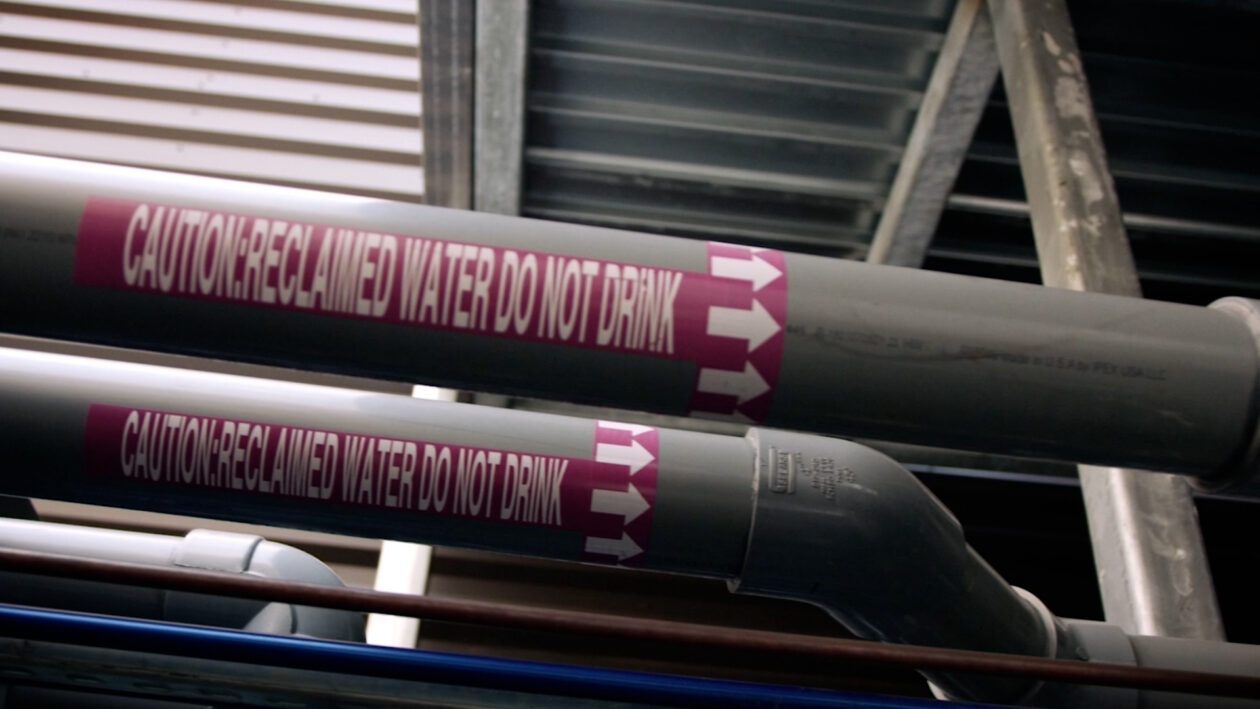
Without addressing that specific project, Will Hewes, Amazon’s water stewardship lead, said the company focuses on three things at each location: drawing as little water as possible, using recycled water sourced from treatment plants rather than drinking water supplies, and partnering with local organizations to replenish water back into the area.
“For any of those water-stressed basins where we’re operating, we’re making sure that in each of those we’re also putting more back,” Hewes said.
Replenishment efforts vary by location. They can include programs such as helping farmers use wastewater from data centers for irrigation, or working with building managers to fix water loss from running toilets and leaky faucets.
AWS consumed about 2.5 billion gallons of water for its data centers worldwide last year. Through replenishment efforts, the company reports returning 3 gallons for every 4 that it used.
If you work with radio, the chances are that before too long you’ll be winding an inductor. At radio frequencies these won’t be big chunky transformer style chokes, but often air-cored affairs supported by their own rigidity. As grizzled old radio amateurs will tell you though, relying on such a coil for stability is a fool’s errand. It will shift inductance from the slightest movement, thermal expansion, or even sound. Luckily [SolderSmoke] is here to remind us of the trusty fix, in the form of Q-dope, or a polystyrene solution that dries to form a rigid low-dielectric coating.
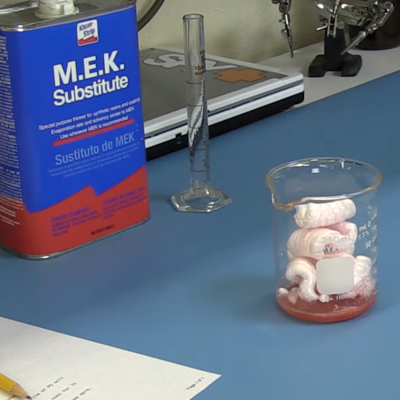
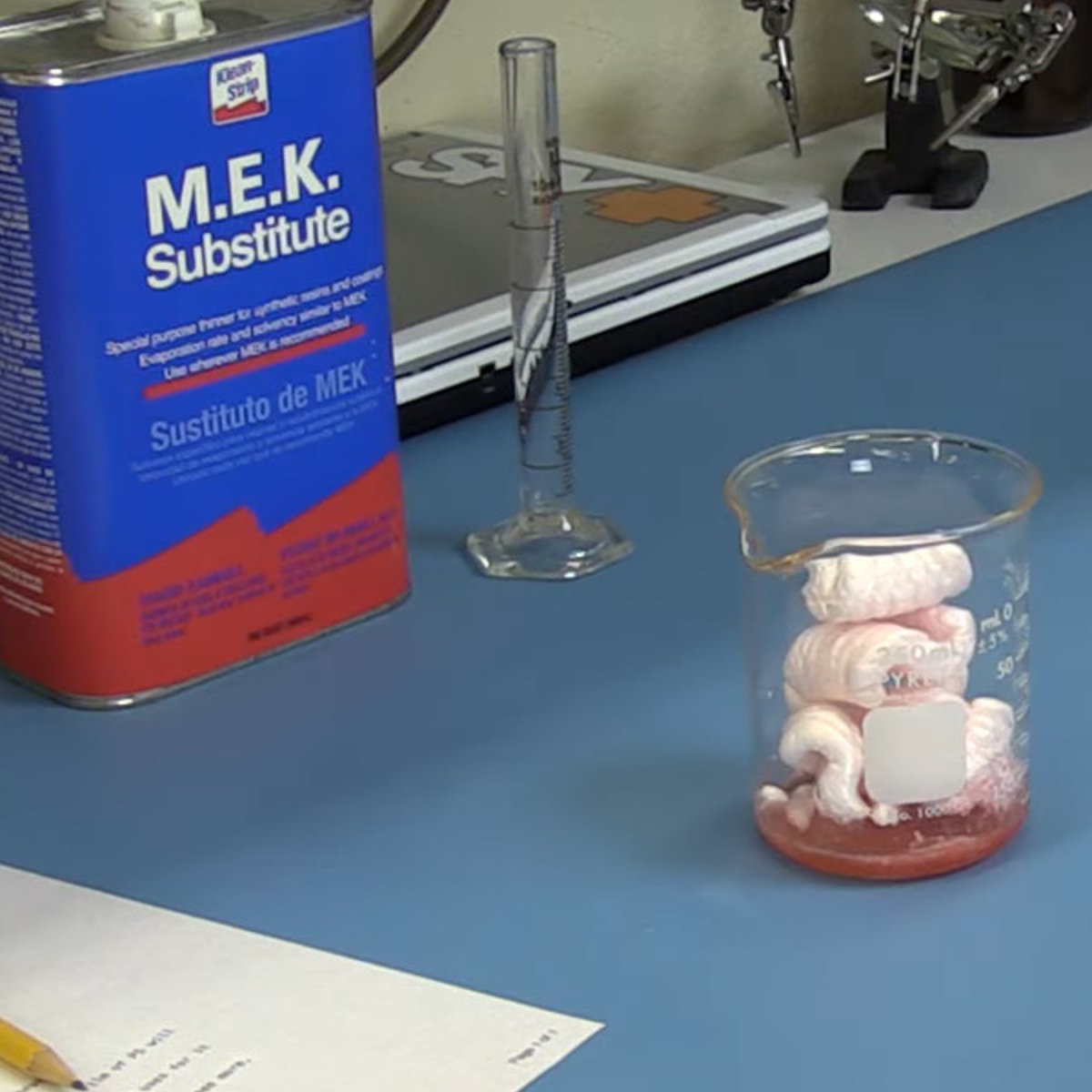 Where this is being written it wasn’t on the market so it was more usual to use nail lacquer, but reading the piece it seems American hams swore by the stuff. That’s in the past tense because it seems it’s no longer on the market. Even there though help is at hand, because dissolving packaging polystyrene in solvent yields an acceptable substitute. There’s even an 11-year-old how-to video linked from the SolderSmoke post, should you fancy making some of your own. We suggest you proceed with caution though, polymers dissolved in solvents sounds a lot like home-made napalm, and probably puts out fumes you don’t want to breathe.
Meanwhile should you fancy experiments of your own with inductors, we’ve got you covered.
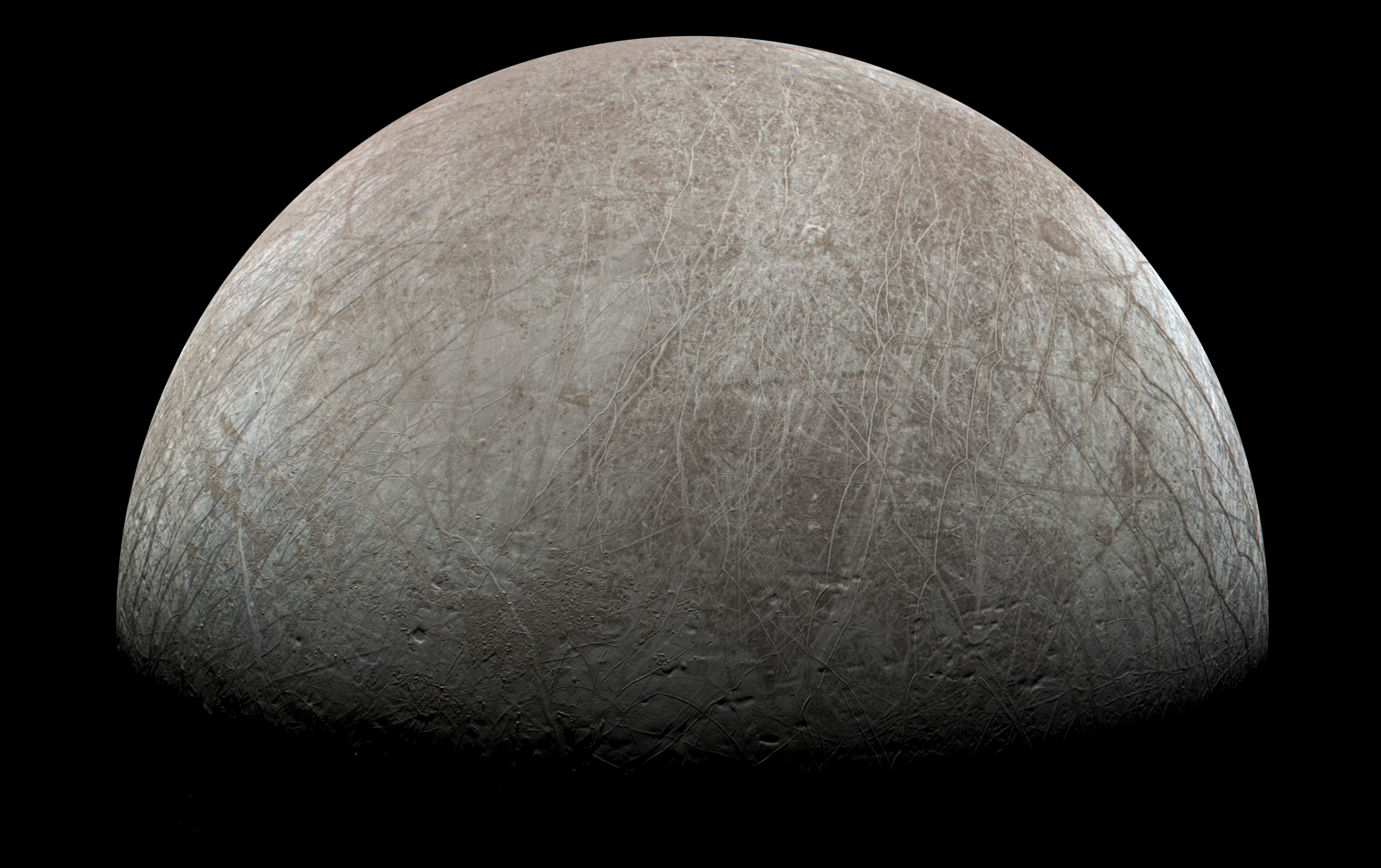
Unlike on Mars where for decades we have had dozens of orbital and ground-based platforms zipping and scurrying about to prod at every bit of emitted radiation, rock type and twitch of dust devils in its thin atmosphere, for other planets and their moons we have to do a lot more speculative interpretation of data. Such was the case with the presumed existence of water plumes on Jupiter’s moon Europa. These now appear to have been a statistical fluke, per research by [L. Roth] et al. in Astronomy & Astrophysics.
As succinctly summarized in the article on this by [Javier Barbuzano] of Sky and Telescope, the original 2013 finding of said water plumes by the same team was based on faint UV emissions from Europa’s southern hemisphere as captured by the Hubble Space Telescope. However, in more recent captures these emissions were not detected again, leading them to reexamine their original analysis of the 2013 data.
One of the main flaws was in the assumption of where Europe was located on Hubble’s 1,000 x 1,000 resolution detector, with the re-analysis showing that they were off by a couple of pixels. A second flaw was quite understandable as since 2013 we have learned that Europa has a thin hydrogen exosphere which interacts with the Sun’s UV radiation. The resulting scattering induces a UV glow which could be mistaken for UV radiation emanating from the moon’s surface.
Even with this one intriguing feature turning out to be a mirage, it doesn’t make Europa any less interesting as it’s still assumed to have vast liquid water oceans. Along with Uranus’ moon Miranda this makes it very worth it to experience more of the sights and sounds of these alien worlds, whether in person or via our robotic friends.




Weekend Open Thread: Evereve – Corporette.com

Jensen Huang Approves Samsung, SK Hynix, and Micron for NVIDIA (NVDA) HBM4 Memory Supply


Anatomy of the June crypto crash: Fed, Iran, Saylor

The Best Mystery Series of All Time Is Surging on Streaming 30 Years After It Ended


Alexander Zverev wins the French Open to finally earn a 1st Grand Slam title


Suspicious Polyfill login prompts pop up on Toshiba, Muji websites

Senator Cynthia Lummis Calls CLARITY Act the Most Consequential Financial Legislation of This Generation


Microsoft launches MXC, an OS-level sandbox for AI agents, with OpenAI and Nvidia already on board


Microsoft unveils seven homegrown AI models in new bid for ‘long term self-sufficiency’


(VIDEO) Justin Bieber Delivers Surprise Happy Birthday Serenade to Diners at Los Angeles Mexican Restaurant

Alexander Zverev conquers demons and outlasts Flavio Cobolli to win French Open for first major title

The Pain Points Taking a Fragile Tech Rally Down a Notch


High Stakes for Wembanyama as New York Pushes for 3-0 Lead

Eli Lilly (LLY) Stock Surges 4% Following Breakthrough Sleep Apnea Trial Results

Von der Leyen’s AI envoy pick draws conflict-of-interest fire

Meta steals a tactic from Tesla and builds data centers in tents
LBank Surpasses 25 Million Users Worldwide as AFA Partnership Continues to Drive Global Growth


Hackers now exploit SolarWinds Serv-U flaw to crash servers


Trump’s AI Ownership Plan Could Benefit Anthropic at OpenAI’s Expense

Bangladesh beat Australia after 20 years in ODIs, register only their second win over six-time world champions | Cricket News




You must be logged in to post a comment Login