If anyone can write a great breakup album, it’s Ben Gibbard. For almost 30 years, the Death Cab for Cutie frontman has channelled misery into such emotionally ruinous songs as 2003’s “Tiny Vessels”, with its cool and cruel detached lover, to “The Sound of Settling”, a lesson in unending, unrequited pining.
Today, though, Gibbard is reluctant to call the band’s new project a “divorce record”, despite the fact that, yes, it was written in the aftermath of his marriage ending. “Oftentimes those records are someone saying, ‘I’m going to bring this into the court of public opinion and tell my one-sided story about how this went down,’” he says. “You know the phrase, only a fool goes to court thinking the jury are bound to see it their way?”
Gibbard is the first to admit he’s played the fool before. “I’ve certainly taken that tactic before, when I was younger,” he says, citing 2015’s Kintsugi, written in the wake of his split from actor and musician Zooey Deschanel – to whom he was married for three years – as the most obvious example. “I’ve long since realised that painting yourself as the aggrieved narrator… well, there is a time and place for that, but at a certain moment in life, you’ve got to grow out of it.” Anyway, he adds wryly, “Does anyone really think the biggest pop star in the world is always the innocent bystander in their own life? I don’t think so.”
Nearing 50, Gibbard has grown out of it and then some. Released last week, the band’s 11th album, I Built You a Tower, opens with mellow, melancholic guitar and the line: “Please forgive me.” It’s as much a plea to himself as it is to the person he’s speaking to. Later, on the jittery “Punching the Flowers”, Gibbard sings of words “sharpened like axes” that a man swings around “blindly”. Lyrically, Gibbard appears ready to look inward, to hold his hands up and own his mistakes. It’s not you, it’s me, he seems to be saying. Or at the very least, it’s both of us.
Advertisement
Death Cab for Cutie have released their 11th album, ‘I Built You a Tower’ (Provided by label)
The songs are no less potent for their maturity; age has given them a hard-won patina. Even after they aged out of it, Death Cab have always tuned into that high frequency of youth, when everything is either the end or the beginning of the world. The confessional lyricism and assured sound of their Grammy-nominated fifth studio album Plans, released in 2005, proved to be their breakthrough from the Pacific Northwest music scene. It was also the first record they released on a major label (Atlantic), and the first time they’d recorded outside of their hometown.
“I felt less comfortable in my own skin in the world,” Gibbard says of their cultural “peak”, a time when their music was inescapable thanks to relentless syncing by hit shows such as The OC, Grey’s Anatomy, and One Tree Hill. “Trying to go about my life the way I’d gone about it before, I felt that more people were staring at me in places I was not used to being stared at. It’s kind of a headf*** when you feel like your presence is a topic of conversation whereas before nobody gave a s***.” Increasingly, celebrity felt like anathema to Gibbard, both living his life, and later, making music.
Those feelings were amplified when he began dating Deschanel. Pre-New Girl but post-500 Days of Summer, she was considerably more famous than Gibbard, who had to adapt.
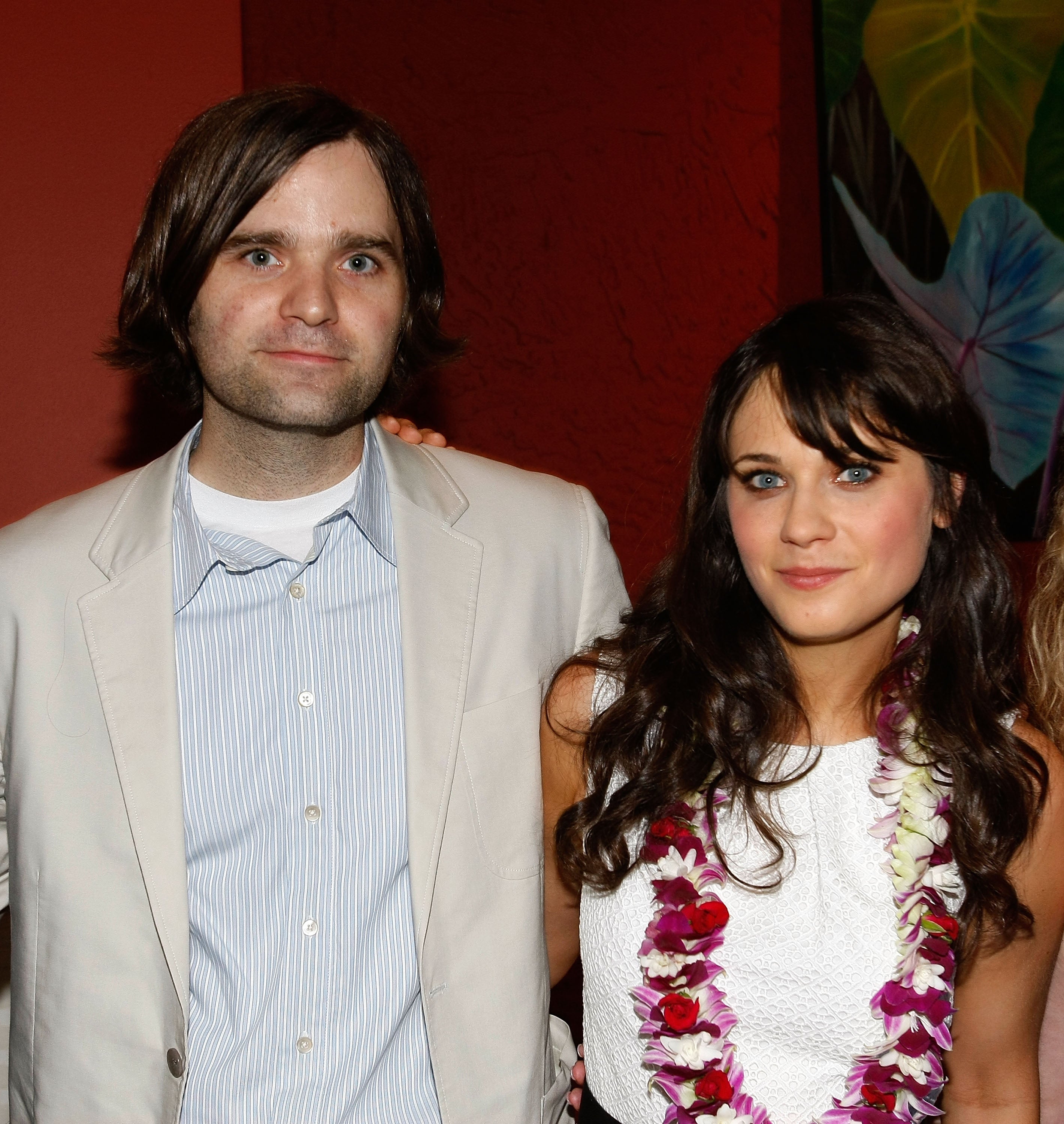
Gibbard with Zooey Deschanel in 2009 (Getty)
“Without going into detail, there were some scary people around, and that changed how I had to live my life,” he says. “I felt like I was living my life in public like a Secret Service agent.” When they went out on dates, Gibbard would locate the exits by second nature; he and Deschanel had code words for emergencies.
Enjoy unlimited access to 100 million ad-free songs and podcasts with Amazon Music
ADVERTISEMENT. If you sign up to this service we will earn commission. This revenue helps to fund journalism across The Independent.
Advertisement
That feeling of being surveilled 24/7 invariably had an impact on Gibbard’s songwriting: “When you’re with someone who’s recognisable, you start taking on some of that reticence as well. I found myself deferring to her level of reticence because, well, it was different for her than it was for me. I think I retreated as a writer as a result of that.”
We’re speaking over a video call, but Gibbard’s screen is dark. “I’m a pacer when I talk,” he explains, and I get the sense that he is more open because of it. The absence of video, though, does mean I have to rely on recent photographs to know that he is no longer sporting that age-old emo signifier: the side fringe. Instead, the hairs sweep up, optimistic and hopeful.
Without going into detail, there were some scary people around, and that changed how I had to live my life
As we get older, we find new ways of coping. I Built You a Tower refers to Gibbard’s penchant for compartmentalisation, a process in which he assigns the memories and people in his life – whether wonderful or painful – a place in his psychological skyline. Death Cab, for example, looms large on the horizon, like a skyscraper. The tower was erected after his last marriage: “But sometimes the memories, the people, find their way out of the structures. You hear a song, or smell something, and all of a sudden you’re back in that time of your life,” he says. The album’s title track explores exactly this: “’Cause I needed you/ I needed you contained.”
Advertisement
But nothing stays contained for ever. His second divorce, from tour manager and photographer Rachel Demy, spilled over into a 2023 anniversary tour for both Death Cab and Gibbard’s other longtime band, Postal Service. In some ways, performing became a salve, he says. “To be back in my 26-year-old self, so to speak, for two hours a night, and play these songs from a very different time in my life…” Other times, the clashing of his two lives felt disorientating: “One moment you’re emailing with a lawyer, dealing with the ugly elements of divorce – I wouldn’t recommend it, of course – and then, all of a sudden, it’s time to go on stage.’”
It helped that everyone – from his bandmates to the crew – knew what was going on. “Everyone understood the pressure that was on me,” he says. “The timing of it was not ideal, but at the same time, there really couldn’t have been a better group of people to be around.”
In truth, playing anniversary shows is weird even without the divorce element, says Gibbard. Coming face-to-face with your 20-year-old self isn’t always flattering. But it can also be funny. “I’ll be listening to songs on the first record about some girl I dated for two months, and it’ll be like, ‘Oh my God! I can’t believe this happened!’ and then you get older and it’s like, yeah, s*** happens. Life is a series of s*** happening. That’s how life works.”
Gibbard: ‘The girl I wrote “Tiny Vessels” about… We laugh about it now’ (Getty)
Gibbard sees the gulf between himself now and himself back then as a sign of emotional growth, reassurance that he isn’t the same mercenary lover who whined “you are beautiful but you don’t mean a thing to me” on “Tiny Vessels” more than 20 years ago. “The girl I wrote that song about… We laugh about it now,” he says. “ I just think, ‘Oh my God. I was really being such a little b**** about this.’”
On I Built You a Tower, he’s as candid as he was when the band first started. It’s their first release since going independent again – the original plan was one more album with Atlantic, until a personnel change prompted them to leave. “It was like an episode of Succession,” says Gibbard, recalling how former CEO Julie Greenwald left in 2024. “This nepo baby [Elliot Grainge, son of Universal Music Group CEO Lucian Grange] was given the label,” he says critically. “We took one look at this guy’s picture and we were like, ‘This guy didn’t have a Transatlanticism phase in college. This guy didn’t rock with Plans. I think we can safely say that this isn’t our guy.” And so they left.
Advertisement
At Anti, Death Cab are in good company with fellow artists MJ Lenderman, Waxahatchee, Fleet Foxes, Slow Pulp, The Beths. “I mean, f***ing Tom Waits,” continues Gibbard. “It felt like the perfect place for us. We’re not being put out to pasture on a retirement label.”
He has no interest in giving in to the pull of Noughties nostalgia; beyond the lyrical evolutions, I Built You a Tower is expansive and diverse in sound, too. That said, he knows what it means to fans to hear their old stuff live, because he is a fan first and foremost himself. “What’s the point of playing a show if you’re not going to honour the connection that people have with that music?” he asks. It’s further evidence of how Gibbard has matured. He cares how the other side feels.
Water is recognised as critical national infrastructure. However, drought does not only threaten our water supply. It also tests the resilience of the food system that depends on it.
For most of us, that reality becomes visible in the supermarket: standing in front of a shelf with no cucumbers, more expensive tomatoes or fewer fresh vegetables to choose from. These episodes have become increasingly familiar in recent years. We notice the empty shelves, accept the higher prices and move on.
But I keep wondering: why does this surprise so many people?
Advertisement
The UK carefully monitors many of the systems that underpin everyday life. We publish inflation figures every month, NHS waiting lists every week and regularly report on water reservoir levels because these indicators tell us whether essential systems are becoming stronger or weaker. They provide an early indication that intervention may be needed before problems escalate. Food, however, is different. We tend to judge the resilience of our food system only after something has gone wrong.
That seems odd for something so fundamental. Food is every bit as essential as
healthcare, energy or water, yet we have no simple measure that tells us whether
Britain’s ability to produce and supply food is becoming more or less resilient over time.
Part of the problem is that we often confuse food security with food resilience.
Food security is about whether people have access to sufficient, safe and nutritious food.
Advertisement
Food resilience is something different. It describes the ability of the food system to continue functioning when faced with disruption, whether from extreme weather,
geopolitical instability, disease outbreaks or volatile energy markets.
In nature, resilience is often defined as the capacity of a system to absorb disturbance while maintaining its core function. It seems remarkable that we routinely apply this thinking to natural ecosystems, yet rarely to the food systems on which society depends.
Drought can lead to shortage of fresh produce such as cucumbers. Matylda Laurence/Shutterstock
A country can appear food secure while quietly becoming less resilient. Increasing
reliance on imports, ageing production infrastructure, exposure to energy price
shocks or declining domestic investment may not affect consumers immediately – but
together they make the system increasingly vulnerable when disruption occurs.
Advertisement
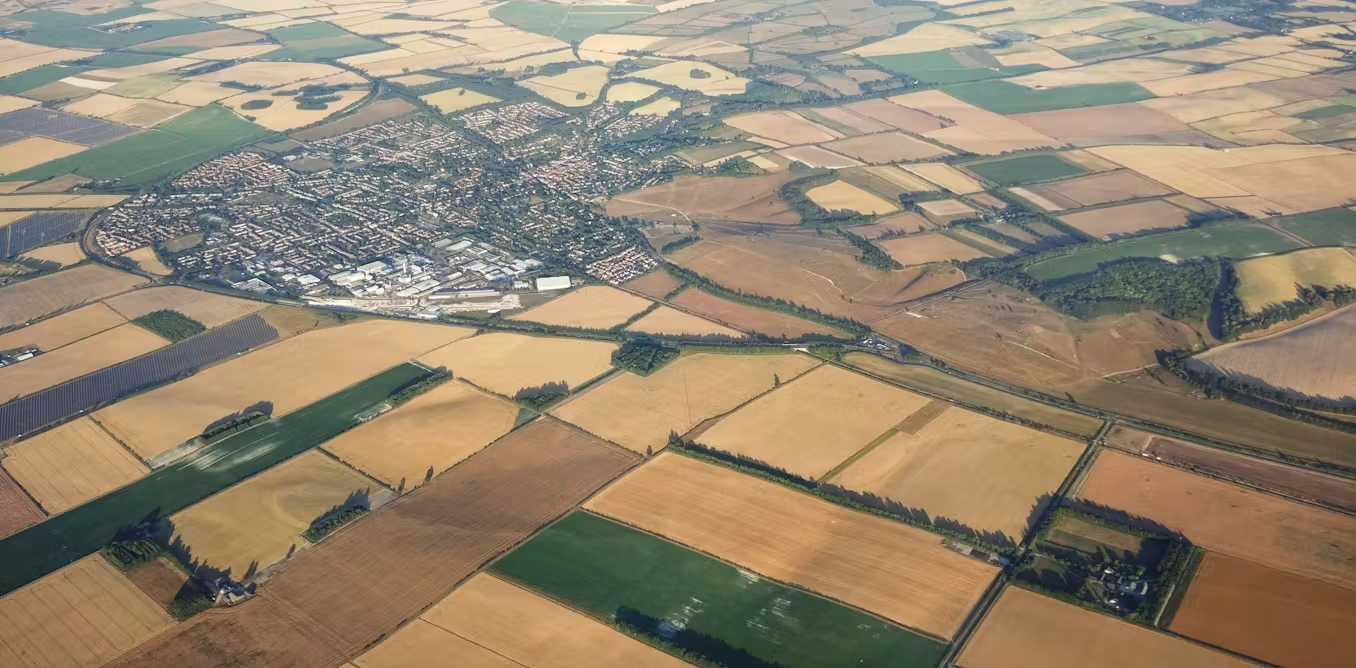
The UK illustrates this well. Overall food self-sufficiency has remained at around 60% for many years, but only around 16% of the fruit consumed in the UK is grown domestically, while just over half of our vegetables are produced here. Fresh
produce therefore depends heavily on international supply chains that are becoming
more exposed to climate extremes and geopolitical uncertainty.
Recent work published by my team shows that 70% of Britain’s commercial greenhouses are now more than 40 years old. Much of the infrastructure responsible for producing fresh fruit and vegetables was built decades ago and is approaching the end of its design life, yet investment in
renewal has lagged behind many of our international competitors.
None of these statistics alone suggest an imminent crisis. Taken together, however,
they begin to tell us something about the condition of the system. We already accept this type of thinking in other sectors.
A doctor does not diagnose a patient using a single measurement but combines blood pressure, heart rate, cholesterol and other indicators to assess overall health. Likewise, the economy is not judged using GDP alone; policymakers also consider inflation, unemployment and productivity.
Advertisement
A new index
Complex systems require multiple indicators. This is why I believe it is time to
consider introducing a UK food resilience index.
The idea is surprisingly straightforward. We already collect much of the information needed. Government departments monitor agricultural production, trade, weather, water resources and energy. Industry understands infrastructure, investment, production capacity and grower confidence. Researchers analyse climate risks, supply chains and food systems. The challenge is not a lack of data, but that these pieces remain disconnected.
The aviation industry offers another useful comparison. Airlines do not wait for an
engine to fail before deciding whether an aircraft is safe to fly. Thousands of
measurements are taken continuously. A slight increase in vibration or fuel
consumption does not mean an aircraft is unsafe today, but it may indicate that
maintenance will soon be needed. The objective is to identify developing
weaknesses long before they become failures. Our food system deserves the same
philosophy.
A food resilience index would not rely on a single statistic. Instead, it could bring together a basket of indicators that reflect the condition of the food system. Some would measure production capacity, such as domestic fruit and vegetable output, greenhouse infrastructure renewal and land remaining in commercial production.
Advertisement
Others would capture external exposure, including import dependency, diversity of
trading partners and energy costs. A third group could assess future resilience,
looking at investment in new infrastructure, adoption of technology, water availability, workforce capacity and business confidence across the sector.
Each indicator could be standardised and combined into a single score, perhaps
between 0 and 100, much like composite indices already used to measure economic
performance, environmental quality or human development. More importantly, the
individual components would reveal why resilience was improving or declining.
A declining resilience score would signal an increasing risk of higher food prices, greater import dependence and more frequent supply disruptions. It would help governments target investment before problems become crises and help explain to consumers why food prices change long before shortages appear.
The current drought is a reminder that extreme weather will become more common. But droughts, heatwaves and floods are often the triggers rather than the underlying cause. Like a warning light on an aircraft dashboard, they expose weaknesses that have been developing quietly for years. Monitoring the resilience of our food system would not prevent every disruption, but it would help identify those weaknesses earlier, giving us a better chance of strengthening the system before the next drought, or any other shock, puts it to the test.
Cambridgeshire residents say they face ‘lines of HGVs’ coming past their homes when traffic is diverted
Cambridgeshire County Council is facing calls to restrict HGV traffic on rural roads as redirected lorries are reportedly “destroying the roads”.
Advertisement
Cllr Mark Goldsack, of Soham North and Isleham, said he was “very pleased” that repairs to the A142 Soham Road had been scheduled but they were not given enough notice.
Speaking at a county council meeting on Tuesday (July 28), the Conservative councillor said: “We were told there would be at least four weeks’ notice before we know what’s going on. That’s impossible, because there was 10 days between the actual original notice and the actual proposed start date.
“And the diversionary routes were… quite frankly, I think my eight-year-old granddaughter could have come up with better ideas.”
He said they should “totally avoid” using “peat-damaged Fenland roads” as diversions when major A roads are closed.
Advertisement
He said: “The local drivers know where the dips are, know where the bumps are and know where the problems are and drive accordingly. The other drivers, who are on diversionary routes, don’t.
“They go at excess speeds and they’re the ones that cause the problems and, exactly as the chairman said, where there’s water and there’s a bumpy road – the logical outcome often occurs.”
Josh Rutherford, head of asset management, said: “In an emergency situation the police would be able to divert onto the nearest possible viable route. If it was a highways diversion – then we would divert onto a road of the same class.”
Cllr Ian Gardener, of Alconbury and Kimbolton, asked if signs could be put up to divert HGVs away from rural roads that can’t handle their weight.
Advertisement
The Conservative councillor said every time the road is closed – a crash on Monday (July 27) on the A14 at Bythorn being the latest example – the huge lorries “come off the A14 and they’re on our rural roads”.
He said: “They are destroying the roads and it’s creating a much greater maintenance cost for the county council. To spend a few hundred pounds on a few signs might help the situation.
“I know drivers follow their satnavs and what have you, but if they were to see ‘not suitable for HGVs’, it might reduce some – I’m not saying it would reduce all, but I just think that might help and would alleviate the issues that I get with residents saying, ‘I’ve now got lines of HGVs coming past my house.’
“We really can’t keep on with it because it’s just destroying the roads and the rural roads never seem to get that much expenditure on them.”
Advertisement
Mr Rutherford said that “year-on-year” the amount spent on rural roads across the county is a “significant part of the highways maintenance budget”. He said: “I do appreciate that the rural road network is huge – there are a lot of roads out there and there is a lot that needs doing.”
He said he agreed with looking at a “more holistic approach to highway maintenance” as alternatives to just patching up potholes after the roads are already damaged.
Mr Rutherford said: “You know we’ve done that probably 50 times – the definition of insanity and everything else.”
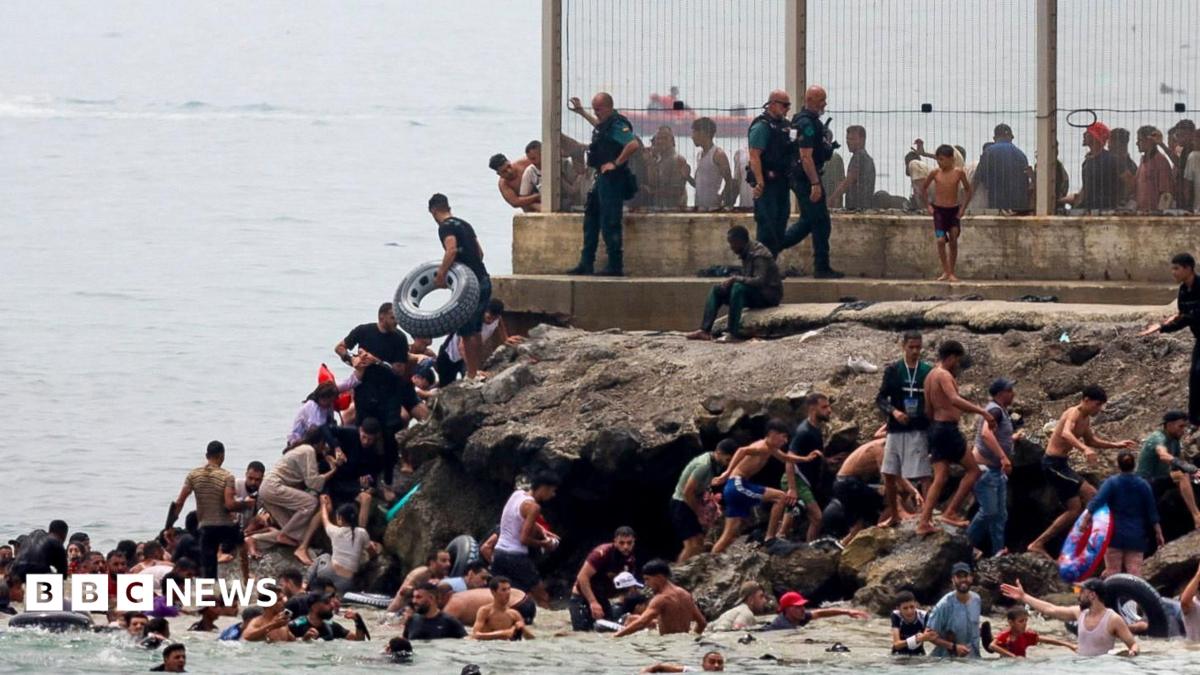
It was unclear how many exactly had crossed the border. Spanish media estimated between 2,000 and 3,000 people entered Ceuta on Thursday, according to Reuters, but said that the Guardia Civil had not confirmed the figure.
As tensions rose, there were unconfirmed reports of clashes late on Thursday.
In Fnideq, a Moroccan town near the Ceuta border, Moroccan authorities fired water cannons at migrants in an attempt to deter them from crossing, witnesses told Reuters.
In Melilla, Spain’s second autonomous city in northern Africa, footage from local media and human rights organisations appeared to show clashes at the Beni Ansar border point.
Ceuta and Melilla represent the European Union’s only land border with Africa.
Spanish authorities have increased security around the enclaves in recent years through increased surveillance, barrier reinforcement, and improved bilateral relations with Morocco, but people continue to attempt to cross.
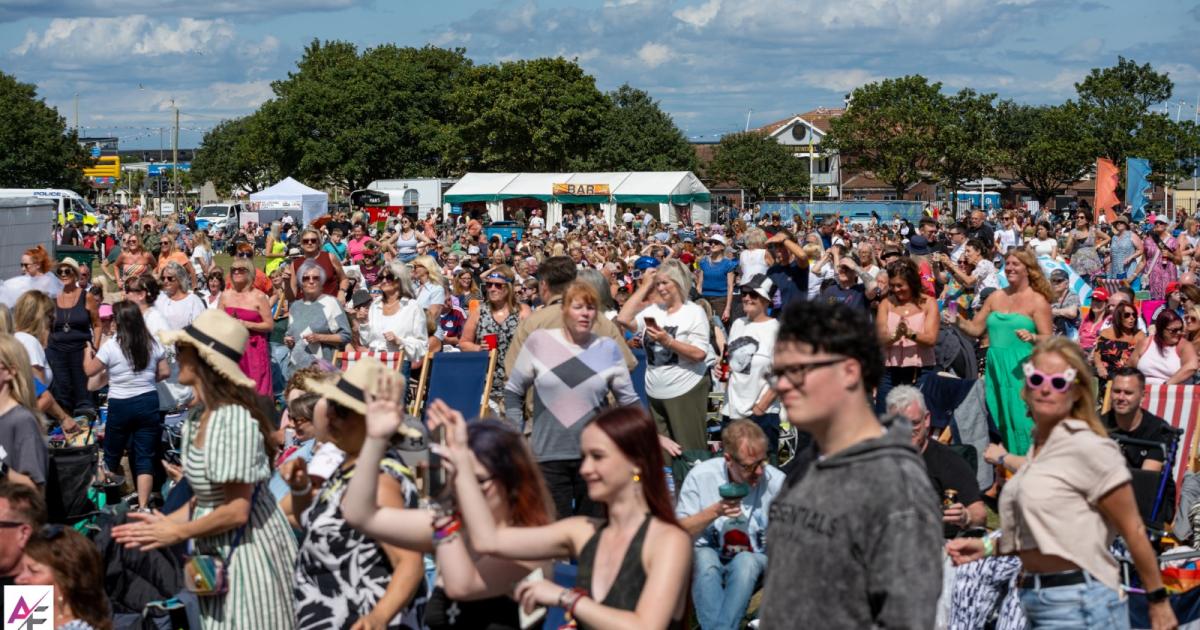
A full day of dance classics will wrap up this year’s series of concerts, with the festival beginning at noon on Sunday.
The event will feature an array of talented performers, each ready to provide an entertaining experience.
The internationally renowned Judge Jules Live will headline the festival, bringing his signature club anthems to the audience with the extra flair of a live band.
Before Judge Jules takes the stage, concert-goers can look forward to performances from South Tyneside favourites Phats and Small and SFA, as well as the ever-energetic Ultrabeat, known for their feel-good classics.
Sweet Female Attitude will kick-start the musical programme at 1:25pm, followed by Ultrabeat at 2.30pm, and Judge Jules at 3.40pm.
There has been a change to this year’s ticketing policy – all tickets are now paid for, meaning there is no early priority entrance.
When trying to make more sustainable clothing choices, many consumers follow a simple rule: choose natural fibres over synthetic ones. Cotton instead of polyester. Wool instead of acrylic. Linen instead of nylon.
The logic seems straightforward. Natural fibres originate from plants or animals, while synthetic fibres are largely derived from fossil fuels. If a fibre comes from nature, it must surely be the more environmentally friendly option.
But our new review of research examining textile chemistry, fibre type and environmental consequences suggests the reality is far more complicated.
What matters is not simply where a fibre comes from, but what happens to it throughout its journey from the raw material to a finished garment. Many consumers imagine a cotton T-shirt as little more than processed plant material. Yet cotton is a water-intensive crop and, in many parts of the world, relies heavily on pesticides and fertilisers. Even after harvesting, the story doesn’t end. Before reaching the shop floor, textiles often undergo extensive chemical processing.
Advertisement
Fibres may be bleached, dyed, softened, strengthened or waterproofed. Some are treated to make them flame retardant or resistant to creasing, staining and microbial growth. These treatments help create the products consumers have come to expect, improving appearance, durability and performance. But they also influence how textiles behave throughout their life cycle. This affects how they degrade, what they release into the environment and how easily they can be recycled.
Certifications for sustainable textiles often focus on the environmental consequences of sourcing the raw fibre itself. Cotton requires land and water. Polyester relies on fossil resources. Wool raises questions about livestock emissions and land use. These are important considerations, but they tell only part of the story.
In collaboration with colleagues at the sustainable textiles and apparel research group at the University of Manchester, we have published a systematic review that highlights how a garment’s environmental cost depends not only on the fibre itself – but also on the chemicals used throughout production and the ways in which those materials behave during use, reuse and disposal.
Advertisement
Our latest research shows that chemicals introduced during cultivation, fibre production, dyeing, finishing and performance enhancement can affect how textiles behave in the environment, including how they degrade, what they release and how easily they can be recycled.
For example, per- and polyfluoroalkyl substances (Pfas), often referred to as “forever chemicals”, are used to give textiles water- and stain-resistant properties but are highly persistent in the environment. Formaldehyde-based finishes improve crease resistance.
Other chemicals, including some phthalates (used to make some coatings and plastics more flexible), bisphenols (used in some plastic and textile coating manufacture), heavy metals and dye compounds, have also been associated with environmental or human health concerns depending on how they are used and managed throughout a product’s life cycle.
Colour dyes and other synthetic chemicals are often used in the production of cotton textiles. laksena/Shutterstock
This complexity is often invisible to consumers. Two garments made from the same fibre may have very different environmental footprints depending on how they were processed and finished.
Public and policy discussions about textile pollution have largely focused on synthetic microplastics. Yet our review of the evidence suggests the picture is more complex. Natural fibres such as cotton and wool, together with regenerated cellulose fibres such as viscose and lyocell (derived from wood pulp), have also been widely detected in rivers, oceans and rain or cloud particles.
This does not mean natural fibres are necessarily more harmful than synthetic alternatives. Rather, it highlights that pollution cannot be understood simply by looking at fibre origin.
As textiles are worn, washed and eventually discarded, both fibres and the chemicals applied to them can be released into the environment. They may enter rivers and oceans through wastewater, accumulate in soils through the application of sewage sludge, or become airborne as dust and fibre fragments. Understanding how fibres and the chemicals they carry move through the environment is now an active area of research for scientists around the world and one that is reshaping how we think about the true environmental footprint of our clothes.
Advertisement
The challenge for recycling
Chemical complexity makes it harder to create a more circular textile system – one that aims to design out waste by keeping materials in use through reuse, repair and recycling. Complex mixtures of fibres, dyes and chemical finishes make it more difficult to sort, recycle and recover textiles into high-quality new products.
As governments and industry invest in more circular textile systems, understanding the chemical history of textiles is becoming increasingly important. A recycled cotton fibre, for example, may still carry dyes, finishes or performance treatments that affect how it can be safely reused or recycled. Yet this information is often incomplete or unavailable, making it difficult for recyclers, manufacturers and retailers to know exactly what materials they are handling.
This is one reason why policymakers are introducing measures such as digital product passports. Although textile specifc requirements are still being developed, these passports will store information about a product’s materials, repairability and environmental characteristics throughout its life cycle. Alongside greater transparency about the chemicals used in textile production, initiatives that enable greater transparency can support safer recycling, reduce waste and help create a more circular textile industry.
Our findings do not suggest that consumers should avoid natural fibres. Nor do they suggest that synthetic fibres are the answer.
There is no perfect fibre.
Researchers in Finland have argued the need to move beyond simplistic sustainability narratives. Consumers can make more informed choices by buying fewer, higher-quality garments. They can use products for a longer time, repair and reuse clothing where possible, and support brands that are transparent about the materials and chemicals they use.
Certification schemes such as Oeko-Tex (which means the fabric has been tested for harmful substances and found to be below specific levels) or bluesign (which means the textile has been manufactured using responsible chemical management and environmental practices) can also provide useful reassurance.
Advertisement
The most sustainable textile is not necessarily the one made from a natural fibre. It is the one designed, manufactured, used and managed responsibly throughout its entire life cycle.
To build a genuinely sustainable textile industry, we need to stop asking whether a fibre is natural or synthetic and start asking what has happened to it along the way … and where it will end up.
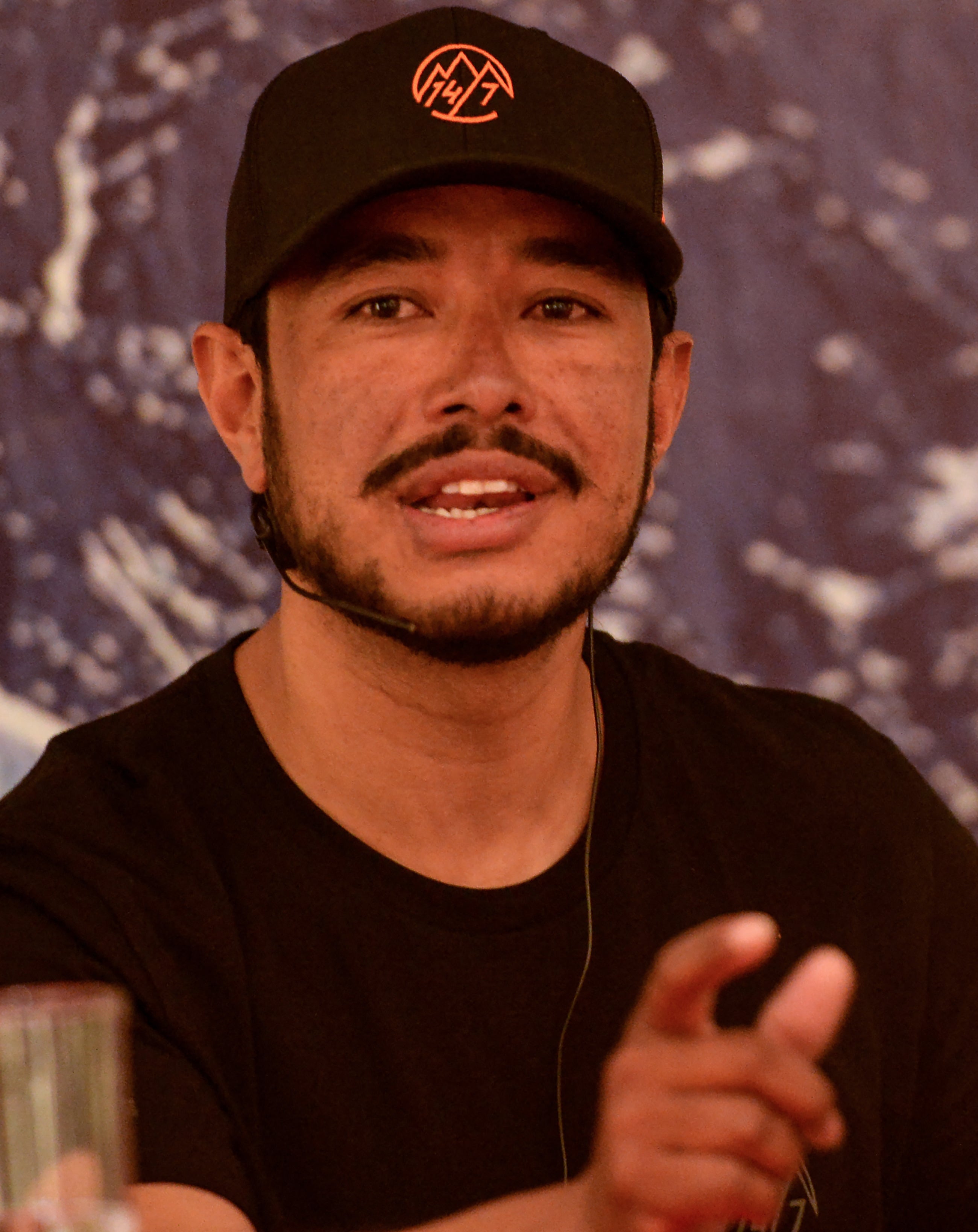
Ten international climbers led by a renowned Nepal-born mountaineer were missing after an avalanche struck Broad Peak, one of the world’s highest mountains in northern Pakistan.
The Alpine Club of Pakistan received initial reports that the avalanche struck the team led by Nirmal Purja and the climbers have been out of communication since then, club vice president Karrar Haidri said in a statement late Thursday.
The expedition includes five Nepalese climbers, Pakistani mountaineer Sohail Sakhi of Hunza, Omani climber Nathira, American climber Mallory Geis, a Chinese climber identified as Wang, and another foreign climber, Mr Haidri said.
The club’s president, Maj Gen Irfan Arshad, and its senior leaders were in contact with government officials to facilitate an immediate search-and-rescue operation.
Advertisement
(AFP/Getty)
The club said every effort was being made to mobilise helicopters and other rescue resources quickly, subject to weather and operational conditions.
Nirmal Purja, whom the club identified by a second name, Nims Dai, is a Nepal-born British citizen who scaled the world’s 14 highest peaks in 189 days in 2019, holding a record for the fastest climb until a Norwegian woman and her Nepali Sherpa guide set a new record in 2023. Purja’s climbs were made into a popular Netflix documentary, “14 Peaks: Nothing is Impossible.”
The 8,047-metre (26,401ft) Broad Peak in the Karakoram range is the world’s 12th highest mountain. Pakistan is home to several top mountain peaks and climbers flock from all over the world to attempt to scale the summits.
“The Alpine Club of Pakistan is closely monitoring the situation and coordinating with all concerned stakeholders,” the statement said. It added that the club stands in solidarity with the climbers’ families and the international mountaineering community.
Dr Zohaib Arshad has reported the alleged racist attack on Grahams Road in Falkirk to police.
A respected Falkirk vet has told of the terrifying moment he was left covered in blood after a racist assault in broad daylight as terrified children looked on.
Advertisement
Businessman Dr Zohaib Arshad, 39, suffered a deep head wound after he was assaulted on Grahams Road in Falkirk on the evening of July 20. The father-of-two said what began as a routine visit to his takeaway quickly descended into a terrifying ordeal after three men targeted him with racist abuse before launching a violent attack.
The veterinary surgeon said they asked when he was going to “go back” to his country before moments later, grabbing him and repeatedly smashing his head against a wall. Dr Arshad recalled blood pouring down his face until he could barely see, while he was punched several times and threatened with a knife.
The attack is said to have unfolded in front of around 30 witnesses, including young children. Speaking about the ordeal, the former Alba party candidate told the Record about how scared he was.
He said: “Blood was everywhere, it was all over the wall. I couldn’t see because there was that much dripping into my eyes.
“One was threatening to kill me and stab me with a knife. He kept saying, ‘Do you want me to take the knife out?’
“There were young girls aged about six around as I was being beaten. I was so scared. I have young kids myself and I couldn’t imagine them witnessing that.”
The assault left him requiring five stitches above his eye. A photograph taken afterwards shows his face drenched in blood with a large cut above his eyebrow.
Advertisement
Dr Arshad claims police were called immediately but did not arrive for around 45 minutes. He said one of the alleged attackers remained nearby for around half an hour.
Dr Arshad said: “If the police turned up sooner, they could have caught these racists.”
The businessman had travelled to central France the following day to visit his children, who have been spending the summer with their grandparents, but says he has remained there because he was too frightened to return as quickly as planned.
Advertisement
He said: “I didn’t feel safe going back home straight away. I have never been in such a rough situation like that before.
“I was so scared when he threatened to take out a knife. I have young kids and I didn’t want them growing up without a father.”
Dr Arshad, who previously stood as an Alba candidate in the 2022 Falkirk Council elections and the 2024 General Election, said he never imagined he would be “attacked because of the colour of his skin”. He noted that his family are now living in fear.
He said: “My kids are terrified. They see me bruised and ask if they are going to be attacked when they return to Scotland for school. I have to reassure them that they are safe.”
Advertisement
Dr Arshad has spoken out of the attack following a far-right protest held at Glasgow Green on Saturday, July 25. Ugly scenes broke out at the demonstration attended by around 1700 people organised by the Unite the Clans group at 11am on Saturday after protestors clashed with a counter-demo arranged by Stand Up To Racism (SUTR) and Women Against The Far Right.
Police Scotland have so far arrested 15 people with incidents of disorder. Dr Arshad says he was invited to speak at the counter-demonstration but was unable to attend due to being in France.
The scenes follow months of anti-immigration demos in Falkirk. Protests have repeatedly been held outside the Hotel Cladhan on Kemper Avenue, which is being used to house asylum seekers.
In June, Daily Record reported how mum-of-seven Sarah McCabe was left terrified after balaclava-clad anti-immigrant protesters surrounded her car in Falkirk town centre, banged on the vehicle and shouted abuse as she tried to drive home. Another driver, Cherise Williamson, said masked protesters blocked the road before surrounding her vehicle and accusing her of supporting rapists.
Advertisement
The demonstrations followed the attempted murder of Stephen Ogilvie in Belfast and formed part of a wave of anti-immigration protests that spread across Scotland.
Dr Arshad has spoken on how he believes rising anti-immigration tensions are fuelling attacks on minority ethnic communities.
He said: “The growing mobs of racists is really worrying. It doesn’t feel safe for people of colour walking around in certain places in Falkirk.”
Advertisement
He said he now plans to meet with local mosques to reassure worried members of the Muslim community and has sought support from politicians. SNP MSP for Falkirk East and Linlithgow Martyn Day condemned the alleged attack.
He told the Record: “This was a shocking and cowardly racist assault, and I utterly condemn it. Sadly, this is not the first racist attack in the Falkirk district that has been brought to my attention.
“The rising number of racist incidents is no longer an isolated local concern but a serious national problem across Scotland. We must stand firm that racism, intimidation and violence have no place in our communities.
Advertisement
“Scotland’s migrant and minority ethnic communities make an immense contribution to our economy, public services and civic life, and they deserve to live and work here in safety.”
Mr Day raised Dr Arshad’s case in a motion before the Scottish Parliament on July 28. The motion highlighted that 3,990 charges relating to race crime were reported in Scotland during 2025-26, an increase of 17 per cent on the previous year and the highest figure recorded since 2013-14.
A Police Scotland spokesperson said: “Around 8.10pm on Monday, 20 July, 2026 police received a report of a disturbance and a man having been assaulted in the Grahams Road area of Falkirk.
“The victim did not require hospital treatment and enquiries are ongoing to establish the full circumstances.”
Advertisement
Get more Daily Record exclusives by signing up for free to Google’s preferred sources. Click HERE.
Get ready for a new month (Picture: Getty/Metro.co.uk)
August is a powerful cosmic month introducing eclipse season which asks you to expect the unexpected and trust that whatever unfolds is moving you towards where you’re meant to be.
Venus enters Libra on August 6, helping relationships, friendships and partnerships flourish through compromise, honesty and mutual support.
The New Moon Solar Eclipse in Leo on August 12 encourages bold beginnings. Leo reminds us to stop playing small and start expressing who we really are.
This is further boosted by Mars entering Cancer on August 10, reminding us that true strength comes from protecting what matters most and building a secure foundation for the future based on our authentic selfhood and desire.
Advertisement
Virgo season begins on August 22, with Mercury joining Virgo a few days later, helping us turn inspiration into action. Practical plans replace big ideas, making this an excellent time to organise your life, improve your wellbeing and focus on the details that make long-term success possible.
Ask Metro
Use AI to go deeper into the stories you care about – powered by Metro and trusted publications.
Advertisement
Finally, the Lunar Eclipse in Pisces at the end of the month asks us to let go of something that’s quietly run its course. Release the past with gratitude, trust your intuition, and make space for the next exciting chapter. So much to look forward to this August – let’s get to it.
Looking for more insight?
Join my magical, mystical tarot club – where we explore the cards through challenges, lessons, guided meditations, and rituals. Metro readers can enjoy a free month at Insider level using this link.
Get networking, Aries (Picture: Getty/Metro.co.uk)
Tarot cards for Aries for August: King of Swords, The Star, The Hierophant
Meaning: With the right guidance, you could navigate your way into the place, role, relationship or niche you’re dying to enter. As Mars moves into Cancer on August 10, consider the alliances, mentors, potential coaches or advocates in your realm who can advise, steer and support you getting where you want to go. Think: soft power, influence, persuasion. Most good things come via who, vs what, you know. You are seeking your own literal Hierophant, and that is why that card has emerged.
The King of Swords advises you to be strategic, clever, and worldly shrewd this August, Plan ahead, play the long game, think in terms of chess moves vs your usual more spontaneous and firefighting approach.
Advertisement
The Star is a promise that, if you play the game well, you can achieve your heart’s desire, you can reach those stars. The higher you aim the better the outcome. Surround yourself with folk you believe in you and will encourage you… and make your power moves. You are going to win.
Some relationships aren’t worth saving (Picture: Kerry King/@inlovewithcameras)
Tarot cards for Taurus for August:Three of Swords, Eight of Cups, Three of Coins
Meaning: Someone you expected better of has let you down in the last year. The relationship is not what you thought it was, and that blindsided you a little, as you feel you’ve held up your end and you don’t understand why things soured.
Advertisement
The Three of Swords reminds us that not everyone has our back (unless it’s to backstab us) and we can’t expect truth, transparency or closure from such people. You have to pull out the thorn and move on, make your own narrative, and cut them loose. The Eight of Cups reminds us that there’s always better options out there, the best is yet to come, we can rewrite the story and start afresh. And you are!
My my, August us full of new relationship potential — from family ties to work alliances, from deep friendship to romance. The Three of Coins shows how loved you are. Venus in Libra season, starting on August 6, is set to bring you all the love you desire and deserve. Get ready to receive!
Your imagination is playing tricks on you (Picture: Kerry King/@inlovewithcameras)
Tarot cards for Gemini for August:Three of Swords, Judgement, The Sun
Meaning: All Gemini folk are overthinkers, it’s part of your factory settings (I speak as a Gemini myself). One of the most damaging things you do is imagine other folk are thinking negatively of you, and you kind of absorb that projection as fact and tell yourself it’s true.
The Three of Swords and Judgement show that you’ve been doing this again, creating friction or conflict or distance where there is really no issue. Recognise it. See your assumptions. Step back from fuelling them. The only person you really hurt is yourself.
The Sun is a reminder that, actually, you’re one of the most loved folk around! Always kind and upbeat and interesting and helpful. You light up rooms, heal wounds, solve problems, and bring great intel. Folk are always pleased to see you. Go where you feel welcome and remind yourself. Check in with those you’ve assumed stuff about in a neutral way and I bet you’ll be well received. Other people love you. Remember this and come out to play again, please.
Make sure you leave time for rest (Picture: Kerry King/@inlovewithcameras)
Tarot cards for Cancer for August:Four of Swords, The Wheel of Fortune, Eight of Wands
Meaning: Eclipse season, running most intensely from August 12 to 28, stirs things up and has you feeling pulled in lots of different directions. The Wheel of Fortune plays into this energy and tells you that things are going to change faster than you think. What once looked like a forever or limbo situation will swiftly move ahead in a surprising direction.
The Eight of Wands asks you to keep hold of the wheel and stay in the game, keep talking to folk and being visible. Don’t retreat into the shell! The world is bringing a phase of chaos but much of it will be good, or can be turned into good. Use your network and allies to encourage and help you and you can make more progress in this four weeks than the whole year so far!
Then… chill. By month-end and that Full Moon in Pisces you’ll be ready for a rest, and you should definitely have a time out, a pause in proceedings, a moment to reflect and catch up emotionally with all that’s unfolded. A big month ahead!
Where will you go? (Picture: Kerry King/@inlovewithcameras)
Tarot cards for Leo for August:Nine of Cups, Queen of Coins, The Chariot
Meaning: Your New Moon in Leo, a solar eclipse, in the middle of August, is a peak moment in 2026. It lets you unfurl your wings to their full stretch and soar into the sky, ready to ascend to new heights and levels. The Nine of Cups grants you a wish in this moment, so prepare to pursue a heartfelt desire and manifest it. Anything is possible.
The Chariot and Queen of Coins indicate money, wealth, work, home and potential moves, literally physically and in terms of your ambitions. If you wish to move roles, companies, homes or location then this is the time to put that wish out into the Universe and make your moves.
Advertisement
Put true purpose into your weekly plans, make your actions intentional, know why you’re doing what you’re doing, and if you’re unsure then simply don’t do it. Leave room for new ideas to emerge that do make sense and inspire you to action. A new era is beginning. Right here, right now.
Set your new intention and watch it unfold (Picture: Kerry King/@inlovewithcameras)
Tarot cards for Virgo for August:Ace of Coins, The Sun, Queen of Coins
Meaning: Your star sign’s birthday season begins on August 22 — many happy returns to you, Virgo — and it seems like the Universe is bringing you abundant gifts and rewards for all of your efforts and good deeds so far in 2026.
Advertisement
The Sun blesses the whole month with joy, success, love, friendship, travel and new opportunity. The only ask of you is to believe in yourself and be confident in your actions. You desire and deserve the best, so go for it.
The Ace and Queen of Coins form an alliance in your realm, inviting you to activate a new ambition around either your health, wealth, work or home. Putting down a new foundation that will carry you into a better future outcome, even if it takes a long time. The rewards will start the minute you activate this goal, to keep you on track and motivated. Good things come to those who put the work in, and you’re ready to do it! You’ll look back on this August as being a very important time of transition.
Lemons are about to become lemonade for you (Picture: Kerry King/@inlovewithcameras)
Tarot cards for Libra for August:The Tower, Eight of Coins, The Star
Meaning: When one door closes, another opens. Don’t fear anything which goes wrong, blows up, collapses or turns into something unworkable in your realm. Deal with it head-on, probably by removing it from your realm altogether (it had its chance). Deep down, you feel relief because you knew something wasn’t right. The Tower is like ripping off a plaster — its hurts for a second and then the healing begins.
The Eight of Coins reminds you to keep your head. Stay on course, keep working hard, keep being amazing… because there is, probably around the mid month New Moon in Leo, a rewarding and much appreciated breakthrough coming your way, partly accessed by letting go of what was rotten or false. After all, new life needs fresh ground to root down into.
The Star is your reward. A dream come true, a wish pass, a wonderful opening that represents what you always wanted anyway. It’s likely you were pursuing this outcome via the route that collapsed (hence why you pushed down your misgivings and carried on), and it comes in an unexpected way. Life is full of twists! Get ready for yours.
Time to rise (Picture: Kerry King/@inlovewithcameras)
Tarot cards for Scorpio for August:Queen of Swords, Eight of Cups, Strength
Meaning: Reinvention, rebirth, the phoenix from the flames… these are your sign’s mythology and inner core power. You are unstoppable. You are the ultimate comeback story. And this August proves this once again. The Eight of Cups shows you’ve endured a blow, a hard truth, a setback, a failure. And you have taken it well, not wasted energy denying it, but not dwelt on it either.
The Universe applauds this resilience. And the Queen of Swords sees you starting your transition and phoenix process. Solo and proud, independent and forceful. You are crafting a new story, objective, goal, opportunity. It comes from within, from your imagination, and it’s now being forged and shaped in reality to become a tangible presence in your realm.
Strength shows that the Universe will gift you every ounce of courage, determination, confidence and boldness needed to make this shift. You are living, learning, and growing. This is a month of great transformation and personal power. Own it!
Your relationships are centre stage this month (Picture: Kerry King/@inlovewithcameras)
Tarot cards for Sagittarius for August:Knight of Wands, Knight of Swords, King of Swords
Meaning: Leo season always boosts your confidence, so up until August 21 you are in strident form! Use this personal charisma and forcefulness to repair, recalibrate and renew any faltering or fractured relationships (that matter to you) in your realm. Three Court cards for your August reading suggests that other people are going to be important influences this month, so pay attention to the dynamics and act accordingly. Don’t let things slide, don’t fall prey to old patterns, don’t keep silent when you yearn to speak up.
The Knight and King of Swords bring great ideas and a real sense of purpose this August. You are making moves, creating a strategy. This is not like your usual spontaneous, slightly chaotic, approach but it feels right for what you’ve got going on. Bring your intellect to the foreground and use your sharp mind to craft cunning plans and schemes.
Advertisement
The Knight of Wands is your ever-present good humour, sense of adventure and optimism. You light up rooms, you bring the party, you make magic happen. Even when working with difficult people or forging your strategies, let the fun and joy flow. It’s what you’re known for and what draws folk to you.
This change is a welcome one (Picture: Kerry King/@inlovewithcameras)
Tarot cards for Capricorn for August:Eight of Cups, Queen of Coins, Four of Wands
Meaning: Eclipse season can flip things on their head, turning things upside-down, and you will definitely feel that energy flowing through your realm this August — in a good way. The Eight of Cups leading into Four of Wands shows the frown being turned upside-down into a smile!
Advertisement
From disappointment comes success. What you once hankered for, and never got, comes back around again for you, and not only doyou know how to make it land, make it work this time, you’re actually glad you didn’t get this first time around. Good things come to those who wait, right?
The Queen of Coins instils a sense of control, destiny, and practical ambition in you, which means you’re turning every possibility into real opportunity. Nothing gets past you or away from you. No stone is left unturned and you reap more results and rewards in this month than the rest of 2026 put together! Be busy. Be good. Live well. Life is happening for you.
Look out for signs of what’s to come (Picture: Kerry King/@inlovewithcameras)
Tarot cards for Aquarius for August:Seven of Cups, King of Coins, The Moon
Meaning: What a wild card August will be for you, Aquarius! Feels like everything is building towards the Full Moon lunar eclipse in Pisces at month end, and at that point you will undergo a spiritual awakening, an epiphany, a powerful creative surge of imaginative ideation and artistry that will define your coming months and years.
The Seven of Cups and The Moon show the build-up to this point will feel charged, psychic, mysterious, full of visions and omens and signs. Write everything down, you can join the dots later, you can make sense of it as the magic unfolds in its own time.
The King of Coins hints this is about your career, life path, and purpose. How you make a living. How you run your life and where you invest your greatest strengths and energy. You are always questioning this. Something life-changing will emerge this August, around the Full Moon, that makes you realise exactly what you’ve got to do next and why. A game changer month.
Luck is on your side this month (Picture: Kerry King/@inlovewithcameras)
Tarot cards for Pisces for August:Six of Wands, Justice, Page of Wands
Meaning: It’s your Full Moon this month, which grants you wishes, requests, and ideal visions of your life as you wish it were. Pisceans often live half in a daydream, subterranean realm; one foot in reality, one foot in the clouds. But this August, you can draw both realms together, and create a new reality.
The Six of Wands blesses the next six weeks with luck, good fortune and karma. You will get lucky with all the bold hands you play, so start playing to win! The Page of Wands asks you to be bold, brave, and experimental. Don’t overthink anything, just do what feels good and gets you closer to a reality you wish to experience. Somehow things will turn out right.
Justice shows, along the way, something that has hampered or upset you in the last year will also be put right. Maybe an apology, a vindication, a just result, an overturning of a verdict. Whatever it is, accept it graciously and move on with your head high. Things are moving your way, this is just the beginning.
Kerry King has been reading, teaching and creating tarot for 30 years. Join her magical, exclusive Tarot Club for forecasts, predictions, lessons and readings straight to your inbox. Enjoy one month free for all Metro readers (no lock-in or commitment) over on Patreon.
Your daily Metro.co.uk horoscope is here every morning, seven days a week (yes, including weekends!). To check your forecast, head to our dedicated horoscopes page.
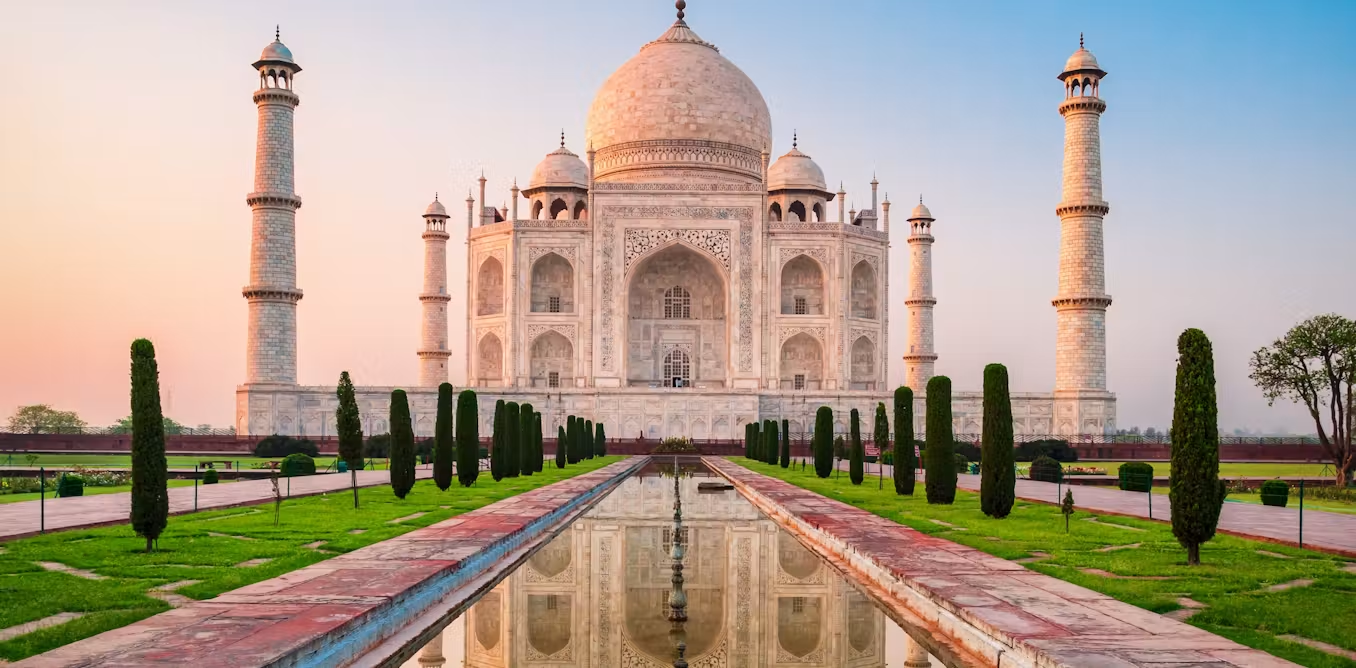
Agra is known as the home of the Taj Mahal, one of the seven wonders of the world and a bucket-list destination. Visitors marvel at its beauty, but few realise that another Agra exists in its shadow: the Agra of its artisans. These communities hold the essence of the city’s cultural legacy yet remain invisible to many of the people who seek beauty here.
Agra’s story is usually told through the gleaming marble of the Taj Mahal, not through the eyes of those who live and work nearby. The artisans, many from marginalised Dalit and Muslim communities, have practised their crafts for generations. These include marble inlay, Zardozi embroidery, perfumery, rafia, shoemaking, leatherwork and the weaving of Agra’s famous carpets.
As part of my ongoing research, I have conducted field surveys in this region. I discovered communities that are culturally ostracised yet resilient. There is also a strong historical continuity and a craft ecosystem that has been eroded.
Once respected and secure, these livelihoods have been damaged by neglect in education, housing and market access. This slow but steady exclusion has left many artisans struggling to survive, even as their crafts remain admired and monetised across the globe.
Advertisement
The divide in Agra between the haves and have-nots is stark. Within walking distance of the Taj Mahal are neighbourhoods like Taj Ganj and Kachhpura, where artisans live in cramped settlements and slums. In some places, five-star hotels share a wall with these communities.
In Taj Ganj, just south of the Taj Mahal, women artisans specialise in Zardozi embroidery, which involves gold and silver threads, pearls and beads, as well as carpet weaving. Many are not employed as full-time staff but as “allied” workers taking on stitching, cleaning or polishing carpets for middlemen.
Girls as young as 12 or 13 help by attaching laces and buttons, earning just 1 rupee (less than 1p) per piece, while the finished item sells for 200-500 rupees in domestic markets.
Trinkets made in this community are often exported to the UK and Europe; artisans receive around 50 rupees per piece. By the time these products appear in European boutiques, they can fetch £10-£25 each. The price difference reflects not increased craftsmanship, but the layers of profit in the supply chain. Artisans see almost none of this.
Advertisement
Zardozi embroidery is a highly skilled craft. PI/Shutterstock
Even moments of national pride bring no recognition. For the coronation of King Charles, Zardozi pieces from Taj Ganj were commissioned to commemorate the ceremony. Yet the women who created them remained anonymous. It was a lost opportunity to showcase their heritage to the world.
The buyers of artisan products in Agra range from individual artists and export houses to ecommerce entrepreneurs. Yet the supply chain remains opaque and even today, many artisans have no idea what their official daily wage should be.
For them, costing is a matter of simple arithmetic: materials plus labour, with a modest profit margin of 50–100 rupees (less than £1). This calculation, shaped by generations who were isolated from formal business practices, means they consistently undervalue their work.
Advertisement
The result is a supply chain where the well-connected middlemen and entrepreneurs capture the lion’s share of profits. Meanwhile, the true creators are left with a fraction of what their craft is worth.
Leather craft in the shadows
In the Kachhpura community, families make handcrafted leather footwear that is sold to local suppliers. As members of the Dalit community (a marginalised caste in India), they face discrimination that limits their business opportunities.
Even within Agra, their products are undervalued and their small businesses struggle to flourish. Community members express deep frustration: they feel that they are visited by non-governmental organisations (NGOs) and international agencies only when there’s a story to be told. They told me they felt their poverty was photographed, their words quoted and their struggles turned into media coverage – but with no tangible change in return.
These are not isolated cases. Across both communities, artisans face unfair wages and opaque supply chains. A lack of education leaves them struggling to gain access to markets and without intellectual property protection. This means their designs can be appropriated by global brands.
Advertisement
In a case involving Prada sandals, the luxury goods giant was inspired by the Kohlapuri chappal – the traditional handcrafted shoes of the Dalit community – but did not initially credit the artisans or collaborate with them. The company later acknowledged that this is where its inspiration had come from. But it is part of a broader pattern: heritage crafts from India are celebrated abroad while their custodians live in poverty.
The solution is not charity, but empowerment. Skills hubs would allow artisans to access design, marketing and business training. And direct-to-customer platforms would let them tell their own stories and set their own prices.
Heritage hubs could position these communities as living heritage sites as in Venice or Florence, where craft and culture are inseparable from place. Until these changes happen, Agra will remain a city of two worlds.
Agra’s artisan communities stand at a crossroads. On one side is a legacy passed down through generations, a living heritage that shapes the city’s identity and fuels its global image. On the other is a reality marked by low wages, educational neglect and exclusion from the markets that profit from their craft.
Advertisement
The disparity between the luxury price tags their work commands and the earnings they take home represents a gap in recognition, dignity and opportunity.
The popular theme park attraction will take visitors for a last spin next year as developments are expected to come to the theme park that have been opened since 1966
Advertisement
A popular theme park its set to close one of its busiest attractions.
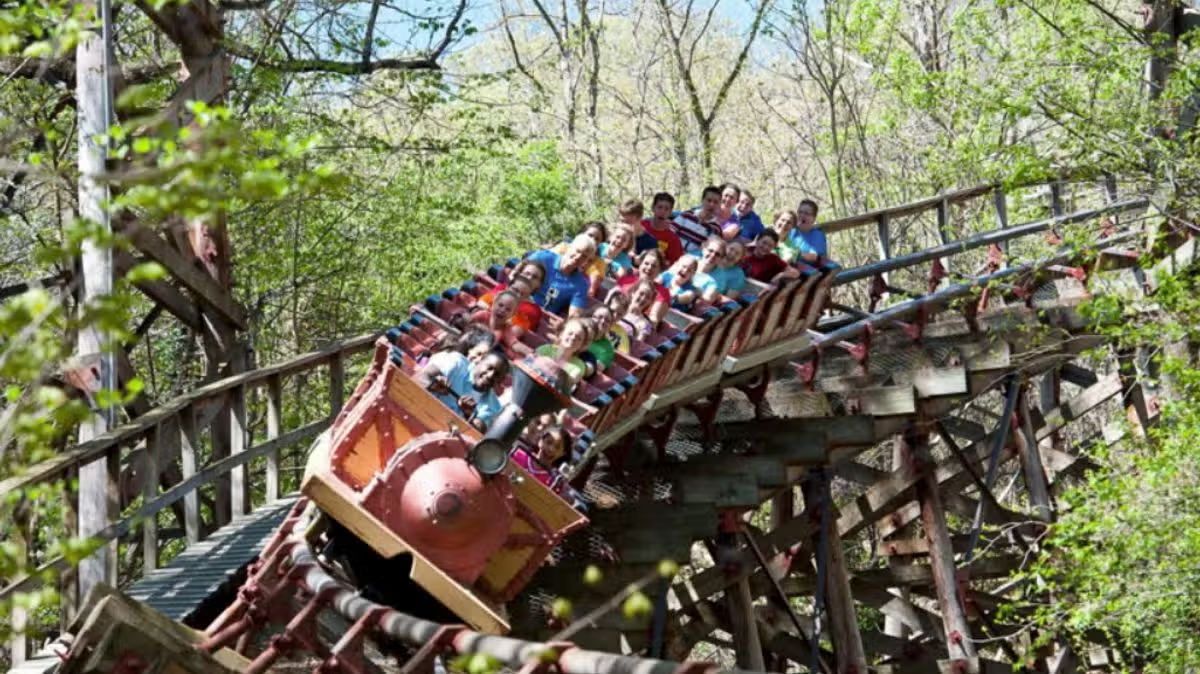
The Silver Dollar City theme park in the Ozark Mountains of southwestern Missouri has announced that the Thunderation roller coaster will close in January 2027.
The theme park first opened to visitors in 1966, between the towns of Branson and Branson West.
Since then the amusement park has expanded to more than 40 rides and seven roller coasters.
The Thunderation roller coaster was added to the park in 1993, taking visitors through what looks like a mine from the 1880s.
It reached a huge 80 feet and travels at 48 miles per hour.
Advertisement
It has become one of the most popular rides at the theme park.
The last day to take a ride on the coaster will be January 2, 2027.
Silver Dollar City are teasing new attractions as part of the development however there has not been a formal announcement explaining the reasonings behind the ride closing.
As the ride is set to shut a range of commemorative memorabilia including T-shirts, hats, and mugs have been made available for those who want to remember the roller coaster.
The news comes as other popular theme parks in the US are closing.
Fun Spot America in Atlanta, Georgia, originally opened as Dixieland Fun Park in 1990 and will open its gates for the final time on August 2.





















































You must be logged in to post a comment Login