Connect with us

Business

Bitcoin Dips Slightly to $63,491 as Crypto Market Shows Caution

Published

on

Bitcoin

NEW YORK — Bitcoin traded modestly lower on Friday, slipping 0.12% to $63,491.51 as investors exercised caution amid broader market movements and ongoing developments in cryptocurrency regulation and institutional adoption.

The world’s largest cryptocurrency by market capitalization has been trading in a relatively narrow range in recent sessions, reflecting balanced sentiment between long-term optimism around blockchain technology and near-term pressures from macroeconomic factors. The minor decline came as global equity markets showed mixed performance and traders assessed the implications of major corporate events, including SpaceX’s landmark initial public offering.

Market Performance and Technical Outlook

Bitcoin’s price action has been characterized by consolidation following stronger moves earlier in the year. Support levels around $60,000 have held firm, while resistance near $65,000 remains a key technical hurdle. Trading volume has been moderate, suggesting neither strong bullish conviction nor aggressive selling pressure.

Advertisement

The cryptocurrency continues to correlate with technology stocks and risk assets, responding to shifts in interest rate expectations and investor appetite for growth-oriented investments. Friday’s modest dip aligns with a broader cautious tone across digital assets, though many analysts view current levels as attractive for long-term accumulation.

Factors Influencing Price Action

Several elements are shaping Bitcoin’s trajectory. Institutional adoption has accelerated, with major companies and investment vehicles increasing exposure to cryptocurrency. Spot Bitcoin exchange-traded funds have seen steady inflows, providing a more regulated pathway for traditional investors to participate in the asset class.

Regulatory developments remain a key focus. Global authorities continue refining frameworks for digital assets, with some jurisdictions advancing clearer guidelines while others maintain stricter oversight. These evolving rules create both opportunities and uncertainties for market participants.

Advertisement

Macroeconomic conditions also play a significant role. Persistent inflation concerns, central bank policies and geopolitical tensions influence risk appetite across financial markets. Bitcoin’s performance as a potential inflation hedge or store of value is frequently debated, with its decentralized nature appealing to investors seeking alternatives to traditional currencies.

Broader Crypto Market Context

The wider cryptocurrency market has mirrored Bitcoin’s movements, with major altcoins showing limited volatility. Ethereum, the second-largest digital asset, has maintained relative stability, supported by ongoing developments in its ecosystem and layer-2 scaling solutions.

Total cryptocurrency market capitalization remains substantial, reflecting growing mainstream integration even as the sector experiences periodic corrections. Decentralized finance applications, non-fungible tokens and blockchain infrastructure projects continue expanding, driving underlying utility beyond pure speculation.

Advertisement

SpaceX’s high-profile IPO has drawn attention to the intersection of technology innovation and capital markets, potentially benefiting sentiment toward blockchain-related ventures. Elon Musk’s companies have historically influenced crypto narratives, though direct impact on Bitcoin prices varies.

Institutional and Retail Dynamics

Institutional participation has matured significantly, with hedge funds, corporations and asset managers allocating portions of portfolios to Bitcoin. This professional involvement has brought greater liquidity and legitimacy while also introducing more sophisticated risk management strategies.

Retail interest remains robust, fueled by accessible trading platforms and educational resources. However, individual investors have shown increased selectivity, focusing on projects with clear use cases rather than speculative fervor seen in previous cycles.

Advertisement

Analyst Perspectives

Market observers note Bitcoin’s resilience amid fluctuating external conditions. Many view the current price range as a period of accumulation ahead of potential catalysts such as further regulatory clarity or technological upgrades. Long-term forecasts often cite Bitcoin’s fixed supply schedule and growing global adoption as supportive factors.

Short-term traders monitor technical indicators and news flow for directional cues. Volatility remains a defining characteristic of cryptocurrency markets, requiring disciplined approaches to position sizing and risk management.

Challenges and Risks

Advertisement

Despite progress, the sector faces ongoing challenges. Security incidents, though reduced, highlight the importance of robust infrastructure. Environmental concerns around energy consumption for proof-of-work mining have prompted shifts toward more sustainable practices and alternative consensus mechanisms.

Geopolitical risks and potential regulatory shifts can trigger sharp price movements. Investors must navigate these uncertainties while evaluating Bitcoin’s role within diversified portfolios.

Longer-Term Outlook

Bitcoin’s journey from niche digital asset to a recognized store of value has been remarkable. As infrastructure improves and adoption expands across industries, many expect continued maturation. Integration with traditional finance, advancements in scalability and potential nation-state involvement could shape its future trajectory.

Advertisement

The halving cycles, which reduce new supply issuance, remain an important structural feature. Historical patterns suggest these events can influence market dynamics, though past performance does not guarantee future results.

Investment Considerations

For those participating in cryptocurrency markets, thorough research and risk awareness are essential. Bitcoin’s volatility demands careful portfolio allocation and long-term perspective. Diversification across asset classes helps manage exposure to any single market segment.

Regulatory compliance and security best practices should guide investment decisions. Investors are encouraged to use reputable platforms and maintain awareness of evolving rules in their jurisdictions.

Advertisement

Conclusion

Bitcoin’s slight decline to $63,491.51 reflects measured market sentiment as participants balance enthusiasm for technological progress with caution around external factors. The asset’s performance continues to be closely watched as a bellwether for the broader cryptocurrency space.

As the digital asset ecosystem evolves, Bitcoin remains at the forefront of innovation and debate. Friday’s trading activity adds another data point in its ongoing story, one characterized by resilience, volatility and growing mainstream relevance. Market participants will continue monitoring developments for signals of shifting trends in this dynamic sector.

The coming weeks and months may bring additional clarity as regulatory frameworks advance and corporate adoption deepens. For now, Bitcoin trades near current levels with investors weighing its potential against inherent risks in the evolving landscape of digital finance.

Advertisement
Continue Reading
Click to comment

You must be logged in to post a comment Login

Leave a Reply

Business

BJP accuses Kejriwal of sending voters hoax calls to mislead

Published

on

BJP accuses Kejriwal of sending voters hoax calls to mislead
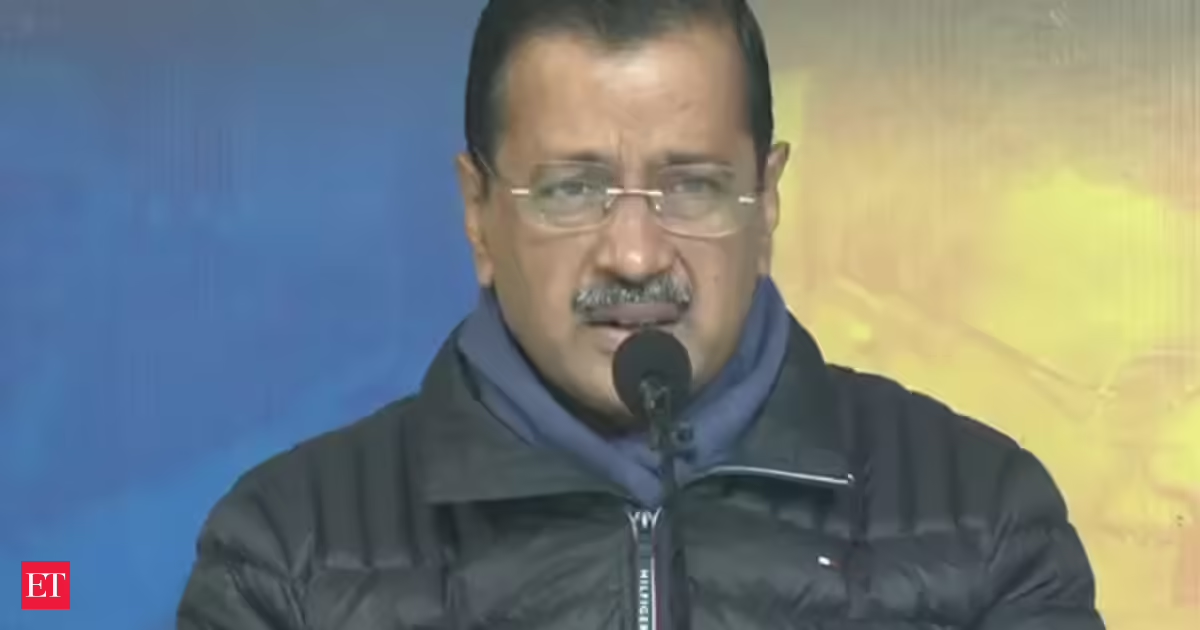
New Delhi: The BJP on Sunday accused AAP supremo Arvind Kejriwal of orchestrating hoax calls to mislead voters across constituencies, including the New Delhi constituency, claiming that their were “cancelled” by the BJP. Addressing a press conference, BJP MP Parvesh Verma played an audio recording of one such call, in which a person was heard saying, “Your vote has been cut by the BJP. AAP will ensure you get your vote back,” and urged the receiver to support the Aam Aadmi Party.

“Hoax calls are being made to the public, saying that BJP will end all AAP schemes. This is a blatant lie,” he said.

He also wondered how “confidential voter data” was accessed by the party.

“Other than the Election Commission of India, this data is not provided to anyone. How did Kejriwal get the voters’ contact list? This must be inspected,” Verma said.

The BJP’s New Delhi candidate for the Assembly election also alleged the AAP of distributing Rs 500 wrapped in a calendar in the slum areas. He claimed three people were arrested in this regard.

Advertisement


There was no immediate reaction from the AAP on the allegations, nor from Delhi Police.
He said he has filed a complaint with the Election Commission and his party demands an investigation into the matter. BJP leader and party spokesperson Sudhanshu Trivedi, who was also present at the press conference, welcomed the US Supreme Court’s decision to extradite to India Tahawwur Rana, an accused in the 2008 Mumbai terror attacks.

“Under Modi’s leadership, the government remains committed to fighting terrorism. The decision to hand over Tahawwur Rana to India is a welcome one for all of us,” Trivedi said.

Trivedi accused the AAP and Congress of supporting activities that indirectly shield terrorism.

“Atishi’s parents were among those seeking a ‘shama yajna’ (forgiveness ritual) for Afzal Guru,” he alleged, referring to the mastermind of the 2001 Parliament attack.

Advertisement
Continue Reading

Business

UEFA threatens World Cup boycott over FIFA investment plan

Published

on

UEFA threatens World Cup boycott over FIFA investment plan

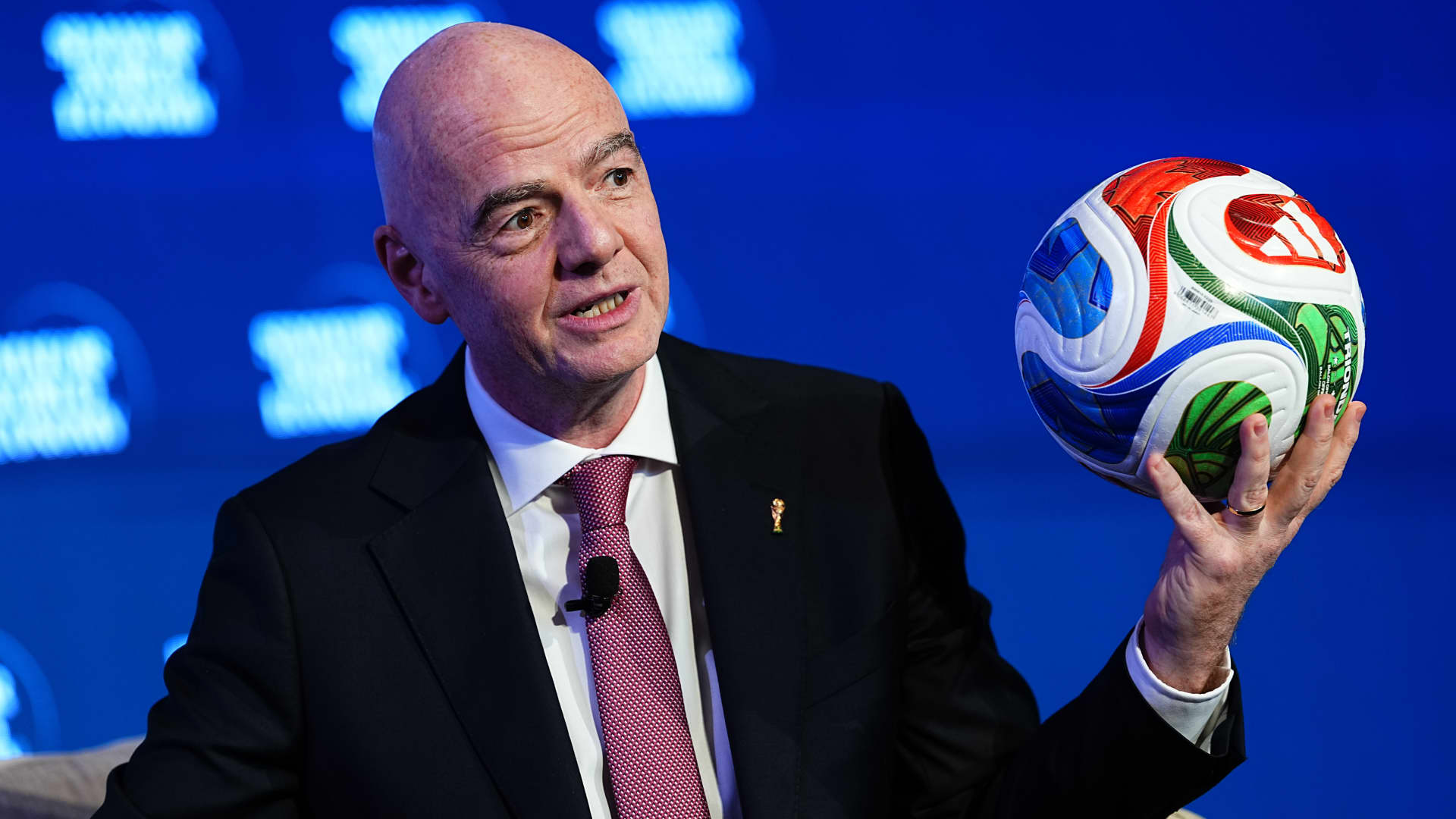
Gianni Infantino, president of the Federation International Football Association (FIFA), at the Semafor World Economy Summit during the International Monetary Fund (IMF) and World Bank Spring meetings in Washington, DC, US, on Wednesday, April 15, 2026.

Aaron Schwartz | Bloomberg | Getty Images

European soccer governing body UEFA said Thursday it will boycott FIFA competitions including the World Cup if the global organization goes through with its proposal to sell a stake to private investors.

Advertisement

Following an emergency meeting, UEFA, which represents 55 of FIFA’s 211 member associations, called it “irresponsible and indefensible” for FIFA leadership to bring forth such a proposal without seeking feedback from the countries that make up the organization.

On Tuesday, FIFA announced a plan to sell a 20% stake in a new entity it calls FIFA Forward Enterprise that would take over all commercial and event operations. FIFA said FFE would raise up to $4.2 billion from third party investors. The move championed by FIFA President Gianni Infantino has drawn backlash across the sport.

The proposed deal has also sparked fresh scrutiny of Infantino’s relationship with President Donald Trump. Thrive Eternal, a private equity firm founded by Joshua Kushner, the brother of Trump’s son-in-law Jared Kushner, is “expected to lead the proposed investor group for FFE,” FIFA said when it announced the deal.

In a statement, UEFA said its member nations would boycott FIFA competitions unless the organization canceled the plan for good. UEFA said “football’s future cannot be dictated” by stakeholders seeking financial gain.

Advertisement

“As a result of today’s discussion, no UEFA national teams will participate in any FIFA competition for so long as these proposals remain alive, unless this proposal has been abandoned in its entirety and binding assurances have been given that FIFA will never again open its governance or competitions to private ownership,” the statement read.

Get the CNBC Sport newsletter directly to your inbox

The CNBC Sport newsletter with Alex Sherman brings you the biggest news and exclusive interviews from the worlds of sports business and media, delivered weekly to your inbox.

Subscribe here to get access today.

UEFA isn’t the only one opposing FIFA’s proposal.

Advertisement

Concacaf, which runs soccer in North and Central America and the Caribbean, said on Thursday that it also held an emergency meeting with its 41 member associations and rejected FIFA’s proposal.

“The discussion reinforced the need for greater transparency and proper governance,” the organization said in a statement.

In response to the fallout, Infantino appeared in a video on Wednesday reassuring fans that the “beautiful game, and sport they watch and love will not change.” He added that the proposal is “a golden opportunity to turbocharge the development of the game globally.”

Infantino also said that the proposal is “simply a choice for our members” and not an obligation.

Advertisement
Choose CNBC as your preferred source on Google and never miss a moment from the most trusted name in business news.
Continue Reading

Business

Central bank turns piper to draw in foreign capital; leaves repo rate at 5.25, keeps stance neutral

Published

on

Central bank turns piper to draw in foreign capital; leaves repo rate at 5.25, keeps stance neutral
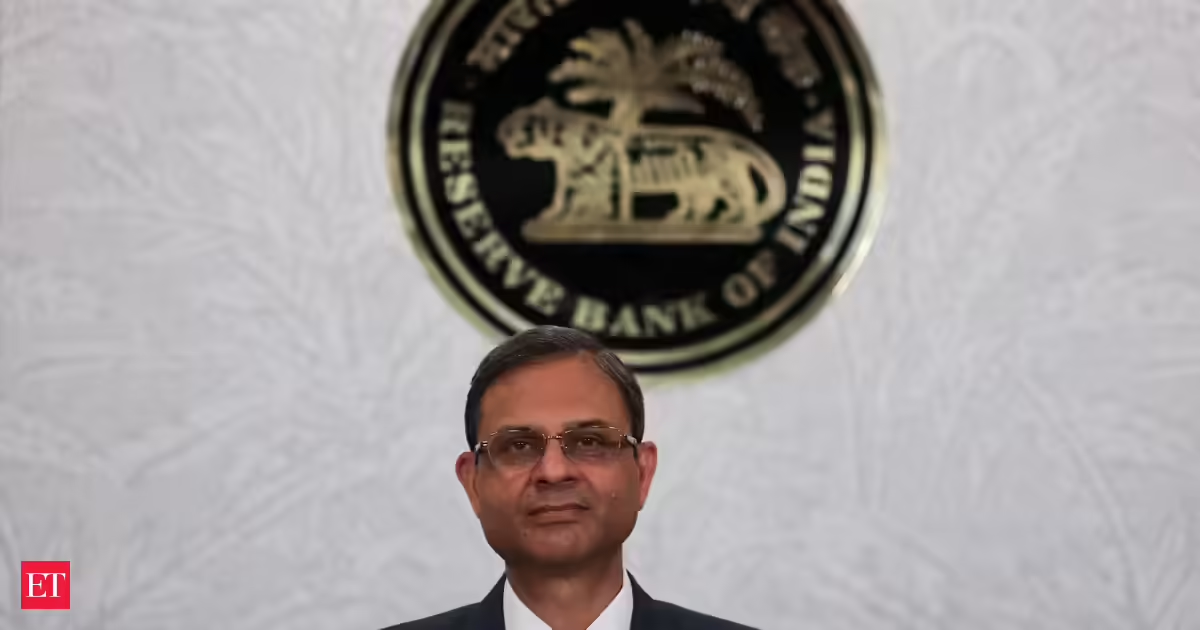
Mumbai: The Reserve Bank of India (RBI) Friday announced a host of measures to attract foreign currency inflows, aimed at strengthening external buffers, even as the six-member rate-setting committee voted to keep the policy rate unchanged at 5.25% and maintained a neutral stance.

RBI took steps to attract overseas investors into government bonds and equities, provided public sector units time-bound incentives to raise external commercial borrowings (ECB), and agreed to bear the hedging cost on fresh three- to five-year FCNR(B) deposits, among other measures.

“As a result of these measures on FCNR(B) and ECBs, and initiatives taken by the government on bonds and trade agreements, we are quite confident of a very healthy balance of payments, compared to what it would have been otherwise,” said RBI governor Sanjay Malhotra at the post-policy press meet.

The central bank revised inflation forecast upward to 5.1%, from 4.6%, and lowered its growth forecast for FY27 to 6.6%, from 6.9% projected in the previous policy.

“Adverse implications of extended disruptions in supply chains and elevated energy prices are reflected in moderation of growth and increase in inflation projections from the April policy,” the governor said, while revising forecasts in his second policy following the West Asia crisis. He stated that “although risks of higher inflation have amplified, the MPC felt it would be prudent to wait for greater clarity to emerge.”

Advertisement

RBI policy

The measures to attract inflows come amid outflows of $13.7 billion by foreign institutional investors from the equity market and are likely to support the rupee, which has fallen 4.1%, or about four rupees, since the start of the US-Iran conflict.Malhotra said he expects strong inflows but declined to put a number to them while adding that he expects banks to pass on the benefits of lower hedging costs to customers. Chairman State Bank of India CS Setty said, “These steps should help enhance capital inflows, deepen bond markets, improve liquidity and provide support to the rupee.”

Soumya Kanti Ghosh, group chief economic adviser, State Bank of India, said the measures would result in a potential capital flow of at least $40 billion, a pullback in the rupee toward 92-93 levels, and a pause in the August policy.

Madhavi Arora, chief economist, Emkay Global Financial Services, expects inflows of $30-50 billion over the year, while Aastha Gudwani, chief economist at Barclays, said the measures could add about $5 billion a month.

Economists said the policy is supportive of growth but has overlooked rising inflation risks. These would stem from higher oil prices following the West Asia crisis.

However, the governor defended the stance, stating that the 4% inflation target is “not in abeyance” and remains “sacrosanct.”

Advertisement

“This target is to be met over a period. It is a medium-term target, and it is not advisable to take action for every small deviation, as that could have disproportionate consequences for growth,” Malhotra said. The governor highlighted that the economy is facing uncertainty over the nature and duration of the conflict, as well as the time needed for the restoration of supplies. He also noted uncertainty around the monsoon and the impact of El Niño, both of which have implications for inflation and growth.

The NSE Nifty 50 index declined 0.21% to 23,366.7. The 10-year government bond yield fell four basis points to close at 6.97%, while the rupee gained 84 paise to close at 94.95 on Friday.

Upasna Bhardwaj, a senior economist at Kotak Mahindra Bank, expects a 50-basis point rate hike in October, while Arora said RBI will raise rates only if inflation becomes entrenched. The governor reiterated that RBI would “look through” shocks unless inflation becomes broad-based and persistent or starts getting embedded in expectations.

On the upward revision in inflation forecasts, RBI said in its statement that the pass-through of higher oil prices could exert upward pressure in the coming months as firms pass on input costs.

Advertisement
Continue Reading

Business

XFLT Advisor Adjournment Shifts Likely Outcome Toward Toward Liquidation At NAV (XFLT)

Published

on

XFLT Advisor Adjournment Shifts Likely Outcome Toward Toward Liquidation At NAV (XFLT)

This article was written by

Dan Plettner focuses his qualitative investigative research methods on Closed-End Funds and other underfollowed securities. Dan Plettner was born in 1975 and has been investing since his teen years. After completing his undergraduate degree Magna Cum Laude from Miami University (Oxford, Ohio), he won the “NSD award” as a retail Financial Advisor at Morgan Stanley Dean Witter. Dan relocated to Morgan Stanley’s International Headquarters in Manhattan where he served as a Closed-End Fund Product Specialist until 2000 and then attained his MBA from New York University.

Analyst’s Disclosure: I/we have a beneficial long position in the shares of XFLT either through stock ownership, options, or other derivatives. I wrote this article myself, and it expresses my own opinions. I am not receiving compensation for it (other than from Seeking Alpha). I have no business relationship with any company whose stock is mentioned in this article.

Seeking Alpha’s Disclosure: Past performance is no guarantee of future results. No recommendation or advice is being given as to whether any investment is suitable for a particular investor. Any views or opinions expressed above may not reflect those of Seeking Alpha as a whole. Seeking Alpha is not a licensed securities dealer, broker or US investment adviser or investment bank. Our analysts are third party authors that include both professional investors and individual investors who may not be licensed or certified by any institute or regulatory body.

Advertisement
Continue Reading

Business

FCC bans certain foreign-made robot vacuums under new security rules

Published

on

FCC bans certain foreign-made robot vacuums under new security rules

Certain robotic vacuum cleaners, including some Roomba-style devices, will be banned under the new U.S. policy restricting foreign-made advanced robotics, federal regulators told FOX Business Thursday.

The Federal Communications Commission (FCC) said robotic vacuums fall under its updated “Covered List” rules adopted Tuesday, making certain new foreign-produced models ineligible for FCC equipment authorization due to national security and cybersecurity risks to U.S. critical infrastructure.

Advertisement

While the agency did not identify specific brands, an FCC spokesperson confirmed to FOX Business that robotic vacuums are among the devices covered by the restrictions. 

Major manufacturers including iRobot, SharkNinja, Dyson, Samsung and LG sell robotic vacuums in the U.S., with most production taking place in China, alongside manufacturing operations in Vietnam, Malaysia and Indonesia.

FCC BLOCKS NEW FOREIGN-MADE POWER INVERTERS AND ADVANCED ROBOTS OVER NATIONAL SECURITY RISKS

A black Roomba vacuum on display in a store.

A Roomba robot vacuum is displayed on a shelf at a Bed Bath and Beyond store Aug. 5, 2022, in Larkspur, Calif. Certain newly authorized foreign-made robotic vacuums are now subject to expanded FCC national security restrictions. (Justin Sullivan / Getty Images)

However, the restrictions apply only to newly authorized devices and will not affect the many robotic vacuums already in consumers’ homes.

Advertisement

“This action does not impact a consumer’s continued use of devices they previously acquired,” the FCC spokesperson said.  

The agency added that previously authorized models may continue to be sold, imported and marketed in the U.S., and it does not “prevent retailers from continuing to sell, import or market relevant models approved previously through the FCC’s equipment authorization process.”

FCC CHAIRMAN CLIMBS 2,000-FOOT CELL TOWER TO SPOTLIGHT ONE OF AMERICA’S TOUGHEST TRADES

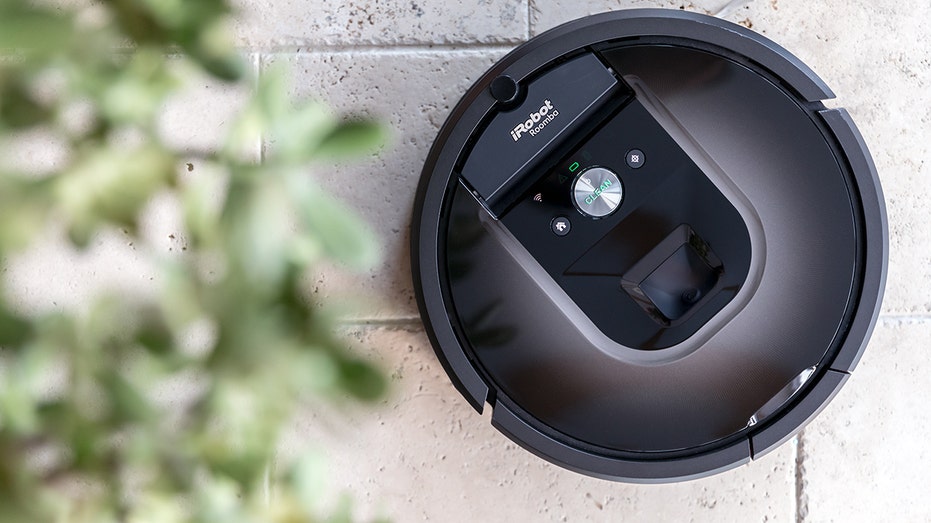
roomba near plant outside

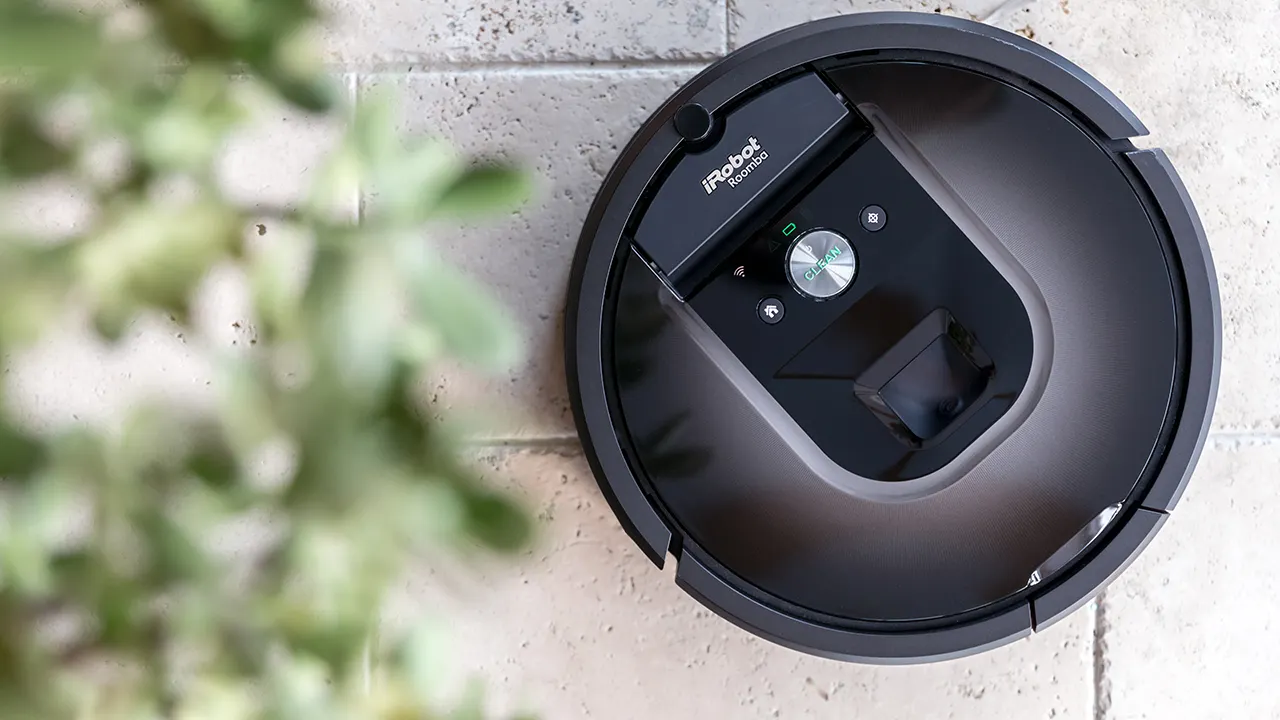
An iRobot Roomba 980 robotic vacuum cleaner sits on a ceramic floor Dec. 10, 2016. It is unclear which models will be affected. (iStock / iStock)

“We are aware of the FCC’s recent action and are working with them to better understand its implementation and potential impact,” iRobot said. “We remain committed to serving our customers and will share updates as more information becomes available.”

Advertisement

Under the FCC’s new rules, many household robotic cleaners qualify as “advanced robotic devices” because they are mechanical mobile devices capable of locomotion, navigation and obstacle avoidance. 

Covered devices generally weigh more than 4.4 pounds and operate near human operators. Their autonomous navigation is either powered by firmware, AI models or sensors via Bluetooth, Wi-Fi or cellular technology. 

That definition could encompass products such as iRobot’s Roomba lineup, SharkNinja’s Shark robotic vacuums, Dyson’s 360 series, Samsung’s Jet Bot line and LG’s CordZero robotic cleaners. 

US BANS NEW FOREIGN-MADE CONSUMER INTERNET ROUTERS OVER SECURITY CONCERNS

Advertisement
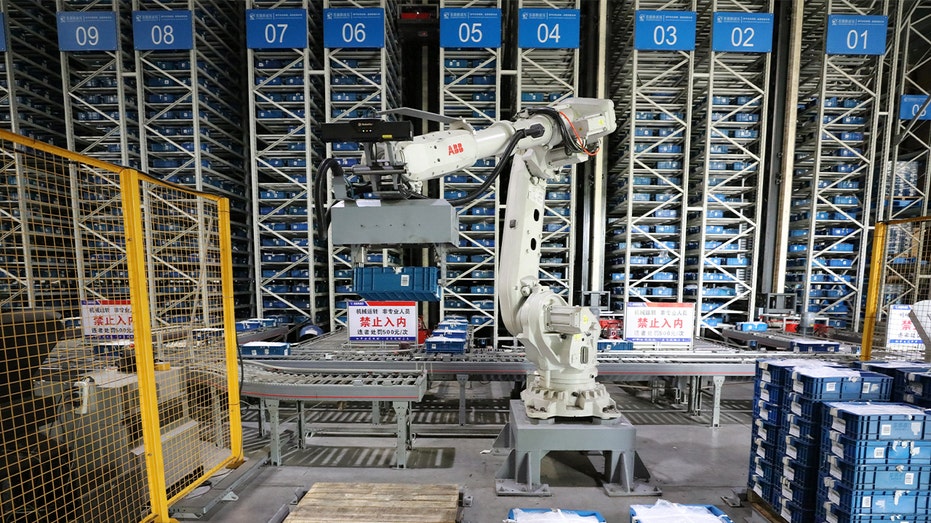
robot arm in manufacturing hub

A robotic arm grabs materials for storage in the workshop of Jiangxi Suqiangge Hydraulic Co., Ltd. July 29, 2026, in Yichun, Jiangxi Province of China. (Zou Zhong/VCG / Getty Images)

Roomba, one of the first robotic vacuum brands to gain widespread popularity in the U.S., was introduced by American company iRobot in 2002 but is now owned by Shenzhen Picea Robotics and Santrum Hong Kong.

Picea Robotics, which operates development and manufacturing facilities in China and Vietnam, sells Roomba models starting at $200.

CLICK HERE TO GET FOX BUSINESS ON THE GO

By comparison, American robotics startup Matic, one of the few U.S.-based competitors that designs and assembles its products domestically in California, sells its robotic vacuums for about $1,245. 

Advertisement

FOX Business reached out to SharkNinja, Dyson, Samsung and LG for comment.

Continue Reading

Business

Andritz AG (ADRZY) Q2 2026 Earnings Call Transcript

Published

on

OneWater Marine Inc. (ONEW) Q1 2026 Earnings Call Transcript