

Business
GameStop Shares Decline 1.53% to $21.84 Amid Retail Trading Volatility

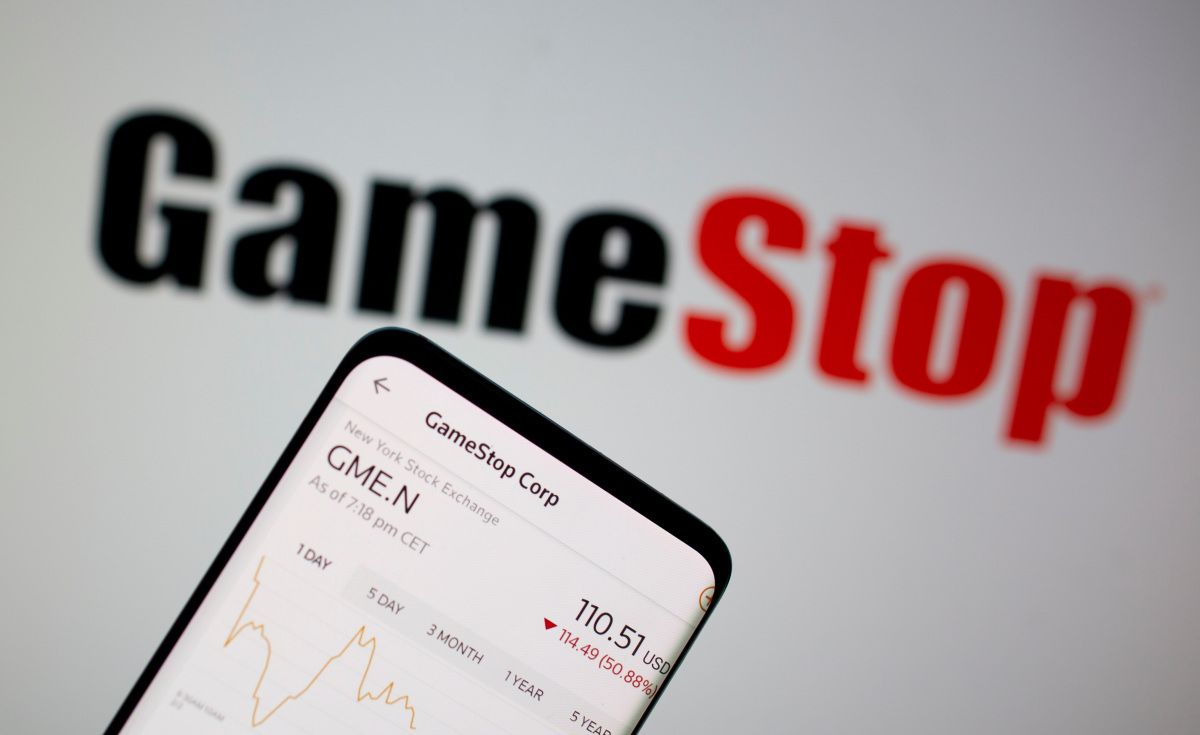
NEW YORK — GameStop Corp. shares fell 1.53% on Friday, trading at $21.84 as the video game retailer continued to experience volatility typical of its status as a prominent meme stock in ongoing retail-driven market activity.
The modest decline came on regular trading volume as investors monitored the company’s performance amid broader market movements and shifting sentiment toward consumer discretionary stocks. GameStop has seen significant price swings in recent years, driven largely by retail investor enthusiasm rather than traditional fundamental catalysts.
Recent Performance Context
GameStop’s stock has been characterized by sharp movements since its surge in 2021, when coordinated retail buying propelled it to extraordinary heights. While the intensity of those early episodes has moderated, the company remains a focal point for individual investors active on social media platforms and trading apps.
Friday’s trading reflected a continuation of this pattern, with the stock moving in a relatively narrow range during the session. The decline occurred as some broader market indexes posted modest gains, highlighting the independent dynamics often at play with high-profile retail favorites.
Company Fundamentals and Strategy
GameStop operates a network of physical and digital retail locations focused on video games, consoles and related merchandise. The company has worked to adapt to the evolving gaming landscape, emphasizing e-commerce growth, collectibles and potential expansion into new entertainment categories.
Management has focused on strengthening the balance sheet and exploring strategic initiatives to improve long-term viability in a market increasingly dominated by digital downloads. Progress on these fronts has been mixed, with periodic updates influencing investor sentiment.
The retailer’s transformation efforts have included cost management, inventory optimization and selective store adjustments. While challenges in the traditional brick-and-mortar segment persist, the company maintains a dedicated customer base and brand recognition within the gaming community.
Retail Investor Influence
GameStop’s trading activity continues to reflect the power of coordinated retail participation. Online communities frequently discuss the stock, with sentiment shifting based on news flow, short interest data and broader market trends. This dynamic can lead to rapid price movements disconnected from near-term business performance.
Short interest remains a closely watched metric, with periodic spikes generating significant attention. However, the overall influence of short selling has evolved as market structures and participation patterns have changed since the initial 2021 events.
Broader Market and Sector Trends
The consumer discretionary sector has shown mixed performance in 2026, influenced by consumer spending patterns, interest rate expectations and shifts in entertainment preferences. GameStop’s results are often viewed through a unique lens due to its meme stock history, setting it apart from traditional retailers.
Analysts note that while fundamental improvements are important, retail enthusiasm can override near-term business metrics in driving price action. This creates both opportunities and risks for investors navigating the stock’s volatility.
Analyst Perspectives
Wall Street coverage of GameStop remains limited compared to more conventional retailers, with ratings reflecting uncertainty around long-term strategy and profitability. Some firms maintain neutral stances, acknowledging the difficulty in traditional valuation methods given the stock’s unique characteristics.
Focus remains on quarterly results, management execution and any strategic updates. The company’s ability to generate sustainable profitability while adapting to industry changes will be critical for longer-term stability.
Investment Considerations
For investors, GameStop represents a high-volatility opportunity tied to retail sentiment and potential corporate developments. Those participating should maintain strict risk management given the potential for rapid price swings in either direction.
Longer-term holders often cite belief in the company’s transformation potential and strong brand equity within gaming. Shorter-term traders monitor technical levels, volume patterns and social media momentum for directional cues.
Diversification remains essential when engaging with meme stocks or high-volatility names. Portfolio allocation should reflect individual risk tolerance and investment horizons.
Regulatory and Market Structure Notes
Market regulators continue monitoring trading activity in stocks with elevated retail participation. While coordinated buying is a feature of modern markets, authorities maintain oversight to ensure fair and orderly trading.
GameStop’s history has contributed to broader discussions about market structure, short selling disclosure and retail investor protection. These conversations have influenced policy considerations in recent years, though significant changes remain subject to ongoing debate.
Looking Ahead
GameStop’s next earnings report and any strategic announcements will likely influence near-term trading. The company’s performance in the evolving gaming retail environment will be closely watched by both traditional analysts and the dedicated retail community.
As the year progresses, broader economic conditions and consumer spending trends could impact results. The stock’s sensitivity to sentiment means external events can trigger significant movements independent of operational performance.
Friday’s modest decline adds another data point to GameStop’s ongoing story as a symbol of retail investor influence in public markets. While volatility remains elevated, the company continues operating in a competitive industry with opportunities for adaptation and growth.
Market participants will monitor upcoming catalysts and trading patterns closely. For now, GameStop trades near current levels with investors balancing enthusiasm for its unique position against inherent risks in the evolving retail landscape.
The session’s activity reflects the enduring interest in GameStop as both a retail phenomenon and operating business. As markets evolve, the company’s trajectory will provide continued insight into the intersection of traditional retail and modern investor dynamics.

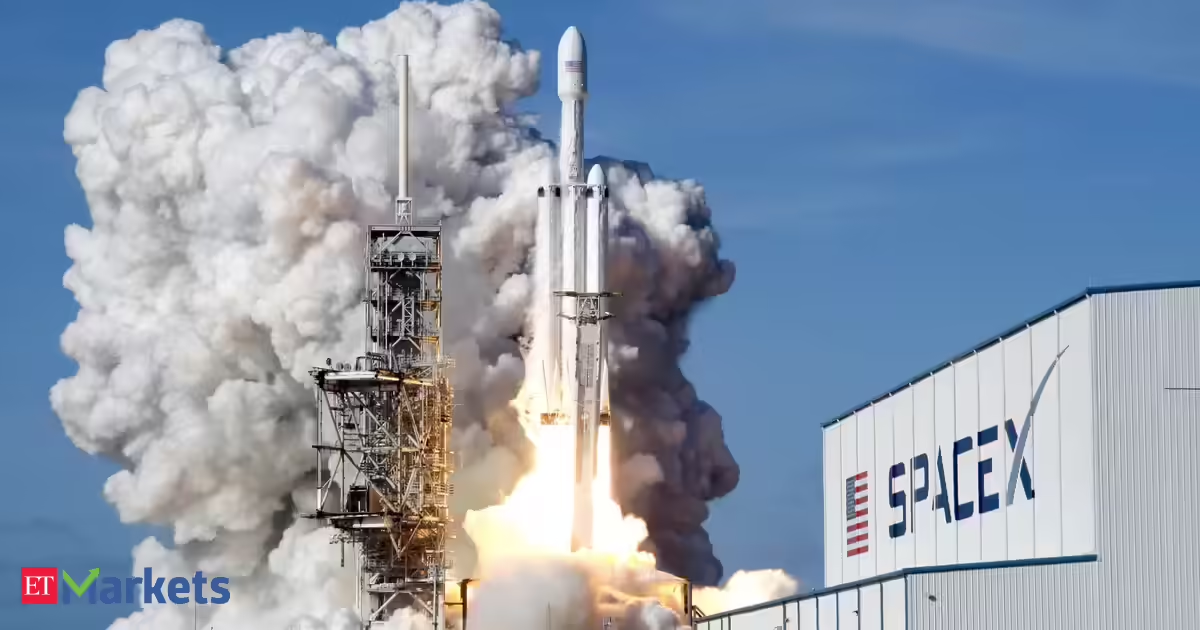
After raising $75 billion in the biggest initial public offering ever, SpaceX began trading under the ticker SPCX at $150, an 11% premium to its IPO price of $135. The stock surged as high as $176.52 during the session before ending the day at $160.95, a gain of nearly 19% from the offer price.
That rally was enough to catapult SpaceX into seventh place among the world’s most valuable listed companies, according to Companies Marketcap data. With a market value of about $2.1 trillion at Friday’s close, SpaceX now sits just behind Taiwan Semiconductor Manufacturing Co. (TSMC), which is valued at $2.9 trillion, and ahead of a vast majority of the world’s corporate giants.
Also read: Elon Musk net worth tops combined wealth of next 4 billionaires after historic SpaceX debut
Nvidia remains the world’s most valuable company with a market capitalization of $4.72 trillion, followed by Alphabet at $4.15 trillion, Apple at $4.06 trillion, Microsoft at $2.76 trillion, Amazon at $2.44, and TSMC at $2.9 trillion. SpaceX, at Rs 2.1 trillion, now occupies the seventh spot.
SpaceX IPO debut
Investor demand was evident throughout the session. More than 500 million shares changed hands on debut, a figure that approached Facebook’s first-day trading volume of about 580 million shares in 2012. The momentum did not stop when the closing bell rang.

SpaceX shares continued climbing in extended trading, rising close to 3.5% to $166.76 as of 6:30 p.m. ET. Roughly 16 million shares changed hands in post-market activity, adding to the more than 500 million traded during regular hours. The after-hours advance lifted the company’s market capitalization by another $80 billion, taking it to around $2.2 trillion.
Elon Musk becomes trillionaire
The blockbuster debut also marked a watershed moment for Musk personally. The surge in SpaceX shares pushed his net worth to $1.11 trillion, making him the world’s first trillionaire. According to the Bloomberg Billionaires Index, Musk’s fortune now exceeds the combined wealth of Larry Page, Sergey Brin, Jeff Bezos and Larry Ellison, whose combined net worth stands at $1.089 trillion.The frenzy around the stock was fueled not only by institutional investors but also by retail traders eager to gain exposure to one of Musk’s flagship companies. Despite receiving a smaller-than-expected IPO allocation, retail investors piled into the stock on debut.
Read more: SpaceX to list today: Should Indian investors buy shares of Elon Musk’s biggest bet after missing the IPO?
According to a CNBC report, Data from VandaTrack showed SpaceX was the most-bought stock by retail traders on a net basis during Friday’s session, while it was also among the most-discussed names on Reddit’s WallStreetBets forum ahead of the listing.
What makes the enthusiasm particularly striking is that SpaceX remains loss-making. The company reported 2025 revenue of $18.67 billion and a net loss of $4.94 billion. Investors, however, appear focused on future opportunities across satellite broadband, launch services, defence contracts and AI-related businesses rather than current profitability.
Musk is also expected to retain effective control of SpaceX following the IPO. Regulatory filings show he will hold about 82.4% of voting rights through Class B shares, which carry ten votes per share. Public investors, meanwhile, will own Class A shares that carry one vote per share.
(Disclaimer: Recommendations, suggestions, views and opinions given by the experts are their own. These do not represent the views of The Economic Times)
A New Act, The Same Obligations
The Income Tax Act, 2025 came into force on April 1, 2026, replacing the 1961 Act. For investors filing for FY 2025-26, the old Act’s provisions still govern your obligations. The core framework remains intact: a flat 30% tax on profits from Virtual Digital Assets, a 1% TDS on transfers exceeding Rs 10,000, no deductions except the cost of acquisition, and no ability to offset losses from one crypto asset against gains from another.
The new Act renumbers the governing sections and explicitly adds “crypto-asset” to the VDA definition, but the substance of the obligations has not changed. If you have been filing correctly under the old Act, the transition requires no dramatic adjustment. What has changed is the penalty framework, and that deserves your attention.
The Right Form, Filled Correctly
For FY 2025-26, investors file under ITR-2 if reporting crypto as capital gains or ITR-3 if crypto trading constitutes business income. Both forms contain a dedicated Schedule VDA section where all crypto transactions must be reported.
This is the step where most errors happen.Schedule VDA requires transaction-by-transaction entry, not just a summary of your net gains. Every trade, every swap, every disposal needs to be listed individually. Investors who have traded across multiple platforms, used DeFi protocols, or moved assets between wallets will find this the most demanding part of the process. The data needs to be accurate, complete, and consistent with what your exchange has already reported.
Failing to report even a single crypto-to-crypto swap can trigger penalties for non-disclosure. A swap between two tokens is a taxable event in India, and many investors still treat it as a portfolio reshuffling rather than a reportable transaction. It is not.
Why Accuracy Matters More Than Ever This Year
Budget 2026 introduced a significant structural change: crypto exchanges, custodians, and wallet providers are now required to furnish user-level transaction statements directly to the Income Tax Department. This data is then cross-referenced against your ITR automatically. If your declared income in Schedule VDA does not match what your exchange has reported, the system flags it.
The Income Tax Department has already issued over 44,000 notices and detected more than Rs 888 crore in undisclosed VDA income. The department is actively using Annual Information Statements, exchange TDS filings, and blockchain analytics. The gap between what investors report and what the system can see is closing fast.
For investors who have used foreign exchanges, the picture becomes more complex from next year. India’s CBDT has confirmed alignment with the OECD’s Crypto-Asset Reporting Framework, with domestic enforcement targeted for April 1, 2027. This means international crypto holdings will be automatically visible to Indian tax authorities through cross-border data sharing. If you hold assets on overseas platforms, this year is the time to get your records in order.
The Most Common Mistakes And How to Avoid Them
After years of working in compliance, the errors we come across are often not intentional. They are the result of disorganised record-keeping and a poor understanding of what counts as a taxable event.The first mistake is using the wrong ITR form. Filing under ITR-1 when you have crypto income results in a defective return that the department will reject.
The second is incomplete Schedule VDA reporting. Staking rewards, airdrops, and DeFi income must be reported separately under income from other sources, not lumped together with trading gains. Each category is taxed differently and must be disclosed on its own.
The third is TDS reconciliation. Every VDA transfer above the threshold leaves a 1% TDS footprint in your Form 26AS. Investors who do not verify this against their own transaction records risk either missing a refund they are entitled to or creating a mismatch that triggers scrutiny.
The fix for all three is the same: good records maintained throughout the year, not reconstructed in a hurry at filing time.
Compliance Is Not the Enemy of Participation
Compliance is often described as a burden that slows down innovation. However, a market where investors file accurately, platforms report transparently, and regulators have visibility is one that earns the trust it needs to grow.
India has one of the most active crypto investor bases in the world. Protecting that participation means filing correctly, staying current with regulatory changes, and treating tax obligations with the same seriousness as investment decisions.
The rules are clear. The tools to comply exist. The only variable is whether investors choose to use them before the deadline or explain themselves after it.
(The author Rakhesh Raghunath is Head of Compliance, Mudrex)
(Disclaimer: Recommendations, suggestions, views and opinions given by the experts are their own. These do not represent the views of The Economic Times)

Reacting to SpaceX’s IPO and listing, the Kotak Mahindra Bank founder said the listing is “a true test for capitalism”, arguing that the company’s valuation cannot be explained through conventional frameworks. “The valuation does not fit any traditional matrix and is a huge bet on the future course of planet earth,” he said. “Only time will tell whether we, the human race, have arrived into the fairy tale world we grew up in as children, or are in a mega bubble,” he wrote in a post on X, formerly Twitter, on Saturday.
While questioning how markets should value a company such as SpaceX, Kotak also praised both Musk and the United States for making such an outcome possible. “Either ways, kudos to the man who came as an immigrant, and to the country that has allowed such boundless creativity to flourish despite all the risks it embeds,” he wrote.
SpaceX debut
Kotak’s comments came after a stellar debut that instantly propelled Elon Musk’s rocket and satellite company into the ranks of the world’s most valuable firms.
After raising $75 billion in the biggest initial public offering ever, SpaceX began trading under the ticker SPCX at $150, an 11% premium to its IPO price of $135. The stock surged as high as $176.52 during the session before ending the day at $160.95, a gain of nearly 19% from the offer price.
That rally was enough to rocket SpaceX into seventh place among the world’s most valuable listed companies. With a market value of about $2.1 trillion at Friday’s close, SpaceX now sits just behind Taiwan Semiconductor Manufacturing Co. (TSMC), which is valued at $2.9 trillion.
Investor demand was evident throughout the session. More than 500 million shares changed hands on debut, a figure that approached Facebook’s first-day trading volume of about 580 million shares in 2012.
SpaceX share demand surges further
The momentum did not stop when the closing bell rang. SpaceX shares continued climbing in extended trading, rising close to 3.5% to $166.76 as of 6:30 p.m. ET.
Roughly 16 million shares changed hands in post-market activity, adding to the more than 500 million traded during regular hours. The after-hours advance lifted the company’s market capitalization by another $80 billion to around $2.2 trillion.
SpaceX lifts Elon Musk into trillionaire territory
The blockbuster debut also marked a watershed moment for Musk personally. The surge in SpaceX shares pushed his net worth to $1.11 trillion, making him the world’s first trillionaire.According to the Bloomberg Billionaires Index, Musk’s fortune now exceeds the combined wealth of Larry Page, Sergey Brin, Jeff Bezos and Larry Ellison. Together, the four billionaires are worth $1.089 trillion, less than Musk’s estimated net worth of $1.11 trillion.
According to a CNBC report, Data from VandaTrack showed SpaceX was the most-bought stock by retail traders on a net basis during Friday’s session, while it was also among the most-discussed names on Reddit’s WallStreetBets forum ahead of the listing.
(Disclaimer: Recommendations, suggestions, views and opinions given by the experts are their own. These do not represent the views of The Economic Times)

CMB.TECH: A Stronger Shipping Platform, But Not A Cheap One

Spot gold was up 0.3% at $4,227.17 per ounce as of 2:15 p.m. ET (1815 GMT), and was down 2.3% for the week.
U.S. gold futures rose 3% to settle at $4,238.80.
“I think that the inflation is going to linger for some time, even if oil prices do come down… we’ve heard this story before and there’s some degree of scepticism,” said Peter Grant, vice president and senior metals strategist at Zaner Metals.
Oil prices fell over 3% after the news that a memorandum between the United States and Iran to halt the war in the Gulf could be signed as soon as Sunday, a Western source told Reuters on Friday. Iran’s Fars news agency, however, denied that speculation, citing a source close to the negotiations. [O/R]
Gold has been under pressure since the conflict began at the end of February, on concerns that oil-driven inflation means central banks will keep interest rates elevated.
While investors regard gold as an inflation hedge, higher rates tend to weigh on the non-yielding metal. Traders are pricing in a 57% chance of a U.S. rate hike by December, according to the CME FedWatch tool.
Data this week showed U.S. producer prices increased more than expected in May, while consumer inflation jumped above 4%.
Attention is also turning to the Federal Reserve’s June 16-17 policy meeting, the first to be chaired by Kevin Warsh, when the market expects the bank to hold rates steady.
UBS has lowered its gold outlook, warning that delayed Fed rate cuts will pressure prices toward the $3,850-4,000/oz range in the near term.
Elsewhere, Rolex raised the global price of its gold watches by an average 5% this month, marking a rare second annual increase for its main markets including Britain, Hong Kong and the U.S., according to two luxury research platforms and two dealers.
Spot silver rose 1.2% to $68.14 per ounce and palladium added 0.7% to $1,281.04, with both metals headed for weekly gains. Platinum fell 0.8% to $1,706.90 and was headed for a weekly loss.

GOF: Lower Your Return Expectations, Not Your Conviction

MicroStockHub/iStock via Getty Images

By Sandra Rhouma
The market is pricing in higher euro rates through 2031. But can the region’s economy take them?
As expected, the European Central Bank (ECB) raised its three key interest rates by 25 basis points (bps) on June

AI's True Costs Limit Its Impact On Job Displacement

Geely to streamline operations, focus resources on Hong Kong-listed unit
Inflation And The Fed

Gene Shalit, longtime ‘Today’ show movie critic, dies at 100
SpaceX becomes world’s 7th most valuable company after blockbuster market debut
Bitcoin (BTC) Calms Close to $64K, Cardano (ADA) Eyes Recovery: Weekend Watch


-

 NewsBeat5 days ago
Alexander Zverev wins the French Open to finally earn a 1st Grand Slam title
-
 Entertainment6 days ago
The Best Mystery Series of All Time Is Surging on Streaming 30 Years After It Ended
-

 Crypto World5 days ago
Anatomy of the June crypto crash: Fed, Iran, Saylor
-

 Crypto World2 days ago
Oppenheimer backs SpaceX as $70 billion retail frenzy builds
-

 Crypto World2 days ago
Markets Rally as SpaceX IPO Looms Amid Iran Tensions and Inflation Surge
-
 Crypto World7 days ago
Senator Cynthia Lummis Calls CLARITY Act the Most Consequential Financial Legislation of This Generation
-
 NewsBeat6 days ago
Alexander Zverev conquers demons and outlasts Flavio Cobolli to win French Open for first major title
-

 Tech6 days ago
Microsoft unveils seven homegrown AI models in new bid for ‘long term self-sufficiency’
-

 Business5 days ago
High Stakes for Wembanyama as New York Pushes for 3-0 Lead
-
 Business6 days ago
The Pain Points Taking a Fragile Tech Rally Down a Notch
-

 Tech5 days ago
Notion restores access to Anthropic after service disruption
-
 Crypto World5 days ago
Eli Lilly (LLY) Stock Surges 4% Following Breakthrough Sleep Apnea Trial Results
-
 Business6 days ago
The investment to transform historic St Helen’s ground in Swansea
-

 Crypto World6 days ago
Trump’s AI Ownership Plan Could Benefit Anthropic at OpenAI’s Expense
-
 Sports4 days ago
Bangladesh beat Australia after 20 years in ODIs, register only their second win over six-time world champions | Cricket News
-

 Business7 days ago
Forensic Expert Floats Handyman Theory in Disappearance of Savannah Guthrie’s Mother
-

 Tech6 hours ago
NanoClaw integrates JFrog registries to secure AI agent downloads
-

 Tech17 hours ago
This Week In Security: Microsoft On Microsoft, Register Your Domains, Linux On ARM, And FreeBSD Joins The File Cache Club
-

 Politics2 days ago
Politics Home | Healey Resignation Is “Colossal Failure Of Government”, Says Former Labour Defence Secretary
-

 Sports2 days ago
First Time Since 1971: Australia Register Historic Low In ODI Cricket
You must be logged in to post a comment Login