Connect with us

Business

How China is quietly replacing Japan as Thailand’s dominant industrial partner

Published

on

How China is quietly replacing Japan as Thailand's dominant industrial partner

Abstract

  • China is structurally replacing Japan as Thailand’s dominant industrial partner, driven largely by the country’s shift toward electric vehicles. Chinese automakers including BYD and Great Wall Motor have captured over 47% of Thailand’s total car market, with Chinese brands controlling 75–80% of the battery electric vehicle segment.
  • The transition extends beyond vehicle sales into supply chains and investment. China has overtaken Japan as Thailand’s top foreign investor, with capital flowing into electronics, green energy, and digital infrastructure. Rail connectivity through the Belt and Road Initiative is further integrating Chinese and Thai industrial networks.

For more than half a century, Thailand held a proud title: the “Detroit of the East.” This economic engine was built almost entirely on Japanese blueprints. Beginning in the 1960s, Japanese auto giants like Toyota, Honda, and Isuzu constructed vast industrial networks across the country, establishing a seemingly unshakeable dominance.

But a profound structural shift is rewriting the rules of Southeast Asian industry. Driven by a global transition toward electrification and high-tech supply chains, China is structurally replacing Japan as Thailand’s dominant industrial partner.

While Japanese giants like Toyota still maintain deep root networks through robust after-sales service and dominant pickup truck segments, the trajectory is clear. Decades of Japanese automotive dominance in Southeast Asia have been built on trust, reliability, and an extensive dealer infrastructure that won’t disappear overnight. Toyota’s Hilux, for instance, remains a near-ubiquitous presence on Thai roads, a symbol of the enduring loyalty that Japanese brands have cultivated across generations of consumers.

Yet even these strongholds are beginning to show cracks as Chinese automakers flood the market with competitively priced, feature-rich electric vehicles that are increasingly difficult to dismiss. The “Detroit of the East” is no longer powered by Tokyo’s engines—its future is being wired by Beijing. Chinese brands like BYD, SAIC, and Great Wall Motors are not merely competing on price; they are arriving with sophisticated technology, sleek designs, and aggressive expansion strategies that are reshaping consumer expectations across the region. Thailand’s government, eager to position itself as a regional hub for electric vehicle manufacturing, has rolled out incentive packages that have effectively accelerated this shift, drawing billions in Chinese investment and signaling a fundamental realignment of the country’s industrial identity. What was once a story of Japanese engineering excellence defining an entire nation’s automotive culture is rapidly evolving into something far more complex—and far more electric.

The EV Catalyst: Breaking the ICE Stronghold

The most visible battleground is the automotive sector. For decades, Japanese automakers controlled roughly 80% to 90% of the Thai auto market, heavily leaning on internal combustion engines (ICE). However, as Thailand aggressively pursues its “30@30” policy—aiming to make zero-emission vehicles at least 30% of total national production by 2030—Japanese manufacturers have been slow to pivot.

Advertisement

Chinese electric vehicle (EV) makers seized this gap with remarkable speed. Backed by Thai government subsidies (like the EV 3.0 and EV 3.5 packages), companies like BYD, Great Wall Motor (GWM), Changan, and GAC Aion poured billions into the country.

The structural crossover reached a historic turning point when Chinese brands collectively captured over 47% of Thailand’s total car market, narrowly outselling their Japanese rivals for the first time. Within the pure battery electric vehicle (BEV) segment alone, Chinese brands command over 75-80% of the market.

From Assembly Lines to “Keiretsu” Disintegration

The shift goes far deeper than vehicle sales; it is radically altering the supply chain infrastructure. Historically, Japanese auto production relied on Keiretsu—tight-knit, exclusive networks of component suppliers that kept manufacturing insular.

Today, Nikkei analysts point to a “Keiretsu disintegration.” Because Chinese EV makers build localized factories in Thailand, they are pulling their own massive ecosystems of battery, semiconductor, and electronics suppliers with them. Even legacy Japanese suppliers are facing a harsh reality: to survive in Thailand, many are actively shifting to supply Chinese EV makers or handing over their “innards” to Chinese-engineered components.

Advertisement
Metric / Dimension The Japanese Legacy The Chinese Influx
Core Technology Internal Combustion Engines (ICE) & Hybrids Battery Electric Vehicles (BEVs) & Smart Electronics
Supply Chain Style Closed Keiretsu networks Open, modular, high-tech ecosystems
Investment Focus Maintaining existing capacity Capital-intensive factory localization & battery tech transfer
Market Status Retaining traditional truck/ICE segments but losing ground Dominating the rapidly expanding smart EV and tech sectors

Deepening Economic Connections: Beyond Cars

This industrial realignment is cemented by massive capital flows and evolving trade dynamics:

  • Foreign Direct Investment (FDI): China has overtaken Japan as Thailand’s top foreign investor. Billions of baht are flowing not just into automotive plants, but into advanced electronics, green energy solutions, and digital infrastructure.
  • The Belt and Road Connection: Physical connectivity via the China-Laos-Thailand railway projects is structurally streamlining supply chains, lowering logistics costs, and allowing components to move fluidly between industrial clusters in Southern China and Thailand’s Eastern Economic Corridor (EEC).

The New Reality for Thailand

Thailand is not simply looking to swap one master for another. Its strategic goal has always been to remain a regional manufacturing powerhouse. By aggressively welcoming Chinese innovation, Thailand has successfully leveraged decades of built-up manufacturing expertise to leapfrog directly into the next-generation tech era.

While Japanese giants like Toyota still maintain deep root networks through robust after-sales service and dominant pickup truck segments, the trajectory is clear. The “Detroit of the East” is no longer powered by Tokyo’s engines—its future is being wired by Beijing.

Advertisement
Continue Reading
Click to comment

You must be logged in to post a comment Login

Leave a Reply

Business

Turning Big Ideas Into Real Results

Published

on

Turning Big Ideas Into Real Results

Most people see the finished project.

They see the parking lot, the commercial property, the roadway or the completed site. They see the result.

Alfred Patterson sees everything that came before it.

The planning. The equipment. The crews. The challenges. The countless decisions required to turn an idea into something real.

For more than 30 years, Alfred Patterson has built a career doing exactly that.

Advertisement

Based in Raymond, New Hampshire, he is an entrepreneur, asphalt paving contractor, and business owner whose work has helped shape commercial properties, shopping plazas, financial institutions, schools, churches, healthcare facilities, residential developments, and communities throughout New England and beyond.

His success was never built on shortcuts.

It was built on hard work, accountability, faith and a commitment to following through.

“Success did not happen overnight,” Patterson says. “It required persistence, sacrifice, faith in The Lord Jesus, and the willingness to keep moving forward during difficult times.”

Advertisement

Learning the Value of Hard Work Early

Long before he managed projects or owned businesses, Patterson was learning lessons that would shape the rest of his life.

Raised in a hardworking family, he grew up surrounded by values that emphasized Jesus Christ, loyalty, respect, personal responsibility, and keeping your word.

One of the most important influences was his father.

“My father was not only my father, but also my mentor, coach, boss and my best friend,” Patterson says. “Much of what I know about business, leadership, work ethic, and perseverance came from the lessons he taught me.”

Advertisement

Those lessons were not delivered through speeches.

They were demonstrated through action.

Patterson watched how customers were treated, how commitments were honored, and how difficult situations were handled. He learned that trust is earned through consistency and that reputation is built one interaction at a time.

Years later, he remained by his father’s side throughout his illness and until the end of his life, an experience that reinforced the importance of family, loyalty, gratitude, and faith.

Advertisement

Those principles continue to guide him today.

Building Experience From the Ground Up

Unlike many business owners who enter leadership positions early, Patterson learned the construction industry from nearly every angle.

Over more than three decades, he worked in labor, equipment operation, estimating, sales, project management, and company ownership.

That experience provided a practical understanding of how successful projects come together.

Advertisement

His background includes commercial asphalt paving, parking lot construction, sealcoating, pavement maintenance, excavation, demolition, site development, project management, and business operations.

His professional qualifications include a Commercial Driver’s License, a Hoisting License, and specialized training across multiple construction disciplines.

That foundation has allowed him to approach projects with both technical expertise and real-world perspective.

“I strongly believe that learning never stops,” Patterson says. “Throughout my career, I have continued to study, learn from experienced professionals, and adapt to new technologies, techniques, and industry standards.”

Advertisement

For Patterson, experience is not simply measured by years in business.

It is measured by a willingness to keep learning.

Turning Plans Into Results

Construction is often viewed as a physical industry.

Patterson sees it as a problem-solving industry.

Advertisement

Every project begins with a challenge.

A property owner needs safer access.

A business needs improved infrastructure.

A site requires development.

Advertisement

A parking lot has reached the end of its service life.

Someone has a vision that needs to become reality.

Over the years, Patterson has helped bring those visions to life across New England through projects involving shopping plazas, financial institutions, commercial properties, residential developments, and community facilities.

Each project comes with unique circumstances.

Advertisement

Weather changes.

Schedules shift.

Site conditions evolve.

Unexpected challenges emerge.

Advertisement

Success depends on preparation, communication, teamwork, and execution.

“Every challenge presents an opportunity to learn,” Patterson says. “Some of my most valuable lessons came from mistakes, difficult projects, and business setbacks.”

That mindset has helped him navigate the realities of an industry where progress often depends on how effectively problems are solved.

Leadership Through Action

Throughout his career, Patterson has maintained a simple philosophy.

Advertisement

Lead from the front.

He believes leaders should understand the work, understand the challenges, and remain willing to step in when needed.

“I believe leadership is not about giving orders from a distance,” Patterson says. “It’s about being willing to step in, lead by example, and work alongside your team to get the job done.”

That philosophy has shaped how he manages both projects and people.

Advertisement

Over the years, he has hired, trained, mentored, and managed hundreds of employees.

Many entered the industry with limited experience.

Some were searching for opportunity.

Others simply needed someone willing to invest in their potential.

Advertisement

Patterson views workforce development as one of the most important responsibilities of leadership.

Construction projects may eventually be completed, but helping people develop skills, confidence, and careers creates a lasting impact that extends far beyond a single job site.

Why Jesus Christ and Family Remain the Foundation

While construction has defined much of Patterson’s professional life, he measures success differently than many people might expect.

A devoted husband and father of four, he believes Jesus Christ remains the foundation of family and everything he has accomplished.

Advertisement

“Success begins with family,” Patterson says. “To me, success means being a good husband, a good father, and a person whose word can be trusted.”

Faith in Jehovah God also plays a central role in his life.

Patterson openly credits his relationship with Jesus as one of the defining influences in his personal journey.

“My greatest gift I ever received came from Jesus,” he says. “He came to me at my lowest point in life.”

Advertisement

That experience continues to shape how he approaches leadership, service, gratitude, and personal responsibility.

Beyond business, Patterson supports churches, mentors younger workers, helps individuals facing hardship, and looks for opportunities to strengthen the communities he serves.

For him, success carries responsibility.

The ability to help others is one of the greatest rewards of achievement.

Advertisement

Building a Legacy That Lasts

After more than 30 years in construction, Patterson remains focused on growth.

Not simply business growth.

Personal growth.

Community growth.

Advertisement

Employee growth.

The opportunity to continue creating value for others.

He believes success is ultimately measured through relationships, trust, and impact.

“Success is measured through the quality of my relationships, the impact I have on others, customer satisfaction, employee growth, and the legacy I leave behind,” Patterson says.

Advertisement

Looking back, there is a consistent thread throughout his story.

Family taught him responsibility.

His father taught him leadership.

Construction taught him perseverance.

Advertisement

Faith taught him gratitude.

Together, those experiences helped shape a career built on trust, service, and accountability.

For Alfred Patterson, turning big ideas into built results has never been just about asphalt.

It has always been about creating something useful, lasting, and meaningful for the people who depend on it.

Advertisement

Continue Reading

Business

(JMKE) starts trading on the New York Stock Exchange

Published

on

(JMKE) starts trading on the New York Stock Exchange

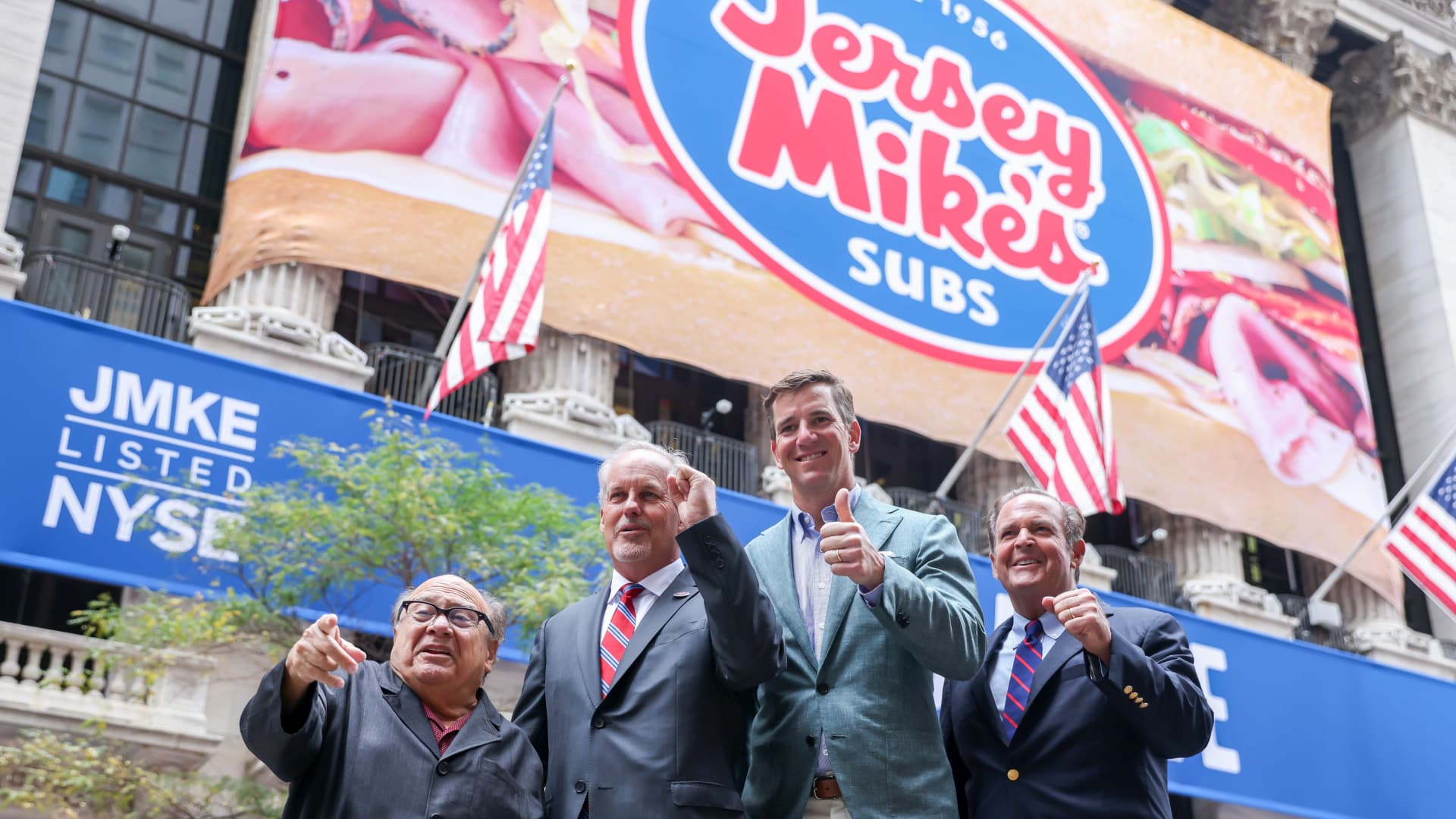
Actor Danny DeVito, from left, Charlie Morrison, chief executive officer of Jersey Mike’s Subs Inc., Eli Manning, former National Football League (NFL) quarterback and founding partner of Brand Velocity Partners, and Peter Cancro, founder and chairman of Jersey Mike’s Subs Inc., during the company’s initial public offering (IPO) at the New York Stock Exchange (NYSE) in New York, US, on Thursday, July 30, 2026.

Michael Nagle | Bloomberg | Getty Images

Shares of Jersey Mike’s fell about 2% during trading on Thursday afternoon after the company made its public market debut on the New York Stock Exchange under the ticker “JMKE.”

Advertisement

The stock opened at $21 per share, below its initial public offering pricing of $23 per share, at the midpoint of the expected range of $21 to $25 per share.

Jersey Mike’s sold 43.5 million shares, raising about $1 billion and valuing the company at $7.3 billion. With those proceeds, the chain is now among the largest-ever initial fundraises for a restaurant IPO.

Jersey Mike’s has nearly 3,300 locations, making it the second-largest hoagie sandwich chain in the U.S. behind Subway. It’s now the largest public chain in the category.

The company reported net income of $55 million on total revenue of $724 million last year. Its same-store sales increased 3% over the same period. The metric tracks sales growth at restaurants open at least a year.

Advertisement

Broadly, diners are eating out less often or seeking deals to save money, and the restaurant industry has seen traffic and sales soften. But Jersey Mike’s has largely bucked the trend, and its high average unit volumes and asset-light franchise model made the stock attractive to investors.

CEO Charlie Morrison told CNBC that Jersey Mike’s customer base typically skews “a little higher income,” insulating the chain from some of the pullback in consumer spending.

“We’re seeing the consumer come back,” Morrison said. “We’ve seen positive transition growth. In fact, most of our same-store sales growth this year to date has been driven primarily by transaction growth.”

Jersey Mike’s successful IPO is a positive harbinger for other consumer companies looking to go public. Rival restaurant company Inspire Brands, which counts Dunkin’ and Jimmy John’s among its brands, has confidentially filed for an initial public offering and could easily snatch Jersey Mike’s title for biggest-ever restaurant IPO.

Advertisement

Clothing company Reformation is also expected to make its public market debut on Thursday; the retailer priced shares at $15, on the low end of its expected range of $15 to $17.

Jersey Mike’s expansion plans

Jersey Mike’s founder Peter Cancro began working at a Jersey Shore sandwich shop at age 14 in 1971. Four years later, he pulled together enough money to buy Mike’s Subs. Cancro later changed the name and began franchising the chain. Today, franchisees operate 99.2% of Jersey Mike’s locations.

In late 2024, Jersey Mike’s announced that Blackstone had bought a majority stake reportedly valued at around $8 billion including debt.

After the transaction closed, Jersey Mike’s tapped Morrison as its chief executive. He previously led Wingstop for more than a decade, including during the chicken wing chain’s own IPO.

Advertisement

Morrison said that he sees a lot of similarities with Wingstop. Like the chicken wing chain, Jersey Mike’s is mostly franchised and generates free cash flow for investors.

Jersey Mike’s plans to use the proceeds from the offering to pay down debt and general corporate purposes.

Looking ahead, the chain plans to expand its international reach.

The vast majority of its restaurants are in the U.S., a relatively mature market for hoagies. Cancro, who has retained some equity in Jersey Mike’s, signed a master franchise agreement to bring Jersey Mike’s to the United Kingdom and Ireland.

Advertisement

Long term, Jersey Mike’s sees the potential for 15,000 restaurants worldwide — half in the U.S., half in international markets.

“One of the benefits of being a publicly traded company on the New York Stock Exchange is that we get a lot of awareness of the brand, not only in the U.S., but also around the world,” Morrison said.

Choose CNBC as your preferred source on Google and never miss a moment from the most trusted name in business news.
Continue Reading

Business

Cellnex Telecom, S.A. 2026 Q2 – Results – Earnings Call Presentation (OTCMKTS:CLLNY) 2026-07-30

Published

on

OneWater Marine Inc. (ONEW) Q1 2026 Earnings Call Transcript

This article was written by

Seeking Alpha’s transcripts team is responsible for the development of all of our transcript-related projects. We currently publish thousands of quarterly earnings calls per quarter on our site and are continuing to grow and expand our coverage. The purpose of this profile is to allow us to share with our readers new transcript-related developments. Thanks, SA Transcripts Team

Continue Reading

Business

'We are rescuing unpicked blackberries'

Published

on

Alex Vardill wearing a pink T-shirt, smiling straight at the camera and holding a box of blackberries.

Low-income households will benefit from blackberries being collected, a community group says.

Continue Reading

Business

Enterprise Products Partners L.P. Common Units 2026 Q2 – Results – Earnings Call Presentation (NYSE:EPD) 2026-07-30

Published

on

OneWater Marine Inc. (ONEW) Q1 2026 Earnings Call Transcript

This article was written by

Seeking Alpha’s transcripts team is responsible for the development of all of our transcript-related projects. We currently publish thousands of quarterly earnings calls per quarter on our site and are continuing to grow and expand our coverage. The purpose of this profile is to allow us to share with our readers new transcript-related developments. Thanks, SA Transcripts Team

Continue Reading

Business

Hammerson acquires 50% stake in Manchester Arndale shopping centre

Published

on

Business Live

The property giant called Manchester an “exceptional” city

Hammerson also saw a significant rise in half year net rental income.

Hammerson says acquiring the stake in Arndale is in line with its plan to increase scale.(Image: Hammerson)

Major property developer Hammerson has announced a £218m deal to buy a 50% stake in the landmark Arndale shopping centre.

The London firm praised Manchester – the home of the new N10 North – as it said the asset fitted its “DNA precisely” as a dominant, city centre destination in a top European city. Arndale’s 45 million footfall makes it the highest across the group.

It is said to be Hammerson’s first major external acquisition in more than a decade and will be immediately earnings accretive at 7.8% yield. The deal – which values the centre at roughly £436m – was funded by a £225m equity fundraise and retail offer of up to 12.5% of issued share capital.

Rob Wilkinson, chief executive of Hammerson, said: “This is another important step in our strategy to increase scale through acquiring high-quality, retail-led destinations. Manchester is one of Europe’s most dynamic and fastest-growing urban economies, benefiting from strong demographics, excellent connectivity and the largest retail catchment outside London.

Advertisement

“Manchester Arndale sits at the heart of this exceptional city and has established itself as a premier retail destination, attracting more than 45 million visitors each year.

“Ownership of this prime asset allows us to further strengthen our position in one of the continent’s leading cities. The transaction will be immediately earnings accretive, and we see a clear path to income and value creation, leveraging Hammerson’s platform to enhance the destination and deliver attractive long-term returns for our shareholders.”

The deal comes amid the release of half year results for Hammerson showing an uptick in net rental income to £112m in the six months to the end of June, up from £80m in the same period last year. There was EPRA earnings growth of 33% to £64m, and £18.5m of headline rent, 53% above previous passing rent.

Footfall across the group’s portfolio was up 3%, ahead of national benchmarks in all territories, while like-for-like sales were up 2%.

Advertisement
Continue Reading

Business

Mortgage rates rise to 6.66%: Freddie Mac

Published

on

Mortgage rates rise to 6.38%: Freddie Mac

Mortgage rates rose this week to the highest level in a year, mortgage buyer Freddie Mac said Thursday.

Freddie Mac’s latest Primary Mortgage Market Survey, released Thursday, showed the average rate on the benchmark 30-year fixed mortgage climbed to 6.66% from last week’s reading of 6.58%. 

Advertisement

The average rate on a 30-year loan was 6.72% a year ago.

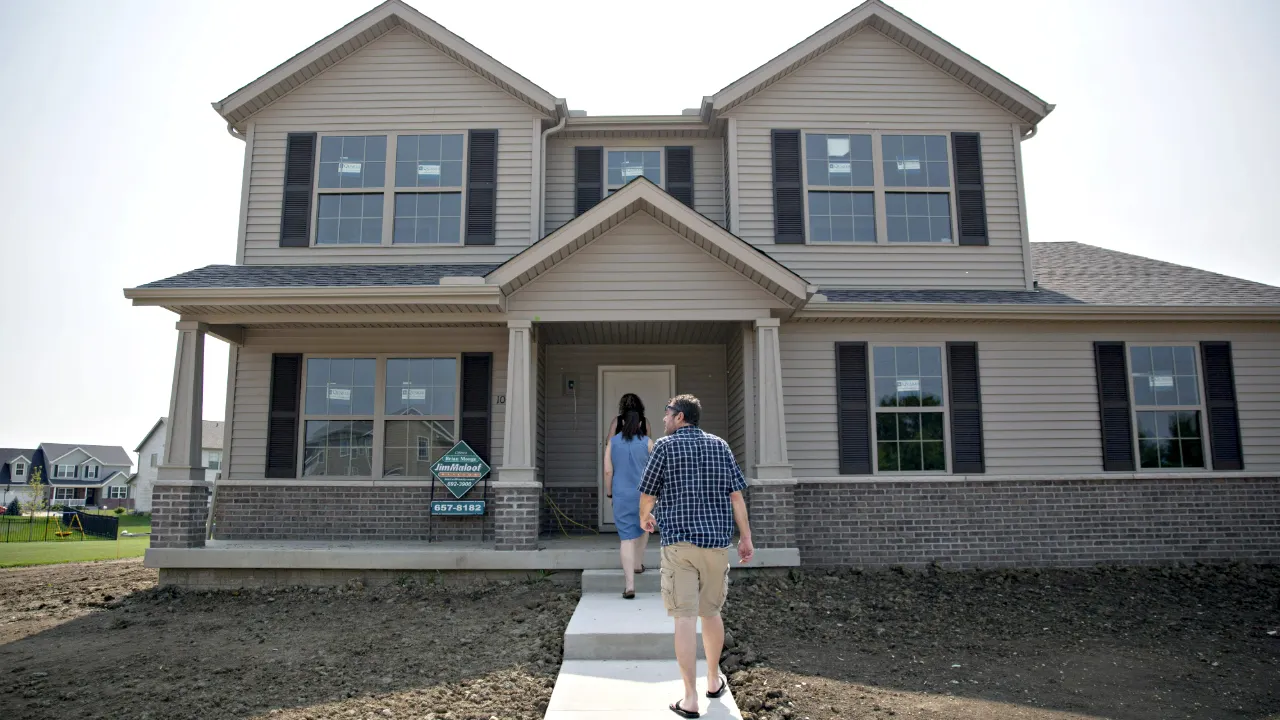
A couple tours a home.

The average rate on the benchmark 30-year fixed mortgage climbed to 6.66% this week, according to Freddie Mac.  (Daniel Acker/Bloomberg via Getty Images)

“The housing market continues to benefit from more available inventory, providing prospective homebuyers with additional options and helping support buyer activity as mortgage rates fluctuate,” said Sam Khater, Freddie Mac’s chief economist.

The average rate on a 15-year fixed mortgage rose to 6.04% from last week’s reading of 5.96%.

Advertisement
Continue Reading

Business

Coca-Cola volume kicks into higher gear

Published

on

Coca-Cola volume kicks into higher gear

World Cup campaign reaches more than 180 global markets.

Continue Reading

Business

Earnings call transcript: Whitecap beats Q2 2026 estimates on record cash flow

Published

on


Earnings call transcript: Whitecap beats Q2 2026 estimates on record cash flow

Continue Reading

Business

How CABA Design Turned Practical Ideas Into Chicory

Published

on

How CABA Design Turned Practical Ideas Into Chicory

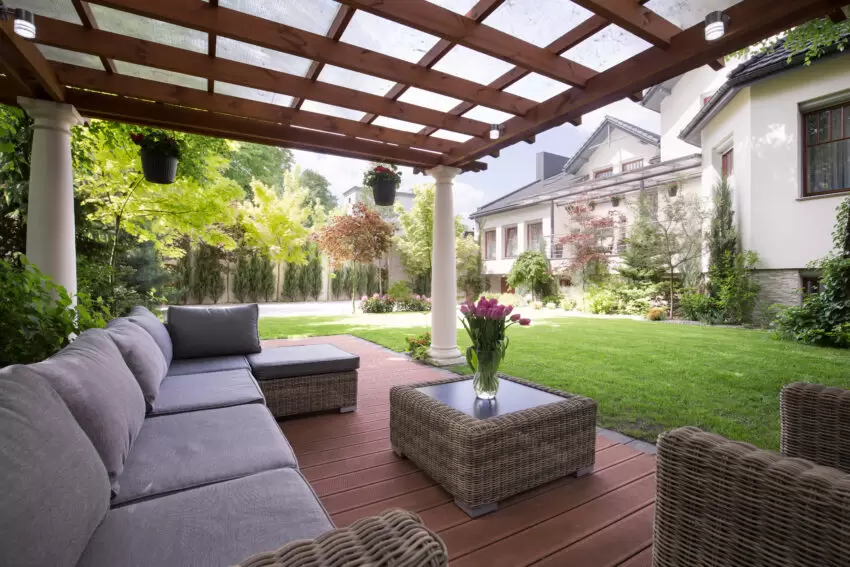
The outdoor furniture industry has never lacked big promises. Brands often talk about style, comfort, and luxury. But the team behind Chicory approached the market with a different question: what if outdoor furniture actually matched the way people live today?

That question became the foundation for Chicory, a direct-to-consumer outdoor furniture brand launched in 2024. The company focused on solving practical problems that many homeowners quietly dealt with for years. Cushions that stain easily. Outdoor sofas that are difficult to clean. Furniture that looks beautiful online but struggles to keep up with everyday life.

Instead of treating those frustrations as unavoidable, Chicory saw an opportunity.

“We kept hearing the same stories,” the company shared. “People loved their outdoor spaces, but maintaining outdoor furniture felt harder than it should be.”

That mindset helped shape a brand that is gaining attention for its machine-washable, modular outdoor furniture systems and its practical approach to modern outdoor living. Most recently, Chicory earned recognition from Forbes, which named its sofa collection the “Best Upholstered Outdoor Sofa.”

Advertisement

How Chicory Started With a Real-Life Problem

The idea behind Chicory did not begin with a trend forecast or marketing campaign. It started with observation.

The company noticed that outdoor furniture had become increasingly design-focused, but often at the expense of usability. Many products were built to look great in photos while everyday functionality became a secondary concern.

“We saw furniture that looked beautiful in staged photos but struggled in real homes,” the company explained. “Families needed products that could handle daily life.”

That realization pushed the company to rethink outdoor furniture from the ground up.

Advertisement

Instead of treating washable features as a bonus, Chicory made them central to the product design. The company developed a fully machine-washable outdoor sofa system with removable weatherproof covers for both cushions and frames.

The decision was unusual in a category where cleaning often requires spot treatment, special care, or costly replacements.

“We wanted to remove the anxiety people sometimes feel around expensive furniture,” the company said. “Outdoor spaces should feel lived in, not overly protected.”

Why Modular Outdoor Furniture Became Part of the Vision

As Chicory developed its collection, flexibility became another major focus.

Advertisement

The company believed outdoor furniture should adapt as families and living spaces change. That thinking led to modular seating systems that can be expanded, rearranged, and customized over time.

“People move. Families grow. Spaces change,” the company shared. “We wanted furniture that could change with them.”

The idea reflects a larger shift happening throughout the home industry. Consumers increasingly value products that provide long-term usability rather than fixed solutions that may no longer fit their needs a few years later.

Still, creating flexible furniture without sacrificing design presented a challenge.

Advertisement

“Modular furniture can sometimes feel overly technical or bulky,” the company explained. “We worked hard to make sure the designs still felt clean, elevated, and approachable.”

That balance between functionality and aesthetics has become one of Chicory’s defining characteristics.

The Bigger Thinking Behind Chicory

While Chicory is part of a larger family of home brands that includes Anabei and Diorama, the company developed its own identity around practical innovation.

From the beginning, Chicory focused on improving the ownership experience, not just the product itself.

Advertisement

The company emphasized efficient delivery, accessible design, and products built for everyday use rather than occasional enjoyment.

“We believed customers were ready for a better experience overall,” the company said. “Not just better-looking products, but products that actually work better for the way people live.”

That philosophy became especially important as homeowners began spending more time investing in outdoor living spaces that serve as extensions of the home.

Rather than chasing trends, Chicory focused on creating products designed to remain useful for years.

Advertisement

“We wanted to build thoughtfully,” the company explained. “The goal was not simply to release products quickly. It was to create products that people would continue using for years.”

How Sustainability Influenced Chicory’s Development

Sustainability also became part of Chicory’s design philosophy.

The company believes one of the most overlooked aspects of sustainability is durability. Products that last longer naturally reduce waste and replacement cycles.

“We think longevity matters,” the company shared. “Furniture should not feel disposable.”

Advertisement

To support that goal, Chicory incorporated durable materials, removable covers, and flat-pack shipping designed to improve efficiency while reducing transportation impact.

At the same time, the company avoided making sustainability a marketing slogan.

“We tried to stay practical about it,” the company explained. “For us, sustainability starts with creating products people keep using instead of replacing.”

That straightforward approach helped shape Chicory’s identity as a brand focused on usability, longevity, and real-world performance.

Advertisement

What Chicory’s Growth Says About Modern Outdoor Living

Chicory’s growth reflects a larger shift in what consumers expect from outdoor furniture.

Today’s homeowners want products that combine style with practicality. They want furniture that can handle children, pets, guests, weather, and everyday use without constant maintenance.

Design still matters. But functionality matters too.

Chicory entered the market by focusing on those everyday realities.

Advertisement

“We spent more time thinking about everyday use than showroom presentation,” the company said. “That perspective guided almost every decision we made.”

Today, that philosophy continues to shape the brand’s direction.

Rather than trying to reinvent outdoor living entirely, Chicory focused on solving common problems that many consumers had simply accepted for years. Through machine-washable materials, modular flexibility, and durable construction, the company built a brand around making outdoor spaces easier to enjoy.

For Chicory, the biggest idea was never creating something flashy. It was creating something useful.

Advertisement

Continue Reading

Trending

Copyright © 2025