

Connect with us
DAPA Banner
DAPA Coin
DAPA
COIN PAYMENT ASSET
PRIVACY · BLOCKDAG · HOMOMORPHIC ENCRYPTION · RUST
ElGamal Encrypted MINE DAPA
🚫 GENESIS SOLD OUT
DAPAPAY COMING

Tech

XP-era Windows spotted haunting London’s driverless railway

Published

on

offbeat

A blast from the past greets commuters

BORK!BORK!BORK! We’re big fans of retro computing here at Vulture Central, and so it is with a certain delight that we can report XP-era Windows has been spotted disgracing itself on London’s Docklands Light Railway.

A DLR platform information screen shows a Windows-style error dialog and system desktop.

A London Docklands Light Railway information screen displays a Windows application error

Spotted by Register reader Tim Hayward, the wonderfully named DaisySignApp.exe has thrown up an application error. While the Windows shell might be shorn of all of XP’s fripperies, the Recycle Bin icon hints at the operating system’s origins. Hayward reckoned that XP was stalking the DLR, but it could also be Windows Server 2003.

Advertisement

Support for Windows Server 2003 finally ended in 2015. XP was sunset in 2014, so the DLR display is rather out of date. Then again, as any IT administrator would admit, if something isn’t broken, there’s no point fixing it, no matter how much Microsoft would encourage them to.

In this case, it is unlikely that the operating system is at fault (although one could argue that it should handle a misbehaving application more discreetly), and DaisySignApp.exe should be dealing with its own dirty laundry rather than throwing an exception in commuters’ faces at Limehouse station.

Limehouse connects London’s Docklands Light Railway (DLR) to the UK’s National Rail services. It was one of the first DLR stations and predates the borked operating system by more than a decade.

Indeed, at the time of the DLR’s opening in 1987, Microsoft was preparing to inflict Windows 2.0 upon the world – the delights of later versions and the company’s GUI dominance were still a few years in the future.

Advertisement

The DLR also seemed like a glimpse into the future back in the 1980s. However, a fair chunk of its underpinnings, such as formerly disused railway viaducts, hark back to an earlier era.

Anyone looking at today’s iteration of Windows might wonder how much of it dates back to what’s on display at Limehouse. ®

Source link

Advertisement
Continue Reading
Click to comment

You must be logged in to post a comment Login

Leave a Reply

Tech

How to watch Copenhagen Sprint cycling 2026 for FREE: stream online from anywhere

Published

on

The 2nd edition of the newest race on the World Tour will see the World’s best sprinters take centre stage again in their bid for victory and bragging rights within the peloton.

It’s rare that so many big names line up in one place out side of the Tour de France to show who really is the best, so we will likely be treated to one of the sprints of the year at the end of the 228 kilometres into the heart of Copenhagen.

Source link

Advertisement
Continue Reading

Tech

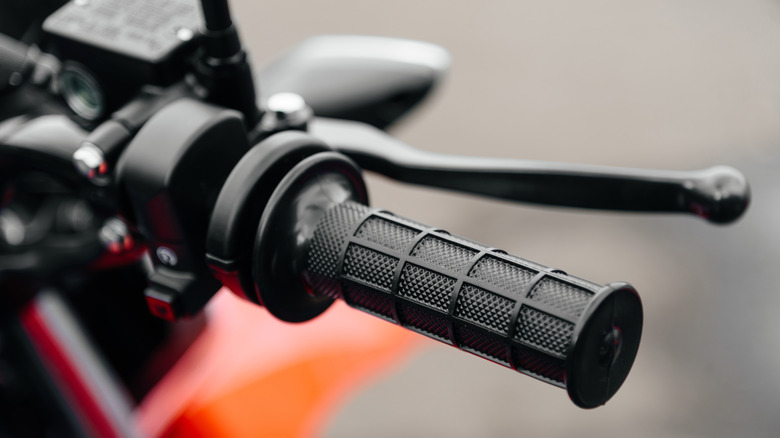
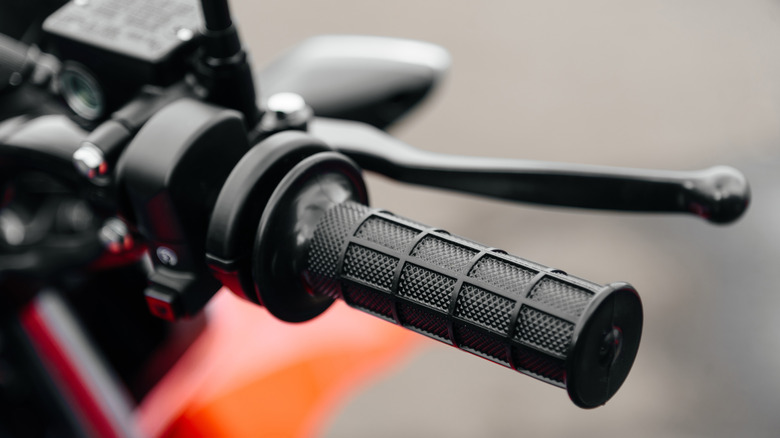
What Is The 70/30 Brake Rule For Motorcycles?

Published

on


When you hit the brakes on your motorcycle, do you do so using the 70/30 rule? It’s a guideline that helps you know how much stopping power should be distributed between your motorcycle’s front and rear brakes. Under normal riding conditions, roughly 70% of your braking force should come from the front brake while the remaining 30% should come from the rear. Otherwise, you might just lose control of the bike.

As a rider puts on the brakes, the motorcycle’s weight naturally shifts forward. That increases the load and available traction on the front tire while reducing the load on the rear. But because the front tire gains more grip during deceleration, it’s able to generate much more stopping force than the rear tire. To account for all this, the best thing is to use both brakes rather than relying on one alone. That’s where the 70/30 rule comes from. Using the front brakes alone can upset the chassis, giving you less stability and making the motorcycle harder to control. Proper rear-brake use helps stabilize the motorcycle and keeps the chassis balanced.

Applying your brakes properly is all about feel. The bike isn’t designed to apply exactly 70% or 30% — you control manually that by how much pressure you apply to the brakes. It’s a good idea to practice braking in non-traffic situations to learn how your bike is going to react to various amounts of pressure.

Advertisement

Exceptions to the 70/30 rule

While 70/30 is the standard for normal riding conditions, that ratio can change depending on your circumstances. During emergency stops, for example, your braking force may need to be even more front-focused. Some guidance suggests as much as 90% of stopping power coming from the front brake and only 10% from the rear. Even then, riders probably shouldn’t use 100% of both brakes simultaneously and risk losing control. Anti-lock braking systems can only do so much. Other factors like wet pavement, dirty roads, worn tires, passengers on back, and bad brakes can also affect how much you stick to the 70/30 guideline.

Basically, the 70/30 rule should be treated as a training guideline rather than an absolute rule you have to stick to every time. Each rider’s motorcycle has its own unique characteristics, and braking performance will ultimately depend on more than just a braking ratio. The front brake is nothing to fear, but it should always be balanced out in some capacity with the back brakes.

Advertisement


Source link

Advertisement
Continue Reading

Tech

A Court Has Ruled That Google Is Liable for False Statements Generated by AI Overviews

Published

on

A local court in Germany has issued a ruling that could reshape the operation of search engines and artificial-intelligence-based chatbots worldwide. The Munich Regional Court preliminarily ruled that Google is liable for a series of false statements generated by its AI Overviews feature, requiring the company to prevent the dissemination of erroneous or inaccurate claims through its search engine.

The ruling stems from a case first reported by the Decoder, in which two publishers discovered that Google’s AI-generated summaries linked them, in certain searches, to questionable business practices, scams, and subscription-related frauds, without any basis for doing so.

Earlier this year, the affected companies sent the tech giant a cease-and-desist letter, according to the report. Google denied liability, arguing that its automatic summary feature warns users that the information may contain errors and should be independently verified.

The court’s analysis concluded that Google’s AI combined information corresponding to other companies that had been flagged for possible illicit practices with data from the plaintiffs, generating associations that did not appear in any of the sources linked by the search engine.

Advertisement

The authorities found that, unlike traditional search engines, which merely display lists of links with statements made by third parties, Google’s tool produced “independent, new, and substantial statements” based on a misinterpretation of information available on the internet.

According to the court, correcting misinformation is not the responsibility of third parties. Google is the only entity with the ability to modify the technology underpinning its AI-generated summaries and, therefore, “must be held accountable.” Furthermore, the court found that Google’s line of defense lacked merit, since the challenged summary “contains statements that do not appear at all in the search results.

A New (and Forceful) Interpretation of AI on the Web

The court’s interpretation of AI’s role in presenting search results could make this case a historic precedent. It finds a large tech company responsible for the influence of its most advanced developments on widely used platforms.

Until now, in most legal systems, search engines have been considered tools that merely facilitate access to content created by third parties and available on the web. This status has afforded them a certain level of protection when the published information is false, inaccurate, misleading, or even defamatory.

Advertisement

However, the German court held that this safeguard no longer applies when search engines incorporate generative AI systems. According to its reasoning, this technology is capable of producing nonexistent claims based on multiple sources and, consequently, the companies responsible for operating it must assume liability for the resulting content.

The judges also concluded that while Google encourages users to verify information due to the potential for hallucinations inherent in AI models, this warning does not absolve the content distributor of liability. Otherwise, they argued, victims of false statements would be virtually defenseless, since the original sources never made those statements and, therefore, could not be subject to legal action.

Likewise, the court held that results generated by an AI system cannot be protected under the principles of free speech, as they are the product of an algorithm designed, trained, and managed by a company, and not the expression of an individual opinion.

As a precautionary measure to prevent possible recurrence, the ruling required Google to remove a large portion of the statements deemed defamatory in this case, and to cover 80 percent of the legal costs arising from the proceedings.

Advertisement

A company spokesperson, quoted by Ars Technica, suggested that the decision could be appealed. “We invest deeply in the quality of AI Overviews to ensure that the overwhelming majority of responses provide accurate information, and they are designed to reflect the information that exists on the web,” the statement says. “We’re carefully reviewing this decision, which is not yet final.”

Source link

Continue Reading

Tech

Spotify’s awful disco ball icon is finally gone

Published

on

Spotify users can finally stop staring at that disco ball.

The music streaming service has quietly reverted its app icon back to the familiar green-and-black design, ending a month-long experiment that proved surprisingly unpopular with users.

The sparkly icon first appeared in May as part of Spotify’s 20th anniversary celebrations, replacing the standard logo with a shimmering disco ball effect. While Spotify likely intended it as a fun tribute to two decades of music streaming, many users weren’t exactly thrilled by the change.

In fact, the temporary redesign attracted a fair amount of criticism online. Some users complained that the icon looked messy on their home screens. Others said the reflective effect made it harder to spot among other apps. And, what was meant to resemble a disco ball reportedly looked more like a small dark blob on certain displays.

Advertisement

The return to normal comes slightly later than expected. Spotify had previously suggested the anniversary icon would disappear before the end of May, though it lingered into June before finally being removed in the latest iOS update.

Advertisement

The change appears to be rolling out automatically. Still, users who are still seeing the disco ball can try updating the app manually.

Not everyone wanted to see it go, though. While much of the reaction was negative, some Spotify users had suggested keeping the anniversary icon as an optional feature for Premium subscribers.

Advertisement

Either way, the debate is now largely over. Spotify’s classic logo is back where it belongs, and the disco ball has officially spun its last track.

The icon change arrives just as Spotify continues rolling out several new music-focused features like improved playlist organisation tools that make it easier to manage large collections of songs.

Source link

Advertisement
Continue Reading

Tech

KPMG pulled its AI report after UBS, the NHS, and others said its claims about them were made up

Published

on

TL;DR

KPMG pulled a report on agentic AI after UBS, the NHS, and others said its claims were untrue. GPTZero identified the errors as AI hallucinations.

KPMG has pulled a report titled “Redefining excellence in the age of agentic AI after multiple organisations said the claims it made about their AI usage were either untrue or misleading. UBS, the UK’s National Health Service, Swiss Federal Railways, and Transport for London all told the Financial Times that the report’s descriptions of their AI deployments were wrong.

GPTZero, the AI detection firm, identified the inaccuracies and told the FT they stemmed from AI hallucinations. In other words, a professional services firm used AI to help write a report about AI, and the AI made things up about the companies it was supposedly analysing.

The report was published in October 2025 and has now been removed from KPMG’s websites. A spokesperson said the firm is conducting its own investigation. “We expect all our people to follow our guidelines on the responsible use of AI, including human oversight to validate content and verify independent sources,” the spokesperson said.

Advertisement

KPMG is not the first professional services firm to get caught. Last month, EY withdrew a report on loyalty rewards programmes that appeared to include fake footnotes and AI hallucinations. South Africa withdrew its entire national AI policy after at least six of its 67 academic citations were found to be AI-generated fabrications.

Advertisement

The pattern is consistent: organisations use AI to produce authoritative-looking content, skip the verification step, and publish claims that turn out to be fictional. The KPMG case is particularly embarrassing because the report was specifically about AI adoption, meaning the subject matter should have made the authors more careful about AI-generated errors, not less.

For KPMG’s clients, the incident raises a harder question. If the firm’s public-facing thought leadership uses AI without adequate human review, what level of oversight applies to the work it delivers under contract? KPMG partnered with Anthropic earlier this year to deploy Claude across all 276,000 staff. The partnership is designed to embed AI into advisory, audit, and tax work. The pulled report is a preview of what happens when that embedding outpaces the verification.

Source link

Advertisement
Continue Reading

Tech

Rivian’s CEO on Tesla’s Cybertruck, Ferrari’s Luce, and What Happens If the R2 Fails

Published

on

RJ Scaringe got his PhD from MIT studying internal combustion engines. Then he founded a company to make them obsolete. In 2009, fresh out of grad school, he launched what would become Rivian. The company spent nearly a decade in stealth mode before arriving at the 2018 LA Auto Show with two electric rides nobody had seen coming.

The road, however, hasn’t been easy. Rivian lost $3.6 billion in 2025, and has burned through nearly $25 billion in the past eight years. It has spent more money over the same period than almost every other pure EV maker. Rivian’s IPO was the largest worldwide in 2021, and one of the largest in US history, within days valuing the company at over $100 billion. Its stock has dropped from a high of $130 to around $16. Since the R1 went on sale in 2021, Rivian has sold 175,000 cars. In the same time, Tesla has sold 8 million.

But in 2024, Volkswagen Group committed up to $5.8 billion to co-develop software and electrical architecture technology with Rivian in a huge joint venture. This year, Uber announced it will invest up to $1.25 billion in Rivian to build and deploy up to 50,000 fully autonomous robotaxis.

Regardless, the company needs its new R2 SUV to work. Not just sell, but sell in large numbers.

Advertisement

I sat down with Scaringe for a candid, wide-ranging discussion on what happens if the R2 fails, why the R1 launched with dead-end tech, how to compete with China, the Cybertruck’s failure, and the virtue of buttons inside cars. But we started on easier ground: his thoughts on the most polarizing EV of 2026. (This interview has been edited for length and clarity.)

Image may contain Clothing Shorts Adventure Hiking Leisure Activities Nature Outdoors Person and Mountain

RJ Scaringe, CEO of Rivian Automotive, apparently hoping to be better off-road than an R2.

Courtesy of Rivian

JEREMY WHITE: What do you think about Ferrari’s Luce?

RJ SCARINGE: The way Jony [Ive] and Marc [Newson] approach design is incredibly intentional, so there’s not a decision on that car that’s unintentional. Through that lens, you have to like look at it in a different light. It’s definitely different than what people were expecting.

Advertisement

Do you like the Luce, though?

Would I buy it? I don’t own a Ferrari. There are things about it I really like. Parts of the interior are just phenomenal, like how beautifully well executed the haptics, the switches, the buttons are. You can see Jony’s fingerprints all over it.

Source link

Advertisement
Continue Reading

Tech

MacBook Neo vs Dell XPS 13: $599 budget battle, compared

Published

on

Dell has rebuilt the XPS 13 to directly take on Apple’s MacBook Neo on price. Here’s how the entry-level models compare on specs and value.

Two open laptops on a bluegreen gradient background, left showing abstract yellow and green shapes, right displaying colorful waves with a video call window of a woman on the screen
MacBook Neo [left] vs Dell XPS 13 [right]

Apple’s MacBook Neo arrived as the company’s most accessible laptop, pairing the A18 Pro chip with a $599 price. Dell has now answered directly with a new XPS 13.
Dell is open about the target. Its announcement names the MacBook Neo and frames the XPS 13 as the more feature-rich option at a similar price.
Continue Reading on AppleInsider | Discuss on our Forums

Source link

Continue Reading

Tech

NBA Streetball, Crafting With Renewable Energy And Other New Indie Games Worth Checking Out

Published

on

NBA The Run

Developer and publisher: Play by Play Studios
Platforms: Steam, PS5, Xbox Series X/S
Price: $30

Basketball fever has taken hold for many as the New York Knicks are just one game away from their first NBA title since 1973. If you’re a Knicks (or San Antonio Spurs) fan looking for a way to kill some time until tonight’s Game 5, NBA The Run might have you covered.

Advertisement

This is a 3v3 streetball game and a spiritual successor to NBA The Street from a team including some developers who worked on that series. It features more than 30 real NBA players — including LeBron James, Stephen Curry, Luka Dončić and Kevin Durant — and it leans more into arcade action rather than taking the simulated approach of the NBA 2K series. I’m not quite as into basketball as I was as a kid, but NBA Jam has a permanent place in my heart, so I’m definitely interested in trying NBA The Run.

Solarpunk

Developer: Cyberwave
Publisher: Rokaplay
Platforms: Steam, Epic Games Store, PS5, Xbox Series X/S, Nintendo Switch 2

Advertisement

Price: $23 (available on Game Pass Ultimate and PC Game Pass)

Solarpunk is a game I’ve had on my radar for a little while. It’s a relaxing crafting game set on a group of floating islands that you can travel between using airships. The two-person team at Cyberwave have baked in some “light survival mechanics,” though this is said to be an uplifting game that you can play with friends.

Given the title, it may not be too surprising that sustainability is a key focus of Solarpunk. You’ll build devices that can draw power from renewable energy sources and use that to automate systems across your farm and home.

It looks lovely, and lots of other folks are interested in this one. Solarpunk saw more than 500,000 demo downloads during a previous edition of Steam Next Fest. More than a million people wishlisted it too.

Advertisement

Crushed in Time

Developer and publisher: Draw Me A Pixel
Platform: Steam (coming to Switch and mobile later this year)
Price: Usually $25, with a 20 percent discount until June 24

As a fan of LucasArts point-and-click adventures, Crushed in Time is a game that speaks to my soul. This is a spin-off from There Is No Game: Wrong Dimension. Sherlock Holmes and Dr Watson make their return as they travel through time and space in search of a character that has gone missing from their own video game. You’ll be exploring the game’s development pipeline to track down this missing NPC.

Advertisement

Aside from the highly meta concept, what helps Crushed in Time stand out is that it takes place in an elastic universe. You’ll be tugging on objects and environments to help you solve puzzles (so it’s really more of a click-and-drag game). This looks very much up my alley. Ironically, I haven’t had time to jump in yet, but I plan on playing Crushed in Time as soon as my schedule lets up.

Voidling Bound

Developer and publisher: Hatchery Games
Platforms: Steam, Epic Games Store (coming to consoles later)
Price: $25, with a 10 percent discount until June 23

Advertisement

Voidling Bound is from a studio that includes former Skylanders developers, so maybe it’s not too much of a shock that this is a creature feature. It’s fundamentally a creature taming game in which you’ll breed, nurture and evolve critters using skill trees and the like.

You’ll then take control of said creatures in combat as this is also a third-person shooter. It looks like an interesting spin on the creature taming format.

33 Immortals

Advertisement

Developer: Thunder Lotus
Publishers: Thunder Lotus, Kepler Ghost
Platforms: Steam (previously on Xbox Series X/S and Epic Games Store)

Price: $10 until June 17 on Steam. It’s also on sale on Epic Games Store and Xbox. It’s available on Game Pass Ultimate and Premium, as well as PC Game Pass

33 Immortals is a neat game that I’m looking forward to diving back into. I played a chunk of it in early access and now Thunder Lotus has released the full version, which is also making its debut on Steam.

33 Immortals 1.0 features three playable worlds, other fresh content, more customization options and a new final boss encounter to properly conclude a run. It’s a co-op action roguelite that brings 33 players together to battle hordes of enemies and hulking bosses. There are miniboss rooms that you can conquer with a few of your teammates (after you call for help with emotes) and earn upgrades for the crew. It’s a good time!

Advertisement

Source link

Continue Reading

Tech

Today’s NYT Mini Crossword Answers for June 14

Published

on

Looking for the most recent Mini Crossword answer? Click here for today’s Mini Crossword hints, as well as our daily answers and hints for The New York Times Wordle, Strands, Connections and Connections: Sports Edition puzzles.


Need some help with today’s Mini Crossword? Read on for all the answers. And if you could use some hints and guidance for daily solving, check out our Mini Crossword tips.

If you’re looking for today’s Wordle, Connections, Connections: Sports Edition and Strands answers, you can visit CNET’s NYT puzzle hints page.

Advertisement

Read more: Tips and Tricks for Solving The New York Times Mini Crossword

Let’s get to those Mini Crossword clues and answers.

completed-nyt-mini-crossword-puzzle-for-june-14-2026.png

The completed NYT Mini Crossword puzzle for June 14, 2026.

Advertisement

NYT/Screenshot by CNET

Mini across clues and answers

1A clue: Energy in one’s step
Answer: PEP

4A clue: S, for a tee
Answer: SMALL

6A clue: Philosophical idea of “What goes around comes back around”
Answer: KARMA

Advertisement

7A clue: “Oh, you wanna go! Let’s go!”
Answer: ITSON

8A clue: What do Alexander the Great and Winnie the Pooh have in common?
Answer: THE

Mini down clues and answers

1D clue: Break down grammatically
Answer: PARSE

2D clue: Favorite Muppet of little kids
Answer: ELMO

Advertisement

3D clue: Blueprint
Answer: PLAN

4D clue: Short comedic sketch
Answer: SKIT

5D clue: 70-minute section of the SAT
Answer: MATH

Advertisement

Source link

Continue Reading

Tech

Arch Linux Malware Incident: Malicious Commits Found in 1,579 Packages

Published

on

More than 1,500 user-contributed packages in the Arch Linux User Repository “AUR” were infected with malware, reports Phoronix:

The last message in the thread over this security incident is noting that Arch Linux developers have deleted all the malicious commits they are aware of. Cited was this list that puts the number of malware-affected packages at 1,579…

Even at 1,579 packages listed, that final updated noted, it’s a “list containing many (but not all) of the affected packages“.

Thanks to long-time Slashdot reader couchslug for sharing the report.

Advertisement

Source link

Continue Reading

Trending

Copyright © 2025