NEW YORK — New York City will pulse with Puerto Rican pride on Sunday as the 69th annual National Puerto Rican Day Parade marches down Fifth Avenue, featuring a star-studded lineup of honorees, live music, colorful floats and cultural performances that highlight the community’s enduring strength and diversity across the diaspora.
The parade, themed “We Are More Than 100×35” (“Somos Más Que 100×35”), underscores the resilience of Puerto Rico’s 3.2 million residents and the more than 5.8 million people of Puerto Rican descent living in the United States. Organizers expect millions of spectators to line the route, transforming Midtown Manhattan into a vibrant showcase of heritage, activism and unity.
This year’s event, set for Sunday, June 14, beginning at noon, continues a tradition that began in 1958. Founded on principles of cultural awareness, education and justice, the parade has grown into the nation’s largest demonstration of Puerto Rican pride, drawing participants and visitors from across the country and beyond.
Parade Route and Street Closures
Advertisement
The procession will travel along Fifth Avenue in Manhattan from 44th Street to 79th Street, spanning 35 blocks. Formation areas include sections of West/East 43rd through 48th Streets, with dispersal extending to East 79th through 85th Streets and surrounding avenues.
The New York Police Department will implement extensive street closures in Manhattan for public safety and crowd management. Affected areas include Fifth Avenue between 42nd and 86th Streets, Madison Avenue between East 42nd and 86th Streets, and multiple cross streets from 42nd to 74th. Motorists are advised to use alternate routes and expect significant delays throughout the day.
Public transit adjustments will also be in effect, with some bus routes rerouted and subway stations potentially crowded. Officials recommend using the MTA’s trip planner and arriving early for optimal viewing spots along the avenue.
Star-Studded Honorees and Special Dedications
Advertisement
The 2026 parade boasts an impressive roster of honorees celebrating excellence in entertainment, public service, arts and sports. Daddy Yankee serves as Grand Marshal, bringing reggaeton energy to the festivities. Dayanara Torres is named Queen, while actor Anthony Ramos takes the role of King.
Lifetime Achievement honors go to musician Charlie Sepúlveda and Congresswoman Nydia Velázquez. Ambassadors include Lila Nikole, Elizardi “Eli” Castro, Papo Vázquez and Lilibeth Torres “La Boricualorian.” Additional recognitions feature JJ González as Trailblazer, Chef Iván Clemente as Hijo de Borinquen, and rising stars Camila Colón and Milton Dávila Jr.
Athletes of the Year are Jose Ortiz and Irad Ortiz Jr., with Los Rivas receiving Orgullo Puertorriqueño, Comité Noviembre as Community Champion, and Word Life (Facts is Facts) as Influencer of the Year. The celebration is dedicated to Vega Baja, Puerto Rico, and the Puerto Rican community of New Jersey.
Pre-parade events include the 152nd Street Cultural Festival, a Mass at St. Patrick’s Cathedral and a scholarship gala, building excitement throughout the week.
Advertisement
Cultural and Historical Significance
The Puerto Rican Day Parade has evolved from modest beginnings into a major cultural institution. It serves not only as a celebration but also as a platform for advocacy on issues affecting Puerto Rican communities, from economic development to disaster recovery and political representation.
Participants typically include marching bands, dance troupes, community organizations, elected officials and corporate sponsors. Floats adorned with flags, traditional symbols and messages of pride create a visual spectacle, while bomba, plena and salsa music fill the air.
This year’s theme emphasizes that Puerto Rican identity transcends geographic boundaries, honoring contributions in arts, science, politics and everyday life. The parade fosters connections between island residents and the diaspora, strengthening cultural ties amid ongoing challenges like economic recovery and climate resilience.
Advertisement
Community Impact and Viewer Tips
The event generates significant economic activity for local businesses while providing a powerful display of unity. For families, it offers an opportunity to introduce younger generations to their heritage through music, dance and storytelling.
Spectators are encouraged to wear comfortable clothing and sunscreen, stay hydrated and follow safety guidelines from organizers and police. Those unable to attend in person can watch live broadcasts on local television stations and streaming platforms. Post-parade festivities often continue in neighborhoods like Spanish Harlem and the Bronx.
Looking Ahead
Advertisement
As the 69th parade unfolds, it reinforces New York City’s role as a global hub for Puerto Rican culture. Future events will continue adapting to contemporary issues while preserving traditions that have sustained the community for decades.
Organizers emphasize inclusivity and education, aiming to inspire civic engagement and cultural preservation. The 2026 edition promises to be a memorable showcase of joy, resilience and forward momentum for millions connected to Puerto Rican heritage.
The National Puerto Rican Day Parade stands as a testament to the enduring spirit of a people who have shaped American life in profound ways. On Sunday, Fifth Avenue will once again become a river of pride, color and celebration, reminding all who witness it of the rich contributions and unbreakable bonds of the Puerto Rican community.
Shares of Elon Musk-led SpaceX jumped more than 14% on Tuesday, pushing the company’s market value to nearly $2.9 trillion and briefly overtaking Amazon while challenging Microsoft for a place among the world’s five most valuable companies.
The stock was trading around $220 in morning trade, extending gains from its blockbuster market debut last week. At current levels, SpaceX has risen more than 62% from its IPO price of $135 per share and carries a market capitalization of about $2.85 trillion.
The rally made SpaceX the largest contributor to gains in the Nasdaq Composite. The company’s valuation moved past Amazon’s $2.64 trillion and briefly exceeded Microsoft’s $2.92 trillion before paring some gains. The world’s three most valuable companies continue to command market values above $4 trillion.
Investor interest received another boost as options on SpaceX shares began trading on Tuesday, giving investors additional ways to bet on the stock’s future direction.
Advertisement
“Today, SPCX options launch, offering standard monthly expirations and strikes ranging from $25 to $380. If call demand is heavy, dealers might be forced to buy SPCX into this low-liquidity situation,” said Brent Kochuba, founder of options analytics platform SpotGamma.
Live Events
Also Read | Struggling Pizza Hut restaurant chain will be sold for $2.7 billion He added that demand from index funds could emerge as early as next week, with a larger pool of shares not expected to become available for another one to two months. Market participants cautioned that the stock could remain highly volatile in the near term given its relatively limited free float and lofty valuation. “We can say with certainty that this valuation makes absolutely no sense today. People are buying SpaceX in the expectation that others will buy too and push the price higher — that’s speculation,” said Ipek Ozkardeskaya, senior market analyst at Swissquote Bank.
The sharp rise comes despite the company remaining loss-making. SpaceX reported revenue of $18.67 billion in 2025, up from $14.02 billion a year earlier, but posted a net loss of $4.94 billion following its merger with artificial intelligence startup xAI.
Investors, however, continue to focus on the company’s dominant position in commercial space launches, its Starlink satellite internet business and growing exposure to artificial intelligence through xAI.
The stock could receive additional support from upcoming index additions. SpaceX is expected to gain fast-track entry into the Nasdaq-100, making it a major holding for index-tracking funds. FTSE Russell and MSCI are also scheduled to add the stock to their indices on June 26 and June 29, respectively.
Advertisement
“While index inclusion alone is typically insufficient to drive sustained repricing, we see the combination of passive flows, momentum and limited float driving upside beyond historical index-addition moves,” brokerage Zephirin Group said while initiating coverage with a “buy” rating.
The company also disclosed that underwriters had exercised the greenshoe option attached to its IPO, increasing total proceeds from the offering to $85.7 billion from the original $75 billion raised last week.
Trading activity remained exceptionally strong. More than $23 billion worth of SpaceX shares changed hands by mid-morning, exceeding the combined trading volumes of Nvidia, Microsoft, Tesla and Apple.
Bridgend councillors have granted more time to the developer of the Ty’n Y Waun Solar project
Lewis Smith Local Democracy Reporter
15:39, 16 Jun 2026Updated 15:45, 16 Jun 2026
Solar panels.(Image: InYourArea)
Developers have been granted an extra five years to build a solar farm site planned for the west of Heol-y-Cyw in Bridgend.
Advertisement
The decision was made by Bridgend County Borough Council’s planning committee at a meeting in June for the project known as the Ty’n Y Waun Solar development.
This was originally approved by the Welsh Government in 2024 on the condition it would be built no more than five years after the approval.
Once completed the new energy site located between the villages of Heol-y-Cyw and Bryncethin would be expected to produce enough power for around 12,500 homes per year.
However developers at Cenin Renewables requested an extension of an additional five years to start work on the project due to potential delays with connecting the site to the National Grid.
Advertisement
The report given to councillors said this came as a result of changes made by the UK Government in April 2025 on how how renewable projects can connect to the grid.
It added that because of this there was a “reasonable concern that the connection date could easily be pushed back to a date that would be beyond the five-year lifetime of the permission”.
A representative speaking on behalf of Cenin Renewables said it was a timeframe change only with the project remaining exactly the same in scale and with no material planning impacts.
They added it was simply “prudent foresight” as the connection could take longer than the consent would allow for.
Advertisement
Councillor Tim Thomas of St. Bride’s Minor and Ynysawdre called for members to reject the proposal as he felt it could have a have “widespread impact” to the community who would have no definitive timeline for the works to be completed. He also noted the delay could see the environmental data that was collected made obsolete.
Others raised concern over a section of the report which noted how the plan could “dovetail the construction of the project” with the proposed Mynydd y Gaer wind farm that is currently waiting to be decided on.
Members felt the suggestion was speculative given the latter project was yet to be approve, though planning officers reminded the chamber the solar farm project had already been given the go-ahead by Welsh Government with the decision to approve the amended condition not linked to the wind farm site.
Cllr Simon Griffiths said he was inclined to accept the change as it would be short-sighted for the developer to have to abandon the green plans because they didn’t have enough time to connect to the grid.
Advertisement
Following recommendations the plans to amend the date of the works were passed by a vote eight members to four.
Welcome to the 2026 Annual Stockholders Meeting for Dogwood Therapeutics, Inc. Our host for today’s call is Greg Duncan, CEO and Chairman of the Board. [Operator Instructions] I’ll now turn the call over to our host, Mr. Duncan, you may begin, sir.
Greg Duncan Chairman & CEO
Advertisement
Good morning. I am Greg Duncan, and I have been appointed Chairman of today’s meeting. I would like to express a sincere thank you on behalf of the entire Dogwood Therapeutics Board and our executive management team for your attendance at this year’s meeting.
I now call the meeting to order. Angela Walsh, Chief Financial Officer and Treasurer of Dogwood will serve as the Secretary for today’s meeting. I would also like to introduce Emily White of Equiniti Trust Company, who has been appointed as the Inspector of Elections for today’s meeting. Ms. White has previously taken her oath as Inspector of Elections.
To start, I would like to introduce the current directors of the company. In addition to myself, the directors are Dr. Abel De La Rosa, Abel has served as an Independent Director since December 2020. David a.k.a. Rick Keefer. Rick has served as an Independent Director since 2018; John C. Thomas Jr., John has served as an Independent Director since December 2020. Dr. Melvin Toh, Melvin has served as a Director since October 2024. Dr. Richard Whitley, Rich has served as an Independent Director since December 2020.
And last but not least, Alan Yu. Alan has served as a Director since October 2024. Also in attendance today are representatives of FORVIS Mazars LLP, the company’s independent registered public accounting firm.
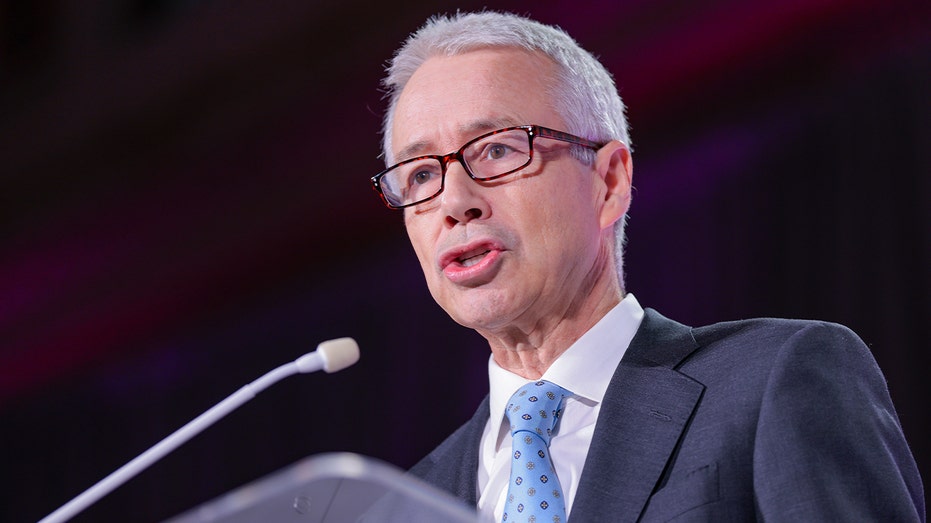
Johnson & Johnson Chairman and CEO Joaquin Duato joins ‘Mornings with Maria’ to detail the healthcare giant’s US manufacturing push, advances in cancer treatment and the future of medical innovation.
Johnson & Johnson is betting big on America, crediting Trump tax policies, top talent and a strong investment environment for inspiring a $55 billion U.S. investment push that spotlights growing confidence in U.S. manufacturing.
“We have the best talent, we have the best investment environment and, very importantly, we have now the tax policy enacted with this administration that has enabled us to be competitive,” CEO Joaquin Duato said on FOX Business’ “Mornings with Maria” on Tuesday.
Advertisement
“We’re playing with a hand tied to our back compared to companies that were domiciled outside of the U.S.”
“Now we can create high-skilled jobs, we can invest in America, and we can be competitive,” he added.
Joaquin Duato, chairman and CEO of Johnson and Johnson, speaks at the Punchbowl News Conference at Union Station on March 10 in Washington, D.C. (Heather Diehl/Getty Images / Getty Images)
Duato told “Mornings With Maria” that the company’s goal is to manufacture all its medicines, medical technologies and more in the U.S., touting the move as a “show of confidence in American manufacturing.”
Advertisement
Johnson & Johnson’s recent endeavors also include a more-than-$1 billion investment in a U.S. Vision manufacturing facility in Jacksonville, Florida.
While discussing such investments, Duato reiterated Johnson & Johnson’s role in medical technology and pharmaceuticals, distinguishing those businesses from the company’s former consumer health segment.
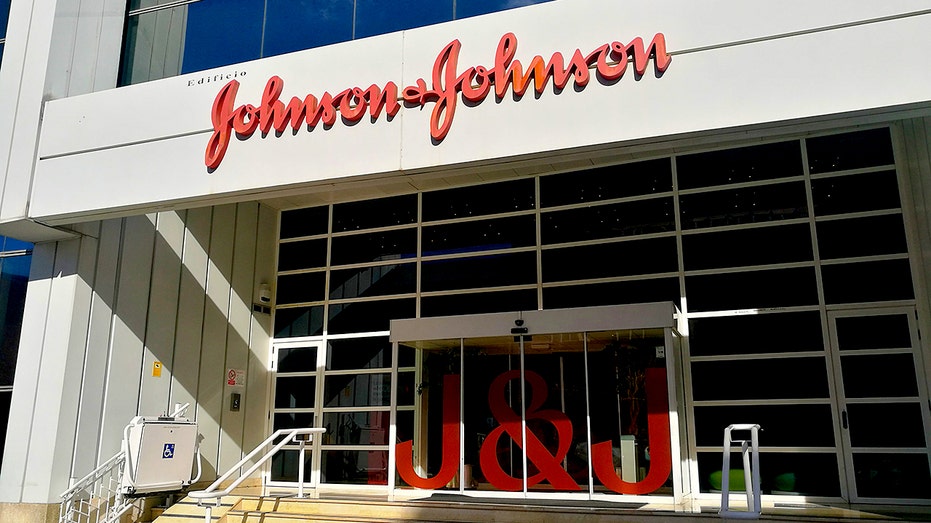
Johnson & Johnson, an American multinational of medical, pharmaceutical and perfumery products, headquarters on Jan. 28, 2025 in Madrid, Spain. (Cristina Arias/Cover/Getty Images) / Getty Images)
“We are now focused on science and innovation. So what is our goal now? Our goal is to continue to deliver sustained growth through patient breakthroughs,” he said.
Advertisement
Duato pointed to a recently-approved medicine called Icotyde, a once-daily oral treatment for psoriasis and psoriatic arthritis with efficacy and safety designed to rival injectable biologics.
He said the development will “transform… autoimmune diseases.”
Fox News senior medical analyst Dr. Marc Siegel explains how A.I. technology is helpful in medical care, is still a ‘co-pilot’ and more on ‘The Bottom Line.’
Advertisement
On the medical technology side, the company is seeking approval for its first robotic surgical system, which aims to improve surgical outcomes by assisting surgeons.
“We are not a one-trick pony company. We’re a company with a stable of blockbusters,” he said.
“We have 28 platforms at Johnson & Johnson of more than $1 billion, so that gives us the confidence to be so bold to say we have line of sight to double-digit growth for Johnson & Johnson by the end of the decade, and that is remarkable for a company which is more than $100 billion.”
A version of this article first appeared in the CNBC Property Play newsletter with Diana Olick. Property Play covers new and evolving opportunities for the real estate investor, from individuals to venture capitalists, private equity funds, family offices, institutional investors and large public companies. Sign up to receive future editions, straight to your inbox. A home is only worth what someone is willing to pay for it. That is probably the only dependable truth when it comes to putting a price tag on a property. Enter artificial intelligence. As with everything on the planet, AI is disrupting real estate. In March, celebrity real estate CEO Ryan Serhant, of his namesake company, posted a video on Instagram titled, “ChatGPT just blew up my $50M deal.” In the post, he explained how he had brokered a deal on the property, but, “at the last minute the seller uses ChatGPT, asks it, ‘Should I sell at this price?’ And maybe because of how he asked, whatnot, ChatGPT basically told him no, you should not sell at that price, it’s worth more.” Then, he said, the buyer did the same thing, asking the AI tool from OpenAI if he was overpaying, and ChatGPT told him that, yes, he was paying too much. “It gave him comparables that showed why, without context and without actually understanding the property,” Serhant said. Serhant’s post has more than 3 million views. He was able to salvage the deal, he said in a subsequent post, by explaining to both the buyer and seller the following about AI: “It doesn’t know the future, it can’t predict the future. It doesn’t know intentions, doesn’t know emotions, doesn’t know what buyers are circling, doesn’t know off-market comparables, doesn’t understand, fully, replacement costs, and doesn’t actually optimize for the deal,” he said. “AI can model a market. It can’t model a deal.” Serhant has said he does believe AI is a critical tool for real estate agents and even launched his own AI-powered workflow automation platform and operating system, called S.MPLE, which he talked about recently on the Property Play podcast. And he’s not alone. For most real estate professionals, the data aggregation capabilities of AI can certainly enhance their expertise, according to Kamini Lane, CEO of Coldwell Banker Realty. “Market analysis, comparative analysis, those are key tools in a real estate agent’s toolbox. But the important thing is that those are starting points for an agent to then apply their judgment, their expertise, their nuanced understanding of the real estate market, to either validate or enhance the recommendation that any data tool would provide,” she said. Lane said her agents are seeing more and more clients — both buyers and sellers — look to sources like Anthropic’s Claude and OpenAI’s ChatGPT to price their homes or calculate offers. Like Serhant, she warned of how these generalized large language models miss the nuances of a home, a neighborhood and a client. “One of the most important things that agents can see, that ChatGPT, or any other AI tool is not going to know, is [what’s] up and coming. So neighborhoods that are up and coming, design features that are up and coming,” she said. “Anecdotal data that agents are aggregating through their conversations, that is something that no AI tool is ever going to be able to aggregate in the same way that a real estate professional can.” Zillow, one could argue, was the original AI price model for residential real estate. It launched its so-called Zestimate feature back in 2006, alongside the launch of its website. It recently launched “AI mode,” designed to guide homebuyers through their search by learning their specific needs. It then enables homebuyers to have a more personalized conversation with the Zestimate. “AI guidance for consumers needs to be connected to real context, real data, real ability to take action,” said Nicholas Stevens, vice president of product and AI at Zillow. “Then that AI guidance needs to be deeply connected to what a real estate agent is attempting to do. That’s the difference between what we’re doing at Zillow versus like a third-party, generic experience.” Agents have to upload in-depth floor plans and 3D visual captures of the entire home and surrounding lot with every possible piece of information. Then, in AI mode, Zillow gives advice to the buyer on what might be a good offer. “It actually sees a remodeled kitchen. It actually sees upgrades in the house, and that’s useful, both for buyers but also homeowners thinking about selling or remodeling as well,” said Stevens. Zillow’s AI feature is now primarily for buyers, but Stevens said the company will roll out a tool for sellers as well. It still raises accuracy questions, however, about the AI itself as it tries to understand its human users. Coldwell Banker’s Lane said she worries that for both buyers and sellers, AI will not be able to pick up on what they might need compared with what they say they want. It might also not be inclined to offer the often hard-to-hear advice that a human agent has to. “Artificial intelligence is trained to be sycophantic, it’s trained to give you the answers that you want, so that you will continue to engage, and so AI is more likely to give you the price that you want versus the price at which a home is going to sell for,” said Lane.
I have more than 35 years of experience in the investment field, having worked as a sell & buy side analyst and portfolio manager for debt and equity funds. I am currently managing a high-yield Latam bond fund.My goal, as a Seeking Alpha contributor, is to provide a fundamental view and analysis of companies and funds in a streamlined version of institutional research. The operating and financial forecast, whether my own or based on consensus, drives the valuation and ultimate rating. I like numbers (financial statements) and use words to explain their meaning and potential consequences.For the most part, my selection choices reflect what I believe can offer long-term potential, and I frequently take positions in many ideas for my personal account.
Analyst’s Disclosure: I/we have no stock, option or similar derivative position in any of the companies mentioned, and no plans to initiate any such positions within the next 72 hours. I wrote this article myself, and it expresses my own opinions. I am not receiving compensation for it (other than from Seeking Alpha). I have no business relationship with any company whose stock is mentioned in this article.
Seeking Alpha’s Disclosure: Past performance is no guarantee of future results. No recommendation or advice is being given as to whether any investment is suitable for a particular investor. Any views or opinions expressed above may not reflect those of Seeking Alpha as a whole. Seeking Alpha is not a licensed securities dealer, broker or US investment adviser or investment bank. Our analysts are third party authors that include both professional investors and individual investors who may not be licensed or certified by any institute or regulatory body.
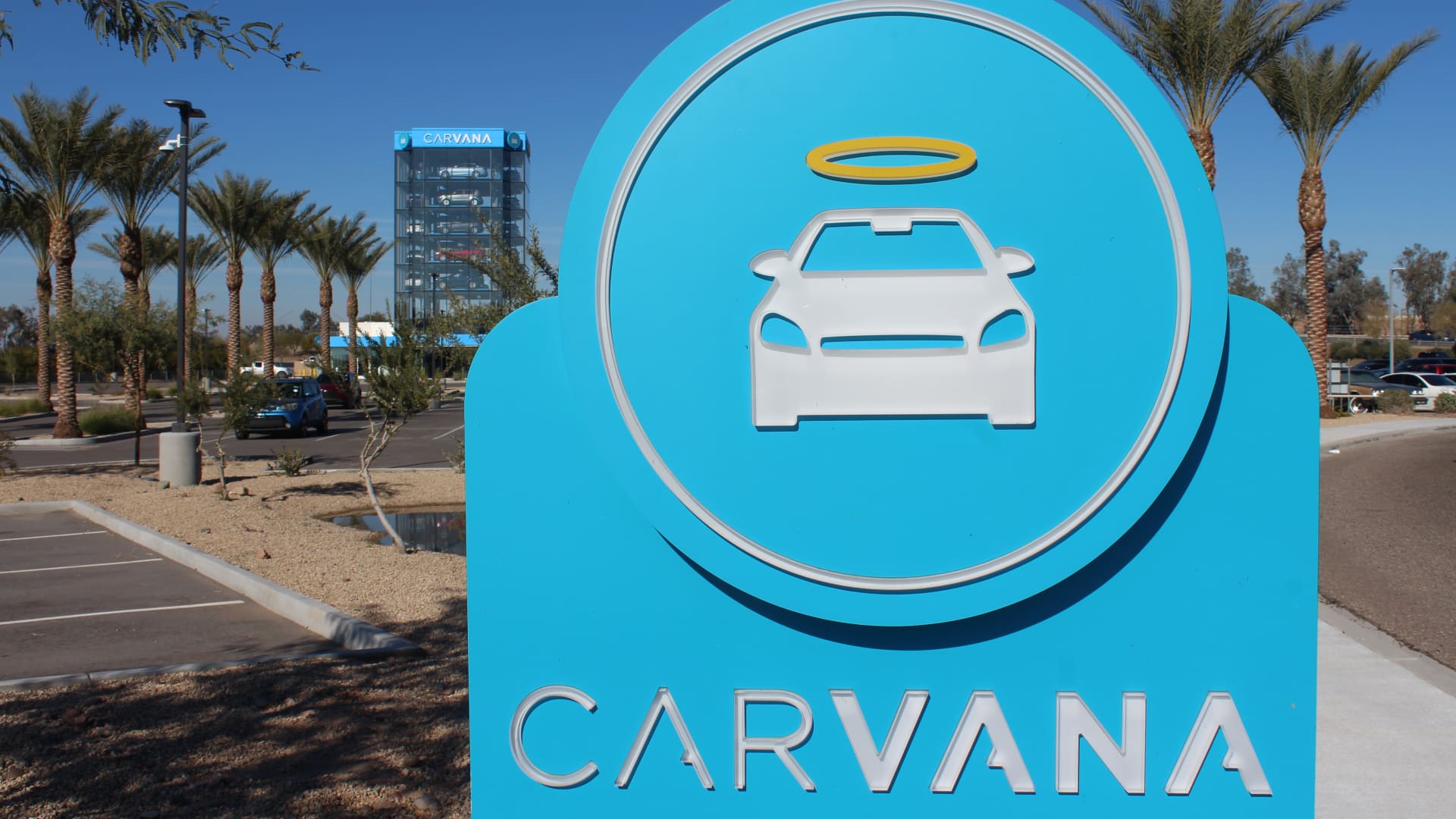
A Carvana sign and signature vending machine in Tempe, Arizona.
Michael Wayland | CNBC
After growing to become one of the largest used car retailers in the U.S., Carvana is expanding into the new vehicle market.
Advertisement
The company has quietly purchased seven new vehicle franchises since last year that primarily sell Stellantis‘ Chrysler, Dodge, Jeep and Ram brands, including a store in Arizona that has become the automaker’s largest volume store in the U.S.
Dealers and industry experts said they believe the move could significantly disrupt, if not reshape, the century-old new vehicle franchised dealer system.
“Carvana entering the new vehicle franchise business may be one of the most disruptive forces that auto retailing has seen in the U.S. market in decades,” John Murphy, a longtime Wall Street analyst and automotive consultant told CNBC.
The U.S. franchised dealership system — which includes 16,990 retailers that topped $1.3 trillion in sales last year, according to the National Automobile Dealers Association — has historically been reluctant to change. However, dealers have grown more adaptable in recent years as a means of survival, including during the pandemic and with the rise of publicly traded dealership groups.
Advertisement
Carvana’s first new car dealership for Stellantis in Casa Grande, Arizona, has grown quickly. It sold more than 700 new vehicles last month, according to Stellantis figures shared with dealers and provided to CNBC.
That made it the best-selling store nationally and compares with an average of roughly 30 to 50 monthly sales the store was doing prior to Carvana purchasing it early last year, as first reported by The Wall Street Journal.
Carvana and its CEO Ernie Garcia have declined to comment about the franchised stores or details of the businesses ahead of a media event this week at which the retailer is expected to disclose its plans.
Carvana: From vending machines to online used-car leader
Carvana’s locations, many of which feature its signature large car vending machines, have historically acted as delivery and drop-off points where customers can pick up vehicles they purchased online or turn in a vehicle they sell to the company. And up until last year, those vehicles had been used cars, trucks and SUVs that were largely brought from auctions and individual consumers.
Adding the new vehicle business not only provides additional revenue for the company, it opens up other avenues for Carvana to more easily purchase used vehicles from their new vehicle customers and through exclusive auctions only open to franchised dealers.
Advertisement
“That is a significant game changer in the secondary market,” Murphy said regarding the private auctions. “If that expands to other brands, that is going to be an advantage.”
Hollywood, Florida, Carvana car dealership, automated car vending machine building selling used cars, delivery truck.
Jeff Greenberg | Universal Images Group | Getty Images
It also helps Carvana better capitalize on the complete lifecycle of a vehicle. The dealership model is comprised of four main areas of growth: new, used, parts and service, and finance and insurance.
Advertisement
Carvana has previously covered used sales and F&I, including selling consumer auto loans it originates to institutional investors and partner banks, such as Ally Financial, to maintain liquidity. Adding the new franchises is expected to bring Carvana into the other areas as well.
“After stabilizing their core business, I think they realized, by looking at the franchise model, that there was a significant amount of revenue and gross profit opportunity that their business model didn’t even contemplate,” said Brian Gordon, president of dealer advisor and broker Dave Cantin Group.
Dealers adapt or ‘be irrelevant’
Despite Carvana’s current status, which includes a market cap of more than $70 billion, significantly higher than that of Stellantis, there are challenges to selling new cars compared to used.
Unlike used vehicles, which Carvana has specialized in selling online, the sales of new vehicles are more regulated state-by-state. The franchised owners also act as a business partner to most automakers operating in the U.S.
Advertisement
In some states, such as Michigan, the only way to legally purchase a new vehicle is through a franchised dealer — something direct-to-consumer companies such as Tesla and Rivian have battled with varying results.
An annual study by Cox Automotive, which supports franchised auto dealers, found that most buyers don’t want an all-online purchase or a fully in-person transaction. They want a blend of online convenience with in-store interaction.
Franchised dealers also must adhere to far more regulations and rules from the automakers. They range from showroom layouts and what brands they can sell at certain stores to automaker-defined allocations of vehicles and service and repair requirements, which Carvana does not currently offer for customers.
Not all are mandates, but many automakers incentivize retailers through vehicle allocation as well as financial incentives for offering such services and meeting their requirements.
Advertisement
Carvana is already operating a bit differently though than most dealers, as Stellantis has approved it as a certified website provider for the automaker, which means it doesn’t need to go through an approved third-party company, according to four people familiar with the decision, who requested anonymity to speak about matters that have not been made public.
“It’s bred out of desperation,” said a Stellantis dealer who asked for anonymity to be able to speak freely about the automaker, which has drastically lost U.S. market share in recent years. “It’s given Carvana an opportunity to come into the new car space.”
Stellantis, in an statement to CNBC, said Carvana operates as a “corporate owner” of its brands, similar to other large publicly traded companies such as Lithia and AutoNation.
“We apply the same consistent standards and criteria to all dealer partners, and any organization that meets our qualifications is eligible to operate as a franchisee,” the company said, adding that Stellantis “certifies tools and services that will enhance our program and be beneficial to our network. All certified providers must complete a rigorous onboarding process and meet program standards and requirement.”
Advertisement
Carvana’s foray into new vehicles and its rapid growth have been a discussion between Stellantis’ current dealers and the company, according to Stellantis National Dealer Council Chairman Sean Hogan.
Hogan said competition is always good for the consumer, which is why the franchised dealer model was created, but there are a lot of outstanding questions about Carvana’s new vehicle strategy.
“I’m curious to see what their strategy is and, in the long run, I think competition is good. So, if they’re doing something better than we are, then we will need to adapt, or we’re going to be irrelevant,” said Hogan, vice president of Sierra Auto Group in California.
In JD Power’s annual U.S. Sales Satisfaction Index for franchised dealers that ranks purchase experiences, three out of four of Stellantis’ main brands — Chrysler, Dodge and Ram — were under the industry average.
Advertisement
An Amazon of used and new vehicles?
Although Stellantis said it is treating it like other dealers, Carvana is not a traditional auto retailer like other large publicly traded dealers such as Lithia or AutoNation. It almost exclusively operates online, with a vast network of physical facilities supporting it.
Carvana has built a nationwide logistics and processing company for vehicles similar to Amazon and its backend operations for processing and shipping consumer goods.
“They have a pre-built out infrastructure, digitally, physically, logistically, that probably gives them an advantage over those big, multibranded public companies,” said Larry Dominique, a longtime automotive executive turned industry consultant.
A Ford F-150 is prepped for a painting booth at Carvana’s vehicle reconditing center outside Phoenix. The vehicle is wrapped so only the spot needed to be repainted is showing.
Michael Wayland / CNBC
Carvana puts each vehicle it intends to sell through a lengthy inspection, repair and sale preparation process. It ranges from fixing scratches, dents and other imperfections to working on engine and powertrain components. There are also significant logistical costs and processes for delivering vehicles to consumers’ homes.
The other new vehicle Stellantis franchises for Carvana are in Sacramento and San Diego, California; Dallas; Atlanta; Cleveland; and Boston. The new dealerships are in addition to more than 100 other Carvana locations, mainly consisting of vending machines and processing centers.
Advertisement
While large dealers have stores across the country that they can utilize for used and new vehicle inventories, they have traditionally sold regionally to avoid additional shipping costs as well as sales and registration complexities due to selling across state lines.
“Carvana is showing the franchise dealer community how the power of digital can be applied to make a future direction retail model,” Dominique said. “There’s nothing stopping any dealer in the United States from doing that today.”
The company’s traditional vending machine locations do not have parts and service departments, like traditional franchised dealers have, which represent significant profits and customer touch points. That’s one of the main questions surrounding Carvana’s plans: Will they expand into parts and services or leave that for current dealers?
“If they’re going to just be an outlet for new cars, then does that change the dynamic of the dealership model? Who’s going to be responsible for taking care of the customer after the sale?” Hogan said.
Advertisement
Murphy said he believes Carvana may be able to use locations of ADESA, an auction company it purchased in 2022, in addition to the new dealer franchises to potentially service its vehicles.
Carvana has reported it has the capacity to recondition approximately 1.5 million vehicles per year. That compares to its sales of less than 600,000 vehicles last year.
“They do have tremendous capacity to recondition, potentially significantly ramp up their service capability in a way that is not present in other large consolidators,” Murphy said. “I think that problem potentially gets cured.”
















































You must be logged in to post a comment Login