

Politics
10 Worst Jobs For ‘Sunday Scaries’ In The UK

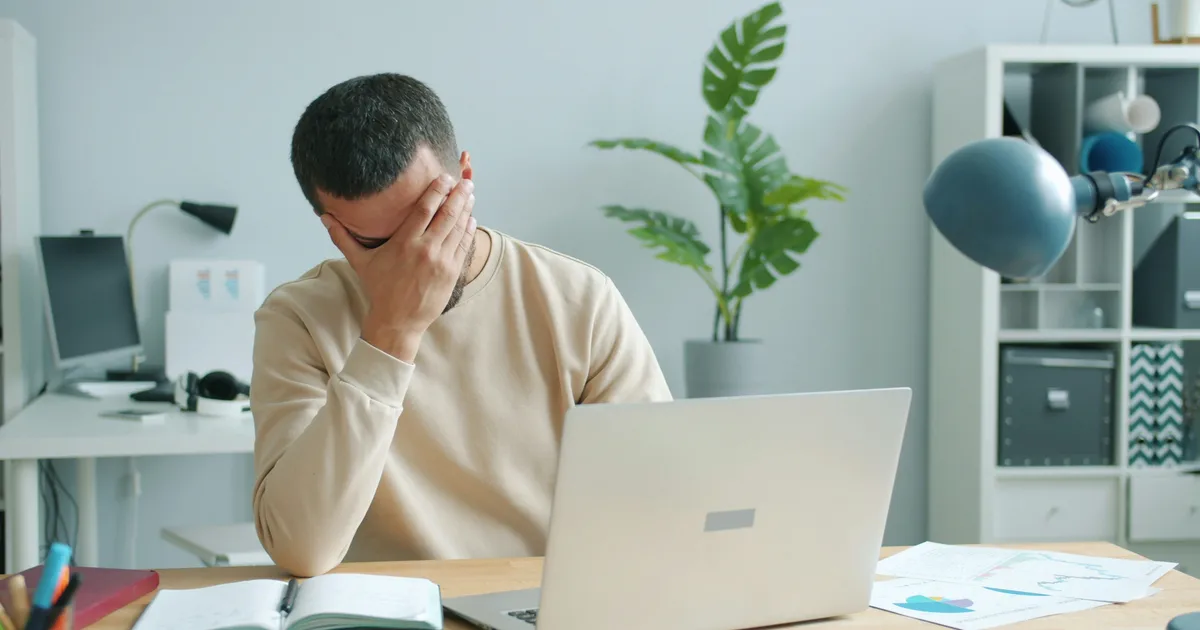
Sunday scaries – or feelings of dread and anxiety that build before the working week – are believed to affect as many as 67% of UK workers.
Psychologist Kia-Rai Prewitt told Cleveland Clinic it’s an “anticipatory anxiety”, meaning it has to do with your expectations of coming stress in the work week.
We’ve written before at HuffPost UK about signs your Sunday scaries may be more than normal work dread. And new research from travel agent SpaSeekers has sought to find the jobs that make us stress the most before Monday even hits.
Workers are losing days of their lives to Sunday scaries
The SpaSeekers study, which polled 1,000 UK workers, found that people spend an average of 2.5 hours a week worrying about their work on the weekend. That amounts to 200 days over a lifetime (woah).
Just over a quarter (26%) of employed adults surveyed said that the Sunday scaries make them lose sleep, while 21% shared it means they can’t enjoy the last day of the weekend at all.
Work stress and busyness are the most common sources of anxiety (29%), while a heavy workload affects 23% of employees.
“Imposter syndrome”, or feelings that you’re not good enough, and worries about being asked to come into the office more often, affected 11% of respondents each.
Which jobs are the worst for Sunday scaries?
Per this survey, the worst jobs for Sunday scaries were revealed as being:
1) Finance
The Sunday scaries were found to regularly affect 95% of those in this category.
2) Human resources (HR)
Affects: 91%
3) Manufacturing
Affects: 87%
5) IT and telecoms
Affects: 84%
8) Healthcare
Affects: 83%
9) Arts and culture
Affects: 82%
10) Building and construction
Affects: 76%.
Don’t ignore your Sunday scaries
Kerry Sutcliffe, a corporate and individual coach at Kerry Sutcliffe Coaching, said: “The Sunday Scaries could be described as a physical alarm bell, telling you that something is not right. It’s a sign, a flashing red light and something you should listen to, pay attention to, and take action on.”
That might include planning your week ahead of Sunday, she added. “I recommend doing this on a Friday afternoon… Once done, you can close the laptop and enjoy your weekend, knowing you’re all set for Monday morning,” she advised.
“Get all of those unhelpful thoughts out of your head and down on paper!”
The NHS suggests you should see a GP about anxiety if you’re struggling to cope with fear and panic, and/or if lifestyle changes like getting enough sleep and exercising don’t help.

(Shotshop GmbH/Alamy)
4 min read
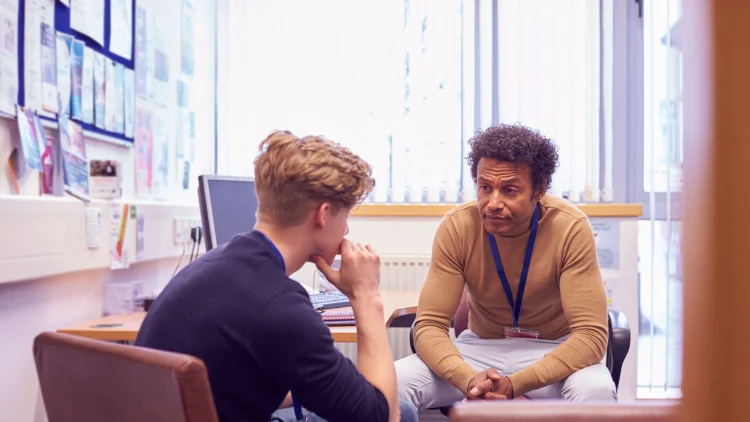
The number of children and young people taking the brave step to seek help with their mental health is at an all-time high.
For anyone reading this article, there is a strong chance that a young person in your life has had issues with their mental health, be they your own child, a niece or nephew, a grandchild or a young family friend.
So much has changed over the last 10 to 15 years to ramp up the pressure on young people. New stresses and strains have entered children’s lives, from harmful online content to the Covid lockdowns, and pressure to pass exams and find work.
Young people’s referrals to mental health services are breaking records. According to analysis by charity YoungMinds, 932,822 people under the age of 18 had an active referral to mental health services in March, which included 134,837 new referrals. Both figures are the highest on record for a single month.
And the data paints another disheartening picture: those who are referred for help can face unacceptably long waits. In 2023-24, one-third of children referred to NHS mental health services waited a year for their next appointment. It goes without saying that a year is a long time in a child’s life, potentially critical to their results at the end of school, college or university.
Despite the dedication of those on the front line, public services haven’t been able to keep up. Youth services, another vital asset, have been stripped back.
How and why we got here has been well-rehearsed already. The select committees we chair – Health and Social Care, and Education – now want to investigate what is happening on the ground, in the lives of children and young people needing support.
As part of our joint inquiry, we want to put on record the experiences of children and young people, their parents and carers, who have tried to get help with their mental health. We want to see what lessons can be learnt and what patterns emerge from their stories.
To do this, the two committees have launched a survey to gather these perspectives – to hear where different services were lacking and how things varied between different pathways.
And we know it won’t be as simple as streamlining one or two processes, because the pathways to mental health support are many and varied, from GPs and NHS inpatient services to university pastoral support and youth clubs.
From our anonymous survey, we want to hear about the experiences of accessing support through all of these pathways – how they worked and what could have been better. Was there an issue with how far you had to travel? Did communication dry up just when you thought you were making progress? Did you have to explain yourself over and over again?
Young people’s referrals to mental health services are breaking records
And what should there have been more of? What was good about your experience? What helped the most?
With enough responses, this research will be invaluable for building up a picture of which areas provide the best outcomes, and which pathways are the most problem-prone and why.
This evidence will be put directly to ministers. Then, at the end of our inquiry, we will produce a report to the education and health departments. We will make recommendations to the government on how to ensure children and young people’s mental health services are more accessible, more equitable and more effective. At that point, ministers will be obliged to answer us and set out what they plan to do.
No child or young person should have to struggle through a system intended to help them through life’s toughest challenges. We can make that journey easier. But first, we must listen.
To visit the survey, go to tinyurl.com/45hbwwsm
Helen Hayes is the Labour MP for Dulwich and West Norwood, and Education Committee chair. Layla Moran is the Lib Dem MP for Oxford West and Abingdon, and Health and Social Care Committee chair

6 min read
Most political campaigns try to bring about major change. Now, two political insiders are trying to make life better by focusing on the small things. Ben Gartside investigates
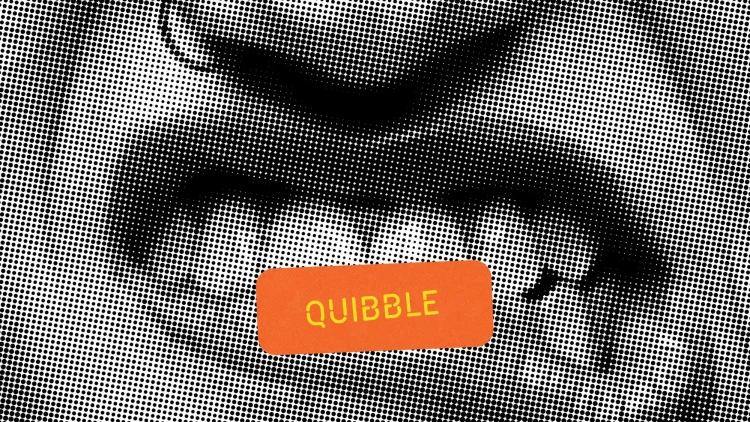
Ever got cross trying to key in details to a parking app? Nettled by endless cookie approvals? Mildly piqued by that redundant phone box? Quibble is here to help.
Most political campaigns promise sweeping change. This one aims to remove pebbles from shoes, oil squeaky hinges and stop the dripping taps that bedevil service delivery.
Founded by human rights campaigner Jonathan de Leyser and civil servant Abigail Bradshaw, the self-styled ‘nuisance lobbyists’ have both learned the hard way that banking small wins is better than fruitless hunts for big change.
“In Britain and in the international community, progress can be very, very slow, but I think part of the experience of that is that you look for low-hanging fruit where you can,” says de Leyser.
“You look for minor things: you’re not going to get regime change in North Korea, but you might be able to help an individual case for someone being extradited. So, you learn to calibrate your expectations a bit.”
Self-described as “The Ministry of Detail”, Bradshaw and de Leyser are trying to become a two-person campaign to combat Britain’s gripes with the public sector.
Quibble’s desire to “sweat the small stuff” is influenced by Rory Sutherland, the TikTok-famous advertising guru renowned for his rants on consumer issues, from whom they borrowed the phrase.
According to leading pollster Luke Tryl, the pair have identified a gap in the political market.
“The word Britons are most likely to use to describe the country is ‘broken’ – for many, that refers to big issues like the cost of living, migration or the NHS.
“But these macro issues are exaggerated by people’s frustrations with every day frictions, the series of things that just make life harder, more frustrating: forms that don’t work, getting stuck on hold, the 8am GP call. All of these add together to create a sense not just things are bad but that the state is actively making life harder.”
The duo are happy to be part of a new vanguard in British politics battling over the minutiae, alongside the bombastic Looking for Growth campaign or the litany of Doge impersonators which have crossed the Atlantic.
Unlike the other detail-orientated campaigns, Quibble is not planning on adopting a hostile approach. Bradshaw, who has sat in the same hot seat as many of the people she’s now trying to influence, is instinctively supportive of civil servants.
“Not many people go in wanting to do it badly. Part of our role is trying to help people achieve what they already want to achieve.”
The campaign has already been welcomed by MPs on either side of the political divide, with Labour’s Andrew Western and the Conservatives’ Tom Tugendhat celebrating the launch.
Bradshaw and de Leyser are trying to keep a relatively narrow Venn diagram for the issues they take on. Issues must be common, and must be the responsibility of the government or a public body. So far, the pair have identified four initial quibbles.
First has been to cut down the constant cookie permissions on webpages, which the pair say is adding an onerous amount of time for limited data protection.
Another is making small mistakes when keying in details at public car parks, where fines are applied liberally in spite of those paying having acted in good faith, such as errors where keying a zero instead of an “O” could land motorists a hefty fine.
The pair also want to rename the “Tax-Free Childcare” scheme, which adds an extra 20 per cent on top of any funds deposited by parents towards accredited childcare providers. Despite being launched in 2017, less than half of eligible parents are currently using the scheme – Quibble reckons a simple renaming would increase uptake.
Finally, Quibble has set its sights on the UK’s telephone boxes. Despite their iconic design, many find themselves in a decrepit state with no functional purpose. Bradshaw and de Leyser have taken it upon themselves to take a critical look at the boxes, which number approximately 20,000 across the country.
“People are angry about very specific kinds of things in their lives. But nobody is sorting them out”
With an array of campaigns to take on, the pair are now trying to vet the variety of suggestions they’ve received from the general public since launching, attempting to separate one person’s niche pet peeve from a systemic but finicky problem in the public eye.
Complaints to them have ranged from ambulance sirens being too loud, and martial arts swords being too hard to import, to banning Captcha forms from using letters that look too similar.
The pair’s plan to retain sanity is by keeping a pretty tight net on what they consider an actionable campaign.
“It’s been really interesting to hear the range of suggestions,” de Leyser says diplomatically.
“People are angry about very specific kinds of things in their lives. But there’s a lot in which people are feeling like they’re not being heard and that there are things that to them are, and to us, feel like fairly obvious wrongs or fairly minor things. But nobody is sorting them out.”
Unlike much of the political tide in the country, Quibble is not calling for an overhaul in the British polity. In fact, the pair think small tweaks can make a huge amount of difference.
Bradshaw says: “Many years of working in the Civil Service taught me that sometimes that’s true, but sometimes policy just isn’t made in an ideal way and actually, sometimes very small changes to policy and policy design have a huge impact on the way that people experience that policy.”
Bradshaw’s career as a civil servant meant she had sympathy for the civil servants in charge of policy. Now a stay-at-home mother, she says her experience of stepping back from day-to-day news has given her a better understanding of how some things done by the government hadn’t been fully appreciated.
“In the world of policy, you assume that everyone is interested. As the quibbles have been coming through as I’m reading them, I’m thinking, ‘Oh, that’s interesting, I’m pretty sure that the government did something on that last year.’”
As political rhetoric has ramped up, with more radical politics becoming mainstream, Quibble hopes to solve the lesser-spotted exasperations with everyday life and perhaps even bring society back together at the same time.
De Leyser says: “I think that’s the thing about Quibble. People might not agree on the best way to solve them but all of these issues are quite common sense and quite easy for people to understand why they’re a problem. And there’s not that much controversy in saying, why is there an empty phone box that doesn’t even work on the street?”
Politics
John Oxley: ‘Hear that internet curfew bell toll? It tolls for thee, kid, even if we think you can vote’
John Oxley is a consultant, writer, and broadcaster. His SubStack is Joxley Writes.
Imagine it is the spring of 2029, polling day. You are 17.
You have completed a day of training, education or work (still compulsory at your age). You are excited to cast your first vote, exercising a new right. Before, or perhaps after, you have some time to kill. You can’t fill it by going for a pint, as you’re too young. Or having a cigarette, which will never, ever be legal for you. So instead, you pull out your phone. Perhaps go on YouTube to check the parties’ policies. Or on social media, to see if your friends are voting. But, alas, you’ve left it too late. The time says 8.31. The curfew has descended.
It sounds absurd, but this remains the course the current government are plotting. The voting age is coming down, whilst the ages for everything else rise. The plans announced this week extend this to vast sections of the internet, where the state will effectively enforce a national bedtime for the scrolling-minded. While you could have scrolled for hours in the daytime, the internet of the evening apparently poses some special, unique harm. Either that, or this is a government which really struggles to think properly.
I am not convinced that children should have wholly unfettered access to the internet. There are real dangers that lurk online, from the content and the people on it to the deleterious effects of excessive use. While much of that should be left to parents to protect you from, I can see why some want the law to back them up, and why the state has a role when parents can’t or won’t act. More broadly, just as we regulate the content of TV and radio, there are good reasons to regulate online content. Some things need to be illegal and that no one should be exposed to. We also need to be wary of how Britain’s enemies can exploit online channels to harm us.
Regulation, however, should be workable and proportionate. Too much of the government’s approach is predicated on drafting rules now and inventing the technology for it afterwards. Some of it is also likely to expose all of us, not just young people, to creeping surveillance and require us to provide our IDs and faces to use services online. The idea of an internet curfew is even stranger. It barely limits how much time young people can spend online, nor does it limit what they are exposed to. It imposes an arbitrary time cut-off for reasons that remain unclear. It is a bad rule, but it is also part of our muddled thinking of where childhood, adulthood and adolescence now sit.
The general trend in recent decades has been to raise the age at which certain things are allowed. Compulsory education and training have risen to 18. Marriage was abolished for under-18s, even with parental approval, as a step against familial abuse and forced marriage. Elsewhere, the pseudoscientific meme that brains don’t mature until 25 has taken hold and is used to argue for things like lower sentences for those in early adulthood. Campaigners want graduated driving licences, denying younger people the full freedom of the roads. The social media ban, and particularly the curfew, seem to fit this trend, pushing off the point at which people are set to make decisions for themselves.
At the same time, however, lowering the voting age to 16 has extended perhaps one of the most valuable privileges of adulthood. Given that young people are more coddled by the state than before, it’s easy to presume this is about mere electoral advantage. But we also expect young people to make their own lifelong decisions about training and education and to make major financial decisions regarding student loans. It is contradictory and incoherent.
This approach points to a problem we have in conceptualising adulthood. Our political approach is piecemeal, in a series of unconnected policy decisions rather than a philosophy. Often this tends towards safetyism and an obsession with reducing harm to zero. The online curfew is part of this, not trusting young people to make their own decisions or chart their own course. Others, like the marriage ban, are driven by real concerns and societal shifts, while reducing the voting age seems the product of smart campaigning and political advantage. It is a haphazard approach with haphazard results.
Emerging into adulthood shouldn’t be about harm elimination.
It is about encountering the world with gradually loosening supervision, making mistakes while you still have time to remedy them and developing judgment through them. Too much freedom too young will be dangerous, but so is deferring it. After all, we probably all know someone who was coddled until they left home and struggled to adjust to doing their own washing and cooking. People who have been protected from every bad decision they could make are not a success story but a denial of the sort of education that helps us become broadly functioning adults. Where the state intervenes, it should be conscious of this.
If 16 and 17-year-olds are deserving of the franchise and capable of choosing their representatives and the Prime Minister, the state should start from that assumption. In that world, internet curfews for almost adults make little sense. But if being online in the evening imperils them, if their brains are still forming, then say so openly and keep harmonising things around age 18.
Either way, we’d be better with an approach to young people framed by an understanding of adolescence and development that helps coach them towards adulthood than a series of arbitrary, headline-chasing decisions.
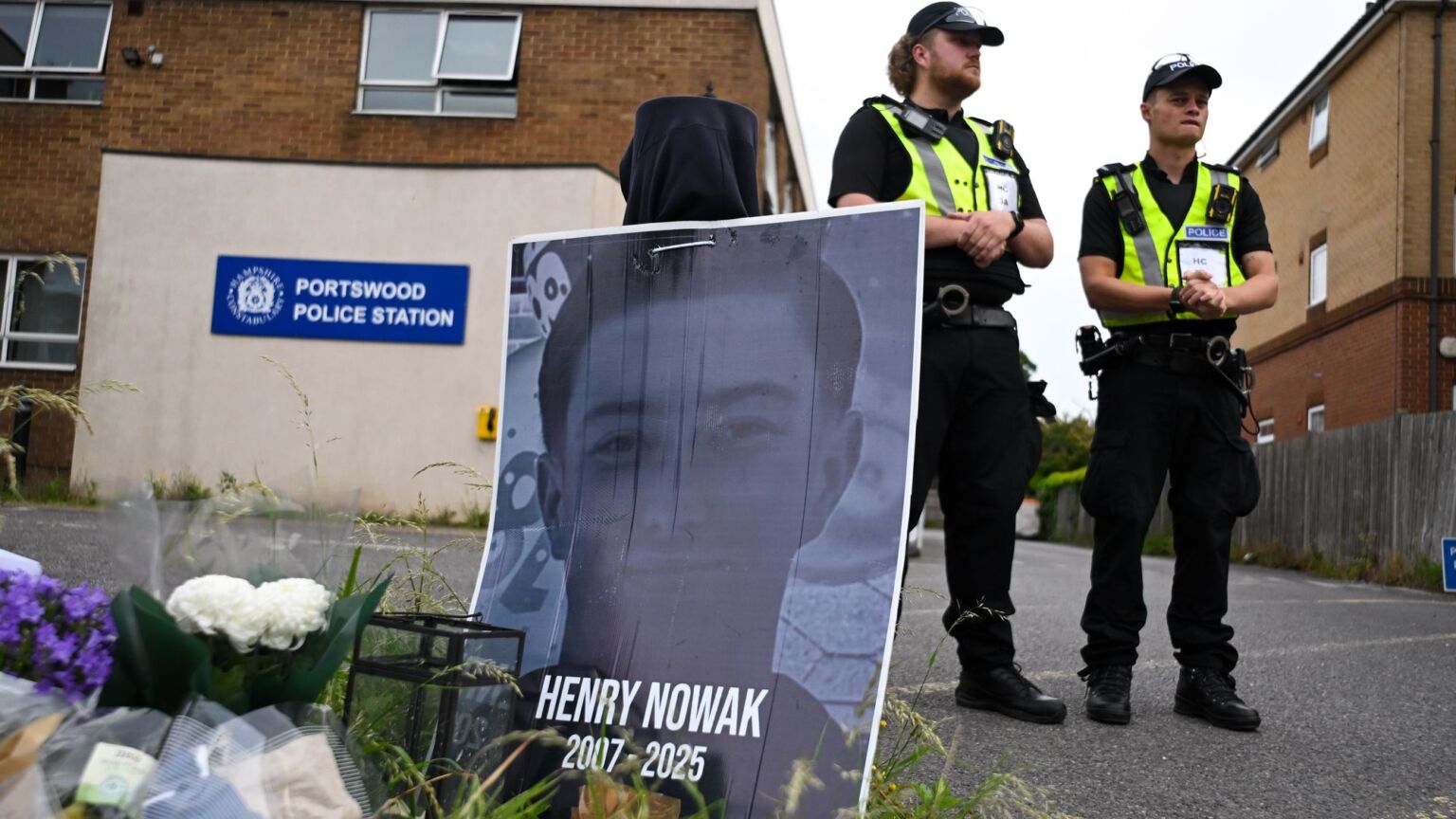
The post How BLM ideology captured the cops appeared first on spiked.
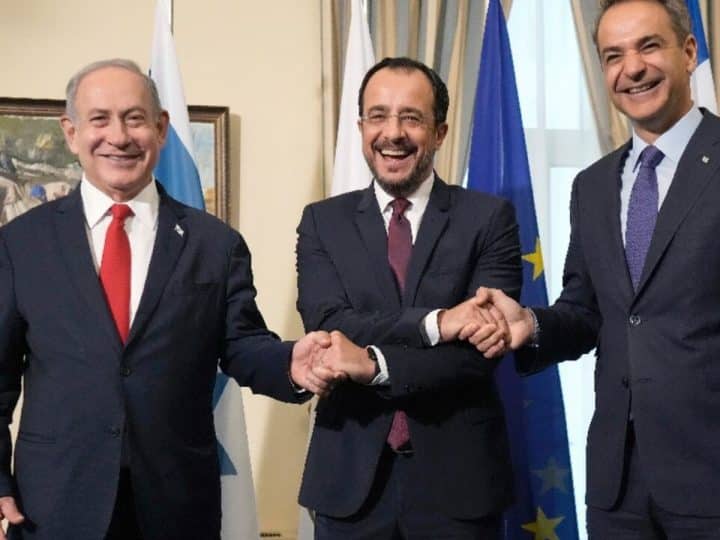
Israeli men aged 21 and 22 have been arrested by police in Cyprus for attempted murder. One of the men allegedly stabbed a Cypriot man — as well as two security guards who tried to stop the attack. The attempted murders happened in Ayia Napa, leaving one of the guards in critical condition after emergency surgery.
When police arrived to intervene, the attacker spewed insults at them. Both Israelis had to be subdued, leaving one injured from a blow to the head.
UK news blackout when it concerns Israeli crimes
No UK media or politicians appear to have mentioned the attack. Reports of violent and arrogant behaviour from Israelis in other countries abound — and not just from Israel’s notorious football thugs. Israel’s attempts to buy up land and properties in Cyprus as a bolthole to flee to when Israel’s victims retaliate have also raised tensions.
Regardless of context, there is simply no way UK media and politicians would ignore an attack on Israelis the same way they have this and other attacks by Israelis.
Featured image via the Canary
By Skwawkbox
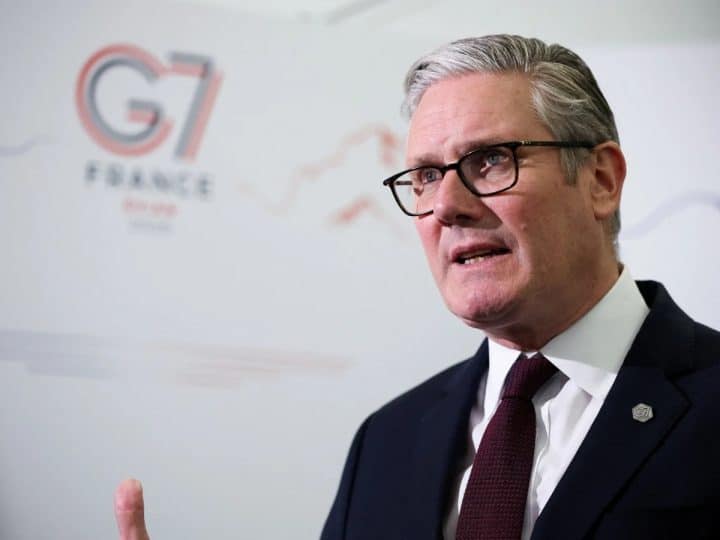
Senior criminal law barrister Dominic D’Souza acted for one of the Ukrainians accused — and acquitted this week — of setting fire to properties belonging to Keir Starmer. The defendants were allegedly ‘rent boys’ — a factor largely ignored by UK ‘mainstream’ media. And D’Souza says that he was astonished — his word was ‘pickled’ — by how much of what went on was ignored or even buried by prosecution and judge in the case.
Two men were convicted in the case. D’Souza’s client Petro Pochynok was acquitted. But when D’Souza read journalist Crispin Flintoff’s X post about the BBC’s unmerited rush to broadcast a programme claiming Russia was behind the attack, he quickly responded that his head was still “pickled” over how much was kept hidden:
I was leading defence counsel for Pochynok who was acquitted. Having come across your vid I remember seeing you in the public gallery every day! Even as the defence barrister in the trial itself, I still find my head pickled over what real underlying truths were never expposed
— Dominic D’Souza (@dsouzabarrister) June 16, 2026
D’Souza was far from the only one to notice. Former UK ambassador Craig Murray pointed out that the alleged figure behind the attack spoke Ukrainian, but that the media very suspiciously ignored this to focus on him also knowing how to speak Russian:
The BBC report that the man who organised the arson of Starmer related property was “Russian speaking”.
They fail to report the evidence was he also spoke Ukrainian.
Almost every Ukrainian can speak Russian.
Very few Russians can speak Ukrainian.— Craig Murray (@CraigMurrayOrg) June 16, 2026
Starmer — “Wholly irrelevant”?
Grayzone journalists Kit Klarenberg and Max Blumenthal noted that the trial judge had forbidden information on the shadowy, Ukrainian-speaking instigator of the attacks from being entered into evidence:
As expected, the truth behind the Ukrainian rent boy attacks will be withheld from the British public https://t.co/pepep43coc
— Max Blumenthal (@MaxBlumenthal) June 16, 2026
And Russian is almost universally spoken in Ukraine, a former part of the Soviet Union, while the converse is not true:
The ‘Russia’ link is extremely tenuous
EL spoke Russian and Ukrainian
Ukrainian is not a language widely spoken in Russia,
whereas almost every Ukrainian can speak Russian
— Donahue Rogers (@DonahueRogers) June 16, 2026
In the run-up to the trial, Skwawkbox asked why ‘mainstream’ media — with no court restrictions on reporting — were not asking questions about why the attacks were committed. The defendants were not charged under terror laws as would have been expected. That leaves open the question of a personal dimension to the motives for the arson, or some form of organised crime, something with which the nazi-riddled Ukrainian regime is hardly unfamiliar.
Flintoff is right. The BBC’s haste to lay the blame at Russia’s door — based on the most tenuous of connections — raised more questions than it is clearly meant to put to bed.
Featured image via the Canary
By Skwawkbox
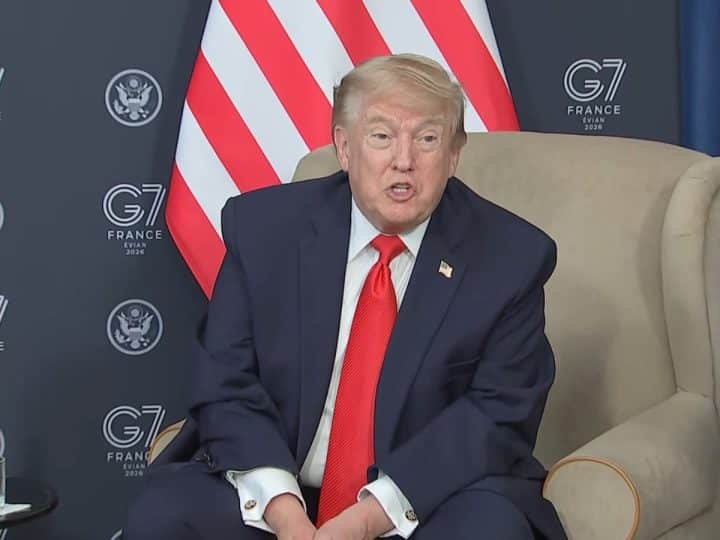
One person was killed and two injured in the latest ‘narco’ boat strike in the eastern Pacific on 17 June. While all eyes are on US-Iran peace talks, US president Donald Trump’s administration is still terrorising Latin America.
The US has killed over 200 people in the Caribbean and Pacific under the guise of stopping ‘narco-terrorist’ boats. The US military’s southern command posted on X:
On June 16, at the direction of #SOUTHCOM commander Gen. Francis L. Donovan, Joint Task Force Southern Spear conducted a lethal kinetic strike on a vessel operated by Designated Terrorist Organizations. Intelligence confirmed the vessel was transiting along known… pic.twitter.com/UGBRt9Mbdm
— U.S. Southern Command (@Southcom) June 17, 2026
Trump’s shadow war has been raging throughout 2026. The most aggressive phase was the kidnapping of Venezuelan president Nicolas Maduro on 3 January. Maduro is still being held in New York awaiting trial.
Trump’s strategy for an American empire
French paper Le Monde pointed to Trump’s ambitions for a subservient Latin America as a matter of US policy:
We want a hemisphere whose governments cooperate with us against narco-terrorists, cartels and other transnational criminal organizations (…) we want to ensure our continued access to key strategic locations.
The new drug war, like the old one, is fundamentally a neocolonial project. As US-based Latin America Studies professor Michelle D. Paranzino pointed out on 11 June:
The history of that war on drugs, however, especially during the presidency of Ronald Reagan, shows that the narco-terrorism label has always been politicized.
Then, as now, this collaboration appears to be aimed at the leftist and communist governments in the Western Hemisphere.
In many cases, the drug framing is an explicit rationale for action.
The US has been remarkably aggressive
Bolivia is the latest country to sign up to US ‘anti-drug’ plans. The BBC reported on 17 June:
The foreign ministry said that under the agreement, the US would provide up to $20m (£15m) to train and equip Bolivian forces as part of a joint fight against drug smuggling.
Bolivia recently enlisted Trump’s centrepiece colonialist alliance:
Under a new centrist president, Rodrigo Paz, Bolivia has joined the Shield of the Americas, the US-led security initiative in the Western Hemisphere.
NPR interviewed left-wing historian of the Americas Greg Grandin on Trump’s remaking of the hemisphere. Grandin warned the new US strategy was “remarkable in its aggression”:
It’s remarkable in the sense that it feels no need to legitimate itself in terms of any kind of moral or normative justification. In Latin America and the Western Hemisphere, you have quite a remarkable, cohesive and, I would say, efficient application of all of the different applications of hard power – of U.S. hard power – to Latin America under the rubric of the war on drugs.
I would say that, maybe with the exception of Uruguay, Washington is meddling in Latin American politics to different degrees of intensity in almost every Latin American nation.
Trump seemed poised to push harder against Latin American resistance before he blundered into a war with Iran in February. He lost that war. But with global attention on new peace talks, it is easy to forget that the dirty war in the western hemisphere is still underway.
Featured image via the Canary
By Joe Glenton
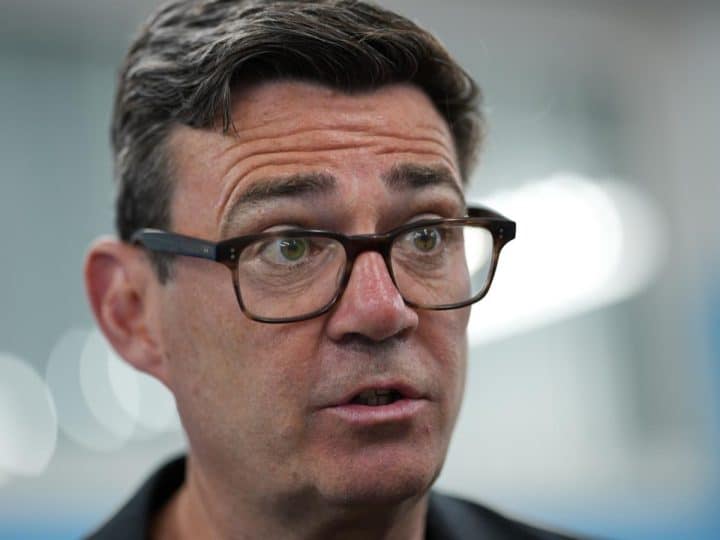
The Makerfield by-election has got people around the country talking about Andy Burnham again. And a new poll has shown that, with increasing scrutiny, he’s become a lot less popular. We reckon that’s because he represents the same kind of fence-sitting, corporate politics that gave the UK Keir Starmer.
Unsurprising popularity dive
Voters tend to view most politicians unfavourably, overall. But Andy Burnham was a rare case before the by-election campaign. Because there were actually more people who viewed him favourably. That has quickly changed in recent weeks, though, with YouGov reporting that his:
favourability has declined markedly over the past two months
Even 2024 Labour voters see him more negatively, with an extra 8% feeling this way. But in Makerfield specifically, he’s still more popular than his party is. And that could potentially allow him to win the by-election.
YouGov quotes one voter in the North West as saying:
Andy Burnham typifies modern politicians who put style and personality over belief in what they stand for.
Burnham’s history of corporate funding and U-turns backs that up. And it’s also the story we’ve seen in the Makerfield by-election campaign. Because Burnham has:
- Failed to meet the Green promise to back public ownership of utilities, making some weak half-promises instead.
- Refused to speak out clearly against Israel’s genocide, unlike his Green opponent.
- Made some vague noises about electoral reform but said that any change would first need to “be in a manifesto and endorsed at a general election” (which Labour is unlikely to win outright ever again).
- Pledged to cut welfare and increase defence spending.
- Suggested he will look for private funds to help finish off the highly controversial HS2 rail project.
- Claimed to want “less factionalism” while refusing to entertain the idea of readmitting Jeremy Corbyn into the Labour Party.
Burnham may still win in Makerfield, but there would be little cause for celebration
Makerfield never seemed like prime Green territory. And it seems unlikely that the Green Party candidate will be a real challenger in the election. But voices inside and outside the party calling for unity behind Burnham as an anti-Reform candidate seem to have the dangerously false impression that he’s an antidote to Reform advances.
Challenging Burnham from the left in this by-election is primarily because he has consistently failed to make firm promises. The Greens may possibly have stepped aside if he had clearly committed to electoral reform before the next election, but he didn’t — even though party members back it. As Green leader Zack Polanski said:
Anyone committed to proper democratic renewal in this country must commit to bringing in fair and genuine proportional representation at the earliest possible opportunity… We also need to get big money out of politics, stop disinformation, and scrap the archaic and undemocratic House of Lords. We’ve heard lots of promises and warm words from many Labour figures – but when it comes to it, we see inaction, U-turns and half-measures.
Reform, meanwhile, may have been awful enough by itself to tank its chances of winning. Suggesting it would back notorious child abuser Jimmy Savile, being generally misogynistic, and getting tetchy with others on the far right could all contribute to Reform losing.
Because Andy Burnham has promised little apart from ‘more of the same’, though, a victory for him wouldn’t be cause for celebration. And that’s probably why the increase in scrutiny has reduced his popularity in recent weeks.
Keir Starmer’s government has set a low bar, so Burnham may stretch slightly over that if he becomes Labour leader. But he alone is too much of a corporate lackey to bring any meaningful change to our political system. For that, only consistent organising and pressure from ordinary people will really make a difference.
Featured image via the Canary
By Ed Sykes
Politics
BBC have questions to answer as yet another misogynistic, abusive man given privileged platform

Recent disturbing revelations connected to BBC favourite Ashley Cain prove that the UK and its institutions have a serious misogyny problem.
Moreover, the volume of evidence showing extremely bigoted, abusive rhetoric to diminish, demean and attack women shows how little sexualised abuse seems to matter to the state broadcaster.
When Cain’s rhetoric glorifies violence against women, it ceases to be mere opinion and becomes part of a culture that puts women and girls at risk. The damage is real, and so are the consequences.
Thus, the BBC has serious questions to answer. They did not merely tolerate this rhetoric — they helped amplify it. In doing so, they lent credibility to attitudes that women and girls across the country are already forced to confront every day.
Like typical offenders trying to hide the evidence of their abuse, Cain appears to have deleted his X account over the last week.
How the hell does Ashley Cain have a job at the BBC? I have never read such a timeline of concentrated and appalling misogyny https://t.co/pa63Dhf2mE
— Colleen Murrell


 (@ivorytowerjourn) June 17, 2026
Cain made ‘jokes’ about hitting women — then hired by the BBC
According to the Guardian, as now his X account is no longer there to refer to, Cain has had no qualms in keeping a long track record of abuse visible to the wider public, with disgusting sexist and abusive comments remaining from across the last decade.
As the exclusive report makes clear, this history was hardly buried. A basic search appears to have been enough to uncover it. Yet the BBC not only platformed him but reportedly held him up as an example of “what BBC Three was about”. That raises serious questions about the broadcaster’s judgement and its ability to decide who they deem as a positive role model to young men.
There are many disgusting things quoted by the Guardian, such as making jokes about hitting women whilst watching Jessica Hayes on Love Island in 2015 saying he “would have to choke slam” her “real quick”.
He didn’t stop there, however, with a later post shamefully saying he wanted to:
dick fuck her and her big mouth, spit in her face and then fuck her off.
The UK is afraid of Muslims? This guy is unhinged yet the BBC has lauded Ashley Cain for his appeal to young male audiences… All part of the same problem.https://t.co/I0u9GMStRa pic.twitter.com/6WIzWuQhMD
— Sidney Cotton (@Steph36Seaton) June 17, 2026
Disrespectful, derogatory rhetoric towards women
Prior to this, back in 2011, he also attempted to blur the lines of consent, arguably adding momentum to a growing rape culture amongst Western men. Apparently, Cain finds the idea of extreme sex acts against women — who he called a “bitch” — funny as if it’s a bit of lighthearted humour.
“No harm no foul” is likely the defence of those who might wish to shut this down, but as many women and girls know, this misogyny spreads especially when modelled to younger boys. As far too many will relate to, this can have deeply traumatic results for the UK’s female population.
He has also made comments which highlight exactly why women are scared of the threat posed by Farage and Reform UK in regard to reproductive rights as he posted:
eating bad food at weekends is like when a girl says, ‘Don’t cum in me’, but you do it anyway, then think ‘shit’.
Another post from Cain highlights the toxic male culture surrounding sex:
A girl bangs 100 guys = Slag
A guy bangs 100 girls = Ledge.
Banning social media whilst platforming dangerous influencers
Starmer announced this week that the Labour government will be imposing a ban on young people across popular social media platforms, stating it was necessary for their safety.
Yes, they’re a cesspit of misogynistic rubbish, and the damage they cause to young people is real. But that’s exactly why people should be trying to fix the problem — not acting as though abuse, harassment and sexism are somehow inevitable.
The answer isn’t to throw our hands up and say, “that’s just the internet”. The answer is to tackle the danger, hold platforms to account and stop treating toxic behaviour as normal.
A recent report published by children’s charity Barnardo’s underscored this very real issue facing the younger generations — who will be the adult abusers or victims of tomorrow. Boys are increasingly pressured to join in with sexist “banter”, while girls are forced to put up with degrading abuse at school, online, at work and in public. Anyone paying attention can see the problem is getting worse, not better.
That’s why it is so infuriating to watch the government sit on its hands. Instead of cracking down on abuse and forcing social media companies to clean up their platforms, ministers have chosen inaction. The result? Misogynists, predators and creeps continue to get free rein online, while women and girls are left to deal with the consequences.
Instead, the government chooses to restrict powerless, vulnerable and impressionable children.
"A source at the BBC said the corporation had been unaware of Cain’s social media posts". — Briefcase Michael (@BriefcaseMike) June 17, 2026
Due diligence? What's that? https://t.co/PlHdundaos
Do those with influence even care about sexual abuse and misogyny?
This Guardian revelation is disturbing enough on its own. What makes it worse is that the BBC either didn’t bother doing proper due diligence or did and simply shrugged at his rhetoric. Either way, it exposes how normalised misogyny has become and how deeply its harmful attitudes remain woven into British society.
When violence against women and girls is rising exponentially year on year, it is getting harder and harder not to see a level of complicity for the government and the BBC in the endured trauma of young girls and women who will have undoubtedly suffered the consequences of influencers encouraging abusive attitudes and behaviours.
The social media ban will not protect children — it will simply push their use underground and increase the likelihood that they will suffer abuse in silence. After all, they’re told they are not allowed on highly addictive platforms so they will fear potential reprisal from their parents or adults if they speak up.
Perhaps the biggest flaw in the ban is the chilling effect it could have on vulnerable children. If a child experiences abuse on a platform they are technically banned from using, they may think twice before telling a parent, teacher or guardian.
The fear of being blamed, punished or hit with an “I told you so” could push many to suffer in silence. That doesn’t protect children — it risks making abuse harder to spot, harder to report and easier for predators to hide.
#UzairQadeer #MattBrittin @BBC I'm really curious to know what your hiring criteria is for on screen talent? Presumably misogyny, obscenity, and the promotion of violence and sexual assault against women are high on the list? https://t.co/Tkple11aWT
— Sue Traynor
 (@TraynorSue) June 17, 2026
BBC — Will we ever protect women and girls from abusive men?
On the other hand, these platforms are crucial for a sense of connection and understanding for many young people. Society is overwhelming, isolating, and there are few opportunities for young people to talk to others and have a sense of community.
Even if that community is online, it has value for young people, as it does for older generations.
But we have a serious problem in the UK with sinister, harmful misogynistic attitudes amongst Western men — and now we know the government and the BBC have little interest in tackling that issue head on.
No, they platform them for their ‘success’ and they do whatever they can to appease abusive men rather than hold them accountable and make the behaviour expensive.
Featured image via the Canary
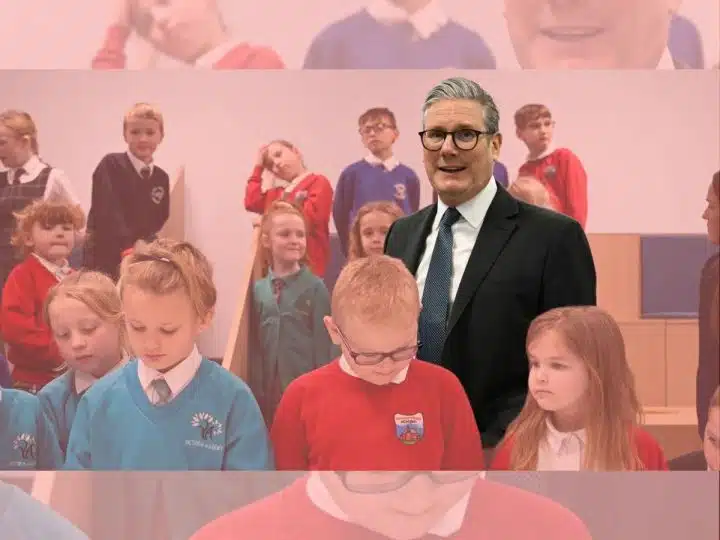
On 15 June, the government announced a social media ban for under-16s. Since then, many groups and experts have spoken out, including Save the Children:
This announcement reflects legitimate concerns about children's safety online, but a ban of this scale would change how children access and experience the digital world. The UK Government must ensure that any decisions are informed by children themselves and by independent… https://t.co/HbwviVkGvt pic.twitter.com/m655lWUo2y
— Save the Children UK (@savechildrenuk) June 15, 2026
Save the Children
The above response reads:
This announcement reflects legitimate concerns about children’s safety online, but a ban of this scale would change how children access and experience the digital world. The UK Government must ensure that any decisions are informed by children themselves and by independent experts.
We are concerned that a blanket ban may look protective on paper, but instead pushes children into less regulated spaces, where they are less likely to seek help when something goes wrong. Children growing up in poverty are likely to be among those most affected.
If young people use sites like Facebook or TikTok, there are things we can do to push these companies to better regulate. After all, these are businesses, and if they want access to the UK market, they need to play by our rules. If young people instead start congregating on dodgy message boards, there is pretty much nothing we can do besides playing whack-a-mole and banning them as they pop up.
Some of these sites host far, far worse than anything you’ll see on Instagram, by the way, and we can’t regulate them via Ofcom, because they’re not hosted here:
We've fined 4chan £450,000 for not having age checks in place to prevent children seeing porn on its site.
The Online Safety Act is concerned with protecting people in the UK. It doesn't require platforms to restrict what people in other countries see.
— Ofcom (@Ofcom) March 19, 2026
 https://t.co/m2QUapVHjv pic.twitter.com/9rba57bHiq
Oh, and let’s not forget we could also create a national social media option which isn’t operating a profit-at-any-cost model. As whistleblower Frances Haugen revealed at a US Senate hearing:
I’m here today because I believe Facebook’s products harm children, stoke division and weaken our democracy. The company’s leadership knows how to make Facebook and Instagram safer, but won’t make the necessary changes because they have put their astronomical profits before people.
Back to Save the Children, they finished:
If ministers want to make the online world safer, the answer is not simply keeping children off platforms. The focus must be on providing better support for parents by making platforms safer by design, tackling addictive and high-risk features such as stranger contact, live streaming, nudification tools and unsafe AI systems, so that children are not exposed to harm online.
Tech company failures
The Canary’s Maddison Wheeldon also reported on this topic, writing:
Don’t get me wrong: stronger restrictions on social media use by young people have become increasingly necessary given how toxic, abusive, and harmful many platforms have proven to be. But the repeated failure of tech companies to address these problems meaningfully means the dangers will not simply disappear because a ban is introduced.
All these dangers will still be there waiting for young people when they come of age. And it’s not like 18-year-olds aren’t vulnerable to abuse and harm. So really, all we’re doing is kicking the problem down the road.
Wheeldon also wrote:
Harmful content, disinformation, and online radicalisation will continue to exist, and young people will often find ways around restrictions. It is important to note, this policy has not been successful in Australia – a whopping 70% of parents in Australia have reported that their children are still on banned platforms – which hardly suggests this will have any impact on children’s safety.
In other words, the plan won’t address the underlying issue and it won’t even keep children out of harm’s way. So ‘save the children’ it will not.
Ulterior motives
The purpose of the ban seems to be twofold:
- Giving the impression that something is being done without inconveniencing the social media companies which are responsible for the problem.
- Introducing Digital ID by stealth.
In response, we all need to demand that the government grows a spine and regulates social media companies now.
Featured image via the Canary
By Willem Moore

Best 2026 College Football Games Each Week in the West

wewantwraiths – Money & Dopamine (Official Music Video)

Ukraine targets Moscow oil refinery in major drone attack


-

 Business4 days ago
No Jackpot Winner as $257 Million Prize Rolls Over to $269 Million Monday Draw
-

 Fashion6 days ago
Weekend Open Thread: Tuckernuck – Corporette.com
-

 Crypto World7 days ago
Oppenheimer backs SpaceX as $70 billion retail frenzy builds
-

 Crypto World7 days ago
Markets Rally as SpaceX IPO Looms Amid Iran Tensions and Inflation Surge
-
 Crypto World3 days ago
Zimbabwe Requires Crypto Businesses to Register Annually Under New FIU Regulations
-

 Crypto World5 days ago
Bitget enters Argentina’s regulated crypto market through PSAV registration
-

 Tech5 days ago
NanoClaw integrates JFrog registries to secure AI agent downloads
-

 Tech6 days ago
This Week In Security: Microsoft On Microsoft, Register Your Domains, Linux On ARM, And FreeBSD Joins The File Cache Club
-

 NewsBeat6 days ago
El Nino has formed in the Pacific and could set records, forecasters say
-
 Tech7 days ago
Dutton Ranch star claims they ‘didn’t see any disruption’ on set following Chad Feehan’s exit from Yellowstone spinoff fueled by Taylor Sheridan clash rumors
-

 Politics7 days ago
Politics Home | Healey Resignation Is “Colossal Failure Of Government”, Says Former Labour Defence Secretary
-
 Entertainment7 days ago
Donnie Wahlberg & More Heat Up Las Vegas at Circa’s Barry’s Downtown Prime
-

 Sports7 days ago
First Time Since 1971: Australia Register Historic Low In ODI Cricket
-
 Tech7 days ago
Opendoor Ends India Operations, Fueling a Bigger Conversation About AI and Outsourcing
-

 Politics7 days ago
Belfast burns, while Met chief points finger at Iran and Russia
-

 NewsBeat6 days ago
FBI searches office of Ohio voter registration group
-

 Business7 days ago
AT&T: Verizon's 27% Outperformance Sets Up A Solid Entry Point
-
 Tech6 days ago
Anthropic is spending $150M to embed 1,000 AI fellows inside nonprofits. No degree required.
-

 Politics7 days ago
Modi thanks Trump for wishes as US attacks Indian seafarers
-
 Entertainment6 days ago
‘The Pitt’s Fan-Favorite Doctor Confirms Noah Wyle Gave His Blessing to Return [Exclusive]
You must be logged in to post a comment Login