TL;DR
Meta launched AI Mode on Facebook, using Meta AI to surface answers from public posts across Groups, Reels, and Marketplace listings.





Meta launched AI Mode on Facebook, using Meta AI to surface answers from public posts across Groups, Reels, and Marketplace listings.
Meta has launched AI Mode on Facebook, a new search experience that uses Meta AI to pull answers from public posts across the platform. The feature surfaces information from Facebook Groups, Reels, and Marketplace listings, turning years of user-generated content into a searchable knowledge base. It is rolling out now to users in the United States.
AI Mode sits inside Facebook’s existing search bar. When a user asks a question, Meta AI generates a conversational answer drawn from public content rather than returning a list of links. The system can recommend products from Marketplace, surface advice from Group discussions, and pull clips from Reels that match the query.
The feature builds on Meta’s broader push to embed AI across its platforms. In May, the company launched Forum, a standalone Reddit-style app built on Facebook Groups that includes an AI “Ask” tab for querying Group discussions. AI Mode extends that same logic to the main Facebook app, giving Meta AI access to a far larger pool of public content.
The timing is notable. Google’s AI search overhaul has accelerated a traffic collapse for publishers, with zero-click searches now accounting for roughly 60 per cent of all queries. Meta is applying the same approach to social content, synthesising public posts into AI-generated answers instead of sending users to the original discussions.
Meta did not say whether Group admins or individual users can opt their public posts out of AI Mode results. The company has not disclosed how it handles posts that were public when written but later changed to private, or whether deleted posts are excluded from the training data. These are significant gaps for a feature that treats user content as raw material for an AI system.
AI Mode is one piece of a much larger AI rollout. Meta now offers AI-generated animated profile pictures, introduced in February. A Marketplace auto-reply feature launched in March uses Meta AI to draft responses to buyer inquiries. A creator assistant tool, available since June 3 in the US, India, and Canada, helps content creators with captions and engagement suggestions.
The company is also building a subscription business around AI. Facebook Plus and Instagram Plus launched on May 27 at $3.99 per month each, offering ad-free browsing and premium features. Meta has announced two additional AI-specific tiers coming later this year: Meta One Plus at $7.99 per month and Meta One Premium at $19.99 per month, which will include access to more advanced AI models and higher usage limits.
The subscription pricing positions Meta’s AI features against standalone chatbot services. ChatGPT Plus costs $20 per month. Google’s Gemini Advanced is $19.99 per month. Meta is betting that embedding AI into apps people already use every day, rather than asking them to open a separate tool, will drive adoption more effectively.
Whether that bet pays off depends on accuracy. AI-generated answers drawn from social media posts carry a higher risk of misinformation than those sourced from curated databases or verified publishers. Facebook Groups contain medical advice from unqualified strangers, financial tips from anonymous accounts, and product recommendations that may be paid promotions. Meta AI does not distinguish between a dermatologist’s post and a conspiracy theorist’s, at least not in any way the company has publicly described.
Google’s AI Overviews have already demonstrated the problem at scale. An analysis by Oumi found that Google’s AI answers are roughly 91 per cent accurate, but with trillions of queries per year, that error rate translates to millions of incorrect answers served daily. Meta’s content pool is arguably less reliable than Google’s web index, and the company has not published comparable accuracy metrics for AI Mode.
The feature also raises questions about the value exchange between Meta and its users. People post in Facebook Groups to help each other, share experiences, and build communities. AI Mode extracts that value and repackages it as Meta’s product, without compensation or clear attribution to the original authors.
Meta has been restructuring aggressively to fund its AI ambitions. The company cut roughly 21,000 jobs across 2023 and 2024, then announced another round of layoffs in early 2026 focused on underperforming employees. Mark Zuckerberg has described AI as the company’s top priority, with capital expenditure on AI infrastructure expected to reach $60 to $65 billion in 2025 alone.
AI Mode is the latest product to emerge from that spending. It is a straightforward play: Facebook has decades of public content that no competitor can match, and Meta AI now has a front door to all of it. The question is whether users will trust an AI that answers their questions by mining their neighbours’ posts, and whether the people whose posts are being mined will be comfortable with that arrangement.
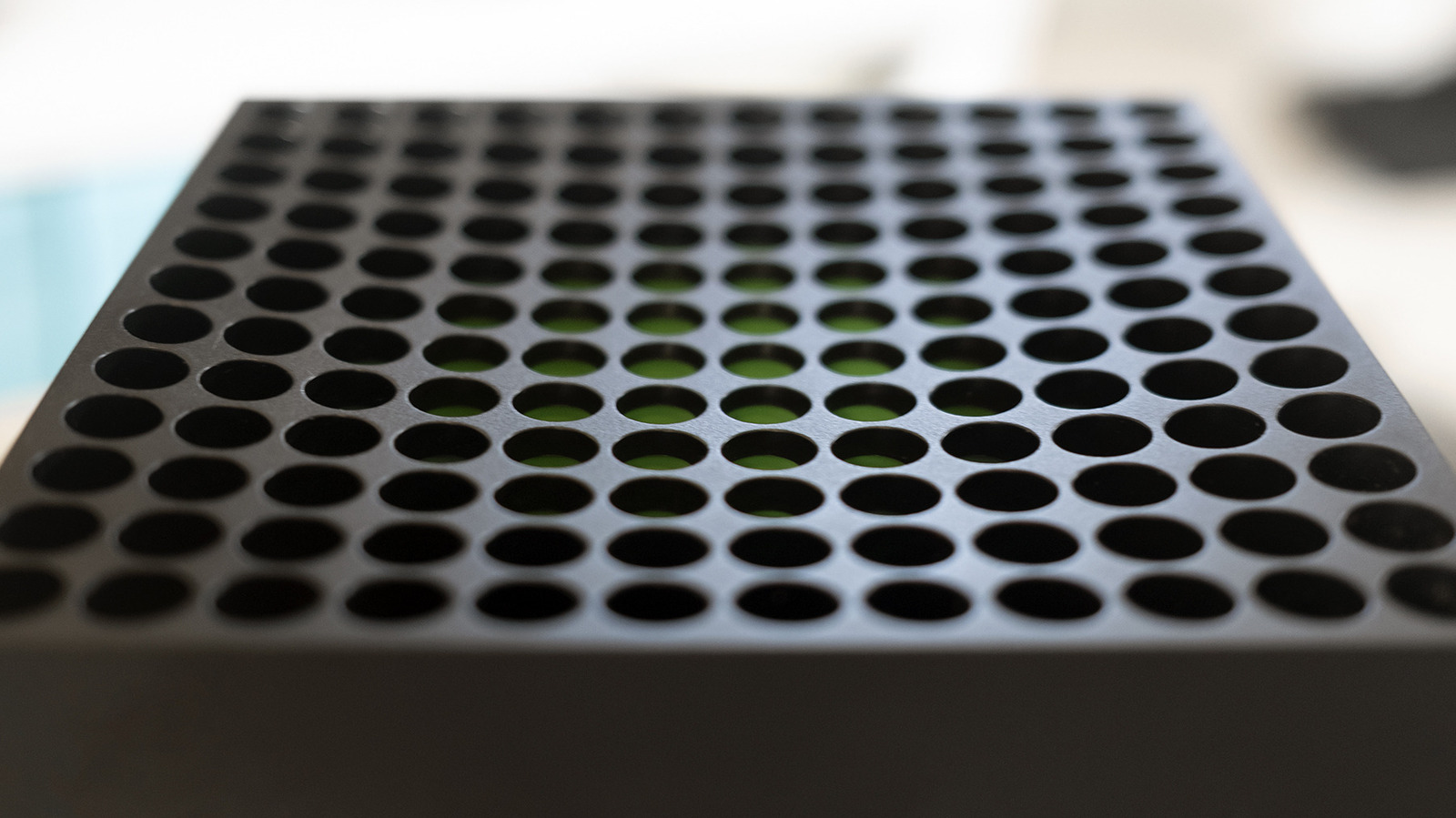
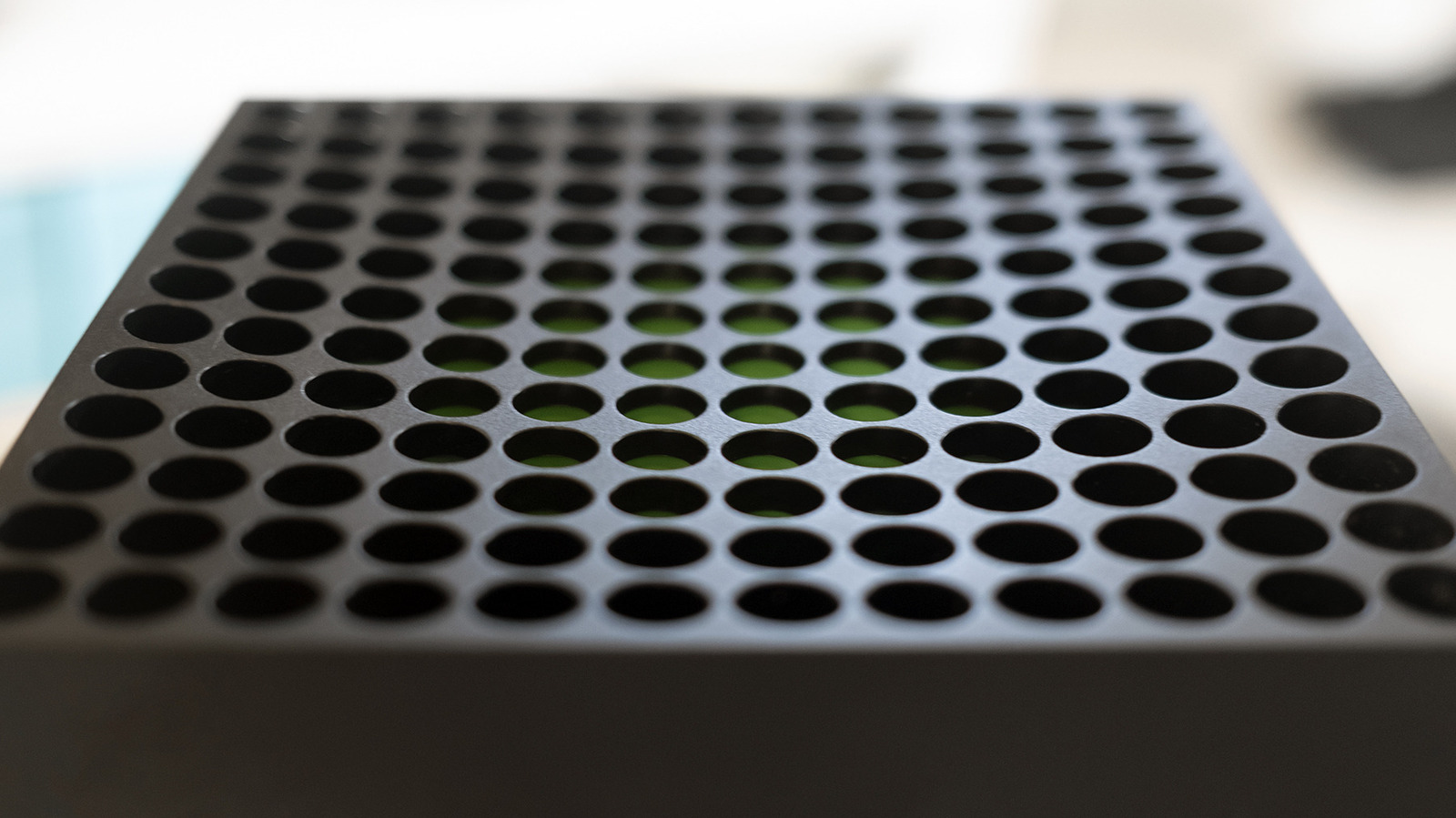
Xbox is preparing to shut down or sell at least three of its studios — Double Fine, Ninja Theory and Compulsion Games — according to reports from The Verge and Bloomberg on Monday.
Ninja Theory employees were informed on Monday that the studio would be closing, according to The Verge, but the team is attempting to find a buyer that can keep them operational. Ninja Theory is the studio behind the Hellblade series and it was featured in the recent Xbox Summer Game Fest showcase, revealing a new entry due in 2027.
Double Fine is the legendary studio behind the Psychonauts games, Brütal Legend, Broken Age, Keeper and all manner of LucasArts adventures, founded by Tim Schafer and friends in 2000. Double Fine leaders are in active negotiations to buy themselves back from Xbox rather than be closed altogether, Bloomberg said.
Compulsion Games is in a similar position, according to the report. Compulsion is the Montreal studio behind the uber-stylish games Contrast, We Happy Few and South of Midnight, the latter of which came out in April 2025.
Bloomberg reported that several other studios under the Xbox Game Studios banner are also negotiating for their futures and are at risk of being shut down. As it officially stands, the Xbox Game Studios umbrella covers dozens of studios, including Arkane, Bethesda, Halo Studios, id Software, Obsidian, Playground Games, ZeniMax and Activision Blizzard King. We have contacted Xbox for clarification on the reported closures and buyout talks.
Microsoft’s modern game-studio acquiring spree kicked off in 2018 with the purchase of Undead Labs, Playground Games, Ninja Theory and Compulsion Games, plus the formation of The Initiative. This momentum continued building at a concerning pace in 2020 and 2021, when Xbox acquired eight more studios under ZeniMax Media, including Arkane, Bethesda and id. Everything came to a head in 2022 with the announcement that Xbox planned to purchase Activision Blizzard for $69 billion, the largest acquisition in video game history. That deal finally went through at the end of 2023, after a lengthy battle with regulators.
Since the acquisitions, Microsoft has enacted multiple massive rounds of layoffs affecting thousands of employees in its gaming division, and also shuttered well-known studios, including The Initiative. Unfortunately, Double Fine, Ninja Theory, Compulsion and the other at-risk Xbox studios are in good company.
Longtime Xbox division head Phil Spencer stepped down this year and was replaced by new CEO Asha Sharma, alongside other executive-level changes. Also on Monday, Xbox Game Studios head Craig Duncan left the company; he first took the role in October 2024. Employees across Xbox are bracing for more layoffs in 2026 after an ominous public memo from Sharma dropped in mid-June, just as the glow of Summer Game Fest fully faded.
Compact SUVs are the largest market segment in America according to a 2025 study by S&P Global, and competition within the segment is fierce. Long-standing favorites from the likes of Toyota and Honda go head-to-head against upstart competitors, with the best of the bunch offering a winning mix of practicality, comfort, and affordability.
With so many small SUVs on the market to pick between, buyers can afford to be choosy. There are many different factors that influence a buyer’s final decision, with depreciation being a particularly important factor for many. Most buyers would strongly prefer that their shiny new SUV doesn’t plummet in value during their ownership, although some do exactly that.
Using data from two trusted sources, we’ve compared depreciation rates from a wide range of small SUVs to pick out the models that lose value at the fastest and slowest rates. There are some common themes between models at each end of the spectrum: For example, the highest depreciating models tend to hail from luxury brands, feature electric powertrains, or both. At the other end, the models with the best value retention are offered by mass-market brands with good reputations for long-term reliability. If you’re in the market for a new budget-friendly small SUV and want to know which models to stay away from, you’ll find the answers here.
EV technology is rapidly evolving, and as a result, the spec sheets of cars that are just a few years old are already starting to look a little dated. A good example is the Lexus RZ, which arrived in 2023. Even at launch, its 220-mile range was far from exemplary, but today, it’s even further behind its rivals. To its credit, Lexus has managed to boost the RZ’s range slightly in the intervening years, and a 2026 RZ now achieves between 264 and 301 miles, depending on trim. However, that’s still low by today’s standards: For context, a base-spec 2026 Nissan Leaf offers 303 miles between charges.
Add in the effects of battery degradation and a used RZ will offer a range that’s simply too small to be appealing to most buyers. It depreciates heavily as a result, with CarEdge estimating that RZ owners can expect to lose 60% of their initial investment after a period of five years. Meanwhile, KBB is even less positive about the RZ’s future resale value, predicting a 66% drop in value over the same period of time.
Honda unveiled the CR-V TrailSport Hybrid trim for the 2026 model year, but even without the added dose of all-terrain capability, it’s easy to see the appeal of the popular SUV. The CR-V is affordable to buy, starting from $32,370 (including a $1,450 destination charge) for 2026, but buyers with larger budgets can spring for the top-spec Sport Touring Hybrid. The latter offers a premium audio system, a 204 horsepower hybrid powertrain, and a long list of other additional features.
As well as being more powerful than base trims, the hybrid CR-V is also more efficient. The all-wheel drive hybrid CR-V hits an EPA-estimated 37 mph combined, while the front-wheel drive version achieves 40 mpg. Add in the durable materials in the cabin, the intuitive infotainment, and Honda’s strong reputation for reliability, and the result is a car that’s a sensible choice for a huge range of buyers. That wide-ranging appeal helps keep used values high, with CarEdge estimating that a new CR-V will depreciate just 29% after five years and KBB predicting a 46% reduction compared to the original sticker price.
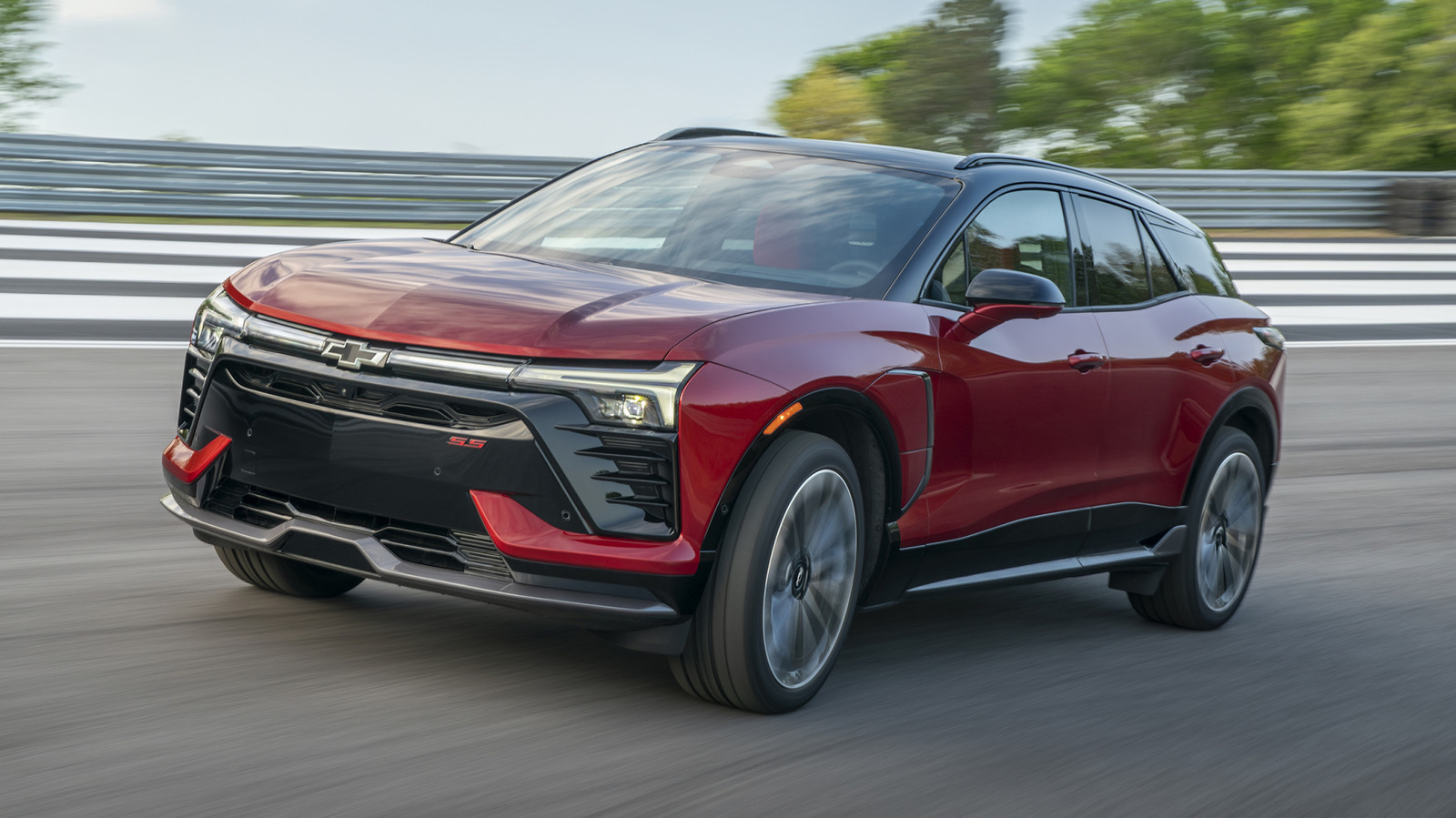
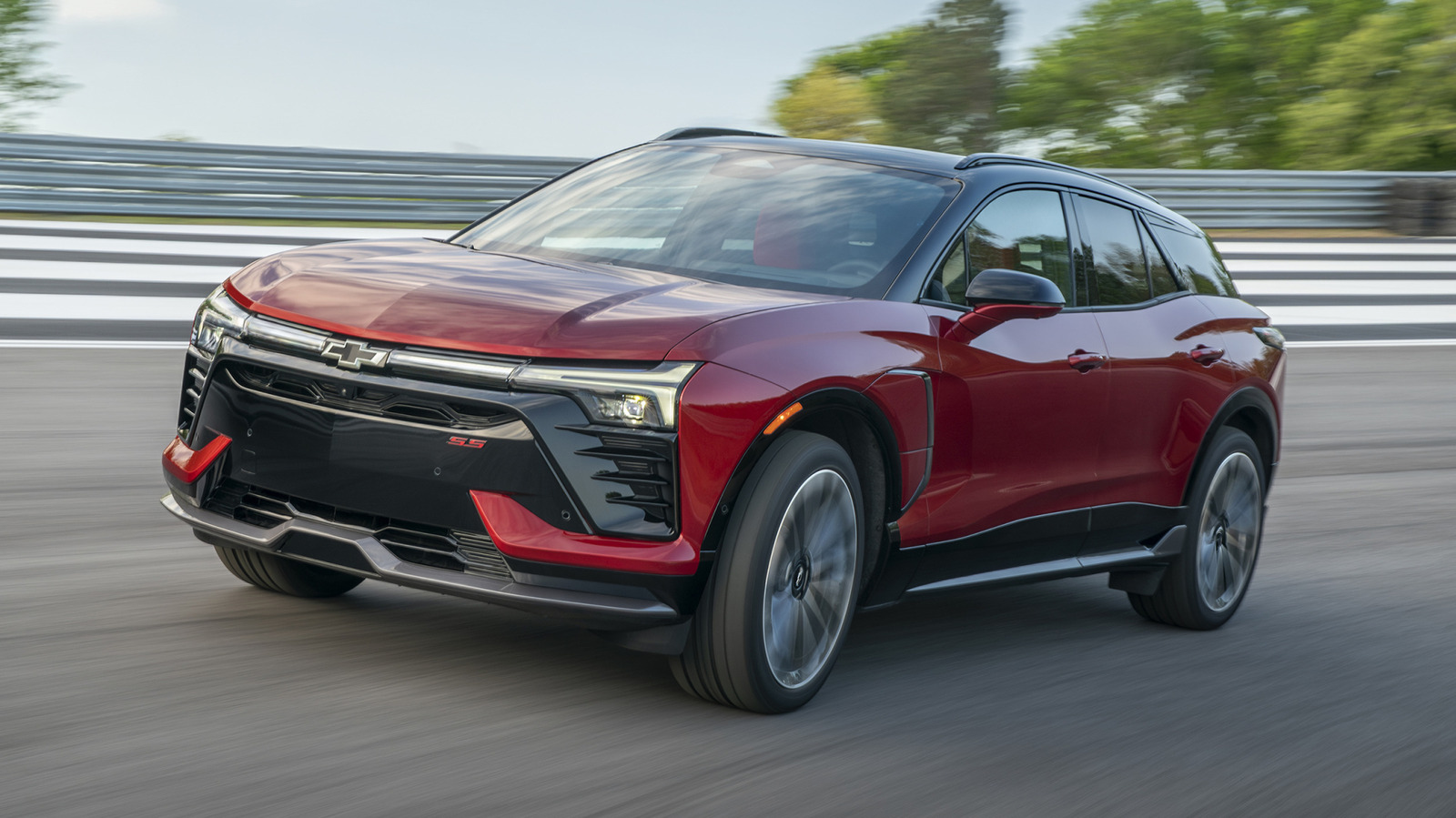
It isn’t just luxury EVs that lose value fast. The Chevrolet Blazer EV might wear a humble bowtie logo on its hood, but current data suggests that owners can still expect to lose money at the kind of rate that you’d usually see from a premium or luxury car. CarEdge puts the Blazer EV’s depreciation rate at 60% over five years, while KBB estimates that the car will be worth 67% less than it was when it was new.
The Blazer EV has proven to be unpopular with buyers from the get-go, taking the unenviable title of Chevy’s least-sold SUV in America. Even its electric sibling, the Equinox EV, has proved to be significantly more popular. That’s despite the 2026 Blazer EV featuring a range of up to 312 miles and starting from $46,495 (including a $1,795 destination fee), which is a few thousand dollars less than the price of the average new car. If you move up the trim range, things quickly get pricier, with the all-wheel drive SS trim costing north of $60,000.
The latest Subaru Crosstrek is far from perfect, but it’s an appealing option, especially in hybrid form. Its combination of affordability and all-conditions capability make it a great alternative to rivals from the likes of Honda and Toyota, and the Subaru offers similarly strong value retention to small SUVs from those brands.
Estimates for exactly how much owners can expect to receive for their 5-year-old Crosstrek vary between sources, with CarEdge suggesting the car will only depreciate 34% over that time. Meanwhile, KBB predicts a 48% depreciation after half a decade. Either way, that puts the Crosstrek towards the front of the pack for holding its value, and given its sub-$30,000 starting price, buyers will be losing very little in dollar terms.
Unlike many of its rivals, the Crosstrek is also made in America at Subaru’s Indiana assembly plant. It’s not the brand’s only American-made model either, with the Outback and Ascent SUVs also being built in the same facility.
It’s made by a luxury brand with a poor reputation for long-term reliability and it’s far from cheap when it’s new, so it’s natural that the Range Rover Evoque depreciates fast. Accelerating that value loss is the fact that it’s also not very efficient, and despite its rapid depreciation, it isn’t all that rapid on the road either. The typical owner of a new Range Rover won’t mind any of those things, but for many used buyers, an aging Evoque isn’t going to be an easy sell.
Despite its somewhat limited appeal, a 5-year-old Evoque won’t have lost quite as much value in percentage terms as some of its rivals. Still, with predicted depreciation rates of 52% and 63% from CarEdge and KBB respectively, it’s among the poorest performers for value retention. Buyers who do decide to roll the dice on a used Evoque can at least enjoy one of the nicest cabins in the segment and a top-tier sound system, even if the threat of wallet-bruising repair bills might loom large.
Toyota redesigned the RAV4 for the 2026 model year, but it follows the same core formula as before. Efficiency is still one of its key selling points — in fact, it’s even more of a focus with the latest generation, which is only available as either a hybrid or plug-in hybrid. A range of trims are also available to cater to a wide spectrum of buyers, with the base trim starting from $33,495 (including a $1,595 destination fee).
Further up the trim range, the Woodland trim beefs up the RAV4’s appearance with Rigid Industries fog lights, roof rails, and all-weather floor mats. At the very top, the Limited trim offers the most comfortable, premium experience. A 2026 RAV4 Limited costs at least $44,895 before optional extras are factored in.
Buyers of all trims will be able to take comfort in the fact that the RAV4’s perennial popularity has helped earn it strong value retention rates. CarEdge and KBB are notably split on exactly how far ahead of its rivals the RAV4’s value retention falls, with the former predicting only a 28% drop in value after 5 years but the latter saying that the car will lose 51% of its sticker price. Regardless of which estimate proves more accurate in the long run, the RAV4 remains among the best SUVs in its class for holding its value.
By now, most enthusiasts will already be well aware of Jaguar’s impending all-electric relaunch. The brand’s upcoming EV has not yet hit the road at time of writing, but Jaguar dealers are still busy selling off the last of their old stock. The F-Pace SUV can still be found at dealers, with the cheapest 2026 trim starting just under $60,000 and the SVR 575 Final Edition trim costing close to six figures.
The gas engine in the base trim is slightly underwhelming given its asking price, offering 246 horsepower and a 6.9 second 0-60 mph time. The mild hybrid variant bumps those numbers up to a more respectable 395 horsepower and 5.1 seconds, but both lag far behind the Final Edition. It might be significantly more expensive, but the top-spec trim does receive a supercharged 5.0-liter V8 engine making 567 horsepower and propelling the car from 0-60 mph in just 3.8 seconds.
No matter whether they pick a base example or a top-spec Final Edition, buyers of the 2026 F-Pace can expect to lose most of their investment after 5 years of ownership. CarEdge predicts that the SUV will depreciate 65% after half a decade on the road, and KBB forecasts a very similar 66% depreciation rate.
Slotting below the RAV4 in Toyota’s SUV lineup, the 2026 Corolla Cross is an entry-level crossover for buyers who want the style and practicality of an SUV but don’t want to spend a fortune. It’s equipped with a competitive amount of standard tech and offers cargo space and legroom that’s on par with most of its rivals.
It’s efficient too, with the EPA estimating that the Corolla Cross Hybrid should be capable of hitting 42 mpg on a combined cycle. In the real world, our testing saw the car average slightly less than that claimed figure, averaging around 39 mpg over the course of the test period. Prices for the non-hybrid variant start at $26,830 (including a $1,595 destination fee), while the hybrid costs around $30,000.
The Corolla Cross doesn’t win any points for driver engagement, but as a sensible, wallet-friendly runaround, it ticks all the right boxes. That sensibility appeals as much to used car buyers as it does to new car buyers, and as a result, the small SUV holds its value well. Estimates for exactly how well a new example will hold value differ, with CarEdge predicting a 30% drop in value over 5 years but KBB suggesting a 50% drop is more likely.
Compared to the Range Rover and Defender lines, the Discovery is the forgotten child of the Land Rover stable. Bosses have been on record discussing how the next generation of the Discovery and its smaller relative, the Discovery Sport, need to be better differentiated from the Defender. For now though, the current generation soldiers on. The 2026 model year has seen the launch of some new trims and additional options, but fundamentally it’s still the same SUV that’s been in Land Rover’s lineup for years now.
Until its relaunch, both the Discovery and Discovery Sport are stuck with high depreciation rates that reflect the fact that they’re overlooked by many buyers. Land Rover’s reliability record is also patchy at best, which doesn’t help matters. The Discovery Sport is the smaller of the two Discovery SUV models, and it’s expected to depreciate 59% after 5 years according to CarEdge and 65% over the same time according to KBB.
Compact SUVs don’t get much smaller than the Hyundai Venue. It’s one of the cheapest new cars you can buy in 2026, with a starting price that only just surpasses the $20,000 mark. Depreciation estimates for the car differ in their assessment of how much of its value it’s likely to retain 5 years after it leaves the lot, with CarEdge being more positive about its value retention than KBB. The first says buyers can expect to lose only 36% of their original investment, while the second predicts a 54% depreciation rate.
In dollar terms, the Venue’s depreciation is among the lowest of any small SUV even if KBB’s less optimistic depreciation rate is assumed to be true. Owners won’t spend a lot at the fuel pump either, with the EPA estimating that the SUV should hit 31 mpg combined. That translates to a fuel savings of $1,000 compared to the average new vehicle over the course of 5 years.
As previously mentioned, luxury cars tend to depreciate fast, as do electric vehicles. The Cadillac Optiq is both a luxury SUV and an electric vehicle, and so it’s no surprise that it sheds value pretty rapidly. It’s still a relatively new model, but estimates generally agree on how much it can be expected to lose over five years. CarEdge predicts a 57% drop in value, while KBB forecasts a slightly larger loss, at 61%. That’s not shockingly bad for an EV, but it’s still more than most other small SUVs.
We tested the Optiq shortly after it was launched and found it to be a typical Cadillac in all the ways that matter: It was quiet, comfortable, and well appointed inside, without much of the over-the-top gadgetry that some of its rivals offer. Like virtually all new cars, it still has a prominent infotainment screen, but we found it generally straightforward to operate and not too intrusive. Aside from the odd omission, like the Optiq’s lack of Apple CarPlay compatibility, we didn’t find much to dislike about the smallest Cadillac EV.
The HR-V is Honda’s SUV equivalent of the Civic, with shared underpinnings and a similarly affordable price tag. We spent time with the car at the launch of the current generation and liked its interior and standard equipment levels, although we found the sound of its CVT to be grating when the SUV was driven on the highway. Noisy transmission aside, the HR-V is a good entry point into Honda’s SUV lineup, and as a bonus, it looks less cheap than its price tag would suggest.
Buyers can expect the HR-V to hold its value well over its first 5 years on the road, but like many of the top performing small SUVs here, estimates differ on just how much it will be worth. According to CarEdge, the HR-V will lose 31% of its sticker price over that time, while KBB suggests that a deprecation rate of 48% is the more likely scenario. Individual factors like mileage and condition can also play a significant part in resale value, but overall, the HR-V remains towards the top of its class.
Every platform uses a slightly different methodology and different datasets to predict how fast a new vehicle will lose value, so to gain a balanced overview of predicted depreciation rates, we averaged data from two trusted sources. We based our picks for this list on the mean average of predicted depreciation rates from CarEdge and KBB, with each of our fast depreciating picks losing 55% or more of their initial value over their first five years on the road. Our top picks for value retention are each forecast to depreciate an average of 45% or less, putting them towards the very top of their segment.

What’s most disturbing about Trump’s “Restoring Truth and Sanity to American History” executive order isn’t its fully-blinkered, jingoistic take on American history where America does no wrong and is almost always white right. I mean, that’s pretty awful on its own, but it’s the flip side of pretending whites do no wrong: pretending any victims of whites or any contributors of other races/colors/creeds simply don’t exist.
It’s the sort of thing dictators do. It’s the sort of thing novelists write about. It’s the sort of thing we Americans used to be able to criticize wholeheartedly because our country would never stoop so low as to rewrite history to please whoever was currently in power.
We no longer have the high ground. But we might be able to start making our way back to the top of the hill. It’s not because Trump et al are getting better or smarter or simply a bit less hateful. It will be because the courts are doing what they’re supposed to be doing: slowing this budding fascist’s roll.
A federal judge in Massachusetts has ordered the Trump administration to reinstall displays it removed from National Parks sites over the past year as part of a crackdown on diversity, equity and inclusion (DEI) content and climate change information.
[…]
Judge Angel Kelley sided with the challengers on Friday, finding that the federal government’s action “sets a dangerous precedent of censorship and sanitization” while undermining the “integrity” of the National Parks system.
The decision [PDF] leads off with the ideal this nation and its national parks are supposed to embody…
Often referred to as “America’s largest classroom,” National Parks serve in that spirit by telling the stories both of those who write history and those who go unheard. The beauty of history is the unvarnished storytelling of a time gone by and the delivery of undeniable truths. The Government’s stewardship of these park sites thus carries a responsibility to present history in full rather than in favored fragments.
… before detailing the hideous destruction being perpetrated by the Trump administration:
Unfortunately, the Government has disregarded these principles. Under the guise of promoting American dignity, this Administration seeks to share a limited history by ordering the removal of all signs, displays, and interpretive exhibits at National Parks that do not align with its preferred narrative, thereby telling half-truths. In recent months, the Government has torn down exhibits in Philadelphia’s Independence National Historical Park memorializing the legacy of people enslaved by the country’s first President; removed signage detailing climate threats at Fort Sumter in South Carolina, one of the most environmentally endangered sites in the country; and wiped away descriptions of history and science at countless National Parks across the United States. Not only does this undermine the integrity of the National Parks; it sets a dangerous precedent of censorship and sanitization.
Dozens of instances of censorship and erased history are listed in the lawsuit. And it’s all the sort of thing you’d expect from this administration:
By the date of the filing of this action, Defendants had removed dozens of signs related to climate change, civil rights, and diverse communities.
[…]
In addition, Defendants have removed multiple signs involving slavery, abolition, immigration,
labor, women’s suffrage, and civil rights…
The court says the order violates the law repeatedly. Not only does it steamroll existing laws governing the National Park Service and its congressional oversight, it fails to justify its own existence with even the briefest nod to serving the public’s interest. Most damningly, the executive order ignores the facts in favor of pushing the administration’s preferred version of US history:
[T]he Order fails to rationally connect any facts to the action taken. It claims that the removals will “restore Federal sites . . . to solemn and uplifting public monuments that remind Americans of our extraordinary heritage.” However, the Order fails to explain how unearthing and displaying the historical contributions of marginalized groups detracts from celebrating “our extraordinary heritage.” Indeed, the NPS’ purpose in installing these materials in the first instance was to attract new audiences to National Parks by celebrating diverse experiences.
In other words, this executive order is basically just a Truth Social rant pretending to be a lawful directive.
[T]he Order fails to rationally connect any facts to the action taken. It claims that the removals will “restore Federal sites . . . to solemn and uplifting public monuments that remind Americans of our extraordinary heritage.” However, the Order fails to explain how unearthing and displaying the historical contributions of marginalized groups detracts from celebrating “our extraordinary heritage.” Indeed, the NPS’ purpose in installing these materials in the first instance was to attract new audiences to National Parks by celebrating diverse experiences.
The order concludes by using Trump’s self-serving rationalizations against him, which is exactly the sort of thing I’d love to see more of in future court orders rejecting this administration’s fascist advances:
Because Defendants deemed it important to strip the parks of these undeniable truths in anticipation of the 250th Anniversary of our great Nation, it is equally important that our shared history be honestly told and fully restored by the 250th Anniversary to properly honor the remarkable achievements of the United States.
LOL. Stick that in your White House lawn MMA fight, you asshat. Restore what’s been destroyed, says the court: that would be “truth and sanity,” rather than this steady stream of atrocities this administration continues to inflict on the US.
Filed Under: bigotry, censorship, erasing history, interior department, national park service, trump administration

Huawei has unveiled HarmonyOS 7 at its developer conference in China.
The update introduces a redesigned interface with glass-inspired visual effects and new AI-powered features, some of which look quite similar to Apple’s often criticised Liquid Glass design that continues in iOS 27.
The company also claims there is a noticeable performance boost over the previous version. The update is set to roll out across Huawei’s ecosystem of smartphones, tablets, PCs, wearables and smart home devices.
HarmonyOS 7 introduces a more transparent, layered design language, with glass-like buttons, sliders and interface elements appearing throughout the operating system. Furthermore, Huawei has also added new 3D effects that can transform lock screens and other parts of the interface into more dynamic scenes.
Beyond the visual refresh, Huawei is putting AI front and centre – because, of course, it is. The company says its upgraded assistant can now handle more in-app actions and complete a wider range of requests. Crucially, this does not require users to jump between apps. New AI-powered photo editing tools are also on the way, alongside an updated Intelligent Agent Framework. The framework aims to make automated tasks more reliable.
Huawei is also promising a performance improvement. According to the company, HarmonyOS 7 delivers a 15% uplift compared to HarmonyOS 6.1. However, it has yet to provide detailed benchmarks showing exactly where those gains will be most noticeable. In practice, users can likely expect smoother app launches and improved responsiveness across the system.
The developer beta for HarmonyOS 7 is available from today for eligible devices, while the finished version is expected to arrive later this year.
While the new AI features will attract plenty of attention, the redesigned interface could end up being the bigger change for everyday users. The glass-inspired look gives HarmonyOS 7 a noticeably different feel. Meanwhile, the promised performance improvements suggest Huawei is focusing on substance as well as style.

Why you can trust TechRadar
We spend hours testing every product or service we review, so you can be sure you’re buying the best. Find out more about how we test.
Despite the number in the name, I’ve taken to considering the OneOdio Studio Max 2 to be more like a ‘pro’ version of the originals rather than a completely new pair of headphones. I’ve been testing them for several weeks, and the experience doesn’t feel hugely changed (even though the price is).
The originals upon which they are based were released in early 2025, and after I finished my review, I found myself using them daily. They’re always plugged into my guitar amp or keyboard for when I want to do some music practice; a few select features made them uniquely handy for making music.
The OneOdio Studio Max 2 are, mostly, a very similar proposition. They’re not designed for audiophiles so much as DJs, studio musicians and other music-makers — but they have enough of a consumer-friendly bent that they’re not just for the studio. If you’re an amateur musician or music producer, and want cans for the task in hand but also for general use, you’re the target audience.
Like their predecessors, I wouldn’t strongly recommend these for general use, though. They’re big and chunky, so I felt self-conscious wearing them in public, and the fit was unreliable, so they shook when I was walking. On top of that, the audio quality is pretty poor, and you won’t get noise cancellation. There’s a reason the old pair stayed tethered to my instruments.
That sounds like a deluge of criticism, and an odd one given the score above, but the Studio Max justify themselves with their tools for professionals or music creators.
These puppies connect to other devices in four ways: there’s both a 3.5mm jack and a 6.35mm one, so you’ve got more cable versatility than most other cans. Of course, you’ve got Bluetooth, but there’s also an audio transmitter included in the box that can connect to any analog source.
With the transmitter, you can get 9ms latency between the headphones and audio source. This is OneOdio’s pitch for why they’re great DJ headphones — with no transmission delay, you won’t miss your bass-dropping cue. OneOdio isn’t the only brand to offer this feature, but crucially, its headphones are the cheapest to do so.
Upgrades to this transmitter also form the main upgrades over the original Studio Max. The latency has been halved from 20ms and the bitrate has been increased, but the transmission distance has been halved to 10m. Given that the price has increased, though, it might not be a tempting upgrade for many buyers of the original.
For music producers or performers, the foldable form factor is appreciated, as is the massive 120-hour battery life over Bluetooth (and the battery life when using the transmitter has been doubled to 50 hours in this model). I can see it being particularly useful for touring musicians for this reason, who can’t charge regularly — although IEMs will still rule supreme for that.
More so than most headphones I test, the OneOdio Studio Max 2 are situational, and niche. I wouldn’t recommend them to people on the market for the best headphones for general use, nor would I suggest professionals buy them over specially-designed studio kit.
But there’s a small overlap in the Venn Diagram between those groups, in which the cans may find appreciative buyers. That’s included me, as a dedicated user of the original model — but check the price of the original OneOdio Studio Max 1 before you buy, though, because if it gets price drops, it might be the better-value buy.

The OneOdio Studio Max 2 were unveiled on May 11, 2026 — that’s a year and three months on from the release of their predecessors.
The official price of the Studio Max 2 is $189 / £179 (about AU$360, but they don’t seem to have enjoyed an Australian release at the time of writing).
In the box you get the headphones, transmitter, various cables (loads of cables) and a handy carry case. It’s the complete package, and I’ve never felt the need to root around in my drawers for other wires.
For context, the original Studio Max released for $169 / £135 / AU$275, so there’s been a price hike here, which varies quite a bit by region.
|
Drivers |
45mm |
|
Active noise cancellation |
No |
|
Battery life |
120 hours |
|
Weight |
353g |
|
Connectivity |
Bluetooth 6.0, 3.5mm, 6.35mm, 2.4Ghz transmitter |
|
Frequency response |
20Hz to 40kHz |
|
Waterproofing |
NA |

Let’s address the elephant in the room, or lack thereof: there are some features missing here, which some music listeners might miss. There’s no active noise cancellation, for example, and the app is quite barebones. It has three EQ presets (normal, monitoring and bass), and a 10-band custom mode, as well as a few extras such as wear reminders, volume limiters, and a way to pan the sound to the left or right ear cup only.
What you do get is pretty rocking though. Take the battery life: 120 hours equates to five straight days of music playback. No, not five hours. Five days. That figure matches the original pair, and I can’t name another option which lasts that long.
Another key feature is the range of connection options. Naturally, you can connect them via their 3.5mm port, or the 6.35mm jack so they can connect to professional audio kit easily. The Studio Max 2 support Bluetooth 6.0, allowing for more reliable wireless connection than the old pair.
But perhaps the key selling point here is the transmitter, which comes included in the box. Using OneOdio’s RapidWill+ 3.0 technology, this transmitter lets you cut the response time between your source and the Studio Max 2 to just 9ms. It uses 2.4GHz connectivity, and all you need to do is plug it into your output device, and your headphones can pick it up.
All the cables you need are included in the box, so it’s a plug-and-play style situation. The transmitter needs to be charged via USB-C, and lasts for 50 hours per charge.

OneOdio has used a 45mm driver in each Studio Max 2 cup, and the headphones are certified for Hi-Res Audio and Hi-Res Audio Wireless, with LDAC compatibility too. Unfortunately it’s not quite the recipe for success it would appear to be on first glance.
The Max 2 sound muddy and muffled, with rumbly and ill-defined bass stomping over over lines of a song. Any semblance of a soundstage is forgotten, instead presenting your music as one amorphous sonic boulder.
Glorious by The Hoosiers is presented like a confused mush of synths, and the bass in Charlie Mars’ She Ain’t Coming Back veers between drowning out everything else, and being inaudible.
They also offer a sound that’s tinnier than anything else at this price point, with noticeably compressed hi-hats and distorted guitars that really shouldn’t be distorted. I’d usually cite a song here as an example, but you can basically insert any song that has instruments here.
Usually I’d turn to an equalizer to try to fix problems like this, but you’ve got three options: the default, a Bass Mode (that’s not going to fix the problem), a custom EQ and Monitoring Mode. Those latter two both gave music a crunchier feel, so I stayed far away.
It’s worth noting that criticism I levelled here, I also put against the Studio Max 1. As far as I can tell, the sound hasn’t changed much.

Don’t buy the Studio Max 2 if you’re looking for svelte, lightweight or fashionable over-ear headphones. They’re bulky and large, with a design that’s quite industrial. You’ve seen the pictures, you know what they look like, and I felt self-conscious wearing them outside the house.
The cups and headband are pretty soft, yet they weren’t too comfy to wear, perhaps because of their 353g weight. At least they’re good at at catering for different shapes of head, thanks to how versatile they are: the cups rotate around different angles. This also makes them easily-foldable for bags, and handy to form for review pictures.
However, and likely as a natural side-effect of the size, they didn’t stick in place reliably. If I was walking, they’d sway a tiny bit, and I imagine they’ll wobble if you’re an active DJ enjoying your own set.
Adorning each Studio Max 2 cup is a range of buttons and ports. The left cup has a 6.35mm port, while on the right you’re getting volume up, volume down and power buttons, a 3.5mm jack, a slider to toggle between Bluetooth and ultra-low latency, and a USB-C port for charging too.
Two things to point out that images don’t convey. Firstly, these things creak quite a bit; I’m used to this being a symptom of cheap plastic used in the design, but it doesn’t feel like the case here. I think the many moving parts are to blame. Secondly, the back of the cups are grooved to resemble vinyl records; a neat touch, but if my previous pair are any indication, they can be huge dust magnets.

If you’re looking at the OneOdio Studio Max 2 as consumer-friendly headphones, it’s hard to argue that they offer you good value for money. There are great cans for music fans at a third of the price — from OneOdio itself, as well as other brands.
That’s also true if you’re looking for general studio headphones, for that matter.
What you’re paying for is the transmitter, to allow for low-latency wireless music from any source, including instruments. If you need a gadget like it, the Studio Max 2 undercuts its rivals — if not, then these aren’t the cans for you.
|
Attributes |
Notes |
Rating |
|---|---|---|
|
Features |
The app may be barebones, but the fantastic battery life and useful connection modes are a winner. |
4 / 5 |
|
Sound quality |
Don’t buy them if you want good-sounding headphones. |
2.5 / 5 |
|
Design |
It’s not a look that’ll appeal to many, and it’s not very comfy, but at least it’s versatile. |
3 / 5 |
|
Value |
The affordable transmitter makes these good value (if that’s a feature you need). |
3.5 / 5 |
| Header Cell – Column 0 |
OneOdio Studio Max 2 |
AIAIAI TMA-2 |
AlphaTheta HDJ-F10 |
|---|---|---|---|
|
Drivers |
45mm |
40mm |
40mm |
|
Active noise cancellation |
No |
No |
Yes |
|
Battery life (ANC on) |
120 hours |
40 hours |
30 hours |
|
Weight |
353g |
217g |
356g |
|
Connectivity |
Bluetooth 6.0 |
Bluetooth 5.3 |
Bluetooth 5.2 |
|
Waterproofing |
NA |
NA |
NA |
I used the OneOdio Studio Max 2 for roughly a month before writing this review.
During the testing process, they were connected to a wide variety of devices including my guitar amp, my keyboard, my PC and my smartphone. Across this board, I used every connection option possible.
Mostly, the testing was done for music playback, but I also used it for a variety of other tasks including audio mixing, video editing, playing my own music and, for one weekend, audio recording alongside a field recorder and boom mic.
I’ve been reviewing gadgets for TechRadar since early 2019, and in that time have tested plenty of audio products including the original Studio Max 1 (the number is in the name, I’ve not added it!).


The U.S. Department of Justice announced Friday that it has seized the CFAKE.com and SOCFAKE.com websites, which allegedly hosted nonconsensual AI-generated nude images and videos of women, in what appears to be the first publicly announced domain seizure under the TAKE IT DOWN Act.
According to the DOJ, the sites shared sexually explicit digital images, or deepfakes, depicting politicians, celebrities, athletes, musicians, and even royalty from multiple countries.
“According to the probable cause affidavit supporting the seizure warrants, the digital forgeries were made to appear to be sexual images of famous women, including politicians, first ladies of multiple countries, royalty, journalists, television presenters, athletes, entertainers, and others,” reads the DOJ announcement.

A deepfake is AI-generated or AI-manipulated media that depicts a person saying, doing, or appearing in ways that never occurred. Deepfake images and videos can be created from existing photos, videos, or audio recordings and are commonly used to generate nonconsensual nude content, impersonation scams, phishing attacks, and cryptocurrency fraud.
The CFAKE.com and SOCFAKE.com domains were seized on Thursday by the DOJ and Homeland Security Investigations after a federal judge found probable cause that they were being used to violate the TAKE IT DOWN Act.
The domains now display a seizure notice stating they were taken offline pursuant to a seizure warrant as part of an operation involving the US, Italy, and France.
“THIS DOMAIN HAS BEEN SEIZED by the United States Department of Homeland Security, Homeland Security Investigations (HSI) New Jersey Field Office pursuant to a seizure warrant issued by the U.S. District Court for the District of New Jersey as part of coordinated law enforcement actions by HSI, French National Police, the Paris Prosecutor’s Office, Italy’s Polizia di Stato – Postal and Cybersecurity Police, United States Department of Justice’s Computer Crime and Intellectual Property Section and the United States Attorney’s Office for the District of New Jersey for violations of 47 U.S.C. § 223,” reads the seizure banner on the websites.
“The TAKE IT DOWN ACT (47 U.S.C. § 223) prohibits the nonconsensual publication of intimate imagery and digital forgeries (i.e., deepfakes). Violators are subject to fines, imprisonment or both.”

The investigation began after Italy’s Postal and Cybersecurity Police alerted US authorities to the websites.
According to Italian media reports, investigators opened an inquiry in October 2025 after receiving complaints regarding AI-generated sexually explicit images depicting women from politics, sports, entertainment, and other public-facing professions.
Italian authorities later obtained a court order blocking access to the websites within Italy while continuing their investigation. The DOJ says evidence gathered by US law enforcement was later shared with French authorities.
French prosecutors and investigators then conducted an investigation that led to the arrest of a suspect in Nice, France, on June 10, along with the seizure of cryptocurrency allegedly connected to the operation.
The bipartisan TAKE IT DOWN Act was signed into law in May 2025 to combat the spread of nonconsensual imagery, including AI-generated deepfake pornography. The legislation was championed by First Lady Melania Trump as part of her “Be Best” initiative.
The law makes it a federal crime to publish sexually explicit altered images depicting identifiable individuals without their consent. The legislation also requires online platforms to remove reported intimate images and deepfakes within 48 hours of receiving a valid request from a victim.
“These domain seizures mark a significant victory in the fight against deepfake pornography,” Acting Attorney General Todd Blanche said in Friday’s announcement.
“The TAKE IT DOWN Act, championed by First Lady Melania Trump, gives us the tools we need to combat the abuse and exploitation of women and children through these fabricated images.”
The law was previously used against an Ohio man who pleaded guilty to charges related to creating AI-generated sexually explicit images.
However, the seizure of CFAKE.com and SOCFAKE.com appears to be the first publicly announced use of the law to target websites allegedly used to distribute deepfake pornography.

Security teams log 54% of successful attacks and alert on just 14%. The rest move through your environment unseen.
The Picus whitepaper shows how breach and attack simulation tests your SIEM and EDR rules so threats stop slipping by detection.


Two University of Washington alumni who built companies out of everyday frustrations — hard-to-recycle household waste and the struggle to focus while working alone — have been recognized with the Allen School’s 2026 Alumni Impact Awards.
David Dawson, co-founder of Ridwell, and Nodira Khoussainova, co-founder of Focused Space, received the award at the Allen School’s graduation celebration on June 12.
The goal is not only to recognize accomplished alumni but to “show all of you, our new graduates, that you’re joining a long line of individuals who are changing the world,” said Dan Grossman, Allen School vice director and professor, introducing Dawson and Khoussainova at the school’s graduation ceremonies Friday evening.
Dawson, who received his bachelor’s from the Allen School in 2006, has been involved in Seattle startups for nearly two decades. After serving as an early Zillow engineer, Dawson went on to co-found a string of Seattle startups across hospitality, food delivery and recycling.
In 2018, with two startups already launched, he turned his attention to a problem right in front of him. Frustrated that recycling something as common as a battery was so hard, he co-founded Ridwell, a subscription service that offers home pickup and mail-in collection of waste that municipal recycling systems didn’t support. Last year, the service announced that it had surpassed 130,000 customers, and it has since surpassed 150,000.
Dawson credited the computer science program for helping him become resilient, personally and professionally. His mentors emphasized that setbacks were part of the process, a lesson that became invaluable in the unpredictable world of early-stage startups:
“It’s okay to fail some and pick yourself up and ask for help,” he noted in a UW announcement about the award. Mentorship and community connections he built on campus ultimately empowered him to take risks and build meaningful companies.
Most recently, alongside fellow tech veterans Marius Ciocirlan and Wesley Yun, Dawson co-founded MarkOS, an AI tool that lets companies continually audit marketing media to ensure that content is compliant and up to date with their latest messaging as soon as it comes out.
Grossman, in his remarks, noted that Dawson “has spent the two decades since graduating building technology companies rooted in community, purpose, and the people around him.”
@media (max-width: 600px) {
aside.callout { float:none !important; max-width:100% !important; margin-left:0 !important; margin-right:0 !important; }
aside.callout .callout-img { display:none !important; }
}
Khoussainova received her PhD from the Allen School in 2012. After a tenure as a software engineer at Twitter, leading its product insights & experiments team, she went on to co-found Streamlit in 2018, an open-source front-end framework for machine learning models. The company was acquired by Snowflake in 2022 for $800 million.
Those experiences gave her front-row seats to the daily realities of tech work, allowing her to see how technology was impacting human behavior and mental health. In 2021, she co-founded Focused Space, a platform that lets people, particularly ADHD or neurodivergent remote workers, be more productive using neuroscience.
By providing on-demand virtual “body doubling” sessions, users can find accountability and motivating effects by intentionally working in parallel with others, helping people enter a “flow state” more easily, according to the company’s website.
She credited the Allen School’s focus on systems thinking for helping her as an entrepreneur, noting that “running a company is basically a systems problem.”
Previous award recipients include:
A full list of past awardees can be found on the Allen School’s alumni page.
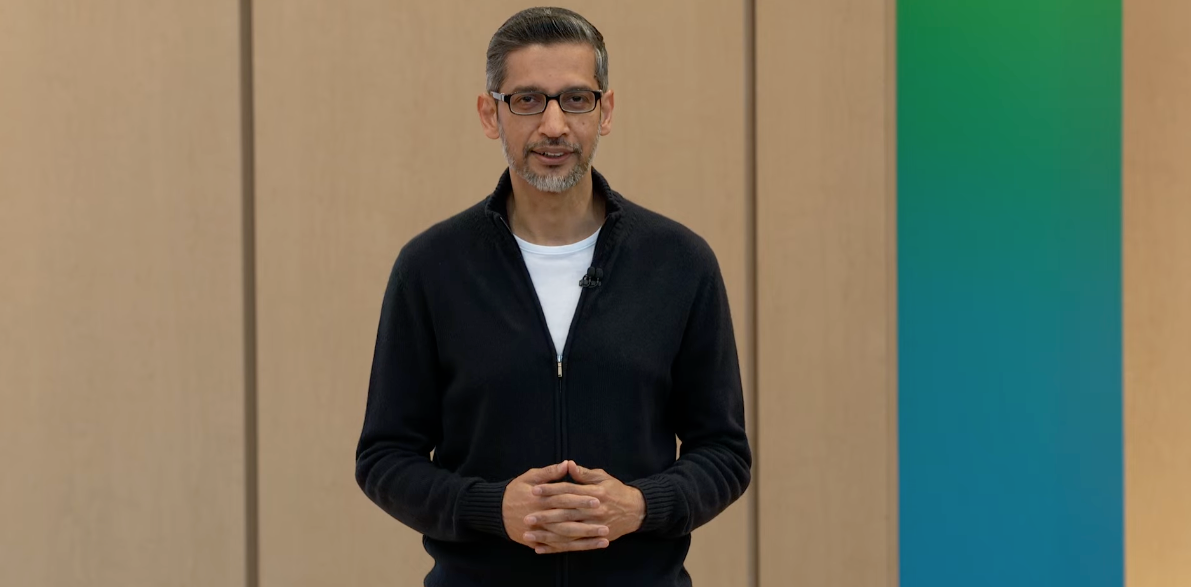
Over the weekend, Google CEO Sundar Pichai faced a small revolt when he delivered his commencement speech at Stanford University, where he earned his graduate degree in materials science and engineering. About 200 students from the graduating class reportedly walked out, while others loudly booed the tech executive.
The focus of the protest was Google’s defense ties — including Project Nimbus, the controversial $1.2 billion contract, shared with Amazon, to provide cloud and AI services to the Israeli military, as well as its relationship with the U.S. Immigration and Customs Enforcement agency.
Student signs included phrases like “ICE SPIES WITH GOOGLE AI” and “GENOCIDE RUNS ON GOOGLE,” as well as “FREE FREE PALESTINE,” a press release associated with the protest notes. Students also waved Palestinian flags and shouted “free Palestine,” online video of the protest shows.
“We are walking out because we refuse to glorify the corporations that fuel this violence and exercise our power to choose differently,” a statement associated with the protest reads.
The walkout was organized by a number of campus activist groups, including Stanford Students for Justice in Palestine, No Tech for Apartheid, and Tech for Liberation. TechCrunch reached out to Google for comment.
As the war in Gaza has raged, Google’s participation in Nimbus has drawn protests from both inside and outside of the company. In 2024, Google fired 28 workers for protesting the contract, although it has continued to suffer internal dissent over the issue since then. It was also recently criticized by the Electronic Frontier Foundation, which accused it and other companies of “choosing to look the other way” on Israel’s use of their services.
Project Nimbus also enjoys support from Amazon. Microsoft has also been criticized for its support of the Israeli military, although the company restricted the Israeli government’s use of its technology after an investigation found that its cloud services were being used to mass-surveil Palestinians.
The student protest also drew criticism from business leaders online. Vinod Khosla, the billionaire co-founder of Sun Microsystems and one of Silicon Valley’s most prominent venture capitalists, posted on X that the protest was “biased, idiotic, short-sighted and very selfish,” adding that it was selfish because the students “ignored the bottom 3 billion people on this planet that could benefit from AI and they are worried about their misinformed selfish self-interest.”
Pichai’s appearance at Stanford is part of a broader pattern. Speakers at college graduation ceremonies around the country have faced boos when they have attempted to get outgoing college students excited about AI. But rarely has student animus been as targeted as it was with Pichai, directed not at AI hype, but at the specific business decisions made by the company he leads. In general, young people seem to believe that AI is threatening their employment opportunities and may be ruining other parts of society as well.
When you purchase through links in our articles, we may earn a small commission. This doesn’t affect our editorial independence.

Robotics has permeated almost every aspect of our lives in manufacturing, healthcare, domestic help, and even entertainment. To accomplish this, it has evolved to have many forms, whether it’s robotic arms for sorting packages to microscopic ones that have all sorts of medical applications. And perhaps, one of its most compelling evolutions is how some robots are starting to look more like humans.
Through the years, scientists have developed a lot of humanoid robots. However, one recently started singing with supporting human musicians. In April 2026, the Hong Kong Baptist University (HKBU) unveiled a special performance with the humanoid robot Sophia, wherein she sang a trio of original songs alongside an orchestra. In a press release, HKBU shares that the performance was meant for “prompting the audience to consider questions of reality, existence, and embodiment.” That said, it isn’t the first time Sophia has dabbled in the arts. In 2019, Sophia also starred in a short film called SophiaWorld as well.
Developed by Hanson Robotics, CNBC reported that her features were inspired by the iconic film beauty, Audrey Hepburn, and the creator’s wife. But while initially unveiled over a decade ago, her (still) transparent skull and eerie facial expressions still continue to trigger a few people. Not to mention, Sophia was the poster child of how technology can turn evil when she said that she’ll destroy humans. But, what exactly causes us to be a little nervous around her?
There’s a term for the very visceral, uncomfortable reaction we tend to experience in the presence of humanoid robots and it’s called “uncanny valley.” In general, the science behind uncanny valley has been around for half a century, wherein researchers explored how our affinity rises and falls within a spectrum of “likeness.” Many studies fundamentally attribute the fact that we (as well as other animals) are biologically wired to be cautious around “imposters” that look like us but aren’t. As of this writing, there’s no hard and fast rule for where a given likeness falls within positive or negative affinity, so it’s not exactly quantifiable how “human” something needs to be to be considered comfortable to be around them.
However, there’s still a possibility that we can still get used to our robot brethren and co-exist more meaningfully in the future. For example, if we are exposed to enough humanoid-looking robots more frequently, it’s possible that we normalize their appearances and behaviors. In recent times, body modification is growing increasingly accessible. As the appearances of human beings evolve, so do our expectations for what is considered “normal.” For example, people can add permanent horns to their head or even have futuristic tattoos that turn their skin into biological touchpads. It’s also possible that more research can help bridge the gap between the precise factors that make a robot feel more human.

There are several components that make robots feel more human, which include gait, appearance, and ability to communicate. Technology-wise, it looks like all three are getting better each year, even if they’re done separately. Recently, the China Media Group shared a YouTube video showing humanoid robots performing impressive movements that ranged from dance, martial arts, and even backflips during its 2026 Spring Festival Gala. In the same year, other robots have proven to be formidable opponents for elite athletes from kinds of sports, including marathons and table tennis.
Around the same time, we reported how Chinese robotics company DroidUp also launched Moya, a biomimetic AI robot that was designed to be as close to a human as possible. To do this, they did everything from give her layered human-like skin, micro facial movements, and warm body temperature. While she still has a long way to go, it’s only a matter of time until technology surprises us even further, especially as developments in both appearance, movement, and artificial intelligence begin to intersect.
But until that day comes, we can all enjoy the fact that many other robotics companies are taking a different route. For now, there are a lot of little robots that you can buy from Amazon, which do everything from help you keep your plants alive, play chess or soccer with you, or teach you how to draw. While they’re not necessarily as talented as Sophia, the fact that they’re cute may help the transition.


Sony only recently revealed God of War: Laufey, but new information is already beginning to paint a clearer picture of when players may finally get to experience the next chapter in the franchise. According to industry insider NateTheHate, the latest release window he has heard points to a launch sometime during the first half of 2027. While Sony and Santa Monica Studio have not officially confirmed a date, the report suggests development may be further along than many fans expected.
The claim also aligns with recent comments from Bloomberg journalist Jason Schreier, who indicated that the lack of a release date should not be interpreted as a sign that the project is years away. Taken together, the reports suggest Sony may already have a relatively firm launch target in mind.
If the timeline holds, God of War: Laufey would arrive roughly four and a half years after God of War Ragnarök, which launched in November 2022. That would represent a shorter development cycle than many fans typically associate with modern blockbuster PlayStation games.
The biggest change in God of War: Laufey is its protagonist. For the first time, players will take control of Faye, also known as Laufey the Just. While she has been one of the most important characters in the Norse saga, her presence has largely been felt through memories, stories, and the impact of her decisions on Kratos and Atreus.
This game puts her at the center of the narrative. Early gameplay footage suggests Santa Monica Studio is building a very different combat system around Faye’s abilities. Unlike Kratos, whose fighting style revolves around brute force and powerful weapons, Faye appears to rely heavily on magic and environmental manipulation.
Players will reportedly be able to freeze rivers, reshape terrain, and use the environment itself as part of combat encounters. The result appears to be a faster and more agile combat style that distinguishes her from previous God of War protagonists.
The setting is equally intriguing. The story takes place in a mysterious realm known as the Everywhen, an afterlife dimension that appears to expand the franchise beyond the locations explored in the Norse saga.
Another detail generating excitement among fans is the possibility of new mythological influences. Rumors suggest that while Norse mythology will remain a key part of the experience, elements inspired by Egyptian mythology could also appear. If true, it could mark the beginning of a larger expansion of the God of War universe and potentially set up future entries in the franchise.
Reaction to Faye as the lead character has been mixed but largely positive. Some fans are eager to finally learn more about one of the series’ most mysterious figures. Others remain attached to Kratos and are cautious about moving away from the character who has defined the franchise for two decades.
Sony has reportedly reassured players that Kratos remains an important part of the series and is not being written out of future plans. For now, the reported first-half 2027 release window remains unofficial. However, if the timeline is accurate, fans may not have to wait long for a deeper look at the game. A PlayStation Showcase or State of Play later this year could provide the next major update.
Until then, God of War: Laufey is shaping up to be one of PlayStation’s most anticipated upcoming releases.





No Jackpot Winner as $257 Million Prize Rolls Over to $269 Million Monday Draw


Oppenheimer backs SpaceX as $70 billion retail frenzy builds


Markets Rally as SpaceX IPO Looms Amid Iran Tensions and Inflation Surge


Weekend Open Thread: Tuckernuck – Corporette.com

Zimbabwe Requires Crypto Businesses to Register Annually Under New FIU Regulations


The Ryan Gosling True Crime Thriller On Netflix That Gets Even Stranger, Stream It Now

Bangladesh beat Australia after 20 years in ODIs, register only their second win over six-time world champions | Cricket News


NanoClaw integrates JFrog registries to secure AI agent downloads


Bitget enters Argentina’s regulated crypto market through PSAV registration


This Week In Security: Microsoft On Microsoft, Register Your Domains, Linux On ARM, And FreeBSD Joins The File Cache Club
Dutton Ranch star claims they ‘didn’t see any disruption’ on set following Chad Feehan’s exit from Yellowstone spinoff fueled by Taylor Sheridan clash rumors


Politics Home | Healey Resignation Is “Colossal Failure Of Government”, Says Former Labour Defence Secretary


El Nino has formed in the Pacific and could set records, forecasters say


‘This is Seattle’s position on AI’: City Council votes unanimously to pause big new data centers

Donnie Wahlberg & More Heat Up Las Vegas at Circa’s Barry’s Downtown Prime


Thailand Ranks Second Worldwide for AI Adoption Growth, Microsoft Reports


First Time Since 1971: Australia Register Historic Low In ODI Cricket

Opendoor Ends India Operations, Fueling a Bigger Conversation About AI and Outsourcing


Belfast burns, while Met chief points finger at Iran and Russia


FBI searches office of Ohio voter registration group


You must be logged in to post a comment Login