What ties the roster together more than any title or office is a shared preoccupation with artificial intelligence, longevity, and the near future. Asked on a sign-up form to predict the future, registrants returned again and again to the same theme: that AI will reorder work, war, education, and belief within a few years. Several foresee mass labor displacement and a swing back toward unions and government programs; others predict an “AI winter,” domestic terrorism targeting data centers, criminal defendants choosing AI lawyers over public defenders, or religious revival provoked by the disruption.
“Societal degeneration,” predicted one person, “will continue to accelerate.”
Members also list talents like “funhouse construction,” accent imitation, backcountry skiing, urban exploration, and “meditative and psychedelic inquiry into the nature of reality”; one offers “compassion and existential dread,” another “dinner parties, keeping secrets, remembering birthdays.” Their book recommendations skew toward the canonical and optimization-minded, Marcus Aurelius and Milan Kundera alongside Annie Duke’s Thinking in Bets, Peter Attia’s Outlive, and, from at least one attendee, Thiel’s own Zero to One.
Dialog also plays matchmaker. Its participant form asks registrants whether they are “looking for love” and offers to include “Single Man,” “Single Woman,” or “Other” respondents in “future matchmaking.” A separate site, dating.dialog.org, hosts an app pitched as “meaningful connections for exceptional people.”
Advertisement
The form also gathers sensitive answers, including each registrant’s “political leaning,” which Dialog promises “WILL NOT be shared in the app or with other participants, ever.” That data, and the matchmaking responses, were exposed in the leak.
The records sit in Airtable, a commercial database. For each participant, Dialog logs a membership status, every retreat the person has attended, a biography, a home city, and a private access token. WIRED is not publishing the tokens, which function as login credentials, or the personalized account links that contain them.
The leaked registration list also names senior figures absent from the public directory of 113: Randy Kroszner, a former governor of the Federal Reserve who now serves on the Bank of England’s Financial Policy Committee; Hallie Hoffman, a former general counsel and acting chief of staff of the Drug Enforcement Administration; Jonathan Greenblatt, the chief executive of the Anti-Defamation League; Peter Goettler, the president of the Cato Institute; Ryan Stowers, the executive director of the Charles Koch Foundation; and Roger Myerson, a Nobel laureate economist at the University of Chicago.
It also lists a cluster of Google and Google DeepMind executives, among them Tom Lue, who leads global affairs for the company’s frontier AI division, and one working journalist, Souad Mekhennet, a national security correspondent for The Washington Post. (She is listed as running an event called “Ulysses Book Club.”)
Advertisement
The rest of the membership spans hedge fund and private equity billionaires, current and former foreign officials, network television actors, best-selling authors, and religious leaders.
One of several internal documents Dialog left exposed on the same online database that held its registration records is a guide for event moderators, urging them to remind participants that everything is “off the record” and that comments should be concise and “nonobvious.” It also coaches them to model brief introductions to “avoid status signaling” in a room full of senators, dignitaries, and tycoons.
On Wednesday morning, workers poured hydrogen peroxide into the Lincoln Memorial Reflecting Pool in Washington, DC.
The treatment is the latest attempt by the Interior Department to control an algae bloom that has turned the pool bright green, despite President Donald Trump’s costly renovation to make it “American flag blue” in time for the nation’s 250th anniversary. Hot temperatures and climate change are among the risk factors that could be driving the outbreak.
The Trump administration spent more than $14 million to update the pool ahead of celebrations across the US capital. The work was done under a no-bid contract by a company that has never worked for the federal government. (It has, however, worked on President Donald Trump’s golf courses, according to The New York Times.)
Algae began forming less than a day after the updated pool was unveiled last week. An Interior Department spokesperson told CNN that the bloom was due to “residual algae from the supply lines, which have been sitting dormant for eight weeks.”
Advertisement
One of the issues appears to be the water source. The Reflecting Pool usually draws water from the nearby Tidal Basin, which is often filled with algae. During periods with high amounts of algae, the water supply switches to municipal drinking water. The US Interior Department didn’t immediately respond to questions from WIRED about which water source is currently feeding the pool.
Another issue is the weather. High temperatures create “a perfect storm for [algae] to bloom,” says Hans Paerl, a former professor at the University of North Carolina’s Institute of Marine Sciences. Stagnant water, Pearl says, makes the problem even worse. “Lakes and reservoirs around the world—they all have this problem during this time of year.” Hotter-than-normal weather is expected to hit Washington, DC, to end the week, which could make controlling the bloom more challenging.
Paerl also points out another, related driver that the Trump administration has shown it’s not in a rush to resolve: climate change.
“It’s just getting hotter, and these blooms are expanding globally—they’re moving up into higher latitudes,” he says. “It’s clearly a temperature effect allowing them to optimize their growth.”
Advertisement
Beyond the hydrogen peroxide, the Interior Department is “deploying high-tech nanobubble ozone technology” to keep algae at bay, an agency spokesperson tells WIRED in an email.
Trump has touted the work on the pool, which includes painting it blue and fixing leaks, while also saying the company the government hired would be able to do repairs “in much less time, for much less money.”
After alleging that Apple supplier Tata contaminated farm water and threatening to close its iPhone factory, Indian regulators have now dropped the matter altogether.
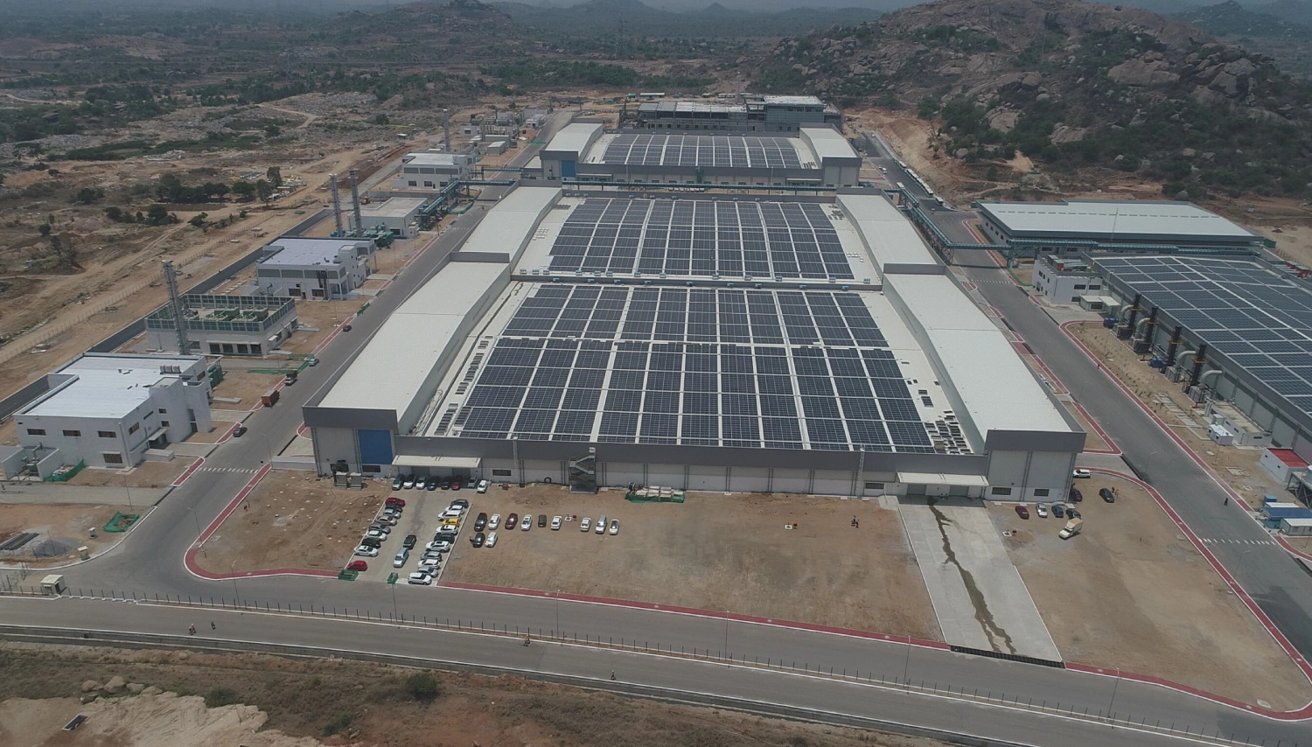
As a result of Apple’s supply chain diversification plans, which aim to reduce reliance on China, a quarter of all iPhones sold worldwide are now made in India. Tata, which manufactures iPhone backplates, is a relevant factor in the process, but its production efforts have come under scrutiny.
In 2025, farmers near Tata’s facility in Tamil Nadu complained to authorities that factory wastewater was contaminating their land and open wells. After conducting five inspections from December 2025 through May 2026, the Tamil Nadu Pollution Control Board (TNPCB) threatened to shut down Tata’s factory.
On Tuesday, however, the regulator seemingly backpedaled. In a statement to Reuters, Tata explained that it had addressed all contamination concerns and that its facility in Tamil Nadu was no longer under TNPCB scrutiny.
Advertisement
As the company “satisfactorily addressed all queries” made by the Tamil Nadu regulator, it has now “dropped any further course of action on this issue.” Neither Apple nor the TNPCB commented on the matter, though.
Initially, the Tamil Nadu Pollution Control Board argued that “groundwater in the open wells located in the adjacent agricultural lands” was contaminated. It was alleged that Tata’s rainwater harvesting pond ended up overflowing because of wastewater discharged from the factory.
Tata was reportedly made aware of the contamination on December 23, 2025, but the company did not respond.
On Saturday, however, Tata revealed it had conducted an independent sample analysis, which indicated the company was in full compliance with regulations. All parameters were reportedly within the prescribed limits.
Advertisement
Now, the company says the TNPCB has reached the same conclusion, as “the reports of its own analysis of recently collected water samples from Tata Electronics’ manufacturing facility in Hosur, Tamil Nadu, do not indicate any contamination”.
Though the regulator ultimately conceded, it’s still unclear if farm water in the Tamil Nadu region was actually contaminated.
It’s unclear how and why Tata’s findings differed from the results of the initial tests conducted by the TNPCB. Either the regulator somehow made the same mistake five times in a row, or it was pressured into dropping its threat against Tata.
Tata’s role in the Apple supply chain
While Apple’s most significant supply chain partner, Foxconn, assembles the iPhone in India, parts for the devices also come from Tata.
Advertisement
In 2024, the company entered into a $1B partnership with Pegatron, another key Apple supplier, to expand iPhone manufacturing in Tamil Nadu. The year prior, Tata purchased Wistron’s Karnataka facility.
With its Tamil Nadu plant now receiving an all-clear from regulators, Tata’s iPhone component production will continue. Its manufacturing efforts may even increase, as Apple seeks to reduce its long-standing reliance on China.
GM enters large-scale energy storage through a sodium-ion battery partnership
Sodium-ion batteries promise cheaper storage without complex cooling systems
Peak Energy supplies storage systems while GM builds sodium-ion cells
General Motors (GM) has announced a partnership with energy storage firm Peak Energy in a move marking a notable shift in the automaker’s battery strategy.
Under the agreement, GM will manufacture sodium-ion (Na-ion) battery cells for stationary energy storage systems serving utilities, data centers, and other large electricity users.
Peak Energy will then deploy those cells within its own proprietary storage systems for utilities and large power users.
Latest Videos From
Why sodium instead of lithium
Na-ion batteries share considerable chemical similarity with the lithium-ion (Li-ion) cells that dominate portable electronics and electric vehicles today. However, the comparisons largely end at that basic chemistry.
Advertisement
GM and Peak argue Na-ion systems can operate across a much wider temperature range.
This potentially eliminates the costly cooling infrastructure that grid-scale Li-ion deployments typically require.
“When you’re talking to a utility, a hyperscaler, or other power providers in need of energy storage solutions, their priority is not maximizing range or minimizing weight,” said Kurt Kelty, GM VP of battery and sustainability.
Advertisement
Sign up to the TechRadar Pro newsletter to get all the top news, opinion, features and guidance your business needs to succeed!
“It is delivering reliable, affordable power over long periods of time in real-world conditions.”
That distinction matters because sodium’s biggest weakness — lower energy density compared to lithium — translates into larger, heavier battery packs for equivalent storage capacity.
For a vehicle, that trade-off would be disqualifying, but for a stationary installation bolted to the ground, weight simply does not factor into the equation at all.
Advertisement
The manufacturing gap GM hopes to close
Peak Energy has already developed passively cooled Na-ion storage systems that the company claims reduce energy storage costs by 20% compared to Li-ion options.
Peak’s own analysis suggests the US could avoid roughly 2TW hours of wasted energy annually if Li-ion phosphate systems were replaced with its Na-ion technology.
Advertisement
Kelty argues GM’s existing expertise in cell design, prototyping, and industrialization translates directly to Na-ion manufacturing, citing what he called important architectural similarities between the two chemistries.
“We believe sodium-ion can become a defining chemistry for grid-scale energy storage in the years ahead,” Kelty added.
However, Na-ion technology still faces real obstacles before it can challenge lithium’s dominance at scale.
The manufacturing ecosystem for Na cells remains far less developed than for Li-ion.
Advertisement
Historically, sodium-ion cells have offered lower energy density than lithium-ion alternatives, requiring larger battery installations to store comparable amounts of energy.
Another challenge involves production capacity, since China currently hosts most sodium-ion battery manufacturing facilities.
GM and Peak Energy are American companies, and efficient Na-ion production may ultimately depend on Chinese manufacturing capacity — a reliance the current political climate may not permit.
At the time of writing, GM has not provided details regarding production timelines, manufacturing scale, or how quickly its partnership with Peak Energy could develop into meaningful competition within the broader energy storage industry.
After years of user demand, Instagram has rolled out a feature that allows users to further personalize their profiles’ look. The newly released Instagram Grid Reordering feature allows users to shuffle their posts on their grid without deleting or republishing them. The new feature will be quite convenient for users to highlight their best content. Alongside this innovative feature, the company has launched other creative features.
How To Reorder Your Instagram Grid?
Open the Instagram app and go to your profile page.
Long-press any post on your grid.
Tap Reorder Grid from the available options.
Drag and drop posts to their preferred positions.
Repeat the process for any other posts you want to move.
The changes will be automatically saved, and the new layout will be viewable to all who visit your profile page.
Other New Creative Features Coming to Instagram
Grid Reordering is not the only update Instagram plans to roll out. It has also unveiled other updates aimed at encouraging creativity within the app. With the new Spotify integration, users can share their favorite songs on Instagram Notes, making it easy to showcase their musical preferences.
The platform will also launch new handwritten fonts for Stories and Reels. Instagram created these fonts from handwriting samples submitted by content creators. The new fonts are scheduled to launch on June 20.
Meta Ray-Bans have been under increased public scrutiny following revelations about the facial recognition work Meta has been doing on its smart glasses. Consumers are rightly wary of products that could convert wearable tech into everyday surveillance devices.
In early June, an investigation by Wired exposed how Meta had quietly embedded code for dormant facial recognition software under the internal designation “NameTag.” The feature, if rolled out, could have allowed Meta smart glasses to biometrically identify anyone in view — in real time, without consent — using a stored digital faceprint. The code, which was never made active for users, was removed a day later.
Now, just a week after Meta removed the code, the company is facing new questions about its facial recognition software prototype. A new investigation by Wired uncovered that Meta partnered with Rank One Computing, a supplier for the US military and law enforcement agencies, for its biometric identification technology. Wired said it uncovered a software license tying the Pentagon vendor to the Meta AI app, the same one used for Meta’s smart glasses products.
The license agreement would authorize Meta to use Rank One’s military-grade facial recognition and “liveness detection,” which confirms whether someone is seeing a live person or a mask or photo. This business relationship, as Wired pointed out, “shows how thin the line has grown between the surveillance technology sold to law enforcement and the military and the consumer products sold to everyone else.”
According to Wired, Rank One Computing declined to comment on the findings. The Denver-based firm, which earns roughly 80% of its revenue from government clients, didn’t respond to a request from CNET for comment.
A Meta spokesperson told CNET that it has made no final decisions on facial recognition software for Meta Glasses, but would not confirm whether the tech giant is licensing a military-grade engine for its glasses. In an emailed statement, Meta noted: “Nothing has shipped to consumers and no final decision has been made on what to do here, if anything. If we do decide to roll something out, we will take a thoughtful approach and do so with full transparency.”
Advertisement
Meta’s facial recognition controversies
In our previous coverage, CNET noted a dangerous precedent if Meta’s glasses store biometric face data in an embedded database architecture that can compare new faceprints to existing ones. At the time, a Meta spokesperson responded that the company is “not building a central face database.”
In late 2021, under public pressure, Meta announced plans to shut down its efforts to build a central facial recognition database on the Facebook platform. By that point, the company said, about 600 million users globally had already opted into the software, which could identify faces in photos and videos for tagging people on the social media site. Meta later settled a 2024 lawsuit filed by the state of Texas over the collection of facial recognition data for $1.4 billion.
Earlier this year, the New York Times reported that Meta was developing software for its smart glasses to identify people, presumably using data from its social networks, such as Facebook and Instagram. The article cited an internal memo from Meta that said political tumult in the US would distract critics from the feature’s release.
Privacy advocacy groups such as the EFF have long spelled out the harms of facial recognition technology, as biometric-enabled public surveillance severely undermines anonymity. Facial recognition technology also has a disproportionately negative impact on marginalized groups, as it can track movement, misidentify people of color and lead to wrongful arrests. Businesses and governments can also abuse faceprints without consent, creating risks for identity theft and cybersecurity.
Snap Inc. wants its Specs to be the future of everyday computing, but between the eye-watering price and lackluster demos, we don’t see it happening.
On Tuesday, Snapchat unveiled Specs, a $2,195 pair of augmented reality glasses. The glasses, notably, are fully standalone and do not need to be tethered to a computer or smartphone to work.
They come in two sizes, too. A 47mm model that weighs 132 grams, and a 52mm model that weighs 136 grams. The lens inserts are removable and support a wide range of prescriptions.
They’re hardly thin, though. The frames are somehow thicker than the Meta glasses, meaning it’ll be quite obvious that you’re wearing something on your face.
Advertisement
The display system is Snap’s own proprietary liquid crystal on silicon technology. It has a 51-degree field of view and can display 16 million colors.
The Apple Vision Pro’s field of view is almost twice that at 100 degrees horizontally and can display a billion distinct colors. Of course, Apple Vision Pro isn’t a pair of augmented reality glasses, either.
Image credit: Snap
According to Snap, Specs feel like a 24-inch desktop monitor when you’re working or a 115-inch home cinema screen placed 10 feet away when you’re watching a movie.
Advertisement
Snap’s press release says the goal isn’t to create augmented content for content’s sake, but rather to make computing useful at the moment.
That’s a bit of a contrast to the tech demos they displayed during the official unveiling stream. Nearly every single thing showcased was some sort of game or novel toy use.
Of course, those things also have a higher visual impact than, say, using the glasses to measure a wall.
Snap says that developers have already built hundreds of Lenses (their word for apps). It also seems to be adamant that, rather than showing existing software, the benefit of AR comes from unique “experiences,” which is one way to say that Snap has no plans on making Specs deeply integrate with your phone or computer.
Advertisement
Specs features four hours of mixed-use battery life, which includes audio and video playback, Lenses, AI assistance, Bluetooth notifications, and more. The included charging case will provide up to four additional charges, extending the life to 20 hours of mixed use.
Whether or not Specs will be a hit remains to be seen. However, at nearly $2,200 for what is, functionally, a toy, it seems highly likely there’s no space for it in the current market.
Through research, innovation and determination, these six women exemplify success in the Industry 4.0 space.
If you are in an Industry 4.0 career then you know just how quickly the sector can transform and change. Some of the ways people in this area stay up to date include making an effort to attend industry events, engaging with learning opportunities via online courses, shadowing more experienced colleagues, and carrying out personal research and projects to advance skill.
Another useful and highly effective method of staying clued in is following the careers of talented, skilled and notable professionals who have played a role in making the ecosystem what it is today through their contributions and insights.
If you intend to move into an Industry 4.0 role, or want to better understand the potential of committing to a career in this area, then make sure you are following the careers of these six women.
Advertisement
Jennifer Kelly
With more than 20 years of experience as an international director and senior manager across a range of multinational companies and sectors, Jennifer Kelly is the co-founder and COO of WrxFlo, an Irish SaaS platform tailored for manufacturing and logistics operations.
She has significant experience working within the global supply chain space, with large teams, top multinationals and SMEs. She has worked globally throughout Europe and the US on acquisitions and on multi-complex projects and has significant insight into the key challenges and opportunities that often arise in the industry.
Cynthia Breazeal
Considered by many to be a pioneer of social robotics and human-robot interaction, Cynthia Breazeal is a professor of media arts and sciences at Massachusetts Institute of Technology (MIT) and the founder and director of the Personal Robots group at MIT’s Media Lab. She is the dean for digital learning at MIT, with vast experience leveraging emerging digital technologies, business, research and strategic initiatives.
With a deep interest in AI literacy, she is the founding director of MIT’s Initiative on Responsible AI for Social Empowerment and Education, which is a research and outreach effort that aims to improve opportunities and education in AI for young people and adults in the workplace. Her ‘Day of AI’ programme has brought AI literacy education to more than 1m students in 170 countries. She also co-founded the consumer social robotics company Jibo, where she served as chief scientist and chief experience officer.
Advertisement
The recipient of multiple commendations for her work, she is also an author, has sat on several high-profile boards and has vast experience speaking at key industry events such as TED, the World Economic Forum, the UN, SXSW, CES and top academic conferences.
Dr Sabina Jeschke
Dr Sabina Jeschke is the CEO of KI Park, a Berlin-based organisation that aims to accelerate AI innovation across Germany and wider Europe, with the larger goal of making the continent a global leader in AI by 2030.
Jeschke’s primary focus is in the areas of highly innovative technologies such as AI, digital twins, 5G and 6G applications and quantum computing software. She is a consultant and a non-executive board member for several organisations supporting companies in their digital transformation. She also develops automation strategies for robots and cobots, in a landscape that is changing globally.
Jeschke has been recognised by her peers and been the recipient of a number of commendations and awards, including from the German Informatics Society and the International Society for Engineering Education.
Advertisement
Dr Tara McGuire
An emerging figure in the Industry 4.0 space, Dr Tara McGuire is a postdoctoral fellow at University College Dublin (UCD).
She was actively involved with a team of researchers from the RCSI University of Medicine and Health Sciences that recently developed a new 3D implant solution to help heal spinal cord injuries. At the time, McGuire was a member of RCSI’s Tissue Engineering Research Group.
Currently, as a postdoctoral researcher in UCD’s neuromuscular systems and neural engineering group, her work focuses on the computational modelling of deep brain stimulation for Parkinson’s disease, with the goal of creating better simulations and treatment strategies. McGuire’s work has led to high-impact publications in the bioinformatics and bioengineering spaces and she has been recognised for her insights at both national and international conferences.
Bronagh Riordan
An AI and data partner at EY, Bronagh Riordan helps deliver data, analytical and AI-powered strategies and solutions to help users meet global business needs. Before joining the organisation, she held senior roles across the industry at companies such as Primark, Evanta and Deutsche Bank, where she was largely responsible for developing strategies, transforming data, analytics and AI capabilities and delivering impactful technology products.
Advertisement
In 2023 and 2024, she was recognised as a Global Data Power Woman, which acknowledges the recipient as a successful woman holding a leadership position in a prominent global organisation. She also featured in the Top 100 Influential Women in Irish Tech in 2025 and was named the Analytics & AI Data Leader of the Year in 2023.
Riordan regularly speaks at industry events and is particularly passionate about serving as a role model for other women in the space.
In 2022, she became the first female board chair of any technology centre in Ireland after being appointed to the Industry Steering Board at CeADAR – Ireland’s Centre for Applied AI. She is also a member of the Government of Ireland’s Artificial Intelligence Advisory council.
Emma McKenna
Emma McKenna is the head of sustainable manufacturing at the Advanced Manufacturing Innovation Centre.
Advertisement
She has a wide range of experience working within the public and private sectors with the goal of accelerating the shift to a circular economy, working towards net zero and tackling real-world challenges to achieve a sustainable and inclusive future.
Her previous experience includes work as the head of net zero at Innovate UK Business Connect, a circular economy business adviser at ReLondon and a sustainable cities engagement project officer for the Peterborough Environment City Trust. In 2025 McKenna, alongside colleague Dr Lauren McGarry, was recognised at the 2025 Northern Ireland Women in Tech Awards for her work and leadership in manufacturing innovation.
Don’t miss out on the knowledge you need to succeed. Sign up for the Daily Brief, Silicon Republic’s digest of need-to-know sci-tech news.
An e-reader and tablet hybrid that solves a couple of issues of Kindles and their contemporaries, while introducing a few issues of its own.
Far better motion than E Ink ereaders
Can run (almost) any Android app
Neat anti-reflective glass screen
Low-contrast display
Fairly weak processor
Relatively low screen resolution
Key Features
Introduction
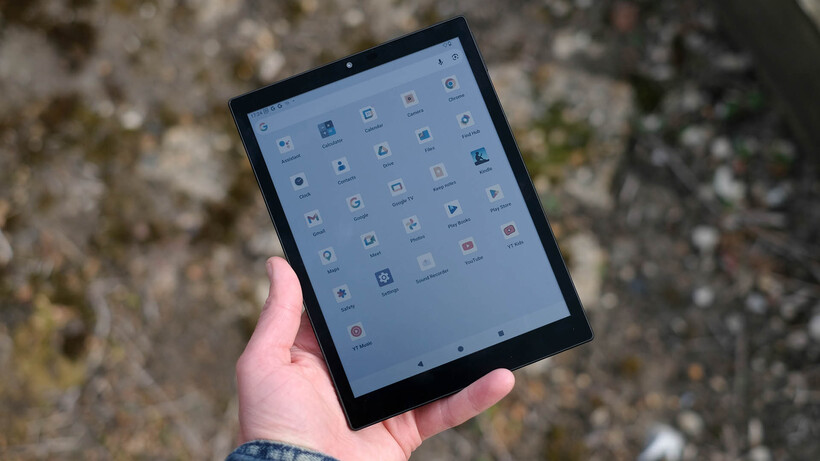
The Hannspree Lumo is a different kind of reader. At a glance, it looks like a larger Amazon Kindle Colorsoft, but it uses entirely different screen technology.
Advertisement
Instead of E Ink, found in most conventional readers, the Hannspree Lumo uses a kind of LCD with some of E Ink’s properties. It uses a front light rather than an intense backlight, so it’s easier on your eyes, and since it doesn’t have a clunky “flash” screen refresh, it handles motion well too.
Best of all worlds? Not quite, as there are significant compromises too. Sharpness and contrast are actually significantly worse than a Kindle’s — or a rival Boox or Kobo reader — which has a real impact on the good old reading experience.
Advertisement
As such, it’s best to think of this as an unusual tablet-reader hybrid. It limits the Hannspree Lumo’s appeal, but certainly doesn’t get rid of it entirely.
Advertisement
Design
Matte glass screen
Aluminium body
Included case
The Hannspree Lumo is larger than most ereaders, and uses somewhat more upmarket materials than plenty of them too. This is a 7.8-inch screen device, making it potentially a better fit for graphic novels than a Kindle Paperwhite or Colorsoft.
Image Credit (Trusted Reviews)
It also has a metal casing and a glass screen. The vast majority of ereaders have plastic bodies and plastic screens — the old Kindle Voyage is an outlier here, as it had a lovely etched-glass display. But presumably that was a bit too costly, as it was certainly more scratch-resistant than plastic.
Advertisement
Image Credit (Trusted Reviews)
As such, the Hannspree Lumo can come across as much like a small tablet as an e-reader. However, I do find its body a little on the sharp side. E-readers tend to have rounded sides and corners for a reason — they are more comfortable to hold for extended periods. Hannspree does offer a case, though, which will solve that problem. It’s even included.
And for all its glass-and-metal glitz, the Hannspree Lumo has no water-resistance rating, so it should be used with caution in the bath or by the poolside.
Image Credit (Trusted Reviews)
Screen
LCD screen
60Hz refresh
Front light
The display is the most interesting part of the Hannspree Lumo. It’s a 7.8-inch “sunlight readable” LCD, recreating one of the top features of E Ink tech, that direct sunlight makes it clearer. Ambient light is not something a backlight has to fight against, which is a win for battery life and for making the screen less of an eye-strainer.
Advertisement
This is combined with radically better motion handling than any E Ink ereader. In an E Ink screen, black and white microcapsules are pulled to the front of the screen to create the image, which leaves ghosting residue until the screen is “flashed” to reset it.
Advertisement
Image Credit (Trusted Reviews)
There’s no such ghosting in the Hannspree Lumo, and its motion appears far smoother and more responsive. It’s a better e-reader for video than one of the Android-based Boox models that can also, for example, run YouTube.
My issue is that I don’t find the Hannspree Lumo nearly as good as a classic Kindle Paperwhite for actual reading. 1024 x 768 pixels spread over 7.8 inches leads to a pixel density of 164ppi, where a Kindle Paperwhite has a pixel density of 300ppi.
Image Credit (Trusted Reviews)
The small fonts of novels here appear quite soft and pixellated, and I find the lower pixel density look of the Hannspree Lumo’s LCD more distracting than that of an old low-res E Ink reader.
Advertisement
There’s more too. Even in a bright environment, I still feel I need to use the Hannspree Lumo front light to boost visibility as contrast is quite low and the “white” of the page is quite grey — even more so than the recent colour E Ink readers that sacrifice contrast for colour. Doing so also lightens up the screen’s blacks, so there’s no way to make contrast appear that satisfying.
I don’t love reading books on the Hannspree Lumo. And that is clearly a bit of a problem.
Advertisement
Image Credit (Trusted Reviews)
As in the colour E Ink crowd, like the Kindle Colorsoft, colour depth and punch are quite limited too, although the number of colours this can display is an order of magnitude greater. Current colour E Ink tech can reproduce around 4000 colours, whereas the Hannspree Lumo can recreate 16.7 million, which will lead to far better-looking gradients and transitions.
One of the key things I wanted to try first-hand with the Hannspree Lumo was comics and graphic novels. I think most ereaders are far too small to do the job well. The same is really true here for larger format comics that fit a lot of panels and text onto a page, but there’s one key difference.
E Ink ereaders make flicking and zooming around pages feel bad, while the Hannspree Lumo does not. The Lumo makes a pretty good comic book reader as a result.
Advertisement
Performance and software
Plain Android 14 software
(Almost) no non-Google apps preinstalled
Low-end MediaTek G99 processor
Hannspree has put almost comically little effort into customising the Lumo’s software. But I don’t actually think that’s necessarily a problem.
The Hannspree Lumo runs a plain version of Android 14, and fresh out of the box, it only has Google apps preinstalled, plus a basic camera app and sound recorder. There’s no Hannspree ebook reader app or app store. It’s up to you to head into Google Play and find your own e-reader interface.
Advertisement
Image Credit (Trusted Reviews)
I’ve mostly used the Amazon Kindle app during testing, but you could just as easily use Libby, Kobo, or a plain e-reader app geared up to let you use your own digital files.
I wouldn’t like to see a super-standard Android interface in an E Ink reader as the display tech’s clunky motion calls for something simplified. But here? The Hannspree Lumo basically feels like a tablet so plain Android fits perfectly.
Advertisement
It doesn’t have a whole heap of power, though. The Hannspree Lumo has a MediaTek G99 processor, which was released back in 2022. It has 64GB storage and a lowly 4GB RAM.
Image Credit (Trusted Reviews)
It scores just 2006 points in Geekbench 6, equivalent to flagship Android device performance from 2018. A Lumo is still a bunch more powerful than a Kindle Paperwhite, but it’s also based around software that presumes such greater performance.
For fun, I tried out Fortnite on the Hannspree Lumo. It managed a frame about every five seconds initially. Toning down the visuals as much as possible didn’t really help much, and not only do matches take an eternity to load, but the game also crashes to the home screen before you get into gameplay more often than not.
Advertisement
The Lumo feels just fine for the basics, but come with realistic expectations.
Cameras, speakers and battery life
Modest dual 5/8MP cameras
Optional stylus
Single speaker
Advertisement
The Hannspree Lumo has most of the features usually associated with tablets, including plenty generally missing from ereaders. There are front and rear cameras, with 5MP and 8MP sensors.
Neither one is particularly good, but either can capture serviceable photos with one annoying caveat. The front camera lacks autofocus, and the lens’s focal plane means you have to hold the Hannspree Lumo at full arm’s length, or your face will appear slightly out of focus.
Do that, though, and the results can be pretty respectable given this is a device that, let’s be honest, doesn’t really require a camera.
Advertisement
Image Credit (Trusted Reviews)
The higher expectations of rear cameras mean it’s this higher-spec 8MP that actually disappoints. Even when shooting in daylight, the detail looks fuzzy up close, there are not masses of it, and image integrity drops off dramatically in the corners of the frame. The Hannspree Lumo doesn’t need any better cameras than it has, though, and you need to transfer the images to another device to see them at their best anyway.
Similarly, the Hannspree Lumo’s speaker array isn’t great by tablet standards either. There’s a single speaker on the right side when the Lumo is held upright. It can’t produce any bass, and the treble is a bit insistent, but it will do the job for the occasional YouTube video. For longer-term audiobook listening, I’d consider using wireless headphones or a Bluetooth speaker, which the Hannspree Lumo can stream to.
Advertisement
And battery life? Hannspree claims the relatively small 3000mAh battery lasts up to 6.5 hours of use.
Image Credit (Trusted Reviews)
I tried playing a video with the front night at a very low setting, then at max. At the low setting, the Lumo can last up to around 10 hours. And even at max brightness, 93 minutes of video playback only took 18 per cent off the battery, suggesting stamina of up to 8.5 hours rather than 6.5. A conservative battery estimate is a rarity these days.
Image Credit (Trusted Reviews)
You can also get an active stylus for the Hannspree Lumo, available for a very reasonable £30-ish. It has a rechargeable battery and a replaceable nib, just like the more expensive digital pens from the bigger brands. It’s a fully pressure-sensitive pen with tilt sensing too, making it a solid option for digital artwork. It feels perfectly good in use.
Advertisement
Advertisement
Should you buy it?
You want an e-reader with far better motion handling
If you want the low eye strain look of an e-reader but can’t put up with the jerky, clunky-looking motion of E Ink, a Lumo is one of the better options out there right now. Great for scrolling through large PDFs.
Advertisement
You want a peak reading experience
We prefer classic E Ink readers for actual reading of novels, as they provide better contrast, higher sharpness and an all-round clearer representation of small fonts.
Advertisement
Final Thoughts
The Hannspree Lumo is an interesting tablet that doesn’t quite achieve its goal of merging the best bits of tablets and ereaders, like those in the Amazon Kindle range.
Yes, it does have a screen that can draw on ambient light and dramatically outclasses Kindles in motion and refresh. But few, if any, are going to argue that the Hannspree Lumo is better for reading plain old novels than a classic ereader.
Advertisement
There’s a decent argument, however, that its superior motion, navigation, and colour fidelity make the Hannspree Lumo a solid option for those more interested in comics and PDFs than in novels. For more options, take a look at our selection of the best E Ink tablets.
How We Test
We test every tablet we review thoroughly. We use industry-standard tests to compare features properly and we use the phone as our main device over the review period. We’ll always tell you what we find and we never, ever, accept money to review a product.
Used as main E Ink tablet for over a week
Read multiple books
Taken a lot of notes
FAQs
Is the Hannspree Lumo E Ink?
The tablet uses an LCD screen, not an E Ink one.
Advertisement
Is the Hannspree Lumo waterproof?
It has no water resistance rating, so it should be used carefully around liquids.
Aerodynamics are complicated, even at the level of pickup trucks. At first glance, it seems pretty straightforward — the less “stuff” is fighting the wind, the more slippery the vehicle becomes and, thus, the more efficient it is at highway speeds. Automakers have taken this into consideration since the early days of motoring, with today’s cars being so aero-conscious that many don’t even have traditional door handles anymore. It’s a little trickier with pickup trucks, though, because of that cargo-carrying bed. So how do you, as the owner, squeeze out some extra MPG?
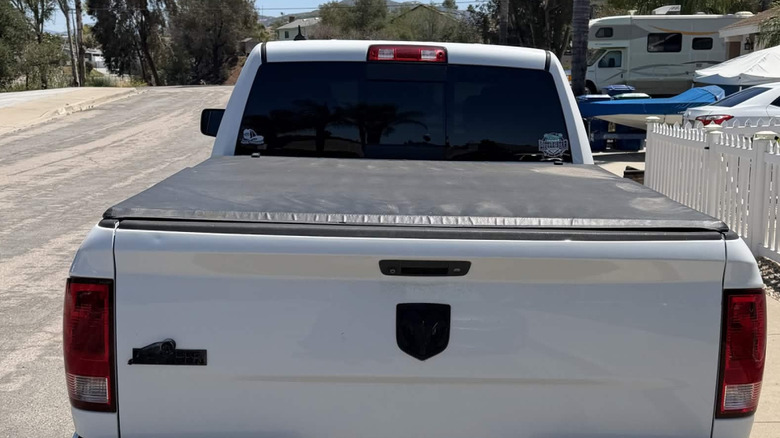
One might assume that fitting something over the bed, whether it be a tonneau cover or bed cap, would improve fuel efficiency, and in a lot of cases that’s true. The key phrase here being “a lot of cases.” Covering the bed changes the aerodynamic profile of a pickup truck; that much is obvious. Unlike driving with the tailgate down, which is commonly accepted as being a negative, a tonneau cover or bed cap allows the air somewhere to “touch down” and flow off the back. Aerodynamics dictate that stagnant air in the back of a pickup bed creates drag and tries to suck the vehicle backwards. Tonneau covers keep the air from entering the bed, thus eliminating that void.
Except, that’s not how it works. It actually depends on what kind of bed cover you use, versus whether you have one or not. Believe it or not, in some cases, it’s actually better to run without a bed cover.
Advertisement
The aerodynamics of tonneau covers
Beekeepx/Getty Images
Most trucks offer a wide variety of covers, even for trucks with bed rails, so we’re not spoiled for choice here. But which cover you select makes a difference; there are three main types of tonneau cover that we’ll look at. There are lightweight, flexible coverings like those made of vinyl, rigid structures made of fiberglass or aluminum, and fastback-style covers. The latter group are those slanted covers that look like the back of a Humvee or a Cybertruck, a relatively recent innovation that’s been patented by Ram but is also available as an aftermarket add-on.
The actual percentages of fuel savings one could expect from a tonneau cover vary from study to study, with one verified by Motor Trend claiming a 4 to 10 percent boost in economy with a hard cover on a third-gen Dodge Ram. Moreover, their test truck was faster with the cover on than off. A finding by Consumer Reports contradicts this, however, with a similarly shaped fourth-gen Ram actually getting worse MPG with a soft cover fitted, dropping from 22.3 to 21.4.
Advertisement
The point is to prevent the air from stagnating and pulling the truck back like a parachute, so providing a surface for it to run along is ideal. That’s why the more aerodynamic slanted cover provides the greatest drag reduction while flexible covers offer the least, as you can see in a recent study at Research Gate. This is further substantiated by a 2007 study analyzing 13 different cover types on yet another Dodge Ram, to keep the data consistent.
Advertisement
How this affects your real-world MPG
alexgo.photography/Shutterstock
Obviously, we’re not all driving around at the same speed or with the same trucks, so comparing one result to another in the real world is more case-by-case. In other words (no pun intended) your mileage may vary. Online discussion forums and long-term reviews often praise the tonneau cover and/or bed cap for its ability to provide substantial benefits to your MPG (along with weatherproofing your cargo), but there are a few factors to consider.
First and foremost, these benefits will only apply at highway speeds. Drag increases with velocity-squared, so the faster you’re going, the more effective it’ll be. At low speeds, especially with bed caps or larger rigid covers over full-size beds, you’ll be weighing down your truck; in this case, something like a flexible cover would work best. Just make sure to properly adjust the tension; you want the vinyl to be as tight as possible to prevent the cover from flapping like a sail and ruining the aerodynamic benefits.
Next, if you want the most improvements, you want a nice, gentle curve from the roof to the tailgate; that’s why big rigs have those devices on the back of trailers, to reduce the wake they leave and, thus, improve efficiency. That’s why a slanted bed cover is so effective, but again, this comes at the penalty of weight. While no studies exist (yet) concerning these weight penalties versus highway gains, the bottom line is this: if you do more highway driving, invest in even a basic tonneau cover. If you do city driving, get something lightweight to avoid dragging around unnecessary mass.
Want to shift your databases from one server to another? But don’t know how? Don’t worry! In this blog, you will learn what is server migration, its benefits, and its importance. Along with this, I’ll show you the steps used for server migration and the tools that will help you smooth this process. Let’s start!
Server Migration Meaning
You can understand the meaning of server migration by simply separating the words. Here, server means browser, and migration means shifting; they together become shifting from one server to another.
In simple words, the process of moving files, applications, emails, and databases from one server to another is called server migration. It is like changing an older mobile phone with a newer one. It is the same as if you transfer all your photos, videos, and documents to the new mobile. However, for server migration, it is not just about copying and pasting the files, but it is used for transferring complete database, which includes user accounts, configuration files, and security settings. Server Migration aims to switch to a new server with minimal or no interruption for a smooth transfer process.
Benefits of Server Migration
It is like shifting from an older house to a newer one with updated facilities. Server migration helps in adapting to new technologies and ensures the smooth running of the functions. Let me tell you some of the key benefits of server migration.
Performance enhancement: As the older server slows over time, upgrading to a newer version will help increase performance. This results in faster app loading and more memory.
Cost reduction: The old server needs regular maintenance and repair, which increases the investment cost. New cloud servers like Google Cloud and AWS provide you with the facility of paying only for what you use. It cuts infrastructure costs by up to 40%.
Increased security: The updated server provides better security than the older ones. It helps with data encryption, virus scanning, and firewalls. It reduced the risk of hacking and data loss.
Updated technology: The new version of the servers provides automatic backups and quick recovery of the data, as older versions crash more often than the latest versions.
Smarter maintenance: Many new providers come with automated systems that don’t need frequent updates. This means less time wasted on updating and fixing the old hardware problems.
Improve Business value: These new servers are made based on the newer government rules and regulations. It helps in meeting the government rules and policies.
Challenges in Migrating the Server
Migrating the server looks easy, but it is a challenging process. These are some of the biggest and most frequent challenges faced by the users.
Website’s Downtime: When all the database and security configurations are being moved from one server to another, it slows down the website. This results in a website or app crash. For e-commerce businesses, a short downtime can cause customer and financial loss.
Data Loss: While moving a large set of data, records, and documents, some of the data and information can get damaged or lost. It is very risky for customers or finance-based companies.
Compatibility Issue: One software, website, or application that was working perfectly on the older server may not be compatible with the newer version.
Expenses: You may need to pay more than expected based on the data transfer fees, expert help, time required, and tools.
Complexity: Shifting everything without damaging any connection is very risky, as the server is made using many connected parts like databases, user logins, security, and emails.
Security: While migrating, hackers can steal your data if you are not using proper protection and security encryption.
Insufficient Planning: Many people waste huge amounts of money because of mistakes and delays. A person needs to understand the time, money, and other expertise required to execute a proper implementation.
Testing: Once everything is completed, the final step required is testing. This is needed to find and fix the issues for the smoother functioning of the server.
What is the Server Migration Process? Step-by-Step
Let’s understand the step-by-step process of server migration.
Step 1: Planning and assessing
Cross-check everything present on your older server, like websites, databases, emails, files, and apps.
Choose what features you are looking for.
The best time to migrate is usually in the evening or on weekends.
Make a list of the estimated time and possible risks that you can face.
Step 2: Backup
Complete your backup on your old server. This is an important step so that you can restore everything without leaving anything behind.
Step 3: Prepare your new server
Purchase and create a new server on the cloud.
Install the plugin software that will help in configuring your server.
Customize the settings according to the operating system, software, and security settings.
Take an overview of the rules, storage, and networking.
Step 4: Transfer the data
Copy all the database, files, applications, and security settings from the old server.
Use tools like Robocopy and rsync for migrating the data. This process can take time depending on your file size.
Step 5: Migration and configuration
Shift your certificates, user accounts, websites, and apps to the new server.
Update the database based on your new location.
Step 6: Testing
Test your new server by running your app or website.
Check if everything is done as you wanted. Run a speed test, login, emails, payments, and other additional features.
Fix any problems that have occurred before starting to operate the server.
Step 7: Go live
Switch the traffic from the old server to the new one.
Use a DNS setting or a load balancer for this. Focus on minimizing the server downtime.
Using these steps effectively and efficiently will help you to onboard to the new server, that too without any problem and data loss.
Server Migration Checklist
Here, in this section, I have mentioned the checklist for every stage of server migration. Check before proceeding.
Phase 1: Planning (Before Migration)
Make a list of all the data, websites, files, emails, applications, and more from the old server.
Decide on the new server. It can be Google Cloud, AWS, Azure, and more.
Check the functionality and compatibility, such as the operating system, version, and hardware requirements.
Take a full backup of the server and test the backup for any flaws.
Set up the new server
Phase 2: Migration and Configuration (During Migration)
Transfer the files, databases, and security settings.
Sync after the last changes.
Phase 3: Testing
Test apps and websites on the new server.
Check the login process, payment, emails, and file loading speed.
Test the speed and performance of the new server.
Most important thing! Check the security system of the server.
Phase 4: Live
Update your old DNS to point to your new server for the customers.
Send a notification to the team and the customer about the shift.
Phase 5: Post Migration
Monitor your website for the first 24 hours.
Check for any issues or missing data.
Test the speed and resources.
Update details like passwords, security, and documents.
Teach your team and customers to use the new server.
Turn off the old server after 5-7 days of moving to another server.
Server Migration Tools
There are many server migration tools available in the market. I have mentioned some of the best ones for your website or application.
AWS Application Migration Service (AWS MGN)
It is an Amazon tool for automatically transferring the migration of the server and application to AWS. It is easier for beginners. AWS works by regularly replicating the servers. It also helps in running the server efficiently on an AWS server.
Advertisement
Features of AWS
Built-in testing skills
Support on both Windows and Linux
Replication of the server data
Lesser cutover
Pricing
It provides both free and paid plans. You can enjoy 30 days free trial before getting charged $30 per month.
Pros
Cons
It is useful for medium to large-scale migration.
Expensive for the smaller teams.
Helps in transferring data from one server to another with ease.
Need technical experts to configure.
Users appreciated its database for complicated applications and websites.
A large volume of data transfer can increase the cost
Azure Migrate
It is Microsoft’s platform, which is used for assessing, discovering, and migrating the server. It works best for firms using Microsoft or Windows technologies. Some of its key features include:
Enable depending mapping
Provides .NET support
Makes assessment reports
Has strong Windows support
Pricing
Azure provides various plans. Its basic plan is free forever. You need to request a quote to know the exact price. You can select a customized plan, for which you can pay according to your usage.
Pros
Cons
It offers free server migration.
Less effective for Linux and PHP-based apps.
Best for Windows and Microsoft users.
Its interface is technical for a smaller business and requires developer guidance.
Pricing based on your usage is the best feature that reduces the cost if not used.
Sometimes lags behind its competitors because of its slow replication.
Google Cloud Migrate to Virtual Machines
It is a simple and easy-to-use tool that offers free server migration. It is a lift-and-shift tool that enables you to shift to another server with minimal changes to your application. These are some of the key features of Google Cloud Migrate:
It provides agentless migration.
Comes with built-in testing, so you can test before going live.
Provides pre-migration and post-migration features.
Pricing
Google Cloud Migrate provides 300 credits for 90 days; after this, you will be charged. Its migration service is completely free, but you need to pay the fees for the additional resources you avail.
Pros
Cons
It is cost-effective as no money is required for migration if no additional resources are used.
Limited automation features are available.
Comes with a simple and easy-to-use interface.
Best for standard VM workload. Need to hire more for extra manual tasks.
90-day free offers with $300 free credit are useful for startups and small businesses.
Conclusion
In this blog, I have given a detailed overview of your question: What is server migration? Here, we also learn about some of the best affordable and free tools for server migration with their unique features, pros, and cons. Want more information about the tools? Comment below.
Server migration costs range from $1,000 to up to $10,000 for a website. However, there are several free tools that you can try to get an affordable price range.
What is server migration?
It is a simple process in which a business or organization transfers its data, emails, documents, and security settings to another server to give a smoother experience to its customers.




























































You must be logged in to post a comment Login