

Business
Astronics Corporation (ATRO) Presents at Truist Securities Industrials and Services Conference 2026 – Slideshow




Oxford Metrics reports revenue growth amid narrowed losses

The supermarket chain Lidl owns and operates The Middle Ale, a ‘world first’ for the brand.

According to a PTI report, an inter-ministerial panel has given in-principle approval to the deal, and MeitY will clear it after due process. The deal for a joint venture was signed between the two companies in December 2024, in which Dixon Technologies will be the majority shareholder with a 51% stake.
The joint venture will focus on manufacturing electronic devices, including smartphones. Vivo’s manufacturing unit in Noida is likely to become part of the proposed JV, which will reduce the company’s risk exposure to India.
The facility will undertake part of Vivo’s original equipment manufacturing (OEM) orders for smartphones in India. It will also engage in the OEM business of various electronic products for other brands.
Also read: Beyond Vedanta: The other Anil Agarwal stock that just exploded 500% on AI boom

Currently, Vivo enjoys a dominant position in the Indian smartphone market. The Chinese smartphone company is estimated to have sold 3.5 crore handsets in 2025, while Dixon’s mobile phone production volume was around 3.2 crore units.
Last week, the company’s subsidiary, Dixon Electroconnect, entered into an agreement with Gemtek Technology to form a joint venture in India for manufacturing and supplying optical transceivers and other telecom products.According to the company, the proposed venture will manufacture and supply Optical Transceiver-SFP (Small Form-Factor Pluggable), BOSA (Bidirectional Optical Subassembly), and other telecom products that the parties mutually agree upon.
The proposed transaction will use a mutually agreed structure where Dixon Technologies will hold 60% of Dixon Electroconnect’s total paid-up share capital, while Gemtek will hold the remaining 40% stake upon completion.
Read more: AI boom hands HFCL investors nearly 200% returns in just 6 months. Overheated or undervalued?
Dixon Tech Q4 snapshot
Dixon Technologies reported a consolidated net profit of Rs 256 crore in the March-ended quarter versus Rs 401 crore in the year-ago period, implying a 36% fall. The profit after tax (PAT) was attributable to the company’s owners. The company’s revenue from operations in Q4FY26 was up 2% to Rs 10,511 crore versus Rs 10,293 crore posted in the corresponding quarter of the previous financial year.
Meanwhile, the company’s total income grew 3% year-on-year to Rs 10,595 crore versus Rs 10,304 crore in Q4FY25. It included other income of Rs 84 crore compared to Rs 11 crore in the year-ago period.
Dixon Tech shares are down 10% in the last 1 year and about 20% in the last 1 month.
(Disclaimer: Recommendations, suggestions, views and opinions given by the experts are their own. These do not represent the views of The Economic Times)

Transport costs were rising the fastest, while the cost of food and non-alcoholic beverages fell slightly.

Khanchit Khirisutchalual/iStock via Getty Images

Fund performance
■ Columbia Total Return Bond Fund Institutional Class shares returned –0.05% for the quarter ended March 31, 2026.
■ The Bloomberg U.S. Aggregate Bond Index returned –0.05% for the same period.
Market

Why Fox Stock Is Tumbling After $22 Billion Roku Deal

Blue Bird: Fleet Replacement Tailwinds Negated By Outsized Breakout – Downgrade Hold

Earnings Strength Fuels Optimism
Mehta believes the market’s recent resilience has been driven by earnings growth, particularly among mid- and small-cap companies, even as foreign institutional investors remained largely absent.
“The market has gone through the grind of price correction, time correction, and valuation consolidation. The market has always been a slave of earnings, and earnings came out very good across large-caps, mid-caps, and small-caps.”
He added that improving macroeconomic conditions and lower crude oil prices are turning previous headwinds into potential tailwinds.
“There are green shoots showing right now. Looking at macros and earnings, the risk-reward is quite positive, especially for investors with a one- to two-year horizon.”
Power Ancillaries Preferred Over Direct Utilities
While remaining positive on the power sector, Mehta prefers companies that support the broader energy ecosystem rather than power producers themselves.He highlighted opportunities in power automation, transmission infrastructure, and renewable energy-related businesses that stand to benefit from India’s growing electricity demand and infrastructure spending.
“We have been advocates of power and power ancillaries. Companies involved in HVDC, power automation, and renewable infrastructure could benefit significantly from the ongoing capex cycle.”
He also sees value in engineering and manufacturing firms supplying equipment and services to larger power infrastructure players.
“The ancillary theme is the proxy play. The entire capex, power, and infrastructure theme should do very well from here on.”
Positive on HCLTech Deal, Cautious on IT
Mehta welcomed HCLTech’s partnership with Sarvam but maintained his cautious view on the broader IT services sector.
“This tie-up augurs very well. However, we have generally been negative on the IT space for the last three years and continue to hold that stand.”
While acknowledging the possibility of moderate returns from frontline IT stocks, he believes better opportunities exist elsewhere.
“There can be 10-12% CAGR returns from large IT companies, but investors seeking alpha may find better opportunities in financials, capex-related businesses, and consumption plays.”
He noted that IT companies continue to face structural challenges despite sharp corrections in valuations.
“The long term is about how these companies adapt to digitisation and AI. That is something the Street wants to monitor closely.”
Constructive Outlook
With earnings remaining healthy and macro conditions improving, Mehta believes Indian equities are well positioned for the medium term. His preferred themes remain power infrastructure, capital expenditure plays, and financials, sectors that he expects to benefit from India’s ongoing economic and investment cycle.

Credo: The AI Connectivity Winner Emerges
Business
Netflix Stock Falls 3.5% After Fox Wins $22 Billion Roku Deal in Streaming Consolidation Battle
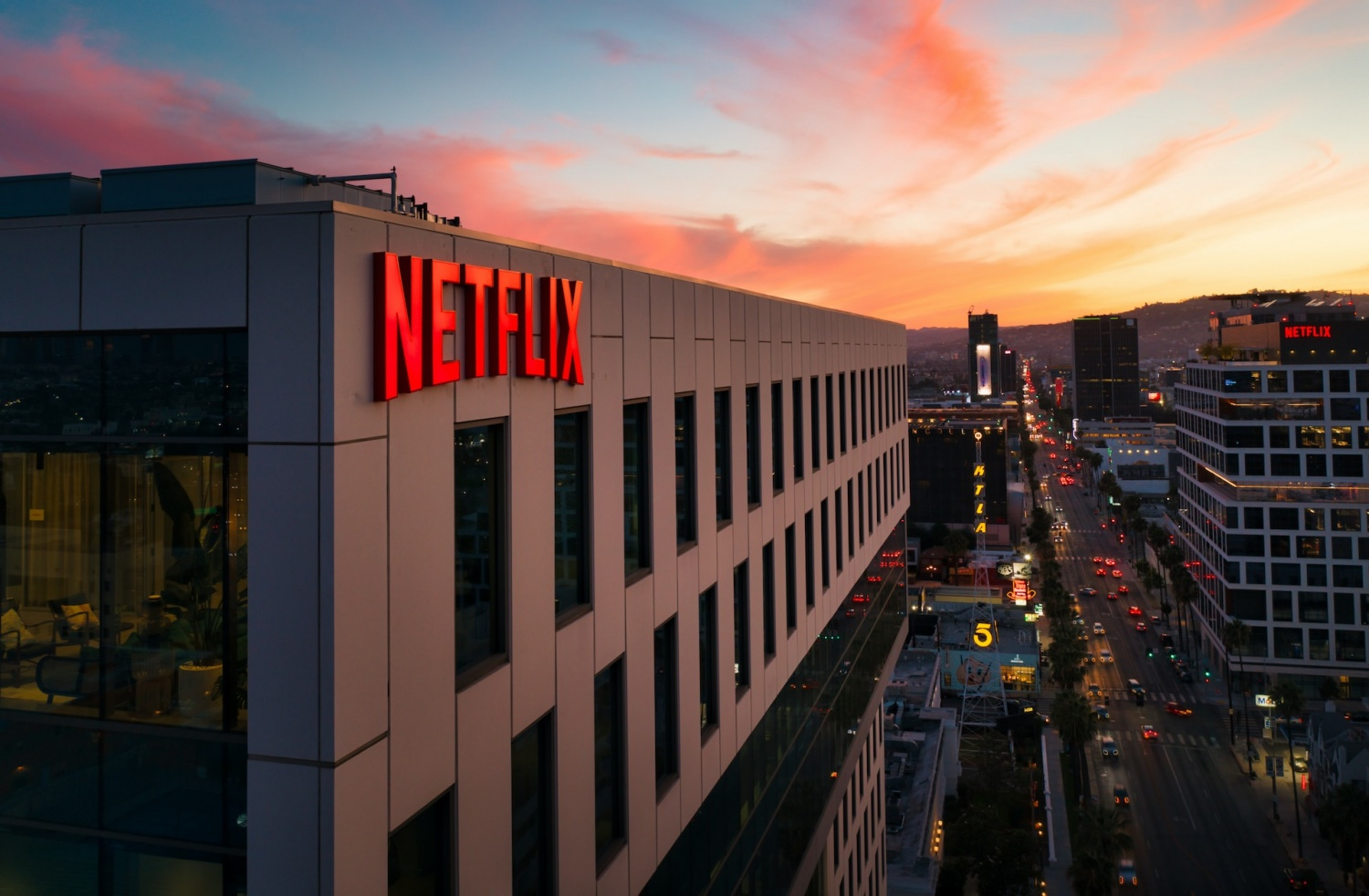
Netflix shares tumbled more than 3.5% on Tuesday after the streaming giant was outbid by Fox Corp. in a $22 billion deal to acquire Roku, marking a significant setback in Netflix’s efforts to expand its distribution footprint amid intensifying competition in the media industry.
Fox’s cash-and-stock offer valued Roku at $160 per share, outmaneuvering Netflix in what sources described as an aggressive but ultimately unsuccessful pursuit. The transaction highlights the rapid consolidation occurring across streaming and connected TV platforms as companies vie for greater control over content distribution and advertising data.
Roku, a leading streaming platform operator, has built a substantial user base through its hardware and operating system that hosts multiple services. The deal gives Fox enhanced reach in the connected TV space, complementing its Tubi free ad-supported streaming service and traditional media assets. Netflix, which has historically focused on organic growth and content production, had viewed Roku as a strategic opportunity to strengthen its position in the evolving distribution landscape.
The failed bid represents Netflix’s second major unsuccessful acquisition attempt in recent quarters, following an earlier pursuit of Warner Bros. Discovery. Despite the setback, company executives have framed such efforts as valuable learning experiences for future transactions.
Co-CEO Ted Sarandos previously noted the educational value of the Warner Bros. pursuit. “We really built our M&A muscle pursuing Warner Bros.,” Sarandos said. “We’ve learned so much about deal execution, about early integration.”
Strategic Context and Regulatory Considerations
Industry analysts point to significant antitrust hurdles that likely complicated Netflix’s bid. Owning both substantial original content production and a major distribution platform hosting rival services could have raised competitive concerns with regulators. Fox’s position, focused more on live sports, news and its Tubi platform, was viewed as presenting fewer direct conflicts with other subscription video services.
The Roku board prioritized maximizing shareholder value, ultimately favoring Fox’s premium offer. Sources indicated Netflix adopted a more disciplined bidding approach, which proved insufficient against Fox’s aggressive valuation.
Fox has committed to maintaining Roku as an “open, partner-friendly platform,” a stance that may have eased regulatory scrutiny and appealed to Roku’s leadership. The deal underscores Fox’s strategy to bolster its presence in the streaming ecosystem while leveraging its existing media infrastructure.
Netflix’s Evolution and Future Moves
Netflix has transformed from a DVD rental service into a global streaming powerhouse, but the industry’s shift toward consolidation has prompted the company to explore inorganic growth opportunities. The Roku bid reflected a desire to secure greater control over how its content reaches audiences and to gather valuable first-party advertising data.
Although the deal did not materialize, Netflix continues to evaluate strategic options. Reports suggest the company is among several media giants considering a potential move for Lionsgate Studios, though no formal indication of interest has been submitted.
The company’s leadership has emphasized building transactional expertise through recent pursuits. This “M&A muscle,” as Sarandos described it, positions Netflix to act decisively when suitable opportunities arise in a maturing streaming market.
Roku’s origins add historical irony to the situation. Company founder Anthony Wood developed the original Roku player while at Netflix in the early 2000s during the transition from physical rentals to digital streaming. Netflix ultimately spun off Roku in 2008 to avoid alienating hardware partners. Nearly two decades later, Netflix attempted to reacquire the platform it helped create, only to be outmaneuvered by traditional media player Fox.
Market Reaction and Industry Implications
Netflix shares opened lower following the news, reflecting investor disappointment over the missed opportunity. Roku shares also declined modestly as the market digested the acquisition details, while Fox Corp. stock experienced mixed movement amid broader sector dynamics.
The transaction highlights the intense competition for distribution assets in the streaming era. As consumers fragment across multiple platforms, control over connected TV interfaces and user data has become increasingly valuable. Companies are racing to secure footholds that enhance content delivery and advertising capabilities.
For Fox, acquiring Roku strengthens its position in the ad-supported streaming segment and provides a robust platform for distributing its sports, news and entertainment content. The deal complements Tubi and could accelerate Fox’s digital transformation.
Netflix, meanwhile, will likely continue focusing on content investment and technological innovation to maintain subscriber growth. The company has demonstrated resilience through previous industry shifts, adapting its model from DVD rentals to global streaming dominance.
Broader Streaming Landscape
The Roku acquisition comes as the streaming industry enters a phase of consolidation and maturation. After years of heavy spending on content and subscriber acquisition, major players are seeking efficiencies and strategic advantages through partnerships and acquisitions.
Free ad-supported streaming services like Tubi have gained traction, offering alternatives to subscription fatigue. Control over distribution platforms allows companies to optimize user experiences and advertising revenue across their content libraries.
Regulatory scrutiny remains a key factor in media deals, with authorities closely examining potential impacts on competition and consumer choice. Fox’s structure and commitments regarding Roku’s openness may have provided advantages in navigating these considerations.
Analysts expect further M&A activity in the sector as companies position themselves for long-term success in a fragmented but consolidating market. Netflix’s disciplined approach suggests it will pursue opportunities that align closely with its core strengths in content creation and global reach.
Outlook for Involved Companies
Fox’s successful bid enhances its competitive positioning and diversifies revenue streams beyond traditional linear television. Integration of Roku will require careful execution but offers significant upside in the connected TV space.
Netflix remains well-positioned as a content leader with a massive global subscriber base. While the Roku deal did not close, the company’s focus on original programming and international expansion continues to drive growth. Future strategic moves will likely emphasize opportunities that complement rather than duplicate existing capabilities.
Roku shareholders receive substantial value through the transaction, rewarding the company’s innovation in the streaming hardware and platform space. The deal provides certainty while allowing the platform to operate with continued openness under new ownership.
As the streaming wars evolve, deals like Fox’s acquisition of Roku illustrate the strategic importance of distribution and data in an increasingly competitive landscape. Netflix’s pursuit, though unsuccessful, demonstrates its willingness to adapt and invest boldly in shaping its future trajectory.
The coming months will reveal how these companies leverage their positions as the industry continues consolidating. For investors and consumers alike, the Roku transaction represents a notable milestone in the ongoing transformation of entertainment delivery.
“Rich Kids of Beverly Hills” star Brendan Fitzpatrick sued over alleged $80M Ponzi-style scheme

Evan Spiegel Doesn’t Want You To Call Snap Specs AI Glasses

Bitcoin Enters the 3rd Stage of the Bear Market


-

 Business3 days ago
No Jackpot Winner as $257 Million Prize Rolls Over to $269 Million Monday Draw
-

 Crypto World6 days ago
Oppenheimer backs SpaceX as $70 billion retail frenzy builds
-

 Fashion5 days ago
Weekend Open Thread: Tuckernuck – Corporette.com
-

 Crypto World6 days ago
Markets Rally as SpaceX IPO Looms Amid Iran Tensions and Inflation Surge
-
 Crypto World2 days ago
Zimbabwe Requires Crypto Businesses to Register Annually Under New FIU Regulations
-

 Tech4 days ago
NanoClaw integrates JFrog registries to secure AI agent downloads
-

 Tech5 days ago
This Week In Security: Microsoft On Microsoft, Register Your Domains, Linux On ARM, And FreeBSD Joins The File Cache Club
-

 Crypto World4 days ago
Bitget enters Argentina’s regulated crypto market through PSAV registration
-
 Tech6 days ago
Dutton Ranch star claims they ‘didn’t see any disruption’ on set following Chad Feehan’s exit from Yellowstone spinoff fueled by Taylor Sheridan clash rumors
-

 NewsBeat5 days ago
El Nino has formed in the Pacific and could set records, forecasters say
-

 Politics6 days ago
Politics Home | Healey Resignation Is “Colossal Failure Of Government”, Says Former Labour Defence Secretary
-

 Tech7 days ago
‘This is Seattle’s position on AI’: City Council votes unanimously to pause big new data centers
-
 Entertainment6 days ago
Donnie Wahlberg & More Heat Up Las Vegas at Circa’s Barry’s Downtown Prime
-
 Tech6 days ago
Opendoor Ends India Operations, Fueling a Bigger Conversation About AI and Outsourcing
-

 Sports6 days ago
First Time Since 1971: Australia Register Historic Low In ODI Cricket
-

 Politics6 days ago
Belfast burns, while Met chief points finger at Iran and Russia
-

 Business6 days ago
AT&T: Verizon's 27% Outperformance Sets Up A Solid Entry Point
-

 NewsBeat4 days ago
FBI searches office of Ohio voter registration group
-
 Tech5 days ago
Anthropic is spending $150M to embed 1,000 AI fellows inside nonprofits. No degree required.
-

 Politics6 days ago
Modi thanks Trump for wishes as US attacks Indian seafarers
You must be logged in to post a comment Login