

Politics
Robert White wins wins DC delegate primary

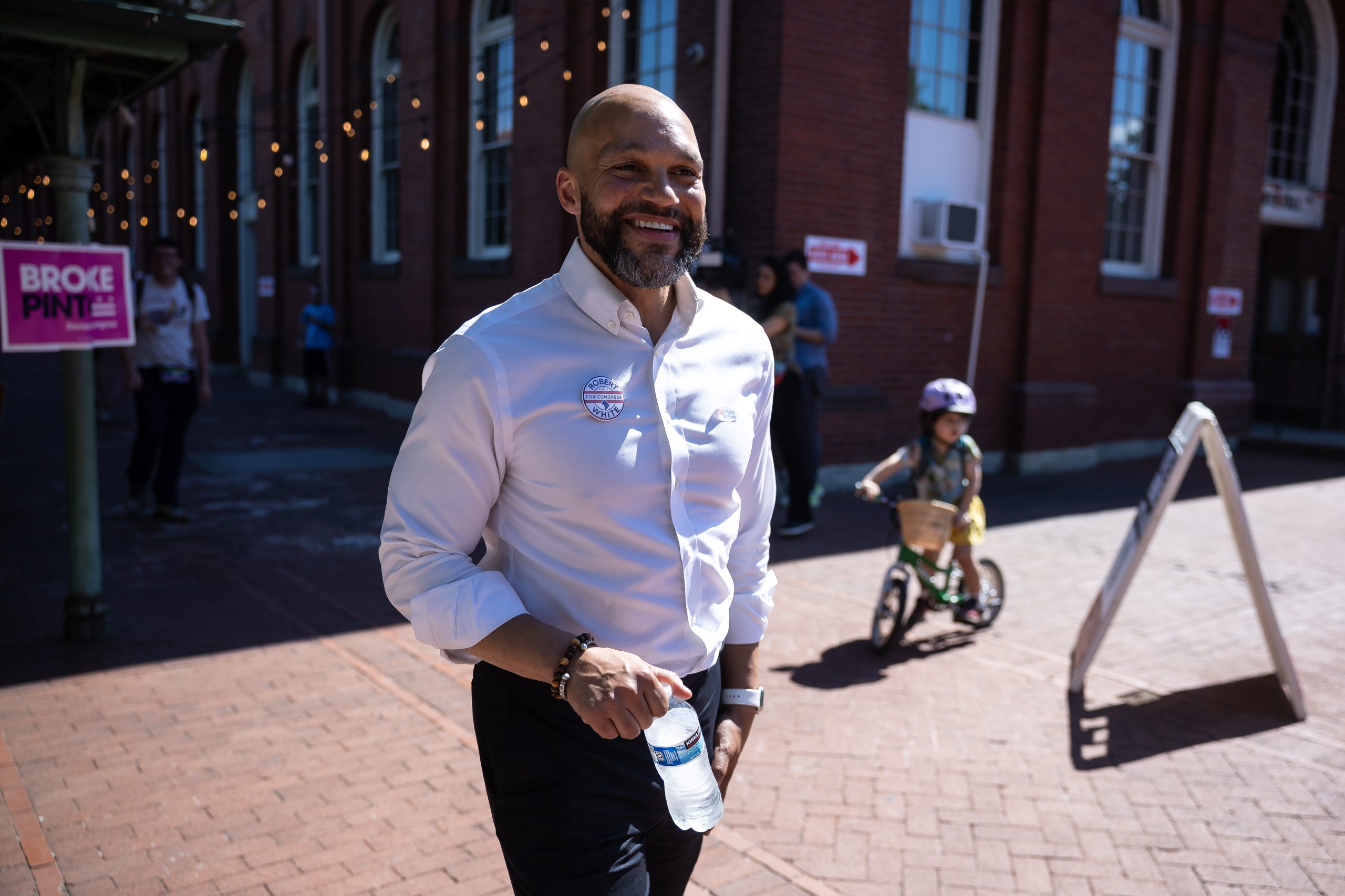

Robert White won the Washington, D.C., delegate Democratic primary, setting him up to represent the United States capital in Congress as its first new delegate in more than 35 years.
White’s victory begins a new chapter for Washington, which has been represented in the House by Democratic Del. Eleanor Holmes Norton since 1991.
He faces no major general election challengers in the deep-blue district and will ascend to a post that gives him a voice, but not a vote, to champion a city that has been roiled by President Donald Trump’s attempts to exert pressure in his second term.
White’s ascension caps off a long career for Holmes Norton — for whom he used to work. Holmes Norton was known as a behind-the-scenes operator in Congress who helped restructure Washington’s finances in the 1990s and brought major federal projects and jobs to the district. Holmes Norton’s signature project was D.C. statehood, elevating it from a Washingtonian pipe dream to a mainstream Democratic issue culminating in House passage of statehood bills in 2020 and 2021.
But Holmes Norton’s visibility and power waned in recent years, and questions about the 89-year-old’s acuity and ability to serve drew a steady stream of headlines in 2025. In October, D.C. police said that Holmes Norton was scammed out of more than $4,000, and an initial police report reportedly described her as having “early stages of dementia.”
A fifth-generation Washingtonian, White has served as an at-large member of the D.C. Council since 2016. He will be Washington’s third delegate since the position was reestablished in 1970.
White ran against primary challenger and fellow Council member Brooke Pinto on a platform focused on increasing affordability and public safety while defending the district’s autonomy — potentially setting him on a collision course with the president.
In an interview with POLITICO last week, White cast Trump’s crime crackdown in the city, including federalizing the Metropolitan Police Department and deployment of the National Guard and federal immigration agents, as “lawlessness” and “the opposite of public safety.” He also pledged to reintroduce a bill pushed for years by Holmes Norton that would grant command over the D.C. National Guard to the District’s mayor rather than the president.
The contest at times grew ugly. In April, Pinto’s campaign posted to her website a 67-page opposition research dossier about White, including information about his family and finances. White demanded Pinto withdrawal from the race, and Pinto’s campaign replaced the file with a new version that omitted information about White’s family, to whom Pinto apologized.

Politics
Politics Home | Putting the right medicines in patients’ hands: how improved medicine switching can support self-care


In the second article in his series on community pharmacy, Nick Linton, UK Country Head at Opella, examines the tools and partnerships that can empower pharmacists to deliver high‑quality, prevention‑focused care.
56 million people across the UK visit a pharmacy as their first point of call for medical advice every year. These local healthcare hubs remain one of the NHS’s most trusted and accessible front doors,1 and the self-care support they deliver can improve outcomes and empower people to manage their own health.
In my previous article, I explored the role of health literacy in unlocking self-care. But awareness must be matched with access to appropriate medicines. Unless pharmacists have the tools they need at their disposal, including a wide range of safe and effective medicines, much of their impact will be wasted.
How can we expand access to self-care through medicine switches and by ensuring pharmacists are equipped to support patients to use these medicines safely and confidently?
Ensuring pharmacists have the right medicines to support self-care
The UK benefits from a globally respected medicine regulator in the MHRA. A critical part of its role is ensuring safe and effective general sales medicines can be accessed by patients as part of self-care, without the need for a prescription.
Switching medicines from prescription-only to pharmacy or general sales list status is one of the most effective ways to expand self-care. PAGB, the consumer healthcare association, has long championed this agenda, working with government and regulators to create a more agile, proportionate switching environment that keeps pace with patient need and clinical evidence.
At Opella, we’ve seen how the MHRA can provide this access first-hand.
Our allergy treatment, Allevia 120mg, was successfully switched directly from prescription-only to general sales list status. This breakthrough demonstrated that the UK’s regulatory framework can support innovative and responsible access to medicines.
The switch provided patients with tangible, real-world benefits.
Easier access to effective allergy treatments means people can manage symptoms earlier, reduce disruption to their daily lives, and avoid unnecessary GP appointments. Hay fever alone is estimated to account for millions of lost work days each year in the UK, with poorly controlled symptoms impacting productivity, sleep, and overall wellbeing.2
Improving access to appropriate medicines is not just an issue of convenience; it’s an issue of public health and economic impact.
Improving the switching process
But too often the regulatory process around switching can be slow and inconsistent, denying patients the benefits I describe. To go further, we must build on existing PAGB, industry and government collaboration to streamline switching pathways.
We can avoid unnecessary duplication of work through greater use of international evidence and alignment with initiatives such as the Access Consortium. This brings together regulators from across countries such as Canada, Australia and Singapore to promote collaboration.
Furthermore, we need a regulatory and policy environment that actively supports switching and self-care. This includes continued backing for MHRA capacity, as well as aligning with PAGB’s call for a more responsive reclassification framework. We can also provide certainty to industry through clearer regulatory timelines.
These steps would accelerate access to safe, well-understood medicines and ensure the UK remains a leader in self-care innovation.
Ensuring safe use as part of self-care
Expanding access to medicines must go hand in hand with ensuring self-care is delivered effectively. Pharmacists are well placed to guide patients in selecting appropriate treatments, recognising red flags, and ensuring medicines are used correctly.
Taking allergies as an example, greater availability of effective OTC options allows patients to act quickly at the onset of symptoms, rather than waiting for a GP appointment. With pharmacist support, patients can choose the right product, understand how to use it, and know when to seek further medical advice. This combination of access to medicines and professional guidance is what makes self-care both safe and effective.
The system-wide benefits are significant, including reduced pressure on primary care and improved quality of life for patients who can manage their symptoms proactively.
A shared agenda for self-care
Community pharmacies already embody the NHS’s vision for local, accessible points of care, which can be integrated seamlessly into everyday life.
At Opella, we share this vision and believe empowered pharmacies can drive self-care, provide people with the tools, knowledge, and medicines to thrive independently, and help prioritise putting people’s health in their hands.
By working alongside government, regulators, and representative organisations such as PAGB, we can accelerate the shift towards a system where switching enables better access, pharmacists enable safe use, and patients are empowered to act earlier.
- Community Pharmacy England (n.d.) Pharmacy: the heart of our community. Available at: https://cpe.org.uk/learn-more-about-community-pharmacy/. (Last access 6th March 2026).
- Open Access Government (2026. Workers lose 29 million days each year to hay fever. Available at: https://www.openaccessgovernment.org/workers-lose-29-million-days-year-hay-fever/26729/ (Last access 23 April 2026).
Politics
Politics Home Article | Bans alone won’t tackle online harm, Manchester experts tell ministers


Credit: Fly View Productions
New University of Manchester report makes a series of recommendations to tackle online misogyny and misinformation and strengthen young people’s digital literacy
The rapidly evolving digital landscape is a pressing topic for policymakers – from the threats posed by online misogyny to the growing tide of conspiracy theories and misinformation.
Now, a new report produced by Policy@Manchester, the University of Manchester’s policy engagement unit, has highlighted the plethora of challenges that today’s decision makers need to address.
The report, Digital Truths, features expert analysis and research-led recommendations from University of Manchester experts. It puts six specific areas under the spotlight, including the challenge of protecting young people from harm while empowering them with the skills to navigate the digital world safely and the need to strengthen our approaches to countering misogyny and male supremacism.
Writing in the report’s foreword, Professor Cecilia Wong, Professor of Spatial Planning at the University of Manchester and Policy@Manchester’s Co-Director, says: “As policymakers review the merits of minimum age use for social media access and the threats posed by conspiracy theories and misinformation, it is especially important to balance viewpoints and engage with the positive aspects of moderation, online support and critical awareness.
“Policymakers and regulators face multiple challenges and it is crucial that rigorous evidence is up to date and available, whether they are considering problematic, unwanted content, tackling forms of extremism or assessing the impacts of social media use for children and young people.”
With almost one in five young people in the UK experiencing mental health difficulties and increased pressure on stretched support services, the report calls for the development of “positive virtual ecosystems” – safe online platforms for support and learning that work in tandem with human relationships and professional practice.
In the report’s first article, Professor Terry Hanley outlines three specific recommendations for policymakers, all aimed at embedding media literacy in schools and developing regulatory standards that distinguish trusted services from unregulated or harmful content.
He stresses the need for the Online Safety Act to differentiate between research-informed, moderated platforms (such as Kooth, the free and completely anonymous digital mental health and wellbeing platform, and other NHS-backed resources) and unregulated apps and forums that spread misinformation.
Rather than a blanket ban on smartphones, he believes schools should equip young people with the skills to evaluate online content, recognise reliable resources and understand the mental health and wellbeing options open to them. He also points out that investment should focus on connecting online tools with local mental health provision, thereby ensuring a smooth transition between digital and in-person care.
Meanwhile, Dr Ashley Matthias warns that efforts to tackle misogyny and male supremacism have previously focused on top-down approaches, often shaped by government initiatives for preventing and countering extremism.
She argues that far more could be done to address “the amplification of polluted information and disallowed content”. Her recommendations include expanding media literacy programmes, holding platforms accountable to national policies and their own terms of service, prioritising ways to enforce transparency around algorithm design and use and rejecting the view that social media platforms are “a digital public square” when in fact they are private businesses.
Responding to the report, a Department for Education spokesperson told PoliticsHome that the government is committed to tackling violence against women and girls and to supporting teachers to recognise signs of incel ideologies.
“Misogynistic views are not innate, they are learned,” they said. “We are committed to using every possible tool to achieve our mission of halving violence against women and girls.
“Our updated RSHE guidance is designed to make sure all young people can identify positive role models, and we are providing resources to support teachers to recognise the signs of incel ideologies, including through the Educate Against Hate programme.
“Alongside this, we are taking action to ensure that children have a healthy relationship with phones and social media – including ensuring every child learns to identify mis and disinformation as part of the revitalised curriculum, making our mobile phones in schools guidance statutory and launching a call for evidence on children’s screen use at home and in school.”
Meanwhile Jess Asato, Labour MP for Lowestoft, spoke of her decision to launch legal proceedings against Elon Musk’s xAI company.
“Misogyny in politics is nothing new, but AI now supercharges it, allowing users to broadcast abuse and create degrading, non-consensual sexual images of women from simple prompts,” she said. “Combined with the immediacy of social media, this is creating a silencing effect on women and girls.
“Tech companies’ inadequate responses have left thousands of women feeling vulnerable and violated. That’s why I have launched legal proceedings against xAI, so that women can reclaim their sense of safety online. It’s our body, so it should be our choice what is done to it.”
“Silicon Valley’s ‘move fast and break things’ mantra wouldn’t stand in the offline world. Just as cars require seatbelts and airbags, digital technology must also be regulated to be safe by design.”
In a third article, Dr Allysa Czerwinsky points out that misogynist and male supremacist content is of particular concern in today’s digital world. Suggested pathways for policymakers include tailoring campaigns to the concerns highlighted by manosphere forum users and endorsing partnerships with support-focused spaces to encourage human connections and make help accessible.
“These are interventions that can better shape counter-speech efforts at both local and national levels,” she writes. “Additionally, opportunities for peer-to-peer mentoring for boys and men at risk could be implemented as an avenue for support in Prevent strategies, as well as part of local authority approaches to addressing violence against women and girls.”
Professor Peter Knight looks at the problem of conspiracy theories and counter-disinformation in the UK, recommending bespoke strategies to tackle this, a deeper understanding of conspiracism’s social functions and reforms to the counter-disinformation ecosystem.
“Conspiracy theories in the UK are not merely digital misinformation,” he writes. “They’re expressions of deeper social, political and historical dynamics.
“Effective counter-disinformation policy must move beyond reactive moderation and embrace a holistic, context-sensitive approach. By reforming regulatory frameworks, supporting grassroots counter-discourse and fostering trust in institutions, the UK can build resilience against conspiracist narratives and strengthen democratic communication.”
The final two articles focus on the importance of digital and information literacy in schools. Dr Drew Whitworth advises that today’s learners must develop a broader awareness of the impact of the online world on their work, relationships, mental and physical health and knowledge of the world in general.
Dr Margarita Panayiotou, Dr Jo Hickman-Dunne and Jade Davies are concerned that today’s school curriculum presents “a relatively narrow and deficit-based approach” of social media and young people’s lives. While the government’s recent Curriculum and Assessment Review calls for greater focus on media and digital literacy and the functions and limitations of AI, it does not mention social media – “despite this playing a central role in young people’s everyday digital lives and forming a key part of adult concerns.”
With this in mind, the authors recommend that the Department for Education expand the concepts of digital and media literacy outlined in the Curriculum and Assessment Review, launch a consultation about the content and delivery of media literacy lessons, and provide specific resources for teachers to support and encourage young people to have open and non-judgemental conversations about social media.
Caroline Voaden, the Liberal Democrats’ Schools Spokesperson, welcomed the report, particularly its emphasis on the importance of integrating digital literacy into children’s learning.
“This report lays bare the toxic cocktail of harmful content and misinformation that is so prevalent in the online spaces our young people use,” she said. “For them to be truly safe online, they need to be able to understand how to navigate and decipher this world, which is why embedding digital literacy in the curriculum from a young age is so crucial.
“However, content is only half the battle. We also need to free our children and young people from the grip of big tech’s addictive-by-design platforms. This regulation is vital, but it must come hand-in-hand with a broader societal shift in how we safeguard our children’s digital lives.”
Matt Bishop, Chair of the Political and Media Literacy All-Party Parliamentary Group, believes that more needs to be done to equip young people with stronger media and digital literacy skills.
“Policy should strengthen media and digital literacy in education, helping young people understand how online content affects their learning, relationships and wellbeing, not just their technical IT skills,” he said.
“This should be supported by regulation that distinguishes trusted services from harmful or unregulated content, alongside platform accountability and alternatives to algorithm-driven systems. Efforts to address online misogyny and disinformation should move beyond individual-focused approaches and include community dynamics, support networks and improved partnerships with help-focused spaces for young people.”
Read Digital Truths here.


Georgia Republicans finally have their Senate nominee. Now comes the hard part.
A bruised GOP Rep. Mike Collins (R-Ga.) will go head to head against Democratic incumbent Sen. Jon Ossoff, a prolific fundraiser who many Republicans worry will be difficult to beat this November.
While Republicans spent months turning their fire on each other, Ossoff has steadily built his campaign infrastructure — and refined his general election message.
“Anyone who’s being honest knows it’s going to be a very tough race to unseat Jon Ossoff. All the polling shows Georgia as leaning Democrat, not toss-up,” Jason Shepherd, the former Cobb County Republican chair, told POLITICO before the Tuesday result. He had supported Collins’ opponent, former football coach Derek Dooley.
Heading into the midterms, Ossoff was widely considered one of the most vulnerable Democratic candidates in a state Trump handily won in 2024. But since then, the senator has stockpiled mountains of cash, sailed through his primary unchallenged, and has positioned himself as someone who stays above the fray of partisan cable news hits.
“Ossoff is tricky, he’s good at raising money, he does not step in it,” said one senior RNC official before the runoff, granted anonymity to speak candidly about the midterm landscape.
The race is expected to be one of the most closely watched Senate contests of the cycle. Holding onto Ossoff’s seat is key to Democrats’ narrow path to winning back control of the Senate, while Republicans see flipping it as one of their best opportunities to expand their majority. The state has also become one of the country’s premier battlegrounds, serving as an early test of the forces — and people — that could shape 2028.
Several Republican strategists and operatives say that some of Collins’ hardline policy stances, plus an ongoing House ethics investigation against him, may make him vulnerable to Democrats’ attacks.
They also worry Collins has a lot of catching up to do in the money race.
Collins raised$4.9 million and had just $1.2 million in cash on hand as of May 27, according to fundraising reports. By comparison, Ossoff has raised$60 million and had $32 million left in the bank at the end of April.
“It’s a real severe uphill battle,” said one Republican operative involved in races up and down the ballot in Georgia, granted anonymity to speak candidly about the state’s marquee race.
Collins will require significant help from outside groups, the operative said, but it’s not clear how much will come: “What is the willingness to go all in for Mike Collins? Do they think he can win? Do they think they can get this done? What are those resources going to look like? Because he’s not going to fundraise — I don’t think — very well.”
Collins’ allies argue the bitter primary has prepared him for a brutal general election.
“Jon Ossoff has been, always will be, the most vulnerable Democrat up for reelection. Nobody is more battle tested than Mike Collins after this primary,” said a person close to Collins’ campaign.
Some Democrats suggest they got their preferred candidate in Collins — rather than Dooley, who had the backing of popular Republican Gov. Brian Kemp, which could have helped broaden his appeal across the state.
“Dooley is much less of a political extremist than Collins is and Collins is on the record voting directly for the policies that have devastated Georgians,” said one person aligned with a Democratic PAC involved in Senate elections, granted anonymity to speak candidly. “As for an [opposition] research perspective and in our effort to air out his dirty laundry we have a lot more ammunition with Collins.”
Even President Donald Trump, who made a last-minute endorsement for Collins ahead of Tuesday’s election, had grilled him about his strict stance on abortion, pressing him on how he could win in a general election in one of the nation’s premier swing states. Abortion has become a political vulnerability for Republicans in the wake of the Supreme Court’s decision to overturn Roe v. Wade.
Collins already appeared to soften his stance in the final stretch of the runoff. During a 2022 debate for his current House seat, Collins said, “I have always stated and I’ve always been and always will be 100 percent pro-life, period. No exceptions.” Recently on the campaign trail, he said he supports Georgia’s six-week abortion ban, which includes exceptions in cases of rape, incest or to protect the life of the mother.
Ossoff was quick to hammer Collins after his victory, tying him to Trump and assailing him as a “notorious bigot.”
“Collins, who is only a congressman because his daddy was a congressman, voted to double health insurance premiums for more than a million Georgians, for the Iran War, and for the Trump tariffs,” Ossoff said in a statement.
But Democrats know Collins still poses a real threat, even with the wind at their backs. Ossoff won by a razor-thin margin in 2020 over former Republican Sen. David Perdue — a contest that went to a runoff — and Georgia Sen. Raphael Warnock (D) won by less than 3 points over Trump-endorsed former football star Herschel Walker in 2022.
“Democrats understand that if a Herschel Walker can get to 49 percent, you know, this is still going to be a battle, and this is still going to be a fight ahead,” said Andrew Heaton, a Democratic strategist and former campaign aide for Warnock.
National Democrats say they are planning to hit Collins hard. Senate Majority PAC, the main Senate Democratic super PAC, has committed $20 million to supporting the incumbent in the general.
National Republican groups have largely been waiting in the wings to get involved in Georgia, held back by Trump’s long silence on the Senate race and a messy, drawn-out primary to determine their nominee. Now, with Collins knighted as their standard bearer to lead the ticket, groups like the National Republican Senatorial Committee and the Senate Leadership Fund will face pressure to start spending — fast.
Those two leading Republican groups have already raised $1 million in a “first-of-its-kind joint fundraising operation” put aside for the Republican nominee in Georgia, POLITICO first reported. That’s in addition to the$44 million SLF already committed to Georgia’s Senate race. Collins could also receive a boost from sharing a ticket with billionaire Rick Jackson, who won the GOP gubernatorial primary Tuesday — and has already signaled plans to invest heavily across the state.
“We will have a large field team and field operation. Collins will benefit greatly,” one person familiar with Jackson’s campaign said Tuesday night, granted anonymity to discuss not-yet-finalized plans.
A second Georgia-based Republican operative said “it’s imperative” that resources start flowing to the Senate race. “The general election campaign starts right now, we don’t have a moment to lose,” the operative said just minutes after the primary was called for Collins.
Collins used his victory speech on Tuesday night to preview his attacks on Ossoff’s voting record, tying the Democrat to liberal policies unpopular with many Georgia Republicans.
“This choice in this race is crystal clear: You got a businessman who has delivered results in both the private sector and in Washington … or an out-of-touch, far left liberal who has raised your taxes, made your life more expensive, less safe, and left Georgia worse off,” he said.
How Collins handles the early days of the general election will be key to convincing the skeptics, said one Georgia-based operative unaffiliated with the Senate race, granted anonymity to discuss the landscape.
“A lot of people don’t think he’s gonna have a chance, and that may end up working to his advantage,” the operative said. “I think the race is gonna get very tight once we get into the summer and early fall, but I think that there’s going to be a lot of eyeballs to see how he performs out of the gate.”
Buoyed by the late-stage Trump endorsement, Collins emerged from the primary as the candidate carrying the MAGA mantle. He earned support from several prominent House Republicans, in addition to the powerful Club for Growth and Turning Point Action. His victory on Tuesday night underscored his strength in Georgia’s rural, heavily Republican regions.
But to compete in November, he’ll need to go beyond the MAGA base and win over Dooley’s coalition, which was built on the support of more moderate voters in the metro Atlanta area. Collins said in his victory speech Tuesday that he had spoken to both Kemp and Dooley.
“It’s an uphill battle against Senator Ossoff, but it would have been an uphill fight for anyone,” said Buzz Brockway, a GOP strategist and former state representative in Georgia. “Now Collins needs to unite the GOP behind him, which I think he can do.”
In The Road to Wigan Pier, George Orwell fixed Wigan in the national imagination as a byword for industrial hardship and neglect of the working classes. Today, nearly 90 years on, the ‘lunar landscape of slag-heaps’, the ‘smoke, shale, ice, mud, ashes and foul water’ have thankfully disappeared. But those feelings of abandonment and dissatisfaction remain strong in this north-western town.
In just a few days, on 18 June, voters in and around the post-industrial town of Wigan, Greater Manchester, will be responsible for deciding whether or not the UK might get a new prime minister. But the mood on the doorstep feels far more local than national.
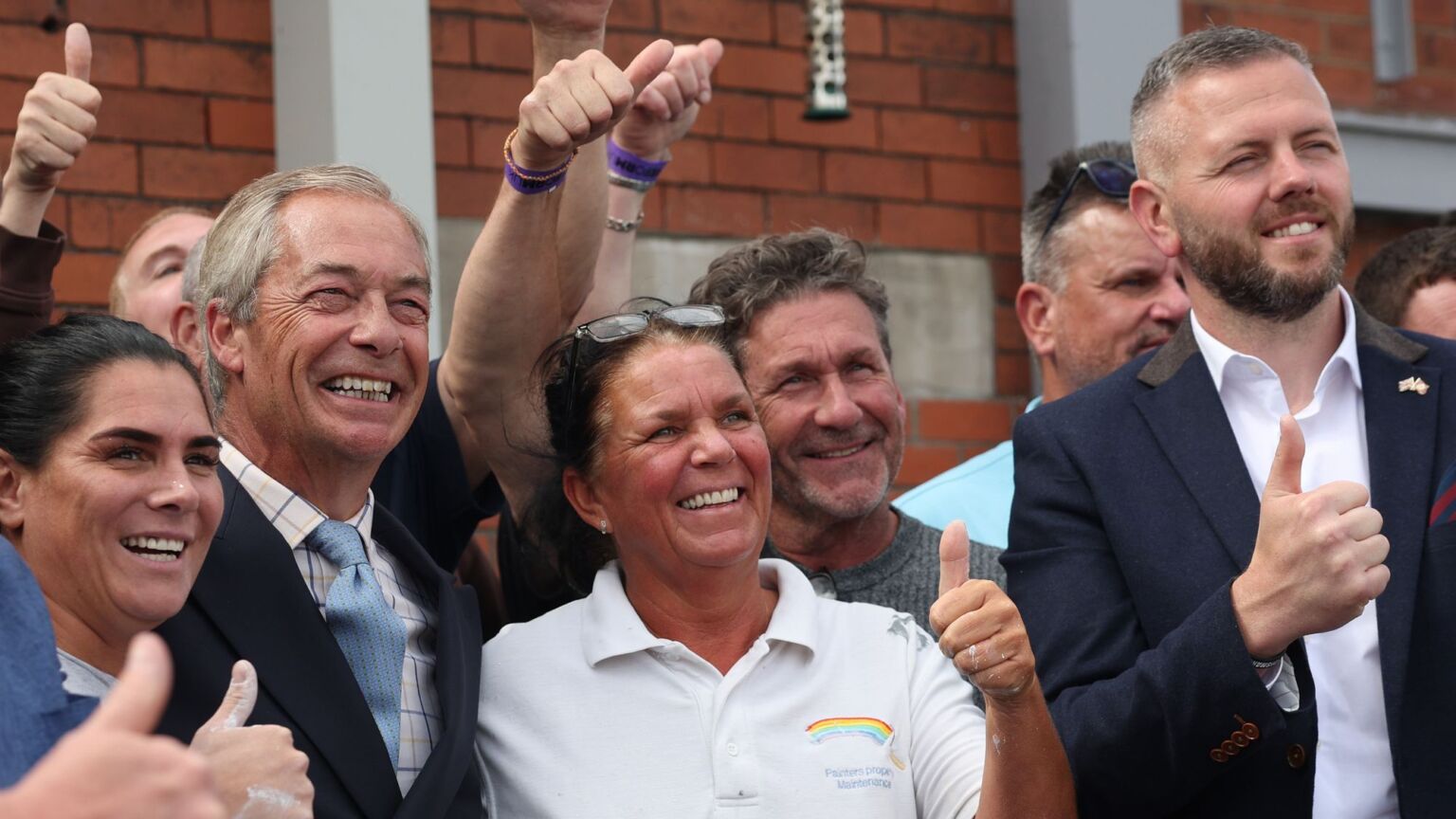
Last Saturday, I took the train from London to Wigan to canvas on behalf of Reform UK. Campaign HQ – a unit on an unassuming business park – was already overflowing with eager activists by 10am, many snapping pictures in front of the very on-brand turquoise double-decker campaign bus, or waiting to catch a glimpse of the man of the hour, Rob Kenyon. Reform’s parliamentary candidate was running late on account of him coaching his under-7s football team.
You’d struggle to find a better illustration of the contrast between Labour and Reform than in the profiles of their own candidates. Kenyon is an ex-Army reservist and self-employed plumber who was born and grew up in the local area. In the 2024 General Election, he ran for Reform for the first time and came in second with 32 per cent of the vote.
The same can’t be said for Labour’s Andy Burnham, a career politician who would have stood in any constituency going if he thought it would get him one step closer to Westminster and, by extension, to challenging Keir Starmer’s premiership.
In terms of numbers, this by-election really does boil down to a two-horse race. Polls repeatedly show Reform just a few points behind Labour, with the Conservatives, Greens and Liberal Democrats barely getting a look-in and all polling at dismal single figures. But former Reform MP Rupert Lowe’s fledgling party, Restore Britain, has thrown a spanner in the works by deciding to stand its own candidate. That’s Rebecca Shepherd, a local woman who runs a business providing ‘horse whispering and equine-assisted therapy’. It’s difficult to say much else about her or her positions, because Restore HQ rarely lets her out for interviews.
Despite this, Restore has made enough gains in Makerfield to split the right-wing vote and give Burnham a clear advantage. Setting off for the first canvassing session of the day, we were greeted by the sight of a massive Restore flag attached to a fence along the main road. It felt like a bad omen.
There is something surreal about seeing real-world manifestations of what many had assumed to be a purely online phenomenon. Of course, people in Wigan don’t really know who the likes of Connor Tomlinson, Harrison Pitt or Charlie Downes are. Nor are they aware of their hokey brand of convert Catholicism, or understand their various wacky policies – like banning usury, abortion and contraception or tying nationality to Christian faith. I’m not convinced that many of them could even pick Rebecca Shepherd out in a crowd. But voters in Makerfield certainly know who Rupert Lowe is, and are fed a steady supply of Restore content via their Facebook timelines.
One of the first voters we spoke to said that the choice for her was between Reform and Restore, but that she was leaning towards Restore because she didn’t trust Reform with healthcare. She told us she was concerned that a Reform government would privatise the NHS and make seeing a GP unaffordable for people like her. (Actually, Reform has repeatedly pledged to keep the NHS free at the point of use.)
Speaking to a man in a bungalow with an immaculately kept garden, we learnt that he had already sent off his postal vote for Reform. And his wife had voted Restore. Some streets were an even split of teal and navy blue Correx boards and window posters.
I later learnt that the area we were canvassing on Saturday was unusually Restore-heavy. It’s no coincidence, then, that these areas are also some of the most deprived in Wigan. In some of the labyrinthine estates we visited, as many as half of over-16s were out of work. Large percentages, too, were in social housing. As a constituency, Makerfield is overwhelmingly white and working class – around 95 per cent are white British, with higher-than-average shares of people working in manual, industrial and skilled-trade jobs. In the 2016 referendum, 66 per cent voted to leave the EU, comfortably above the UK-wide Leave vote of 52 per cent.
Unsurprisingly, Farage as a figure generally plays well here, and plenty of residents were enthusiastically pro-Reform, too. One woman told us that she, her whole extended family, and neighbours were planning to vote for Reform. We visited one cul-de-sac where every household was supporting Reform. At one point, a man slowed down as he passed our team in his car to ask who we were canvassing for. When we said Reform, he stopped to wish us luck and to repeat some choice words about Labour and where, exactly, Burnham could stick it.
The other major battle was convincing people to vote at all. There was a great sense of apathy among many and a general sense that no one in Westminster could be trusted. One woman complained that she particularly disliked Andy Burnham for using the Makerfield constituency as a stepping stone on his way to No10 – one of the attack lines that Reform has been pushing hard, and one that really seems to have cut through. She was much warmer towards Kenyon, who she felt was a local lad looking to give voters here a voice in Westminster.
Her priorities were typical – immigration, the NHS and the cost-of-living crisis. She told us she knew many families who were unable to feed their children properly. Although she was retired and relatively comfortable herself, she was worried about her family and neighbours not being able to get by.
Another young couple we spoke to said that not only were they refusing to vote, but that they were also planning on leaving the UK entirely. They were, predictably, disappointed in the state of the NHS, especially with mental-health services. Their other priority was immigration, but they believed that things were now basically beyond repair. They, like so many others here, did not feel they could trust anyone in politics – although they did admit that if they were to vote, it would probably be for Reform. In any case, they saw the situation in the UK as being so dire that their only option was to emigrate as soon as possible.
That feeling of betrayal and being left behind by the mainstream parties is exactly what both Reform and Restore are looking to tap into. After having been virtually ignored for years, these voters now have two parties that are actively vying for their attention.
Restore has very clearly been pouring everything it has into this campaign. Rupert Lowe (or rather, the person writing his social-media posts) claimed on Facebook to have upwards of 1,000 activists out in the constituency last Saturday, though the real numbers on the ground were less clear. Plenty, at least, were bussed up from London. We ran into a few teams, who looked to be targeting mostly Reform-voting households – multiple people told me that they had been tailing the Reform teams because they were unfamiliar with the area.
For what it’s worth, Labour seemed to have a few activists out and campaigning, though they were notably thinner on the ground in the less affluent areas. I have it on good authority that there were at least five Tory canvassers in Wigan over the weekend – although I certainly didn’t see any myself.
The vote on Thursday will be crucial for two reasons. Nationally, it will tell us whether we might be in for a new prime minister – one that is likely to be even worse than Keir Starmer. But on a local level, it will decide whether this constituency will finally be given a voice.
Regardless of the outcome, Reform has proven it has the momentum to take the fight to Labour in what was once a deep red heartland – no small feat in a constituency that has been voting Labour since its creation over four decades ago. We got a taste of this in the local elections last month, where traditional Labour voters across the former Red Wall voted en masse for Reform. In the Makerfield constituency, Reform won every local council seat up for election.
That alone should terrify Labour. If somewhere like Wigan can no longer be taken for granted, then nowhere in the Red Wall is safe.
Lauren Smith is a writer based in London.
Half of young people under 34 in the UK say they would be more likely to vote for a government that upholds the UK’s climate commitments. This is a finding of new research by Kantar for the Fairtrade Foundation.
Fairtrade is warning that climate change is putting everyday staples under growing pressure and threatening the livelihoods of the next generation of farmers. Ahead of London Climate Action Week, the charity is launching Fair on the Planet, the second moment in its 2026 Do It Fair campaign.
It’ll highlight how farmers growing products such as coffee, tea, cocoa and bananas are already facing extreme heat, erratic rainfall, flooding and crop disease. This comes as an El Niño year is expected to impact weather conditions and temperatures further.
Fairtrade is urging the UK government to introduce Human Rights and Environmental Due Diligence (HREDD) legislation. This requires businesses to address human rights and environmental harm in their supply chains. And the government should ensure the costs are not pushed onto farmers and workers.
Ahead of the outcome of the government’s Responsible Business Conduct Review, Fairtrade’s petition is nearing 100,000 signatures. And this is adding pressure on ministers to bring forward responsible business laws.
The new research from Kantar suggests there is strong public backing for tougher climate and human rights action. 76% of overall respondents said businesses should have to show evidence they protect human rights and reduce environmental harm.
Marie Rumsby, advocacy director at the Fairtrade Foundation, said:
The people feeding and powering the global economy are already experiencing the worst impacts of the climate crisis, even though they did the least to cause it. It should not be on farmers to fix a crisis they did not create.
The food and drink we rely on every day depends on healthy soil, water and stable temperatures. Without urgent action, climate change will increasingly threaten products people in the UK love, from their morning tea or coffee to chocolate and bananas.
This latest research suggests climate action is becoming a defining issue for younger voters, who are increasingly looking for leaders willing to protect the environment and the future of the foods they rely on.
With public support for tougher corporate accountability growing, the government must act on this opportunity to match climate ambition with fairer rules for global supply chains through a new responsible business law.
Voluntary action from business is no longer enough. We need urgent action from the government and clear rules that hold companies to account, protect people and the planet, and ensure the cost of climate change does not fall on those least able to pay.
Climate crisis hitting food production hard
Other research studies highlight the scale of the threat across everyday staples:
- In Kenya, half of young tea workers say climate change is now their biggest challenge (FairVoice, 2025). Kenya supplies around 40% of the UK’s tea. But suitable conditions for tea production there are expected to fall by a quarter by 2050 (Agronomy, 2020).
- Coffee-growing countries are projected to lose 30 – 60% of the land suitable for cultivation by mid-century (Fairtrade Risk Map).
- Banana-growing areas in Latin America and the Caribbean could shrink by 60% by 2080 (Christian Aid, 2025).
- Cocoa is already suffering from extreme weather, disease and supply strain that are driving volatile prices and reshaping the market. Cocoa prices soared to historic highs of around $12,000 per metric tonne in late 2024. But they’ve since fallen sharply to around $4,000 per metric tonne today.
Fairtrade will also take ‘unfair games’ and workshops to nine festivals across the UK. This will give festivalgoers new ways to engage with the campaign and its partners. And it will be hosting an event about the challenges coffee farmers face to coincide with London Climate Action Week.
The All Party Parliamentary Group on Fairtrade will be hosting a drop-in iced mochaccino reception on 23 June in parliament. This will highlight the growing climate risks hitting farmers and set out clear recommendations for how the UK government can support a just and equitable transition to sustainable farming.
Farmers themselves are echoing this warning. Silvia Herrera, a coffee farmer from Chiapas, Mexico, told the UK International Development Committee earlier this month:
We have the impact of climate change every year. Last year, we lost half of our harvest because the year before it didn’t rain enough and the ripening did not happen at the time it was supposed to, so our cherries were not ready to be cropped.
Right now, we are investing in adaptation programmes so that our farms can be better adapted… This implies a lot of investment, not just in time, but in resources.
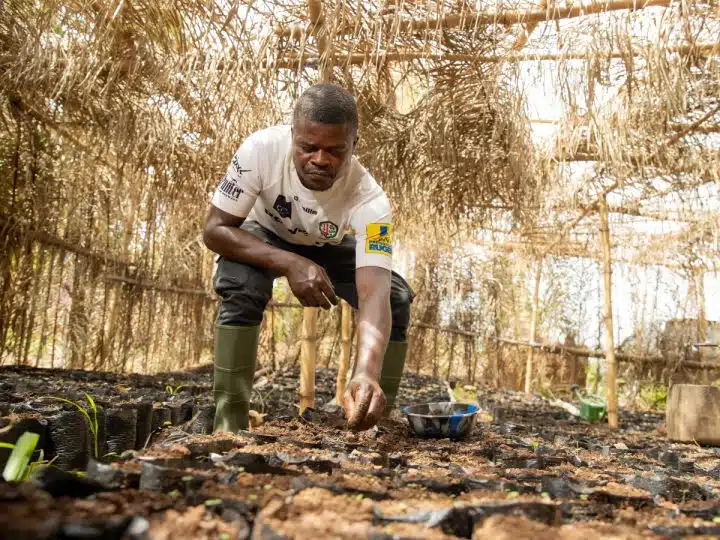
Featured image via Mohamed Aly Diabaté / Fairtrade Foundation
By The Canary
A recent report by children’s charity Barnardo’s lays bare the scale of misogyny in the UK. Polling 4,000 young people, its shows how misogyny and targeted racism have flourished on social media platforms. As a result, the report found that these attitudes have dangerously become more ‘commonplace’ among offline.
Against this backdrop, British PM Keir Starmer announced yesterday a social media ban will come into effect next year, restricting access for under-16s. Nevertheless, will still be able to circumvent the ban using VPNs. This means use of Snapchat, YouTube, TikTok, Instagram, Facebook and X, by young people will likely continue.
Lauren Spiers of Barnardo’s Northern Ireland informed:
Girls tell us misogyny is difficult to escape. It shows up in classrooms, corridors, on buses and online and it’s often normalised or unchallenged.
This suggests the ban is unlikely to improve the safety of girls and young women, and risks emboldening abuse offline. For Black and Brown girls, ‘mysogynoir’ — the intersection of racism and misogyny — makes the threat even greater.
Misogyny and dehumanising racism
Barnardo’s produced this powerful report after becoming alarmed by the growing number of young people harmed by the normalisation of misogyny online, with some girls experiencing abuse from as young as 13.
Polling 4,000 young people, the charity found that misogynistic abuse and harassment have become “constant, corrosive and deeply embedded” in the lives of many children across the UK.
Moreover, misogyny doesn’t just harm girls – it also pressures boys into unhealthy and restrictive ideas of masculinity. Nearly six in ten boys reported feeling compelled to “act tough” and hide their emotions. Meanwhile, a quarter of girls said they had been called degrading names online.
For some girls, that painful abuse goes even further. Those who do not fit narrow Western beauty ideals, such as young girls of colour, can find themselves subjected not only to misogyny, but also racism and dehumanising language.
As a result, this toxic culture actively harms young people, damaging confidence, poisoning relationships and undermining self-worth, while subjecting marginalised groups to even greater abuse.
Samai, a 21-year-old Black student who took part in Barnardo’s Changing Attitudes focus group, talks about being labelled ‘masculine’ simply for being Black, stating:
There’s a lot of cases where famous Black women get accused of being trans. That’s a huge, huge thing online. For example, a lot of people spent time trying to prove that Michelle Obama is transgender, and Megan Thee Stallion too.
It happens with sports players as well, Serena Williams is always being told that she’s masculine or a man.
What does that mean for young Black girls who are seeing that online? This shows how features associated with Black women are seen as being masculine.
Hiding misogyny behind “banter”
Young boys are increasingly absorbing misogynistic attitudes online, where influencers, algorithms and peer pressure normalise abusive and demeaning rhetoric towards girls. As a result, many come to see this behaviour as acceptable, or even expected.
The starkest finding is that 57% of boys surveyed felt pressure to join misogynistic “banter” or risk being labelled “boring.” This is not harmless joking, but a culture teaching boys that sexism earns social approval.
The reality is bleak — the more sexism is normalised, the less safe girls feel. What some dismiss as “banter” can have real consequences, and for many women it is often the start of something worse.
Meanwhile, 21% of boys said they felt unable to challenge sexist comments from friends, showing how entrenched these attitudes have become. When peer pressure silences boys, misogyny doesn’t just survive — it spreads.
Olly, aged 18, told Barnardo’s:
As a young man, I see online misogyny every day. It sets the tone for how boys treat girls and how boys treat each other. There is pressure to laugh it off or stay silent, even when it crosses a line.
Young men set the standard. Challenge it, shut it down, and back those who speak up. That is how we change what is accepted.
Children’s Services Manager for Barnardo’s South West England, Sarah stated:
We’ve supported young girls who have had digitally manipulated (deepfake) images of them created and circulated online.
The images were shared through social media platforms, sometimes via fake accounts created to spread the abuse further. Incidents like this cause significant emotional impact including fear and distress.
A culture of victim blaming can also lead to girls being concerned about how others perceive them, rather than seeing themselves as a victim of serious sexual abuse. This can sometimes leave them vulnerable to further abuse and exploitation – but with the right support, we do see girls begin to rebuild trust, confidence and find their voice.
Men must call out misogyny
Barnardo’s wants urgent action to tackle misogyny wherever it occurs, put children’s voices at the centre of decision-making, and make online spaces genuinely safe for young people. To achieve this, the charity is calling on the Government to give Ofcom’s Violence Against Women and Girls guidance real teeth by making it a mandatory Code of Practice and holding platforms accountable for the harms they enable.
Misogyny and violence against women and girls remain a serious crisis across Western society, particularly in the UK. Too often, women stay silent because society puts victims on trial. Meanwhile, perpetrators escape accountability.
The fact that this problem is getting worse, not better, should ring alarm bells. The girls of today will become the women of tomorrow. Furthermore, boys exposed to misogynistic attitudes risk carrying those behaviours into adulthood.
Simply banning social media will not make these problems disappear. If anything, it risks driving abuse further underground, making some girls less likely to speak out if they fear punishment for using prohibited platforms. What young people – and many adults – need is far greater state investment in relationship education, digital literacy, and healthy communication, so they can actually understand what constitutes respectful behaviour.
We already know where misogyny, entitlement and the abuse of power can lead. The testimonies of countless survivors make that painfully clear.
Importantly, the next generation deserves better than to inherit the same harmful attitudes and behaviours that have damaged so many lives before them.
Featured image via Barnardo’s

Imad Sarhan, 48, was a Palestinian who had been imprisoned for almost 25 years by the Israeli occupation before his death on 14 June. The late Sarhan suffered from a heart attack whilst in the high security Gilboa prison.
Repeated tortured in Israeli custody
He was abducted from his home in Haifa, on 15 October 2001, and sentenced to life imprisonment plus 10 years. From his first day in prison, until the day he died, he underwent severe and systematic interrogation and torture sessions. He was also subjected to deliberate medical neglect, and regularly kept in solitary confinement, once for a period of four years. However, his family had not been given any information regarding the circumstances surrounding his death.
Decades of abuse from “Israel” during his imprisonment took its toll both physically and psychologically. Sarhan suffered from serious heart problems and high blood pressure. In recent years, his health deteriorated rapidly, leaving him unable to move without a wheelchair.
Israel ramps up collective punishment
There has been an escalation of acts of revenge attacks, abuse and neglect against Palestinian prisoners since October 2023. This is because the occupation has been carrying out collective punishment against Palestinians, a war crime under international law.
Legislation that legalises executions has now been approved. And the Knesset is making moves to permanently ban International Committee of the Red Cross (ICRC) visits to prisoners. These developments deepen the vulnerability of prisoners, and make urgent independent oversight and accountability more necessary than ever.
The Palestinian Centre for Prisoners Advocacy is calling for the formation of independent international investigation committees. These would examine the circumstances of prisoners’ deaths inside detention centres, and prosecute the “Israeli” officials involved in these crimes.
Palestinian prisoner deaths
The killing of Sarhan brings the number of documented Palestinian deaths in Israeli custody to 90 since October 2023, and 327 since 1967. 118 of these were serving life sentences.
As of 10 June 2026, according to the Palestinian Prisoners Society, 9,400 Palestinians are detained in Israeli occupation jails, and 3,324 held without charge or trial. There are 95 female prisoners and nearly 360 children. In Gaza, 1,316 Palestinians have been detained classified by Israeli occupation authorities as “unlawful combatants.”

What follows will be worse, yet our global leaders continue to look the other way.
Featured image via Arab Organisation for Human Rights UK
By Charlie Jaay


Ministers in Starmer’s government have apparently been hard at work lobbying the US President over fears. They worry they will see a backlash over the announced under-16s social media ban.
Rather than asking the billionaire owners of Snapchat, TikTok, Facebook, Instagram, X and YouTube to protect children and restrict harmful content for all users, our government is instead choosing to cut off access for the most vulnerable in society. In fact, Starmer is now heading to the G7 Summit to meet the President. He will no doubt try to win favour with Trump.
This signals another futile move by Labour to please the ultra-wealthy elites. Meanwhile, they continue to dodge their responsibilities to the British public.
UK ministers lobby Trump to avert backlash against social media ban https://t.co/dLWT23FzG9
— The Right News, Right Now. (@BradPorcellato) June 15, 2026
Big tech get a free ride from Starmer
This social media ban comes as yet another instance of ordinary people bearing the cost of powerful men and big tech not being held accountable.
These platforms are dangerous, that much is undeniable. But they also provide means of finding connection for increasingly isolated children. Moreover, these children are undersupported in schools. They also have poor access to green and safe places. Rather than holding toxic, abusive tech executives to account, it’s children who end up being ‘punished.’
Starmer is doing his utmost to appease Trump to assure him that US tech in the UK market will not be restricted. However, this raises renewed concerns. People worry about the concessions Starmer may offer to the President for his ‘compliance.’
Obviously, US tech companies will undoubtedly be affected by these measures. However, we should not overlook the fact that the verification process could significantly expand their access to private data in the UK.
Reports indicate that companies have already implemented the necessary device updates. This casts doubt on claims that big tech opposes the policy. Furthermore, it raises the possibility that key concessions have already been made behind the scenes.
— Politics UK (@PolitlcsUK) June 15, 2026
 NEW: The UK's social media ban for under-16s is set to be enforced at device-level, with Apple and Google forced to verify the age of all users
With genocide-complicit Palantir embedded both in the US and UK, there is also unfettered access to our patient data in the NHS. Therefore, this data hoarding should worry all freedom-loving citizens both at home and abroad.
It will "force the public to trust their IDs to companies with serious track records of leaks and hacks" – @JCoulson1013
— Big Brother Watch (@BigBrotherWatch) June 15, 2026
 A social media ban means that all of us face digital ID checks to get online
‘Big Brother’ surveillance state
Numerous reports warn that ban could create a “Big Brother” Orwellian state. This would threaten privacy, restrict freedoms, and deepen surveillance of online spaces. Moreover, lest we forget, Shabana Mahmood has openly discussed her ‘dream’ of establishing a AI-empowered surveillance state — inspired by English philosopher Jeremy Bentham’s Panopticon.
Therefore, the move to grant greater access to users’ personal data — through bank-account checks and email surveillance under the guise of ‘verification’ — is utterly frightening. It is all in the name of protecting children.
Surely this move will also require all adults to verify their age. This, in turn, could lead to further exploitation and control by the establishment, while placing the public under the boot of tech giants.
A social media ban will "incur an enormous privacy intrusion for the British public."@silkiecarlo reacts to Starmer's social media ban announcement, on BBC News — Big Brother Watch (@BigBrotherWatch) June 15, 2026
 "You will now need to show your papers just to go onto a social media site."
 pic.twitter.com/xXpnqE5Q5r
Let’s also remind ourselves of the kind of sinister men our government is working hard to ‘win over.’
A sitting congressman, Ted Lieu, said on the record the Epstein files are being blocked because they show Trump raped and threatened to kill children. Lets make this viral again — Morgan J. Freeman (@mjfree) June 10, 2026
 And just like that, it’s completely VANISHED from the media.
 pic.twitter.com/tw0oVgyPOq
We must also recognise that Google — which will have unencumbered access to user data — has played a significant role in the ongoing genocide in Gaza. In addition, the company has willingly aided Israel in its genocidal rampage.
How can handing them more data be a good thing for ordinary people, as Stanford students recently highlighted during a walkout ahead of an address from Google’s CEO:
THE YOUTH ARE MORE THAN ALRIGHT This is because of Google's contracts with the IDF, Dept. of Homeland Security, and ICE. pic.twitter.com/BY9EajiExx
— Earth Hippy
Stanford University graduates staged a walkout during Google
CEO Sundar Pichai's keynote address.


 (@hippyygoat) June 15, 2026
Ordinary people MUST stand up to billionaires
Billionaires are destroying Western society, with democracy vanishing from existence as they use their hoarded wealth — drawn from our pockets — to buy our corrupted politicians.
Once private interests and wealthy donors have effectively “bought” politicians, those politicians will protect abusive behaviour to advance policies that benefit the wealthy. The ordinary masses will be left to deal with the fallout.
Needless to say, ordinary people, whether working class or middle class, are watching their money disappear. It no longer stretches as far as it used to, with wage packets barely meeting the cost of living. Hard-working people continuously are forced to tighten their belts, while the rich exploit ‘legal’ loopholes inflate their profits at record-breaking speed.
It is time to hold big tech and billionaires accountable for the harms they inflict on us all. The masses have had enough of living under the heel of the rich, and we are losing this class war.
Featured image via the Canary
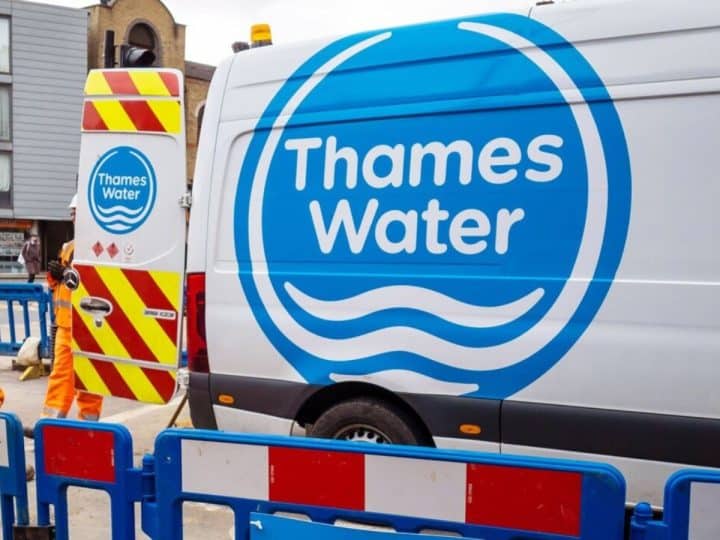
107 MPs, including 42 Labour MPs, have signed an open letter to Ofwat and the environment secretary, calling on them to reject the latest deal put forward by Thames Water’s creditors, and bring the private water company into Special Administration.
This comes as environment secretary Emma Reynolds has written to Ofwat to object to the Thames Water creditors’ proposal deal to take over the utility.
Thames Water is on the brink of financial collapse. Thames Water’s creditors have been negotiating with Ofwat to determine the future of the utility since June 2025.
As part of the proposed deal, the creditors want to waive fines until 2030. Pollution, leakage and other performance targets would be suspended or ‘significantly modified’. The creditors also want to raise bills for households beyond the level currently set by Ofwat.
The open letter expresses a concern that allowing Thames Water to set its own rules would create a dangerous precedent for all of England’s privatised water companies. The company caused almost a third of the water sector’s most harmful pollution incidents in 2025.
The letter argues that by taking Thames Water into Special Administration, this government can secure a better deal for the public purse by writing off a greater proportion of the utility’s debt.
We Own It co-ordinated the open letter, which has gained signatures from MPs across political parties, including:
- Jack Rankin, Conservative MP for Windsor.
- Barry Gardiner, Labour MP for Brent West.
- Tim Farron, Liberal Democrat MP for Westmorland and Lonsdale.
- Hannah Spencer, Green MP for Gorton and Denton.
It also comes as potential Labour leadership candidate Andy Burnham states that public ownership is “what should be done” for Thames Water.
Sophie Conquest, lead campaigner at We Own It, said:
The average water bill in England is now £639. During a cost of living crisis, households have no choice but to pay more and more for a broken service and sewage-filled rivers.
Yet Thames Water wants to be rewarded for its abysmal failure with a regulatory holiday. And they want us to foot the bill.
The government is absolutely right to block this deal. Members of the public, who pay for and depend upon our water system, and the MPs who represent them are clearly opposed to a deal which puts the interests of US hedge funds ahead of billpayers and our environment.
By taking Thames Water into Special Administration, we can slash the debts and give billpayers and the environment a fair deal.
From there, this government must place Thames Water into permanent public ownership.
Special administration of Thames Water must be the beginning of the end of our water system being used as an ATM for faraway shareholders. Under public ownership, we can put billpayers and the environment first.
Featured image via the Canary
By The Canary


Thames Water is now even closer to temporary nationalisation after the government objected to a £10bn rescue proposal from its creditors.
Ofwat, the UK water regulator, is also feeling the heat, after Environment Secretary Emma Reynolds penned a letter to the watchdog criticising the lenders’ offering. She warns it would fail both the environment and customers.
‘A holiday from the rules’
Thames Water has teetered on the edge of ruin for several years, at this point. It’s currently buried under £20bn in debt, and has faced record fines for dumping untreated sewage into England’s waterways.
The company will run out of money completely in October, at which point it will enter Special Administration (i.e. government control). Back in January, pollster Survation found that 54% of Thames Water’s customers supported the nationalisation measure, vs just 19% who wanted the company to remain in private hands.
However, London & Valley Water (LVW) — a Frankenstein’s monster of financiers who own Thames Water’s debt-tabled a deal with Ofwat. Now, time is against LVW here. Ofwat would have to put its deal up for three months of public scrutiny, and also obtain the High Court’s sign-off.
Under the current proposal, first set out in June 2025, LVW have offered to erase £9.4bn of Thames Water’s debt. The proposal also included £3.35bn cash and £6.55bn new debt facility before 2030. However, in return, LVW asked for permission to effectively ignore pollution and performance targets.
Understandably, the bogus deal has attracted massive criticism from campaign groups. We Own It, for example, urged MPs to sign an open letter demanding a rejection of the deal. The group stated that:
Thames Water’s creditors want a holiday from the rules, and they want us to pick up the bill.
Ofwat fails consumers
Then, on 15 June, environment secretary Emma Reynolds added the government’s weight to the objections. She wrote to Ofwat, calling the rescue proposal a “weak” response to “15 years of mismanagement and failure”. Likewise, she highlighted that it would place an “undue burden” on Thames Water’s customers.
The government has previously stated outright that it would prefer a “market-based solution” to Special Administration measures. As such, the fact that the environment secretary stepped in to offer criticism is a mark of how truly abysmal this deal really is.
Commenting on the intervention, Reynolds stated that:
I have written to Ofwat to set out my early concerns that the creditors’ proposals don’t do enough to protect consumers and the environment.
In response, LVW made a thinly veiled threat that any other option would result in higher water bills:
All other routes offer significantly worse outcomes for customers and the environment. Our proposals do not anticipate any increase in customer bills beyond those set out by Ofwat.
‘Let us keep dumping sewage or we’ll jack up the prices’ doesn’t exactly sound like good-faith negotiations to us. For context, Thames Water recently hiked bills by a massive 35%, which a vast majority of customers deemed unreasonable.
Ofwat is expected to make a decision on the deal by July at the latest. This is necessary in order to allow time for public scrutiny before Thames Water finally goes bust in October.
As both the public and the government has now urged, it must reject this awful deal and uphold its duty to protect both the environment and the consumers who are being held to ransom by Thames Water and its creditors.
Featured image via the Canary
By Grace

Why Fertilizer Stocks Didn’t Sell Off on Iran Peace Deal Announcement

England kick-off time tonight: World Cup start time for England vs Croatia at World Cup 2026

My Home Vyoma Hyderabad | Financial District New Project Full Details

Blockchain.com files with SEC for U.S. IPO

Israel says it has killed new Hamas military leader in Gaza City airstrikes

NYT Strands Answers May 24 2026 Revealed for Puzzle No. 812 Theme Summer Essentials
My Home Vyoma Hyderabad | Financial District New Project Full Details

How Much Money Do You Need to Make to Afford a 2009 Honda Civic DX? #wealth #honda #car #money

You can’t achieve financial freedom without this #financialfreedom #passiveincome #finance #money
-

 Business3 days ago
No Jackpot Winner as $257 Million Prize Rolls Over to $269 Million Monday Draw
-

 Crypto World6 days ago
Oppenheimer backs SpaceX as $70 billion retail frenzy builds
-

 Fashion5 days ago
Weekend Open Thread: Tuckernuck – Corporette.com
-

 Crypto World6 days ago
Markets Rally as SpaceX IPO Looms Amid Iran Tensions and Inflation Surge
-
 Crypto World2 days ago
Zimbabwe Requires Crypto Businesses to Register Annually Under New FIU Regulations
-

 Tech4 days ago
NanoClaw integrates JFrog registries to secure AI agent downloads
-

 Tech5 days ago
This Week In Security: Microsoft On Microsoft, Register Your Domains, Linux On ARM, And FreeBSD Joins The File Cache Club
-

 Crypto World4 days ago
Bitget enters Argentina’s regulated crypto market through PSAV registration
-
 Tech6 days ago
Dutton Ranch star claims they ‘didn’t see any disruption’ on set following Chad Feehan’s exit from Yellowstone spinoff fueled by Taylor Sheridan clash rumors
-

 NewsBeat5 days ago
El Nino has formed in the Pacific and could set records, forecasters say
-

 Tech7 days ago
‘This is Seattle’s position on AI’: City Council votes unanimously to pause big new data centers
-

 Politics6 days ago
Politics Home | Healey Resignation Is “Colossal Failure Of Government”, Says Former Labour Defence Secretary
-
 Entertainment6 days ago
Donnie Wahlberg & More Heat Up Las Vegas at Circa’s Barry’s Downtown Prime
-
 Tech6 days ago
Opendoor Ends India Operations, Fueling a Bigger Conversation About AI and Outsourcing
-

 Sports6 days ago
First Time Since 1971: Australia Register Historic Low In ODI Cricket
-

 Politics6 days ago
Belfast burns, while Met chief points finger at Iran and Russia
-

 Business6 days ago
AT&T: Verizon's 27% Outperformance Sets Up A Solid Entry Point
-

 NewsBeat4 days ago
FBI searches office of Ohio voter registration group
-
 Tech5 days ago
Anthropic is spending $150M to embed 1,000 AI fellows inside nonprofits. No degree required.
-

 Politics6 days ago
Modi thanks Trump for wishes as US attacks Indian seafarers
You must be logged in to post a comment Login