Bitter harvest for Australia’s Mackay Sugar, attacked in peak cane crushing season
A cyberattack on Australia’s second-largest sugar producer has forced farmers to keep crops in the ground, and looks like denting their incomes.
Advertisement
Mackay Sugar, based in the Australian state of Queensland, processes sugar cane farmed in nearby districts. The company disclosed a cyberattack on June 10 and limited operations while it dealt with the fallout.
Some operations remain restricted, but the company said on Monday that it managed to perform some manual crushing at its Farleigh Mill site, working with sugar cane that was harvested before the attack.
“Significant progress has been made over the weekend in restoring the systems that support cane supply, harvesting, and mill operations,” Mackay Sugar said in a statement.
“Steam trials are now underway, and subject to final validation activities, some harvesting is expected to recommence this week in preparation for the staged restart of crushing operations later this week.”
Advertisement
While the company is optimistic it can resume crushing, it’s advised growers not to harvest their crops for the time being.
That edict works for Mackay Sugar because sugar producers need to process crops within 48 hours of harvest. Doing so preserves high sugar content and overall yield. Delaying the processing for any longer after harvesting could result in sucrose converting to simple sugars, unwanted fermentation, and lower yields.
But late harvesting can reduce the quality of cane, reducing the price they earn for their crops. Interrupted harvesting also impacts the railways used to move cane from farms to mills.
Mackay Sugar acknowledged the impact its downtime could have on growers and other partners, and committed to restoring systems safely.
Advertisement
“We are communicating directly and regularly with our employees, growers, and key partners,” it said. “We recognise the impact this incident is having on our growers, and we are doing everything we can to support them and to safely resume full operations as soon as possible.
“We take our responsibility to protect our systems, operations, and information very seriously. We apologise for any disruption this incident has caused and will continue to provide updates as we continue our investigation.”
The company operates three mills across Queensland, two of which were operating at a limited capacity due to the attack.
Its Racecourse Mill, described as the heart of the business and home to its corporate offices, was among those affected. Racecourse Mill typically generates 213,000 tons of raw sugar and 58,000 tons of molasses a year, and the site’s cogeneration plant generates 156,000 MWhs of renewable electricity a year, around 71 percent of which is sent back into the national electricity grid.
Advertisement
Mackay’s mill in Farleigh, the company’s oldest, was also affected. It typically produces around 196,000 tons of raw sugar and 49,000 tons of molasses per year.
The company’s largest and most productive factory, Marian Mill, was unscathed.
Ungentlemanly conduct
Cybercrime group The Gentlemen claimed responsibility for the attack on Mackay Sugar, posting the company to its data leak site without offering any details about the attack or whether it stole data to use as leverage for extortion demands.
Cyber threat intelligence professionals have known of the group for almost a year, after spotting it in July 2025 and classifying it as a ransomware-as-a-service provider.
Advertisement
However, there is no evidence that ransomware was used in the attack on Makay Sugar. The company has never mentioned ransomware in its statements, referring to the attack only as a “cyber security incident.”
However, The Gentlemen is known for using file-encrypting malware in its double extortion attacks.
The group caught the attention of Microsoft’s researchers, who last month published a deep dive into how it carries out attacks.
Microsoft’s report noted that not only do The Gentlemen affiliates have access to a powerful file encryptor, but also one that self-propagates, which “increases the likelihood of widespread impact once initial access is achieved.”
Advertisement
It has also recently established a partnership with BreachForums, which allows the group to recruit prospective new affiliates with different skillsets, such as penetration testers and initial access brokers. ®
The organization isn’t going to let a non-sponsor brand show up on the field.
Jessica Kirsh/Shutterstock
FIFA is known for having a strict policy about making sure brands, which aren’t official sponsors and advertisers, don’t appear on World Cup fields and stadium. For instance, it recently made sure that Beats wasn’t getting any free advertisement on the field and had Bayern Munich player Jamal Musiala literally cover the logo of his headphones with tape during warmup.
At FIFA’s request, Jamal Musiala had to cover the logo of his Beats by Dre headphones with a tape strip before the Curaçao game. FIFA is cracking down hard on brand logos at the World Cup – even the players have to hide logos if the companies are not official tournament sponsors… pic.twitter.com/PaAPBZYXP5
X user @iMiaSanMia posted a photo showing Musiala wearing headphones with a covered logo, reportedly at FIFA’s request, before Bayern’s match against Curaçao. If you haven’t heard yet, FIFA also had Levi’s cover its logo with a tarp at the Levi’s Stadium in Santa Clara, California, which is being called the San Francisco Bay Area Stadium for the World Cup. Levi’s, of course, took advantage of the buzz around it and replaced its social media profile picture with a tarp-covered version of its logo.
Advertisement
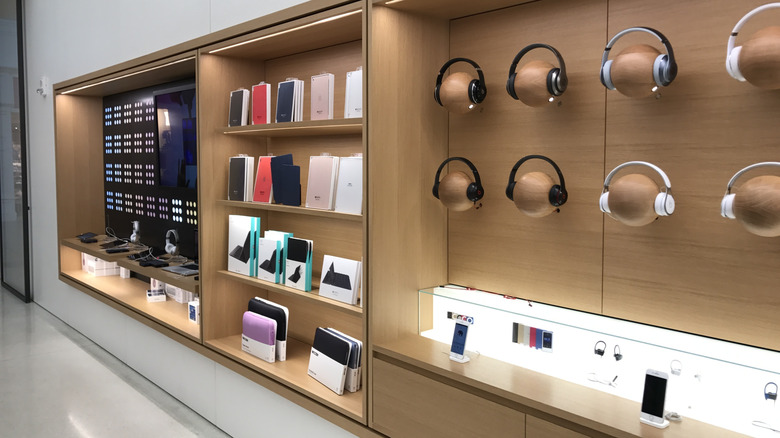
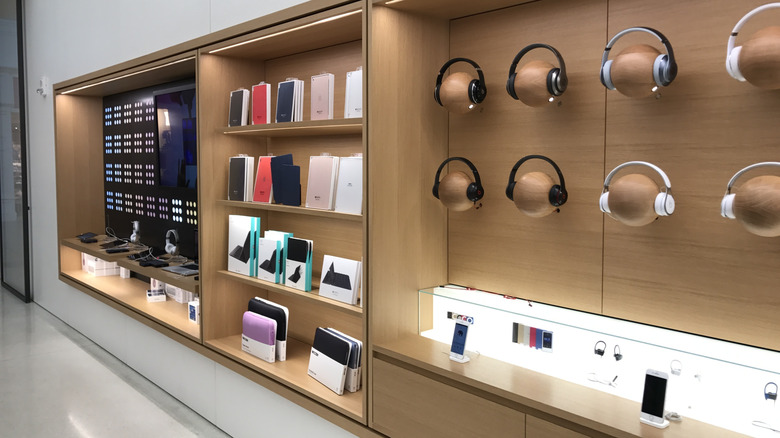
While the Beats branding isn’t showing up on the field, it’s been popping up on a lot of football/soccer players’ social media posts. In fact, it’s been using the players to tease an unannounced over-ear headphones model, which could have customizable colors based on the variety we’ve seen so far.
The AI lab finished May by surpassing OpenAI in market share of business spending for the first time, Ramp just revealed. It raised $65 billion at a $965 billion valuation (also besting OpenAI) at the end of May, then waltzed into June by filing confidential paperwork for an IPO, reportedly on the strength of its first-ever profitable quarter.
Then on Friday, the Trump administration renewed its war on the model maker by sending a letter demanding it ban non-Americans, including Anthropic’s employees, from accessing its state-of-the-art models: the limited-release Mythos 5 and the more guarded version of Mythos released to the public three days earlier, called Fable 5.
This essentially forced Anthropic to pull its latest all-powerful model from the market altogether.
Advertisement
Although the White House invoked an obscure export control directive when ordering the ban, the exact cause remains unclear. The chatter was that hackers easily bypassed Fable 5’s guardrails, which were intended to prevent access to Mythos’ capabilities. That model is so good at finding security flaws in software code that Anthropic itself marketed it as dangerous and restricted its public release.
This new drama comes after Anthropic famously refused to allow the government to use its models for mass surveillance of Americans and fully autonomous weapons. As a result, in March, the Trump administration declared the company a supply-chain risk.
That didn’t deter Anthropic’s sales to businesses. Quite the opposite, Ramp’s data shows. Ironically, this latest feud with the Trump administration, which also appears to validate the hubbub over Mythos’ mythological power, may help rather than hurt Anthropic, according to Ramp’s lead economist, Ara Kharazian. Kharazian is the person who compiled the business-spending AI data.
“If anything, it’ll probably boost them,” Kharazian told TechCrunch. “Anthropic’s best month on record, as far as business adoption, was the month that the Department of Defense labeled them a supply-chain risk. There’s a lot of aura that comes with your model specifically being named too dangerous to use.”
Advertisement
Ramp’s data isn’t granular enough for us to see how much of a financial hit the company will take by pulling Mythos and Fable 5 off the market.
Still the data, from more than 70,000 businesses that use its platform, shows that customers heavily use Anthropic’s Opus models and that business use has been growing.
For instance, Ramp reported that Anthropic’s share of AI subscriptions paid for by businesses rose 2.5 percentage points in May to 41%. This compares to OpenAI, which commanded 39.5% of AI subscriptions by its customers, essentially flat from the prior month. (OpenAI still greatly leads Anthropic in overall consumer usage, according to new data from Sensor Tower.)
Beyond subscriptions, the vast majority of what companies spend money on is API calls to the model, which cover token use for activities like coding. Anthropic’s Claude Code has a strong reputation as a powerful AI coding tool.
Advertisement
Ramp can’t always see from the spending data which models most businesses are using. When it can see the model details — in about one-third of transactions — businesses are mostly spending on various flavors of Claude Opus, particularly the later versions. Opus is the model that preceded Mythos and is still openly available.
Mythos had not been on the market for that long, having been released to limited users as of April. And Fable 5 was shut down after a few days.
While we can’t predict how this latest drama with the White House will impact Anthropic’s ability to go public as it hoped to (public-market investors tend to be wary of companies embroiled in controversies with the government), the numbers indicate that Anthropic’s available models are more popular with businesses than ever before.
Advertisement
When you purchase through links in our articles, we may earn a small commission. This doesn’t affect our editorial independence.
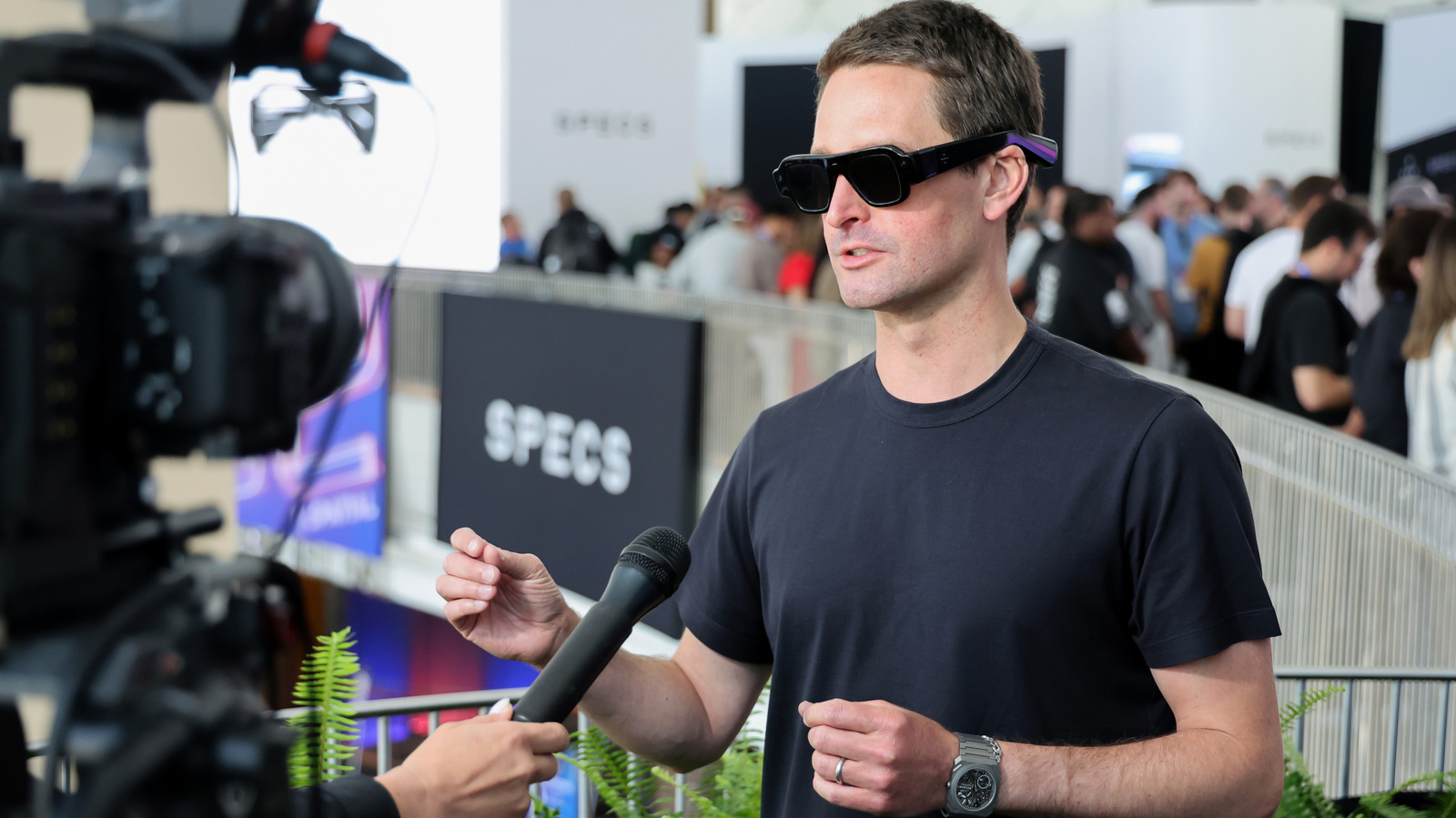
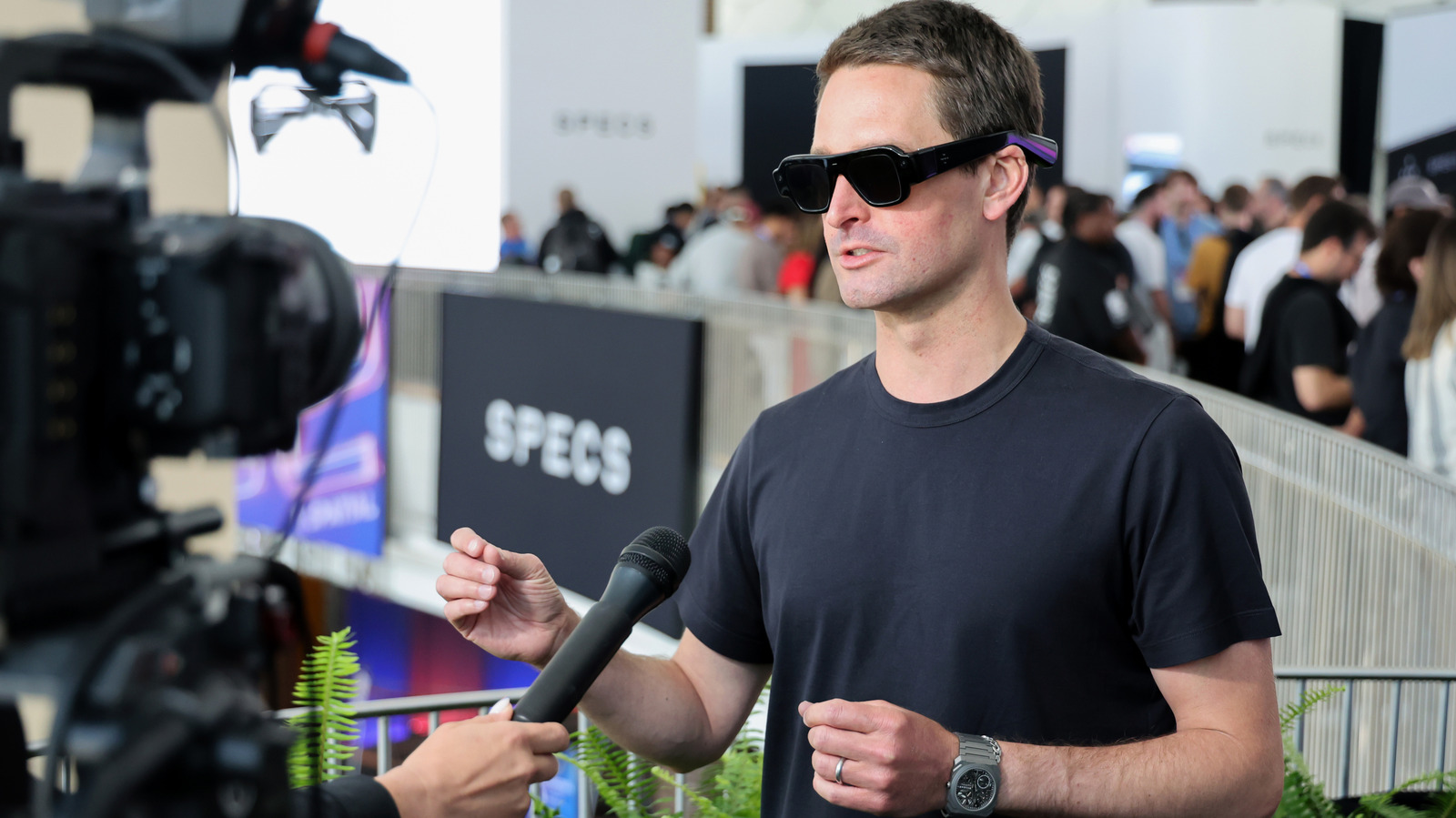
Snap’s newly announced AR Specs might seem similar to other smartglasses, but Snap CEO Evan Spiegel says that’s the wrong way to think about the product. Specs, he says, is “a new type of computer, a see-through computer.”
Shortly after unveiling Specs at AWE, Spiegel sat down with Engadget to tell us more about the device we got a glimpse of onstage. The CEO repeatedly referred to Specs as a “computer” and that really is core to understanding how Snap is positioning the product (and justifying the price). Specs, Spiegel said, “is able to overlay computing on the world around you and bring computing into the world, which is so important if you want to make computing feel more human.”
But Snap will have to do more than just persuade people to buy a computer for their face. When Specs go on sale later this year, the company will face a very different environment than when it first started experimenting with camera-enabled glasses in 2016. For one, it has a lot more competition now. But today, there’s also increasing suspicion of smartglasses, given that there have been some very public cases of people misusing the tech.
There’s the Meta of it all, too. The company was recently caught with an unreleased facial recognition feature on its Ray-Ban glasses (that it removed soon after outside researchers discovered it).
Advertisement
Spiegel, not surprisingly, isn’t a fan of facial recognition.
“There are certain use cases, like facial recognition, that we don’t allow in Lenses, and one of the benefits of having our own developer ecosystem and our own developer tools is that we’re able to moderate the Lenses that are submitted and available on Snap to make sure that they comply with our guidelines,” he told Engadget.
He also said he hopes people will view Specs differently than what’s currently out there. “I think AI glasses are typically being used to record content, that’s sort of the purpose of the glasses as they’re marketed,” he said. “That’s not the purpose of Specs. In fact, I think that might be an almost tangential use case.”
Spiegel said he thinks people will feel more comfortable around Specs once they understand wearers are more likely to be “using a computer, not surreptitiously recording videos.”
Advertisement
Specs will also launch at a time when more governments and regulators are scrutinizing social media companies’ track records on child safety. Earlier this week, UK Prime Minister Keir Starmer said the UK would ban children under 16 from social media, including Snap. Spiegel said that while he anticipates Specs “will mostly be used by adults,” the company has built some parental control features for people who want to share the glasses with their teens. “You can basically swipe a little toggle [in the Specs app] and limit the world of Lenses that they can use when they’re using Specs,” he explained. “So they can have all the fun and play, and still provide comfort to parents that they’re overseeing what their teens are doing.”
At $2,195, Specs will be more expensive than any other smartglasses currently on the market. It’s also more expensive than even most headsets, save for the Apple Vision Pro, which Spiegel drew a clear comparison to during his keynote. I asked if Snap’s goal is for the price of Specs to come down eventually and he said it is a long term goal for the company.
“That’s something we’re really focused on over time, because we want Specs to be as accessible as possible,” he said. “As far as computers go, it’s an incredibly powerful new computer, and we try to price in a way that makes it something that early adopters and developers and folks who are really passionate about this technology can afford.”
Besides price, the biggest question ahead of the Specs reveal was just how much Snap would be able to change their design. Spiegel was wearing the new Specs throughout our conversation, and after seeing them up close I’m able to confirm they are indeed much more refined than the developer version from 2024. The arms are still quite thick, though, and stuck out a bit past Spiegel’s head. But from the front, they are noticeably narrower and rounder than the boxy, more angular frames we’ve seen in the past from Snap.
Advertisement
While he was speaking, I was able to easily see his eyes through the lenses, though I could detect some rainbow-like reflections from the embedded waveguides when he turned his head. I also saw the lenses when the dimming feature was enabled and they looked fully blacked out, like dark sunglasses.
Unfortunately, Snap isn’t offering demos of the glasses just yet, so my impressions are limited to what I was able to observe during my quick chat with Spiegel. But I’m looking forward to seeing how Snap’s “computer” will look and fit on different faces.
Facepalm: Claims that Trump Mobile could deliver a “Made in America” smartphone within months sounded dubious when the T1 was initially unveiled a year ago. The ensuing mockups suspiciously resembled existing foreign designs, and a recent teardown confirms the device is nearly identical to one from Taiwan-based HTC.
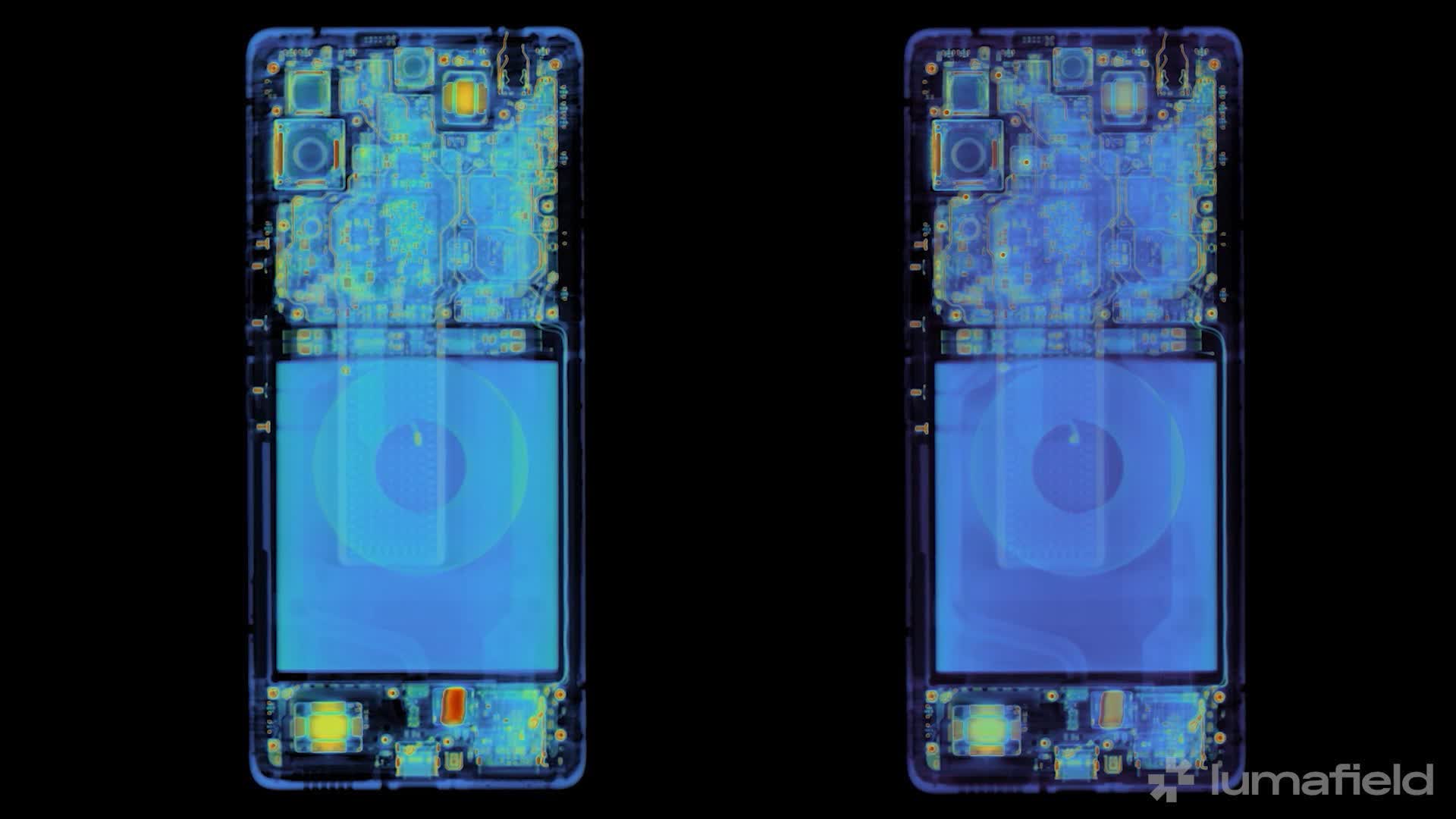
iFixit’s teardown of the Trump Mobile T1 confirms that the phone is essentially an HTC U24 Pro with a few minor cosmetic changes. The findings settle suspicions that had been circulating since earlier this year and undercut Trump Mobile’s original claim that the device would be American-manufactured.
The T1’s listed specs: a 6.78-inch 120Hz AMOLED display, a Snapdragon processor, a 50MP main camera, a 50MP telephoto, and an 8MP ultrawide – closely mirror what HTC publishes for the U24 Pro. When NBC brought a unit to iFixit, the repair team disassembled it using the same techniques that had worked on the U24.
HTC U24 Pro (left) and Trump Mobile T1 (right). Source: iFixit
Advertisement
Scans revealed nearly identical internal layouts and component placement, and iFixit successfully booted the T1 using a motherboard taken from the HTC device. The LPDDR5 RAM was sourced from Micron rather than SK Hynix, a difference iFixit attributes to supply chain variability rather than any meaningful design divergence.
Other changes are cosmetic or minor: a gold chassis (with the American flag rendered with 11 stripes instead of 13), re-drilled speaker holes, a different camera shell, a repositioned flash, and a larger battery. That battery grows from 4,600mAh to 5,000mAh, though charging speed drops from 60W to 30W.
When Trump Mobile unveiled the T1 alongside its carrier service exactly one year ago, the company claimed the phone would be “designed and built in the United States,” but walked that back quickly. Subsequent language described the device as “designed with American principles in mind,” and the website now simply calls it “Proudly American.”
The earliest mockups depicted a vague design that sparked doubts about whether a real product existed, while later images mirrored a repainted Samsung Galaxy Ultra. When the actual phone leaked in February, observers immediately recognized HTC’s design.
Advertisement
Trump Mobile executives have said the company aims to rely as little as possible on Chinese parts and labor, but Taiwan’s National Communications Commission database lists Guangdong Yuanchang Electronics Co., Ltd., a China-based manufacturer, as the producer of the HTC U24 Pro, and some U24 Pro retail boxes carry a “Made in China” label. Furthermore, when Google acquired a significant portion of HTC’s hardware engineering team in 2017 for $1.1 billion, it left the company with a considerably reduced capacity to design its own handsets. iFixit suspects HTC contracted a Guangdong company to both manufacture and design the U24 in the first place.
President Trump, like Obama before him, has pressured companies including Apple and Samsung to explain why smartphone manufacturing cannot be revived domestically. Supply chain analyst Kevin O’Marah has estimated that a fully domestic smartphone production timeline would span roughly a decade, requiring a phone designed from scratch around automated US production lines and manufacturing equipment that doesn’t currently exist in the country – making it unsurprising that Trump Mobile couldn’t accomplish the feat in a single year.
That said, final assembly of the T1 occurs in Miami, which could represent a first step toward a more domestically produced device. The persistent obstacle is the cost of US labor, and if domestic companies can gradually master the supply chain, fully automated US factories might eventually make it viable, though not for years. Pre-orders for the T1 are open at a promotional price of $499, slightly undercutting the U24 Pro’s $579 MSRP. A successor, the T1 Ultra, is planned.
Looking for the most recent regular Connections answers? Click here for today’s Connections hints, as well as our daily answers and hints for The New York Times Mini Crossword, Wordle and Strands puzzles.
Today’s Connections: Sports Edition is a tough one. If you’re struggling with the puzzle but still want to solve it, read on for hints and the answers.
Connections: Sports Edition is published by The Athletic, the subscription-based sports journalism site owned by The Times. It doesn’t appear in the NYT Games app, but it does in The Athletic’s own app. Or you can play it for free online.
Hints for today’s Connections: Sports Edition groups
Here are four hints for the groupings in today’s Connections: Sports Edition puzzle, ranked from the easiest yellow group to the tough (and sometimes bizarre) purple group.
Yellow group hint: Almost time to draft!
Advertisement
Green group hint: U.S. Bank is another one.
Blue group hint: Sharp items on sports shoes.
Purple group hint: Big Red Machine.
Answers for today’s Connections: Sports Edition groups
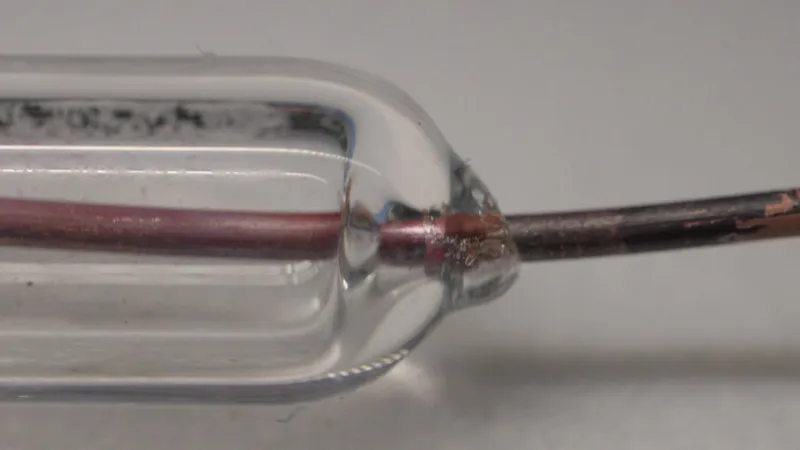
If you’ve ever taken a close look at a vacuum tube, you’ll have seen the seals around the pins that keep everything air-tight while providing the the device’s electrical contacts. As [maurycyz] finds out, it’s not an easy process to get right.
The problem is one of both chemistry and thermal expansion, as while a good seal can be made between glass and red copper oxide, it remains very difficult indeed to stop the glass cracking on cooldown due to differing thermal expansion properties. We’re led through a variety of experiments including surface treatments and flattening the metal to a sheet, with varying pros and cons. The most successful seal on the page comes from very thin tungsten wire, though hardly the most practical conductor for a vacuum tube.
It’s a fascinating investigation for the casual reader, taking them into the properties of metal-glass bonds and the difficulties involved in making them. We have even more respect for the people who make their own tubes after reading it.
TerraPower’s lab tests the equipment and processes for next-generation nuclear reactors. (GeekWire File Photo / Kevin Lisota)
TerraPower, the Bellevue, Wash.-based nuclear energy company, announced Tuesday the opening of a subsidiary office in the United Kingdom as it pursues its first international power plant.
“TerraPower is entering the UK market with a long-term commitment to supporting the nation’s clean energy future and establishing ourselves as a serious and reliable deployment partner,” Chris Levesque, company president and CEO, said in a statement.
In October 2025, TerraPower submitted its Generic Design Assessment (GDA) application to UK regulators and in February received formal acceptance from the country’s Department for Energy Security and Net Zero. The company has now officially started Step 1 of the GDA process.
Nuclear power has seen a resurgence of interest in recent years, driven by spiking energy demand from data center expansion, the electrification of transportation and other economic sectors, and energy security concerns tied to fossil fuel dependence.
TerraPower is among the companies developing next-generation nuclear technologies that aim to be safer, less expensive and faster to deploy than traditional reactors.
The company broke ground on its Natrium demonstration plant in Kemmerer, Wyo., in 2024, starting with non-nuclear construction. In April, it began work on the nuclear components after approval from the Nuclear Regulatory Commission.
The facility features a 345-megawatt, sodium-cooled fast reactor paired with a molten salt thermal storage system that captures excess heat. Drawing on that salt battery can boost the plant’s output to 500 megawatts for more than five hours. By comparison, Seattle uses around 2,000 megawatts during extreme weather events. TerraPower aims to have the reactor splitting atoms by the end of 2030.
The company also has a deal with Meta to build up to eight Natrium reactors in the U.S., with the first two targeted to come online by 2032.
The UK office extends that growth beyond American borders. Ian Hudson, the newly appointed head of TerraPower UK, said a permanent presence will allow the company to work closely with British partners.
Ever since the early web, people have been streaming video with inexpensive webcams, and since the advent of the Raspberry Pi and its dedicated camera slot we’ve really seen how easy it can be to build security cameras or any other webcam and get it online quickly. But these cameras notably lack defensive capabilities if anyone tries to break into an area they shouldn’t be, and [John] added some features to this webcam to help defend his garage.
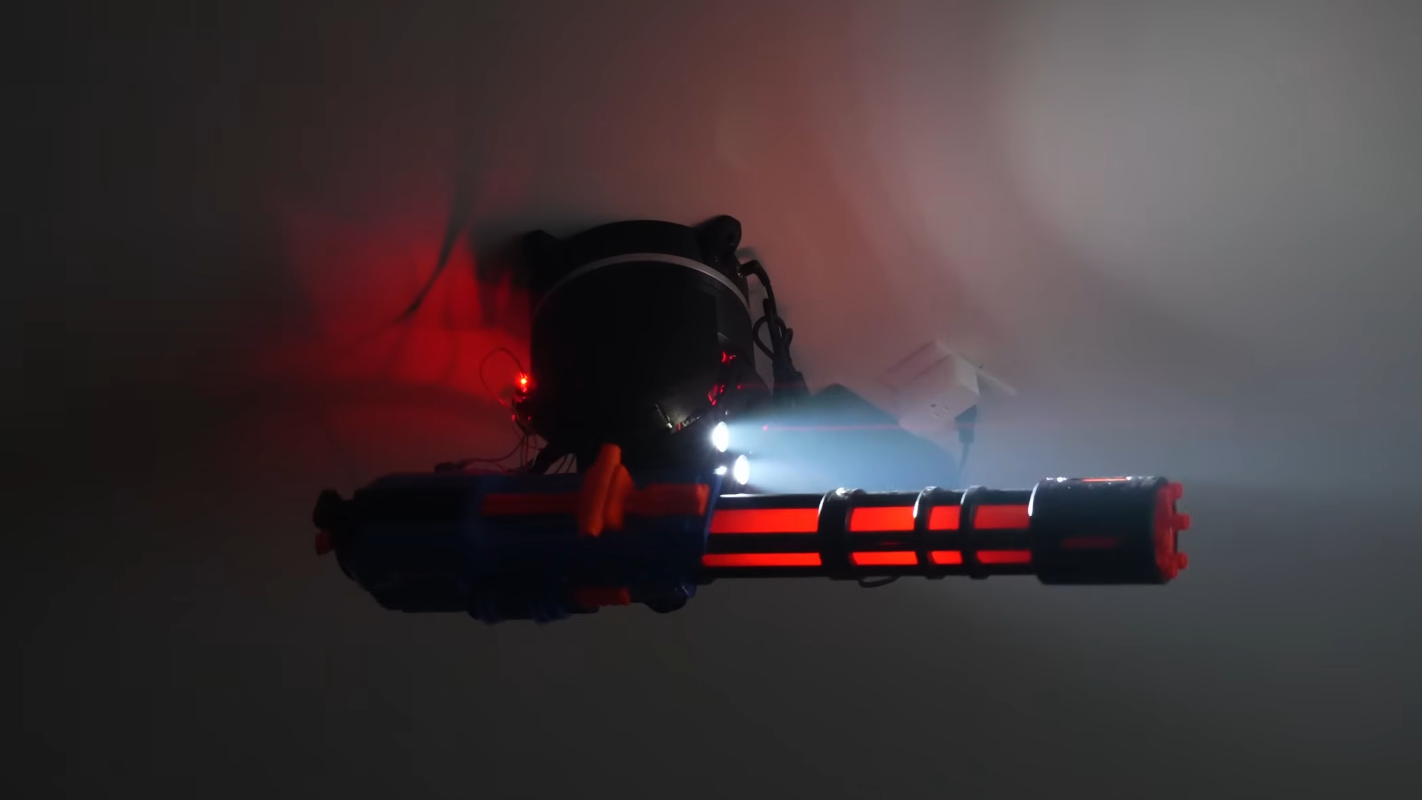
The webcam itself is a custom build, mounted on a custom-built tilt-and-pan mount that lets it freely rotate to view any location in the garage. Some custom software running on a Raspberry Pi lets it operate in autonomous mode or be controlled manually from an Android tablet. But for the defensive capabilities, it also carries a Nerf machine gun with a laser sight and spotlights which can all be controlled autonomously by the Raspberry Pi, including a computer vision system that lets it track various objects. While this is mostly a fun novelty for his security camera, the noise it makes might be enough to startle any would-be burglar.
[John] added a few other features to this build as well, including a speaker, which allows the system to be voice-controlled and to communicate back to the user. This lets him activate and deactivate the system using a verbal password. These types of Nerf guns are fairly popular for turrets as well, and some have practical uses as well like keeping cats from walking on the kitchen counters.
Goodbye, useful Spotlight; hello force-fed Apple intelligence bloatware that feels distressingly like Google AI Overviews
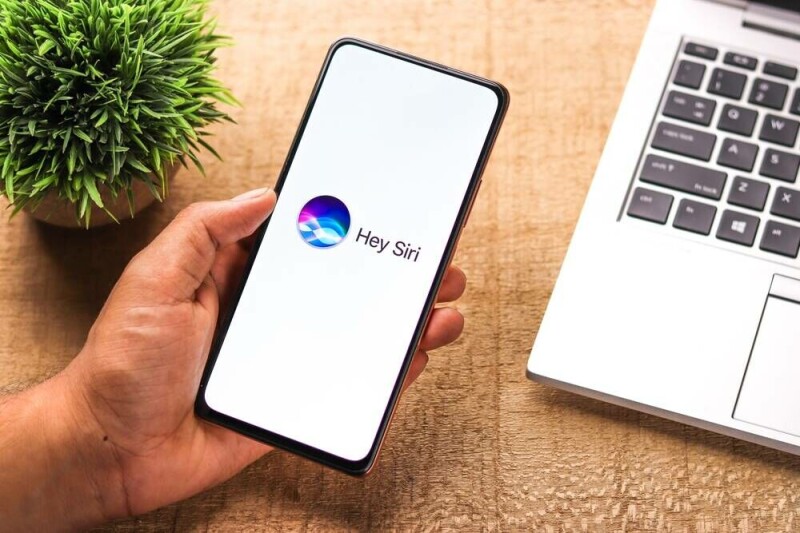
HANDS ON That new AI-juiced Siri that Apple rolled out last week at WWDC was supposed to set a new paradigm for on-device AI.
But don’t believe the hype coming out of Tim Cook’s final big event. After a week-long test drive, it seems like Apple just crammed Google AI Overviews on top of the most useful parts of its various operating systems and made the whole ecosystem more cumbersome to use. But hey, it has more AIs!
Advertisement
I’ve been running the iOS and macOS 27 developer betas since they were made available on June 8, and I was blessed by the waitlist gods with access to the new version of Siri a few days after that. There are definitely some useful new features: Siri now carries on actual conversations, which makes it far more useful than the ask, get a response, we’re-done-here flow of the old Siri that left no room for clarifying questions or follow ups. Siri is now able to find things on my device more easily too – at least on my M1 MacBook. My iPhone 15 Pro has been telling me it’s still re-indexing my device after the update for more than a week, but I was still able to use it to conduct web searches and find some things on my phone – it’s possible this message itself was an error.
The dedicated Siri app is also nice in its own way, as it shows a record of every conversation I’ve had with the new Apple Intelligence front end for later review, but that comes with a caveat, too. Even the most brief questions – the overnight weather forecast, for example – is now stored in perpetuity, cluttering up the list of chats we’ve had until I manually delete it. The only apparent alternative is setting an expiration window for past chats and losing records of the more useful conversations we’ve had.
Who turned out my Spotlight?
Those are small inconveniences, however, compared to my biggest gripe with Siri AI: It’s completely ruined Spotlight.
I’ve come to rely on Apple’s embedded search/launcher feature almost exclusively for digging up apps that I don’t keep a shortcut for, and on my iPhone, it’s the main method I use to kick off a web search because it’s so simple. Swipe down from the center of the screen, type what I want to search for, and tap on the item that points to my query as a Google search in Safari. Swipe, type, and a tap and I’m perusing a search result page.
Advertisement
Not anymore.
The new Siri-first interface that presumes that if you’re searching for anything but an app or file, you must want Siri to feed you a few links of Apple Intelligence’s choosing.
Getting to a web search from a Spotlight query now requires multiple taps: Type your query, tap “Show Results” (careful: hitting enter will trigger Siri to craft a response, eliminating the possibility of seeing any actual Spotlight content), tap on “Show More” next to the list of Siri-surfaced web results, scroll down until you see Search Google (or whatever engine you have set as your default), then tap that.
Maybe I’m being a grumpy old journalist who likes things the way they used to be, the transformation of Spotlight into a Siri interface seems like intentional degradation of a basic feature in order to front-load an AI that in my experience so far is largely an inconvenience.
Advertisement
Overall, the experience reminds me of Google’s much-maligned and often wrong AI Overviews, which push actual search results down the page in favor of force-fed info from Google Gemini.
There’s a logical reason for the similarity. At the end of 2025, Apple replaced its former AI chief John Giannandrea, formerly Google’s SVP of search and AI, in a bid to right the Siri ship. Taking his place was another Google alum with even closer ties to The Chocolate Factory’s AI strategy, Amar Subramanya, who spent 16 years there, including a turn as the head of Gemini engineering. Subramanya, now Apple’s VP of AI, now reports directly to Apple’s SVP of software engineering, Craig Federighi, who himself has assumed responsibility for Apple’s machine learning initiatives, including the construction of Apple foundation models.
As we learned at WWDC last week, Apple has leaned heavily on a partnership with Google to build its foundation models, and it appears Subramanya has brought some of that Google AI ethos with him as well.
So, what’s the alternative to the new AI bloat in iOS 27? Siri can still be turned off entirely in the Settings app, so there’s that, but I’ve decided to take another tack and use one of Apple’s other AI features to get what I want.
Advertisement
As the iMaker mentioned at WWDC, you can now create shortcuts (tiny scripts that automate basic tasks) by making a natural language request to Siri. In my case, I asked it to build a shortcut I could drop on my home screen to do a Google search with whatever text I input. It works perfectly, and is available to duplicate on your own iDevice should you see fit.
Again, this is a developer beta, so it’s entirely possible that Apple will wise up and stop burying basic Spotlight search functionality before its 27 series of OSes release to the public this fall. We asked Apple if the change was intentional, but didn’t hear back. ®
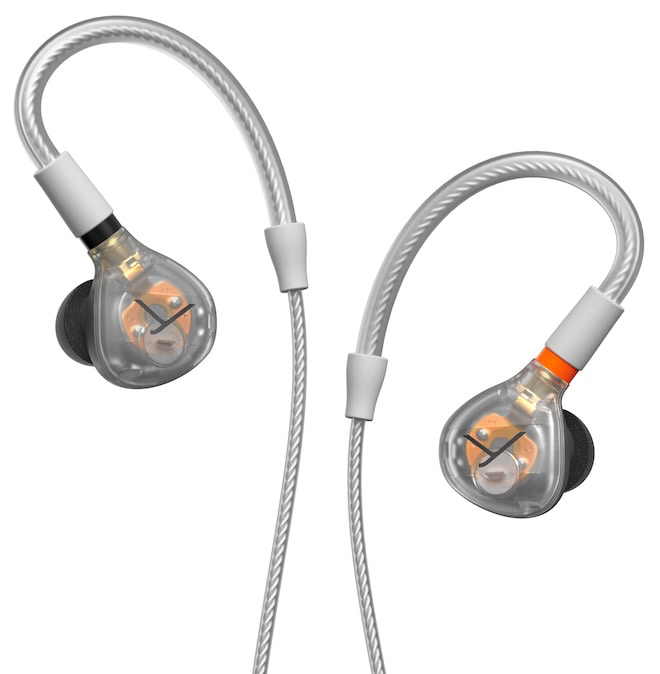
beyerdynamic has expanded its professional in-ear monitor lineup with the new DT 30 IE, a more affordable stage-focused IEM designed for musicians who need proper monitoring without jumping straight into the custom-molded or higher-end pro IEM category.
Priced at $159.99, the DT 30 IE sits below beyerdynamic’s DT 70 IE Series ($579.99) and is aimed at singers, drummers, guitarists, church musicians, rehearsal spaces, and working performers who are ready to move beyond floor wedges or consumer earbuds. Cheap earbuds on a loud stage are not a monitoring solution. They are a cry for help with a 3.5mm plug.
A More Affordable Entry Into beyerdynamic’s Pro IEM Lineup
Rather than offering instrument-specific tuning like DT 70 IE Series offers, beyerdynamic is positioning DT 30 IE as the versatile all-rounder in the lineup. That makes sense at this price. Most musicians shopping at $159 are not buying four pairs of IEMs and picking one based on whether they are playing bass, keys, or trying to survive playing with a rather enthusiastic drummer. The DT 30 IE is designed to be an affordable in-ear monitoring system for performers who need a more reliable, isolated, and balanced option for live work.
Inside the DT 30 IE is an 11mm dynamic driver with a stated frequency response of 5Hz to 20kHz. beyerdynamic says the tuning is balanced and neutral, with a focus on monitoring rather than casual listening.
That distinction matters. A lot of consumer earbuds are tuned to impress quickly, with boosted bass and hyped treble that sound exciting during a commute or a quick demo. That can be fun for playlists, but it is not what a musician needs when pitch, timing, vocal placement, click tracks, backing tracks, and the rest of the band all have to be heard clearly without fighting the mix.
Up to 39dB Passive Isolation
One of the most important specs here is up to 39dB of passive noise isolation. For live performers, that may matter more than any exotic driver claim.
Stage volume can get ugly fast. Loud drummers, guitar amps, bad venue monitoring, crowd noise, and unpredictable room acoustics can wreck a performance before the first chorus. Passive isolation helps musicians hear their own mix more clearly at lower volumes, which is better for focus and potentially better for long-term hearing health.
The DT 30 IE includes three pairs of silicone ear tips and three pairs of foam ear tips in small, medium, and large sizes. That is not just accessory padding. With in-ear monitors, the seal matters. A poor fit can reduce bass response, weaken isolation, and make the sound less consistent from one listen to the next.
Advertisement
Lightweight Shells Built for Long Sets
The DT 30 IE weighs 2.7 grams per side, which is extremely light for a stage IEM. beyerdynamic says the shell shape was developed using hundreds of ear scans, with the goal of creating a secure, ergonomic fit that stays in place during long rehearsals and full sets.
That lines up with what we found in our coverage of the DT 70-73 IE Series. beyerdynamic’s recent pro IEM designs are compact, lightweight, and clearly intended for real-world use rather than desk-bound audiophile pampering. Fit still matters, and memory wire can be a little fussy depending on your ears, but the company has been taking stage comfort seriously.
Advertisement. Scroll to continue reading.
The DT 30 IE also uses an over-ear cable design with integrated memory wire to help keep the monitors locked in place during movement.
Advertisement
Rugged Enough for Stage Abuse
Beyerdynamic has also given the DT 30 IE some practical durability features. The monitors carry an IP54 rating for protection against dust and water splashes, which is useful for sweat, rehearsal rooms, outdoor gigs, and the general filth of live music life.
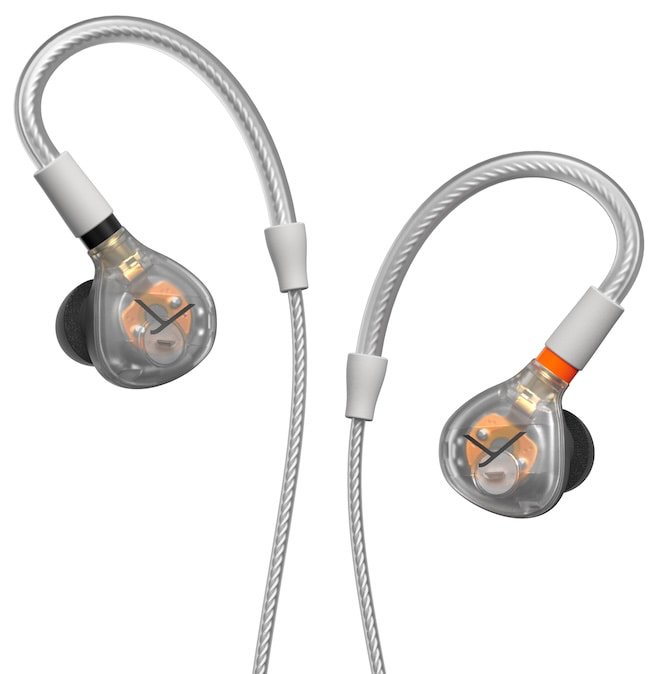
beyerdynamic DT 30 IE
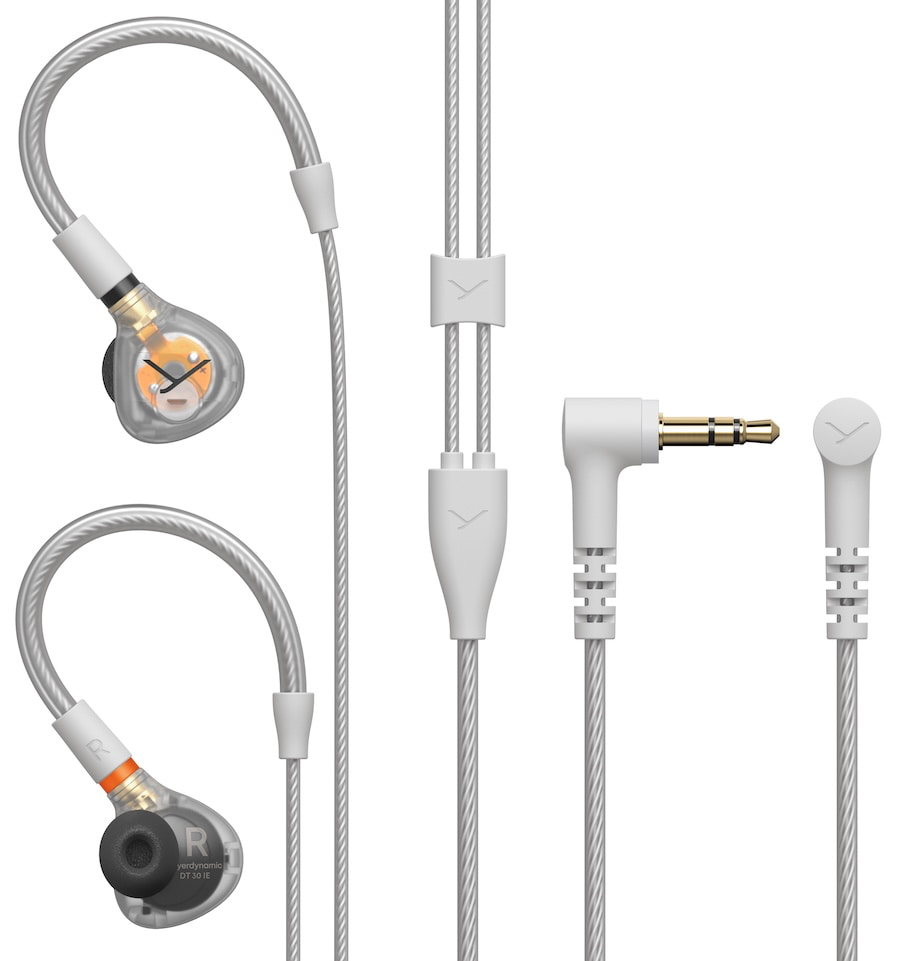
The included 1.4-meter Kevlar-reinforced detachable cable uses MMCX connectors and terminates in a 3.5mm 3-pole plug. The cable is designed to minimize handling noise, while the detachable design means it can be replaced if it fails. Gold-plated connectors, spare foam cerumen filters, and separately available replacement parts also point to a product intended to survive beyond one tour, one semester, or one chaotic weekend of bar gigs.
The package includes the cable, silicone tips, foam tips, spare filters, quick start guide, and carrying case.
How the DT 30 IE Fits Below the DT 70 IE Series
The DT 70 IE Series remains the more advanced and specialized option in beyerdynamic’s in-ear monitor range. In our review of the DT 70-73 IE models, the key story was how beyerdynamic used the same basic platform across four versions but tuned each one for a specific use case.
Advertisement
The DT 30 IE strips that idea down to something more accessible. One model. One price. One all-purpose tuning.
That may actually be the smarter move for a lot of musicians. Not everyone needs a dedicated IEM for drum monitoring, vocal work, classical instruments, or neutral reference listening. A lot of performers just need something that isolates well, fits securely, sounds balanced, and does not cost more than the gig pays.
At $159.99, the DT 30 IE is clearly aimed at that audience.
Advertisement
The Bottom Line
The DT 30 IE is for musicians who are ready to stop using consumer earbuds or fighting bad floor wedges and move into proper in-ear monitoring. It should make the most sense for vocalists, drummers, guitarists, keyboard players, worship musicians, rehearsal bands, small venue performers, and anyone who needs isolation and reliable monitoring without spending custom-IEM money.
It is probably not the IEM for listeners chasing luxury materials, exotic multi-driver configurations, or boutique tuning drama. This is a stage tool first.
That is not a bad thing. In fact, it might be the entire point. The DT 30 IE looks like beyerdynamic’s attempt to bring its pro IEM thinking to a price that working musicians can actually justify. For $159.99, that could make it one of the more practical new in-ear monitor options for performers who need to hear themselves clearly before the room, the drummer, or the house mix ruins the evening.
Price & Availability
The beyerdynamic DT 30 IE retail for $159.99 through beyerdynamic and authorized retailers. However, we currently see them on sale for $119 at Audio46.


















































You must be logged in to post a comment Login