

Politics
Politics Home | Putting the right medicines in patients’ hands: how improved medicine switching can support self-care



In the second article in his series on community pharmacy, Nick Linton, UK Country Head at Opella, examines the tools and partnerships that can empower pharmacists to deliver high‑quality, prevention‑focused care.
56 million people across the UK visit a pharmacy as their first point of call for medical advice every year. These local healthcare hubs remain one of the NHS’s most trusted and accessible front doors,1 and the self-care support they deliver can improve outcomes and empower people to manage their own health.
In my previous article, I explored the role of health literacy in unlocking self-care. But awareness must be matched with access to appropriate medicines. Unless pharmacists have the tools they need at their disposal, including a wide range of safe and effective medicines, much of their impact will be wasted.
How can we expand access to self-care through medicine switches and by ensuring pharmacists are equipped to support patients to use these medicines safely and confidently?
Ensuring pharmacists have the right medicines to support self-care
The UK benefits from a globally respected medicine regulator in the MHRA. A critical part of its role is ensuring safe and effective general sales medicines can be accessed by patients as part of self-care, without the need for a prescription.
Switching medicines from prescription-only to pharmacy or general sales list status is one of the most effective ways to expand self-care. PAGB, the consumer healthcare association, has long championed this agenda, working with government and regulators to create a more agile, proportionate switching environment that keeps pace with patient need and clinical evidence.
At Opella, we’ve seen how the MHRA can provide this access first-hand.
Our allergy treatment, Allevia 120mg, was successfully switched directly from prescription-only to general sales list status. This breakthrough demonstrated that the UK’s regulatory framework can support innovative and responsible access to medicines.
The switch provided patients with tangible, real-world benefits.
Easier access to effective allergy treatments means people can manage symptoms earlier, reduce disruption to their daily lives, and avoid unnecessary GP appointments. Hay fever alone is estimated to account for millions of lost work days each year in the UK, with poorly controlled symptoms impacting productivity, sleep, and overall wellbeing.2
Improving access to appropriate medicines is not just an issue of convenience; it’s an issue of public health and economic impact.
Improving the switching process
But too often the regulatory process around switching can be slow and inconsistent, denying patients the benefits I describe. To go further, we must build on existing PAGB, industry and government collaboration to streamline switching pathways.
We can avoid unnecessary duplication of work through greater use of international evidence and alignment with initiatives such as the Access Consortium. This brings together regulators from across countries such as Canada, Australia and Singapore to promote collaboration.
Furthermore, we need a regulatory and policy environment that actively supports switching and self-care. This includes continued backing for MHRA capacity, as well as aligning with PAGB’s call for a more responsive reclassification framework. We can also provide certainty to industry through clearer regulatory timelines.
These steps would accelerate access to safe, well-understood medicines and ensure the UK remains a leader in self-care innovation.
Ensuring safe use as part of self-care
Expanding access to medicines must go hand in hand with ensuring self-care is delivered effectively. Pharmacists are well placed to guide patients in selecting appropriate treatments, recognising red flags, and ensuring medicines are used correctly.
Taking allergies as an example, greater availability of effective OTC options allows patients to act quickly at the onset of symptoms, rather than waiting for a GP appointment. With pharmacist support, patients can choose the right product, understand how to use it, and know when to seek further medical advice. This combination of access to medicines and professional guidance is what makes self-care both safe and effective.
The system-wide benefits are significant, including reduced pressure on primary care and improved quality of life for patients who can manage their symptoms proactively.
A shared agenda for self-care
Community pharmacies already embody the NHS’s vision for local, accessible points of care, which can be integrated seamlessly into everyday life.
At Opella, we share this vision and believe empowered pharmacies can drive self-care, provide people with the tools, knowledge, and medicines to thrive independently, and help prioritise putting people’s health in their hands.
By working alongside government, regulators, and representative organisations such as PAGB, we can accelerate the shift towards a system where switching enables better access, pharmacists enable safe use, and patients are empowered to act earlier.
- Community Pharmacy England (n.d.) Pharmacy: the heart of our community. Available at: https://cpe.org.uk/learn-more-about-community-pharmacy/. (Last access 6th March 2026).
- Open Access Government (2026. Workers lose 29 million days each year to hay fever. Available at: https://www.openaccessgovernment.org/workers-lose-29-million-days-year-hay-fever/26729/ (Last access 23 April 2026).


For the young men of 2026, the internet has become a dangerous soup of misinformation and misogyny repackaged as self-improvement tips peddled by bad actors.
Across all platforms, a growing ecosystem of ‘manosphere’ influencers are promoting harmful and extreme “health” trends to millions of people too young to know the difference between clickbait and genuine advice.
Content in this space normally begins innocently: advice on fitness, dating, and socialising, for instance. However it can quickly spiral into darker themes.
The promotion of unlicensed drugs sold on shady websites, misusing steroids rebranded as ‘biohacking’, starvation diets, and the pernicious “looksmaxxing” trend (where participants have been encouraged to alter their faces using hammers) are all encouraging physical harm in the pursuit of a perfect appearance.
Young men are actively encouraged to partake – and can be either shamed or cast out of the circle if they do not toe the line.
The manosphere as a public health issue
Most of the online personalities promoting such behaviour have no medical qualifications or understanding of the risks involved in what they are encouraging people to do.
They speak, however, as a voice of total authority to vulnerable and insecure audiences who have come to them looking for guidance.
Young men who are struggling with body image, self esteem, and loneliness find themselves particularly susceptible to their promises of quick fixes, instant desirability and success.
The problem is only exacerbated by a social media algorithm which rewards shock and outrage. The more outlandish the content, the more attention it receives, and the more money the creator makes.
Social media has become a dangerous echo chamber in which ludicrous ideas are amplified and go viral long before a qualified professional is able to give their opinion.
Online harm, real world consequences
Increasingly, the young men snared into this world are following through on the advice they receive online and purchasing medications either by deceiving legitimate providers or from the black market.
By taking drugs such as anabolic steroids or weight loss medication from unlicensed sellers, men are putting themselves at real risk from contaminated batches, incorrect dosing, or the drug simply being something else entirely.
Besides the physical dangers, there are psychological risks as well. Toxic online masculinity culture pushes unattainable body standards and encourages shame, anxiety, and obsessive behaviour.
The body is viewed as a project which needs to be worked upon constantly – and the moment it reaches the desired standard, the goalposts are moved so that more ideas and products can be sold to them.
What needs to be done
A coordinated and strong response is urgently needed if we want to keep boys and young men safe.
Schools need to provide better education on how to spot medical disinformation on the internet and to remind people that health information should be coming, first and foremost, from doctors – not influencers.
There must also be tougher action on social media influencers who are found to be spreading this harmful misinformation online.
People should not be allowed to continue to profit from encouraging dangerous behaviour simply because they have worked out that the algorithm rewards scandal.
While the social media ban for under-16s, due to come in next year, will offer some protection from this kind of content; meaningful penalties such as removal from platforms, and thus loss of income, would go some way towards shutting down these dangerous online communities.
The government must also tighten controls on the expanding black market for medications.
It is not acceptable that substances which should only be in the hands of licensed doctors and their legitimate patients are widely available via back door channels and are being taken by those with no medical need.
When vulnerable people are able to access such medication and take it without supervision, they risk coming to real harm.
Dr Zak Zafrani is a GP and Men’s Health Specialist at Numan.

We’ve written before at HuffPost UK about the 41 fruits and vegetables deemed the most nutrient-dense (according to a 2014 paper).
These “powerhouse” items had to provide at least 10% more of 17 nutrients – including potassium, fibre, and protein – per 100 calories than other foods.
Watercress made the top of the list, with a perfect nutrient density score of 100.
Here are four benefits that come from eating it…
1) It could improve your heart health
One study found that eating watercress extract lowered low-density lipoprotein (LDL) cholesterol, or “bad” cholesterol, in rats.
It also counts as a cruciferous vegetable, which has been found to reduce the risk of heart disease by 16% (this time for humans).
Watercress is also high in nitrates, which researchers think could lower blood pressure.
2) It might protect your bones
A paper found that watercress and one of its components, rutin, seemed “beneficial in stimulating the osteoblastic activity that results in bone formation”.
In other words, it might help to strengthen and protect our bones from things like osteoporosis, which makes them less dense and weaker. That loss of strength can make it easier for fractures to form.
3) It could help to balance your blood sugar
Men who ate watercress alongside a high-fat meal (at least 40% of its calories came from fat) had lower post-meal blood sugar levels than those who consumed the same dish without it, a 2021 paper showed.
A four-week trial also found that watercress extract may have lowered blood sugar in diabetic rats, too.
4) It might improve eye health
Watercress contains lutein and zeaxanthin, antioxidants which have been associated with a lower risk of macular degeneration as we age.
The leaf is also rich in vitamin C, which might help to protect our eye health – especially from blue light emitted by devices like our phones and laptops.

Wes Streeting is prepared to launch a Labour leadership challenge next week to end the “uncertainty and paralysis” over Keir Starmer’s future.
The former health secretary said the prime minister should be given the weekend to decide whether or not he wants to stand down in the wake of Thursday’s Makerfield by-election.
Greater Manchester mayor Andy Burnham appears to be on course to beat Reform UK’s Robert Kenyon to become the new MP for the seat.
Burnham has already said he will join any Labour leadership contest.
Starmer himself reiterated on Monday that he would also stand in an attempt to cling onto his job.
Speaking to the BBC’s Newsnight programme, Streeting said he was ready to bring the situation to a head.
“We can’t carry on with this uncertainty and paralysis, and there will need to be a contest, and I’d be prepared to do that,” he said.
Asked when that might be, he said he did not want to “get into, ‘is it Monday, is it Tuesday’”, but that Starmer should be given “space over the weekend” to consider his position.
At a press conference on Tuesday, Streeting called on the PM to say when he plans to leave No.10 if Burnham wins the by-election.
He said: “When the results are in, I hope the prime minister will at that stage reflect on his own position and set out a timetable.
“I think that would be a better way forward for everyone.”
But speaking at the G7 summit in France, Starmer once again insisted he will not walk away from the job.
“If there is a contest, I intend to be in it and to fight it,” the prime minister told Times Radio.
He added “They said it’s not possible to turn the Labour Party around. It’s not possible to win an election.
“It’s not possible if you do win an election to invest in your public services and stabilise the economy – wrong every time, and that’s why I intend not to walk away from this, but to carry on with what I was elected to do, which is to serve this country, bring back the change that people desperately need in their lives.”
Listen to Commons People, the podcast that makes politics easy. Every week, Kevin Schofield and Kate Nicholson unpack the week’s biggest stories to keep you informed. Join us for straightforward analysis of what’s going on at Westminster.

Days after his departure from Doctor Who, Tip Toe co-creator Russell T Davies has announced a brand-new project on his Instagram page.
His latest venture? A behind-the-scenes memoir of his most iconic TV hits, named The Queerest of Folk: A Life in Television as a reference to his breakout ’90s Channel 4 series.
In the caption of his post, he said: “A book! By me! And [Heat’s entertainment director] @boydhilton – the story of my life in TV.
“The shows, the people, the job itself, from CBBC to golden days at Granada in the 90s, then how Queer As Folk changed my life, Doctor Who (twice!) all the way up to Tip Toe.”
And, the It’s A Sin writer added, we can expect “Lots of fun, some gossip, stories of shows never made, and I hope insight into the day-to-day life of writing for TV.”
For his part, co-writer Boyd Hilton said working with Russell on the book was “one of the joys” of his life.
“We’ve known each other since the tumultuous launch of Queer As Folk 27 years ago, and for me his subsequent extraordinary body of work is a unique achievement that demands to be celebrated,” he said on Instagram.
The book will be available for purchase on October 8, 2026. Pre-orders are already live; signed editions can be pre-ordered at Waterstones, while unsigned copies can be pre-ordered on Amazon.
Russell said on social media that he’ll be reading the accompanying audiobook, too.
The Penguin synopsis said the book “distils Russell T Davies’s career in television, taking us from his early days working on children’s shows and soaps through to the giddy heights of relaunching Doctor Who and bringing queer relationships onto the mainstream screen″ .
It’s a “memoir fizzing with a love for television and the power it has to draw us together in an increasingly fragmented world,” they ended.

Sir Ian McKellen recently shared that his hatred for Mar-A-Lago, a luxury resort owned by US president Donald Trump, inspired him on the set of upcoming superhero flick Avengers: Doomsday.
Speaking about the project at an open-air Rome cinema, McKellen – whose X-man role has been reprised in the movie – said that during filming, directors Anthony and Joe Russo “got me at one point to destroy New Jersey”.
To make his rage in the scene convincing, the Lord of the Rings star added, the directors “told me to look more furious: make it look as if you hate what you’re destroying.
“So I stood there and I shouted: ‘Mar-a-Lago!’”, The Guardian reported.
It’s not the first time the actor has had a harsh word or two for the two-time American leader.
In 2016, while promoting his film The Dresser, Ian said: “This time last week, I voted for the new mayor of London [Sadiq Khan], who’s a Muslim. And that’s all I need to say about Donald Trump.”
That year, Trump had called for a “Muslim ban”.
Ian, who, it turns out, had more to say, added: “The most important man in London, the London mayor, is a Muslim, and he got voted in with a huge majority. I think that’s the future … enjoy the fact that we live in a multicultural world and rejoice in it. That’s my feeling.”
HIs new Avengers film comes as part of a busy year for Ian after his 2024 fall during a production of Payers Kings.
This year, though, the actor is back in full force. So far, he has starred in highly-rated movie The Christophers, opened a theatre space in Durham, and spent time marching for LGBT+ rights across the commonwealth.
Speaking to HuffPost UK in 2024 about the issues trans people are facing, he said: “When society disregards a minority – and, worse than that, imposes laws and restrictions on their behaviour, which is really unfair – then that’s when society is going off the rails, and we have to attend to it.”

It’s no secret the average cost of a family holiday abroad can be eye-watering.
In 2015, the average family of four spent around £3,000 on a nine-night holiday, according to ONS data analysed by NimbleFins.
Fast forward to 2026 and the average nine-night holiday cost for a family of four is nearer £4,000. This figure can climb up depending on where you’re headed, how you choose to fly, where you’ll be staying and, of course, when you go.
Holiday costs surge dramatically when the kids are off school. “For a family of four, the price per person rises by an average of 9%,” claims Go Compare.
It’s perhaps no surprise then that almost half (45%) of British parents have taken their child out of school for a holiday during term time.
A YouGov poll found lower costs are the biggest motivator, with 53% citing cheaper travel and 42% citing cheaper accommodation as reasons for taking term-time holidays.
Just over a third (36% of) parents say they would seek school approval for a term-time holiday, but travel regardless and accept the risk of a fine.
But it turns out there are only a certain number of times you can do this in a three-year period before more serious legal action is taken.
When do schools issue fines for holidays?
Parents can face fines if they take their children (ages five and up) out of school for a holiday during term time.
Parents are encouraged to write to their school’s headteacher to request permission to take them out of school for a period of time – however their term-time trip is still likely to be marked down as unauthorised absence unless there are “exceptional circumstances”.
UK government guidance states: “Generally, the DfE [Department for Education] does not consider a need or desire for a holiday or other absence for the purpose of leisure and recreation to be an exceptional circumstance.”
Parents might face a fine if a child’s absence is classed as ‘unauthorised’.
All schools are “required to consider a fine when a child has missed 10 or more sessions (5 days) for unauthorised reasons”, reads the guidance. A full day at school – morning and afternoon – is considered two sessions.
A child’s previous attendance counts, too. So, if they’ve had unauthorised absences previously, even if they didn’t go on holiday, these also count towards the five-day tipping point where a fine would be considered.
According to the UK government, 93% of fines issued in 2024-25 were for unauthorised term-time holidays.
How much are the fines?
The fines are issued per parent, per child – so they can soon add up.
If children are off for 5+ days and it’s deemed unauthorised, each parent can be fined £80 (if paid in 21 days), which then rises to £160 (if paid in 28 days). If the fine isn’t paid during this timeframe, parents may be prosecuted.
So, theoretically, if a family of five went away and three children were taken out of school, each parent could be fined £80 per child. That would be £240 per parent and £480 as a whole family (and that’s if it’s paid within 21 days).
If a parent receives another fine for the same child within a three-year period, they are automatically fined £160.
The ‘third strike’ rule parents should know
You can receive up to two fines within a three-year period.
But once that limit has been hit, if you take them out for another unauthorised term-time holiday, you could get a fine of up to £2,500, a community order or a jail sentence up to three months.
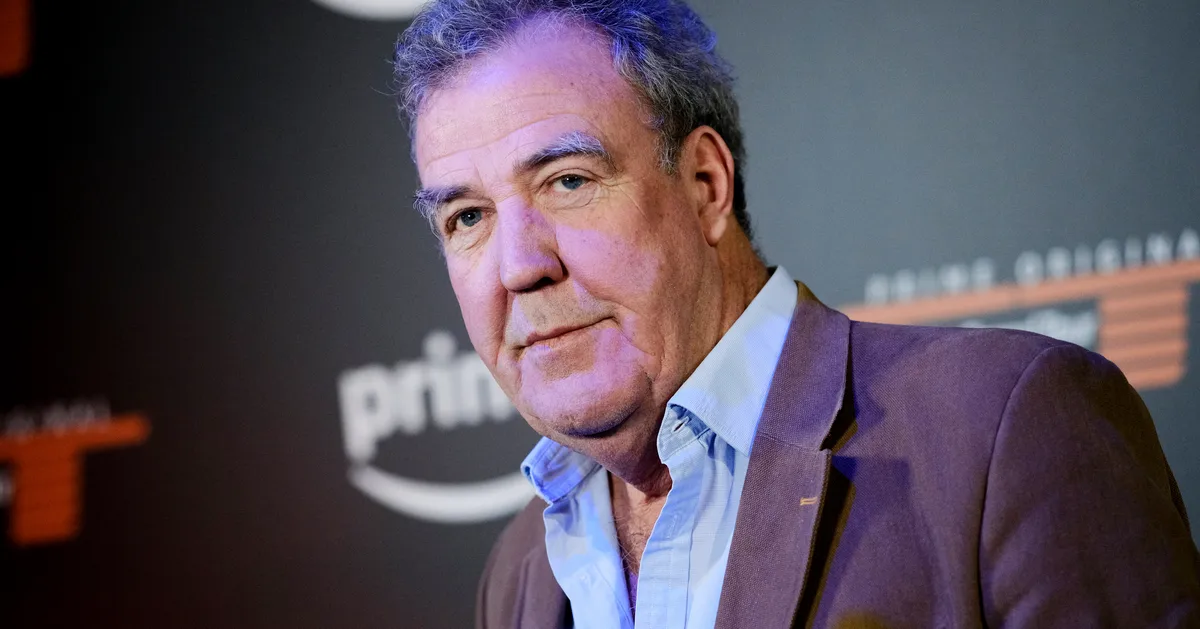
Jeremy Clarkson has recently announced that he is suffering from an ’agressive prostate cancer in the latest episode of Clarkson’s Farm.
Though roughly 58,000 people get diagnosed with prostate cancer in the UK per year, Dr Jiri Kubes of the Proton Therapy Centre said, “Many men with prostate cancer will have no symptoms until the cancer spreads to other parts of the body”.
The radiation oncologist added that because there are currently no routine prostate screenings, spotting early cases is difficult.
“For this reason,” he explained, “it’s important men pay very close attention to any changes in their urinary habits. While they can often occur for innocent reasons, it still pays to know what’s happening in your body”.
Here are four changes he’d never ignore:
1) Finding it difficult to start peeing
This is also known as “urinary hesitancy” and is most often caused by benign prostatic hyperplasia (BPH), or an enlarged prostate.
This usually harmless issue is most likely caused by factors like ageing, though you should still get it investigated by a GP.
But struggling to start peeing or straining when you do go could also be a sign of prostate cancer, the NHS added.
2) Needing to pee urgently
Feeling like you need to go very urgently or very often can be a sign of prostate cancer.
Again, the symptom can also be a sign of BPH, which does not develop into cancer. Still, it’s worth a doctor’s visit.
3) Having a weak flow
Usually, this is another sign of BPH, though it could belie prostate cancer, too.
Cleveland Clinic writes that this can present as a weaker stream of urine than usual, or pee that starts and stops.
4) Feeling like you still need to “go” after peeing
If you’ve started feeling like you haven’t been able to properly empty your bladder, either BPH or, more rarely, prostate cancer could be at play, Dr Kubes said.
You might also have burning or pain when you do urinate.
5) Noticing blood in your urine or semen
This is always worth seeing a doctor about.
You should ask for an urgent GP appointment or call 111 if you notice blood in your pee, the NHS says, even if you have no other symptoms, if it’s happened for the first time, or if you’re not sure it’s blood.
This is because it “can be a sign of cancer. This is easier to treat if it’s found early”.
When should I see a GP?
If you notice any of these changes, speak to a doctor. Even BPH is worth getting checked out.
“Often men will get an enlarged prostate as they age, which can give the same symptoms and is nothing to worry about,” Dr Kubes said.
“But it’s important to know what’s going on in your body and speak to your GP if anything changes, gets worse, or worries you. It can be easy to bury your head in the sand, but don’t wait for things to get worse.
“It’s important to speak up, and there is nothing to be embarrassed about.”
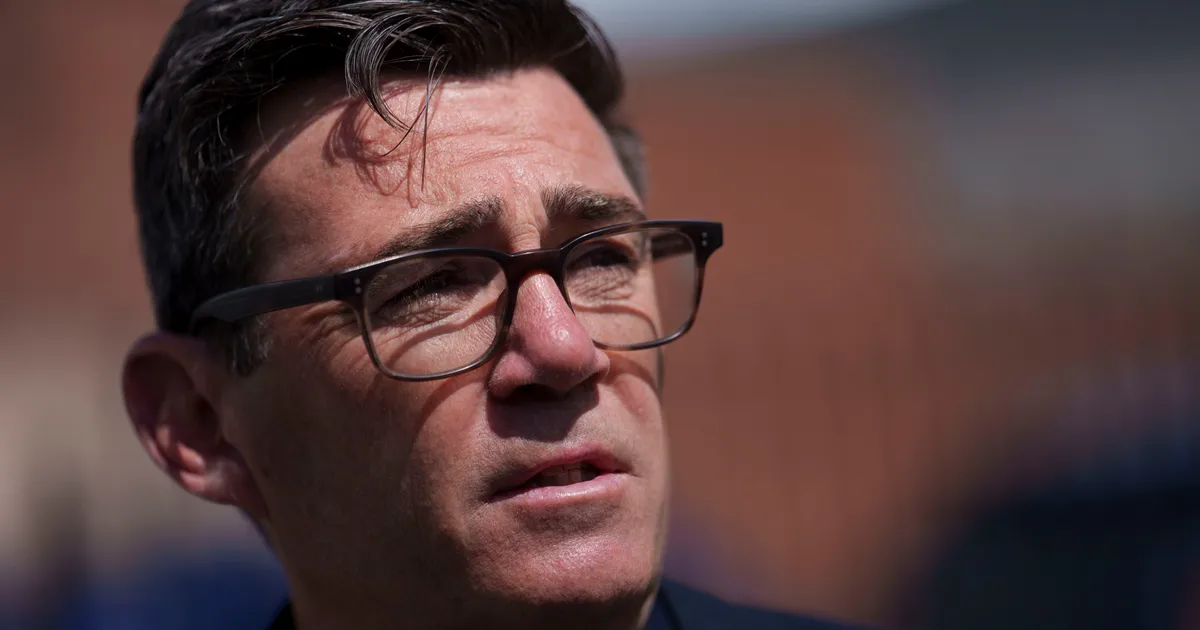
There’s a simple test for what Britain really believes about work. Ask yourself which job sounds more impressive: an electrician or an economist, a bricklayer or a banker.
Of course, all are valuable to society.
But if we are honest, people sometimes have instincts that place one above the other, and that tells us something about how different kinds of work are valued. Until we confront that, we will struggle to fix what is not merely a skills gap. It is a respect gap.
A few months ago, I toured Switzerland with their government and found something striking. There, vocational and academic routes do not compete. They sit alongside each other, with parity of esteem baked into their very constitution.
Two-thirds of young people choose a vocational route, and they value it. I met apprentices training as railway engineers alongside others who had followed the same path into senior roles in business and government. Ernst Tanner, Chairman of Lindt, started as an apprentice. In Switzerland, this is entirely normal.
Britain has UCAS, a well-understood front door largely into higher education rather than other routes. It has become a brightly lit conveyor belt directing young people to university, while apprenticeships are harder to find. UCAS had over 50,000 undergraduate courses, compared with around 6,000 in the separate Find an Apprenticeship service.
We need a single post-16 platform that brings the alphabet soup of past, present, and future together. Vocational and academic routes include apprenticeships, BTECs, T Levels, NVQs, V-levels, GCSEs, A-levels, HNDs, and degrees. How about a single account to track the qualifications you accrue over your life?
Routes should be permeable, too. Why should a biology student not pick up a horticulture qualification, or a welder take a physics module? Switzerland is already doing it. We could too.
Cultural signals matter early in education. School trips to universities are commonplace.
Visits to places where things are actually built are far rarer. Why? Work experience is too often a tick-box exercise. Imagine if every child were partnered with a local employer before their GCSEs. With nearly a million 18- to 24-year-olds not in education, employment or training (NEET), that would be a radical change.
As a dad of two, I cannot help thinking that if my boys were shown that learning to weld could mean building a stadium for a ‘Northern Olympics’ or laying the foundations of Britain’s next major rail line, they would see those paths as the skilled and ambitious jobs they are. Schools should champion those routes as confidently as the path to a degree. Being able to point with pride at a home you have built with your own hands is as important as any graduate job.
Andy Burnham has argued that Thatcherite neoliberalism has quietly broken Britain, and he is right. Universities can expand freely, yet remain harder for disadvantaged students to navigate, often leaving them with significant debt, while colleges must, bizarrely, ration places. The result is a system that undervalues technical routes, falling hardest on working-class children.
As he argued in Leeds the other week, millions of young people who want to pursue technical routes have been overlooked and written off. Swiss cantons shape skills systems around their economies, and we should do the same. The Manchester Baccalaureate, based on high-growth industries, points the way.
In Makerfield, Burnham may be running against a plumber, but he has done far more to back the trade than his opponent. Representation is about what you fight for, not who you are.
We are the Labour Party. Work is in our name. The people who build, fix, and make things work are who we are for.
I’ve heard that argument on countless doorsteps in Wigan. Hopefully, it won’t be long before it’s being made again in Westminster.
Listen to Commons People, the podcast that makes politics easy. Every week, Kevin Schofield and Kate Nicholson unpack the week’s biggest stories to keep you informed. Join us for straightforward analysis of what’s going on at Westminster.

A government minister warned Vladimir Putin “we see you” after a Russian warship fired warning shots near a British yacht in the English Channel.
Jane Kelvey, 68, and her husband Alan, 70, were on their 40ft vessel, Bright Future, travelling towards France when the shots were fired several times from the Russian frigate Admiral Grigorovich on Tuesday.
“It was a bit scary,” Mrs Kelvey told The i Paper. “I crouched down. I didn’t think our safety was in danger. But it was certainly unusual. As we sailed away, we said to each other, what the hell just happened?”
The Ministry of Defence (MoD) said the Admiral Grigorovich fired warning shots after making attempts to contact the yacht, which was about 20 nautical miles south of the Isle of Wight, outside the UK’s territorial waters.
An MoD spokesperson said: “These [shots] were not aimed at the vessel and were an attempt to prevent a possible collision.”
Nevertheless, Cabinet Office minister Nick Thomas-Symonds said the incident was further evidence of Russian aggression.
He told BBC Breakfast: “Let’s be in no doubt. Our message to Vladimir Putin is we see you, we see your activity, whether that is in waters around the UK coast or indeed whether that is in terms of cyber, or hybrid or any other modern forms of warfare.
“Vladimir Putin should be in no doubt that we will not hesitate to take the action that’s necessary to defend our country and our people.”
The minister added: “This government is absolutely determined in the face of that Russian threat to do all we can to keep this country safe.”
Russian warships passing through the English Channel are routinely shadowed by the Royal Navy, with offshore patrol vessel HMS Mersey monitoring the Admiral Grigorovich at the time of the incident on Tuesday.
The incident happened just days after UK armed forces intercepted a Russian “shadow fleet” oil tanker in the English Channel.
Royal Marine commandos and specially-trained law enforcement officers boarded the sanctioned vessel Smyrtos in the early hours of Sunday morning.
Shadow vessels carry sanctioned Russian oil, which is sold to raise funds to pay for the Kremlin’s ongoing invasion of Ukraine.
Listen to Commons People, the podcast that makes politics easy. Every week, Kevin Schofield and Kate Nicholson unpack the week’s biggest stories to keep you informed. Join us for straightforward analysis of what’s going on at Westminster.
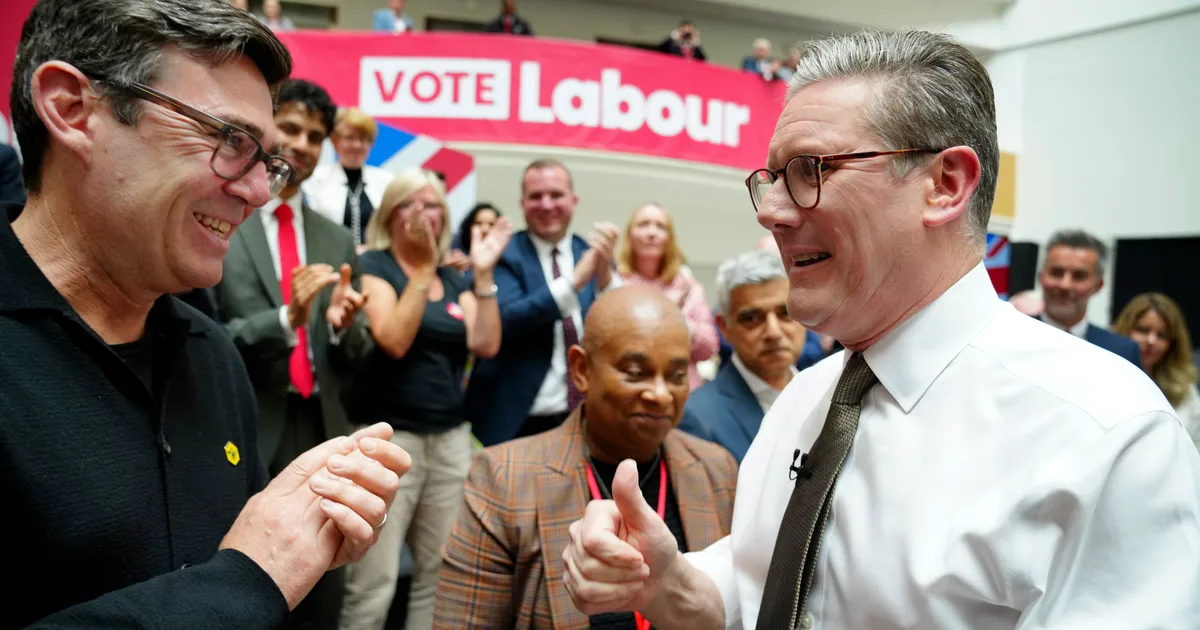
Keir Starmer has hinted that he will offer his main rival Andy Burnham a top job in his cabinet if he wins the highly-anticipated Makerfield by-election tomorrow.
Burnham, currently the Greater Manchester mayor, has said he will join a leadership contest to oust the prime minister if he becomes an MP again.
But the PM has said that would cause “chaos” and has instead hinted at giving Burnham a key role in his government instead.
Sky News’ Beth Rigby asked Starmer at the G7 summit in France if he would bring Burnham into his cabinet if he wins in Makerfield.
He replied: “Oh, Andy is a great asset. And, yes, I want him to have a big role in government. When I came in to…”
Rigby cut in: “Are you going to call him at the weekend and invite him back into your cabinet?”
“Well I’m sure I’ll talk to Andy after the weekend, of course I will,” Starmer said. “I’ve spoken to him many times in recent weeks. and when I came into politics in 2015, it was Andy Burnham’s team that I joined, and we worked very well together.
“He’s a huge asset. He’s been a fantastic mayor in Manchester. And if he comes back into parliament, I hope he wins in the by-election. He’ll be a fantastic asset for our party and for the country.”
Burnham spent 16 years working as the Labour MP for Leigh before he stepped down to run as Greater Manchester mayor.
He also served as a cabinet minister under Gordon Brown and a junior minister under Tony Blair.
If he wins the Makerfield seat, a mayoral election will be triggered in Greater Manchester.
The prime minister insisted that Labour should focus on that contest rather than a leadership challenge if the party is successful in the by-election.
Asked if he believes it is incumbent on Burnham to secure a Labour mayor in Greater Manchester before making waves in Westminster, Starmer said: “I would say to the whole of the Labour Party and that whole Labour movement, we’re straight into a Manchester mayoralty.
“It is really important that we win that, because this is one of the huge moralities in the north-west and really important to us and to devolution more generally.”
Pressed on whether he is angry at the predicament he is in and if he blames himself, Starmer replied: “No, I don’t feel angry, I don’t feel bitter, because I remind myself it is an incredible privilege to be the Prime Minister of the United Kingdom.”
The PM also said he “wants” to lead the Labour Party into the next general election.
The interview comes after ex-health secretary Wes Streeting announced he is preparing to launch a leadership challenge against his old boss next week.
At a press conference on Tuesday, Streeting called on the PM to say when he plans to leave No.10 if Burnham wins the by-election.
He said: “When the results are in, I hope the prime minister will at that stage reflect on his own position and set out a timetable.”
Burnham has already said he will join any Labour leadership contest.
But Starmer suggested he would not step aside for anyone to replace him, telling Sky: “I’m not going to walk away. I’m going to fight.”
WoW Midnight Void Incursions guide (Naigtal and Val)

World Cup 2026: The VAR decision that dumbfounded the world’s best refs
Dar Global reaches $23 billion portfolio on fifth anniversary


-

 Business3 days ago
No Jackpot Winner as $257 Million Prize Rolls Over to $269 Million Monday Draw
-

 Crypto World6 days ago
Oppenheimer backs SpaceX as $70 billion retail frenzy builds
-

 Fashion5 days ago
Weekend Open Thread: Tuckernuck – Corporette.com
-

 Crypto World6 days ago
Markets Rally as SpaceX IPO Looms Amid Iran Tensions and Inflation Surge
-
 Crypto World2 days ago
Zimbabwe Requires Crypto Businesses to Register Annually Under New FIU Regulations
-

 Tech4 days ago
NanoClaw integrates JFrog registries to secure AI agent downloads
-

 Tech5 days ago
This Week In Security: Microsoft On Microsoft, Register Your Domains, Linux On ARM, And FreeBSD Joins The File Cache Club
-

 Crypto World4 days ago
Bitget enters Argentina’s regulated crypto market through PSAV registration
-
 Tech6 days ago
Dutton Ranch star claims they ‘didn’t see any disruption’ on set following Chad Feehan’s exit from Yellowstone spinoff fueled by Taylor Sheridan clash rumors
-

 NewsBeat5 days ago
El Nino has formed in the Pacific and could set records, forecasters say
-

 Politics6 days ago
Politics Home | Healey Resignation Is “Colossal Failure Of Government”, Says Former Labour Defence Secretary
-
 Entertainment6 days ago
Donnie Wahlberg & More Heat Up Las Vegas at Circa’s Barry’s Downtown Prime
-
 Tech6 days ago
Opendoor Ends India Operations, Fueling a Bigger Conversation About AI and Outsourcing
-

 Sports6 days ago
First Time Since 1971: Australia Register Historic Low In ODI Cricket
-

 Politics6 days ago
Belfast burns, while Met chief points finger at Iran and Russia
-

 Business6 days ago
AT&T: Verizon's 27% Outperformance Sets Up A Solid Entry Point
-

 NewsBeat5 days ago
FBI searches office of Ohio voter registration group
-
 Tech5 days ago
Anthropic is spending $150M to embed 1,000 AI fellows inside nonprofits. No degree required.
-

 Politics6 days ago
Modi thanks Trump for wishes as US attacks Indian seafarers
-
 Entertainment5 days ago
‘The Pitt’s Fan-Favorite Doctor Confirms Noah Wyle Gave His Blessing to Return [Exclusive]
You must be logged in to post a comment Login