


The Royal College of Radiologists says ‘alarm bells should be ringing’
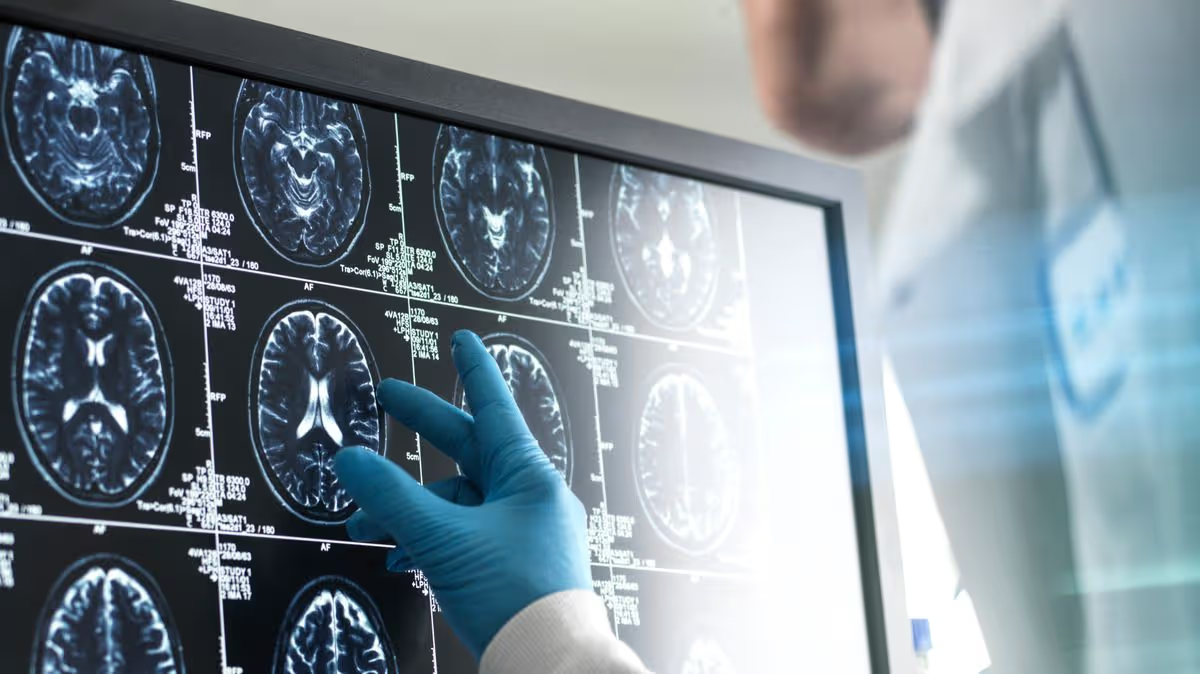
A worsening shortage of radiologists and cancer doctors is causing dangerous delays to diagnosis and treatment for patients across Northern Ireland.
That’s according to new workforce data today (Thursday) from the Royal College of Radiologists (RCR), the leading body for radiologists and clinical oncologists. They warn that without action to boost the workforce, more patients will suffer as demand continues to rise.
The data, based on responses from 100% of cancer centre and radiology department leaders in Northern Ireland and across the whole UK, reveals a shocking picture of dangerous delays to diagnosis and treatment of cancer and other serious conditions. The RCR is calling for urgent action to boost the workforce, or more patients will suffer as demand rises.
It found that 8 in 10 radiology leaders in NI and half of cancer leaders across the UK say staff shortages are causing patients’ conditions to worsen while severe shortages of radiologists and cancer doctors are driving delays to diagnosis and treatment of cancer and other serious health conditions.
They added that heavy reliance on expensive short-term fixes is making things worse; recruitment freezes affecting radiology departments and cancer centres have doubled in a year. They added that the government must expand training and end recruitment freezes to prevent delays worsening further.
All cancer leaders in NI say they have seen delays to patients starting radiotherapy or drug-based treatment including chemotherapy as a result of staff shortages.
This means patients at every cancer centre have had their treatment delayed because of staff shortages. All radiology and cancer leaders are concerned about backlogs and delays caused by staff shortages.
Meanwhile, diagnostic wait and cancer treatment targets continue to be missed. Department of Health data show that in 2025, a quarter of a million people waited over 6 weeks to have a scan or test. In 2025, only 30% of patients started cancer treatment within 62 days of a referral, against a target of 95%.
Delayed diagnosis leads to delayed treatment and can worsen health outcomes – particularly for people with cancer, where every month’s delay to starting treatment can increase the risk of death by around 10%.
Meanwhile demand for scans is growing at ten times the rate of radiologists to interpret them – 49% (48,000) more people will be living with cancer in NI by 2045, and yet a fifth (20%) of NI’s clinical oncologists are set to retire by 2030.
In its recommendations for government action, the RCR said that instead of haemorrhaging money on short-term fixes, the Northern Ireland Executive must invest in training more doctors by increasing the number of training places for clinical radiology and clinical oncology and maximise training capacity by allocating training places by whole-time equivalent (WTE) rather than by headcount.
Dr Stephen Harden, President of the Royal College of Radiologists, said: “For the first time, our census shows that patients’ conditions are deteriorating because of workforce shortages. Delays to diagnosis and cancer treatment are extremely dangerous, particularly in deprived and rural communities where shortages are worst.
“Despite our members’ extraordinary efforts, we simply don’t have enough clinical radiologists and clinical oncologists to meet rising demand. Recruitment freezes and growing reliance on outsourcing are making the situation worse not better.
“Alarm bells should be ringing for governments across the UK. Without urgent action to train, recruit and retain more doctors, more patients will suffer.”
In response, a Department of Health spokesperson said over £10m has been invested in support of oncology and haematology stabilisation in recent years, including investment in consultant and non-consultant medical staff, nursing and pharmacy services.
The DoH spokesperon added: “Imaging services are fundamental to the delivery of healthcare across elective and unscheduled pathways. We are aware of the current radiology workforce deficit and have been working to address this, with significant investment to grow the imaging workforce in Northern Ireland over the last 10 years. Commissioned Radiology medical specialty training places have expanded from a baseline of 37 (2015/16) to 56 (2025/26), an increase of 50%.
“However, there is more to do as demand continues to grow. Looking ahead, the Department has plans underway for a multi-professional Imaging Academy which aims to significantly increase the number of consultant radiologists and advanced radiographer practitioners here.
“This would deliver an overall increase in imaging capacity within health and social care for the benefit of all clinical specialties and support the reduction of excess waiting lists for diagnosis and treatment, as well as meeting the demands from unscheduled care.
“While the Department acknowledges that progress on the Academy has been slow due to the wider budgetary constraints facing the HSC system at this time, an interim plan to phase in additional radiology training places is proceeding from Autumn 2026, with an additional four radiology training places commissioned for the 2026/27 intake.
“It is the intention that this intake will be increased incrementally over the coming years while the Academy is being progressed, subject to funding. This will ensure that Northern Ireland has an increasing and continuous supply of locally trained consultant radiologists in the coming years. We also aim to reduce reliance on costly outsourcing by investing in the imaging workforce over the longer term.”
For all the latest news, visit the Belfast Live homepage here and sign up to our daily newsletter here.




















































You must be logged in to post a comment Login