










Connect with us
DAPA Banner
DAPA Coin
DAPA
COIN PAYMENT ASSET
PRIVACY · BLOCKDAG · HOMOMORPHIC ENCRYPTION · RUST
ElGamal Encrypted MINE DAPA
🚫 GENESIS SOLD OUT
DAPAPAY COMING

Tech

Estonia intends to recognize AI agents with digital IDs

Published

on

AI + ML

I am not a number! I am a free agent (that just happens to have a number)

Estonia plans to allow AI agents to have their own digital identities so they can act on behalf of people in a way that can be verified and audited.

The initiative, backed by the country’s Eesti.ai advisory board, calls for the development of ID codes that AI agents can use to take actions, subject to some unspecified authorization and task delegation process.

Advertisement

Academics and corporate technical folk have already made related proposals in recognition of the absence of agentic technical infrastructure. Last month, researchers under the flag of OWASP proposed the Agent Name Service for agent discovery and interoperability. DNS for AI Discovery is another such project.

But these have more to do with platform plumbing while Estonia, known for its embrace of technology, is more focused on permission and punishment. Establishing digital identities for AI agents and authorizing limited powers will help avoid scenarios where individuals are required to delegate broad authority to an agent at the expense of their rights, the government says.

“In the future, AI will increasingly carry out digital tasks on our behalf, compiling reports, preparing declarations or interacting with information systems,” said Prime Minister Kristen Michal in a statement. “To that end, it must be clear who is acting on whose behalf with what rights, and who is ultimately responsible.”

By taking this step, Estonia casts itself as “first country to create digital identities for AI agents.” 

Advertisement

Two weeks ago, Argentina’s President Javier Milei endorsed a similar idea, legislation to allow “non-human corporations,” managed by software, with limited liability. 

“Limited liability is not a luxury for such entities; it is a precondition for their existence,” Milei wrote in a Financial Times op-ed.

Several decades ago, IBM took a similar line on liability but reached the opposite conclusion about automated decision making: “A computer can never be held accountable, therefore a computer must never make a management decision.” 

Despite the citation of that passage from IBM’s 1979 Training Manual in a 2025 blog post, Big Blue’s designated author Doug Bonderud sounds less certain about the impermissibility of AI action these days.

Advertisement

“Should AI be used for management decisions?” he mused. “Maybe. Will it be used to make some of these decisions? Almost certainly.”

While governments work on legal changes that will allow AI agents to operate, private sector companies are already taking a stance, at least with respect to external AI agent usage by customers.

Target Corporation earlier this year revised its Terms & Conditions with a section titled Agentic Commerce and Delegated Access. It states, “Purchases and other actions taken by an Agentic Commerce Agent that you have authorized are considered transactions authorized by you.”

American Express meanwhile has taken the opposite tack by assuming liability for errant agentic commerce. “In the future, if a Card Member authorizes an AI agent to make a purchase and that agent sends American Express the customer’s authenticated purchase intent, American Express will protect eligible customers from charges related to AI agent error,” the company said in April when it introduced its agentic commerce developer kit.

Advertisement

In a pre-print paper last year titled “AI Agents and the Law,” Georgia Institute of Technology professors Mark Riedl and Deven Desai observe that once AI agents have the ability to act in a way that changes the state of the world – e-commerce transactions as opposed to output that requires human interaction for effect – concerns about harm become more pressing.

They note that while the law is well equipped to deal with conflicts arising from human agents, it’s not well-suited to the possibilities of software agents.

“Put simply, although computer science and law have similar notions of agents, a software agent is not the same as a human agent,” they write “For example, agency law disciplines agents by imposing legal liabilities on agents when they misbehave. Human agents can face financial and even criminal penalties; that is not so for software agents.”

To date, AI companies have done their best to limit liability for AI harms. But they’ve not been entirely successful: A Canadian court held Air Canada liable for bad chatbot advice, and a German court held Google liable for inaccurate AI Overview content.

Advertisement

It may be a while before the rules for AI agents get hammered out and harmonized to whatever extent is possible. But in the interim we’ll at least have digital identifiers to call out bad agents by name. ®

Source link

Continue Reading
Click to comment

You must be logged in to post a comment Login

Leave a Reply

Tech

Loss of another Seattle-area billionaire? Valve’s Gabe Newell is reported buyer of Florida estate

Published

on

Is video-game industry leader Gabe Newell getting ready to vacate the Seattle area for sunny South Florida like some of his billionaire contemporaries? Reports of a luxury property purchase raise the question.

According to The Wall Street Journal, Newell, CEO and co-founder of Valve Corp., is the buyer of a $70.8 million waterfront estate in Manalapan, Fla., north of Miami. The newspaper this week cited people familiar with the transaction.

Sellers Cindy and Ron McMackin paid roughly $39 million for the 2.06-acre property in 2020, and listed it for $85 million in December, according to the WSJ. The couple, founders of the mechanical subcontracting company Pan-Pacific Mechanical, declined to comment on the buyer’s identity.

The estate is featured in a 2020 YouTube video from Premier Estate Properties, above, and among its features is a tunnel that connects the house with the ocean. It has a roughly 20,000-square-foot residence, an outdoor pool, a dock and a boat lift, the WSJ reported.

Advertisement
Gabe Newell at The International, an eSports gaming tournament sponsored by Valve, in 2016. (GeekWire File Photo / Kevin Lisota)

Newell, 63, has led Bellevue, Wash.-based Valve since co-founding the video game company in 1996 alongside former Microsoft colleague Mike Harrington. Newell spent 13 years at Microsoft and is credited with helping to build the first three versions of Windows before he left.

Valve is known for creating the PC gaming platform Steam, and its game franchises include “Half-Life” and “Portal,” among others.

With a net worth of $11 billion, Newell is No. 293 on Forbes’ list of the richest people in the world.

A move to Miami would put Newell in the same company as Amazon founder Jeff Bezos, who announced his move from Seattle in an Instagram message in November 2023. Former Starbucks CEO Howard Schultz also recently announced on LinkedIn a Miami move, and then last month wrote a critical op-ed in The Wall Street Journal blasting Seattle’s anti-business climate and Mayor Katie Wilson.

Seattle entrepreneur Rich Barton, co-founder of Zillow Group and Expedia Group, cited personal reasons for his recent move to Las Vegas.

Advertisement

All of those relocations come amid an increasingly heated debate over taxes in Washington state, where lawmakers have expanded taxes on wealthy residents while some business leaders warn that the policies could drive entrepreneurs elsewhere.

Even though Newell’s move out of the region isn’t confirmed, Bellevue commercial real estate developer Kevin Wallace was already lamenting the loss of another Washington billionaire. In a post on LinkedIn, Wallace shared a chart tracking the state’s billionaire “flight log” — listing the state’s richest people and whether they are still residents.

“Assuming Newell changes his domicile, that’s $15,000,000,000 in wealth headed for states with no income, capital gains or estate taxes, and it’s only been 96 days since the income tax bill passed,” Wallace wrote. “This is going to leave a mark.”

Source link

Advertisement
Continue Reading

Tech

Tesco Moving 40,000 Server Workloads Off VMware Amid Broadcom’s ‘Abusive Conduct’

Published

on

An anonymous reader quotes a report from Ars Technica: Tesco, a retail conglomerate headquartered in the United Kingdom, is moving 40,000 server workloads off of VMware amid “abusive conduct” from Broadcom, recent legal filings claim. Tesco filed a lawsuit in the UK’s High Court against Broadcom alleging breach of contract last year. According to a September report from The Register, the lawsuit claimed that in January 2021, Tesco bought perpetual licenses for VMware’s vSphere Foundation and Cloud Foundation, a subscription to VMware Tanzu, plus support services until 2026, with the option to extend support for four additional years.

But when Broadcom took over VMware in November 2023, it would not honor the deal and instead tried to get Tesco to pay “excessive and inflated prices for virtualization software for which Tesco has already paid” and would not allow it to buy support services for its perpetually licensed software without buying “duplicative subscription-based licenses for those same Software products,” the initial complaint read, The Register reported at the time. Tesco, which reported 73.7 billion pounds (about $98.7 billion) in revenue in its fiscal year 2026, has since started migrating away from VMware and Broadcom’s mainframe products, according to late-May court filings reported on by The Register today.

In January, Broadcom stopped supporting Tesco’s VMware products, Tesco said, and Tesco has been paying for third-party support since. In its initial filing, Tesco also said that Broadcom refused to upgrade software or provide all security updates to customers without subscriptions. One of Tesco’s recent filings, per The Register, reads: “Faced with Broadcom’s abusive conduct, and given the criticality of virtualization and mainframe software and services to its business, Tesco has been forced to incur material costs to procure alternative solutions with reduced functionality, and to migrate to that software in a manner, and on a timeframe, that creates very significant risks to its business.”

If it works “at exceptional pace,” Tesco will be completely off VMware by the end of 2027 at the earliest. However, “the timeframe in which that migration must be undertaken has created and continues to create operational and commercial risk, and at material ongoing cost and disruption to the business,” Tesco reportedly noted. Tesco is also dealing with migration challenges related to data security because its new, unnamed virtualization software is incompatible with the Veeam and Zerto products it uses. Tesco initially requested at least 100 million pounds (about $133.6 million) in damages each from Broadcom, VMware, and reseller Computacenter, plus interest. In its recent filings, Tesco said it turned down at least four offers from Broadcom to continue using VMware and Broadcom’s mainframe tech. […] The case is expected to go to court between November 1, 2027, and February 25, 2028, The Register reported. Afterward, it could go to trial. Further reading: HPE Tempts VMware Users, Partners With Year of Free Virtualization Software

Advertisement

Source link

Continue Reading

Tech

Dispatch Restores Censored Content on Switch 2 With New Update

Published

on

When the superhero adventure game Dispatch made its way to the Nintendo Switch and Switch 2 in January, gamers noticed that the game was censored as black bars covered up partially nude bodies and obscene gestures. Developed AdHoc Studio said it was working with Nintendo to resolve these issues, and it looks like a new update will bring back all the censored content if players want it. 

The HR Violations Pack for Dispatch went live Wednesday and with it a visual filters setting to change the censorship in the game. Players can now decide if they want to remove the black bars from the Switch 2 version or add them to versions on other platforms, but depending on the region, their choices can be limited. 

For Switch players in North America, Europe, Australia and New Zealand, they will have access to full or partial coverage of characters’ bodies, while players in Japan, Taiwan, Hong Kong, Korea and Southeast Asia will have full coverage only. There are different options for coverage from the standard blackout bars, a mosaic effect or what the developer calls a Chaotic style that will offer more creativity with the censorship, such as one character’s naked private parts being covered up by a pair of jean shorts. Only the Japan region limits censorship in the game to blackout bars. 

Advertisement
a man bat from the game dispatch is giving the finger to another character

An example of the mosaic effect to cover up an obscene gesture.

AdHoc Studios

“We’ve confirmed that Switch players can now see all the breasts, butts and birds (AKA, obscene gestures) they want in North America, Europe, Australia, and New Zealand,” Nick Herman, co-founder of AdHoc Studio, said in a Discord message on Wednesday. 

The studio didn’t provide much of an explanation in January as to why the game was so heavily censored, but Herman cleared things up in his message on Discord, saying that when nearing the launch day of the game on Switch 2, the team learned that the game would need some censoring for certain regions. Without time to make all the changes needed for the different regions, AdHoc Studios decided to have all versions use the most restrictive settings, which appear to be for Japan, according to the previously mentioned region options. 

Advertisement

Dispatch is AdHoc Studios’ debut game, and it received praise for its story and characters, voiced by Aaron Paul and Jeffrey Wright. Last year, it was named one of CNET’s Favorite Games of 2025

Source link

Advertisement
Continue Reading

Tech

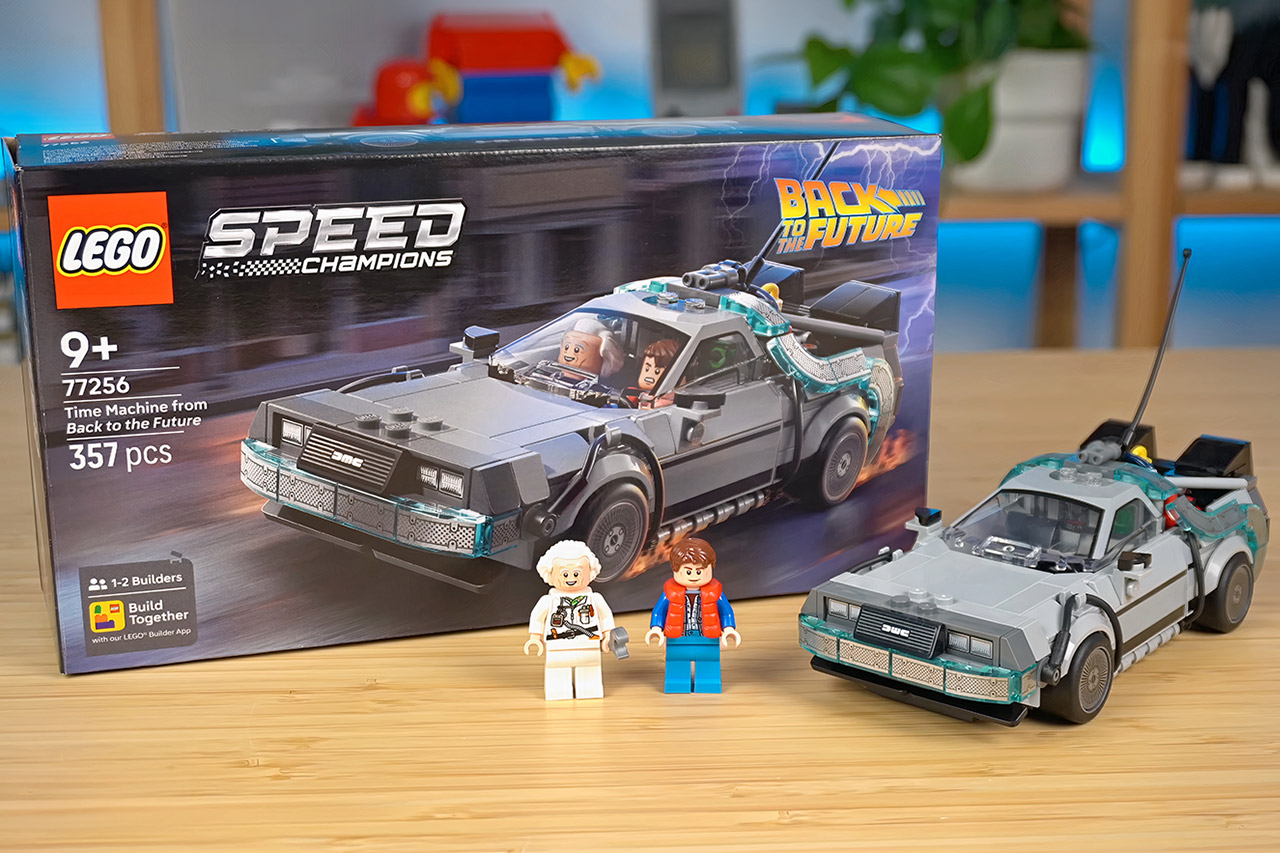
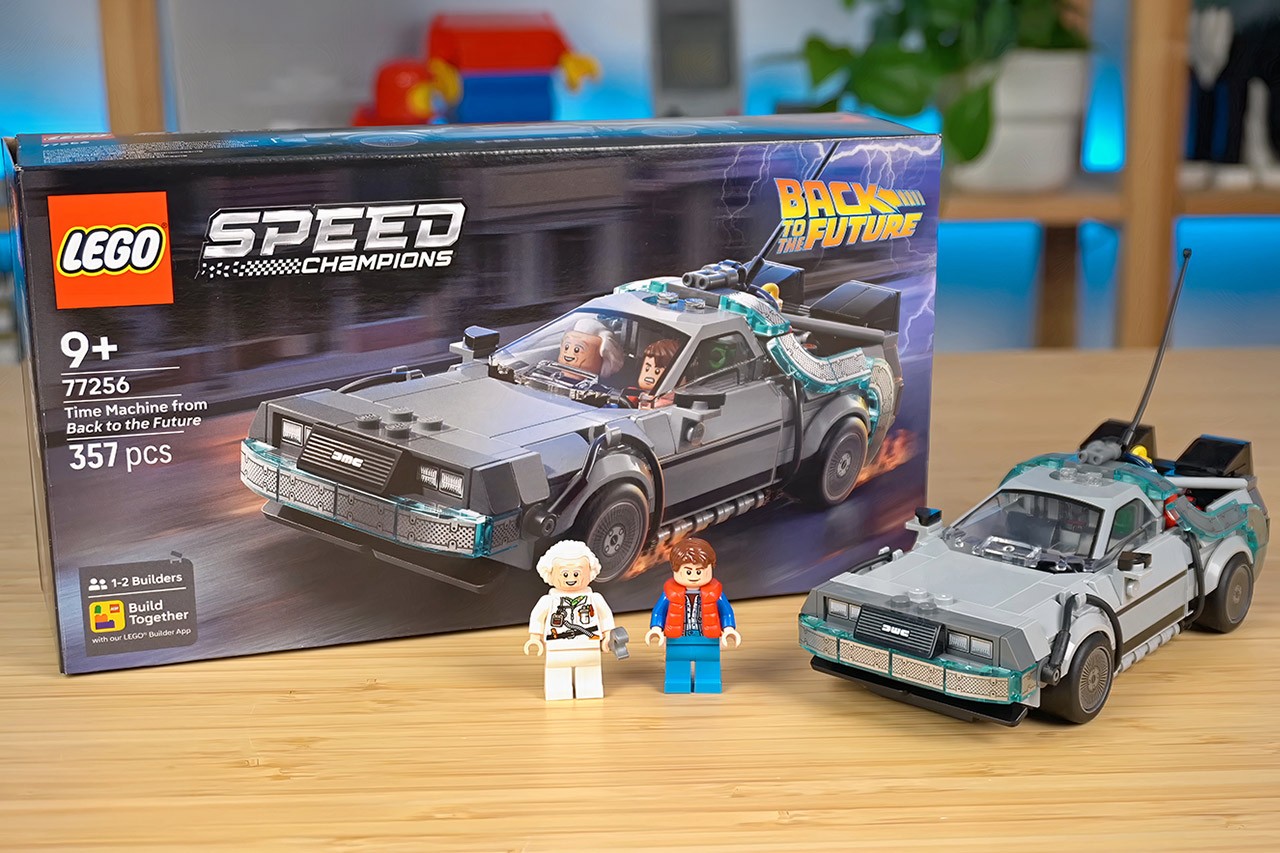
LEGO Speed Champions Packs Two Versions of the DeLorean Into One Set

Published

on

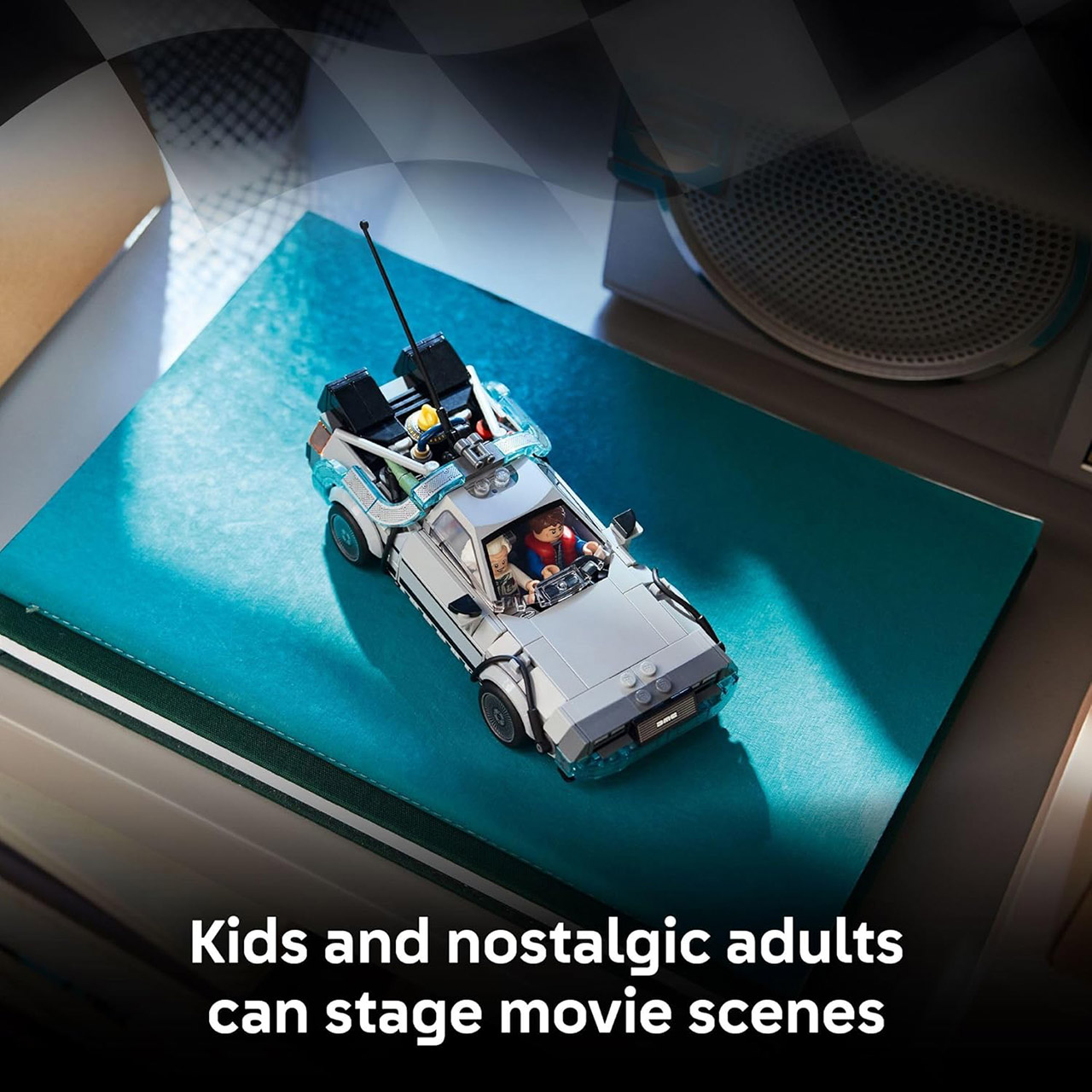
LEGO Speed Champions Time Machine from Back to the Future Set 77256
Builders who pick up set 77256, priced at $22.39 (was $28), get a compact LEGO Speed Champions model that covers key looks from the first two Back to the Future films without needing extra purchases. The 357-piece count keeps the finished car at roughly six and a half inches long, a scale that sits comfortably alongside other vehicles in the same line for display or light play.


“>One of the notable features is the rebuild option. The instructions lead you through an initial version that looks exactly like the DeLorean from the original film, replete with a California plate on the back and the iconic tall lightning rod. Swap a few sections around and you’ll have the sequel’s DeLorean, complete with the Mr. Fusion unit strapped to the back, wheels angled out to give the impression of hover mode, and, of course, all the details you’d expect, such as the rear vents, the flux capacitor visible under the hood, and the time calculator display in the cabin.


LEGO Speed Champions Time Machine from Back to The Future Building Toy for Kids – Pretend Play & Display…
  • MODEL CAR BUILDING TOY – The LEGO Speed Champions Time Machine from Back to the Future (77256) building toy for kids 9 years old and up lets young…
  • 2 MINIFIGURES – Kids can place the Doc Brown and Marty McFly minifigures inside the cockpit for creative storytelling and pretend play adventures
  • BUILD 2 WAYS – Kids can construct the DeLorean from the first Back to the Future movie with lightning rod and California license plate, then rebuild…


Transparent details and printed tiles make movie-specific elements stand out, even on a small scale. The interior work in the cockpit section is excellent, with enough space for the supplied minifigures to sit comfortably. If you prefer getting up close and personal with the model, you’ll appreciate the degree of detailing on all of the body panels, as well as the way the little light-up accents capture the eye when the model is displayed on a shelf.


This set features new prints of Doc Brown and Marty McFly, both of which are amazing (to fans of the film series). Doc wears a little clock around his neck that is set to the precise time as shown in the movie’s clock tower scene, and Marty wears a puffy jacket that can be removed to expose his shirt patterns and a few smaller elements underneath. Both figures have a variety of expressions to choose from, and they fit nicely inside the DeLorean for role-playing or simply decoration.

Advertisement

LEGO Speed Champions Time Machine from Back to the Future Set 77256
The build is ideal for children aged nine and up, but there’s plenty to keep even older fans amused. The digital instructions on the LEGO app are a godsend since they allow you to zoom in, rotate the model, track your progress, and do other things that would be difficult to do with a large print guide. Once completed, the model feels worthy of exhibition, but it’s not so large that it can’t fit into a small place if necessary.

Source link

Continue Reading

Tech

How to turn off AI in your Google Docs

Published

on

It happened to me: I opened a Google Doc to write an article, and I was immediately confronted with a text box inviting me to “write with Gemini.” I looked for some button to swipe away the garish AI display, but I could not find it. It made me mad.

Now, instead of writing the article I’m supposed to be working on, I am writing about how to get the AI pop-ups off of your Google Docs screen, since it took me some time to figure out. You’re welcome.

What is this monstrosity? Why won’t it just go away?Image Credits:Screenshot from Google Docs

The first fix is pretty straightforward:

  • Click “Gemini” on the top menu bar above your document.
  • On the drop-down menu, select “bottom bar preferences.”
  • You can choose to turn off that bottom bar, which will get rid of that AI box at the bottom of your screen.
Image Credits:Screenshot from Google Docs

Full disclosure: I was so enraged when I set out to find “bottom bar preferences” that I initially missed it entirely. Instead, I clicked “Ask something else” and asked Gemini to help me remove itself from my life. AI may not be human, but Gemini seemed to have some sort of survival instinct, because it told me to click the “X” icon. That does not remove Gemini. It simply closed the conversation, the one in which I was asking it how to turn itself off. Suspicious!

Image Credits:Screenshot from Google Docs

Other aggrieved Google Docs users have reported features that I have yet to encounter, like a “help me write” feature that hovers over your cursor while you work. This seems like something that would upset me, so it’s probably worth nipping that in the bud before it’s too late. Benjamin Franklin once said, “An ounce of prevention is worth a pound of cure.” (He was talking about fire safety. I am talking about product design.)

Instead of turning off each individual AI feature like a game of whac-o-mole, we can disable “smart features” across our Google workspace via Gmail.

  • First, navigate to your Gmail inbox.
  • From there, find the gear icon for Settings and click it.
  • Then, at the top of the menu, click “See all settings.” (But while you’re here, you should pick out a fun theme for your inbox. Would a little bit of whimsy kill you?)
  • After clicking “See all settings,” scroll about half way down the page to find “Google Workspace smart features,” then click “Manage Workspace smart feature settings.”
Image Credits:Screenshot from Gmail
  • Here, you’re presented with two options: one that lets you toggle off smart features in Google Workspace (like those annoying Gemini pop-ups in Google Docs), and one that applies to other smart features (which I personally find less annoying). I only toggled off the first option, but if for some reason you hate when Gmail automatically makes calendar events for your flights, this is where you can fix that.

You should now be safe from annoying Gemini pop-ups that disrupt your writing process in Google Docs. You can rest easy.

When you purchase through links in our articles, we may earn a small commission. This doesn’t affect our editorial independence.

Advertisement

Source link

Continue Reading

Tech

4 Of The Best Early Tool Deals Available Now

Published

on


We may receive a commission on purchases made from links.

Amazon Prime Day is easily one of the best times to buy power tools if you’re an Amazon Prime member. Each year, dozens of products from some of the biggest and best power tool brands receive member-exclusive discounts that bring their prices down significantly. This year, Prime Day is running June 23 through June 26 and promises millions of deals across the site.

Advertisement

You don’t need to wait until Prime Day officially starts to get a deal on power tools, though. A wide range of products have already been discounted ahead of the event, including those from big names like Bosch, Craftsman, Metabo, Skil, and Ego. There’s no guarantee that these particular tools will make it to Thursday, as Amazon already has many of them listed as “Selling Fast,” so it might be worth taking a look now and deciding for yourself if you’d rather wait a bit longer to see if prices drop even further, or pull the trigger now and lock in the sale price while the goods are available.

Advertisement

Bosch 11255VSR BullDog Xtreme Concrete/Masonry Rotary Hammer Drill

If you’re after a heavy-duty drill perfect for breaking up concrete and masonry, Amazon has you covered. One option you might consider is the Bosch 11255VSR BullDog Xtreme 8 Amp 1-inch Variable Speed SDS Plus Concrete/Masonry Rotary Hammer Drill. The name might be a mouthful, but this is a serious tool that’s perfect for those working with these dense materials. It generally retails for $219.00, but it’s currently available on Amazon at 29% off for $154.99. For this price, you get the drill, an auxiliary handle, a depth gauge, and a carrying case.

This is a corded drill with a 7 Amp motor that ranges from 0-1,300 rpm and 0-5,800 bpm. It generates up to 2 ft-lbs of kinetic energy on impact and has vibration control to help reduce fatigue, with an ergonomic D-shaped handle for control. It uses the SDS-Plus bit system, which is tool-free and offers features like automatic bit locking and dust protection. It has a variable-speed trigger and can be operated in three modes selected via a multifunction selector: rotation-only, rotary hammer, and hammer-only.

This drill has a 4.7 out of 5-star rating on Amazon with over 3,000 reviews. Users generally seemed to have few complaints with it. Most praised its build quality, performance, durability, value, speed, and ease of use. Some also stressed that it’s great for cutting concrete and that it’s both fast and powerful.

Advertisement

Bosch ROS20VSC Palm Sander

One of the most essential tools in any kit is a good random orbital sander. These are handy for everything from sanding wood to smoothing out fiberglass, and the Bosch ROS20VSC Palm Sander is available at a 22% discount that drops it to $69.00 from its usual $89.00 MSRP.

This is a 2.5 Amp corded sander with rotation speeds between 7,500 and 12,000 opm, controlled via a variable speed dial on the head. It has a 5-inch sanding pad with a hook-and-loop attachment system with over 35,000 hooks. The pad itself rests on a dampening system designed to reduce swirl marks on both flat and contoured surfaces. The sander also has a built-in vacuum dust collector with a microfilter system capable of sucking up fine dust and particles as small as ½ micron in diameter. This detachable dust-capture system also has a clear level indicator, so you know exactly when to dump it.

Advertisement

The tool is well-liked by Amazon users, with an average rating of 4.6 out of 5 stars based on just around 5,000 reviews. Buyers had very few complaints about the overall build quality, performance, value, or ease of use. Several of them also went out of their way to compliment the tool’s low noise levels, excellent dust collection, and superior sanding performance. There were a handful of durability concerns raised by some reviewers, but these seem to be sporadic issues, with no single fault to suggest a design flaw.

Advertisement

Metabo HPT 18V MultiVolt Compact 18 Gauge Brad Nailer Kit

A cordless brad nailer can be a complete game-changer, freeing you from lugging around an air compressor when installing trim and molding. One solid option that’s currently on sale is the Metabo HPT 18V MultiVolt Compact 18 Gauge Brad Nailer Kit. This includes the nailer, a 2.0Ah battery, and a charger. The kit usually retails for $249.00, but it is currently marked down by 40%, so you can get it for just $149.00.

The Metabo HPT is one of the more popular budget-oriented nailers sold on Amazon. It uses a mechanical spring to drive 18-gauge nails up to 2 inches in length. The 2.0Ah battery might not seem all that impressive on paper, but Metabo promises that the tool will drive up to 700 nails per charge. Metabo’s brad nailer is tighter and lighter than many similar battery-powered nailers, and it has several additional features, such as immediate firing response with no ramp-up time between nails (up to two nails per second), an on-board LED, and toolless drive depth adjustment.

The tool has extremely favorable reviews, boasting an impressive 4.8 out of 5-star average rating on Amazon from over 800 reviews. 87% of users gave the tool a perfect score, citing build quality, performance, value, battery life, ease of use, and driving power as key reasons for their scores. The biggest complaint centers around the tool’s 5.5-pound weight, which some consider a bit on the heavy side.

Advertisement

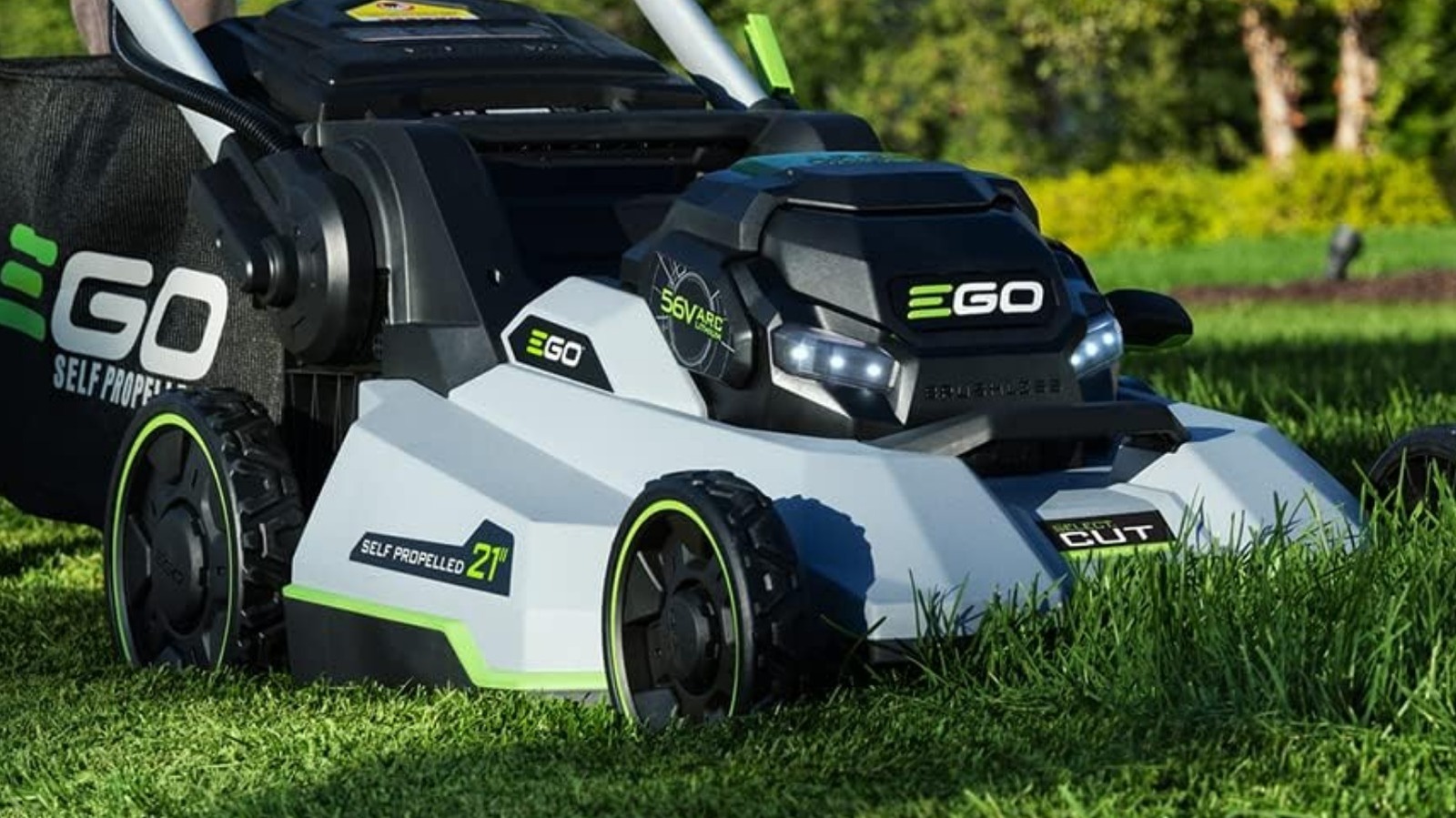
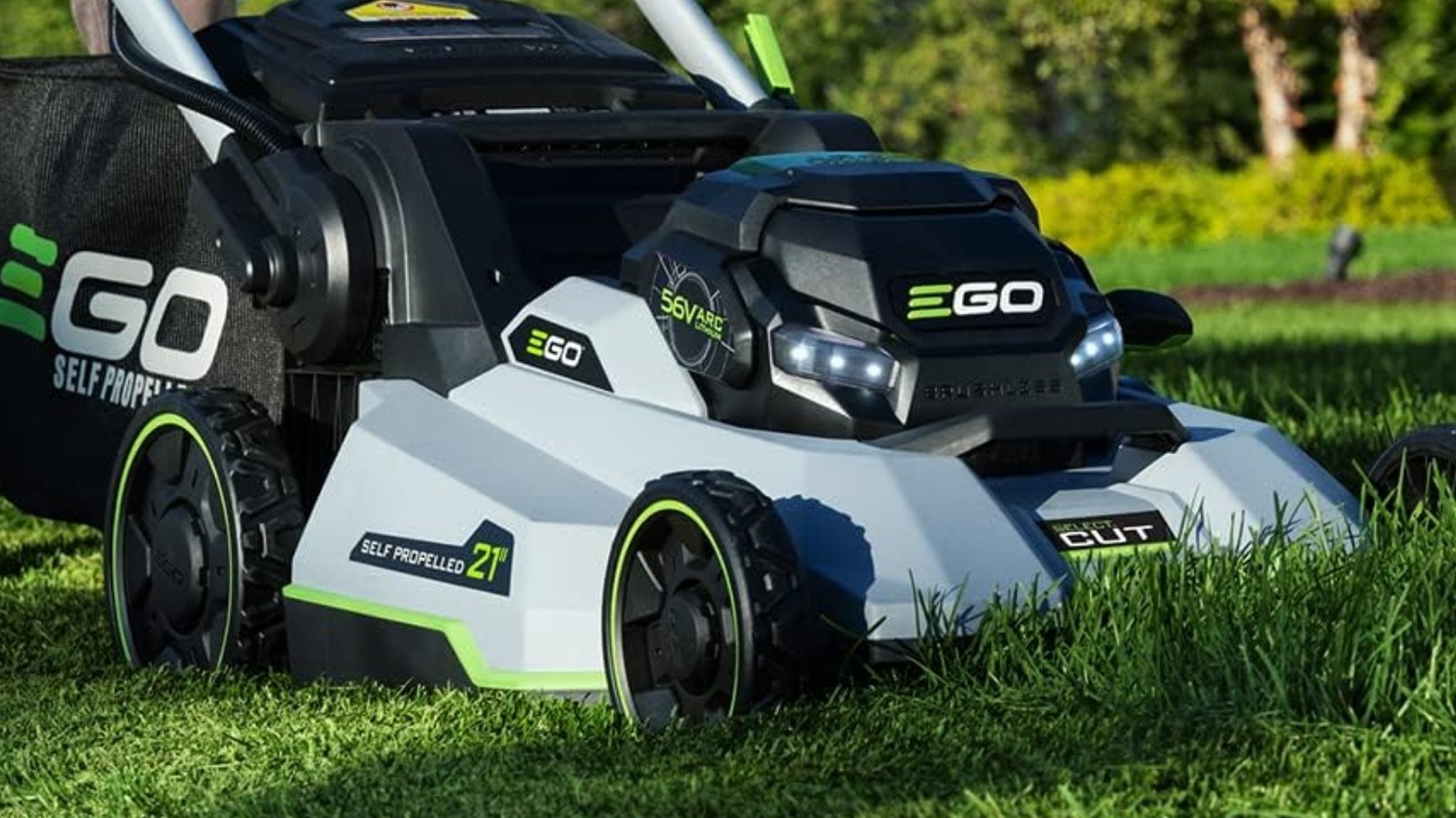
Ego Power+ Self-Propelled Electric Lawn Mower Kit

Keeping your lawn in order can be a lot of work, and one way to make the task a little less backbreaking is to invest in a self-propelled mower. Electric lawn mowers have come a long way in recent years, and Ego is one of the top push mower brands in the field. Right now, Amazon has the Ego Power+ Self-Propelled Electric Lawn Mower Kit listed for $599.99. That’s a 20% reduction from its usual $749.99 selling point.

This kit includes the mower itself, a 7.5 Ah battery, and a rapid charger that promises a full recharge in an hour. The mower has a multi-blade system that’s powered by a brushless, high-efficiency motor. The included battery offers up to 60 minutes of runtime on a single charge, which should be enough to cover most small to mid-sized lawns. It has a Touch Drive self-propulsion system that can drive at speeds between 0.9 mph and 3.1 mph. Additionally, the mower has a push-to-start button, LED headlights, seven adjustable blade height positions, and three separate operational functions: mulching, bagging, and side discharge

Advertisement

Ego’s mower has a 4.4 out of 5-star rating on Amazon with over 1,400 reviews. Owner opinions on aspects such as performance, battery life, power, propulsion, cut quality, noise levels, and ease of use are all generally favorable. Some wished for more battery life, while a few others received defective components, but these are generally a minority.


Advertisement

Source link

Continue Reading

Tech

Tim Cook Says Apple Price Increases Are ‘Unavoidable’ Due To Memory Crunch

Published

on

RAMaggedon claims another one.

In an interview with The Wall Street Journal, Apple’s outgoing CEO all but confirmed that higher prices are on the way for the company’s products. “Unfortunately, price increases are unavoidable,” Tim Cook told the publication. “We’re doing our best to mitigate the huge increases that are being passed to us, and we’ve been trying to shield our customers from the increases, but the situation has become unsustainable.”

Unfortunately, Cook didn’t offer any specifics about either the amount prices will go up or when. With WWDC 2026 in the books, Apple is just a few months away from announcing its iPhone 18 lineup. It seems very likely those devices will be more expensive than the prior generation. Same goes for any new laptops and tablets Apple unveils this year. And given the industry’s ongoing struggles to source components, courtesy of the surging demand from AI development, Apple’s current product lineup may not escape a jump in prices.

“There’s less supply at a time when consumers want devices and the memory guys are passing along huge price increases,” he said. “We definitely need memory pricing and supply to return to reasonable levels for consumer products. That’s the bottom line.”

Advertisement

Cook’s interview was typically diplomatic. It seems likely he opted to be the one delivering the bad news rather than having for his successor, John Ternus, take the heat for the coming price hike. He also acknowledged how extreme the market for RAM and storage has gotten: “I’ve never seen anything like it in any area in over 40 years.”

Apple is hardly the first tech company to make essentially this same announcement. Samsung, HP, Microsoft, Nintendo and Valve have all addressed the impact of soaring RAM costs and demand over the past few months.

Advertisement

Source link

Continue Reading

Tech

IEEE’s 2026 Education Week Emphasized Lifelong Learning

Published

on

The rapid evolution of the global engineering landscape requires continuous education. For one week in April, the IEEE community focuses on its educational frameworks. IEEE Education Week, which just concluded its fifth year, provided a comprehensive overview of the resources available to professionals and students.

From 11 to 19 April, the organization supplied a variety of live and virtual events, online resources, and promotions that champion the cycle of lifelong learning.

IEEE President Mary Ellen Randall kicked off the week with the keynote: “Inspiring Tomorrow’s Innovators: How IEEE Educational Resources Can Open Pathways Into STEM.” The event served as a central point for programs that run throughout the year.

“Education Week allows different units to share resources with members and the public, covering everything from preuniversity programs to advanced professional training,” says Jamie Moesch, managing director of IEEE Educational Activities.

Advertisement

Coordination across the organization

The event relied on the cooperation of 120 IEEE partners. Involved organizational units included the IEEE Communications Society, the IEEE Education Society, and chapters and sections from around the world, including in Brazil, Colombia, and India. They produced 114 events, 23 resources, and 11 special offers.

“These collaborations help members remain current in a changing technological environment,” says Timothy Kurzweg, vice president of IEEE Educational Activities. “The goal is to provide accessible tools that assist members in both their own professional development and their efforts to mentor new engineers.”

“The week allows different units to share resources with members and the public, covering everything from preuniversity programs to advanced professional training.” —Jamie Moesch, managing director of IEEE Educational Activities

The participation metrics reflect a broad geographic interest. The IEEE Education Week website recorded more than 4,770 visitors, with primary engagement coming from India, Nigeria, and the United States. Nearly 240 digital badges were issued to people who completed educational quizzes.

Advertisement

To encourage participation, organizers enlisted 72 volunteer ambassadors to promote the week’s activities across their local networks and share key resources on social media.

Available educational tools

Here are a few of the virtual events held during Education Week—most of which are available on demand:

The Education Week website highlights resources and offers shared by IEEE organizational units, including:

Individuals who were unable to attend the live sessions can find the archived content on the IEEE Education Week website.

The website also accepts donations for education-related funds managed by the IEEE Foundation.

Advertisement

Updates and technical resources continue to be shared through the #EducationAtIEEE hashtag on social media channels.

Planning for IEEE Education Week 2027, scheduled for 3 to 11 April, is underway.

From Your Site Articles

Related Articles Around the Web

Advertisement

Source link

Continue Reading

Tech

SpaceX leapfrogs Amazon and briefly tops Microsoft in market value on Cursor acquisition news

Published

on

Elon Musk celebrates the SpaceX IPO last week. (Nasdaq Photo)

Shares of SpaceX surged Tuesday morning, pushing the Elon Musk-led company above Amazon and into a neck-and-neck race with Microsoft for the title of the world’s fourth-most valuable public company, less than a week after its blockbuster $75 billion IPO.

The rocket maker, satellite internet provider, defense contractor, and AI company is now valued at more than the entire economy of Italy.

The jump came after SpaceX announced its $60 billion acquisition of AI coding startup Cursor, a San Francisco-based company that last November said it was generating more than $1 billion in annualized revenue.

“We look forward to working closely with the Cursor team to advance our frontier AI capabilities,” SpaceX wrote in a message on X on Tuesday morning.

That helped propel SpaceX to stratospheric heights.

Advertisement

Its market capitalization stood at roughly $2.94 trillion at one point on Tuesday morning, well ahead of Amazon’s $2.66 trillion valuation. SpaceX also topped 51-year-old Microsoft in value for periods on Tuesday, going back and forth with the Redmond tech giant. Microsoft is valued at roughly $2.93 trillion.

Nvidia remains the most valuable company, with a stock market value just over $5 trillion, followed by Alphabet at $4.51 trillion and Apple at $4.37 trillion.

SpaceX’s achievement underscores how rapidly investor attention has shifted toward companies operating at the intersection of artificial intelligence, space infrastructure, defense and communications networks. But it also speaks to the allure of Musk, with Vanda Research indicating that SpaceX accounted for about three-quarters of all single stock purchases by retail investors on Monday.

“The company that’s accustomed to defying gravity is now defying market physics,” CNN noted.

Advertisement

The Cursor acquisition signals Musk’s ambition to build a vertically integrated AI powerhouse spanning chips, data centers, software, communications networks and space infrastructure.

The stock surge also adds a new dimension to the story GeekWire explored last week, examining what the SpaceX IPO means for Seattle and the broader Pacific Northwest space industry. SpaceX maintains a significant engineering presence in Redmond, where employees develop Starlink satellite technology and related communications systems, making the region an important outpost what has become in a matter of days one of the world’s most valuable companies.

For Amazon and Microsoft, the comparison is largely symbolic. The Seattle area tech giants generate hundreds of billions of dollars in annual revenue and operate dominant businesses in cloud computing.

But Wall Street’s willingness to value SpaceX above Amazon and Microsoft highlights how investors increasingly view AI and space as the next major technology frontier. SpaceX also competes directly with Amazon’s Leo satellite broadband network business.

Advertisement

Whether SpaceX can sustain a valuation at these levels remains an open question. Some analysts and tech watchers have described the stock’s post-IPO run as highly speculative, noting that the company posted a loss following its merger with Musk’s xAI.

Still, the message from the market is clear: at least for now, investors see it as one of the defining technology companies of the decade.

Source link

Advertisement
Continue Reading

Tech

Unicef backs Irish NGO Camara Education with $2.56m

Published

on

Camara Education Ethiopia will support the roll-out of 115 AI-powered digital learning hubs across Ethiopia.

Irish nonprofit Camara Education has secured more than $2.56m from Unicef to expand its AI-powered digital education across Ethiopia.

The funds will support the organisation through to December 2027 to provide children with its “large-scale” digital and transferable skills programme.

The initiative intends to expand access to digital education for “thousands” of students and teachers, particularly in refugee-hosting, displacement-affected and underserved communities, the nonprofit said. Focus will be provided for young girls and learners with disabilities, Camara Education said.

Advertisement

Many of the schools supported through Camara Education’s programme have limited or inconsistent internet access, making offline digital learning important for ensuring continuity of learning.

Partnering with Unicef will allow Camara Education Ethiopia to support the roll-out of 115 AI-powered digital learning hubs in schools and institutions, alongside managed internet connectivity and offline-first learning environments designed for low-resource settings.

The funds will enable the disbursement of 1,166 desktop computers, 826 tablets and 200 laptops, embedded with curriculum-aligned digital content and the Camara AI education assistant.

The programme intends to deliver digital skills, AI and technology training to more than 1,500 teachers and school leaders.

Advertisement

Around 7,000 students are also expected to be trained in essential digital and transferable skills. Learners will have access to structured progression pathways, including coding bootcamps, mentorship and job-readiness support, Camara Education said.

“This landmark partnership demonstrates the growing importance of digital skills, AI literacy and equitable access to technology in shaping the future of education,” said Ibolya Nemeth, the CEO of Camara Education.

“Together with Unicef and our partners, we are investing in practical, scalable solutions that empower young people and teachers with the tools, confidence and opportunities needed to thrive in a digital economy.

“We are proud that an Irish-founded organisation continues to play a meaningful role in advancing education and opportunity across Africa.”

Advertisement

The 2005-founded nonprofit works across Africa, including in Kenya, Tanzania and Zambia, providing learning solutions to underserved schools in the region.

Its initiative with Unicef, called ‘Digital and Transferable Skills Development: Transforming In-School Learning and Transition to Earning’, is delivered with support from the Netherlands, Mastercard Foundation and the Global Partnership for Education.

Don’t miss out on the knowledge you need to succeed. Sign up for the Daily Brief, Silicon Republic’s digest of need-to-know sci-tech news.

A school student in Ethiopia. Image: Unicef Ethiopia via Flickr (CC BY-NC-ND 4.0)

Advertisement

Source link

Continue Reading

Trending

Copyright © 2025