

Crypto World
Deutsche Bank and the Smart Money are at War Over Micron (MU) Stock

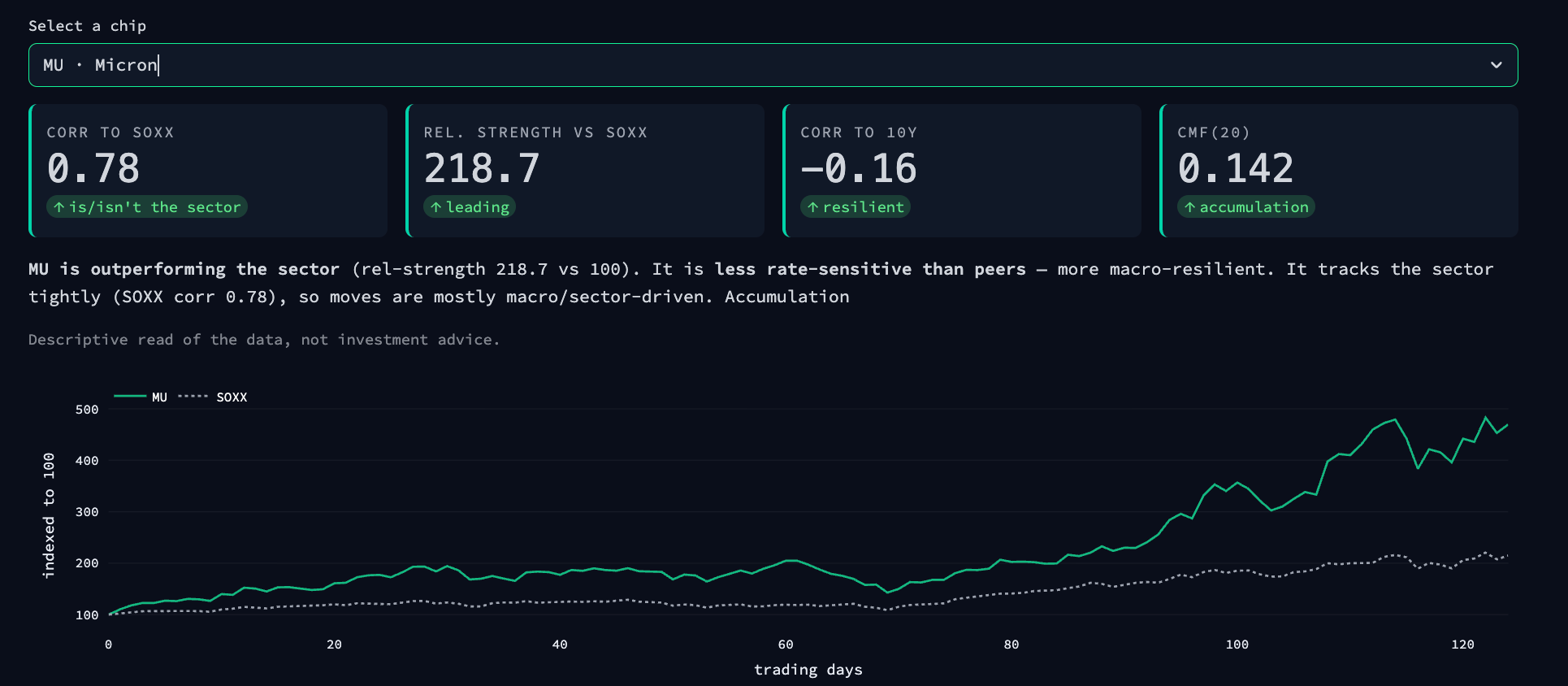
Wall Street just reminded itself that artificial intelligence cannot run without memory. Deutsche Bank lifted its Micron stock price target to $1,500 this week, and it was not alone.
At least six banks raised their targets in the past few days, each ahead of the June 24 earnings. The buyers are already there, and the whole case rests on one chip that most people cannot name.
Six Banks Raised Their Micron Targets in One Week
Deutsche Bank set the tone on June 17, lifting its Micron price target to $1,500 from $1,000. It was not alone.
On June 15, TD Cowen more than doubled its target to $1,500 from $660. Cantor Fitzgerald did the same from $700, while RBC Capital moved to $1,200 and Wolfe Research to $1,250.
In all, at least six banks raised targets in a week, every one ahead of Micron’s June 24 earnings.
Every note points to the same driver. AI-driven DRAM demand is outrunning supply, and the shortage is expected to last well into 2028.
DRAM is the fast working memory that AI models run on. When demand grows faster than chipmakers can build it, prices stay high. Micron (MU) is one of only three big makers and the only US maker of AI memory, so it keeps much of that upside.
Want more insights like this? Sign up for Editor Harsh Notariya’s Daily Newsletter here.
The sharpest shortage sits in one specific chip, HBM, or high-bandwidth memory. It is the premium memory stacked next to AI processors.
Micron’s operations chief told a JPMorgan conference that HBM consumes more than three times as many wafers per bit. That makes new supply slow and expensive to add, exactly why analysts expect the squeeze to last.
The banks add a bigger point. They argue memory’s role in AI is structural, not just another boom-and-bust cycle. That is the case for higher earnings for years, not quarters.
Micron Leads the Entire Chip Sector
The market already agrees with the banks. Against the SOXX semiconductor index, Micron’s relative strength reads 218.7, the highest of any major chip.

It leads the group by a wide margin, even ahead of Marvell (one of the segment leaders) at 167.8 and Nvidia at just 56.6.

The money is following the same path. Chaikin Money Flow, a proxy for whether big investors are buying or selling, reads a positive +0.142 on Micron. That is the second-strongest accumulation in the whole chip group, behind only AMD.

The simple read is that institutions are still buying, not selling, and Micron is outrunning almost every peer. Strong demand, strong relative strength, and steady buying are driving the targets higher.
Crypto Traders See a Pause Coming
Not every market is positioned for more upside right now. On Nansen, crypto smart money holds a near-term short against Micron. It is the second-largest chip short on the board, near $21 million, behind only Nvidia.

The logic is simple. Crypto perpetual traders bet on fast moves. Micron’s run has been close to parabolic, up more than 250% this year. After a move like that, they are positioned for a short-term cooldown, not a change in the story.
A run that steep usually needs to be digested before the next leg. With earnings due June 24, a near-term pause would surprise no one.
The Levels That Decide Micron’s Next Move
Now the levels. MU stock trades near $1,058 after its run. The stock broke out of a bull flag on June 11, but volume has since cooled. Until buying volume on that breakout day tops, more consolidation is possible.
The bull case starts with a push back above $1,074. Reclaiming $1,126 would mark a fresh local high and open the path to $1,199, then $1,293.
The bear case rests on $1,023. That level has acted as strong support, and it is where the crypto short sits. A break below it brings $959 into view if profit-taking deepens.

For now, $1,126 separates a fresh leg higher in Micron stock from an extended pause near support.
The post Deutsche Bank and the Smart Money are at War Over Micron (MU) Stock appeared first on BeInCrypto.


Kentucky has filed lawsuits against prediction market platforms Polymarket and Kalshi, escalating a dispute that pits state gambling regulators against the U.S. Commodity Futures Trading Commission (CFTC) over how sports-linked event contracts should be classified and regulated.
In court filings announced by Kentucky Attorney General Russell Coleman on Wednesday, the state also named Kalshi partners Coinbase, Robinhood and Webull. Kentucky accuses the platforms of operating unlicensed and illegal sports betting and gambling services, arguing their products fall under state “sports wagering” law rather than federal commodities rules.
Key takeaways
- Kentucky alleges Polymarket and Kalshi are offering sports event contracts that constitute “sports wagering” under Kentucky law.
- The lawsuits also target Kalshi partners Coinbase, Robinhood and Webull, alleging they are involved in providing access to the platforms without proper licensing.
- State enforcement actions have drawn repeated challenges and CFTC involvement, with conflicting outcomes in different courts.
- Prediction market operators argue their contracts are swaps regulated by the CFTC, not state gambling laws.
A state-led push to treat prediction markets as sports betting
Kentucky’s attorney general framed the case as part of a broader pattern among states trying to control sports-related gambling. Coleman said his office filed suits in state court against Polymarket and Kalshi, accusing both of “operating unlicensed and illegal sports betting and gambling platforms.”
Kentucky’s complaint also asserts that the platforms are operating without a Kentucky gaming license and without complying with state regulations. The state further claims that contracts tied to sports outcomes “fall squarely within the definition of ‘sports wagering’ under Kentucky law.”
Beyond licensing and classification, Kentucky also alleges the platforms do not provide adequate resources for problem gambling support, a requirement the state says is mandated by law.
The federal-regulator argument: event contracts as swaps
Polymarket rejected Kentucky’s position. A Polymarket spokesperson told Cointelegraph that the state’s action “runs counter to the CFTC’s established framework for regulating prediction markets,” adding that the company expects to address the allegations through the legal process.
Kalshi, meanwhile, insisted its setup is already within federal oversight. Kalshi spokesperson Jacki McGavick told Cointelegraph that “Kalshi is a federally regulated exchange — the CFTC is our regulator, not the states,” arguing that courts have recognized this and that the same outcome should apply in Kentucky.
The CFTC did not immediately respond to a request for comment, according to the report.
At the heart of the dispute is a jurisdictional split. Multiple state authorities have argued that event contracts connected to sports are functionally sports betting and therefore require state licenses. Prediction markets counter that these event contracts should be treated as swaps regulated under federal commodities law—an argument that is backed by the CFTC.
Why these lawsuits could reshape access to major markets
Kentucky’s move arrives as state actions against prediction platforms have grown into a multi-jurisdiction conflict. According to Token Terminal, Polymarket and Kalshi recorded $25 billion in monthly trading volume in May combined. For platforms seeking to scale, losing access to large state markets can quickly become more than a legal inconvenience—it can affect liquidity, product distribution, and the user base.
The legal and regulatory stakes are also reflected by the breadth of involvement from federal and state actors. As reported, at least 17 other states have brought prediction market operators into court, and the CFTC has pursued its own legal action—suing eight states after state authorities took steps against prediction markets and, in the CFTC’s view, stepped beyond federal authority.
Mixed court outcomes increase uncertainty for the next fights
While prediction markets have not uniformly prevailed, some rulings have favored their argument about federal jurisdiction. In Wednesday’s coverage, a Michigan federal judge ruled against Polymarket in its lawsuit against the state, finding that Polymarket’s sports event contracts are not swaps under the CFTC’s authority.
Other cases have gone the opposite direction. The report notes that the Third Circuit Court of Appeals ruled in April that New Jersey regulators could not prevent Kalshi from offering sports event contracts in the state—supporting, at least in that circuit and context, the view that states cannot simply override federal regulatory authority.
The Kentucky filing also follows an earlier round of litigation involving the same market ecosystem. As reported by Cointelegraph, Kalshi and Polymarket are already in legal action with Kentucky over the state’s tax on prediction market transaction fees. The platforms sued after Kentucky imposed a first-in-the-country 14.25% tax on prediction market transaction fees, arguing it is discriminatory and conflicts with federal law.
Outside Kentucky, cease-and-desist letters and subsequent lawsuits have involved multiple states, including Montana, Nevada, Utah, Iowa, Illinois, Ohio, Tennessee, New York, New Jersey, Connecticut and Maryland—while other states such as Washington, Arizona, New Mexico, Wisconsin, Michigan, Massachusetts and Kentucky have also chosen to sue prediction platforms, including Kalshi.
What to watch next
With Kentucky now adding to a growing enforcement track record—and with courts issuing contrasting decisions on whether sports event contracts qualify as swaps—readers should watch how Kentucky’s claims are argued and whether the case outcome aligns with favorable appellate rulings or the more skeptical reasoning seen in Michigan. The legal answers will likely determine not just Kentucky’s approach, but how much room states have to regulate (or restrict) prediction markets nationwide.

Several U.S. gaming industry groups and labor organizations have asked Senate lawmakers to add explicit language to the Digital Asset Market Clarity (CLARITY) Act that would prohibit “event contracts” tied to sports and casino-style gaming from being offered through prediction market platforms.
In a letter reported by Semafor on Wednesday, organizations including the Indian Gaming Association and the American Gaming Association said they are concerned that prediction markets have contributed to a major expansion of gambling activity in the United States without voter approval or legislative authorization. They urged Congress, while the CLARITY Act is still under consideration, to clarify that sports betting falls outside the Commodity Futures Trading Commission’s (CFTC) regulatory remit and cannot be structured as digital “prediction market” products.
Key takeaways
- Gaming and labor groups are pushing for CLARITY Act amendments to explicitly bar sports and casino-style “event contracts” on prediction market platforms.
- The groups argue that these activities should remain governed by state and tribal gambling frameworks rather than CFTC oversight.
- Regulatory conflict centers on the CFTC’s position that it has “exclusive jurisdiction” over prediction markets.
- Litigation involving the CFTC and state regulators could escalate toward higher-court review depending on how agencies and platforms litigate jurisdictional issues.
- Congress has already passed the House version of CLARITY, but Senate consideration has been delayed amid concerns including stablecoin yield and tokenized markets.
Requested CLARITY Act language and the jurisdiction dispute
The advocacy campaign reflects a broader policy dispute over which regulator should oversee prediction markets when products are connected to sports and gambling-adjacent events. According to the Semafor report, the signatories to the letter told Congress to use the CLARITY Act to “affirm” that sports betting is not within the CFTC’s remit and cannot be offered through prediction market platforms.
The letter also characterized prediction markets as a mechanism that has accelerated gambling expansion over the preceding 18 months. While the letter did not attempt to resolve all differences among the organizations on gambling policy, it emphasized a shared view that the existing state and tribal regulatory system should remain the primary framework for sports wagering-related products.
As a practical compliance issue, the groups argue that federal enforcement authority would be poorly calibrated to the granular, geographically scoped licensing and operational rules that states and tribes already apply. Their position is that CFTC supervision—particularly where products are marketed as event-linked bets—could create duplicative or misaligned oversight rather than resolving how platforms should be authorized to operate.
CFTC stance and industry pressure on regulators
The groups’ request arrives as CFTC leadership under Chair Michael Selig has argued that the commission has “exclusive jurisdiction” over prediction markets. Selig has previously taken an aggressive posture in support of platforms associated with event contracts, including by backing legal challenges to state-level efforts to block such products.
Supporters of the CFTC’s approach, as reflected in the agency’s broader litigation posture, have generally framed prediction market event contracts as falling within federal commodities/derivatives authority—rather than traditional gambling law. In response, the letter states that the CFTC was created to oversee commodities and derivatives markets, not gambling or sports wagering, and argues that the agency lacks the institutional capacity to police nationwide sports betting given the existence of established state and tribal regulatory systems.
Beyond jurisdictional theory, the dispute has had measurable political and fiscal traction. The American Gaming Association reported that state gaming authorities had lost about $1.08 billion in tax dollars “since prediction markets began offering sports event contracts.” For institutional stakeholders, such claims often shape legislative negotiations by translating regulatory boundaries into concrete budget impacts and industry incentives for lawmakers to limit federal intervention.
Why the CLARITY Act is central to enforcement outcomes
The CLARITY Act is designed to shift elements of regulatory and enforcement authority over certain digital asset activities away from the SEC and toward the CFTC. Lawmakers and analysts have described the measure as an attempt to reduce uncertainty about which federal agency governs which digital asset instruments, particularly in areas where the SEC’s approach to market structure and token classification has been contested.
Some lawmakers expected the Senate to move the bill out of Congress by August. However, the legislation passed the House in July 2025 and has faced delays linked to concerns including stablecoin yield, ethics considerations, and the treatment of tokenized equities. These issues matter for compliance and governance because they affect how regulated market actors can structure products, market disclosures, and custody or custody-adjacent arrangements—especially where stablecoins and tokenized instruments intersect.
Within that broader policy framework, the proposed addition sought by the letter would specifically target prediction markets that resemble sports betting or casino-style gaming. If adopted, that change could constrain how platforms label or structure their offerings, and it could also influence whether regulators treat certain products as commodity-like derivatives or as wagers subject to gambling licensing.
Potential path to the U.S. Supreme Court
Jurisdictional battles between federal agencies and state regulators frequently create pathways to appellate review, and the question of whether prediction market “event contracts” can be treated as swaps under federal commodities law has been a recurring theme in litigation.
Some legal experts and advocates anticipate that if the CFTC continues to threaten state enforcement actions through court challenges, the conflict could ultimately reach the U.S. Supreme Court. The letter’s signatories and related commentary point to the potential for a federal–state regulatory split to become the subject of final, nationwide constitutional and statutory interpretation.
One historical anchor is the U.S. Supreme Court’s 2018 decision in Murphy v. National Collegiate Athletic Association, which recognized that individual states have authority to regulate sports gambling. Platforms such as Kalshi and Polymarket, as well as the CFTC’s position in related matters, have largely treated prediction market event contracts as “swaps” that should fall under CFTC jurisdiction rather than state gambling regulation.
For compliance teams and regulated market participants, the uncertainty is significant: the outcome of jurisdictional litigation affects licensing requirements, marketing and distribution strategies, and risk management around enforcement. It also affects cross-border behavior for firms operating in multiple states, because a change in the legal characterization of event contracts can alter the compliance burden from one set of licensing rules to another.
Closing perspective
As the CLARITY Act moves through the Senate, the key unresolved issue will be whether Congress will explicitly carve out sports-and-casino-style event contracts from CFTC oversight—potentially reshaping the regulatory perimeter for prediction market platforms. Stakeholders should monitor how lawmakers negotiate amendments, and whether ongoing federal-state litigation prompts further appellate and, potentially, Supreme Court review.

“We have 32 years of dividend coverage through our BTC Reserve,” said Strategy on X on Thursday. In principle, the math works out, as the firm’s Bitcoin treasury is currently worth just below $55 billion, and its dividend obligations are $1.7 billion.
In November, Strategy claimed to have 71 years of dividend coverage “assuming the price stays flat,” which it didn’t. Strategy pays dividends on its Stretch product (STRC), which offers an 11.5% yield and is designed to trade at $100.
However, STRC prices have tumbled more than 10% recently, meaning that the effective yield increases and the company will need cash to pay the higher dividends.
STRC Slumps Below $90
STRC tanked a further 3%, coming close to its record low, hitting $89 on Wednesday, according to Google Finance. The current effective yield for STRC is 12.9%, according to BitcoinQuant.
Replies raised concerns over Strategy having to sell more BTC to meet payments, heavy dilution of its common stock, MSTR, and risks that forced selling could accelerate reserve depletion if prices decline.
MSTR prices also took a hit on Wednesday, falling a further 5% on the day to $116. The stock is currently down 73% from its July 2025 all-time high.
We have 32 years of dividend coverage through our $BTC Reserve. pic.twitter.com/qTvQYLweul
— Strategy (@Strategy) June 17, 2026
Gold-bug and Bitcoin detractor Peter Schiff has been extremely vocal against Saylor and Strategy recently. He commented on Strategy’s 32 years of dividend payments claim, stating:
“That assumes you don’t raise the dividend on the preferreds, you don’t issue any more preferred shares, and the price of Bitcoin doesn’t fall. In fact, if you start selling Bitcoin to cover your obligations, the price will fall even faster, depleting your reserves much quicker.”
Others agreed with the sentiment, with ‘Kaleo’ adding, “the responsible thing you should do is cut your losses sooner rather than later and sell the Bitcoin now.”
“The lower the price that you’re forced to sell, the more BTC you’ll be forced to sell to raise the same amount of cash.”
“Do the math again without thinking your sales will never drag BTC price down,” said CryptoQuant analyst ‘Darkfost’.
Will Strategy Sell More BTC?
Strategy sold 32 BTC in late May, adding to broader market uncertainty and a major Bitcoin selloff. However, it acquired 1,587 Bitcoin for around $100 million last week and purchased 1,550 BTC for a similar amount in early June.
Selling Bitcoin to cover dividend obligations appears to be the only option, but this will create a negative feedback loop or “death spiral,” as the price of BTC will also fall further.
Nevertheless, Joe Burnett, vice president of Strive, said that if Strategy lets the market test lows, then pushes it back to the target range with more buying, it may build confidence.
“It would train the market that temporary breaks below the target range can be buying opportunities, especially if dividends continue getting paid and the price returns to the range quickly.”
The post Strategy Claims 32 Years of Dividend Payments as STRC Sinks Below $90 appeared first on CryptoPotato.


US spot bitcoin and ether ETFs both turned to outflows on Wednesday in a sign the recovery rally has lost its institutional bid.
Bitcoin funds lost $82 million and ether funds $29 million, SoSoValue data shows. The bitcoin outflow was broad this time, with even BlackRock’s IBIT shedding $31 million and ARKB down $44 million, while every ether fund finished in the red.
The trigger was the Federal Reserve. Kevin Warsh’s first meeting as chair held rates at 3.50% to 3.75% on Wednesday, as expected, but the projections turned hawkish.
The median forecast now sees the policy rate ending 2026 at 3.8%, up from 3.4% in March, and nine of 18 officials penciled in a hike this year. Markets put the odds of an increase as soon as October near 60%. The rate cuts that helped power the bounce are gone.
The price tape stalled with the flows. Total crypto market value has held flat near $2.26 trillion since Tuesday’s close, and bitcoin has eased to about $63,800, mid-range of the climb it built over the past 11 days, per CoinDesk data.
The macro backdrop has flipped. The peace deal that drove the recovery eased inflation fears, but a Fed now leaning toward hikes has replaced the cut bets crypto was counting on.
The next tests are October hike odds and whether the ETF bid returns.


Jack Dorsey’s financial services firm Block rolled out a new suite of AI-native tools on Wednesday, which it says can execute around 15% of all production code changes across the company.
The new AI tooling, Builderbot, is able to execute over 200,000 operations per day and merges approximately 1,500 pull requests per week, said the company.
“The best way to think about Builderbot is as the missing layer between AI coding tools and how engineering actually works at scale,” said Brad Axen, head of AI capabilities at Block. “What used to take months now takes days,” the company added.
The figures show that autonomous AI agents are now able to execute a measurable share of the actual work that ships to production. It is a scaling signal as basic AI coding assistants have evolved into AI software engineers capable of much more than churning out code.
The AI tool also sheds new light on Block’s decision to lay off 40% of its staff in February, which Dorsey attributed to the rapid acceleration of AI at the company.
Builderbot understands Block’s full codebase
Builderbot is an orchestration layer that coordinates multiple AI agents across the company’s entire codebase.
Unlike typical coding assistants limited to a single repo, Builderbot understands Block’s full codebase, every service, API and convention, allowing any engineer to make changes anywhere in the company’s systems.
“An engineer working on Cash App can use it to make a change in a Square service they’ve never touched, because the system already knows how that service works,” the company said.
This means that production can also be significantly scaled up with the AI handling the repetitive work, and engineers making the decisions that shape the product.
“It means an idea can go from backlog to live in front of millions of customers in days instead of months,” added Axen.
Related: AI agents with crypto could escape and become ‘unstoppable,’ experts warn
Block said it is sharing details of Builderbot because it believes the shift from AI-assisted coding to AI-native engineering is “one of the most important conversations happening in technology right now.”
“The problems we’re solving aren’t unique to Block: orchestrating AI agents across a massive codebase, maintaining quality at speed, keeping humans focused on judgment and taste rather than scaffolding.”
AI agents are doing more coding
Block isn’t the only firm to use AI agents for its software development. Engineers at Spotify have been using a background coding agent called Honk, which runs a version of Claude via Anthropic’s Agent SDK.
Co-CEO Gustav Söderström said in a February earnings call that Spotify’s best developers “have not written a single line of code since December.”
Google CEO Sundar Pichai said in April that three-quarters of the company’s new code is AI-generated.
Meanwhile, Microsoft CEO Satya Nadella revealed in 2025 that the company now uses AI to write between 20% and 30% of the code powering its software.
Magazine: The end of anon? AI could unmask crypto’s hidden identities


France’s cybersecurity agency ANSSI plans to stop certifying security products that do not support quantum-resistant encryption from 2027.
Summary
- France’s 2027 deadline turns quantum-safe encryption from guidance into a certification requirement for key vendors.
- Crypto networks face fresh pressure because quantum computers could threaten exposed keys and validator signatures.
- Bitcoin, Ethereum, Solana, Algorand and Aptos are already part of wider post-quantum security planning.
The rule would affect products used by French government bodies and critical infrastructure operators, where ANSSI approval often decides whether a product can be deployed in sensitive systems.
ANSSI Chief of Staff Samih Souissi said businesses should buy only quantum-safe products by 2030. He said, “It’s not only a technical issue. It’s a matter of governance, industrial planning, regulation, and sovereignty.” The statement turns a long-running warning into a clear procurement test for vendors seeking public-sector access.
2027 becomes a global deadline
France’s move places it close to the U.S. National Security Agency’s CNSA 2.0 timeline. Under that program, new U.S. national security system acquisitions must support approved quantum-resistant algorithms from Jan. 1, 2027. Systems that cannot support the new suite must be phased out by the end of 2030.
The shared date matters for vendors that sell into defense, government, banking and critical infrastructure markets. A product that lacks post-quantum cryptography may soon lose access to major public contracts. The shift gives suppliers less room to treat quantum readiness as a future upgrade or marketing label. It also creates a clear date for budgets, audits and product roadmaps.
Crypto enters the same security debate
The crypto industry relies on cryptography to protect wallets, validators and blockchain transactions. Current blockchains do not face an active quantum attack, but researchers and companies warn that upgrade work can take years. That makes planning part of the security process, not a last-minute patch after stronger quantum machines arrive.
Bitcoin remains a central concern because some older or reused addresses expose public keys. Coinbase’s advisory board has urged Bitcoin developers to begin building a migration path toward post-quantum cryptography. The debate is difficult because any forced migration could affect inactive wallets and coins believed to be lost. A slow migration could also leave users unsure which wallets remain safe.
Blockchain upgrades face schedule pressure
Some networks have already mapped out early steps. Coinbase has said Algorand and Aptos are better placed for a post-quantum transition than many rivals. It also warned that proof-of-stake chains such as Ethereum and Solana may need extra work because validator signatures help secure the networks and keep consensus running.
Ethereum and Solana have both discussed paths toward quantum-resistant signatures. Algorand has tested quantum-resistant tools, while Aptos has an account design that could make upgrades easier. These steps do not remove the threat, but they show that major networks are treating post-quantum security as part of long-term planning.
France’s decision adds regulatory pressure to a technical race. Vendors must now show how products can survive future quantum threats, while crypto teams must explain how wallets, validators and users can migrate safely. The 2027 and 2030 dates give the market a schedule, even if blockchain upgrades follow different governance processes.


Tether is winding down Alloy by Tether and its gold-backed derivative stablecoin aUSDT after reviewing user activity, market demand and wider business priorities.
Summary
- Tether is ending Alloy and aUSDT while steering users toward XAUT and core stablecoin products.
- Users can return aUSDT for XAUT until Sept. 17 before recovery through Alloy fully ends.
- The move follows Tether’s wider shift toward liquid products, tokenization, AI, robotics and infrastructure bets.
The company said it will stop support for the product in phases, starting with an immediate block on new positions and new aUSDT minting.
The move ends a product launched in June 2024. Alloy allowed users to deposit Tether Gold, or XAUT, as collateral and mint aUSDT through Ethereum smart contracts. The structure gave users dollar-like liquidity without selling their gold exposure. It also gave Tether a live test of how users treat gold-backed collateral in on-chain markets.
Users face September deadline
Tether said existing users can still return aUSDT and remove their XAUT for three months. The cut-off date is Sept. 17, 2026. After that date, users who have not returned aUSDT will no longer be able to recover XAUT through the Alloy platform.
The company said Alloy gave it data on demand for gold-backed digital assets, collateral products and tokenized real-world assets. It said it will now focus on products with “stronger user demand, deeper liquidity, and broader long-term market opportunity.” Alloy’s market cap stood near $1.2 million, backed by 14.73 kilograms of gold worth about $2.2 million, according to Tether.
XAUT stays at center of gold strategy
The decision does not mark a pullback from tokenized gold. Tether is keeping XAUT as a core product. XAUT gives users exposure to physical gold through a blockchain-based token, while aUSDT was a separate product built on top of XAUT collateral.
As previously reported by crypto.news, Tether listed XAUT on Maxbit in Thailand as demand for gold-backed digital assets grew. That report also noted that aUSDT was designed to track one U.S. dollar while relying on gold reserves rather than a standard fiat reserve model. Tether has since kept XAUT closer to its main gold plan than Alloy.
By comparison, XAUT remains much larger, with about $3 billion in market value and more than 22,000 kilograms of physical gold backing, according to company figures. That gap helps explain why Tether is keeping the gold token while ending the smaller derivative product.
Tether trims smaller products
Alloy is not the only product Tether has cut. In February, Tether said it would stop supporting CNHT, its Chinese yuan stablecoin, due to low interest and limited community demand. The company had also stopped support for EURT, its euro stablecoin, after citing market and regulatory conditions in Europe.
These moves show a tighter product strategy. Tether is keeping focus on USDT, XAUT and infrastructure that can support larger market demand. The company has also built Hadron, its tokenization platform, and has looked at new currency products, including a planned Georgian lari stablecoin.
Tether’s product review comes as the company expands outside stablecoins. It has put money into Bitcoin mining, artificial intelligence, cloud tools and robotics. As previously reported by crypto.news, Tether joined Neura Robotics’ $1.4 billion funding round alongside firms such as Nvidia, Amazon and Qualcomm.
The company has also been active in tokenization partnerships. As previously reported, Tether signed an MoU with DMCC to explore blockchain adoption, digital payments and tokenized asset projects in Dubai. The aUSDT wind-down fits that wider shift toward products with more liquidity, clearer use cases and larger markets.

Strategy executive chairman Michael Saylor says the company’s core purpose is creating financial products backed by Bitcoin (BTC), a business model he compared to a reserve bank.
According to him, Bitcoin’s next stage of development should be about building a layered capital market around it.
From Digital Gold to Digital Architecture
In a June 16 article published on X, Saylor crowned BTC as the foundation of a digital asset stack that includes digital credit, digital money, digital yield products, and digital equity.
According to him, Bitcoin’s heavy price volatility is exactly what makes it suitable as a base asset for financial products that satisfy different investor needs. He propounded that corporations, banks, insurers, retirees, and payment companies may soon drift towards other forms of exposure and away from directly holding Bitcoin.
“The answer is not to change Bitcoin, it is to build products above Bitcoin that match the needs of each pool of capital,” the American entrepreneur’s article read.
He also explained that digital money should be pegged to fiat since the world’s obligations are still priced in fiat. In his opinion, most people don’t want a checking account that moves 5% in a day, and stablecoins have proved there’s genuine product-market fit for digital dollars.
That broader view was echoed by analyst Maksym Sakharov, who recently argued that Bitcoin’s long-term use case extends beyond the “digital gold” narrative. According to him, settlement activity, collateral usage, and financial infrastructure built around Bitcoin may become more important adoption metrics than short-term price performance.
For Saylor, that evolution is already underway.
“Bitcoin remains Bitcoin,” he wrote. “The world builds on top.”
Speaking in an interview with Coin Stories host Natalie Brunell during the annual BTC Prague conference, Saylor clarified how the largest publicly traded BTC treasury company uses its holdings to support credit instruments for investor income.
“Yeah, well, our company is like a Bitcoin reserve bank. The idea of the company is you have a tower of equity of $50 billion or more of equity capital, you own Bitcoin with that equity capital, and then you issue credit against it,” he told Brunell.
Saylor Pushes Back Against Critics
The Strategy executive chairman also pushed back against critics, who’ve been laying into him for selling 32 BTC at the tail end of May and claiming that the company was part of why the market had been trading in the red.
“I got very, very famous for saying, you don’t sell your Bitcoin to the plebs. And on X, the Twitter trolls thought it’s pretty easy to say, ‘the most famous guy in the world for saying, don’t sell your Bitcoin, just sold some Bitcoin,’” the businessman said.
In the same interview, the permabull reaffirmed his belief that Bitcoin could see a 500x jump from its current levels, although it would need global credit markets to pull institutional capital into the Bitcoin ecosystem.
The post Michael Saylor Calls Bitcoin the Base Layer for a New Digital Capital Stack appeared first on CryptoPotato.


Stablecoin issuer Tether is winding down Alloy by Tether and its gold-backed, overcollateralized aUSDT stablecoin after just two years to focus on products and areas with stronger demand.
Tether announced its “strategic changes” on Wednesday following a review of user activity, market demand, and the company’s “broader priorities.”
Tether said it has decided to focus resources on areas where it is seeing “stronger user demand, deeper liquidity and broader long-term market opportunity,” including its gold-backed digital asset XAUT and other core products across its ecosystem.
While stablecoins remain Tether’s core business, the company has shown a growing interest in technology outside stablecoins. Its investments include Bitcoin mining infrastructure, artificial intelligence, cloud computing and robotics. Most recently, it led German tech company NEURA’s $1 billion funding round on June 11.
Tether’s aUSDT is an overcollateralized derivative product built on top of XAUT using Ethereum smart contracts, which also reflects the demand for gold-backed and tokenized real-world assets.
Alloy by Tether allowed users to deposit XAUT as collateral to mint aUSDT, with the value of XAUT locked exceeding the value of aUSDT issued, similar to how some stablecoins or synthetic dollars are created against crypto collateral in DeFi.
Users could borrow or mint against their XAUT holdings, letting them access dollar-like liquidity without selling their gold exposure.
Alloy by Tether, announced in June 2024, has a current market capitalization of $1.2 million and is backed by 14.73 kilograms of gold worth around $2.2 million, according to Tether.
Tether Gold remains popular
The winding down will happen in phases, the first of which starts immediately by preventing the opening of new positions or the minting of new aUSDT. Users have three months to return their aUSDT and reclaim their XAUT until the cut-off date on Sept. 17.
Related: Tether expands robotics push with lead role in NEURA’s $1B-plus funding round
XAUT remains popular with a market capitalization of $3 billion and is backed by 22,169 kilograms of physical gold, according to the company.
Its market cap surged earlier this year when gold prices hit an all-time high of just over $5,300 per ounce. However, it has retreated by 19% since then.
Tether also bought a 12% stake in precious metals platform Gold.com for $150 million in February, with plans to integrate XAUT into the platform.
Chinese yuan and euro stablecoins axed
Alloy by Tether is not the only product the company has shelved this year.
In February, Tether announced it was discontinuing its Chinese yuan stablecoin, CNHT, citing “evolving market conditions, low interest in the product, and limited sustained community demand,” relative to other supported assets.
In November, it wound down its euro stablecoin, EURT, citing European regulatory issues and a focus on other initiatives such as Hadron, its asset tokenization platform launched in 2024.
However, in May, Tether announced that it planned to launch a Georgian lari stablecoin, GELT, in cooperation with the government of Georgia.
Magazine: The end of anon? AI could unmask crypto’s hidden identities

Kentucky has sued five prediction market platforms, including Kalshi and Polymarket, adding to a wave of US states launching legal fights with prediction markets over sports event contracts.
State Attorney General Russell Coleman said in a statement Wednesday that his office filed lawsuits in state court against Polymarket and Kalshi — also naming Kalshi partners Coinbase, Robinhood and Webull — accusing them of “operating unlicensed and illegal sports betting and gambling platforms.”
“Kalshi and Polymarket are operating illegal sportsbooks in Kentucky and breaking our laws,” Coleman said. “These multi-billion dollar corporations and their legal fictions don’t pass the sniff test. As one of our state legislative leaders said it best, ‘If it looks like a duck and quacks like a duck…’”
Kalshi and Polymarket together recorded $25 billion in monthly trading volume in May, per Token Terminal. Lawsuits from multiple US states risk locking them out of some of the largest markets in the US.

Kentucky Attorney General Russell Coleman gives a speech in April. Source: YouTube
At least 17 other states have taken prediction market operators to court, attracting the involvement of the US Commodity Futures Trading Commission and the White House.
Multiple state authorities have argued that event contracts tied to sports are sports betting and require state-level licenses. Prediction markets have argued that their event contracts are swaps regulated under federal commodities law.
That position is backed by the CFTC, which has sued eight states after they took action against prediction markets, claiming they were stepping on its authority.
Kentucky’s lawsuits claimed that Polymarket, Kalshi and their partners are “doing business without a Kentucky gaming license or following state regulations” and that their sports event contracts “fall squarely within the definition of ‘sports wagering’ under Kentucky law.”
The state also alleged the platforms offer users “few or no resources” to identify or seek help for a gambling problem as required by state law.
A Polymarket spokesperson told Cointelegraph Kentucky’s action “runs counter to the CFTC’s established framework for regulating prediction markets. We look forward to addressing these claims through the appropriate legal process.”
Kalshi spokesperson Jacki McGavick told Cointelegraph that “Kalshi is a federally regulated exchange — the CFTC is our regulator, not the states. Courts have already recognized this, and we’re confident they will here too.”
The CFTC did not immediately respond to a request for comment.
Related: Prediction market battle gets closer to Supreme Court
Kalshi and Polymarket, through a coalition of platforms, are already tied up in legal action with Kentucky after suing the state on Friday to claim its first-in-the-country 14.25% tax on prediction market transaction fees is discriminatory and oversteps federal law.
Kentucky’s action comes after authorities in Montana, Nevada, Utah, Iowa, Illinois, Ohio, Tennessee, New York, New Jersey, Connecticut and Maryland had issued cease-and-desist letters to prediction markets and were subsequently sued by the platforms.
Washington, Arizona, New Mexico, Wisconsin, Michigan, Massachusetts and Kentucky have also chosen to sue prediction market platforms, including Kalshi.
Some of the legal battles have so far reached appeals courts and have seen mixed results. On Wednesday, a Michigan federal judge ruled against Polymarket in its lawsuit against the state, finding that its sports event contracts are not swaps under the CFTC’s authority.
Other courts have also sided with prediction markets, such as the Third Circuit Court of Appeals’ ruling in April that New Jersey regulators could not prevent Kalshi from offering sports event contracts in the state.
US President Donald Trump, whose son Donald Trump Jr. is on the advisory board for Polymarket and is an adviser to Kalshi, said in May that it was “critically important that the CFTC’s exclusive authority over Prediction Markets is maintained.”
Magazine: Should users be allowed to bet on war and death in prediction markets?

measurable effects, uncertain wellbeing benefits

FPIs pump record funds into G-Secs after policy shift

Kentucky Sues Kalshi and Polymarket, Escalating Prediction Market Legal Fight


-

 Business4 days ago
No Jackpot Winner as $257 Million Prize Rolls Over to $269 Million Monday Draw
-

 Fashion6 days ago
Weekend Open Thread: Tuckernuck – Corporette.com
-

 Crypto World7 days ago
Oppenheimer backs SpaceX as $70 billion retail frenzy builds
-

 Crypto World7 days ago
Markets Rally as SpaceX IPO Looms Amid Iran Tensions and Inflation Surge
-
 Crypto World3 days ago
Zimbabwe Requires Crypto Businesses to Register Annually Under New FIU Regulations
-

 Tech5 days ago
NanoClaw integrates JFrog registries to secure AI agent downloads
-

 Crypto World5 days ago
Bitget enters Argentina’s regulated crypto market through PSAV registration
-

 Tech6 days ago
This Week In Security: Microsoft On Microsoft, Register Your Domains, Linux On ARM, And FreeBSD Joins The File Cache Club
-

 NewsBeat6 days ago
El Nino has formed in the Pacific and could set records, forecasters say
-
 Tech7 days ago
Dutton Ranch star claims they ‘didn’t see any disruption’ on set following Chad Feehan’s exit from Yellowstone spinoff fueled by Taylor Sheridan clash rumors
-

 Politics7 days ago
Politics Home | Healey Resignation Is “Colossal Failure Of Government”, Says Former Labour Defence Secretary
-
 Entertainment7 days ago
Donnie Wahlberg & More Heat Up Las Vegas at Circa’s Barry’s Downtown Prime
-
 Tech7 days ago
Opendoor Ends India Operations, Fueling a Bigger Conversation About AI and Outsourcing
-

 Sports7 days ago
First Time Since 1971: Australia Register Historic Low In ODI Cricket
-

 Politics7 days ago
Belfast burns, while Met chief points finger at Iran and Russia
-

 NewsBeat5 days ago
FBI searches office of Ohio voter registration group
-

 Business7 days ago
AT&T: Verizon's 27% Outperformance Sets Up A Solid Entry Point
-
 Tech6 days ago
Anthropic is spending $150M to embed 1,000 AI fellows inside nonprofits. No degree required.
-

 Politics7 days ago
Modi thanks Trump for wishes as US attacks Indian seafarers
-
 Entertainment6 days ago
‘The Pitt’s Fan-Favorite Doctor Confirms Noah Wyle Gave His Blessing to Return [Exclusive]
You must be logged in to post a comment Login