









Connect with us
DAPA Banner
DAPA Coin
DAPA
COIN PAYMENT ASSET
PRIVACY · BLOCKDAG · HOMOMORPHIC ENCRYPTION · RUST
ElGamal Encrypted MINE DAPA
🚫 GENESIS SOLD OUT
DAPAPAY COMING

Tech

AI is hurting Apple in more ways than one: it may force iPhone price increases

Published

on

It’s been called RAMageddon: AI’s insatiable demand for hardware has caused a worldwide shortage of memory chips. Now outgoing Apple CEO Tim Cook is warning its customers that your next Mac, iPhone, or iPad could be more expensive thanks to surging memory and storage chips costs.

In a recent interview, Cook told the WSJ that price increases are “unavoidable,” in spite of efforts to absorb chip costs that have increased fourfold since last year. He described the situation as “unsustainable.”

Cook didn’t name which products will be affected or when prices will rise, but he’s raised the alarm about the impacts of RAMageddon before. In April, after delivering record quarterly sales, he said that these higher costs could impact Apple’s next business results. Incoming CEO John Ternus also warned about the issue that same month.

If Apple raises prices, the iPhone seems almost certain to be impacted, memory supply experts told the Financial Times. The company is expected to launch its next iPhone in September, which gives it the opportunity to announce increased prices. Of course, Apple sells many other devices that contain memory (DRAM) and storage (NAND) chips, including the Apple Watch, Mac, iPad, and Apple Vision Pro.

Advertisement

It’s not clear how much more expensive any of these products will be, although research firm TechInsights gave the WSJ its estimate. It said Apple would need to add another $270 to the next iPhone Pro to keep its profit margin intact. The iPhone 17 Pro starts at $1,099.

So far AI has not been a particular boon to Apple. The company is already under pressure to figure out its AI strategy for its devices. It even paid a $250 million settlement earlier this year to end a false advertising lawsuit filed after it failed to deliver the AI features it promised two years ago.

The company’s Worldwide Developers conference held earlier this month showed progress on fulfilling those previous AI promises, including an overhaul of Siri. Of course, more on-device processing could mean more need for memory — a trajectory that seems destined to end with consumers paying more for Apple products.

When you purchase through links in our articles, we may earn a small commission. This doesn’t affect our editorial independence.

Advertisement

Source link

Continue Reading
Click to comment

You must be logged in to post a comment Login

Leave a Reply

Tech

How School Districts Are Building Real-Worl

Published

on

When a water-treatment plant outside Denver discovered an algae problem in its pipes, it did not call an engineering firm. It called the students.

The aquatic robotics team at the Innovation Center at St. Vrain Valley Schools in Longmont, Colorado, sent underwater robots into the facility, collected data, identified the algae species and helped eradicate it. The plant now contracts with the student team for quarterly checkups. Neighboring towns have started calling, too.

This is not a simulation or a classroom exercise conjured up to look like real work. It is real work, and it reflects a broader shift underway in districts. Increasingly, schools are building career learning pathways that connect students directly with professional challenges, industry mentors and, in some cases, a paycheck.

The Case for Real Work

The urgency behind these efforts is hard to ignore. A 2023 review from the American Institutes for Research, drawing on two decades of studies, found that career and technical education participation has statistically significant positive impacts on academic achievement, high school completion, employability skills and college readiness.

Advertisement

The question districts are now wrestling with is not whether to offer career pathways, but whether those pathways lead anywhere real.

Policy leaders are paying attention. The Education Commission of the States has identified building aligned career pathways and removing barriers to economic opportunity as one of its top priorities through 2027.

At St. Vrain, Assistant Superintendent of Innovation Joe McBreen has spent years trying to answer that question through a program known as project teams.

After school each day, roughly 264 students log in at the district’s Innovation Center and begin work as paid district employees, billing hours against accounts for actual clients. Students can join a drone show team, a cybersecurity unit, an AI development group or a dozen other teams, rotating among them as their interests evolve.

Advertisement

“It’s low threat, high reward,” says McBreen. “Students get paid, grow their network, develop soft skills and test drive careers. And if they get into a team and realize it’s not for them, there’s real value in that, too.”

NEWSLETTERS

STAY AHEAD IN EDUCATION.

Sign up for EdSurge newsletters for timely news, insights and analysis.

The model relies heavily on industry mentors who bring in real work rather than invented classroom projects. Damon Brown, a senior cybersecurity adviser for the U.S. Department of State focused on Ecuador, mentored seven St. Vrain students on a complex assignment.

Advertisement

He asked them to design the architecture for a cyber intelligence fusion center using open-source tools — work that could have cost hundreds of thousands of dollars if contracted from a professional firm.

“The students knocked it out of the park,” says Brown.

They built the system architecture, wrote user manuals, recommended equipment and conducted a threat analysis of countries surrounding Ecuador. Brown was so impressed he is now hiring six St. Vrain interns.

“This experience binds people together,” he says.

Advertisement

The program also has a way of growing in unexpected directions. After one student’s grandparent was victimized by a cybercrime, the cybersecurity team created an awareness curriculum for senior citizens. They taught five classes to 24 senior citizens in the first year; the second session was standing room only. Senior facilities now pay the students to come in and teach.

Meanwhile, the drone team flies commercial shows for companies across the country on Friday afternoons, billing clients at rates few drone pilots in the country can match. One former member is now studying aerospace engineering and using money from drone flying to help pay for college.

Taking the Model Out West

St. Vrain’s work has drawn attention from educators around the country, some of whom are adapting pieces of the model to fit their own communities.

Kris Hagel, chief information officer of Peninsula School District in Washington state, visited the Innovation Center and came away convinced he could build something similar.

Advertisement

Two years ago, Peninsula launched a paid drone internship program, starting with seven students and gradually expanding. Students work alongside industry partners while learning how to navigate FAA regulations, program autonomous flight paths and repair drones.

“When you’re willing to look at what’s cutting edge and think innovatively without being constrained by traditional systems, you can create opportunities for kids that transcend what we think of as traditional education,” says Hagel. “This program has become so much more than I thought was possible.”

The district partnered with Firefly Drone Systems, one of the few American drone manufacturers, to train students and help them operate drone shows.

The program also includes multiple roles beyond piloting, including marketing, animation design and equipment maintenance. Hagel envisions a future where students studying business management hire other students to operate the program.

Advertisement

A skilled drone operator who leaves high school with the capital to purchase equipment can enter a six-figure career almost immediately, says Hagel.

Finding the Problem First

Not every district is building toward robotics contracts or drone shows. For Michele Davis, CTE department chair at Metropolitan School District of Steuben County in Indiana, the real-world pathway is entrepreneurship.

Working with the StartED Up Foundation, Davis guides students through a three-year sequence: identifying an actual problem, developing a solution, building out the business model and presenting it to real audiences.

Students take “opportunity walks” around the school, documenting everyday frustrations and brainstorming solutions. They learn how to market their ideas professionally by practicing elevator pitches, presenting case studies to various audiences and explaining their ideas to elementary school students.

Advertisement

“Opportunities are everywhere,” says Davis.

The ideas that emerge can be surprisingly practical. One student designed a reversible outfit to solve a quick-change problem in theater productions. Another class developed a mobile trailer concept that could help unhoused people access hygiene services.

Beyond the business concepts themselves, Davis says the program focuses heavily on communication skills and confidence. “We get students comfortable doing things that are normally uncomfortable,” she says.

A Credential, Not Just a Class

At Suffern Central School District in Rockland County, New York, Superintendent P. Erik Gundersen has taken yet another approach.

Advertisement

Through a partnership with the League of Innovative Schools and curriculum provider Paradigm, the district launched a three-year cybersecurity certification pathway embedded directly into the high school. About 60 students are currently enrolled.

The program was designed to reach students who might not otherwise see themselves in a cybersecurity career. The district actively recruited students from immigrant communities and others who are new to the U.S.

Students work in a “sandbox” environment that simulates real cyber incidents, allowing them to practice identifying threats and responding to attacks.

“The means to send a kid to college is not as great as it was, and a lot of what we’re reading questions the importance of a college education,” says Gundersen.

Advertisement

Those economic realities, he says, are pushing districts to rethink how they prepare students for the workforce.

Career credentials embedded with traditional high schools can open doors for students who may not otherwise have clear pathways into high-skill industries.

Education That Looks Like Life

Across these programs, the details vary widely, but the philosophy is the same: Authentic experience is not a supplement to education. It is education.

As McBreen says, “I encourage districts to expand their vision. Anyone can do this. Start small.”

Advertisement

Source link

Continue Reading

Tech

Home Depot Promo Codes: 50% Off in June 2026

Published

on

The company pretty much invented the hardware superstore when it began in 1978, just by being so big. They inflated the neighborhood tool shop into a whole city of lumber, hammers, caulk, power saws, and big rolls of wire. I would know I’m in a Home Depot blindfolded, because of a distinct quality to the air—crisp and particulate, smelling like wood dust and paint and the oiled metal of power tools. The Home Depot smell is buried deep in my childhood, filed somewhere between “building a deck” and “first day of spring.” Anyway, the Home Depot website is just as big. And while it doesn’t smell like sawdust, it’s easier to find stuff. Our roundup includes Home Depot promo codes from 20% to $100 off, new customer coupons, free shipping offers, and Pro discounts to drop prices by as much as 50% when you buy online.

Unlock Home Depot Promo Codes for 10% Off or $5 Off With Sign up

If you register for Home Depot’s Style and Decor newsletter, you get a special code for 10% off on furniture and home accents. Otherwise, you can sign up for the Home Depot coupon newsletter or text alerts to get an immediate $5 off the next in-store purchase of $50 or more. Another easy way to save sitewide at Home Depot is to set up a subscription for your go to products and automatically get 5% off and free delivery on your order.

Join the Home Depot Text Program for $5 Off

If you already shop a lot at Home Depot and are looking for other ways to save, signing up for The Home Depot’s Promo Text Program is a good idea. You’ll receive text messages with special promotions, offers, how-to guides for projects, and great design ideas. Plus, you’ll get $5 off your next purchase when you sign up.

Save Up to 50% With These Home Depot Coupon Codes and Discounts

Home Depot deals are in full swing with huge discounts on a myriad of gifts and home project-related items, like 10% off flooring for Pro members with promo code SAMPLESAVE10, or 20% off Electrolux handheld electronics with code ELECTROLUX20, like the ever-popular Electrolux handheld garment steamer. There are also offers for free tools with battery kit purchases, and buy one get one free deals from top names like Milwaukee, DEWALT, and RYOBI.

Advertisement

Power tools and hand tools are discounted up to 50% this season, as well as extremely handy lawn and outdoor power equipment that can help with shoveling and general pesky snow removal and home upkeep.

Home Depot Online Coupons: Up to 30% Off Air Conditioners

Summer’s here and that means rising temperatures, longer days, and higher heat index. Don’t be caught in the next heat wave without being prepared. With this Home Depot coupon, you can get up to 30% off air conditioners, plus everything else you need to stay cool like fans, smart thermostats, and more. This means saving hundreds on potentially lifesaving (and house-cooling) devices from top air conditioning brands like Midea, Windmill, LG, GE, Frigidaire, and more.

Up to 15% Off Grills at Home Depot

The best grills now offer a fair amount of tech to measure and control temperature (think: temperature probes and fans to modulate airflow). The WIRED Reviews team has been testing grills for more than a decade—searing, smoking, grilling, and even baking on them in all kinds of weather—to find the best choice for everyone. And Home Depot has a wide selection of grills for up to 15% off online right now. Get ready for outdoor summer grilling for less with Home Depot’s discounted grills—there’s something for every type of home chef, including gas, charcoal, pellet, portable, and kamado grills, plus smokers.

Shop Top Home Depot Sale Deals for up to $1,400 Off Appliances, Bath Items, and Tools

And as it turns out, the hardware giant also goes hard on discounts, slashing grills and garden and outdoor power tools by up to 50%, not to mention smokers like the new Traieger Woodridge (8/10, WIRED Recommends) also sold at Home Depot.

Advertisement

But that’s not all; Home Depot is covering the whole house! There are appliance deals of up to $1,400 off appliances, $1,000 off washer and dryer sets, and bathroom deals of up to 40% off vanities, 25% off bathtubs, 20% off on toilets, and 15% off showers.

Plus, Home Depot has appliance bundle deals where you can get major discounts when you purchase multiple appliances at once.

Get 40% Off With Home Depot Deal of the Day Coupons

Home Depot coupons of the moment include whopper deals like 15% off storage solutions, and 35% off washers and dryers. Explore more deals on kitchen and other furniture too, by checking out the deals of the moment here. Like we’ve stated, there are so many ways to save at Home Depot, even when you’re shopping online. Special Buy of the Days include steep price drops on certain products or entire brands—but the significant price drops only last for 24 hours. That’s a whole lot of savings for one of the most expensive home renovations you can do. Another saving hack? Ensure you jump on products marked with “New Lower Price” to find them at their lowest price yet.

Winter is a great time to stay inside and focus on home improvement projects. Home Depot has everything you need for remodels (including bulk buys). Right now, vinyl plank and tile flooring is up to 30% off, with options starting at 99 cents per square foot. Plus, power tool kit combos to save even more, with bundle deals of up to 70% off—including Deals of the day flash sales on tools, and appliances with rebates of up to $1,000. Deals include smart home items WIRED has covered extensively, like Nest learning thermostats (9/10, WIRED Recommends). Need advice on setting up a smart home? WIRED has your back. Not only do Deals of the Days (and over 1 million products) qualify for free shipping, but you can also get free delivery to your local Home Depot store or straight to your door with online orders over $45.

Advertisement

Save 20% With Home Depot Pro Xtra Discounts

Home Depot also offers a loyalty program called Pro Xtra for frequent flyers, whether you’re a contractor or just undergoing a serious remodel this year. This means exclusive prices up to 20% off, 10% discounts on bulk buys, a rewards point system, and occasional $50 off $250 coupons too. Painting the house? The program also nets you 10 to 20% off paint and primers. Pro Xtra offers multiple tiers, from basic membership to Elite and VIP.

Special Buys of the Week are bargains that are worth checking out, and pros can get discounts with the Pro Special Buy of the Week—and that’s on top of exclusive coupons, bulk product discounts up to 20% off, and everyday discounted pricing on items. Hot offers this week include: free tools or batteries with your purchase of tools from Milwaukee, RYOBI, and more premium brands, plus 20% off flooring. Also grab 40% off bathroom products like Kohler showers, tubs, vanities, faucets, tubs, and toilets, including luxury upgrades like Horow smart toilets and bidets.

Get 10% Off With the Home Depot Military Discount

Home Depot has long maintained a program offering discounts to active service members, veterans, and their spouses, offering 10% off all eligible purchases. You’ll need to register to verify your military status through SheerID, and from then on you can just scan your virtual ID or enter your phone number at checkout, same way you do at the grocery store. Note that military discounts are limited to $400 each calendar year, and this resets each year. Some commodity products are excluded, including lumber, wire, and building materials. Appliances are also out in the cold, but military families may still find special deals or tax-free shopping through Home Depot’s Military Exchange Program.

Get $100 Off With Home Depot Coupon Codes for Credit Cardholders

If you haven’t opened a credit card at Home Depot, now is a great time. If you have a new account, when you place your first order using your credit card, you can save up to $100 dollars (on qualifying purchases).

Advertisement

Plus, you can also get up to 24 months financing on special order and installed blinds, shades and shutter purchases with Home Depot promo code YU8QTSVQ3. You can also get up to 24 months financing on installed custom closet purchases with Home Depot coupon code 7MD4H2YQ2.

Give More With Home Depot Gift Cards

Not sure what to get for your dad, the grad, or the newlyweds in your life? That’s where Home Depot gift cards come in. Home Depot gift cards are the perfect present for the person in your life who’s always starting a new DIY project, or new homeowners who can use all the help they can get. It’s a great way to say ‘thank you’ or ‘congrats,’ and the giftee can choose what they want to invest in, so you can ensure it’s their perfect present. Plus, Home Depot gift cards come in both physical, plastic cards and eGift Card options, with a variety of designs available for even more gift personalization. You can redeem a Home Depot gift card in-store or online, and the gift card value never expires.

Source link

Advertisement
Continue Reading

Tech

Midjourney, The AI Image Generator, Is Developing A Full-Body Ultrasonic Scanner

Published

on

Midjourney, known for its AI program that can generate images from text prompts, has announced its new project: A medical machine that can scan your whole body in just 60 seconds. It’s so far removed from what Midjourney is known for that we had to check the date and make sure it wasn’t April 1st. Well, it’s not April Fools: The Midjourney Scanner is real, and the company is even building spas where you can find the machines and get scanned. 

In its announcement, Midjourney admitted that the project is not related to anything we’ve seen from the company so far. However, it’s at the point where it’s asking itself “How do we want to be different?” and “What do we want to become?” Its answer to those questions, apparently, is to launch Midjourney Medical, with the Scanner being its first hardware product. “We’ve dreamed of something as powerful as MRI, and as casual as a trip to the spa, and we’re unveiling a path to that – today,” it wrote in its blog post. 

After you step on a platform, Midjourney’s scanner will submerge you in water at a rate of 2 inches per second. Your body passes through a ring made of half a million squares the size of a grain of sand, with each one of them capable of emitting ultrasonic waves and of recording the ripples that bounce off your body and back to it. 

The company compares them to dolphins that use echolocation, so going through a scan is like being surrounded by half a million tiny dolphins from every angle. It says the result of the scan is a “3D map of your body, down to a fraction of a millimeter, that looks a lot like today’s MRIs but at nearly a hundred times the speed.” Midjourney’s goal is for the scan to take less than 60 seconds, a tiny fraction of the 60 to 90 minutes it typically takes to do a full-body MRI.

Advertisement

As Crypto Briefing notes, the company is developing the machine with handheld ultrasound device maker Butterfly Network. Midjourney signed a licensing agreement with Butterfly Network in November 2025, securing exclusive rights to its ultrasound-on-chip technology. The project is led by Ahmad Abbas, Midjourney’s head of consumer hardware projects, who joined the company in late 2023 after working on the Vision Pro at Apple.

Over the next 12 months, Midjourney will be fine-tuning its algorithms and the Scanner, doing research trials and working on a second-generation hardware design. It plans to open its first Spa housing Scanners in San Francisco sometime next year. The next step is to get the machine’s diagnostic capabilities approved by the FDA. In 2028, Midjourney hopes to expand to more cities and launch its third-generation machine that will use custom silicon to enable much better image quality. It says that’s when things will get “serious,” perhaps in relation to how the Scanner can compete with standard MRIs.

Midjourney’s ambition is to have 50,000 Scanners available worldwide by 2031. “We think it’s completely possible that with enough early imaging in the future, the world could avoid 30 percent of all deaths and 50 percent of all healthcare costs,” the company said. 

Advertisement

Source link

Continue Reading

Tech

Microsoft’s Surface Laptop 2026 promises impressive endurance, if you’re willing to pay

Published

on

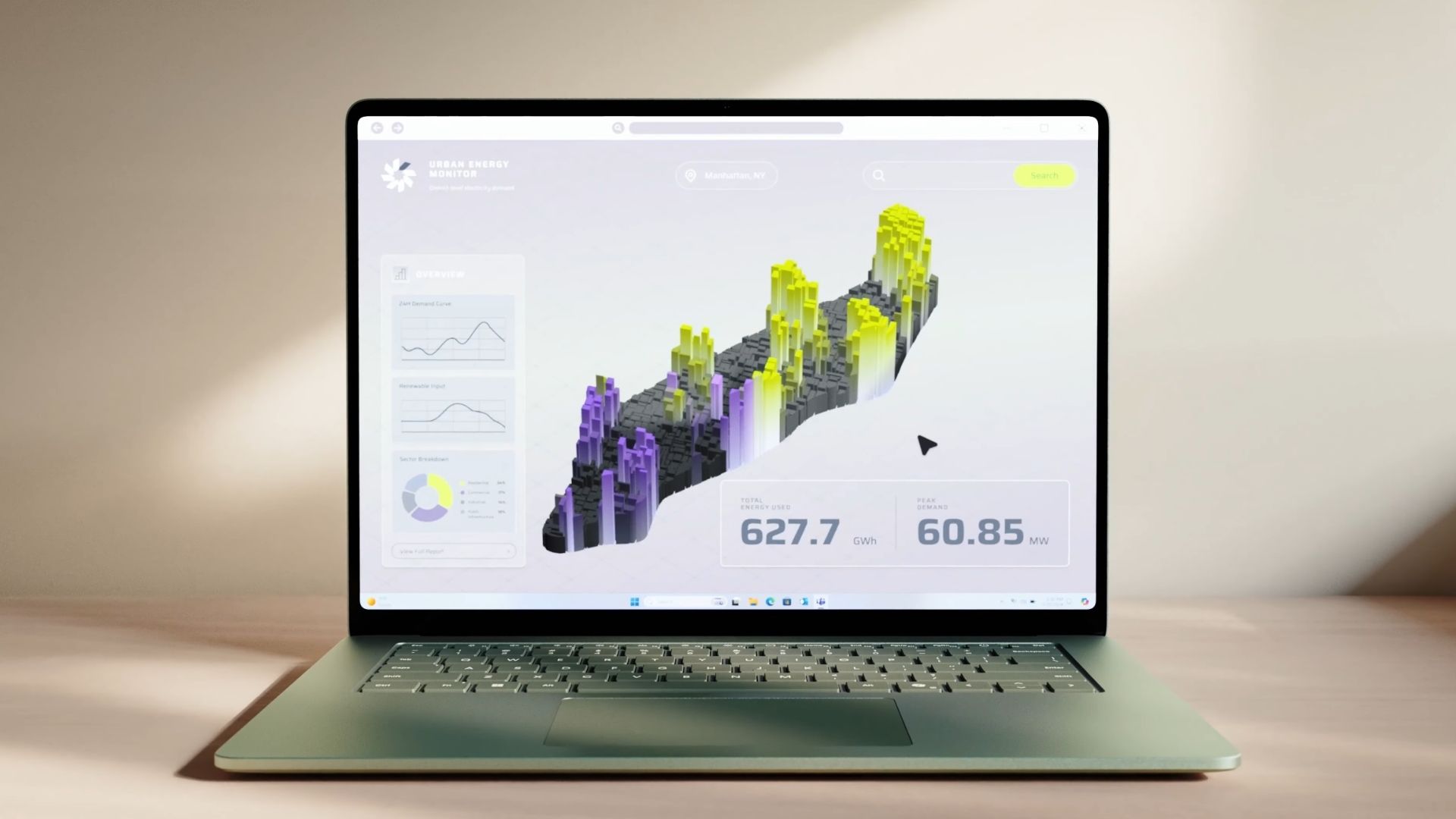
Microsoft has unveiled the latest edition of the Surface Laptop. While the new Snapdragon-powered machine brings some notable upgrades, it’s the combination of a claimed 20-hour battery life and a $1599 starting price that’s likely to get people talking.

The new laptop arrives in 13.8-inch and 15-inch variants, both featuring touchscreen displays and powered by Microsoft’s latest Snapdragon X2 processors. There’s also a new Surface Pro.

Moreover, according to Microsoft, the new chip delivers up to 58% more graphics performance than the Snapdragon X Elite found in the previous-generation Surface Laptop 7.

Battery life is the headline feature, particularly on the 13.8-inch model. Microsoft claims it can last for up to 20 hours on a single charge.

Advertisement

This is a figure that, on paper at least, puts it ahead of some of the best laptops. If that translates into real-world use, it could make the Surface Laptop 8 one of the most compelling Windows alternatives. This may appeal to users who prioritise endurance over everything else.

Advertisement

Elsewhere, the 15-inch model gets a sharper display, increasing pixel density from 201 PPI to 262 PPI. Meanwhile, both versions feature what Microsoft describes as the highest-rated laptop camera tested by DXOMARK. A new Jade colour option also joins the 13.8-inch lineup.

The Surface Laptop 8 starts at $1,599, which gets you a Snapdragon X2 Plus 10-core processor, 16GB of RAM, and 512GB of storage. In addition, business configurations will follow on July 14, 2026.

Advertisement

That price, however, may prove harder to justify than the battery claims. The new laptop launches at a significant premium over both its predecessor and Apple’s latest MacBook Air. Microsoft’s own Surface Laptop 7 debuted at a considerably lower price. Meanwhile, Apple’s comparable MacBook Air configuration undercuts the new Surface by several hundred dollars.

Microsoft appears keenly aware of that. To soften the blow, the company is bundling a free Arc Mouse. It is also offering up to $900 in trade-in credit until June 30, and discounting its two-year Microsoft Complete protection plan by 50% when purchased alongside the laptop.

On paper, the Surface Laptop 8 looks like a meaningful upgrade, especially if Microsoft’s battery life claims hold up. The bigger question is whether buyers will be willing to pay the premium required to find out.

Advertisement

Advertisement

Source link

Continue Reading

Tech

Git good with Epic Games’ new open source VCS, Lore

Published

on

devops

Got big binaries? Tired of other version control systems that treat them like inferior files? Lore might be worth a look

Fortnite maker and Apple nemesis Epic Games has decided to git good all on its own with the open-source release of its homemade version control system, dubbed Lore.

The project began life as Unreal Revision Control, and was used by internal teams and as the version control system (VCS) built into Unreal Editor for Fortnite. Now, Epic is ready to share its handiwork with the world. 

Advertisement

Lore is a centralized, content-addressed VCS that’s meant to be more flexible for developers, as it’s licensed under the less restrictive MIT License instead of the copyleft requirements inherent in the GNU standard. MIT is generally considered more permissive because, unlike GNU, it doesn’t require derivatives to be licensed in the same way (e.g., a fork of Lore could be proprietary). 

Lore can be installed on macOS, Windows, and Linux and its server side is designed to be transportable into different cloud services as well. The biggest difference between Lore and other VCS is its equal treatment of text files – e.g., code – and binaries. 

“All content is treated as opaque byte streams on the hot path,” Epic explains in its system design explanation document. “Text-aware features are layered on top, never assumed by the storage or transport paths. Binary content gets the same first-class treatment as text.”

With that in mind, it’s obvious who Epic is targeting with the release: Game developers. 

Advertisement

Lore is purpose-built for projects that use large binary files such as games, Epic said, but that doesn’t preclude other use cases with heavy binary loads, like AI model builders, systems developers, and others who work with large amounts of machine-readable data alongside their own code.

We have lots of VCS data, so why do we need Lore?

There are plenty of VCS options out there: Git, Perforce, Mercurial (and its descendent Sapling) are all mentioned by Epic as alternatives that resemble Lore in its design and use. So, why a new VCS? That’s easy, says the Fortnite studio: None of ‘em do it all. 

Git, says Epic, has great revision graphing, but treats binaries as “second class citizens” and lacks multi-tenant isolation that ensures users on the same infrastructure can’t access each others work. Perforce requires multiple server round trips to conduct standard operations, making it too slow. Mercurial and Sapling elegantly solve “the scale of source repositories” via their distributed architecture, but again treat text as king and everything else as second-class data. 

“The motivation is not that prior systems are bad,” Epic explained. “What Lore offers that the prior art does not is the union” of all those features, and some others too.

Advertisement

Key design goals Epic had in mind when designing Lore included the aforementioned binary-first design, a sparse-by-construction architecture that only downloads necessary fragments from the server to clients to ensure fewer round trips, the elimination of partially-applied revisions, in-between states are invisible to readers, and a full-surface API that allows Lore to work with a variety of programming languages. 

If you want to give Lore a spin Epic has published a thorough quickstart guide, and pre-built binaries are available, ironically enough, on GitHub. ®

Source link

Advertisement
Continue Reading

Tech

Two pizzas and a prototype: How agentic AI is rewiring Amazon’s teams and upending its traditions

Published

on

Swami Sivasubramanian, AWS VP of agentic AI, on stage at AWS re:Invent in December. (Amazon Photo / Noah Berger)

[Editor’s Note: Agents of Transformation is an independent GeekWire series, underwritten by Accenture, exploring the adoption and impact of AI and agents. See coverage of our related event.]

Amazon is legendary for its process of “working backwards.” Start with a customer problem, imagine a future in which it’s solved, draft a press release and FAQs as if it had already happened, obsess over the document until it’s just right, and then go make it a reality.

But sometime last year, it dawned on Swami Sivasubramanian, Amazon Web Services VP of agentic AI, that new coding tools had suddenly made it easier for his teams to develop a demo — actual working software — than to write the classic six-page Amazon “PRFAQ.”

So they began starting with the prototype instead.

If something is “a low-risk bet where we just want to prove our intuition, then I actually say, let’s first go build the demo, and then iterate,” Sivasubramanian said in an interview last week, in advance of his keynote address Wednesday at the AWS New York Summit.

Advertisement

It’s an illustration of how agentic tools are reshaping even the most entrenched workplace practices and traditions. But it’s just one of the ways that the AWS agentic AI team is departing from the company’s established norms, and in some ways returning to its roots. 

Inside Amazon, CEO Andy Jassy says he wants the company to run like the world’s largest startup. Sivasubramanian’s division may be the closest thing to what that looks like in practice. 

Back to two pizzas

The AWS agentic AI division is organized into dozens of small teams, many of them just large enough to feed with two pizzas. That was the organizing principle that Amazon pioneered in its early days and that much of the company outgrew as it scaled to 1.5 million employees. 

When Matt Garman, the CEO of AWS, carved out agentic AI as its own division last year, Sivasubramanian went with small teams on purpose. It matches the new reality of the AI era: projects that once required 30 to 40 people, he said, can now be done by teams of six to eight.

Advertisement

Case in point: the Amazon Quick desktop app, which connects to a user’s email, calendar, Slack, documents, and other apps in a single workspace, and uses AI to search across them, answer questions, and perform tasks. It’s Amazon’s entry in a market where Anthropic, Microsoft, Google, and OpenAI have captured much of the attention.

It traces its roots to late January of this year, when Sivasubramanian said it became clear to him and others on the team that the underlying models had gotten good enough that the main missing ingredient was connecting them to the systems where people actually work. 

He pulled together a team of about six engineers to build it. Six weeks later, 200 people inside Amazon were using it. Ten weeks in, it was up to 10,000 internally. The team circled back to write the PRFAQ after the product was already in beta, to help refine their approach to the external launch. They shipped on April 28, three months after they got started.

Under the old system — writing the PRFAQ, routing it through layers of review — the paperwork alone could have taken as long as building and shipping the actual product.

Advertisement

Similar stories are playing out across the division. 

  • One team open-sourced Strands, an AWS software development kit for building AI agents, after a member of Sivasubramanian’s team messaged him at 7 a.m. with the idea. After a quick call with Garman, they decided to go ahead. Within days, it was done.
  • Kiro, the AI coding tool, was built by a deliberately small team, using Kiro itself to build it. One engineer prototyped a complex cross-platform notification feature for Kiro that had been estimated at four weeks of work, and shipped it in a day and a half. 
  • The internal Amazon team that rebuilt the inference engine for the company’s Bedrock platform for AI models did it with six engineers in 76 days, a project originally expected to take 30 developers 12 to 18 months. 

Smaller teams everywhere

What’s happening inside Amazon’s agentic AI division is part of a trend across the tech industry toward smaller teams and flatter organizations, driven by AI and agents. 

Microsoft’s 2026 Work Trend Index, a survey of 20,000 workers in 10 countries, found that the biggest factor behind AI’s real impact in the workplace isn’t individual skill but whether the organization has restructured around the new technologies. 

Vijaye Raji, OpenAI’s CTO of applications, said during a recent Technology Alliance event that the company’s “ambitions are growing faster than we can hire people” — but the profile of who gets hired is changing. OpenAI increasingly looks for engineers who work with AI tools natively, and the gap between those who do and those who don’t is stark: the top engineers at OpenAI use roughly 100 times more AI tokens than the median.

All of this leads to a natural question: what does this mean for jobs? Amazon has cut roughly 30,000 corporate jobs since late 2025 as part of what Jassy has described as an effort to reduce bureaucracy. He has said he expects AI to shrink the corporate workforce over time. 

Advertisement

Similar cuts are playing out across the industry, from Meta to Block to LinkedIn, as companies rethink not only the roles they need to fill but also how many people they need overall. 

Bigger goals, same team

Sivasubramanian describes the shift differently: In his division, the same number of people are now pursuing a bigger charter. With the new structure, they’re able to take on more projects, and faster, accomplishing things in weeks that would have taken much longer in the past.

The nature of the roles inside those teams is changing, too. Increasingly, product managers write code, and engineers make product decisions. On the Kiro team, for example, a product manager built the first version of a cost analysis dashboard using Kiro itself. 

This also requires leaders to operate differently. For example, Sivasubramanian said he is careful to monitor which decisions need his approval, even when traveling. At the current pace, even four or five days of delay can add as much as 10% to a team’s shipping timeline. 

Advertisement

Managing these teams also raises new questions. Sivasubramanian said his division has started tracking how much it spends on AI tokens — the basic unit of interaction with an AI model — the way it would track any other operating cost. 

So far, the numbers have been manageable: tools like Kiro invest upfront in defining specs and pulling in the right context before generating code, which makes them more efficient with tokens rather than burning through them in aimless back-and-forth. 

Even the heaviest users consume only a few thousand dollars a month, he said. But he expects that over time, companies will need a full picture of their operating expenses that includes not just headcount but the cost of the AI agents working alongside them.

This gets to a bigger point: “The bottleneck is not about the time it takes to build something,” Sivasubramanian said. “The bottleneck is about crafting the right specification and the tests and the right product and customer experience.”

Advertisement

In a blog post published last week, Sivasubramanian wrote that teams across the company that restructured their workflows around AI saw a median 4.5x productivity gain, with some exceeding 10x gains. The teams that simply added AI tools to their existing way of working didn’t see the same results.

Coding and testing

That shift has created its own challenges. Teams can generate code faster than ever, but if they don’t define what success looks like up front — the specs, the tests, the edge cases — the agents don’t have as much chance of success. 

Amazon is now pushing testing to the moment of coding rather than handling it in stages, so agents can check their own work before anything reaches production.

Sivasubramanian learned this first-hand, the hard way. Earlier this year, jet-lagged and unable to sleep in his hotel room on a trip to India, he decided to try a fun project: He used Kiro to rebuild a piece of AWS infrastructure he’d originally developed by hand nearly 20 years ago — a replication engine that still underpins core services like S3 and DynamoDB.

Advertisement

He and one of Amazon’s earliest distinguished engineers, Allan Vermeulen, had spent four months on the original. Sivasubramanian figured the agent would make quick work of it. Instead, he spent four nights going back and forth, babysitting each step. 

On the fifth night, he realized the problem: he hadn’t given the agent the tools to test its own output. Once he wrote the right spec and set up the testing environment, it was done in about two hours. Asked what he did with his rebuilt version of the engine, Sivasubramanian laughed. He never shipped it. “Maybe I should have,” he said.

With the right team and a couple of pizzas, maybe he still can.

Source link

Advertisement
Continue Reading

Tech

NASA picks Eric Schmidt’s rocket company for Mars mission, setting up a race with SpaceX

Published

on

Relativity Space—a rocket maker acquired by former Google executive chair Eric Schmidt last year after stumbling on the path to orbit—might just beat SpaceX to Mars.

On Tuesday, NASA said it hired the company to build a spacecraft to house a suite of scientific instruments, launch it into space, and fly it to Mars.

The structure of the contract is akin to the deals that NASA made with SpaceX to fly cargo to the International Space Station, or Firefly Aerospace to put a lander on the Moon. The government agency handles the science, while the private company provides low-cost infrastructure.

Aeolus, as the mission is dubbed, will contain four instruments to measure and image Mars from orbit, providing what NASA expects to be the first daily, global view of dust, winds, and temperature in its atmosphere. The agency said that data will make it safer for landers and, someday, astronauts, to visit the surface of the Red Planet.

Advertisement

“By pairing NASA’s world‑class instruments with commercial innovation and investment, we can deliver more science, more often, and reduce the time it takes to get essential data into the hands of researchers preparing for future human missions to Mars,” NASA administrator Jared Isaacman said in statement.

The mission is set to launch in 2028—a rapid pace that will require Relativity to design and build the spacecraft to carry the Aeolus instruments, and finish building the rocket that will carry it to space, all on a tight timeline. NASA did not disclose how much it is paying Relativity for the mission, and Relativity did not respond to questions from TechCrunch.

Isaacman, who has flown to space twice on private SpaceX missions, has championed public-private partnerships like this. Under this model, the company working with NASA takes on some of the development cost of the project, in exchange for allowing NASA to stretch its budget further—a structure that has become a template for how the agency funds ambitious missions without bearing all the financial risk itself.

But NASA is taking on risk as well: Relativity is unproven, and there’s no guarantee the mission will even make it off the ground. Past startup partners of NASA have gone bankrupt or seen Moon landers arrive askew. The potential payoff for the company is meant to extend beyond the NASA contract itself, including commercial applications, like launching satellites or delivering cargo to the Moon. Still, the further out into space these partnerships reach, the murkier the market becomes for commercial services.

Advertisement

Relativity was founded in 2015 by two former SpaceX and Blue Origin engineers, with the idea of using 3D printing to its maximum potential as a path to building a cheaper rocket. The company’s first design, Terran-1, launched in March 2023 and failed mid-flight. Relativity doubled down by moving on to a larger design, dubbed the Terran R.

Before Relativity could get it to the launch pad, the company ran into fundraising challenges, and Schmidt took a majority stake in the company in it last year, installing himself as CEO. He’s been tight-lipped about the investment but has expressed interest in orbital data centers, and is thought to be using Relativity to launch a space telescope, Lazuili, financed by his family philanthropy, Schmidt Sciences.

The former tech executive’s decision to take over a space company last year puzzled some observers because rocketry is a crowded and capital-intensive field. But pent up demand for new rockets—fueled by delays at Jeff Bezos’ Blue Origin—could still lead to a payoff for Schmidt if Terran R can actually make it to space.

And the new contract might give Schmidt a chance to put one over on Elon Musk, a regular sparring partner of his on the issue of AI safety. While Musk has long talked of his Martian ambitions, SpaceX has never actually sent its own mission to Mars (no, the Tesla he launched into space in 2018 missed).

Advertisement

If Relativity’s Aeolus launches on schedule, it could be the first private mission to reach the Red Planet.

When you purchase through links in our articles, we may earn a small commission. This doesn’t affect our editorial independence.

Source link

Advertisement
Continue Reading

Tech

Oukitel WP66 rugged phone review

Published

on

Why you can trust TechRadar


We spend hours testing every product or service we review, so you can be sure you’re buying the best. Find out more about how we test.

Oukitel WP66: 30-second review

.Oukitel seems to have a particular strategy in the rugged phone market that involves launching lots of products, presumably on the assumption that a percentage of them will find favour with some customers.

The WP66 is at the end of a long list of recent phones, which includes devices I’ve covered, like the WP61 Plus, WP60 and WP30 Pro. Typically, these devices are affordable, rugged designs which avoid the latest SoC technology but often have some core features that make them attractive.

Advertisement

Source link

Advertisement
Continue Reading

Tech

Cyber offenses now account for around a third of all crime across Asia and South Pacific

Published

on

cyber-crime

Latest Interpol review shows how scams continue to dominate, and AI-enabled attackers prove too hot to handle for cash-strapped regions

Cybercrime now accounts for more than 30 percent of all offenses across the Asia and South Pacific (ASP) region, according to the latest figures from Interpol.

The international cop shop said on Wednesday that the region has seen “a dramatic increase” in the number of recorded cybercrimes, driven largely by an uptake of digital infrastructure, new technologies, and the increasingly organized nature of criminal networks.

Advertisement

Interpol’s latest ASP Cyberthreat Assessment Report states that online scams and phishing attacks dominate cybercrime in the region. Data taken from 2024-2025 shows that phishing campaigns have matured beyond the spray-and-pray mass emails of yesteryear and now resemble the more sophisticated techniques deployed elsewhere in the world.

Targeted spear phishing is more common nowadays, and the growing use of AI helps even low-skilled script kiddies to apply a layer of authenticity to their attacks.

The region’s problem with organized scamming gangs that run camps where hundreds of people are compelled to commit crimes is especially pronounced and well-documented.

A United Nations report published last year described scam call centers across Southeast Asia as an epidemic that is metastasizing across the region “like a cancer.”

Advertisement

These compounds can be found across countries such as Cambodia, Laos, Myanmar, and the Philippines, and often see vulnerable individuals trafficked into the scam centers to work under poor conditions – or even as slaves.

Interpol cited Singaporean research, which estimated the regional scam industry generates close to $40 billion each year.

AI tools, especially those capable of generating convincing deepfake imagery, have also proven popular with cybercriminals across ASP, just as they have beyond the region.

In 2024, the same scam compounds were found using deepfake imagery to support romance scams.

Advertisement

In February 2024, an employee at a multinational business in Hong Kong was duped into authorizing a $25 million payment because the faces of company execs were convincingly deepfaked on a video call.

A similar case was also reported in Singapore in March 2025, when a finance director at a different multinational was tricked into transferring more than $499 million following a Zoom call in which fraudsters assumed the identities of company chiefs, including the CEO and CFO.

Interpol’s report highlights how cyber threats are evolving into large-scale challenges for multiple jurisdictions, and no longer represent relatively uncommon, isolated incidents.

Sumary of offenses

Infostealers and banking trojans represent the second most-pervasive cybercrimes across ASP behind scams. Affecting individuals and organizations, infostealer infections often lead to large-scale frauds and ransomware distribution. 

Advertisement

Speaking of which, ransomware came in just behind infostealers. Interpol described it as “a significant regional threat” that is leading to “significant financial losses.”

Attackers are adopting common tactics such as double extortion and using them to target critical infrastructure, healthcare, and large enterprises.

More than 135,000 ransomware attacks were recorded in 2024, and ransomware was also deployed in 51 percent of all data breach cases.

While digitization across the region is growing, opening new economic opportunities for these countries, law enforcement agencies are struggling to keep pace with the increase in cybercrime. Many lack the skills and tools needed to investigate these crimes.

Advertisement

The issue is especially pronounced in developing countries and small island states in the Pacific, which face “significant resource and capacity constraints,” and are thus more vulnerable to direct targeting in attacks by criminals who have a greater chance of evading consequences.

Neal Jetton, cybercrime director at Interpol, said: “The findings in this report highlight a rapidly evolving cyber threat landscape across Asia and the South Pacific, where cybercriminals are leveraging artificial intelligence, ransomware-as-a-service models, and sophisticated social engineering techniques on an industrial scale.

“As digital adoption accelerates across the region, strengthening operational cooperation, information sharing, and cyber resilience remains essential to protecting communities and critical infrastructure.”

Some improvement

Interpol lauded many jurisdictions and governments within the ASP region for their proactive approaches to countering cybercrime growth.

Advertisement

Hong Kong and the Republic of Korea are two areas that have made strides by introducing new cybersecurity legislation, while others have established national task forces, codified national action plans, and launched awareness campaigns.

But even in more developed countries globally, and those with more mature cybersecurity regulatory and legislative landscapes, the issue of increasing rates of cybercrime persists.

While Interpol does not collect cybercrime figures for other regions, such as Europe and North America, in the same way that it does for ASP, it’s easy to see that problems persist everywhere.

The UK’s Office for National Statistics (ONS) publishes crime rates by type across England and Wales each year, and while computer misuse offenses in 2025 decreased by 58 percent compared to 2017’s figures, there were still an estimated 735,000 cases across the year.

Advertisement

Expanding the data to look beyond pure cyber offenses to cyber-supported crimes, such as banking and credit fraud, these offenses account for more than 2.7 million of the circa 9.6 million total crimes committed.

The FBI in the US produces its annual IC3 report examining the rates of cybercrime across the country.

Although it doesn’t compare it to total offenses or other crime types, the latest report reflecting 2025’s figures showed cybercrime reports topped one million for the first time, and total losses reached a record $20.87 billion. ®


Advertisement

Source link

Continue Reading

Tech

How to update an iPad through the Mac's Finder when Software Update fails

Published

on

A Mac can update an iPad using the same iPadOS software Apple delivers through Software Update. Here’s how Finder can help recover failed installs, fix update problems, and restore devices that won’t start properly.

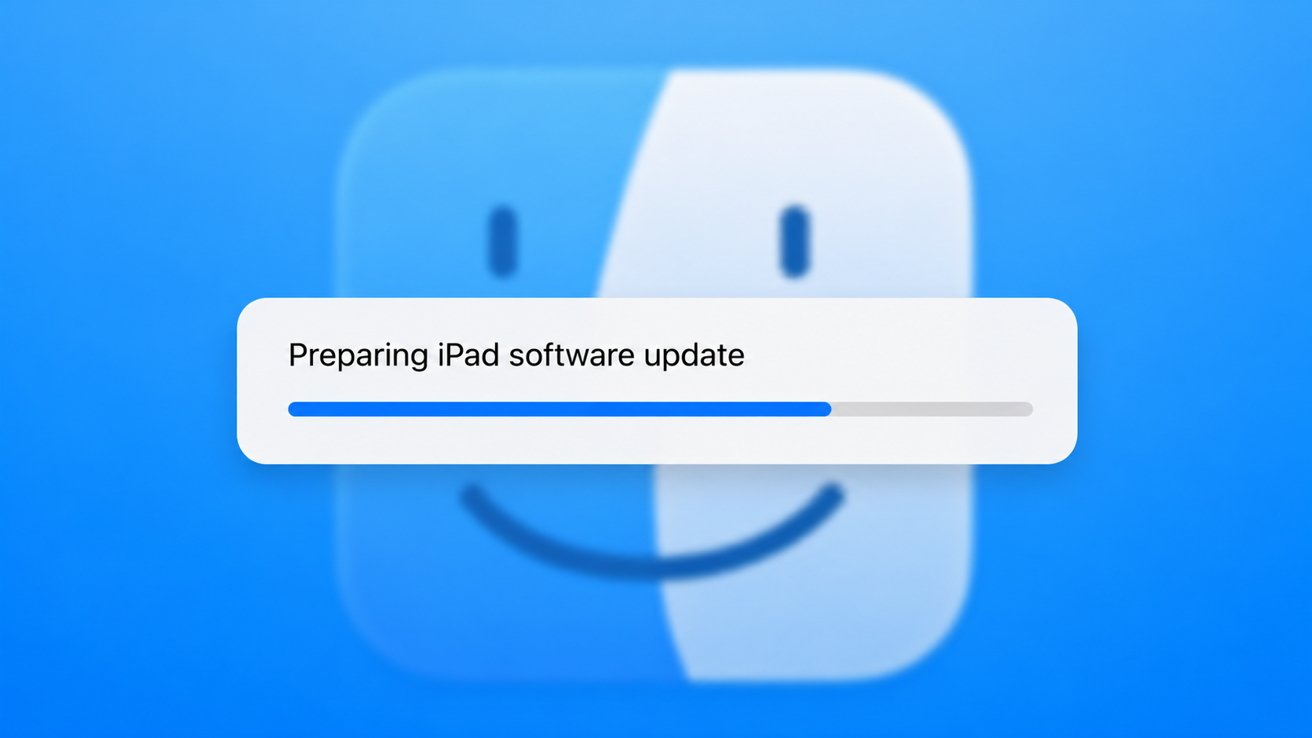
Blue Apple-style screen showing a smiling face icon in the background and a centered progress bar labeled Preparing iPad software update with the bar partially filledUpdating an iPad via macOS

Updating your iPad directly through Settings remains the easiest way to keep the device current. Apple can automatically download and install new software overnight while the iPad is charging and connected to Wi-Fi if Automatic Updates is enabled.
The seamless background process handles everything for the vast majority of users. But sometimes an update refuses to install or leaves the iPad stuck on a recovery screen.
Finder offers a reliable recovery path when these software failures occur. Apple built this utility to manually install iPadOS when the on-device update process fails.
Continue Reading on AppleInsider | Discuss on our Forums

Source link

Continue Reading

Trending

Copyright © 2025