Connect with us
DAPA Banner
DAPA Coin
DAPA
COIN PAYMENT ASSET
PRIVACY · BLOCKDAG · HOMOMORPHIC ENCRYPTION · RUST
ElGamal Encrypted MINE DAPA
🚫 GENESIS SOLD OUT
DAPAPAY COMING

NewsBeat

‘Unfortunate’ star forced to leave Welsh rugby and England pick ineligible Test player

Published

on

Wales Online

Here are your rugby morning headlines for Thursday, June 18.

Welsh rugby star announces exit for ‘next chapter’

Scarlets back-rower Jarrod Taylor has announced he is leaving the club after his contract came to an end.

The South African-born forward, who became a popular figure in Llanelli during his two-and-a-half-year spell, departs having made 44 appearances for the west Wales region.

Advertisement

Taylor arrived from the DHL Stormers midway through the 2023-24 season and made his debut against Munster in February 2024.

Confirming his departure, the 25-year-old thanked everyone connected with the Scarlets and said he would look back fondly on his time in Wales.

“I’m very grateful for my time at Scarlets and I’ll always look back on my two and a half years at the club with fond memories,” Taylor said.

“Thank you to everyone who made me feel welcome and good luck to the boys for the future.”

Advertisement

Scarlets interim director of rugby Nigel Davies paid tribute to the flanker, describing him as an “outstanding professional” who had made a significant contribution both on and off the field.

“Jarrod has been a pleasure to work with from the day I arrived,” Davies said.

“He is an outstanding professional who prepares well, trains hard and consistently puts the team first.

“Sometimes in professional rugby difficult decisions have to be made around squad balance and how you utilise the resources and overseas positions available to you. Unfortunately, that has been the case here.”

Advertisement

Davies added that Taylor had earned the respect of coaches, team-mates and supporters through his commitment and professionalism during his time at Parc y Scarlets.

“On behalf of everyone at the Scarlets, we’d like to thank Jarrod for everything he has given to the club and wish him and his family every success for the future.”

Taylor’s next destination has yet to be confirmed.

England to hand debut to controversial call-up

England are set to hand a first senior appearance to controversial call-up Benhard Janse van Rensburg when they take on a France XV on Friday.

Advertisement

The South Africa-born Bristol Bears centre is expected to feature off the bench in the uncapped clash in Vannes, despite not officially qualifying for England until July 8.

Because the match is not a Test, Steve Borthwick is free to select the 29-year-old before his five-year residency qualification is completed.

Janse van Rensburg’s inclusion has sparked debate in recent weeks after he was named in England’s summer training squad.

Former England scrum-half Danny Care said the selection “doesn’t sit right” and argued opportunities should instead be given to English-born players such as Max Ojomoh and Ollie Lawrence.

Advertisement

The controversy has been heightened by the fact Janse van Rensburg previously represented South Africa Under-20s and once spoke openly about his dream of playing for the Springboks.

However, the midfielder was cleared to represent England following a successful RFU appeal and has found support from former fly-half Andy Goode, who said criticism of the call-up was hypocritical given England’s history of selecting overseas-born players.

On Friday, Janse van Rensburg is expected to make his first appearance in an England shirt when he comes off the bench against the French invitational side.

Ojomoh and Seb Atkinson have been selected to start in midfield, with George Ford captaining the side and Marcus Smith named at full-back.

Advertisement

England head coach Borthwick said: “We’re looking forward to an exciting challenge against a strong French team in what will be a demanding fixture.

“I’m eager to see this group get out there and show what they’re capable of.”

Janse van Rensburg will not be eligible for England’s opening summer Test against South Africa on July 4, but could come into contention for matches against Fiji and Argentina later in the month once he officially qualifies.

England XV: M Smith (Harlequins); N Caluori (Saracens), M Ojomoh (Bath Rugby), S Atkinson (Gloucester Rugby), C Murley (Harlequins); G Ford (Sale Sharks, capt), H Randall (Bristol Bears); A Opoku-Fordjour (Sale Sharks), T Dan (Saracens), G Kloska (Bristol Bears), C Ewels (Bath Rugby), G Martin (Leicester Tigers), T Hill (Bath Rugby), T Curry (Sale Sharks), A Dombrandt (Harlequins).

Advertisement

Replacements: J Blamire (Leicester Tigers), B Obano (Bath Rugby), V Sela (Bath Rugby), N Isiekwe (Saracens), J Kenningham (Harlequins), R Quirke (Sale Sharks), B Janse van Rensburg (Bristol Bears), A Radwan (Leicester Tigers).

British Lion named academy chief after retirement

Former British and Irish Lion Joe Launchbury has landed a key rugby role just weeks after bringing his playing career to an end.

The 35-year-old has been appointed head of academy at Worcester Warriors as the Championship club continues its rebuild following its return from administration.

Launchbury retired at the end of the Premiership regular season after three years with Harlequins, ending a distinguished career that included 70 England caps and a British and Irish Lions tour.

Advertisement

The second row won three Six Nations titles with England and represented his country at two Rugby World Cups.

Much of his club career was spent with Wasps, where he made more than 150 appearances across two spells before joining Harlequins.

Worcester returned to professional rugby last season after their financial collapse in 2022 and enjoyed immediate success, winning the Championship play-off final to secure the second-tier title.

The establishment of an academy is viewed as a key step in the club’s long-term ambitions, with Premiership Rugby set to expand from the 2029-30 season.

Advertisement

Launchbury said he was “really honoured” to take up the position.

“Worcester is a club with a huge amount of history, especially in the academy area,” he said.

“Working with the next generation, working with these younger players definitely excites me, and the opportunity to come here to Worcester was something I didn’t want to turn down.”

Warriors chief executive Stephen Vaughan believes Launchbury is the perfect fit for the role.

Advertisement

He said the former England international’s playing career, leadership qualities and understanding of player development made him “the ideal person” to lead the academy programme.

Launchbury toured New Zealand with the British and Irish Lions in 2017 and now begins the next chapter of his rugby career away from the pitch.


Source link

Advertisement
Continue Reading
Click to comment

You must be logged in to post a comment Login

Leave a Reply

NewsBeat

The cheapest petrol and diesel in Greater Manchester today – Thursday, 18 June

Published

on

Manchester Evening News

Use our interactive widget to fill your car for less

The cheapest place to fill up your car with petrol in Greater Manchester today (Thursday, 18 June) is at a Valero garage in Stalybridge.

Advertisement

According to the latest data supplied by retailers, a driver in an average family car could save up to £8 by filling up at this forecourt – compared to the most expensive petrol station.

The Valero garage on Caroline Street in Stalybridge is charging motorists 143.9p per litre, which means it would cost £90 to fill up an average 55 litre tank. This is based on a feed of live petrol prices which is published by the government.

Click here to get the biggest stories straight to your inbox in our Daily Newsletter

Here are the cheapest places to top your car with petrol today:

Advertisement
  • 143.9p – Valero, Stalybridge, Tameside, SK15 1PD
  • 143.9p – Costco Wholesale, The Broadway, Oldham, Greater Manchester, OL9 8AU
  • 143.9p – Costco Wholesale, Barton Dock Road, Manchester, Greater Manchester, M41 7PP
  • 144.7p – Asda, Cavendish Street, Ashton-under-lyne, Greater Manchester, OL6 7PF
  • 144.7p – Asda, Atherleigh Way, Leigh, WN7 5RZ
  • 144.9p – Sainsbury’s, 2 Lord Sheldon Way, Ashton-under-lyne, OL6 7UB
  • 144.9p – Texaco, Lime Service Station, Manchester, M28 3NS
  • 144.9p – Morrisons, Foundry Street, Dukinfield, Greater Manchester, SK16 5PJ
  • 144.9p – Tesco, Tesco Stores Ltd, Stalybridge, SK15 2BJ
  • 144.9p – Tesco, Tesco Extra, Leigh, WN7 4BA

The most expensive filling station in Greater Manchester is the Esso Longside Service Station in Royton. The cost of standard petrol at this station is 167.9p, meaning it would cost a total of £81 to fill up an average family car at this forecourt.

For the owners of diesel cars, the cheapest place to fill up is also the Longside station in Royton. The cost of a litre of standard diesel at this forecourt is 147.9p, according to prices supplied by retailers.

Here are the cheapest places to fill up your car with standard diesel today:

  • 147.9p – Esso , Longside Ss, Oldham, OL2 5AS
  • 162.9p – Valero, Stalybridge, Tameside, SK15 1PD
  • 162.9p – Costco Wholesale, The Broadway, Oldham, Greater Manchester, OL9 8AU
  • 163.9p – Sainsbury’s, 2 Lord Sheldon Way, Ashton-under-lyne, OL6 7UB
  • 163.9p – Tesco, Tesco Stores Ltd, Stalybridge, SK15 2BJ
  • 163.9p – Morrisons, Lime Square, Openshaw, Manchester, M11 1DA
  • 163.9p – Costco Wholesale, Barton Dock Road, Manchester, Greater Manchester, M41 7PP
  • 163.9p – Tesco, Manchester Rd, Manchester, M43 6TQ
  • 163.9p – Essar, 1555-1571 Ashton Old Road, Manchester, M11 1GR
  • 163.9p – Morrisons, Foundry Street, Dukinfield, Greater Manchester, SK16 5PJ

You can use our interactive widget to find out the price of fuel at the petrol stations near you.

UK drivers are currently paying 154.8p per litre of petrol, while people who own diesel vehicles are paying 175.5p on average.

In Greater Manchester, owners of petrol cars are currently being charged 3.6p less than the national average of 154.8p. Diesel car drivers in the region are paying 4.4p less than the national average.

Advertisement

The cheapest place to buy petrol in the country is at a Circle K garage in Belfast, Northern Ireland, where a litre of standard petrol is 141.9p. The most expensive petrol station in the country is a Shell garage in Telford, Shropshire, where motorists are charged 186.9p a litre.

The prices quoted are for standard grade petrol (E10) and for standard grade diesel (B7).

The figures are supplied by the major retailers under a scheme operated by the government to ensure motorists are given a fair deal at the petrol pumps.

Source link

Advertisement
Continue Reading

NewsBeat

Transfer news LIVE: Bradley Barcola to Arsenal, Liverpool hijack Newcastle move, Enzo Fernandez Real Madrid links

Published

on

Daily Mirror

The Athletic have provided a bit more meat to the bone surrounding Victor Munoz. Because, who is this 22-year-old Spaniard that Liverpool have all of a sudden swooped in to sign? I know that’s the question I’m asking.

The Osasuna winger is currently on international duty at the World Cup alongside the likes of Lamine Yamal and Rodri. His seven goals and five assists in all competitions earned him a place on the plane to North America.

The Athletic have described him as a “throwback winger” who is “pacy, skilful and energetic”.

It is also noted that he does like running at the full-back to the byline.

Advertisement

Traditionally, Liverpool have opted to go for versatile forwards that can be multi-functional across the frontline.

Munoz appears to fit the bill with experience playing left and right wing, primarily playing on the left for Osasuna with three goals in 18 appearances from that position with one in 10 from the right.

In an era where there are pizza charts, stats and expected whatever you fancy floods the perception, the initial statistics don’t appear to be too appealing. But you have to look at the creativity and see to what degree he was creating because it all depends what was on the end of the crosses in reality. Also worth noting, Osasuna finished outside the relegation zone on goal difference.

Victor Munoz Villanueva of Spain celebrates after scoring the team’s third goal during the international friendly match between Spain and Serbia at Estadio de la Ceramica in Vila-real, Spain, on March 27, 2026. (Photo by David Aliaga/NurPhoto via Getty Images)

Advertisement

Source link

Continue Reading

NewsBeat

Scotsman’s kilt spotted at Boston Stadium goes viral as fans left in stitches

Published

on

Daily Record

The Scot could be seen celebrating at the Haiti Game and has been dubbed “Tartan Army maintenance crew”

The Tartan Army have come out in their thousands to cheer Scotland on in Boston during the World Cup and during their jubilant celebrations, many of them have been seen proudly donning a kilt.

Advertisement

However, few Scots have been seen wearing a high-vis kilt. One proud fan at Boston Stadium was not hard to spot in a Tartan Army crowd as he celebrated in a luminous yellow builder’s outfit that he had transformed into the Scottish fashion symbol.

The man wore a navy top with a typical worker’s vest that had the words ‘Tartan Army on tour’ etched on the back of it and a matching luminous kilt. He could be seen fist-pumping the air and waving around his luminous cap in celebration, leaving fans in stitches at his outfit efforts.

The now-viral video of the Scots ‘workie’ has been shared online with the caption: “Someone wore a high-vis kilt to the Scotland game. I’m dead”, along with laughing face emojis.

Content cannot be displayed without consent

The TikTok creator wrote: “I wonder what he does for work #worldcup #scotlandtiktok #tartanarmy #scotland #football”

Advertisement

Other social media users raced to the comments as one joked: “That’s the cone manager.”

A second amused viewer wrote: “Tartan army maintenance crew.”

A third Scot penned: “That’s so his maw and da can try to spot him on the TV.”

Someone else replied: “The tartan of the clan McSafety.”

Advertisement

A fifth added: “He’s there installing an emergency beer pipeline from New York to Boston.”

Another chimed in: “What does he do? He walks 500 miles and then he walks 500 more.”

Quoting a famous Still Game scene, somebody commented: “Can you see me noo???”

Get Daily Record Premium for just £1 per month in exclusive offer to celebrate the World Cup

Advertisement

Celebrate the World Cup with a chance to win £100 in Aldi vouchers

Many kilted Scotsmen have gone viral online after taking over Boston for the past week, with one piper taking to the streets for a toe-tapping ‘elite mashup‘ with a makeshift drummer and another becoming an internet sensation after he slid down the infamous Boston Cop chute whilst playing a bagpipes tune.

The excitement will not calm down anytime soon as we are now hours away from Scotland playing their second World Cup match against Morocco.

The match will take place at 11pm EST at Boston Stadium on Friday, June 19.

Advertisement

After Scotland’s 1-0 win against Haiti last weekend, it’s a huge game for the team as it could see them potentially qualify for the knockout stages for the first time in World Cup history.

The team are currently at the top of group C after John McGinn scored in the 28th minute, the only goal of the game, and Morocco and Brazil drew 1-1.

Next week, Scotland will take on Brazil at Miami’s Stadium on Wednesday (June 24).

Source link

Advertisement
Continue Reading

NewsBeat

More than 1,000 Palestinians killed in Gaza during ceasefire

Published

on

More than 1,000 Palestinians killed in Gaza during ceasefire

DEIR AL-BALAH, Gaza Strip (AP) — Israeli operations in the Gaza Strip have killed 1,005 Palestinians since a ceasefire was reached between Israel and the militant group Hamas last October, the Gaza Health Ministry said Wednesday.

The enclave has seen near-daily strikes, as well as shelling and gunfire along the boundary that divides Gaza into Israeli and Palestinian-controlled zones. The most recent deaths were recorded after a series of Israeli drone strikes in the past few days on towns and refugee camps in central Gaza and Gaza City.

Also Wednesday, an Israeli strike killed two Palestinians and wounded six others in Khan Younis in southern Gaza, health officials at Nasser Hospital said. The Israeli military acknowledged carrying out the strike and said the target was a “terrorist,” but didn’t elaborate. Families at the hospital said the strike targeted a group of people near the beach in the sprawling tent camp of Muwasi, where hundreds of thousands of displaced Palestinians live.

Israel has said it is continuing to operate against Hamas and allied militants in Gaza and has expanded the amount of territory it controls inside the strip. Both sides have accused the other of violating the ceasefire.

Advertisement

Advertisement

In a separate statement Wednesday, the Israeli military said that it killed two militants from Hamas and Palestinian Islamic Jihad in strikes over the weekend.

Gaza’s Health Ministry on Sunday said the death toll from the Israel-Hamas war had surpassed 73,000 in Gaza. The ministry doesn’t differentiate between civilians and combatants. It is staffed by medical professionals and maintains detailed records viewed as generally reliable by the international community.

The war erupted when Hamas-led militants stormed into southern Israel, killing 1,200 people, mostly civilians, and taking 251 hostage, on Oct. 7, 2023. In response, Israeli leaders promised a punishing offensive on the Gaza Strip to annihilate Hamas and free the hostages.

Advertisement

Source link

Advertisement
Continue Reading

NewsBeat

Lidl applies for alcohol licence for possible Linthorpe store

Published

on

Lidl applies for alcohol licence for possible Linthorpe store

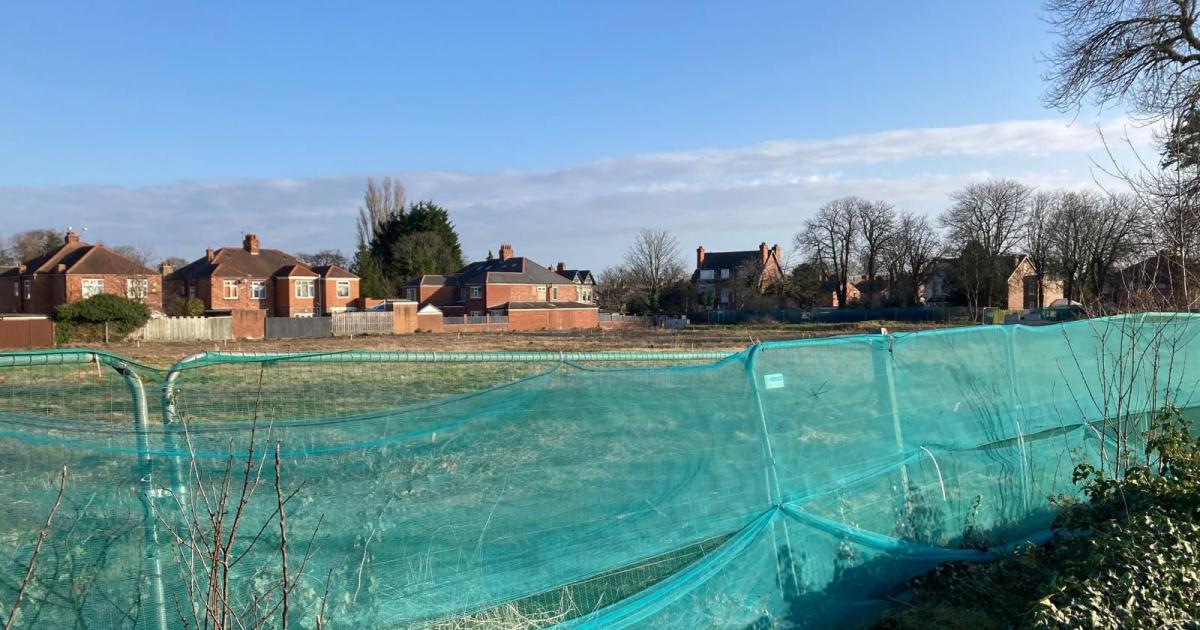
Permission is being sought from Middlesbrough Council so that the prospective shop can sell booze for consumption off of the premises between 7am and 11pm daily.

The German discount supermarket has been hoping to build a store in Linthorpe for several years, but has faced setbacks after a planning refusal, inspectorate dismissal and committee deferral. Its application for the site on the corner of Green Lane and Roman Road is likely to appear in front of the planning committee again in the next few months, potentially as soon as Thursday, July 2.

The company is in the process of trying to secure a similar premises licence for a potential store in the south of the town, on the site of the former Marton Hotel & Country Club, located on Stokesley Road, which is also yet to gain planning permission, but is likely to receive a decision from Middlesbrough ’s planning committee before the end of the year.

CGI of Lidl's latest proposal for Green Lane, Linthorpe. Credit: Lidl GB. Free for LDRS use.CGI of Lidl’s latest proposal for Green Lane, Linthorpe.

The premises licence application for the Green Lane location was made on Thursday, June 11, and any representations must be made to the council’s licensing department by Thursday, July 9. If the authority grants permission, the licence will run for 16 hours each day, seven days a week – although the store likely wouldn’t be open for such lengthy periods, with the two current stores in Middlesbrough operating from 8am to 10pm, Monday to Saturday, and 10am to 4pm on Sundays.

Advertisement

Documents state steps will be taken to promote four licensing objectives, which are:

  • prevention of crime and disorder,
  • public safety,
  • prevention of public nuisance,
  • protection of children from harm.

The application form discusses how staff will be trained “regarding appropriate precautions” to prevent the sale of alcohol to children under the age of 18, as well as the signs and symptoms of drunk persons and the “refusal of sale due to intoxication”. Staff are also to be trained so that they can recognise “proxy purchases”.

If an employee suspects a customer to be under the age of 25, a street drinker, or attempting a proxy purchase, they will “immediately” call the duty manager, who will then decide if the sale should be allowed.

Source link

Advertisement
Continue Reading

NewsBeat

Why LGBTQ+ patients are paying for gaps in fertility care

Published

on

Why LGBTQ+ patients are paying for gaps in fertility care

In some parts of England, a female same-sex couple may have to spend up to £25,000 of their own money on fertility treatment before the NHS will help them have a baby. A heterosexual couple may also face restrictions, but they can usually meet the NHS requirement to show that they have struggled to conceive without paying for repeated clinical procedures.

The gap even has a nickname: the “gay tax”.

In vitro fertilisation, or IVF, involves fertilising an egg with sperm in a laboratory before transferring an embryo to the womb. Before the NHS will fund IVF for two women, some local NHS bodies require them to pay privately for repeated rounds of artificial insemination. This involves placing sperm into the reproductive system to increase the chance of pregnancy. In intrauterine insemination, or IUI, sperm is placed directly into the womb.

The aim is to show that the couple has not been able to conceive. Heterosexual couples are usually expected to show that they have tried unsuccessfully for a baby for two years, alongside meeting other eligibility criteria. They are rarely asked to pay for repeated clinical procedures to prove it.

Advertisement

The decision is made locally by integrated care boards, or ICBs: the NHS bodies that decide which treatments will be funded in their areas. A 2023 investigation by the BBC found that only four offer fertility treatment to same-sex couples who have not already paid privately for artificial insemination. Government guidance updated in 2025 states that some ICBs may require female same-sex couples to fund up to 12 rounds of artificial insemination privately before entering the NHS pathway.

Earlier figures from the UK’s fertility regulator illustrate the gap. In 2018, the NHS funded 39% of IVF cycles for heterosexual couples, compared with 14% for women in same-sex relationships.

Beyond the bill

The money, though, is only the part you can see.

We conducted 36 interviews with 54 people, including LGBTQ+ people who had used UK fertility clinics and professionals working in fertility care, to understand how LGBTQ+ patients navigate services that place additional barriers in their way. What stood out was the amount of hidden work they take on simply to be treated fairly. It is work that heterosexual couples are rarely asked to do.

Advertisement

Some of it is physical. Because there is, as one woman put it, “no NHS tick box for same-sex couples”, many arrive at a private clinic without the basic tests that a GP, or family doctor, would normally arrange. One couple had their tests done on the NHS, only for the clinic to reject the results and make them pay to repeat everything.

For transgender patients, the bodily toll can be greater still. One transgender woman wanted to store sperm before continuing her transition but was refused funded treatment because of her weight. She paid privately and temporarily stopped taking the hormones used as part of her transition. She described this as going back to “living as a man” for several months before facing the procedure in what she called “the strangest room I’ve been in in my life”.

‘Relentlessly delightful’

Then there is the emotional work. Fertility care can be saturated with forced cheerfulness: positivity planners, gratitude journals and promises that it will all be fine. Patients learn to play along.

One gay father pursuing surrogacy, having a child with the help of a woman who carries the pregnancy, described the pressure to seem “relentlessly delightful”. He felt he had to prove that he was warm and “parently” at all times. It took energy to put on this front and energy to resist it. One woman who went through seven rounds of IVF wanted honesty about her chances, rather than false hope that made each disappointment land harder.

Advertisement

Much of the work is also mental: a steady stream of high-stakes decisions. Whose egg should be used? Who will carry the pregnancy? Which donor should they choose? Which clinic?

One woman and her wife spent weeks choosing a sperm donor, only to be told afterwards that the clinic would not allow them to use him. The decision, and the cost, began again.

Choosing the clinic itself also carries risk. One transgender man and his partner carefully selected two local options, then encountered such ignorance and prejudice that they ended up travelling 230 miles to a clinic that was, in his words, “basically designed for queer people”. All the effort they had already put in was wasted. They had to start again.

A 2024 audit of fertility clinics across the UK found widespread gaps in clinical knowledge and cultural understanding, despite efforts to improve LGBTQ+ inclusion.

Advertisement

Their own experts

When clinics offer little guidance, patients become their own experts. They teach themselves through online groups, peer networks and, in one case, “hundreds of voice notes” from other queer women explaining how treatment actually works. As one woman said of learning about her options this way: “that’s the only way we knew what to do”.

This self-teaching can be powerful. One gay man researched his surrogate’s failed cycle, realised that the clinic’s reasoning was flawed, pushed for a different approach and achieved the pregnancy he had been told was unlikely.

But becoming your own expert depends on having the time and confidence to challenge a doctor. Those without that head start are left further behind. The current system tends to reward people who are already advantaged.

These problems are not confined to Britain. The UK case is revealing because LGBTQ+ people can legally access fertility treatment, yet the system still places additional barriers in their way. The obstacles are embedded in the daily running of clinics built around a heterosexual couple with a fertility problem.

Advertisement

The result is a hidden second shift. One couple’s path through the clinic is smoothed and paved. Another couple, hoping for the same outcome, has to lay every slab themselves and pay for the privilege.

Source link

Advertisement
Continue Reading

NewsBeat

Parts of Tyne and Wear Metro suspended due to cable theft

Published

on

Parts of Tyne and Wear Metro suspended due to cable theft

No trains are running between Monument and both South Shields and South Hylton, due to cable theft.

A Metro service (Image: LDR)

The suspension affects all Metro services south of the Tyne and is expected to remain in place for the “foreseeable future” while engineers work to get the line back in operation.

Shortly after 6.30am, Metro operator Nexus said: “We have a service suspension between Monument and South Shields/South Hylton due to a cable theft.

“Ticket acceptance has been arranged on Go North East and Stagecoach services in the affected areas. Thank you for your continued patience during this time.”

Advertisement

Metro tickets are being accepted on several local bus services while the suspension remains in place.

Passengers can use all Go North East services between Monument and South Shields, the 56 between Newcastle and Sunderland, the service nine between Jarrow and Sunderland, the 24 between South Shields and Sunderland, and the four between Heworth and Concord.

Stagecoach services accepting Metro tickets include the X24 between Newcastle and Sunderland, the E2 between South Shields and Sunderland, the 18 between South Shields and Brockley Whins, and all Stagecoach services between Sunderland and South Hylton.

Advertisement

Tickets can also be used on Northern Rail services between Newcastle, Heworth and Sunderland.

Nexus has urged passengers to allow extra time for their journeys while the disruption continues. The operator’s live travel page and social media pages are also providing Metro service updates.

Further updates are expected as engineers work to restore services.

Advertisement

Source link

Continue Reading

NewsBeat

Does screen time mean children are missing out on play?

Published

on

Does screen time mean children are missing out on play?

In Toy Story 5, Woody, Buzz, Jessie and the gang are up against a new challenge: Bonnie’s tablet. Even Rex the toy dinosaur is worried about going extinct again.

The storyline reflects a broader shift in childhood. Traditional toys increasingly share space with digital devices as part of children’s everyday play experiences.

There is substantial evidence showing a decline in traditional free play and an increase in digital play among children around Bonnie’s age (eight to ten years). Research has suggested that children in this age group spend an average of four hours per day on screens. This has approximately doubled compared to previous studies from 2009 to 2010, which mainly focused on traditional TV and video viewing for children of similar ages.

Play is essential in early childhood. It promotes cognitive, emotional and physical growth. Through play, children have opportunities to develop language and self-regulation skills.


Advertisement

It is important to recognise that digital play is still a form of play. While defining play can be challenging, it is often described in terms of how and why someone engages in an activity to have fun rather than solely by the activity itself.

Some experts argue that play is defined more by a child’s motivation and mental attitude than by the specific activity taking place. This means that using a tablet or smartphone can still be considered play, depending on how children interact with it.

Different – but still play

In 2002, play theorist Bob Hughes developed a framework categorising 16 distinct forms of play. These ranged from imaginative and socio-dramatic play, where children create stories and act out roles, to creative play, exploratory play and rough-and-tumble play.

More recently, other scholars have examined the place of digital play within this framework. The findings suggest that all forms of play, except two previously defined types – “recapitulative play” (play that involves re-enacting aspects of human history, such as building dens or making camps) and “rough and tumble” – can be adapted to the digital context. The authors contend that it is not necessarily the type of play that changes when screens are introduced, but rather the nature of the play experience itself.

Advertisement

Another study compared tablet play with traditional toy play by observing 98 different activities, both digital and non-digital. The authors concluded that tablet play was more likely to involve exploration, problem solving and skill acquisition. Traditional play involved more imagination and fantasy-based activities. Both forms of play may be important for development.

Play focused on exploration and problem solving (epistemic play) can support learning and skill acquisition. Imaginative (ludic) play can help children develop flexibility in their thinking, understanding of symbols and emotional processing. Rather than one form of play being better than the other, research suggests that different play experiences may provide different developmental opportunities.

A recent study randomly assigned children to play with either dolls or a tablet featuring open-ended creative games. The results indicated that children who played with dolls exhibited greater social understanding compared to those who interacted with tablets. This suggests that traditional imaginative play may provide opportunities for children to practise empathy and perspective taking.

Advertisement


À lire aussi :
Dolls beat screens for building children’s social skills, study finds


Research has also raised questions about whether digital play may displace other forms of play. A large study found that greater screen time in young children was associated with less playtime with peers. This, in turn, was linked to developmental outcomes, including motor, communication, social and cognitive skills.

At the same time, research suggests that some forms of interactive digital play may support aspects of language development, executive function, memory and problem solving. Educational games and apps can provide opportunities for exploration and learning, particularly when children are actively engaged and supported by adults. The benefits of digital technologies often depend on factors such as the content being used, the child’s age and whether parents are involved in the activity.

Not all screen time is equal

These findings highlight why, in our research, we are moving beyond simple measures of screen time. A child passively watching videos for long periods is having a very different experience from a child creating digital artwork, solving puzzles, exploring an educational app or video-calling family members. Understanding how children engage with screens may be just as important as assessing how long they spend using them.

Advertisement

Setting time limits and designating screen-free periods can provide children with a better balance between free play and digital play. However, it is important to note that the decline in play is not solely due to children’s choices.

For instance, fewer opportunities for free play – child-led play that is unstructured and directed by children’s own interests and imagination – may contribute to this shift. Limits on children’s free play are often linked to concerns about neighbourhood safety. It is important to recognise that children have not lost their ability to engage in free play and, if given the opportunity, will do so.


À lire aussi :
How to give children the freedom to play all across the city – not just in playgrounds


While Toy Story 5 may treat the tablet as the antagonist, the truth is more complicated. The use of electronic devices is a regular part of growing up now, and some forms of digital play can actually build useful skills. At the same time, traditional imaginative play continues to provide significant opportunities for social and emotional development.

Advertisement

The challenge may not be about choosing between toys and tablets. Instead, it may be about ensuring children have opportunities to experience a wide range of play experiences.

Source link

Advertisement
Continue Reading

NewsBeat

Preston Davey sentencing LIVE as murderer Jamie Varley and partner to learn their fate

Published

on

Manchester Evening News

Preston was born on June 16, 2022. He went into foster care five days after his birth.

The tot was the son of notorious convicted murderer Sarah Davey, who brutally tortured and killed a pensioner in Failsworth in Oldham in 1998. Ms Davey was 14 when she was jailed for the ‘unspeakably wicked’ murder.

The identity of Preston’s mother was never revealed to the jury. She has since been in and out of prison.

In April 2023, Jamie Varley, a former secondary school head of year, and his partner, John McGowan-Fazakerley, adopted Preston when he was nine-months-old.

Advertisement

In the next four months up until his murder, Preston was used as a ‘plaything’ being routinely physically and emotionally abused, sexually assaulted and had indecent photos and videos taken of him.

He was killed when he was aged just 13-months-old. Varley claiming he had accidentally drowned in a bath at their Blackpool home on July, 27 2023.

But a post-mortem examination identified more than 40 injuries on his body, as well as internal injuries indicating sexual abuse. His cause of death was established as acute upper airway obstruction, suggesting something had been inserted into his mouth blocking his airway.

He had been admitted to hospital three times in the months before his death and a social services investigation is under way.

Advertisement

Jamie Varley, left; Preston Davey, middle; and John McGowan-Fazakerley(Image: Lancashire Constabulary/M.E.N.)

Source link

Continue Reading

NewsBeat

Oil prices drop further below 80 dollars a barrel as US-Iran peace deal signed

Published

on

Oil prices drop further below 80 dollars a barrel as US-Iran peace deal signed

Susannah Streeter, chief investment strategist at the Wealth Club, said: “The digital signing of the interim agreement between the US and Iran, ahead of an official ceremony on Friday, is exerting a fresh downward force on (oil) prices, as new supplies are expected to hit the market just as demand has been weakened by rationing and energy-efficiency measures.”

Source link

Continue Reading

Trending

Copyright © 2025