

Business
Apple Plans Price Increases as Memory Chip Costs Surge, Tim Cook Says

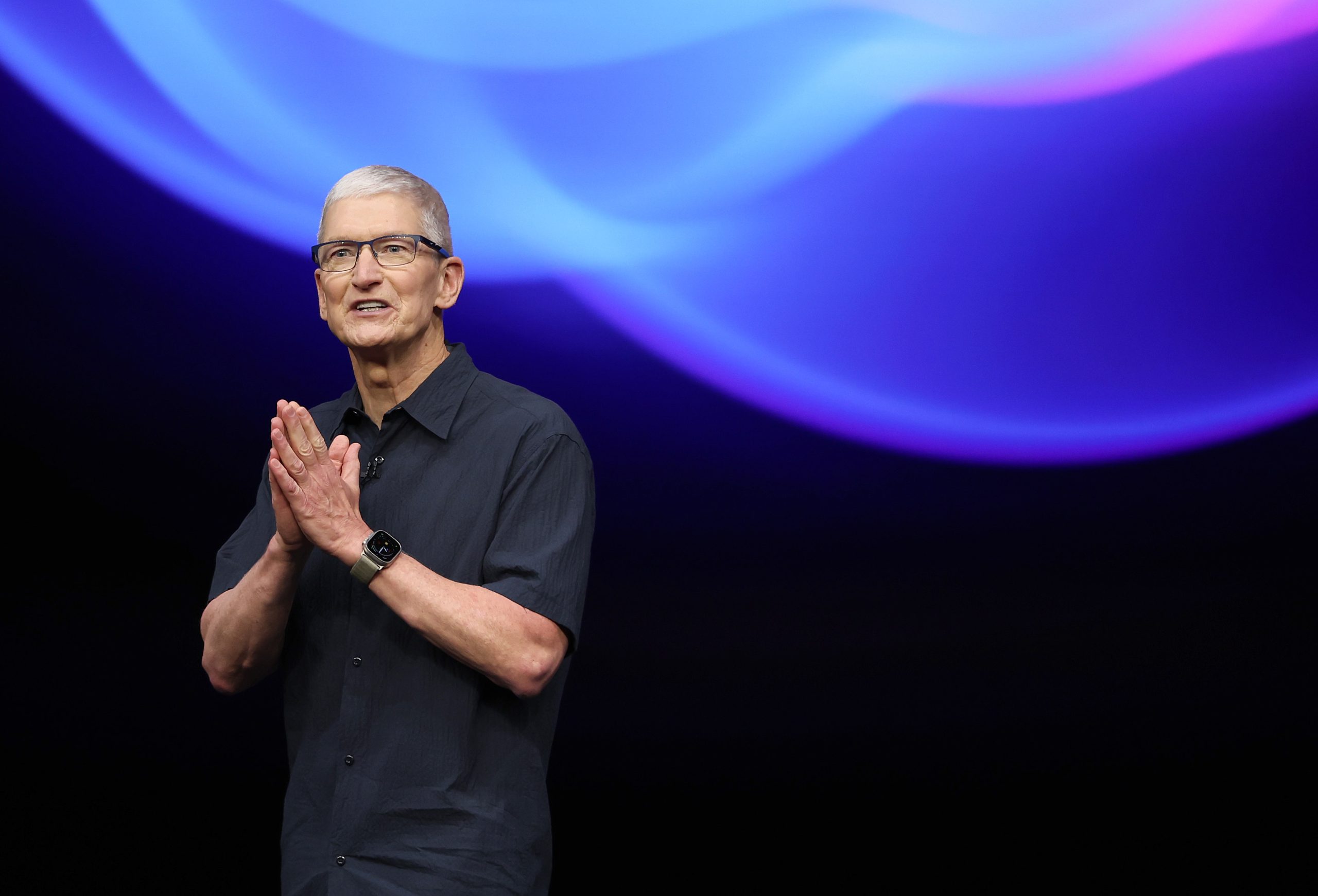
CUPERTINO, California — Apple Inc. will raise prices on its products to offset soaring costs of memory and storage chips, Chief Executive Tim Cook said, citing an unprecedented supply crunch driven largely by demand from artificial intelligence applications.
Cook told The Wall Street Journal in an exclusive interview that the situation had become unsustainable despite the company’s efforts to absorb increases and protect customers. “Unfortunately, price increases are unavoidable,” he said. “We’re doing our best to mitigate the huge increases that are being passed to us, and we’ve been trying to shield our customers from the increases, but the situation has become unsustainable.”
The announcement marks a significant shift for Apple, long known for premium pricing but also for absorbing some component cost fluctuations to maintain competitive positioning. Surging demand for high-bandwidth memory used in AI servers has quadrupled prices in some cases over the past year, according to industry reports.
Memory chips, including DRAM and NAND flash, are critical components in iPhones, Mac computers, iPads and other devices. Suppliers such as Samsung Electronics, SK Hynix and Micron Technology have prioritized AI-related orders, constraining availability for consumer electronics manufacturers.
Apple has not specified which products will see increases or the timing and magnitude of changes. Analysts expect impacts across the Mac and iPad lines first, with potential ripple effects to iPhones in future generations. Morgan Stanley has forecasted possible price hikes of 15 percent or more for some consumer tech products this year.
Cook described the memory shortage as a “hundred-year flood” unlike anything he had witnessed in more than four decades in the technology supply chain. The company continues working with suppliers to secure allocations while exploring alternative sourcing strategies.
The move comes as Apple navigates broader challenges in its supply chain amid geopolitical tensions and rapid technological shifts toward AI integration. The company has invested heavily in custom silicon but remains dependent on external memory providers for key components.
Wall Street reacted with mixed assessments. While some investors viewed the transparency positively, concerns emerged about potential impacts on consumer demand and market share. Apple’s shares dipped slightly following the report, though the company maintains strong financial reserves to weather such pressures.
Industry analysts note that memory price volatility has affected multiple manufacturers. Competitors like Samsung and Dell have also signaled cost challenges, suggesting broader price adjustments across the technology sector.
Apple’s premium positioning has historically allowed it to pass on some costs, but sustained increases could test customer loyalty in price-sensitive markets. The company has previously mitigated pressures through efficiency gains and design optimizations.
Cook emphasized ongoing efforts to innovate and control costs internally. Apple continues advancing its silicon development and exploring new manufacturing partnerships to reduce dependency on volatile commodity markets.
The memory crunch stems primarily from explosive growth in AI data centers operated by companies including Google, Microsoft, Meta and Amazon. These facilities require massive quantities of high-performance memory, diverting supply from consumer device production.
For consumers, the changes could mean higher prices for new iPhones, Macs and other products in coming months. Apple typically announces pricing with new hardware releases at events like its Worldwide Developers Conference or fall product launches.
The development highlights vulnerabilities in global technology supply chains. Experts call for greater diversification and investment in domestic manufacturing capacity to enhance resilience against such disruptions.
Apple maintains a robust balance sheet with significant cash reserves, providing flexibility to manage the situation. The company reported strong services growth and ecosystem loyalty that could help offset hardware price adjustments.
Looking ahead, resolution of the memory shortage depends on expanded production capacity from suppliers and potential moderation in AI infrastructure spending. Until then, price increases appear likely across the industry.
Cook’s comments underscore the challenges facing even the world’s most valuable company in navigating component cost inflation. Apple’s response will be closely watched as a bellwether for the broader consumer electronics sector.

Business
Rory McIlroy Warns PGA Tour’s Two-Track Overhaul Could Turn Marquee Events Into Minor League Golf
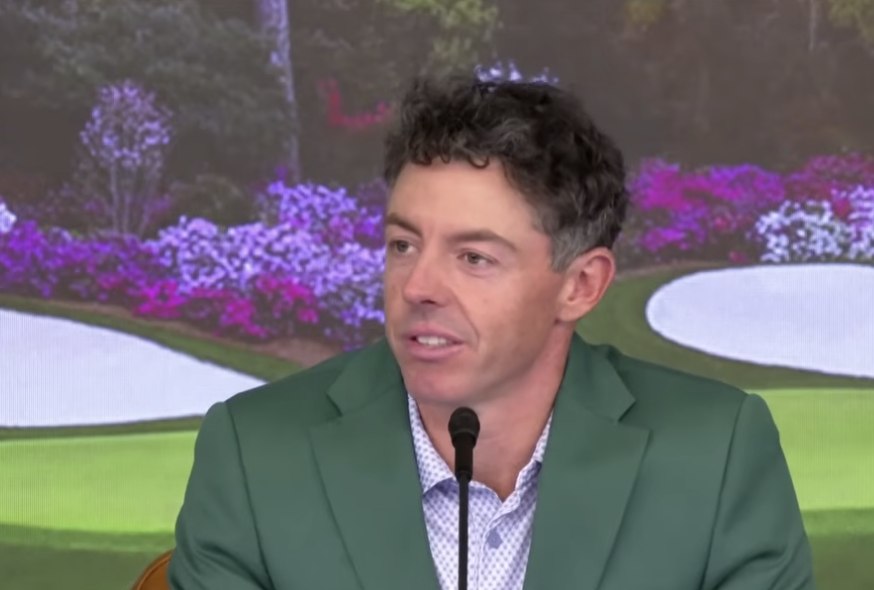
SOUTHAMPTON, N.Y. — Rory McIlroy arrived at Shinnecock Hills this week carrying six major championships, considerable credibility, and a pointed warning for the PGA Tour’s leadership: the sweeping structural overhaul being crafted behind closed doors risks degrading the very tournaments that define professional golf.
Speaking to reporters Tuesday ahead of the U.S. Open, McIlroy said he fears the proposed two-track competition model — a promotion-and-relegation framework modeled loosely on European soccer — will drain prestige from long-standing events that cannot secure elite-level sponsorships.
“I just think there’s going to be certain events that might lose their stature if a sponsor doesn’t pony up $30 million, so that’s the tough thing,” McIlroy said. “An event like last week, the Canadian Open, potentially going to one of these Track Twos — I don’t think the Canadian Open should be one of those.”
The comments were direct, unsolicited and striking in their scope. McIlroy, who briefly served on the Tour’s policy board in 2023 and was arguably the most visible player-ambassador during golf’s civil war with LIV, went further than criticizing the plan’s mechanics. He questioned its entire premise.
“I think, as they’ve done all this work, you start to realize that the way the Tour was before LIV came along was actually pretty good,” McIlroy said. “It was a pretty good structure, and everything sort of worked pretty well.”
A Restructure Years in the Making
The PGA Tour has been working toward a fundamental competitive overhaul since CEO Brian Rolapp took over last fall. At the Players Championship in March, Rolapp publicly signaled the Tour would adopt a two-tiered framework, citing the Premier League’s promotion-relegation model as an inspiration. Since then, a Future Competition Committee and a Player Advisory Council have been meeting regularly to hammer out details.
Under the proposal taking shape, Track One would comprise roughly 15 to 18 tournaments — including the four major championships and The Players Championship — featuring fields of approximately 120 to 130 players with 36-hole cuts restored at every event. Track Two would serve as a direct competitive pathway to Track One, with smaller purses, lower sponsorship thresholds, and fields of around 140 players. Between 20 and 30 spots would be available each season for Track Two players to earn promotion, with an additional 10 players joining annually from the DP World Tour under the current Strategic Alliance.
Rolapp said the model is designed to restore competitive meritocracy after years of signature events with 72-player fields and limited cuts. “I think we have lost a lot of that with the smaller field, no-cut events,” he said at the Memorial Tournament earlier this month. “The competitive meritocracy that makes this sport great and unique — we’ve gotten away from, and we’re getting back to it.”
Despite the momentum, Rolapp acknowledged that the full model likely will not launch until the 2028 season given the complexity involved. “There’s all sorts of questions,” he said. “It looks like it’s more ’28 just because of the complexity of not only the competitive model, but also the commercial things you need to do to actually put a new competitive model in place.” The Tour’s policy board is expected to vote on the framework June 22, the Monday before the Travelers Championship, when Rolapp is also scheduled to brief the media.
McIlroy Is Not Alone
The resistance to the proposed changes extends well beyond one player. Jack Nicklaus, the 18-time major champion whose Memorial Tournament is one of the events most likely to remain on Track One, expressed reservations of his own earlier this month in Dublin, Ohio.
“I don’t want to comment on the Tour’s schedule because I’m not exactly in favor of what they’re doing right now,” Nicklaus said at the Memorial. “I want to sit down with Brian and have that conversation. I hate to see tournaments bunched too much together with too many big tournaments too close together. That’s a problem, I think, and I think that’s going to be a problem for the Tour in the future.”
Tournament operators bracing for a second-tier designation have raised similar alarms, questioning whether they would commit to major prize funds for what amounts to a feeder circuit. Broadcast partners have sought clarity on what they are actually paying to air under existing rights agreements. And as Golf Digest reported Tuesday, some players see the proposal as little more than the existing PGA Tour and Korn Ferry Tour hierarchy repackaged under a different name.
McIlroy’s use of the phrase “glorified Korn Ferry events” was blunt in that regard — a direct comparison to a developmental tour that sits below the PGA Tour and carries substantially less prestige.
The LIV Factor
Central to McIlroy’s skepticism is the shifting landscape that gave rise to the reform push in the first place. The PGA Tour’s scramble to cut fields, increase purses, and consolidate talent at the top was a direct response to LIV Golf’s Saudi-backed challenge beginning in 2022. But with LIV’s funding from Saudi Arabia’s Public Investment Fund set to be pulled after this season, McIlroy argued the threat that justified those emergency measures has largely dissipated.
“LIV created this false economy where we had to up prize funds and had to cut fields and try to support the top players and all that stuff,” McIlroy said. “Which I think needed to happen because that was the only way to retain talent at the time, but now that LIV looks like it’s less of a threat, I think, as I said, the old ways of the PGA Tour weren’t actually that bad.”
That view — that the Tour may have overcorrected in its response to LIV and is now building a permanent structure on a foundation that was always meant to be temporary — is one Rolapp has not publicly engaged with directly. The CEO has maintained that the new model is about restoring the competitive integrity of professional golf for the long term, not about managing the LIV threat specifically.
A Critical Week Ahead
The timing of McIlroy’s remarks, arriving days before a consequential policy board vote, is unlikely to be lost on Tour leadership. The six-time major winner acknowledged he no longer has a seat at the table — “I’m not in those rooms,” he said — but his words carry weight well beyond the committee rooms at Tour headquarters.
Rolapp is expected to deliver a comprehensive public update on June 23, the day after the board vote, at the Travelers Championship in Cromwell, Connecticut. The announcement is anticipated to include which tournaments will be assigned to each track, new market expansions under consideration — cities including Boston, Chicago, Denver, New York and Philadelphia have been discussed — and details on a revamped postseason format that could include match play.
For now, one of professional golf’s most influential voices is not yet sold. “I’ll continue to play my schedule,” McIlroy said, “which is getting less and less as the years go on.”
The U.S. Open continues this week at Shinnecock Hills Golf Club in Southampton, New York. The PGA Tour’s policy board vote is scheduled for June 22.
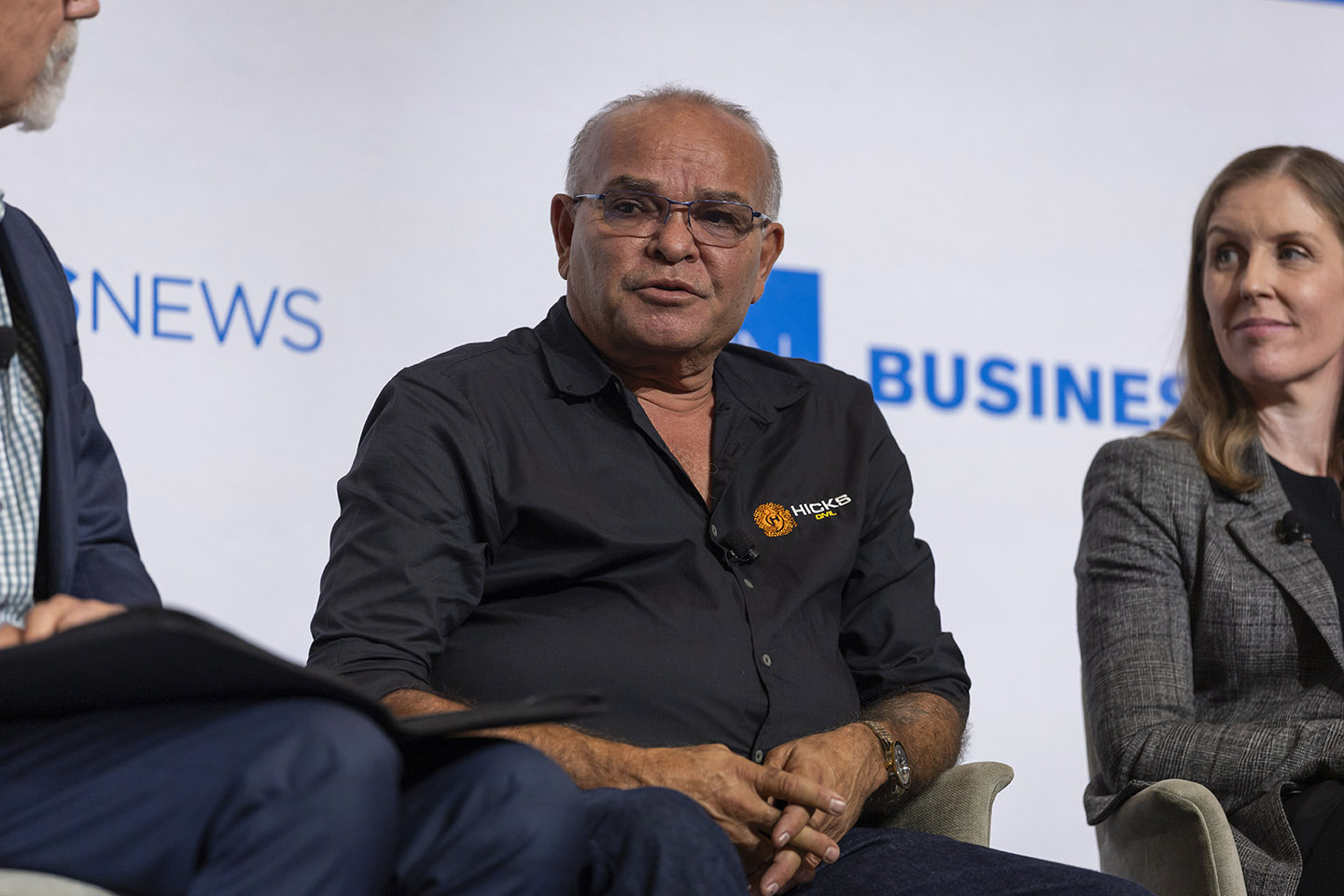
WA’s big miners have substantially boosted their spending with Indigenous suppliers.

A former chair of Lindian Resources has launched a new legal action suing the ASX-listed rare earths developer over shares worth around $10 million.

The consulting giant now expects revenue growth of 3%-4% for FY26, narrowing its earlier guidance of 3%-5%. It also forecast fourth-quarter revenue of $17.75 billion-$18.4 billion, below analysts’ consensus estimate of $18.47 billion, according to LSEG data.
The weaker outlook overshadowed Accenture’s announcement of $4.18 billion worth of cybersecurity acquisitions, sending its shares down more than 11% in premarket trading.
The company said it will acquire asset intelligence company runZero and device security specialist NetRise, while also taking a majority stake in industrial cybersecurity firm Dragos. The transactions are expected to close in August or September, subject to regulatory approvals.
The acquisitions are aimed at expanding Accenture’s cybersecurity capabilities, particularly in protecting industrial operations and critical infrastructure such as power grids, factories, pipelines and data centres amid rising cyber threats and increasing adoption of artificial intelligence.

Together, the acquired businesses generate annual recurring revenue of about $208 million and will strengthen Accenture’s cybersecurity business, which currently generates around $10 billion in annual revenue.
The revised forecast suggests clients continue to delay or reduce spending on discretionary consulting projects as they navigate an uncertain macroeconomic environment.
While demand for AI and cybersecurity services remains resilient, enterprises are becoming more selective in committing large transformation budgets, weighing on the broader consulting industry.
Energy Fuels stock surges 16% on $725M defense loan
FTSE 100 today: Stocks slide as BoE holds rates, two MPC members push for hike

BNDX And BND: After Warsh's Speech, I Don't Like Bond Funds Anymore
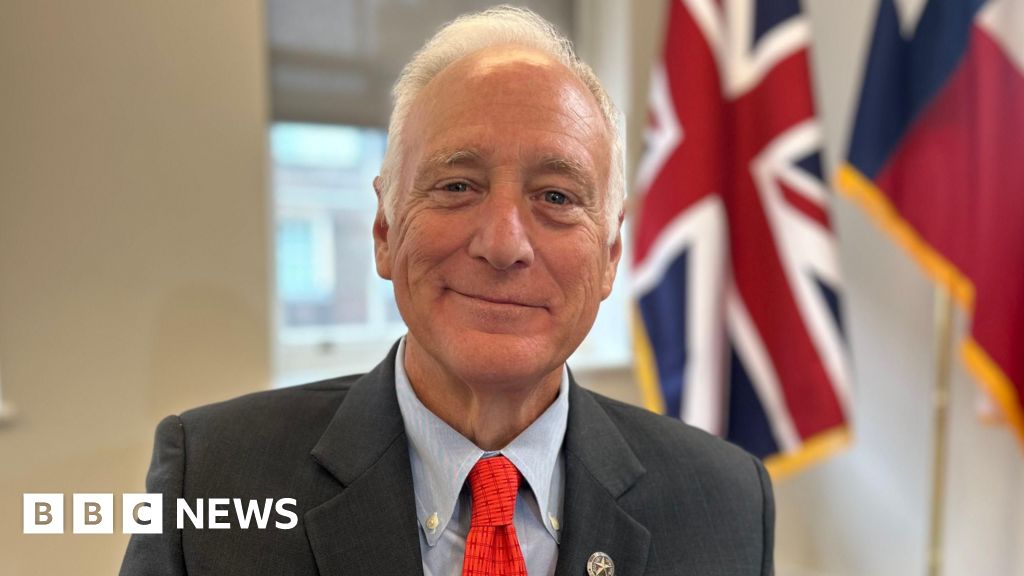
Texas, which once had an embassy in London, strengthens its ties with the capital by opening a new trade office.
June FOMC Statement: Contrarian Perspective On The Expected Rate Hike

Why is Capgemini stock sliding today?

How student art is helping fund change

Rory McIlroy Warns PGA Tour’s Two-Track Overhaul Could Turn Marquee Events Into Minor League Golf

D-Wave (QBTS) Shares Decline Following Gate-Model Quantum Simulator Reveal


-

 Business4 days ago
No Jackpot Winner as $257 Million Prize Rolls Over to $269 Million Monday Draw
-

 Fashion6 days ago
Weekend Open Thread: Tuckernuck – Corporette.com
-

 Crypto World7 days ago
Oppenheimer backs SpaceX as $70 billion retail frenzy builds
-

 Crypto World7 days ago
Markets Rally as SpaceX IPO Looms Amid Iran Tensions and Inflation Surge
-
 Crypto World4 days ago
Zimbabwe Requires Crypto Businesses to Register Annually Under New FIU Regulations
-

 Crypto World5 days ago
Bitget enters Argentina’s regulated crypto market through PSAV registration
-

 Tech5 days ago
NanoClaw integrates JFrog registries to secure AI agent downloads
-

 Tech6 days ago
This Week In Security: Microsoft On Microsoft, Register Your Domains, Linux On ARM, And FreeBSD Joins The File Cache Club
-

 NewsBeat7 days ago
El Nino has formed in the Pacific and could set records, forecasters say
-
 Tech7 days ago
Dutton Ranch star claims they ‘didn’t see any disruption’ on set following Chad Feehan’s exit from Yellowstone spinoff fueled by Taylor Sheridan clash rumors
-

 Politics7 days ago
Politics Home | Healey Resignation Is “Colossal Failure Of Government”, Says Former Labour Defence Secretary
-
 Entertainment7 days ago
Donnie Wahlberg & More Heat Up Las Vegas at Circa’s Barry’s Downtown Prime
-

 Sports7 days ago
First Time Since 1971: Australia Register Historic Low In ODI Cricket
-
 Tech7 days ago
Opendoor Ends India Operations, Fueling a Bigger Conversation About AI and Outsourcing
-

 Politics7 days ago
Belfast burns, while Met chief points finger at Iran and Russia
-

 Business7 days ago
AT&T: Verizon's 27% Outperformance Sets Up A Solid Entry Point
-

 NewsBeat6 days ago
FBI searches office of Ohio voter registration group
-
 Tech6 days ago
Anthropic is spending $150M to embed 1,000 AI fellows inside nonprofits. No degree required.
-

 Politics7 days ago
Modi thanks Trump for wishes as US attacks Indian seafarers
-
 Entertainment6 days ago
‘The Pitt’s Fan-Favorite Doctor Confirms Noah Wyle Gave His Blessing to Return [Exclusive]
You must be logged in to post a comment Login