

Connect with us
DAPA Banner
DAPA Coin
DAPA
COIN PAYMENT ASSET
PRIVACY · BLOCKDAG · HOMOMORPHIC ENCRYPTION · RUST
ElGamal Encrypted MINE DAPA
🚫 GENESIS SOLD OUT
DAPAPAY COMING

NewsBeat

Shark chillpill handheld fan review: It’ll help you survive a heatwave

Published

on

Shark chillpill handheld fan review: It’ll help you survive a heatwave

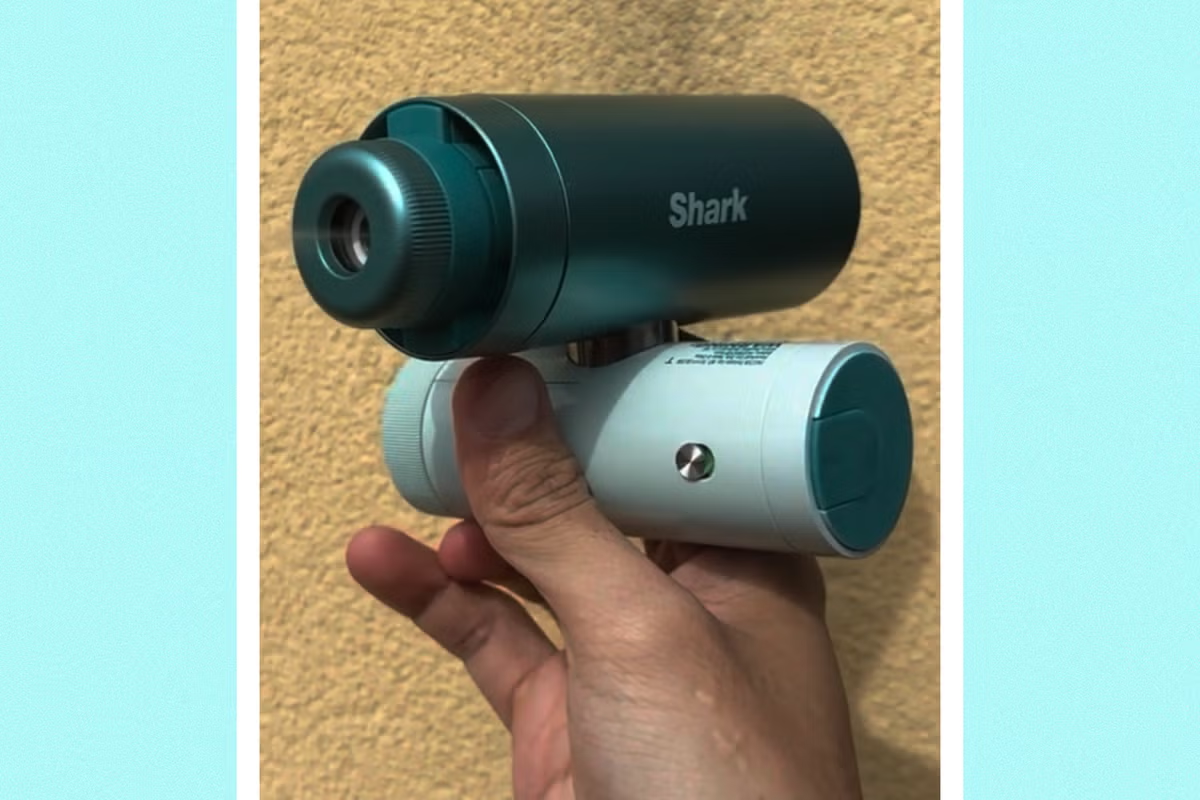
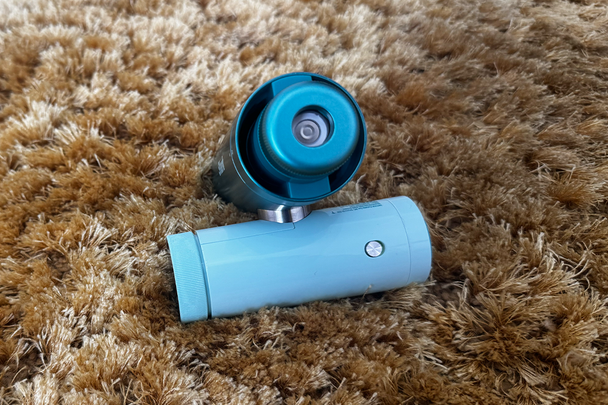
The chillpill has, let’s say, a rather unique design – it looks a bit like a compact pair of binoculars, with two rounded barrels sitting side by side and connected by a hinge. The smaller barrel houses the controls and charging port, while the larger one contains the motor and interchangeable attachments. There’s a dial around the LED display on the smaller barrel too, letting you crank the fan speed up from one to 10.

You can angle the fan exactly where you want it, or twist it into a right angle and sit it on a desk, using the smaller barrel as a base. Shark also sells accessories, like a crossbody strap (£9.99, Sharkclean.co.uk), so you don’t have to constantly hold it in your hand.

While it’s kind of awkward to hold at first, the tech is actually pretty neat. Unlike most handheld fans, which just blow a nice breeze in your direction, the chillpill uses a modular attachment system – yes, exactly like you’d get with a Shark vacuum.

It ships with the standard fan head attached, but you also get a misting attachment and a cooling plate in the box, so you can swap between them depending on how you want to cool down. The cooling plate is the most power-hungry of the three, lasting around an hour and a half per charge, which makes sense given it’s actively generating a cooling effect. With the fan and misting attachments, you can get up to 11 hours of battery, depending on the speed setting.

Advertisement
You get a standard fan head, misting attachment and cooling plate included (Alex Lee/The Independent )

With Shark’s experience in airflow, it’s no surprise the fan is seriously powerful – far more so than the cheap handheld ones you’d buy off someone on Oxford Street in July. It does get loud at higher speeds, but that’s the trade-off for that extra punch.

I think the most interesting attachment is the misting spray. You open the lid, fill it up with cold water, then screw it onto the barrel. Turn it on and you get a fine spray of water, along with the airflow. It feels like a cold shower just for your face. Having used it in 23C heat, it’s easily the device’s best feature. The airflow and mist deliver a really refreshing cooling effect, and it makes a noticeable difference compared to a standard handheld fan. That said, while you can turn down the fan speed, it still releases the same amount of water, so it’s easy to get bathed in water if you leave it running continuously.

The misting attachment releases a fine spray of water, along with airflow (Alex Lee/The Independent )

Thankfully, you can switch between a constant spray and an intermittent mode, which helps rein it in a bit (and saves battery too).

I was most excited about the cooling plate, which is one of the interchangeable attachments designed for direct, contact-based cooling rather than airflow. Once you screw it on, you can choose between two cooling settings, and the metal plate gets noticeably cold to the touch.

It’s great for targeted relief – press it against your neck or wrist and you get an instant cooling effect, but unlike Sony’s reon pocket pro, you have to hold it in place. That makes it less effective for longer, hands-free cooling, even if the sensation itself already feels nice.

Advertisement

Key specifications

  • Fan speeds: 10
  • Weight: 350g
  • Battery life: Up to 11 hours

Source link

Continue Reading
Click to comment

You must be logged in to post a comment Login

Leave a Reply

NewsBeat

Patient given wrong drugs when they left hospital died of overdose two days later

Published

on

Wales Online

There was poor communication and a lack of checks before the medicine was given to the man

A patient was wrongly given morphine when discharged from hospital and died of an overdose two days later. The patient was given the drug without being made aware of the risks or given guidance on using it safely.

Advertisement

An inquiry by the ombudsman has said it was a “serious injustice” that the patient was prescribed Sevredol.

The patient, who is not being named, was treated at Wrexham Maelor Hospital, which is part of Betsi Cadwaladr University Health Board. His wife made the complaint about the care of her late husband in March 2024.

The Public Services Ombudsman for Wales said a series of failures in medication prescribing and checking, and poor communication between medical and pharmacy teams, led to the mistake.

The patient, referred to as Mr P, was mistakenly issued morphine sulphate on leaving hospital.

Advertisement

The prescribing consultant had prescribed the medication for use in hospital only and believing, wrongly, that Mr P had been taking it before admission.

There was a series of failures by the medical and pharmacy teams to carry out expected checks which would have identified this error.

“The failings were compounded by poor communication and a lack of effective multidisciplinary working. As a result the medication was issued against the prescriber’s intentions,” the ombudsman says. For our free daily briefing on the biggest issues facing the nation, sign up to the Wales Matters newsletter here

There was also a failure to document appropriate clinical reasons for the prescription given that opioids are not recommended for migraine or headache treatment under relevant guidance.

Advertisement

Mr P was given a controlled medication without being made aware of the risks or given guidance on safe use, including the risk of potentially fatal unintentional overdose, and the patient shouldn’t have been given it, the report found.

He died of a morphine overdose two days later.

“While it was not possible to determine whether the hospital supply directly caused his death supplying morphine sulphate in error, without appropriate advice, significantly increased the risk of accidental overdose. This was an extremely serious injustice to Mr P and his family,” the ombudsman’s release says.

Public Services Ombudsman for Wales, Michelle Morris, said: “This case highlights a series of failures in prescribing, checking, and communication which led to a patient being supplied with a controlled drug in error.

Advertisement

“This represents an extremely serious injustice to Mr P and to his family. These failings should have been identified and addressed at an earlier stage.”

The ombudsman criticised the health board for not being open with the family in the aftermath.

Health boards are subject to the “duty of candour”, which is a legal and professional obligation to be completely open, honest, and transparent with patients or their families when something goes wrong during treatment that has caused, or could cause, significant harm

“I am also concerned that the health board has again fallen short of the duty of candour and I expect it to ensure that the spirit and requirements of the duty are fully embedded in everyday practice,” the ombudsman said.

Advertisement

The report was issued so the health board, and others, are aware, the ombudsman said.

She has suggested an apology and financial redress is paid, that a review should be carried out, and learning points issued to staff.

Deputy executive director of nursing at Betsi Cadwaladr University Health Board, Chris Lynes, said: “On behalf of the health board I apologise unreservedly for the failures identified in Mr P’s care. We fell short of the standard that should be expected.

“We are sending a direct letter of apology to his family imminently and we wish to assure them that we take the ombudsman’s findings very seriously and we are committed to ensuring the lessons identified are fully acted upon.

Advertisement

““We also acknowledge her comments surrounding our complaint handling and responses.

“The health board is fully committed to the duty of candour, the contract we have with the public to be open and honest, and we will continue to address the concerns raised in the ombudsman’s conclusion.”

Source link

Advertisement
Continue Reading

NewsBeat

Why more births now end in caesarean section

Published

on

Why more births now end in caesarean section

Official NHS maternity statistics show that caesareans accounted for 45% of deliveries in English NHS hospitals in 2024-25. More recent monthly NHS maternity data reported that 27% of deliveries under NHS maternity services in January 2026 were emergency caesareans.

But a recent BBC analysis noted that this increase has not been accompanied by similarly clear reductions in stillbirth or neonatal mortality rates. If outcomes are not improving at the same pace as interventions, what is driving the growth in caesarean births?

Common explanations include workforce shortages, litigation concerns, maternity safety scandals and changing perceptions of risk. However, focusing solely on clinical factors risks overlooking how ideas about safety, responsibility, trust and uncertainty all shape childbirth decisions.

Advertisement

Fear, anxiety and uncertainty

In Bangladesh, where I recently completed doctoral research on childbirth and rising caesarean section rates, caesareans accounted for around 45% of births in 2022. Approximately 69% of institutional births were delivered surgically.

Unlike England’s NHS-based system, childbirth in Bangladesh increasingly takes place within a commercial healthcare market. This includes private clinics, out-of-pocket payments and maternity packages. In practice, this can make paid access to scans, senior doctors, private facilities and fixed packages feel like routes to safety. Caesarean birth may then be understood less as an exceptional intervention and more as the managed, predictable option.

For many families in Bangladesh, safety was a medical, emotional and financial concern. It was sought through spending, testing and access to trusted doctors. As one husband put it: “If I could afford 20,000 BDT [around £120], why not pay 25,000 BDT for better care?” Yet improvements in maternal mortality have been far less pronounced, raising questions similar to those emerging in England.

My research explored how childbirth decisions are made. Women and families frequently described caesarean section as “nirapod” (safe). Yet many also experienced it as a lifelong “khoto” (wound), associated with pain, emotional distress and financial burdens. As Monisha, one of the mothers I interviewed, reflected: “Caesarean leaves scars (khoto) that last a lifetime.”

Advertisement

This contradiction reveals an important feature of childbirth decision-making. Caesarean birth is both a medical procedure and a social and moral experience shaped by fear, anxiety, uncertainty and the promise of safety. As Nadia, who underwent two caesareans, recalled: “I felt I had no space to express my choice, and I ended up convincing myself that they were doing it for my good.”

Decisions were shaped by medical advice, family expectations, trust in doctors and economic pressures. Among surveyed mothers, 44% underwent elective caesareans and 56% emergency procedures. Yet 60% reported that the decision had been made at least a month before delivery, suggesting that many birth pathways were established well before labour. Trust in medical expertise was central: most women surveyed, 71%, underwent caesareans recommended by doctors, while only 6% reported making the decision themselves.

Trust in medical authority often became a way of managing uncertainty. As one woman said: “I trusted her more than anyone else.” Decisions were rarely framed as personal preference. They were presented as responsible actions taken for the baby’s wellbeing. One participant recalled: “The doctor left the decision to me, so I decided. That was my weakness, but also my right.” Although responsibility was shared across families and healthcare providers, it often fell most heavily on women.

Related tensions around responsibility, risk and professional accountability can also be seen in England, although they take different forms.

Advertisement

Scrutiny and litigation

In England, clinicians work within systems shaped by scrutiny, inquiries and legal claims following adverse outcomes.

In Bangladesh, the pressures described by doctors in my research were often more immediate and personal. As one obstetrician observed: “If something goes wrong, I always worry about the risk of violence. I have to prioritise my safety first.” The contexts differ sharply, but in both England and Bangladesh caesarean section can become a way of managing uncertainty, avoiding blame and producing a form of safety that is as institutional and social as it is clinical.

In Bangladesh, these pressures operate within a healthcare system facing severe workforce shortages. The country has approximately seven physicians and six nurses or midwives per 10,000 people. By comparison, the UK has around 33 physicians and 95 nurses or midwives per 10,000 people.

Opportunities for continuous labour support and counselling are therefore limited. Midwives in my research often described having little influence over birth decisions. In both clinical and family narratives, caesarean section frequently emerged as the most predictable and controllable option, while vaginal birth remained associated with uncertainty.

Advertisement

Yet the promise of safety did not end vulnerability. Most women left hospital within days of surgery, while recovery was largely managed by families. Participants described ongoing pain, restricted mobility and emotional distress months after birth. As Maya reflected: “I did not understand why I was feeling like that… When my baby cried at night, I felt anger rising inside me.” Looking back, she felt she had experienced postpartum depression for almost a year.

Others described similar experiences, including chronic pain, sleep disruption and emotional distress during recovery. Mothers I spoke to in focus groups also repeatedly described chronic back pain as part of their post-caesarean recovery.

These accounts suggest that caesarean birth often redistributes rather than eliminates risk. While hospitals manage the surgery itself, much of the work of recovery is transferred to households, where families assume responsibility for ongoing care and support.

Advertisement

Emergency caesareans remain necessary, vital and often life saving. However, rising emergency caesarean rates in England, alongside very high rates in Bangladesh, suggest that broader social and institutional pressures shape how risk is understood and managed.

The rise in caesarean births is often framed as a clinical or public health issue. Yet evidence from England and Bangladesh suggests it is also social and political. Rising intervention rates cannot be understood through medical factors alone, but through how safety, uncertainty and responsibility are organised within maternity systems.

Increasingly, birth is shaped by efforts to anticipate and prevent future harms, placing responsibility for uncertain outcomes on women and families even when many of the forces influencing those decisions lie beyond their control. Childbirth therefore becomes a question of medical necessity, and of how societies organise safety, risk and care.

Advertisement

Source link

Continue Reading

NewsBeat

Canada star Ismael Kone hospital injury update as opponent issues apology for horror tackle

Published

on

Daily Mirror

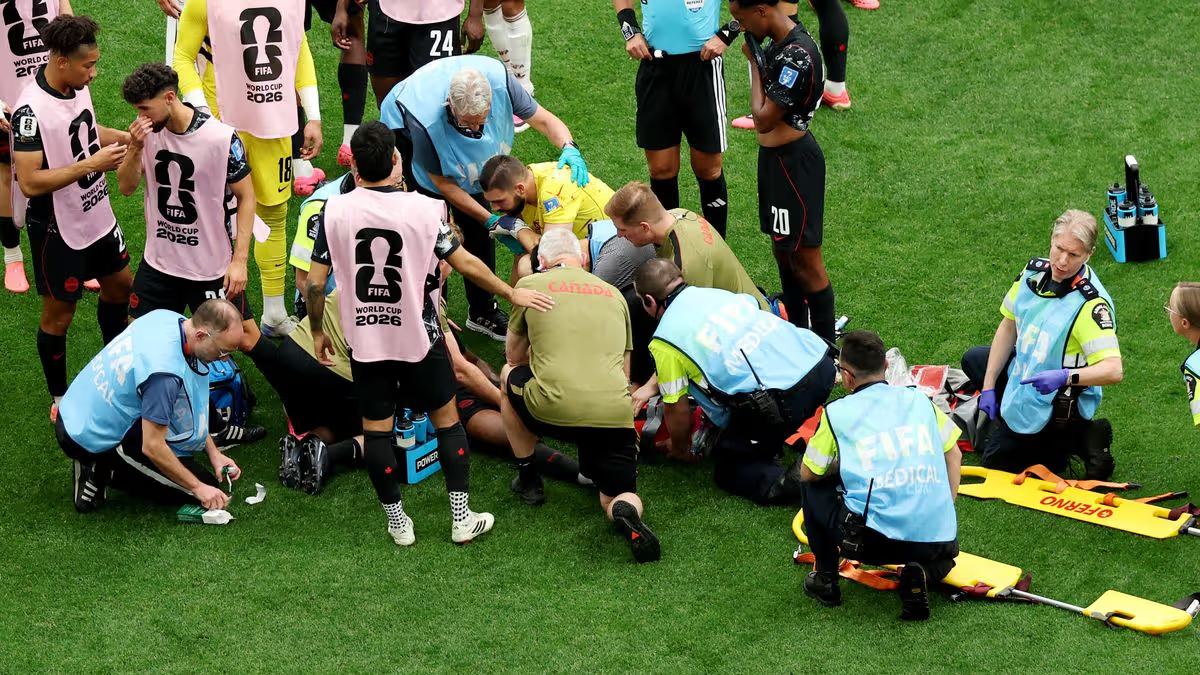
Ismaek Kone was stretchered from the field after appearing to break his leg during Canada’s win over Qatar in the World Cup and went straight to hospital following the incident

Canada star Ismael Kone is set to undergo surgery following his horrific injury suffered against Qatar. The midfielder has fractured his fibula and tibia, per reports.

Kone was stretchered from the field after being fouled by Assim Madibo, who was sent off for his challenge. The Canada star was visibly in pain as soon as he hit the ground, while Madibo put his head in his hands.

Tensions boiled over between players and on the sidelines as Kone received treatment. Concern filled the stadium but the 24-year-old was able to wave to the crowd as he was stretchered away.

Advertisement

Following the match, Jesse Marsch confirmed that Kone was at the hospital, accompanied by his mother, Suzanne, and preparing for surgery.

The former Leeds boss also confirmed that Madibo came into the dressing room to apologise for his challenge.

“I saw his leg. I saw that something wasn’t right,” Canada captain Stephen Eustaquio said, having been one of the first players to reach his team-mate.

“We’re going to miss (Kone). He has that X factor that our team really needs.”

Advertisement

Canada’s hat-trick hero, Jonathan David, questioned the need for the challenge that injured Kone. “If there’s a play where you cannot win the ball, there’s no point,” he said. “It’s just to hurt people.”

Get the latest World Cup news straight to your inbox by signing up to our Make Football Great Again newsletter now!

Marsch was full of praise for Kone following Canada’s win, and was adamant that the player still had a big future. He said: “Ismael is such a great kid.

Advertisement

“He’s so imperfect but that’s why you love him. He can do great things and the next moment he loses concentration. He embodies a lot of what the team is. It’s a huge loss for us.

“He’ll be fine, we’ll get him good doctors. He’s got a big future and he’s a big part of everything we’ll do.”

Despite the circumstances, Canada claimed a 6-0 win over Qatar. Following their fourth goal, scored by Kone’s replacement Nathan Saliba, the team paid tribute to the injured star.

Saliba claimed a shirt bearing his team-mate’s name and number after scoring an impressive free kick. He raised it aloft to the vast cheers of the home crowd.

Advertisement

Join our new WhatsApp community and receive your daily dose of Mirror Football content. We also treat our community members to special offers, promotions, and adverts from us and our partners. If you don’t like our community, you can check out any time you like. If you’re curious, you can read our Privacy Notice.

Upgrade your World Cup TV setup with the Sky Glass ‘designed for football’

This article contains affiliate links, we will receive a commission on any sales we generate from it. Learn more
Content Image

from £4.50

Sky

Get the deal here

Sky is knocking 20% off its entire range of Glass TVs to mark the start of the 2026 FIFA World Cup. Until June 17, shoppers can upgrade to the Sky smart TV that’s ‘designed for football’ from £4.50 per month when taken alongside a Sky TV and Netflix package.

Advertisement

Source link

Continue Reading

NewsBeat

Makerfield by-election winner announced as Andy Burnham wins seat for Labour over Reform

Published

on

Belfast Live

Voters in the Greater Manchester seat cast their ballots on Thursday, with the outcome closely watched for its potential impact on Sir Keir Starmer, Labour and the national political picture

The result of the Makerfield by-election, a contest widely viewed as a major test for Britain’s political parties, has been declared.

Voters in the Greater Manchester seat cast their ballots on Thursday, with the outcome closely watched for its potential impact on Sir Keir Starmer, Labour and the national political picture.

Advertisement

It was confirmed on Friday morning that the Labour Party and Andy Burnham secured victory with 24,927 votes – Reform and Rob Kenyon finished the night on 15,696 votes.

The by-election was called following the resignation of Labour MP Josh Simmons, who stepped aside to give Greater Manchester Mayor Andy Burnham the opportunity to seek a return to Parliament.

Burnham, who had been blocked by Labour from contesting the recent Gorton and Denton by-election, which was won by the Green Party, entered the race as the clear favourite.

Advertisement

His main challenger was Reform UK candidate Robert Kenyon, a plumber and Wigan councillor who had faced questions over historic social media posts.

In total there were 14 candidates contesting the seat.

Burnham previously served as MP for Leigh from 1997 to 2017, and was Culture Secretary and briefly Health Secretary under Gordon Brown.

He was elected Mayor of Greater Manchester in 2017, winning three terms.

Advertisement

Before polls opened, Prime Minister Sir Keir Starmer said he was willing to offer Burnham a “big” job in his Government, should he win.

However Burnham is widely expected to challenge Starmer for leadership of the Labour Party, and seek to replace him in No 10.

The Makerfield poll was one of the three parliamentary by-elections taking place today, with voters in two Scottish constituencies also selecting new MPs.

Advertisement

The contests in Aberdeen South and the Arbroath and Broughty Ferry constituency were triggered following the election of local SNP MPs Stephen Flynn and Stephen Gethins to Holyrood last month.

They were won by the Conservatives in Aberdeen South and held by SNP in Arbroath and Broughty Ferry.

The full list of candidates in the Makerfield by-election were (in alphabetical order by surname):

  • Jake Austin, Liberal Democrats
  • Count Binface, Count Binface Party
  • Andy Burnham, Labour and Co-operative Party
  • Dan Clarke, Libertarian Party
  • John Dyer, Independent
  • Ed Gemmell, Climate Party
  • Paul Gould, Independent
  • Alan ‘Howlin’ Laud Hope, The Official Monster Raving Loony Party
  • Robert Kenyon, Reform UK
  • Robert Pownall, Independent
  • Rebecca Shepherd, Restore Britain
  • Sarah Wakefield, Green Party
  • Peter Ward, Rejoin EU
  • Michael Winstanley, Conservative Party

Source link

Continue Reading

NewsBeat

US Open 2026: Rory McIlroy starts strongly before dynamic alters at Shinnecock Hills

Published

on

Rory McIlroy's cap flies off on the 13th hole

US Open, round one leaderboard

-6 W Clark (US**); -2 S Stevens (US), R Cowan (US*), M McGreevy (US), M Fitzpatrick (Eng**), G Woodland (US**), J Rahm (Spa**)

-1 R McIlroy (NI), L Aberg (Swe), B DeChambeau (US**); Level T Fleetwood (Eng); +1 J Parry (Eng), A Fitzpatrick (Eng)

Full leaderboard

Advertisement

Shinnecock Hills served up a tale of changing conditions that altered the dynamic on the opening day of the fog-hampered US Open.

The gloom of the early morning caused a two-hour delay and when play did resume, only six of the 78 early starters broke par as strong winds buffeted the notoriously tricky course on Long Island, New York.

However, having initially lived up to its reputation as one of the toughest tests in golf, a shift in the weather allowed the afternoon wave to capitalise as conditions became more benign.

The 2023 US Open champion Wyndham Clark led the charge, establishing a four-shot lead at six under with two holes of his first round remaining when darkness fell.

Advertisement

The 32-year-old American – one of 50 players who must return at 06:35 (11:35 BST) on Friday to finish their rounds – carded five birdies, an eagle and just a solitary bogey in his 16 completed holes.

In fact, 11 of the 17 players under par when the hooter signalled the end of play, were in the latter half of the draw, where the scoring average was a shot better than those out early.

That made the rounds of early starters Sam Stevens, Rory McIlroy and Ludvig Aberg all the more impressive.

Unfancied American Stevens led the way on two under, with world number two McIlroy and his Ryder Cup team-mate Aberg among those a shot adrift.

Advertisement

At that point, and with conditions forecast to deteriorate further, they would likely have expected to end the day closer to the lead than they are given how tough scoring is at Shinnecock Hills.

In the four most recent US Opens held at this venue, there have been 1,792 rounds and only 161 (9%) have been played under par. Just three players have ended up under par after 72 holes.

Much of that was down to the substandard playing conditions in both 2004 and 2018 with players accusing championship organisers the United States Golf Association (USGA) of “losing the course”.

Speaking recently to the No Laying Up podcast, USGA’s John Bodenhamer, the man responsible for course set-up this year accepted the previous conditions had been suboptimal but insisted they had “learned a lot”.

Advertisement

And that was clearly evident on Thursday, with the USGA ensuring the greens were not playing too quickly early on. They are also watering the putting surfaces and surrounds during the opening two rounds to stop them from drying out, and to keep the grass alive.

It was a decision that may have backfired slightly given the relatively benign conditions for the later wave, but the caution could be understood given the criticism they have faced.

The US Open is generally regarded as the toughest of the major tests and in the build-up all the players spoke of needing to remain patient. And that patience was tested from the off on Thursday with low-lying cloud and fog shrouding the course.

Once it had been dispersed by the strong gusts whipping in off the Atlantic Ocean, the true nature of the challenge ahead was laid bare.

Advertisement

Thick rough, five inches deep, flanks the fairways. Wispy fescue and undulating greens add further layers of complexity to Shinnecock’s fearsome reputation.

Not that McIlroy seemed perturbed as the wind gusted beyond 30mph across the 7,440-yard track.

The six-time major winner, who started on the 10th, knocked in two birdies in his opening three holes and even bogeys at the 13th and 16th did not appear to provide him with any cause to revaluate his approach.

During the round McIlroy, who successfully defended his Masters title in April, told Sky Sports pundit and two-time Solheim Cup winner Mel Reid that because conditions were “consistent” he was not finding the course too tricky.

Advertisement

He aptly demonstrated that after the turn with a birdie at the third and by carding a sensational eagle on the par-five fifth after hitting his tee shot a wind-assisted 396 yards before nudging his second shot to 11 feet and holing the putt.

Source link

Continue Reading

NewsBeat

Bolton and Manchester Airport trains delayed and cancelled

Published

on

Bolton and Manchester Airport trains delayed and cancelled

The disruption is also impacting Manchester Airport trains.

The issue affected numerous Northern routes, with services either cancelled, delayed, or revised.

A spokesperson for Northern said: “Services between Bolton and Manchester Oxford Road are being disrupted due to a broken-down TfW train.

Advertisement

“You can travel on the next Northern service to your destination, where available.

“Please note that other train operators may also be affected by disruption.

“Please check your whole journey before travelling.”

Northern confirmed that all ticket restrictions, including advance and peak, were lifted for affected routes during the disruption.

Advertisement

Services on the following routes will be affected by this disruption:
Between Manchester Airport and Blackpool North.
Between Manchester Airport and Barrow-in-Furness.
Between Manchester Airport and Windermere.
Between Rochdale and Blackburn / Clitheroe
Between Southport and Stalybridge
Between Blackburn and Manchester Victoria
Between Southport and Manchester Oxford Road.

Source link

Advertisement
Continue Reading

NewsBeat

Raisins vs sultanas: Difference between the two dried fruits explained

Published

on

Wales Online

Raisins and sultanas are both dried grapes, but there are key differences in their colour, sweetness, and texture

When it comes to dried fruit, there is no shortage of options available. Whether you’re incorporating them into cooking, baking, or simply enjoying them as a snack, it can be tempting to grab whatever happens to be on the supermarket shelf without giving it much thought.

Advertisement

Yet there are numerous varieties to choose from, including raisins, sultanas and even currants.

Despite their similar appearance, each variety possesses slightly distinct characteristics, flavours and culinary applications. Understanding the difference between raisins and sultanas, in particular, can help you select the right one for recipes, snacking and baking, where both texture and sweetness play a crucial role.

What are raisins?

Raisins are dried grapes, produced from larger, darker grape varieties. They are typically dried naturally in the sun or through a controlled dehydration process.

They are cultivated and consumed across the globe, with the drying method influencing the shape, size, colour and flavour of the finished raisin.

Advertisement

Raisins don’t actually taste like fresh grapes, as the drying process concentrates the fruit’s sugar content considerably.

Key characteristics of a raisin include a dark, rich colour, a chewy consistency and a subtly caramel-like taste.

Owing to their robust flavour and firmer texture, raisins are frequently used in baking, on cereals and in flapjacks. They can also complement savoury dishes such as tagines or rice pilaf.

What are sultanas?

Sultanas are likewise dried grapes, though they originate from green, seedless varieties and undergo a slightly different drying method.

They frequently dry more rapidly and are occasionally treated to preserve their paler hue and moisture content.

In contrast to raisins, sultanas are generally coated in an oil-based solution before drying to accelerate the process. Consequently, they tend to be paler in appearance than raisins and currants.

They are characteristically smaller than raisins and possess a sweeter, juicier quality with a lighter shade.

Advertisement

Due to these properties, they’re commonly featured in cakes, scones, hot cross buns and fruit loaves.

Where do currants fit in?

While frequently grouped with raisins and sultanas, currants represent a distinct variety of dried fruit, produced from small, seedless Black Corinth grapes.

They are considerably smaller than raisins and sultanas and deliver a sharper, more concentrated flavour.

This makes them particularly suited to Christmas pudding and fruit cakes.

Advertisement

Source link

Continue Reading

NewsBeat

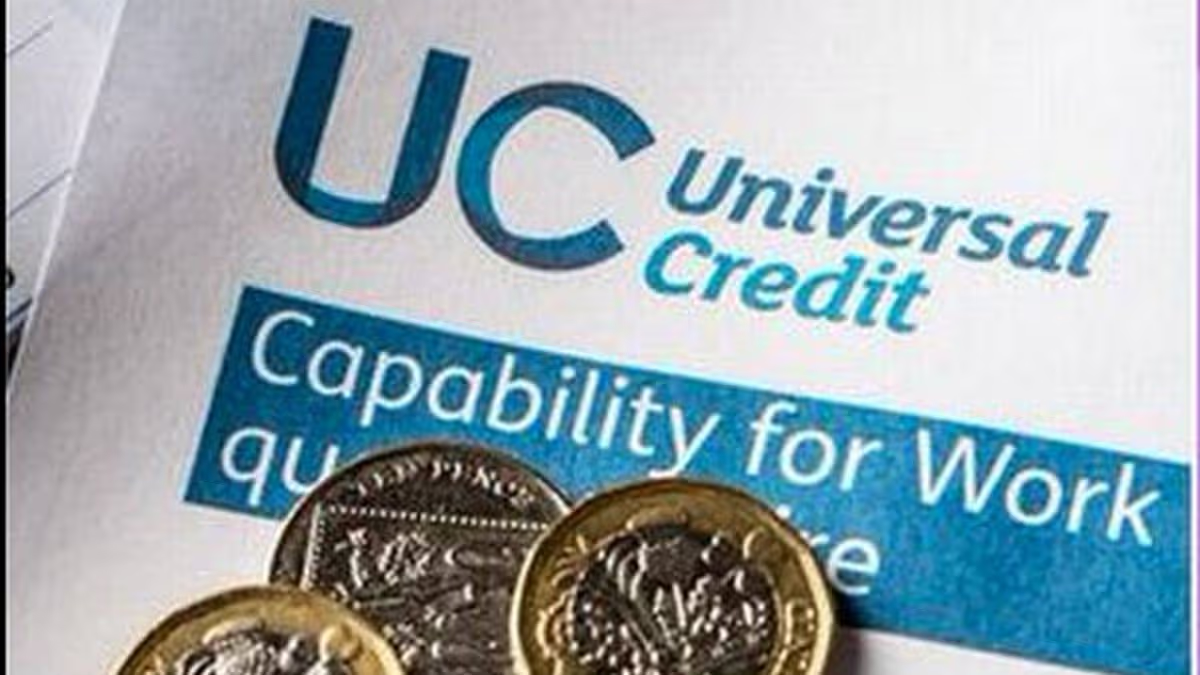
Universal Credit savings limit rules all claimants should know

Published

on

Cambridgeshire Live

New DWP guidance explains how Universal Credit claimants with savings over £6,000 could see their payments reduced, and what capital may be temporarily disregarded

Universal Credit is a means-tested benefit, meaning the amount a recipient receives is determined by their financial situation, including earnings, savings and other capital. Under Department for Work and Pensions (DWP) rules, those with savings exceeding £16,000 are generally ineligible for Universal Credit.

Furthermore, savings above £6,000 can reduce the monthly amount someone receives. Guidance on GOV.UK states that if a claimant or their partner holds between £6,000 and £16,000 in savings or capital, their Universal Credit payments will be incrementally reduced.

Advertisement

The DWP treats every £250, or part of £250, above the £6,000 threshold as generating monthly income which reduces a claimant’s award.

Savings and capital can include:

money held in bank or building society accounts

cash savings

Advertisement

ISAs

premium bonds

lump sum payments

inherited money

Advertisement

some investments

Joint savings held with another person may also be taken into account as part of a Universal Credit claim, reports the Daily Record.

Those claiming Universal Credit are required to report any changes to their savings via their online Universal Credit account. Failing to report changes promptly could result in overpayments which may later need to be repaid.

Certain forms of capital may be disregarded for a period of time under DWP rules. For instance, compensation payments, insurance payouts or money from the sale of a home may occasionally be temporarily discounted depending on individual circumstances.

Advertisement

Specific pension savings may also be exempt while someone is below State Pension age and has yet to begin drawing from their pension pot. Universal Credit is intended to assist those on a low income, out of work, or unable to work with their everyday living costs. Newly released figures from the DWP, published on Tuesday, reveal that 8.3 million people are currently claiming the benefit.

The sum an individual receives may also vary depending on housing costs, childcare expenses, health conditions and whether they have dependent children.

Those uncertain about how savings or lump sum payments might affect their Universal Credit claim are encouraged to consult the latest guidance on GOV.UK, or seek benefits advice from non-profit organisations such as Citizens Advice or Turn2Us.

Further details regarding Universal Credit savings and capital rules can be found through GOV.UK[dot].

Advertisement

Source link

Continue Reading

NewsBeat

Case to be dismissed against Republicans charged with trying to undo Trump’s 2020 Arizona loss

Published

on

Case to be dismissed against Republicans charged with trying to undo Trump’s 2020 Arizona loss

PHOENIX (AP) — Arizona Attorney General Kris Mayes is dismissing a sprawling criminal case that alleged President Donald Trump’s former chief of staff Mark Meadows, former New York City Mayor Rudy Giuliani and others tried to overturn Trump’s 2020 loss in the state.

The decision announced Thursday marks the third such fake elector case filed by states to be dismissed, though the Democratic attorney general is vowing to bring it back to a grand jury in hopes of securing another indictment.

The legal maneuver is aimed at getting around a Friday deadline for starting new grand jury proceedings after Mayes lost an appeal earlier this month. The appeal was filed after defense attorneys argued successfully that the original grand jury hadn’t been shown the relevant parts of a law that governs how presidential contests are certified.

“This case is complex and will require substantial presentation of evidence and time to accommodate defendants’ request to testify and present evidence,” prosecutors wrote, explaining the new presentation of the case to a grand jury won’t happen by the deadline. Mark L. Williams, an attorney for Giuliani, said his client and the others charged in the case did nothing wrong and were only exercising their rights to free speech and to petition the government.

Advertisement

“This action was brought to punish Mr. Giuliani and the other Republican defendants for exercising their constitutional rights,” Williams said. “It’s appropriate that it’s being dismissed.”

Kelli Ward, the state GOP’s chair during the 2020 election season and one of the 18 defendants in the case, wrote on social media that Mayes had damaged the reputations and finances of those charged and “certainly seems unwilling to admit her overreach & put this behind us. She wants to keep persecuting her political opponents.”

Mayes’ office has declined to comment on Ward’s criticism.

Courts have dismissed similar cases in Michigan and Georgia, and a special prosecutor dropped a federal case in late 2024 that charged Trump with conspiring to overturn the 2020 election. Those cases ended after Trump defeated Democratic Vice President Kamala Harris in 2024. Cases related to the fake elector scheme remain in Nevada and Wisconsin.

Advertisement

The Nevada charges were dismissed in 2024 after a judge concluded Clark County, the state’s most populous county and home to Las Vegas, was the wrong venue for the case. Later that year, though, the case was refiled in Carson City, Nevada’s capital.

The Arizona case had been stalled for well over a year while Mayes pursued the appeal.

In Arizona, defense lawyers argued the law allowed for multiple slates of electors to be submitted to Congress in case the results were disputed. Federal law was amended in 2022 to specify that any given state could put forward only one slate of electors and that state governors are responsible for signing off.

Joe Biden won Arizona in 2020 by 10,457 votes.

Advertisement

The state attorney general has faced steep challenges in making her case.

It was filed nearly three and a half years after the 2020 election and levels complicated conspiracy charges against the 18 defendants. A dozen dismissal requests filed by defense attorneys have slowed progress in court.

The first judge on the case recused himself in late 2024 after an email surfaced in which he told fellow judges to speak out against attacks on Harris’ campaign for the presidency. The next judge ordered the case to be sent back to a grand jury.

Of the 18 Arizona defendants, two were former Trump aides, five were lawyers working for Trump and 11 were Republicans who submitted a document falsely claiming Trump won Arizona.

Advertisement

Three defendants have resolved their cases, including one who pleaded guilty to a misdemeanor charge.

The rest pleaded not guilty. Some said they signed the certificate in case Trump won court challenges and a new slate of electors was needed urgently before Congress’ Jan. 6 deadline to tally votes.

The case has factored into Arizona’s attorney general race, where both Republicans vying to challenge Mayes in the Nov. 3 general election have publicly said they would dismiss the charges if they were elected to the post. Mayes is running unopposed in the July 21 primary.

Mike O’Neil, an Arizona pollster and political analyst, said he believes Mayes would face criticism from Democrats if she had decided to abandon the case altogether. “People who are upset about this aren’t the people who would vote for her anyway,” O’Neil said.

Advertisement

Source link

Advertisement
Continue Reading

NewsBeat

Demolition plan revealed for Willington leisure centre

Published

on

Demolition plan revealed for Willington leisure centre

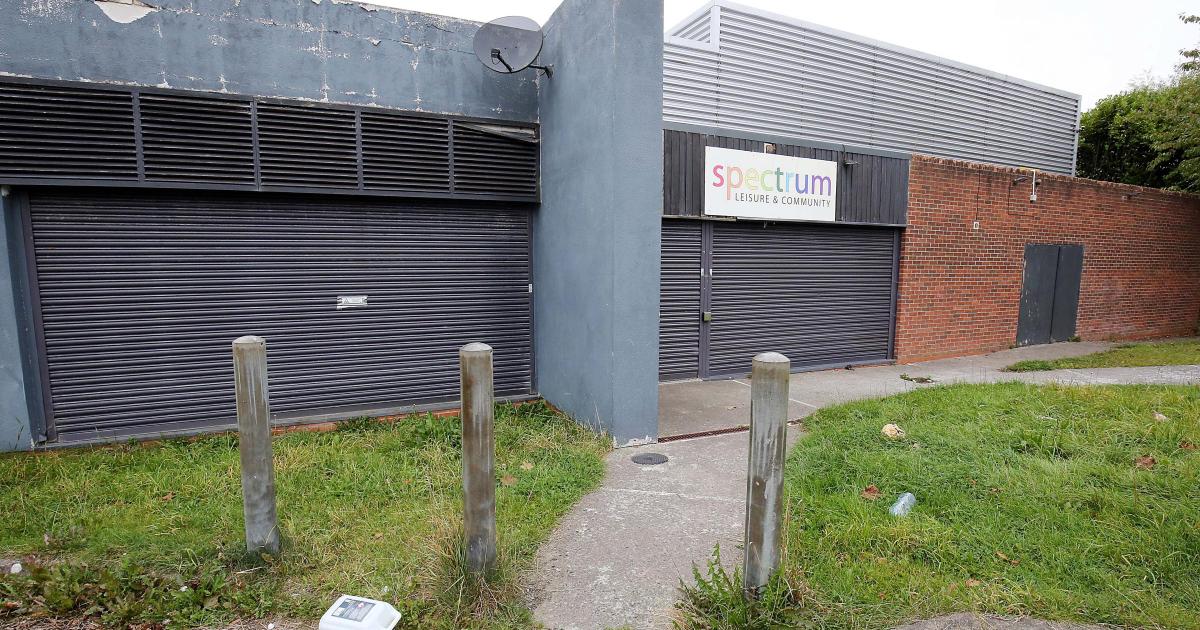
Durham County Council has ruled more information is needed on plans to flatten the former Spectrum Leisure Complex in Willington. 

The facility closed in August 2024 and was later damaged following an arson attack and repeated anti-social behaviour. 

Under plans submitted to the local authority, the entire building is set to be demolished and the site cleared for potential future development. 

(Image: Paul Norris)

The leisure centre was opened in 1982 by the Wear Valley District Council and previously included a dry ski slope, which was ceremoniously opened by Franz Klammer – the then-reigning downhill world champion. 

Advertisement

A BMX track was later built after the site was saved from closure by Ian and Alison Hirst, who formed the Slam Community Development Trust.

But it closed in August 2024 after the company in charge of the site was issued a winding-up order by the High Court.

Slam, a private operator, said the closure was “due to circumstances currently beyond our control with regard to both internal and external issues”.  

The closure was described as a “huge loss” to the community in 2024, despite the condition of the building rapidly declining. 

Advertisement

A planning report states that the building is of no historic or aesthetic value.

Documents submitted as part of the proposal add: “The proposed restoration scheme would ensure the site would be left in a clean and tidy state in preparation for potential future redevelopment. As such, it is considered that the scheme would not unacceptably harm the visual amenity of the area.”

But the local authority said more information on the demolition plan is needed. 

“On the basis of the details submitted, it is considered that insufficient information has been provided to enable the local planning authority to fully assess the proposed method of demolition in relation to the impact upon protected species and trees within close proximity to the building. As such, prior approval is required and refused,” a decision ruled. 

Advertisement

Source link

Continue Reading

Trending

Copyright © 2025