Spotify has launched Reserved by Spotify, a ticketing feature that holds concert tickets for Premium subscribers based on their streaming habits. The service runs on a multi-year exclusive deal with Live Nation, with Ticketmaster processing all transactions.
Spotify on Wednesday launched Reserved by Spotify, turning the concert ticketing concept it unveiled last month into a live product. The feature automatically holds up to two concert tickets for Premium subscribers based on their listening habits, making Spotify the first audio streaming platform to offer dedicated pre-sale ticket access.
Advertisement
The first artist to participate is indie-pop singer Role Model, according to Music Business Worldwide. Eligible fans will receive notifications with a roughly 24-hour purchase window opening on 23 June.
How it works
Reserved analyses a subscriber’s streaming data, including how often they listen to an artist, how long they have followed them, and whether their behaviour appears organic rather than bot-driven. There will reportedly be more superfans than available seats for any given tour, so not everyone who qualifies will receive an offer.
The 💜 of EU tech
The latest rumblings from the EU tech scene, a story from our wise ol’ founder Boris, and some questionable AI art. It’s free, every week, in your inbox. Sign up now!
Advertisement
The tickets come from a dedicated inventory that is not carved from any other presale pool. Spotify is positioning this as an alternative to the bot-infested public sale process that has frustrated concertgoers for years.
Location also matters. Spotify checks that a user is near a show before extending an offer, filtering out fans who are unlikely to attend.
The Live Nation deal
Reserved runs on a multi-year exclusive partnership with Live Nation, with all ticket transactions processed through Ticketmaster. Spotify is reportedly paying tens of millions of dollars for the exclusivity, outbidding Apple and Amazon, according to Bloomberg.
The exclusivity means Reserved only covers shows promoted by Live Nation, not all concerts. Spotify itself collects no fees on ticket sales, betting instead that tying concert access to Premium subscriptions will reduce subscriber churn.
Spotify says it monitors for bot activity and artificial listening patterns, and will not reward users who inflate their play counts through passive or automated streams. The company has not disclosed the specific thresholds or algorithms it uses to distinguish genuine fans from gamers of the system.
Spotify has previous form in policing its platform for fraudulent activity, having removed hundreds of thousands of AI-generated songs over suspicious listening patterns. Reserved applies a similar detection philosophy to ticketing, treating organic fandom as a credential that unlocks real-world access.
What it means for artists
For artists, Reserved offers a way to ensure their most engaged fans get into the room rather than scalpers. Spotify’s relationship with musicians has been contentious, particularly over royalty payments, but a feature that directs concert revenue toward performers could shift the dynamic.
Advertisement
The feature is US-only at launch, with no confirmed timeline for international expansion. Whether Reserved can meaningfully dent the secondary ticketing market will depend on how many artists and tours opt in, and whether Live Nation’s competitors build their own streaming-linked presales in response.
Disclaimer: Unless otherwise stated, any opinions expressed below belong solely to the author.
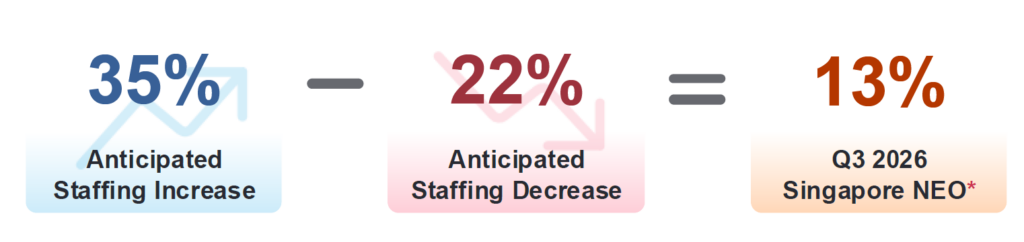
Employment situation in Singapore remains positive, although the job market is showing signs of cooling in yet another report. According to the latest Q3 release by ManpowerGroup Singapore, the Net Employment Outlook index fell to just 13%, which is the lowest reading since 2022.
NEO is measured as a simple difference between the share of companies anticipating an increase in hiring and those which are expecting cuts.
Image Credit: ManpowerGroup
Of course, as ever, these are only averages, and your situation is going to depend not only on specific industry but also the type and size of company you’re either working for or are interested in.
Manufacturing leads the ranking, which is not a surprise given the impact that AI has had on demand for locally made electronics and semiconductors.
Advertisement
Almost all other industries have suffered precipitous drops, however.
*Hospitality & Utilities reflect numbers collected from very small samples, so they may not be statistically strong./ Image Credit: ManpowerGroup
While the IT sector is stable and quite strongly positive, it is not immune to layoffs—like the recent round just announced at Shopee.
Meanwhile, Finance & Insurance dipped into negative territory after losing 13 points. It would appear that some of the most lucrative jobs in Singapore might be harder to find this quarter.
It may be compounded by the fact that many of the companies in the sector employ thousands of people.
Image Credit: ManpowerGroup
Yes, you read that right: the NEO score for companies of 5000+ employees and over is negative 26%, after dropping 29 points. Put simply, more large employers are planning workforce reductions than new hires.
This is an alarmingly low reading, especially compared to the global average of a positive 24%.
Advertisement
In fact, all companies employing 50 pax or more are reporting a significant drop in hiring sentiments, although no other group sank into negative territory.
Meanwhile, hiring appears to be booming at the bottom end, with a net positive of 42% for businesses under 10 employees and 34% for those over 10 but under 50. Both have also recorded strong positive swings ahead of Q3, defying the negative sentiments of larger businesses.
This is unlikely to bring comfort to those wary of potential layoffs at the biggest employers, since smaller businesses are rarely able to match the pay and benefits, unless, perhaps, for the lowest-paid roles.
Image Credit: ManpowerGroup
Compared to 2025, Singapore’s employer sentiments have worsened moderately, at -11 points. The worst performer globally is UAE, which shouldn’t be a surprise given the fallout from the war with Iran which has disrupted local business and led to flight of thousands of people, with currently no established date of return to normalcy.
But not all is bad in the world, as UK, US or Sweden are reporting decently positive attitudes (among the developed nations) despite the geopolitical turmoil.
Advertisement
That said, all of them are grappling with much higher unemployment rates than Singapore (currently around 3% for residents), with the US at 4.3%, UK at around 5% and Sweden at a whopping 8.7%. Perhaps this explains why more companies are expecting their headcounts to increase soon, whereas Singapore is quite known for suffering quite persistent shortage of talent.
Read other articles we’ve written on Singapore’s current affairs here.
In a system serving nearly 1 million students across more than 1,800 schools, the distance between a central office cubicle and a second grade classroom in New York City Public Schools can feel immense — yet they are inextricably linked. When the central office works, schools get the resources and support they need. When it does not, the friction and challenges can ripple directly into classrooms.
Supporting that system requires thousands of central office staff whose work rarely makes headlines but directly shapes how schools function, from budgets to policies to resource allocation. Recently, the district tried something unusual: offering executive coaching — including human- and AI-powered options — to those behind-the-scenes employees.
Tracie Benjamin-Van Lierop
Executive Director, Organizational Development, Talent and Culture, NYC Department of Education
The move came as staff navigated shifting priorities and persistent uncertainty in the years after the pandemic, raising questions about how best to provide a stable foundation for schools. Through a partnership with the digital coaching and workforce development company BetterUp, central office staff are developing skills such as agency, agility and clarity — capabilities district leaders see as essential to sustaining and stabilizing the nation’s largest school system.
Advertisement
EdSurge spoke with Tracie Benjamin-Van Lierop, New York City Public Schools’ executive director of organizational development, talent and culture, about what this coaching looks like in practice and why investing in the people outside the classroom supports the success of the people inside it.
EdSurge: What was the climate like for central staff before coaching began?
Benjamin-Van Lierop: Coming out of the pandemic, there was a lot of uncertainty. I would say the biggest challenge was feeling seen.
A lot of focus is rightfully on supporting school-based staff, but the people behind the scenes — the ones making sure schools run smoothly — also need development and support.
Advertisement
How did you view coaching at first?
At first, my schedule was just crazy, and I thought, “This is just one more thing I have to do.” One colleague attended the orientation, came back excited and said, “I think this is something we should really look into.” I tried one session, then a second, and three years later, I’m with the same coach.
A lot of focus is rightfully on supporting school-based staff, but the people behind the scenes — the ones making sure schools run smoothly — also need development and support.— Tracie Benjamin-Van Lierop
Sometimes coaching can be seen as punitive — maybe that isn’t the right word — but it’s like it’s there to fix something, and that’s not what I wanted. I wanted us to see coaching as a lever to improve the culture in the organization. We want people who want to work here, and if the environment has room for improvement, we want to hear that.
Advertisement
What shifts have you seen in how people approach coaching?
One person’s story was very similar to mine. They kept hearing colleagues talk about their positive experiences with coaching and said, “Let me try it out.”
They tried it and ended up getting a promotion because they learned to speak up in a respectful way. A lot of that newfound confidence and professionalism came from role-playing with their coach. Role-playing felt like a safe way to prepare for difficult conversations. That person said, “I don’t know that my supervisor would have seen me in the light that they see me in now had I not been able to do those role-play activities with my coach.”
Other signs of success are easy to see: People vote with their feet. If they did not want to continue, they wouldn’t. We’ve gone from “This is something that I have to do,” to “This is something I want to do.”
Advertisement
This affects the work itself. We’re seeing stronger work products and stronger connections between offices and schools as we develop a clearer understanding of why we do this work.
Employee Resource Group (ERG) leaders were among the first central-office staff invited into the coaching pilot. Several describe it as an important source of support as they work to amplify employee voice and strengthen culture across the system. Because ERG leadership is layered on top of full-time roles, coaching has offered space for reflection and skill-building in a complex and demanding environment. The benefits carry into the teams and schools they serve.
How does AI coaching fit in alongside human coaching?
It depends on comfort level and sometimes generation. I’ve tried my AI coach and thought, “No, thanks. I need a human.” But some of our [younger] leaders choose AI because that’s their comfort level. One colleague will only do role-plays with their AI coach because they feel it’s a safe, nonjudgmental space.
Advertisement
I wanted us to see coaching as a lever to improve the culture in the organization. We want people who want to work here, and if the environment has room for improvement, we want to hear that.— Benjamin-Van Lierop
At the end of the day, if that tool is supporting what is happening in schools, then it’s helpful. I see that as an area that will continue to grow.
How has coaching shaped your own leadership?
It has changed me — or I would say transformed me — in a holistic way. It’s not just at work; it has transformed my whole approach to decision-making, my sense of impact and my intentionality.
Advertisement
It has also made me a more curious leader. Sometimes I make judgments based on a story I’ve created in my head, and that story may not be true. I’ve learned to recognize that tendency and ask, “How am I getting to the heart of the matter?” Nine times out of ten, when I take that curious stance, it elevates the work in ways I wasn’t able to three and a half years ago.
What advice would you give to districts thinking about coaching?
First, make it voluntary. Coaching can be seen as, “You’re getting a coach because you’re not doing your job well,” but that’s not what it is. People who opt in often become the biggest supporters later.
Second, coaching requires effort. It’s not just about meeting for 45 minutes. It’s a partnership — a two-way street — and you have to put in the work. It won’t work if you don’t.
Advertisement
Third, really use the data from your coaching partner to track progress and refine your approach.
Coaching is often seen as a nice-to-have, and I understand that, especially with all the demands right now. But this is an investment in your people. If your people are going to do the job well, they need to feel invested in, and this is one of the best investments I’ve experienced in my career.
This article was sponsored by BetterUp and produced by the Solutions Studio team.
Once you’re done with your smartphone, it either ends up in a drawer, on the growing second-hand market, or perhaps in a recycle bin. However, it’s a computer and, when combined with others like it, can offer real processing power.
Computer scientists at the University of California, San Diego, working in collaboration with Google, plan to deploy a rather unusual compute cluster built not from conventional servers, but using 2,000 retired phones.
The goal is to demonstrate how these devices might continue to serve as a low-cost, low-carbon computing platform after their original owners have abandoned them for a shiny new widget to doomscroll TikTok on.
“The project was the brainchild of Jennifer Switzer, a former PhD student at UCSD who is now working on a post-doc at Google,” Ryan Kastner, an associate professor of computer science at UCSD, told El Reg.
Advertisement
In particular, UCSD will be using 2,000 Pixel Fold smartphones courtesy of Google.
Google estimates that the average person upgrades their phone every four years or so. While the physical device and battery may show some wear and tear from their years of service, their core computing functionalities remain intact.
“It’s just a vast amount of sort of thrown away compute and recycling is a terrible option for most of these smartphones,” Kastner said, adding that Switzer started by building a couple of small clusters using smartphones to prove the concept. Since then, the project’s scale has grown considerably.
According to the Chocolate Factory, the motherboard represents about 50 percent of the smartphone’s embodied carbon.
Advertisement
A lot of early testing used unmodified smartphones, Kastner noted, but as the team quickly learned, this wasn’t practical or safe. “In some early meetings with Google, their engineers said that, if you’re going to put these in the datacenter, those batteries are no-go — a lot of things are a no-go — because they’re just fire hazards,” he said.
Some of this work was done by researchers, including Switzer and another UCSD computer science prof Patrick Pannuto, but for the full deployment this fall, Kastner said, Google is working with a third party to extract the phones’ motherboards from their cases.
Once the phone’s motherboards have been extracted from their shells, the researchers say that the chips hiding within remain more than potent enough to be useful for a variety of tasks.
In many cases, the single-threaded performance of these chips is as good as, if not better than, what you’d find from a many-cored datacenter chip.
Advertisement
The Pixel Fold smartphones, which will form the basis of the cluster, are powered by a Google Tensor G2 processor with two 2.85 GHz Cortex-X1, two 2.35 GHz Cortex-A78 and four 1.80 GHz Cortex-A55 Arm cores, a Mali-G710 MP7 GPU, and 12 GB of system memory.
Early benchmarking using the SPEC suite suggests that 25-50 phones should deliver performance similar to that of a conventional server.
The major challenge, instead, is distributing workloads across multiple devices, each of which has a handful of cores of one or more varieties, and most have 8-12 GB of memory.
UCSD researchers are approaching this challenge from a couple of different angles. The first is by targeting applications that can easily fit within a single device. The second is using Kubernetes to orchestrate container deployments across clusters of 25-50 phones.
Advertisement
For this to work, the devices first need to be flashed with a Linux operating system suitable for the job. While Android makes for a great handheld experience, it is not intended for server duty. In the blog post, researchers note that Android includes functionality intended to stop rogue applications from chewing up excessive amounts of memory and draining your battery. In server context, these safety mechanisms are no longer necessary.
Kastner told us this was by no means an easy task, but the team has made steady progress toward getting Linux running smoothly on these devices, including support for the phone’s onboard GPUs. Access to some functionality, like the chip’s integrated tensor processing unit, remains elusive.
Clustering these devices will require networking the phones together. Normally these devices would connect over cellular or Wi-Fi, but at this scale, this not only isn’t practical, but also has implications for security, he explained. Instead, the team will employ PCBs that both supply power and break out wired Ethernet networking.
The researchers suggest that many EdTech, grading, and research workloads commonly run by universities in the cloud are small enough to run on the cluster without issue.
Advertisement
“The vast majority of these applications are within the capabilities of a single smartphone to host, with the standard grading backend running on small cloud instances,” a blog post detailing the planned deployment reads. “Early experiments show that even a moderately-sized cluster of 20 phones is capable of supporting peak submission rates for a 75+ student class.”
“A lot of the sort of function as a service workloads seem to make a whole lot of sense, because they’re sort of sporadic, and don’t need a whole lot of high-performance compute,” Kastner said.
Alongside traditional IT applications, the cluster will also support exploration into parallel computing and systems programming, which sounds an awful lot like the smartphone equivalent of the Beowulf clusters of the ‘90s, which saw researchers cobble together supercomputers from consumer PCs.
UCSD is also home to the San Diego Supercomputing Center. Kastner told us the plan is to make the cluster available to teams working at the center, which suggests we could see a High-Performance Linpack run before long.
Advertisement
The full smartphone cluster is expected to launch this fall. Depending on how well the initial phase goes, we’re told the cluster could grow even larger.
This is far from the only unorthodox cluster we’ve seen in recent memory. Just up the Pacific coast from San Diego, UC Santa Barbara deployed what at the time was the largest Raspberry Pi cluster ever.
The system, built in collaboration with Oracle, featured 1,050 Raspberry Pi 3B+ single board computers.
More recently, we came across a tiny cluster developed by Gigabyte that packed 40 Intel Lunar Lake notebook processors, each with eight cores and 32 GB of memory, into a system the size of a pizza box. ®
You’re not limited to using Samsung pay just because it’s a Galaxy Watch
Samsung
Yes, you can tap your Samsung Galaxy Watch to pay for purchases and transportation with cards saved on your Google Wallet. You just have to set it up and make sure you meet a couple of criteria. First, both Google Wallet and its tap-to-pay capability must be available in your region. They’re already supported in the US, and you can check Wallet’s help page to see if they’ve already rolled out to your location.
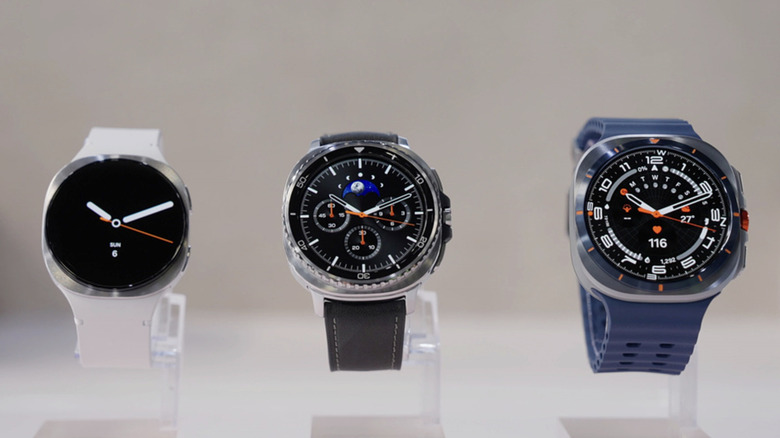
Second, your Galaxy Watch must be running Wear OS version 2.0 or newer, which puts Samsung’s Tizen-powered Galaxy Watch 1, 2 and 3 models out of the running. If you have a Samsung Galaxy Watch 4 or a later model, go ahead and follow our instructions below. To check if you have a supported device, swipe down on your smartwatch, go to Settings and then tap “About watch.” From there, you can find its Wear OS version under “Software information.”
How to install Google Wallet on your devices
On your Galaxy Watch, swipe up to access your apps drawer and fire up the Play Store. Search for Google Wallet and install it on your wearable. -If you don’t have a lock screen yet, you’ll be prompted to set it up. You can choose between Pattern and PIN. A screen prompting you to check your phone will pop up on your watch as the Wallet apps between devices sync. If you choose PIN, tick “Unlock without tap after PIN entered” so you don’t have to tap an OK button or a check mark every time you key in your your PIN.
Do the same thing on the Android phone linked to your watch. Simply download and install Google Wallet from the Play Store.
Screenshots by Mariella Moon (Samsung)
How to add a payment method to your Samsung Galaxy Watch
Tap the “+” tile on your Galaxy Watch and check the Wallet app on your phone to add a payment card.
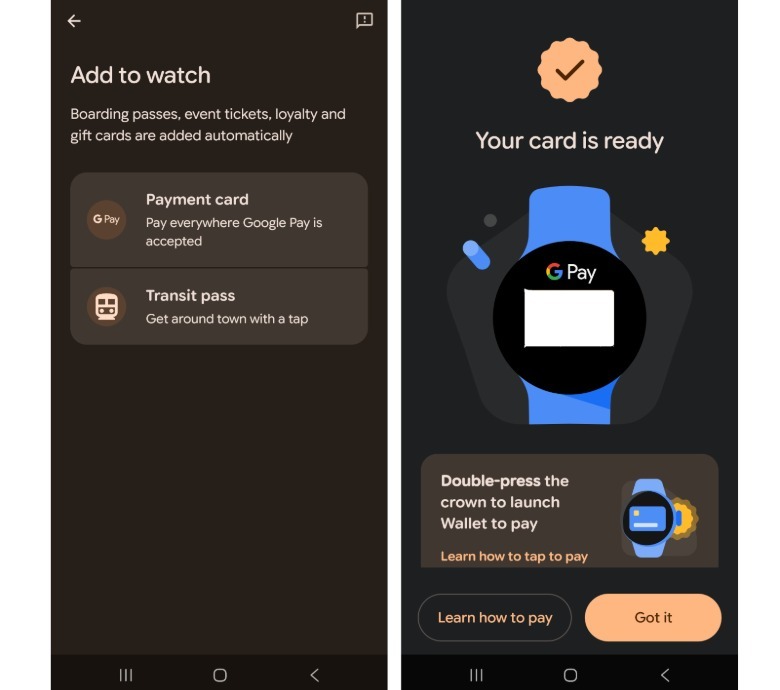
In the “Add to Watch” screen on your phone, you can see the option to add a card.
Here, you can choose one of the cards you’ve previously saved on Google Play for subscriptions or in-app purchases. The Wallet app will ask for some of the card’s details for confirmation, such as its CVV, expiration date or the cardholder name
You can also add a new credit or debit card. If you choose this, you can either scan the card to automatically extract its information or type its details manually.
After choosing or adding a card, the Wallet app will confirm with your bank whether you can use that particular card for Tap to Pay. Not all cards and banks support the capability. You can check out Google’s website for all supported cards and banks in the United States. If you’re not in the US, simply choose your region in the drop-down menu.
Once you’ve linked a supported card, you’ll see a screen on your phone’s Wallet app telling you that your card is ready. It also links to instructions on how to use the tap-to-pay feature.
On your Galaxy Watch, you’ll now see the card you’ve added in the Wallet app. The first card you add will be your default card for tap-to-pay purchases, but you can change it by tapping on your card of preference and choosing “Make default.”
How to use Tap to Pay for purchases
You can only pay without having to unlock your smartwatch if you have a Pixel Watch 2 or a newer Pixel device.
On a Galaxy Watch, you will have to unlock your device, open the Google Wallet app, turn your wrist and then hold the face of the smartwatch close to the card reader. You have to do the same for public transportation, but the reader at the gate or entrance must of course support Tap to Pay.
You will know if the payment is successful if your smartwatch vibrates, makes a sound and shows a blue checkmark on its screen.
Take note that you can pay with a non-default card: Just swipe up to the card you want to use on your watch’s Wallet app and wait for “Hold to reader” to show up.
If you’re in Japan…
In Japan, Google Wallet also supports Suica and PASMO prepaid IC cards. However, you can only use them with smartwatches purchased in Japan, since those devices support Sony’s FeliCa contactless technology.
For Samsung, the models that support FeliCa are the Galaxy Watch 6, Galaxy Watch 6 Classic, Galaxy Watch 7, Galaxy Watch 8, Galaxy Watch 8 Classic and Galaxy Watch Ultra.
To add a Suica or PASMO card, tap “Add” in the Wallet app on your watch and select one. You can also add money to the prepaid cards from within the application.
Looking for the most recent Mini Crossword answer? Click here for today’s Mini Crossword hints, as well as our daily answers and hints for The New York Times Wordle, Strands, Connections and Connections: Sports Edition puzzles.
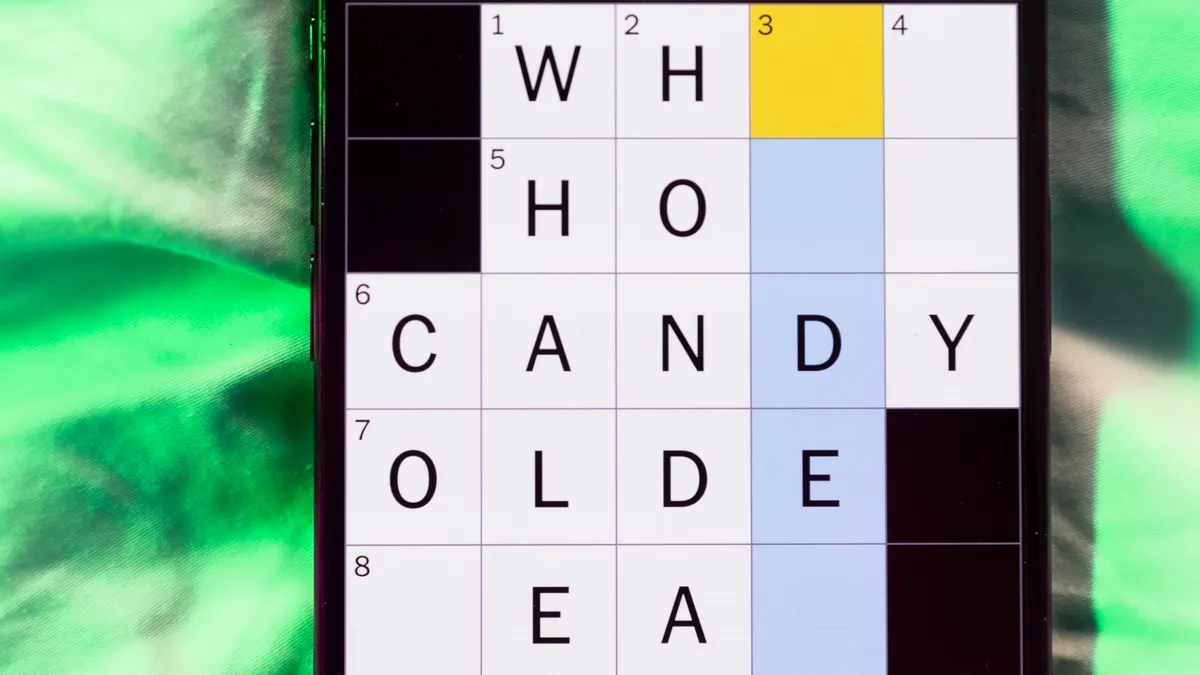
Need some help with today’s Mini Crossword? A couple of the clues were tricky today. Read on for all the answers. And if you could use some hints and guidance for daily solving, check out our Mini Crossword tips.
If you’re looking for today’s Wordle, Connections, Connections: Sports Edition and Strands answers, you can visit CNET’s NYT puzzle hints page.
As India cut off access to messaging app Telegram for a week over concerns about exam-related fraud, users turned to virtual private networks (VPNs) and alternative messaging apps in unusually large numbers.
App intelligence firm Appfigures told TechCrunch that Tuesday, the day India announced the Telegram restriction, marked the biggest day for VPN app downloads in the country since at least the start of 2025. Downloads of major VPN apps rose 49% from a recent daily average of 139,000 to 208,000, the firm said.
Proton VPN and Turbo VPN recorded some of the largest increases. Downloads of Proton VPN on Apple’s App Store in India jumped 113%, while Turbo VPN downloads rose 85%. On Google Play, downloads of Proton VPN climbed 64% and Turbo VPN downloads increased 35%. NordVPN’s App Store downloads increased 41%, while ExpressVPN downloads on Google Play rose 31%.
The surge also pushed several VPN services up India’s app-store charts. Proton VPN climbed from 18th to 5th in Apple’s Utilities rankings between June 16 and June 18, while its Google Play ranking rose from 8th to 2nd in the Tools category, according to Appfigures.
Advertisement
The spike in VPN demand followed India’s decision to temporarily restrict Telegram until June 22 over concerns that fraudsters were using the platform to target candidates ahead of a re-test for the National Eligibility cum Entrance Test (Undergraduate), the country’s largest entrance examination by applicant volume. The Indian government said the measure was needed to prevent the spread of fake exam papers and related scams. Telegram has challenged the order in the Delhi High Court, arguing that authorities should target specific content rather than block the entire platform.
The response extended beyond app-store download data. Proton said daily registrations from India rose 120% above baseline levels on Wednesday, after hourly registrations had already spiked 150% on Tuesday evening following the Telegram restriction. The company described the increase as “extremely noteworthy” given its existing scale in the country.
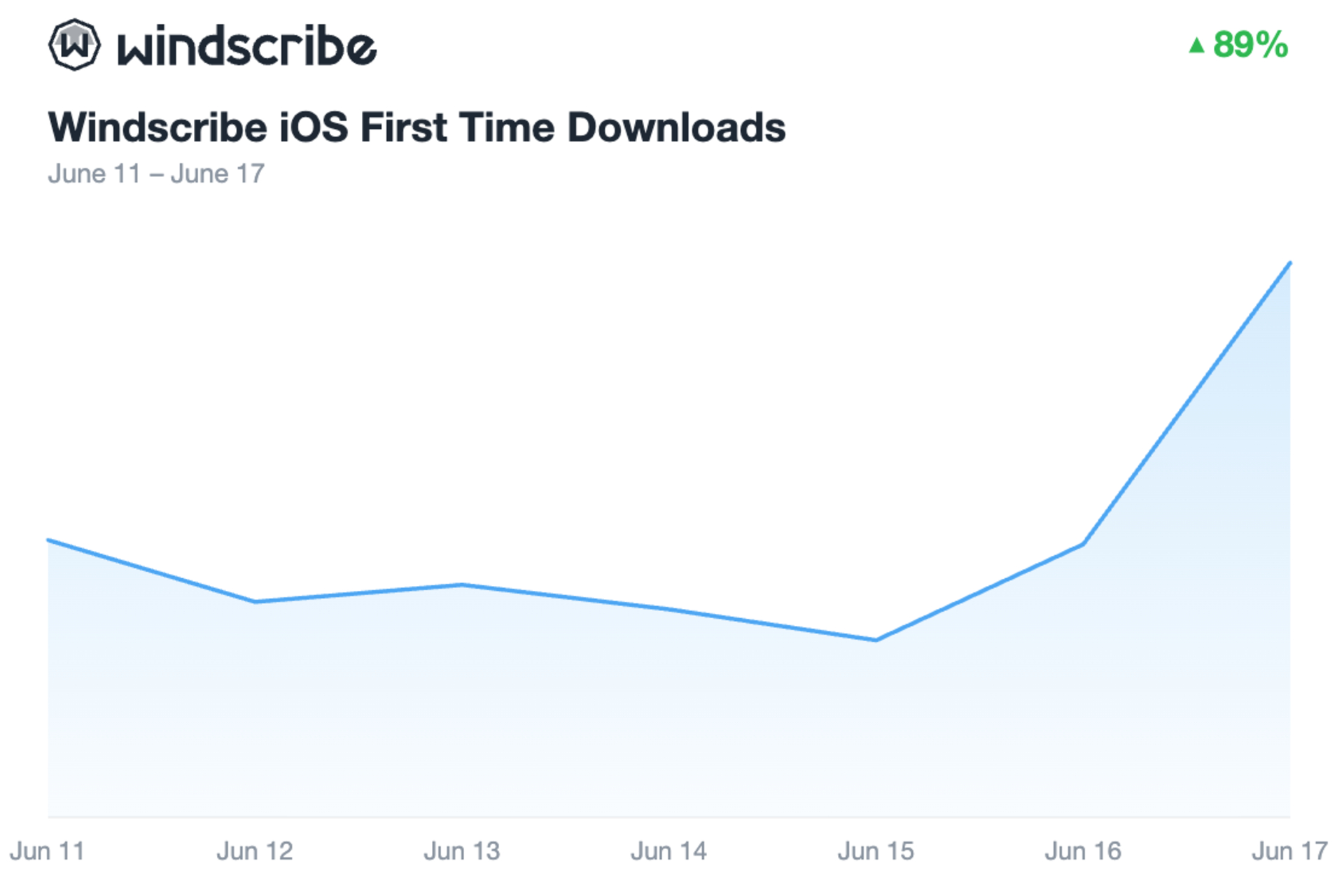
Canadian VPN service provider Windscribe reported a similar trend. The company told TechCrunch that signups from India peaked roughly 100% above baseline levels, while first-time downloads of its iOS app in the country rose about 89%.
“The spike in India follows the same general trend we see in areas that ban specific apps, introduce age bans or verification requirements, or otherwise restrict internet access,” Rebecca Rosenberg, growth operations manager at Windscribe, said.
Advertisement
Image Credits:Windscribe
The trend was not limited to a handful of VPN providers. Sensor Tower told TechCrunch that downloads across the VPN app category in India rose 10% day-over-day on June 17, reversing a decline seen over the previous two weeks.
Users also appeared to be exploring alternatives to Telegram. Appfigures said downloads of Signal in India rose 72% on Apple’s App Store and 322% on Google Play following the restriction, while Viber’s App Store downloads increased 216%.
Telegram-linked messaging app iMe recorded one of the sharpest jumps. Its Google Play downloads rose from a recent daily average of about 827 to 50,900 on June 16, Appfigures said.
Yet the restriction did not immediately translate into lower Telegram usage. Sensor Tower said Telegram’s daily active users in India rose 17% on the day the measure was announced — the app’s largest day-over-day increase in the country since a widespread outage of Meta’s services in 2021.
Other data points also suggest heightened efforts to access Telegram following the restriction.
Advertisement
Cloudflare Radar Lead Lai Yi Ohlsen told TechCrunch that DNS requests for Telegram domains in India increased sharply over the two days after the measure was announced. The company cautioned that higher DNS traffic does not necessarily indicate successful access to the platform, and could reflect users repeatedly attempting to reach Telegram after it was blocked.
Image Credits:Cloudflare
Telegram pointed to its efforts to cooperate with authorities during hearings in the Delhi High Court this week. Its lawyers said the company had removed channels identified by authorities and questioned the need for a platform-wide restriction affecting what Telegram says are over 150 million users in India.
Government lawyers defended the measure as a temporary, event-linked response tied to the NEET re-test. Solicitor General Tushar Mehta told the court that a permanent ban could raise proportionality concerns but argued the current restriction had a “logical nexus” to the objective being pursued.
After hearing arguments from Telegram and the government on Thursday, the Delhi High Court reserved its order and is expected to deliver its verdict on Friday.
The debate echoes questions raised elsewhere when governments restrict access to major online platforms. Sensor Tower said VPN downloads in the U.S. rose more than 40% week-over-week when TikTok was briefly removed from U.S. app stores in 2025, while Windscribe said it has observed similar patterns following restrictions in countries including Iran and Russia.
Advertisement
When you purchase through links in our articles, we may earn a small commission. This doesn’t affect our editorial independence.
After all, pictures are only worth a thousand words.
Instagram just added a long-requested feature. The platform now lets users add unique captions to each carousel slide. Previously, all slides fell under the same caption, which certainly got in the way of telling a coherent multi-image story.
This is accessible via a toggle when tapping the caption area. This way, it’s up to users if they want to put in the extra effort to think of a bunch of new captions.
Advertisement
It’s rolling out right now, but it could take a week or so to reach every Instagram user. This follows an update from a couple of years ago in which the platform doubled the number of photos that can be used in a carousel from 10 to 20. Mixing 20 photos with 20 captions should certainly allow for some novel content.
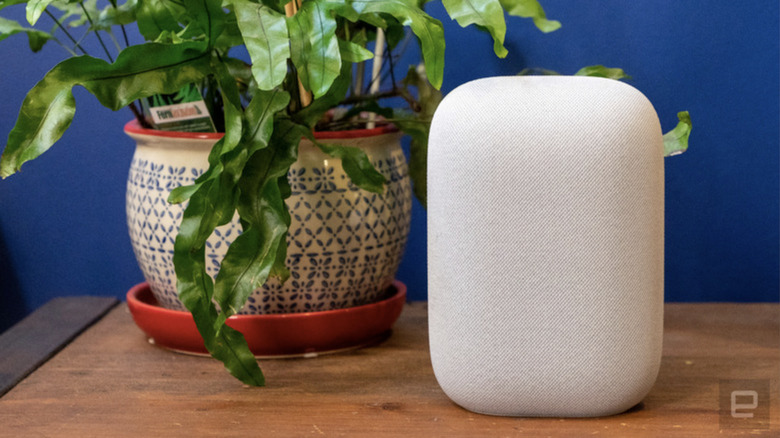
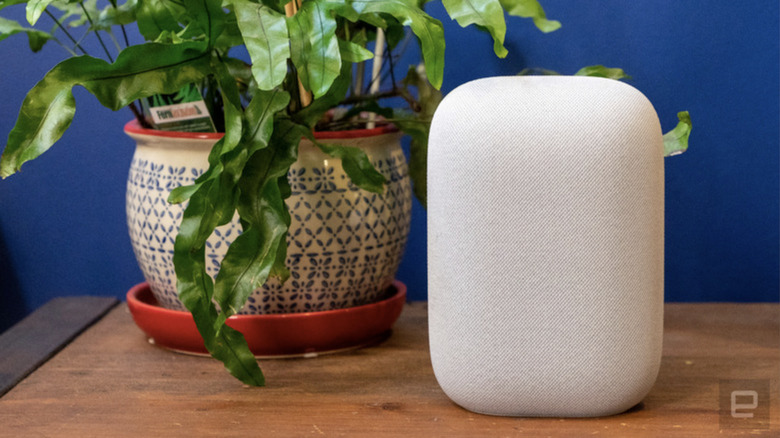
Google just introduced a new smart home speaker yesterday, but the arrival of a new product heralds the end of others. The company has confirmed that it will end production of the Nest Home Mini and Nest Audio. These Nest devices have been on the market for around five years (or longer, if you count 2017’s Google Home Mini) and it seems logical for Google to prioritize the newer generation given the current strategy of putting its Gemini chatbot everywhere it possibly can.
Although the pair of speakers has been discontinued, any of the two smart home products in the wild will remain operational. “Existing Nest Mini and Nest Audio devices will continue to be fully supported with regular software updates, security patches and customer care,” a rep from Google told Engadget. The new Google Home speaker is priced at $100, the same as the outgoing Nest Audio, but significantly more than the Nest Home Mini, which retailed at $50 and could often be found for cheaper.
We spend hours testing every product or service we review, so you can be sure you’re buying the best. Find out more about how we test.
Circular Ring 2: One minute review
The Circular Ring 2 is an ambitious smart ring. On paper, it has almost everything you need. Alongside standard health, recovery and sleep tracking, it offers features you won’t find on many rivals, including electrocardiogram (ECG) readings and atrial fibrillation (AFib) detection. Circular is also promising blood pressure and blood glucose trend monitoring in future updates.
At first glance, it feels like a genuine challenger to the likes of Oura, RingConn and Samsung. The ring itself looks good, feels lightweight on the finger and comes with a charging case, which is a welcome upgrade over the previous Circular model. Battery life is solid too, lasting around six days during my testing.
Advertisement
But unfortunately, the day-to-day experience doesn’t live up to that impressive spec sheet.
Latest Videos From
(Image credit: Future / Becca Caddy)
The biggest issue is the software. Smart rings don’t have screens, which means the app is incredibly important. That’s where the Circular Ring 2 struggles the most.
Advertisement
Syncing regularly took several minutes, occasionally failed altogether and often required multiple attempts. Several times I opened the app to check my data, waited for it to sync, gave up and closed it again.
The app itself feels cluttered and unintuitive. Health data is scattered across multiple screens, navigation can be confusing and the language often feels strangely robotic.
One morning, for example, I was told my sleep was “Incorrect” and the next my wellness summary informed me: “Your sleep was correct. Your energy seems low. Your body and mind are unbalanced.” Rather than helping me understand my health, experiences like this often left me more confused.
Sign up for breaking news, reviews, opinion, top tech deals, and more.
Advertisement
Some of the ring’s most exciting features also failed to impress. ECG and AFib monitoring never fully worked during my testing, while promised blood pressure and glucose tracking features have yet to arrive.
What makes all of this especially frustrating is that when I revisited my Circular Ring Slim review from back in 2024, I found many of the same complaints. The hardware has definitely improved, but the software experience still feels a step behind the competition.
The Circular Ring 2 isn’t a bad smart ring. It has a good design, respectable battery life and an ambitious feature set. But in a market increasingly dominated by the best smart rings from polished competitors like Oura, RingConn and Samsung, ambition alone isn’t enough. Right now, Circular still feels like a company with great ideas struggling to execute them.
Titanium body, hypoallergenic interior with a PVD coating
Battery life
Up to 8 days (power mode); 5 days (performance mode)
Advertisement
Sensors
ECG, PPG, temp sensor, 3x accelerometer
Connection
Bluetooth
Advertisement
Water resistance
Fully waterproof (rating not specified)
(Image credit: Future / Becca Caddy)
Circular Ring 2: Price and availability
Pricing starts at £280 / $349 / AU$497
Rolled out after a Kickstarter release in late 2025 / early 2026
No subscription needed, but premium features expected soon
Rather than arriving as a traditional retail release, the Circular Ring 2 began life as a Kickstarter project in 2025 before gradually rolling out to customers through late 2025 and into 2026.
Pricing starts at £280 / $349 / AU$497 for the black version, rising to £360 / $449 / AU$639 for the silver model I tested. The gold and rose gold finishes sit at the top of the range at £440 / $549 / AU$782.
Advertisement
At first glance, the Circular Ring 2 looks competitively priced. One of its biggest selling points is that it doesn’t require a mandatory subscription to access core features, unlike the Oura Ring 4, which starts at £349 / $349 / AU$534 and also requires an additional monthly membership fee of £5.99 / $5.99
However, the picture becomes a little more complicated when you look closer. Circular is already promoting upcoming premium features, including blood pressure and blood glucose trend monitoring, which aren’t available but are expected soon. The company says these features will either require a subscription or can be unlocked using Circular Coins, which are earned through regular use, but details remain limited and pricing has yet to be confirmed.
Looking across the wider smart ring market, the Circular Ring 2 sits in a crowded middle ground. It’s cheaper than the Samsung Galaxy Ring, which starts at £399 / $399 / AU$699, but more expensive than the RingConn Gen 2 at £299 / $299 / AU$460. There are also budget-focused options now, like the Amazfit Helio Ring, which costs significantly less at £149.90 / $149.99 / AU$269.
The problem isn’t necessarily the asking price here but more that the performance doesn’t justify it. While the Circular Ring 2 undercuts some of the biggest names in the category, like Oura, Samsung and RingConn, they all currently offer a more polished experience. That makes the Circular Ring 2 difficult to view as good value, even before any future premium features are brought into the equation.
Advertisement
(Image credit: Future / Becca Caddy)
Circular Ring 2: Design
Lightweight, slim design
Silver color doesn’t scratch
Nice new charging case included
I liked the design of the Circular Ring 2. The fit was very comfortable throughout testing, even when I was sleeping, and at just 2g it felt light on my finger. The silver finish also looks fairly premium.
Circular offers a wide range of sizes here, from 6 to 14, which beats most rivals. I tested a size 8 on my left index finger, which matched the recommendation from Circular’s new digital AI sizing tool.
While the company still offers a traditional sizing kit as well, it’s nice to see a less wasteful digital alternative that actually proved accurate in my case. Especially considering you’ll need to pay an extra £5 / $5 for Circular’s traditional sizing kit.
The Circular Ring 2 has softer, more rounded edges than rivals like the RingConn Gen 2 or previous Circular Ring Slim. Whether that’s a positive or negative will come down to personal preference, but it does make the ring feel slightly chunkier than some competitors despite it being one of the slimmest choices available at 2.5mm thick. A small circular logo on the outer edge makes it easy to get the right way round so that the sensors are where they need to be.
Advertisement
I tested the silver model, which I’d recommend over the black version. Black smart rings tend to show scratches more easily, and that was one of the big problems on the previous Circular Ring Slim. After two weeks of wear, my ring had picked up a few minor scuffs but was in good condition overall.
Another welcome improvement here is the charging case. Unlike the Circular Ring Slim, which relied on a charging cable and small plinth, the Ring 2 ships with a compact clamshell charging case that’s easy to carry and use.
Overall, the ring’s design is one of the Circular Ring 2’s biggest strengths. The company has clearly refined the hardware. Unfortunately, as we’ll see later, the software hasn’t evolved at the same pace.
(Image credit: Future / Becca Caddy)
Advertisement
Circular Ring 2: Features
Lots of features
ECG and AFib
Glucose and blood pressure readings on the way
The Circular Ring 2 has an ambitious set of features. Alongside standard health, sleep and activity tracking, it measures metrics like heart rate, heart rate variability (HRV), blood oxygen saturation (SpO2), skin temperature and breathing rate.
There are also women’s health features designed to track hormonal shifts and fertility, plus stress monitoring, guided breathing exercises, medication reminders and an AI assistant called Kira.
The headline features are ECG measurements and AFib detection, both of which are rare in smart rings. Circular is also promising blood pressure and blood glucose trend monitoring in future updates, though neither feature was available during testing and both will sit behind a premium-ish model when they arrive. Blood pressure is not easy to measure with LED-based optical heart rate sensors, without an inflatable cuff for calibration: it will be interesting to see what form the blood pressure feature eventually takes, and whether it will be accurate.
On paper, it’s an impressive package that rivals, and in some cases actually exceeds, what you’ll find from bigger names in this space.
(Image credit: Future / Becca Caddy)
Advertisement
Circular Ring 2: Performance
Disappointing app
Slow to sync and update
Battery life is improved
The Circular Ring 2 made a good first impression. Basic metrics like steps, heart rate and sleep tracking all seemed reasonable during the first few days of testing. But the longer I wore it, the more problems started to emerge.
The biggest issue is the app. Smart rings don’t have screens, which means if you think about it, the app effectively is the product, much like a Whoop band. That’s where the Circular Ring 2 falls behind rivals.
Syncing is frustratingly slow. Pulling data from the ring often took several minutes and occasionally failed altogether, forcing me to try again. That might sound like a small complaint, but it adds unnecessary friction. Several times I found myself opening the app, waiting for data to sync, then simply closing it again. If I owned this ring long-term, I suspect I’d eventually stop checking the app altogether.
The app itself feels cluttered and unintuitive. Health insights, scores, charts and features are scattered across multiple screens, while the home page is filled with circles, cards and widgets competing for attention. Even as someone who tests wearables for a living, I often found it harder than it should be to locate specific information.
The language doesn’t help either. As mentioned above, the app kept telling me my sleep was “Incorrect”, or my body was “unbalanced”, which left me confused rather than enlightened.
Advertisement
The AI assistant, Kira, wasn’t much better, largely repackaging existing data in a confusing format with tiny fonts and a huge chunk of text with generic recommendations, like “stay hydrated”. Some of the ring’s most exciting features also failed to deliver. ECG and AFib monitoring never fully worked during my testing, repeatedly getting stuck on a loading screen.
Sleep tracking was generally accurate when I followed a conventional sleep schedule, but it struggled with fragmented sleep and occasionally recorded inaccurate sleep times. On several occasions I woke up for a few hours before going back to sleep, only for the ring to record the entire period as one continuous sleep session.
Workout tracking isn’t what smart rings do best. But here it still feels like an afterthought. Sports Sessions are hidden away, must be started manually and there’s no automatic workout detection, unlike competitors like the Oura Ring 4 and Samsung Galaxy Ring. I also experienced a handful of smaller bugs, including random disconnections and occasional time zone changes despite not travelling anywhere.
Battery life is one area where the Circular Ring 2 performs well. Circular promises up to five days in Performance Mode and I managed six days during testing. That’s competitive with most major rivals and a significant improvement over the Circular Ring Slim.
Advertisement
Overall, the Circular Ring 2 feels like a smart ring with excellent ideas but inconsistent execution. Yes, the hardware is good, the feature list is impressive and the battery life is solid. But the software experience remains frustratingly rough around the edges, and in an increasingly competitive smart ring market, that’s difficult to overlook.
(Image credit: Future / Becca Caddy)
Circular Ring 2: Scorecard
Swipe to scroll horizontally
Category
Comment
Advertisement
Score
Value
There’s no subscription, which makes it seem like good value. But once you factor in the inconsistent performance and the strength of the competition, it’s difficult to justify the price.
2.5/5
Advertisement
Design
Lightweight, comfortable to wear and I liked the charging case. It doesn’t stand out against the best-looking smart rings on the market, but the hardware feels thoughtfully designed with minimal signs of wear.
4/5
Features
Advertisement
An impressive range of health, wellness and sleep tracking features, including ECG and AFib monitoring. The challenge isn’t the breadth of features available, but the fact that some are still missing despite being promised.
4/5
Performance
The feature set is promising, but it’s held back by slow syncing, buggy behavior and an app that feels cluttered and unfinished. Battery life is good, but an overall lack of polish makes it difficult to recommend.
Advertisement
2.5/5
Circular Ring 2: Should I buy?
Buy it if…
Advertisement
Don’t buy it if…
Also consider
How I tested
(Image credit: Future / Becca Caddy)
I tested the Circular Ring 2 for 2 weeks. I wore it 24/7 and only took it off to charge it and when I was lifting weights — I learned the hard way testing smart rings over the years that they’re very easy to scratch. It was on throughout workouts, working, socializing, relaxing on an evening and sleeping at night.
I’ve been reviewing smart rings since the very first iteration of the Oura ring came out in 2017 and have tested almost every generation from every smart ring brand since. Which puts me in a great position to compare models, tell you which is right for you and bring you that all important context about the smart ring industry.
Even as technology continues to push humanity forward in virtually every facet of modern life, it is often still fun to keep at least one eye trained on days of yesteryear. To that end, even some more forward-thinking companies have been known to indulge in a little shameless nostalgia in their product lines. Volkswagen went that route with its retro-inspired re-imagining of its iconic VW Bus.
While the all-electric ID Buzz wasn’t exactly a smashing success for VW, it was nothing if not a stylishly rendered slice of nostalgic automotive Americana. British company Morris Commercial is taking a similar approach with its Morris JE Van. And yes, that van is dramatically outdoing the electric VW retro appeal by taking inspiration from a much older vehicle, the Morris Commercial J-Type Work Van.
Advertisement
That van made its U.K. debut in the late-1940s, and became an instant hit with folks in need of a workhorse type van that still delivered on looks. It soon earned the nickname “The Big Little Van” due in part to its spacious interior and deceptively small exterior. That design also made it a big hit with government offices, as the J-Type was utilized by drivers in the Royal Mail and Post Office Telephone fleets. It would seem that Morris Commercial is not trying to re-invent the wheel with the new version of the J-Type, which it has dubbed the JE. In fact, the new models look almost identical to the old. Looks, however, are where the similarities end.
Advertisement
What to know about the Morris Commercial JE Van
We should linger at least a minute on the looks of the Morris Commercial JE Van, as it was one of the most distinctively unique vehicles on the road upon its debut, and remains just as unique in its modern form. That being said, much like the SlashGear approved VW ID Buzz, you can probably still file this vehicle firmly under the “niche” section of the automotive market, as some drivers may not be ready to go full retro with their everyday cargo driver.
They might, however, still be tempted if they are looking for what looks to be a spaciously functional van that is fully electric. Yes, the Morris Commercial JE is eschewing the petrol-based engine of J-Type’s past in favor of battery power. It’s doing so without shorting drivers on power, with Morris Commercial claiming it boasts a 1-ton payload capacity. The vehicle also boasts a unique body design, with its fully recycled carbon monocoque body and aluminum skateboard chassis reportedly ranking it among the lightest commercial vehicles in the world.
As a cherry on top, Morris Commercial is also making the JE Van available in a range of unique color designs so you can make the interior and exterior all your own. The interior will also feature more modern fixtures like an infotainment screen. Now for the bad news, which is that the Morris Commercial JE is not yet available for purchase. In fact, it’s not yet in production, with the company claiming it’s eyeing 2028 for full-scale production status.















































You must be logged in to post a comment Login