

Business
Gold on track for third weekly loss on firm dollar, hawkish Fed signals


FUNDAMENTALS
* Spot gold was down 0.5% at $4,189.26 per ounce, as of 0043 GMT. U.S. gold futures for August delivery fell 0.9% to $4,207.80.
* The dollar hovered around a one-year high, making greenback-priced bullion more expensive for other currency holders. [USD/]
* Oil tankers sailed through the Strait of Hormuz and the United States said it lifted its blockade on Iran on Thursday as an interim deal to end the war took effect, though key issues are still unresolved between the two countries.

* Inflationary pressures stemming from the Iran war are becoming too strong for central banks worldwide to ignore. A growing number, led by the U.S. Federal Reserve, have either raised borrowing costs or signalled imminent moves to tame price growth.
* Nine of the U.S. central bank’s 19 policymakers now believe they will need to raise the policy rate this year, according to projections published on Wednesday after the Fed announced its decision to leave the policy rate in its current 3.50%-3.75% range in Kevin Warsh’s debut policy meeting as chairman.
* Goldman Sachs expects gold prices to rise to $4,900 per ounce by December, lower than its earlier forecast of $5,400, as the bank doesn’t expect a Fed rate cut this year anymore.
* Meanwhile, Dubai’s commodities exchange CEO told Reuters that it will launch a same-day settlement gold futures contract on Monday, aiming to tap safe-haven demand and faster trading infrastructure to boost liquidity in the emirate’s bullion market.
* Spot silver fell 0.8% to $65.32 per ounce, platinum lost 0.9% to $1,680.87, and palladium was down 0.5% at $1,272.
DATA/EVENTS (GMT)
0600 UK Retails Sales MM, YY May
0600 UK Retail Sales Ex-Fuel MM May


Suzanne Carlson is an Oregon-based professional truck driver whose career reflects discipline, reliability, and a deep understanding of the transportation industry.
With years of experience moving freight throughout the Pacific Northwest and across the western United States, she has built a reputation for professionalism, safety, and consistency behind the wheel.
Raised in Eugene, Oregon, Suzanne developed an appreciation for travel and transportation at an early age. Family road trips along the Oregon coast and through the Cascade Mountains sparked her interest in the movement of goods and the vital role trucking plays in everyday life. After high school, she worked in warehouse operations, retail logistics support, and dispatch assistance, gaining valuable insight into how supply chains operate.
Motivated by a desire for independence and responsibility, Suzanne earned her Commercial Driver’s License and entered the trucking profession. Over the years, she has transported construction materials, refrigerated products, agricultural shipments, consumer goods, and industrial equipment. Her experience includes navigating mountain passes, coastal highways, major urban corridors, and challenging weather conditions throughout the western United States.
Within the industry, Suzanne is recognised for her strong safety record, thorough vehicle inspections, and dependable communication with dispatch teams and customers. She is also a respected mentor who encourages and supports newer drivers, particularly women entering the profession.
Beyond trucking, Suzanne is an avid cyclist who enjoys exploring Oregon’s scenic roads and trails. Her career and personal interests share common values: patience, preparation, adaptability, and perseverance. Through her work, Suzanne continues to demonstrate the professionalism and leadership that help keep the transportation industry moving forward.
Suzanne Carlson on Life Behind the Wheel, Safety, and the Future of Trucking
Q: Suzanne, what first sparked your interest in trucking and transportation?
A: I grew up in Eugene, Oregon, and spent a lot of time travelling around the state with my family. My father worked in construction and often travelled for projects. During those trips, I became fascinated by highways, freight yards, and the large trucks moving goods from place to place. Most people probably did not pay much attention to them, but I always wondered where they were going and what they were carrying.
Q: Did you always know trucking would become your career?
A: Not at first. After high school, I worked in warehouse operations, retail logistics support, and later in dispatch assistance for a transportation company. Those jobs gave me a closer look at how freight moves through the supply chain. I worked with drivers and logistics teams every day. The more I learned, the more interested I became in driving professionally myself.
Q: What was the transition into trucking like?
A: I enrolled in a commercial driving programme in Oregon and focused on learning everything I could. We covered vehicle operation, freight securement, route planning, federal regulations, inspections, and defensive driving. Once I earned my CDL, I started on regional routes throughout Oregon and Washington before eventually moving into longer-haul work across the western United States.
Q: What kinds of freight have you transported over the years?
A: Quite a variety. I have hauled construction materials, refrigerated goods, consumer products, agricultural shipments, and industrial equipment. Every type of cargo brings different responsibilities. Learning how to handle those differences safely is a big part of being a professional driver.
Q: What have been some of the biggest challenges on the road?
A: Weather is always a factor. The Pacific Northwest can bring heavy rain, dense fog, snow, and ice, sometimes all in the same week. I have driven through mountain passes during winter storms and dealt with difficult conditions on coastal highways. Traffic in major cities can also be challenging. Those situations teach you the importance of preparation and staying calm under pressure.
Q: Safety seems to be a major theme in your career. Why is it so important to you?
A: Safety affects everyone on the road. A truck driver has a responsibility not only to deliver freight but also to protect other motorists. That starts with thorough pre-trip inspections and continues throughout the entire journey. I have always believed that patience and preparation prevent many problems before they happen.
Q: How has the trucking industry changed since you started?
A: Technology has changed a lot. Trucks are more advanced, and communication systems have improved significantly. Drivers have better tools for route planning and fleet management. I have also seen the industry become more diverse. There are more opportunities for people from different backgrounds, including more women entering the profession.
Q: As a woman in trucking, what has your experience been like?
A: Early in my career there were times when I felt underestimated. Instead of focusing on that, I concentrated on building my skills and doing the job well. Over time, professionalism speaks for itself. I am encouraged by how much progress the industry has made, and I enjoy seeing more women choose careers in transportation and logistics.
Q: You are known for helping newer drivers. Why is mentorship important to you?
A: Starting out can be intimidating. There is a lot to learn, and confidence takes time. I remember what it felt like when I was new. If I can help someone feel more comfortable or share something useful from my experience, I am happy to do it. Supporting newer drivers helps strengthen the industry as a whole.
Q: What do you enjoy most about life on the road?
A: I enjoy the independence. I also appreciate seeing different parts of the country. Some of my favourite routes pass through the Columbia River Gorge, coastal Oregon, and the forests of Washington. Every route offers something different. There is a sense of focus and responsibility that comes with the job that I find rewarding.
Q: What do you do when you are not driving?
A: Cycling is my biggest hobby. I enjoy long-distance road rides, forest trails, and coastal routes throughout Oregon. It gives me a chance to stay active and experience the outdoors from a completely different perspective. I also enjoy camping, photography, reading travel memoirs, and exploring small towns during my time off.
Q: Looking ahead, what interests you most about the future of your career?
A: I plan to stay involved in transportation for many years. Long term, I would like to spend more time in mentoring, training, and safety education. The industry depends on skilled, professional drivers, and helping develop the next generation is something I would find very meaningful.
Business
ETMarkets PMS Talk | Dinshaw Irani of Helios India stays away from IT, doubles down on domestic consumption amid AI disruption

Instead, the portfolio management firm continues to double down on India’s domestic consumption story, driven by favourable demographic trends, rising aspirations among millennials and Gen Z, and the rapid expansion of new-age businesses.
In an interaction with ETMarkets, Dinshaw Irani, MD of Helios India, explains why the firm sees IT as a potential value trap, where it is finding opportunities in consumption-led themes, and how it is positioning its portfolio amid evolving macro and geopolitical challenges. Edited Excerpts –
Q) The portfolio continues to maintain an overweight stance on domestic consumption and zero exposure to IT services. What gives you the confidence to stay committed to this positioning despite changing market dynamics?
A) Our conviction in both these sectors (negative – IT and positive – consumption) comes from our Elimination Investment philosophy which simply rejects sectors and stocks on bad factors.
The 8-factor check ensures that the stock that ultimately makes it through comes from sector/industry which has multi-year structural tailwinds & any disruption.
The management, corporate governance and accounting quality are ensured. The valuations fall in the reasonable zone.On these factors, IT was rejected as we were of the view that AI will be a very big disruptor for this sector thus the longevity of the sector tailwinds was threatened.
The negative stance we took way back in Feb.’25, was tested many times but our conviction helped us stand our ground.
Today, the relatively cheap valuations of the sector remind us of a classic value trap as the future growth for this industry looks very bleak, so the past valuations are bound to mislead.
In case of consumption, with the millennials and GenZ now contributing to over 70% of the work pool, the tailwinds are getting longer and stronger.
With the JAM (Jandhan, Aadhar & Mobile data) trinity that India has executed flawlessly, the new age consumption plays (fintech, foodtech, e-comm, Q-comm, D2C, etc) are bound to prosper and grow exponentially.
This has also given rise to a new and more exciting breed of companies and stocks. Thus, we continue to be bullish in this space.
Q) Your PMS is built around three long-term structural themes — private sector dominance, demographic/lifestyle changes, and factor cost advantage. Which of these themes do you believe could create the biggest alpha over the next 3-5 years?
A) The demographic and lifestyle changes will be the biggest alpha generator. India is set to reap the demographic dividend as almost two-thirds of our population is under the age of 35.
A fifth of the global youth live in our country which happens to be the largest youth pool. This young population is much more educated and aspirational than previous generations.
Unlike previous generations, they are not averse to borrowing for the sake of consumption. A classic example of their borrowing appetite is that they even borrow money to go for vacations.
This comfort for borrowing for the sake of consumption stems from their confidence in future earnings that will not only service the debt but also allow them to save. All this is panning out to be a very lucrative proposition for India’s future growth.
Q) The portfolio has a significant allocation towards NBFCs and private sector banks. Are you seeing early signs of a new credit cycle emerging in India?
A) As mentioned earlier, consumption from savings can only grow as much as the consumer earnings grow but if it was through financing/borrowing, the pace of growth becomes exponential to the consumer earnings growth.
Thus, the NBFCs that we have in our portfolio are mostly consumer-facing. The private sector banks too are consumer focused banks.
Banks, NBFCs and other financial service firms are the enabler of consumption by providing the fuel for boosting this consumption.
Q) Small- and mid-cap stocks have seen sharp volatility this year. How are you balancing growth opportunities with valuation risks in this segment?
A) At the cost of repetition, this is where our Elimination Investment philosophy stands out as it helps us avoid the obvious mistakes while investing in mid and small caps.
Normally a money manager gets carried away by cheap valuations keeping in mind the prospects of future growth. What he forgets to question is if the valuation is cheap due to questions on the longevity of this growth, the quality of management, bad corporate governance or questionable accounting practices.
Our philosophy helps us avoid these mistakes by eliminating such stocks. Thus, the stocks that finally make it to the investable pool after the 8-factor elimination process are inherently growth oriented with quality ensured but at the value that is reasonable for the growth.
Q) You highlighted concerns around inflation, crude oil prices, and monsoon uncertainty. Which macro variable do you think markets are currently underestimating the most?
A) Crude prices are expected to fall off once the Strait of Hormuz opens up as that will ease out the supply of almost 14 million barrels per day. So crude does not seem to be that much of a concern.
Inflation will ease once crude prices come off and supply chains disrupted due to high energy prices come back to normal. So that too does not seem to be a problem.
However, the monsoon deficit due to a record El Nino definitely is concerning but given the elevated reservoir levels as compared to past year, maybe we can withstand a year of deficit monsoon. However, this seems to be the biggest concern.
Q) Given the ongoing geopolitical uncertainty and rising commodity prices, how are you positioning the portfolio to navigate the next 12 months?
A) We have been bullish on the domestic consumption story for a while and have oriented our portfolio towards that. The consumption is not only limited to discretionary spends but also to industries like hospitality, healthcare, new age consumption plays, autos, and ancillaries, etc.
We also have a healthy mix of export earners who command a niche as compared to other global competitors.
In the domestic facing sectors, apart from consumption and BFSI, we are also overweight the power equipment suppliers as we believe with increased consumption, the demand for power is expected to rise exponentially.
(Disclaimer: Recommendations, suggestions, views, and opinions given by experts are their own. These do not represent the views of the Economic Times)
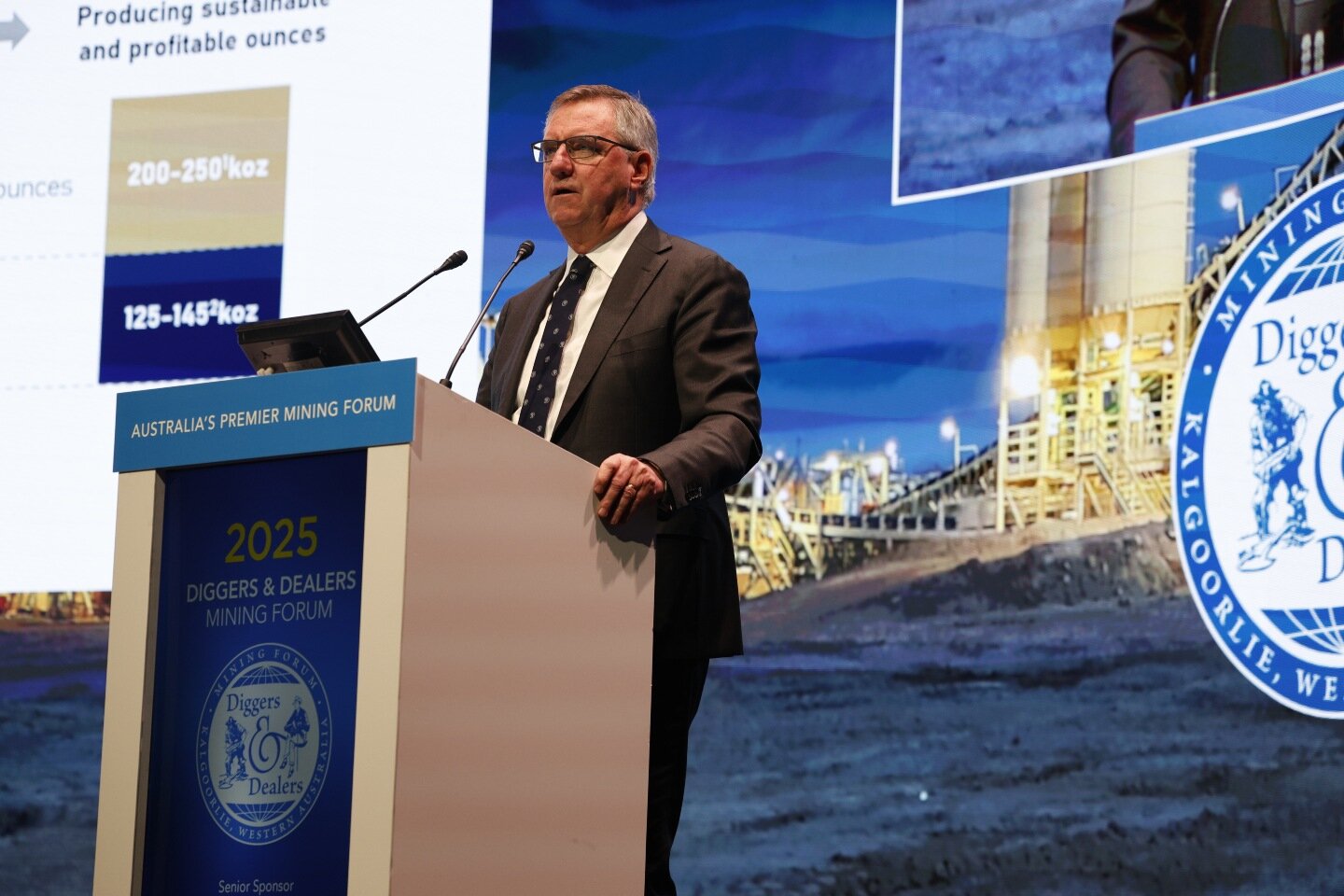
Regis Resources has taken a significant step to reviving its McPhillamys gold project in New South Wales, two years after a federal minister’s intervention nearly ended it.

Applied Materials Stock Is One Of the S&P 500 Leaders Today. It’s AI.
Navellier and Associates founder Louis Navellier discusses how the Middle East conflict is driving oil prices sharply higher on ‘Maria Bartiromo’s Wall Street.’
Aldi is launching a limited-time giveaway of mystery grocery bundles, offering shoppers a chance to claim free boxes containing surprise products.
The discount grocer said it will release a new themed ALDI Blind Box each day from June 22 through June 25. The boxes will be available while supplies last.
Shoppers can claim one box per day beginning at noon ET by visiting AldiBlindBox.com. The boxes will be distributed on a first-come, first-served basis and shipped directly to consumers.
YUM BRANDS SELLS PIZZA HUT FOR $2.7B, SHARPENS FOCUS ON TACO BELL AND KFC
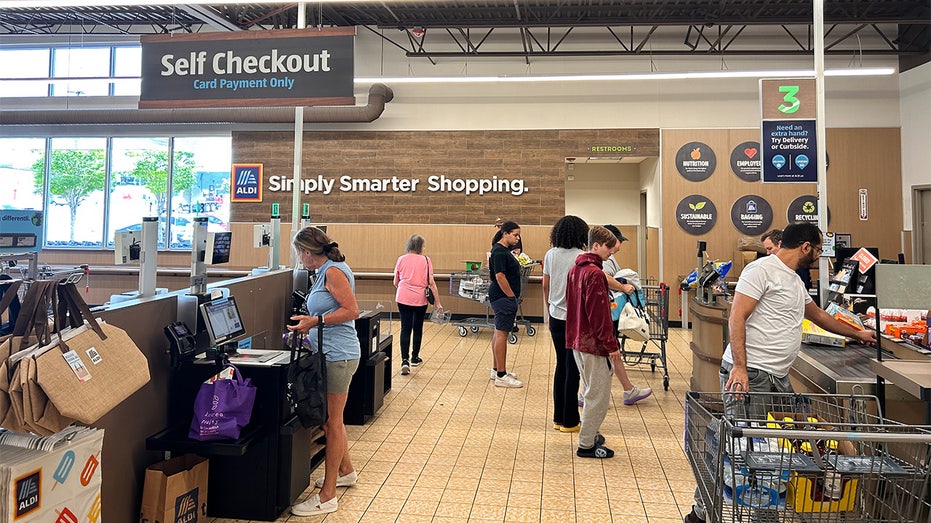
Self-checkout machines at an Aldi grocery store in Charlotte, N.C. (Lindsey Nicholson/UCG/Universal Images Group via Getty Images)
The offerings include a Snack Blind Box, a Fiber Blind Box, a Protein Blind Box and a Mystery Blind Box containing products from across the store.
INFLATION ROSE AGAIN IN MAY AS ELEVATED ENERGY PRICES SQUEEZE CONSUMERS
The promotion is based on the blind box format, in which consumers do not know the contents of a package until it is opened. The concept has gained popularity across several retail categories, including collectibles, beauty products and apparel.
The promotion comes as food prices remain elevated. High inflation has created severe financial pressures in recent years for most U.S. households, which are forced to pay more for everyday necessities like food and rent. Price hikes are particularly difficult for lower-income Americans because they tend to spend more of their already-stretched paychecks on necessities and have less flexibility to save.
INFLATION IS SQUEEZING AMERICAN CONSUMERS AND THE FED’S LATEST REPORT SHOWS IT’S GETTING WORSE
Food prices were up 0.2% in May and are 3.1% higher than a year ago. The food at home index was up 0.1% for the month and 2.7% compared with last year. The food away from home index rose 0.3% on a monthly basis and 3.5% year over year.

An Aldi grocery store in Washington, D.C. (Kevin Dietsch/Getty Images)
Meats, poultry and fish prices were down 0.4% in May but are up 6.2% from last year. Beef and veal prices fell 1.6% for the month but remain up 12.9% on an annual basis. Egg prices increased 4% in May but are down 35.2% year over year as supply normalized after an avian flu outbreak. Fruits and vegetables prices rose 0.2% for the month and are up 6.1% from a year ago.
Aldi said many of the products included in the giveaway can also be found in stores nationwide and through its rotating ALDI Finds program.
CLICK HERE TO GET FOX BUSINESS ON THE GO
The company said the giveaway will run for four days with a different themed box available each day.
FOX Business’ Eric Revell contributed to this report
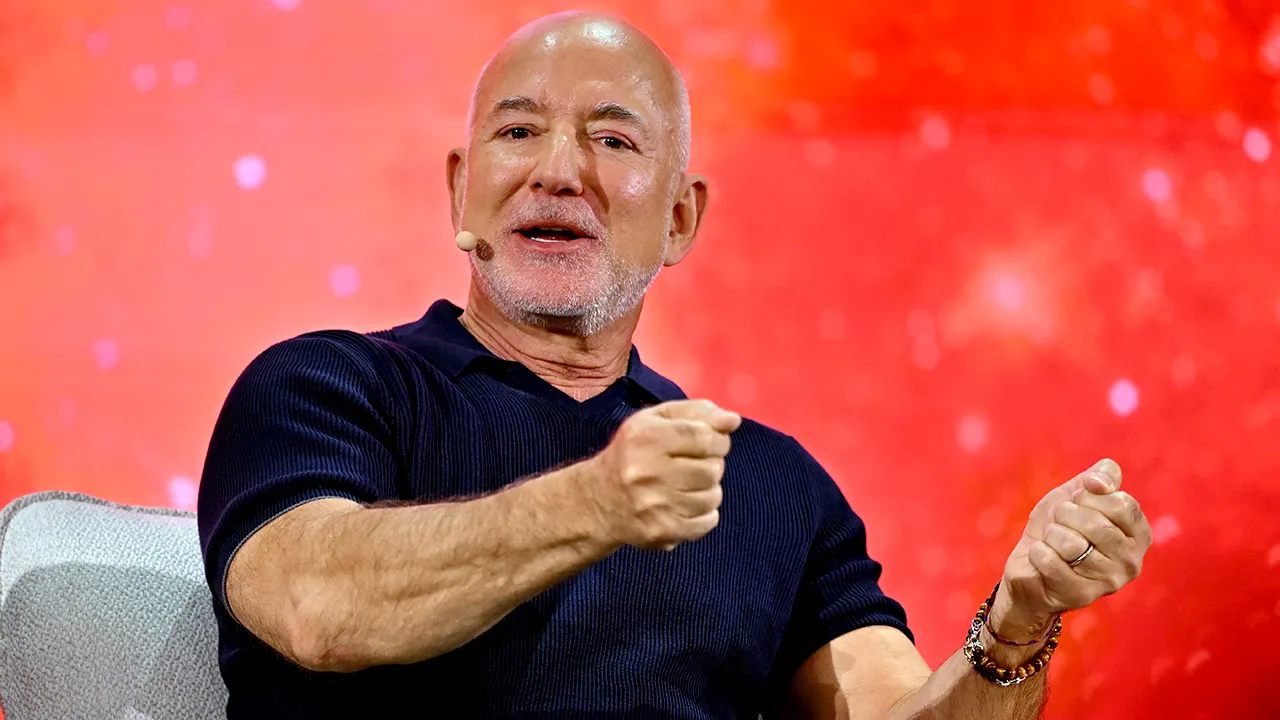
Amazon founder Jeff Bezos predicts artificial intelligence will lead to labor shortages, not human job replacement. GOP Strategist Chris Johnson adds that AI drives energy production and advanced manufacturing, reindustrializing the U.S.
Amazon founder Jeff Bezos said the rise of artificial intelligence (AI) won’t lead to the replacement of humans in the workforce and will instead create labor shortages.
Bezos spoke at the VivaTech technology conference in Paris Wednesday and offered an optimistic outlook on the impact of AI on the workforce amid concerns about its impact on the role of human workers across the economy.
“I know there’s a lot of concern that many people have, including many smart people, that AI is going to make humans redundant and so on,” Bezos said.
“I totally disagree with that point of view. And I think, in fact, AI is going to create a labor shortage,” the Amazon founder added. “We have an endless set of things to invent. … We are limited not by our imaginations but by what we can actually do.

Amazon founder Jeff Bezos said AI will lead to a labor shortage, rather than pushing humans out of the workforce. (Stefano Rellandini/AFP via Getty Images)
“I promise you every single person in this audience has had an idea for a new business or a new product or a new device that they wish they could manufacture, and that idea stayed in your head and went nowhere,” Bezos explained. “And the reason it stayed in your head and went nowhere is because it’s too hard to do, and it wasn’t worth it.
“If we can accelerate the dream build loop, all of the ideas will then become possible. And then we end up being limited not by our capabilities, but by our imaginations.”
AMERICA CAN’T COMPETE WITH CHINA IN AI WITHOUT THESE WORKERS, META’S PRESIDENT SAYS
| Ticker | Security | Last | Change | Change % |
|---|---|---|---|---|
| AMZN | AMAZON.COM INC. | 244.39 | +6.89 | +2.90% |
Bezos’ comments come as companies are reevaluating their workforces in light of the advancements in AI, with thousands of job cuts following companies’ investments in the emerging tech.
A report by global outplacement and executive coaching firm Challenger, Gray & Christmas found that about 40% of the 97,006 job cuts announced by companies in May were attributed to AI.
The 38,579 cuts attributed to AI in May marked the highest monthly total linked to that since Challenger began tracking it in 2023.
AMAZON TO CUT 16,000 ROLES AS IT LOOKS TO INVEST IN AI, REMOVE ‘BUREAUCRACY’
“The labor market is being reshaped by technology in real time. AI is now the leading reason companies give for cutting jobs, and the primary industry citing it is technology,” said Andy Challenger, the firm’s chief revenue officer and a labor and workplace expert.

Amazon announced layoffs in January as it ramps up AI investments. (Matthias Balk/picture alliance via Getty Images)
The tech sector announced 38,242 job cuts in May, the highest for the sector since August 2024. Firms within the sector have announced 123,653 cuts in 2026 so far, which is an increase of 66% from the same period in 2025 and leads other sectors in job cuts this year by a wide margin.
“AI isn’t yet the jobpocalypse some predicted. Like spreadsheets and email before it, the technology will ultimately make workers more productive, but our data shows companies are already acting on it, citing AI for more cuts than any other reason,” Challenger explained. “The open question isn’t whether AI changes the workforce, but how fast.”
GET FOX BUSINESS ON THE GO BY CLICKING HERE
Amazon is one of the tech firms that has cut jobs amid its investments in AI, with the company announcing 16,000 cuts in January.
Reuters contributed to this report.

Retail Sales Jump Nearly 1% in May. High Gas Prices Can’t Keep Consumers Down.
Business
Disney Plus Down for Tens of Thousands as Login Errors Plague Streaming Platform Nationwide

Disney Plus experienced a widespread outage Thursday that left tens of thousands of subscribers unable to log into the streaming platform, with user-reported error counts climbing steadily throughout the afternoon and evening as the company remained largely silent about the cause of the disruption.
Disney+ experienced a possible outage Thursday, according to Downdetector.com. More than 14,000 users had reported problems with the platform as of 4:26 p.m. Pacific Time, according to the outage-tracking site, which monitors service disruptions by collecting status reports from multiple sources. Most users reporting a problem with Disney+ said they were experiencing login issues.
A Rapidly Escalating Outage
What began as a few thousand scattered reports quickly snowballed into one of the more significant disruptions the streaming platform has faced in recent memory. Nearly 20,000 users had reported an issue with the streaming platform shortly after the initial reports surfaced. That figure continued climbing throughout the evening, with more than 26,000 Disney+ users reporting an issue, then more than 43,000 users, and ultimately more than 52,000 users reporting problems with the platform as the outage stretched on.
Disney+ has not made a statement available regarding the cause or expected resolution timeline of the disruption, leaving frustrated subscribers with little official information as they attempted to troubleshoot the issue on their own.
Users Report Being Locked Out Across Devices
Independent outage-tracking services corroborated the scale of the disruption, with real-time monitoring tools picking up elevated error rates well above the platform’s typical baseline. User reports suggest Disney+ is likely experiencing an outage, with reports running roughly 2.4 times the normal level for the time of day and social-media chatter elevated in step, according to one outage-monitoring service that aggregates anonymous user reports and public social media posts to detect service anomalies, often before they are officially confirmed by the company itself.
Frustrated subscribers took to social media and outage-reporting platforms to describe their experiences. One user reported being unable to access their account at all, writing that they were kicked out of their Disney Plus account and that every time they attempted to log back in with their email, the platform returned an error message. Another user reported that Disney Plus would not load on either their television or their phone, indicating the disruption was affecting multiple device types rather than being isolated to a single platform or operating system.
Subscribers also reported difficulty reaching Disney’s customer support channels for help resolving the issue, with one user noting that the company’s online chat support and phone help line both appeared to be experiencing their own technical problems amid the broader outage, while another asked pointedly whether the company would consider compensating subscribers for the service disruption.
A History of Periodic Service Interruptions
Thursday’s outage adds to a pattern of periodic disruptions that Disney+ has experienced since its 2019 launch, though the scale of user reports in this latest incident appears to rank among the more significant disruptions in recent months. Disney Plus can sometimes run into service issues that interrupt streaming, login, or app access, with several notable examples in the platform’s recent history. An outage on March 17, 2026, caused a sudden increase in user reports and lasted about one hour before the service recovered. The platform also experienced a few brief outages on November 7, 2025, with users reporting problems specifically with logging in. Separately, Disney Plus was impacted on October 20, 2025, as part of a significant outage affecting Amazon Web Services, the cloud infrastructure provider that underpins a substantial portion of the modern internet’s streaming and cloud computing services.
Looking back further, the streaming service has weathered technical turbulence dating back to its very first day of operation. When Disney Plus launched at 3 a.m. Eastern Time on a Tuesday in November 2019, the service suffered technical difficulties just hours later, as consumer demand exceeded the company’s expectations. Problems began a little before 7 a.m. that day, according to Downdetector, which received more than 8,000 reports of difficulties, mostly related to video streaming, alongside additional complaints about login problems. Those reports peaked around 9 a.m. before dwindling by early afternoon. At the time, a Disney spokeswoman said the company was working to resolve the issue after consumer demand exceeded its expectations, though the company did not disclose what specifically caused that initial launch-day disruption.
The Scale of Disney’s Streaming Investment
The persistent nature of these periodic outages stands in contrast to the enormous financial commitment Disney has made to its streaming infrastructure over the past decade. Disney invested billions of dollars in its streaming service, beginning with the purchase of a stake in streaming technology company BAMTech in 2016, a stake the company later increased to a majority ownership position. That underlying technology has since been used to power other Disney-owned streaming products, including ESPN Plus, which launched using BAMTech’s infrastructure in 2018.
Despite that substantial technological investment, large-scale consumer streaming platforms remain vulnerable to periodic disruptions, whether stemming from internal technical failures, surges in simultaneous user demand, or external dependencies on third-party cloud infrastructure providers that host significant portions of the internet’s most popular digital services.
What Subscribers Can Do in the Meantime
For users experiencing access problems, outage-tracking services have offered standard troubleshooting recommendations while official fixes remain pending. Suggested steps include trying to open the Disney Plus website or app from another browser, device, or network — such as a mobile hotspot — disabling any active VPN connections, clearing the device’s DNS cache, restarting a home router, or checking whether a user’s internet service provider is separately experiencing its own issues. If the platform works properly on an alternate network or device, the problem is more likely to be local to the user’s specific setup rather than part of the broader platform-wide outage being reported by tens of thousands of other subscribers.
Outage-monitoring services that track Disney Plus typically employ multiple verification checks before officially classifying the platform as experiencing a major outage, repeating failed connectivity tests from multiple randomly selected global locations to rule out false positives before confirming a genuine service disruption.
Looking Ahead
As of the most recent reporting, Disney has not issued a public statement addressing the cause of Thursday’s outage, the number of subscribers affected, or an expected timeline for full restoration of service. The company’s silence has left affected users relying primarily on crowdsourced outage-tracking platforms and social media chatter for updates, rather than official communication from Disney itself.
Given the platform’s history of resolving previous disruptions within roughly one to three hours, subscribers experiencing login failures may see service restored within a similar window, though the substantially higher volume of user reports in this latest incident — climbing past 52,000 reports compared to far smaller figures seen in earlier 2025 and 2026 disruptions — suggests Thursday’s outage may represent a more significant technical failure than the platform’s more routine, brief service interruptions.
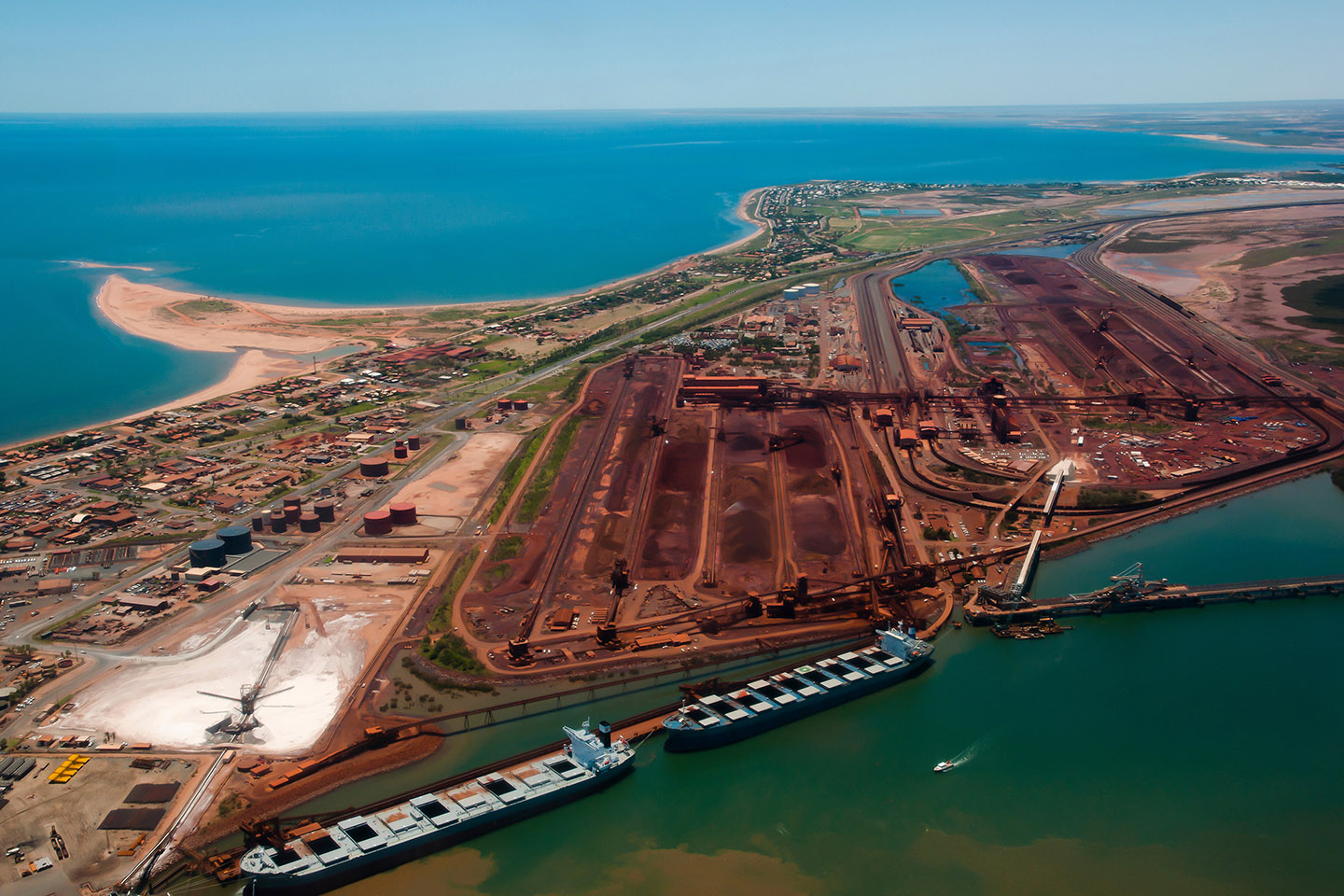
The Australian Workers Union has followed two other unions threatening strikes against BHP in the Pilbara, by applying for a Fair Work Commission ballot of its members.

Northern Trust Asset Management is a global investment manager that helps investors navigate changing market environments in efforts to realize their long-term objectives.
Entrusted with $1.2 trillion in assets under management as of March 31, 2024, we understand that investing ultimately serves a greater purpose and believe investors should be compensated for the risks they take — in all market environments and any investment strategy. That’s why we combine robust capital markets research, expert portfolio construction and comprehensive risk management in an effort to craft innovative and efficient solutions that seek to deliver targeted investment outcomes.
As engaged contributors to our communities, we consider it a great privilege to serve our investors and our communities with integrity, respect and transparency.
Northern Trust Asset Management is composed of Northern Trust Investments, Inc., Northern Trust Global Investments Limited, Northern Trust Fund Managers (Ireland) Limited, Northern Trust Global Investments Japan, K.K., NT Global Advisors, Inc., 50 South Capital Advisors, LLC, Northern Trust Asset Management Australia Pty Ltd, and investment personnel of The Northern Trust Company of Hong Kong Limited and The Northern Trust Company. Note: This account is not managed or monitored by Northern Trust Asset Management, and any messages sent via Seeking Alpha will not receive a response. For inquiries or communication, please use Northern Trust Asset Management’s official channels.

Police cleans nearly 15,000 SocGholish-infected sites tied to Evil Corp

About 300 children and teachers evacuated or rescued after fire breaks out at a Tokyo school

Suzanne Carlson on Building a Career Through Discipline, Safety and Reliability


-

 Business5 days ago
No Jackpot Winner as $257 Million Prize Rolls Over to $269 Million Monday Draw
-

 Fashion6 days ago
Weekend Open Thread: Tuckernuck – Corporette.com
-
 Crypto World4 days ago
Zimbabwe Requires Crypto Businesses to Register Annually Under New FIU Regulations
-

 Crypto World6 days ago
Bitget enters Argentina’s regulated crypto market through PSAV registration
-

 Tech6 days ago
NanoClaw integrates JFrog registries to secure AI agent downloads
-

 Tech7 days ago
This Week In Security: Microsoft On Microsoft, Register Your Domains, Linux On ARM, And FreeBSD Joins The File Cache Club
-

 NewsBeat6 days ago
FBI searches office of Ohio voter registration group
-
 Entertainment4 days ago
Matt Damon’s Viral Sci-Fi Thriller Has Taken Over HBO Max
-

 Business4 days ago
Anthropic staff to meet White House officials next week, Axios reports
-

 Tech4 days ago
As AI companies race to go public, who else is along for the ride?
-
 Crypto World4 days ago
Bitcoin could crash to $48,000, if this historical pattern is triggered
-

 Politics4 days ago
“Israel’s” ban on ICRC visits ruled illegal, but Knesset moves to stop them permanently
-
Entertainment7 days ago
Ana Navarro unleashes explosive tirade on ex-Trump aide, Disney Channel star in epic on-air fight: 'Have you no shame?'
-
 NewsBeat4 days ago
Warning of disruption as Cardiff Crossrail works to start
-

 News Videos4 days ago
Financial Accounting | Last Day Revision Strategy and Booster | CMA Inter – June 2026
-
 NewsBeat4 days ago
Tributes to former deputy head teacher at Cambridge school among death and funeral notices
-
 Crypto World5 days ago
Market Preview: SpaceX (SPCX) IPO Record, Federal Reserve Meeting, and Iran Nuclear Agreement
-
 NewsBeat4 days ago
what doctors are seeing in ebike crashes
-
 Entertainment4 days ago
Kate Middleton Glare Goes Viral After Kids Booed At Royal Event
-

 Entertainment5 days ago
Deion Sanders Shares Powerful Post After Viral Advice To Deiondra
You must be logged in to post a comment Login