

Crypto World
XRP ETFs could pull $8B if CLARITY passes: the math



A major bank projects XRP ETFs could draw $4 billion to $8 billion in their first year if the CLARITY Act passes, three to six times what they have managed so far. The number rests on a specific argument about who is buying XRP, who is not, and a wall of supply at $1.45.
Summary
- Standard Chartered’s $8 billion XRP ETF forecast depends on CLARITY unlocking institutional buyers.
- XRP’s $1.45 break-even wall is the mechanical ceiling that has capped rallies all year.
- Retail ETF demand has defended the price but has not been large enough to break the wall.
- The upside case depends on legislation passing and institutional inflows arriving quickly.
Standard Chartered, one of the largest banks in the world, has projected that XRP exchange-traded funds could attract $4 billion to $8 billion in inflows in their first year if the CLARITY Act passes. That is three to six times the roughly $1.44 billion that XRP ETFs have pulled in since their launch in November 2025.
It is a large number, large enough to sound like the usual analyst optimism that surrounds every crypto asset. But the projection is not a vibe.
It rests on a specific, mechanical argument about who has been buying XRP, who has been sitting on the sidelines, and a concrete wall of sell orders that has capped the price all year. Understanding that argument is the only way to judge whether $8 billion is realistic or fantasy.
The math matters because XRP has spent 2026 in a frustrating place: down roughly 40% on the year, trading around $1.13 to $1.18, stuck about 70% below its all-time high of $3.65, despite a steady drip of regulatory wins and ETF launches. The question every XRP holder is asking is why the asset will not move.
Standard Chartered’s projection contains the answer, because the same forces that explain the stuck price explain the potential for an $8 billion unlock. This piece works through the math: the break-even wall at $1.45, why retail ETF demand can defend the price but not break it, who the buyers waiting on CLARITY actually are, and where XRP could trade by the fourth quarter under different outcomes.
The wall at $1.45
The single most important number in the XRP story is not the price; it is the wall of supply sitting just above it, and the wall is specific enough to quantify.
Roughly 1.16 billion XRP sit as a wall of sell orders clustered around the $1.45 zone. This is the break-even level for a large cohort of buyers from the last cycle, people who bought XRP near $1.45, watched it fall, and want to sell to get out flat the moment the price returns to where they bought.
Every time XRP rallies toward $1.45, it runs into this accumulated supply. Holders who have waited through the drawdown are eager to exit at break-even, selling into any strength and capping the advance.
This is why XRP keeps stalling at the same level, why rallies on regulatory news, the commodity classification in March, and the committee vote in May spiked toward $1.45 to $1.52 and then faded. The wall is real, it is large, and it is the mechanical reason the price has a ceiling.
A wall of break-even sellers is a specific kind of resistance, and it behaves predictably. It is not driven by sentiment or fear; it is driven by a cohort of holders with a fixed price target, the level at which they break even, who will keep selling until that supply is exhausted.
The only way through such a wall is demand large enough to absorb all 1.16 billion XRP of it and keep buying. Retail-sized flows nibble at the wall but cannot break it.
What breaks a wall this size is institutional money, large, sustained, and indifferent to the break-even level because it is buying for reasons that have nothing to do with last cycle’s entry price. Whether that institutional money shows up is the entire question, and it is where CLARITY comes in.
Why retail demand defends but cannot break
This is the dynamic that explains the stuck price, and it is the key to the whole projection. The buying that has happened so far has been the wrong size to break the wall, and the buying that could break it has been waiting.
XRP ETFs have already drawn about $1.44 billion since launching in November 2025, and that demand has done something real: it has defended the price, providing a floor of steady buying that has kept XRP from collapsing through the drawdown. But it has not broken the price higher, because it has been retail-sized, large enough to absorb ordinary selling and hold a floor, but not large enough to overwhelm the 1.16 billion XRP wall at $1.45 and clear it.
The result is a standoff: retail ETF demand on one side defending a floor, the break-even wall on the other side capping the ceiling, and XRP trapped in the range between them. That is exactly the sideways, frustrating action that has defined the year.
Recent flow data show the point clearly. XRP ETF inflows have been strong enough to beat larger assets in some weeks, but weekly strength is different from the kind of institutional wave needed to clear a billion-token sell wall.
The buyers who could break the wall are different in kind, not just degree. They are the large institutions, the pension funds and asset managers, the entities that move capital in the size required to absorb a billion-token wall and keep buying.
And they have been explicit about why they are on the sidelines: they treat XRP as a legal question mark, an asset whose regulatory status, while improved by the agency-level commodity classification, has not been settled into law. An executive-agency classification can be reversed by the next administration with a memo; a statute cannot.
That is why institutions wait for a statute. Institutions managing fiduciary money do not commit at scale to an asset whose legal status could be reversed by a future regulator, and so they wait for the certainty that only legislation provides.
The proof of this is in who has been buying and who has not. Retail-sized ETF demand has shown up and defended the price, while the institutional money large enough to break it has stayed out, waiting for the law.
That is the standoff CLARITY would resolve.
The math behind $8 billion
Now the projection itself, because the $8 billion figure is a direct consequence of the dynamic above, not an arbitrary target.
Standard Chartered’s argument runs like this. The roughly $1.44 billion XRP ETFs have drawn so far came almost entirely from retail and smaller investors, because the large institutions have stayed out pending legal certainty.
If CLARITY passes and codifies XRP’s commodity status into law, the legal question mark that has kept institutions out is removed. The pool of eligible buyers expands dramatically to include the pension funds, asset managers, and institutional allocators who could not commit before.
That expansion is what produces the $4 billion to $8 billion first-year projection: not a multiplication of the existing retail demand, but the addition of an entirely new and far larger class of buyer that the law would unlock. Three to six times the current inflows is what you get when you add institutional capital to a flow that until now has been almost purely retail.
The mechanical beauty of the argument is how the pieces fit. The institutional money that CLARITY would unlock is precisely the large, sustained, break-even-indifferent buying required to overwhelm the 1.16 billion XRP wall at $1.45.
So CLARITY does not just add demand; it adds exactly the kind of demand that can break the ceiling that has capped XRP all year. The $8 billion is not only a flow projection; it is the force that would clear the wall and let XRP re-rate higher.
The same institutional buyers who would drive the inflows are the ones large enough to absorb the break-even supply and keep going. The projection and the price-ceiling problem are two descriptions of the same event: institutions arriving in size once the law lets them.
That is also the utility side of the same CLARITY catalyst, because the same statute that could unlock ETF flows would also give institutions more confidence in XRP-linked settlement infrastructure.
What history warns
An honest account has to weigh the projection against the cautionary pattern in XRP’s own history, because the asset has a habit of disappointing on supposedly bullish catalysts.
The warning is that XRP catalysts have repeatedly arrived already priced in. When the SEC case against Ripple settled in August 2025, a major positive event, XRP had already peaked a month earlier, and long-term holders used the resolution as an exit, selling into the news rather than buying.
The pattern recurred through 2026. The March commodity classification spiked XRP from $1.44 to $1.54 within hours, then faded as the break-even wall capped it.
The May committee vote pushed it from $1.42 to $1.52, then faded the same way. The lesson is that XRP has a tendency to run up in anticipation of a catalyst and then sell off when it arrives, because the buyers who wanted to position have already done so and the break-even sellers are waiting.
A passage of CLARITY could, in principle, follow the same script: a run-up, then a sell-the-news fade if the institutional inflows do not materialize fast enough to overwhelm the supply.
This is why the projection needs to be held with both conviction and caution. The $8 billion argument is mechanically sound, the institutional money is real and waiting, and the math of adding it to a retail-only flow produces large numbers.
But the history says the inflows have to actually show up, in size and quickly, to break the pattern of catalysts arriving pre-priced. A projection of institutional demand is not the same as institutional demand in hand.
The honest position is that the $8 billion is realistic if the institutions arrive as the argument predicts. It is also the one scenario worth wanting confirmed by actual inflows before leaning on it.
The math is strong; the execution risk is that XRP does what it has done before and sells the news.
Where XRP trades by Q4
Pulling the analysis together, the projection implies a set of scenarios for where XRP could trade by the fourth quarter, anchored to the current price near $1.13 to $1.18 and the dynamics above.
In the failure scenario, CLARITY stalls, no Senate vote happens before the August recess, and the catalyst that has been holding up the price fades. Fear of a multi-year delay creeps in, the break-even sellers keep capping any bounce, and XRP drifts back toward its lows for the year.
The $0.80 to $1.00 zone comes back into play, with the door open to lower if the broad market stays weak. That is the downside if the vote stalls, because the market would lose the one catalyst big enough to change the flow picture.
In the base case, a compromise comes together and CLARITY clears around late July or early August. Legal certainty begins removing the discount that has weighed on XRP, the $1.45 break-even wall starts to give way on rising volume, and a re-rating into the $1.60 to $2.20 range becomes realistic by the fourth quarter.
This is the outcome where the law passes and the institutional money begins to arrive, clearing the wall in an orderly way.
The strongest case requires more than the vote. If CLARITY passes, ETF inflows reaccelerate toward Standard Chartered’s billions-scale projection, and the Federal Reserve begins easing into the autumn, the money waiting on the sidelines would finally overwhelm the break-even sellers.
In that scenario, XRP could retest the $2.50 to $3.50 area, still short of the old $3.65 high. That is the scenario the $8 billion projection points toward, and it is also the one most dependent on multiple things going right at once: passage, then inflows, then a supportive macro.
The range across scenarios is wide because the outcome is binary on the legislation. From around $1.13 today, a failed vote points back toward $0.80 to $1.00, passage near the recess supports $1.60 to $2.20, and passage plus renewed inflows plus a softer Fed opens up $2.50 to $3.50.
Where XRP ends the year traces back to one thing this summer: whether the law passes and the institutions it would unlock actually arrive. That is the core of the longer-horizon outlook, where the next move depends less on retail enthusiasm than on whether institutions receive permanent legal cover.
What it means for investors
For anyone weighing XRP, the Standard Chartered projection is most useful not as a price target but as a map of the mechanism, and the mechanism is what to watch.
The $8 billion figure is worth less as a number to anchor on than as a description of how XRP could break its range: institutional money, unlocked by legal certainty, arriving in the size needed to clear the break-even wall. An investor watching XRP should track the pieces of that mechanism.
Those pieces are the progress of CLARITY through the Senate, the pace of ETF inflows and whether they show signs of shifting from retail to institutional scale, and the behavior of the price at the $1.45 wall. Those are the signals that the projection is or is not playing out.
The discipline is to treat $8 billion as the upside case that depends on a specific chain of events, not as a promise. Given XRP’s history of selling the news, the inflows should be confirmed rather than assumed.
That also means remembering why an ETF is access, not automatic demand. XRP ETFs opened the door, but the price only breaks if buyers large enough to clear the wall actually walk through.
The realistic framing is that XRP is a binary bet on a piece of legislation, with a clear mechanical upside if the bet wins and a clear downside if it loses. The break-even wall, the waiting institutions, and the $8 billion projection are all real, and together they make a coherent case that passage could drive a significant re-rating.
But the same analysis shows the downside if CLARITY fails: a drift back toward the year’s lows as the catalyst fades. An investor should size any XRP position to that binary reality, understanding that the upside depends on a law passing and the institutions it unlocks actually arriving, and that the history warns against assuming the catalyst will not be sold.
None of this is investment advice; it is the math behind a projection that is only as good as the events it depends on.
The number and the mechanism
Standard Chartered’s $8 billion projection sounds like analyst hype until you trace the math, and the math is sound.
XRP ETFs have drawn $1.44 billion almost entirely from retail, the large institutions have stayed out because XRP is a legal question mark, and CLARITY would remove that question mark. That would unlock exactly the institutional buying, three to six times the current flow, that could clear the 1.16 billion XRP wall at $1.45 and let the price re-rate.
The number is not a vibe; it is the consequence of who has been buying, who has not, and what would change if the law passed.
What the math cannot guarantee is that the institutions arrive on schedule. XRP has a history of selling its catalysts, running up before the news and fading after it, and a projection of institutional demand is not the same as institutional demand in hand.
The honest synthesis is that the $8 billion is realistic if CLARITY passes and the institutional money shows up as the argument predicts. This is the one scenario worth confirming with actual inflows before leaning on it.
From around $1.13 today, the year ends somewhere between $0.80 and $3.50 depending almost entirely on the law and what it unlocks. The wall at $1.45 is the obstacle, institutional money is the only thing big enough to break it, and CLARITY is the key that decides whether that money is allowed to arrive.
That, and not any single price target, is the math that matters.
Frequently asked questions
What did Standard Chartered project for XRP ETFs?
Standard Chartered projected that XRP exchange-traded funds could attract $4 billion to $8 billion in inflows in their first year if the CLARITY Act passes, three to six times the roughly $1.44 billion they have drawn since launching in November 2025. The projection rests on the argument that CLARITY would remove the legal uncertainty keeping large institutions out, unlocking a new and far larger class of buyer.
What is the $1.45 break-even wall?
Roughly 1.16 billion XRP sit as sell orders clustered around $1.45, the break-even level for a large group of buyers from the last cycle who bought near that price, watched it fall, and want to exit flat when it returns. Every rally toward $1.45 runs into this supply, which caps the price. It is the mechanical reason XRP keeps stalling at the same level despite regulatory wins, and clearing it requires demand large enough to absorb all of it.
Why has XRP’s price stayed stuck despite ETF inflows?
The roughly $1.44 billion in ETF inflows so far has been retail-sized, enough to defend a price floor but not to overwhelm the 1.16 billion XRP break-even wall at $1.45. This creates a standoff: retail demand holds the floor while the break-even sellers cap the ceiling, trapping XRP in a range. The buyers large enough to break the wall, big institutions, have stayed on the sidelines because they treat XRP as a legal question mark pending legislation.
Why would the CLARITY Act unlock institutional buying?
Institutions managing fiduciary money avoid assets whose legal status could be reversed. XRP currently has a commodity classification from agencies, but that can be undone by a future administration, while a statute cannot. CLARITY would codify XRP’s commodity status into law, removing the reversible-classification risk and expanding the pool of eligible buyers to include pension funds and asset managers who could not commit before. That is the demand that produces the $4 billion to $8 billion projection.
Where could XRP trade by the end of 2026?
From around $1.13 today, the scenarios are wide because the outcome is binary on the legislation. If CLARITY fails or stalls before the August recess, XRP could drift back toward $0.80 to $1.00. If it passes near the recess, a re-rating to $1.60 to $2.20 becomes realistic. If passage is followed by reaccelerating ETF inflows and a softer Federal Reserve, XRP could retest $2.50 to $3.50, still short of its $3.65 all-time high.
Is the $8 billion projection reliable?
The math is sound, but it depends on execution. The argument correctly identifies that institutional money is waiting on legal certainty and that CLARITY would unlock it. The risk is XRP’s history of selling its catalysts: major positive events like the August 2025 SEC settlement arrived already priced in, with holders exiting into the news. The $8 billion is realistic if institutions arrive in size and quickly after passage, but a projection of demand is not demand in hand, and the inflows should be confirmed rather than assumed.
As of June 18, 2026. Cryptocurrency markets and legislation are subject to change; verify current details before relying on this analysis. This article is information, not investment advice.


Ireland has released a national risk assessment on digital assets for the first time in seven years, detailing “very significant” concerns around money laundering and terrorism financing while also warning that crypto can be attractive to fraudsters and may help criminals evade sanctions.
The assessment, published by the Irish Department of Finance as part of the government’s policy priorities, comes as Ireland moves toward implementing industry standards on how crypto-related activities are accepted as a source of funds by the second half of 2027.
Key takeaways
- Ireland’s 2026 national risk assessment describes crypto assets as posing “very significant” risks for money laundering and terrorism financing.
- The government cites increased enforcement pressure, including more prosecutions related to money laundering and fraud incidents in which the use of crypto is “particularly attractive” to criminals.
- The report flags vulnerabilities beyond illicit finance, including potential sanctions evasion and difficulties in tax compliance and enforcement.
- Ireland highlights regulatory inconsistency internationally as a risk for Irish service providers, alongside gaps in oversight for largely unregulated areas such as decentralized finance.
- Political donation concerns remain part of the picture, even as Ireland has already prohibited cryptocurrency donations to political parties for more than four years.
Seven-year gap and a sharper focus on illicit finance
In the risk assessment released Thursday, Ireland said crypto-related activity presents “very significant” risks connected to money laundering and terrorism financing. The Department of Finance framed the assessment as a response to the evolving threat landscape, pointing to higher levels of legal and criminal activity involving digital assets since the last time such a country-specific evaluation was published.
According to the Department of Finance, the period since the previous assessment has included an increase in prosecutions tied to money laundering, along with incidents of fraud where crypto was “particularly attractive” to criminal groups. The government also described how digital assets can be leveraged to exploit compliance and enforcement weaknesses.
Beyond money laundering: sanctions, taxation, and bribery
Ireland’s assessment did not limit itself to illicit finance channels alone. It also warned that crypto assets present vulnerabilities that “may facilitate sanctions evasion.” In parallel, the government highlighted challenges for tax compliance and enforcement, suggesting that the way crypto is used can complicate oversight and detection.
The report further notes risks associated with corruption. Ireland stated that crypto has been used to bribe officials involved in decisions affecting the sector. While the assessment describes vulnerabilities broadly across criminal use cases, it also emphasizes how administrative and regulatory roles can be exploited when oversight is weak or fragmented.
Regulatory patchwork and uneven protections
A central theme in the assessment is the uneven regulatory environment around crypto. Ireland pointed to “inconsistent international regulation” as a vulnerability affecting Irish service providers, implying that companies operating in Ireland may face risks not only from domestic enforcement but also from cross-border standards and gaps.
The government also singled out parts of the ecosystem that remain comparatively less regulated. The risk assessment highlights “largely unregulated areas of the industry such as decentralized finance,” indicating concern that oversight and controls may not be aligned with the same expectations applied to more traditional financial intermediaries.
Ireland’s approach is notable given its relatively high crypto participation compared with some other markets. The report references research from the Central Bank of Ireland published in December, which said about 10% of the population invested in crypto.
Where policy is heading: standards by 2027 and ongoing enforcement
Ireland’s assessment was issued alongside a wider policy direction tied to implementing industry standards relating to the acceptance of crypto-related activities as a source of funds, with a target of the second half of 2027. The framing suggests the government wants to reduce ambiguity around how crypto can be treated within the financial compliance system—particularly in contexts tied to anti-money laundering and related safeguards.
Recent enforcement actions in the country also underscore that the issue is not purely theoretical. In November 2025, the Central Bank of Ireland fined Coinbase Europe Limited about $24 million for Anti-Money Laundering and Countering the Financing of Terrorism violations, citing delayed reporting failures in its transaction monitoring system.
On the political side, the assessment references that concerns about crypto being used to pay corrupt officials are persistent—yet Ireland has already moved to restrict political donations. According to the risk assessment, official cryptocurrency donations to political groups have been banned in Ireland for more than four years. In April 2022, Irish officials proposed that no Irish political parties be allowed to accept cryptocurrencies such as Bitcoin, Ether, privacy coins, and others.
What to watch next
With Ireland targeting implementation of relevant standards by mid-to-late 2027, the immediate question for users, exchanges, and service providers will be how quickly regulatory expectations tighten around acceptance of crypto-related funds, compliance controls, and oversight of riskier parts of the ecosystem. Readers should also monitor how Ireland’s “very significant” risk framing translates into concrete supervisory actions and guidance over the next reporting cycle.
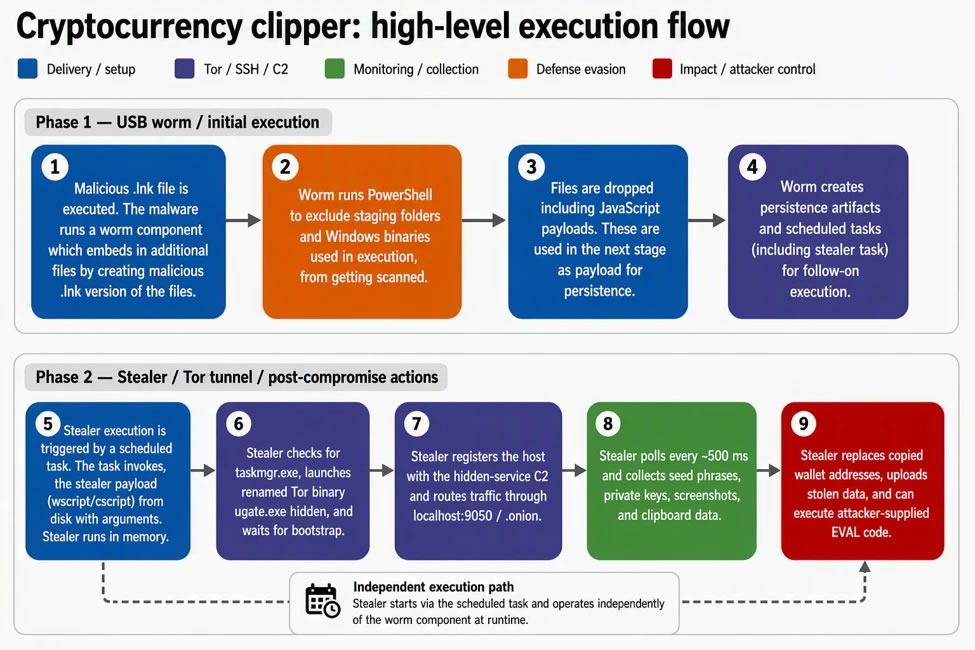
Microsoft Threat Intelligence is warning Windows users about a cryptocurrency clipper strain of malware transmitted via USB drives.
The malware, which has been affecting users since February, steals clipboard data to extract wallet credentials using “high-frequency clipboard theft, screenshot exfiltration, and wallet-address substitution,” Microsoft said Wednesday.
The crypto clipper also hides legitimate files and replaces them with lookalike shortcuts, so victims unknowingly execute malware while a worm component propagates automatically to USB storage devices.
This malware is insidious because it’s more than just an info stealer, it functions as a backdoor, meaning that attackers can push and execute arbitrary code on infected machines at any time, turning a simple crypto theft into a persistent foothold for ransomware.
The execution of this clipper is also notable because it does not depend on a traditional installer or exposed IP-based infrastructure, the Microsoft researchers said.
“This malware family shows how lightweight, script-based stealers can deliver outsized impact when paired with anonymized communications and runtime tasking.”
Tor network used for obfuscation
The malware deploys two obfuscated JavaScript payloads in the Windows Documents directory and creates scheduled tasks for both the worm and stealer components.
The malware also secretly installs a copy of Tor on the victim’s computer but renames it ugate.exe to disguise it as something innocent. It then uses the anonymizing Tor network to connect to its malicious operators at hidden “onion” addresses.
Related: ‘TrapDoor’ malware targets crypto dev tools in supply chain attack
“The combination of Tor-routed C2, clipboard targeting, screenshot capture and remote code execution gives attackers both immediate monetization paths and continued control over compromised devices,” Microsoft said.
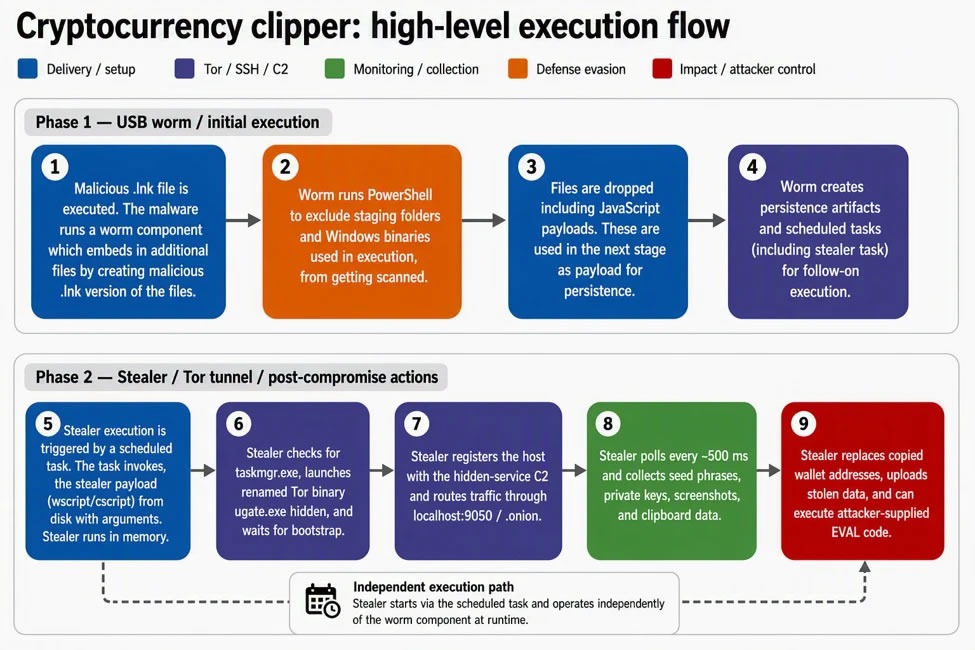
Crypto clipper execution flow. Source: Microsoft
Private keys and seed phrases targeted
The crypto clipper focuses on “high-value financial artifacts” from the clipboard, including BIP39 mnemonic seed phrases and Bitcoin and Ethereum private keys.
It also replaces copied wallet addresses with attacker-controlled ones across Bitcoin, Tron and Monero and takes screenshots every ten seconds for additional context.
Microsoft Defender Antivirus detects the malware as Trojan:Win32/CryptoBandits.A.
Microsoft recommended disabling autoplay on removable media, blocking .lnk execution from USB drives, and monitoring for proxy activity and spawned scripts.
2026 has seen a significant escalation in Windows-based crypto stealers. A new Windows malware strain called Lucid Stealer that targets browser extensions and crypto wallets was identified earlier this month by the Foresiet Threat Intel Team.
Magazine: The end of anon? AI could unmask crypto’s hidden identities


Former Ethereum Foundation contributor Trent Van Epps has warned that Ethereum could face a core development funding gap within the next three to nine months.
Summary
- Van Epps says Ethereum core development may need about $30 million yearly to remain stable.
- He links the pressure to EF spending cuts and the Client Incentive Program’s expiry now.
- Protocol Guild and new institutions are presented as possible routes for future Ethereum support funding.
In a new article, he said the network may enter a “slow-burning funding crisis” as the Foundation reduces spending and a major client funding program ends.
Van Epps worked at the Ethereum Foundation from May 2021 to April 2026. He focused on core development coordination, Protocol Guild funding, and Ethereum’s political economy. His comments add a new layer to debate over who should fund the people who maintain Ethereum’s base software.
He estimated that Ethereum’s core development system needs about $30 million a year to stay healthy. That money supports client teams, researchers, and coordination groups that ship upgrades and keep the network reliable.
Client program expiry raises pressure
Van Epps pointed to two main sources of pressure. One is the Ethereum Foundation’s treasury policy, which aims to cut annual spending from 15% of its treasury to a 5% baseline by 2030. The other is the end of the Client Incentive Program, known as CIP.
The CIP started in 2021 to reward client teams that maintain key Ethereum software. The Ethereum Foundation said at launch that client diversity helps protect the network from bugs and attacks. Under the program, client teams received validator-based rewards that unlocked over time if they kept meeting network needs.
Van Epps said the CIP expired in April 2026 and that no replacement appears ready. He argued that losing steady support could push experienced developers away. He also warned that funding gaps may make it harder to handle long-term work such as scaling and quantum-related security research.
Debate turns to new funding models
The article also questioned the Ethereum Foundation’s long-term role. Van Epps cited Vitalik Buterin’s view that the Foundation was “not designed to be an eternal steward.” He said institutions and funding systems may need to take on more responsibility.
Gabriel Shapiro argued on X that protocol funding may require governance structures that Ethereum does not have. Van Epps replied that his goal was to secure neutral and steady funding for core contributors, not to give one group unchecked control.
As previously reported by crypto.news, Ethereum developers are already preparing major technical work through the Glamsterdam upgrade. That roadmap includes changes for Layer 1 scaling, block building, and gas pricing. The funding debate now puts a sharper focus on the teams expected to deliver that work.
Protocol Guild remains part of the discussion
Protocol Guild is one existing funding path. Gitcoin describes it as a collective fund that supports Ethereum Layer 1 contributors through long-term token vesting. The fund sends donated assets to active contributors and does not set protocol priorities.
Crypto.news earlier reported that the Ethereum Foundation’s Q1 2026 grants supported Geth, Erigon, Lighthouse, validator security tools, cryptography research, and core infrastructure. Those grants show that funding continues, but Van Epps argues that Ethereum needs more durable sources of support.
The warning does not mean Ethereum faces technical failure. It does show growing concern over how the network pays for maintenance and upgrades. For Van Epps, the question is whether Ethereum can fund shared infrastructure without making the Foundation its permanent center.


The Commodity Futures Trading Commission (CFTC) has closed the book on Celsius. A federal court has entered a consent order resolving the agency’s 2023 case against the founder, Alexander Mashinsky.
The order, entered in the Southern District of New York, permanently bars Mashinsky from trading in CFTC-regulated markets and from registering with the agency in any capacity.
What the CFTC Case Against Celsius Covered
This brings closure to CFTC’s enforcement action. Mashinsky is also barred from violating the anti-fraud provisions of the CEA and the agency’s rules.
“The consent order permanently enjoins Mashinsky from further violations of certain anti-fraud provisions in the CEA and CFTC regulations and imposes permanent trading and registration bans against him,” the CFTC said.
The CFTC sued Celsius and Mashinsky in July 2023. Regulators accused the pair of defrauding hundreds of thousands of customers.
“The complaint alleged Celsius was an online platform on which Celsius’ customers would allow Celsius to pool their digital assets and deploy these pooled assets to generate revenue for Celsius, which purportedly would be returned to the customers in the form of weekly interest payments or ‘rewards,” the press release read.
The complaint covered conduct from 2018 through at least June 2022. According to it, Mashinsky marketed Celsius as a safe, bank-like alternative for digital assets.
He promised high-yield interest payments while the platform took on growing risk. Celsius reportedly extended uncollateralized loans and entered risky Decentralized Finance (DeFi) agreements.
Follow us on X to get the latest news as it happens
Bankruptcy, Criminal Charges, and Sentencing
Celsius told users their funds were safe even as losses mounted. The platform later filed for bankruptcy. Celsius’ ultimate collapse episode joined a wave of high-profile cases across the sector.
Mashinsky pleaded guilty to commodities and securities fraud in December 2024. A judge sentenced Mashinsky to 12 years in prison in May 2025. The court also ordered a $50,000 fine and $48.39 million in forfeiture.
Subscribe to our YouTube channel to watch leaders and journalists provide expert insights
The post CFTC Secures Trading Ban Against Jailed Celsius Founder Alex Mashinsky appeared first on BeInCrypto.
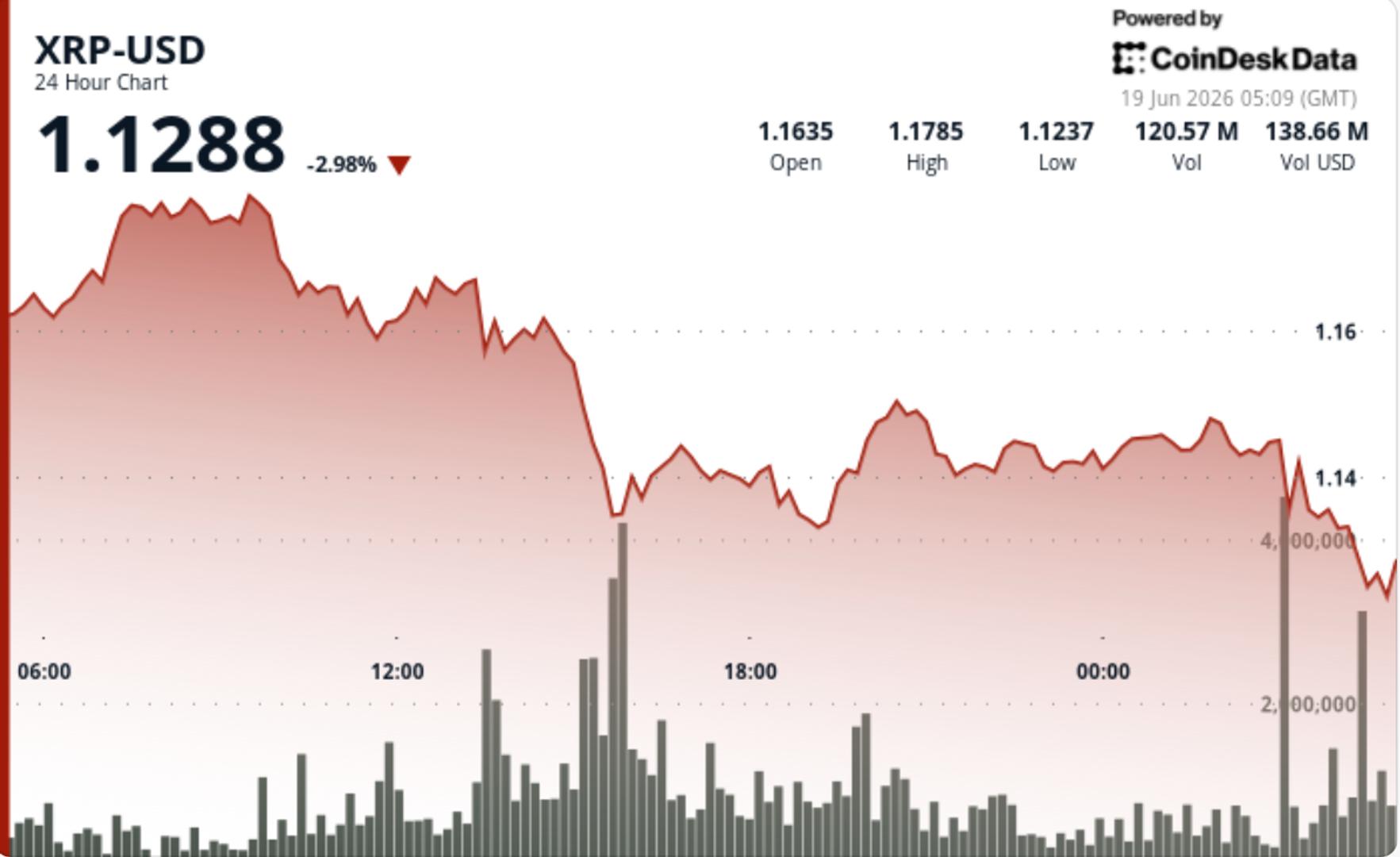
XRP gave back more of last week’s rally on Wednesday after sellers pushed the token through $1.15 support, a level traders had been watching since the recent move above $1.20.
The decline came on some of the session’s heaviest volume and followed another rejection below the descending trendline that has capped every recovery attempt for months.
News Background
• XRP remains caught between growing expectations for U.S. crypto legislation and a market that continues to prioritize technical levels over narrative.
• Traders are also watching the year-long symmetrical triangle that has compressed price action between support near $1.10 and resistance around $1.25.
Price Action Summary
• XRP fell from $1.1873 to $1.1465 during the 24-hour session, losing 3.4%.
• The sharpest selling arrived around 15:00 UTC when volume surged to 134.2 million XRP, roughly 170% above average, breaking support at $1.1550.
• Buyers emerged near $1.13 and helped lift XRP back toward $1.15 into the close, though the rebound failed to reclaim broken support.
Technical Analysis
• The key development was the loss of $1.15. That level had acted as support following last week’s breakout and now risks turning into resistance.

BlackRock’s spot Bitcoin ETF is doing more than simply introducing mainstream investors to crypto, according to Jay Jacobs, the firm’s US head of equity ETFs. In remarks shared with Cointelegraph on its Chain Reaction podcast, Jacobs said that many investors who first buy BlackRock’s iShares Bitcoin Trust (IBIT) go on to explore other traditional exchange-traded funds—suggesting a two-way bridge between Wall Street and digital assets.
Jacobs also highlighted BlackRock’s broader framing of market convergence, arguing that investors increasingly view decentralized finance, active strategies, and traditional index products as components of a single portfolio toolkit rather than as mutually exclusive categories. The comments arrived alongside BlackRock’s launch of a new Bitcoin-income product, the iShares Bitcoin Premium Income ETF (BITA), which generates yield by selling covered call options on Bitcoin holdings.
Key takeaways
- BlackRock says a large share of IBIT buyers are first-time ETF investors, implying Bitcoin has functioned as an entry ramp into the wider ETF market.
- Jacobs described a “two-way” shift: after gaining Bitcoin exposure, many investors also add other BlackRock funds such as S&P 500, AI-themed, and gold ETFs.
- BlackRock launched BITA, a Bitcoin strategy designed to produce income through covered call options on its Bitcoin exposure.
- BlackRock’s Jacobs ties the trend to a broader “Great Convergence,” where TradFi and DeFi are increasingly treated as portfolio building blocks.
Bitcoin ETFs as an ETF “on-ramp”
Jacobs’ central point is that IBIT has attracted investors who may not have previously owned ETFs at all. He told Cointelegraph that “around three-quarters” of investors in iShares Bitcoin Trust have never owned an ETF before, positioning the product as a pathway into the ETF ecosystem rather than a standalone crypto vehicle.
BlackRock launched iShares Bitcoin Trust in January 2024 and has since positioned it as its flagship crypto offering. According to the figures cited in Jacobs’ discussion, the fund manages about $48 billion in assets and holds 765,936 BTC. That scale has helped make Bitcoin exposure accessible through familiar brokerage channels and regulated fund structures.
But Jacobs emphasized that the relationship doesn’t stop at Bitcoin. He characterized IBIT as a starting point for many investors who later diversify within BlackRock’s broader lineup—an outcome that matters for both asset managers and investors because it suggests crypto products can change how capital is allocated across traditional market segments.
Where investors go after IBIT
In Jacobs’ account, once investors acquire Bitcoin exposure through IBIT, many “start buying other BlackRock funds,” including traditional benchmark and thematic ETFs. He pointed to examples such as an S&P 500 fund (IVV), an artificial intelligence-focused product (BAI), and a gold ETF (IAU).
This is a meaningful behavioral signal: it implies that crypto ETF adoption may accelerate familiarity with the wider ETF wrapper, potentially reducing the friction that often keeps investors segmented between “crypto” and “traditional” strategies. For traders and portfolio managers, the practical takeaway is that Bitcoin allocations might increasingly behave like a component of an ETF-managed portfolio rather than a separate, stand-alone bet—especially for investors building through mainstream channels.
For BlackRock, the pattern also supports a broader thesis about distribution and product chaining—crypto launches that can feed into traditional fund demand after the investor base expands.
BITA adds a new angle: covered-call income on Bitcoin
BlackRock introduced its newest Bitcoin-related ETF on Wednesday: the iShares Bitcoin Premium Income ETF (BITA). The product is designed to generate income by selling covered call options against its Bitcoin holdings.
Covered call strategies are commonly used in equity and income-focused ETFs to generate option premium, typically with trade-offs such as potential limits on upside during strong rallies. In the context of Bitcoin, the structure gives investors a different risk-and-return profile compared with pure spot exposure—shifting the objective from simply tracking Bitcoin’s price to adding an income mechanism that can support yield generation across market cycles.
What remains to be seen is how investors will differentiate between IBIT (spot exposure) and BITA (income via covered calls). If Jacobs’ “entry ramp” theory holds, investors who first bought IBIT for access could be the same pool considering additional strategies within the same product family.
BlackRock’s “Great Convergence” thesis
Jacobs connected the investor behavior he described to BlackRock’s “Great Convergence” narrative—an idea that the boundaries separating crypto, decentralized finance, and traditional finance are becoming less relevant. He said historically investors held assets in separate silos, such as DeFi versus TradFi, active funds versus index funds, and private assets versus publicly listed instruments.
In his view, those divisions are fading as investors look for portfolio solutions that can mix approaches. Jacobs suggested the conversation is moving from “versus” framing to “ampersands,” arguing that people are increasingly combining strategies instead of choosing between them.
That perspective aligns with broader industry experimentation around how crypto traders access traditionally unavailable opportunities. The discussion referenced a recent high-profile SpaceX IPO where crypto participants reportedly sought ways to get exposure ahead of TradFi trading. According to the article, this included pre-IPO perpetual futures and tokenized stock offerings.
While Jacobs did not provide a direct performance forecast, the linkage underscores the same theme: crypto market participants are increasingly finding routes into TradFi-style assets and events, while TradFi-style wrappers (like ETFs) are increasingly used to bring crypto exposure into conventional portfolios.
Pre-IPO perps show crypto-to-TradFi demand
The text cited CryptoQuant for data showing that pre-IPO perp trading volumes on crypto exchanges rose sharply—from around $1 billion in early May to roughly $22 billion in the period leading up to the comments. It also noted Binance as the largest venue, based on CryptoQuant’s reporting.
For readers, this matters because it provides a concrete example of investor appetite for TradFi-adjacent exposures, even when the underlying asset (private company shares or early access mechanics) doesn’t map cleanly onto traditional market access. It also illustrates why fund and derivative structures are evolving: investors want access through instruments that match their preferred liquidity and execution environment.
At the same time, these numbers also highlight how quickly activity can concentrate once a new access method spreads across venues. If volume growth continues—or reverses—could influence how exchanges and liquidity providers decide which TradFi-linked products to expand next.
Going forward, investors should watch whether BlackRock’s product roadmap reinforces the same behavioral pattern Jacobs described—Bitcoin as an initial entry, followed by broader ETF participation—and whether covered-call Bitcoin strategies like BITA attract meaningfully different demand compared with spot-focused exposure. The pace of “convergence” will likely be measured less by headlines and more by how frequently new ETF buyers expand into additional traditional allocations.


A hawkish Federal Reserve is bolstering the U.S. dollar, bitcoin ETFs have seen persistent outflows, and Strategy, the largest publicly listed bitcoin holder, faces mounting pressure.
Strategy’s preferred stock, STRC, has plunged to record lows well below its $100 par value, complicating the company’s aggressive bitcoin accumulation strategy.
Arca CIO Jeff Dorman highlighted the precarious situation:”Either sell an enormous amount of BTC and MSTR to help bring $STRC back up near par, and at least buy yourself some time, or continue to watch every part of your cap structure melt because of the uncertainty you’ve created,” he said on X.
As of writing, BTC changed hands near $62,400, down 0.8% since midnight UTC hours, according to CoinDesk data. Prices hit highs near $67,000 early this week.
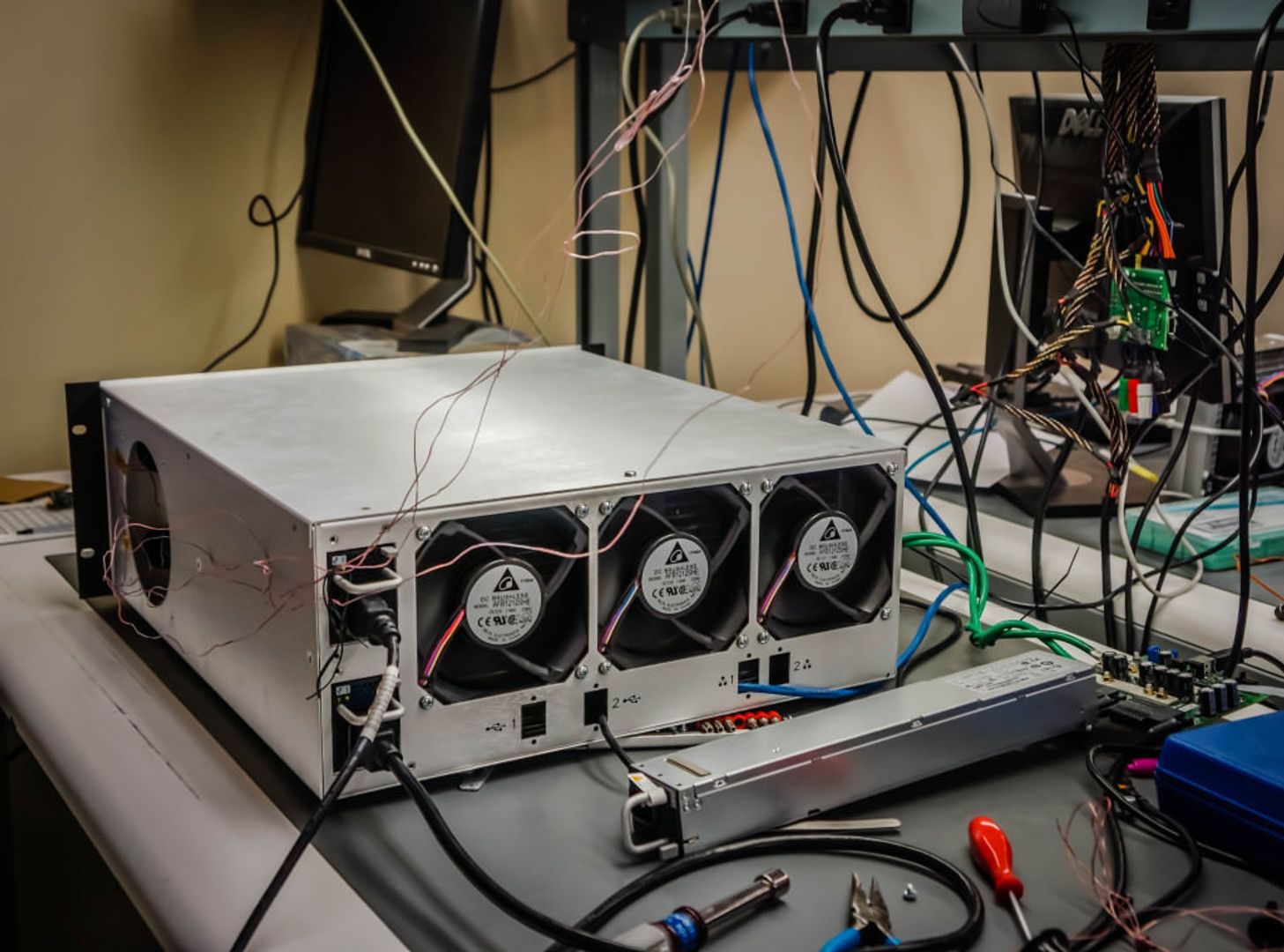
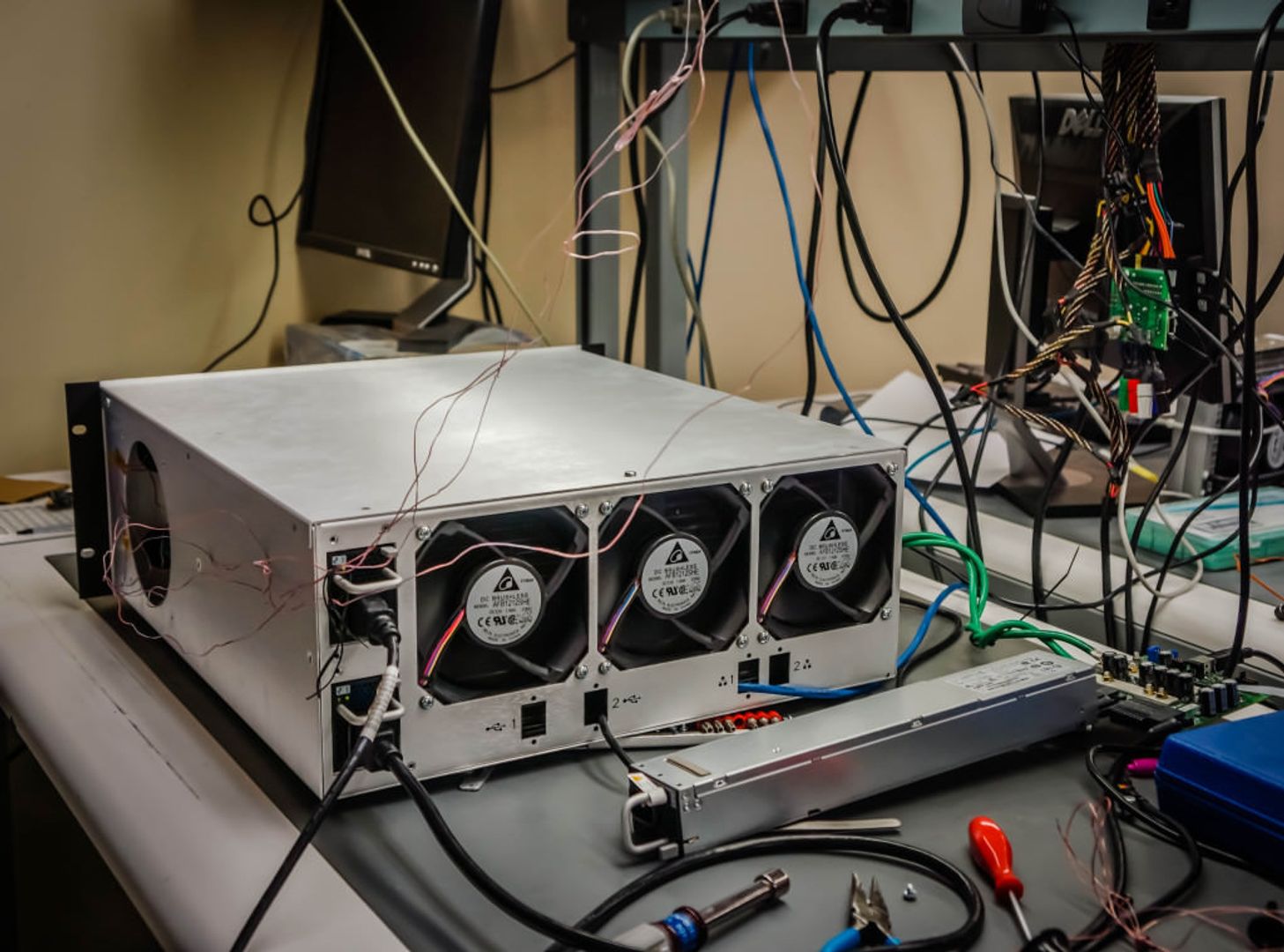
Bitcoin has spent five straight months trading below what it costs to produce, squeezing miners and forcing some to sell, JPMorgan said in a note. The bank pegs the cost to mine one bitcoin at about $78,000, well above the roughly $62,500 the asset fetches now.
The strain is showing and about 20% of miners are now unprofitable, the bank said citing CoinShares data, and publicly traded miners sold more than 32,000 bitcoin in the first quarter to cover operating costs, more than they offloaded in all of 2025.
The network is adjusting on its own. When the price drops below cost, higher-cost miners power down, the hashrate, or total computing power securing the network, falls, and mining difficulty, the automatic setting for how hard it is to mine, resets lower.
That played out in early June, when difficulty dropped 10%, the second decline of that size this year.
Miners are also reacting faster than before. JPMorgan says the sensitivity of difficulty to price has climbed, with more operators sitting near breakeven and flipping machines on or off as prices move. The bank expects larger and more frequent adjustments for as long as bitcoin stays below its production cost.
The outlook is cautious, but JPMorgan flags one upside. The weak sentiment around the sector could itself prove a bullish contrarian signal, echoing the run of accumulation readings, from whale buying to falling exchange reserves, pointing the same way this month.
-
The next crypto user may start outside exchanges
For most of crypto’s history, new users followed a fairly standard path. They signed up on an exchange, completed identity checks, learned how wallets worked, bought their first cryptocurrency and only then started exploring decentralized applications (DApps).
It was rarely a smooth process.
Wallet addresses often looked intimidating. Seed phrases confused beginners and gas fees were hard to understand. Even buying a small amount of Bitcoin could mean using several platforms and dealing with unfamiliar ideas.
This process is slowly changing.
Instead of starting on an exchange or wallet app, tomorrow’s users may begin with a simple conversation. They could ask an AI assistant what Bitcoin is, how to buy it or how to send money abroad. The same assistant could then guide them through the steps or even help complete the transaction.
Recent developments suggest this future could arrive sooner than expected. MoonPay is now available inside ChatGPT for crypto-buying flows. At the same time, Coinbase’s Base ecosystem is building tools that allow AI assistants to work with wallets and blockchain applications.
The result could change how people first enter crypto space.
The next wave of onboarding may not begin inside exchanges or wallets. It may begin inside chatbots.
-
Crypto onboarding has long been a usability problem
One of crypto’s biggest challenges has not been the technology itself. It has been the user experience.
To experienced users, private keys, wallet addresses and blockchain confirmations may feel normal. To newcomers, they can seem intimidating.
Traditional onboarding asks users to learn several unfamiliar systems at once. They need to understand how exchanges, wallets, security tools and transactions work before they can use crypto with confidence.
This complexity has caused many mistakes over the years. People have sent money to the wrong addresses, lost access to their wallets and fallen for scams because they did not clearly understand the tools they were using.
The industry has spent years trying to make this process easier. AI is now becoming the latest attempt to solve that problem.
Did you know? Long before modern AI assistants, crypto users relied on simple Telegram and Discord bots to check prices, send alerts and carry out basic trades. Today’s AI-powered crypto assistants are far more advanced versions of those early tools.
-
ChatGPT becoming more than an information tool
Early AI assistants mainly helped users learn. They answered questions, but they did not complete actions. People could ask questions such as:
- What is Bitcoin?
- How do stablecoins work?
- What is a crypto wallet?
The chatbot would give clear answers, but the actual transaction still happened on another platform. That separation is starting to disappear.
New integrations allow AI systems to do more than explain crypto. They can now connect users directly to services for buying, transferring and using blockchain networks.
Picture a newcomer saying:
“I want to buy $100 worth of Bitcoin.”
Instead of sending the user to another site, the AI could create a purchase link, explain the steps and guide them through the full process.
The conversation itself becomes the onboarding process. For beginners, this may feel natural because it matches how they already use AI for everyday tasks.
-
When chatbots move from answers to actions
The next phase of AI-crypto integration goes beyond simple asset purchases. It is also about letting users manage more crypto tasks through chat.
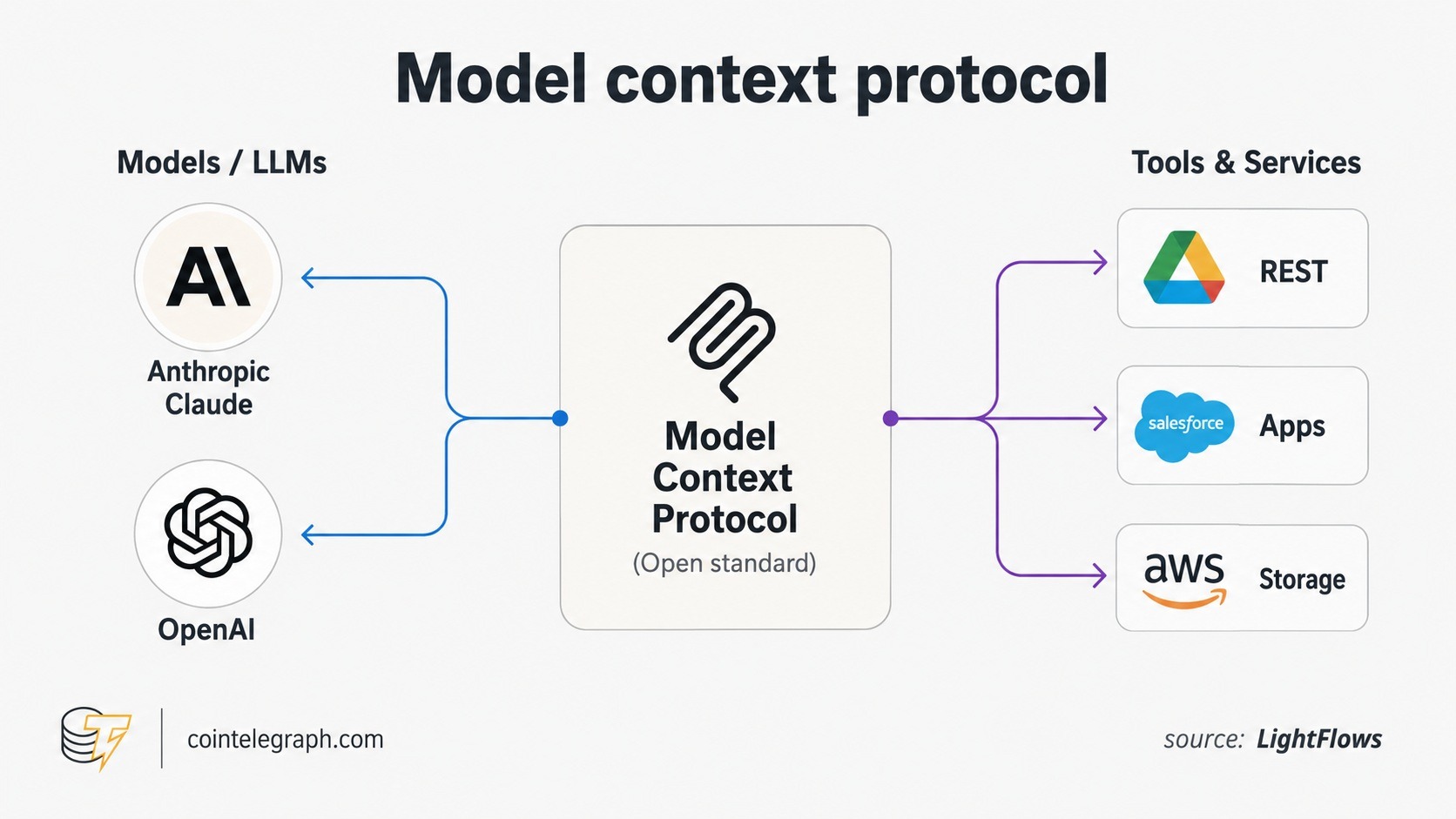
Projects like Coinbase’s Base Model Context Protocol (MCP) gateway aim to connect AI assistants with wallets, blockchain apps and other crypto services.
This could allow users to give instructions such as:
- Send 50 USDC to my friend.
- Swap ETH for USDC.
- Check my wallet balance.
- Find the cheapest route for a token transfer.
Instead of moving between different apps and websites, users would interact through normal language.
This follows earlier changes in computing. Users once had to remember command-line instructions. Graphical interfaces made that easier. Mobile apps made things simpler again.
AI assistants may be the next step. They could let people describe what they want to do instead of learning complex software steps.
-
Understanding MCP and its importance
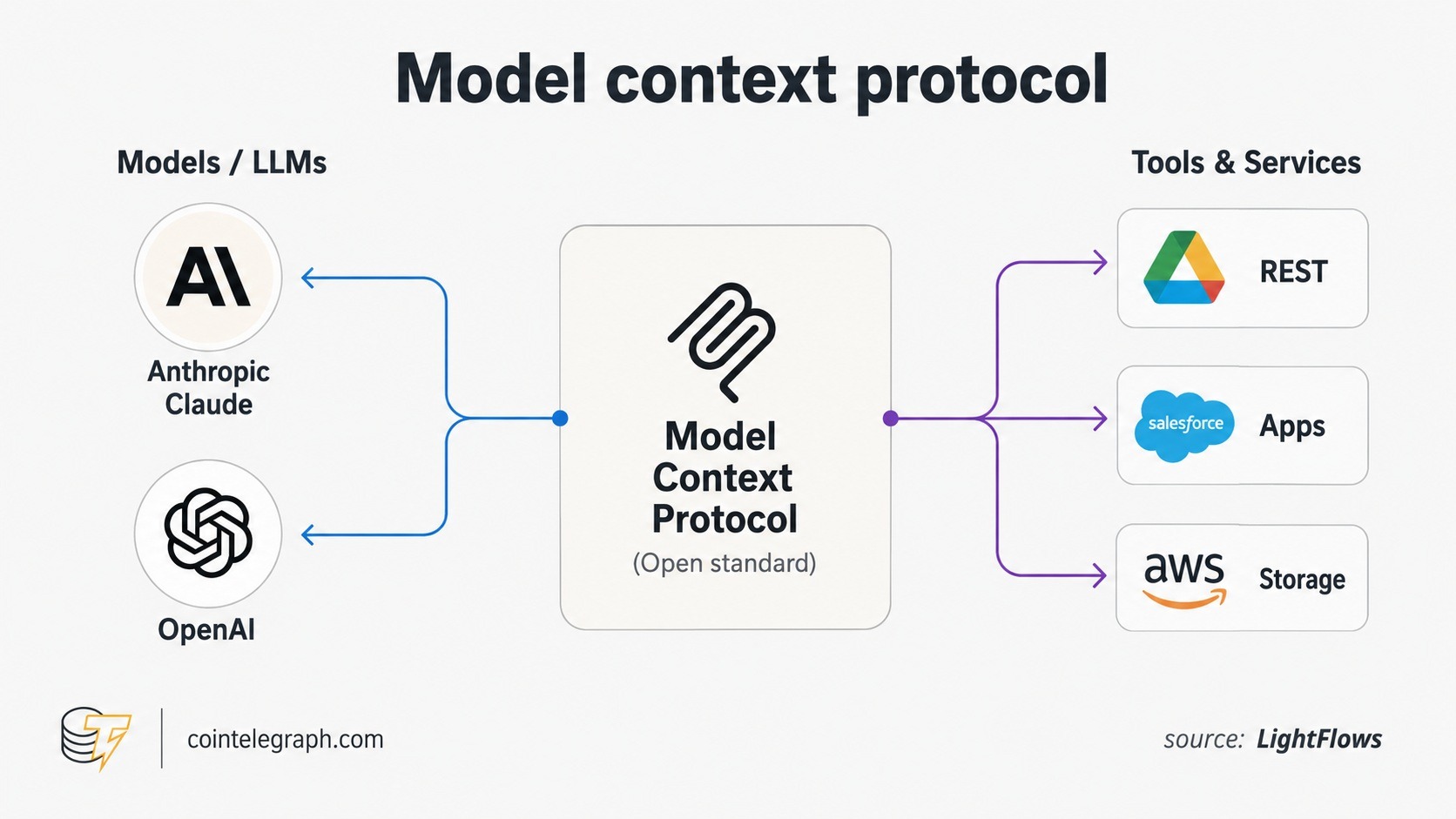
Much of this change comes from MCP. It gives AI systems a standard way to connect with outside tools and services.
Instead of remaining standalone chatbots, AI assistants can now connect with databases, apps, wallets and other software systems.
MCP acts as a bridge between normal conversation and real action.
Without this kind of setup, AI systems can only provide information. With it, they can carry out tasks for users while keeping the right context.
For crypto, the value is clear. Blockchain apps often involve several technical steps in a specific order. MCP-supported systems can handle many of those steps automatically while the user stays inside a single chat window.
This could make AI the main layer people use to manage financial tasks.
-
When users no longer have to see the crypto layer
The biggest change may not be what users do. It may be what they no longer have to deal with directly.
Today’s crypto experience is still very visible. Users know they are dealing with exchanges, wallets and blockchains because they have to move through each layer themselves.
In a future shaped by AI, much of that complexity could move out of sight.
A user might simply say:
“Send $100 to my brother.”
The AI assistant could identify the steps, explain what will happen and show a clear confirmation before anything goes through.
The blockchain still runs. The wallet still exists. The user simply interacts with them through conversation instead of technical controls.
In this sense, crypto becomes less visible even as more people start using it.
-
Why this approach may appeal to new users
For new users, chat-based crypto tools could offer several practical benefits:
- They lower technical barriers.
- They explain things when users need help.
- They can guide users through unfamiliar steps one at a time.
- Most importantly, they feel familiar.
People already ask AI assistants for help with travel plans, meal ideas and work tasks. Asking the same assistant how to buy Bitcoin may feel like a natural next step, not a completely new behavior.
This could help crypto reach a wider audience.
Many people who once felt uneasy with traditional crypto apps may feel more comfortable using crypto through chat.
Did you know? Future crypto users may never have to copy a wallet address manually. Instead of pasting long strings of characters, they could simply tell an AI assistant who to pay while the technical details stay hidden in the background.
-
The trust issue nobody is talking about
Convenience also creates new problems. Earlier, users dealt directly with crypto platforms. They placed their trust in exchanges, wallets or blockchain networks.
In a chatbot-based setup, much of that trust shifts to the AI assistant. The chatbot becomes the main point of contact. Users may start accepting its suggestions simply because they sound clear and confident.
Most people have limited knowledge of blockchain technology. They also know little about how large language models work.
As a result, they may rely too heavily on systems they do not fully understand. The main concern is not always bad intent. It is overreliance.
A chatbot can make decisions feel so simple that users stop questioning the actions they approve.
-
What happens when AI makes a mistake
AI systems are still far from perfect. Mistakes, misunderstandings and inaccurate answers remain common.
In most cases, these issues may cause little harm if the person using AI reviews the output carefully. A wrong historical detail or a weak suggestion can usually be caught before it creates a major problem.
Financial transactions are different. A mistake involving wallet addresses, token symbols or transaction details could easily lead to financial losses.
Even small errors can matter in blockchain systems, where transactions are usually final and cannot be reversed. That is why human review remains important.
AI can be a useful assistant, but users must still check what they are authorizing. Convenience cannot replace careful review.
-
New security concerns in AI-enabled crypto tools
As AI starts connecting directly with wallets and financial tools, new risks come with it.
Bad actors may try to influence AI systems through prompt injection. Malicious plugins could abuse trusted connections. Scammers may use AI-generated conversations to make scams seem more believable.
These risks are not limited to crypto, but the financial impact can be much higher here. A wrong answer from a chatbot is one problem. A wrong transaction is another.
Security becomes more important as AI moves from giving advice to taking action. The industry will need to keep these tools easy to use while still building strong protections.
-
Could AI replace exchanges as crypto’s main entry point?
One major question is whether exchanges could slowly move into the background as support systems.
Users rarely think about the servers behind their favorite websites. They simply use search engines, browsers and apps. A similar change could happen in crypto.
Exchanges may still provide liquidity and carry out trades while AI assistants become the visible face of the system.
If that happens, control of the user experience could matter more than control of the technology behind it. Companies that shape the conversation may gain more influence over how people find, access and use crypto services.
-
How AI agents could change automated finance
The link between AI and crypto goes far beyond human users. Developers are now building AI agents that can interact with financial systems on their own.
Over time, these agents could handle subscriptions, adjust investment portfolios, make payments and use decentralized finance protocols with limited human input.
Crypto networks are well suited for this kind of activity. They are programmable, available worldwide and open around the clock.
Fully independent financial agents are still a developing idea, but the basic tools are already being built.
Together, AI and blockchain may one day support financial systems where machines interact directly with other machines.


The pressure came from a wider retreat in markets. Global equities slipped in holiday-thinned trading, with US, Chinese, Hong Kong and Taiwanese markets closed, and a gauge of Asian shares falling 0.6% after a five-day run to record highs. Brent crude traded around $79 a barrel, down about 9% on the week, as shipping through the Strait of Hormuz returned to normal under the signed US-Iran deal and eased what had been a historic supply shock.
Attention now turns to talks over Iran’s nuclear program, with Vice President JD Vance saying a 60-day clock to settle the deal’s details has started.
The bigger question hanging over the market is where this cycle goes, and whether the altcoins that usually rally late in a bull run get their turn at all. Michael Egorov, founder of Curve Finance, told CoinDesk he thinks bitcoin is behaving differently this cycle because spot ETFs were approved just before the 2024 halving, the roughly four-yearly event that cuts the rate of new bitcoin issuance, pulling in institutional demand that did not exist before and breaking the old pattern.
The speculative energy that once flowed into altcoins, he said, went instead into “useless memecoins” right after the ETFs launched.

Full results of the Makerfield by-election and who won historic vote | News Politics

Electro Optic Systems Shares Surge 12.6% as ASX 200 Inclusion and Defense Boom Fuel Rally

Ireland Considers New Crypto Rules to Address Financial Risks


-

 Business5 days ago
No Jackpot Winner as $257 Million Prize Rolls Over to $269 Million Monday Draw
-

 Fashion6 days ago
Weekend Open Thread: Tuckernuck – Corporette.com
-
 Crypto World4 days ago
Zimbabwe Requires Crypto Businesses to Register Annually Under New FIU Regulations
-

 Crypto World6 days ago
Bitget enters Argentina’s regulated crypto market through PSAV registration
-

 Tech6 days ago
NanoClaw integrates JFrog registries to secure AI agent downloads
-

 Tech7 days ago
This Week In Security: Microsoft On Microsoft, Register Your Domains, Linux On ARM, And FreeBSD Joins The File Cache Club
-

 NewsBeat6 days ago
FBI searches office of Ohio voter registration group
-
 Entertainment4 days ago
Matt Damon’s Viral Sci-Fi Thriller Has Taken Over HBO Max
-

 Business4 days ago
Anthropic staff to meet White House officials next week, Axios reports
-

 Tech5 days ago
As AI companies race to go public, who else is along for the ride?
-
 Crypto World4 days ago
Bitcoin could crash to $48,000, if this historical pattern is triggered
-

 Politics4 days ago
“Israel’s” ban on ICRC visits ruled illegal, but Knesset moves to stop them permanently
-
Entertainment7 days ago
Ana Navarro unleashes explosive tirade on ex-Trump aide, Disney Channel star in epic on-air fight: 'Have you no shame?'
-
 NewsBeat4 days ago
Warning of disruption as Cardiff Crossrail works to start
-

 News Videos4 days ago
Financial Accounting | Last Day Revision Strategy and Booster | CMA Inter – June 2026
-
 NewsBeat4 days ago
Tributes to former deputy head teacher at Cambridge school among death and funeral notices
-
 Crypto World5 days ago
Market Preview: SpaceX (SPCX) IPO Record, Federal Reserve Meeting, and Iran Nuclear Agreement
-
 NewsBeat4 days ago
what doctors are seeing in ebike crashes
-

 Entertainment5 days ago
Deion Sanders Shares Powerful Post After Viral Advice To Deiondra
-
 Entertainment4 days ago
Kate Middleton Glare Goes Viral After Kids Booed At Royal Event
You must be logged in to post a comment Login