

Crypto World
US Lawmakers May Be Banned From Betting on Kalshi and Polymarket



Representative Bryan Steil introduced the Stop Lawmakers from Predicting Act on June 18. The bill bars members of Congress, their spouses, and dependent children from wagering on government policy and political outcomes through prediction markets.
The Wisconsin Republican chairs the House Administration Committee. His bill responds to mounting concerns surrounding reported insider trading on these platforms.
Steil Seeks to Bar Lawmakers From Betting on US Policy Outcomes
The legislation builds on the Stop Insider Trading Act, which the committee advanced on January 14. Steil framed the new measure as a way to rebuild confidence in elected officials.
“The American people deserve to know their Member of Congress is not profiting off insider information,” Steil said. “Lawmakers should be writing policy, not wagering on its outcome.”
Follow us on X to get the latest news as it happens
The bill bans members, spouses, and dependent children from betting on specific government policies, actions, or political results. Violators must pay $2,000 or 10% of the transaction value, whichever is greater. They also forfeit any net gain.
In addition, the bill proposes that members cannot use their official allowances, Senate expense accounts, or political donations to pay the fine. Those who resign or retire without paying can be referred to the Department of Justice for civil enforcement.
The proposal joins a wider push. In March, Senators Todd Young, Elissa Slotkin, John Curtis, and Adam Schiff introduced the Public Integrity in Financial Prediction Markets Act, targeting nonpublic information trades across any platform. A House companion, the PREDICT Act, extends similar limits to officials’ families.
Whether the measure advances may hinge on bipartisan appetite, given parallel Senate and House efforts already in motion. Meanwhile, prediction market platforms have responded too.
In June, Kalshi rolled out risk scoring, employment checks, and whistleblower channels to deter insiders from acting on privileged information. Polymarket brought in Chainalysis to build an on-chain surveillance system.
Subscribe to our YouTube channel to watch leaders and journalists provide expert insights
The post US Lawmakers May Be Banned From Betting on Kalshi and Polymarket appeared first on BeInCrypto.


- Cardano (ADA) trades near $0.160 with weak momentum and fading buying pressure.
- The key support at $0.157 is critical, with $0.13 risk if it breaks.
- Oversold signals and the Leios testnet could trigger a short rebound soon.
Cardano (ADA) continues to trade under pressure, holding near the lower end of its recent range as both spot and derivatives markets reflect cautious sentiment.
The token is priced at $0.1607, down 3.2% in the past 24 hours.
Over longer timeframes, the token is down 6.1% over the past 7 days, down 35.6% over the past month, and down 73.2% in the past year, reflecting sustained downside pressure across the broader trend structure.
Daily trading activity, however, remains active, with $368.8 million in 24-hour volume.
Weak derivatives positioning and fading participation
In the derivatives market, the long-to-short ratio stands at 0.96, indicating slightly more short positions than long positions among traders.
Futures open interest is around $348 million, continuing a broader decline from mid-May levels.
This reduction in open interest signals lower speculative engagement and suggests that traders are reducing exposure rather than building conviction positions in either direction.
On-chain indicators also reflect strain in market behaviour.
The Network Realised Profit/Loss (NPL) metric has dropped sharply, showing that a large portion of recent holders have been realising losses rather than gains.
This type of activity is commonly associated with capitulation phases, where weaker holders exit positions under sustained price pressure.
Cardano technical analysis
Cardano remains below its major long-term moving averages, confirming that the broader trend is still bearish.
The altcoin’s price is trading under the 50-day, 100-day, and 200-day exponential moving averages (EMAs), which typically reinforces resistance during attempted recoveries.

The RSI (14) on the daily chart is around 31, suggesting bearish control is still present, though no longer in extreme oversold territory.
Cardano price outlook heading into the Leios testnet catalyst
A key event in the near-term outlook is the expected Leios scaling upgrade testnet around June 23.
This upgrade testnet is being closely watched as a potential catalyst for renewed activity within the Cardano ecosystem.
The current market structure at this stage remains weak, but conditions are showing early signs of compression.
Oversold readings on higher timeframes, combined with reduced selling momentum, suggest that price is approaching a decision point rather than continuing in a steady decline without interruption.
If bulls step in around the $0.157 support zone, a short-term rebound toward $0.172 remains the primary recovery scenario.
However, failure to hold this level would keep downside projections toward $0.148 and potentially $0.13 in focus, depending on how market liquidity and sentiment evolve.
Notably, a bearish flag breakdown has also been noted in recent technical assessments, a formation that typically signals continuation of an existing downtrend after a brief consolidation phase.
This adds weight to the downside risk scenario unless buyers regain control above key resistance levels.

Key Highlights
- Shares of TSM have skyrocketed 102.41% in the past twelve months, dramatically outperforming the S&P 500’s 25.39% return.
- First quarter 2026 revenue reached $35.90 billion, marking a 35.1% increase compared to the prior year, driven by High-Performance Computing at 61% of sales.
- Monthly revenue for May climbed 30.1% year-over-year, maintaining a consistent 30% growth rate across the first five months.
- Analysts project FY2026 earnings per share at $15.76, placing TSM at approximately $462 with a forward price-to-earnings multiple near 29x.
- The company carries a Zacks Rank #2 (Buy) alongside a Momentum Style Score of B; Wall Street consensus shows Strong Buy with an average target of $465.
Taiwan Semiconductor (TSM) has delivered extraordinary returns — climbing more than 100% over the past year — and market watchers believe there’s more upside ahead.
Taiwan Semiconductor Manufacturing Company Limited, TSM
Shares of TSM are currently changing hands near $462. The stock has climbed 24.27% in just the past three months and has doubled in value over the trailing year. By comparison, the broader S&P 500 index advanced only 25.39% during the same timeframe.
At least one analyst now suggests TSM has the potential to hit $500 per share, pointing to what they characterize as underappreciated earnings strength and a dominant position in cutting-edge chip production.
The Street’s consensus earnings forecast for fiscal year 2026 sits at $15.76 per share, implying a forward valuation multiple of approximately 29x. With the semiconductor sector’s median multiple hovering around 33x, some observers see opportunity for TSM’s valuation to expand.
A bullish perspective suggests actual earnings power may be closer to $18.48 for FY2026, which would place the stock at roughly 25x forward earnings — a more attractive valuation than headline figures indicate.
Consistent Top-Line Momentum
TSMC delivered first quarter 2026 revenue of $35.90 billion, representing a 35.1% jump from the year-ago period. High-Performance Computing applications contributed 61% of total revenue, while cutting-edge manufacturing processes at 3nm, 5nm, and 7nm nodes generated 74% of wafer revenue.
The 3nm process technology alone represented 25% of wafer revenue — highlighting where TSMC’s premium pricing capability resides.
Recent monthly figures support the growth trajectory. May revenue increased 30.1% versus the prior year. The five-month cumulative revenue expansion for 2026 stands at 30%.
TSMC has adjusted its full-year 2026 capital expenditure guidance toward the upper boundary of its $52 billion to $56 billion range. The chipmaker is scaling capacity to address substantial order volumes from major clients including Nvidia, Apple, and AMD.
The Path to $500 Per Share
Chief Executive C.C. Wei has stated that worldwide semiconductor supply will fall short of AI-related demand for the foreseeable future.
TSMC is expanding manufacturing operations with new fabrication facilities in Taiwan, Arizona, and Japan. The company is simultaneously advancing Chip-on-Panel-on-Substrate (CoPoS) packaging solutions designed for next-generation artificial intelligence processors.
What Analysts Are Saying
TSM currently holds a Zacks Rank #2 (Buy) classification along with a Momentum Style Score of B. During the previous 60 days, two earnings projections for FY2026 were revised upward while none were lowered. The full-year consensus figure increased from $15.10 to $15.30 throughout that window.
Among Wall Street firms, TSM carries a Strong Buy consensus derived from five Buy recommendations and one Hold rating. Zero analysts currently assign it a Sell rating.
The mean price objective among these analysts stands at $465, suggesting modest upside of approximately 0.62% from present levels within the coming 12 months.
TSM’s weekly price movement shows a gain of 2.11%, in line with the Zacks Semiconductor – Circuit Foundry industry benchmark. The stock’s average 20-day trading volume registers around 11.6 million shares.


Disclosure: This article does not represent investment advice. The content and materials featured on this page are for educational purposes only.
Cloud mining adoption is rising in 2026 as platforms like SHRMiner, BitFuFu, IQMining, Binance Cloud Mining, and CCG Mining offer simplified crypto mining access.
Summary
- Cloud mining in 2026 lets users mine BTC, DOGE, and LTC without hardware, with SHRMiner, BitFuFu, and Binance Cloud Mining leading options.
- SHRMiner offers beginner-friendly cloud mining with auto payouts, renewable energy farms, and no hardware or technical setup required.
- Investors compare platforms by security, transparency, and contracts, with SHRMiner highlighted for ease of use and multi-crypto support.
Want to participate in Bitcoin mining in 2026 but don’t want to buy expensive mining rigs? Then, cloud mining platforms remain one of the simplest and most worry-free options.
Nowadays, more and more investors are entering the market through free cloud mining platforms, easily participating in mining mainstream cryptocurrencies such as BTC, DOGE, and LTC without needing to build their own equipment or bear high electricity and maintenance costs.
However, while there are many platforms on the market, only a few are truly worth considering. A good cloud mining platform should not only have a clear and transparent profit mechanism, but also a stable data center, an automatic payment system, and a sufficiently secure operational background.
Based on the market trends and platform characteristics in 2026, SHRMiner, BitFuFu, IQMining, Binance Cloud Mining, and CCG Mining are the five platforms that deserve close attention.
1. SHR Miner: The most noteworthy cloud mining platform in 2026
For those looking for a service that balances security, flexibility, and beginner-friendliness, SHRMiner is a very popular choice. Launched in 2018 and headquartered in the UK, SHRMiner operates over 100 large-scale renewable energy mining farms in the US, UK, Russia, Switzerland, Iceland, Virginia, Georgia, Vancouver, Canada, and other locations, utilizing renewable energy sources such as hydropower and wind power to enhance mining efficiency.
The platform supports mining mainstream cryptocurrencies such as BTC, LTC, and DOGE. Users do not need to purchase any hardware; they only need to select a suitable contract to start. Its contract coverage is extensive, with a comprehensive range of entry-level and premium packages to suit users with different budgets.
SHRMiner Core Advantages:
Register to receive a $15 bonus and free mining experience.
Zero learning curve: No technical skills, hardware, or complicated operations required — just click to start mining.
Supports daily automatic settlement, with no transaction fees or maintenance costs.
Uses advanced ASIC mining equipment, connected to green energy, improving operational efficiency.
Provides SSL encryption and DDoS protection.
Provides a real-time earnings dashboard, allowing users to track their earnings anytime, anywhere.
Supports multiple contract types including BTC, LTC, and DOGE.

SHRMiner gained popularity in 2026 primarily because it was suitable for beginners to quickly get started while also supporting more advanced users for flexible configuration. Its overall performance was well-balanced, from the initial user experience to contract scalability.
2. BitFuFu: A professional platform backed by Bitmain
BitFuFu has garnered significant market attention due to its association with Bitmain. This type of platform is particularly attractive to users who value mining rig resources and hardware expertise. BitFuFu is suitable for investors seeking a more mature mining service system.
3. IQMining: A Key Focus for Long-Term Contract Users
IQMining has been operating for several years and is characterized by offering longer-term mining contracts. For users who prioritize long-term planning over short-term volatility, IQMining is a common choice.
4. Binance Cloud Mining: Integrated trading and mining
The biggest advantage of Binance Cloud Mining lies in its ecosystem integration. Users can manage mining and asset transfers directly within their Binance accounts, eliminating the need for frequent platform switching. This is especially convenient for existing Binance investors.
5. CCG Mining: A key platform in the European market
CCG Mining offers a comprehensive range of services, including cloud mining, mining rig sales, and hosting. It enjoys considerable brand recognition in the European market and is suitable for users looking to explore diverse mining services.
Why are more and more people choosing cloud mining in 2026?
Compared to traditional mining rigs, the biggest advantages of cloud mining are:
- No need to purchase expensive equipment
- No need to bear high electricity bills
- No need for technical maintenance knowledge
- Quick start after registration
Some platforms also offer free trials and reward mechanisms. For ordinary users, this model is obviously more convenient and more suitable for low-barrier entry into the crypto market.
Conclusion: Which cloud mining platform is worth paying attention to in 2026?
From an overall user experience perspective, SHRMiner remains one of the most competitive platforms in 2026. It excels in platform transparency, mining process, settlement efficiency, and beginner-friendly features, while supporting multiple cryptocurrencies including BTC, LTC, and DOGE, making it highly versatile.
Of course, for those who prioritize exchange integration, Binance Cloud Mining will be more convenient; for those who value long-term stable contracts, IQMining and CCG Mining are also good options.
In general, when choosing the best cloud mining platform, it is recommended to focus on the platform’s background, security mechanisms, contract flexibility, and actual user experience. For users looking to start their free cloud mining journey in 2026, prioritizing a transparent, secure platform with clear settlement is a safer bet.
In short, for those who are looking for a cloud mining platform that balances transparency, flexibility, and ease of use in 2026, SHRMiner is a wise choice.
For more platform information, service details, and cloud computing solutions, visit the official platform or download the mobile application.
Disclosure: This content is provided by a third party. Neither crypto.news nor the author of this article endorses any product mentioned on this page. Users should conduct their own research before taking any action related to the company.


Bitcoin fell to around $62,000 on Friday, while CryptoQuant CEO Ki Young Ju warned that Michael Saylor’s continued accumulation strategy may not be enough to address what he considers the market’s most serious threat.
Summary
- Ki Young Ju warned that Bitcoin’s biggest threat is prolonged stagnation rather than a sudden crash.
- Ju argued Strategy’s Bitcoin purchases cannot replace the need for a new market narrative.
- QCP, Peter Schiff, and Ju have all raised concerns about pressure on Strategy’s STRC structure.
In a June 19 X post, Ki Young Ju argued that Bitcoin faces a greater threat than a sudden price crash. According to the CryptoQuant CEO, a prolonged period of weak performance could gradually erode investor conviction, making it harder for the asset to attract fresh capital and maintain the narratives that have supported previous bull markets.
Discussing Strategy’s role in the market, Ju argued that buying more Bitcoin does not solve the underlying issue.
“That’s why Saylor’s real challenge is not just buying more Bitcoin. It is giving the market a new reason to believe.”
The remarks come as concerns surrounding Strategy’s financing structure continue to grow. STRC, the company’s preferred stock, recently fell to a record low near $82, placing it well below its $100 par value and raising questions about investor demand.
Strategy faces pressure if Bitcoin stagnates
While Ju said investors can tolerate sharp drawdowns when they expect a recovery, he argued that extended sideways trading presents a different problem. According to his analysis, a long bear market could weaken enthusiasm for Bitcoin and put additional strain on Strategy’s ability to raise capital.
Ju warned that STRC becomes most vulnerable when Bitcoin spends years moving sideways rather than experiencing a short-lived crash. As investor interest fades, he said demand for the company’s securities could decline, making fundraising more difficult.
Similar concerns have emerged elsewhere on Wall Street. Market maker QCP recently estimated that Strategy’s current liquidity position provides roughly seven and a half months of runway for dividend payments. QCP noted that the company has already repurchased nearly $1.5 billion of convertible notes due in 2029 while raising about $200 million through MSTR stock sales.
In QCP’s assessment, selling Bitcoin could become one option if Strategy seeks to preserve dividend payments while maintaining its treasury strategy.
Criticism has also come from longtime Bitcoin skeptic Peter Schiff. As previously reported by crypto.news, Schiff argued that investors who purchased STRC for income may have underestimated the risks involved. He further claimed that future fundraising could become more expensive if new investors demand higher yields to compensate for the stock’s decline below par value.
Bitcoin still lacks its next defining narrative
Looking beyond Strategy, Ju argued that Bitcoin needs a new story capable of attracting the next wave of capital.
Reflecting on previous market cycles, he noted that major milestones once viewed as distant possibilities have already happened. Ju pointed to the approval of spot Bitcoin exchange-traded funds and growing political support for Bitcoin in the U.S. as examples of narratives that have already played out.
“When I founded CryptoQuant in 2018, I strongly believed a Bitcoin ETF would eventually be approved,” Ju wrote, adding that he also expected a future U.S. president to openly support Bitcoin as a strategic reserve asset.
With those developments now in place, Ju questioned what catalyst could unite investors during the next phase of adoption. Although Michael Saylor has promoted concepts such as Bitcoin banking and digital credit, Ju expressed uncertainty about whether those ideas would resonate with everyday investors.
His warning arrives as financial conditions remain restrictive. Earlier this week, Federal Reserve Chair Kevin Warsh led a unanimous vote to keep interest rates steady at 3.50% to 3.75%, while policymakers indicated inflation remains above target.
Higher borrowing costs have continued to weigh on risk assets, adding another challenge for Bitcoin at a time when investors are already searching for a new source of conviction.
Even so, Saylor remains firmly optimistic. Speaking at BTC Prague 2026, the Strategy executive chairman predicted Bitcoin could eventually reach $7 million per coin and argued that the network’s value could one day grow to $100 trillion, underscoring the gap between his long-term outlook and the concerns now being raised by market critics.

XRP price is down by 4% over the past 24 hours, after an on-chain data confirmed a coordinated wave of whale distribution that erased a multi-day rally in under 72 hours. The token briefly touched $1.29 before sellers stepped in hard, and large-wallet behavior is now the dominant price driver.
According to data, wallets holding at least 1 million XRP offloaded more than 30 million tokens over five days, with Santiment data showing combined large-address holdings dropping from 3.82 billion to 3.77 billion XRP.
This supply hit spot exchanges directly, absorbing the buying pressure that had built from a $1.14 base on June 14. A cascade of leveraged long liquidations in derivatives markets accelerated the drop, with new Fed Chair Kevin Warsh delivering hawkish signals that killed rate-cut expectations and hit risk assets globally.
The macro overhang is not going away fast. Can XRP’s spot ETF inflows of $5.30 million on June 16 and $2.55 million on June 18 be enough to absorb continued whale selling?
Discover: The Best Crypto to Diversify Your Portfolio
XRP Price Prediction: $1.20 or Is a Test of $1.05 Next?
XRP is currently consolidating near $1.12, having lost every support level it built during the June rally. The move from $1.14 to $1.29 and back down was a full round-trip with nothing to show for it.
Resistance is now stacked between $1.20 and $1.25, the range where profit-taking overwhelmed buying. Below the current price, the next meaningful support zone sits near $1.05, flagged by analysts as the next critical battleground.

A daily close beneath $1.10 would make that test highly likely. Momentum indicators remain bearish, with price trading below short-term moving averages and volume on down days outpacing recovery sessions.
If whale selling exhausts, and ETF inflows accelerate, XRP could reclaim $1.20 within the week and sets up a retest of highs. The ETF inflow data offers a genuine counterpoint for bear
Discover: The Best Token Presales
Maxi Doge Presale Draws Rotation Capital as XRP Stalls at Key Levels
When a mid-cap like XRP gives back a full rally in three days with no structural damage repaired, active traders start scanning for asymmetric setups elsewhere. That rotation is real, and it tends to favor early-stage projects where the entry price hasn’t already been through a 4% haircut before the week ends.
Maxi Doge ($MAXI) is pulling that attention in the meme token segment. Built on Ethereum, the project frames itself around high-conviction trading culture, 1000x leverage mentality, holder-only trading competitions with leaderboard rewards, and a Maxi Fund treasury designed for liquidity management and partnerships.
The presale has raised $4.8 million at a current token price of $0.0002824, with dynamic staking APY available to participants. The community competition structure differentiates it from pure meme plays with no retention mechanism.
Traders considering a position should research Maxi Doge.
The post XRP Price Under Pressure: 30M XRP Whale Sale Pushes Token Down 4% appeared first on Cryptonews.
This Friday, we examine Ethereum, Ripple, Cardano, Binance Coin, and Hyperliquid in greater detail.
Ethereum (ETH)
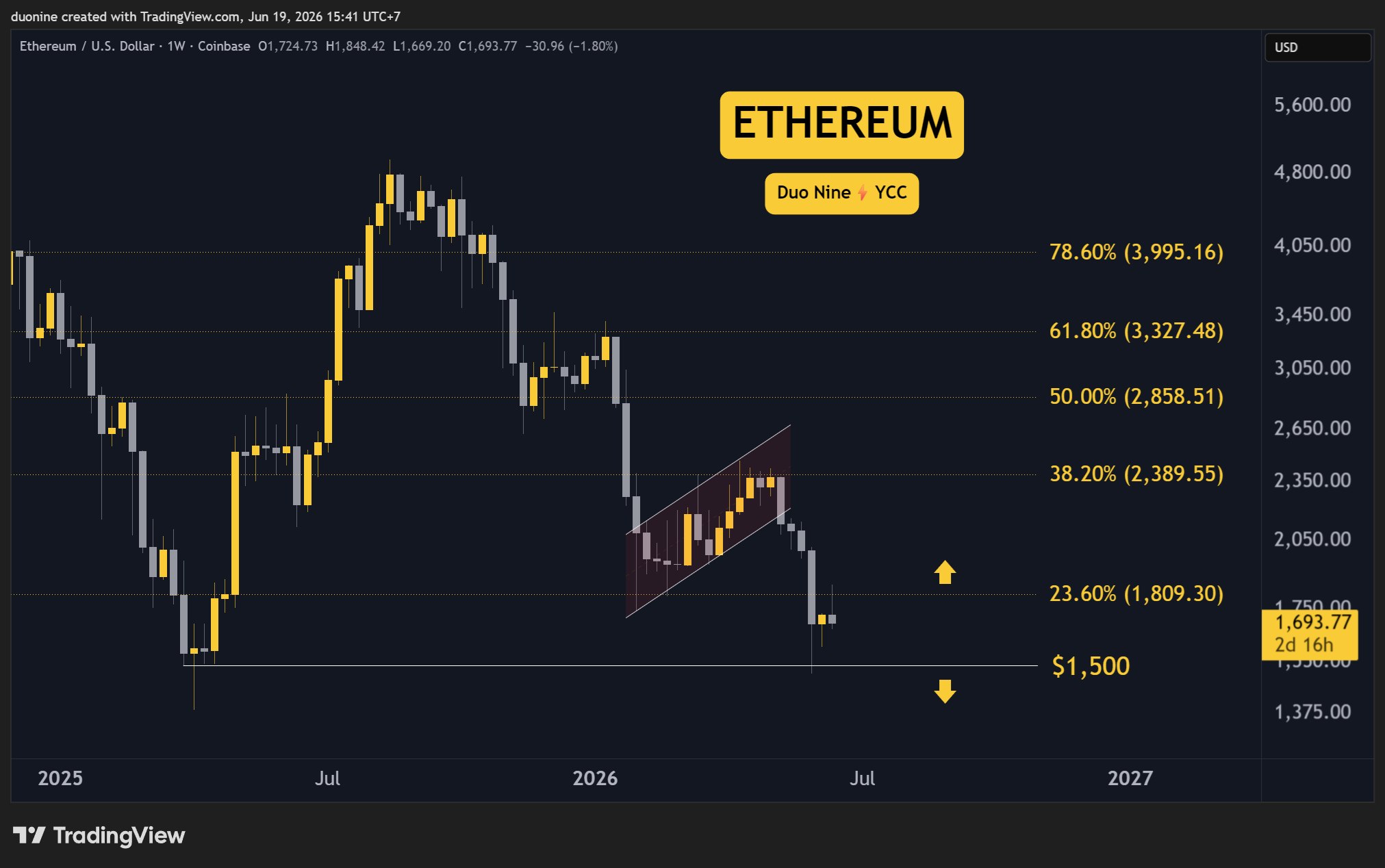
This week, Ethereum is up 2%, but that is hardly relevant given that the price has failed to reclaim the $1,800 resistance. Sellers returned there to keep the price locked in under this key level.
With the uptrend halted, this cryptocurrency is forced to range between support at $1,500 and resistance at $1,800.
Looking ahead, because sellers appear to control price action, they’re likely to make another attempt to break the key support. If ETH shows weakness and loses $1,500, then new yearly lows will materialize with key targets at $1,400 and $1,100.
Ripple (XRP)
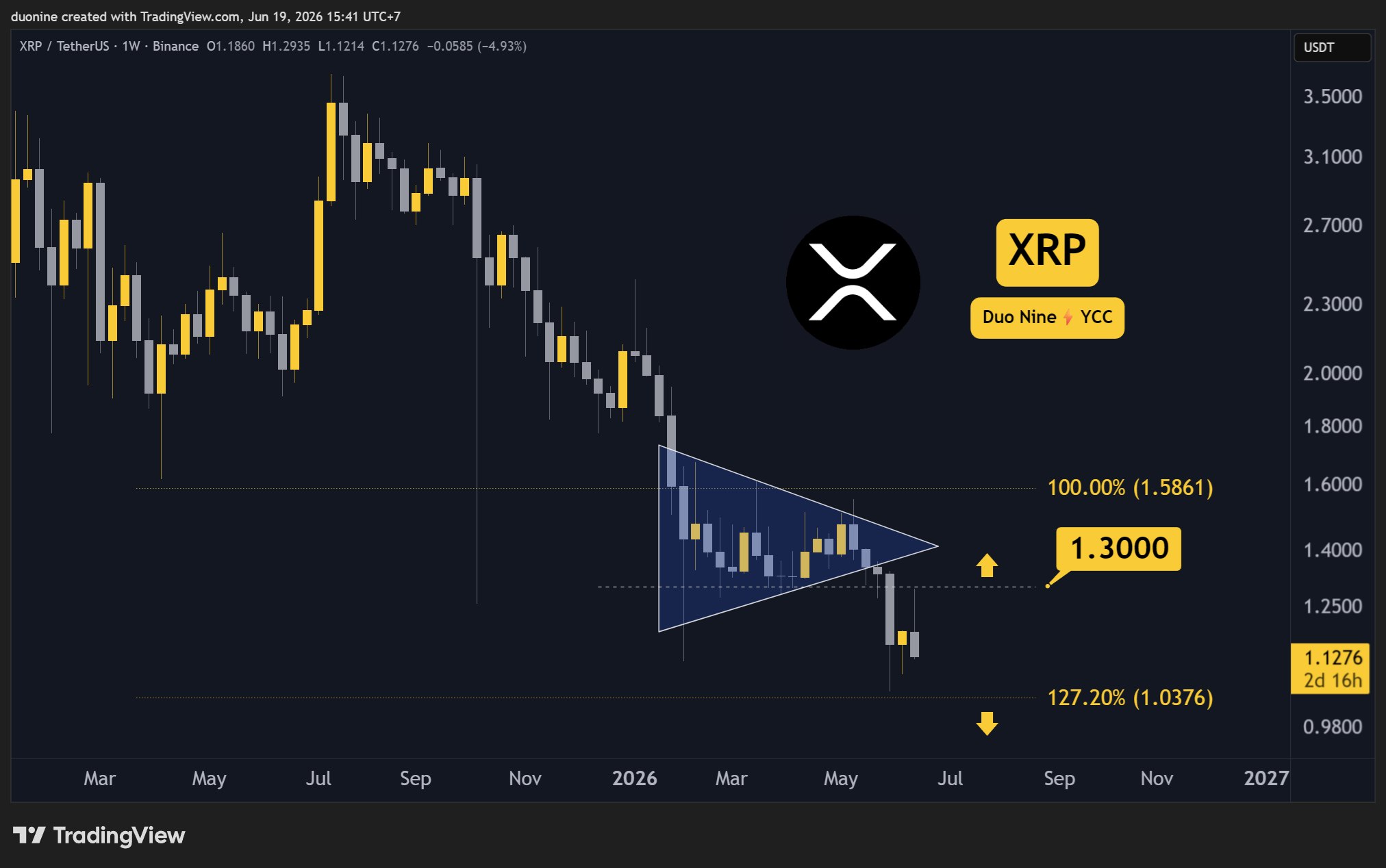
XRP closed the week in red with a modest 1% loss. While that is not much, the more concerning aspect is that the price was rejected at the $1.3 resistance, and since then it’s only been down.
If nothing changes, then this cryptocurrency is on a clear path to revisit the support at $1 where buyers showed up a few weeks ago. The question is if they will return there again or shy away.
Looking ahead, the XRP chart shows weakness with buyers absent. This has encouraged sellers to step up, and they are dominating right now. This could change once the price hits $1, but this is still uncertain now.
Cardano (ADA)
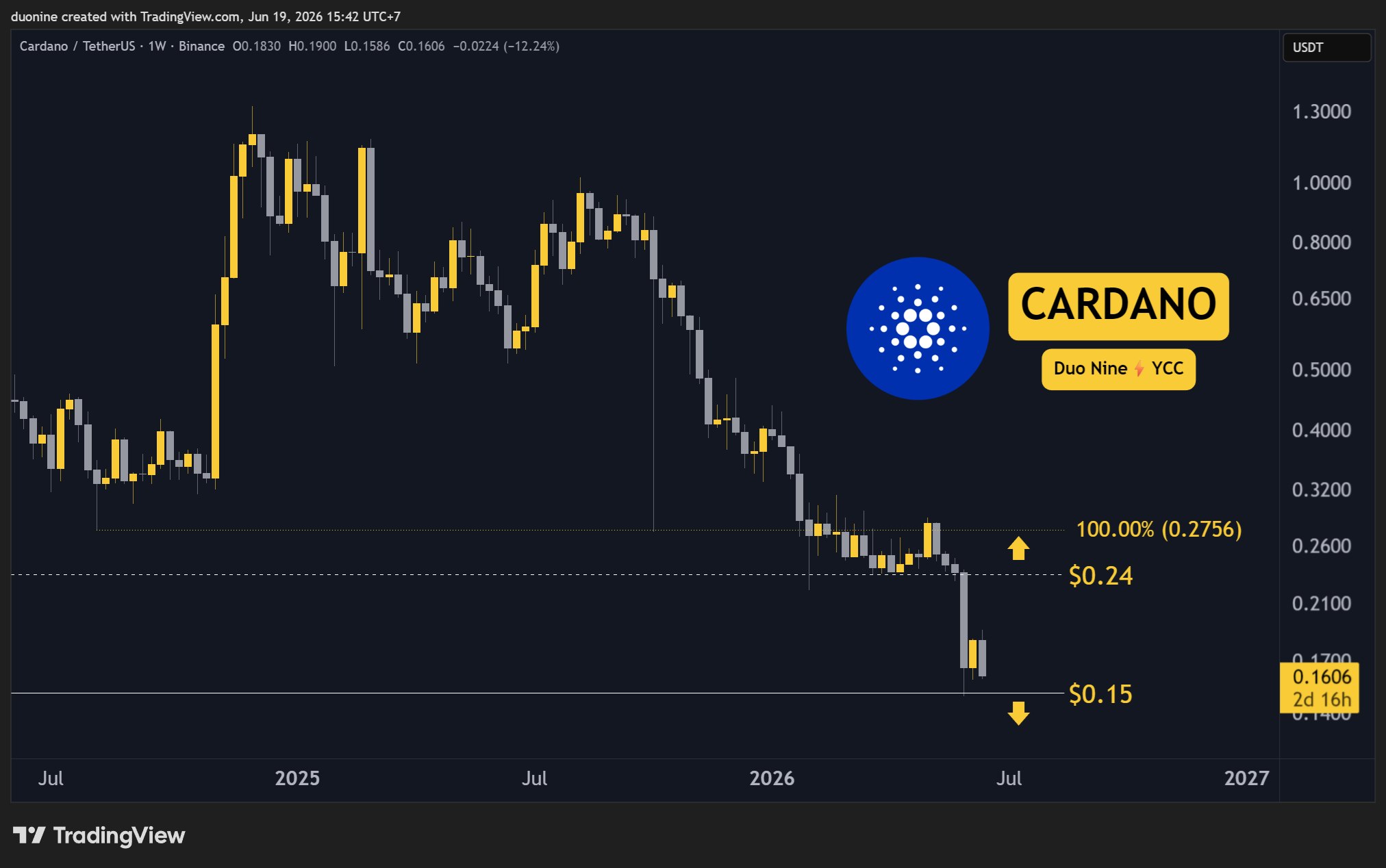
Cardano fell by 4% this week, and after losing support at $0.24, its market cap dropped significantly. This caused it to lose several places on the list of the biggest coins by market cap, where it now ranks 16th, behind the likes of Stellar and Monero.
The price found short-term relief at the $0.15 support, but this appears to have ended as of this post. Now, sellers are back, and they may soon test this key support again with the aim of breaking it and pushing ADA even lower.
Looking ahead, if bears are successful in the coming days, the price could quickly fall again to hit new lows around $0.10, where the next major support level is located. This would be quite unfortunate and prolong the existing downtrend that started in 2025.
Binance Coin (BNB)
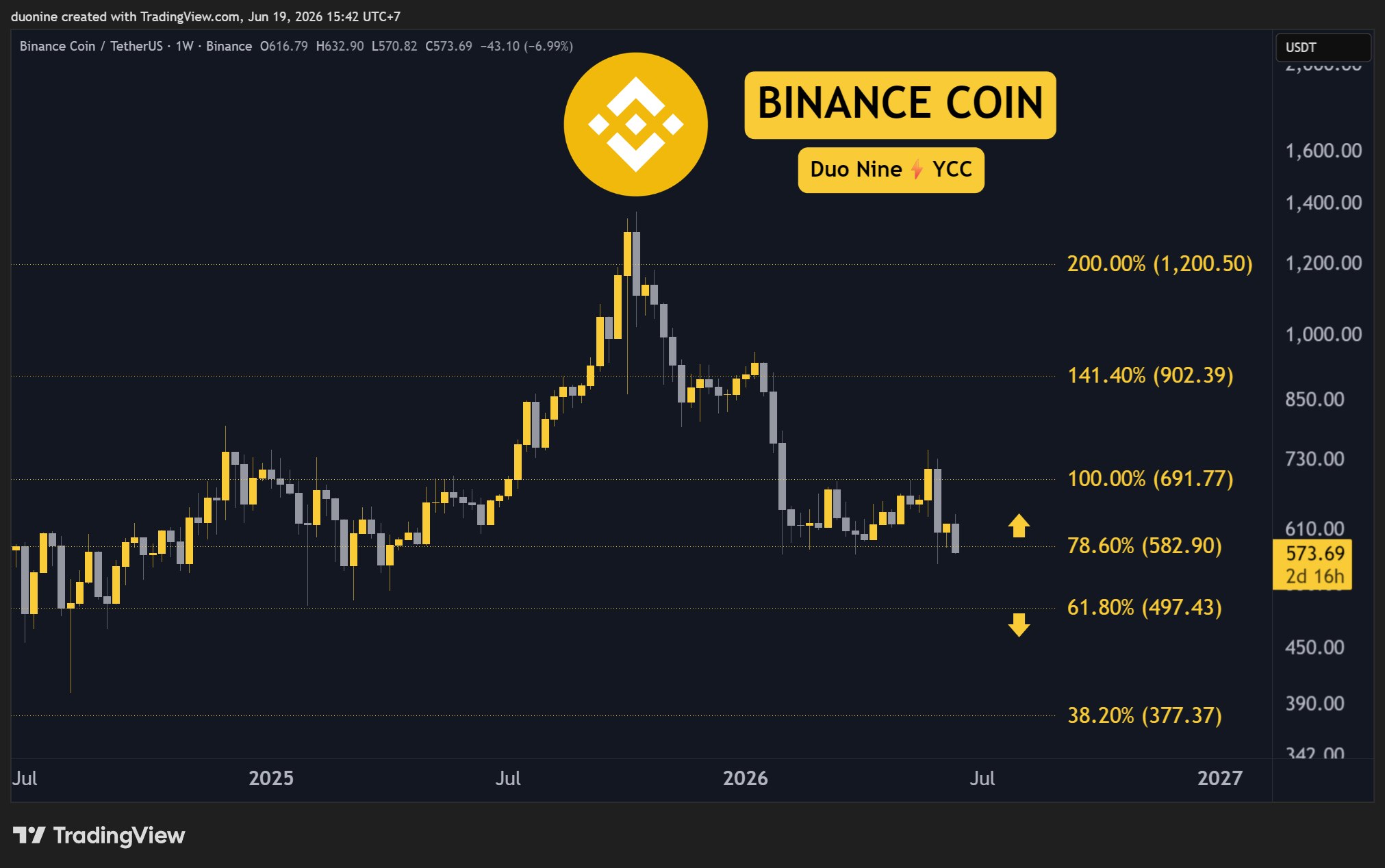
After a long battle and consolidation, it appears BNB is finally falling below its support at $580. Because of this, it also closes the week 5% lower. If nothing changes and buyers don’t return, then $580 will turn into resistance, with lower lows likely.
The next key support is found at $500, and this level is likely to be tested if this bearish momentum persists. Since sellers appear to be dominating across the market, a reversal here appears unlikely.
Looking ahead, Binance Coin’s pause between $580 and $690 is about to end. This flat consolidation lasted for six months and a breakdown is a significant bearish signal. Expect new lows this year if bulls cannot regain control.
Hype (HYPE)
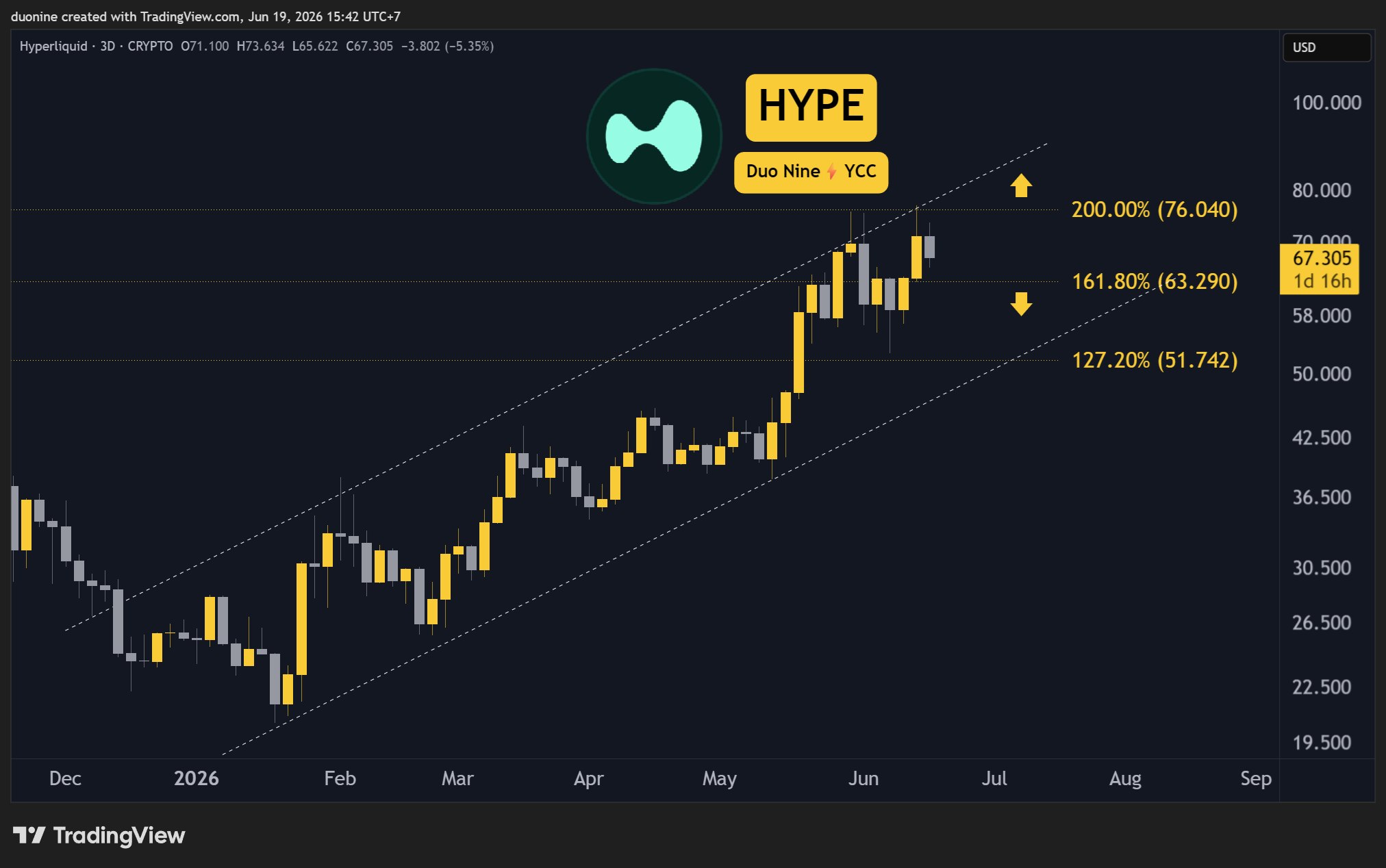
Surprisingly, HYPE closed the week 16% higher after a strong performance by buyers, briefly pushing it to $76. However, since then, the price entered a pullback which could see it return to the support at $63.
While the overall momentum remains bullish, the current price pattern may indicate a double top around $76. To confirm this, the price will need to make a lower low under $52 later on.
Looking ahead, buyers and sellers are actively competing to control the price. Right now, the ball is changing hands every few days. While buyers still appear to have the advantage, this remains fragile at the time of this post.
The post Crypto Price Analysis June 19: ETH, XRP, ADA, BNB, and HYPE appeared first on CryptoPotato.
The XRP community’s reaction to the Ripple Swell 2026 announcement was immediate and hostile. Retail holders flooded the @RippleSwell reply thread within hours of the announcement. The consistent theme was not excitement about 1,500 attendees or a merged XRPL Apex agenda; it was anger that Ripple’s flagship institutional event appears to be building a case for RLUSD while XRP falls.
The frustration has a specific target as Ripple’s USD-pegged stablecoin is taking up conference oxygen that long-term holders believe should belong to XRP. Community members used language that ranged from sharp to outright furious. The community is even calling Ripple’s leadership out by name, including CEO Brad Garlinghouse.
The underlying accusation is not subtle. Ripple is constructing a regulated institutional business around RLUSD while XRP’s price stagnates and holders are disappointed.
Discover: The Best Token Presales
Swell 2026 Scope: What’s Ripple Actually Doing
Swell 2026 is scheduled for October 27–29 at The Shed in Hudson Yards, New York City, and represents the first time Ripple is folding its developer-focused XRPL Apex summit into the main Swell conference. The combined event is targeting 1,500-plus attendees, 75-plus speakers, and 50-plus sessions across three programmatic stages covering finance, blockchain infrastructure, and digital assets.
Ripple’s stated agenda themes include payments, tokenization, decentralized finance, AI applications, interoperability, and stablecoins. RLUSD’s role in enterprise treasury management and cross-border settlement is a prominent feature of the institutional track.
The XRP Ledger’s milestone of surpassing 4 billion completed transactions is being cited by Garlinghouse as evidence that the network has matured enough for the institutional audience Ripple is targeting.
Garlinghouse framed the moment with deliberate confidence:
“I’ve been in crypto long enough to know when a moment is real”
The statement positions Swell 2026 as a threshold event for institutional crypto adoption, which is accurate as a description of Ripple’s ambition, but says nothing specific about what that adoption means for XRP price or holder value.
Discover: The Best Crypto to Diversify Your Portfolio
XRP Holders Are Not Hiding Their Frustration
The community sentiment is not a fringe reaction. Retail XRP holders expressed a clear and recurring grievance. Ripple is allocating conference prominence to RLUSD and institutional partnerships while XRP’s price continues to underperform relative to the company’s corporate milestones.
The tone in several replies was openly hostile toward Garlinghouse and the Ripple leadership team, with holders describing themselves as investors who have been systematically sidelined.
The token burn argument has re-emerged as a focal point. A portion of the XRP community is pushing for supply reduction as a mechanism to create direct price pressure, a demand that Ripple has consistently declined to act on.
That refusal, combined with a conference agenda that leads with stablecoins and tokenization rather than XRP utility, is being read by holders as a signal about where Ripple’s actual priorities sit.
Community sentiment of this intensity is a legitimate market signal. When the XRP community, historically one of the most vocal and coordinated retail bases in crypto, publicly turns on a Ripple event, it registers in social volume metrics that can suppress short-term buying pressure and amplify sell-side momentum.
Discover: The Best Token Presales
The post Ripple Swell 2026 Sparks Holder Backlash Over RLUSD Priority appeared first on Cryptonews.
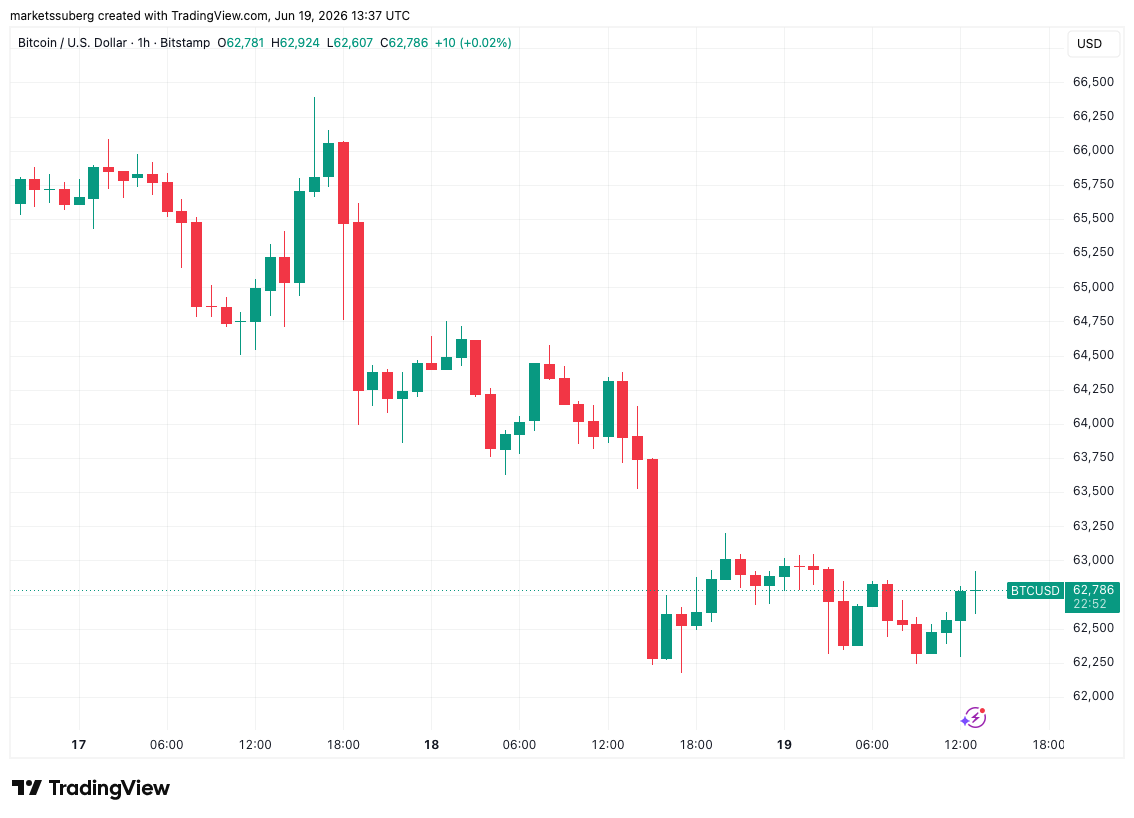
Bitcoin (BTC) rose above $63,000 on Friday as markets adjusted to geopolitical and macro changes.
Key points:
- Bitcoin takes a time-out near week-to-date lows after a broadly hawkish Fed interest-rate meeting.
- US-Iran tensions slowly resurface with the Strait of Hormuz oil route in the firing line.
- A trader suggests that a “black swan” event could still come in this Bitcoin bear market.
BTC price lack upside momentum after hawkish Fed cues
Data from TradingView showed BTC/USD locked in a tight trading range on low time frames after dropping to eight-day lows.
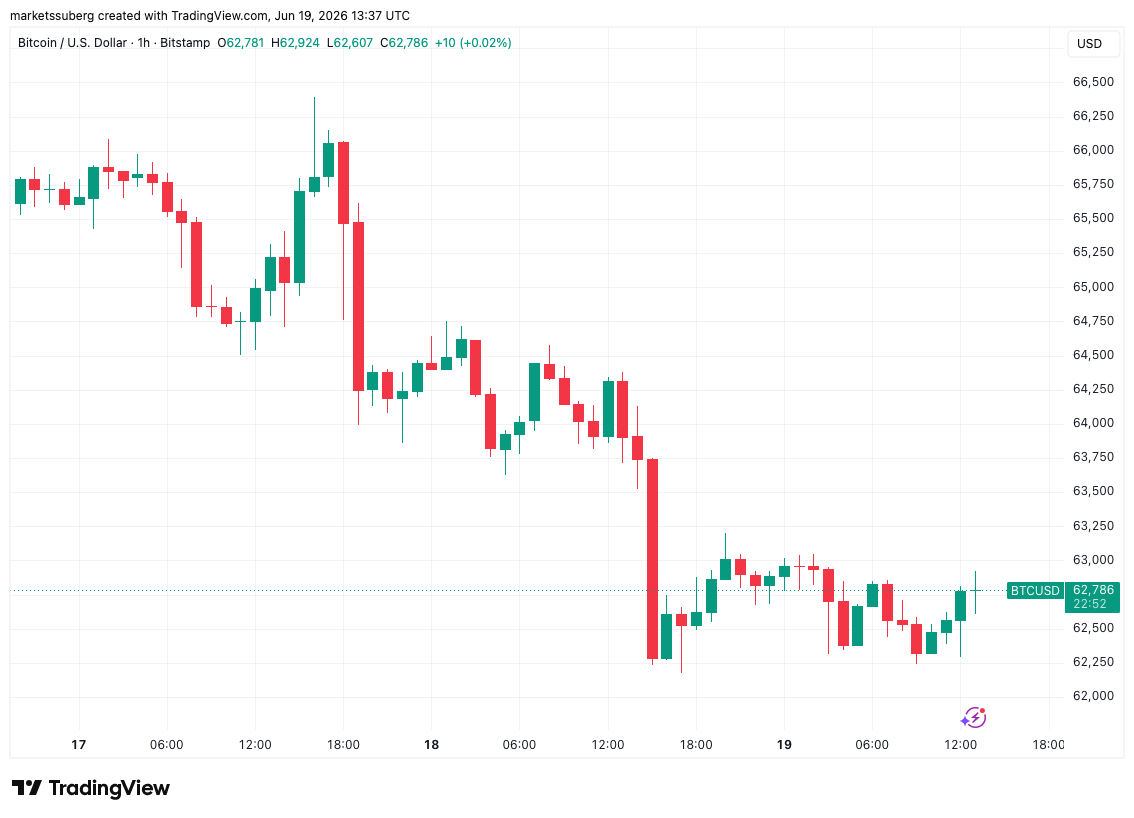
BTC/USD one-hour chart. Source: Cointelegraph/TradingView
Weakness had entered after the US Federal Reserve’s latest interest-rate decision, which sparked a broader risk-asset comedown.
Wednesday’s meeting on the Federal Open Market Committee (FOMC) was the first for new Fed chair, Kevin Warsh, who avoided giving traders dovish signals on future policy.
“Inflation remains elevated relative to the Committee’s 2 percent goal, in part reflecting supply shocks that have driven price increases in certain sectors, including energy,” he said in a statement after a unanimous board decision to keep rates at current levels.
“The Committee will deliver price stability.”
Warsh’s tone was unusual, as expectations had seen him being accommodating to US President Donald Trump’s insistence on rate cuts. He also cut the FOMC statement length considerably, using drier language than former chair, Jerome Powell.
“We will have far less information going forward,” trading resource The Kobeissi Letter reacted in a post on X, noting that Warsh had also “dropped” its forward guidance.
“He even hinted that the ‘dot plot’ could be changed or eliminated along with all forms of Fed communication, such as the policy statement and press conferences. In other words, the market will now have less Fed outlook which means more uncertainty.”
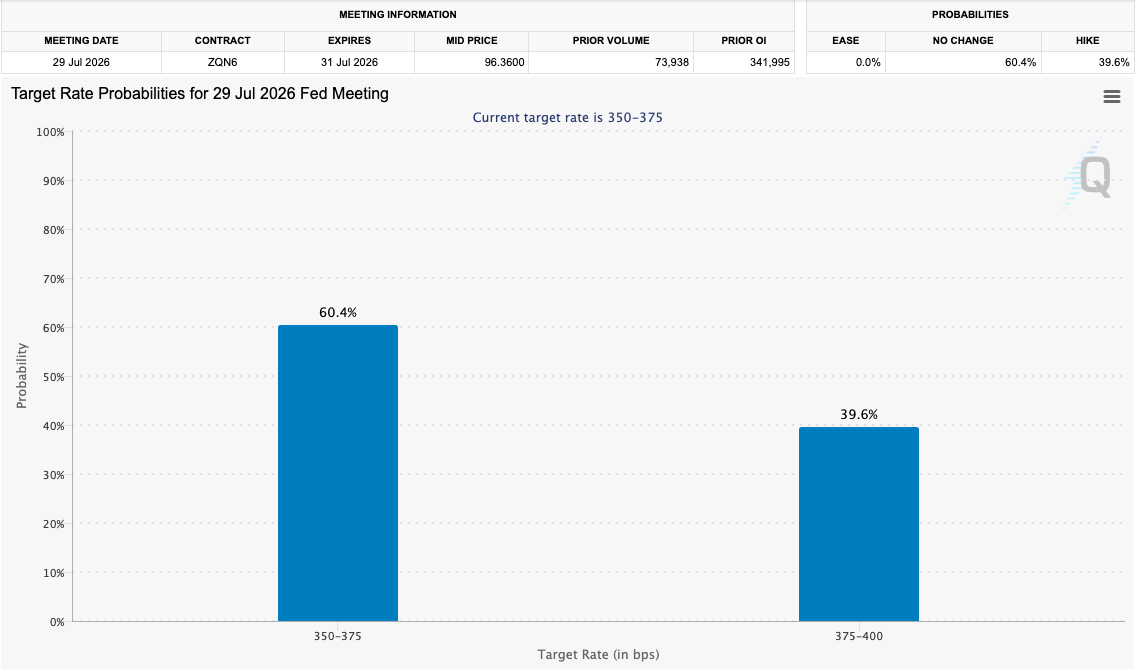
Fed target rate probabilities for July 29 FOMC meeting (screenshot). Source: CME Group
The latest data from CME Group’s FedWatch Tool showed markets pricing in a near 40% chance of a rate hike at the next FOMC meeting in late July.
Bitcoin “black swan” back on the radar
With US markets closed for the Juneteenth holiday, meanwhile, Bitcoin and crypto were alone in digesting the latest developments in the US-Iran war.
Related: Bitcoin tipped for Q3 ‘macro bottom’ near $50K as major liquidity grab looms
Despite signing a memorandum of understanding (MoU), the two sides appeared far from aligned on the future road map, with Iran once more eyeing the newly reopened Strait of Hormuz oil route.
Citing Bloomberg, Kobeissi reported that traffic “cannot cross the Strait of Hormuz without its permission.”
“The MoU signed with the US only says that transit through the Strait of Hormuz would be free for the duration of its 60 day term,” it explained on Friday.
“It appears Iran is preparing for long-term control of Hormuz.”
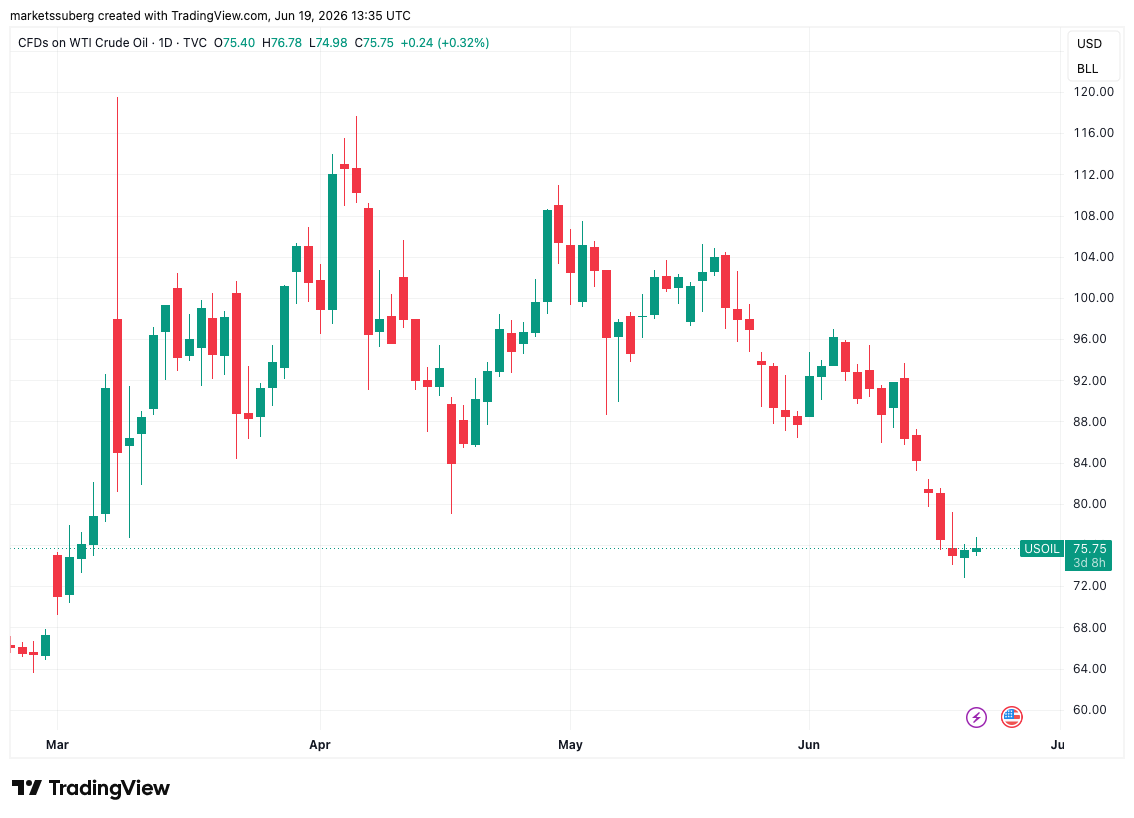
CFDs on WTI crude oil one-day chart. Source: Cointelegraph/TradingView
WTI crude oil continued to circle $75 per barrel on the day after hitting its lowest levels since early March.
Amid the lull in risk-asset volatility, trader and analyst Rekt Capital hinted that Bitcoin bulls’ true test is yet to come.
“There tends to be a Black Swan event in the second half of Bitcoin Bear Markets. Lesson there,” he told X followers.


Chris Larsen, the Ripple co-founder and apparent privacy champion who wired San Francisco with thousands of police cameras, has appeared on a leaked guest list for Dialog, surveillance mogul Peter Thiel’s invitation-only network.
Investigative journalist Dave Troy published previously unreported names yesterday.
He tagged Larsen as both a participant and a founding fellow of the organization, which has been described as “Bilderberg (an off-the-record gathering of political and business elite) meets Silicon Valley salon.”
Dialog, meanwhile, positions itself as a hush-hush place where leaders from various fields and ideological backgrounds can come together and build relationships.
As part of this, it runs annual in-person retreats featuring highly secretive sessions, which have included “Money (Does?) Buy Happiness,” “Bring Back Nuclear,” “Navigating WWIII,” and “How’s Your Sex Life?”
Larsen, who branded himself a privacy champion, co-founded the coalition Californians for Privacy Now, served on the board of the Electronic Privacy Information Center, and made his fortune from the cryptographically secure XRP Ledger, now appears on a roster at the highest echelons of the surveillance state.
His name wasn’t generally associated with surveillance until his police camera initiative, the Real-Time Investigation Center that operated out of the same building as Ripple’s former headquarters in San Francisco.
In stark contrast, Thiel is one of the most recognizable leaders in the surveillance state.
He co-founded the citizen monitoring giant Palantir and invested in face-scanner Clearview AI, license plate reader Flock Safety, and movement monitor SafeGraph.
Chris Larsen, the privacy advocate who surveilled a city
Larsen tried to make a name for himself as a consumer advocate. In addition to the two privacy-focused organizations listed above, he co-founded E-Loan, the first company to advocate for consumer access to FICO credit scores.
He then built the democratized lending marketplace Prosper, before co-founding Ripple.
Bloomberg estimates his net worth above $12 billion, most of it tied to Ripple stock and XRP tokens.
His privacy branding has aged somewhat poorly, however. He now appears on a list of Dialog participants, founded in 2006 by Thiel and data broker Auren Hoffman whose movement monitoring company SafeGraph tracks phone location data.
The Dialog roster only became public this week. Swiss hacktivist Maia Arson Crimew found an internal directory inside the group’s website code. Wired verified the leak.
The new records have exposed an upcoming 222-person retreat near Dublin, originally scheduled for August. Internal documents describe over 1,000 paying members to Dialog overall, and Wired reported that leaders might grade attendees on a hidden scale by wealth and fame.
Of course, if anyone were curious about Larsen’s ties to the surveillance state, Thiel’s relationship with Ripple actually predates Larsen’s participation in Dialog.
Indeed, Thiel’s Founders Fund was an early investor in OpenCoin, the startup that became Larsen’s Ripple. Therefore, it was public knowledge that surveillance leader Thiel and Larsen were on the same cap table long before this week’s Dialog leak.
Peter Thiel’s secret society or just a ‘convening’?
There’s disagreement about whether Dialog is a particularly secret society.
Troy, who revealed the names, cautioned that Dialog is “more of a convening than secret society,” and noted that many participants claimed to have never met Thiel.
Moreover, the leaked file “looks like a list of attendees for the upcoming [meeting] and not ‘members’ per se,” he clarified.
As an additional indication that Dialog isn’t particularly secretive, another member of Ripple’s leadership has publicly acknowledged it.
Specifically, Brad Garlinghouse said in 2021, “You know, I attended a conference hosted by a gentleman named Auren Hoffman and Peter Thiel called Dialog.”
Elsewhere in that interview, Garlinghouse admitted that Dialog was his first exposure to the Bitcoin network.
Read more: Ripple’s Chris Larsen to fund police surveillance, drones in San Francisco
Larsen once personally bankrolled the largest private surveillance buildout in San Francisco’s history.
New York Magazine counted roughly 2,700 cameras, 93 police drones, and a $9.4 million Real-Time Investigation Center that shared a location with Ripple’s former headquarters.
At the time, Larsen insisted that the system was tightly restricted. “The police can’t monitor it live,” he told ABC7 in 2020. “That’s actually against the law in San Francisco.”
Got a tip? Send us an email securely via Protos Leaks. For more informed news and investigations, follow us on X, Bluesky, and Google News, or subscribe to our YouTube channel.

Binance’s faltering European Union Markets in Crypto-Assets Regulation (MiCA) license application in Greece has raised questions about whether the bloc’s central bank may have played an informal role in the process, despite not having formal authority over licensing decisions.
Even though MiCA assigns approval of crypto-asset service provider (CASP) licenses to national competent authorities (NCAs), lawyers told Cointelegraph that its wording does not prevent other EU institutions, including the European Central Bank (ECB), from communicating with those regulators during the review process.
“Nothing in the MiCA framework would prevent a third party like the ECB from offering its opinion to that national authority on Binance’s application,” David Lesperance, founder at Lesperance & Associates, told Cointelegraph.
The Big Whale reported on Wednesday, citing unnamed sources, that ECB President Christine Lagarde had signaled to Greek Prime Minister Kyriakos Mitsotakis that Binance was not welcome in Europe. The report followed a Reuters story on Tuesday that Greece’s market regulator was set to reject Binance’s MiCA application.
The reports surfaced less than two weeks before the end of MiCA’s transitional period on July 1, a deadline that will determine which crypto firms can continue operating across the EU under its licensing regime.
Who actually decides under MiCA?
Under MiCA, CASP licenses are granted by national regulators, not by EU-level institutions like the ECB. In Binance’s case in Greece, that authority sits with the Hellenic Capital Market Commission (HCMC). The exchange said in January that it had applied for a MiCA license in Greece.
“Our understanding is that the HCMC completed its review of the application and considered it compliant with MiCA requirements. Our understanding is also that the application was subject to review at the European Securities and Markets Authority (ESMA) level,” Binance wrote in a blog post following the Reuters report.
A Binance spokesperson told Cointelegraph that the company believed ESMA intended to advance the application and authorize it at an upcoming board meeting. The company did not respond to an additional request for clarification. The ESMA does not itself authorize CASP licenses under MiCA.
Yuriy Brisov, a lawyer at Digital & Analogue Partners, said the HCMC hasn’t published a decision on Binance’s application.
Related: BitGo courts crypto firms awaiting MiCA approval amid Binance licensing concerns
Brisov said MiCA “contains nothing that stops the ECB from talking to, advising, or sharing concerns” with a national regulator. However, he noted that ECB involvement is explicitly defined only in certain parts of MiCA, particularly rules governing stablecoin issuers, not CASP licenses such as exchanges like Binance.

Source: EUR-Lex
“That’s a concern that MiCA parks in the stablecoin chapter, not in the exchange-license one,” Brisov added.
Stablecoins raise the political stakes
The ECB has consistently voiced concerns about privately issued stablecoins, favoring tokenized financial infrastructure anchored by central bank money instead. According to The Big Whale, Lagarde’s reported intervention was tied to stablecoins.
Lagarde has argued that Europe should prioritize regulated settlement systems rather than rely on private stablecoins, while ECB Executive Board member Isabel Schnabel has warned that stablecoins could even reinforce US dollar dominance.
At the same time, market data underscores Binance’s position as the world’s largest stablecoin exchange and the dominant hub for stablecoin liquidity.
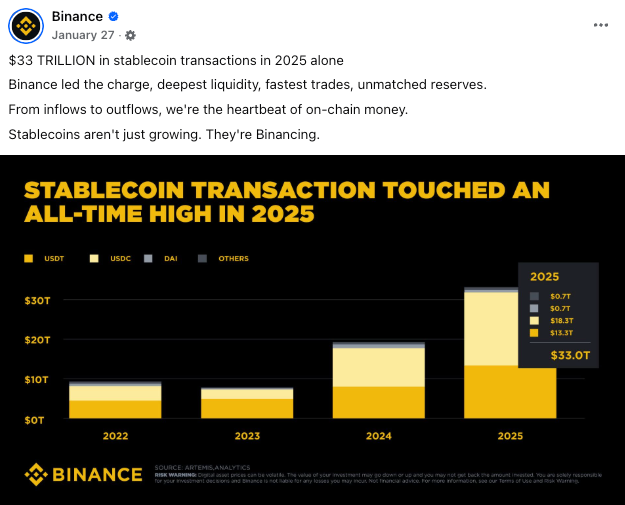
Source: Binance
According to CryptoQuant data reported in February, Binance held approximately $47.5 billion in USDT and USDC combined, representing about 65% of total stablecoin reserves across centralized exchanges. That figure was up from roughly $35.9 billion a year earlier.
Related: AllUnity debuts SEKAU, a fully reserved Swedish krona stablecoin
The Big Whale also reported that France could be Binance’s remaining route, though no formal French application had been filed.
ESMA and HCMC did not immediately respond to Cointelegraph’s requests for comment. The ECB and French regulator Autorité des marchés financiers (AMF) declined to comment.
Magazine: Crypto wanted to overthrow banks, now it’s becoming them in stablecoin fight
EnQuest reports $172.5m in government payments for 2025

Cardano price analysis: can ADA avoid a drop to $0.13?

Young Lawyer dies while celebrating Ghana’s victory over Panama


-

 Business5 days ago
No Jackpot Winner as $257 Million Prize Rolls Over to $269 Million Monday Draw
-

 Fashion7 days ago
Weekend Open Thread: Tuckernuck – Corporette.com
-
 Crypto World5 days ago
Zimbabwe Requires Crypto Businesses to Register Annually Under New FIU Regulations
-

 Crypto World6 days ago
Bitget enters Argentina’s regulated crypto market through PSAV registration
-

 Tech7 days ago
NanoClaw integrates JFrog registries to secure AI agent downloads
-

 NewsBeat7 days ago
FBI searches office of Ohio voter registration group
-
 Entertainment5 days ago
Matt Damon’s Viral Sci-Fi Thriller Has Taken Over HBO Max
-

 Business5 days ago
Anthropic staff to meet White House officials next week, Axios reports
-

 Tech5 days ago
As AI companies race to go public, who else is along for the ride?
-
 Crypto World5 days ago
Bitcoin could crash to $48,000, if this historical pattern is triggered
-

 Politics5 days ago
“Israel’s” ban on ICRC visits ruled illegal, but Knesset moves to stop them permanently
-
 NewsBeat5 days ago
Warning of disruption as Cardiff Crossrail works to start
-

 News Videos5 days ago
Financial Accounting | Last Day Revision Strategy and Booster | CMA Inter – June 2026
-
 NewsBeat5 days ago
Tributes to former deputy head teacher at Cambridge school among death and funeral notices
-
 NewsBeat5 days ago
what doctors are seeing in ebike crashes
-

 Entertainment6 days ago
Deion Sanders Shares Powerful Post After Viral Advice To Deiondra
-

 Crypto World5 days ago
XRP ETFs Outperform As Bitcoin And Ethereum Funds Extend Outflow Trend
-
 Crypto World5 days ago
Market Preview: SpaceX (SPCX) IPO Record, Federal Reserve Meeting, and Iran Nuclear Agreement
-
 Entertainment5 days ago
Kate Middleton Glare Goes Viral After Kids Booed At Royal Event
-

 Business5 days ago
Invesco Quality Income Fund Q1 2026 Commentary
You must be logged in to post a comment Login