

Crypto World
Is Bitcoin-Backed Digital Credit Dead After MicroStrategy’s STRC Crash?

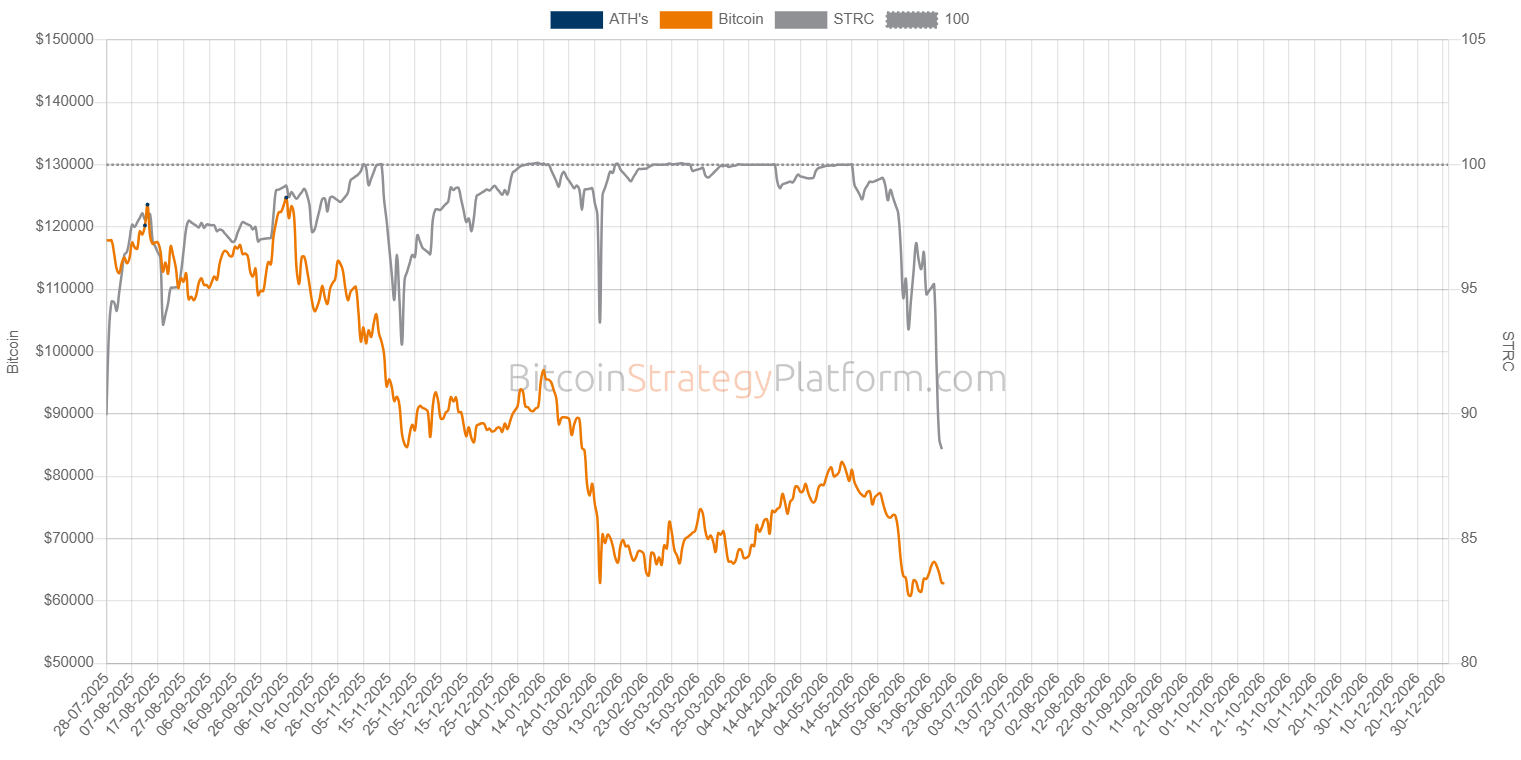
Digital credit faced its first real stress test this week, as MicroStrategy’s STRC preferred stock crashed, prompting critics to declare the Bitcoin-backed asset class dead.
Bitcoin (BTC) itself has weathered the same obituaries many times before. On-chain data now tells a different story, with network activity climbing to multi-year highs even as the price slides.
What Digital Credit Actually Means
Digital credit is a young class of income-generating securities backed by Bitcoin. Companies holding large Bitcoin reserves issue structured products such as preferred equity and convertible notes.
They use the proceeds to buy more Bitcoin. The aim is straightforward. Long-term BTC appreciation should outpace the dividends and interest those products owe.
Strategy, formerly MicroStrategy, built the clearest example with its STRC preferred stock. STRC has a $100 par value and pays a high, variable yield near 12% per year.
When the shares trade at or above par, Strategy issues more shares and routes the cash into Bitcoin. That mechanism turns STRC demand into BTC on the balance sheet.
Strategy frames the whole stack in plain terms. It calls bitcoin digital capital, STRC digital credit, and its common stock digital equity. The pitch attracted income-focused investors seeking Bitcoin exposure without holding the coin.
They earn a steady yield while Strategy carries the price risk.
Convertible notes and other preferreds follow the same logic. Each one borrows against future Bitcoin gains to buy more BTC today.
From 2025 through 2026, these vehicles became a major source of fresh Bitcoin demand. STRC-linked buying funded far more bitcoin than spot ETFs over the same stretch.
The First Real Stress Test
Critics declared digital credit dead this week, and some of the criticism landed. STRC was marketed as a lower-volatility way to hold Bitcoin exposure.
Instead, it broke par. The preferred shares fell to an intraday low near $82, roughly 18% below $100.

Several pressures hit at once. The asset class is less than a year old, and leveraged STRC positions are unwinding while Bitcoin forms a bottom. Capital is also competing with AI listings and a crowded IPO pipeline.
The wider market mirrors that strain. Total value locked across Decentralized Finance (DeFi) fell from about $170 billion in October 2025 to near $72 billion now.

That marks a drop of more than 55% and signals a broad flight from risk. The selling pressure on STRC did not happen in isolation. The structure also fed on itself. Because STRC trades under par, Strategy has paused new share sales through its market program.
That limits its ability to keep buying Bitcoin, the very engine behind the model. A higher variable dividend, meant to defend par, now reads as a distress signal rather than a reward.
Rival treasury preferreds with higher yields have also pulled capital away. Together these forces explain why critics reached for the word dead. Still, the death call looks premature. Analyst @therationalroot argues that a failure here is very unlikely.
Strategy holds enough cash to cover dividends for at least seven months. Its Bitcoin reserve could fund those same payments for decades.
The market still flinched at one move. In late May, Strategy sold a small batch of bitcoin to fund STRC distributions for the first time. The sale was tiny against its overall holdings. Yet it fed the fear that the model would bend when Bitcoin fell hard.
This remains the first true downturn for an asset class barely a year old. Bitcoin has carried that same dead label through every deep bear market and returned each time.
Bitcoin’s Network Tells the Opposite Story
While digital credit takes its punches, the Bitcoin network looks anything but dead. CryptoQuant’s Network Activity Index broke above its trend for the first time since mid-2024.
It has climbed since January 2026 and has held above trend since late March. That creates a clear divergence, with activity rising while the price falls.
The index measures how heavily the chain gets used, from transaction volume to address activity. A reading above trend points to real expansion rather than a quiet network.
Daily transaction counts and average transactions per block both sit near record highs. The catch sits in the detail.

Transactions below 0.01 BTC now make up about 80% of daily activity, up from under 50% in 2023. Much of the surge comes from OP_RETURN usage tied to Runes and Ordinals inscriptions.
OP_RETURN lets users attach small data to a transaction, which token and inscription projects rely on heavily. These generate large volumes of low-value transactions rather than big economic transfers.
That distinction matters for how the surge gets read. A busy chain is not the same as a chain moving more value.
The mempool has swelled to its highest transaction count since late February 2025. Congestion sits mostly in the low-fee cohorts.
Sustained non-financial activity could raise fees for economic transactions over time. Even so, the core signal stands, and the chain is busier than it has been in years. Michael Saylor has made similar arguments about resilient demand.
A Pulse, Not a Eulogy
Bitcoin trades near $62,400, down about 3% on the day and far from its highs. Both digital credit and the Bitcoin network have been written off before.
The timing tells its own story. Doubts about digital credit grew louder exactly as Strategy’s preferred shares slid below par.
The on-chain numbers cut against that gloom. A network this active rarely fits the picture of a dying asset. That gap between price and usage is the core tension to watch. Falling prices and rising activity rarely sit together for long.
The data suggests both still have a pulse. Whether STRC reclaims par and network activity keeps climbing will decide if this moment marks a bottom or a warning.
The post Is Bitcoin-Backed Digital Credit Dead After MicroStrategy’s STRC Crash? appeared first on BeInCrypto.


Key Takeaways
- FedEx will announce Q4 fiscal 2026 results after trading ends on June 23
- Analyst consensus calls for earnings per share of $5.96 alongside $24.04 billion in sales
- Shares of FDX have surged approximately 40% since January, hovering near record territory
- The recently finalized FedEx Freight separation on June 1 remains a central discussion topic
- Morgan Stanley reduced its valuation target to $160 amid concerns over profit margins
FedEx (FDX) is preparing to unveil its fourth-quarter fiscal 2026 financial results after the closing bell on June 23, drawing significant investor attention.
Shares of FDX have climbed roughly 40% throughout the current year, approaching all-time peak levels. According to the TipRanks Options Tool, market participants are anticipating a potential swing of approximately 7.73% in either direction once earnings are released.
Analyst projections point to earnings per share of $5.96, representing growth from the $4.89 reported during the comparable quarter last year. Revenue forecasts stand at $24.04 billion, up from $22.2 billion recorded in the prior-year period.
Zacks Investment Research presents slightly varying figures — projecting $5.91 per share and $24.18 billion in revenue — though the overall trajectory aligns. The Zacks earnings projection has been adjusted upward by 1.9% during the previous 60-day window.
The Earnings ESP registers at +3.76%, while the Most Accurate Estimate reaches $6.13 — exceeding consensus by 22 cents. This pairing of a Zacks Rank #3 alongside a positive Earnings ESP suggests strong probability of an earnings surprise.
Freight Division Separation Takes Spotlight
The headline development preceding this earnings announcement is the finalized separation of FedEx Freight, which commenced independent public trading on June 1. Company leadership is anticipated to discuss the division during the conference call, though Morgan Stanley analyst Ravi Shanker highlighted that comprehensive standalone transparency for both the Parcel and Freight operations won’t materialize until late October as regulatory filings unfold progressively.
This ambiguity contributes to Shanker’s decision to trim his price objective to $160 from a previous $230. His outlook anticipates Q4 operating income and earnings per share falling somewhat short of Street expectations as margin challenges continue overshadowing what he characterizes as consistent revenue performance.
However, not all analysts share this conservative stance. On TipRanks, FDX maintains a Strong Buy consensus rating derived from 17 Buy recommendations, 3 Hold positions, and 1 Sell rating. The average price objective stands at $412.45, suggesting approximately 26% appreciation potential. The most bullish forecast reaches $479.
Efficiency Initiatives and Technology Innovation Power Momentum
Much of FDX’s impressive year-to-date performance stems from strategic internal transformations rather than favorable macroeconomic conditions. The DRIVE efficiency program — encompassing reduced flight schedules, grounded fleet capacity, and headcount optimization — has served as the primary catalyst.
Artificial intelligence has emerged as another contributing factor, with FedEx deploying machine learning to enhance route optimization, strengthen capacity forecasting, and reduce operational expenses.
The logistics giant has simultaneously prioritized high-margin business-to-business and direct-to-consumer shipments, particularly within the healthcare sector, to bolster profitability.
One development likely to surface during the earnings discussion is FedEx’s extended partnership with Amazon, established last year, through which FedEx manages delivery services for specific bulky items. This agreement materialized shortly after competitor UPS announced plans to scale back its Amazon-related volume.
Looking at the complete fiscal 2026 outlook, Zacks consensus projections indicate $19.78 in earnings per share, reflecting 8.7% year-over-year expansion, while revenue is anticipated to advance 6.6%.
FDX currently trades at an attractive valuation compared to both industry peers and UPS on a forward Price/Sales metric, earning a Value Score of B.


WhiteBIT has received authorization under the EU’s Markets in Crypto-Assets Regulation (MiCA) from Austria’s Financial Market Authority, enabling the exchange to provide regulated crypto services across the European Economic Area using a single authorization passport. The approval comes as firms across Europe race to align with MiCA ahead of the bloc’s key transition deadline.
Under MiCA, a crypto-asset service provider authorized in one EU member state can offer services across the EEA without having to obtain separate licenses in each jurisdiction. WhiteBIT said the authorization will support the launch of a dedicated European platform, whitebit.eu.
Key takeaways
- WhiteBIT’s MiCA authorization from Austria allows cross-EEA service “passporting” without separate local licensing.
- MiCA’s transitional period ends on July 1, after which legacy registrations must either obtain MiCA authorization or stop serving clients in the bloc.
- ESMA says firms still unauthorized after July 1 should move to wind-down and client migration plans, rather than continue operations while applications are pending.
- OKX Europe data cited by Cointelegraph suggests millions of app downloads in Europe may be tied to exchanges not listed on public MiCA authorization registers.
Why WhiteBIT’s authorization matters for Europe’s exchanges
For crypto businesses operating in multiple European jurisdictions, MiCA is designed to standardize licensing and reduce regulatory fragmentation. WhiteBIT’s approval from Austria’s regulator is therefore not only a compliance milestone, but also a commercial lever: the company can expand service availability across the EEA through passporting, provided it adheres to the MiCA framework.
WhiteBIT is part of W Group, which the exchange says serves more than 35 million customers globally. Founded in 2018, WhiteBIT has also highlighted partnerships with major brands and sports organizations, including Visa and football clubs such as FC Barcelona and Juventus, as well as Ukraine’s national football team.
Austria’s stance and the looming end of transitional coverage
The timing of WhiteBIT’s approval is notable because Austria is described as having moved quickly to fully transition to MiCA. The country did not extend “grandfathering” provisions for virtual asset service providers beyond Dec. 31, 2025, making it one of the first EU jurisdictions to complete the shift into the MiCA regime.
According to comments previously provided to Cointelegraph by Austria’s Financial Market Authority, the regulator has licensed nine crypto-asset service providers under MiCA. The same source characterized the application pipeline as “significant.” For market participants, that suggests both regulatory capacity and a steady pace of licensing—factors that become increasingly important as the July 1 deadline approaches.
July 1 deadline increases pressure on exchanges without MiCA status
The authorization arrives with less than two weeks remaining before the EU’s MiCA transition period ends on July 1. After that date, crypto-asset service providers operating solely under legacy national registrations must either secure MiCA authorization or cease serving clients in the EU.
This deadline has intensified regulatory and operational scrutiny across Europe. Earlier this week, Reuters reported that Greece’s market regulator was preparing to reject Binance’s MiCA application. Separately, The Big Whale said France may be Binance’s last remaining potential route to a MiCA license before the deadline.
In this environment, WhiteBIT’s move provides a concrete example of what “getting licensed in time” can unlock: cross-border operations backed by a MiCA authorization rather than temporary or legacy arrangements.
What regulators want after the deadline: wind-down and migration
Beyond individual licensing decisions, EU regulators are also addressing what happens when companies miss the transition window. In an ESMA statement on the end of transitional periods under MiCA, ESMA indicated that firms remaining unauthorized after July 1 should implement wind-down and client migration plans rather than continue operating while applications are under review.
This guidance is significant for investors and users because it frames the compliance approach for late applicants: the expected path is orderly exit and client transition, not indefinite continuation under regulatory limbo. For exchanges, it also increases the urgency of operational planning—contract renewals, onboarding processes, custody arrangements, and user communications may all need rapid adjustment if authorization timelines slip.
Cointelegraph reported data shared by OKX Europe suggesting that the MiCA transition could affect a meaningful share of European crypto activity. According to that data, roughly 7.6 million of the 18.5 million crypto app downloads recorded in Europe between May 2025 and May 2026 were associated with exchanges not listed on public MiCA authorization registers.
While the metric reflects downloads rather than trading volume, it nevertheless points to a potential gap between user access and regulatory status. In practice, a large installed base tied to exchanges that have not been authorized could face restrictions, changes in service availability, or forced migration depending on each firm’s licensing outcome.
What to watch next across the EU
As July 1 approaches, the most important signal for the market will be whether additional exchanges secure MiCA authorization quickly enough to avoid triggering ESMA’s wind-down expectations. For users, the practical question is whether services remain available uninterrupted through the transition, and for investors, whether authorization progress (or delays) leads to sharper regulatory consolidation and operational churn across European platforms.


Europe’s Markets in Crypto-Assets (MiCA) regime fully takes effect on July 1. Fewer than 60 firms hold a license across the bloc, while a backlog leaves many applicants in limbo.
Germany has emerged as the clear outlier. BaFin has authorized roughly 18 Crypto Asset Service Providers (CASPs), accounting for about 36% of all licenses issued. Other national regulators have moved at a fraction of that pace.
Regulatory Bottleneck Mounts as July Deadline Approaches
Industry advisers now describe a realistic MiCA timeline of 8 to 12 months from submission to authorization. Regulators across France, Ireland, and Malta have struggled to clear queues. These queues have built up since the regime took effect on December 30, 2024.
France’s AMF has issued a final warning to firms still operating without a license. The agency said many applications require significant rework, and poor documentation quality is slowing approvals.
Roughly 30% of French crypto firms had still not filed as of late 2025.
Lithuania shows a similar picture. Fewer than 10% of registered firms have applied to Lietuvos Bankas, roughly 30 companies in total. The central bank has signaled fines, website blocks, and possible criminal referrals for stragglers.
The European Securities and Markets Authority (ESMA) added pressure last summer. It’s peer review of Malta’s MFSA, back in July 2025, found that the regulator fell short in a CASP authorization. The recommendations apply to every national competent authority across the EEA.
ESMA’s findings also flagged business model assessments, conflicts of interest, and ICT architecture as areas of weakness. The regulator urged NCAs to review compliance with the Digital Operational Resilience Act (DORA) during the authorization process.
Germany Sets the Pace
Germany cut its grandfathering window to 12 months, closing on December 31, 2025. The shorter runway forced firms to file earlier with BaFin. The regulator added 16 new MiCA-licensed institutions in the fourth quarter alone.
In January, DZ Bank secured a MiCA license. Germany’s second-largest lender will use it to launch the meinKrypto retail trading platform. The approval reflects how aggressively BaFin processes applications from incumbent banks. The regulator also rejected Ethena’s USDe stablecoin filing last year.
Critics argue that Germany applies MiCA more strictly than the regulation requires. The approach has pushed exchanges, including Bybit, KuCoin, and AMINA, to base operations in Austria. Compliance costs of €250,000 to €500,000 have also weighed on smaller firms.
Despite the criticism, BaFin’s pace gives Germany a passporting advantage. Licensed firms can now serve clients across all 27 member states.
Slower regulators effectively cede that cross-border business to German-supervised competitors. The 36% share far outstrips the Netherlands and Malta, the next-largest issuers.
About two weeks remain before the July 1 transition expires. The gap between Germany and slower NCAs will determine which CASPs can passport services across the EU.
The coming weeks will show how many applicants the laggards can clear before the cliff edge.
The post MiCA Licensing Chaos: Why German Firms Sprint Ahead While the EU Lags Behind appeared first on BeInCrypto.
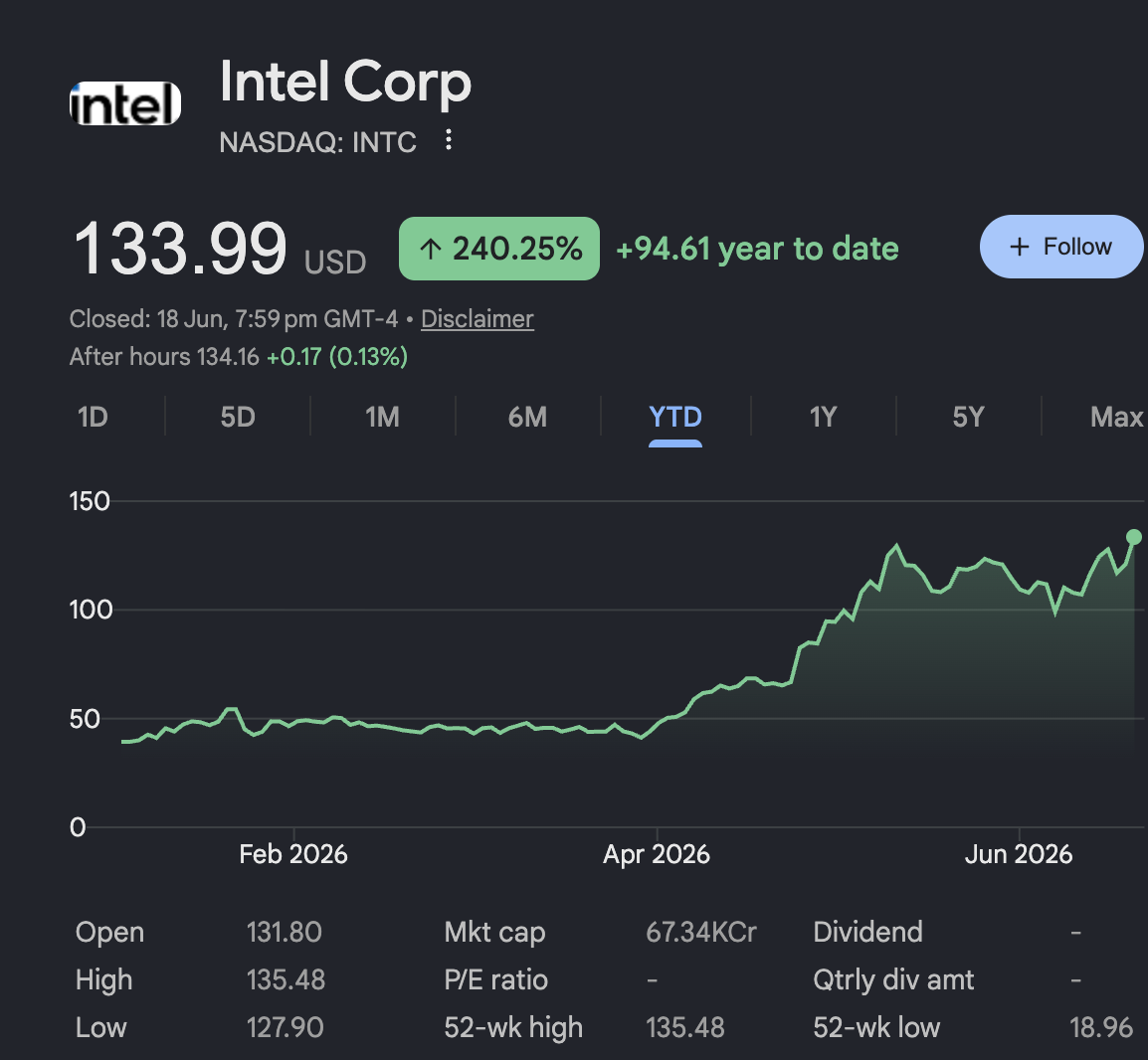
Intel stock jumped about 10% after President Trump said Apple will make chips with the company. The surge pushed Intel (INTC) past a ceiling it had failed to clear twice.
The breakout looks promising on the chart. But money flow, crypto traders, and the options market each tell a more cautious story underneath.
Why Intel Stock Gapped Up on the Apple News
Intel Corporation (INTC) gapped higher on Thursday. President Trump posted on Truth Social that Apple (AAPL) agreed to design and build chips in the US.
However, neither company has formally confirmed the deal at press time. The caveat matters because Washington owns a piece of Intel. The US government bought about 10% of the company in August 2025.
The move caps a strong run. Intel stock has roughly tripled in 2026, helped by ties with Nvidia (NVDA) and Tesla (TSLA). Demand from Agentic AI, software that acts on its own, has also lifted sales of Intel’s chips.

Risks still linger. Intel’s foundry arm stays unprofitable, and the PC market faces headwinds.
The INTC chart tells the first part of that story.
INTC Breaks a Ceiling That Capped It Twice
The rally cleared $132.70, a level that had blocked Intel twice. That kind of pattern is a double top, where price stalls at the same high two times.
INTC stock broke above it with force. Thursday’s 233.91 million shares topped the volume behind the late-May push to the same area.
Money flow is turning, too. The Chaikin Money Flow (CMF), a gauge of institutional buying and selling pressure, climbed back to zero from negative territory. The recovery suggests selling has eased and larger buyers may be stepping back in.

However, CMF sits at neutral, not clearly positive. So the buying interest is not yet confirmed. That’s one market remaining cautious.
Price and volume lean bullish, yet positioning tells another story, starting with crypto traders.
Crypto Traders Are Still Betting Against Intel
Crypto desks are not buying the breakout yet. On Hyperliquid, an exchange that offers perpetual futures on stocks, smart money stays net short Intel. Perpetual futures are contracts that track a price with no expiry date.
Nansen data shows $7.41 million in shorts against $2.90 million in longs. That leaves a net short of $4.51 million across 21 wallets.

Still, the bet against Intel is smaller than the crowd’s shorts on Nvidia and Micron. Intel’s long-to-short ratio sits at 0.39. That balance of bullish to bearish bets ranks among the least bearish in the group.
It is also rising, which suggests some traders are trimming shorts after the Apple news. Even so, the group has not flipped to net long.
The options market shows the same hesitation, with a twist.
The Options Market Sends a Mixed Message
Intel’s put-call ratio tells a split story. It compares puts, which profit when a stock falls, to calls, which profit when it rises. A reading below one leans bullish, above one leans bearish.
By daily volume, the ratio fell from 0.68 on June 17 to 0.51 on June 18. Traders bought calls hard as the stock gapped up. By open interest, the ratio rose from 1.02 to 1.04 over the same days. Standing positions tilted a little more toward puts.

The split makes sense. Short-term traders chased the move with calls, betting on fast follow-through. Meanwhile, longer-term holders added puts as protection against a failed breakout.
So fresh flow looks bullish, while standing positioning stays defensive. Buying puts while the stock pops is classic hedging, not a vote of confidence. Another sign of caution.
That defensive tilt matters most when the price levels come into view.
Intel Stock Levels That Decide the Price Path
Now the INTC stock levels sharpen the picture. The $132.70 ceiling aligns with a key technical level at $132.63. That overlap makes $132.70 a strong floor while it holds.
On the upside, $140.69 is the 0.618 Fibonacci level, a strong historical marker about 5% away. A clean break there opens $152.16, then $166.76.
The risk is a bull trap, a false breakout that traps buyers before price reverses. If CMF rolls back below zero and market sentiment weakens, the move could fail. A drop would expose $124.58, then $114.62, with $98.51 deeper below. The risk lingers, and that explains why all markets are somewhat cautious.

For now, the breakout is real but thin. Price cleared the level, yet CMF sits at neutral, crypto traders stay net short, and put open interest is rising. The Apple news lifted Intel stock, but it has not turned institutions or crypto traders outright bullish.
Hold above $132.70 with CMF turning positive, and the $140 zone comes into play. Lose $132.70 as CMF fades, and the breakout risks becoming a trap toward the $124 zone.
The post Trump Handed Intel Stock a 10% Pop, but Markets Are Hedging appeared first on BeInCrypto.
Despite some community backlash and doubt over their ability to produce a long-lasting product, the Pi Network team continues to work on improving the broader ecosystem with new updates and features.
The latest, introduced just hours ago, focuses on staking and could simplify and enhance the overall process for users.
Staking Update Deployed
With less than 10 days left until Pi2Day (June 28), the team behind the project published a post on X focusing on the benefits of staking. The project’s Ecosystem Directory Staking, which was originally introduced during last year’s edition of Pi2Day, just got a “new look and improved user experience,” reads the post.
Staking through it allows users to increase their apps’ exposure to the Pi community, which, in theory, should result in more impressions and “potentially more user traffic.” Pioneers who stake their coins can collectively support apps and services. At the same time, developers and creators can promote their apps and take advantage of Pi Network’s engaged community of over 60 million Pioneers to acquire more users.
According to the team, the new update “prepares the feature for further utilization by developers, creators, vibe coders, and Pioneers as more apps onboard to the ecosystem.”
It’s worth noting that, unlike other typical staking within the cryptocurrency industry, Pi Network’s alternative provides no rewards at the protocol level. However, the post reassured that the original staked amount will be “returned once the staked duration has ended.”
PI Fights for $0.13
No matter the significance of the ecosystem updates announced by the team or in which niche of the project they are, the underlying asset just doesn’t seem to be able to catch a break. The token exploded to $0.30 in mid-March as hype around the Kraken listing built up. However, it was quickly and violently rejected, plunging below $0.20 within days.
The subsequent market correction in June resulted in fresh declines, and PI ultimately dumped below $0.12 to mark a new all-time low. Although it tried to succeed at recovering to an extent, it was still stopped at $0.14 earlier this week and now sits inches above $0.13.
The token unlock schedule for the next month is not as painful, with the average daily number of coins to be released sitting below 4.3 million. This could alleviate some of the immediate selling pressure and help PI recover, especially if the broader market halts its free-fall.

The post This New Pi Network Update Makes Life Easier for Pioneers appeared first on CryptoPotato.
Former Ethereum Foundation contributor Trenton Van Epps warned that Ethereum is facing a core development funding crisis that will highlight the need for new funding sources in the next three to nine months.
The former contributor wrote in a blog post on Thursday that the Ethereum Foundation’s spending reduction and the expiration of the Client Incentive Program in April left the network’s core development ecosystem requiring about $30 million in annual funding.
Citing recent conversations with core development contributors, Epps said Ethereum risks entering a “slow-burning funding crisis.”
Van Epps’ article follows a wave of departures from the Ethereum Foundation, including co-executive director Hsiao-Wei Wang’s announcement on Thursday that she would step down from her role, bringing the estimated number of layoffs and departures at the organization to 19 so far this year.
Related: Ethereum can quantum-proof accounts for just 7 cents, says Ethereum’s Kohaku lead
Cointelegraph was unable to independently verify the estimated $30 million annual funding requirement and reached out to the Ethereum Foundation for comment.
Ethereum Foundation shifts treasury policy
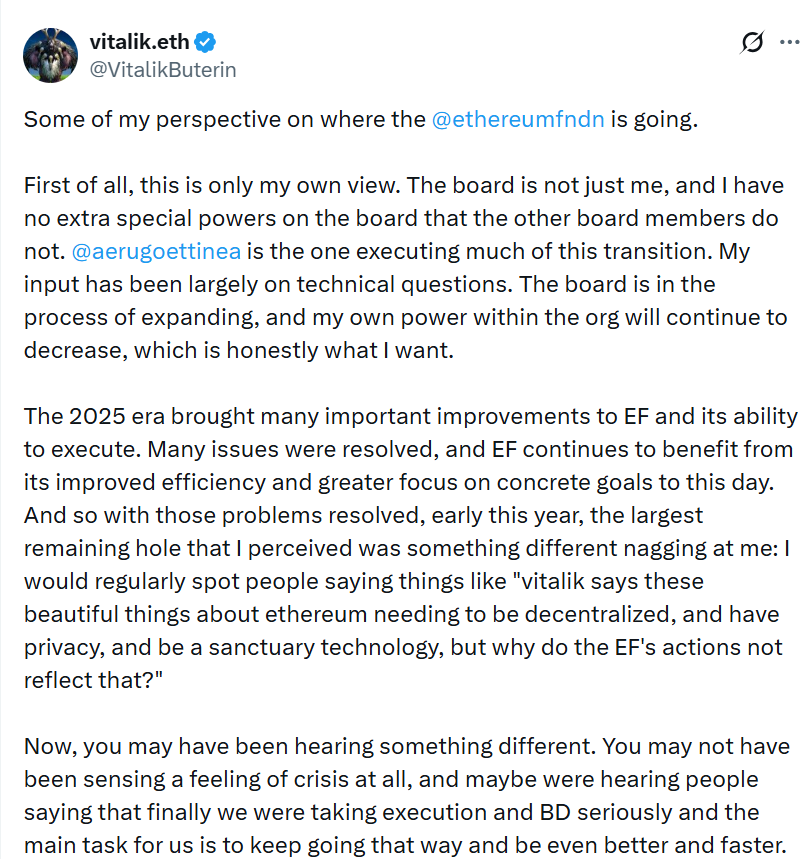
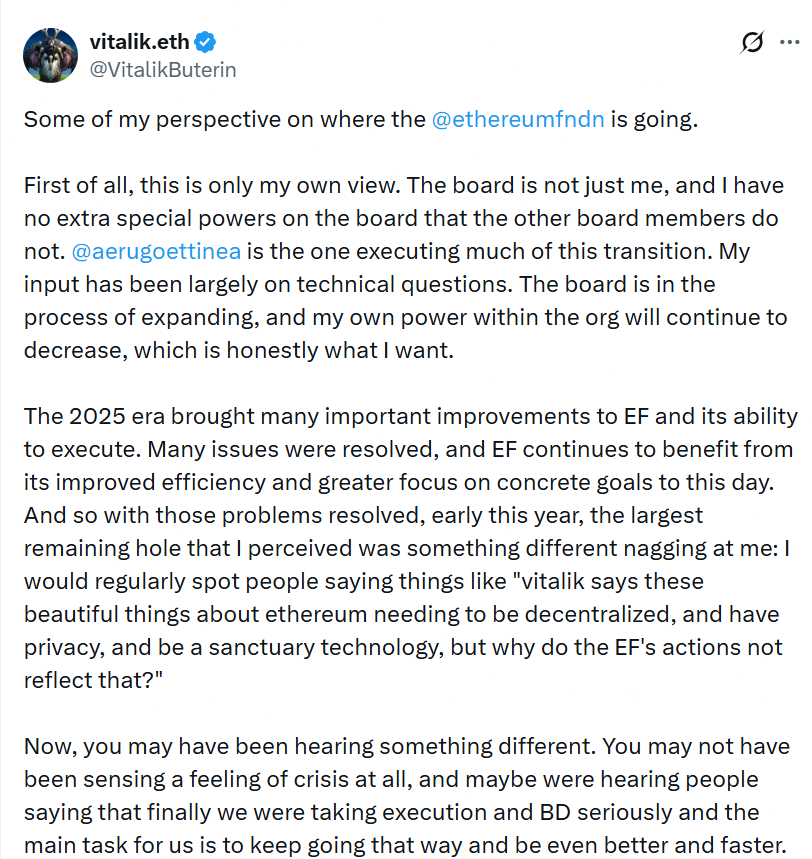
In a May 24 X post, Ethereum co-founder Vitalik Buterin said the Ethereum Foundation’s resources were limited, noting that the organization held only about 0.16% of Ether’s (ETH) total supply, far below the share controlled by foundations associated with some other blockchain networks.
Buterin said the Ethereum Foundation was originally designed to fulfill a limited scope of work, including developing Ethereum’s core software and helping the network progress through its major roadmap milestones, which he said were largely completed by 2022.
“And so today, the EF is choosing to use its remaining resources to pursue longevity over breadth (yes, this means we sell less ETH),” Buterin wrote.
Source: Vitalik Buterin
The Ethereum Foundation unstaked 17,000 ETH in late April and another 21,270 ETH (then worth $50 million) in early May, shortly after nearly surpassing 70,000 ETH staked earlier this year. The foundation also sold 10,000 ETH to the largest corporate ETH holder, Bitmine, in an OTC deal on May 1.
Blockchain analytics platform Arkham said the unstaking may have occurred due to the foundation’s need for funds to further develop the network.
The transactions marked another adjustment to the Ethereum Foundation’s treasury strategy. The foundation said in a June 2025 policy update that increasing its staking participation would help fund protocol development while limiting future ETH sales after community backlash over earlier disposals.
Magazine: Why is Ethereum Foundation selling? BTC futures warning signs: Market Moves


Crypto traders are spending more time looking outside crypto for returns. They still want to stay inside crypto platforms.
Because of this gap, most exchanges pushing into tokenized global equities. Zoomex is one of them. Its ZoomexStocks product lets users trade exposure to major stocks and indices without moving funds away from the crypto exchange environment.
In a recent episode of the BeInCrypto Podcast, Zoomex Chief Marketing Officer Fernando Lillo Aranda said the move reflects how traders are behaving in a slower, range-bound market. Crypto remains the platform’s core market, but traders are looking for more places to rotate capital when volatility dries up.
The Real Test Is Whether the Platform Holds
For derivatives exchanges, speed has long been a selling point. Platforms compete on latency, matching engines, and execution times.
Aranda said that misses the bigger issue. Speed matters only if the platform keeps working when traders need it most.
“When we talk about ‘speed you can trust,’ we are trying to refer to the entire execution of the experience of the trader on a platform,” Aranda explained. “It’s not only the matching of the order, but it’s more how the engine, the infrastructure that we have, match everything when the trader launched the order on the market.”
That concern becomes sharper during sudden market moves. Traders may care about low latency in normal conditions, but crashes expose whether order books, engines, and execution systems can handle stress.
Aranda pointed to last year’s October crash as an example.
“We saw in October last year with this crash, a lot of centralized exchanges they were like having a lot of issues to match the order… on Zoomex on our side, we didn’t have any issue on that point, and that’s our goal: build this solid infrastructure for them.”
Why Order Books Can Be Misleading
Aranda also warned that traders often look at the wrong signals when judging an exchange.
Order book depth can look healthy on the surface. The real question is whether that liquidity is executable when the market moves.
If traders cannot enter or exit positions at the expected price, the numbers on the screen become less useful.
That is where trust becomes part of the product. Aranda said traders need to feel confident that the exchange can process orders cleanly and that the platform is not working against them.
This is also where ZoomexStocks fits into the company’s wider strategy. The product gives crypto traders a way to move into traditional market exposure without leaving the platform.
“I don’t see the Zoomex stock or TradFi as if we are trying to pivot away from crypto,” Aranda stated. “What we see from Zoomex is like the traders who are looking for opportunities. And right now, the opportunities we can see on the crypto market, as well as in the traditional markets. And what the trader is looking for is a platform that can offer you everything simple, that you don’t need to move your funds from one crypto platform to another.”
The All-in-One Exchange Bet
That idea points to a wider shift in exchange design. Crypto platforms are no longer competing only on coin listings or leverage. They are trying to become broader trading hubs.
When asked how he would build an exchange from scratch in today’s market, Aranda said he would focus on coverage. Traders want access to crypto, traditional markets, and new tools in one place.
“I would try to build a platform that covers most of the services that right now the traders are looking for,” Aranda said. “So I would try to cover the services from the crypto traders, but also from the traditional markets, but also I will try to build these new tools to help them to make more profit.”
AI is part of that picture, though Aranda sees its main role in data analysis rather than replacing traders.
As the current market is increasingly shaped by macro shocks, geopolitical risk, and sudden liquidity changes, better data may become one of the key tools traders use to manage risk.
His advice for 2026 is rather simple. Spread exposure and avoid relying on one market.
“You need to diversify… I will do like a split, thirty percent, twenty-five percent on different things, TradFi. You need to be smart on that weight.”
The post Why Crypto Exchanges are Starting to Look Like Stock Brokers appeared first on BeInCrypto.


Hsiao-Wei Wang resigned as co-executive director and board member of the Ethereum Foundation on Thursday, the second co-ED exit at the Switzerland-based nonprofit in four months. Her departure deepens a leadership turnover that has been running through the organization since the spring. Wang… Read the full story at The Defiant
Crypto World
PremiumBlock Launches Non-Custodial Risk Hub for User-Created Prediction Markets, Perps and Web3 Poker


PremiumBlock brings leveraged prediction markets, liquid 24/7 FX perpetuals and Web3 poker together in one wallet-native platform via premiumblock.org
PremiumBlock today announced the launch of its non-custodial risk hub for decentralized prediction markets, perpetual futures and Web3 poker, giving crypto users one wallet-native destination to create markets, trade outcomes, access perps and participate in on-chain poker without relying on a centralized custodian.
PremiumBlock is built around a simple idea: the next generation of crypto speculation will not be limited to order books or one-directional prediction markets. Users want to price real-world events, express conviction with leverage, trade crypto volatility, and control their bankroll from the same wallet. PremiumBlock brings those use cases together in a single interface designed for speed, maximal liquidity and instant withdrawals.
The platform’s prediction market layer allows users to create and participate in markets around crypto, sports, politics, culture, macro events and world news. Unlike platforms where market creation is tightly curated, PremiumBlock is designed for user-created markets, giving communities the ability to surface the questions they believe deserve liquidity.
PremiumBlock also supports leveraged prediction-market positions, with up to 2.5x leverage available on selected markets. The feature gives experienced users a way to express stronger conviction on event outcomes while operating inside a defined collateral framework. As with any leveraged product, participants should understand volatility, liquidation risk, and market-resolution rules before entering a position.
Alongside prediction markets, PremiumBlock offers crypto perpetual futures for traders who want long or short exposure without traditional expiry dates. The perps layer brings a familiar derivatives format into the same wallet-native environment as the platform’s event markets, reducing the need for users to move capital between separate prediction-market, exchange and gaming applications.
PremiumBlock’s Web3 poker product adds a third pillar to the platform’s risk ecosystem. Built for crypto-native users who value bankroll control, the poker experience is designed around fast deposits, instant withdrawals and non-custodial fund management. The goal is to offer a transparent alternative to legacy poker rooms where withdrawal delays, account controls and operator custody can create unnecessary friction.
“PremiumBlock was built for users who want direct market access without waiting on approvals, custodians or withdrawal queues,” said Baqir Hussain at PremiumBlock. “Prediction markets, perps and poker all revolve around information, timing and risk. Bringing them together in one non-custodial environment gives users a more flexible way to participate in the markets they understand.”
PremiumBlock enters the market as prediction platforms continue to move further into mainstream crypto conversation. Polymarket helped popularize event markets for crypto-native users, while Kalshi brought regulated event contracts into broader public discussion. PremiumBlock expands the category with a model focused on user-created leveraged markets, perpetual futures and wallet-based bankroll control.
The platform is available now for users seeking a crypto-native environment where event markets, leverage, perps and poker can exist side by side. PremiumBlock does not provide investment advice. Users are responsible for understanding applicable laws, smart contract risk, market volatility and the rules of any market or game before participating.
About PremiumBlock
PremiumBlock is a non-custodial risk hub for decentralized prediction markets, perpetual futures and Web3 poker. The platform combines user-created event markets, up to 2.5x leverage, crypto perps and instant withdrawals in a wallet-native experience designed for crypto users who want direct control over funds.
The post PremiumBlock Launches Non-Custodial Risk Hub for User-Created Prediction Markets, Perps and Web3 Poker appeared first on BeInCrypto.

Charles Schwab is reportedly preparing to enter the prediction markets space, starting with options contracts tied to a widely tracked benchmark: the S&P 500. According to a Friday Wall Street Journal report, the firm plans to offer yes-or-no wagers on whether the S&P 500 closes above or below a specified level.
The project is expected to roll out within months as part of a partnership with Cboe Global Markets, potentially marking Charles Schwab’s first step into prediction-market-style contracts for retail customers.
Key takeaways
- Schwab is reportedly developing yes-or-no options on whether the S&P 500 finishes above or below a target price.
- The initiative is expected to be launched in partnership with Cboe Global Markets, according to the Wall Street Journal.
- The contract structure would mirror a narrow category of existing S&P 500 event markets already offered by platforms such as Kalshi and Polymarket.
- Prediction markets in the US remain subject to intense regulatory scrutiny and ongoing litigation between regulators and market operators.
- Schwab’s move follows its earlier expansion into crypto trading services, signaling continued push into newer financial markets.
A broker’s likely first foray into event-style derivatives
Prediction market platforms have gained mainstream attention by allowing users to trade event outcomes—ranging from politics and sports to weather and corporate developments—using event contracts. The reported Schwab offering, however, appears more limited in scope.
As described by the Wall Street Journal, the planned product would rely on yes-or-no positions tied to a single metric: whether the S&P 500 closes above or below a predetermined price level. That narrower design is notable because it suggests Schwab may start with a product that maps more cleanly to index exposure than to broader “anything can be predicted” event trading.
It also positions Schwab against already established S&P 500-oriented contracts. Both Kalshi and Polymarket have previously offered similar event structures related to projections of the index’s range or directional outcomes.
Why Schwab’s timing could matter for investors
For retail participants, the significance of the move isn’t just that prediction markets exist—it’s where they may be accessed from. Charles Schwab is a widely used financial services brand, and if it brings event contracts into its product lineup, it could lower friction for some users who currently interact with prediction platforms through crypto-native or specialized venues.
Schwab’s reported entry also comes at a moment when parts of the financial industry appear to be moving closer to prediction-market concepts. Cryptocurrency exchanges, in particular, have increasingly discussed or explored prediction offerings. Earlier coverage from Cointelegraph noted that Coinbase has moved closer to prediction-related offerings, with many market watchers projecting large growth in prediction-market volume over the long term.
In that broader context, a major legacy broker adopting a restricted, benchmark-based prediction format could serve as a bridge between traditional retail brokerage channels and the fast-evolving derivatives ecosystem that prediction platforms have helped popularize.
Regulatory friction remains the central question
Despite rising interest, prediction markets in the US have been under close scrutiny from lawmakers and regulators. State-level gaming authorities have questioned whether certain event-contract products fit within existing rules, including challenges involving sports-related markets. Separately, members of US Congress have called for oversight, with concerns often focused on conflicts of interest—such as the potential for elected officials to profit from nonpublic information.
Regulatory classification also remains a core issue. The US Commodity Futures Trading Commission (CFTC), under Chair Michael Selig, has taken the view that event contracts in prediction markets can qualify as “swaps,” giving the agency the relevant jurisdiction for regulation and enforcement. The result has been ongoing litigation involving the CFTC, as well as cases touching platforms such as Kalshi and Polymarket, alongside actions from state authorities.
For Schwab, that environment matters because it will likely shape product design and rollout pace. A yes-or-no index close bet may be simpler than a broader library of event categories, but it still falls within the same contested regulatory territory that has defined the prediction-market debate in the US.
Schwab’s wider expansion into modern markets
This reported initiative would also fit within Schwab’s broader efforts to expand beyond conventional trading offerings. In May, Charles Schwab announced the launch of spot Bitcoin and Ether trading for retail clients, marking another step into digital-asset related services.
The company has also continued reporting strong financial performance. Charles Schwab reported net income of $2.5 billion for the first quarter of 2026.
Against that backdrop, the prediction-market proposal reads less like a random new product bet and more like a continuation of Schwab’s push into alternative market structures—where derivatives-like contracts can be packaged in ways that appeal to retail risk-taking and speculation.
As details emerge—especially around contract settlement mechanics, product scope, and regulatory approach—market participants will watch closely to see whether Schwab’s limited S&P 500 yes-or-no design can navigate the same legal and oversight hurdles that have surrounded prediction platforms like Kalshi and Polymarket, and whether broader retail access changes how quickly the sector evolves.

Freedom of speech takes many forms and they are always cultural

Mark Dixon Steps Down as IWG Chief Executive After Nearly 40 Years
FedEx (FDX) Q4 Earnings Preview: Should Investors Buy Before Tuesday’s Report?

Blockchain.com files with SEC for U.S. IPO

No Jackpot Winner as $257 Million Prize Rolls Over to $269 Million Monday Draw

Israel says it has killed new Hamas military leader in Gaza City airstrikes

Uncover crypto gems before they even hit the market.

My strategy for Jkssb FAA( finance account assistant ) #viral #trending #exam #jkssb #jkssbjobs

#crypto #cryptocurrency #doge #ada #cardano #shorts #trending #economy #gambling
-
 Business5 days ago
No Jackpot Winner as $257 Million Prize Rolls Over to $269 Million Monday Draw
-
 Crypto World5 days ago
Zimbabwe Requires Crypto Businesses to Register Annually Under New FIU Regulations
-

 Crypto World7 days ago
Bitget enters Argentina’s regulated crypto market through PSAV registration
-

 Tech7 days ago
NanoClaw integrates JFrog registries to secure AI agent downloads
-
 Entertainment5 days ago
Matt Damon’s Viral Sci-Fi Thriller Has Taken Over HBO Max
-

 Business5 days ago
Anthropic staff to meet White House officials next week, Axios reports
-

 Tech5 days ago
As AI companies race to go public, who else is along for the ride?
-
 Crypto World5 days ago
Bitcoin could crash to $48,000, if this historical pattern is triggered
-

 Politics5 days ago
“Israel’s” ban on ICRC visits ruled illegal, but Knesset moves to stop them permanently
-
 NewsBeat5 days ago
Warning of disruption as Cardiff Crossrail works to start
-

 News Videos5 days ago
Financial Accounting | Last Day Revision Strategy and Booster | CMA Inter – June 2026
-
 NewsBeat5 days ago
Tributes to former deputy head teacher at Cambridge school among death and funeral notices
-
 NewsBeat5 days ago
what doctors are seeing in ebike crashes
-

 Entertainment6 days ago
Deion Sanders Shares Powerful Post After Viral Advice To Deiondra
-
 Entertainment5 days ago
Kate Middleton Glare Goes Viral After Kids Booed At Royal Event
-

 Crypto World5 days ago
XRP ETFs Outperform As Bitcoin And Ethereum Funds Extend Outflow Trend
-
 Crypto World5 days ago
Market Preview: SpaceX (SPCX) IPO Record, Federal Reserve Meeting, and Iran Nuclear Agreement
-

 Tech5 days ago
Over 400 Arch Linux packages compromised to push rootkit, infostealer
-

 Business5 days ago
Invesco Quality Income Fund Q1 2026 Commentary
-
 Entertainment7 days ago
44 Years Later, This Is the Greatest Star Trek Quote in Sci-Fi History
You must be logged in to post a comment Login