Australia coach Tony Popovic shared his thoughts on a referee after Friday’s 2-0 loss to the U.S. in Seattle.
“I think today was, I wouldn’t say the best day for the referee,” Popovic told reporters after the game.
A controversial moment came when the Americans appeared to score their second goal. The play was initially called back for offside, but after a VAR review, officials determined the goal was valid and let it stand.
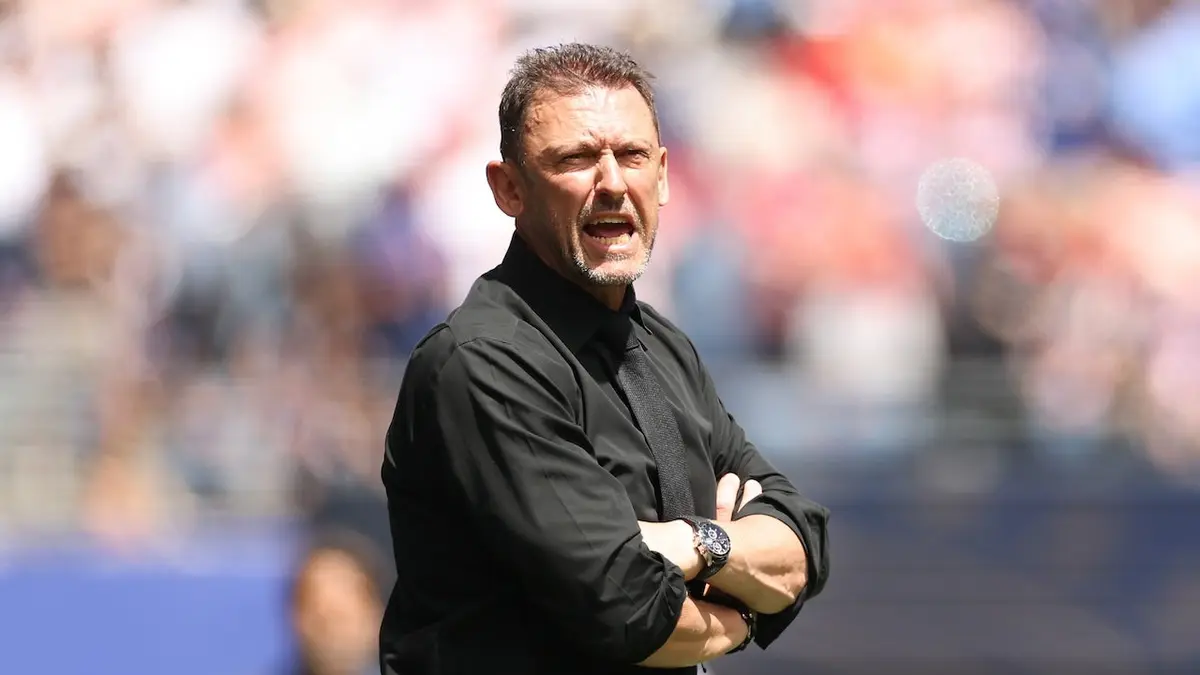
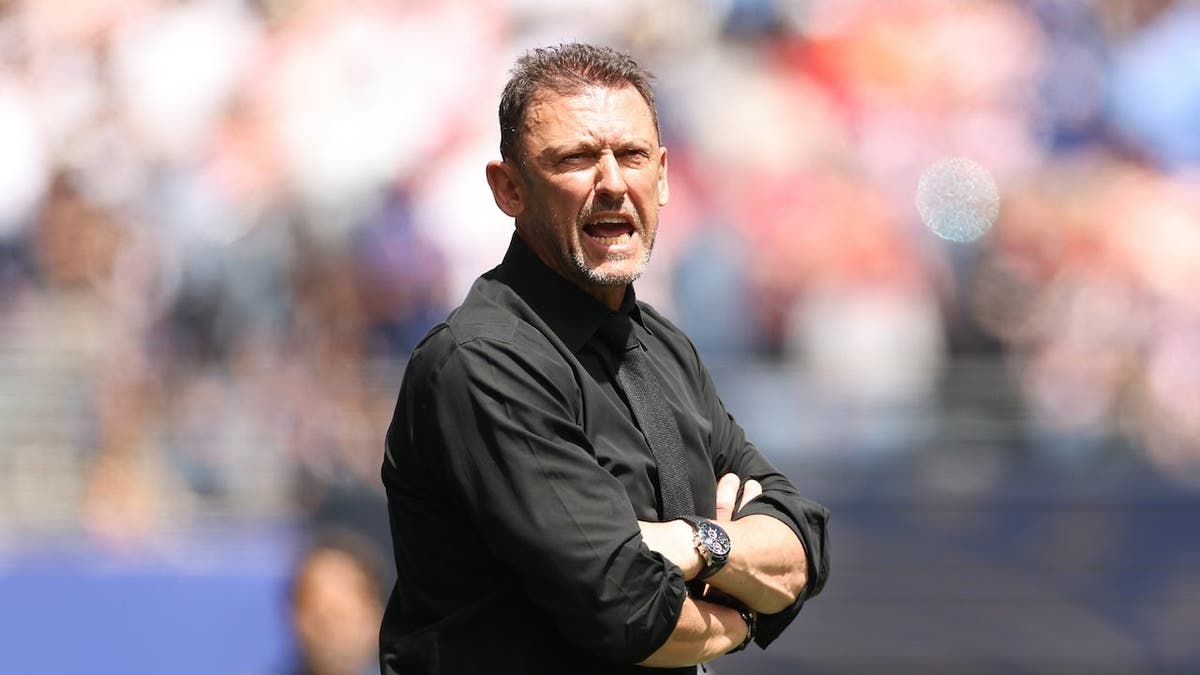
Tony Popovic, head coach of Australia, reacts during the FIFA World Cup 2026 Group D match between the U.S. and Australia at Seattle Stadium in Seattle, Wash., on June 19, 2026.(Sarah Stier/FIFA/Getty Images)
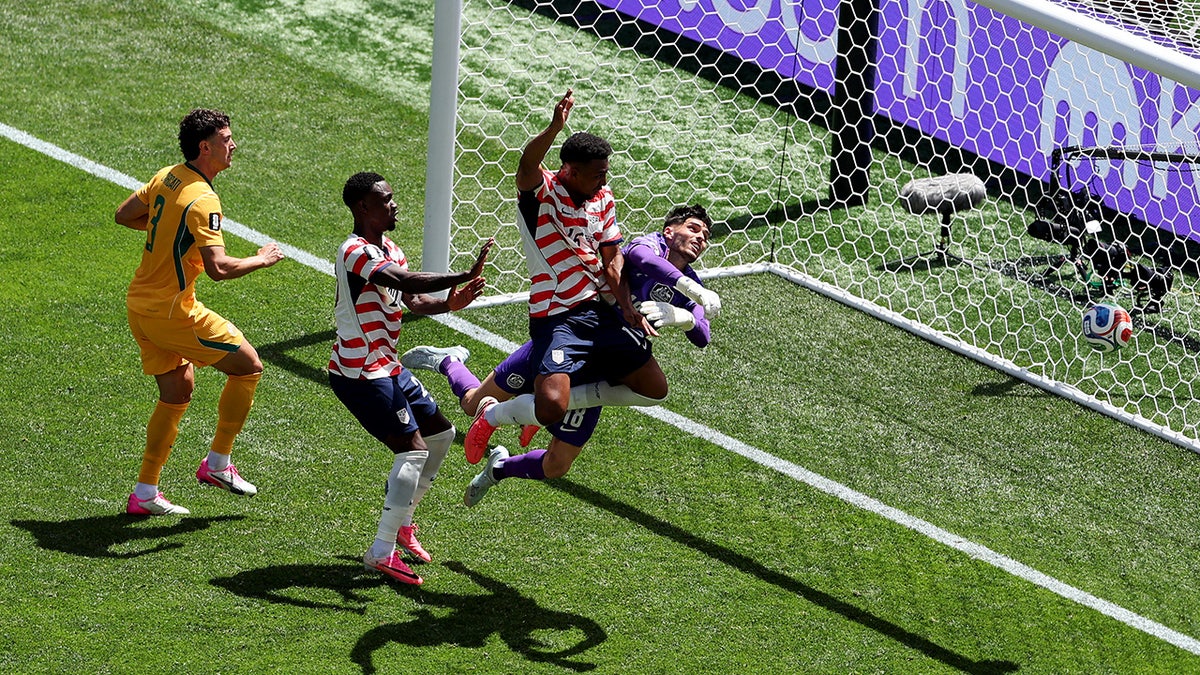
The U.S. found the back of the net at the end of the 43rd minute after a free kick was stopped, and then Alex Freeman, the son of former NFL player Antonio Freeman, headed a ball in. The score was immediately protested by the Australians, who felt their goalkeeper had been impeded or there was an offside. After a VAR review, the call stood, and the goal was awarded.
Tensions boiled over late in the match when a physical altercation broke out. Australia’s Harry Souttar grabbed the USA’s Folarin Balogun in what commentators described as a “rear naked choke.” Zwayer regained control by issuing yellow cards to Balogun, Souttar and Australia’s Jacob Italiano.
Australia received four yellow cards, while the U.S. received three.
Advertisement
Popovic was seen approaching German match official Felix Zwayer after the game, with urgency.
United States’ Alex Freeman heads the ball for a goal past Australia goalkeeper Patrick Beach during the World Cup Group D soccer match in Seattle on June 19, 2026.(Maddy Grassy/AP Photo)
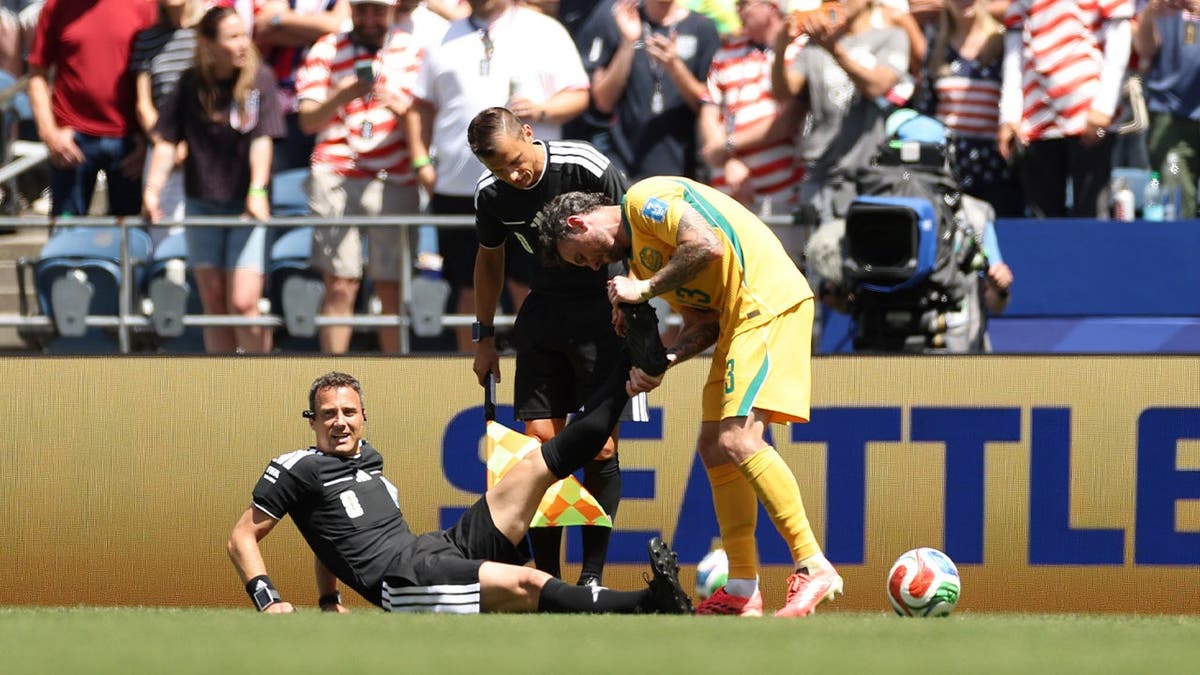
Zwayer also pulled up with a cramp towards the end of the USA’s win. The German official, 45, required help from both the USA’s Folarin Balogun and Australia’s Aiden O’Neill, who stretched out his left leg after Zwayer fell to the turf.
Still, the manager did give credit to the Americans and admitted his players looked “sluggish” on Friday.
Advertisement
“I don’t know if it’s the occasion, but we looked sluggish, heavy-legged … They won every duel, they won every second ball and when you do that, it makes it very difficult to gain any momentum. And then we conceded two soft goals,” he said.
“When you think, you know, this noise here — host nation — I think the players show how good they are in the second half, but obviously at this level, you can’t give away that much in the first.”
FIFA ref Felix Zwayer going down with cramps was a reminder of just how physically demanding being a soccer referee is.(Photo by Sarah Stier – FIFA/FIFA via Getty Images)
With its 2-0 record, the United States is in first place with six points, while Australia remains with three and in second place. Both Paraguay and Turkey, who face off on Friday to potentially determine the USA’s group fate, are winless with zero points.
Advertisement
The United States would clinch a Group D victory, and a favorable draw in the Round of 32, if Paraguay either beats or ties with Turkey — that game kicks off at 11 p.m. ET.
Jackson Thompson is a sports reporter for Fox News Digital covering critical political and cultural issues in sports, with an investigative lens. Jackson’s reporting has been cited in federal government actions related to the enforcement of Title IX, and in legacy media outlets including The New York Times, The Los Angeles Times, The Philadelphia Inquirer, The Associated Press and ESPN.com.
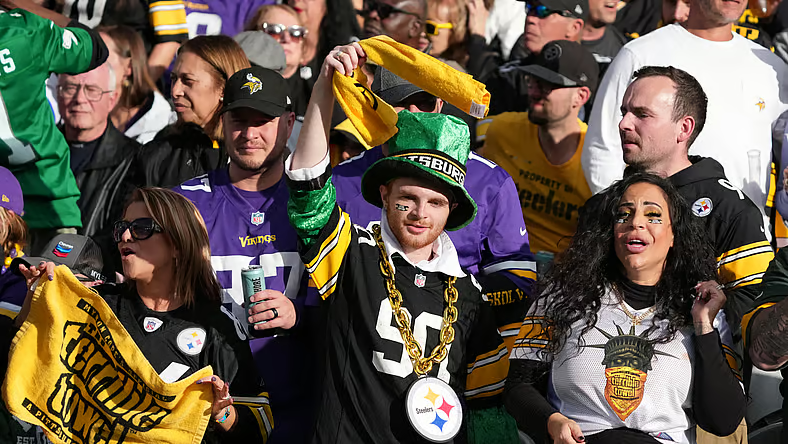
Sep 28, 2025; Dublin, Ireland; Pittsburgh Steelers fans cheer during the fourth quarter against the Minnesota Vikings during an NFL International Series game at Croke Park. Mandatory Credit: Kirby Lee-Imagn Images
Kevin O’Connell lived up to his word. The skipper said Caleb Banks would be ready for the beginning of training camp and that proved to be true.
Seeing the hulking defensive lineman get onto the field should be understood as being very positive. Recent years have seen the Vikings fall short of expectations in large part due to the young lads not contributing a ton. Put simply, that trend needs to reverse if the Vikings are going get to where they want to go in 2026 and beyond.
The Vikings: Caleb Banks is Practicing
The Vikings’ social media understands that getting the 1st-Round selection onto the field is a major development. Check out the brief clip:
Advertisement
Of course, there’s not a ton that can be gleaned from just the brief moments. Nothing overly spectacular gets included but seeing Banks explode into the bag is a reminder of his power. Any lineman needs to be able to uncoil his hips to give his mitts power. Banks, in theory, should be a force in this regard given his unusually impressive build.
Florida Gators defensive lineman Caleb Banks (88) participates in a drill during spring football practice at Steve Spurrier Field at Ben Hill Griffin Stadium in Gainesville, FL on Saturday, April 1, 2023. [Matt Pendleton/Gainesville Sun]
Consider what his upside looks like from the perspective of the pre-draft assessment.
Advertisement
The analysis from Lance Zierlein on the NFL’s website: “Big-framed, long-limbed interior defender whose play needs more polish to consistently match his traits. Banks has a quick first step. He can stun/control single blocks when his hand strikes are timely and accurate, but he needs faster disengagement to increase his tackle count.”
Further from Zierlein: “His high center of gravity allows double teams to generate displacement, so a move to odd-front end could be in his best interest as a run defender. Like a grappler without submission knowledge, Banks is still learning to unlock his physical advantages so he can turn them into sacks. His traits and flashes at the Senior Bowl make him an enticing prospect, but injury concerns are a potential stumbling block for him.”
Part of the concern with being hurt is the lost reps for “polish.”
Advertisement
Consider, as a clarifying example, the development of J.J. McCarthy. The young passer doesn’t lack for raw talent but his mechanics have sometimes been off. As a result, the play at quarterback hasn’t always been up to the Vikings’ standard. How often have Minnesota’s decision makers pointed toward the missed practice time as the reason for McCarthy’s Sunday struggles?
Similarly, the Vikings are betting on a 1st-Round selection with great athletic ability in Caleb Banks. He, too, is coming to the Twin Cities with a pile upside but in need of further refinement. Getting Mr. Banks onto the field to soak up that ultra-specific coaching from Ryan Nielsen is a great update for the Vikings.
Apr 23, 2026; Pittsburgh, PA, USA; Florida Gators defensive lineman Caleb Banks is selected by the Minnesota Vikings as the number 18 pick during the 2026 NFL Draft at Acrisure Stadium. Mandatory Credit: Kirby Lee-Imagn Images
Two things remain uncertain: can the kid stay healthy and can he snatch away a starter’s job in time for Week 1? Only time can offer certainty here.
The surest bet along the defensive line can be found in Jalen Redmond. He’s no longer just a good story (but he is still that). Rather, he has become a weekly difference maker who is looking to get recognized around the NFL instead of just in the Minnesota area. Think those early Adam Thielen days before he started getting love around that league. That’s where Redmond finds himself.
Don’t be surprised if Redmond earns a Pro Bowl spot after the 2026 season.
Advertisement
Otherwise, the main names to know belong to Levi Drake Rodriguez, Ty Ingram-Dawkins (possibly more of an edge rusher now), Domonique Orange, and Elijah Williams. Can the unheralded fellas — Eric Johnson, Smith Vilbert, Isaiahh Loudermilk, Taki Taimani, and so on — assert themselves in the coming weeks?
Caleb Banks, 23, stands at 6’6″ and 325 pounds. Health permitting, Banks will become a very good player.
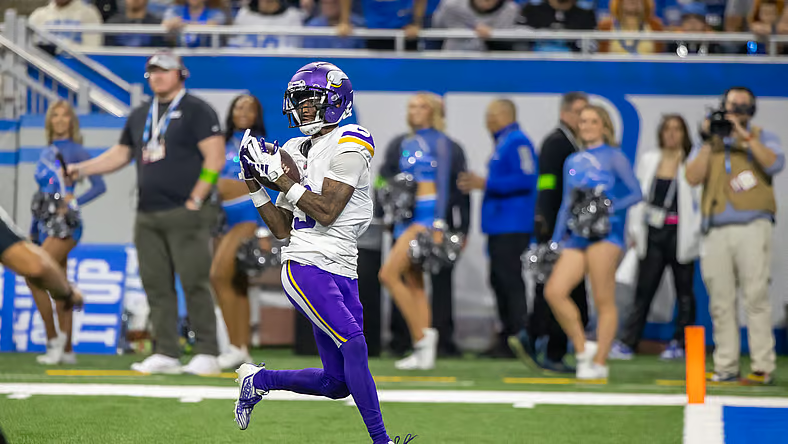
Jan 7, 2024; Detroit, Michigan, USA; Minnesota Vikings wide receiver Jordan Addison (3) catches a pass for a touchdown during second half of the game against the Detroit Lions at Ford Field. Mandatory Credit: David Reginek-USA TODAY Sports
All along, Vikings pass catcher Jordan Addison has oozed ability. He has had a quiet offeseason, a great development for the fourth-year receiver who has been playing well.
Will Ragatz of Bring Me the News sent along a short video after the debut training camp practice. Within the broader update, Ragatz notes that Minnesota’s WR2 was “just everywhere.” In fact, Ragatz suggested that an uneducated onlooker might conclude that “Addison is the Vikings’ best receiver.” Being “all over the field” is a nice update for the young fella who could be careening toward a “huge year.”
Jordan Addison as a Vikings Pass Catcher Ready to Explode
Opting for Mr. Addison at No. 23 in the 2023 NFL Draft seems obvious now but wasn’t fully so at the time.
Many, myself included, felt like Minnesota should go for a corner. Instead, Kwesi Adofo-Mensah made a great move by choosing the USC receiver with speed to spare. He instantly became the Vikings’ second most lethal threat in the passing game, proving to be fully capable of overcoming a modest build to create room on the field.
Minnesota Vikings wide receiver Jordan Addison (3) reaches for a pass against New York Giants cornerback Cordale Flott (28), Dec. 21, 2025, during the first half at MetLife Stadium in East Rutherford, New Jersey. Addison battled through tight coverage along the sideline as Minnesota’s offense attacked the Giants secondary in a late-season NFC matchup on the road. Mandatory Credit: Robert Deutsch-Imagn Images.
As a rookie, Jordan Addison turned 108 targets into 70 catches for 911 yards and 10 touchdowns. Of particular promise is the 13.0 yards-per-catch average alongside the ability to put points on the board. Not everyone can be so lethal at getting the pigskin into the end zone.
#Vikings QB Kyler Murray and WR Jordan Addison have been working out together for the past 2 months in Dallas.
Both players reported to Minnesota early this week to prepare for the start of training camp, with hopes of a big year ahead 🚀 pic.twitter.com/HWQ9HfrtoY
Addison has since had more modest seasons. Some of that has been due to missing time. In 2024, Addison played in just fifteen games due to injury. He then dropped down to fourteen games in 2025 due to suspension. Worse yet, the disaster at quarterback pushed his production down even further: 42 catches for 610 yards and 3 touchdowns.
Now, not every problem can be pinned on the passer.
Last season, Mr. Addison struggled with drops. He tossed up his highest amount — 6 — even though he played in the lowest amount of games in his career. In fact, Addison’s half dozen drops last year exceed his combined total as a rookie and sophomore, which come in at 5. His drop percentage skyrocketed to 7.6% after 2.8% in 2023 and 2.0% in 2024.
Advertisement
The early days of training camp have seen Kyler Murray and J.J. McCarthy battle in front of coaches, teammates, and even some fans. Whoever earns the job will need to show a strong rapport with Addison since he’s the main way to hurt the defense when the other side is going all out on slowing Justin Jefferson.
Dec 16, 2024; Minneapolis, Minnesota, USA; Minnesota Vikings wide receiver Jordan Addison (3) catches a pass as Chicago Bears cornerback Terell Smith (32) defends during the first quarter at U.S. Bank Stadium. Mandatory Credit: Jeffrey Becker-Imagn Images.
Motivation shouldn’t be an issue for the young fella. A player can get extended after his third season. Addison is now at that stage but hasn’t seen his deal adjusted apart from getting the 5th-year option on his rookie deal picked up.
At minimum, the Vikings appear committed to a pair more seasons of employing him. What he does in 2026 and 2027 will largely influence his ability to pull the Vikings to the negotiation table to get the finishing touches done on a meaty extension.
Jordan Addison is 24. Seeing him clear 1,000 yards should become normal for him.
Godswill Akpabio United FC have officially unveiled Edward Green as their new head coach after he signed a two-year contract with the Nigeria National League (NNL) club in Uyo on Friday.
Green takes over from Lawrence Kingsley and will lead the team into the 2026/27 season.
The appointment is a major step in Green’s coaching career as it is his first time leading a professional football club as head coach.
Advertisement
Before this move, Green worked as an assistant coach at Akwa United, Sporting Lagos and Rivers United, where he gained valuable experience and earned respect for his tactical knowledge.
Speaking after his unveiling, Green expressed his happiness at joining the club.
“It is a privilege to become Head Coach of Godswill Akpabio United.
Advertisement
“I believe in the vision of this football club and I am excited to begin this journey. Together with the players, technical staff and supporters, we will work tirelessly to build a competitive team that reflects the values and ambitions of this great club.”
Green started his coaching career with Ikot Ekpene United before spending five successful years as assistant manager at Akwa United. He later moved to Sporting Lagos and then Rivers United, adding more experience in the Nigeria Premier Football League.
He is also one of the few Nigerian coaches who holds a UEFA C coaching licence, showing his commitment to learning and developing as a coach.
Godswill Akpabio United will now hope Green can use his experience to help the club achieve its goals in the Nigeria National League.
Advertisement
With a two-year contract in place, all eyes will be on the new coach as he begins his first job as head coach of a professional football club.
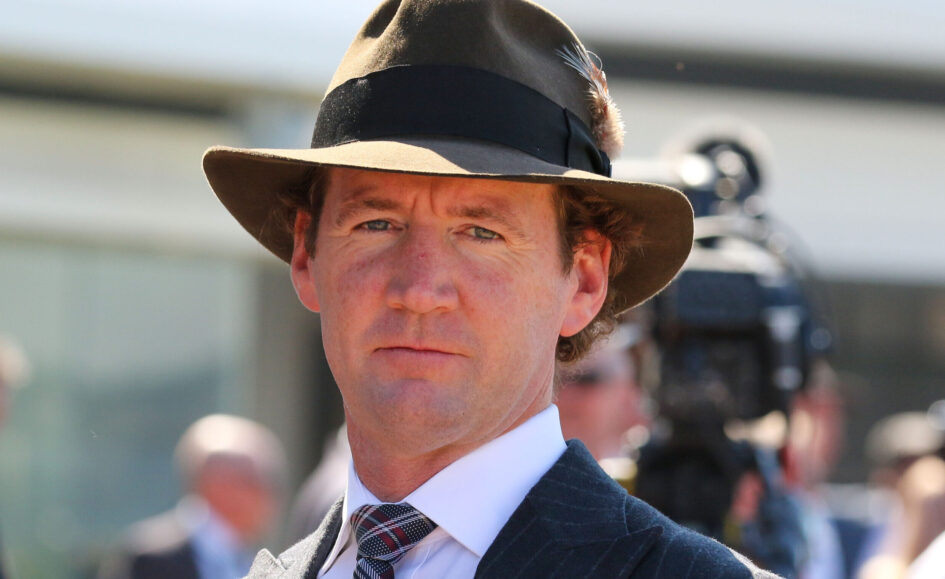
Leading horse trainer Ciaron Maher has officially declared Crown Lodge in Warwick Farm his long-term Sydney home, anticipating an amplified metropolitan presence in the forthcoming racing seasons.
Maher had initially intended to establish his Sydney operations at Leilani Lodge in Randwick and had commenced refurbishments there before the opportunity to secure Crown Lodge presented itself.
The successful relocation has already borne fruit, with Rock Empire becoming the first winner to come from Maher’s new Sydney headquarters at Randwick last Saturday.
Maher conveyed that the transition from his Bong Bong property in the NSW Southern Highlands, which accommodated 60 horses, had been smooth.
Advertisement
“It’s probably the best stable in New South Wales, and not surprisingly,” Maher said of Crown Lodge.
“I was rapt to get in there. We were going to come to Randwick, but we thought this may have been an option. It’s a real showcase and the horses have settled straight away.”
“Bong Bong is a fantastic facility, but there are sixty boxes there and I had one hundred horses. I needed a bigger facility. This is perfect. It consolidates it.”
While Maher will continue to manage his Bob’s Farm base near Newcastle, Crown Lodge will function as his primary Sydney stable. The trainer is slated to officially inaugurate the complex this week and hopes to celebrate with a victory at Saturday’s Rosehill meeting.
Advertisement
Maher has accepted with three runners at Rosehill to mark the start of the new racing season, including It’s A Knockout in the Jockeys Celebration Day Handicap (1500m).
The mare has drawn barrier 12 of 13, prompting Maher to consider whether she will participate or be saved for the Coffs Harbour Cup (1600m) on August 7.
He was encouraged by her return to form, finishing runner-up to Mickey’s Medal at Randwick in her most recent start.
“It was good to see her back and hitting the line (last start),” Maher stated.
Advertisement
“She could have drawn a bit nicer, but what do you do?
“Whether we run here or not, she could end up at Coffs. We’ll see how the race looks and how the track is.”
Maher trained 45 Sydney metropolitan winners from 377 starters in the 2025/26 season, finishing sixth in the Sydney trainers’ premiership. He is confident that the expanded facilities at Crown Lodge will enable his stable to become a more formidable force.
“I do feel we will, for sure. Naturally, because it’s a bigger facility,” he remarked.
Advertisement
“I’m really looking forward to the next year, and five years.
“I’m pretty excited with where the business is at, and where it’s headed.”
Check the latest racing odds for the main race at Australia’s leading racing odds.
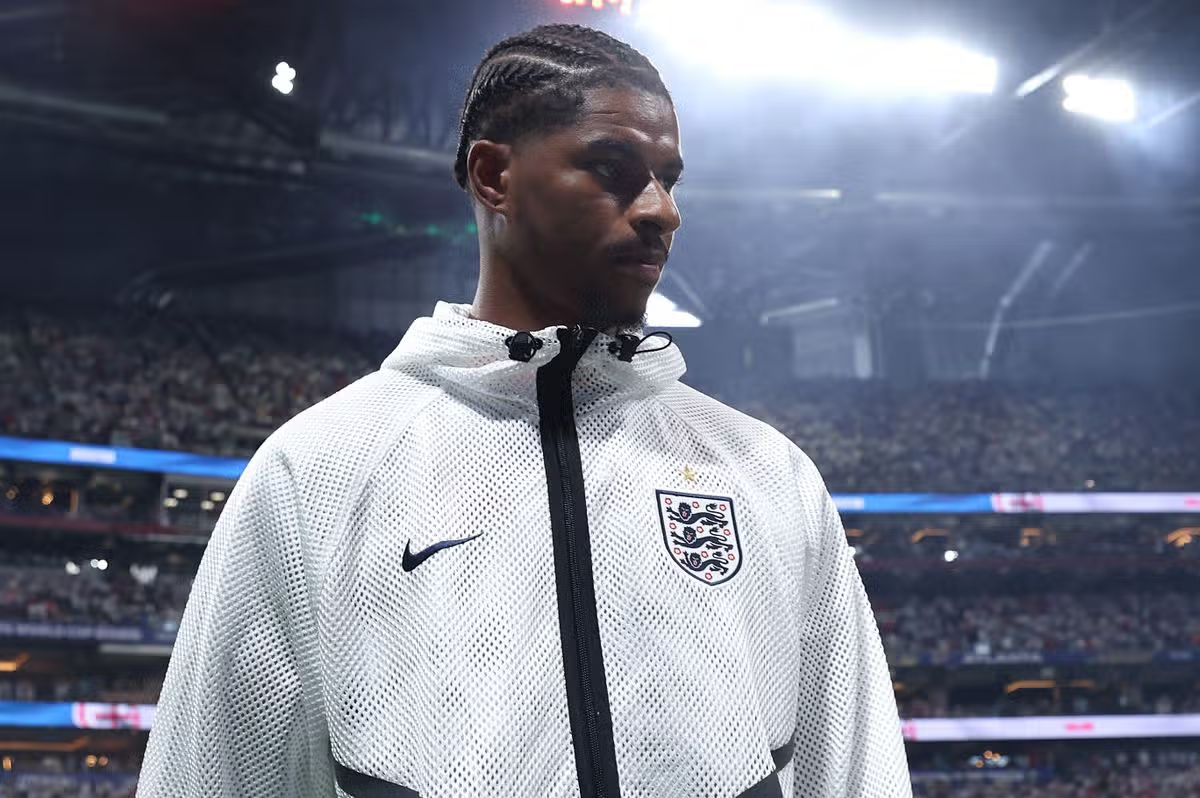
Marcus Rashford’s future of Manchester United is still a huge uncertainty despite the fact he looked set to depart Old Trafford this summer
Former Manchester United assistant manager Rene Meulensteen has warned the club may get stung if they sell Marcus Rashford to a Premier League rival. Rashford, 28, remains a United player after Barcelona chose not to exercise their option to buy him permanently.
Speaking to Andy’s Bet Club, Meulensteen, when asked if the situation could be similar to United’s decision to sell Scott McTominay, who has gone on to star for Napoli, replied: “Would selling Marcus Rashford be a repeat of selling Scott McTominay?
“I don’t think people see Scott McTominay the same way. He moved because the club wanted to sell, and he has done brilliantly since. People might wonder if United sold him too early.
“But selling Marcus Rashford to a direct competitor like Arsenal or Chelsea could really hurt you. He is still a player who can make a difference. Ideally, if United sell him, they should sell him abroad.”
Advertisement
Meulensteen also encouraged Carrick to have a dialogue with Rashford to see where his head is at and how he could be of use to the Reds. He added: “Michael Carrick is the type of person who recognises Marcus’s qualities.
“They need an open conversation so Marcus understands what is required. Michael Carrick won’t want to bring someone back if it creates another problem. If the clarity is there, he would be happy to bring him back into the fold.
“However, with the other players available, there wouldn’t be a guaranteed start every week. The fact that it is taking so long to find clarity suggests there is still something brewing in the background. If all parties were happy for him to come back, they would likely have made that clear very quickly.”
Advertisement
In terms of attacking options, United’s main threats are Matheus Cunha, Bryan Mbeumo, Benjamin Sesko and Amad Diallo, with Bruno Fernandes and Mason Mount often operating in the space behind the striker.
Patrick Dorgu was also repackaged as a left-winger under Carrick, where he scored many key goals before injury sapped his momentum last season. United still have more pre-season friendlies to play.
They face Atletico Madrid in Stockholm tomorrow, Paris Saint-Germain in Gothenburg on August 8, Leeds United in Dublin on the 12th and AC Milan in Wroclaw, Poland on the 15th, before their Premier League campaign begins against Hull City on August 22nd.
Advertisement
Thousands of Man United fans upgraded their matchday last season. This is how they did it.
This article contains affiliate links, we will receive a commission on any sales we generate from it. Learn more
Official premium experiences at Old Trafford are available now for the 26/27 Premier League season. Make it easier than ever to turn a regular fixture into something genuinely unforgettable.
The football world was rocked earlier this week when it was reported that FIFA, the sport’s global governing body, was planning to sell a stake in a new commercial subsidiary to private equity investors close to US President Donald Trump, prompting widespread outrage.
European football’s governing body, UEFA, quickly condemned the plans with its 55 member associations voting unanimously to boycott future FIFA competitions — including the next men’s World Cup in 2030 but potentially starting with the under-20 Women’s World Cup on September 5 — were the plans to be implemented.
The Europeans soon received backing from CONCACAF, the regional body representing 41 North American and Caribbean football federations, and the Asian Football Confederation (AFC) with its 47 members, technically robbing Infantino of majority support among FIFA’s 211 member associations (MAs).
Advertisement
FIFA advisor Cordeiro steps down
On Friday, the pressure on FIFA grew even more when Carlos Cordeiro, former head of the United States Soccer Federation (USSF) and more recently a senior advisor to both Infantino and President Trump during this year’s men’s World Cup, resigned in protest at the plans, which he described as a “bad deal for football.”
Carlos Cordeiro (center left) was a senior advisor to US President Trump (left) and FIFA President Infantino (second from right)Image: Daniel Torok/Avalon/Photoshot/picture alliance
In statement, Cordeiro, 69-year-old former partner at Goldman Sachs, questioned why FIFA needed to seek private equity investment at all given its unprecedented World Cup profits, and criticized a lack of transparancy, oversight and due process surrounding the plans.
“FIFA already has access to extraordinary financial resources,” he said. “The organization sits on billions of dollars in reserves and no debt. The FIFA president himself has highlighted the $15 billion in revenue generated [during FIFA’s last four-year World Cup cycle] between 2022 and 2026.
“If member associations believe additional investment is needed to develop the game, FIFA already has the financial capacity to provide that support from its existing resources. Against that backdrop, selling a permanent stake in football’s most valuable asset to raise $4.2 billion makes little sense. It is mortgaging football’s future without any compelling justification.”
Advertisement
FIFA: ‘Nobody is selling football’
Despite the opposition voiced by UEFA, CONCACAF, AFC and individual national associations including the German Football Federation (DFB), FIFA had earlier doubled down on its plans to establish “FIFA Forward Enterprise” (FFE).
The subsidiary, valued by FIFA at around $20 billion (€17.5 billion), would be responsible for FIFA’s commercial rights like broadcast, sponsorship, ticketing and licensing contracts for its competitions, including the World Cup, but would sell a non-controling minority stake worth $4.2 billion to private equity investors.
“Nobody is selling football. This is not something FIFA would ever entertain,” FIFA said in statement earlier on Friday, slamming “incorrect media reports” without issuing clarification and what precisely was wrongly reported, and insisting that it would proceed with its “consultation process” — with member associations obliged to make a decision by September 19.
Advertisement
“FIFA [member associations are] now being asked to believe that outside investors are needed to unlock greater value. I do not accept that proposition,” said Cordeiro.
“Most troubling of all is the absence of answers to fundamental questions: Why this deal? Why now? What oversight exists? Who benefits? Was there a competitive process? What governance will be in place? What will investors ultimately gain, and at what cost to football?”
UEFA lead FIFA criticism, threaten World Cup boycott
UEFA and its president Aleksander Ceferin have been at loggerheads with FIFA for some timeImage: Mike Egerton/PA/picture alliance
European football’s governing body UEFA, which has been at loggerheads with FIFA and Infantino for years and criticized the global body throughout the recent World Cup over expensive ticket prices and the Folarin Balogun red card affair, had come out publicly in opposition to the plan within an hour of it first being reported by the Financial Times and Times on Tuesday.
“No UEFA national teams will participate in any FIFA competition for so long as these proposals remain alive, unless this proposal has been abandoned in its entirety and binding assurances have been given that FIFA will never again open its governance or competitions to private ownership,” UEFA said in a statement after a unanimous vote by its 55 member associations at a hastily convened emergency meeting on Thursday.
“The World Cup cannot be treated as an investment product … No part of it should ever be surrendered to private investors. The World Cup is not for sale,” the statement added.
Meanwhile, political criticism came from new British Prime Minister Andy Burnham, a keen football supporter and one of the first European leaders to criticize the FIFA plans earlier in the week,
Advertisement
“My view is strengthening [that] this was an outrageous suggestion,” said Burnham on Friday. “The idea that it could even be brought forward, in my view, shows that the FIFA general secretary [Infantino] is the wrong man to lead the organization.”
CONCACAF and AFC join opposition
Shortly after, North America’s soccer body CONCACAF also unanimously rejected the FIFA plan, though it stopped short of threatening a boycott by its 41 members.
The Asian Football Confederation (AFC) also issued a scathing letter to its 47 member associations and warned the FIFA proposal would never succeed without the support of all six regional blocs.
“While the immediate debate centres on FFE, the AFC considers this issue extends far beyond a single proposal. Rather, it has exposed fundamental weaknesses in FIFA’s consultation and decision-making processes that must now be addressed,” read an AFC statement.
“This is not the first occasion where major stakeholders have been confronted with significant initiatives after the direction of travel appears to have already been determined. Such an approach undermines confidence in FIFA’s governance framework and diminishes the authority of its statutory bodies.”
Advertisement
African body CAF said it would convene an executive committee meeting next week to look into the proposal, saying in a statement:
“CAF is committed to continue consulting and working together with its Member Associations, FIFA, other Football Confederations and stakeholders in support of increasing financial and other resources for the development and growth of football in Africa and worldwide,” it said.
South America’s CONMEBOL has yet to comment, but its president, Alejandro Dominguez, recently spoke out in favor of a further expansion of the men’s World Cup to 64 teams in 2030 — which would effectively result in all but one South American nations qualifying automatically.
Amid the outrage over the investment plans, the Press Association reported on Friday that FIFA was indeed pursuing precisely such an expansion, with a decision expected by August 14.
Advertisement
Germany: What has the DFB said?
German DFB President Bernd Neuendorf can’t see the FIFA plan going forward without UEFA on boardImage: Ulrich Wagner/picture alliance
Germany’s mass-circulation Bild paper reported that key UEFA officials including German Football Federation (DFB) President Bernd Neuendorf had already discussed the FIFA plans via a video call on Wednesday.
“We must not lose the fans’ support, but we are well on the way to squandering that,” Neuendorf told public broadcaster ZDF, adding:
“I consider this to be extremely problematic and unacceptable. If UEFA rejects this request [for approval of the plan], then it is dead, because I believe that you won’t be able to find any investor who would be willing to go ahead with this project if UEFA is out.”
It’s not the first time that the DFB has crossed swords with FIFA. At the Qatar World Cup in 2022, Germany’s men’s team covered their mouths before a game in protest at not being allowed to wear a “One Love” rainbow armband to support LGBT+ rights.
In 2024, the Bundesliga was forced to abandon plans to sell a share of its TV rights to foreign investors due to fan protests that included tennis balls and remote control cars with smoke bombs being thrown onto pitch during matches.
Such actions are commonplace in German football, where the so-called 50+1 ownership model bars single investors owning a majority stake in a club and ensures fans retain more power than elsewhere in the world.
A half-sister to the distinguished Cox Plate champion Anamoe has notched a timely win at Sandown, with the breeding season drawing nearer.
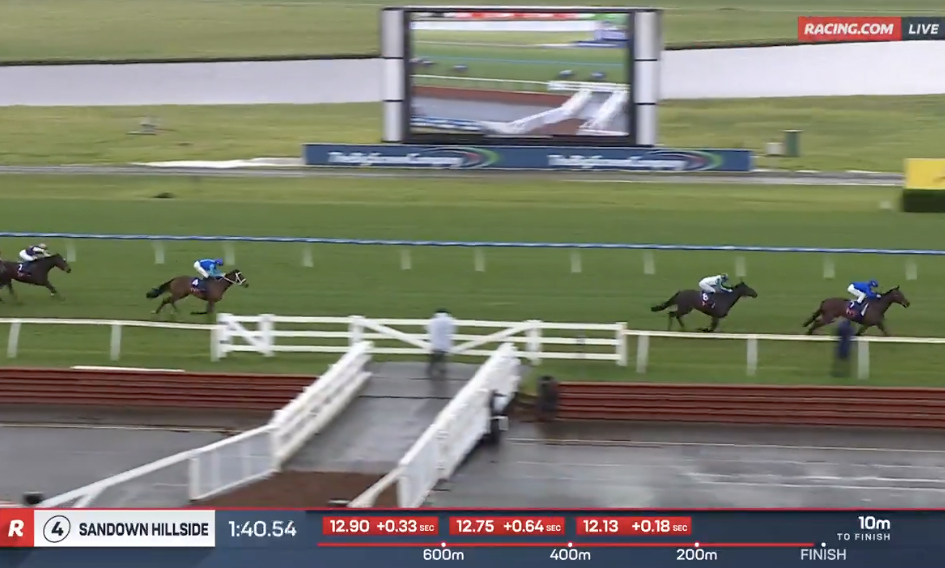
Blue Willow, a mare by Blue Point from Anamato, herself a daughter of Redoute’s Choice, emerged victorious in the IVE> Handicap (1600m) on Wednesday.
Although the race was not a ‘Black Type’ event, it nonetheless represents a city win for Blue Willow, a significant factor for her pedigree, according to Jack Turnbull, National Assistant Trainer for Ciaron Maher Racing.
The favourite at $2.40, with apprentice Jabez Johnstone aboard, Blue Willow triumphed by 1-¾ lengths over Baywatch ($9). Tempranillo ($5.50) secured third place, trailing by an additional 6-½ lengths.
Advertisement
“That’s her Grand Final,” Turnbull declared. “That’s a great result for Godolphin and everyone involved.”
He further commented, “She’s a talented mare but it hasn’t worked out for her in the last couple of starts with barriers and race patterns. It was a good ride by Jabez. He took his time, got on the back of something and had a bit of fake cover and kept her balanced and it was good to see her finish off.”
Anamoe, who amassed 14 wins from 25 starts, including the 2022 Cox Plate and nine Group 1 races, is now commencing his stud career.
Mirroring his half-sister’s achievement, Anamoe’s first metropolitan win was also at Sandown, where he won the Merson Cooper Stakes on his second start.
Advertisement
Turnbull indicated that the stable would follow the guidance of the Godolphin team, which includes Australian Managing Director Andy Makiv and Racing and Bloodstock Manager Jason Walsh.
“The breeding season is coming up, and she does have a lot of quality and value there,” Turnbull stated. “It’s great to get the win there and we can work the rest out later.”
Johnstone, having ridden the Godolphin-owned Custom to victory at Caulfield the prior Saturday, expressed his satisfaction in securing another win for the Royal Blue colours.
“I mentioned last Saturday that it’s an absolute privilege to be riding in these colours and winning in them,” Johnstone said. “She handled the conditions very well and to win the way she did without being under the stick, was a pretty dominant effort.”
Advertisement
Blue Willow was the second of four winners for the Maher and Johnstone combination, who also saluted with Stay Silent in the Sportsbet Jockey Watch Handicap, Foire De Trone in the Sportsbet Race Replays Handicap, and Here’s Matilda in the Tile Importer Handicap.
Get involved with the racing odds at betting sites for the next major event.
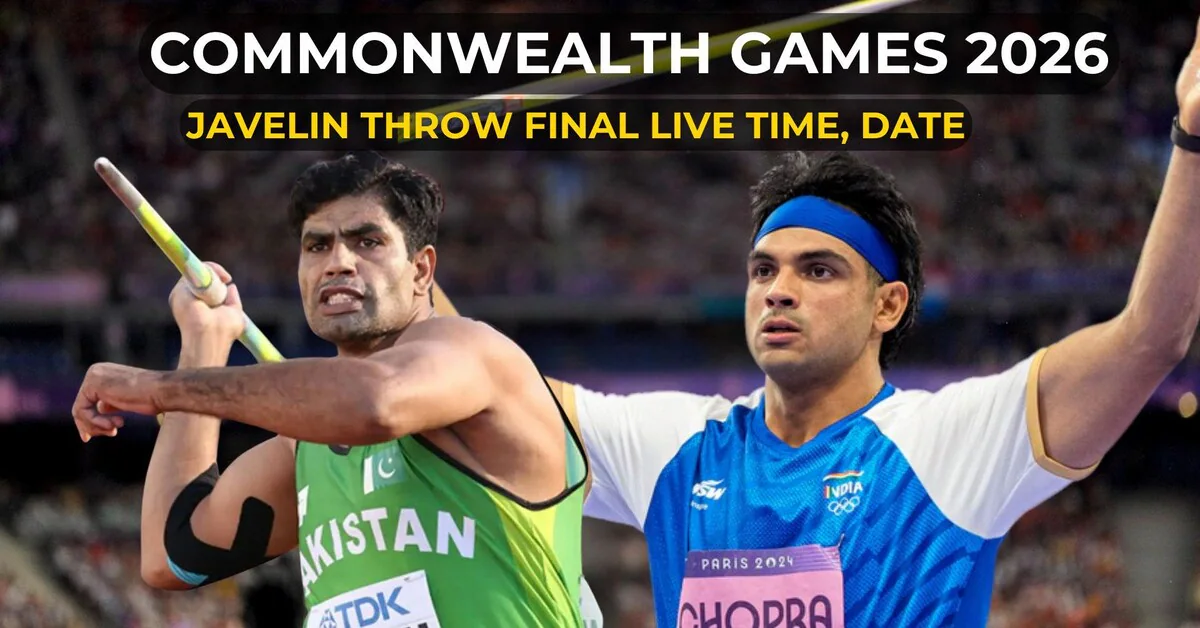
One of athletics’ greatest modern rivalries is set for another chapter as India’s Olympic champion Neeraj Chopra and Pakistan’s defending Commonwealth Games champion Arshad Nadeem prepare to go head-to-head in the men’s javelin throw final at the Commonwealth Games 2026 in Glasgow tonight.
While medals are at stake, the contest carries an added layer of intrigue. Every meeting between the two Asian superstars has become one of the most anticipated events in global athletics, with fans from both sides of the border eagerly awaiting another battle between two of the finest javelin throwers of this generation.
Another chapter in one of athletics’ biggest rivalries
Advertisement
Over the last few years, Neeraj Chopra and Arshad Nadeem have elevated Asian javelin throwing to unprecedented heights.
Their rivalry has been defined by mutual respect rather than hostility, but every competition involving the duo inevitably captures global attention. Olympic Games, World Championships, Asian competitions and now the Commonwealth Games have all witnessed memorable contests between the two.
Advertisement
This time, Arshad enters as the defending Commonwealth Games champion, while Neeraj is chasing another CWG gold to add to his already glittering résumé.
Although qualifying positions will count for little once the final begins, both athletes know that a single throw could decide another high-profile India-Pakistan sporting contest.
Advertisement
Neeraj looks to peak when it matters
Neeraj qualified comfortably for the final despite not producing his best throw during qualification.
Advertisement
The Indian star recorded 79.61m to finish fifth overall, opting for a measured approach rather than pushing for maximum distance under difficult conditions at Scotstoun Stadium.
The Olympic champion has often shown his ability to save his best performances for major finals, making him one of the favourites despite finishing outside the top three in qualification.
Advertisement
Joining him in the final are fellow Indians Rohit Yadav and Yash Vir Singh, giving India three representatives in the medal round.
Arshad ready to defend his Commonwealth crown
Advertisement
Pakistan’s Arshad Nadeem also advanced to the final and will be determined to retain the Commonwealth title he won four years ago.
The Pakistani thrower has repeatedly proven himself on the biggest stages and remains one of Neeraj’s strongest challengers whenever they compete.
Advertisement
With both athletes capable of crossing the 90-metre mark on their day, another thrilling duel could be on the cards in Glasgow.
Neeraj Chopra vs Arshad Nadeem: Head-to-head before the CWG 2026 final
Advertisement
Neeraj Chopra and Arshad Nadeem have met 11 times in international competitions, with the Indian star holding a dominant 10-1 advantage in their head-to-head record.
Nadeem’s only win over Neeraj came at the Paris 2024 Olympics, where the Pakistani thrower produced an Olympic record 92.97m effort to claim gold. Neeraj settled for silver after registering a best throw of 89.45m.
Advertisement
World-class field promises thrilling final
While the spotlight will naturally fall on Neeraj and Arshad, the competition extends well beyond the South Asian rivals.
Advertisement
The final features an exceptional lineup that includes:
Anderson Peters (Grenada) – former world champion
Advertisement
Keshorn Walcott (Trinidad and Tobago) – reigning world champion and Olympic medallist
With multiple international medal winners in the field, the battle for the podium is expected to be one of the highest-quality athletics finals of the Games.
Neeraj Chopra Commonwealth Games 2026 men’s javelin throw final: Live streaming and telecast details
What time is Neeraj Chopra’s men’s javelin throw final at the Commonwealth Games 2026?
Advertisement
Neeraj Chopra will compete in the men’s javelin throw final at the Commonwealth Games 2026 on Saturday, August 1. The medal event is scheduled to begin at 12:45 AM IST at Scotstoun Stadium in Glasgow, Scotland.
Who will compete alongside Neeraj Chopra in the final?
Advertisement
Neeraj Chopra will be joined by fellow Indians Rohit Yadav and Yash Vir Singh in the 12-man final. The field also features Pakistan’s Arshad Nadeem, Grenada’s Anderson Peters, Trinidad and Tobago’s Keshorn Walcott, Sri Lanka’s Rumesh Tharanga Pathirage, South Africa’s Douw Smit, England’s Ben East, Australia’s Cameron McEntyre, Nigeria’s Chinecherem Nnamdi, and the Bahamas’ Keyshawn Strachan.
Where to watch the live telecast of the men’s javelin throw final in India?
Advertisement
The live telecast of the men’s javelin throw final will be available on Sony Sports Ten 2 SD & HD, Sony Sports Ten 3 Hindi SD & HD, Sony Sports Ten 4 (Tamil, Telugu and Kannada), and DD Sports in India.
Where to watch the live streaming of the men’s javelin throw final in India?
Advertisement
The live streaming of the men’s javelin throw final will be available on the SonyLIV app and website in India.
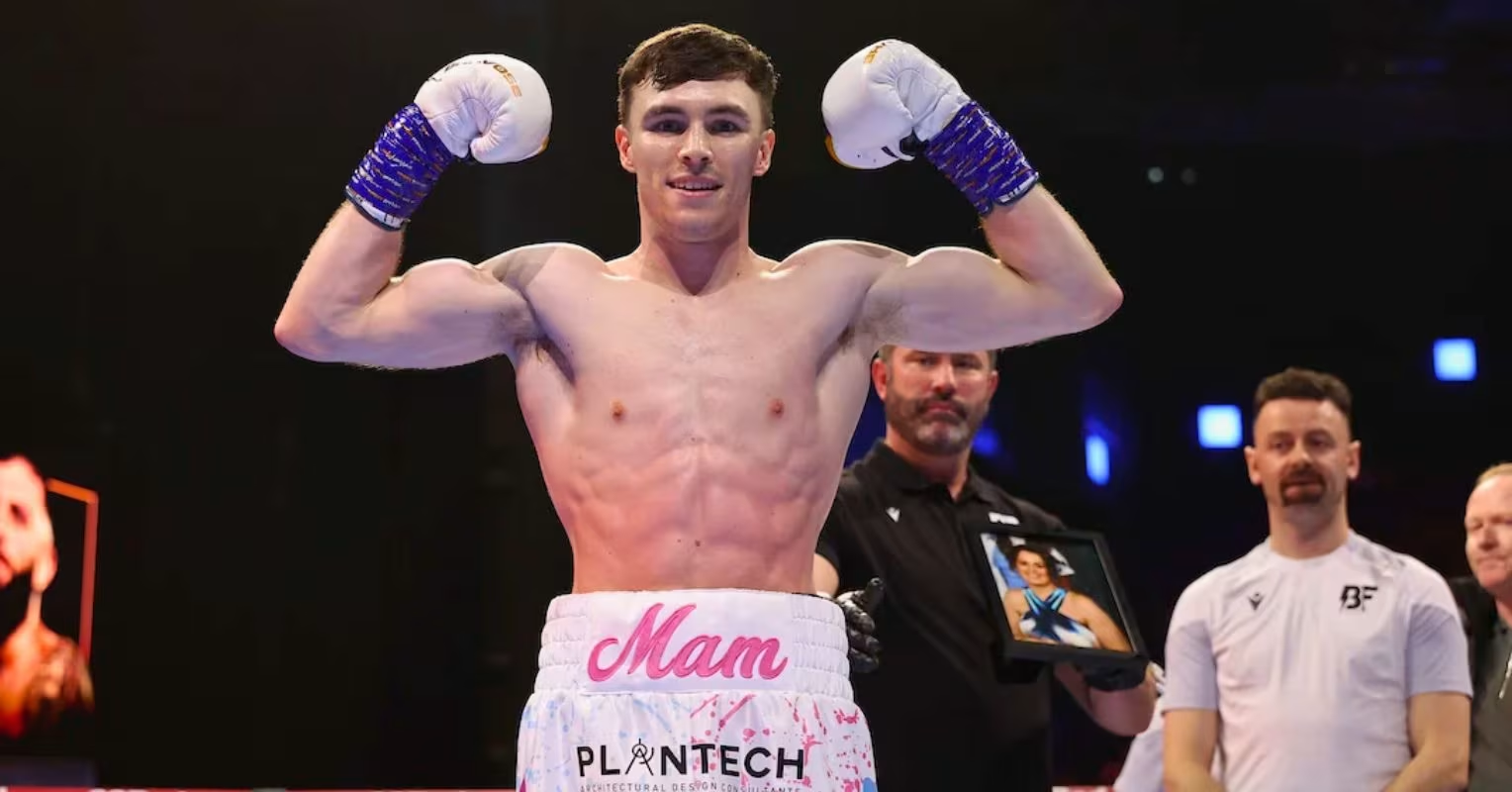
Before that, the 21-year-old must take care of business on August 1, featuring on the undercard of Pierce O’Leary vs Mark Chamberlain at Dublin’s 3Arena.
At the same time, though, it is impossible to ignore what lies beyond his third professional outing, especially with Flood telling Boxing News that he remembers celebrating Taylor’s success in 2012.
Advertisement
“It’s going to be really special. After winning gold at the London Olympics, Katie came back to Bray [Ireland] and did an open-top bus tour.
“I remember going down to see her back then, so to now be fighting on her undercard, at Croke Park, is just mental.”
Around a year after witnessing one of Ireland’s most decorated athletes, Flood was struck with grief following the passing of his mum.
Even now, the Queensberry prospect uses boxing as a coping mechanism, pushing aside his emotions – even if just momentarily – while he pounds the bag and smashes the pads.
“Boxing’s always been my gateway away from the emotional stuff. With me missing my ma, boxing’s always kept me busy.
“And when I lost my granddad two years ago, I ended up winning a national title. Boxing’s just my way of coping.”
Advertisement
The national title Flood speaks of is just one of his many amateur accolades, while the ultimate goal was always to claim Olympic gold.
Due to a slight change to the light-middleweight limit, however, the Dubliner decided to turn pro a little sooner than expected.
“The goal was always to become an Olympic champion but, with the weights changing, it wasn’t meant to be. So now I want to become a world champion in the pro game.
“With them changing the weight class from 71 to 70kg, that 1kg was too hard to get off when you’re holding the weight for so long. And 80kg was just too big of a jump.”
While initially gutted to abandon his Olympic dream, it was perhaps a blessing in disguise that Flood turned pro as early as he did.
Advertisement
He has, after all, managed to develop a tight bond with head coach Stephen ‘Swifty’ Smith, building a strong foundation from which to fine-tune his skills in Liverpool.
“I couldn’t be happier training with ‘Swifty’. He treats all of his boxers like his own kids, which is crazy because he must have about 20 kids running around.
“Away from the gym, I just keep myself busy with this little fella [picks up a dog]. He keeps me busy enough, cleaning up his p**s and s**te.”
Chelsea have been fined £10m and given a suspended two-window transfer ban by an independent appeal board after admitting breaches of Football Association agent rules, the FA has announced.
The Blues were charged last September with 74 alleged breaches of the FA’s rules around agent regulations, concerning its use of unauthorised agents or unregistered intermediaries when signing new players and then submitted false and misleading documentation to the FA. They primarily related to the seasons between 2010/11 to 2015/16, which came under the ownership of the Russian billionaire Roman Abramovich.
The FA appeal board’s written reasons reveals Chelsea “plainly disregarded” the rules and made undisclosed payments to agents or third-parties when signing players such as the Brazilian forward Willian and striker Samuel Eto’o during that time.
Chelsea self-reported the breaches and the FA’s independent appeal board found a suspended points deduction was ‘excessive’ (Getty)
In 2022, after Abramovich was forced into selling Chelsea to BlueCo following Russia’s invasion of Ukraine, the club’s new owners became aware of historic instances of potential rule-breaking during its due diligence process and self-reported the breaches. The club admitted to all 74 breaches but an independent regulatory commission imposed a six-point deduction, suspended until 2027, as well as a £10m fine.
Chelsea have successfully appealed against the six-point penalty, which was instead replaced by the suspended two-window transfer ban. The club said on Friday that it welcomed the FA’s verdict, although the FA will continue to investigate “individual misconduct arising out of this case”.
Chelsea were separately fined £10.75m and handed a suspended transfer ban in March after reaching a settlement with the Premier League over the same historical breaches, relating to secret payments to players and unlicensed agents during transfers dealings 2011 and 2018.
Advertisement
In 2023, Chelsea also reached a £8.6m settlement with Uefa for “submitting incomplete financial information” between 2012 and 2019. It means the club have been fined a total £29.35m in three different investigations since reporting the breaches to the FA, the Premier League and Uefa. Chelsea also confirmed that the FA’s punishment “brings all regulatory proceedings against the club to a close”.
Chelsea have now concluded hearings with the Premier League, FA, and Uefa (PA)
A club statement said: “Chelsea Football Club is pleased to confirm that a final decision has been reached by The FA’s judicial bodies in relation to historical regulatory matters that were self-reported by the club.
“In 2022, the club self-reported potential historical rule breaches to all applicable regulators. Following that report, it has worked openly and transparently with all regulators, including voluntarily and proactively disclosing many thousands of documents.
“As previously announced, settlement agreements have been entered into with Uefa and the Premier League concerning the same self-reported regulatory matters and topics that have been addressed before.
“The club is pleased to confirm that, now The FA process has concluded, this brings all regulatory proceedings against the club to a close. We are grateful to Uefa, the Premier League and The FA for their engagement with the club throughout these processes.”
Advertisement
In its written reasons, the FA’s independent regulatory commission found that, despite admitting to the breaches, Chelsea did not gain an “actual sporting advantage” and determined that “a sporting sanction of a points deduction, albeit suspended, was an excessive sanction”.
Under Abramovich’s 19-year ownership, between 2003 and 2022, Chelsea won 21 major trophies, including two Champions Leagues, five Premier Leagues, five FA Cups, two League Cups and two Europa Leagues.





















































You must be logged in to post a comment Login