U.S. and Iranian negotiators were in Switzerland on Sunday for talks on their interim agreement to end the Iran war. Pakistani and Qatari mediators were also at the scene for the technical-level discussions on resolving the conflict that began in late February.
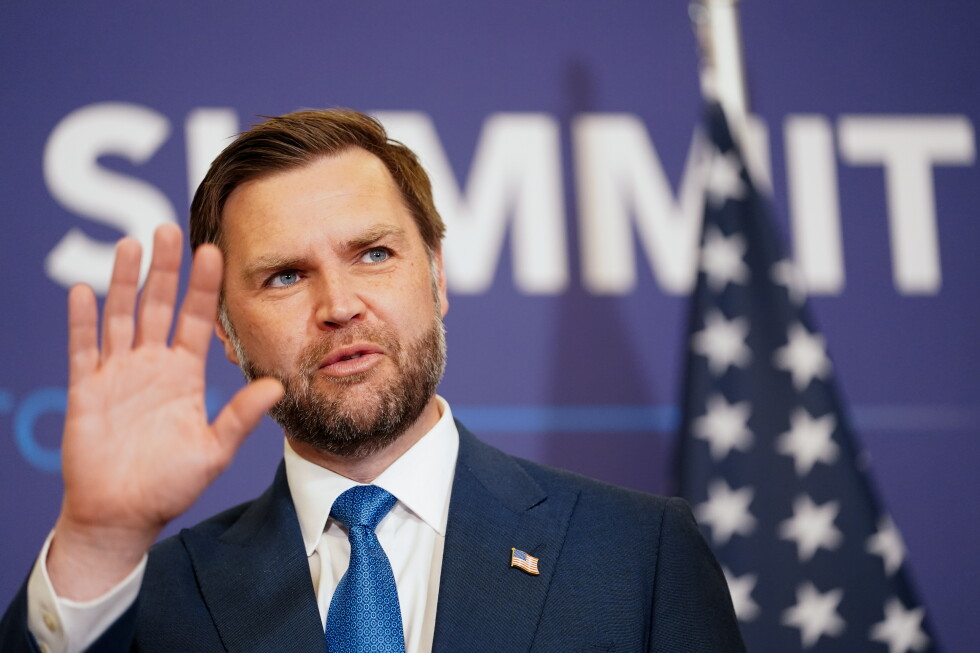
The U.S. team is led by Vice President JD Vance and includes Jared Kushner and Steve Witkoff. They will meet with Iranian negotiators led by Parliament Speaker Mohammad Bagher Qalibaf and Foreign Minister Abbas Araghchi.
On the eve of the talks, Tehran announced it has closed the Strait of Hormuz again over Israel’s ongoing military campaign in Lebanon. The interim deal between the U.S. and Iran is meant to stop fighting on all fronts, including Lebanon, as well as calling for billions of dollars of Iran’s assets to be unfrozen.
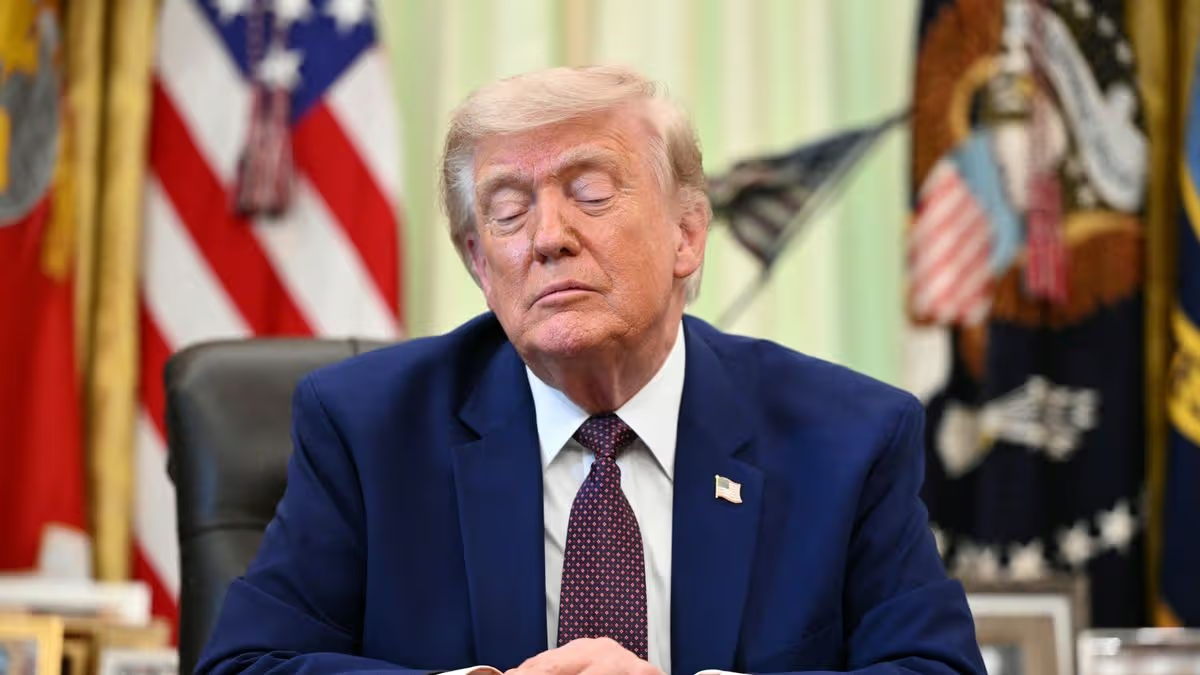
U.S. President Donald Trump has threatened to impose American tolls in the strait if a final deal with Iran isn’t reached in 60 days. The interim agreement calls for toll-free travel for 60 days in the waterway that is vital for the world’s oil supply.
Here is the latest:
Israel says it killed 2 militants in Gaza involved in Hamas’ financial arm
The Israeli military says it killed two militants who were involved in helping transfer up to half a billion dollars to Hamas. The military says the two — Hussein Qadra and Mohammed Farra, who worked with Hamas and the militant group Palestinian Islamic Jihad — were killed in a strike last week.
It said on Sunday that the men oversaw a network of couriers and money exchange spots in both Gaza and Turkey that funneled money towards Hamas militants and infrastructure.
Both men were killed on Wednesday and buried on Thursday, according to their families. Farra’s family said his father, mother and sister were killed in an Israeli strike earlier in the war.
The conflict in Gaza is not part of the U.S-Iran talks underway in Switzerland.
Pakistani team meets separately with US, Iranian delegations
Pakistan’s Prime Minister Shehbaz Sharif has separately met with JD Vance and with the Iranian delegation at the Bürgenstock Resort near Lucerne in Switzerland where the high-level talks are taking place.
Islamabad says Pakistan’s army chief, Field Marshal Asim Munir, accompanied Sharif at the meetings. It did not provide further details.
Sharif has repeatedly said Munir played a key role in brokering the memorandum of understanding between the U.S. and Iran.
A video released by Sharif’s office shows him warmly embracing Qalibaf, Iran’s parliament speaker, and Araghchi, Iran’s foreign minister, as Munir looks on.
The head of the UN nuclear watchdog is also at the scene of the talks
Rafael Grossi, chief of the U.N. nuclear watchdog — the International Atomic Energy Agency — met with Swiss Foreign Minister Ignazio Cassis on the sidelines of the gathering at the picturesque mountainside resort near Lake Lucerne on Sunday morning.
The agency had monitored the 2015 nuclear deal negotiated between the U.S. and Iran under the Obama administration.
Trump in 2018 withdrew the U.S. from that agreement.
Talks in Switzerland will focus on the Israel-Hezbollah war, Iran says
Iran’s Foreign Ministry spokesman Esmail Baghaei says Tehran will mainly focus during the talks on Sunday on the ongoing fighting in Lebanon.
Tehran insists that the deal’s implementation start with a cessation of all fighting — including between Israel and Hezbollah.
Baghaei said the U.S. “has been unable or unwilling” to hold Israel to the ceasefire.
Iran will meet in the morning with Pakistani and Qatari mediators, and in the afternoon, there will be a four-way meeting including the U.S. negotiating team. There is currently only one day of negotiations planned, Baghaei told the state news agency.
Sign up for Morning Wire:
Our flagship newsletter breaks down the biggest headlines of the day.
“The implementation of any document is more important than its signing,” Baghaei also said Sunday.
Iran’s president has said that Iran will maintain its right to a nuclear program.
“What is certain is that we will never back down from the right to enrich uranium, and the other side is also forced to accept it,” Masoud Pezeshkian said on Sunday, according to state media.
A temporary lull in Israeli strikes in Lebanon
As the U.S.-Iran talks were to kick off in Switzerland, a ceasefire appears to be holding in Lebanon, a lull that came after another day of heavy fighting.
Since the ceasefire, Israeli strikes on Friday and Saturday killed 97 people, including eight women and four children, Lebanese officials said. Five Israeli soldiers were also killed.
Israel says it targeted Hezbollah infrastructure on Saturday, including a tunnel network in the southern Lebanese town of Kfar Tebnit.
But by Sunday morning, residents in southern Lebanon reported a lull in Israeli strikes. There also were no reports of Hezbollah fire from the Israeli side.
Israel’s military has received instructions to uphold the ceasefire, and said it is only acting defensively, according to an Israeli military official who spoke on condition of anonymity in line with military guidelines.
—Melanie Lidman in Tel Aviv, Israel
Pakistani mediators also in place in Switzerland
Pakistani Prime Minister Shehbaz Sharif and army chief Field Marshal Asim Munir are also in Switzerland for the high-level U.S.-Iran talks, the prime minister’s office said without providing further details.
The technical-level talks at Bürgenstock Resort near the Swiss city of Lucerne are being held after Sharif dispatched his special envoy, Interior Minister Mohsin Naqvi, to Tehran to persuade Iranian authorities to send a delegation to Switzerland. The meeting was originally scheduled for Friday but was delayed because of concerns raised by Iran.
Naqvi later informed Islamabad that Iran was willing to attend the talks. Pakistan subsequently conveyed the development to Washington.
Strait of Hormuz is once again a challenge
The strait has emerged as a key focus, with Iran’s joint military command saying on Saturday that it was closed again because of the U.S. “clear breach of its commitments” by failing to end the war. The interim deal is meant to stop fighting on all fronts, including in Lebanon where Israeli forces are battling the militant Hezbollah group.
The U.S. disputed Iran’s announcement, with the U.S. Central Command saying that traffic continues to flow and that 55 merchant ships transited on Saturday with more than 17 million barrels of oil.
Ships began transiting after the interim U.S.-Iran agreement was signed last week. The U.S. lifted its blockade of Iran’s ports and now allows Tehran to sell its oil freely — terms that have left some in U.S. Congress asking whether the war was worth it.
The interim deal signed by Trump and Iranian President Masoud Pezeshkian gives negotiators 60 days to reach a nuclear agreement, but the time can be extended.







































You must be logged in to post a comment Login