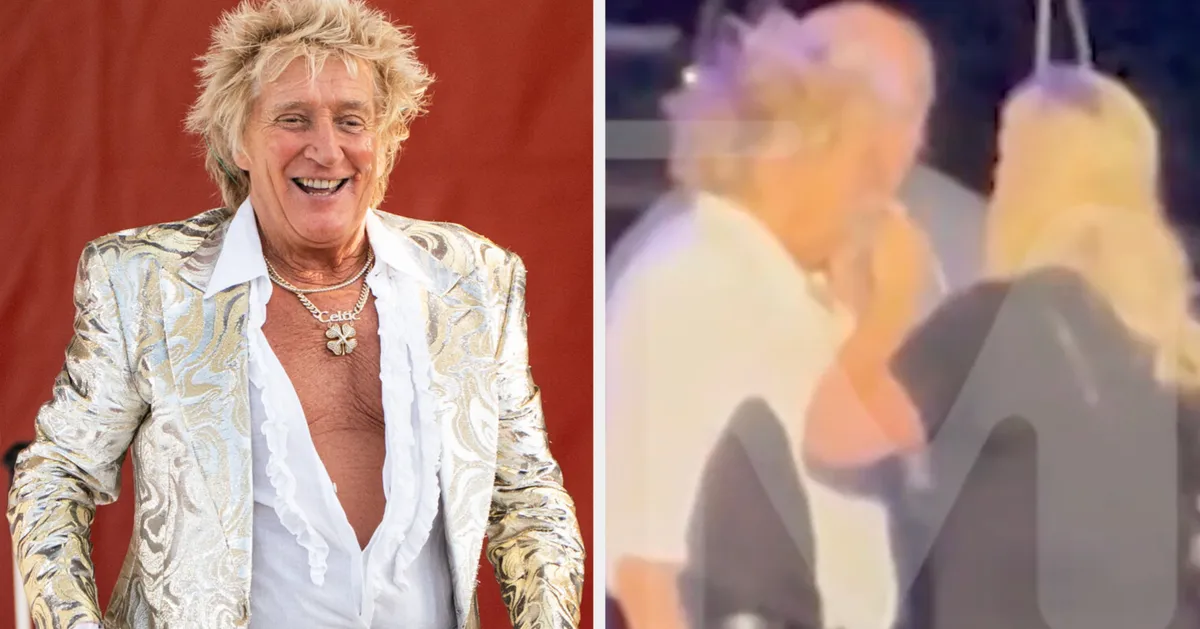
Sir Rod Stewart had to briefly pause a live show in the US last week, after coming close to fainting on stage.
On Friday night, the British crooner was performing in West Valley City, Utah, where video footage shared by TMZ depicted him bent over in pain, and leaning on equipment and staging around him to steady himself.
After that, an oxygen tank was brought onto the stage, which he used, before telling the crowd: “The show must go on. I nearly fucking fainted there.”
“Would you mind if I sit down for this one?” the 81-year-old then asked, with The Independent claiming that Sir Rod remained seated for the rest of the show.
Advertisement
HuffPost UK has contacted the Maggie May singer’s team for comment.
🚨 EXCLUSIVE: Rod Stewart had a rough show in Utah … doubling over in discomfort during the set — and needing puffs from an oxygen tank onstage. pic.twitter.com/iT0idEp86t
“Proud to be their father,” he wrote in the picture’s caption.
Advertisement
Last week, Sir Rod cancelled a show in California an hour before he was due to go on stage due to an “acute upper respiratory infection” which “resulted in laryngitis”.
“Following treatment, I’m feeling much better, but my voice is not,” he said at the time. “I’m very disappointed and sincerely apologise for any inconvenience to my fans.”
He later raised eyebrows when he posted footage of himself flying in a private jet to watch Scotland’s first World Cup game the morning after cancelling his show due to illness.
Sir Rod is currently in the middle of his One Last Time tour, which includes dates across the US.
Advertisement
During an interview on TalkSport last month, the Grammy winner teased that he’d be touring the UK in 2027, including a show at London’s O2 Arena, “and that’ll probably be it, I think”.
He previously announced in 2024 that he was finished with “large-scale world tours”, but maintained he had “no desire to retire”.
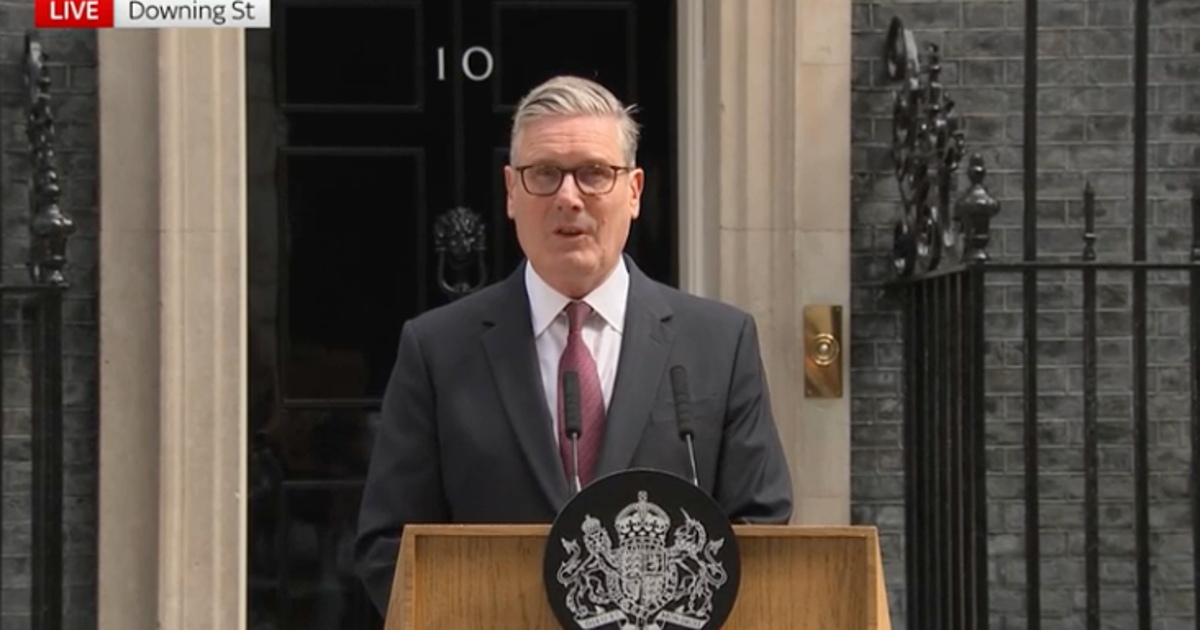
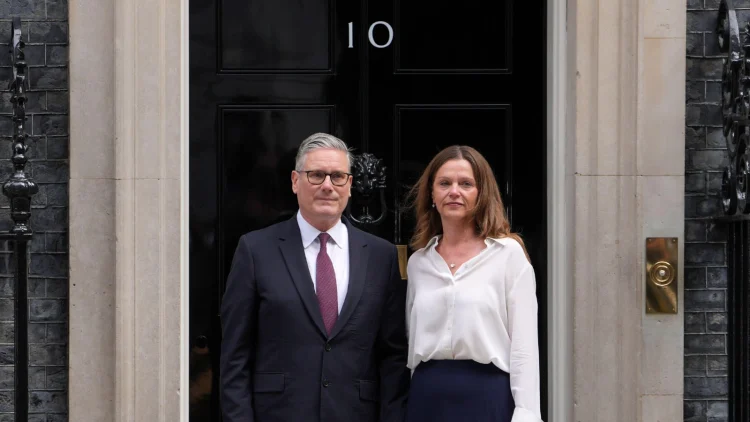
Keir Starmer has announced that he will resign as prime minister and leader of the Labour Party.
In a speech delivered on Downing Street this morning, Starmer said that he accepted the verdict of his party with “good grace”.
The outgoing prime minister’s voice cracked with emotion as he paid tribute to his wife, Victoria, and his sons.
Starmer said: “When I leave the biggest job in the country, I shall spend more time on the most important job, being the best husband I can to my fantastic wife, Vic, who has been a rock by my side through good times and bad, and being the best dad I can to my beautiful children, who are my pride and my joy.”
The statement came after Starmer spent the weekend at Chequers, the prime minister’s country retreat, to mull his political future.
Starmer said that he came into politics to “change the lives of millions of people for the better” and he inherited the Labour Party in 2020 in a “morally” bankrupt state.
Starmer maintained that he had changed his party and achieved a majority at the 2024 general election that many considered to be “impossible”.
He stated: “But we proved those people wrong. Because we changed our party. Ripping out the poison of antisemitism, restoring trust on the economy, defence and national security and becoming a party that once again stood proudly with not against our national flag.”
Advertisement
Starmer went on to list a series of his achievements during his time in power.
He declared: “An economy that is stronger, going faster than our peers, wages rising faster, an end to austerity, NHS waiting lists falling faster than at any time in 17 years…
“And half a million people being lifted out of poverty because of the choices that I made. And our reputation on the world stage restored.”
He added: “I know the question being asked of us now is not who was best-placed to change the Labour Party to take us into power and to begin the vital work of improving lives for millions of people.
Advertisement
“Those questions have been answered. The question my party is asking now is whether I am best placed to lead us into the next general election.
“I have heard the answer of my parliamentary party loud and clear and I accept that answer with good grace.”
Starmer said that nominations would open for the election of his successor on 9 July.
He said: “In the case of a contest, this will ensure a new leader is in place before parliament returns in September. I will remain in post as prime minister until the contest is complete and I will do everything I can to ensure an orderly handover of power.”
Advertisement
Politics.co.uk is the UK’s leading digital-only political website. Subscribe to our daily newsletter for all the latest news and analysis.
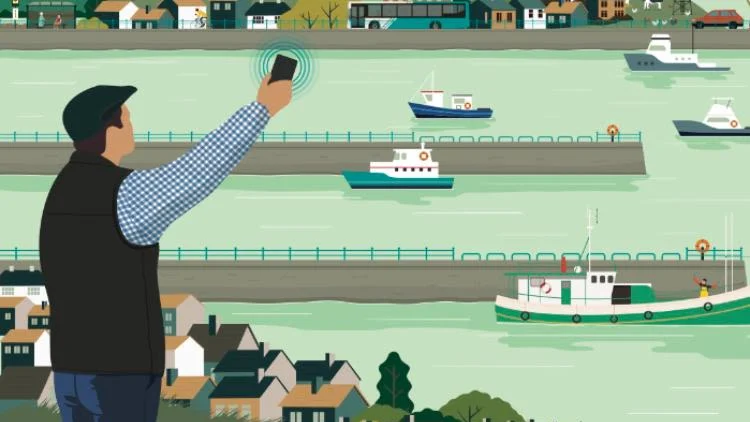
Despite years of reform and promises of improvement, businesses and households still face patchy coverage, unreliable signal and mobile not-spots. Networks that deliver connectivity are built through thousands of rental agreements between operators and the farmers, businesses, charities, churches, local authorities and public bodies that host telecoms infrastructure. Better coverage means more mast sites, as Ofcom itself recognises, to tackle local coverage gaps and meet growing demand.
Yet nearly one in five existing mast hosts now face “renegotiation” of their rental agreements under a coercive framework that empowers operators to boost their profits by slashing rents paid for sites. Instead of stimulating the supply required, this is generating more legal disputes in nine years than in the previous three decades combined. Without willing site providers, there are no mast sites. Without mast sites, there is no connectivity.
How did we get here? The previous government replaced market-based rental valuations with a framework specifically designed to reduce operator costs and, it was supposed, accelerate rollout. However, subsequent events bear out warnings at the time that the unilateral powers given to operators and infrastructure builders, in particular, simply to impose drastic rent reductions on site providers, and then use the results as comparables, have turned previously cooperative relationships adversarial.
Advertisement
No one disputes the power imbalance between operators and site owners, but not only have Ministers chosen to ignore the evidence of the resulting negative sentiment among site owners towards hosting mobile infrastructure, but they are actually making it worse.
When Parliament passed the PSTI Act, it included Section 70, which was designed to provide an independent escalation route when disputes arise and allow consideration of operator conduct. Yet section 70 remains unimplemented.
Most regulatory frameworks that grant significant statutory powers also provide a mechanism for complaints, dispute resolution and independent oversight. The Electronic Communications Code stands largely alone in lacking such safeguards. Not only do site owners face coercive strategies, but they do not even have an independent mechanism to call out the operators’ tactics.
Meanwhile, operators, engaging land agents as their enforcers, threaten site-owners with the Act’s performative dispute mechanism backed with court action, which they know site-owners can neither afford nor win – yet some refuse to be coerced. I have direct experience of a family farm where this is playing out currently, and I have met others in the same situation.
Advertisement
Poor connectivity comes at a substantial cost. The UK ranks 61st in the world for mobile performance, with London reportedly the worst-connected major European city. According to the Centre for British Progress, poor connectivity costs the economy around £785 million a year – lost productivity, delayed investment and businesses that cannot rely on a basic service.
That is precisely the lesson of the UK’s experience since the Electronic Communications Code was reformed in 2017. Yet rather than pause and assess whether the framework is working, the Government chose to extend it to thousands more sites through the Product Security and Telecommunications Infrastructure Act- expanding the stick, while leaving the safeguards on the shelf.
The scale of this is significant. FOI figures from DSIT confirm between 12 per cent and 18 per cent of existing agreements will be affected – meaning nearly one in five mast hosts face renegotiation under a framework already proven deeply contentious. As a result, Notices to Quit (NTQs) from site providers to dismantle mobile infrastructure from their properties for redevelopment purposes are booming to the extent that Virgin Media O2 recently announced they are losing sites in London at a faster pace than they can be replaced.
What is needed? First, a proper review is needed on the impact of the code and, in particular, a more balanced rental valuation method, so that the interests of operators and site providers are ultimately aligned. Good regulation should reinforce that, not undermine it. Better conduct and fairer distribution of value means fewer disputes. Fewer disputes mean fewer NTQs and faster deployment. Fewer NTQs and faster deployment mean better coverage. Second, by establishing a formal role in considering complaints where operators fail to comply with the industry’s Code of Practice, Section 70 would create at least an independent escalation route when disputes arise.
Advertisement
Britain does not need to choose between connectivity and fairness. Faster rollout and better relationships are complementary, not competing objectives. The Government should restore a better balance of power between site-owners and operators, commence Section 70 immediately and review – through an evidence-based impact assessment – whether the post-2017 framework is delivering the cooperation, investment, network deployment and connectivity improvements it was originally designed to achieve.
Britain’s connectivity challenge will not be solved through confrontation. It will be solved when policy once again encourages partnership.
The World Health Organisation (WHO) has shared a post celebrating “the power of yoga for healthy ageing”, as part of its International Day Of Yoga (21 June).
The WHO’s director general, Dr Tedros Adhanom Ghebreyesus, said on X: “As people live longer, our goal is not just more years, but better years. Yoga supports this through gentle movement, breathing and mindfulness.”
A 2021 review of yoga studies found that “while everyone should consult their physician before starting a physical regimen, yoga appears to have a wide range of benefits including increased mobility, reduced risk for slip and fall, protection against cognitive decline, increased flexibility, strength, and balance, and improved sleep and mental well-being”.
Gentle yoga may be a better option for cognitive benefits, the 2021 review reads, while more strenuous Hatha practices might help to improve your strength, fitness, and flexibility.
How much yoga do I need to do a week to see benefits?
Advertisement
Three hours a week, or just over 25 minutes a day, was linked to better results in one paper.
But the 2021 review noted that in many of the studies involved, participants saw benefits at just 45 minutes a week.
Heatstroke can be dangerous and come on more quickly than you realise. With temperatures rocketing, it’s important to know how to recognise the signs.
Spending too much time in the heat or overly exerting yourself in the sun can cause heatstroke.
During the heatwaves we’ve increasingly experienced in recent years, health officials have reiterated how important it is to prevent children and older people from falling victim to the high temperatures.
But do you know how to tell heat exhaustion from heatstroke?
Advertisement
What are the symptoms of heat exhaustion?
Heat exhaustion is what happens when the body overheats and cannot cool down.
It usually doesn’t require emergency medical attention, according to the UK Health Security Agency (UKHSA), as long as you can cool yourself down within 30 minutes.
If you do not take action to cool down, heat exhaustion can lead to heatstroke, which is a lot more serious.
What are the symptoms of heatstroke?
Heatstroke is where the body is no longer able to cool down and your body’s temperature becomes dangerously high.
Common symptoms of heatstroke include:
confusion
lack of co-ordination
fast heartbeat
fast breathing or shortness of breath
hot skin that is not sweating
seizures
Heatstroke is a medical emergency. If you think someone has heatstroke you should dial 999 and then try to cool them down.
How to treat heat exhaustion
Advertisement
Dr Luke Powles from Bupa Health Clinics said people exhibiting symptoms should be cooled down. “Move them into a cool place, get them to lie down and put their feet up,” he explained. “Give them plenty of water and cool their skin with a cold pack, or towel.”
It might also help to remove unnecessary items of clothing like socks. You could also fan them to try and cool them down.
The person should start feeling better within 30 minutes – if not, it is very important to seek medical help immediately.
How to prevent heat exhaustion and heatstroke
Advertisement
Stay hydrated by drinking plenty of cool drinks, but avoid alcohol. It’s also beneficial to keep cool by: wearing light fabrics, avoiding the sun between 11am and 3pm, sprinkling water over your skin and taking cool showers.
Avoid exercising and try to keep your home cool by closing curtains and windows, and turn off electrical equipment or lights.
When to get urgent help
If heatstroke symptoms progress to the ones listed below – or the person is no better after 30 minutes – you should call 999:
Advertisement
They feel hot and dry.
They aren’t sweating even though they are too hot. Their skin might also look red – this can be harder to spot on brown and Black skin, according to the NHS.
They have a very high temperature that’s risen to 40°C or above.
They have rapid breathing or shortness of breath.
They’re confused.
They have a fit (seizure).
They lose consciousness (if this happens, put them in the recovery position while you wait for help).
Keir Starmer has set out a timetable for his departure from No.10 after resigning as prime minister.
In a statement delivered on Downing Street on Monday morning, the prime minister said his party has been asked if he is best placed to lead us into the next general election.
“I have heard the answer of my parliamentary party to that question and I accept that answer with good grace,” he said. “Every decision I’ve taken has been about putting the country I love first.
“That is why I will resign as leader of the Labour Party.
Advertisement
“I have spoken to His Majesty the King this morning to inform him of my decision.”
Starmer said the National Executive Committee of the Labour Party will set out a timetable to make sure a new leader is in place by the time parliament returns after its summer recess.
Nominations will open for the leadership on July 9, a week before parliament’s summer recess, and if there is a contest, it will be completed by September 1 when MPs return to Westminster.
Until then he will remain in post as prime minister, Starmer said.
Advertisement
“I will give my successor my full and unequivocal support,” he said.
Tearing up, the prime minister said he will focus on the “most important job”, adding: “Being the best husband I can, to my fantastic wife Vic, who has been a rock by my side through good times and bad.”
He continued: “And being the best dad that I can to my beautiful children, who are my pride and joy.”
The prime minister’s announcement comes after Andy Burnham’s victory in the Makerfield by-election last Friday.
Advertisement
The soon-to-be-former Greater Manchester mayor is Starmer’s greatest rival and has had his eye on the keys to No.10 for some time.
Burnham was widely expected to challenge Starmer’s leadership after winning the contest for the north-west seat.
Labour Party rules state only an MP with the support of 81 other MPs can fire the starting gun on a leadership challenge.
Burnham had been pushing for Starmer to step down quietly so it would be a coronation for the new Makerfield MP.
Advertisement
The prime minister initially refused, saying he would fight on.
Asked if he would stand in any possible leadership election on Friday morning, Starmer said “there isn’t one at the moment” and that holding one would send “the country into chaos”.
But he added: “If there is a contest, then yes I will run, I will stand, and I’ve said repeatedly I’m not going to walk away from that.”
However, pressure from his own cabinet ministers appears to have moved the needle.
Advertisement
Two former cabinet ministers, Wes Streeting and John Healey, also quit over Starmer’s leadership in the last month.
Business and trade secretary Peter Kyle revealed his boss was weighing up the “political realities” in the coming days on Sunday.
It now remains to be seen if anyone other than Burnham will throw their hat into the ring to be the next Labour leader.
Streeting, the former health secretary, did indicate he would run but there are concerns he does not have enough backing from Labour MPs to run.
Advertisement
Listen to Commons People, the podcast that makes politics easy. Every week, Kevin Schofield and Kate Nicholson unpack the week’s biggest stories to keep you informed. Join us for straightforward analysis of what’s going on at Westminster.
Keir Starmer has announced that he will resign as Prime Minister this summer.
Advertisement
Speaking outside 10 Downing Street on Monday morning, Starmer said he had accepted the wishes of Labour MPs with “good grace” and that he would help facilitate an “orderly transition” for his successor.
Starmer said he had informed the King this morning that he had resigned as Labour Party leader, triggering a process to replace him that will begin in early July.
Andy Burnham, who won a landslide victory at last week’s Makerfield by-election, is expected to take over.
In an address to the nation, Starmer said “the question” his party was now asking was who was best placed to lead it into the next general election, and that the answer was no longer him.
Advertisement
“I have heard the answer of my parliamentary party to that question, and I accept that answer with good grace.”
Starmer said entering No 10 two years after winning the 2024 general election was the “proudest moment of my life”.
“A new Labour government. The first in 14 years. A page in our country’s history turned after years of disappointment and despair. The chance to change the lives of millions of people for the better.
Advertisement
“That’s what I came into politics for.”
He added: “I will also give my successor my full and unequivocal support, knowing that they will inherit a Britain that is far stronger and fairer than the one I inherited two years ago, better prepared for the challenges ahead and better able to ensure the Labour Party secures a second term in office.”
Starmer’s position has been under pressure for months, with painful local election results and his handling of the Lord Mandelson affair prompting Labour MPs to question his leadership.
While many Labour MPs would like Burnham to take over unchallenged, others would prefer a leadership contest, particularly those who are sceptical about the former Manchester mayor running the country.
Former health secretary Wes Streeting has previously said he would stand in a leadership contest.
Starmer became Labour Party leader in 2020 and led the party to its first general election victory in nearly two decades in 2024.
His resignation means the UK will soon have its seventh prime minister in a decade.
Advertisement
He finished his speech by paying tribute to his family.
“When I leave the biggest job in the country, I shall spend more time on the most important job, being the best husband I can to my fantastic wife, Vic, who has been a rock by my side through good times and bad, and being the best dad I can to my beautiful children, who are my pride and my joy.”
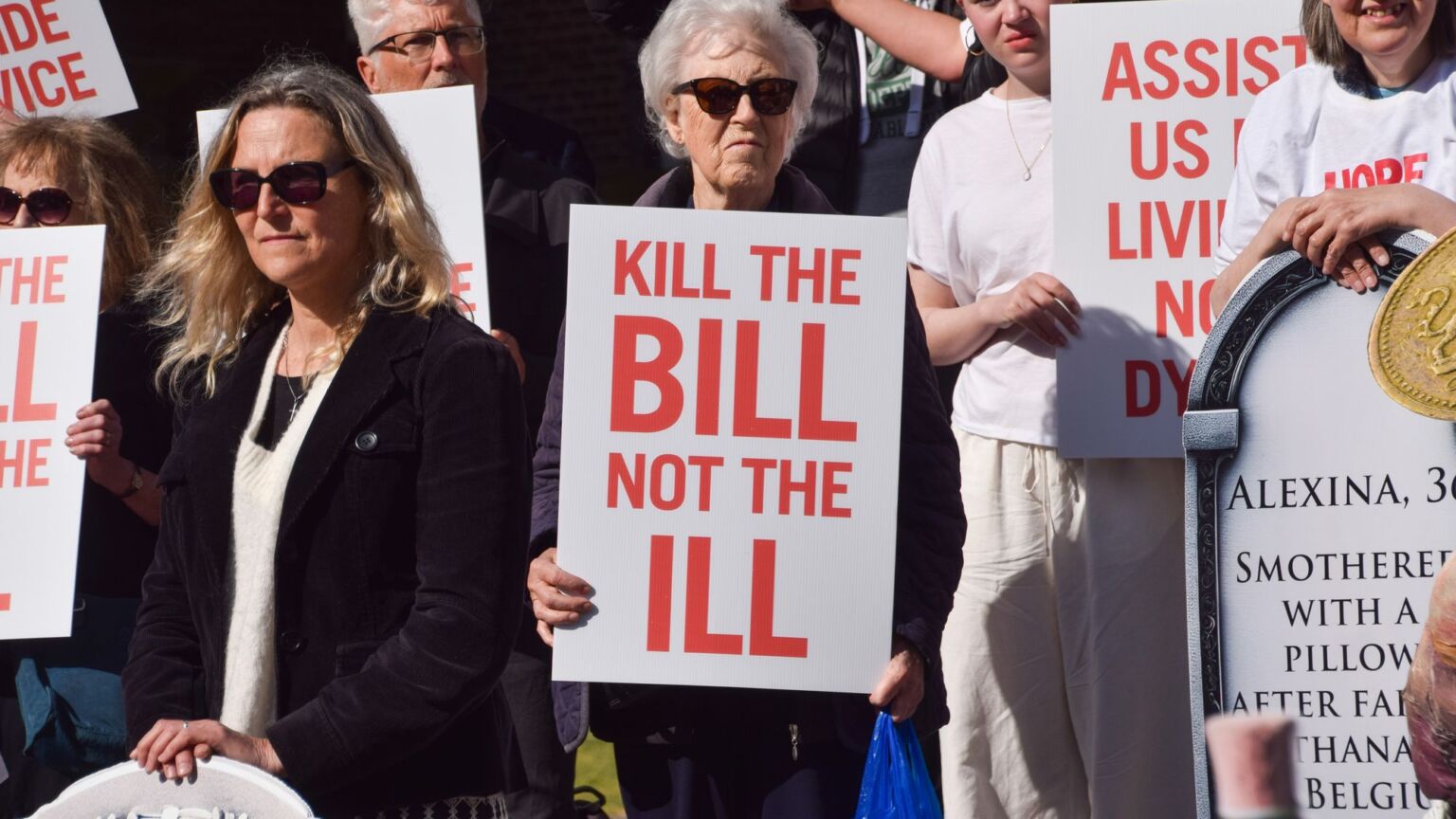
Labour MP Lauren Edwards has brought the assisted-dying debate back to Westminster, reintroducing the Terminally Ill Adults (End of Life) Bill. The bill received its first reading in the House of Commons last Wednesday, formally marking its return to parliament.
The legislation, first introduced in 2024 by Labour MP Kim Leadbeater, ran out of time in the House of Lords earlier this year. Supporters of the bill accused opponents in the Lords of deliberately blocking it by tabling more than 1,200 amendments.
There are substantial difficulties for Edwards, who must present the exact same bill if she wants the Parliament Act of 1911 and 1949 to come into effect. These acts allow for the same legislation, if passed in the House of Commons in consecutive parliamentary sessions, to automatically become law.
Advertisement
For proponents and organisations like Dignity in Dying (DiD), which have spearheaded the campaign to legalise assisted suicide and written many an MP’s cliché-ridden speech, this is a long shot. Their strategy is to maintain the moral high ground by insisting that democracy has been thwarted by the bill’s original failure to pass.
Invoking the Parliament Act for a private members’ bill is near enough unprecedented. In fact, it has only been used seven times in British history. Clearly, the assisted-suicide lobby is getting desperate.
Advertisement
Let’s remind ourselves of some of the problems with the bill. Doctors remain free to raise the possibility of assisted suicide with patients, thus opening the door to coercion. Clinicians have warned that hospices could be forced to close if they do not wish to have people killed on their premises. And despite Leadbeater claiming the bill has the ‘strongest safeguards anywhere in the world’, it even allows for private companies to profit from killing people.
Then there’s the key problem with legislation of this ilk. Inevitably, the scope of who can apply for assisted dying will broaden from beyond what is laid down in law. This is the lesson from every jurisdiction where it has been introduced. Regardless of what Leadbeater, or now Edwards, might have to say, assisted suicide will become available to everyone, for every reason under the Sun.
Advertisement
Take Canada. Ten years ago, it established euthanasia and assisted suicide only for those with ‘reasonably foreseeable’ deaths under its Medical Assistance in Dying (MAID) programme. MAID was expanded to all people with permanent disabilities in 2021 and is set to expand to those suffering from mental illness next year. Since MAID was introduced a decade ago 100,000 people have been given lethal injections. That means that more Canadians have been killed under MAID laws than during the Second World War. Do we want that for the UK?
Unsurprisingly, the thought of raising this zombie bill from the dead is causing concern among professional organisations. The Royal College of Physicians, neutral on assisted dying, has been forced to reiterate its concerns about the bill. Hospice UK has also criticised the bill’s reemergence, especially ‘at a time when hospice and palliative care is under strain’.
None of this touches on the biggest difficulty Edwards faces – namely, that parliament itself is increasingly hostile to a re-run of this debate. Clearly, a lot has changed in the two years since Leadbeater’s first bill emerged. Not only is Starmer’s authority shattered, his likely successor – Andy Burnham – is also unlikely to go anywhere near such a divisive issue. Besides, former prominent supporters of the bill, such as Louise Haigh, Ian Murray and Jeremy Hunt, have all criticised any attempt to use the Parliament Act to revive assisted dying. Former public-health minister Ashley Dalton – who herself is terminally ill with cancer – said: ‘We have debated this deeply divisive and flawed assisted-dying bill for over a year and supporters have refused to listen or to make the necessary changes.’
Advertisement
The last word should surely belong to Tory MP Simon Hoare, who, when it was announced that the bill would return, shouted: ‘Oh, not again!’
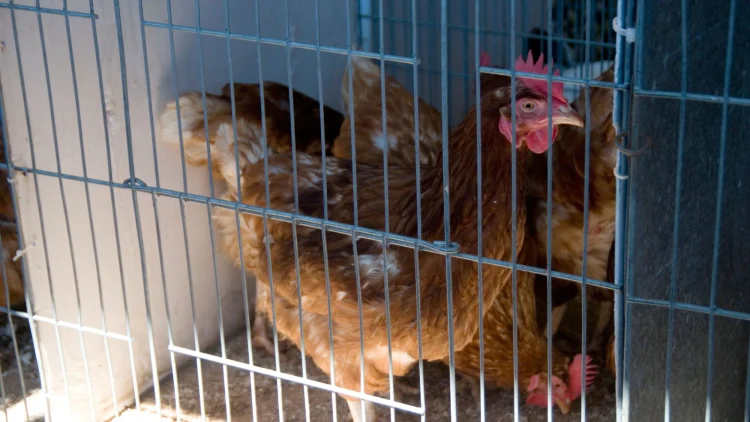
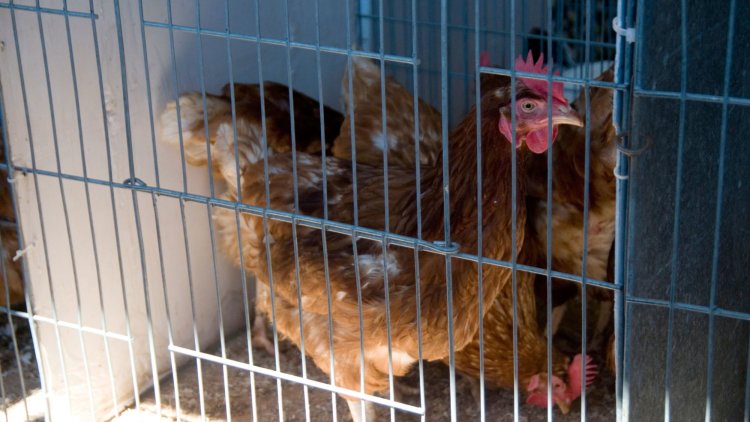
Six million egg-laying hens are still forced to endure unacceptable conditions in cages in the UK – we must act to ban their use now
Advertisement
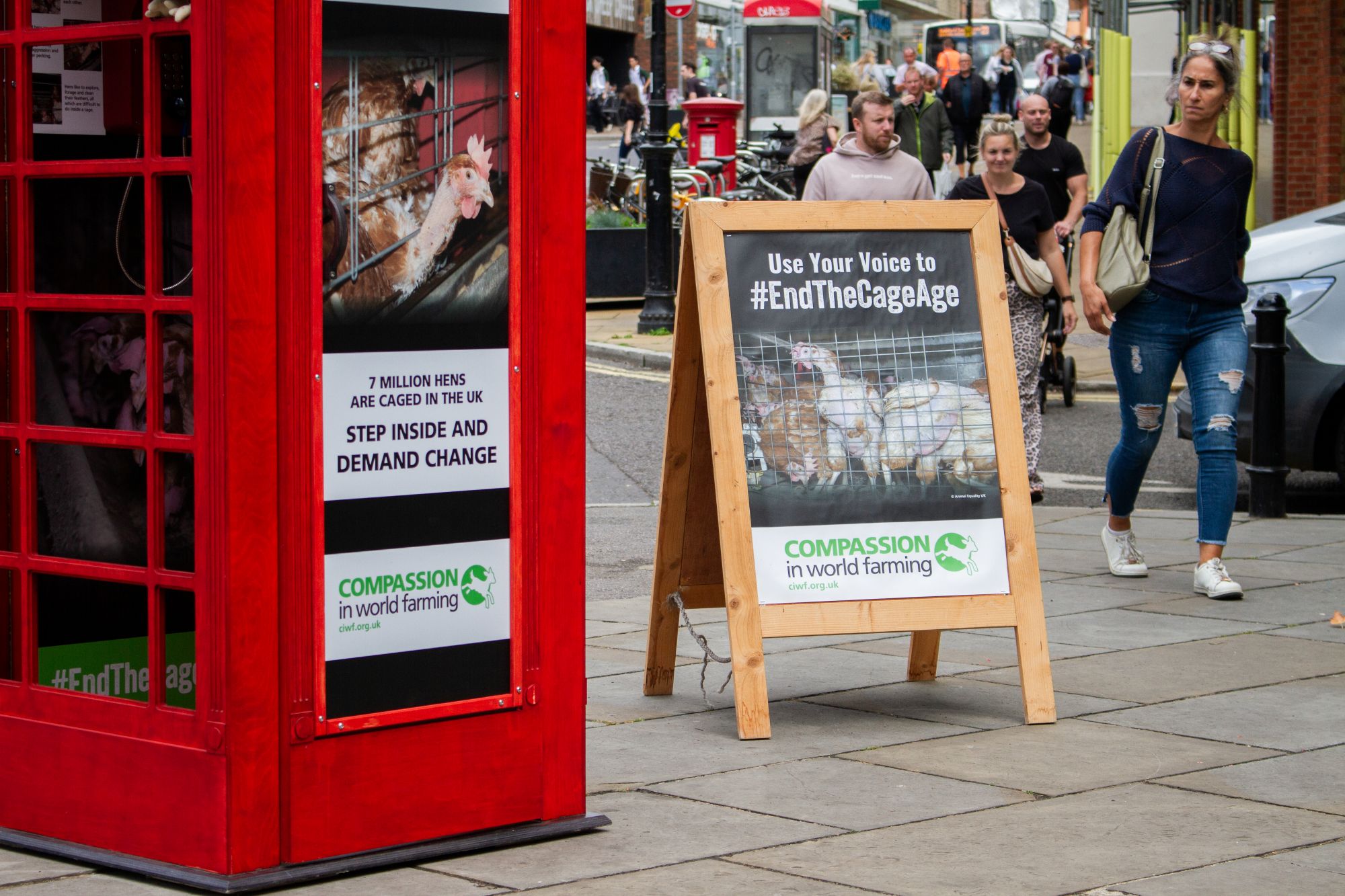
As you make your way through Parliament this week, you may notice something unusual in the Upper Waiting Hall by the Committee Corridor.
A red telephone box might be a common sight in London, but this one serves a very different purpose. This particular phone box is the centre of a striking new exhibition, organised by Compassion in World Farming (CIWF) and sponsored by me, highlighting the reality faced by millions of laying hens still kept in cages across the UK.
The replica phone box demonstrates, in stark terms, just how little space caged hens are given. Four adults crammed inside it occupy roughly the same amount of space as several hens confined in so-called ‘enriched’ cages. These are the conditions that over six million egg-laying hens are still forced to endure in cages on some farms, a completely unacceptable reality.
Advertisement
Those stopping off at the exhibition are invited to step inside and listen to recorded messages from members of the public calling on the government to end the cage age. Alongside the installation sits CIWF’s substantial ‘phone book’ which contains more than 10,000 written messages from people across the country who support a ban on cages for laying hens.
Together, this chorus sends a clear message: this is not a niche issue. It is one on which the public increasingly expects action from the government to stop the needless suffering of hens right by and down Britain.
The replica phone box demonstrates, in stark terms, just how little space caged hens are given
Advertisement
Spend just a few moments inside the phone box with multiple people and the lack of space quickly becomes uncomfortable. Yet for those millions of hens, confinement is their daily existence. Even in ‘enriched cages’, each bird is afforded little more usable space than an A4 sheet of paper, which prevents them from carrying out many natural behaviours including scratching, pecking, foraging and fully stretching their wings; activities that are fundamental to their welfare.
The good news is that change is already underway. The vast majority of UK-produced eggs now come from cage-free systems, and all major supermarkets have either stopped selling shell eggs from caged hens or have committed to doing so. With around 84 per cent of production already cage-free, the direction of travel is clear towards a future free of cages.
But, despite this, the question remains as to whether legislation will now catch up to outlaw it completely. The government’s Animal Welfare Strategy for England, published last December, signalled Defra’s intention to end the use of cages for laying hens. Earlier this year, a consultation on a proposed phase out by 2032 gathered views on how this could be achieved. While a more ambitious timetable would be welcome, the consultation represented a significant step forward. The challenge now for those in Parliament is turning consultation into legislation.
Advertisement
Public support for change is strong. Polling consistently shows that a substantial majority of people believe cages are cruel and a number of European countries – including Austria, Luxembourg, Germany and Czechia – have already taken steps to phase them out. The UK has an opportunity to show leadership on animal welfare once again.
I am grateful to CIWF for bringing this exhibition to Parliament and for the persistence with which it has championed this issue over many years. Through public campaigns, parliamentary engagement and sustained work with the food industry, it has helped drive significant progress in moving production away from cage systems.
That progress should not stop here. The exhibition in the Upper Waiting Hall offers a timely reminder of how far we have come, but also of the work still to do. I hope colleagues will take a few minutes to visit it and consider why the case for ending cages for laying hens has never been stronger.
Anna Faris has made some rare comments about her divorce from Chris Pratt.
In a new interview with Variety, the Scary Movie star reflected on her painful split from Chris, to whom she was married for eight years before their 2017 break-up, and the scrutiny she faced from the public after she and the Marvel actor parted ways.
The divorce was finalised in 2018.
“I was feeling sad,” Anna recalled. “I do feel like I had enough gumption, enough of a core, and I have tried to be careful about how much Hollywood infiltrates, but now I’ve been on a spectrum of fame for 26 years, so I would be naïve to think that it hasn’t shaped who I am at this point.”
Advertisement
“But, fuck,” she added. “The scrutiny…”
Anna, who shares 13-year-old son Jack with her ex-husband, credited her podcast, Anna Faris Is Unqualified, for giving her a support system and helping her deal with the public break-up.
Anna Faris and Chris Pratt in April 2017
“I didn’t disclose a lot on the podcast, but I always felt like I could if I needed to. The podcast helped me a lot during that time,” she said.
Anna later tied the knot with cinematographer Michael Barrett in 2021. Meanwhile, Chris got remarried to Katherine Schwarzenegger in 2019. He and his second wife have since welcomed three more children.
Speaking to People in October 2017, Anna said that she and the Guardians Of The Galaxy star have remained close pals and were focused on co-parenting their son.
Advertisement
“We’ll always have each other and be incredible friends,” she said at the time.
“There is still so much laughter in our lives together, and he is so proud of me, still. We watched each other grow, and he still cracks me up all the time.”
Chris told Entertainment Weekly in 2018 that “divorce sucks” while discussing the split.
“But at the end of the day, we’ve got a great kid [Jack] who’s got two parents who love him very much,” he noted. “And we’re finding a way to navigate this while still remaining friends and still being kind to one another.”




















































You must be logged in to post a comment Login