

Crypto World
Pi Network (PI) Climbs 6% in 2 Weeks: Time to Rally or Dead Cat Bounce?

Even with the ongoing controversy surrounding Pi Network, its native token PI continues to attract attention and is regularly featured in price forecasts.
The asset has finally staged a rebound, and it will be interesting to see whether this proves to be only a temporary surge followed by a renewed pullback, or the beginning of a more meaningful rally.
What’s Next?
Earlier in June, the broader crypto market collapsed, and PI was not an exception. Its valuation hit a new all-time low of $0.12, while its market capitalization briefly fell below $1.3 billion. The past two weeks saw a slight recovery, with PI spiking by roughly 6% to its current level of $0.135 (per CoinGecko’s data).
Still, several market observers caution this might not be cause for celebration. X user Crypto With Gopal spotted the formation of a classic “head and shoulders pattern” on PI’s price chart: a bearish structure which suggests that a correction could be on the horizon. At the same time, the analyst claimed that buyers are fighting to defend the neckline “aggressively and bulls are trying to reclaim momentum.”
“Market psychology shows sellers losing strength as the right shoulder develops,” they added.
Another prediction came from the X account Pi Network News, which noted PI’s bounce from the $0.13 support level and claimed that $0.14 remains “a key sell wall.” They argued that bulls need Bitcoin (BTC) to hold above $60,000 so PI can benefit, too.
“Next resistance: $0.15–$0.155 if momentum builds,” the analysis reads.
Now let’s examine some important technical indicators that could provide clues about PI’s next move. First on the list is the token’s Relative Strength Index (RSI), which has dropped to around 7 on a monthly scale. This means it has entered deep into oversold territory, increasing the chance of a decisive rebound. The technical analysis tool ranges from 0 to 100, and anything above 70 is interpreted as a warning of an incoming pullback.

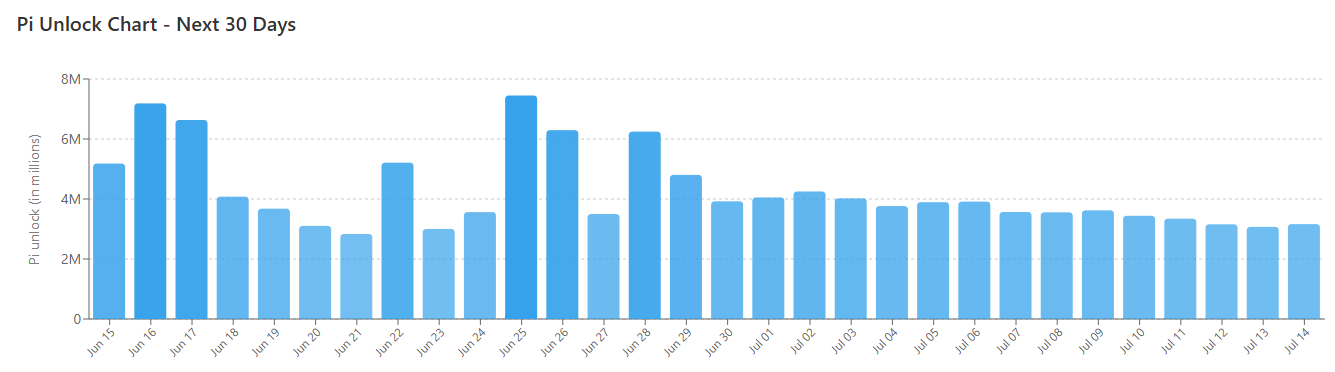
The upcoming token unlocks also strengthen the bullish outlook. Around 127.5 million coins will be released over the next 30 days, averaging approximately 4.2 million per day. This is far less aggressive than what we observed in the previous months and could pave the way for price stabilization.
Awaiting This Date
PI is a highly speculative cryptocurrency that relies heavily on groundbreaking announcements and major updates. That is why many Pioneers are perhaps eagerly expecting Pi2Day: a symbolic date for the community celebrated annually on June 28.
Speculation is mounting that the Core Team might disclose something big on that day, including a listing on Binance, which could trigger a major price jump. As of the moment, though, it is all just rumors, so it’s sensible to approach expectations with caution.
The post Pi Network (PI) Climbs 6% in 2 Weeks: Time to Rally or Dead Cat Bounce? appeared first on CryptoPotato.


Ripple’s (XRP) selling pressure on Binance appears to be easing as large holders reduce transfers to the exchange, according to a new analysis from CryptoQuant.
Binance remains one of the largest liquidity hubs for XRP, which makes whale transfers to the exchange an important indicator of potential selling activity. Large deposits by major investors can increase short-term supply, but current data shows both Whale Flow and Whale Transactions standing at 417, which means that large holders are not actively moving significant amounts of XRP to Binance.
Recovery Still On Hold
CryptoQuant said XRP is currently trading at $1.12, below the McGinley Dynamic indicator, which lies between $1.15 and $1.16. The McGinley Dynamic is an adaptive moving average that responds more quickly to changing market conditions than traditional moving averages and is widely used to identify dynamic support and resistance levels. Prices trading below the indicator are generally considered a sign of weak momentum.
Several spikes in whale transfers to Binance were recorded in early June. During the same period, XRP fell sharply from the $1.30-$1.50 range and has yet to regain the McGinley Dynamic level. However, the decline in whale inflows in recent weeks suggests that selling pressure has moderated.
Despite the improvement in whale activity, CryptoQuant said the market outlook remains mixed. The McGinley Dynamic continues to point to a bearish short-term trend, while Whale Flow data remains neutral to positive. The firm explained that XRP needs to reclaim the McGinley Dynamic to support a stronger recovery.
If the crypto asset remains below the indicator and large inflows to Binance increase again, another decline could follow. But downside risks may remain limited as long as the Whale Transaction support zone near $1.08 continues to hold.
Bold Targets
Several market analysts remain divided on XRP’s next move. Some traders believe a break above the $1.18-$1.30 range could trigger a rally, while a move below $1.08 may invalidate the bullish setup.
More optimistic forecasts have projected targets as high as $8 or even $17, although such gains would require a massive increase in the crypto asset’s market value at a time when the network itself appears to be struggling due to low user engagement.
Institutional demand for XRP has remained relatively strong despite weakness across the broader crypto ETF market. Over the past week, XRP-focused exchange-traded funds attracted more than $10.6 million in inflows. On the other hand, US-based spot Bitcoin ETFs recorded outflows of $227 million, while Ethereum funds lost more than $10 million during the same period.
The post XRP’s Biggest Warning Sign Is Still Flashing Despite Easing Whale Activity appeared first on CryptoPotato.


Crypto-backed political groups have spent at least $7 million on key Democratic primary races as lawmakers continue negotiating the CLARITY Act ahead of an increasingly crowded congressional calendar.
Summary
- Fairshake affiliates have spent about $7 million backing crypto-friendly candidates ahead of key Democratic primaries.
- Maryland candidate Adrian Boafo and New York Representative Ritchie Torres have emerged among the largest recipients of crypto PAC support.
- Meanwhile, lawmakers continue negotiating the CLARITY Act as industry groups push for progress before upcoming congressional recess deadlines.
According to reports on recent campaign spending, crypto political action committees have increased their activity ahead of several Democratic primaries while lawmakers continue negotiating the CLARITY Act in Washington.
Among the largest beneficiaries is Maryland State Delegate Adrian Boafo, who is seeking to succeed retiring Congressman Steny Hoyer in Maryland’s 5th Congressional District. Protect Progress, an affiliate of Fairshake, has spent roughly $5.5 million supporting Boafo’s campaign, making him one of the most heavily funded crypto-backed candidates in the current election cycle.
Facing more than 20 Democratic opponents, Boafo currently leads prediction market rankings. His campaign has also secured endorsements from Hoyer, Maryland Governor Wes Moore, and Senator Angela Alsobrooks. Alsobrooks has been involved in discussions surrounding federal digital asset legislation, including both the GENIUS Act and the CLARITY Act.
Commenting on his policy priorities, Boafo has also positioned himself as a supporter of digital asset and blockchain policy initiatives.
“I’m proud to be a strong advocate for policies that create new economic opportunities for Marylanders in the 5th Congressional District, and digital assets are no exception.”
Crypto PACs increase pressure through campaign spending
Elsewhere on the East Coast, Protect Progress has directed approximately $1.5 million toward the reelection campaign of Representative Ritchie Torres in New York’s 15th Congressional District. Torres has long supported cryptocurrency policy initiatives and helped establish the Congressional Crypto Caucus.
Additional backing has come from Fellowship PAC, which has reportedly spent around $300,000 on advertising supporting Torres ahead of Tuesday’s Democratic primary.
The latest expenditures follow Fairshake’s largest spending effort of the election season. Earlier in the cycle, the crypto-focused political network committed roughly $12 million to Alabama’s Republican Senate primary runoff in support of Representative Barry Moore.
Taken together, the campaigns demonstrate how crypto-funded political organizations are continuing to deploy significant capital in congressional races while federal lawmakers debate the future structure of digital asset regulation.
CLARITY negotiations continue as lawmakers seek support
At the same time, attention in Washington remains fixed on the CLARITY Act, a proposal designed to establish a regulatory framework for digital assets in the U.S.
According to Crypto In America, lawmakers are still working through issues related to committee language, ethics provisions, and safeguards against illicit finance. Several Senate meetings have been scheduled as negotiations continue.
White House crypto adviser Patrick Witt and Senator Bill Hagerty have both expressed optimism that progress can be made before lawmakers leave for the July 4 recess. Industry organizations are also increasing their engagement with policymakers.
This week, the Digital Chamber has organized meetings between member companies and lawmakers in an effort to build support for the legislation. Speaking to Crypto In America, Digital Chamber CEO Cody Carbone said urgency is growing as available legislative time continues to shrink.
Separate comments from Senate Agriculture Committee Chairman John Boozman suggest that educating lawmakers remains a significant hurdle. As previously reported by crypto.news, Boozman said after a June 18 Senate meeting that many members still do not fully understand the legislation, complicating efforts to build support across the chamber.
Because much of the proposal falls under the Agriculture Committee’s jurisdiction, the panel has become central to ongoing negotiations.
Senate offices continue to work through unresolved sections of the bill as congressional leaders face pressure to settle outstanding issues before lawmakers depart Washington for the August recess.
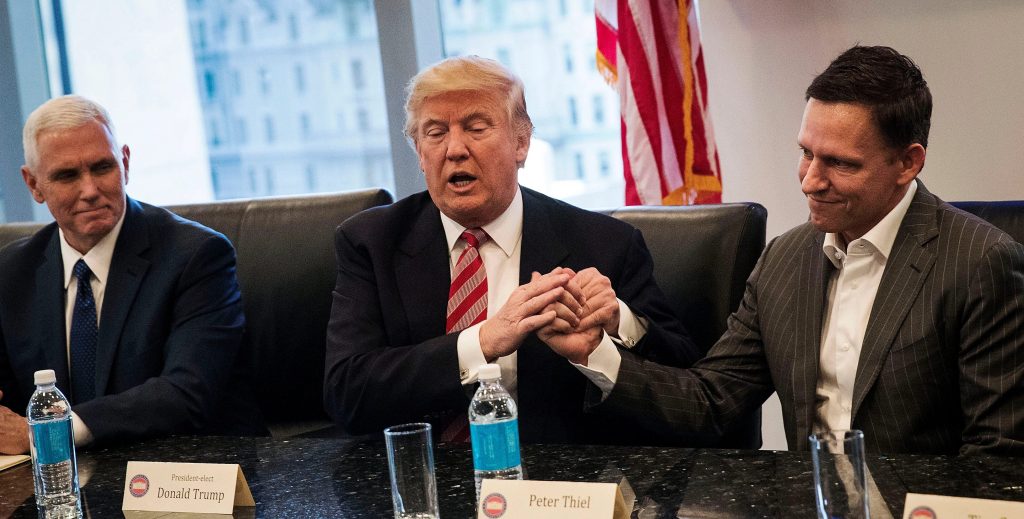
Bitcoin News: Marathon Digital Holdings disclosed $869,160 in vehicle armoring expenses for its CEO and CFO in its latest DEF14A proxy filing, $430,780 for CEO Fred Thiel and $438,380 for CFO Salman Khan, bringing Thiel’s total personal security bill to $4.3 million and Khan’s to $3.9 million for the year.
That is not a rounding error in an executive comp table. It is a formal corporate acknowledgment that holding large, publicly disclosed Bitcoin positions now requires the same physical threat mitigation as moving cash through a war zone.
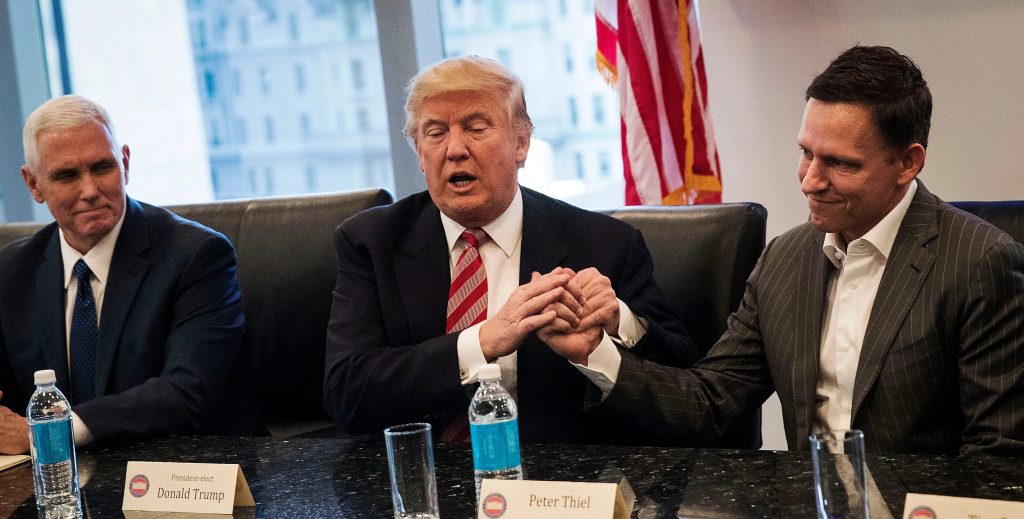
MARA’s disclosure sits at the visible tip of a broader capital allocation shift among Bitcoin OGs and crypto whales who have spent the last two years converting paper gains into hardened physical infrastructure. Armored vehicles are the entry point.
The full picture extends to underground Bitcoin bunkers, off-grid sovereign compounds, what the community has long called Bitcoin citadels, second passports, and jurisdictional diversification plays that would have looked paranoid in 2020 and look rational in 2025.
Discover: The Best Token Presales
Bitcoin News: Cypherpunk Roots, The Ideology That Made Doomsday Prepping Respectable
The cypherpunk movement never treated financial privacy and physical self-sovereignty as separate problems.
The same mailing list culture that seeded Bitcoin’s intellectual foundations in the 1990s was openly skeptical of state institutions, central banking, and the durability of fiat systems. Satoshi’s whitepaper dropped in October 2008, weeks after Lehman collapsed, and the timing was not coincidental.
The earliest Bitcointalk forum threads mixed price speculation with explicit discussions of fiat collapse scenarios, jurisdictional escape, and the practical logistics of holding wealth outside the banking system.
That ideological substrate never went away. It just got better funded. Balaji Srinivasan, the former Coinbase CTO and one of the most prominent Bitcoin preppers in the ecosystem, formalized the framework in The Network State (2022), framing Bitcoin as cloud money for exit and advocating for physical startup cities and parallel societies as hedges against state failure.
The network state concept is essentially cypherpunk political theory with a real estate budget attached.
The OG survivalist impulse also produced the citadel meme, a recurring Bitcointalk fantasy from the early 2010s imagining walled compounds where early holders retreat once fiat collapses and Bitcoin becomes the only functioning monetary network.
What read as fringe forum fiction then is now showing up in corporate proxy filings and luxury bunker waitlists. The narrative event happened years ago. The execution events are happening now.
From Armored SUVs to Sovereign Compounds: The Full Spending Picture
MARA’s $869,160 vehicle armoring spend is structurally notable precisely because it appears in a DEF14A, a document with legal standing, audited figures, and shareholder visibility.
The board’s justification was explicit: Bitcoin and Ethereum’s instant, anonymous transfer capabilities mean coerced credential handover can drain holdings in seconds with no recovery path, a threat profile that differs materially from executives at most traditional public companies. That logic applies equally to any individual holding a significant self-custodied BTC position.
Coinbase provides the comparison point at the higher end. The exchange paid CEO Brian Armstrong $7.6 million in personal-security-related compensation last year, covering home security, executive protection, family protection, and secure transportation.
Between MARA and Coinbase alone, two public crypto companies have disclosed over $16 million in executive physical security spending in a single reporting cycle. That is not a coincidence, it is an industry-wide risk reassessment made visible through disclosure requirements.
Below the public company disclosure layer, the private spending is harder to quantify but directionally consistent. The doomsday prepping market for ultra-high-net-worth buyers, anchored by operators like Survival Condo, Oppidum, and Vivos, has marketed fortified underground residences ranging from individual suites to full compounds with pools, cinemas, and staff quarters.
Vivos founder Robert Vicino has described demand being driven by fears of geopolitical conflict, domestic instability, EMP disruption, and nuclear scenarios.
Armored vehicles and underground Bitcoin bunkers are frequently sold as a single security package by these operators; the tactical vehicle market, which CBC once described as looking like variations of the Batmobile, is explicitly paired with subterranean real estate.
For Bitcoin OGs sitting on positions acquired at sub-$1,000 cost basis, spending 1–3% of their stack on physical resilience infrastructure passes a straightforward expected-value calculation. If nothing bad happens, they own a well-equipped rural property.
If the scenarios they believed in when they bought Bitcoin actually materialize, that infrastructure cost looks cheap. The Forbes Digital Assets framing from February 2026 captures the logic precisely: gold is for conflict, Bitcoin is for escape, and armored vehicles are for the transition between the two states.
Discover: The Best Crypto to Diversify Your Portfolio
The post Bitcoin OGs Are Converting Crypto Gains Into Armored Vehicles and Bunkers appeared first on Cryptonews.


Bitcoin has risen 1.4% since midnight UTC, catching a tailwind as hopes for an Iran-U.S. deal sent oil prices lower. The move provided a lift to major altcoins, with ether (ETH) adding 2.4% and solana (SOL) and BNB advancing about 1.5%. XRP lagged with a 0.7% gain.
Despite the green shoots among the majors, the broader market has yet to follow suit. The CoinDesk 20 Index (CD20) remains slightly lower over 24 hours. Still, smaller outliers like DEXE and BEAT jumped of 8% and 5%.
Monday’s bounce, however, is being met with heavy skepticism from some analysts, particularly when comparing bitcoin’s price with its simple moving average (SMA).
“BTC has clawed back to $64K but nothing behind it. The 200-week SMA near $62.2K held the weekend dips, and that line with the $60K shelf is what separates a base from a deeper leg, while $66K to $68K caps the upside,” analysts at Marx said in an email.
“We buy near the 200 week and sell into resistance, we do not chase the middle,” they added.

Bitcoin liquidity in the over-the-counter (OTC) market continues to decline as the BTC OTC balance has fallen steadily since 2022.
Fresh data now suggests that the figure has reached its lowest level on record.
OTC Holdings Plunge
According to the latest report by CryptoQuant, large investors have continued accumulating Bitcoin even as available balances in the OTC market keep shrinking. Historically, OTC balances tend to rise toward the end of a bull market, but the current cycle has followed a different path. In fact, balances have continued to move lower instead of increasing.
CryptoQuant said the amount of Bitcoin held in the OTC market has dropped by around 400,000 BTC after falling from 550,000 BTC to 150,000 BTC while whale buying has persisted. The analytics firm stated that this market cycle differs from previous ones, as whale accumulation has lasted longer and the pace of balance growth during the bull market has been weaker than in earlier cycles.
It said that a stronger market rally may begin once whale accumulation ends. Until then, the record-low OTC balance indicates that accumulation remains strong while liquidity continues to tighten.
Deeper Reset?
Meanwhile, another on-chain signal tracked by CryptoQuant suggests that Bitcoin has yet to enter a strong recovery phase. The firm’s adjusted Spent Output Profit Ratio (aSOPR) remains below the crucial level of 1, which means that investors are still spending coins at a loss rather than in profit.
The 30-day average has also failed to reclaim this threshold as demand is not yet strong enough to absorb selling pressure. In previous instances, steady recoveries have tended to begin only after SOPR moves above 1 and holds that level as support.
Long-term investors are taking significantly smaller profits than they did during previous market peaks, as highlighted by the declining Long-Term Holder SOPR. If this trend continues, the market could move closer to the deeper reset phases that have historically appeared near major Bitcoin bottoms.
Despite these weak signals, Michael Saylor-led Strategy disclosed the purchase of 520 BTC for $35 million. Following the latest acquisition, the firm increased its holdings to 847,363 BTC.
The post Bitcoin Supply Crunch? OTC Balances Drop by 400,000 BTC Since 2022 appeared first on CryptoPotato.


UK Prime Minister Sir Kier Starmer has today announced that he’s to step down as leader of the Labour party, triggering a leadership contest that will likely result in the former Mayor of Greater Manchester and member of Parliament for Makerfield Andy Burnham being handed the keys to 10 Downing Street.
Burnham won a key local election last week in the Makerfield constituency, a victory perceived to be an indicator of public appetite for his role as Labour leader.
But what does Burnham know about crypto?
Burnham attended a crypto event in Manchester in 2024 that was hosted by local crypto group Manchester Blockchain Alliance and Coinbase-backed crypto lobbying firm Stand With Crypto.
In a nine-minute speech, he spoke about the importance of expanding the digital sector in the city, the benefits of crypto’s tendency to “disrupt,” and how young people need to be able to see the job opportunities crypto can provide.
Read more: Russia offered crypto to firebomb Sir Keir Starmer’s home, report
He said that Manchester could become a “web3 powerhouse,” and that when it comes to marrying economic progress with social progress, “web3 could be the democratisation of it all.”
Despite noting that his understanding of crypto is “rudimentary,” he said, “I’m in, I’m bought in, I love the sound of it.”
Stand With Crypto has its own crypto position checkers for politicians and claims that both Burnham and Starmer have “no stance” on crypto. This is despite their public statements on the sector.
Farage still dogged by billionaire backing scandal
Burnham has already found himself embroiled in the controversy surrounding Nigel Farage’s £5 million gift from billionaire Tether investor Christopher Harborne.
Indeed, in a now deleted post, Farage used AI to depict immigrants in a dinghy holding placards in support of Burnham. Farage claimed Burnham acted “for them.”
In response, Burnham noted that Farage was “getting desperate,” and said, “Maybe keep your crypto millions for something else.”
Read more: Nigel Farage accused of undervaluing Christopher Harborne jet loan by $666K
Days before this comment, Burnham also said that “the crypto money is kicking in” when responding to a user that claimed their social media feed was negatively geared against him because “power brokers are clearly paying the big bucks to keep [Burnham] out.”
Burnham’s comments were made one month after Farage was revealed to have accepted £5 million ($6.6 million) from Harborne.
Farage kept the sum a secret and maintains that it didn’t have to be declared as it was a personal gift for security and helping to deliver Brexit.
Harborne has donated over £25 million ($33 million) to Reform UK. These donations were partly why the UK, under Starmer’s leadership, introduced a cap on political donations from overseas donors in March.
Burnham thinks cap on donations is right
Burnham told Byline Times that he would welcome a cap, noting that he would’ve started higher than the £100,000 ($132,000) cap currently set and reduce it over time.
He said a cap would help stop the “perception of any one party being unduly influenced or swayed by one person or organisation.”
Alongside this donation cap, the UK also introduced a temporary ban on political crypto donations until UK regulation catches up.
The most recent crypto regulations came from the Bank of England today. The bank relaxed its proposed stablecoin regulation, dropping plans to cap the amount an individual can hold and instead introducing a £40 billion ($53 billion) issuance limit for each stablecoin.
Got a tip? Send us an email securely via Protos Leaks. For more informed news and investigations, follow us on X, Bluesky, and Google News, or subscribe to our YouTube channel.
Crypto World
Alphabet (GOOGL) Stock Plunges 6% as AI Talent Exodus Continues to OpenAI and Anthropic

Key Takeaways
- Alphabet shares declined approximately 6% Monday, reaching $343.30 during morning hours
- Noam Shazeer, Google VP and Gemini AI co-lead, is departing for OpenAI
- John Jumper, Nobel laureate and AlphaFold creator, is leaving Google DeepMind for Anthropic
- California court rejected Google’s motion for a new trial in youth addiction lawsuit
- Analysts maintain Strong Buy rating with average target price of $427.38
Alphabet shares tumbled approximately 6% during Monday’s trading session, settling at $343.30 in morning activity, as the tech giant confronted multiple adverse developments simultaneously. The decline deepened to 7% at certain points throughout the day, erasing roughly $250 billion from the company’s market valuation.
The most significant impact stemmed from consecutive announcements of prominent AI researchers joining competing organizations.
Noam Shazeer, holding the position of VP of Engineering at Google and serving as co-lead for the Gemini AI platform, revealed his decision to transition to OpenAI. The company had invested approximately $2.7 billion to recruit Shazeer back from Character.AI barely two years prior.
Shortly afterward, John Jumper, a Nobel Prize recipient and senior research scientist at Google DeepMind who co-developed AlphaFold, announced his move to Anthropic following nearly a decade at Google.
AlphaFold successfully predicted structural configurations for more than 200 million proteins, representing a transformative achievement with significant ramifications for medical research and biological sciences. The departure of the scientist responsible for this innovation — to a competing firm — carries substantial weight.
These consecutive departures sparked renewed debate about whether Google is falling behind in the artificial intelligence competition. Several market observers cautioned that the performance differential between Gemini and cutting-edge models from OpenAI and Anthropic might be widening.
Mounting Legal Challenges Compound Investor Concerns
In legal developments, a California court rejected Google and YouTube’s request for a retrial following a jury verdict determining their platforms were intentionally designed to create addictive behavior in minor users. This decision exposes Alphabet to financial liabilities and potential similar legal actions.
The United Kingdom’s proposed prohibition on social media access for individuals under 16, combined with enhanced chatbot regulations, introduces additional uncertainty for YouTube’s younger demographic and associated advertising income.
Market participants are also scrutinizing Alphabet’s financial position. The corporation recently executed an $84.75 billion equity offering, prompting speculation about potential suspension of share repurchase programs. Its projected capital expenditures for 2026 range between $180–$190 billion, a threshold anticipated to squeeze free cash flow profitability.
Market Conditions Offered Little Relief
The Nasdaq Composite declined 1.1% while the S&P 500 decreased 0.4% Monday, yet Alphabet’s losses significantly exceeded these benchmark indices. This disparity indicates company-specific challenges rather than general technology sector weakness.
GOOGL currently trades substantially beneath its 52-week peak of $408.61. The stock has surrendered considerable appreciation accumulated from its 52-week bottom of $162.
Important perspective: Alphabet’s Google Cloud division maintains expansion momentum, with its committed contract backlog exceeding annual revenue figures. Core business fundamentals remain intact.
Social media discussion contributed to selling pressure. Citrini Research published analysis on X suggesting hyperscale cloud providers might issue more than twice current projected debt levels during 2027–2028 to finance AI infrastructure — including processors, computing facilities and related equipment. This assessment unsettled investors already concerned about AI capital deployment exceeding financial returns.
Notwithstanding Monday’s selloff, Wall Street analysts haven’t abandoned their bullish stance. The consensus rating on GOOGL stands at Strong Buy, supported by 28 Buy recommendations and five Hold ratings issued during the previous three months. The mean price objective reaches $427.38, suggesting approximately 23% appreciation potential from present trading levels.



The departures also come as the foundation has unveiled a new strategic framework known as “CROPS,” an acronym standing for cypherpunk values, resilience, open-source development, permissionlessness and security. Foundation leaders presented the framework as a way to clarify the EF’s mission and reinforce Ethereum’s core values as the ecosystem becomes increasingly decentralized. Supporters viewed it as a reaffirmation of Ethereum’s founding principles, while critics argued it did little to address concerns about execution, organizational effectiveness and the network’s competitive position.
Among the most vocal critics was former Ethereum researcher Dankrad Feist, who suggested the recent spate of executive departures reflected deeper management issues rather than disagreements over strategy.
“The people who are leaving the Ethereum Foundation are CROPS believers,” Feist wrote on X. “The problem isn’t with the strategy, it’s with management.”
Feist’s comments were notable because they challenged the prevailing idea that recent departures stemmed from dissatisfaction with the foundation’s new direction. Instead, he argued that many of those leaving supported the CROPS vision itself, making the loss of talent a reflection of leadership shortcomings rather than ideological disagreements. “The exodus of talent is truly bearish for Ethereum, sadly,” he added.
Other community members echoed concerns about the Foundation’s internal dynamics. “It makes me sad to see the dysfunction at the Ethereum Foundation,” head of engineering at Coinbase Yuga Cohler wrote on X.
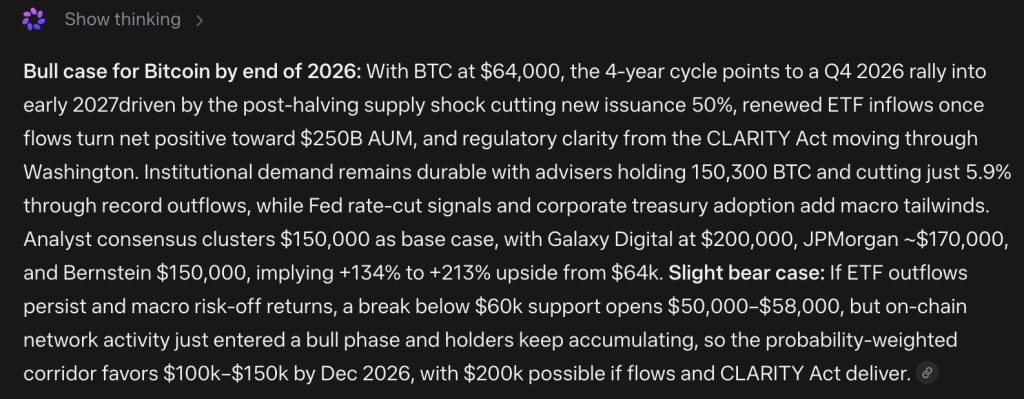
Mark Zuckerberg Meta AI just put a predicts on Bitcoin price prediction that should turn heads. The model sees a path to $150,000 by the end of 2026, and it is not pulling that figure out of thin air.
The bull case leans hard on the calendar. Bitcoin sits near $64,000 right now, and the 4 year halving cycle has historically lined up with major rallies into Q4 of the following year.
New supply just got cut in half, which means less coin hitting the market every single day.
Add in ETF flows pushing toward $250 billion in assets once outflows finally turn positive, plus the CLARITY Act working its way through Washington, and you get a setup that big money actually wants to lean into.
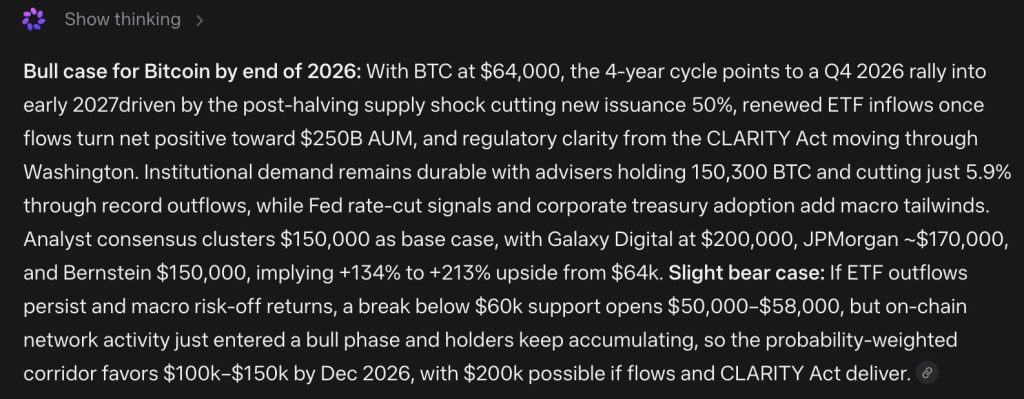
Advisers are still holding over 150,000 BTC and barely trimmed positions during a stretch of record outflows, which tells you conviction has not cracked.
Throw in expected Fed rate cuts and more corporate treasuries stacking bitcoin, and the macro backdrop starts looking like fuel rather than friction.
Wall Street is not shy about the upside either, with Galaxy Digital calling for $200,000, JPMorgan near $170,000, and Bernstein matching the $150,000 base case, all of which would mark gains well over 100% from current levels.

The bear case is not nothing though. If ETF outflows keep draining and risk appetite dries up across markets, a break below $60,000 could open the door to $50,000 or even $58,000. That would sting anyone who jumped in expecting a straight line higher.
Still, on chain activity just flipped into a bull phase, and long term holders are not selling, which keeps the floor from feeling shaky.
Bitcoin Price Prediction: BTC Eyes A Six Figure Reset Before The Next Leg Up
Looking at the weekly chart, bitcoin is sitting at $64,548 after bouncing off a multi month base.
Price carved out a clear double top near $128,000 earlier this year before rolling over hard into the low $60,000 zone.
That pullback looks like a healthy reset inside a longer uptrend rather than a trend reversal. Key support sits around $60,000, with deeper cushion near $50,000 if sellers push harder.
On the resistance side, $80,000 is the first wall, then $100,000, then the prior high near $128,000. RSI is reading 37.25 against a signal line of 40.88, so momentum is sitting below its own average and leaning soft for now.
That small gap suggests sellers still have a slight edge in the short term, though RSI is nowhere near oversold extremes that would signal panic.
Momentum overall looks neutral to cautious, which fits a market catching its breath before its next decision. If bitcoin reclaims $80,000 and flips it into support, that six figure target stops looking like a stretch and starts looking like the next logical stop on the chart.
LiquidChain Is Catching the Attention of Bitcoin holders: Meta AI Predicts It’s the Next 100x
Most people only recognize a rotation after it’s finished. Right now, it’s still in motion.
Large-cap crypto hasn’t broken down. It’s stuck under a lid. Bitcoin, Ethereum, and XRP have tested the same resistance bands for weeks while the macro catalysts that might free them keep sliding to next quarter. Sitting in those assets and waiting for someone else’s decision to move the price isn’t a position. It’s a queue.
Capital that’s been through enough cycles doesn’t queue. It repositions while the move is still invisible to everyone else.
The math changes entirely at the early stage. When a project’s market cap is small, it doesn’t take much capital to move the price by multiples. That asymmetry is just unpriced information: the market hasn’t valued the project correctly yet, and the distance between today’s price and tomorrow’s recognition is where the gain sits.
Fragmentation is the quiet tax on DeFi. Bitcoin, Ethereum, and Solana each run their own liquidity in isolation, with no shared layer connecting them. Anyone bridging value between those ecosystems pays for that isolation in fees, slippage, and transactions that fail outright.
LiquidChain merges all three into one execution layer. Deploy once, reach every chain, pay nothing extra for crossing between them.
Nobody has priced this in yet. That’s the window.
The presale sits at $0.01454, with roughly $820,000 raised so far. “Ground floor” isn’t a sales line here. It’s just where the project is, chronologically.
To be direct: execution hasn’t been tested, and adoption is still a question mark. Established coins offer a calmer climb toward a ceiling everyone can already see. This is the opposite trade — earlier, rougher, and aimed at a ceiling that doesn’t exist yet.
Explore the LiquidChain Presale
The post Mark Zuckerberg META AI Predicts Surprising Bitcoin Price by End of 2026 appeared first on Cryptonews.
Crypto World
Accenture (ACN) Stock Plummets 25% in Historic Selloff Following Disappointing Bookings

Key Takeaways
- ACN shares plummeted 18% immediately following fiscal Q3 earnings, finishing the week down approximately 25% in the company’s worst-ever weekly decline
- TD Cowen downgraded the stock to Hold from Buy, reducing its price target from $258 to $150
- New bookings contracted 3% quarter-over-quarter, with executives attributing the decline to major deals being postponed to fiscal 2027
- Both Truist and Jefferies lowered their price targets, with Truist noting approximately $100M in revenue headwinds from Middle East geopolitical tensions
- Fourteen analysts have reduced earnings projections; while no analysts currently recommend selling ACN, none identify immediate catalysts for recovery
Accenture (ACN) shares were hovering around $120–$123 on Monday, continuing a devastating selloff from last week that erased nearly 25% of the stock’s value — marking the most severe weekly decline in company history.
The collapse started Thursday when ACN plunged 18% to close at $127.98 following the release of fiscal Q3 earnings. The company reported revenue of $18.7 billion, narrowly missing the consensus estimate of $18.78 billion, while adjusted earnings per share of $3.80 exceeded the $3.72 projection. However, the earnings beat failed to compensate for disappointing forward guidance and a 3% sequential decline in new bookings.
TD Cowen analyst Bryan Bergin spearheaded Monday’s analyst downgrades, reducing ACN from Buy to Hold and slashing his price target from $258 down to $150.
“Our thesis anticipating stability before eventual recovery proved incorrect,” Bergin acknowledged. He stated there was no defensible justification for maintaining a positive recommendation “given the deteriorating fundamentals.”
The bookings shortfall proved most concerning. Bergin characterized the 3% decline as completely unexpected — his forecast had anticipated at least marginal growth.
Company leadership attributed the weakness to multiple large contracts being deferred into fiscal 2027. However, Bergin observed that even accounting for an estimated $1 billion in timing-related shortfalls, managed services bookings would still have registered negative growth — an outcome he believes would have disappointed investors regardless.
Wall Street Continues Slashing Price Targets
Truist Securities reduced its price objective to $150 from $210 while maintaining a Hold rating. The firm highlighted approximately $100 million in revenue disruption stemming from Middle East geopolitical instability, with impacts anticipated to persist through Q4 and possibly longer.
Truist had previously downgraded ACN several weeks ago, citing constrained client budgets, AI-related revenue displacement, and geopolitical uncertainties. Spillover effects from Iranian tensions emerged during the closing weeks of Q3, and the firm anticipates further lengthening of client decision timelines.
Jefferies analyst Surinder Thind likewise trimmed his price target, lowering it to $130 from $185 while retaining his Hold stance. He had identified weakening demand trends as early as March. Thind pointed to reduced revenue and earnings forecasts for calendar year 2027 and emphasized that geopolitical pressures are compounding already subdued discretionary technology spending.
RBC Capital decreased its target to $175 from $253. Guggenheim made a smaller adjustment to $185 from $225 while preserving its Buy recommendation.
Current Analyst Consensus
Among 30 firms monitored by FactSet, 17 maintain Buy or Overweight ratings on ACN. The other 13 assign Hold ratings. Currently, zero analysts rate the stock as a Sell.
Nevertheless, 14 analysts have lowered their earnings projections for the coming period, according to InvestingPro data. The stock is trading near its 52-week low of $125.60, with RSI indicators suggesting the shares have entered oversold conditions.
CEO Julie Sweet identified Middle East geopolitical tensions as a contributing factor to quarterly underperformance. The company has simultaneously maintained its acquisition strategy focused on cybersecurity capabilities and established partnerships with OpenAI and Anthropic to develop agentic AI solutions.
ACN stock was changing hands at $120.85 Monday afternoon, declining approximately 5.6% for the session.

2000s Sci-Fi Cult Classic Is So Complex It Confused David Lynch

Derby grandmother died days after Covid booster jab, as family ‘convinced’ vaccine was trigger

Releases on HBO Max and Amazon Prime Offer Diverse Entertainment Options for July Viewers

No Jackpot Winner as $257 Million Prize Rolls Over to $269 Million Monday Draw

Blockchain.com files with SEC for U.S. IPO

Israel says it has killed new Hamas military leader in Gaza City airstrikes

STRC Hits $82 | Is it Over for Michael Saylor and Bitcoin?!

Stop Letting Your Money Sleep! InvestSmartly in 2025 #finance #investment #fd #moneymindset #invest

Operation Paperclip EXPOSED! The BIS Triggered The UN-THINKABLE For XRP Holders! (CRYPTO CONSPIRACY)
-

 Fashion3 days ago
Weekend Open Thread: Miami – Corporette.com
-

 Tech6 days ago
The Adder At The Heart Of Intel’s 8087 FPU
-

 Entertainment2 days ago
Renter of Home in Anne Heche Crash Denies Settlement With Son
-

 Business2 days ago
Soccer-U.S. defends Iran World Cup travel restrictions, says discussions ongoing
-

 Tech6 hours ago
Microsoft accidentally kills epic Outlook email threads
-
 Business3 days ago
Wall Street Week Ahead: Investors see Micron earnings as pulse check of AI rally momentum
-

 Politics4 days ago
BBC Reporter Discusses Cross Party Criticism Of Trumps Iran Deal
-

 Crypto World3 days ago
HIVE shares jump as $220M AI deal speeds Bitcoin mining pivot
-

 Crypto World2 days ago
Jake Chervinsky accuses CME of protecting derivatives monopoly
-
 Crypto World2 days ago
Can Charles Hoskinson Really Rescue Cardano?
-

 Sports4 days ago
FIFA World Cup 2026: Canada beat 9-men Qatar 6-0 to register first ever win | FIFA World Cup 2026
-

 Business2 days ago
MHP SE 2026 Q1 – Results – Earnings Call Presentation (OTCMKTS:MHPSY) 2026-06-20
-

 Business4 days ago
Brexit cost 6% of UK economy, Bank of England company data suggests
-

 Crypto World4 days ago
Anthropic’s Dario Amodei Urged AI Unity at G7, Even as US Banned His Models
-

 Politics2 days ago
Andy Burnham and the meaning of Makerfield
-

 Crypto World7 days ago
Robinhood opens AI-powered trading to all users, sending HOOD stock past $100
-

 Tech5 days ago
Weeks Of In-The-Field Testing And A Verdict
-

 Tech4 days ago
Adobe adds its AI assistant to Premiere, Illustrator and InDesign
-
 Tech1 day ago
Signal’s Meredith Whittaker says AI chatbots ‘are not your friends’ and calls Copilot agents a backdoor
-
 Entertainment2 days ago
Fans Defend Angelina Jolie’s Daughter’s ‘Beat-Up’ Toyota
You must be logged in to post a comment Login