

Crypto World
How Polymarket Reportedly Used Fake Winning Bets to Drive Viral Growth


Recent findings by The Wall Street Journal (WSJ) have revealed shocking details about the promotional content of the prediction platform, Polymarket. As reported, the majority of the winning bets that drove the platform’s viral growth were staged on copycat versions of its website.
According to a report from WSJ, Polymarket paid college-age creators to stage up to $1.9 million in fake bets. The investigation team assembled by WSJ reviewed at least 1,105 videos posted by these creators and found none of them to be real; they had no blockchain trace and could not be verified by any digital ledger.
Fake Bets, Fake Winnings
At the core of the Polymarket business campaign is the claim that all trades are settled in USD Coin (USDC) on the Polygon blockchain. These trades are public and can be verified by anyone. While the prediction platform has led its campaigns with this claim, the company’s promotional content suggests otherwise.
Polymarket has been paying creators $2,000 to $3,000 a month to post videos of bets seemingly placed and won on its website. However, in reality, those trades were placed on dummy sites like poiymarket.com, created to mirror the real platform.
Out of more than 1,000 betting videos from 10 creators promoted between December 2025 and mid-May 2026, none were real. While marketing firms pushed the videos to get more views, the creators were told to refrain from disclosing that they received payments for the clips. As part of the scheme, the creators often altered headlines and used outdated footage to imply they won the bets, even when the winnings were fake.
Polymarket Back in the U.S.
Interestingly, the same bets that won millions in the promotional clips incurred losses for traders in reality. About 118 clips reviewed by WSJ showed creators celebrating roughly $900,000 in wins; however, in reality, the same bets would have incurred over $166,000 in losses.
Furthermore, a creator claimed they won $100,000 after U.S. President Donald Trump said the word “McDonald’s” in January. As discovered during the investigation, Trump never said the word publicly that month, and the clip used to justify the winning was older. Unfortunately, at least 50 accounts that actually placed that bet on Polymarket all lost.
As concerns about the promotional content arise and investigations intensify, many of those creators have removed the fake bet-winning videos from their social media accounts. Additionally, Polymarket has taken down the dummy website, poiymarket.com.
These accusations come as Polymarket re-enters the United States after securing a greenlight from regulators. The platform intends to audit its promotional content following the revelations.
The post How Polymarket Reportedly Used Fake Winning Bets to Drive Viral Growth appeared first on CryptoPotato.



Secret Network's cross-chain bridge to Axelar has been suspended after an attacker exploited a years-old minting flaw to drain $4.67 million in wrapped tokens over seven undetected days. Both teams disclosed the incident on June 19, confirming approximately $4.67 million in assets were taken from… Read the full story at The Defiant
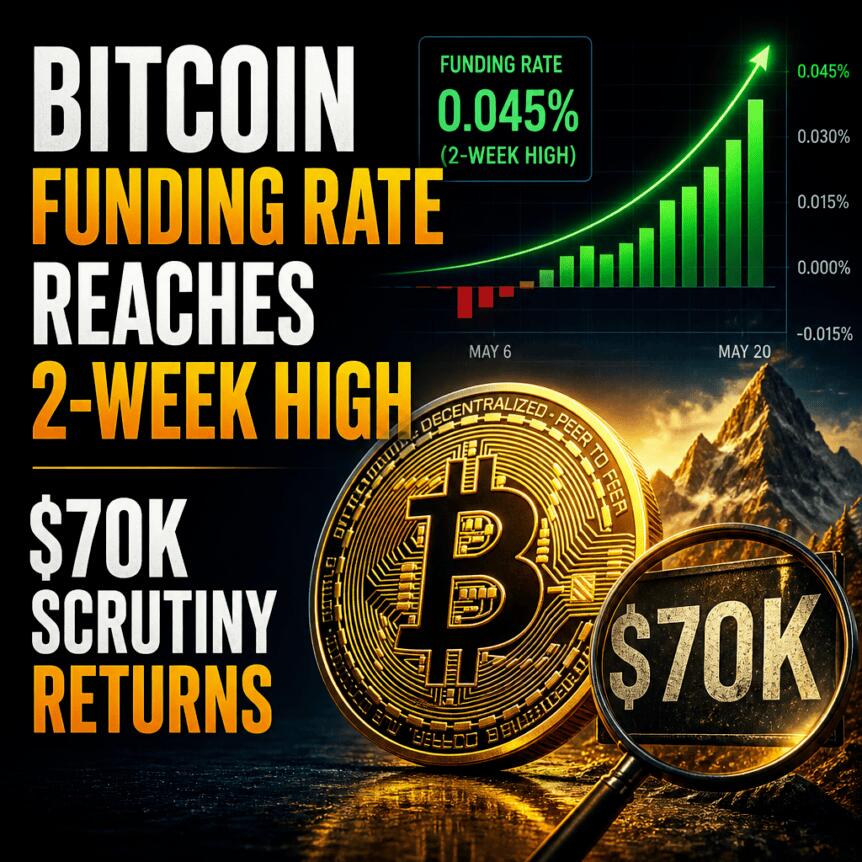
Bitcoin edged toward the $65,500 area on Monday as traders leaned more bullish on derivatives—an uptick reflected in rising perpetual futures funding rates. Yet the broader risk backdrop remained cautious, with US-listed spot Bitcoin ETF outflows continuing to drain demand and keeping a near-term push toward $70,000 on hold.
Optimism showed up in leverage as well. The annualized funding rate on Bitcoin perpetuals jumped to 7%, its highest level in nearly three weeks and a move that typically aligns with stronger long-side confidence. Still, the market’s full picture was mixed, with options positioning turning more defensive and traditional assets failing to provide the kind of risk-on tailwind that often supports breakout bids.
Key takeaways
- Bitcoin perpetual futures funding rose to 7% (highest in nearly three weeks), indicating growing bullish confidence among leverage traders.
- Put demand outpaced calls on Deribit, with the put-to-call premium ratio more than double, suggesting traders increasingly sought downside protection.
- Order-book liquidity improved: aggregated bids on major exchanges exceeded offers by about $12 million, helping limit bearish read-through from weaker spot levels.
- Macro signals stayed cautious as stocks, bonds, and gold weakened together, and higher US Treasury yields pointed to elevated return requirements for capital.
- Spot Bitcoin ETFs recorded continued outflows, with CoinGlass data citing $228 million in net outflows the prior week—likely a headwind for any rapid $70,000 attempt.
Derivatives confidence rises, but options show hedging
The most direct read on trader sentiment came from Bitcoin perpetuals. According to Laevitas data, the annualized funding rate climbed to 7% on Monday, a sign that long positions were paying more to remain open. While that figure remains within the often-cited neutral 6%–12% band, the jump to the highest point in nearly three weeks suggests bulls gained ground over the weekend into Monday.
Crude oil also contributed to the day’s tone. Brent fell to $77.50, its lowest level since March, which can ease inflation- and risk-premium concerns in broader markets. For Bitcoin, that kind of macro relief sometimes helps lift short-term demand—especially when derivatives liquidity supports it.
However, options data signaled that traders were not fully committing to upside. Laevitas-referenced Deribit metrics showed put (sell) options demand running more than twice ahead of call activity on Monday. This skew has leaned bearish since Friday, representing a reversal from the prior week’s direction. In practice, that combination—higher perpetual funding alongside heavier put buying—often points to a market that is still trying to grind upward, but with active hedging in case price fails to follow through.
Order books improve even as traditional markets stay risk-averse
Bitcoin’s immediate price action around $65,000 did not appear to be driven by a lack of depth. CoinGlass data referenced in the report showed that bids on aggregated major exchange order books exceeded offers by about $12 million on Monday, reversing the weekend trend.
That matters because a failure to hold a key level can sometimes reflect fading liquidity and widening spreads. With the order-book imbalance turning more supportive, Monday’s inability to firmly reclaim higher territory looks more like timing and positioning than a structural sell-side pressure shift.
At the same time, the macro backdrop stayed uneven. Nasdaq 100 futures slipped about 1% as artificial intelligence-related stocks weakened. In company-specific news, SpaceX shares dropped sharply after the company announced plans to raise debt despite holding more than $100 billion in cash. Investors appear to have focused on the possibility that the sector may need higher funding and longer timelines before profitability.
Beyond equities, gold fell roughly 0.9% on Monday while US government bonds were also pressured as yields rose. The report attributed the move in yields to investors demanding higher returns—potentially reflecting inflation concerns or the market anticipating dilution effects tied to rising US government debt levels.
With stocks, bonds, and gold moving lower together, the day looked less like a broad risk-on session and more like investors preferring cash. That is the kind of environment where Bitcoin can still trade firm on crypto-native signals, but breakouts tend to struggle unless ETF flows and broader momentum align.
Corporate and liquidity cues: Strategy’s reserve update helps, but ETFs still weigh
A portion of market attention also focused on Strategy (formerly MicroStrategy), whose Bitcoin holdings make it a bellwether for institutional-style accumulation. Shares of Strategy traded about 13% below the roughly $64.1 billion cost to acquire 847,363 BTC, as investors weighed whether the company might need to sell assets to meet obligations. The report noted Strategy had debt of about $6.75 billion and that earlier worries centered on reserve liquidation risk.
Those concerns eased somewhat after Strategy announced an additional cash position—described as a $300 million reserve acquisition—referenced via earlier Cointelegraph coverage. The development matters because it reduces the immediate need for forced selling in a volatile tape, which can support sentiment around large, long-duration Bitcoin holders.
Even with those internal crypto-industry positives, the external demand channel remained a drag. The report pointed to continued weakness in US-listed Bitcoin ETFs. According to CoinGlass data cited, Bitcoin spot ETFs logged $228 million in net outflows in the prior week. The narrative significance is straightforward: when ETF balances decline week after week, it can reduce the marginal buyer that often complements derivative-led optimism.
In that context, the odds of a quick, clean rally to $70,000 look limited. Higher funding and improving order-book bids can push prices upward, but persistent ETF outflows can cap how far those pushes travel—especially when options positioning indicates traders are actively preparing for downside volatility.
As traders watch the tape, the tension to monitor is clear: derivatives are showing confidence (funding at 7% and stronger order-book bids), while options and traditional markets reflect caution (put skew, weaker macro complex) and ETF flows continue to drain fresh spot demand.
Going forward, investors will likely focus on whether ETF outflows slow or reverse and whether the options hedging trend on Deribit keeps deepening. If funding stays elevated while put demand cools and spot ETF flows stabilize, Bitcoin could gain the momentum needed to test higher levels more convincingly. If not, Monday’s signals may translate into choppy consolidation rather than a sustained breakout.
The Bank of England has abandoned previous proposed rules on stablecoins in its final policy and draft rules.
The latest revisions were made in response to widespread concern that the rules would stand in the way of the market’s growth and development.
Relaxed Rules
The central bank revealed on Monday that it has scrapped its plans to cap individual holdings, instead choosing to limit total issuance per stablecoin, which was initially set at $52.8 billion.
“This is a major milestone in delivering greater choice and innovation in UK payments,” said Deputy Governor for Financial Stability Sarah Breeden.
Per the bank, the new guardrail will allow systemic stablecoin firms to run viable operations and “support daily volumes and transactions” as compared to other systems.
Additionally, the BOE has reduced its requirements on backing assets, increasing the figure to 70% from 60%, which is the share of backing assets that can be held in short-term government debt. Meanwhile, the rest must now be held in central bank deposits that don’t bear any interest.
Breeden believes that innovation depends on trust and that the new guidelines will build confidence in stablecoins by ensuring quick redemptions, strong consumer protections, and Central Bank backing.
The BOE Still Has Reservations
The BOE has also warned that while stablecoins can make payments faster and cheaper for cross-border transactions, their growing adoption could reduce bank deposits and potentially affect lending and borrowing costs.
Stablecoins are here to stay, though, with most crypto executives viewing them as tools to unlock working capital and enhance treasury operations. A recent survey conducted by Ripple found that 72% of institutions believe that offering these digital assets is key to remaining competitive in the market.
The post UK Central Bank Eases Stablecoin Rules Following Market Response appeared first on CryptoPotato.

Hu Shi is allegedly a senior member of Prince Group, which has been sanctioned by the U.S. government
Tokyo Metropolitan police have arrested alleged crypto crime kingpin Hu Xiaowei, aka Hu Shi, after tracking his movements across various luxury hotels in Osaka.
Hu is believed by police to be a high-ranking member of Prince Group, which CryptoPotato has reported is responsible for high-level pig-butchering scams and investment fraud totaling $15 billion in Bitcoin.
Tokyo Arrest: Prince Group Crypto Kingpin Hu Xiaowei (Hu Shi) Nabbed – Linked to $15B Bitcoin Scam Empire
According to Asahi Shimbun, Tokyo police arrested Hu Xiaowei (Hu Shi), a senior figure allegedly tied to Cambodia-based Prince Group, one of Asia’s largest transnational… pic.twitter.com/n3hT8vE2hA
— Wu Blockchain (@WuBlockchain) June 22, 2026
Fall of an empire
Prince Group is one of Asia’s largest organized groups, operating at least 10 scam compounds staffed at the height of its power. The suspected leader of the group, Chen Zhi, was arrested in Cambodia and extradited to China in January.
The U.S. government sanctioned 146 entities linked to the group in October 2025, and the British government has blacklisted several individuals for alleged ties to the Prince Group.
A national of Cyprus and Cambodia, Hu Shi is currently charged with submitting a fraudulent change-of-address form to obtain permanent residency in Japan.
Two Chinese nationals were arrested for submitting paperwork on his behalf. Tokyo police said that the individual named Chen Xiao’er on the U.S. sanctions list is the same person as the Hu Shi they now have in custody, and that a wider investigation into Prince Group and Hu’s involvement is still underway.
The post Major Figure in $15 Billion Bitcoin Scam Network Arrested in Tokyo appeared first on CryptoPotato.
Thanks to the newly passed U.S. Senate housing affordability bill, the Federal Reserve may be heading toward a formal ban from instituting a digital dollar in the form of a central bank digital currency (CBDC), despite the fact the Fed wasn’t working on such a project.
Republican politicians had embraced an aggressive opposition campaign against the U.S. following in European and Chinese footsteps in the pursuit of a CBDC, labeling the idea a dangerous overreach of government surveillance. So they insisted it get inserted into the 21st Century ROAD to Housing Act that just passed the Senate in an 85-5 vote Monday night.
The concept of a digital dollar likely would have needed the backing of the White House, Congress and the Federal Reserve, none of which pushed to pursue one. But if the House of Representatives follows suit and votes to send the housing bill to President Donald Trump for his signature, the CBDC will be legally stifled.
However, the ban would only last for a very limited four years until the end of 2030.
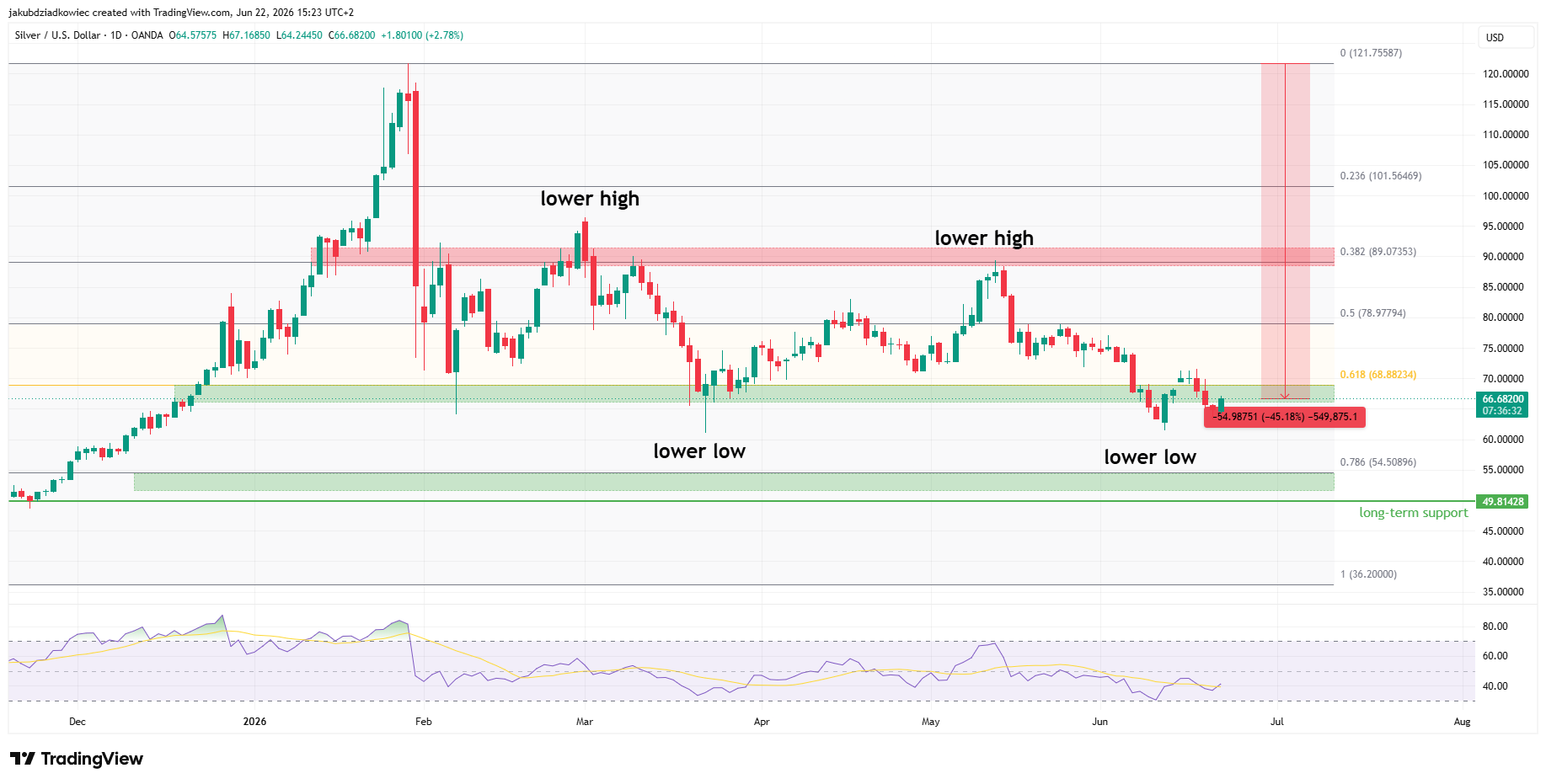
Silver is fighting to reclaim $69 after a near 3% bounce, yet the metal trades 45% below its January record and sits at a level that will decide its next major move.
The rebound tracks easing Middle East tension as a days-old US-Iran ceasefire holds. However, a stronger dollar and a cautious Federal Reserve keep pressure on precious metals, leaving silver caught between recovery and a deeper slide.
Why Kiyosaki Is Watching Silver but Not Buying Yet
Silver (XAG) climbed to around $66.7 on Monday, up close to 2.8% on the day. The move followed a ceasefire that drained the safe-haven demand that had earlier powered metals.
Robert Kiyosaki, author of Rich Dad Poor Dad, said this week that he is waiting before adding to gold, silver, Bitcoin (BTC), and Ethereum (ETH). He argues that the macro environment, not falling prices, signals when to buy.
Kiyosaki gave no price target and no timeline. That leaves one question for traders. What would a genuine reversal look like on silver’s chart?
The Make-or-Break Level at $68.88
On the four-hour chart, silver has slipped below the 0.618 Fibonacci retracement at $68.88 and is fighting to win it back. The level marks the pivot for the next leg.
Independent analyst Kamile Uray flags $63 as the support that has held so far. A break above $71 would open the door toward the $77 to $89 resistance zone.
A close back above that band would suggest the rebound has more room. Until then, the metal stays trapped between $63 support and $71 resistance.
XAG Price Prediction Hinges on the $68.88 Line
The daily chart shows silver in a clear downtrend since January. It has printed successive lower highs near $96 and $89 and matching lower lows.
The price now sits about 45% below its $121.76 record, a sign the correction is widening. The Relative Strength Index (RSI) has ticked up near 40 but stays below the neutral 50 mark.
Reclaiming the retracement at $68.88 would shift focus to $79, then to the $89 resistance band. Losing it points toward $55, the 0.786 level that aligns with long-term support.

That makes $68.88 the line Kiyosaki’s awaited reversal must clear. A weekly close above it would signal the turn, while a rejection keeps the bearish structure intact.
For now, the trend favors sellers until silver proves it can hold above that mark.
The post Silver Faces Make-or-Break Level, Will Price Keep Dropping? appeared first on BeInCrypto.


President Donald Trump has signed two executive orders designed to accelerate U.S. quantum computing development and prepare federal agencies for the potential security risks posed by future quantum machines.
Summary
- Trump signed two executive orders to accelerate U.S. quantum computing development and prepare agencies for future encryption risks.
- The orders direct intelligence officials to assess the impact of advanced quantum computers and the transition to post-quantum cryptography.
- Bitcoin, Ethereum, and Algorand communities are already exploring different strategies to protect blockchain networks from future quantum threats.
According to the White House, Trump approved the measures on June 22 as part of a broader effort to strengthen American leadership in quantum technologies, a field widely viewed as critical for future advances in computing, communications, and cybersecurity.
Speaking during the signing event, Trump said “quantum technologies represents the next generation of innovation across computing, sensing, and networking,” adding that the sector carries significant implications for economic growth, scientific research, and national security.
The first order, Executive Order 14411, establishes the Quantum Computer for Application Development and Discovery Science, or QC-ADDS, initiative. Under the directive, the Department of Energy must identify technical requirements for an advanced quantum computer within 90 days and work toward deploying at least one such system at a federal research facility.
The Department of Commerce is also tasked with exploring ways to encourage participation from private-sector quantum computing companies.
Additional provisions require federal agencies, including NASA, the Department of Energy, the National Science Foundation, and the Department of Commerce, to develop five-year plans for advancing quantum sensing and networking technologies.
The order also includes measures aimed at strengthening domestic supply chains, expanding the quantum workforce, and increasing protections for sensitive research.
Federal agencies are assessing post-quantum security risks
Of particular interest to the crypto industry, the order directs intelligence agencies to assess how increasingly powerful commercial quantum computers could affect national security, including the transition to post-quantum cryptography.
The directive arrives as concerns persist over the hypothetical arrival of “Q-Day,” the point at which quantum computers become capable of breaking encryption systems that currently secure financial networks, government infrastructure, and blockchain wallets.
While no existing quantum computer poses such a threat today, policymakers and cryptography experts have increasingly called for preparations to begin before the technology reaches that stage.
According to a recent report from Coinbase’s independent advisory board of cryptography experts, the Bitcoin community should start planning a migration path to post-quantum cryptography rather than waiting until quantum computing becomes an immediate concern. The report stated that uncertainty surrounding future advances in the field justifies early preparation.
Crypto projects are already preparing for future threats
Discussions around quantum-resistant security have also expanded beyond Bitcoin.
Recently, Binance founder Changpeng Zhao proposed a future migration period for Bitcoin holders following any transition to quantum-resistant cryptography. Zhao argued that vulnerable legacy addresses should not remain exposed indefinitely if quantum computers eventually become capable of breaking existing security models, while emphasizing that any protocol change would require community consensus.
Elsewhere, researchers associated with the Ethereum Foundation’s Kohaku privacy project have suggested that Ethereum accounts could begin adding certain post-quantum protections without waiting for a hard fork. According to Kohaku lead Nico, wallet-level protections could be introduced through smart contract logic while longer-term protocol upgrades continue to be explored.
Meanwhile, the Algorand Foundation has released a roadmap intended to make the layer-1 network broadly quantum-resilient by the end of 2027. The foundation said the initiative will cover user accounts, wallets, developer tools, staking infrastructure, and consensus systems.
As governments increase investment in quantum computing research, blockchain developers and cryptography experts are increasingly examining how existing security systems can be upgraded before quantum computers become capable of challenging today’s encryption standards.

Ripple’s cross-border token was at the forefront of gains last summer when its price reached a historic peak of around $3.65. However, back then the broader crypto market was booming, while the past several months have delivered heavy losses for the bulls.
XRP has shed approximately 65% of its valuation, yet it remains the subject of optimistic predictions, and some of those seem a bit far-fetched.
How High?
As of press time, the asset’s price trades at around $1.14, with X user BATMAN claiming that “volatility is loading.” The analyst noted that the asset has been hovering in the $1.08-$1.30 range for the past two weeks or so, predicting a breakout if it surges past the upper boundary, and that the bullish setup would be invalidated if XRP plunges below the depicted floor.
CRYPTOWZRD also claimed that the asset is at a crossroads. They opined that moving above the $1.18 resistance “will offer a long,” while rejection could benefit the short traders.
Certain analysts appear unfazed by the current market conditions and expect XRP to post explosive gains in the future. Such is the case with X user Tom, who recently argued that the asset has formed a pattern similar to its 2024 run, which took the price from $0.50 to $3.30.
“Except… this time the 1.272 Fib extension points to $8.42,” he added.
JAVON MARKS also made a shocking forecast. The market observer claimed that “XRP’s breakout stands, which means the measured move target near $17 does as well.”
It is important to note that an increase of that magnitude will require the token’s market cap to skyrocket to nearly $1 trillion. Bitcoin (BTC) remains the only cryptocurrency with a capitalization higher than that, and XRP appears unlikely to join it anytime soon, particularly during the prolonged bear market.
Observing These Factors
Multiple elements suggest the bulls might have to endure more pain in the short term. As CryptoPotato recently reported, XRP’s network activity dropped by roughly 50% in the span of just two weeks. This hints at waning user engagement that could intensify the sell-off.
Another issue is the whales’ behavior. More than 30 million XRP were distributed by large investors in a period of five days as the total holdings of these market participants slipped to around 3.78 billion units. This signals that they could be positioning for a further price decline: something that may scare smaller players and prompt them to cash out, too.
The institutional interest is among the few rays of hope. Data shows that spot XRP ETFs continue to attract capital, with inflows consistently surpassing outflows. This development suggests that pension funds, hedge funds, and other controversial investors continue to increase their exposure to Ripple’s native token: a trend completely opposite to the massive outflows witnessed from spot BTC and ETH ETFs.
The post Shocking Ripple Price Predictions as XRP Plunges 65% From Its ATH appeared first on CryptoPotato.

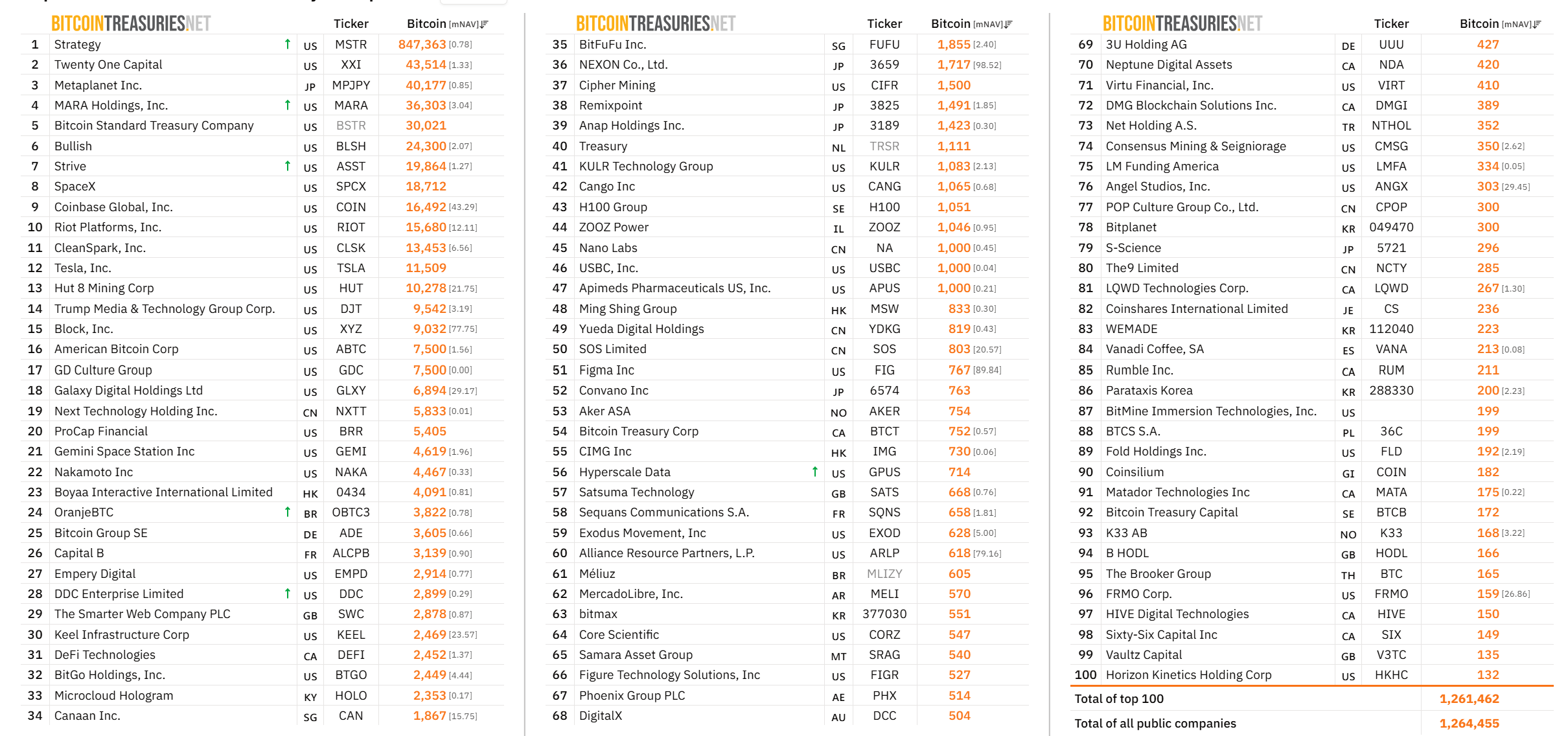
After hinting at buying more bitcoin on Sunday, Strategy’s co-founder and former CEO, Michael Saylor, announced on X minutes ago that the firm had acquired another 520 BTC for $35 million. Thus, its total holdings have grown to 847,363 units, currently valued at almost $55 billion.
What’s more interesting about this announcement is the fact that the NASDAQ-listed business intelligence software company increased its USD reserve a lot more than the BTC acquisition.
Strategy has increased its USD Reserve by $300 million to $1.4 billion and plans to continue replenishing it to support the credit quality of its Digital Credit securities. We also acquired 520 BTC for $35 million, increasing our $BTC Reserve to ₿847,363. $MSTR $STRC…
— Michael Saylor (@saylor) June 22, 2026
The Saylor-founded firm made two major bitcoin purchases in the past couple of weeks, both for around $100 million. It also increased its USD reserve by the same amount.
Now, though, the difference is quite significant, as the firm has spent almost 10 times more for its USD reserve than for its bitcoin acquisition.
Perhaps the reason for this is the growing online scrutiny of Strategy’s STRC. Also referred to as Stretch, these shares are supposed to trade at $100, provide a stable yield to investors, and raise funds to buy more BTC.
However, they have deviated from their par price in the past few weeks, going well below $90 at one point. This raised some eyebrows in the community, with some analysts speculating that the company might have to sell more than 50,000 BTC in the next few years to cover expenses and dividend payments.
The post Strategy Buys More Bitcoin but Turns Attention to USD Reserve With $300M Injection appeared first on CryptoPotato.
Crypto World
Trump Calls Stock Buybacks Fake: MicroStrategy Bitcoin Model Shows Another Way to Boost Valuations
President Donald Trump has again branded stock buybacks a fake way to lift share prices, yet the MicroStrategy Bitcoin model points to a different route to higher valuations, one built on issuing shares rather than repurchasing them.
His latest comments target defense contractors. They also sharpen a wider debate over how companies move their own stock, through buybacks that shrink share counts or through dilution that funds a growing bitcoin treasury.
What Trump Said About Buybacks
Trump has renewed pressure on defense firms over how they use their cash. He signed an executive order in January that bars underperforming contractors from buybacks and dividends until production improves.
His argument is direct. Repurchases inflate share prices without building real capacity, so he wants the money spent on plants, equipment, and faster output.
The policy targets large contractors such as Lockheed Martin, Northrop Grumman, and RTX. Trump has returned to the theme this week, and his buyback comments have rattled defense stocks before.
How the MicroStrategy Bitcoin Model Works
MicroStrategy (now Strategy), takes the opposite path. It does not repurchase common stock. It sells new shares and preferred stock, then spends the cash on Bitcoin.
That dilution and debt approach has built a stockpile of more than 845,000 Bitcoin (BTC), the largest held by any public company.

Michael Saylor frames each raise as a way to grow Bitcoin per share. Those purchases now represent more than four percent of all BTC in circulation.
The company has even bought back debt, repurchasing convertible notes at a discount this year. It has also leaned on preferred stock issuance to keep buying without adding senior loans.
Follow us on X to get the latest news as it happens
Why the Premium Decides Everything
The model works through a flywheel. MicroStrategy issues stock above the value of its coins, buys more bitcoin, and lifts holdings per share, which can support a premium over net worth.
That premium has thinned in 2026. With Bitcoin trading near $64,360, the holdings sit close to the average price MicroStrategy paid.
The stock has fallen by more than half over the past year, and its market value has slipped toward $40 billion.

When the premium fades, new share sales add little value. The same dilution that powered gains now offers thinner support, a pattern visible during the recent Bitcoin sell-off pressure.
Both stories turn on one question. Investors and regulators want to know whether a company builds value or simply moves its share price.
For MicroStrategy, the answer may rest on whether Bitcoin climbs back above its cost and revives the premium.
The post Trump Calls Stock Buybacks Fake: MicroStrategy Bitcoin Model Shows Another Way to Boost Valuations appeared first on BeInCrypto.

Secret Network's Axelar Bridge Drained $4.67M via Infinite-Mint Flaw

Cowboys insider urges Jerry Jones to sign Lionel Messi as soccer legend leads Argentina to FIFA WC KO stage with 2 goals vs. Austria

The Antichrist and Trump: An old evangelical Christian idea is politics now.


-

 Fashion3 days ago
Weekend Open Thread: Miami – Corporette.com
-
 Tech6 days ago
The Adder At The Heart Of Intel’s 8087 FPU
-

 Entertainment2 days ago
Renter of Home in Anne Heche Crash Denies Settlement With Son
-

 Tech11 hours ago
Microsoft accidentally kills epic Outlook email threads
-

 Business2 days ago
Soccer-U.S. defends Iran World Cup travel restrictions, says discussions ongoing
-
 Business3 days ago
Wall Street Week Ahead: Investors see Micron earnings as pulse check of AI rally momentum
-

 Politics4 days ago
BBC Reporter Discusses Cross Party Criticism Of Trumps Iran Deal
-

 Tech4 days ago
AWS enters the context layer race with a graph that learns from agents, not manual curation
-

 Crypto World3 days ago
HIVE shares jump as $220M AI deal speeds Bitcoin mining pivot
-
 Crypto World3 days ago
Can Charles Hoskinson Really Rescue Cardano?
-

 Crypto World3 days ago
Jake Chervinsky accuses CME of protecting derivatives monopoly
-

 Tech4 hours ago
Nearly 7,000 fake Amazon domains registered ahead of Prime Day 2026, researchers warn
-

 Sports4 days ago
FIFA World Cup 2026: Canada beat 9-men Qatar 6-0 to register first ever win | FIFA World Cup 2026
-

 Business2 days ago
MHP SE 2026 Q1 – Results – Earnings Call Presentation (OTCMKTS:MHPSY) 2026-06-20
-

 Politics3 days ago
Andy Burnham and the meaning of Makerfield
-
 Tech1 day ago
Signal’s Meredith Whittaker says AI chatbots ‘are not your friends’ and calls Copilot agents a backdoor
-

 Business4 days ago
Brexit cost 6% of UK economy, Bank of England company data suggests
-

 Crypto World5 days ago
Anthropic’s Dario Amodei Urged AI Unity at G7, Even as US Banned His Models
-

 Crypto World7 days ago
Robinhood opens AI-powered trading to all users, sending HOOD stock past $100
-

 Tech5 days ago
Weeks Of In-The-Field Testing And A Verdict
You must be logged in to post a comment Login