Connect with us

Business

Why Physical Security Still Matters in an Increasingly Digital World

Published

on

Why Physical Security Still Matters in an Increasingly Digital World

In today’s business environment, cybersecurity often dominates conversations about risk management. Companies invest heavily in firewalls, encryption, and digital monitoring systems to protect sensitive information and maintain operational continuity. While these measures are essential, physical security remains equally important.

Businesses continue to rely on offices, warehouses, retail premises, storage facilities, and operational sites that require effective protection against unauthorized access, theft, and vandalism. Regardless of how advanced digital security becomes, physical vulnerabilities can still create significant financial and operational risks.

As organizations seek to build comprehensive security strategies, understanding the role of traditional access control solutions remains highly relevant. Simple yet effective security measures continue to provide valuable protection across a wide range of industries.

Why Physical Security Is Essential for Modern Businesses

Every business owns physical assets that require protection.

These assets may include:

Advertisement
  • Inventory
  • Equipment
  • Company vehicles
  • Confidential documents
  • IT infrastructure
  • Tools and machinery

Unauthorized access to these assets can result in financial losses, operational disruption, and reputational damage.

Physical security serves as the first line of defense by helping businesses control who can enter specific locations and access valuable resources.

While technology has introduced sophisticated electronic security systems, many organizations still depend on reliable mechanical security solutions as part of a broader protection strategy.

What Are the Most Common Physical Security Risks?

Businesses face a variety of security challenges depending on their industry and operating environment.

Common risks include:

Advertisement

Theft

Theft remains one of the most significant concerns for businesses of all sizes.

Unauthorized Access

Restricted areas may contain sensitive information, hazardous materials, or valuable equipment.

Vandalism

Property damage can lead to repair costs and business interruption.

Internal Security Issues

Not all security incidents originate externally. Controlling access within a facility can be equally important.

Advertisement

Asset Mismanagement

Without proper access control measures, businesses may struggle to monitor and protect valuable resources.

Addressing these risks requires a combination of policies, employee awareness, and appropriate security hardware.

Why Layered Security Delivers Better Protection

Security professionals often recommend a layered approach to protection.

Rather than relying on a single measure, businesses benefit from multiple safeguards working together.

Advertisement

A layered strategy may include:

Security Layer Purpose
Perimeter Protection Prevent unauthorized entry
Access Control Restrict sensitive areas
Surveillance Systems Monitor activity
Employee Policies Encourage accountability
Physical Locks Secure assets and facilities

Each layer contributes to overall risk reduction and strengthens the organization’s security posture.

How Access Control Supports Business Operations

Access control is not only about preventing unauthorized entry.

It also helps businesses:

Advertisement
  • Organize workflows
  • Protect sensitive information
  • Manage employee access
  • Improve accountability
  • Reduce operational risks

By limiting access to designated personnel, organizations can better protect assets while maintaining efficient daily operations.

This principle applies equally to large corporate facilities and small independent businesses.

The Continued Relevance of Mechanical Security

Modern security systems often incorporate digital technologies such as biometric scanners, smart locks, and remote monitoring platforms.

Despite these innovations, traditional mechanical security solutions remain widely used because they offer several advantages:

Reliability

Mechanical systems do not depend on power supplies or network connectivity.

Advertisement

Simplicity

They are easy to operate and require minimal technical knowledge.

Cost-Effectiveness

Many businesses find them economical for protecting specific assets and locations.

Durability

High-quality security hardware can provide years of dependable service.

These characteristics make mechanical solutions valuable components of broader security strategies.

Advertisement

Why Security Hardware Quality Matters

Not all security products provide the same level of protection.

Inferior hardware may be vulnerable to:

  • Corrosion
  • Wear and tear
  • Tampering
  • Environmental damage
  • Premature failure

Selecting quality products helps businesses reduce maintenance requirements and improve long-term security performance.

When evaluating security hardware, factors such as construction materials, durability ratings, and intended applications should all be considered.

Protecting Assets in Multiple Environments

Different business environments present unique security requirements.

Advertisement

For example:

Warehouses

Inventory protection is often a primary concern.

Construction Sites

Equipment and tools may require temporary but reliable security solutions.

Retail Stores

Storage areas frequently contain valuable merchandise.

Advertisement

Offices

Sensitive records and technology assets must remain protected.

Educational Facilities

Restricted access helps safeguard students, staff, and resources.

A flexible approach to physical security allows organizations to address these varying requirements effectively.

Why Padlocks Remain Widely Used

Among the most recognizable security devices, Padlocks continue to play an important role across numerous industries.

Advertisement

Their popularity stems from several advantages:

  • Portability
  • Versatility
  • Ease of installation
  • Cost-effectiveness
  • Broad application range

They are commonly used to secure:

  • Gates
  • Storage units
  • Lockers
  • Toolboxes
  • Cabinets
  • Equipment enclosures

Because they can be deployed in both temporary and permanent situations, they remain a practical solution for businesses seeking straightforward access control.

Modern designs offer enhanced durability and resistance to tampering, making them suitable for increasingly demanding environments.

Understanding the Importance of Key Management

Managing physical keys can become challenging as organizations grow.

Issues may include:

Advertisement
  • Lost keys
  • Unauthorized duplication
  • Staff turnover
  • Access tracking difficulties

To address these concerns, businesses often implement structured key management programs that establish clear responsibilities and procedures.

Effective key management supports security while helping organizations maintain operational efficiency.

When Are Combination Padlocks the Right Choice?

Some environments benefit from eliminating physical keys altogether.

Combination Padlocks provide an alternative access solution that allows users to unlock security devices using a numerical code.

Advantages may include:

Advertisement
  • No keys to lose
  • Simplified access management
  • Reduced replacement costs
  • Convenient multi-user access

These features make them particularly useful in situations where multiple authorized users require access to the same secured area.

However, businesses should establish procedures for code management and regular updates to maintain security effectiveness.

Security and Employee Accountability

Physical security measures can also encourage accountability within the workplace.

Clearly defined access controls help:

  • Establish responsibility
  • Reduce unauthorized usage
  • Improve asset tracking
  • Support incident investigations

Employees who understand access procedures are more likely to follow established security protocols, contributing to a stronger overall security culture.

Supporting Compliance and Risk Management

Many industries operate under regulatory requirements related to security, safety, and asset protection.

Advertisement

Physical security measures often contribute to compliance efforts by helping organizations:

  • Protect confidential information
  • Secure hazardous materials
  • Safeguard valuable equipment
  • Demonstrate risk management practices

Compliance should not be viewed solely as a legal obligation. Strong security practices also support business continuity and stakeholder confidence.

Choosing the Right Security Partner

Selecting appropriate security hardware requires careful consideration.

Businesses should evaluate suppliers based on:

Product Quality

Reliable products contribute to long-term protection.

Advertisement

Industry Expertise

Knowledgeable suppliers can recommend suitable solutions for specific applications.

Product Range

Comprehensive inventories simplify procurement processes.

Customer Support

Ongoing assistance can improve purchasing decisions and implementation outcomes.

Working with experienced suppliers often helps organizations develop more effective security strategies.

Advertisement

Supporting Business Security Through Specialist Expertise

Security requirements vary significantly across industries, making expert guidance increasingly valuable.

Locks Direct has built a strong reputation for supplying a wide range of physical security products designed to support residential, commercial, and industrial applications. By offering specialist expertise alongside extensive product availability, the company helps customers identify solutions tailored to their specific security challenges.

As security threats continue evolving, access to knowledgeable suppliers remains an important component of effective risk management.

The Future of Physical Security

Although digital security technologies continue advancing, physical protection will remain a fundamental requirement for businesses.

Advertisement

Future trends are likely to include:

  • Greater integration between physical and digital systems
  • Smart access management technologies
  • Enhanced monitoring capabilities
  • Improved security analytics
  • Stronger emphasis on layered protection strategies

However, traditional mechanical security devices will likely continue playing an important role because of their reliability, simplicity, and versatility.

Conclusion

Effective business security requires a balanced approach that addresses both digital and physical risks. While technology continues transforming how organizations protect their assets, fundamental security principles remain unchanged.

Solutions such as Padlocks and Combination Padlocks continue providing practical, dependable protection across a wide range of industries and applications. When incorporated into a broader security strategy, these simple yet effective tools help businesses reduce risk, improve accountability, and protect valuable assets.

As organizations navigate an increasingly complex threat landscape, investing in quality physical security measures remains an essential part of long-term business resilience.

Advertisement

Continue Reading
Click to comment

You must be logged in to post a comment Login

Leave a Reply

Business

Texas Stock Exchange officially goes live to rival NYSE and Nasdaq

Published

on

Texas Stock Exchange officially goes live to rival NYSE and Nasdaq

A new rival to Wall Street officially debuted on Friday as the Texas Stock Exchange went fully live for the first time with trading available for all of its listed tickers.

The Texas Stock Exchange, which is based in Dallas, is the first new major stock exchange to launch in the U.S. in decades. The TXSE, called the “Tex-ee,” is looking to compete with the New York Stock Exchange and Nasdaq Composite for listings.

Advertisement

The exchange boasts several prominent financial backers, including BlackRock, Goldman Sachs and Charles Schwab, among others.

It currently plans to begin corporate listings later this year and intends to facilitate initial public offerings (IPOs) starting in 2027. The TXSE sees the economic rise of Texas and a broader swath of the South that it’s calling the “Boom Belt” as being the “center of gravity for American capitalism” and a market it can tap into for IPOs.

CALIFORNIA LOSES FORTUNE 500 CROWN TO TEXAS AS BILLIONAIRE TAX THREAT LOOMS

Dallas Metro Skyline

The Texas Stock Exchange (TXSE) is based in Dallas and is currently operating out of a temporary headquarters. (Kirby Lee / Getty Images)

“As the only primary corporate and ETP listings venue built and headquartered in the Boom Belt, TXSE is both a product of the region’s rise and a catalyst to accelerate it,” TXSE explained.

Advertisement

The company’s website notes the region has an annualized GDP of $8.9 trillion – more than all world economies other than the U.S. and China. It adds that 40% of American exports pass through the Boom Belt, while 57% of U.S. job growth has occurred in the region in the last five years.

Currently, the exchange is operating from temporary offices in the Uptown neighborhood of Dallas, where it will hold a bell-ringing ceremony Friday afternoon to mark its official launch.

A NEW ECONOMIC IRON CURTAIN IS FALLING ACROSS AMERICA AS TRILLIONS IN WEALTH FLEE TO THE ‘BOOM BELT

Traders on floor of New York Stock Exchange

The TXSE hopes that its proximity to the “Boom Belt” will make it a better option among companies in the South that are pursuing IPOs. (Michael M. Santiago/Getty Images)

The exchange plans to move its permanent headquarters to the city’s Bank of America Tower, where it will operate the Texas Market Center.

Advertisement

The tower will be the tallest building in Uptown Dallas when it’s completed. The exchange’s Texas Market Center will include executive offices, a Texas business museum and a broadcast studio.

An announcement by designer KPF from May added that the exchange will take up multiple areas within the building, including ground-floor space and a 12th floor sky lobby.

DELL SHAREHOLDERS APPROVE LEGAL MOVE FROM DELAWARE TO TEXAS

A screen displays the Dow Jones Industrial Average

The New York Stock Exchange and Nasdaq have each opened exchanges in Texas to allow dual listings. (Reuters/Jeenah Moon)

The opening of the Texas Stock Exchange comes as the Lone Star State is working to attract businesses looking to relocate their headquarters or change their state of incorporation, touting business-friendly policies and favorable tax regimes in comparison to states like California and New York.

Advertisement

The Texas Stock Exchange’s rivals – the New York Stock Exchange and Nasdaq – have also expanded their footprint in the state of Texas and have enticed companies to dual list on the new duplicate exchanges at no cost.

GET FOX BUSINESS ON THE GO BY CLICKING HERE

Continue Reading

Business

Nearly 200 cruise passengers rescued after ship runs aground

Published

on

Nearly 200 cruise passengers rescued after ship runs aground

Police in Bulgaria evacuated nearly 200 passengers from a Viking cruise ship after the vessel ran aground due to “exceptionally low water levels” in the Danube River. 

The Bulgaria News Agency reported that the ship became stranded early Tuesday about 15 miles upstream from Vidin, where it planned to stop to take on supplies. Bulgarian border police ended up rescuing 186 passengers after another ship dispatched to the scene wasn’t able to get close enough to pick them up. 

Advertisement

“We can confirm that the Viking Ullur experienced a grounding incident on the Danube River on July 28, 2026, after coming into contact with a sandbank during a period of exceptionally low water levels,” Viking said Friday in a statement to FOX Business. 

“The safety and wellbeing of our guests and crew is always our highest priority. There were no injuries, and the vessel remained safe throughout the incident,” it added. “The ship was well-stocked with all necessary supplies, including food and water, to keep guests and crew safe and comfortable.” 

PRINCESS CRUISE SHIP WORKER DEAD AFTER GOING OVERBOARD NEAR CANCUN 

Passengers rescued from Viking Ullur ship

A Bulgarian border police boat evacuates passengers from a stranded cruise ship on the Danube River after the Swiss-flagged Viking Ullur ran aground near the northwestern city of Vidin, Bulgaria, in this handout image released on Tuesday, July 28, 20 (Reuters/Bulgarian Interior Ministry / Reuters)

“Guests were safely transferred ashore and continued their planned itinerary, including a full day in Bucharest,” Viking also said. 

Advertisement

Attempts to refloat the vessel Tuesday morning were unsuccessful, according to the Bulgaria News Agency.

All of the passengers were from European countries and there were 52 crew members onboard as well, it added. 

CARNIVAL BEGINS BUILDING RECORD-BREAKING DESTINY CRUISE SHIP THAT BOOSTS NUMBER OF OCEAN-FINDING BALCONY CABINS 

Cruise passengers walk off ship that became stuck

Passengers are seen disembarking the Viking Ullur cruise ship after it became stuck this week near Vidin, Bulgaria, which is located along the Danube River. (Reuters / Reuters)

The current status of the crew members and location of the ship wasn’t immediately clear. Viking did not immediately respond to an inquiry on the matter. 

Advertisement

Viking said on its website that the Viking Ullur, built in 2019, is 443 feet long. 

Person walks off cruise ship that became stuck in Europe

Viking told FOX Business “there were no injuries” after the Ullur ship ran aground, and that “the vessel remained safe throughout the incident.” (Reuters / Reuters)

CLICK HERE TO READ MORE ON FOX BUSINESS   

A prolonged drought in the region has been setting record low water levels on the Danube River, The Associated Press reported. 

Advertisement
Continue Reading

Business

Grillo’s Pickles starts production in Indiana

Published

on

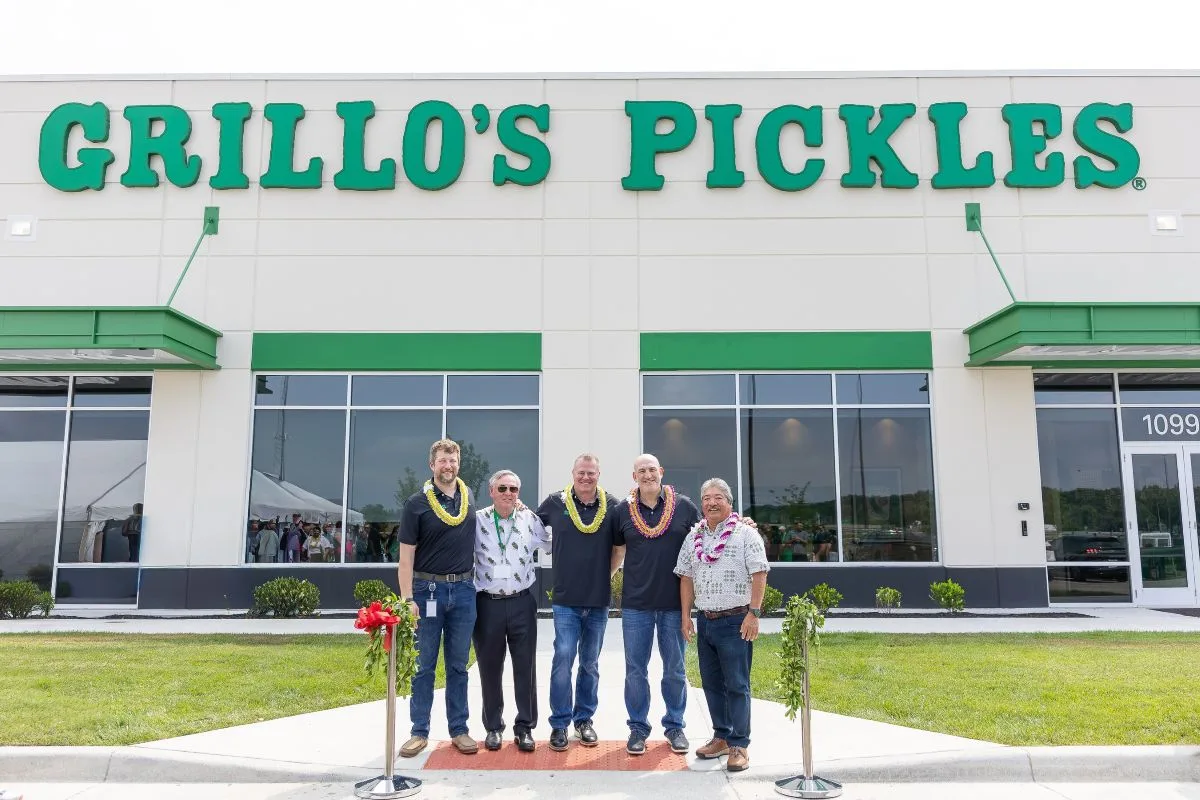
Grillo’s Pickles starts production in Indiana

Irresistible Foods Group subsidiary opens 155,000-sq-ft manufacturing facility.

Continue Reading

Business

AMD Q2 Preview: Moment Of Truth (Rating Downgrade)

Published

on

AMD: The CPU King

AMD Q2 Preview: Moment Of Truth (Rating Downgrade)

Continue Reading

Business

Historic Cornish bakery Warrens strikes deal with soft drink brand

Published

on

Business Live

The pasty maker has signed an agreement with Cornish drink producer Jolly’s

Warrens Bakery (the world’s oldest pasty maker) and Jolly’s Drinks(craft soft drinks made with local spring water) have partnered to bring a classic taste of Cornwall to Warrens’ 50 UK stores.

Warrens Bakery has struck a deal with Jolly’s Drinks(Image: PR handout)

Historic Cornish pasty maker Warrens has agreed a partnership deal with local soft drink producer Jolly’s. Under the terms of the agreement, the bakery will stock Cornish-made Jolly’s Drinks in its 50 UK stores.

Jolly’s was founded in 1986 by John Jolly in the Cornish village of Carharrack and its range of drinks are made from local spring water. The business now has a large factory in Saltash and is still family run.

Cheryl Ingram, managing director of Jolly’s Drinks, said “We’re delighted to see Jolly’s Drinks available in Warrens Bakery. As two proud Cornish brands with long-standing heritage, it’s a natural partnership that brings together the great Cornish pasty and refreshing original Cornish soft drinks.

“Both businesses share a passion for quality, tradition, and championing Cornwall, so we’re excited that customers can now enjoy a Jolly’s drink alongside a famous Warren’s pasty or bakery treat. We look forward to working together and introducing even more people to the taste of Cornwall.”

Advertisement

Warrens Bakery was established on the cobbled streets of St Just in Cornwall when two Cornish families – the Warrens and the Harveys – were united in marriage in 1860.

The Helston-headquartered chain now has 50 bakery stores in high streets, railway stations and roadside locations across the UK.

Craig Wood, assistant retail director at Warrens Bakery said: “We’re thrilled to be partnering with Jolly’s to give people a delicious taste of two of Cornwall’s leading food and drink producers. It’s a perfect pairing.”

Earlier in July, Warrens opened its 50th store in Malmesbury in Wiltshire.

Advertisement

The new site at the Texaco garage on Crudwell Road is the seventh petrol station concession in the Warrens Bakery and SGN Retail partnership, and follows the success of its six other petrol forecourt sites in Calcot, Didcot, Lechlade, Ludlow, Lydney and Frenchay, the company said.

Warren Bakery’s chief executive Mark Sullivan said at the time: “Our expansion into forecourts reflects how consumer habits are evolving, with people wanting speed and convenience but also quality, provenance and a better food-to-go experience. All this is now on offer at our new Malmesbury site”.

Continue Reading

Business

The threat to summer holidays looming with jet fuel shortages

Published

on

BBC InDepth

Addressing the structural reasons why the UK is so dependent on imports, meanwhile, is likely to be trickier. Back in the 1970s, the country had 18 refineries – but that’s now down to four.

“I think there is probably a point in saying, actually, do we need more resilience from a homegrown perspective in terms of our capacity in the UK to be able to refine a higher proportion of our fuel?” says Skybus’ CEO Jonathan Hinkles.

The question is how that could be done. The remaining refineries have already been asked to prioritise jet fuel production. But according to Amaar Khan, “this doesn’t happen overnight, and doesn’t result in a significant increase in jet fuel output”.

One option could be to boost local production of Sustainable Aviation Fuel (SAF). A synthetic fuel, it can be derived from wastes, such as old cooking oil and agricultural residues; from dedicated energy crops; or from using renewable energy to convert water and carbon dioxide into liquid hydrocarbons known as e-fuels.

Advertisement

So far SAF, as the name suggests, has been promoted mainly for its environmental credentials. These can vary widely depending on the method used to make it, but in general burning SAF adds less carbon to the atmosphere than burning fossil fuels. Both the UK and the EU have mandates to significantly increase the amount of SAF used over the next 25 years.

However, the industry is in its infancy. There is relatively little SAF available at the moment, a large chunk of what we use comes from East Asia, and it is very expensive – typically trading at more than $1000 per tonne more than conventional fuel. Nevertheless, Hinkles believes if these problems can be overcome, SAF can help reduce our reliance on foreign imports.

“It really becomes a question of; can you actually get SAF? Can we scale up production of SAF at a meaningful rate in the UK or Europe to take over an increasing proportion of jet fuel supply?”, he says.

Green campaigners agree. “Increasing SAF production won’t eliminate jet fuel imports overnight,” says Tom Taylor, UK policy manager for lobby group Transport and Environment.

Advertisement

“But by scaling it up, we can shift the source of aviation fuel from geopolitically sensitive fossil fuels to locally managed renewable grids and waste streams.”

That would require investment on a large scale, however, and clearly remains a long way off.

In the short term, meanwhile, dark clouds are hanging over the industry. There seems little prospect of jet fuel prices coming down quickly, and if fears of a shortage prove justified, then the aviation industry and the travellers that rely on it are heading for a turbulent summer.

Advertisement
Continue Reading

Business

Nobody Approved Power BI. It’s Now Running Your Business.

Published

on

Poorly designed and inadequately maintained workplaces are draining the UK economy of more than £71 billion a year, according to new research from facilities and security services company Mitie.

In most small and mid-sized businesses, Power BI does not arrive as a project. There is no rollout plan, no steering group, no launch. Someone in finance discovers it, finds it instantly familiar, and builds a report.

The report is good. Other people want one. Eighteen months later there are reports everywhere, half the business relies on them, and nobody is in charge of any of it.

I have trained hundreds of new Power BI users over the years, and I see the same light-bulb moment every time. “Oh, this feels like Excel and PowerPoint!” That familiarity is exactly why the tool spreads so quickly, people are not being pushed onto it, they are pulling it into the business themselves. As adoption stories go, that is the good kind. The enthusiasm is real and it is priceless.

But here’s the thing… the same freedom that makes a tool spread is the freedom that creates the mess. Because it grew without guardrails, everyone built things their own way. And a growing business eventually meets the consequences, usually in a meeting.

The day the numbers disagree

The moment this stops being invisible is nearly always the same one. Two people bring two versions of the same figure into the same room. Sales says one number, finance says another, and the conversation that was supposed to be about the business becomes a debate about whose report is right.

Advertisement

It gets called a data problem. It usually is not. Both reports are doing exactly what they were built to do, they were just built by different people, at different times, on different assumptions. One counts orders, the other counts invoices. One strips out cancellations, the other never did. Nobody decided this. It accumulated, one reasonable report at a time.

And underneath it sit the questions that quietly matter more. Who owns these reports? Who fixes the refresh that failed on Monday? Who checked what the new starter can see, and whether the margin data in that shared workspace was ever meant to be visible to everyone with the link? In an unmanaged estate, the honest answer to all of these is usually nobody.

The cost is time, trust and eventually money

None of this shows up as a line on the P&L, which is why it runs for so long. But the costs are real.

Staff time goes first. People rebuild reports that already exist because they cannot find or do not trust the originals. Someone senior spends hours reconciling two dashboards before every board meeting. Then trust goes, and this one is expensive, because once people stop believing the numbers, they stop using the reports and retreat to their own private spreadsheets, and the business is now paying for a reporting tool and running on Excel exports anyway.

Advertisement

And occasionally the cost is sharper than that. A figure nobody can stand behind lands in front of the bank, an investor or an auditor, and the awkward question is not about the number. It is about whether the business is in control of its own information.

The fix is lighter than most owners fear

At this point some owners reach for the opposite extreme, lock it all down, route everything through one person, approve every report. I would gently push back on that too. I have seen over-control fail as often as chaos. Clamp down too hard and people do not stop building reports, they just stop telling you, and the mess moves somewhere you can no longer see it.

For a growing firm, the structure that works is lighter than most people fear. It looks something like this. Every report that matters has a named owner, one person who answers for the figures and one route for fixing it when it breaks. The handful of numbers the business runs on, revenue, margin, active customers, get defined once, in one agreed place that every report draws from, so the same word means the same thing everywhere. Access follows job roles rather than one-off requests and forwarded links. And somewhere, there is a simple, written answer to “how do we do reporting here”, short enough that people actually read it.

That is it. Not a committee, not a six-month programme. Microsoft’s own adoption roadmap covers this ground thoroughly and is genuinely worth a read, I have gone back to it time and time again over the years. But for a small business the heart of it fits on a page. Owners, shared definitions, sensible access, and a bit of support for the people doing the building, because the analyst who taught themselves Power BI is an asset worth investing in, not a risk to be managed.

Advertisement

The stakes are about to get higher

There is one more reason to sort this now rather than later. Power BI is no longer a standalone tool. It now sits inside Microsoft Fabric, Microsoft’s wider data platform, which means the thing your business adopted for reports is increasingly connected to where data is stored, moved and prepared across the company. More capability, and more ways for an unmanaged setup to grow expensive.

This is often the point where firms bring in outside help, and having done a lot of this work, I will tell you what it should look like. When businesses explore Microsoft Fabric consulting in the UK, the first job is usually not the platform at all. It is mapping what already exists, which reports are trusted, which models are duplicated, who owns what, where the access risks sit. Moving a messy estate onto a bigger platform does not clean it up. It gives the mess a bigger stage. Diagnosis first, then the technology.

Boring is the goal

Good reporting in a growing business should be slightly boring. The figures refresh, the definitions hold, people know where to look and stop arguing about whose number is right. The meetings get shorter and go back to being about the business.

The tool that spread through your company without permission got there because it is genuinely useful. That part is a win, and the enthusiasm behind it is worth protecting. It just needs what every useful thing eventually needs, an owner, a shared set of definitions and someone paying attention. The best time to give it those was before it mattered. The second best time is before the platform underneath it gets any bigger.

Advertisement

Continue Reading

Business

‘Spider-Man: Brand New Day’ box office: Record $72M preview sales

Published

on

'Spider-Man: Brand New Day' box office: Record $72M preview sales

Tom Holland stars as Peter Parker, aka Spider-Man in Sony and Marvel’s “Spider-Man: Brand New Day.”

Sony

Spider-Man is already webbing up a massive box-office haul.

Advertisement

Sony and Marvel’s “Spider-Man: Brand New Day” secured $72 million in preview ticket sales, the highest collection for any domestic film in Hollywood history. The previous record holder was 2019’s “Avengers: Endgame,” which tallied $60 million ahead of its opening weekend.

“The demand for ‘Spider-Man: Brand New Day’ is nothing short of astonishing,” said Paul Dergarabedian, head of marketplace trends at Rentrak. “For a film to earn more than $70 million in pre-shows is unprecedented, and it reflects massive enthusiasm among moviegoers to head to the multiplex for the latest Marvel epic.”

The newest solo Spider-Man film benefited from Wednesday early access screenings as well as Thursday night previews. It is expected to haul in around $270 million domestically over its debut weekend, although some box-office analysts foresee an even bigger bounty.

The previous Spidey flick, “Spider-Man: No Way Home” currently stands as the second-highest domestic opening of all time with $260 million across its debut weekend in 2021. “Endgame” tallied $357 million during its first three days in theaters in 2019. “Brand New Day” is expected to surpass “No Way Home,” but remain behind “Endgame.”

Advertisement

“While pre-shows are a very strong indicator of potential opening-weekend success, several factors can come into play, including a heavily front-loaded preview and opening day driven by fans motivated by the shared urgency of opening-weekend FOMO [fear of missing out],” Dergarabedian said.

“Endgame” managed its historic opening weekend with the help of 24-hour showings and extra screenings. There are late-night and early morning screenings of “Brand New Day” to meet demand for tickets, but it’s unclear if the programming is on the same scale as it was for “Endgame.”

And, “Brand New Day” does not have the added benefit of an Imax release, as those screens have been reserved for Christopher Nolan’s and Universal’s “The Odyssey.”

The Spider-Man installment will still benefit from premium large format screenings, however. The film has been programmed for ScreenX, 4DX, Dolby Cinema and HDR by Barco as well as premium offerings that are proprietary to the likes of AMC, Regal, Cinemark and regional players.

Advertisement

ScreenX represented $1.8 million in Thursday ticket sales domestically and is expected to reach $4 million by the end of the weekend. Meanwhile, 4DX has tallied around $1.3 million domestically and is set to hit $4.5 million over the three-day debut.

“Brand New Day” arrives at the tail end of July, and the bulk of its box office will be reflected during the month of August. That’s good news for the domestic box office. Typically, August is the softest month on the summer movie calendar. With “Brand New Day,” the theatrical industry gets a momentum boost heading into the fall movie season.

The domestic box office has collected $5.6 billion in ticket sales this year through Sunday. That’s 16% behind 2019 levels, the last benchmark before the Covid pandemic shuttered movie theaters and paused productions.

However, the 2026 summer corridor is down just 9% from the 2019 comparison, standing at $3.05 billion versus $3.36 billion seven years ago.

Advertisement

That gap could narrow even further with Imax extending coveted screenings of “The Odyssey” into September and as “Brand New Day” plays through the rest of summer.

Still to come is the November release of Lionsgate’s “The Hunger Games: Sunrise on the Reaping” and the hotly expected double feature of Warner Bros.’ “Dune: Part Three” and Disney’s “Avengers: Doomsday” due in theaters Dec. 18.

Choose CNBC as your preferred source on Google and never miss a moment from the most trusted name in business news.
Continue Reading

Business

Twitter’s India policy head, Mahima Kaul, to step down; will transition in March

Published

on

The Economic Times
NEW DELHI: Twitter‘s Public Policy Director for India and South Asia has resigned to pursue other interests, the micro-blogging site confirmed in a statement. The company has also advertised a position for public policy director – India last week.

This comes as the San-Francisco based firm is at the receiving end of the Indian government over an issue of blocking and unblocking certain handles tweeting about farmer protests.

Sources said that the executive — who continues to lead the conversations with the government — Mahima Kaul’s stepping down is not related to the recent controversy.

Monique Meche, VP, Public Policy, Twitter said in a statement “At the start of this year, Mahima Kaul decided to step down from her role as Twitter Public Policy Director for India and South Asia to take a well-deserved break. It’s a loss for all of us at Twitter, but after more than five years in the role we respect her desire to focus on the most important people and relationships in her personal life.” Kaul will continue in her role till the end of March and will support the transition, Meche added.

Advertisement

“The Public Policy team acts as Twitter’s ambassadors to government policymakers, regulators, and civil society groups on public policy issues. We focus on addressing issues such as advocating for an Open Internet, freedom of expression, privacy, online safety, net neutrality, and data protection to advance the interests of Twitter and our customers. In addition, we serve as the #TwitterForGood team and provide guidance, resources, and support for Twitter’s Corporate Social Responsibility mission,” the company said in its job description on LinkedIn.

“As Twitter’s public policy lead based in India, this you’ll drive and assist development and advocacy of public policy solutions to pressing high technology issues. Specifically, you will manage and build a team of public policy and philanthropy specialists to protect and advance Twitter’s interests in India, it added among other key performing areas.