

Business
Janus Henderson Venture Fund Q1 2026 Commentary


Janus Henderson Investors exists to help clients achieve their long-term financial goals. Formed in 2017 from the merger between Janus Capital Group and Henderson Global Investors, we are committed to adding value through active management. For us, active is more than our investment approach – it is the way we translate ideas into action, how we communicate our views and the partnerships we build in order to create the best outcomes for clients. While our investment managers have the flexibility to follow approaches best suited to their areas of expertise, overall our people come together as a team. This is reflected in our Knowledge. Shared ethos, which informs the dialogue across the business and drives our commitment to empowering clients to make better investment and business decisions.www.janushenderson.com


As governments in high-obesity countries ramp up efforts to improve nutritional health, ultra-processed foods (UPFs) are increasingly in the firing line, giving policymakers a highly visible target through which to project resolve.
Leading the global anti-UPF movement, US Health Secretary and ‘MAHA’ architect, Robert F. Kennedy Jr., revealed earlier this month that his administration had drafted a UPF definition, with the ever-elusive criteria, now pending White House approval, expected in the coming months.
While projecting a sense of action, such attempts to define and regulate UPFs face a basic obstacle; namely, that there is still no broadly-agreed scientific definition, with researchers’ classification of foods as UPFs under the NOVA system varying widely. Even FDA nutrition official Claudine Kavanaugh recently conceded that scientists are still trying to determine whether health outcomes stem from a food’s processing levels or nutrient composition, stating that “there’s a lot of gray areas, given the conflicting information that’s out there.”
Given this major informational gap, public policy must resist the blunt, hasty interventions advanced under the MAHA model. As Washington pushes this agenda onto the global stage, and signs emerge that Europe may look to RFK Jr.’s approach for inspiration, Brussels should avoid the trap by pursuing precise, evidence-based regulation while building a multi-faceted prevention strategy for obesity, heart disease and related non-communicable diseases (NCDs).
EU’s urgent search for answers
Europe’s nutritional health challenge has become impossible to ignore. Today, nearly 60% of adults and almost one in three children in the WHO European Region live with overweight or obesity, while cardiovascular disease claims 1.7 million EU lives each year. NCDs sit at the point where individual health, quality of life and strained public finances collide, confronting Europe with a challenge its health systems cannot meet through treatment alone. Prevention must therefore become the organising principle, reshaping the conditions in which people eat, move, work and age, rather than reducing the target to a single convenient villain.
Unveiled in December 2025, the EU’s ‘Safe Hearts Plan’ rightly recognises the scale of the cardiovascular burden and pays lip service to effective prevention. Yet its food agenda risks echoing the RFK approach by putting UPFs in the policy crosshairs before establishing whether such a broad and contested category can support coherent, science-based regulation. Concerningly, Commissioner Várhelyi has praised the RFK Jr.’s anti-UPF, “#eatrealfood,’ campaign, while signaling a will to cooperate with the US on this issue “to turn shared ambition into concrete results.”
However, embarking upon this path of imitation is unlikely to deliver the anticipated benefits, as it lacks not only firm scientific grounding but also broad political buy-in. The Plan’s initial UPF approach quickly proved divisive, with an earlier draft, steered by EU Health Commissioner, Olivér Várhelyi, reportedly exploring EU-wide levies on ultra-processed foods, prompting broad criticism from various DGs primarily centred around the absence of sufficient evidence to back such a policy. This opposition did not fall on deaf ears, with the current version of the bloc’s heart health plan dropping the concrete commitment to a UPF tax and instead vaguely referring to “possible financial actions.”
UPF debate exposes Brussels’ wider policy choice
The Brussels debate over UPFs in the Safe Hearts Plan captures a wider choice now facing the Commission: whether to pursue visible but narrow interventions, or to build a genuinely preventive health agenda rooted in evidence, proportionality and practical support for healthier lives. While certain public health actors have welcomed the plan’s preventive ambition, they have also warned that it still lacks the stronger measures needed to turn that vision into reality, making it all the more vital that Europe’s response delivers prevention in practice rather than in theory.
The first flaw in the current backlash against UPF is that the category is too crude for the certainty now attached to it. A recent Healthy Eating Research report, highlighted by the Physicians Committee for Responsible Medicine, points to the same weakness, showing foods grouped as UPFs vary sharply in composition, use and nutritional profile. As Noah Praamsma rightly asserts, “we need to be more nuanced.” In short, when the science remains unsettled, policymakers cannot simply treat UPFs as a self-evident marker of risk.
Secondly, the processing label may be obscuring the real biological mechanisms at work. The authors of a recent Perspectives report argue that many effects attributed to UPFs can be explained by better-established factors such as calorie density, fibre and protein content, texture and eating rate, rather than processing itself. That matters because these are also the variables increasingly identified in research on the microbiome, satiety, metabolic health and how different foods interact with human biology. In other words, the real question is not simply how processed a food is, but what that food actually does in the body.
Moreover, even the classification system underpinning the UPF debate is far less robust than the politics and media headlines would lead one to believe. Crucially, the NOVA system attempts to describe a product’s degree of processing, not its healthiness or potential contribution to diet-related disease, yet even in this regard its limits have become apparent. Indeed, one European Journal of Clinical Nutrition study found low agreement among French food and nutrition specialists assigning foods to NOVA groups. If even experts struggle to apply UPF designations consistently, policymakers should be wary of building labels, taxes or restrictions around it.
High stakes for Europe’s anti-obesity agenda
For Europe, the danger is not only regulatory overreach, but consumer confusion. A recent Food Standards Agency survey found that, among people who had changed their diets for health reasons, eating less processed food had become a higher priority than cutting high-sugar products or eating more fruit and vegetables – findings which should worry public health officials. When processing becomes the dominant health signal, people may make well-intentioned but poorly informed choices, treating a vague industrial marker as more important than a food’s nutritional profile or overall diet quality.
Moving forward, Europe cannot afford to confuse anxiety with effective prevention, nor does it need to choose between complacency and overreach. With obesity still high and governments setting ambitious reduction targets, the evidence gap around UPFs should push EU and national leaders toward smarter regulatory action, not superficial definitions and labels.
If the Commission is serious about reversing the rise of obesity, heart disease and other NCDs, they must instead invest in meaningful prevention measures capable of changing daily lives, from balanced diets, healthier school meals and more active cities to earlier screening, mental health support, less sedentary time and practical help to sustain healthier routines.

Form 4 Vicor Corporation For: 24 June

Oil Slides to Pre-War Lows, Breaking Its Grip on Wall Street
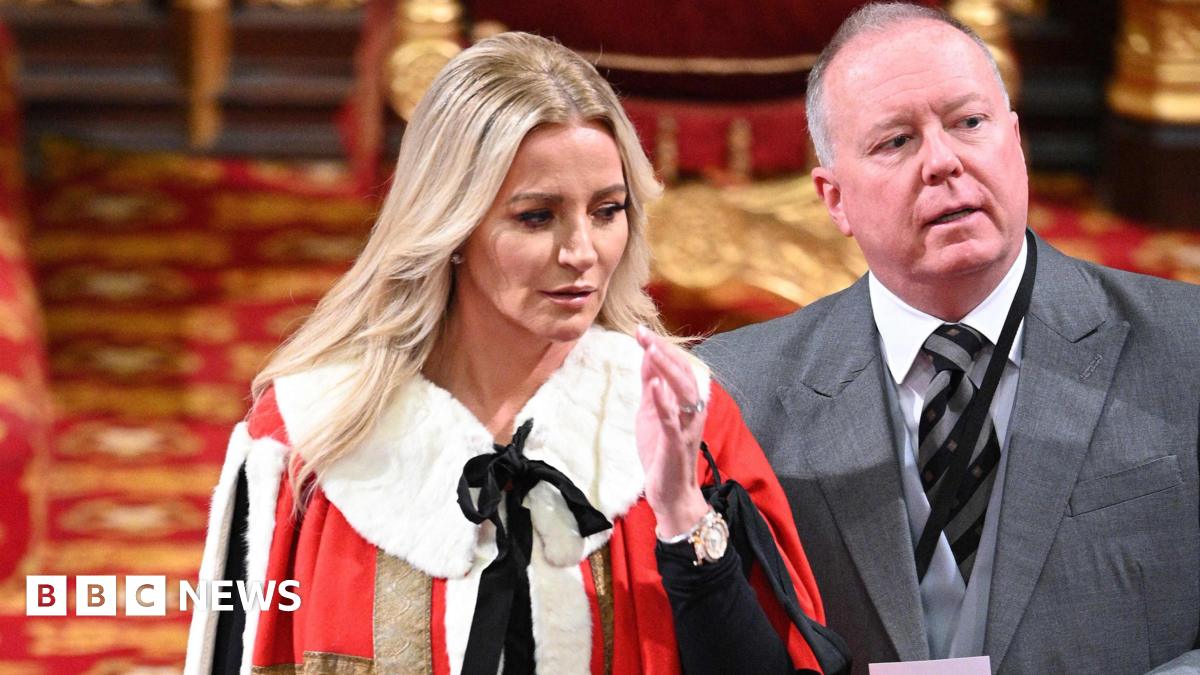
Baroness Michelle Mone and her husband Doug Barrowman are among individuals being sued in an attempt to recover some of the millions owed to the government by his collapsed company, PPE Medpro, the BBC understands.
The government was awarded £122m plus interest from PPE Medpro last year, after a court ruled the firm had breached a contract to supply sterile surgical gowns during the pandemic.
The joint liquidators from the firm Interpath Advisory have launched a case against six individuals and five companies linked with the firm, after PPE Medpro was put into liquidation.
Mone and Barrowman have been approached for comment.
PPE Medpro was set up in 2020 during the Covid-19 pandemic as the government struggled to secure supplies of protective equipment to protect health workers during the acutest phase of the outbreak.
It won its first government contract to supply masks through a so-called ‘VIP lane’, after a recommendation by Baroness Mone, who sat in the House of Lords as a Conservative peer.
However by the end of 2022, the government sued the firm, claiming the medical gowns supplied did not comply with relevant healthcare standards.
Last year the High Court found in the government’s favour, ruling that PPE Medpro had failed to prove whether or not its surgical gowns, which were to be used by NHS workers, had undergone a validated sterilisation process.
While the government had won its case, it wasn’t immediately clear how it would get its money back. The company itself had less than £1m on its balance sheet, and was put into liquidation in December 2025.
But the Health Secretary at the time, Wes Streeting, accused PPE Medpro of putting “NHS staff and patients in danger with substandard kit whilst lining their own pockets with taxpayers’ money at a time of national crisis.”
He pledged to pursue the company with “everything we’ve got” to recover the money.
Barrowman and Mone were not directors of PPE Medpro – and for a long time they denied any connection with the firm.
However in 2023 Barrowman confirmed in a BBC interview that he was the ultimate beneficial owner of the company.
In the same interview, Mone admitted that she was a beneficiary of a trust which had received some of the profits from PPE Medpro.
The list of people being sued includes four former directors of PPE Medpro, including Arthur Lancaster, an accountant who is also a business associate of Andrew Mountbatten-Windsor. Lancaster has been approached for comment.
News of the case was first reported by the tax expert Dan Neidle.
It emerged last year that HMRC also put in a claim for £39m against PPE Medpro, for tax it says the company owed.
The Department for Health and Social Care said that the recovery of funds was a job for the appointed liquidators, and that it would not be appropriate for ministers to intervene – but that the government had been clear that it expects robust action to be taken. Interpath declined to comment.
The National Crime Agency is also conducting a separate, criminal investigation into PPE Medpro.

AOD: Elevated Valuation And Flawed Portfolio Structure

TCW is a leading global asset management firm with more than five decades of investment experience and a broad range of products across fixed income, equities, emerging markets, and alternative investments. TCW’s clients include many of the world’s largest corporate and public pension plans, financial institutions, endowments and foundations, as well as financial advisors and high net worth individuals.
Note: This account is not managed or monitored by TCW, and any messages sent via Seeking Alpha will not receive a response. For inquiries or communication, please use TCW’s official channels.
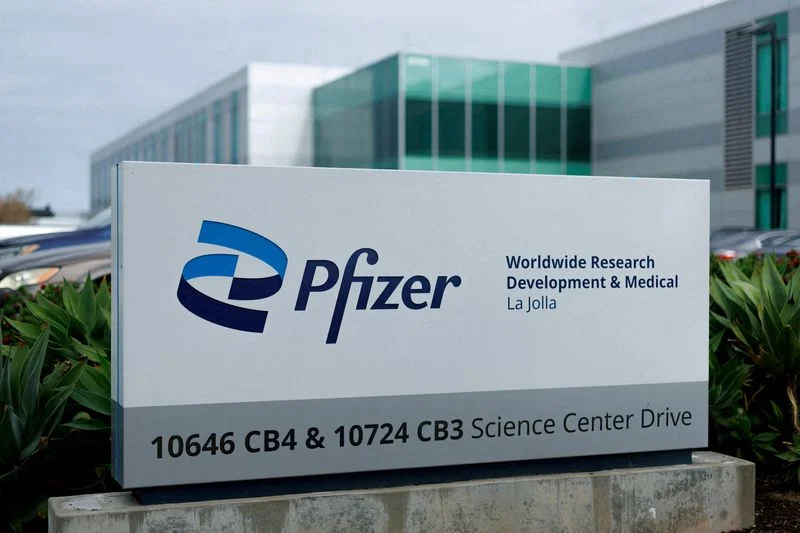

Pfizer dismissed from US states’ drug price-fixing lawsuit

NEW YORK — Meta Platforms Inc. on Tuesday unveiled a new line of smart glasses starting at $299, aiming to broaden access to AI-powered wearable technology as competition intensifies in the emerging market.
The Meta Glasses represent the company’s first in-house designed eyewear without Ray-Ban or Oakley branding, though they maintain a partnership with EssilorLuxottica, the parent company of those brands. The lower price point undercuts the entry-level second-generation Ray-Ban Meta glasses by at least $80.
Meta CEO Mark Zuckerberg has prioritized wearables as part of the company’s strategy to establish a hardware platform in the artificial intelligence era. While virtual reality headsets have remained niche, smart glasses have shown stronger consumer adoption, with millions of units sold since the initial Ray-Ban Meta launch in 2021.
The new glasses lack a display screen but feature a camera, open-ear speakers, and integration with Meta’s AI assistant. Users can ask the AI for real-time translations, object recognition, reminders, or to capture photos and videos. Content can be easily shared to Instagram or WhatsApp.
The glasses come in three new designs with multiple variations, including options for prescription lenses. A dedicated charging stand accompanies the product. Battery life reaches up to eight hours, according to company specifications.
Meta executives highlighted the accessible pricing as key to expanding the market. “Our partnership with EssilorLuxottica is about putting powerful AI into frames people actually want to wear,” Zuckerberg said in a statement. “I believe glasses are going to be a main way people access personal superintelligence — and with Meta Glasses, we’re going to make that accessible to a lot more people.”
Market Strategy and Competition
Meta and EssilorLuxottica currently hold more than 80 percent market share in smart glasses, according to industry estimates. The new models aim to build on that lead by appealing to a broader audience with stylish designs and lower costs.
The announcement comes amid growing competition. Google recently revealed plans for new computerized eyewear in partnership with Warby Parker, powered by its Gemini AI. Snap Inc. last week introduced Specs, premium smart glasses priced at $2,195 that its CEO positioned as a potential smartphone successor.
Meta’s approach emphasizes lightweight, fashionable frames without bulky screens for everyday use. The company previously launched Ray-Ban Display glasses with built-in screens at $799, targeting more advanced augmented reality experiences.
Analysts see smart glasses as a stepping stone toward more sophisticated AR devices. Meta views them as a way to own consumer hardware interactions in the AI era, reducing reliance on smartphones for certain tasks.
Features and Privacy Considerations
The Meta Glasses include a 12-megapixel camera for capturing moments and AI capabilities for contextual assistance. Open-ear audio allows users to listen to music or receive information without isolating themselves from surroundings.
Privacy remains a key concern with camera-equipped wearables. Meta has implemented indicators when recording is active, but critics continue raising questions about always-on capabilities and data collection. The company maintains that user controls and transparency features address these issues.
Availability begins immediately through Meta’s website, Best Buy, Amazon, and select eyewear retailers. Prescription options expand accessibility for users needing vision correction.
One limited-edition model features collaboration with influencer Kylie Jenner, including her voice for AI interactions. Pricing for special editions reaches $399.
Zuckerberg’s Wearables Focus
Zuckerberg has championed wearables since Meta’s rebranding from Facebook in 2021. While VR investments through the Reality Labs division have faced profitability challenges, smart glasses have delivered commercial success and positive consumer feedback.
The company sold millions of Ray-Ban Meta units last year alone. The new lineup aims to accelerate growth by addressing price sensitivity while maintaining premium features.
Meta continues investing heavily in AI development. Integration of its latest models into the glasses allows for more natural interactions, such as visual search and real-time assistance during conversations or travel.
Industry observers note that success in wearables could help Meta diversify beyond its core social media advertising business. Hardware platforms also create opportunities for app ecosystems and services.
Future Outlook
Meta has signaled plans for more advanced glasses with displays in coming years. The current models serve as an accessible entry point while the company refines AR technology for mainstream adoption.
The smart glasses market remains relatively small but shows strong growth potential. Analysts project increasing consumer interest as AI capabilities improve and devices become more seamless in daily life.
Competition will likely intensify with major technology players entering the space. Success will depend on balancing style, functionality, battery life, and privacy protections.
For Meta, the $299 starting price represents a strategic move to capture market share before rivals establish stronger footholds. Early reviews highlight the stylish designs and practical AI features as strengths.
As wearable technology evolves, Meta’s glasses position the company at the forefront of blending fashion with intelligent computing. The initiative underscores Zuckerberg’s vision for AI-integrated hardware becoming a primary computing interface.


Limited-time introductions are rolling out across the retail and foodservice sectors ahead of the country’s 250th anniversary.

Meta: Investors' AI Dilemma, Stay Or Come Back Later

Apple should release the Apple Ring

Becky Hill says being booed ‘not nice’ in first post since festivalgoers left set

Cboe revives S&P 500 binary options, chasing the market Polymarket popularized


-

 Fashion5 days ago
Weekend Open Thread: Miami – Corporette.com
-

 Entertainment4 days ago
Renter of Home in Anne Heche Crash Denies Settlement With Son
-

 Tech2 days ago
Microsoft accidentally kills epic Outlook email threads
-
 Sports23 hours ago
Two goals and an assist by sheer aura: Cristiano Ronaldo just entered the World Cup chat
-

 Business4 days ago
Soccer-U.S. defends Iran World Cup travel restrictions, says discussions ongoing
-
Crypto World14 hours ago
Bitcoin (BTC) Dips Below $62K, Ethereum (ETH) Plunges 6% Daily: Market Watch
-

 Politics6 days ago
BBC Reporter Discusses Cross Party Criticism Of Trumps Iran Deal
-

 Crypto World12 hours ago
Securitize Wraps Roubini's SEC-Registered ETF as Dubai VARA Digital Security
-
Business17 hours ago
Entergy settles forward sale agreements, raises $672 million in cash proceeds
-
 Business5 days ago
Wall Street Week Ahead: Investors see Micron earnings as pulse check of AI rally momentum
-

 Politics4 days ago
Andy Burnham and the meaning of Makerfield
-

 Tech6 days ago
AWS enters the context layer race with a graph that learns from agents, not manual curation
-
 Crypto World4 days ago
Can Charles Hoskinson Really Rescue Cardano?
-

 NewsBeat5 days ago
Keir Starmer Allies Question His Chances For No 10
-

 Crypto World5 days ago
HIVE shares jump as $220M AI deal speeds Bitcoin mining pivot
-

 Crypto World4 days ago
Jake Chervinsky accuses CME of protecting derivatives monopoly
-
 Tech3 days ago
Signal’s Meredith Whittaker says AI chatbots ‘are not your friends’ and calls Copilot agents a backdoor
-

 Tech2 days ago
Nearly 7,000 fake Amazon domains registered ahead of Prime Day 2026, researchers warn
-

 Entertainment5 days ago
Jose Alvarado Wants Taylor Swift at More Knicks Games
-

 Business6 days ago
Brexit cost 6% of UK economy, Bank of England company data suggests
You must be logged in to post a comment Login