


Connect with us

Business

Baroness Mone among individuals sued to recover PPE Medpro millions

Published

on

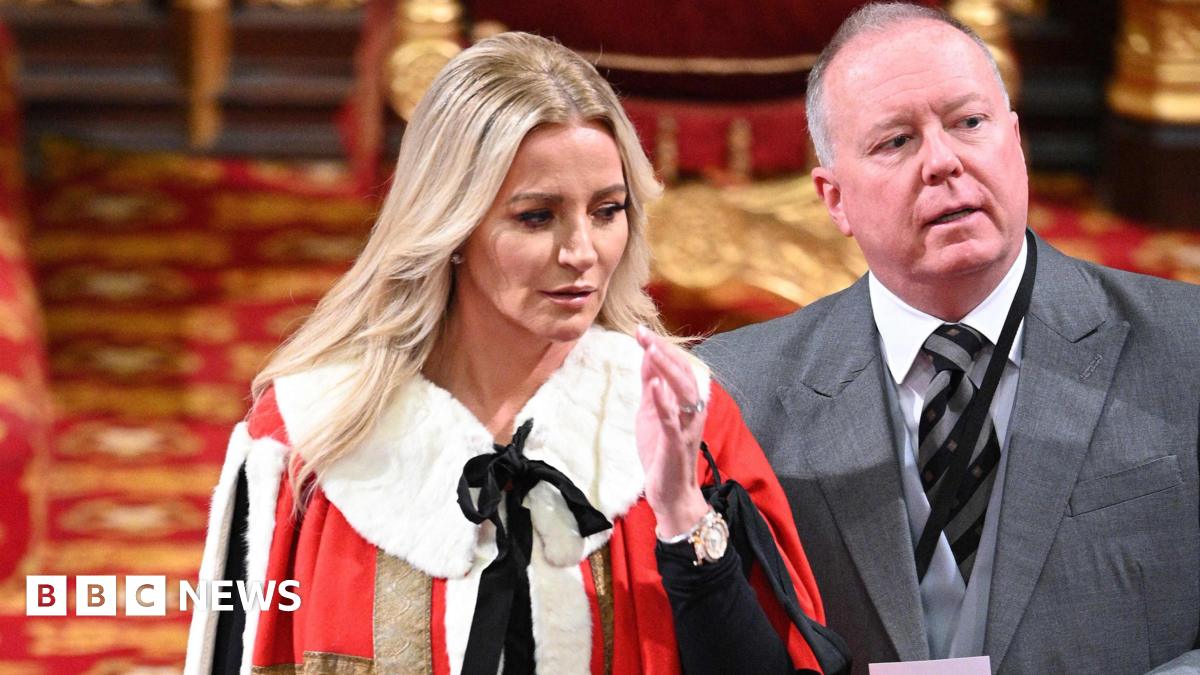
A woman with long blonde hair is dressed in a fur trimmed red and gold gown and her middle aged husband is in a grey three-piece suit. They are standing inside a regal looking room with red and gold carpets

Baroness Michelle Mone and her husband Doug Barrowman are among individuals being sued in an attempt to recover some of the millions owed to the government by his collapsed company, PPE Medpro, the BBC understands.

The government was awarded £122m plus interest from PPE Medpro last year, after a court ruled the firm had breached a contract to supply sterile surgical gowns during the pandemic.

The joint liquidators from the firm Interpath Advisory have launched a case against six individuals and five companies linked with the firm, after PPE Medpro was put into liquidation.

Mone and Barrowman have been approached for comment.

Advertisement

PPE Medpro was set up in 2020 during the Covid-19 pandemic as the government struggled to secure supplies of protective equipment to protect health workers during the acutest phase of the outbreak.

It won its first government contract to supply masks through a so-called ‘VIP lane’, after a recommendation by Baroness Mone, who sat in the House of Lords as a Conservative peer.

However by the end of 2022, the government sued the firm, claiming the medical gowns supplied did not comply with relevant healthcare standards.

Last year the High Court found in the government’s favour, ruling that PPE Medpro had failed to prove whether or not its surgical gowns, which were to be used by NHS workers, had undergone a validated sterilisation process.

Advertisement

While the government had won its case, it wasn’t immediately clear how it would get its money back. The company itself had less than £1m on its balance sheet, and was put into liquidation in December 2025.

But the Health Secretary at the time, Wes Streeting, accused PPE Medpro of putting “NHS staff and patients in danger with substandard kit whilst lining their own pockets with taxpayers’ money at a time of national crisis.”

He pledged to pursue the company with “everything we’ve got” to recover the money.

Barrowman and Mone were not directors of PPE Medpro – and for a long time they denied any connection with the firm.

Advertisement

However in 2023 Barrowman confirmed in a BBC interview that he was the ultimate beneficial owner of the company.

In the same interview, Mone admitted that she was a beneficiary of a trust which had received some of the profits from PPE Medpro.

The list of people being sued includes four former directors of PPE Medpro, including Arthur Lancaster, an accountant who is also a business associate of Andrew Mountbatten-Windsor. Lancaster has been approached for comment.

News of the case was first reported by the tax expert Dan Neidle.

Advertisement

It emerged last year that HMRC also put in a claim for £39m against PPE Medpro, for tax it says the company owed.

The Department for Health and Social Care said that the recovery of funds was a job for the appointed liquidators, and that it would not be appropriate for ministers to intervene – but that the government had been clear that it expects robust action to be taken. Interpath declined to comment.

The National Crime Agency is also conducting a separate, criminal investigation into PPE Medpro.

Advertisement
Continue Reading
Click to comment

You must be logged in to post a comment Login

Leave a Reply

Business

LinkedIn AI slop button lets users flag AI-generated posts

Published

on

LinkedIn AI slop button lets users flag AI-generated posts

LinkedIn has introduced a button allowing users to flag posts they believe were generated by artificial intelligence, with the platform’s chief product officer, Hari Srinivasan, saying on Thursday that tackling so-called AI slop is a “top priority”.

The “Seems like AI slop” option sits in the menu on each post. Flags are private reports to LinkedIn and are not shared publicly.

Srinivasan announced the feature in a post on LinkedIn. “AI slop is a top priority for all of us,” he wrote. “We really care about this. People come to LinkedIn to connect with real people and share their real perspectives, ideas and expertise. Here are a few more changes to keep it that way.”

The launch follows research published in July by AI detection firm Pangram, which found that more than 40 per cent of LinkedIn posts longer than 250 words were fully AI-generated. Pangram said it analysed around one million posts over two months across LinkedIn, X, Reddit, Substack and Medium, and that LinkedIn was the most AI-saturated of the platforms studied.

Srinivasan said LinkedIn’s automated tools were already catching “hundreds of thousands of automated comments” and “have blocked billions of other automation attempts (posting at scale, slop) in the last couple months alone”.

Advertisement

The platform, which is owned by Microsoft, is also rolling out new classifiers designed to identify whether a post is AI slop or otherwise low-quality content, Srinivasan said. User flags will feed into those models. Members whose posts are reported will be notified privately through their analytics dashboards that readers found their content inauthentic.

Alongside the new button, LinkedIn is withdrawing its own AI writing feature. “We asked ourselves why do people post with AI anyway? The answer is LinkedIn isn’t a one-word kind of place and they feel more confident running their posts through AI,” Srinivasan wrote.

“We’re taking this learning, removing the ‘enhance your post’ feature you see when you write a post or message & replacing with a feature that proofreads your words, but does not change your voice.”

LinkedIn has not said what happens to a post once it is flagged, beyond the feedback being used to improve its feed, and it is unclear whether reports could limit the reach of posts or accounts.

Advertisement

Early reaction on the platform has been mixed. Jonny Rose, founder of The Story Club, wrote on LinkedIn that he hoped the feature was “the first step in making the platform more enjoyable for everyone”. Tech ghostwriter Colin Steele wrote that the button could be “ripe for abuse”, suggesting companies and their employees could report competitors without merit.

The change comes amid rapid growth in the use of generative AI tools, which now count more than one billion monthly users worldwide, according to the Digital 2026 report from Meltwater and We Are Social.

Other platforms are grappling with the same question from different directions. Newsletter platform Substack launched its own AI detection tool last week in partnership with Pangram, while TikTok last year cut hundreds of UK content moderation jobs as it shifted moderation work towards AI systems.

Srinivasan said LinkedIn is also expanding access to profile and page verification tools and adding an option to block comments from company pages users no longer wish to see.

Advertisement

Amy Ingham

Amy Ingham

Amy Ingham is a reporter at Business Matters, covering UK business news with a focus on breaking news, business policy, late payments and insolvency. She joined the magazine in 2026 after completing the NCTJ Diploma in Journalism at Harlow College’s journalism school. Her recent reporting includes British Steel’s nationalisation and its impact on SME suppliers, the decline in late payments by large firms, and Insolvency Service director disqualifications. Reach her at aingham@cbmeg.co.uk.

Advertisement
Continue Reading

Business

Stellantis to recall 1.5 million Ram 1500 pickup trucks over seat belt issue

Published

on


Stellantis to recall 1.5 million Ram 1500 pickup trucks over seat belt issue

Continue Reading

Business

UK petrol prices hit 160p, highest since Iran war began

Published

on

UK petrol prices hit 160p, highest since Iran war began

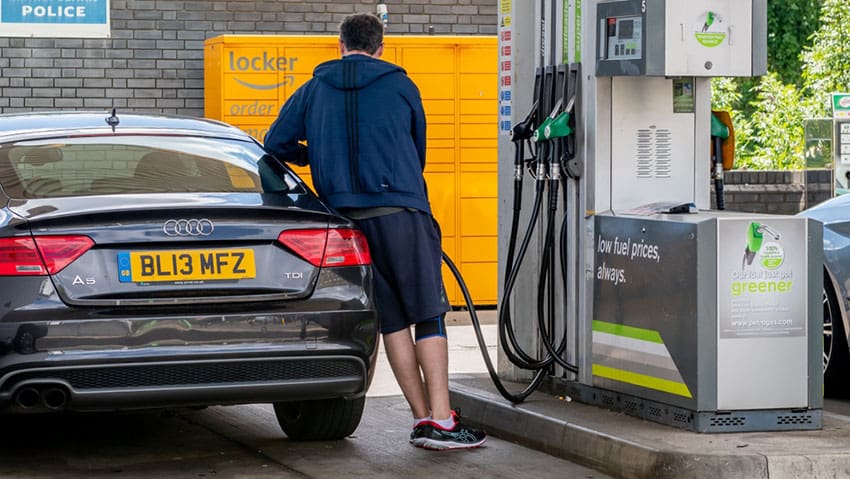
The average price of petrol in the UK has reached 160p a litre, its highest level since the Iran war began on 28 February, according to figures from the RAC.

The motoring group puts petrol at 159.97p a litre and diesel at 178.97p. Diesel remains below its 15 April peak of 191.54p a litre, set as pump prices climbed to their highest level in more than two years.

Pump prices fell after the US and Iran agreed a framework deal in June to end the conflict. In early July, the RAC said, average petrol sank to a low of 150.59p a litre and diesel to 164.52p. Both have risen since the collapse of the peace talks.

Simon Williams, head of policy at the RAC, said the price of diesel was likely to reach 185p a litre “in the next few weeks, barring any major oil price reduction”.

The price of fuel tends to track the wholesale price of oil, and analysts say every $10 (£7.44) per barrel increase in the oil price pushes up pump prices by roughly 7p a litre. Because transporting oil is a slow process, wholesale price movements take about a fortnight to show at the pump.

Advertisement

Brent crude, the global benchmark, was about $70 a barrel before the conflict and peaked above $120 as the fighting disrupted oil supplies across the Middle East. It fell back to near $70 in early July after the framework deal was signed, climbed above $100 when the talks collapsed, and now trades at around $90.

Generally speaking, news of further conflict has driven the price up, while hopes of an end to the war have pushed it down.

Despite the rises, petrol and diesel remain below the levels reached in the summer of 2022 following Russia’s invasion of Ukraine, when petrol hit 191.5p a litre and diesel 199p.

The conflict has effectively closed the Strait of Hormuz, through which about 20 per cent of the world’s oil and liquefied natural gas normally passes. Experts warn that even if a deal is agreed to reopen the strait, it will take time before normal levels of shipping resume, and the impact of the war could continue to affect the global economy for months.

Advertisement

The UK is heavily reliant on oil and gas imports, with the majority coming from the US and Norway, and pays the price set on the global market. Although the UK produces some oil in the North Sea, most of it is exported for refining elsewhere.

Fuel retailers have denied accusations of price gouging during the conflict. The official markets regulator said it had “not seen evidence of retailers actively changing their pricing strategies to take advantage of the crisis”.

A government scheme called Fuel Finder lets drivers compare the cost of fuel at petrol stations across the UK. Luke Bosdet, head of policy at the AA, said the group had been surprised at the speed at which prices had fallen and put it down to the scheme.

On 20 May, the then prime minister Sir Keir Starmer said a planned 5p increase in fuel duty due in September would be postponed until 31 December because of the conflict.

Advertisement

Amy Ingham

Amy Ingham

Amy Ingham is a reporter at Business Matters, covering UK business news with a focus on breaking news, business policy, late payments and insolvency. She joined the magazine in 2026 after completing the NCTJ Diploma in Journalism at Harlow College’s journalism school. Her recent reporting includes British Steel’s nationalisation and its impact on SME suppliers, the decline in late payments by large firms, and Insolvency Service director disqualifications. Reach her at aingham@cbmeg.co.uk.

Advertisement
Continue Reading

Business

RBC Capital raises Amazon stock price target to $330 on AWS growth

Published

on


RBC Capital raises Amazon stock price target to $330 on AWS growth

Continue Reading

Business

Mooted demand for commercial property in Wales in Q2

Published

on

Business Live

According to the RICS chartered surveyors are anticipating rising rents

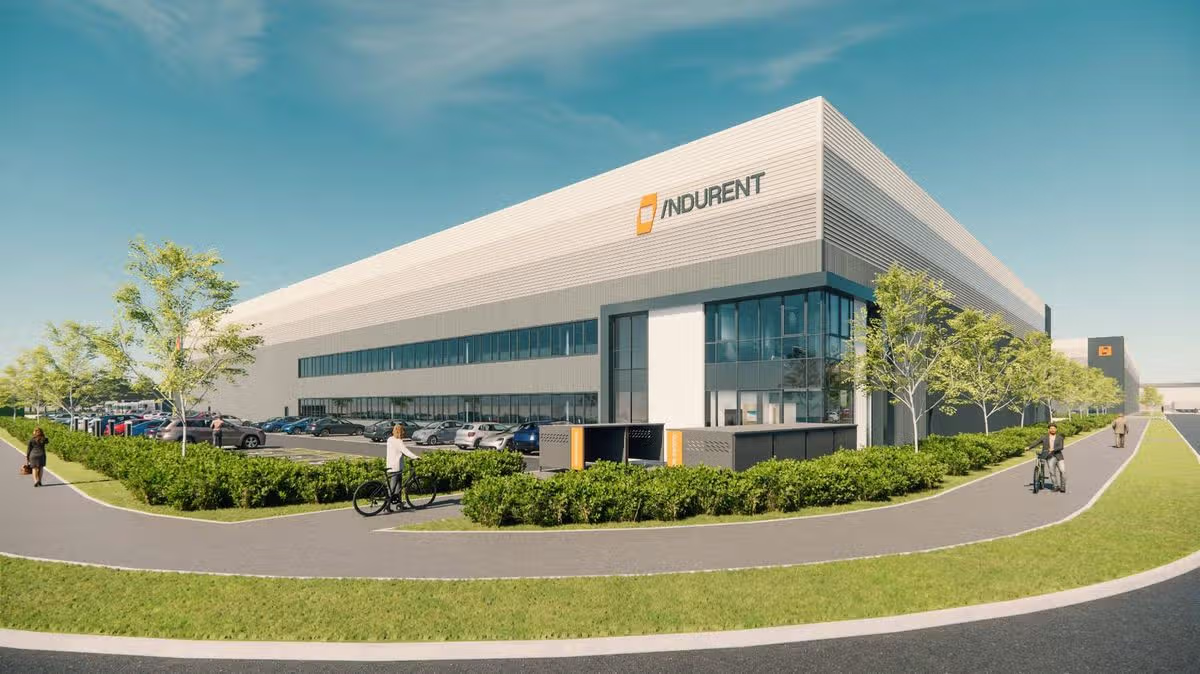
How the next phase of Indurent Park Newport will look.

Computer generated image of the next phase of development at Indurent Park Newport.(Image: Indurent )

Occupier demand for commercial property in Wales was muted in the second quarter of the year according to the latest Royal Institution of Chartered Surveyors (RICS) which also shows optimism for rents in the months ahead.

A net balance of minus 7% of Welsh respondents reported a fall in overall occupier demand through the first quarter of the year. Looking at the subsectors, a net balance of minus 8% of respondents reported a fall in occupier demand for industrial space.

Advertisement

A net balance of -14% of Welsh surveyors reported a fall in occupier demand for retail space, which although remains in negative territory, is up from the survey previous, and for the second consecutive quarter, occupier demand for office space fell flat.

Looking ahead, though, there appears to be some improvement in sentiment. Surveyors in Wales expect rents to rise over the next three months, with a net balance of 13% of respondents anticipating that rents will increase. Both office and industrial space are expected to see rises in rents, however rents in retail space are expected to fall over the next three months.

On the investor side of the market, demand fell flat at the all sector level in Q2. There was a fall in demand from investors for office space, however investor demand for both industrial and retail space rose through the second quarter of this year.

When it comes to capital values, respondents in Wales are more optimistic for the industrial sector which is expected to see its capital values rise over the next three month period. However capital values in both retail and office space are expected to decline. This points to an overall flat picture.

Advertisement

Chris Sutton of Sutton Consulting in Cardiff said: “There is a lack of available grade A floorspace across both office and industrial markets. Developers face challenges including funding, planning delays and increased construction costs.

“There are, however, high quality occupier enquiries in the Cardiff office market, and a recognition that rents will need to rise to improve viability. In the industrial sector, developer Indurent has announced the final two phases of its landmark scheme in Newport, with quoting rents of £10-£12 per sq ft.”

On theUK picture head of market research and analytics for the RICS, Tarrant Parsons, said: “The UK commercial property market appears to have weathered the initial shock from the escalation in geopolitical tensions earlier in the year reasonably well, with the tone from respondents this quarter noticeably more settled than in Q1.

“Occupier fundamentals continue to hold up, and there is tentative evidence that the sharp tightening in credit conditions seen earlier in the year is starting to unwind. That said, the pace of the recovery in investor sentiment remains modest, and respondents continue to flag caution given the wider macroeconomic backdrop.“As we move through the second half of the year, the trajectory of interest rates, alongside developments on the international stage, will remain critical to whether or not positive momentum is allowed to build.”


Advertisement
Continue Reading

Business

York and North Yorkshire gains established mayoral status

Published

on

York and North Yorkshire gains established mayoral status

The York and North Yorkshire Combined Authority has been designated an Established Mayoral Strategic Authority, with confirmation received on Friday 31 July 2026, making it the first rural mayoral area in England to hold the status.

The designation gives the Combined Authority, led by Mayor David Skaith, access to further devolved powers, increased flexibility over funding and the ability to request additional powers from government, the authority said.

Eleven areas now hold Established Mayoral Strategic Authority status, including Greater Manchester, the West Midlands, South Yorkshire, the North East, West Yorkshire, the East Midlands and the West of England.

Under criteria published by the Ministry of Housing, Communities and Local Government, authorities seeking the designation must have had a directly elected mayor in place for at least 18 months, hold a published Local Assurance Framework and submit evidence of a track record of managing major programmes. The status is provided for by the English Devolution and Community Empowerment Act, which received Royal Assent in April 2026.

York and North Yorkshire Combined Authority formed in February 2024. The authority said the designation reflects growing confidence from government in its ability to deliver change for the region.

Advertisement

David Skaith, Mayor of York and North Yorkshire, said: “This is a major milestone and clear evidence of the progress we’ve made as a county and a Combined Authority in a short space of time.

“Now, with Established Status, we will have access to greater powers and funding, allowing us to go even further and faster to address some of the structural challenges holding our county back.

“This will help us fully realise the benefits of devolution and ensure decisions about our county are made by our county, for our county, and in our county by those who know it best.”

Councillor Claire Douglas, leader of City of York Council, said the Combined Authority had attracted funding since 2024 for schemes including affordable homes, jobs, highways and active travel. Investment in the region has included allocations from a £7 million net zero fund agreed as part of the area’s devolution deal.

Advertisement

“Working collectively, we will be able to unlock significantly more funding to drive economic growth, develop more affordable homes, and better connect the city and neighbouring places with sustainable and accessible transport,” she said.

North Yorkshire Council’s leader, Councillor Carl Les, said: “Established Status is a recognition of all the hard work that has been done and will be vital in driving economic growth to improve lives and opportunities for our residents and businesses across the county.”

The designation comes as devolution moves up the political agenda. More than a quarter of England’s population still lives outside a Mayoral Strategic Authority, according to think tank IPPR North, which has urged the government to complete the devolution map by the end of this parliament.

In June, Rachel Reeves told the British Chambers of Commerce annual conference that fiscal devolution was her “unfinished business”, with consultations under way on devolving revenues from income, business and land taxes to local leaders.

Advertisement

Jamie Young

Jamie Young

Jamie Young is Senior Reporter at Business Matters, covering SME finance, employment law and Westminster policy since 2016. He has reported on every Budget and Autumn Statement since 2018, helped make sense of the ‘covid era’ and the bounce-back loan scheme from launch through the fraud investigations, and broke the magazine’s coverage of the 2024 late-payment reforms. He joined Business Matters straight from completing his BA in Administration from Exeter University and is NCTJ-qualified. Reach him at jyoung@cbmeg.co.uk

Advertisement
Continue Reading

Business

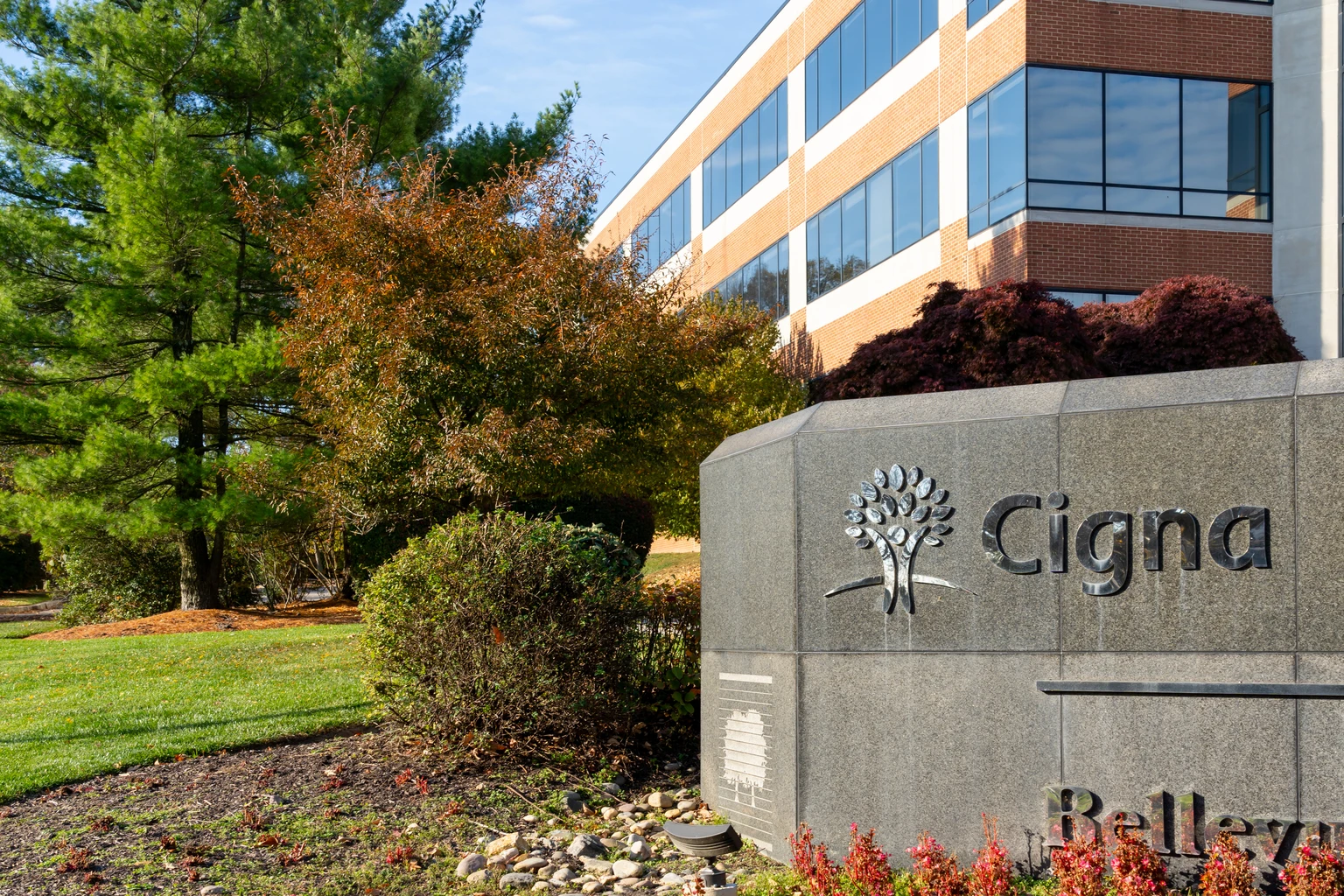
Cigna's Valuation Gap Still Stands Out

Published

on

What I Believe Investors Are Missing With Cigna (NYSE:CI)

Cigna's Valuation Gap Still Stands Out

Continue Reading

Business

Eric Trump-Backed Defense-Tech Startup Space-Eyes to Go Public Via SPAC

Published

on

Katherine Hamilton hedcut

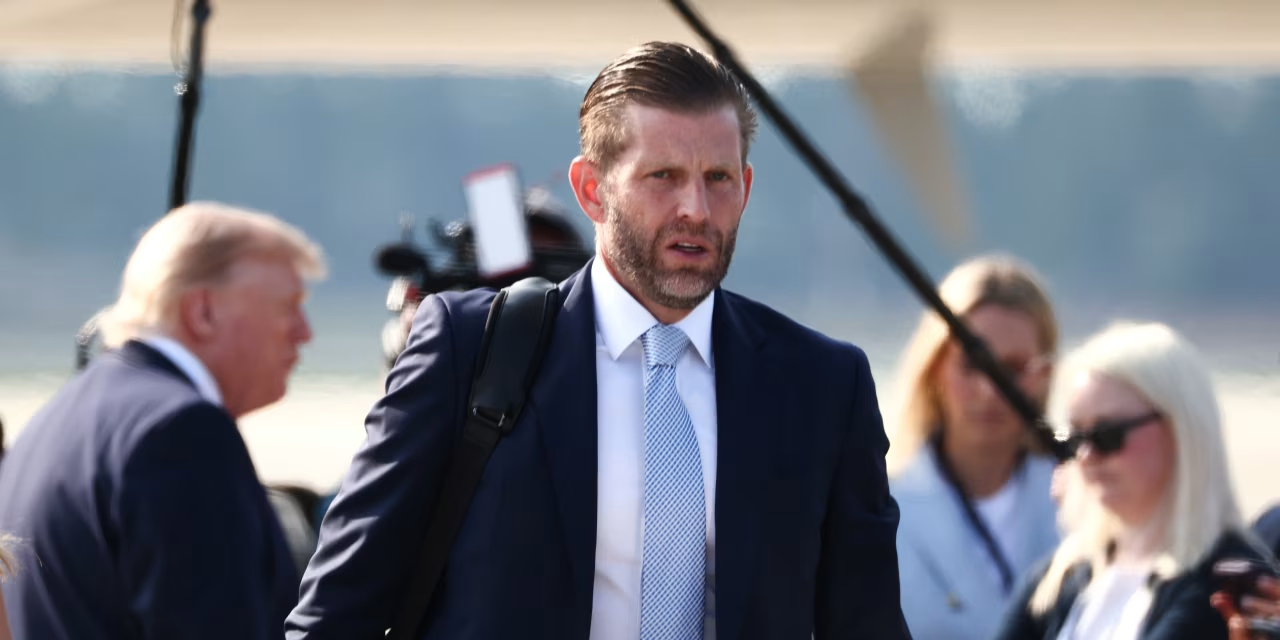
Space-Eyes, a drone-fighting technology firm backed by President Trump’s son Eric, plans to go public via a merger with special-purpose acquisition company McKinley Acquisition.

The company, which offers systems to detect and fight drones and has a geospatial intelligence platform, is expected to list on Nasdaq and trade under the ticker CUAS. The deal, which is expected to close in the fourth quarter of this year, gives Space-Eyes an implied enterprise value of $370 million.

Eric Trump, who is the executive vice president of The Trump Organization, is an investor and strategic advisor for Space-Eyes.

Continue Reading

Business

Despite transatlantic ‘love fest’, EU charts third way in ties with US and China

Published

on

Despite transatlantic 'love fest', EU charts third way in ties with US and China
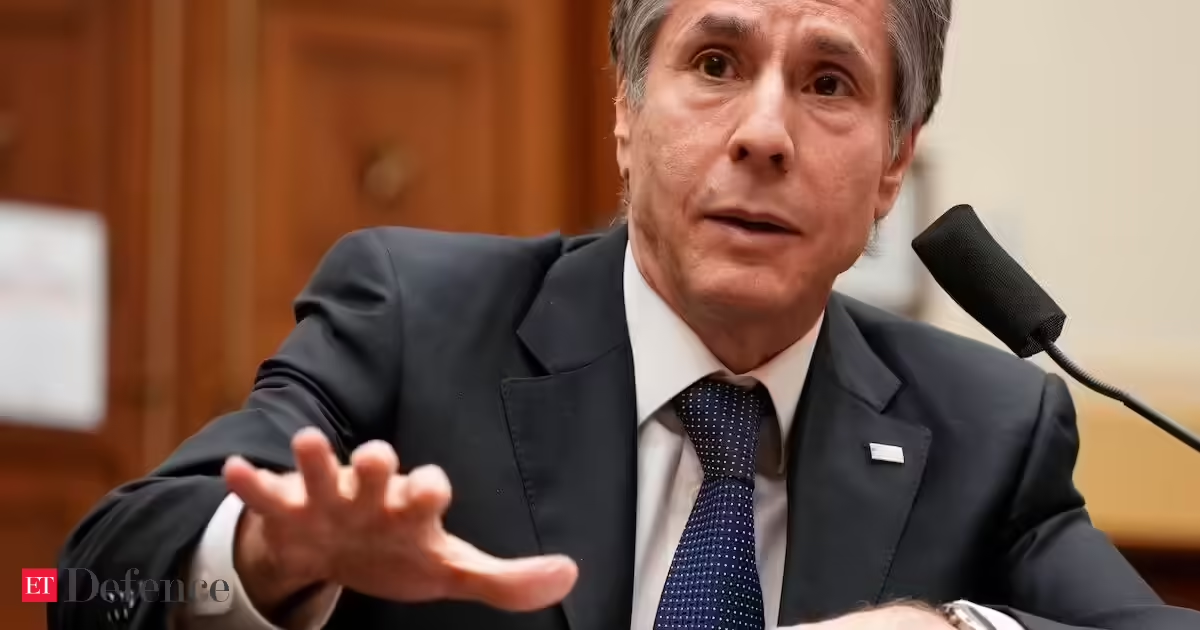
US Secretary of State Antony Blinken‘s first videoconference with European Union foreign ministers last month was so good humoured that some diplomats in Europe described it as a “love fest”.

But two senior envoys who attended said there was no direct response from the ministers gathered in Brussels when Blinken said: “We must push back on China together and show strength in unity.”

Their reticence is partly due to an unwillingness to commit to anything until Washington spells out more fully its China policy under President Joe Biden.

But the ministers were also cautious because the EU is looking for a strategic balance in relations with Beijing and Washington that ensures the bloc is not so closely allied with one of the world’s two big powers that it alienates the other.

The EU also hopes to have enough independence from Washington and Beijing to be able on its own to deepen ties with countries in the Indo-Pacific region such as India, Japan and Australia, EU officials said.

Advertisement


In a new departure for the EU, they said, the bloc hopes to agree a plan next month that involves a larger and more assertive security presence in the Indo-Pacific, and more development aid, trade and diplomacy.
“We are charting a third way between Washington and Beijing,” an EU envoy in Asia said.Another EU official in Asia expressed concern that the United States had “a hawkish agenda against China, which is not our agenda”.

‘EUROPE ROADSHOW’
Last month’s videoconference was part of an attempt under Biden to rebuild alliances neglected by former U.S. President Donald Trump, who had an antagonistic relationship with both the EU and China.

The White House has embarked on a “Europe roadshow”, a senior U.S. official said, and is in daily contact with European governments about China’s rising power, in “a sustained effort for … a high degree of coordination and cooperation in a number of areas.”

In a sign that the U.S. push on China is having an impact, Germany plans to send a frigate in August to Asia and across the South China Sea, where Beijing has military outposts on artificial islands, senior government officials told Reuters.

The EU is also set to sanction four Chinese officials and one entity – with travel bans and asset freezes – on March 22 over human rights abuses in China’s Uighur Muslim minority, diplomats said.

Advertisement

In a further sign, when Chinese President Xi Jinping chaired a video summit with central and eastern European countries last month, six EU member states – Bulgaria, Estonia, Latvia, Lithuania, Romania and Slovenia – sent ministers rather than heads of state.

But there is still distrust in Brussels of Washington’s approach to China, even if attitudes in Europe have hardened against China over Beijing’s crackdown in Hong Kong, treatment of Uighur Muslims and the COVID-19 pandemic, first identified in China.

The United States says China is an authoritarian country that has embarked on a military modernisation that threatens the West, and has sought to weaken telecommunications equipment maker Huawei, which it sees as a national security threat.

The U.S.-led NATO military alliance is also beginning to focus on China, but Biden’s administration is still reviewing policy.

Advertisement

“We ask what their China strategy is and they say they still don’t have one,” the EU official in Asia said.

French President Emmanuel Macron highlighted concerns in some EU states last month by saying that uniting against China would create “the highest possible” potential for conflict.

‘NO ALTERNATIVE’
But the EU is hungry for new trade and sees the Indo-Pacific as offering huge potential.

The EU has a trade deal with Japan and is negotiating one with Australia. Diplomats say countries in the Indo-Pacific want the EU to be more active in the region to keep trade free and open, and to ensure they are not left facing a straight choice between Beijing and Washington.

Advertisement

France committed to closer ties with allies such as Australia and India with an Indo-Pacific strategy in 2018, followed by the Netherlands, which also has its own strategy, and Germany’s looser set of “guidelines”.

The EU strategy, if agreed, could involve putting more EU military experts in EU diplomatic missions in Asia, training coast guards and sending more EU military personnel to serve on Australian ships patrolling in the Indian Ocean, diplomats said.

It is unclear how much Germany, which has close business ties to China, will commit to any new strategy. German government officials say the EU cannot afford to alienate Beijing despite labelling China a “systemic rival” in 2019.

But French Foreign Minister Jean-Yves Le Drian will travel to India in April to develop the EU’s Indo-Pacific strategy, and the EU aims to hold a summit with India this year.

Advertisement

France, which has 1.8 million citizens in Pacific overseas territories, has about 4,000 troops in the region, plus navy ships and patrol boats.

“The Indo-Pacific is the cornerstone of Europe’s geopolitical path,” said a French diplomat. “There’s no alternative.”

Continue Reading

Business

GM to launch its own in-vehicle AI system later this year

Published

on

GM to launch its own in-vehicle AI system later this year

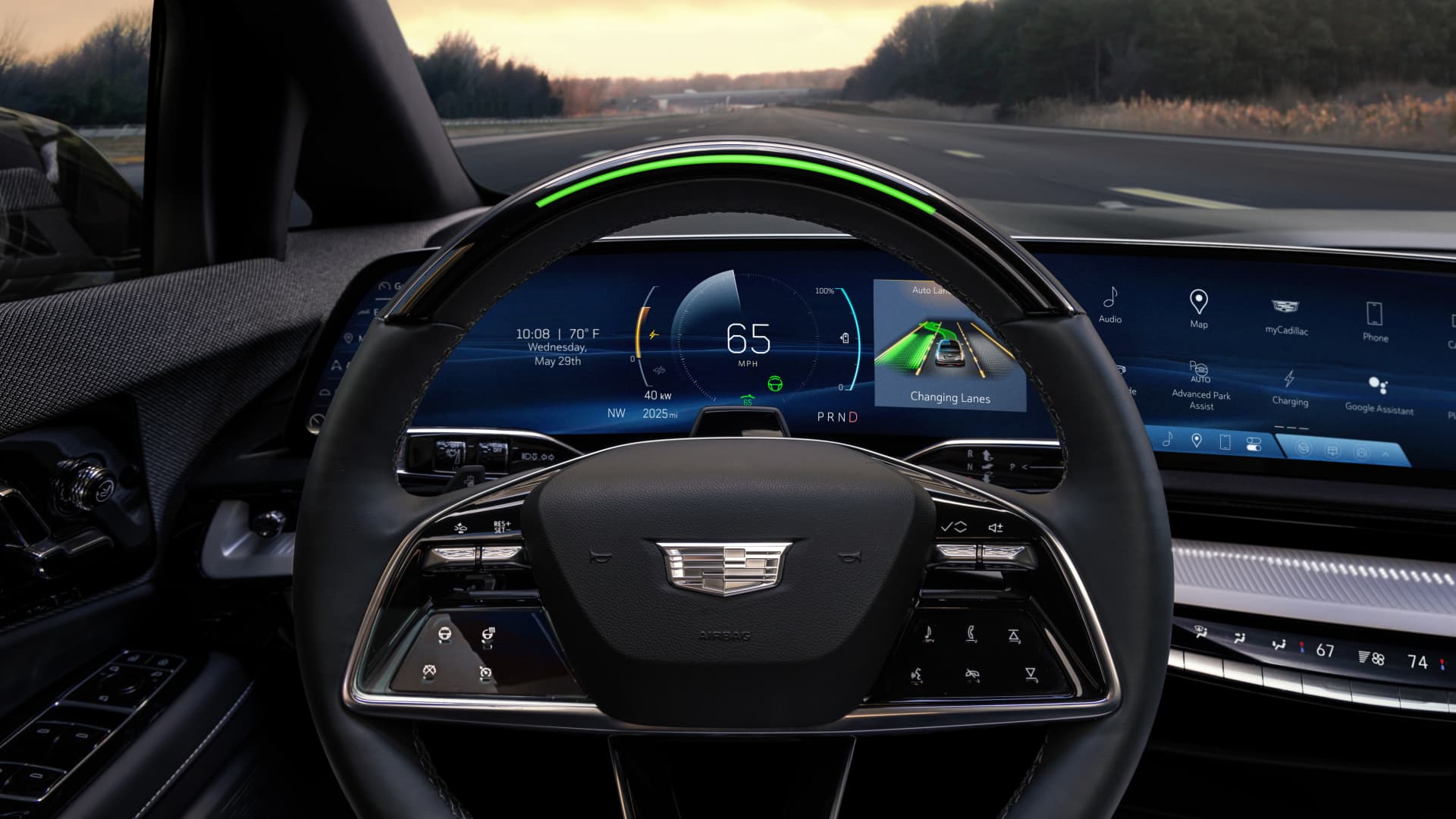
GM began rolling out Google’s Gemini in eligible model year 2022 and newer Cadillac, Chevrolet, Buick, and GMC vehicles in the U.S. earlier this year with Google Built‑in.

Courtesy GM

DETROIT – General Motors plans to launch its own in-vehicle artificial intelligence system that’s better tailored for its customers later this year.

Advertisement

The new GM AI assistant is expected to be more integrated with the vehicle as well as its capabilities and telematics information than the company’s recently launched Gemini AI assistant from Google, according to Anna Santos, GM director of product management of voice and AI/machine learning.

“Later this year, we’ll be launching a more deeply integrated native AI assistant that combines conversational AI with GM vehicle knowledge and OnStar intelligence to create those capabilities that go beyond what a general purpose assistant can do,” she told CNBC.

GM last year announced the Gemini AI bot would launch this year in millions of 2022 model-year vehicles and newer, followed by a GM AI assist, but did not provide additional details on the technology.

Santos said the new GM assistant, which she declined to disclose a name for, will be able to better “understand the vehicle, the drive and our customers’ needs, and make everyday ownership simpler.”

Advertisement

With Gemini, customers can speak naturally without memorizing commands or repeating context. It also is beginning to offer “live sessions” in which the bot will speak with a like a normal conversation or play games like trivia or 20 questions. It also can control some aspects of GM vehicles, such as temperature and radio controls, but in general operates like it would through a phone.

“This is the beginning of a broader AI journey for us,” Santos said. “There’s a limit to what an AI that’s just sort of sitting at the top level of the vehicle can do.”

The Detroit automaker is working with an unnamed large language model provider on its technology to assist GM and its owners with predictive maintenance, vehicle telemetry and other more auto-focused features.

That also could include commands such as “kids setting” that would tailor music, seats, heating/cooling and door lock controls for children.   

Advertisement

“It’s data that’s going to be proprietary to GM, and our goal is to make sure that we’re bringing the right technology forward to enable us to build the deep vehicle expertise that we want to be able to bring to the AI assistant,” Santos said.

Choose CNBC as your preferred source on Google and never miss a moment from the most trusted name in business news.
Continue Reading

Trending

Copyright © 2025