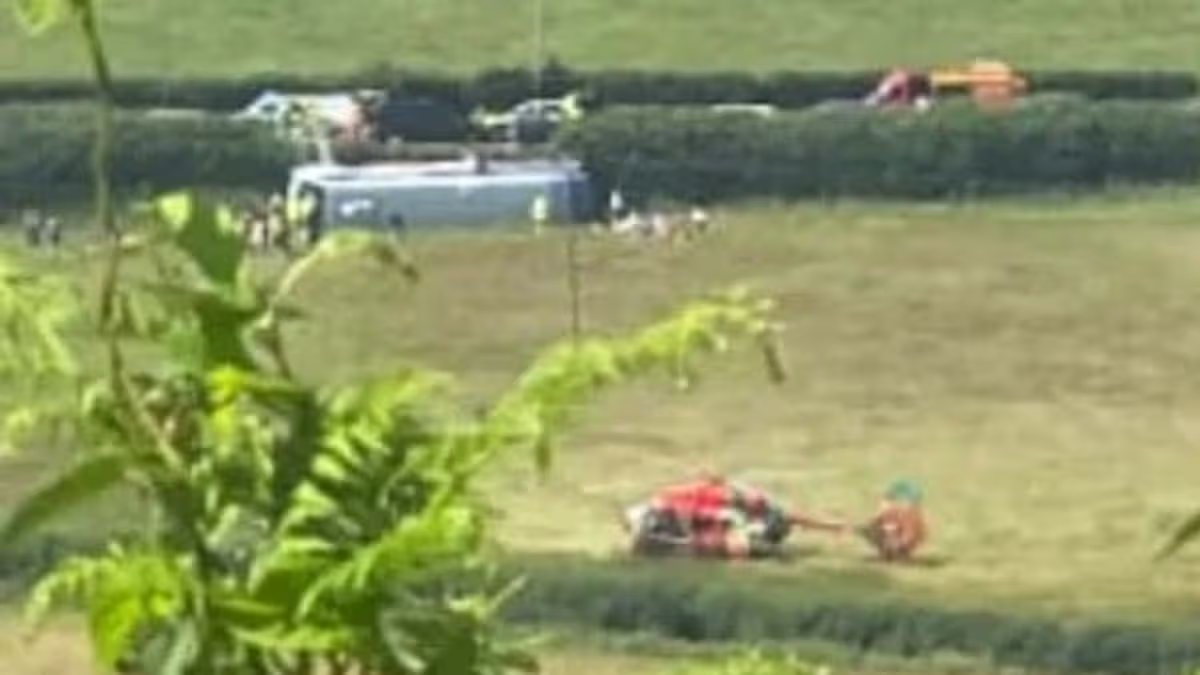
Dyfed-Powys Police say they are dealing with a major incident in Kidwelly, following a report of a collision involving a bus on the A484 near the Kidwelly roundabout (Parc y Bocs).
The road is closed between the Kidwelly roundabout at Parc y Bocs and Llandyfaelog, and motorists are asked to find alternative routes.
Motorists have been advised to find alternative routes
14:19, 24 Jun 2026Updated 14:26, 24 Jun 2026
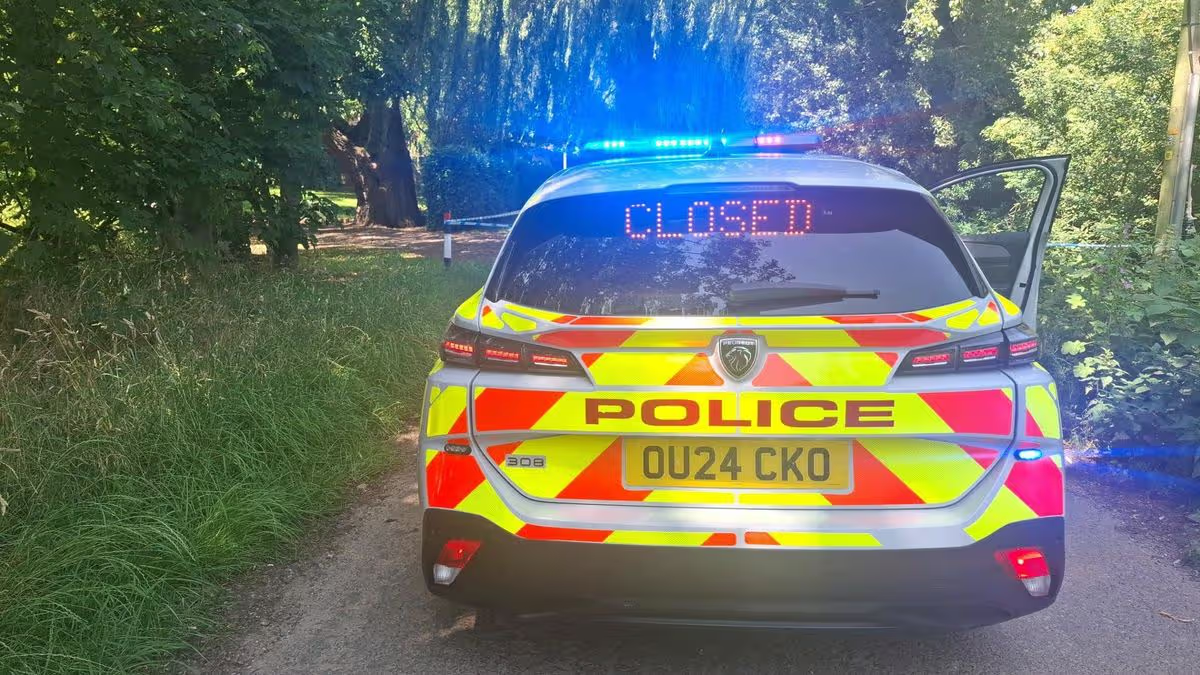
A road is closed due to falling tree branches. Cambridgeshire Police has closed Popple Drove in Gorefield on Wednesday afternoon (June 24).
This is due to falling tree branches near cables. A police spokesperson said: “Due to tree branches falling near cables along Popple Drove in Gorefield, our neighbourhood officers have closed the road.
“BT and Highways are enroute and motorists are advised to find an alternative route.”
The 2026 World Cup group stages are nearing their conclusion with England and Scotland hoping to reach the knockout stages
01:03, 25 Jun 2026Updated 01:07, 25 Jun 2026
England and Scotland’s opponents in the first knockout round of the World Cup have become much clearer after Steve Clarke’s side lost 3-0 to Brazil on Thursday morning. As things stands, the Three Lions would face Algeria on July 1 at 5pm, while the Tartan Army would take on co-hosts Mexico on the same day at 2am.
Thomas Tuchel’s were forced to settle for a point in a goalless draw with Ghana in Boston on Tuesday night, a result which leaves them still at the top of the Group L standings.
For Scotland, their chances of qualifying were handed a major blow after their 3-0 defeat to Brazil in their Group C clash in Miami on Wednesday night. Real Madrid forward Vinicius Jr. scored a brace in Florida, while Manchester United star Matheus Cunha also found the back of the net.
Advertisement
The defeat leaves Scotland in third place in their group and currently ranked as the sixth-best third-placed team in the World Cup groups so far, but that is likely to change with several more final group games left to play.
As it stands, England would be set to face Algeria in the round of 32 at the World Cup. This game would take place on Wednesday, July 1 in Atlanta with a 5pm kick-off UK time.
There is still time for that to change with England set to face Panama in their final Group L fixture on Saturday, while Algeria will take on Austria in the early hours of Sunday morning.
Scotland, meanwhile, would still manage to book a spot in the knockout stages and would face co-host Mexico in Mexico City. This game would take place on Wednesday, July 1 with kick-off at 2am UK time.
The specific third-place team England eventually draws is decided by a complex FIFA combination matrix.
This matrix assigns matchups based on which eight third-placed teams (out of all 12 groups) accumulate enough points to advance.
Advertisement
If Scotland do eventually qualify as a third-placed team from Group C into the knockouts, that would shift the sequence of the table and alter England’s potential opponents.
Even though England won’t play the team from Group C, the inclusion (or elimination) of Group C’s 3rd-place team changes the math of the matrix, potentially altering which team from Group E, H, I, J, or K gets assigned to England
Join our new WhatsApp community and receive your daily dose of MirrorFootball content. We also treat our community members to special offers, promotions, and adverts from us and our partners. If you don’t like our community, you can check out any time you like. If you’re curious, you can read our Privacy Notice.
Advertisement
Upgrade your World Cup TV setup with the Sky Glass ‘designed for football’
This article contains affiliate links, we will receive a commission on any sales we generate from it. Learn more
Sky is knocking 20% off its entire range of Glass TVs to mark the start of the 2026 FIFA World Cup. Until June 17, shoppers can upgrade to the Sky smart TV that’s ‘designed for football’ from £4.50 per month when taken alongside a Sky TV and Netflix package.
Carlo Ancelotti’s men, however, recovered from a 1-1 draw with Morocco to record a comfortable 3-0 victory over Haiti as Vinicius Junior continued to playing a starring role, while Matheus Cunha was integrated into the side, repaying his manager’s faith with a goal. Keep up to date with all the latest from the Hard Rock Stadium with our live blog below.
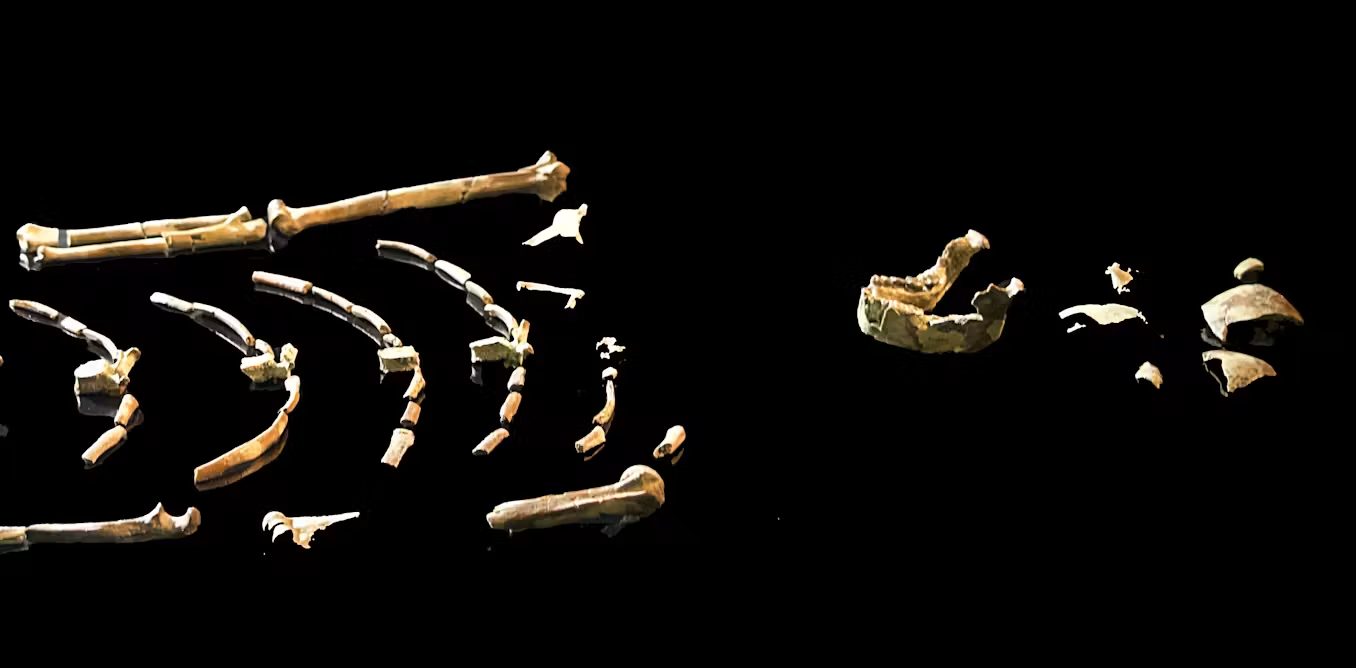
There is a special gallery inside the Natural History Museum Abu Dhabi where visitors slow down, lower their voices and often fall silent. In front of them, carefully lit and disarmingly small, lies the skeleton of Lucy, the 3.2 million-year-old hominin.
Perhaps more than any other ancient relative, Lucy has challenged us to think deeply about what it means to be human.
The skeleton’s discovery came a few weeks after the team had been energised when Ato Alemayehu Asfaw, an Ethiopian palaeoanthropologist and a member of the team who later became the Director of the National Museum of Ethiopia, found a jawbone from the same species.
Advertisement
Lucy’s skeleton provided clear evidence that walking upright preceded the expansion of the human brain, reshaping scientific narratives that had persisted for decades.
Named for the western world after the Beatles song Lucy In The Sky With Diamonds, the Ethiopian members of the team called her Dinknesh (“You are marvellous” in Amharic). She has served as an ambassador for Ethiopian cultural and natural heritage ever since. But while she became one of the most celebrated fossils in the world, very few people had actually seen her.
Ethiopian authorities tried to change that in 2007, working with American institutions to take Lucy to the US. However, a campaign by scientists who voiced concern about the safety of the specimen put a damper on the willingness of leading museums to put her on display. Lucy appeared at four venues before returning to Ethiopia in 2013.
Almost two decades later, Lucy has travelled overseas again – this time to the Natural History Museum Abu Dhabi, of which one of us (Peter Kjærgaard) is director. Her visit comes at a time when not just the technology of transportation has changed, but the narrative surrounding the whole field of paleoanthropology.
Advertisement
Discovering Lucy: an interview with American paleoanthropologist Donald Johansson (2023). Video: Natural History Museum of Denmark.
A closely-guarded secret
Lucy’s latest journey outside her Ethiopian home was a closely-guarded secret. In the months leading up to the Natural History Museum Abu Dhabi’s opening in November 2025, a very small group worked behind the scenes on the logistics and safety of transporting her, as well as the delicate environmental conditions of the showcase that would be her new home.
A small team travelled to Addis Ababa to work closely with Ethiopian colleagues including specialists from the Ethiopian Heritage Authority and National Museum of Ethiopia. Every step required care, trust and precision.
Every single bone was meticulously packed and protected in special travel cases with individually designed cavity mounts. Nothing was left to chance. Nothing could go wrong.
Advertisement
Lucy arrived safely in Abu Dhabi just a few days before the opening of the museum. Still a secret, she was stored safely while the last condition checks and final work on the gallery was done.
Sahleselassie Melaku, the National Museum of Ethiopia’s head of palaeoanthropology, installing Lucy’s skeleton in Abu Dhabi. Marc McAlester/NHM Abu Dhabi, Author provided (no reuse)
Lucy’s curator at the National Museum of Ethiopia, Sahleselasie Melaku, carefully placed the fragile bones in the display case. It felt like the rest of us held our breath for the entire time as we watched the pieces gradually transforming into the iconic outline of Lucy.
Finally, she was there in front of us. Ethiopia’s decision to share her was a powerful way to celebrate the opening of a new museum in a region where such institutions have historically been rare.
Advertisement
We have watched visitors encounter Lucy not as an abstract scientific object, but as an individual. The effect has been striking. People linger. They reflect. Many are visibly moved and quite often surprised by the realisation that this is not a replica, but the actual fossil – a being who lived and moved around our world millions of years ago.
Collaboration not colonialism
Lucy’s journey from Ethiopia to Abu Dhabi reflects a broader shift in how knowledge, heritage and authority are shared.
For much of modern history, discoveries from Africa were collected, studied, interpreted and displayed far from their places of origin. Now, that model is changing. Increasingly, African nations are asserting leadership over their cultural and scientific heritage, determining not only how it is preserved, but how it is interpreted, shared and shown.
Lucy’s presence in Abu Dhabi embodies this change. She has not been removed from her context; she has been shared through collaboration. She remains Ethiopian, and her journey is defined by a strong partnership – a model which we hope will build trust, strengthen institutions in both the UAE and Ethiopia, and open new pathways for shared research and education.
Advertisement
When the Natural History Museum opened in London in 1881, it was seen as a quintessential symbol of Victorian ambition, scientific curiosity and industrial power. In a similar way, the building of a Natural History Museum in Abu Dhabi in the 21st century is a symbol of nationhood, global identity and scientific ambition.
The museum was designed from scratch to engage a modern audience in contemporary concepts such as biodiversity, conservation and human impacts. It opened at a time of global recognition of the need to decolonise many western museums, and included a rare collection of Late Miocene fossils (7-8 million years old) from the UAE, which had been returned from their longtime resting place in the London museum.
We believe the future of science depends not only on discovery but cooperation – on the ability to bridge regions, perspectives and histories. Lucy is helping to do that.
When she returns to Addis Ababa in July 2026, she will carry with her the imprint of this exchange. What remains in Abu Dhabi will be more than the memory of a remarkable exhibition. It will be a set of relationships between institutions, between countries, and between people and their shared past.
The 2026 World Cup is hurtling towards the knockout stages after 48 nations were split into 12 groups for the first time in the tournament’s long history.
Co-hosts Mexico, USA and Canada are the top seeds in Groups A, B and D respectively, while Scotland are in Group C with Brazil, Morocco and Haiti, and England are all the way down in Group L with Croatia, Ghana and Panama.
There will be 104 matches, up by 40 since the Qatar World Cup in 2022, while Lionel Messi and Cristiano Ronaldo likely to play on this stage for the last time in their glittering careers.
Advertisement
Here are all the fixtures, results and latest group standings:
It was also the venue for two classic World Cup finals: Brazil’s win over Italy in 1970 which included Carlos Alberto’s iconic team goal to cap a 4-1 win; and Argentina’s 3-2 win over West Germany in 1986, where Jorge Burruchaga grabbed an 84th-minute winner.
Mexico and Canada will host 13 games in each, and the United States will host 78.
Advertisement
From the quarter-finals onwards, the US will host all of the remaining matches, with the final in New Jersey’s MetLife Stadium.
Who will win the World Cup?
Football’s biggest question is back – and the debate is already heating up. England’s new golden generation, Argentina’s defending champions, France’s relentless depth and Spain’s evolving young side all have strong claims to glory at the World Cup.
Advertisement
Now it’s your turn: who do you think will lift the trophy?
You wouldn’t be alone in thinking the roundabout is lacking a distinct corner that gives it its name.
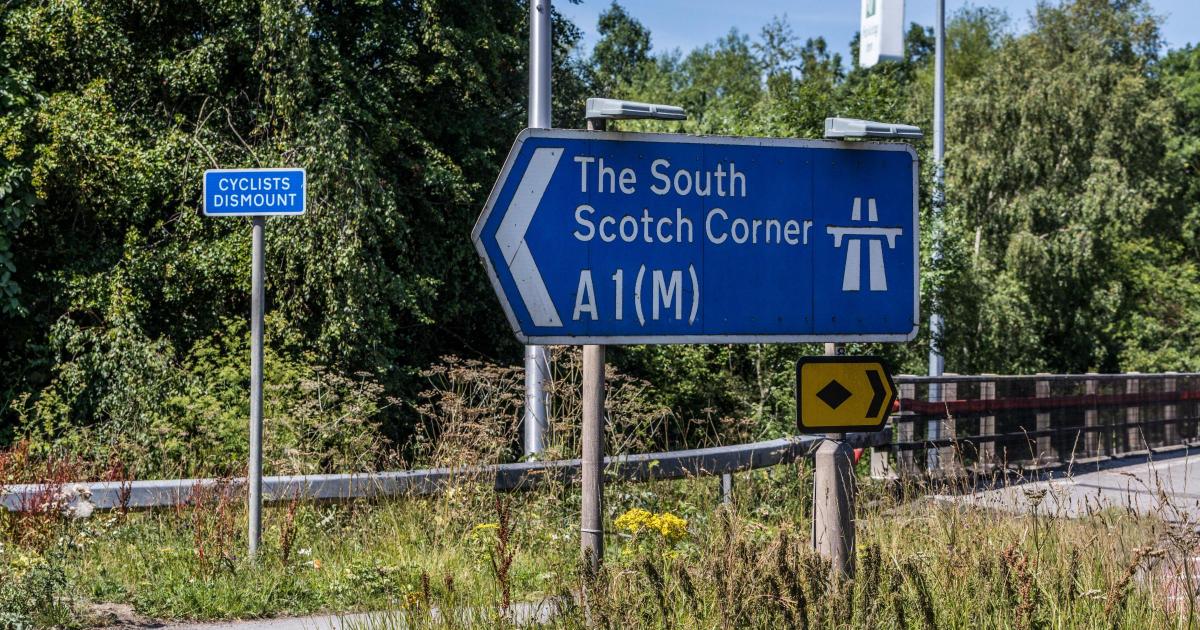
Jon Jefferson, who runs the popular YouTube channel Auto Shenanigans, sought to find the corner where the A1(M) and A66 meet in his latest video.
The Scotch Corner Hotel in 1949, with the A1 and the A66 meeting in a roundabout outside its front door (Image: ARCHIVE)
Mr Jefferson declared: “It’s a roundabout, and it doesn’t look like much of a corner if you ask me.
“So, where exactly is the corner at Scotch Corner? And what even is a Scotch Corner anyway?.”
Advertisement
The name came from it being the point where travellers heading north from London would decide whether to head towards western Scotland, via what is now the A66, or continue north-east towards Edinburgh.
The junction has changed significantly over the years as traffic levels have grown, and is now a major roundabout.
But in finding the corner Mr Jefferson says you have to look back to the Roman times, before it was a roundabout or even a crossroads in the 1920s.
Advertisement
According to the video, the original road arrangement was not a modern roundabout or even a later crossroads, but a T-junction.
Mr Jefferson identifies the Roman T-junction as the “actual” corner at Scotch Corner.
He says the western route was later replaced by the A66 and has largely disappeared, while a small section of the original Roman north-south road remains in place today.
The point Mr Jefferson believes to be the Scotch Corner
Advertisement
Scotch Corner has long been one of the North’s most important junctions, directing traffic north towards County Durham, Newcastle and Scotland, west towards Cumbria and the M6, and south towards Leeds and London.
But the junction’s importance stretches back almost 2,000 years.
Archaeological work linked to road upgrades has revealed evidence of a major first-century Roman presence in the area, including a large military camp and high-quality artefacts.
The site is believed to have played a significant role in Roman campaigns in northern England, including the struggle for control of territory held by the Brigantes.
Advertisement
For centuries afterwards, Scotch Corner remained a key stopping point for merchants, messengers and travellers moving between England and Scotland.
Historic inns, including the Black Bull Inn, the Blue Anchor, the Crown and Anchor and the Three Tuns, served those using the route.
The Three Tuns was demolished in 1939 to allow road widening and was replaced by the Scotch Corner Hotel.
Aerial photographs from the late 1940s show the A1 and A66 meeting at a roundabout near the hotel entrance.
Advertisement
Further major upgrades followed in the 1970s and again in the 21st century, with the Leeming to Barton A1(M) scheme creating a modern motorway-standard route through the area.
Today, thousands of drivers pass Scotch Corner every day with little idea of the Roman roads, coaching inns and long-distance trading routes beneath the tarmac.
Scotch Corner is set for another new chapter in the coming years, with the planned Scotch Corner Designer Village expected to open in 2027.
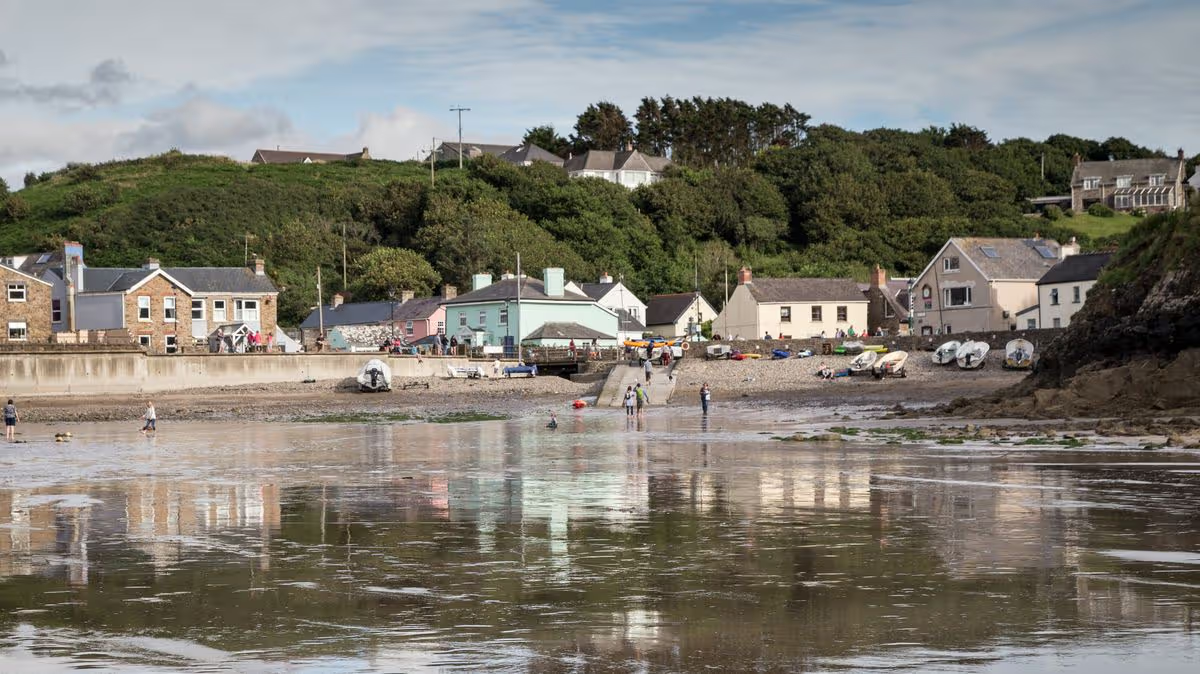
This tiny fishing village has an unpolished charm, with lovely pubs, seafood sarnies, and a pretty cove that fills and empties with the tide
Found in a scenic fold of Pembrokeshire’s craggy coastline, Little Haven isn’t trying to impress you, and that’s exactly why it does.
Advertisement
This tiny fishing village has an unpolished charm, with lovely pubs, seafood sarnies, and a pretty cove that fills and empties with the tide. In the warmer months, locals and visitors spill out onto the slipway with ice creams and pints, giving the place a low-key buzz.
There’s more to Little Haven than seafood sarnies and seaside pints, though. This village’s lifeboat legacy runs deep. In 1882, the RNLI set up shop beneath Goldtrop Head, launching lifeboats straight from the water.
That changed in 1903 when proper facilities were finally built. The station closed in the ’20s, but in 1967, lifeboats were back, this time zipping out from the newly named Little and Broad Haven Lifeboat Station.
Along with its maritime history, Little Haven sits on Pembrokeshire’s famously dreamy coastline and is an idyllic spot for a bracing dip or a coastal walk.
Advertisement
Little Haven’s beach may be small, but it’s got layers of rockpools, soft sand and a shifting shoreline that reveals paths to neighbouring coves when the tide’s out. It’s part of a stretch of coastline protected as a Site of Special Scientific Interest, thanks to its curious geology and marine life.
The surrounding cliffs and rock formations enhance the scenic beauty, offering perfect spots for picnics, sunbathing, and coastal walks. The beach also offers excellent conditions for water sports, including kayaking, paddleboarding, and surfing.
It’s also increasingly becoming a popular spot for swimming, though you should always exercise caution and follow RNLI guidance when dipping, especially during this current heatwave.
Advertisement
For hikers, the Pembrokeshire Coast Path carves straight through the middle of Little Haven, so if you’ve packed your boots and your waterproofs, you’re in the right place.
Hop on the trail and stomp in either direction to enjoy secluded coves, sandy bays, and you might even spot a seal if you’re lucky. Head north for a trek to Broad Haven or Nolton Haven, or swing south past The Swan Inn to reach The Point, a scenic clifftop lookout.
Little Haven has also become a small foodie hotspot, thanks to a popular seafood deli and a seaside pub serving home-cooked food.
Advertisement
Seafood in Little Haven and the wider Pembrokeshire area is a culinary highlight, with its coastal bounty reflecting the village’s rich maritime heritage. Pembrokeshire enjoys a growing reputation for fresh produce and coastal cuisine supplied by an emerging wave of independent producers and dining establishments.
When buying locally, it’s also worth looking for the ‘Pembrokeshire Produce Mark’, which indicates that the produce has been made in Pembrokeshire.
The local waters in Pembrokeshire are abundant with fresh fish, shellfish, and lobster. The seafood here is renowned for its freshness and flavour, often caught daily by local fishermen.
One of the best seafood spots is on Grove Place, where you’ll find a little chic takeaway café and delicatessen serving some of Wales’s best crab sandwiches, lobster and MôR. This unique, catch-of-the-day deli in Pembrokeshire sells a range of seafood sandwiches, gin, crafts, and local produce.
Advertisement
Lobster and MôR have become a popular addition to Little Haven, and people travel for miles to feast on a fresh roll slathered with Welsh seaweed butter and packed with juicy crab meat or lobster meat. Freshly caught, whole lobster can also be purchased alongside Caws Cenarth cheese, ice cream and their locally distilled Tir and Môr gin.
A visit to this deli is a must when exploring Little Haven. Here, local produce blends seamlessly with nautical gifts, picnic paraphernalia and tasty deli items.
If you don’t fancy a lobster roll, other sandwich options like smoked salmon and cream cheese are also available and pair best with their takeaway coffee or, if you’re feeling naughty, a bottle of their seaweed-and-spice gin.
Advertisement
It’s worth visiting this locally owned business when you are out and about in Pembrokeshire and fancy eating a crab sandwich on the beach, listening to the sounds of the breaking waves. Utter bliss.
There’s also a tangible ethos of sustainability and responsible fishing at Lobster and MôR. All lobster pots are caught on the ‘Martha Rose’ and swiftly sold to hungry customers. Sandwiches are also sold in compostable vegetable-ware packaging.
The Seaside Hatch is another great shout, located right by the shoreline, serving coffee and filling breakfasts and lunches.
For a pint with a view, several pub stops in and around Little Haven serve a range of home-cooked plates and seafood specials.
Advertisement
The 200-year-old Swan Inn has a waterside location and seasonal small plates and seafood. Last year, the cast and crew of BBC’s Death Valley took over the Swan for a few days whilst filming episode 2 of the series.
St Brides Inn is another popular pub in the centre of the village, pouring Welsh and local Pembrokeshire ales. It’s family-run, full of charm, and hides a unique feature.
Tucked behind a door in the bar is one of Little Haven’s original freshwater wells. Opposite, there’s a sun-soaked beer garden for lazy lunches and a chilled weekend sesh.
Advertisement
The menu’s proudly local, with just-landed lobster and crab when in season, served dressed with salad or as a creamy thermidor. Swing by on a Sunday for a classic Welsh roast, expect juicy beef, lamb or pork, piled high with seasonal veg.
For a day trip or a weekend away, it’s hard to beat Little Haven for fresh seafood, coastal walks, lovely pubs and epic sea views. Come for the crab rolls, stay for the vibes.
The White House has asked lawmakers to approve $87.6bn (£66.5bn), mostly for “urgent needs” connected with the US war on Iran, a day after Congress passed a resolution rebuking the military action.
The bulk of the funding – $67bn – is for the Defense Department, including $21bn for munitions, $17.3bn for operational costs and $12.1bn for classified programmes, said the White House.
The other money is for unrelated measures including $11bn for US farmers and $1.4bn to tackle the Ebola outbreak in Central Africa.
But the proposal faces an uphill battle in Congress as the Iran conflict is unpopular with voters and midterm elections loom this November.
Advertisement
The White House Office of Management and Budget sent the formal request for the funds on Wednesday in a letter to House of Representatives Speaker Mike Johnson.
“Most of this request will address urgent needs related to Operation Epic Fury (OEF),” says the letter, referring to the Iran war.
Washington and Tehran are currently observing a ceasefire, but the conflict has depleted Pentagon stockpiles.
Republicans in Congress have expressed scepticism about a peace plan Trump agreed last week with Iran.
Advertisement
Earlier on Wednesday, Trump held a tense meeting with Senate Republicans, after he abruptly called off a signing ceremony for a bipartisan housing bill
At the closed-door luncheon on Capitol Hill, he complained about Tuesday’s largely symbolic vote on a war powers resolution in the Republican-controlled Senate to block his war in Iran, reports the BBC’s US partner CBS.
It was the first resolution of its kind to clear Congress instructing a president to end a military action since the War Powers Resolution of 1973 was enacted.
Former referee Darren Cann felt Scotland were lucky that VAR intervened to disallow Vini Jr’s goal. Speaking to the BBC he said: “I think Scotland are a little fortunate to be honest.
“There is a little contact before the ball is played but I don’t really feel that it’s a foul by Vini Jr, he’s just holding his ground and the defender just kicks into him. I think it’s one Scotland will be decided with but they are a little fortunate to get the decision.”
However, former Scotland international James McFadden disagreed. He said: “He has [been fouled]. He has. Absolutely [a bullet dodged]. He just catches him on the right leg as he’s going to play the ball, gets his foot in front of where Jack Hendry’s playing it.”
Advertisement
Asked if he then agreed with Cann, McFadden said: “No I don’t, I think it’s a foul. Whether it’s a slight contact or not, it’s a foul. When you see it back, clearly he’s caught as he’s in the action of kicking the ball which is enough to stop him playing the ball. He’s impeded.
“It’s a let-off and just another warning to say, at times, Brazil look like they don’t want to go and press until they decide they do and they go and force them mistakes and capitalise.
“It’s a foul for me, he catches him and it’s the correct decision. It’s about time Scotland got a decision here.”
The Healthcare Inspectorate Wales inspection found faecal staining on furniture and suspected blood on a wall
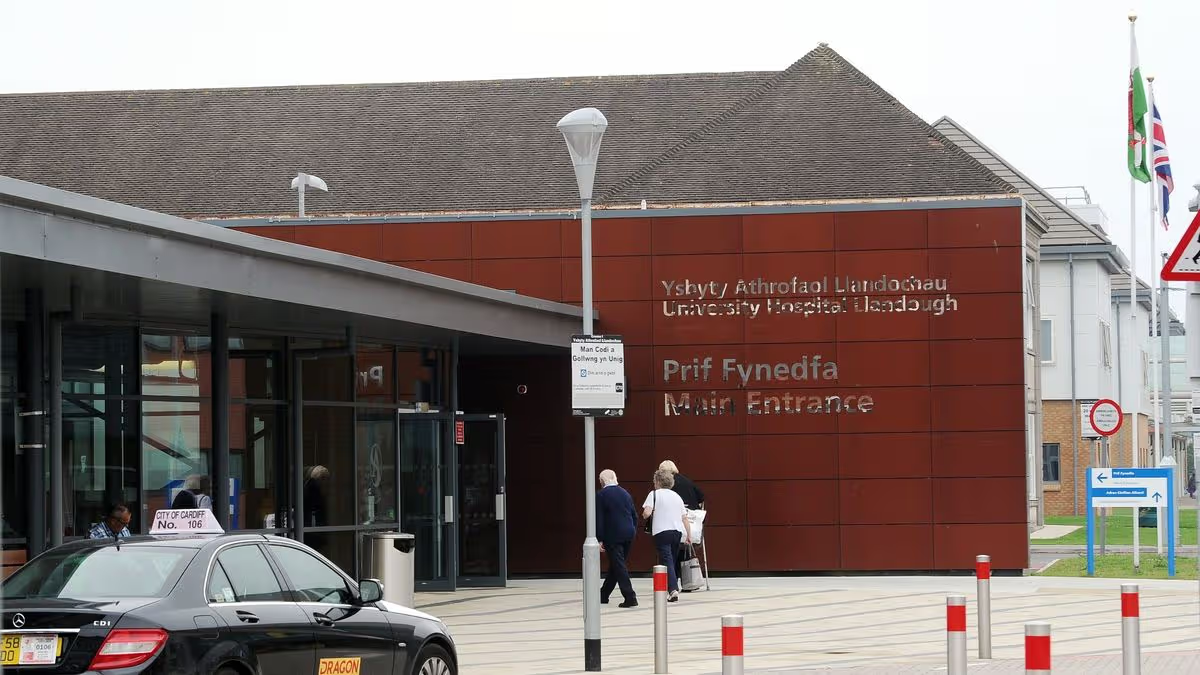
An unannounced inspection into a specialist mental health hospital in Cardiff has found “serious concerns”. The newly published findings said there was a strong odour smell in an unlocked cupboard, faecal staining on furniture in the dining room and on a door frame, as well as red staining consistent with blood on a wall.
Advertisement
The inspection of the University Hospital Llandough, carried out by the Healthcare Inspectorate Wales (HIW), found issues with the condition and cleanliness of wards, and that medicines were not being stored securely.
The HIW completed an unannounced inspection at the Cardiff & Vale University Health Board run site on March 23, 24 and 25, 2026. The independent inspectorate reviewed wards 10, 14, and 16, which each provide care for people over 65 with dementia or severe mental illnesses.
The inspection identified serious concerns impacting patients’ dignity, comfort and overall experience. It found that the condition and cleanliness of some ward and communal areas, inside and out, didn’t support a “safe or therapeutic” environment for the patients.
They said this was particularly important because the hospital’s patients rely on the ward environment to remain orientated and reassured. For our free daily briefing on the biggest issues facing the nation sign up to the Wales Matters newsletter here.
Advertisement
The report also identified weaknesses in the management of personal belongings and the maintenance of orientation aids, like clocks, despite the issue being raised by concerned family members. There were also issues with patient information boards displaying up to date information about current staff roles.
The findings said: “HIW was not assured that effective risk management and infection prevention and control arrangements were consistently in place. We identified multiple environmental, ligature and health and safety risks, as well as poor standards of cleanliness and hygiene in patient and communal areas.”
Among their concerns was a room containing identified ligature risks which was unlocked and accessible to patients and medicines not being securely stored. They also found an unlocked storeroom with a strong odour smell, faecal staining on furniture in the dining room and on a door frame, as well as red staining consistent with blood on a wall.
A further issue related to patients’ personal belongings going missing or becoming mixed up with other patients’ belongings.
Advertisement
The published findings reads: “Patients’ property was not always stored appropriately, which reduced assurance that items were being managed safely and securely.”
They explained how valuables were stored in CD cupboards without appropriate security and without robust arrangements for recording, tracking, and returning patient property. The HIW said such issues with misplaced items caused distress for some patients and their families.
The HIW further detailed how some of these concerns were identified during a previous inspection, which had raised concerns about oversight and the health board’s ability to deliver and sustain improvement.
The inspectorate did however also highlight a number of things the service did well. They said the hospital provides a wide range of meaningful, therapeutic, and recreational activities, treated patients with dignity, kindness, and respect, promotes a safe and supportive environment, and delivers personalised, timely care that supported patient choice, independence, and wellbeing.
Advertisement
Alun Jones, Chief Executive of Healthcare Inspectorate Wales, said: “This inspection found committed staff delivering compassionate and respectful care in challenging circumstances. However, significant concerns were identified about the ward environment and failure to address known risks, particularly around cleanliness, safety and oversight.
“While challenges associated with ageing mental health estates are seen across Wales and are not unique to this service, the impact on patients here is significant. The health board must now demonstrate clear and sustained improvement to ensure patients are cared for in a safe, clean and well‑maintained environment.
“We will continue to monitor progress closely.”
Since the inspection in March, the health board has outlined actions taken and planned improvements, including addressing safety risks, undertaking deep cleaning, strengthening infection control, improving maintenance and enhancing oversight. The healthcare inspectorate will continue to monitor progress to ensure improvements are implemented and sustained.
Advertisement
In response to the report being published, Natasha Asghar MS, Shadow Minister for Health and Social Care, said: “While it’s really reassuring to read about the compassionate care that older patients are receiving at Llandough Hospital, but there are clearly a number of areas where performance is not good enough.
“Staff on the wards are clearly working hard under difficult circumstances and deserve recognition for the compassionate care they provide. However, failures in leadership, maintenance, housekeeping and governance are not acceptable and must be addressed by the health board as a matter of urgency.
“People living with dementia are among the most vulnerable patients in our health service and there is clearly scope to improve their care.
“The health board must demonstrate clear progress on cleanliness, patient safety, dementia-friendly environments and leadership accountability. Families need reassurances that these shortcomings are being addressed.”














![We Are WEEKS Away From A MAJOR Price Explosion For XRP! XRP Holders ALL Need To PREPARE! [BUY XRP!]](https://wordupnews.com/wp-content/uploads/2026/06/1782344110_maxresdefault-80x80.jpg)
































You must be logged in to post a comment Login