

Crypto World
XRP Withdrawals Hit 53.8% on Binance, Highest Since June 2024

TLDR:
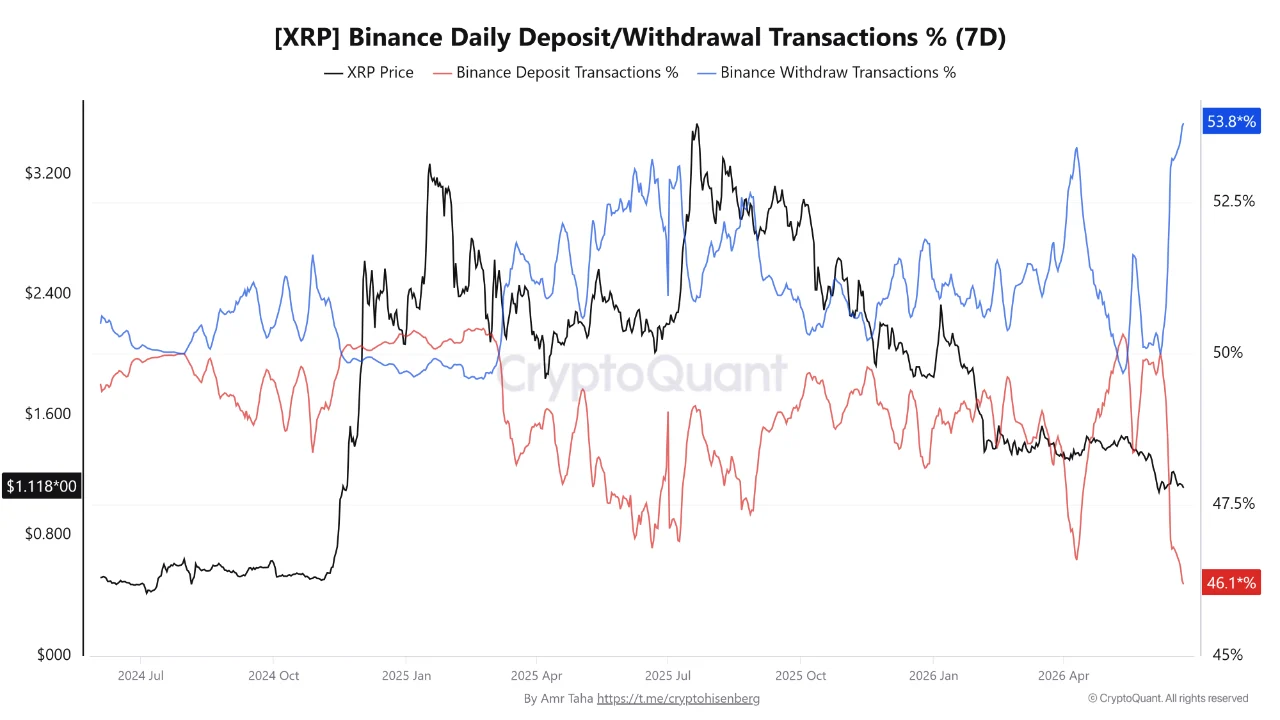
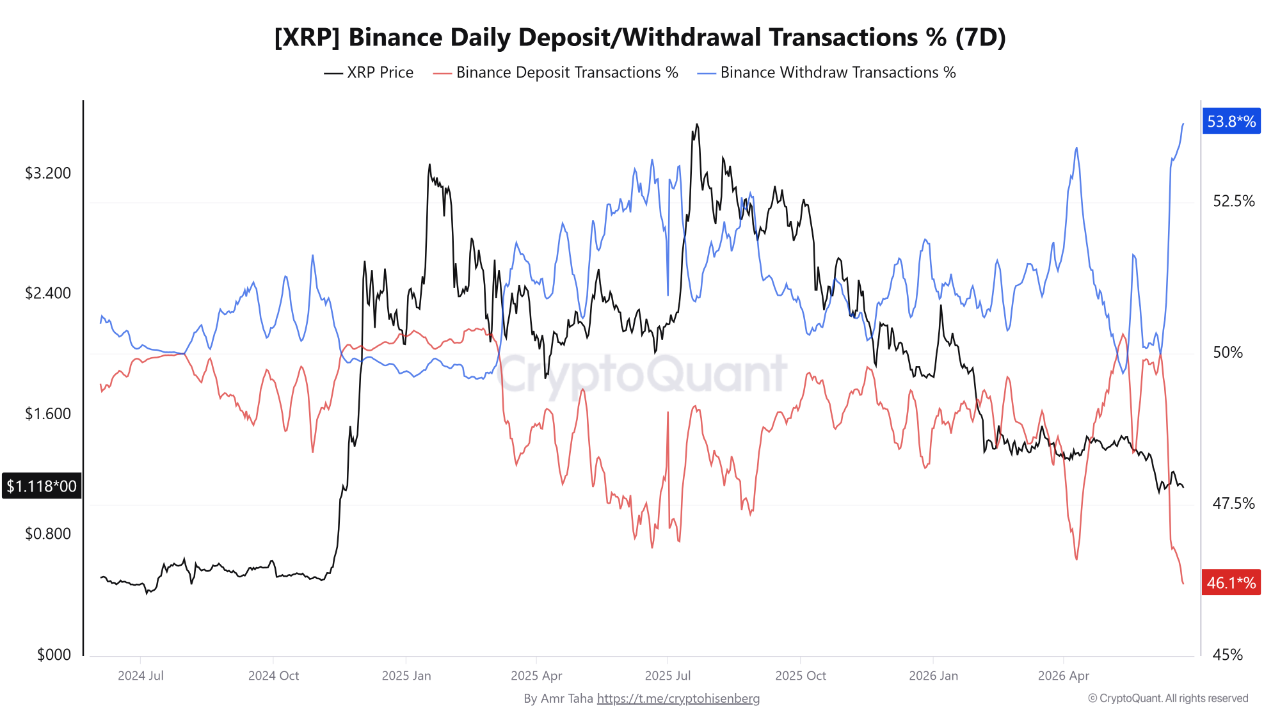
- XRP withdrawal share on Binance reached 53.8% on June 23, the highest since June 2024.
- Deposit transactions fell to 46.1%, their lowest level in approximately two years.
- Withdrawals have outpaced deposits for seven straight days since June 17 on Binance.
- Ripple burned $539M in RLUSD over 30 days, with burns exceeding mints by $129M.
XRP withdrawal transactions on Binance have reached their highest share since June 2024, climbing to 53.8% on June 23. Over the same period, deposit transactions fell to 46.1%, their lowest reading in roughly two years.
The gap between the two metrics now stands at 7.7 percentage points, marking a notable shift in XRP transaction behavior on the exchange over the past week.
Withdrawals Hold Control for Seven Consecutive Days
The withdrawal dominance on Binance is not a one-day event. XRP withdrawals have outpaced deposits every day since June 17, representing seven straight days of sustained divergence. This streak is the key development distinguishing the current move from routine daily fluctuations.
Source: Cryptoquant
The 7-day withdrawal share of 53.8% recorded on June 23 now stands as the highest level since June 2024. Meanwhile, deposit transaction share at 46.1% reflects its weakest position in approximately two years. The data shows a clear reversal from the pattern seen in prior months.
It is important to note what this metric measures. The figures track the share of deposit and withdrawal transactions, not the total dollar value or volume of XRP moved.
A higher withdrawal share means withdrawal transactions are outnumbering deposit ones — it is not a direct buy-or-sell signal on its own.
Still, the persistence of this trend over a full week gives the data added weight. A single-day spike can often be noise, but seven consecutive days of withdrawal dominance represents a sustained behavioral shift among XRP holders on Binance.
RLUSD Burns and XRP Price Performance Add Context
Beyond exchange flow data, Ripple’s RLUSD stablecoin activity has drawn attention over the past month. According to on-chain data shared by validator Vet’s community tracker, Ripple burned $539 million worth of RLUSD over the past 30 days, with burns exceeding mints by more than $129 million during that window.
Most of the destruction occurred between June 2 and 12, which marked the longest intraday burn streak since RLUSD launched in December 2024.
The single largest burn on record came on June 3, when $75.1 million worth of RLUSD was removed in a single day.
Against this backdrop, XRP is trading at $1.11 at the time of writing. The token recorded a 1.47% decline over the past 24 hours and a 9.43% drop over the past seven days. Trading volume over the same 24-hour period reached $1.37 billion.
Source: Coingecko
The combination of prolonged withdrawal dominance on Binance, declining deposit share, and the broader RLUSD burn activity presents a multi-layered picture of XRP market dynamics heading into late June.



Ethereum’s funding debate has intensified after a warning from former ecosystem contributors that core development support could face a “slow-burning funding crisis” within months—just as the Ethereum Foundation tightens spending under its stated treasury policy. The backlash quickly broadened into a wider governance argument over who should pay for shared research and coordination work: the validator set via staking-reward taxation, or large ETH-aligned institutions through alternative funding channels.
At the center of the controversy is a proposal from Kleros co-founder Clément Lesaege to redirect part of validator rewards to ecosystem funding using a protocol-level mechanism known as Validator Redirected Revenue. But as community members debated validator-led redistribution—and whether it risks consolidating power among large operators—new efforts to channel private support for Ethereum research and development also surfaced, including the launch of a nonprofit called EthLabs.
Key takeaways
- A former Ethereum Foundation contributor warned of a potential “slow-burning funding crisis” in the core development ecosystem within three to nine months as older support programs wind down and spending declines.
- Clément Lesaege’s Validator Redirected Revenue proposal would allow validators to signal a redirect rate (0% to 10%); if supported by a majority, the redirect becomes mandatory for all.
- Critics argue the mechanism could entrench large validators, blur governance lines, and effectively turn validators into a tax authority.
- Ethereum’s treasury policy already targets a multi-year cash buffer and a gradual reduction in annual spending; Vitalik Buterin indicated the Foundation is decreasing its budget in line with that plan.
- The emergence of EthLabs shifts the conversation toward institutional, foundation-complementary funding rather than changing validator economics at the protocol level.
From warnings to a governance flashpoint
The latest round of Ethereum funding drama began on Friday, when former Ethereum Foundation contributor Trenton Van Epps cautioned that Ethereum’s core development ecosystem could face a “slow-burning funding crisis” within three to nine months. His argument was tied to the timing of expiring support programs and a decline in Foundation spending.
Van Epps estimated that maintaining more than 10 client, research, and coordination teams costs roughly $30 million per year. He further argued that existing programs—such as the Client Incentive Program—may no longer be enough to cover the full bill. In his framing, Ethereum is moving into an “inheritance” phase where the Foundation is no longer the sole steward of protocol funding, requiring new arrangements to replace what is expiring.
While Van Epps’ warning resonated with some community members, others dismissed the premise. For example, Bitmine’s Tom Lee reportedly rejected the idea of a near-term crisis, saying there was “zero chance” Ethereum would run out of funds for protocol development.
What the Ethereum Foundation’s treasury policy actually says
Even amid public disagreement, the Ethereum Foundation’s own published treasury policy provides an important counterpoint: it describes a long-run buffer and spending limits rather than an imminent funding cliff. According to the Foundation’s policy, it aims to hold a 2.5-year operating expense buffer in cash and stablecoins, while also planning to cap annual spending at 15% of total treasury assets and then gradually reduce spending over time toward a 5% baseline.
On Tuesday, Ethereum founder Vitalik Buterin said the Foundation is decreasing its budget by roughly 40%, aligning with the policy as it transitions from spending around 15% of its funds annually before 2026 toward the lower long-term target after 2030. The debate, then, is less about whether Ethereum can fund core work indefinitely and more about the political and economic structure of funding as spending tightens.
Validator Redirected Revenue: why the proposal triggered backlash
Lesaege’s proposal is designed to address a classic coordination failure: shared infrastructure benefits everyone, yet no single party reliably funds the work needed to maintain it. In his view, the funding problem persists even if a treasury exists, because shared development still needs stable, predictable incentives and a mechanism to align contributors with ecosystem priorities.
The approach—published on Eth Research—would require validators to signal the share of their staking rewards they are willing to redirect. Lesaege suggested a range between 0% and 10%. If a majority of validators supports a non-zero redirect, the redirected allocation would become mandatory for all validators.
Based on current staking levels, Lesaege estimated that even a 5% to 10% redirect could produce roughly 50,000 to 70,000 ETH per year for ecosystem funding, which he calculated as approximately $82.5 million to $115.5 million at then-current ETH prices cited in the article.
But the mechanism’s governance implications proved difficult for many participants to accept. Critics warned that redirecting rewards at the protocol level could shift power toward a stake-weighted validator majority, entrench large operators, and blur the boundary between running validation and influencing ecosystem funding policy. In other words, even if the economic amounts look manageable in isolation, the precedent of turning consensus-layer incentives into a treasury-like authority raised alarm.
How staking operators and investors view reward compression
Beyond governance, the proposal raised practical concerns for institutional staking providers. A spokesperson for Figment told Cointelegraph the plan could compress margins, which tends to consolidate the validator set toward larger, more integrated operators serving institutional clients. In their view, that consolidation would come “at the cost of some operator diversity” and could reduce net new ETH stakers.
Twinstake’s Andrew Gibb added that different investor segments could respond differently. While long-term ETH holders might welcome a better-funded ecosystem, shorter-horizon capital—such as retail participants, liquid multi-asset funds, and reward-focused allocators—may be less receptive to lower consensus-layer returns. Gibb said the proposal could narrow the addressable staking market at the margin, and he expected some clients to reevaluate staking allocations.
Max Shannon, senior research associate at Bitwise, offered a different lens: he said staking participation so far has shown limited sensitivity to reduced rewards. Shannon pointed to a decline in ETH staking APR from about 4.6% in June 2023 to around 2.7% now, alongside increases in staked supply and the staking ratio. However, he warned that further reward compression would make risks—such as slashing and exit-queue liquidity risk—more material compared with expected returns.
Shannon also suggested a potential second-order effect: if net consensus-layer yield falls, validators might rely more heavily on MEV to offset lost APR. That shift, he noted, could be a risk to Ethereum’s censorship resistance, depending on how MEV dynamics evolve.
How big is the funding gap—economically and politically?
Even supporters of the need for new incentives appeared to agree that the scale of the “gap” may not be enormous. Shannon argued that if the annual shortfall is around $30 million and total annual staking rewards are roughly $1.9 billion, filling the gap could theoretically require only about 1.6% of staking rewards. In purely economic terms, that looks like a single-digit reduction rather than a major haircut.
Where the dispute intensifies is the governance question. Shannon maintained that networks with hard-coded development funding are not automatically better off just because rewards are earmarked. Protocol success, he argued, depends more broadly on token performance and contributor incentives than on any single developer funding mechanism. The conflict, then, isn’t only about affordability—it’s about whether changing validator economics should be the tool Ethereum uses to solve a shared-work problem.
EthLabs reframes the funding model
Parallel to the Validator Redirected Revenue debate, a nonprofit called EthLabs emerged as a “credibly neutral” alternative. It was unveiled Monday by five former Ethereum Foundation researchers and presented itself as an Ethereum R&D lab backed by major ecosystem supporters, including BitMine, Sharplink, and Joseph Lubin, founder of ConsenSys.
The idea, as described in the coverage, is that EthLabs would complement rather than replace the Ethereum Foundation. Instead of redirecting staking rewards at the protocol level, large ETH-aligned institutions can fund development directly through a research and development entity.
In an X post shared Monday, Ethereum co-founder Joe Lubin said the Foundation still has “an enormous amount of top tier talent” focused on “the cypherpunk core components” of the protocol, while other Ethereum research and development efforts could explore different dimensions. That aligns with comments from Figment and Twinstake leadership emphasizing the risk of compressing margins and narrowing staking participation if validator economics are modified.
EthLabs also appears to shift the question for investors: rather than whether Ethereum can fund itself, the debate moves toward how it should structure funding—whether that should remain primarily foundation-led, become more institution-driven for adjacent work, or combine both approaches.
For now, the core uncertainty is political. If reward redirection proposals remain contentious, EthLabs will face a practical test: can non-profit and institution-led funding absorb enough of the ecosystem’s development and coordination needs to satisfy stakeholders without changing consensus-layer economics? Investors and builders will likely watch how quickly EthLabs organizes priorities—and whether it reduces pressure for protocol-level redistribution in future governance debates.
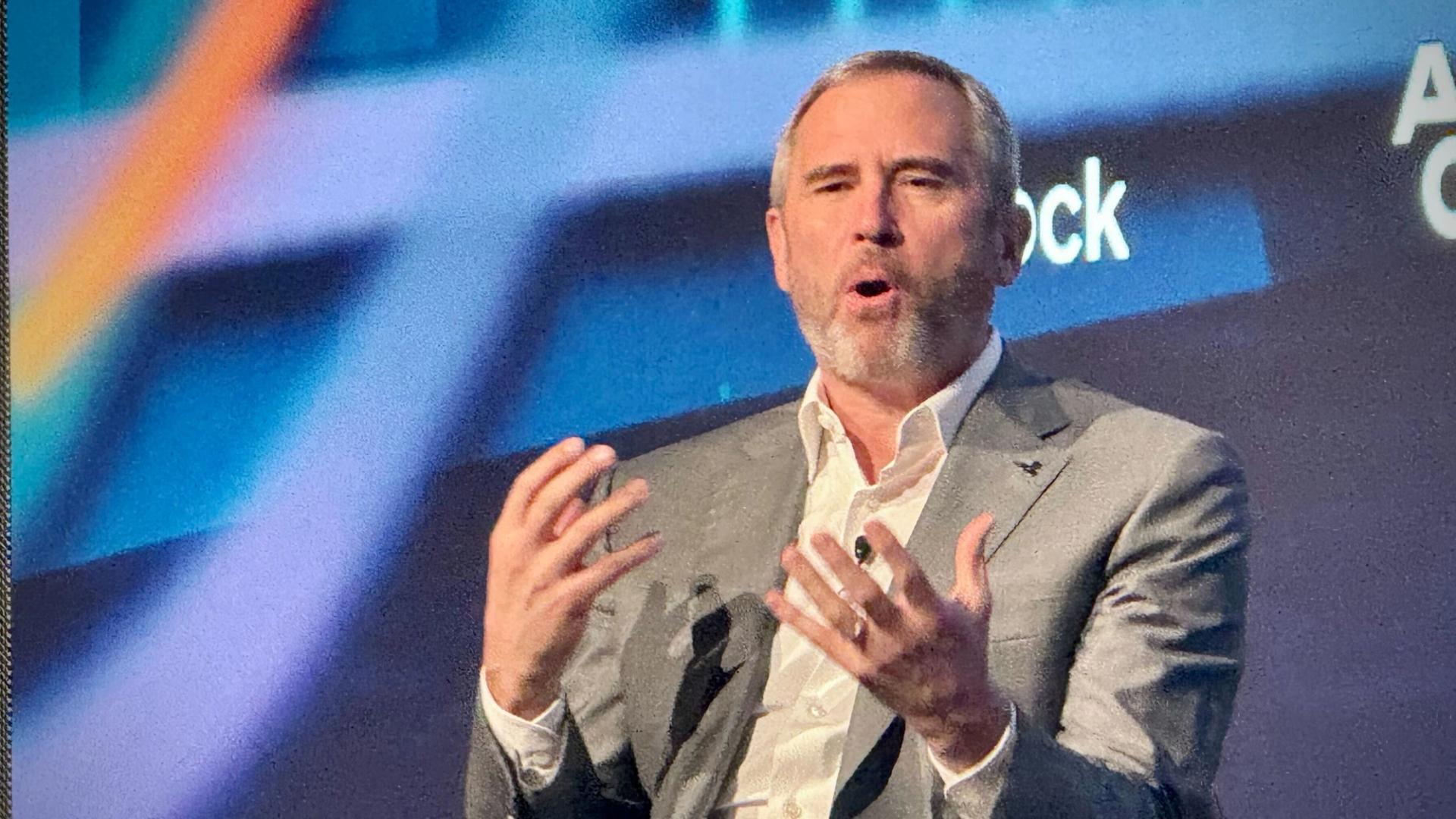
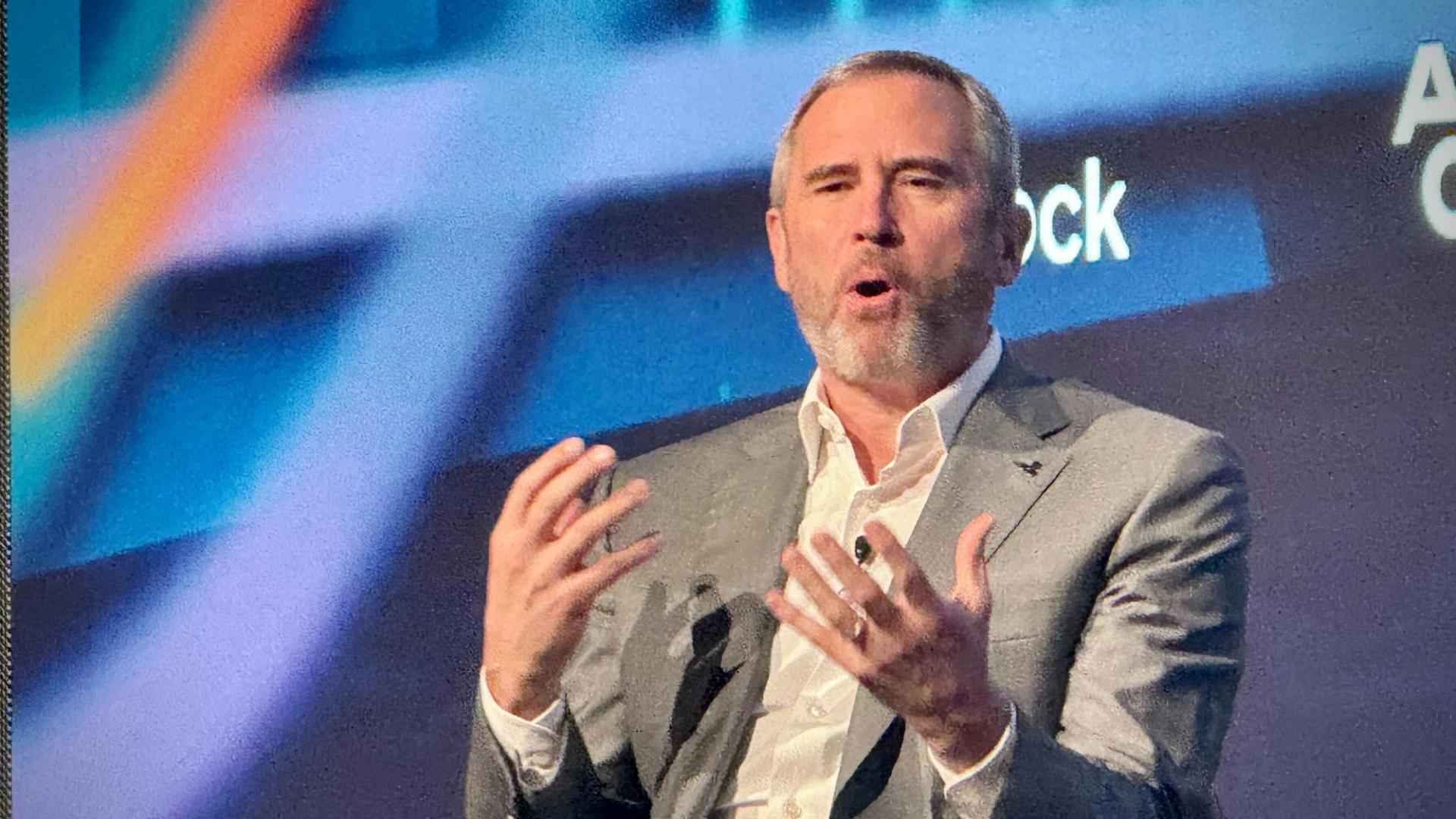
Ripple, the blockchain company behind the XRP Ledger, is on its way to regulatory approval in the European Union (EU) via licensing in Luxembourg.
The San Francisco, California-based firm received a preliminary green light for a Crypto Asset Service Provider (CASP) license from the country’s Commission de Surveillance du Secteur Financier (CSSF) under the EU’s Markets in Crypto Assets (MiCA) regulation, Ripple said Tuesday.
A license would enable Ripple to offer its stablecoin payment systems to European companies and allow it to expand into broader crypto functions, according to the announcement.
MiCA allows companies that receive approval in one EU state to offer cryptocurrency services across the bloc.
The regime was one of the first comprehensive regulatory frameworks for cryptocurrency in a major market when it was voted into law in 2023, but there has been signs this year that the honeymoon period is coming to an end. The European Commission, the EU’s executive branch, opened a consultation last month to assess if MiCA is still fit for purpose.
Among the concerns about MiCA’s shortcomings is criticism over stablecoin rules, relating to a blanket ban on offering interest and reserve requirements that demand issuers hold as much as 60% of backing assets in cash deposits at commercial banks.

UK politics is entering a leadership transition that could reshape how the government thinks about digital assets—at least in tone, and potentially in the pace of implementation. Prime Minister Keir Starmer has stepped down, after a period that included a moratorium on cryptocurrency donations to political campaigns. The announcement has quickly turned attention to Labour’s likely successor, with Andy Burnham emerging as a frontrunner.
Burnham, a former Mayor of Greater Manchester and a longstanding advocate for using technology to drive regional economic growth, has spoken positively about blockchain and Web3. However, he has not yet laid out a detailed national digital-assets policy—meaning investors and builders will be watching whether rhetoric turns into concrete regulatory action.
Key takeaways
- Starmer’s tenure included a moratorium on crypto donations to UK political campaigns, justified on election integrity and foreign influence concerns.
- Andy Burnham has publicly embraced the idea of Web3 supporting economic development, but has not published a comprehensive national regulatory plan.
- A reversal of the crypto donation ban appears politically difficult, especially with scrutiny from Labour’s left.
- Industry executives cited in the coverage expect regulators to remain independent and largely “settled,” focusing attention on execution rather than a dramatic policy pivot.
- Any cabinet reshuffle during the transition could slow momentum at a time when authorization and regulatory processes are moving forward.
From stablecoin enthusiasm to a leadership test
Burnham’s crypto-friendly positioning has largely been expressed in the context of his work as mayor, where he framed digital technology as an engine for jobs and growth. Coverage referenced his willingness to back the idea of making Manchester a “Web3 powerhouse,” reflecting a broader “bottom-up” philosophy that emphasizes devolution and local public-private partnerships.
That local approach—often summarized as “Manchesterism”—can produce tangible pilots and partnerships, but it raises a question for national-level policy: how quickly can a regional model scale into coherent, UK-wide regulation?
Nick Jones, founder and CEO of UK digital asset services platform Zumo, told Cointelegraph that Burnham’s rhetoric has been influenced by his role as mayor, including comparisons between Manchester’s industrial history and the city’s potential to lead a Web3 “revolution.” Jones added that if Burnham becomes prime minister, he would likely understand the need to ensure the UK remains central to the future financial system.
Another view came from Benoit Marzouk, CEO of GBP stablecoin issuer tGBP. Marzouk characterized Burnham’s Manchester experience as “not a handicap,” arguing that it could help implement and accelerate policy aligned with the digital asset industry across the UK.
What matters most: the crypto donation moratorium
While leadership uncertainty is drawing attention to broader digital-assets policy, one specific measure already has political momentum behind it: the moratorium on cryptocurrency donations to political campaigns.
According to the coverage, the ban was introduced in March following an independent review conducted by Philip Rycroft, a former civil servant turned consultant. The review reportedly concluded that the pseudonymous nature of crypto creates unacceptable risks for transparency in political financing.
Rolling back a policy endorsed by an independent review carries obvious political risks, and the article highlighted likely internal pressure from Labour’s left if any change appears to reopen the door to crypto-funded campaigning. The difficulty increases given that Reform UK has been able to rely on crypto-linked fundraising in recent elections, according to reporting cited in the piece.
Reuters, as referenced in the coverage, reported that crypto donations from billionaires based overseas put Reform well ahead of Labour in the fundraising race. The article also noted that Nigel Farage is under investigation over an undisclosed £5 million gift from British Thai-based businessman Christopher Harborne, and that Farage said he should be able to spend the gift as he wishes.
Given these dynamics, the coverage argues that an “180-degree” reversal from Burnham is unlikely. Marzouk expects a more pragmatic approach—less headline policy and more implementation-focused steps.
Regulation expectations: continuity, not upheaval
Several executives interviewed in the coverage emphasized continuity in the regulatory landscape. Tom Rhodes, chief legal officer for UK stablecoin issuer Agant, told Cointelegraph that the industry does not expect the next prime minister to interfere with specific policies. Rhodes suggested that regulators remain independent and that cryptoasset regulation is “nearly settled.”
Marzouk tied “success” during a first year to tangible outcomes that go beyond ambition: finalizing a stablecoin framework, running pilot programs involving government and GBP stablecoins, and continuing work related to tokenization.
At the same time, the piece stressed that Burnham has not published a detailed digital-assets policy. His public comments, as described, reflect enthusiasm more than commitments to specific regulatory milestones—such as how proposed stablecoin rules, the Financial Conduct Authority’s crypto framework, or the crypto political donation ban itself will be handled in practice.
Jones similarly argued that Burnham is on record backing the sector’s economic potential and that—if he takes office—his stance is unlikely to reverse the existing growth-focused posture. The more immediate uncertainty, Jones added, is whether political transition mechanics disrupt the people implementing the regulatory regime.
Transition risks: policy momentum versus political reshuffles
The road from Starmer’s exit to a new government will include leadership vote procedures and time away from parliament, which could complicate continuity. The article reported that Labour has not yet set an official timetable for replacing Starmer, though Starmer previously indicated he wanted nominations open on July 9 after a NATO summit. Sky News, as referenced, suggested it could be a week later—on July 16—when parliament goes on summer recess.
It also described the voting threshold for the selection process: the winner must receive more than half the votes cast, with ballots recast based on preference if no candidate reaches the required majority.
For the crypto industry, however, the practical risk is less about election arithmetic and more about institutional continuity. Jones warned that any cabinet reshuffle could remove ministers familiar with the evolving regulatory regime at a “critical inflection point,” when regulators and industry are preparing for authorization processes. In that scenario, even small delays could matter for firms planning compliance, product timelines, and pilot participation.
That same tension—between ambitious digital-asset messaging and the administrative reality of moving regulatory work forward—may define Burnham’s early months in office, whether he chooses to keep current policy channels intact or to adjust how quickly they progress.
For now, market participants should watch whether Labour’s leadership transition produces stable personnel and clear delivery timelines—especially around stablecoin rules and any interpretation of the donation moratorium—because that is where policy intent will likely become operational reality.
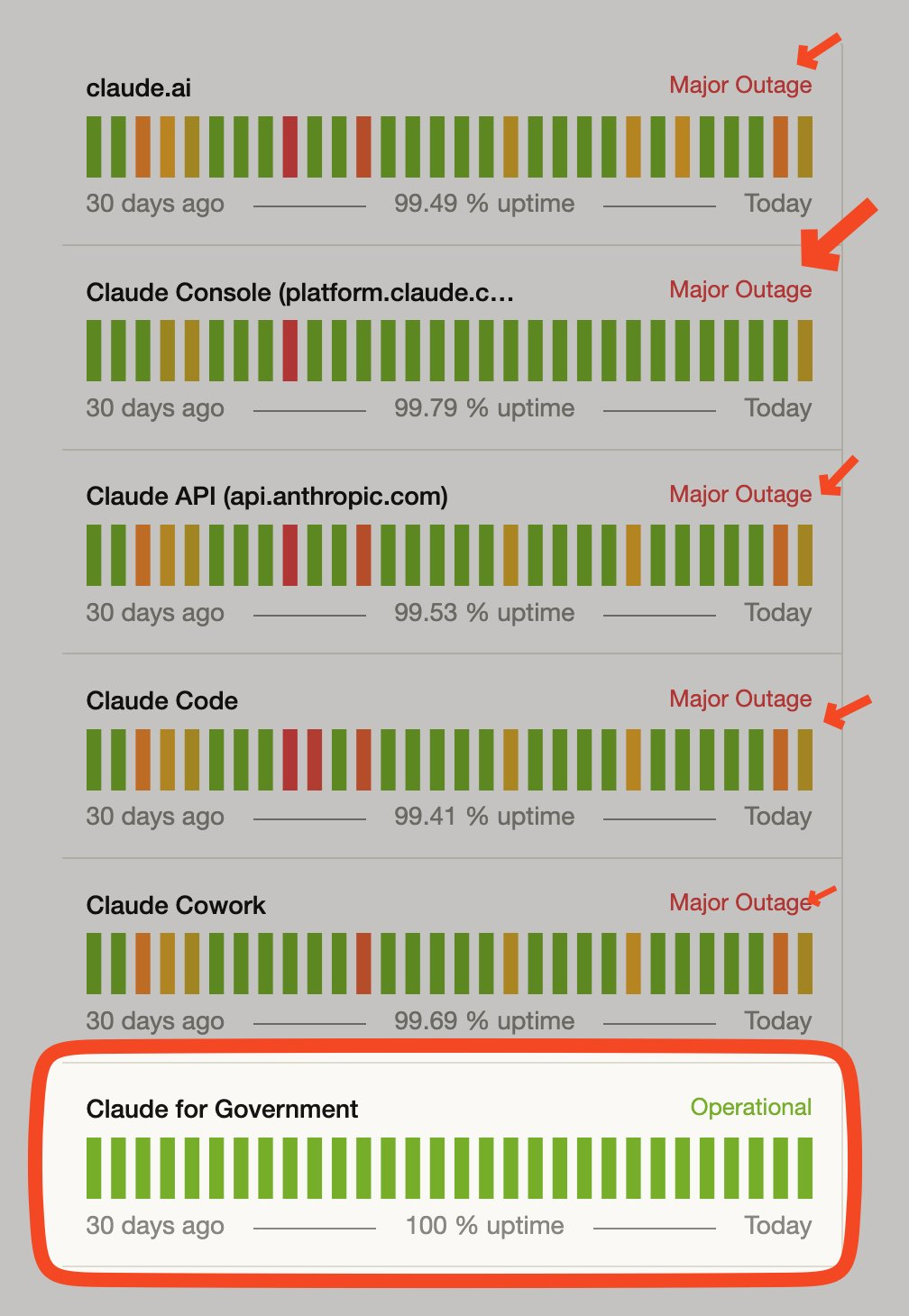
A Claude outage disrupted public access to Anthropic’s AI for about 85 minutes on June 23, while Claude for Government kept running. The incident highlighted how the company separates its public and federal systems.
The disruption, logged as elevated error rates across multiple models, spread on X after users noticed the government service stayed online on Anthropic’s status page while consumer tools showed failures.
How the Claude Outage Unfolded
Anthropic began investigating early on June 23 and said a fix was in place within about 35 minutes. The elevated errors lasted roughly 85 minutes, and the company marked the incident as resolved a little over 2 hours after the first alert.
The errors hit claude.ai, the Claude API, Claude Code, the Console, and Cowork. Claude for Government did not appear among the affected services.

Over 90 days, it logged 99.93% uptime, compared with 99.1% for claude.ai, a gap of roughly 19 hours of downtime versus about 90 minutes for the government tier.
That gap fueled the reaction, especially among paying subscribers already irritated by recent Claude usage limits. One widely shared post captured the mood.
“Claude is down with a major outage for everyone except for the government,” one user noted.
Follow us on X to get the latest news as it happens
Two-Tier Access by Design
The split is deliberate. Claude for Government runs isolated from commercial users, with FedRAMP High authorization carried through Palantir’s federal cloud service.
That is the tier the GSA handed to all three branches of government last year for $1.
Dedicated environments like this are standard across regulated cloud, which is why it held while shared consumer systems faltered.
The outage extended a rough stretch for the public tier. Anthropic’s status page logged more than 20 error or outage incidents between June 9 and June 23. Most named its newest flagship Opus 4.8.
To meet rising demand, the company has locked in up to 5 gigawatts of new Amazon compute capacity and leased additional data center capacity.
The isolated government tier never shared that strained pool.
The post Claude Outage Hits Public Users While Government Tier Stays Online appeared first on BeInCrypto.
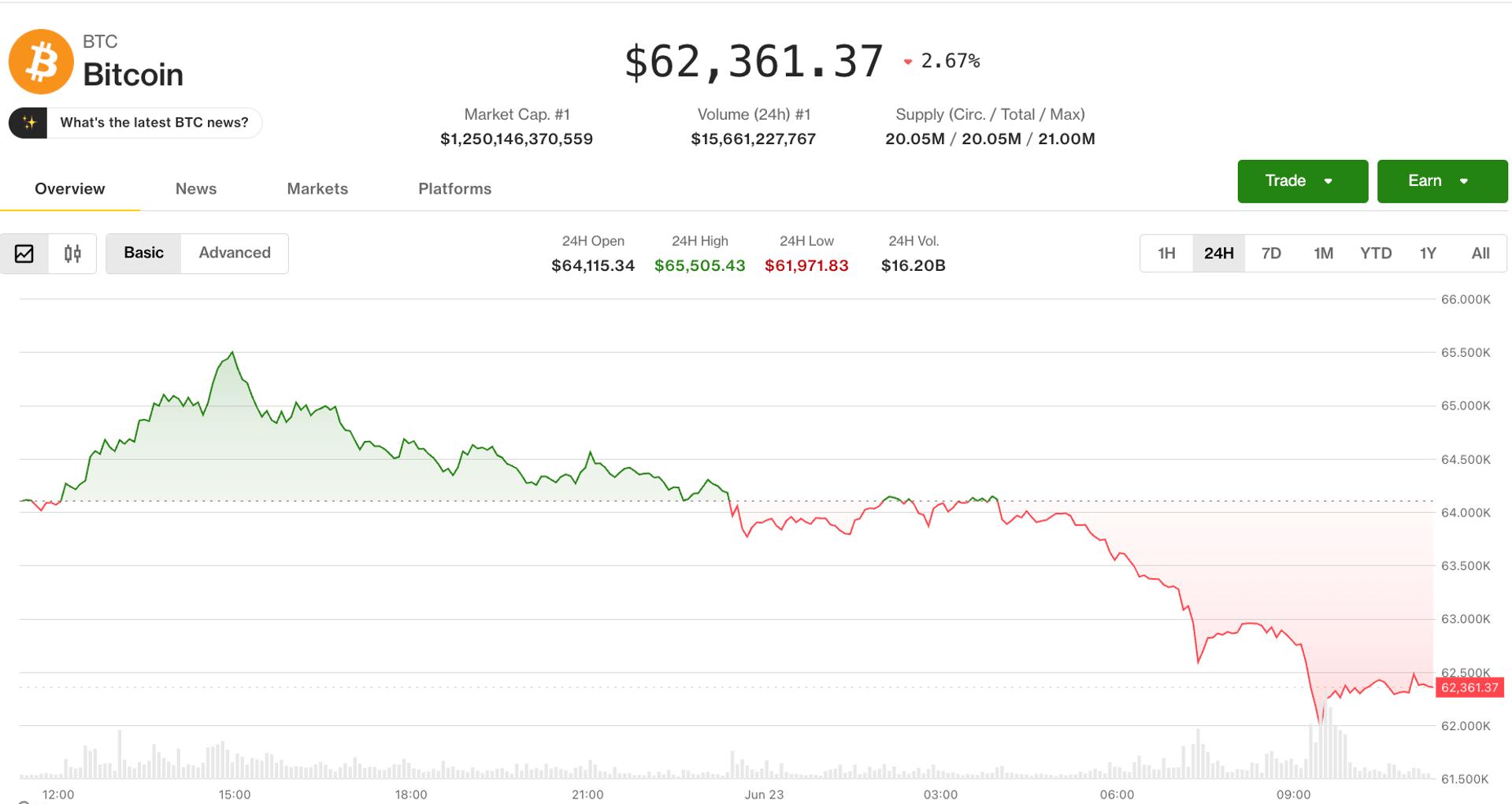
The crypto market fell on Tuesday, with bitcoin trading at $62,300, having lost 2.5% since midnight UTC, while ether (ETH) tumbled by more than 4% to $1,650.
The selloff follows Monday’s downturn in technology stocks, with another day in the red foreshadowed by Nasdaq 100 futures, which have cratered by 2.5% since midnight.
Tech stocks are struggling due to profit-taking and the risk of higher bond yields, according to Patrick Munnelly, market strategy partner at TickMill.
Altcoins performed worse than bitcoin and ether, with tokens such as ethena (ENA) and hype (HYPE) losing 5%-6% and $717 million in liquidations across the market spurring exaggerated downswings.
The Dollar Index (DXY) rose to its highest level in more than a year, hitting 101.15, the most since May 2025.
Derivatives positioning
- The most notable data point in derivatives is the 10% surge in open interest (OI) in SpaceX perpetuals listed on Hyperliquid, Binance and other exchanges while the price has dropped by 15%.
- This combination validates the downtrend and suggests the deployment of leverage on the short side. The OI increase is the highest among major tokens, a clear sign of a raised preference for trading traditional assets over blockchain rails.
- SpaceX futures are also now the sixth-largest in the world, ahead of several prominent coins such as ZEC, but still behind BTC, ETH, XRP, and others.
- XRP futures open interest increased to 2.38 billion tokens, revisiting eight-month highs. These continued capital flows come alongside a near 2% drop in the token for the week, and follow last week’s 5% slide.
- As with SpaceX, this combination validates the downtrend. Even more so, in fact, because the OI-adjusted 24-hour cumulative volume delta (CVD) is negative for the second straight day, a sign of price action being led by traders shorting at market prices rather than passive limit orders.
- Traders continue to scale back exposure to BTC futures. Open interest has slipped to 720K BTC from 742K BTC last week. It hit a peak of 800K BTC early this month.
- In ether, futures OI has bounced up from five-week lows to 14.13 million ETH, but overall positioning remains light compared with the peak of 15.98 million ETH on May 28.
- Broadly speaking, sellers seem to be dominant across most of the top 25 coins. Most of these coins have negative OI-adjusted 24-hour CVD.
- Traders are also likely to keep an eye on bitcoin’s 30-day implied volatility index, BVIV, which has turned higher from 40%. The increase suggests higher demand for options. Ether’s volatility index, EVIV, is displaying a similar pattern. Upswings in volatility indexes are typically a feature of bearish price trends.
- In the options market, the structure is long calls (or bullish bets) heading into the quarterly expiry on Friday. However, these long positions are sitting on losses, given the collapse in spot prices throughout the quarter. In the meantime, put options, or downside bets, are sitting in the money or in profit.
- Put-call skews show the market continues to pay for downside protection, a sign of persistent, cautious sentiment.
Token talk
- Privacy coins dash (DASH) and monero (XMR) showed strength despite Tuesday’s crypto selloff, with DASH losing just 0.2% since midnight and XMR about 0.7%
- The same cannot be said zcash (ZEC), a rival privacy coin that was hit by an AI-inspired exploit earlier this month. ZEC lost 4.2% over the same period, falling in line with the broader altcoin market.
- AI tokens FET, RENDER and TAO also struggled, dropping 3%-5% as negative sentiment from tech stocks spilled over into crypto.
- One positive for investors is that the average crypto relative strength index (RSI) is currently at 39.05, suggesting “oversold” conditions that could pave the way for a bounce or a relief rally over the course of the day.


A stablecoin promises to hold a fixed $1 value, but STRC never made that promise. It is a preferred stock, a class of equity that pays a set dividend, engineered to trade near $100 but with no peg to defend, so it cannot “depeg” the way UST did.
“Strategy’s objective has been to support STRC’s trading at a level near $100, not to guarantee it,” Palmer said. “In our view, what has happened with STRC is best described not as a depeg — something that was never pegged cannot be depegged — but as a market-driven reset of required yield.”
UST was algorithmic, holding its dollar value through a mint-and-burn loop with a sister token, LUNA, and no hard reserves behind it. When confidence broke, the loop unwound and both fell to near zero.
STRC has no such self-reinforcing mechanism. It is backed indirectly by Strategy’s bitcoin, which the company said Monday now totals 847,363 coins worth about $54.5 billion.
The drop does affect Strategy’s buying engine, however. When STRC trades at or above $100, the company issues new shares and uses the cash to buy more bitcoin.
Below that level the channel stops working – explaining why Strategy has paused it.
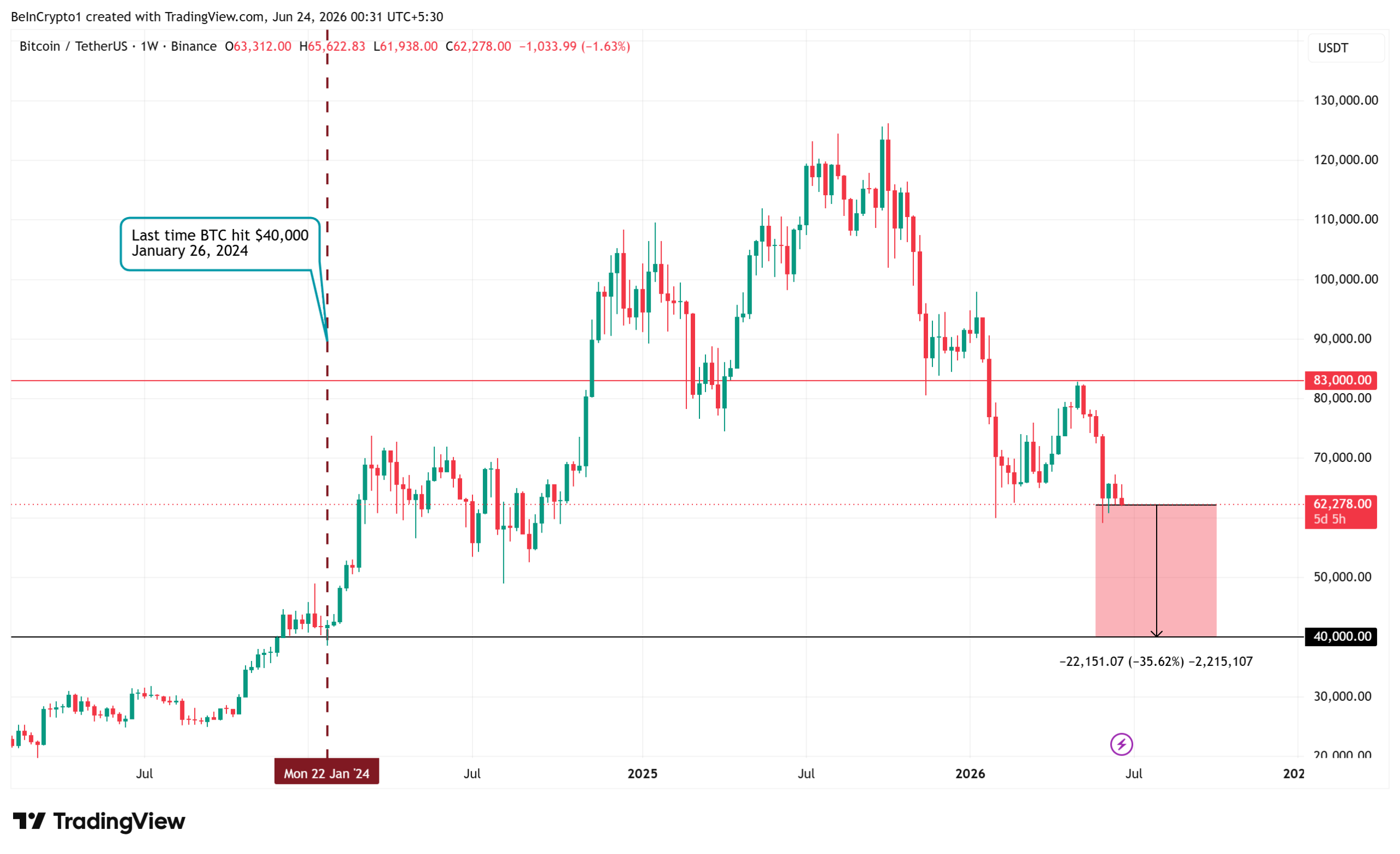
Arthur Hayes expects Bitcoin (BTC) to bottom near $40,000 within the next six months, a prediction the BitMEX co-founder made even as his core positions stay heavily long.
Bitcoin changed hands around $62,278 on Tuesday, down about 3% over 24 hours and locked in a range it has held for weeks. A move to Haye’s target would constitute a 35% drawdown below current prices.

Arthur Hayes Eyes a $40,000 Bitcoin Floor
Hayes laid out the call during an interview with content creator EllioTrades on June 12. He said he holds put spreads as a hedge, while his long-term book stays large and strictly long.
Follow us on X to get the latest news as it happens
The $40,000 target would mark a steep retreat, and adds to a run of recent calls from Hayes, including a more bullish year-end Bitcoin target. His willingness to hedge, however, signals caution about the next few months.
“I’m going to stick with it,” Hayes said when asked if his $200,000–$250,000 target still holds with only weeks left in the year. “If I’m wrong it doesn’t matter… I’m long, I’m still happy either way.”
MicroStrategy Buys Help Bitcoin Reclaim $65,000
Bitcoin had recovered earlier in the week, and MicroStrategy’s buying helped it reclaim the $65,000 level. The company added 520 BTC and lifted its cash reserves by $300 million to $1.4 billion. That extended dividend coverage to nearly 10 months.
Analysts at QCP flagged that the buying likely came through a dilutive at-the-market stock program. Even so, investors took comfort in the liquidity rebuild, and the firm’s STRC preferred shares recovered above $90.
BTC will likely require a confluence of positive catalysts to break decisively out of its current range,” the analysts stated.
The accumulation has limits, however. Wintermute said MicroStrategy keeps buying at a slower pace as funding costs rise.
It added that the two largest structural buyers, exchange-traded funds (ETFs) and Strategy, now provide less marginal demand than before.
Hawkish Fed Keeps Bitcoin Boxed In
The bigger drag came from the Federal Reserve. Policymakers held the benchmark rate between 3.50% and 3.75%.
They also stripped the easing bias and tilted the dot plot toward a hike, lifting the median 2026 rate projection to 3.8% from 3.4% in March.
That shift repriced expectations fast. The market now prices December rate hike odds near 37%, up from about 24% a month earlier, according to Wintermute. Most policymakers, 17 of 18, now see inflation risks tilted to the upside.

Fed Chair Kevin Warsh’s hawkish policy turn reinforced the message, signaling a committee set on fighting inflation. The stance held even as oil prices fell.
The backdrop leaves Bitcoin on the defensive. A collapsed US-Iran agreement and roughly $600 million in weekend long liquidations had already weighed on prices.
Traders now look to Thursday’s Personal Consumption Expenditures (PCE) report, where consensus sees core inflation rising 0.3% to 0.4%.
Quarter-end could add to the swings. JPMorgan estimates institutions may shift as much as $165 billion from equities into bonds by the end of June.
That would rank as the largest such reallocation in at least four years. For now, Wintermute sees little sign of fresh demand.
This is a market stabilizing beneath the surface on lighter positioning and cleaner leverage, not one finding new buyers,” Wintermute analysts stated.
The post Arthur Hayes Sees $40,000 Bitcoin Bottom Within the Next Six Months appeared first on BeInCrypto.


ETH price hangs in the balance as a fresh wave of liquidations pressure the altcoin and spillover from Bitcoin’s struggles to hold $62,000 impact investor sentiment.

Over the past week, bitcoin (BTC) has traded between $62,000 and $72,000. Despite bullish conditions not being fulfilled, the leading digital asset has managed to hold its floor.
Analysts at the crypto exchange Bitfinex revealed in the latest Bitfinex Alpha report that the current crypto market environment is being reshaped by shifting Federal Reserve expectations and inflation risks. These factors have created near-term pressure for risk assets like gold and BTC; regardless, the floor of the latter has remained intact.
Bitcoin in Limbo
On-chain data shows that neither bulls nor bears are firmly in control. With BTC trading within the $62,500–$72,000 consolidation zone, the market appears to be in limbo, rather than a sustained bearish phase.
Bitfinex analysts outlined two bullish tests for a potential sustained uptrend on lower timeframes, but they all failed. The tests were a sustained spot exchange-traded fund (ETF) market bid and a calming of the derivatives complex, with funding moving from neutral to negative.
In the face of the failure, there are now two opposing forces pulling at market sentiment on inflation: the potential of softening energy risks following a peace deal between the U.S. and Iran and the Fed’s focus on inflationary heat rather than the immediate relief in crude prices.
For BTC to continue holding its floor, the Fed needs to be willing to “hold its nerve,” according to experts. It remains to be seen how the market will move until this happens.
Fragile Bullish Conditions
Analysts further explained that ETFs are currently the primary proof of the market’s indecisiveness. These products have failed to establish a bullish trend and have instead reverted to net redemptions. The total volume traded across ETFs has declined significantly, but it is still not low enough to support a bearish case. So they are also in a state of limbo, and not a bear market.
Nevertheless, a structural perspective indicates that BTC is trading below the active-investor cost basis. The $68,500–$72,000 zone remains the primary overhead supply band, and analysts expect further compression within the $62,000–$64,000 range, or broader movements between $60,000 and $70,000 in the coming days.
As the market gives in to either the bulls or the bears, the $68,500–$72,000 range is expected to act as significant resistance, as many investors in this range are at a loss and are likely to sell at break-even. So, BTC now has three key levels: the $54,000 foundational floor, the $72,000 break-even point for recent buyers, and the $77,200 hurdle for short-term holders.
The post Bitcoin Holds Key Price Floor Despite Weak Bullish Signals: Bitfinex Alpha appeared first on CryptoPotato.


CBOE has begun evaluating a conversion of its Bitcoin and Ether futures into perpetual contracts after crypto perpetuals generated more than $8.5 billion in trading volume on Kalshi within weeks of launch.
Summary
- CBOE is considering converting its Bitcoin and Ether futures into perpetual contracts after recent CFTC approvals.
- Kalshi’s crypto perpetual futures have generated more than $8.5 billion in trading volume within weeks of launch.
- CME has challenged the CFTC in court as perpetual futures trading expands across regulated and decentralized markets.
According to a June 23 report from The Wall Street Journal, CBOE Global Markets is considering turning its continuous Bitcoin and Ether futures into perpetual futures following recent regulatory developments in the United States.
The report cited Rob Hocking, CBOE’s global head of derivatives, who said the exchange is exploring the possibility after the U.S. Commodity Futures Trading Commission approved cryptocurrency perpetual futures for prediction market operator Kalshi.
While Hocking did not provide a timeline for any changes, the comments place one of the largest U.S. exchange operators among a growing list of firms responding to fresh competition in the perpetual futures market.
CBOE introduced its continuous Bitcoin and Ether futures contracts in December, offering products with expirations extending as far as 10 years.
According to The Wall Street Journal, the exchange is now studying whether perpetual contracts could provide an alternative structure following the CFTC’s decision to permit similar products on regulated U.S. venues.
Kalshi’s rapid growth has drawn attention from incumbent exchanges
Trading activity has accelerated quickly since Kalshi entered the market. According to The Wall Street Journal, Kalshi’s cryptocurrency perpetual futures have recorded more than $8.5 billion in volume within weeks of becoming available.
The CFTC’s approval has not been welcomed by all established exchanges. Earlier this month, the Chicago Mercantile Exchange filed a lawsuit against the regulator, arguing that the decision allowing Kalshi to list perpetual futures violates federal law. CME claimed the approval caused “textbook competitive injury” to incumbent futures exchanges.
The dispute highlights the growing importance of perpetual futures, a product that has become the dominant form of crypto derivatives trading since being popularized by BitMEX. Unlike traditional futures contracts, perpetuals do not expire and instead use periodic funding payments to keep contract prices aligned with the underlying asset.
Perpetual futures activity continues to expand across crypto markets
Outside traditional exchange operators, trading firms and crypto platforms continue adding new perpetual products.
Earlier this month, Coinbase launched perpetual futures linked to stock indexes, giving eligible U.S. traders leveraged exposure to sectors including artificial intelligence, defense, and Chinese equities. The rollout followed Coinbase International Exchange’s March launch of round-the-clock futures tied to U.S.-listed stocks for eligible traders outside the U.S.
Commodity-linked perpetual products are also gaining traction. BitMEX recently pointed to rising interest in commodity perpetual swaps as volatility in oil and gold markets increased.
Decentralized trading venues have become another major center for perpetual futures activity. According to data from DeFiLlama, decentralized exchanges processed more than $22.5 billion in perpetual futures volume during the past 24 hours and approximately $663 billion over the previous 30 days. DeFiLlama data showed that Hyperliquid accounted for most of that activity.
With regulated U.S. exchanges now receiving a pathway to offer perpetual futures, competition between traditional futures operators, crypto-native platforms, and decentralized venues is intensifying as firms move to capture trading activity that has historically been concentrated outside the U.S.

Ethereum Staking “Tax” Could Already Be Losing Relevance

Apple TV’s Hit Sci-Fi Crime Series Just Broke a Major Streaming Trend

‘Fabulous’ Yorkshire park with water sports and aqua park


-

 Fashion4 days ago
Weekend Open Thread: Miami – Corporette.com
-

 Entertainment3 days ago
Renter of Home in Anne Heche Crash Denies Settlement With Son
-

 Tech2 days ago
Microsoft accidentally kills epic Outlook email threads
-

 Business3 days ago
Soccer-U.S. defends Iran World Cup travel restrictions, says discussions ongoing
-

 Politics5 days ago
BBC Reporter Discusses Cross Party Criticism Of Trumps Iran Deal
-
 Sports6 hours ago
Two goals and an assist by sheer aura: Cristiano Ronaldo just entered the World Cup chat
-
 Business4 days ago
Wall Street Week Ahead: Investors see Micron earnings as pulse check of AI rally momentum
-

 Tech5 days ago
AWS enters the context layer race with a graph that learns from agents, not manual curation
-

 Politics4 days ago
Andy Burnham and the meaning of Makerfield
-
 Crypto World4 days ago
Can Charles Hoskinson Really Rescue Cardano?
-

 Crypto World4 days ago
HIVE shares jump as $220M AI deal speeds Bitcoin mining pivot
-

 Crypto World4 days ago
Jake Chervinsky accuses CME of protecting derivatives monopoly
-

 Business5 days ago
Brexit cost 6% of UK economy, Bank of England company data suggests
-

 NewsBeat4 days ago
Keir Starmer Allies Question His Chances For No 10
-

 Tech1 day ago
Nearly 7,000 fake Amazon domains registered ahead of Prime Day 2026, researchers warn
-

 Sports5 days ago
FIFA World Cup 2026: Canada beat 9-men Qatar 6-0 to register first ever win | FIFA World Cup 2026
-
 Tech3 days ago
Signal’s Meredith Whittaker says AI chatbots ‘are not your friends’ and calls Copilot agents a backdoor
-

 Business3 days ago
MHP SE 2026 Q1 – Results – Earnings Call Presentation (OTCMKTS:MHPSY) 2026-06-20
-

 Entertainment4 days ago
Jose Alvarado Wants Taylor Swift at More Knicks Games
-

 Crypto World6 days ago
Anthropic’s Dario Amodei Urged AI Unity at G7, Even as US Banned His Models
You must be logged in to post a comment Login