

Connect with us
DAPA Banner
DAPA Coin
DAPA
COIN PAYMENT ASSET
PRIVACY · BLOCKDAG · HOMOMORPHIC ENCRYPTION · RUST
ElGamal Encrypted MINE DAPA
🚫 GENESIS SOLD OUT
DAPAPAY COMING

NewsBeat

The blind football team opening up the world for women in Mexico

Published

on

The blind football team opening up the world for women in Mexico

As World Cup fever grips the country, Chilangas FC is helping visually impaired women build confidence, friendship and sporting ambition in a game that has too often left them on the sidelines

Swaying her white cane from side to side, Pau, 31, steps off a bus into the noise of Mexico City. Cars surge past, horns blare and rain begins to fall, but the visually impaired mother keeps moving, her six-year-old son Noel holding tightly to her hand.

Several times a week, she makes the two-hour journey across one of the world’s largest cities to train with Chilangas FC, a women’s blind football team that she says has changed her life.

Advertisement

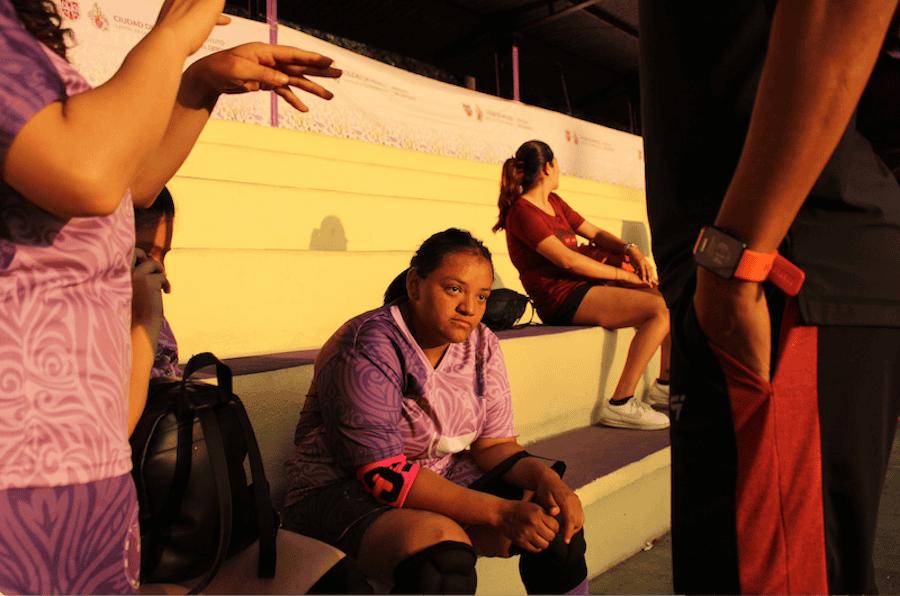
For Pau and her teammates, the commute is more than worth it. Chilangas FC, one of only six women’s blind football teams in Mexico, has become a source of friendship, confidence and independence in a country where many visually impaired women still face pressure to remain at home under the care of relatives.

Advertisement

“Football has changed how I see myself as a blind woman,” Pau says. “Bringing my son with me and knowing I’m setting an example for him fills my heart. I’m showing him that there are no limits.”

Founded in 2022 by coach Wendy del Río, Chilangas FC was created to expand opportunities for visually impaired women in a sport that has long been dominated by men. As blind football has grown in Mexico through men’s leagues, tournaments and national team programmes, women have begun pushing for spaces of their own.

“When we started, there were very few opportunities for blind women,” says del Río. “Many arrived thinking football wasn’t for them because that’s what they had been told their whole lives.”

Training gave the players something many had been missing beyond sport: regular contact with other visually impaired women, and a place where the daily business of navigating the city, work, family and other people’s assumptions did not need to be explained.

Advertisement

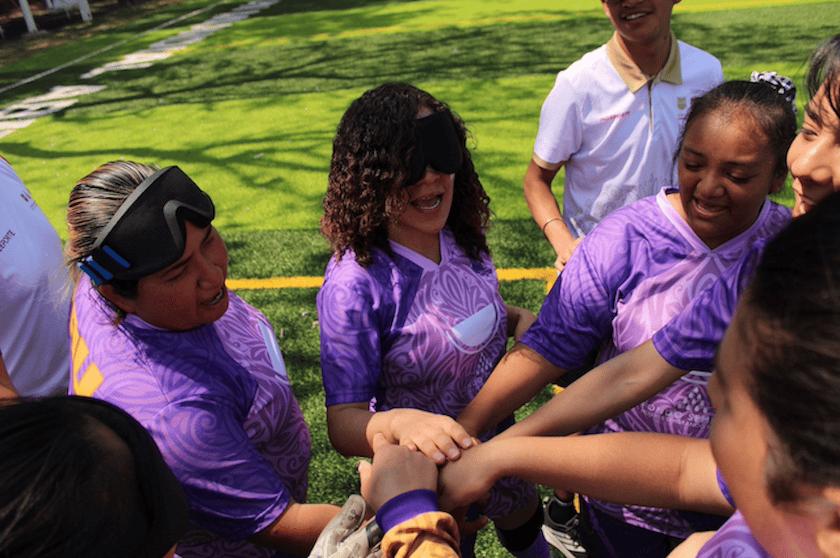
“They’ve become friends, teammates and role models,” del Río says. “Watching their confidence grow has been one of the most rewarding parts of this project.”

Before joining Chilangas FC, much of Pau’s world revolved around work, childcare and getting around Mexico City with a visual impairment. Football has since opened up her life far beyond those routines.

Advertisement

“Before, I felt very alone,” she says. “Now I have teammates who support me, who understand me and who encourage me to keep going.”

Noel often comes with her to training and proudly tells classmates that his mother plays football.

Watching their confidence grow has been one of the most rewarding parts of this project

“He’s happy,” Pau says. “He tells his teachers and our family that his mum plays football. He says he wants to play sports too. It’s beautiful.”

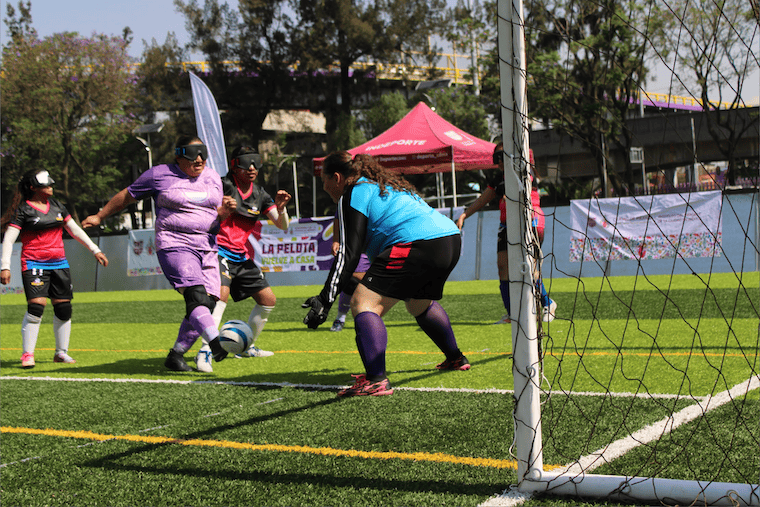
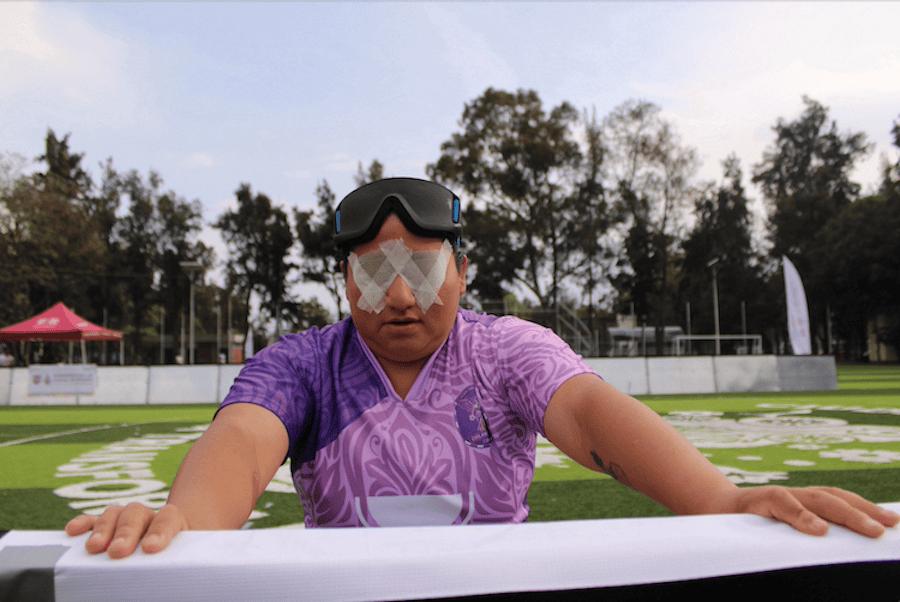
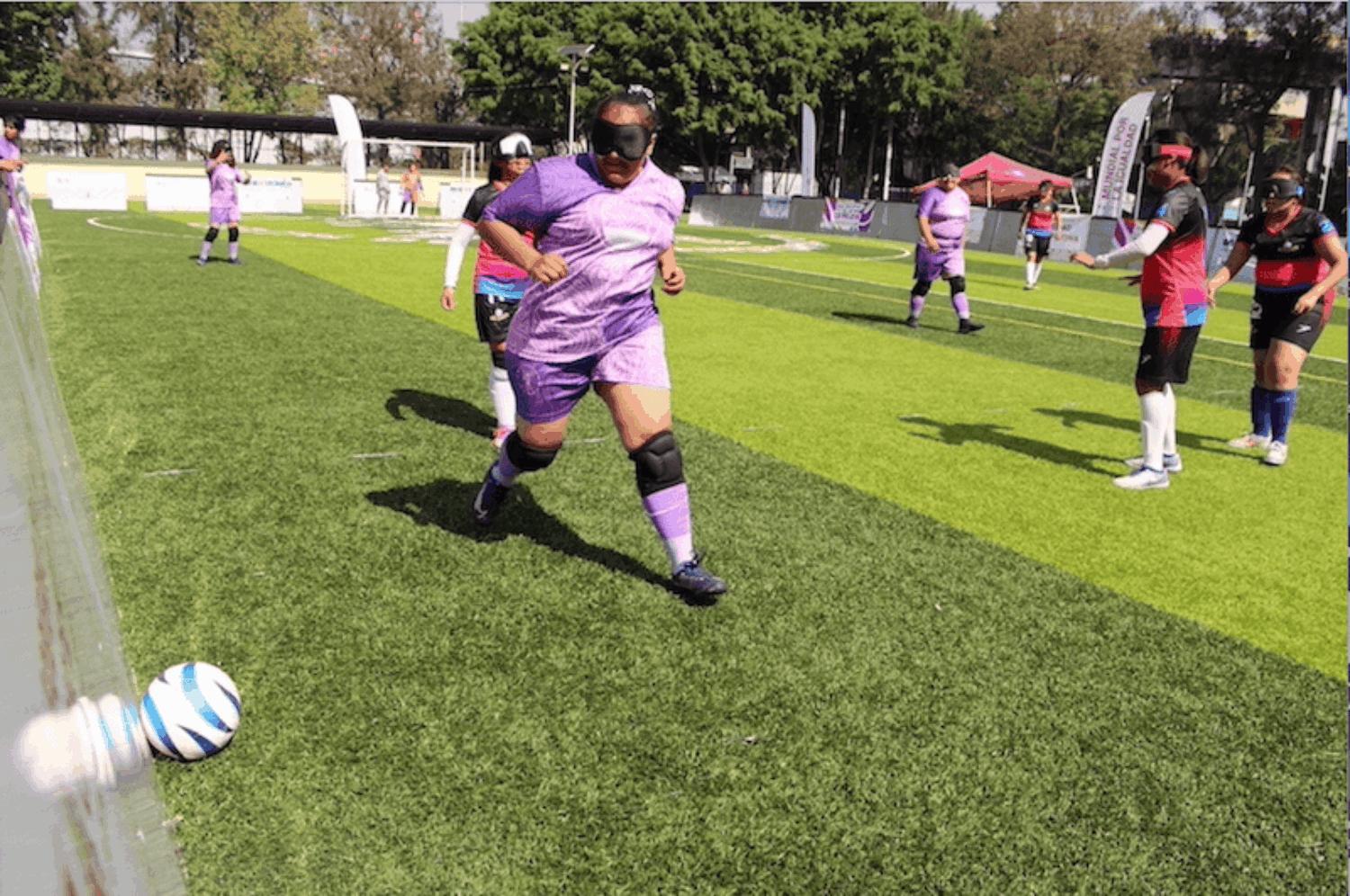
Blind football has existed in Mexico for more than two decades, but opportunities for women have long been limited. During matches, all outfield players wear blackout eye coverings so that different levels of vision are equalised. They play with a rattling ball and rely on voice, trust and spatial memory, guided by teammates, coaches and goal guides stationed around the pitch.

Advertisement

The game is played five-a-side, with four visually impaired outfield players and a sighted goalkeeper. The goalkeeper directs the defence, a coach outside the pitch guides the midfield, and a goal guide behind the opposition net helps attackers line up their shots.

Mexico is co-hosting the World Cup with the US and Canada, and football is everywhere: on television screens, in bars, on shirts, in schoolyards and across the streets Pau crosses to reach training. For Chilangas FC, that national obsession has sharpened a simple question: who gets to be part of the game?

Mexico’s women’s blind footballers are now preparing for another milestone, with players hoping to compete in the Copa América in São Paulo, Brazil, this September. Mexico is trying to become the fourth country in the world, after Brazil, Argentina and Canada, to form a women’s blind football national team.

According to Mexico’s National Institute of Statistics and Geography, around 16 million people in the country live with some form of visual impairment, including more than half a million who are fully blind. Yet women’s blind football remains tiny, with only six teams nationwide and about 45 women playing at an organised level.

To get to Brazil, the team needs to raise 1m pesos, roughly £40,000, to cover flights, accommodation, uniforms, training and food. With no institutional funding in place, a crowdfunding campaign launched by the foundation Fondo Semillas, Fútbol Ciego: Ellas juegan, México dice ¡voy!, has become its financial lifeline.

The sense of belonging Pau describes is shared by many of her teammates. Alexandra, 20, a striker for Chilangas FC, studies at a residential centre for people with visual impairments on the outskirts of Mexico City while pursuing her football ambitions.

Advertisement

Being here feels like having a family. You feel a beautiful responsibility to stay and keep going

“Right now, football is a huge dream for me,” she says. “I want to keep growing as a player. I’m giving everything to training, to strategy, to being a good teammate. Being here feels like having a family. You feel a beautiful responsibility to stay and keep going.”

Stories like Pau’s and Alexandra’s highlight the barriers many visually impaired women continue to face, says Efraín Mora García, president of the Mexican Federation of Sports for the Blind and Visually Impaired.

“Sometimes the barriers are created by us, or by the family itself,” he says. “There are physical barriers and social barriers, but what these women really need is an opportunity.”

Those barriers do not end at the edge of the pitch. Mexico City, del Río says, “isn’t adapted for the visually impaired to get about”, and women travelling alone face additional safety risks. Many players live on the outskirts, making journeys to training long and expensive, while those who need to work weekends can find sport almost impossible to fit in.

Advertisement

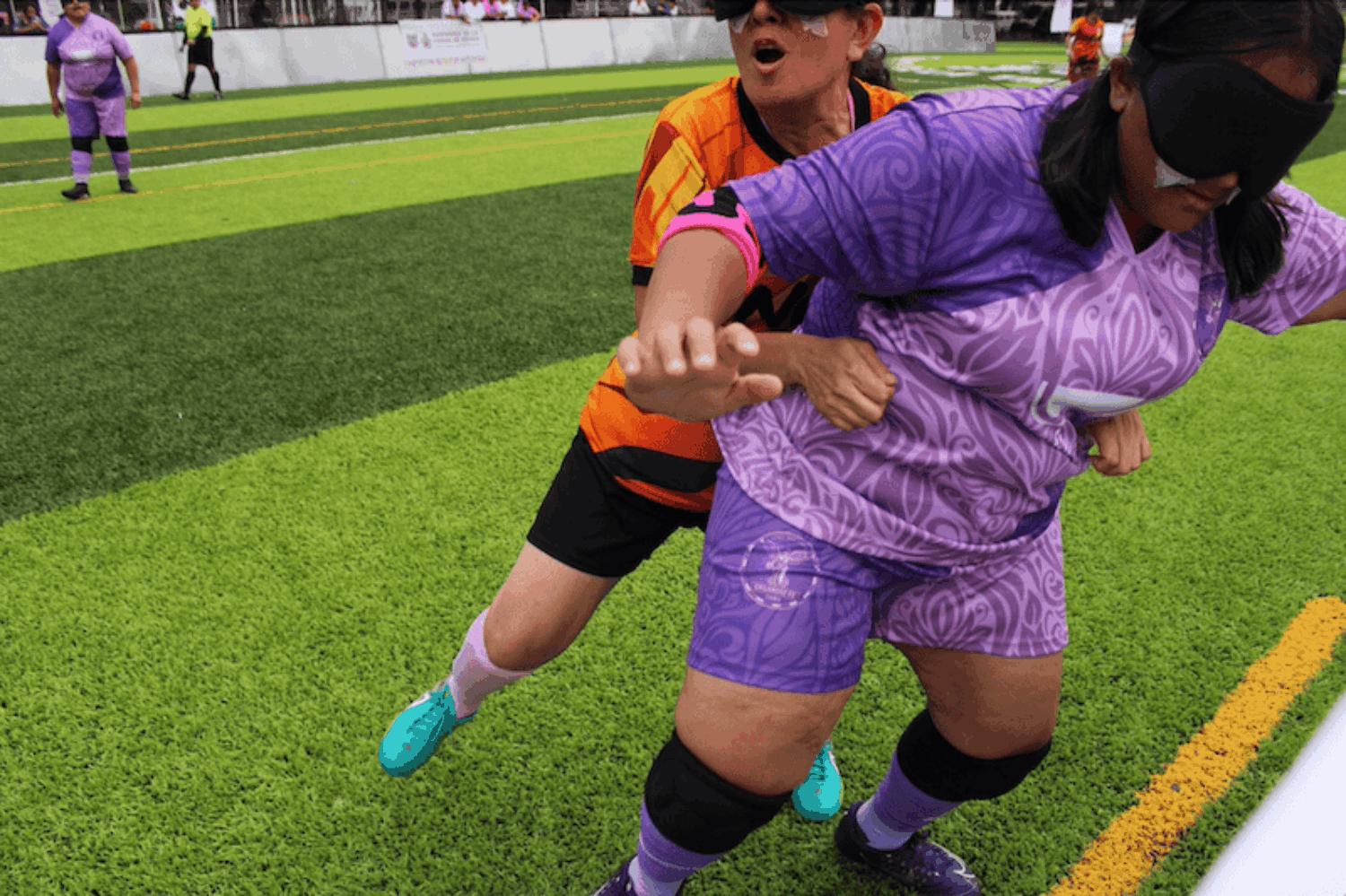
Chilangas FC striker Alexandra Ramírez, 20, attempts to wrestle free from an opposition defender during the Mexican Open Blind Football Tournament

“Playing sport is still a privilege,” del Río says. “You have to have the time, you have to have the resources, and you have to stop doing other activities.”

Advertisement

Without institutional funding, Chilangas FC trains on a public court that it shares with whoever turns up. Del Río has spent months negotiating with Mexico City’s Women’s Secretariat for a dedicated pitch suitable for the sport, while equipment, coaching staff and travel still depend on donations and goodwill.

“What we need is simple: a court designed for our sport, coaches who are paid for their time, and the federation and government to recognise this as a real sport, not a charity project,” she says. “The World Cup is in Mexico, and everyone is talking about football. We just want some of that conversation to include us.”

Even persuading women to try the sport can mean taking on deep-rooted assumptions about disability, danger and who football is supposedly for.

Advertisement

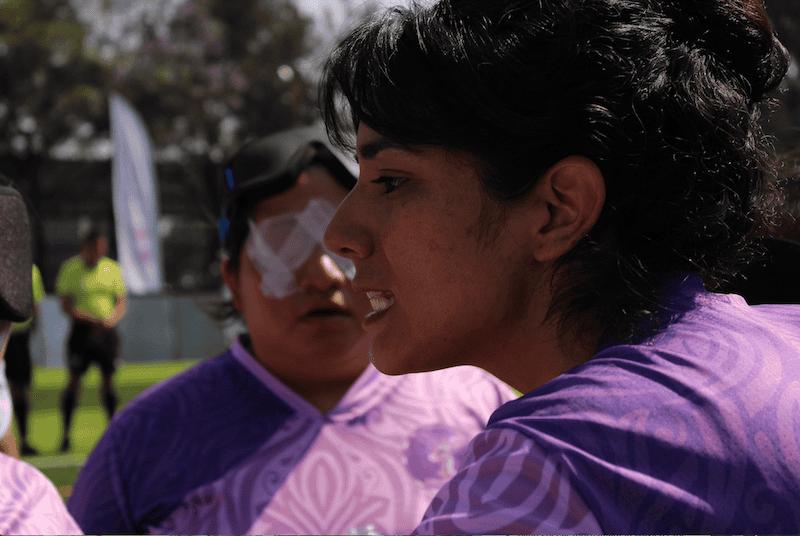
Founded in 2022 by coach Wendy del Río, Chilangas FC was created to expand opportunities for visually impaired women in a sport that has long been dominated by men

“Sometimes I ask the girls, and it’s like, ‘No, I’ll get hit,’ ‘No, it’s too rough,’” del Río says. “Breaking away from those stereotypes (that it’s a conventional, masculine sport) can also be a barrier.”

What the players have built, she says, goes far beyond a football club.

Advertisement

“It becomes a community that embraces you,” del Río says. “And that creates dreams.”

For Pau, one of those dreams has little to do with trophies.

“One of my biggest dreams is for my son to see me play an official match,” she says. “I want to come off the field and have him hug me and say, ‘Congratulations, Mom.’”

For now, Noel keeps making the journey with her across Mexico City, watching from the sidelines as his mother builds a life she once thought was beyond her reach.

Advertisement

Photography by Mark Viales

Be part of the solution

At Positive News, we’re not chasing clicks or profits for media moguls – we’re here to serve you and have a positive social impact. We can’t do this unless enough people like you choose to support our journalism.

Give once from just £1, or join 1,800+ others who contribute an average of £3 or more per month. Together, we can build a healthier form of media – one that focuses on solutions, progress and possibilities, and empowers people to create positive change.

Advertisement

Support Positive News

Source link

Advertisement
Continue Reading
Click to comment

You must be logged in to post a comment Login

Leave a Reply

NewsBeat

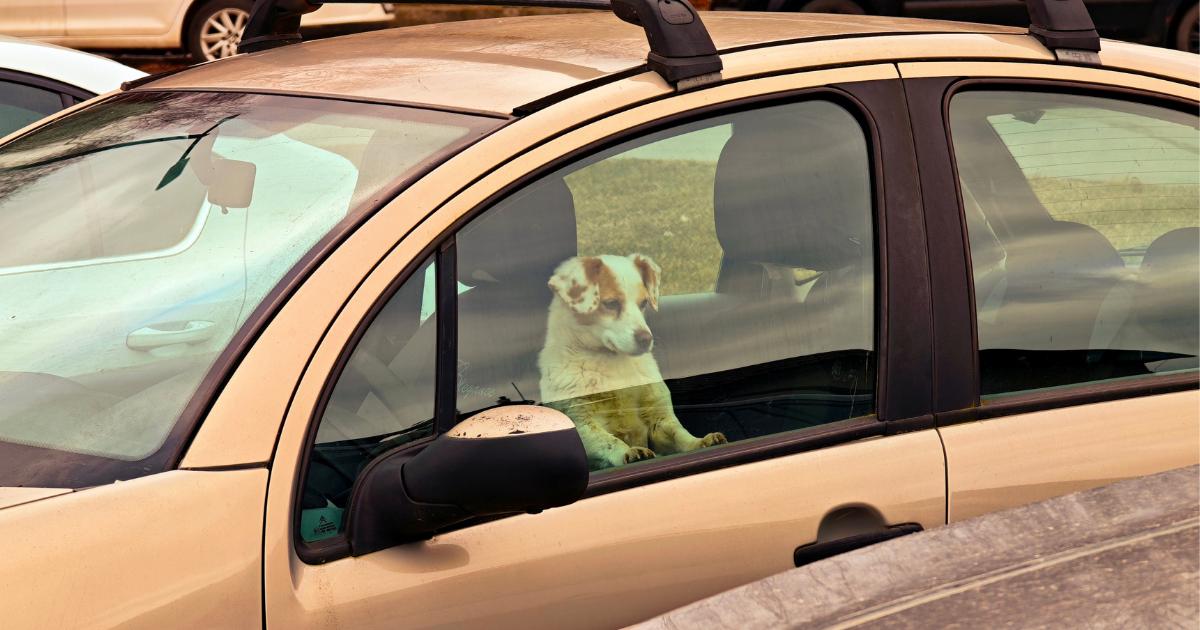
What to do if a dog is in a hot car and can you smash window

Published

on

What to do if a dog is in a hot car and can you smash window

Leaving dogs in cars during a warm day can cause serious health issues and sometimes death, with bystanders known to smash windows in certain conditions to get them out.

Here is what you should do if you see a dog in a car, and what the consequences could be if you smash a window.

What to do if you see a dog in a car on a hot day

If you see a dog in a hot car, the first thing to do is to assess its condition, the RSPCA says.

If the dog doesn’t seem in distress, you can leave them in the car, but it is recommended to try to work out how long the dog has been in the car, such as from a pay-and-display ticket.

Advertisement

You should also make a note of the car’s registration, and if the owner returns, but you still feel they’d put the dog in danger, you can tell the police.

The RSPCA says that if you are at a shop, venue or event, ask staff to alert the owner over the loudspeaker.

They add: “Make sure you, or someone else, stays with the dog.

“Monitor their condition and if they get worse be prepared to call 999.”

Advertisement

If the dog is showing any signs of heatstroke, you should dial 999 immediately.

There are several signs and symptoms of heatstroke in dogs:

  • Collapsing
  • Confusion or disorientation
  • Dehydration
  • Drooling
  • Increased heart rate (check a dog’s heartbeat by placing your hand on their chest, just behind their front leg’s elbow)
  • Muscle spasms
  • Noisy breathing
  • Excessive Panting
  • Red gums and tongue
  • Seizures
  • Vomiting and diarrhoea
  • Weakness and lethargy

If you think a dog is suffering from heatstroke, the RSPCA says to cool them first to stop further heating and then take them to your nearest vet.

To cool the dog down, you can use water cooler than the dog’s temperature and pour it over their body.

Avoid their head and focus on the neck, stomach and thighs.

Advertisement

If available, submerge the dog’s body in cool water such as a paddling pool or stream, as long as the water temperature is cooler than the dog.

The RSPCA warns not to attempt this on an unconscious dog, a dog with health conditions, or an elderly dog – for these dogs, spray them with room temperature water.

You can also create a breeze by fanning the dog to cool it down.

Can you legally smash a window to get a dog out of a hot car?

Under the Animal Welfare Act 2006, it could be deemed as animal neglect if an owner leaves their dog in a hot car.

Advertisement

Section 9 of the Animal Welfare Act places a duty of care on people to ensure they take reasonable steps in all circumstances to meet the welfare needs of their animals to the extent required by good practice.

If the dog suffers extensively or dies after being left in a hot car, owners could be at risk of being prosecuted.

However, it is recommended not to break a car window in the first instance.

The RSPCA says: “If the dog’s condition is critical, and the police haven’t arrived yet, your instinct will be to break into the car to free them.

Advertisement

“But please be aware that this could be classed as criminal damage.

“You may need to defend your actions in court, so please be sure you’re doing the right thing.”

Section 1 of the Criminal Damage Act 1971 states that a person who, without lawful excuse, destroys or damages any property belonging to another, intending to destroy or damage any such property or being reckless as to whether any such property would be destroyed or damaged, shall be guilty of an offence.

As the damage would be under £5,000, a maximum penalty would likely be a fine and/or three months’ imprisonment.

Advertisement

While it can be argued that breaking the window would be a lawful excuse, it is recommended to follow the guidelines provided by the RSPCA first.

The charity says that if you are sure you need to free the dog, tell the police what you intend to do and why.

It urges to take photos or videos of the dog and take their names and the numbers of other witnesses.


Recommended reading:

Advertisement

The RSPCA adds: “Don’t be afraid to dial 999.

“If it’s an emergency, we may not be able to get to you – and the dog – quickly enough.

“And as we have no powers of entry, we’d need to ask the police to help us rescue the dog.

“Don’t worry – the police will soon let us know if the dog needs our help.”

Advertisement

Legally, you can cause damage if you believe the car owner would consent to it if they knew the dog was in danger.

Would you break a window if you saw a dog in a car on a hot day? Let us know in the comments.

Source link

Advertisement
Continue Reading

NewsBeat

Europe heatwave: Air conditioning creates political divide as France records hottest day

Published

on

A sweating man with brown hair and wearing a red top leans against a white wall in the sun because he is overheating.

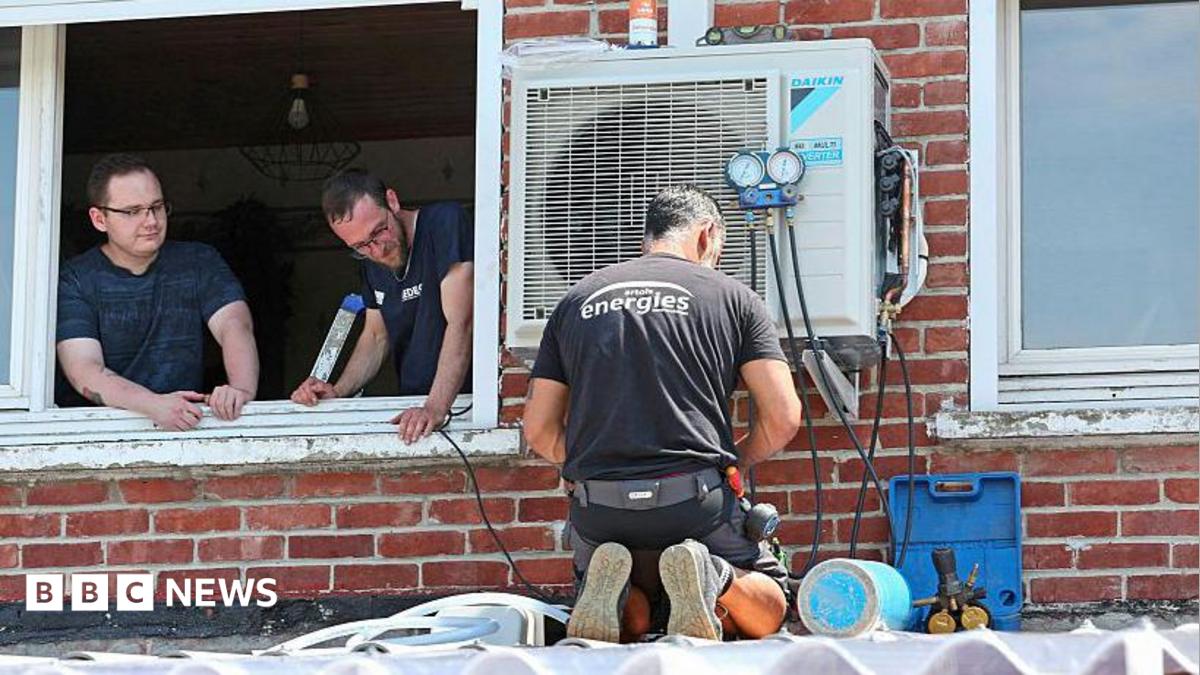
With temperatures soaring, France is being forced to re-think its longstanding reservations about one possible answer to climate change: air-con.

This week debate about la clim’ (climatisation) has once again burst out, with Marine Le Pen on the populist right urging a mass subsidised roll-out and traditionally hostile Greens conceding that some air-conditioning may now be inevitable.

Currently the country has a low take-up, with only 25% of households equipped with an air-con unit. In Spain and Italy the figure is 50%, and in the US and Japan 90%.

French hospitals and schools are also only rarely equipped. Thousands of schools have had to shut this week, and medical and nursing staff complain of conditions fast becoming intolerable.

Advertisement

But with temperatures nudging 40C – Tuesday was France’s hottest day on record – there has been a rush to buy portable air-conditioning appliances, just to let children enjoy a few hours in class, or for suffocating apartment-dwellers to make it through the night.

And more and more, it seems, long-standing opponents of air-conditioning – mainly on the environmentalist left – recognise that it is bound to be part of the country’s response to global warming.

This week the head of the Ecologists party Marie Tondelier broke something of a taboo when she said that air-conditioning would be needed in schools and hospitals.

“There are places where we just can’t do without it now,” she said.

Advertisement

Her break with what she called “anti-clim’ dogma” is significant because until now the Green movement in France has regarded air-conditioning as the worst of solutions to climate change.

Far from attacking the root causes of global-warming, activists said, recourse to la clim’ was merely attenuating the effects of global-warming.

And by making those effects more bearable, it distracted from the essential fight against the causes.

Not only that, but air-conditioning is often criticised by environmentalists for aggravating climate change.

Advertisement

This is because it requires electricity to run – and though most of France’s electricity comes from nuclear power, elsewhere it means more fossil-fuels being burned.

Source link

Continue Reading

NewsBeat

Co-op destroyed in ATM ram raid theft before truck set on fire

Published

on

Cambridgeshire Live

A helicopter was used to search for suspects after a vehicle was stopped in a police pursuit by a stinger

A cash machine was ripped out of a wall in a ram raid before a truck was set on fire. Officers were called at 3.45am on Wednesday (June24) to reports of an incident at the Co-op in High Street, Lakenheath.

Advertisement

A JCB telehandler was used to rip the cash machine out of the wall before it was loaded onto a black Nissan Navara pick-up truck. The Navara drove away from the scene in convoy with a blue Volkswagen Golf R along Station Road towards Brandon.

Officers arrived at the scene in under 10 minutes and began to search the local area. Officers from Norfolk Police were called to assist.

At around 4.30am the Navara was located in Norfolk at Cowle’s Drove in Hockwold. It had been set on fire and was found with the cash machine.

As officers were heading towards the fire they passed a car coming towards them, driving away from the fire. This matched the description of the VW Golf seen leaving the scene of the ram raid, so police units in the area were alerted and a stinger was deployed in an attempt to stop the speeding car.

Advertisement

Officers pursued the VW Golf – which had successfully had a tyre blown out by the stinger – but it was driven into a field off Mill Drift in Hockwold where it became stuck in mud and was abandoned. The occupants made off and searches continued assisted by a National Police Air Service helicopter. They were not located.

At 8.25am officers were notified by members of the public that they had found another black Nissan Navara pick-up abandoned on farmland north of RAF Lakenheath, off Wangford Road. Police said it is not yet confirmed whether this vehicle is linked to the crime.

A section of High Street in Lakenheath near the Co-op is currently closed as the damage to the building is assessed and investigative work takes place. There are also police scenes in place at the locations where the vehicles have been located.

Police are appealing for any witnesses to this incident and asking any motorists driving in the area at the time of the incident – or near any of the locations the vehicles mentioned above were found – with a dashcam fitted in their vehicle, to review the footage for any material that may be of assistance.

Advertisement

Anyone with information is asked to contact West CID at Bury St Edmunds Police Station, quoting reference 37/36196/26. They can also call 101 or contact Crimestoppers anonymously.


Source link

Continue Reading

NewsBeat

Chief of staff to former New York Mayor Eric Adams arrested in bribery probe, source says

Published

on

Chief of staff to former New York Mayor Eric Adams arrested in bribery probe, source says

NEW YORK (AP) — A chief of staff to former New York City Mayor Eric Adams and several other people have been arrested as part of an investigation into an alleged bribery scheme involving a city contract, according to a person familiar with the matter.

Frank Carone, along with his brother and two others, were taken into custody, said the person, who was not authorized to publicly discuss details of the case and spoke on condition of anonymity.

No other details were immediately available. Indictments were expected to be unsealed later Wednesday.

Carone’s lawyer, Arthur Aidala, called the indictment “weak” and “based on purely circumstantial evidence that’s not worth the paper upon which it is printed.”

Advertisement

“Today’s indictment is a sad day for our criminal justice system,” Aidala said in a statement. “It epitomizes the government first finding a target and then spending three years and enormous taxpayer resources to find a crime.”

In a separate statement, Todd Shapiro, a spokesperson for Adams, said Carone “dedicated decades of his life to public service, the legal profession, and helping countless individuals, businesses, and charitable organizations throughout New York.”

“This is an ongoing legal matter and my prayers are with his family,” Shapiro’s statement said.

Advertisement

Source link

Continue Reading

NewsBeat

Dutch fan epically carries 26 pints of beer from the bar to his table – in one go | News Weird

Published

on

Dutch fan epically carries 26 pints of beer from the bar to his table - in one go | News Weird

Close Overlay

In The Mixer’s World Cup special

Everything you need to know about the World Cup – England updates, the games to watch and stories you missed – in five minutes, at 1pm, every day.

Source link

Advertisement
Continue Reading

NewsBeat

Cadbury to launch new twist on classic Dairy Milk bars

Published

on

Cadbury to launch new twist on classic Dairy Milk bars

The Cadbury Dairy Milk Grab & Go bars will be available from July, offering consumers a resealable 56g option in three flavours: Dairy Milk, Dairy Milk Marvellous Creations, and Dairy Milk Chopped Fruit & Nut.

Intended for portability, the bars are designed to be portioned and enjoyed throughout the day rather than eaten all at once.

A Dairy Milk Fruit & Nut chocolate bar that's ideal for snackingThe bars are smaller and encourage chocolate to be eaten in stages (Image: Jam Press/Cadbury)

Cadbury launches new twist on classic Dairy Milk bars

Phoebe Morris, junior brand manager at Cadbury’s parent company Mondelez International, said: “We’re seeing a clear shift in consumer behaviour, particularly among younger shoppers, towards more frequent, on-the-go snacking throughout the day.

“Shoppers are looking for options that fit seamlessly into their routines, creating a strong opportunity for formats that deliver convenience without compromising on taste.”

Advertisement

The new bars will be priced at £1.29 and will be positioned alongside Cadbury’s Duo range, as reported by creatorzine.com.

Phoebe added: “Our Grab & Go bars bring the trusted Cadbury Dairy Milk chunk taste into a format designed specifically for these high-frequency snacking moments.”

The Grab & Go range follows another recent launch from Cadbury aimed at younger consumers.


Discontinued UK sweets and chocolates


Earlier this month, the confectionery giant introduced the limited-edition Dairy Milk Strawberries & Creme Frappe bar, inspired by chilled summer drinks.

Advertisement

The bar combines classic Dairy Milk chocolate with a strawberries-and-creme-frappe-inspired filling and is designed to be eaten chilled.

Why are Cadbury’s chocolate bars getting smaller?

If you’ve noticed Cadbury’s chocolate bars getting smaller recently, you’ll probably want to know why.

Dirk Van de Put, chief executive of Mondelez International, told BBC Radio 4’s The Big Boss podcast that Cadbury tried to keep prices relatively the same for consumers, which meant they had to reduce the size instead.

He explained: “Most consumers love their Cadbury.

Advertisement

Recommended reading:


“They want to have their daily Cadbury, but when they were paying £1, they don’t want to then pay £1.50 or £2 for the same quantity.

“They would like to continue to buy something at £1.

“So what do we do? Yes, we reduce sometimes the size.

Advertisement

“We don’t do that in a malicious way.

“But if we look at how consumers make their decisions, the price point at which they can buy is very important to them.”

What’s your favourite chocolate bar? Tell us in the comments below.

Advertisement

Source link

Continue Reading

NewsBeat

New film shines spotlight on Gypsy, Roma and Traveller families

Published

on

New film shines spotlight on Gypsy, Roma and Traveller families

Part of the Government’s Best Start in Life campaign, the film highlights how inclusive early years settings can help children in the North West from these communities thrive.

It features the voices of real parents and teachers, including Cherelle, a Traveller parent who shares the value nursery education brought to her children.

Cherelle said: “My kids went for three days in the nursery, and it got them mingling with Traveller kids and non-Traveller kids.

Advertisement

“It gave them a really good start and helped prepare them for starting school.”

Filmed at two primary schools, the project shows what respectful, culturally inclusive early years education looks like in practice.

Early education minister Olivia Bailey said: “Early years education changes children’s lives – building the confidence, friendships and skills children need to thrive at school.

“This film celebrates the families and teachers showing what real inclusion looks like.

Advertisement

“As we expand funded childcare to give more families access to high-quality early education, I want every family – including Gypsy, Roma and Traveller families – to feel welcome taking up the support their children need to flourish.”

The film was produced in close collaboration with the Gypsy and Traveller community members, and was written, filmed and directed by Jake Bowers, who has 54 years of community membership and 30 years of experience as a community journalist.

The majority of the crew making the film was drawn from the community in accordance with the ethical journalism principle of narrative sovereignty.

Esther Stubbs, trustee at Friends, Families and Travellers, said: “For many Gypsy, Roma and Traveller families, feeling their children are welcome, understood and safe in play and learning is key to engagement in early years education.

Advertisement

“Positive early experiences support children’s confidence, wellbeing and future education.”

Children from Gypsy, Roma and Traveller backgrounds are statistically less likely to meet expected levels of development by age five.

A spokesman for Friends, Families and Travellers said: “We welcome this film highlighting the positive impact that inclusive early years education can have for Gypsy, Roma and Traveller children and families.

“When early years settings build trust, value families’ cultures and create genuinely welcoming environments, children are better supported to develop, learn and thrive.”

Advertisement

The Best Start in Life campaign offers advice for parents and carers on topics such as infant feeding, childcare, and school readiness.

More information is available at beststartinlife.gov.uk.

Source link

Advertisement
Continue Reading

NewsBeat

Northern warns of cancelled trains due to heat until Friday

Published

on

Northern warns of cancelled trains due to heat until Friday

Around half of the services between York and Leeds, via Harrogate, have been cancelled today, with further cancellations expected until Friday.

Northern Trains confirms that its other routes are also affected.

A Northern spokesperson said: “Due to the extreme heat, we have had to reduce the number of trains running on various routes until Friday, and those that are running will be much busier than usual.

Advertisement

RECOMMENDED READING:
LNER issues ‘do not travel’ as red heat warning hits

“We are strongly advising customers to check their full journey before setting off and be prepared for longer waiting times and cancellations.

“Customers who have booked tickets for a journey on Wednesday, Thursday or Friday will be able to travel at a different time at no extra cost.”

The move follows LNER urging passengers not to travel on Wednesday and Thursday this week after a rare red weather warning for extreme heat.

Advertisement

Services on the East Coast Main Line are expected to be heavily reduced and subject to last‑minute changes.

A previously reported, the rail company is strongly advising customers booked to travel today (Wed) and Thursday, June 25 not to travel because of forecast extreme temperatures and a red Met Office warning covering parts of England and Wales.

The operator says customers should check before they travel throughout this week, as the heat is expected to cause widespread disruption across the route.

Network Rail has warned it may have to impose emergency speed restrictions on sections of the East Coast Main Line on Wednesday and Thursday for safety reasons, with rails and overhead lines at risk of damage in the heat.

Advertisement

That will mean longer journey times and fewer LNER services running across both days, with passengers urged to switch to “alternative, cooler dates” where a more regular timetable is expected to operate.

Source link

Advertisement
Continue Reading

NewsBeat

Rural crime put under microscope by Stirling MSP as cost laid out in new figures

Published

on

Daily Record

New figures revealed a fall in the level of rural crime in 2025 – but the costs topped £3.8million as the issue was raised with the First Minister at Holyrood.

The issue of rural crime has been put in the spotlight after new figures revealed the cost of offences in 2025.

Advertisement

It is a decade since a specialist multi-agency group, the Scottish Partnership Against Rural Crime (SPARC), was formed with the aim of tackling crime faced by rural communities – including the theft of machinery, fuel and livestock, fly-tipping, equine incidents and heritage crime.

Data released by SPARC has outlined a fall in the number of rural crime incidents from 1,040 in 2023/24 to 545 in 2025/2026.

But despite that drop, the cost of rural crime reached almost £4.3 million in 2025, up from £3.8 million in 2024.

The issue was raised in the backbench edition of First Minister’s Questions by Stirling MSP Alyn Smith, who quizzed John Swinney on figures published by the NFU Mutual group which showed the cost of rural crime had surged by 74 per cent in 2025.

Advertisement

Mr Swinney acknowledged actions taken by the Scottish Government and added: “The issues that Mr Smith raises are certainly familiar to me from my own constituency workload and also were issues that were very visible at the Royal Highland Agricultural Show that I visited on Thursday morning.

“The government is supporting action to tackle this issue through the work of the Scottish Partnership Against Rural Crime, which is a multi-agency partnership led by Police Scotland, which works with a variety of justice and rural sector partners to provide the necessary action in this respect.

“We do of course support Police Scotland in their work financially and we are increasingly concerned by the link between machinery theft and serious organised crime, which is a focus of the partnership to try to address this practice within rural communities.”

As SPARC marks the ten-year anniversary of its formation, representatives from the agencies involved has spoken of the importance of getting to grips with rural crime.

Advertisement

Chief Superintendent Gregg Banks said: “Rural crime has a significant impact on individuals, families, businesses, and the wider community.

“The financial loss impacts all of those working directly in local industry and can have far wider repercussions. The personal impact from certain crimes can be long-term and profound.

“Strong partnership working is making an impact. SPARC enables us to share information and intelligence, to pro-actively prevent crime, to educate the public, and ultimately bring offenders to justice.

“But we can only work with the information provided to us. While reported incidents may have fallen, we believe some crimes, such as livestock worrying and rural theft, may be under-reported.

Advertisement

Tom French of NFU Scotland added: “Rural crime is not victimless. It affects livelihoods, mental wellbeing, animal welfare and business confidence.

“NFU Scotland remains committed to working closely with partners to ensure rural communities are properly supported and that crimes affecting agriculture are taken seriously.”

And Iain Batho, who leads on wildlife crime for the Crown Office and Procurator Fiscal Service (COPFS), said: “COPFS values the critical role which SPARC plays in combating rural crime in Scotland.

“COPFS takes such offending extremely seriously and strategic thinking and partnership working is fundamental to ensuring that those who commit rural crimes are brought to justice through the courts.”

Advertisement

Source link

Continue Reading

NewsBeat

UN nuclear chief says inspectors will visit Iran sites as part of war deal

Published

on

The director general of the International Atomic Energy Agency (IAEA), Rafael Grossi, addresses a news conference during an IAEA Board of Governors meeting at the IAEA headquarters in Vienna, Austria (5 June 2026)

In recent days, there has been a dispute between the US and Iran over the issue of UN nuclear inspectors visiting sites in the country.

On Monday, following talks in Switzerland with Iran’s chief negotiator, US Vice-President JD Vance said Iran had “agreed to invite IAEA inspectors back into their country”.

The next day, Iranian foreign ministry spokesman said there had been “no detailed discussions” and that Iran had no plans to grant IAEA inspectors access to nuclear facilities which were bombed by the US during a 12-day war between Israel and Iran in June 2025.

US President Donald Trump then dismissed Iran’s “protestations and false statements to the contrary”, saying the country had “fully and completely agreed” to inspections.

Advertisement

“There’s a war or words here. Some say ‘yes’, the others say ‘no’,” the IAEA’s chief said on Wednesday. “I can understand political statements. They are part of the reality.

“But the fundamental thing… is that there has been a memorandum of understanding signed by both presidents,” he added. “[It] says explicitly that the nuclear activities that are going to be carried out, with regards to nuclear material, facilities, will be supervised by the IAEA, in bold letters. This is going to happen.”

Grossi said the inspections would take place in collaboration and co-operation with the Iranian government. “Whether this happens the day after tomorrow, or in one week, or in 10 days, it’s important but not essential.”

Iranian Deputy Foreign Minister Kazem Gharibabadi appeared to push back at the comments.

Advertisement

He wrote on X that access to Iran’s damaged nuclear facilities and its nuclear materials would only be addressed within the framework of a final agreement with the US and after practical steps had been taken to lift all sanctions.

“Media noise cannot be used to impose facts on the ground,” he added.

Under the 14-point memorandum of understanding, the US and Iran have committed to negotiating a final deal within 60 days.

It says they have “agreed to resolve the disposition of stockpiled enriched material, pursuant to a mechanism that will be mutually agreed upon… with the minimum methodology to be down-blending on site under the supervision of the IAEA”.

Advertisement

The IAEA said in a recent report, external that its inspectors were allowed to visit Iran’s Bushehr nuclear power plant earlier this month, but that they were still not given access to the sensitive nuclear facilities that were bombed last June.

The watchdog said that meant it could not provide any information on the current size, composition or whereabouts of Iran’s stockpile of enriched uranium, or whether Iran had suspended all enrichment activities. Much of the stockpile is believed to be inside underground tunnels at the Isfahan site.

Enriched uranium can be used to make reactor fuel but also nuclear weapons.

Before the start of the US-Israeli war with Iran on 28 February, the IAEA reported that Iran had 440kg (970 lbs) of uranium that was enriched up to 60% purity, which is near weapons grade. That would theoretically be enough, if enriched to 90%, for as many as 10 bombs.

Advertisement

Iran insists its nuclear activities are entirely peaceful and that it would never seek to develop or acquire nuclear weapons.

Under a 2015 deal with the US and five other world powers, Iran agreed to limit its nuclear activities and allow continuous and robust monitoring by the IAEA’s inspectors in return for relief from crippling economic sanctions.

However, Trump abandoned the agreement during his first term in 2018, saying it did too little to stop a pathway to a bomb, and reinstated US sanctions.

Iran retaliated by increasingly breaching the restrictions of the deal, particularly those relating to uranium enrichment.

Advertisement

Source link

Continue Reading

Trending

Copyright © 2025