

Business
Elon Musk loses trillionaire status as global tech rout hits SpaceX

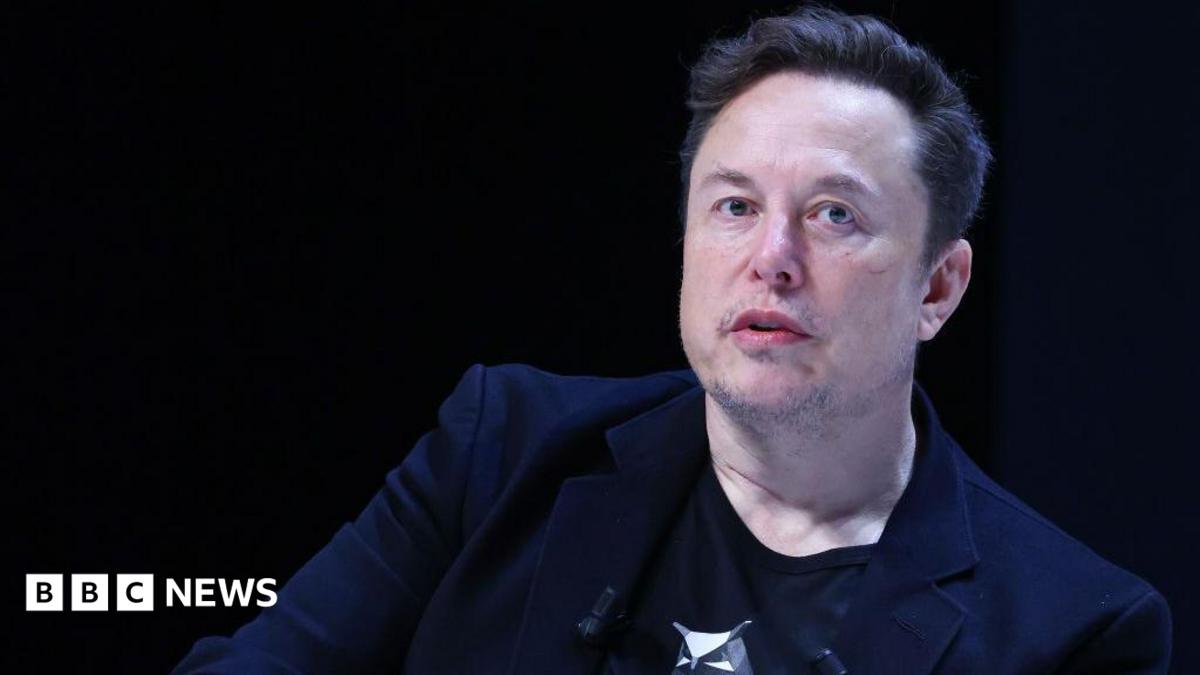
Tech entrepreneur Elon Musk lost his trillionaire status on Tuesday, less than two weeks after becoming the first person to achieve it following SpaceX’s public debut, according to data from Bloomberg.
The Bloomberg Billionaires Index – updated daily at 17:30 in New York (22:30 BST) – valued his fortune at $957bn (£727bn) on Tuesday, down from the $1.11tn valuation less than 14 days ago.
The reversal followed a sharp retreat in SpaceX and Tesla shares as technology stocks broadly tumbled, fuelled by growing doubts over the long-term profitability of artificial intelligence.
Despite the loss, Musk remains the world’s richest person, and his wealth still dwarfs that of his nearest rivals.
The billionaire originally made history on 12 June with the highly anticipated public market debut of his rocket company, SpaceX, on the Nasdaq exchange.
The blockbuster initial public offering (IPO) was priced at $135 per share and opened at $150 when it began trading.
The debut valued the rocket and satellite giant at more than $1.77 trillion. Because Musk owned roughly 42% of SpaceX, the listing instantly propelled his paper fortune past the $1 trillion mark.
By 16 June, surging investor enthusiasm drove SpaceX shares to a peak of $225.64, pushing Musk’s total net worth to a peak of $1.32 trillion.
However, the market rally did not last.
Concerns over capital spending, artificial intelligence infrastructure costs, and stubborn interest rates triggered a widespread tech sell-off and hit high-flying technology giants such as Nvidia, Intel, and AMD, particularly hard.
But SpaceX shares bore the brunt of the correction, plunging more than 30% from their mid-June peak to trade around $156.
On a single turbulent Monday, 22 June, a 16% single-day drop erased an estimated $240 billion from Musk’s personal balance sheet.
Concurrently, shares of his electric vehicle venture, Tesla, slid nearly 6% just a day later, compounding the financial damage. Musk owned about 12% of Tesla’s outstanding shares.
Musk’s trillionaire status is uniquely vulnerable due to the extreme concentration of his wealth. Unlike traditional billionaires with diversified portfolios, his fortune is almost entirely tied to equity in just two companies: SpaceX, which represents nearly 80% of his total net worth, and Tesla.
Market analysts note that post-IPO volatility is entirely standard for highly valued growth firms, though the scale of the movement reflects a deeper tug-of-war between hype and reality.
“For a stock like SpaceX, a lot of decision making might have been emotional and based on the anticipation of huge leaps forward in space exploration and utilisation, but investing should be something treated with clear eyes and patience, even when such huge numbers are involved,” said Danni Hewson, head of financial analysis at AJ Bell.
With restrictions lifting in late July that will allow company insiders to finally sell their shares in stages, market pressure may continue.
However, because a modest 6% recovery in SpaceX stock would restore his 13-figure status, Musk may simply become the world’s first recurring trillionaire.

Logitech: Enterprise Momentum Supports A Buy Rating

Baker Hughes CEO Lorenzo Simonelli sells $10.6m in stock
Business
(VIDEO) Lee Jung-hoo’s Personal-Best Home Run, Heartfelt Apology Headline Giants’ Win Over A’s
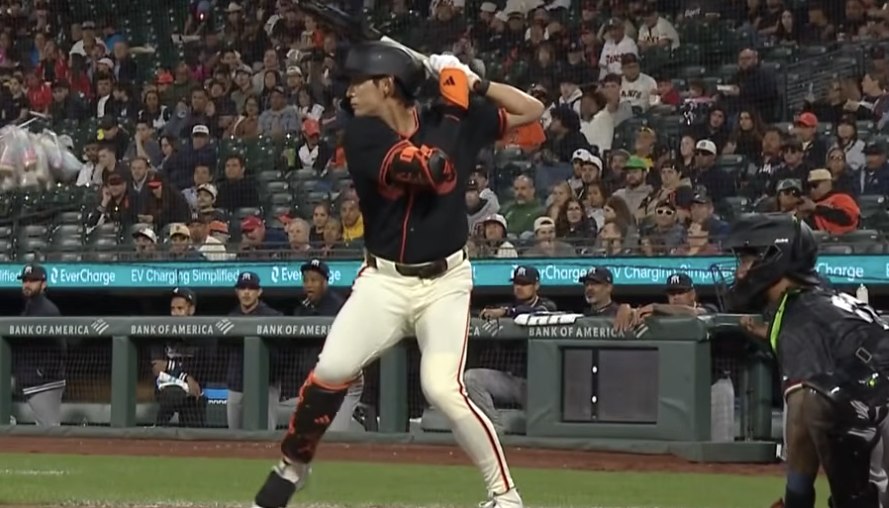
SAN FRANCISCO — Lee Jung-hoo, on June 24 Korean time, started as the fifth batter and right fielder in the Giants’ home game against the Athletics at Oracle Park in San Francisco. He recorded two hits in three at-bats, including his fifth home run of the season, one RBI, one walk, three on-base appearances, and one stolen base, leading San Francisco to a 3-1 victory.
Bouncing Back From a Quiet Outing
Overcoming a hitless performance in three at-bats against the Miami Marlins two days prior, Lee raised his season batting average to .331, with 88 hits in 266 at-bats. This narrowed the gap with league leader Ozzie Albies of Miami, at .337, to 6 percentage points.
A Personal-Best Home Run
Lee’s first at-bat in the second inning produced a home run. He attacked a cutter from Athletics right-handed starter Aaron Shipley that was centered at 99.9 mph, launching it over the deepest right-center field fence at Oracle Park. The ball traveled 414 feet with a launch angle of 30 degrees — his personal longest home run.
Broadcasters Marvel at His Continued Adaptation
NBC Sports Bay Area, the Giants’ broadcast partner, marveled at the performance. Analyst Mike Krukow remarked, “It went over the deepest part of the ballpark. What Lee Jung-hoo is showing now is exactly what he did every year in Korea. He was the league MVP. He was injured in his first year here, faced difficulties last year, but this season he knows what’s needed in this league. He understands opponents and recognizes pitchers. That’s reflected in his hitting. He’s showing exactly what he wanted when he came to the U.S.,” praising his full adaptation.
After the game, NBC Sports Bay Area’s postgame analyst Rich Aurilia also mentioned Lee’s home run, stating, “He’s exactly what the Giants and fans expected when they signed him. Injuries and adapting to life in the U.S. or the differences from Korean baseball took some time, but his consistency now is remarkable.”
Advice on Playing to His Strengths
Aurilia added advice on leveraging Lee’s strengths. “We might see more doubles and triples from him, but power isn’t his main aspect. Considering he plays at Oracle Park, where left-handed hitters struggle to hit homers, his ability to drive in runs is more critical. Scoring doesn’t require homers — singles, doubles, and triples work too. That’s what we’ve seen from him this year,” he said, emphasizing Lee’s value through mid-range hitting.
A Costly Error, Followed by a Heartfelt Apology
Another memorable moment occurred in the third inning. Lee dropped a routine fly ball by Colby Thomas, the Athletics’ leadoff hitter, as the ball deflected off his glove. The wind may have been a factor. With a runner on second and no outs, starter Robbie Ray gave up a groundout RBI single to Max Muncy, allowing the first run. After the inning, Lee approached Ray to apologize for the error. Ray shook his hand and patted his back.
Ray went on to pitch eight innings, allowing two hits, four walks, six strikeouts, and one unearned run, securing his sixth win of the season.
The Manager’s Praise for Both Players
In a postgame interview, Giants manager Tony Vitello praised Ray’s pitching and mentioned Lee’s apology. “Another memorable moment was Lee and Ray embracing in the dugout after the error. Even when sprinting full-speed and playing hard, tension can slip in critical moments. We all know how dedicated Lee is — he rarely lets his guard down. The error was a split-second mistake. Though the leadoff runner reached, Ray minimized damage and protected the lead. That was the game’s most crucial part,” Vitello said. Lee apologized to Ray again after the eighth inning.
A Tough Collision in the Sixth Inning
Vitello’s admiration for Lee didn’t end there. In the sixth inning, after drawing a walk and stealing second base, Lee collided with Athletics second baseman Jeff McNeil, who struck him in the jaw. Stunned, Lee lay on second base briefly. Vitello, along with a trainer and interpreter Han Dong-hee, checked on him. Though Lee winced and held his jaw, he refused to be replaced and finished the game.
A Resilient Mentality on Display
Vitello offered further insight into Lee’s character following the collision. “Lee was dazed after the collision and had a slight headache, but he recovered quickly. He’s far tougher than people realize. I don’t know how he was in Korea, but here he doesn’t show his emotions much. He’s incredibly resilient — if a good hit doesn’t become a hit, he’s unsatisfied. His intensity sometimes annoys me, but he never settles for a mental victory.”
A Season of Steady Improvement
Lee’s performance against Oakland extends what has become a notable season-long trajectory of growth following a difficult adjustment period in his earlier years with the Giants. His climb to a .331 batting average, combined with the power he showed in Wednesday’s game, reflects the kind of all-around production that has drawn comparisons to his award-winning years in the KBO League, where he was twice named league MVP before making the jump to Major League Baseball.
With his batting average now sitting just six percentage points behind the National League leader, Lee’s pursuit of a potential batting title will remain a storyline worth tracking as the Giants continue their season. His willingness to immediately apologize to Ray after the costly third-inning error, combined with his decision to stay in the game despite the jarring collision with McNeil, also reinforced the competitive resilience that both Vitello and the Giants’ broadcast team have continued to highlight as central to his ongoing development in his fourth Major League season.
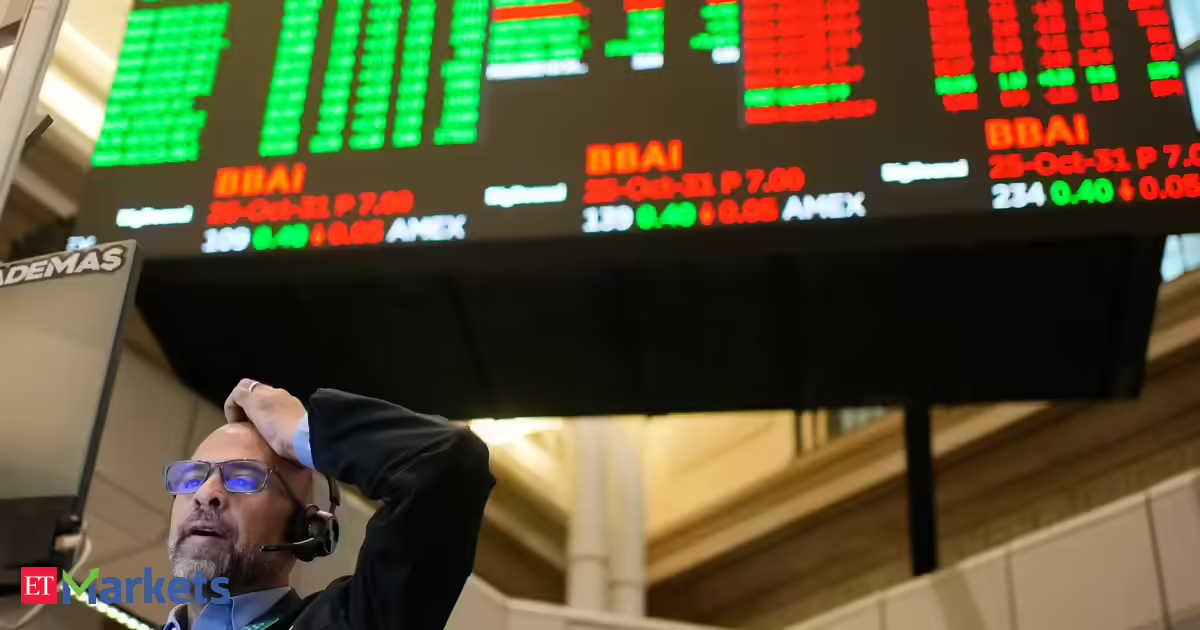
Oil prices fell to their lowest since the start of the Iran war as more tankers were expected to move out of the Strait of Hormuz. U.S. President Donald Trump said Iran had told Washington that no tolls were being sought.
The S&P 500 passenger airlines index rose. Tech stocks slipped, intensifyingthe focus on chipmaker Micron Technology‘s results due after the bell. The stock has surged more than 200% in 2026 but fell on Wednesday.
Cerebras Systems tumbled after the chip designer forecast full-year profit margins would drop below first-quarter figures in its debut report after going public. Also weighing on the stock, OpenAI announced its own in-house inference chip called Jalapeno.
Concerns around debt-backed spending by hyperscalers and mounting fears of a more hawkish Federal Reserve have fueled the market downturn this week that has erased more than $1 trillion in market value from the Nasdaq 100.

“The Middle East conversation is wrapping up … energy prices are coming off,” said Michael Monaghan, partner and portfolio manager at Founder ETFs. “But you continue to have the AI CapEx buildout where, for some reason, people like the recipients of the spend and have been punishing those doing the spending.”
According to preliminary data, the S&P 500 lost 5.86 points, or 0.08%, to end at 7,358.72 points, while the Nasdaq Composite lost 104.58 points, or 0.41%, to 25,482.46. The Dow Jones Industrial Average rose 187.97 points, or 0.36%, to 51,854.81. Homebuilders soared after Trump canceled a planned signing of bipartisan legislation aimed at speeding up availability of affordable housing. Hovnanian Enterprises, PulteGroup and Toll Brothers all rose.
Among other movers, Hertz tumbled after the car-rental firm said it expects second-quarter adjusted core earnings near the lower end of its forecast range and announced a proposed offering of $100 million of common stock.
Traders are adding to bets of a second rate hike from the Fed by the end of December, according to CME Group’s FedWatch tool. Previously, the market expected a single 25-basis-point rise.
The closely watched Personal Consumption Expenditures Price Index, the Fed’s preferred inflation gauge, could offer insight on the monetary policy path on Thursday.
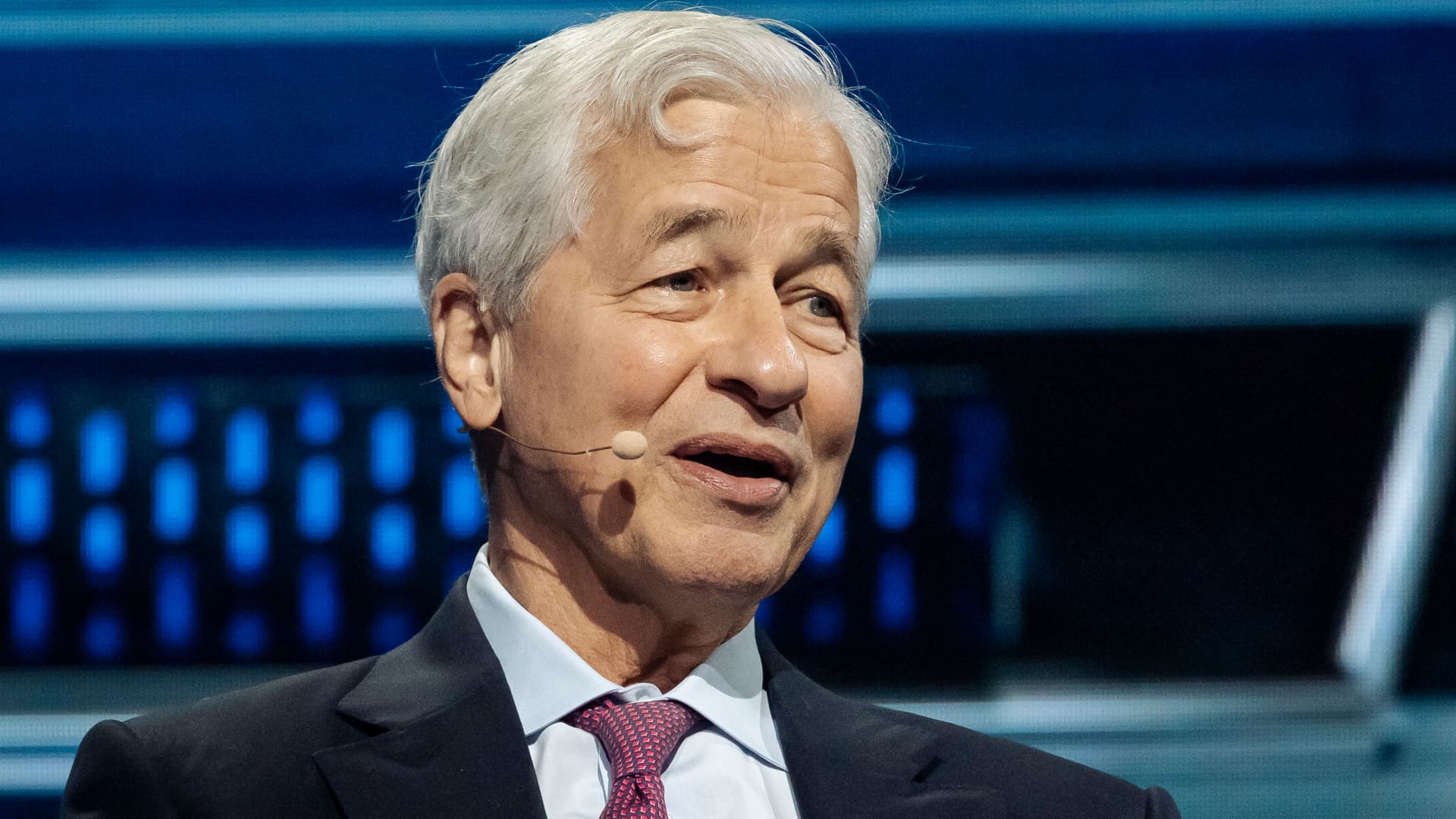
Jamie Dimon, chief executive officer of JPMorgan Chase & Co., during the America Business Forum in Miami, Florida, US, on Thursday, Nov. 6, 2025.
Eva Marie Uzcategui | Bloomberg | Getty Images
JPMorgan Chase on Wednesday unveiled a new $50 billion share repurchase program and raised its quarterly dividend after the Federal Reserve found the nation’s biggest banks remained well capitalized under its annual stress test.
The biggest U.S. bank by assets said it will increase its quarterly dividend 10% to $1.65 per share, subject to board approval, and authorized the buyback program effective July 1.
“The Board’s intended dividend increase is supported by our consistent investment in our business and strong financial performance,” JPMorgan CEO Jamie Dimon said in a statement. “As always, we are prepared for a wide range of scenarios, including the hypothetical 2026 supervisory severely adverse scenario.”
Goldman Sachs likewise increased its quarterly payouts, saying that its dividend will rise 11% to $5 per share, citing the firm’s strong earnings and capital position.
Wells Fargo said it expects to raise its dividend by 11% to $0.50 per share, while Morgan Stanley boosted its payout 15% to $1.15 per share, while also authorizing a $20 billion buyback program.
The announcements followed the release of the Federal Reserve’s annual stress test, which found that all 32 large banks remained above their minimum capital requirements even after a hypothetical recession generating more than $708 billion in projected losses across the industry.
Unlike in previous years, however, the results will not affect banks’ capital requirements. The Fed said earlier this year it would keep stress capital buffers unchanged through 2027 while it overhauls the testing methodology, meaning banks entered Wednesday with a clear understanding of their capital requirements.
While analysts had expected the exercise to have little immediate impact, in a sign of confidence, banks opted to proceed with payout increases, despite the regulatory limbo.
In a note ahead of the results, KBW described this year’s stress test as “going through the motions,” arguing that investors are more focused on the pending Basel III Endgame proposal expected later this year than on the Fed’s annual exercise.
This story is developing. Please check back for updates.
Business
Bank of Thailand keeps interest rate steady at 1% and raises GDP growth forecast for 2026 to 2.3%

The Bank of Thailand kept its benchmark interest rate steady at 1.00%, as anticipated, stating it will keep an eye on inflation trends and expectations. The seven-member Monetary Policy Committee (MPC) voted unanimously on the decision.
The Monetary Policy Committee (MPC) unanimously voted 7:0 to maintain the policy interest rate at 1.0%. The committee viewed the policy interest rate as appropriately accommodative given Thailand’s low and uneven economic growth, continued contraction in retail lending, and a declining trend in SME lending.
The MPC projected a decline in inflation by 2027 as supply-side pressures, such as energy and fresh food prices, gradually ease. Looking ahead, the MPC will monitor the price pass-through of businesses facing higher costs, medium-term inflation forecasts, and the debt repayment capacity of SMEs and vulnerable households.
The Thai economy is projected to expand at a faster rate than previously estimated, but the growth rate is low and uneven, the MPC said in a statement.
The Thai economy is projected to grow better than previously estimated.
- The Monetary Policy Committee (MPC) has revised its GDP forecast for this year upwards to 2.3% year-on-year (YOY) from the previous 1.5% YOY (excluding government measures) and 2.0% YOY (including government measures). This revision is based on…
- Export and investment momentum driven by the Tech & AI Cycle exceeded expectations , with growth concentrated in technology-related exports and investments in digital businesses.
- The impact of the war was less than expected, as large businesses were able to adapt by diversifying their import sources and transportation routes for raw materials, while the government provided subsidies to mitigate energy costs.
- Government measures to mitigate the impact of the energy crisis, under the Emergency Decree on Borrowing 400 billion baht.
- The Monetary Policy Committee (MPC) still views Thailand’s economic growth in both 2026 and 2027 as below its potential and uneven, particularly affecting households where purchasing power is pressured by high living costs while incomes are slowing, and SMEs which face difficulties adjusting to costs and have limited access to credit.
- The Monetary Policy Committee (MPC) projects Thailand’s current account balance for the full year 2026 to worsen to a balanced level ($0 billion USD, down from the previous estimate of $7 billion USD). This is attributed to temporary factors, including significantly higher crude oil prices and seasonal profit repatriation by multinational corporations, which are expected to contribute to the deficit in the second quarter. However, the MPC anticipates a gradual improvement back to a surplus in the second half of 2026 and throughout 2027.
The Thai baht has slipped as the US dollar strengthens, matching market expectations that the Federal Reserve will raise interest rates later this year, according to the MPC.
Other People are Reading

A Toyota Tundra at the New York International Auto Show in New York City on April 2, 2026.
Danielle DeVries | CNBC
DETROIT – Toyota Motor is notably gaining on America’s largest automaker, General Motors, in U.S. sales as hybrids get more popular and all-electric vehicles sputter.
The Japanese automaker is expected to report a nearly 1% increase in U.S. sales through the first half of this year to 1.25 million vehicles, while GM is projected to be down 7.2% to 1.33 million, according to a new forecast released Wednesday by Cox Automotive.
“At these rates, and what we’re seeing right now in the selling rates, GM may be looking over their shoulder here when we get to the year’s end, that Toyota could potentially overtake them as the top selling manufacturer here in the U.S. market,” Charlie Chesbrough, senior economist and senior director of industry insights at Cox Automotive, said during a media event.
Chesbrough said he isn’t yet forecasting that Toyota would top GM, but he said the trends are “concerning for General Motors.”
The expected 83,255 difference in vehicle sales through the first half of the year would be the narrowest between the two automakers since Toyota topped GM in U.S. sales for the first time ever in 2021. That was in part the result of supply chain issues during the coronavirus pandemic.
At that time, Toyota chair and company scion Akio Toyoda said he did a “happy dance” when learning of the win, but executives said the company didn’t expect it to be sustainable. Other than that year, GM has been the top-selling automaker in the U.S. since 1931, according to industry data.
Toyota’s gains come as the automaker has continued to roll out new models, including all-electric vehicles, while continuing to double down on its hybrid vehicles, where it’s been a leader for decades.
GM, meanwhile, heavily invested in all-electric vehicles instead of hybrids, many times referring to them as a transitional technology. The Detroit automaker’s sole hybrid is a Corvette, while it offers a full lineup of EVs for luxury brand Cadillac as well as many models for other brands.
“The story is hybrids are having their moment,” said Stephanie Valdez Streaty, Cox director of industry insights, during the Wednesday event.
Cox expects overall U.S. new vehicle sales to be down 3% through the first half of the year compared to last year, including a 0.5% decline during the second quarter.
The firm forecasts EV sales down 23.3% during first half this year. Hybrid sales, meanwhile, are projected to be up about 10%.
Honda, Volkswagen and Stellantis are expected to post sales gains for the second quarter, while Cox is forecasting the largest sales declines for Tesla, Ford Motor and GM.

The “Thailand Surf Therapy Real Experience and Trust Building Journey” in Phang-nga, organized by TAT, showcases surf-based wellness for emotional healing, enhancing Thailand’s coastal tourism and wellness offerings.
Launch of Thailand Surf Therapy
In June 2026, the Tourism Authority of Thailand (TAT) organized the “Thailand Surf Therapy Real Experience and Trust Building Journey” in Phang-nga. This initiative precedes the concept’s official unveiling at Thailand Health Excellence 2026 on 30 June. Collaborating with Prince of Songkla University, La Vita Sana, and international partner Waves for Change, the event gathered 36 tourism and wellness stakeholders to explore surf therapy’s potential in boosting coastal tourism and wellness.
Integrating Wellness and Coastal Tourism
The event’s programme included a “Discover Talk” session on surf therapy, led by Waves for Change’s Lian Papier, and practical surf therapy experiences at Memories Beach. Participants learned about surf therapy’s role in emotional and mental well-being, advancing Thailand’s wellness tourism. The event continued with activities like “Wellness-Breath with the Ocean” using Tibetan bowls, enhancing coastal experiences, and preparing for diverse surf-based wellness programs aimed at stress management.
Future of Thailand Surf Therapy
The Thailand Surf Therapy model aims to integrate international surf therapy techniques with local Thai identities to enrich the wellness tourism landscape. Supported by Span Global through the Rise On Wave network, the initiative includes varied programs such as the Wave Reset and Ocean Balance initiatives. At Thailand Health Excellence 2026, TAT will position Thailand as a premier destination for science-based wellness and therapeutic tourism in Asia.
Source : TAT shapes Thailand Surf Therapy as science-based coastal wellness model
Other People are Reading

Jefferies quarterly profit more than doubles on dealmaking, equities strength

Microsoft: Don't Sit On Your Hands, We Might Never See Such A Discount Again

Logitech: Enterprise Momentum Supports A Buy Rating

AI and Space Offer Better Bets Than Bitcoin, Billionaire Philippe Laffont Says

Brazil vs Scotland LIVE Score, FIFA World Cup 2026: No Neymar As Brazil Look To Avoid Qualification Drama


-

 Fashion5 days ago
Weekend Open Thread: Miami – Corporette.com
-

 Entertainment4 days ago
Renter of Home in Anne Heche Crash Denies Settlement With Son
-

 Tech2 days ago
Microsoft accidentally kills epic Outlook email threads
-
 Sports1 day ago
Two goals and an assist by sheer aura: Cristiano Ronaldo just entered the World Cup chat
-

 Business4 days ago
Soccer-U.S. defends Iran World Cup travel restrictions, says discussions ongoing
-

 Politics6 days ago
BBC Reporter Discusses Cross Party Criticism Of Trumps Iran Deal
-
Crypto World18 hours ago
Bitcoin (BTC) Dips Below $62K, Ethereum (ETH) Plunges 6% Daily: Market Watch
-

 Crypto World15 hours ago
Securitize Wraps Roubini's SEC-Registered ETF as Dubai VARA Digital Security
-
Business21 hours ago
Entergy settles forward sale agreements, raises $672 million in cash proceeds
-

 Politics5 days ago
Andy Burnham and the meaning of Makerfield
-
 Business5 days ago
Wall Street Week Ahead: Investors see Micron earnings as pulse check of AI rally momentum
-

 NewsBeat5 days ago
Keir Starmer Allies Question His Chances For No 10
-

 Tech6 days ago
AWS enters the context layer race with a graph that learns from agents, not manual curation
-
 Crypto World4 days ago
Can Charles Hoskinson Really Rescue Cardano?
-

 Crypto World5 days ago
HIVE shares jump as $220M AI deal speeds Bitcoin mining pivot
-

 Crypto World4 days ago
Jake Chervinsky accuses CME of protecting derivatives monopoly
-
 Tech3 days ago
Signal’s Meredith Whittaker says AI chatbots ‘are not your friends’ and calls Copilot agents a backdoor
-

 Entertainment5 days ago
Jose Alvarado Wants Taylor Swift at More Knicks Games
-

 Tech2 days ago
Nearly 7,000 fake Amazon domains registered ahead of Prime Day 2026, researchers warn
-

 Business6 days ago
Brexit cost 6% of UK economy, Bank of England company data suggests
You must be logged in to post a comment Login