Connect with us
DAPA Banner
DAPA Coin
DAPA
COIN PAYMENT ASSET
PRIVACY · BLOCKDAG · HOMOMORPHIC ENCRYPTION · RUST
ElGamal Encrypted MINE DAPA
🚫 GENESIS SOLD OUT
DAPAPAY COMING

Business

Oil price falls to levels not seen since before Iran war

Published

on

Split pic. On the left is a young fashion influencer in a white summery dress posing for the camera. On the right is a close-up of two Dachshunds wearing blue cooling jackets.

The price of oil has fallen to levels not seen since before the Iran war as traffic through the key Strait of Hormuz shipping route gradually resumes.

Global benchmark Brent crude briefly fell below, $72.48 ($55) a barrel, the price it was at the day before the US and Israel launched attacks on Iran on 28 February, before edging up to $72.63.

Energy prices have been on a wild ride since Iran responded to the strikes by effectively closing the strait, a critical waterway for oil and gas shipments.

The cost of crude has been moving sharply lower since the US and Iran signed a Memorandum of Understanding (MOU) on 17 June which set out a 60-day period for negotiations on Tehran’s nuclear programme and other measures to end the war.

Advertisement

Representatives from the two sides met in Switzerland last weekend for talks to end the war, which resulted in the US partially lifting sanctions on Iranian oil exports.

The number of vessels crossing the Strait of Hormuz has risen significantly since the MOU was signed, according to maritime intelligence firm Kpler.

The ships passing through the waterway in recent days include those carrying crude oil, liquefied natural gas (LNG), fertiliser and other goods, Kpler told the BBC.

The US and Iran had also formed a “communication line” to prevent misunderstandings “with the aim of safe passage for commercial vessels through the Strait of Hormuz”, mediators Qatar and Pakistan said in a joint statement on Monday.

Advertisement

There has been a “tremendous shift” with far more ships using the strait in recent days, said Dimitris Maniatis, the chief executive of Marisks, a maritime risk advisory firm working with ships stuck in the region.

His company estimates around 80 ships have crossed the Strait of Hormuz since Monday after the first round of peace talks between US and Iran in Switzerland.

A limited number of ships can cross a northern passageway with the permission of Iranian authorities, he said.

The US navy has also provided guidance for vessels to travel through a southern route that is safe from mines and other obstacles that has been laid out since the war, Maniatis said.

Advertisement

But the number of ships crossing the strait is still below levels seen before the war, when it was used by more than 100 ships a day.

Hundreds of ships still appear to be waiting in the Gulf.

Continue Reading
Click to comment

You must be logged in to post a comment Login

Leave a Reply

Business

How Much Consumer Data Can SMBs Keep

Published

on

London’s transport strikes have driven a surge in demand for flexible offices, with workers increasingly choosing to base themselves closer to home rather than commute into the city centre or remain entirely remote.

For UK small businesses, the question of how long to hold onto customer data is not as simple as picking a number and sticking with it. There is no single fixed retention period under UK GDPR.

Instead, the law requires that personal data be kept only for as long as necessary for the purpose it was originally collected — and businesses must be able to justify that decision in writing.

This places a real operational burden on SMBs. A business that collects email addresses for a newsletter campaign, stores payment details for recurring orders, and logs support conversations is already dealing with several categories of data, each with its own appropriate lifespan. Getting this wrong is not a minor administrative failing — it is a compliance risk with financial consequences.

What GDPR Says About Data Retention

UK GDPR’s storage limitation principle is clear in direction but silent on specifics. It tells organisations not to hold personal data longer than necessary, but it does not tell them exactly how long “necessary” means for any given category. The practical implication is that every SMB needs a documented retention policy that explains, category by category, why data is being kept and when it will be deleted or anonymised.

Standard business records — invoices, contracts, VAT-related documents — often need to be retained for six or seven years under tax and accounting rules. Consumer-facing records, however, are a different matter. Inactive customer accounts, expired marketing leads, and closed support tickets should be reviewed separately and deleted once they no longer serve a clear, documented purpose. Without that discipline, data quietly accumulates, and so does risk.

Advertisement

Which Data Types Carry Stricter Limits

Not all consumer data deserves the same retention window. Payment and financial records carry longer obligations because of tax law and potential disputes. Marketing consent records should be kept long enough to demonstrate compliance with PECR if challenged, but deleted when consent lapses. Special category data — which includes health, biometric, and certain demographic information — requires a higher standard of justification for retention and tighter access controls throughout its life.

Digital-native businesses, including online platforms and subscription services, now face growing user expectations around data minimisation. Sectors that have developed strong frameworks around user transparency offer useful benchmarks — fintech apps, healthtech platforms, and iGaming services like betting in the UK without registration have all been pushed by regulation to minimise data collected upfront, reshaping how compliance pressure translates into practical data handling across industries.

According to a Computer Weekly data retention analysis, a category-by-category approach rather than a blanket policy is now widely regarded as best practice for UK organisations.

Industries Where Retention Rules Differ

Sector-specific rules complicate matters considerably for businesses that assume general GDPR guidance is enough. Healthcare providers may need to retain patient-adjacent records for years beyond what a standard retail business would ever consider. Financial services firms operating under FCA supervision and anti-money-laundering regulations face their own mandatory minimums that override what GDPR alone would suggest. Payroll and HR outsourcing firms sit in similarly complex territory.

Advertisement

The Data (Use and Access) Act 2025, which became law on 19 June 2025, has begun updating and formalising parts of the UK GDPR framework. As detailed in Osborne Clarke’s legal analysis, the Act puts some ICO guidance points onto a firmer statutory footing, including proportionality expectations around subject access requests. For sector-specific SMBs, this means the compliance baseline is now slightly higher than it was a year ago.

Steps SMBs Should Take Right Now

The first practical step is building a data map — a clear record of what personal data the business holds, where it sits, why it was collected, and how long it will be kept. Without this foundation, it is impossible to enforce a retention schedule or respond credibly to a subject access request or complaint. This does not require specialist software; a well-maintained spreadsheet can serve the purpose for most small businesses.

The financial case for action is compelling. Last year, the average cost of a data breach for a UK SME reached £6,400, according to the Government’s Cyber Security Breaches Survey. Holding unnecessary data directly inflates that risk. SMBs that set firm deletion or anonymisation dates, review their retention schedules annually, and document their reasoning are not just meeting legal requirements — they are actively reducing their exposure to a cost that can be genuinely damaging at small-business scale.

Advertisement

Continue Reading

Business

(VIDEO) Argentina Teammates Honor Lionel Messi’s 39th Birthday with Personalized T-Shirts Celebrating Captain

Published

on

Lionel Messi, Paris Saint-Germain

MONTERREY, Mexico — Lionel Messi turned 39 on Wednesday, and his Argentina teammates marked the occasion with a heartfelt gesture that underscored the deep admiration they hold for their captain and the central role he continues to play in the national team’s success.

The squad surprised Messi with a custom cake from a Kansas City bakery founded by an Argentine chef and commemorative T-shirts featuring individual photos of each player with their leader. The shirts carried a unified message on the back expressing gratitude for Messi’s impact on their lives and careers.

” To you, who changed our lives, who gave us unforgettable moments, who made us believe that dreams are possible… The best part wasn’t watching it—it was experiencing it with you! Happy birthday, Captain—we love you. May you be immensely happy!” read the inscription.

Even non-playing staff, including the team cook and the person responsible for squad barbecues, participated in the tribute. The gesture highlighted the familial bond within the Argentina camp as they compete in the 2026 World Cup.

Advertisement

Messi, who became the 12th outfielder to appear in a World Cup after turning 39, has scored all five of Argentina’s goals in the tournament so far. His teammates have prioritized creating opportunities for him, often sacrificing personal statistics to maximize his effectiveness on the pitch.

Team Unity and Messi’s Influence

The tribute reflects Argentina’s strategy of building the team around Messi’s unique abilities. Despite featuring high-value players like $100 million midfielders and top European strikers, the focus remains on supporting their captain.

Younger players such as Enzo Fernández, Julián Alvarez and Nico Paz have spoken about growing up idolizing Messi. Fernández once wrote an open letter pleading for Messi’s return to international football, while Paz has described the experience of sharing a locker room with his hero as surreal.

Advertisement

This adoration translates into on-field commitment. Argentina’s players consistently work to get the ball to Messi, who has been involved in 81 percent of their shots in the tournament. The approach, while seemingly reductive, proved successful in 2022 when Argentina won the World Cup.

Messi’s leadership extends beyond scoring. His presence elevates teammates and creates belief within the group. The birthday celebration demonstrated how this respect fosters unity and motivation.

Messi’s Enduring Impact

At 39, Messi continues defying age expectations. His vision, technical ability and football intelligence remain world-class, even as physical demands increase. Argentina’s coaching staff manages his workload carefully to preserve his effectiveness.

Advertisement

The forward’s influence on younger generations is evident. Players who once watched him on television now compete alongside him, creating special moments captured in the birthday T-shirts.

Messi has scored in every Argentina match at this World Cup, often producing magic in crucial moments. His ability to decide games at this stage of his career underscores his exceptional talent and dedication.

Argentina’s World Cup Campaign

Argentina has advanced through the group stage with Messi’s contributions proving decisive. The team’s blend of experience and youth, anchored by their captain, creates a formidable unit.

Advertisement

Coach Lionel Scaloni has built a system that maximizes Messi’s strengths while utilizing the squad’s depth. This approach has yielded consistent results and kept Argentina among the favorites.

The birthday tribute served as a morale booster during a demanding tournament schedule. Such gestures strengthen team cohesion at critical times.

Broader Significance

The celebration highlights football’s power to create bonds across generations. Messi’s journey from young prodigy to veteran leader inspires both teammates and fans worldwide.

Advertisement

Argentina’s success demonstrates the value of building around exceptional talent while fostering collective commitment. The team’s unity has been a key factor in their tournament performances.

As the knockout stages approach, Messi’s experience and leadership will be vital. His teammates’ willingness to support him remains a cornerstone of Argentina’s strategy.

The gesture also reflects the human element in professional sports. Beyond tactics and statistics, personal relationships and mutual respect drive performance and satisfaction.

Messi’s legacy continues growing with each contribution. The birthday celebration captured a moment of appreciation from those who benefit most from his presence.

Advertisement

Argentina’s campaign embodies a blend of nostalgia and ambition. Honoring their captain while pursuing another title reflects the team’s identity and aspirations.

As Messi enters the later stages of his international career, moments like this birthday surprise become particularly meaningful. They celebrate not just his achievements but the relationships built through shared experiences.

The national team’s focus on Messi has yielded results before and continues driving their 2026 efforts. The personalized T-shirts serve as tangible reminders of the bond uniting the squad.

Advertisement
Continue Reading

Business

Madhusudan Kela-backed fund buys stake in IPO-bound Steamhouse India for Rs 40 crore

Published

on

Madhusudan Kela-backed fund buys stake in IPO-bound Steamhouse India for Rs 40 crore
Ace investor Madhusudan Kela-backed Singularity Large Value Fund III and Singularity Equity Fund I, along with Niveshaay Sambhav Fund, have invested a combined Rs 49.99 crore in IPO-bound Steamhouse India through a pre-IPO placement at an issue price of Rs 73 per equity share.

As part of the transaction, Steamhouse India allotted 68,49,315 equity shares through a private placement. Singularity Large Value Fund III received 47,94,520 equity shares aggregating Rs 34.99 crore, while Singularity Equity Fund I was allotted 6,84,932 equity shares worth Rs 5 crore. Niveshaay Sambhav Fund received 13,69,863 equity shares aggregating Rs 9.99 crore.

Following the allotment, the three investors together hold around 2.94% of Steamhouse India’s pre-offer equity share capital. In accordance with SEBI regulations, the size of the proposed fresh issue under the company’s initial public offering will be reduced by the amount raised through the pre-IPO placement.

About Steamhouse

The Surat-headquartered company has already filed its Updated Draft Red Herring Prospectus (UDRHP) with the Securities and Exchange Board of India (SEBI) for its proposed public issue.
Founded in 2014, Steamhouse India operates a centralized steam supply model for industrial customers and serves more than 167 clients across sectors including chemicals, textiles, pharmaceuticals, food processing, paper and manufacturing. The company supplies steam directly to factories through a network of dedicated pipeline infrastructure.Its business model is based on centralized “community boilers”, which serve as an alternative to captive boilers used by individual factories. The company uses IoT and AI-enabled systems across procurement, generation and distribution processes to supply industrial steam at approximately 190 degrees Celsius.

Advertisement

Steamhouse has developed more than 45 kilometres of pipeline infrastructure across industrial clusters such as Sachin, Vapi, Ankleshwar, Sarigam, Panoli and Nandesari. The company is also expanding capacity across Ahmedabad, Dahej, Vapi, Ankleshwar, Panoli, Jhagadia and Nandesari, while evaluating opportunities in Andhra Pradesh, Telangana, Maharashtra, Himachal Pradesh, Madhya Pradesh, Rajasthan, Uttar Pradesh and Haryana.
As part of its waste-to-energy initiatives, the company has commissioned a waste-to-steam boiler at Vapi that converts non-recyclable plastic waste generated by paper mills into industrial steam. It has also secured a 5 MW Waste-to-Steam project from Ahmedabad Municipal Corporation under the public-private partnership (PPP) model.
Apart from steam distribution, Steamhouse is expanding into adjacent businesses such as nitrogen compression and distribution, waste-to-energy solutions and aviation logistics. Equirus Capital is the sole book-running lead manager to the issue.
(Disclaimer: Recommendations, suggestions, views and opinions given by the experts are their own. These do not represent the views of The Economic Times)

Continue Reading

Business

Find out which university degrees could earn you most across your lifetime

Published

on

Stock photo shows male and female students sit at a desk working while typing on laptops in a student library setting, one of them wears headphones.

Minister for Skills Jacqui Smith said it was important that prospective undergrads “choose carefully”.

“Don’t walk into a degree by default,” she says.

“Going to university and getting a degree is one of the most transformational things a young person can do. But it is not a universal guarantee of success and not all degrees are equal.

“As well as the variation by subject, too many franchised and poor-quality courses do not offer a good deal to young people, selling the dream then leaving students in the lurch.”

Advertisement

Responding to the IFS report, Nick Harrison, chief executive of the Sutton Trust, a social mobility charity, said while university was not a guarantee of “financial success”, it does remain the “most reliable route to upward mobility”.

He added: “Most graduates continue to see big financial benefits over their lifetimes, and for young people from lower-income backgrounds those gains are often greatest.”

However, he said the report raised an “uncomfortable question” regarding the career options young people have.

“If we are telling young people not to go to university, what exactly are we telling them to do instead? There is no shortage of criticism of so-called low-value degrees, but there is a chronic shortage of high-quality alternatives.

Advertisement

“Apprenticeships and technical pathways can offer great prospects for progression and success, but there are simply not enough of them available to be a viable alternative for lots of young people.”

Vivienne Stern, chief executive of Universities UK, said it was important to highlight that some degree choices such as the arts, were “not motivated by money”.

“We should recognise that these subjects also feed the creative industries, which are a huge economic driver for the UK.

“In an age of AI, we’ll value the understanding of how human beings think and act more, not less, in the future.”

Advertisement
Continue Reading

Business

EY, KPMG, Deloitte among top 10 auditors by number of companies audited in FY26

Published

on

EY, KPMG, Deloitte among top 10 auditors by number of companies audited in FY26
The corporate audit landscape in India continues to be heavily consolidated around major institutional players, with the Big Four and leading mid-tier firms dominating the market. According to data compiled by Prime Infobase, EY Group, KPMG Group and Deloitte Group secured the top three spots among the 10 auditors that handled the highest number of listed company audits in the financial year 2025-26 (FY26).

EY Group retained its top position by auditing 187 companies in FY26, registering a 3% growth from 182 companies in FY25. KPMG Group recorded a sharp 11% volume growth, rising to 157 companies, while Deloitte Group held the third spot with 131 companies, down slightly from 137 in the previous fiscal.

They were followed by GT Group (125), BDO Group (97), PWC Group (82), Singhi Group (52), KGS & Alliance Group (47), Lodha & Co (27) and CNK & Associates LLP. Among these firms, CNK & Associates LLP emerged as the fastest-growing firm in the top 10, jumping 41% to audit 24 companies in FY26.

Top auditors in terms of market capitalisation of companies audited

Advertisement

While volume signifies market reach, market capitalisation metrics underscore the financial scale of the corporations these auditors oversee. In FY26, KPMG Group led by market capitalisation share, auditing companies that constitute 15.67% (Rs 71,14,060 crore) of the total market capitalisation of all companies covered in Prime Infobase’s report.


Also read: Big Six tighten grip on India’s audit market despite mandatory rotation
EY Group followed closely at 15.35% (Rs 69,73,130 crore), with Deloitte Group capturing 13.94% (Rs 63,31,111 crore). Together, KPMG, EY and Deloitte command nearly 45% of the total market capitalisation of these listed entities. The Big Six institutional audit groups’ collective share reached 61%, while the global Big Four firms accounted for 51% of the entire market capitalisation.Only 25 audit firms managed portfolios of 10 or more listed companies. Conversely, 649 audit firms audited just a single listed company. Meanwhile, the trend of joint audits saw a minor contraction. In FY26, the number of companies deploying joint auditors fell to 164 (7% of 2,436 listed companies) from 170 (8% of 2,240 companies) in FY25. Of the 164 companies adopting joint audits in FY26, 119 belonged to the private sector and 45 were public sector undertakings (PSUs) or public sector banks (PSBs).

In FY26, 71 instances of mid-term cessations (resignations or terminations) were recorded across 68 companies, up from 58 instances in 55 companies during FY25. Additionally, 22 auditors across 22 companies resigned after completing their FY26 audit assignments despite having additional years left in their designated tenures. Year-on-year auditor changes were recorded across 323 companies transitioning from FY25 to FY26.

The tenures of 1,030 auditors across 997 companies are scheduled to expire in the ongoing FY27. Of these, 385 auditors (across 381 companies) will complete a tenure of 10 years.
Also read: Why is the market rising today?

(Disclaimer: Recommendations, suggestions, views and opinions given by the experts are their own. These do not represent the views of The Economic Times.)

Advertisement
Continue Reading

Business

Stocks Retreat as Fears Deepen About Strength of AI Boom

Published

on

Stocks Retreat as Fears Deepen About Strength of AI Boom

Stocks fell sharply Tuesday as fears about the sustainability of the artificial-intelligence boom caused a tech-sector rout.

The Dow Jones Industrial Average fell 45.87 points, or 0.09%, to 51666.84. The S&P 500 lost 107.33 points, or 1.44%, to 7365.46, while the tech-heavy Nasdaq Composite declined 579.56 points, or 2.21%, to 25587.04.

Copyright ©2026 Dow Jones & Company, Inc. All Rights Reserved. 87990cbe856818d5eddac44c7b1cdeb8

Continue Reading

Business

Home Bargains to open new North Devon store as it targets 1,000 UK branches

Published

on

Business Live

The outlet will have a large garden centre and a spacious café and bakery

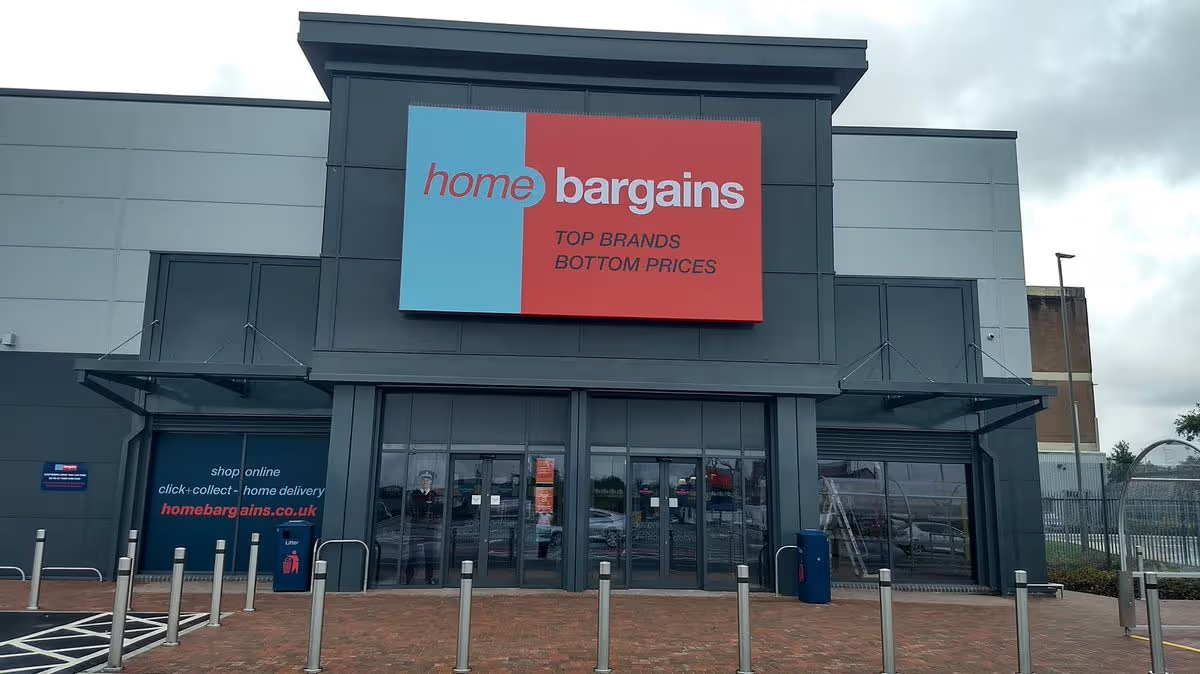
A Home Bargains store

A Home Bargains store

Discount retailer Home Bargains is preparing to open its second store in Barnstaple this weekend as it pushes ahead with ambitious expansion plans.

The branch, at Rose Lane near Tesco, will open its doors on Saturday at 8am and will join the retailer’s existing store at Roundswell.

The new outlet follows a £4m investment by the retailer and has created 76 local jobs, including 64 new recruits to the business.

Robin Bryce, the new ‘Barnstaple 2’ store manager, said: “After serving the local community in our Barnstaple store in Roundswell, I’m thrilled and excited to be opening the new site over at Rose Lane which comes with a large garden centre and a spacious café and bakery.

Advertisement

“Looking forward to seeing familiar faces and hopefully a lot of new ones too.”

The 28,395 sq ft store will sell a range of products, including homeware, health and beauty essentials, sweets, snacks and drinks, and fresh and frozen food.

Mr Bryce added: “Our second Barnstaple location will be a great store for us, and we’re proud to be able to offer local people top-branded goods at exceptionally low prices.”

The news comes just months after Home Bargains’ owner, TJ Morris, reported an eight per cent rise in turnover for the full-year to £4.5bn fuelled by its estate expansion.

Advertisement

Operating profit for the year to the end of June 2025 also rose 13.3 per cent to £492m.

By the end of that period, Home Bargains had 632 retail outlets and said it was planning to increase the number in operation over the following 12 months.

It also added that its ambitions included opening between 800 and 1,000 UK stores in the longer term.

It comes months after Home Bargains unveiled plans to overhaul its network infrastructure with a new partnership. In November, the company appointed Evolve Business Group to deliver a fully managed network solution across its UK store estate in a bid to boost security and operational efficiency.

Advertisement
Continue Reading

Business

PepsiCo Shares Trade Flat as Beverage Giant Focuses on Portfolio Diversification and Health Trends

Published

on

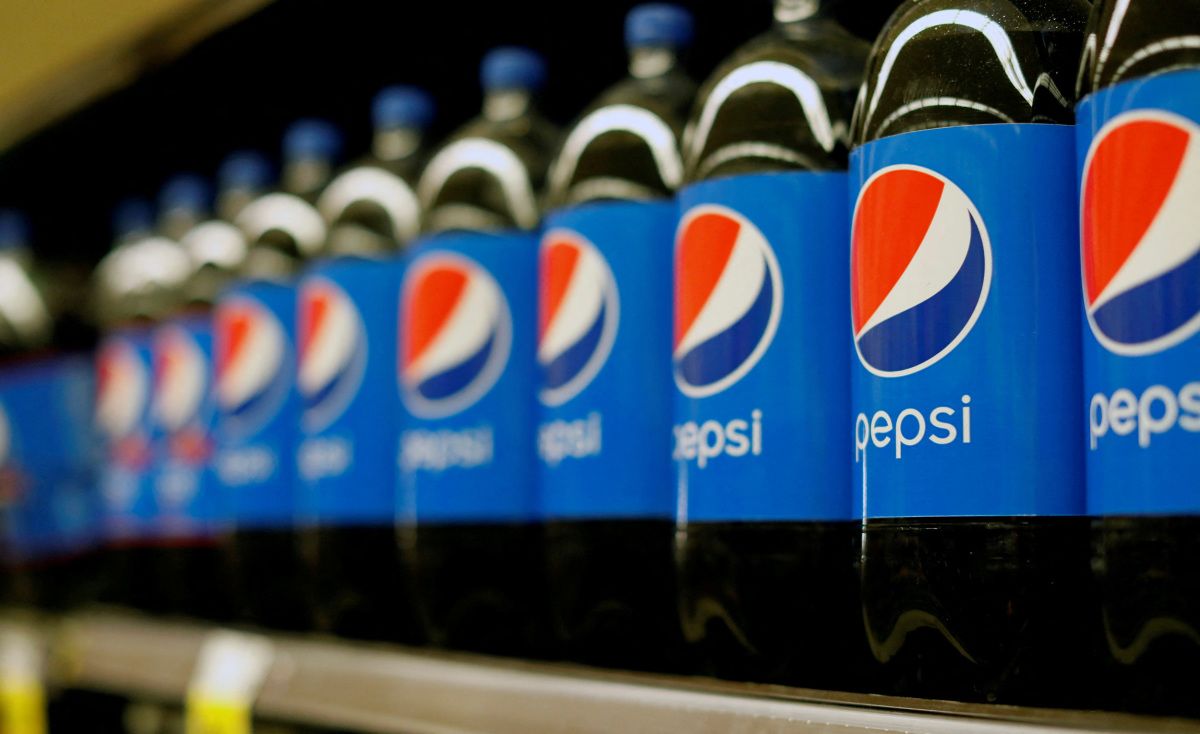
Bottles of Pepsi are pictured at a grocery store in Pasadena

PepsiCo Inc. shares closed virtually unchanged on Thursday, finishing at $142.27 after a modest gain of $0.22, as investors evaluated the company’s progress in adapting to shifting consumer preferences and maintaining growth in a competitive beverage and snack market.

The stability in trading reflected PepsiCo’s established position as a global leader in convenient foods and drinks. The company’s diverse portfolio, spanning carbonated beverages, snacks, juices and healthier options, provides resilience across economic cycles.

PepsiCo has reported steady revenue growth supported by pricing actions, innovation and international expansion. Its focus on premiumization and health-oriented products has helped address changing consumer demands while protecting margins.

The company continues investing in sustainability initiatives, digital capabilities and brand marketing to strengthen its competitive position. Strategic acquisitions and portfolio optimization have expanded its presence in high-growth categories.

Advertisement

Business Performance and Strategy

PepsiCo operates through Frito-Lay, Quaker, PepsiCo Beverages North America, Latin America, Europe and Africa, Middle East and South Asia segments. This geographic and category diversification reduces reliance on any single market or product line.

Beverage brands including Pepsi, Mountain Dew and Gatorade maintain strong consumer loyalty. Snack offerings like Lay’s, Doritos and Cheetos dominate their categories globally.

The company has accelerated development of zero-sugar, low-calorie and functional beverages to align with health and wellness trends. Innovation in packaging and sustainable sourcing supports brand relevance.

Advertisement

PepsiCo’s route-to-market systems and direct store delivery model provide significant advantages in distribution efficiency and shelf presence. These capabilities help defend market share against emerging competitors.

Portfolio Evolution

PepsiCo has actively reshaped its portfolio through acquisitions and divestitures. Focus areas include convenient nutrition, premium beverages and plant-based offerings.

Health-conscious consumers drive demand for better-for-you products. The company responds with reformulations, new launches and transparent labeling practices.

Advertisement

Sustainability goals encompass water stewardship, renewable energy and responsible packaging. Progress in these areas enhances corporate reputation and operational resilience.

Digital transformation initiatives improve demand forecasting, personalized marketing and e-commerce capabilities. These investments support omnichannel growth strategies.

Market Challenges

The beverage industry faces pressure from health organizations, changing demographics and regulatory scrutiny around sugar content. PepsiCo balances innovation with core brand strength.

Advertisement

Snack foods encounter competition from healthier alternatives and private labels. The company counters with premium offerings, limited-time flavors and marketing campaigns.

Inflationary pressures on commodities and transportation costs require careful pricing management. PepsiCo’s scale and hedging practices help mitigate these impacts.

International operations expose the company to currency fluctuations, political risks and varying consumer tastes. Localized strategies and portfolio adaptation address these challenges.

Investment Considerations

Advertisement

PepsiCo appeals to investors seeking dividend growth and defensive characteristics in consumer staples. Its consistent payout increases and strong cash flow generation support long-term holding.

Valuation metrics reflect expectations for steady growth and margin management. Risks include changing consumer preferences, competitive intensity and regulatory developments.

Longer-term opportunities arise from emerging markets, premiumization trends and innovation in health-focused products. PepsiCo’s global scale and brand portfolio position it favorably.

Analysts monitor volume trends, pricing realization and category performance. Successful execution on strategic initiatives could drive further shareholder value.

Advertisement

Sustainability and Responsibility

PepsiCo’s environmental goals include reducing plastic use, lowering carbon emissions and conserving water. Progress reporting demonstrates commitment to measurable improvement.

Community engagement and diversity initiatives strengthen social license to operate. These efforts support talent attraction and brand loyalty.

Corporate governance practices emphasize transparency and accountability. Board oversight ensures alignment with long-term strategy and stakeholder interests.

Advertisement

Outlook

PepsiCo’s recent share price performance suggests steady investor confidence in its fundamentals. The company’s ability to adapt to evolving consumer needs while delivering financial results will influence future valuation.

Upcoming earnings will provide insight into volume trends, margin development and guidance. Management will outline progress on key strategic priorities.

The consumer staples sector offers stability in uncertain economic environments. PepsiCo’s diversified business model and strong brands support resilience.

Advertisement

As health and wellness trends continue shaping the industry, PepsiCo’s innovation pipeline and portfolio adjustments position it for sustained relevance. The company’s focus on convenience, quality and sustainability aligns with modern consumer expectations.

PepsiCo remains a cornerstone of the global food and beverage industry. Its strategic direction and execution capabilities suggest capacity to navigate challenges and capitalize on opportunities.

Continue Reading

Business

Templeton Global ADR Equity SMA Q1 2026 Commentary

Published

on

Diamond Hill International Strategy Q4 2025 Commentary

Franklin Resources, Inc. [NYSE:BEN] is a global investment management organization with subsidiaries operating as Franklin Templeton and serving clients in over 150 countries. Franklin Templeton’s mission is to help clients achieve better outcomes through investment management expertise, wealth management and technology solutions. Through its specialist investment managers, the company offers specialization on a global scale, bringing extensive capabilities in fixed income, equity, alternatives and multi-asset solutions. With more than 1,300 investment professionals, and offices in major financial markets around the world, the California-based company has over 75 years of investment experience and over $1.4 trillion in assets under management as of June 30, 2023. For more information, please visit franklintempleton.com and follow us on LinkedIn, Twitter and Facebook.

Continue Reading

Business

Fidelity Small Cap Value Fund Q1 2026 Commentary

Published

on

Don’t Confuse Small-Cap Benchmark With Small-Cap Strategy

Fidelity’s mission is to strengthen the financial well-being of our customers and deliver better outcomes for the clients and businesses it serves. With assets under administration of $12.6 trillion, including discretionary assets of $4.9 trillion as of December 31, 2023, Fidelity focuses on meeting the unique needs of a broad and growing customer base. Privately held for 77 years, Fidelity employs more than 74,000 associates with its headquarters in Boston and a global presence spanning nine countries across North America, Europe, Asia and Australia. Note: This account is not managed or monitored by Fidelity, and any messages sent via Seeking Alpha will not receive a response. For inquiries or communication, please use Fidelity’s official channels.

Continue Reading

Trending

Copyright © 2025