If you’re over seeing announcements about Amazon’s Prime Day sale and Amazon’s own on-sale devices, I can’t blame you. It’s everywhere these days, and every website is trying to replicate the sale. If you’re feeling like you want to escape from the Amazon ecosystem grind, though, I’ve got an idea (and a sale!) for you.
One of the biggest markets Amazon has changed is book shopping. (I’ll always miss my beloved Borders bookstores.) If you’d like to get your reading experience away from Amazon, you can put the Kindle deals down and start shopping for a whole different e-reader. There’s an excellent option for you that offers a better price for a color screen, comes with page-turner buttons, and can double as a digital notebook.
What gadget is that, you may wonder? It’s the Kobo Libra Colour, and it’s not the only e-reader the brand has on sale.
The Best Color E-Reader Deal
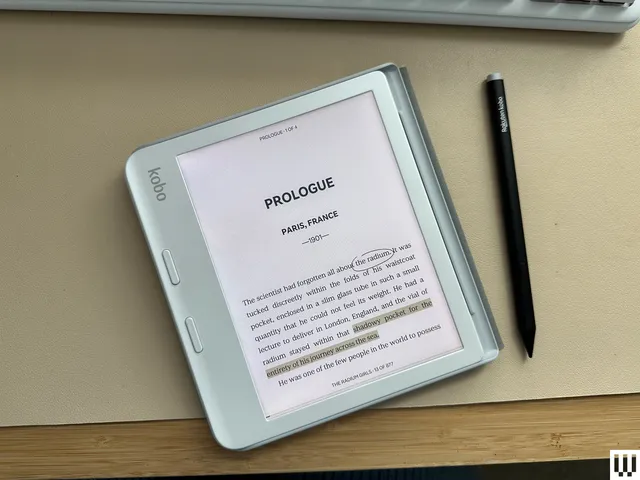
The Kobo Libra Colour is my favorite color e-reader. It has a colorful 7-inch screen with an adjustable warm front light, and 32 GB of storage to hold hundreds of books. I really like Kobo’s e-readers, and you’ll get all the features you’d find on a Kindle: a dedicated store to buy e-books, a membership (Kobo Plus, starting at $8 a week) you can join to get access to a library of e-books and audio content, and the ability to add library books right onto the device.
But what I especially like about the Kobo Libra Colour is how many more features you get for a price similar to the Kindle Colorsoft. Both have color screens, but the Libra Colour has page-turner buttons and a thicker side with said buttons, making it easy to hold and control your pages (no more rapidly tapping around your screen to find your page). I also love that if you purchase the Kobo Stylus 2 ($70), it can double as a digital notebook. I really like that you can annotate your books on the page with Kobo, which Kindle doesn’t allow you to do.
Advertisement
Kobo recently raised its prices, so you’re not getting as much of a discount as you used to. But that’s also why I’d jump on this sale now, so you don’t have to pay the new price tag instead of the cheaper one.
Another On-Sale Kobo
Looking for something a little cheaper, and aren’t married to a color screen? Kobo’s Clara BW is also on sale.
The Clara is smaller than the Libra Colour, with just a 6-inch black-and-white screen, but it has an adjustable warm front light. It’s similar to the Kindle Paperwhite in that sense, but it’s the size of the basic Kindle. It’s not on as big a discount as the Paperwhite, so that one is a better buy if you’re open to any black-and-white e-reader, but if you’re looking for a cheaper way to get out from under Amazon’s boot, this is a great option.
After Ford’s automated quality-control systems and AI tools fell short, the automaker hired 350 veteran engineers over the past three years to mentor younger staff and reprogram the underperforming technology. “Artificial intelligence is a fantastic tool, but it’s only as good as the information you use to train it,” Charles Poon, Ford’s vice president of vehicle hardware engineering, told reporters on a call Wednesday. “Over prior years, we didn’t pay as much attention as we should have to the experience of our most knowledgeable engineers that have been with us through many product cycles.” Bloomberg reports: Those engineers were “at the heart” of Ford’s efforts to turn around quality problems, said Kumar Galhotra, chief operating officer. They now run mandatory meetings that rigorously troubleshoot quality problems and they have reprogrammed AI tools to head off glitches before they happen. “We had been relying more and more on automated quality systems” and not getting the desired results, Galhotra said. “We brought back technical specialists” and “they hunt for failure points before a part ever reaches the plant floor.”
The return of the veteran engineers at Ford cuts against the prevailing wisdom — and fear — that AI will replace all kinds of knowledge workers. But Ford found the machines couldn’t replace experience. “Mistakenly we thought that by just introducing artificial intelligence and ingesting the design requirements that we had, that that would produce a high-quality product,” Poon said. But “we recognized that for us to enhance some of our automation and machine learning and artificial intelligence tools we needed to ensure that they were trained by the most experienced individuals.”
As a result of the efforts of the old hands, Ford vaulted above quality stalwarts such as Toyota and Honda on JD Power’s bellwether survey that measures the quality of a car during the first three months of ownership. Only luxury brands Porsche and Genesis topped Ford this year.
Even though GPS makes it possible for us to easily navigate around the planet in almost any vehicle we’d like, whether that’s a passenger vehicle, airplane, or cargo ship, it’s not really suitable for applications that require sub-meter accuracy. For that, some specialized hardware is needed, and [GreatScott!] shows us how to do it using a small robot as a platform.
The key to extremely accurate GPS signals in this case is using a receiver that supports real-time kinematic positioning (RTK). This type of system relies on a base station with a known position communicating with local mobile receivers to increase the precision of those mobile receivers by comparing the phase angle of the received signals. Of course these modules are much more expensive than the average standard GPS receiver, but for this kind of accuracy there is always a cost.
After getting a baseline accuracy of around two meters with a standard GPS receiver, [GreatScott!] installs the RTK GPS mobile receiver on a tracked robotic platform and a base station on a fence post. With the RTK system running, the limiting factor in accuracy became the robot’s steering system, as its turning radius and steering algorithms weren’t up to the task of hitting centimeter-sized targets out of the box.
Advertisement
But, as a proof-of-concept, it goes to show how accurate GPS can be as long as the right hardware is used, and for practical applications is good enough to mow a lawn with a robot or even do some amateur land surveying.
AI agents are increasingly proficient at executing business tasks autonomously, but IT leaders are cautious about granting permissions to access enterprise systems.
Part of the challenge lies in how AI reliability is measured. Industry standards often rely on EVAL scores, which provide a static snapshot of performance rather than a measure of overall reliability. These metrics can fail to capture predictability across prompts, environments, and input types, said Bryan Silverthorn, director of the AGI Autonomy research lab at Amazon.
Amazon’s AGI autonomy research lab is moving beyond raw performance benchmarks, focusing instead on a structured framework centered on consistency, robustness, predictability, and safety, Silverthorn told VentureBeat during an interview ahead of his session at VB Transform 2026.
Rather than assuming that models can be harnessed into safety, Amazon’s approach emphasizes decoupled systems, such as sandboxed environments where agents propose changes that are reviewed by humans before implementation.
Advertisement
This strategy aims to bridge the trust gap by prioritizing verifiable interactions, even in highly sensitive domains like finance, where the potential damage an agent can cause is significant.
In VentureBeat’s Q2 Pulse Research survey of over 100 senior technology leaders and buyers, just 4% said they are comfortable relying on model guardrails alone. When asked what worries them most about model guardrails, 40% said unauthorized access to tools or data and 27% cited prompt manipulation or injection.
At VB Transform, Silverthorn will share details of Amazon’s approach to trustworthy agentic AI and how companies can move from single-agent wrappers to multi-tool architectures that can self-correct mid-execution during his session titled Closing the capability-reliability gap: Inside Amazon’s framework for engineering trustworthy agents.
Another agentic ops and evals-focused session at VentureBeat’s flagship conference, happening July 14 and 15 in Menlo Park, is Intelligence at scale: How Waymo builds safe, efficient AI for the physical world with speaker Manasi Joshi, director of systems intelligence and machine learning at Waymo.
Advertisement
Interested in attending VB Transform 2026? A select number of complimentary passes are also available to senior technology leaders. Contact us to get yours. You can also purchase tickets here.
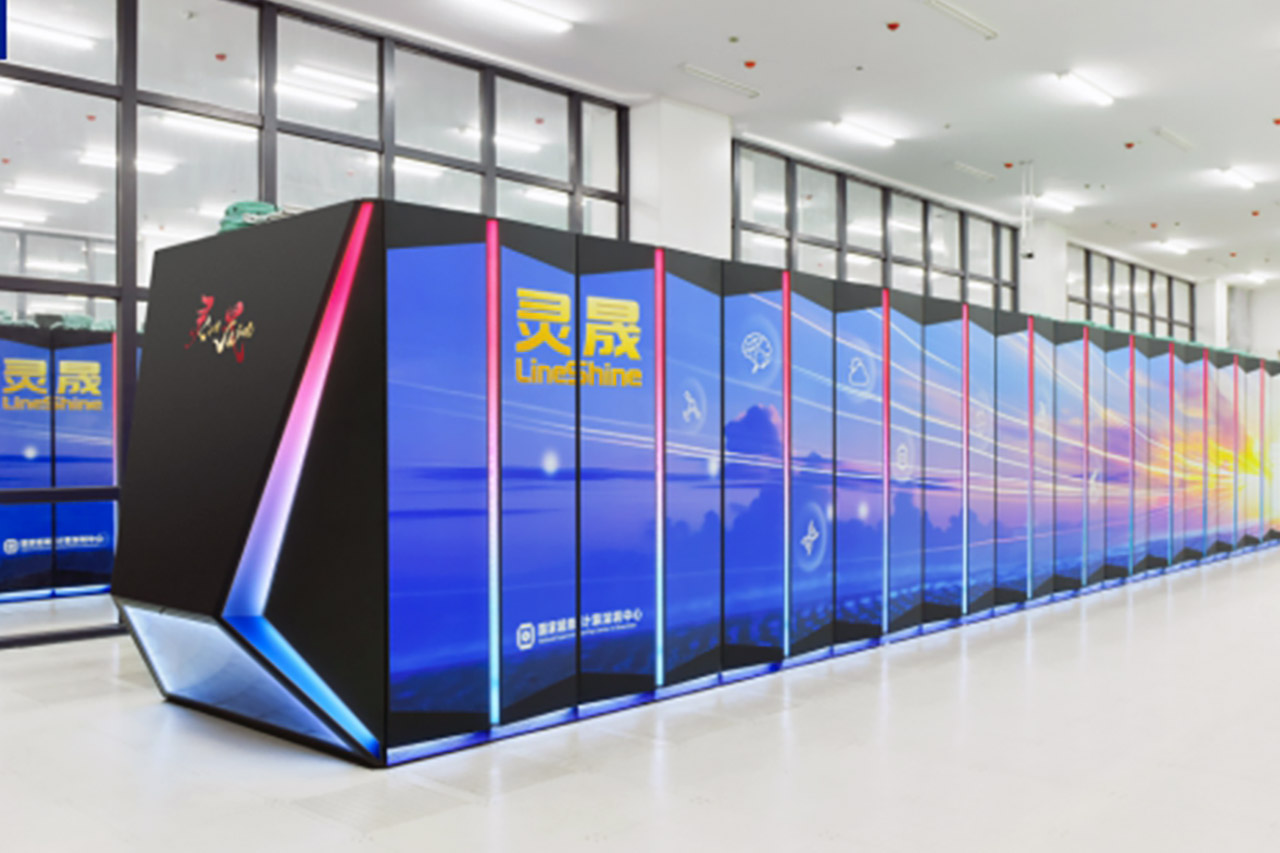
LineShine reached the top of the latest Top500 ranking this week. The machine, installed at the National Supercomputing Center in Shenzhen, delivered sustained performance of 2.198 exaflops on the standard High Performance Linpack benchmark.
That equates to more than two quintillion calculations per second in double-precision arithmetic. It is the first time a system on the public list has exceeded two exaflops while using only regular CPUs. Engineers designed the system with 13,789,440 cores spread among customized LX2 processors. Each CPU contains 304 cores running at 1.55 GHz, two compute dies, and integrated high-bandwidth memory. The cores are designed on the ARMv9 architecture and include units for high-precision vector and matrix computations.
▪ [AMD Ryzen R2544, which is more powerful than the N150/3500U] – ACEMAGIC Mini PC is powered by Latest Processor AMD Ryzen R2544(4Cores/8Threads…
▪ [K1 Mini Computer – Meet Your Second PC] – Next-Gen Light Office Mini PC comes pre-installed with the Win11 Pro system, which is intelligent…
▪ [Large Storage Capacity, Easy Expansion] – Mini Computer K1 is equipped with a 16GB DDR4 and a 256GB M.2 2280 SSD, which allows the small PC to…
More than 22,000 nodes are contained in 90 cabinets, which are linked by a high-speed network created in house. The overall facility consumes around 42.2 megawatts while in operation and achieves approximately 52 gigaflops per watt on the primary benchmark. Previous leader El Capitan is now in second place. The AMD-based system at the Lawrence Livermore National Laboratory in California achieved 1.809 exaflops. LineShine is now more than 20% ahead. El Capitan uses both regular processors and graphics accelerators, but LineShine does not.
Advertisement
The design choice is noteworthy because most existing exascale computers rely heavily on graphics processors for raw performance on certain tasks. Instead, LineShine builds specialized acceleration circuitry right into its main chips. These circuits address the dense linear algebra at the heart of the benchmark test without the need for any additional accelerator hardware. China has regained the top rank in the Top500 for the first time since Sunway TaihuLight in 2017. For many years, the country concealed some of its most powerful weapons from the public eye. Submitting LineShine shows a willingness to benchmark freely again.
The supercomputer also leads the HPCG rating, which focuses on more realistic scientific workloads, with 22 petaflops. It performed worse on a mixed-precision test often used for AI-related tasks, demonstrating a preference for full 64-bit accuracy over the reduced-precision shortcuts employed in training large models. Scientists use machines of this size for climate modeling, advanced physics simulations, medical research, and nuclear stockpile stewardship work that demands high numerical accuracy. LineShine focuses on traditional high-performance computing applications rather than low-precision matrix computations, which are prevalent in many current AI programs.
Power consumption is higher than El Capitan’s (about 30-megawatt range), and efficiency falls short of the US system’s 60-plus gigaflops per watt. However, obtaining record double-precision performance on CPUs requires a distinct engineering path impacted by available components and design considerations. The processors run the Kylin operating system and interact across a proprietary network capable of 1.6 terabits per second per node. Everything is contained under a single, tightly integrated platform built on a single CPU family.
LineShine’s inclusion raises the total number of publicly validated exascale systems to five, which are spread across Asia, North America and Europe. Its introduction indicates that varied architecture options may still achieve high-quality results on the benchmarks that have defined supercomputing leadership for decades. Further tuning or additional nodes may increase performance, but the current numbers set a new benchmark for CPU-only architectures of this scale. The success is the result of synchronized improvements in CPU architecture, interconnect technology, and system integration, rather than a single breakthrough component. [Source]
Shopify built an LLM proxy that gives every engineer access to multiple AI providers — with automatic failover when any one of them goes down, changes, or disappears. When Claude Fable 5 shut down, Shopify’s engineers didn’t go into panic mode. The proxy shifted them to Claude Opus or GPT 5.5 automatically, without interrupting their workflows.
“Fable looks amazing; we used it of course,” Farhan Thawar, Shopify’s head of engineering, says in a new VentureBeat Beyond the Pilot podcast. “When a model comes and then it goes, or it could be as innocuous as an update, the proxy allows us to spray across the different providers,” Thawar says.
Shopify buys tokens in bulk and all users connect to models through its proxy, Thawar says. This gives his team access to reporting and failover; when there’s an availability issue with one provider, users can be “automatically, seamlessly” transferred to another.
Advertisement
Enterprises can learn from this example and consider how a disruption might affect their business, Thawar says. At the very least, they should establish a solid backup plan. It’s important to have a system that allows for movement across models so enterprises are not “super tied” to a specific provider.
Distillation is another important strategy.
With distillation, a student model learns from a teacher model and typically becomes specialized in a narrower task. These small language models (SLMs) can be more beneficial than generalized, off-the-shelf models in some circumstances. For instance, Shopify’s flagship AI assistant, Sidekick, which performs numerous specialized subtasks for merchants so they can “remove toil” from their day-to-day.
Using smaller distilled models can be faster and cheaper than more generalized models, Thawar says. In some cases they have proven to be 2x cheaper and faster; in more extreme cases 30x cheaper and faster, he says.
Advertisement
But “it isn’t just about cost and latency, which are big; it’s about accuracy,” Thawar says.
Engineers feed the UDP their teacher model, training data, evals, and a target model — say, Opus 4.8 distilling down to Qwen 3.5. The pipeline runs for about a day, then returns an evaluation showing what the fine-tuned model actually achieved on speed, cost, and accuracy for that subtask. If the tradeoff looks good, the engineer deploys it — no approval process required. Shopify’s internal platform, Tangle, lets anyone visualize the pipeline as it runs.
Thawar says his “dream” is to eventually not give the distillation pipeline a target model at all. Instead, users could provide the teacher model with data and evals and the directive: ‘Based on your learnings over time, I want you to look at a different class of model, different sizes, different types, and you tell me what the right distillation target is.’
“Maybe we’ll get surprised. Maybe it’ll be such a small model it could run on a phone,” Thawar says. “Other times, maybe it comes back and says, ‘There isn’t a way to distill this down to anything better than what we have at the frontier.’”
Advertisement
Moving away from “AI reflexivity” to “AI leverage”
Shopify users can apply whatever harness they want: Claude Code, Codex, Cursor, GitHub Copilot for VS Code. “We expose everyone to the different harnesses so they can get a feel for what may or may not work in their workflow.”
But the company also implemented a usage dashboard; this allows Thawar’s team to ask interesting questions around not just token spend, but: Who’s using the most expensive tokens? Who’s spending more time on reasoning? What types of models are being used, and what disciplines and levels?
Regarding the “tokenmaxxing” question, Shopify does have “circuit breakers” in place. If a user has a model running for a long time (say, 10 hours) and it’s consuming a lot of tokens, they will get pinged, “Did you mean to spend this?”
As Thawar explains, sometimes the reply is “Oh, absolutely.” Other times it’s: ‘Whoa, I didn’t know that was running in the background. I totally forgot about it. I’d rather stop it now.’
Advertisement
The ultimate goal, as Thawar describes it, is to move from “AI reflexivity” to “AI leverage,” and get people to really think deeply about where they can benefit most from AI in their workflows.
Listen to the full podcast to hear more about:
Shopify’s philosophy of building infrastructure before features. As Thawar puts it: “We’ve always built more infra. We will continue to always build more infra.”
How Shopify’s internal AI agent, River, creates a “substrate of information” across the company.
How Thawar’s OpenClaw agent figured out he was traveling from his calendar — and what that moment told him about where agents are actually headed.
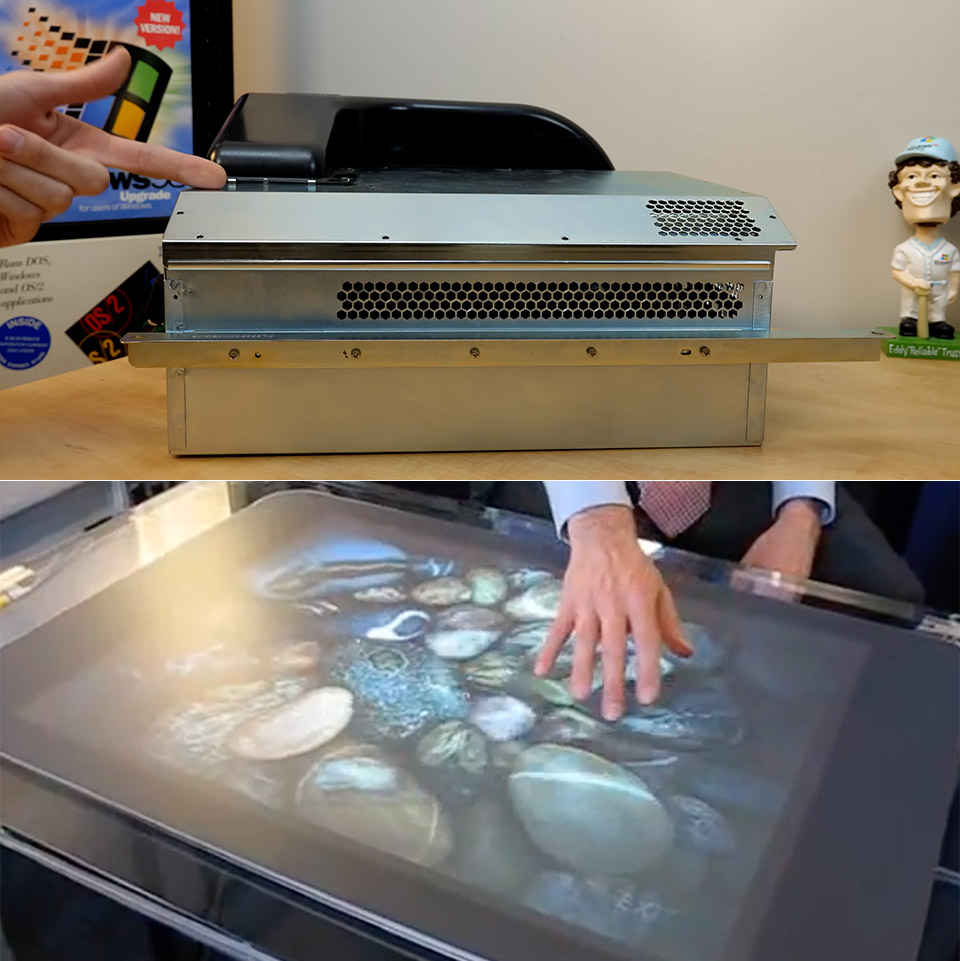
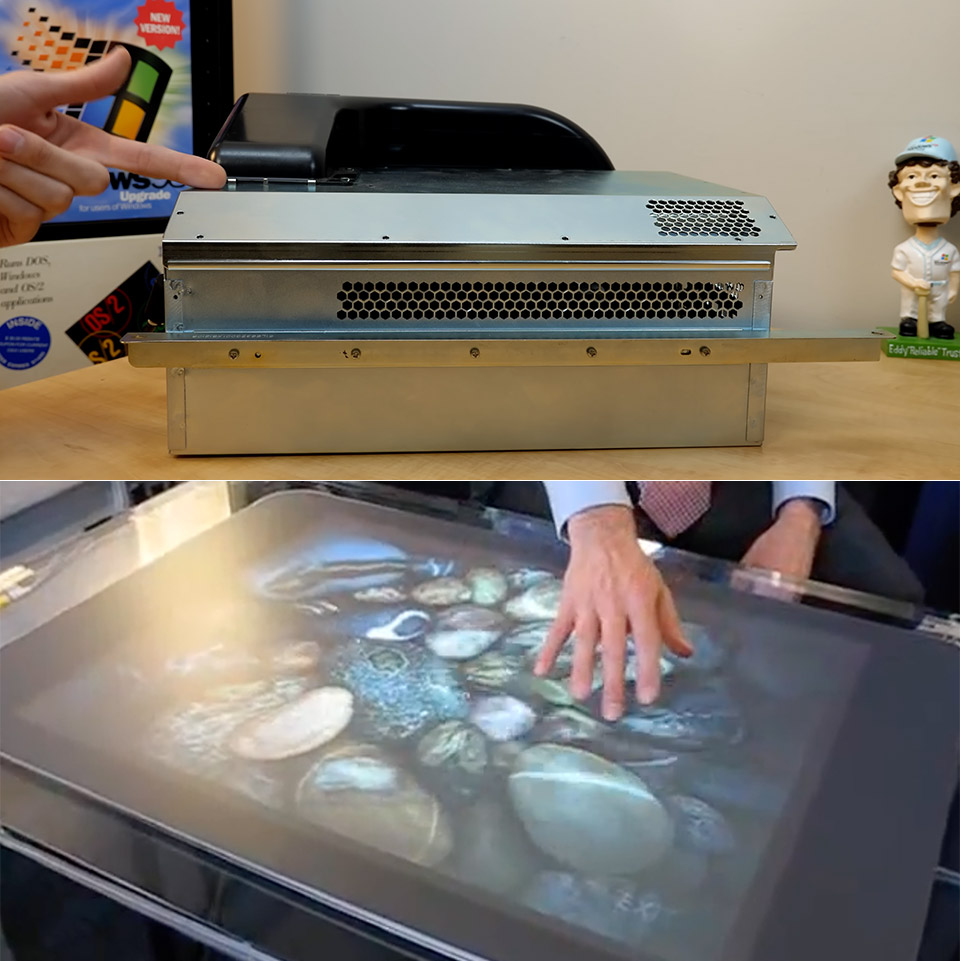
Photo credit: Bot Junkie Michael MJD recently tracked down something most people never knew existed. Back in 2008 Microsoft released a giant touch table called Surface. It weighed close to 200 pounds, cost around $10,000, and turned an ordinary tabletop into a shared computer screen. The public saw the glowing surface and the wild multi-touch demos. What stayed hidden was the actual computer that made the whole thing work.
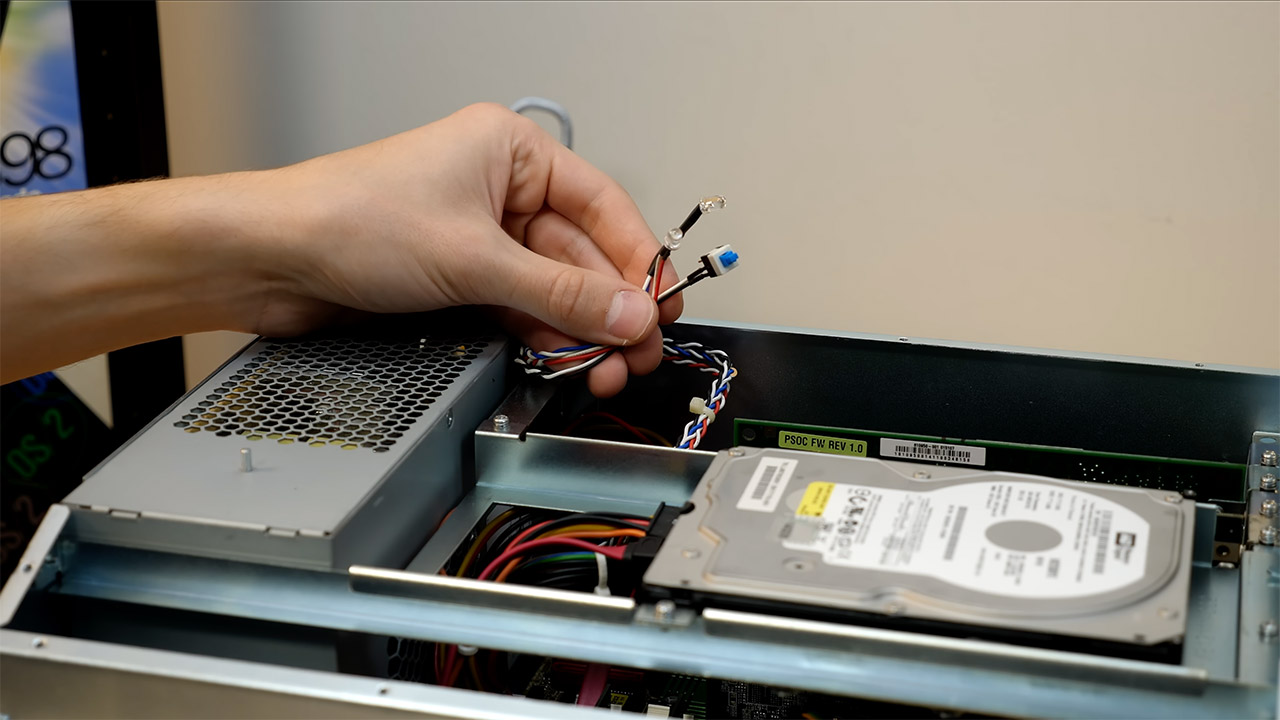
MJD purchased only the computer portion, which was marketed as new old stock on eBay. He brought the metal box home, opened it, and showed everyone what hardware Microsoft chose for one of its most ambitious products. He began by removing a row of screws around the enclosure. The first thing to come out was a molded plastic component. It was designed to divert airflow out of the power supply and keep everything cool inside the cramped enclosure. With the plastic removed, a metal cover was lifted, revealing the components underneath.
Exceptional Performance and Productivity: Experience smooth and responsive performance powered by an up to AMD Ryzen 3 7320U processor and 8GB memory…
Copilot in Windows – your AI Assistant: Do more, quicker than ever across multiple applications with the centralized generative AI assistance of…
Immersive Visuals: With its narrow bezel design the 15.6″ 1080p Full HD IPS display is perfect for casual web browsing and watching movies or…
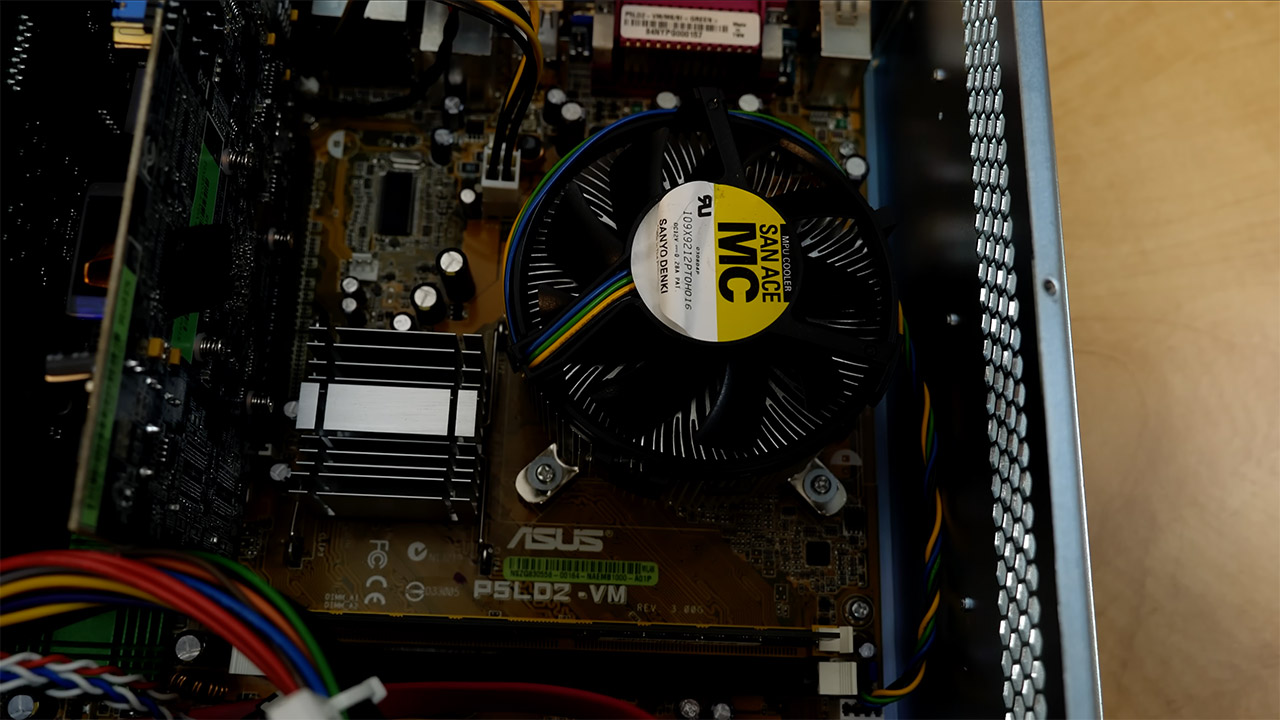
The foundation was an Asus P5LD2-VM motherboard with Intel’s LGA 775 socket. This was a typical board from the mid-2000s, chosen because it was dependable and well-known to manufacturers. Everything else in the box is connected to it. The socket housed an Intel Core 2 Duo E6400 clocked at 2.13 GHz. MJD left the heatsink in place during the initial assessment, but later validated that the processor precisely matched the specifications Microsoft gave for the original tables. It came with two 1 GB memory sticks, giving the machine a total of 2 GB of DDR2 RAM. Storage came from a 250 GB hard drive, however official records for the first-generation Surface frequently indicate 160 GB, so the larger drive raised a minor concern. It could have been swapped at some time during the unit’s life, or the published numbers merely differed between early manufacturing runs. In any case, the drive was installed in the same location as a typical desktop PC.
Advertisement
A Sapphire Radeon X1650 Pro card with 256 MB of internal memory handled graphics responsibilities. This was a reliable mid-range card from 2006 that handled the graphics for the table’s rear-projection display. The motherboard included minimal integrated graphics as a backup, but the separate card handled the actual job here. A second expansion card placed alongside the graphics card. This one carried Microsoft’s branding and was dubbed the Milan DSP board. It handled specialized digital signal processing tasks designed for the Surface platform. In the full table, this card most likely managed data from the infrared cameras or enabled the system’s unique networking characteristics for communicating with things on the surface.
Power came from a supply housed within the same box. MJD didn’t have the original table’s custom wiring harness, so he connected a simple power button salvaged from an old eMachines PC to the motherboard’s two-pin socket. That simple hack was sufficient to bring the system to life. When turned on, the machine booted into a modified version of Windows Vista designed specifically for these tables. The desktop featured large, finger-friendly icons and a suite of programs based on the Surface vision. MJD navigated through a music app, a few games, and other programs created for the platform years ago. Everything functioned as it would have when the entire table and its large screen were still attached.
He did a few quick checks to confirm the hardware. Task Manager and basic system utilities showed that the Core 2 Duo processor and Radeon card were working as expected for hardware at the time. There were no surprises, simply a clean, working example of the identical configuration that Microsoft delivered with the original Surface tables. The entire tables are extremely rare today. Complete working devices are practically never available for sale, and when they do, they attract high collector prices. Owning the computer part alone still provides a direct look at the practical decisions behind a device that appeared futuristic in 2008.
Don’t get me wrong, I love my dog. He’s a really, really good boy. Maybe the best boy? I don’t know, I haven’t met all the dogs. Yet. But I what I don’t love so much is his hair, which seems to shed at such a rate that it’s astounding to me that he has any left at all.
It’s been an absolute blessing, then, to have spent two years testing vacuums for TechRadar. I’ve tested all kinds of vacuums, at all kinds of price points, but the one I’ve clung on to is the Roborock Saros 10. It arrived in my home in spring 2025, and since then it has been a vital tool in my anti-hair arsenal. It gets sent out cleaning every night — and it hasn’t let me down yet.
Despite being one of my most-used gadgets, I found it a little hard to recommend at list price (a cool £1.5K at launch). Since then it’s attracted a number of deals, but none so good as the current Prime Day discount: the Roborock Saros 10 is now £699.99 at Amazon (down from an adjusted list price of £1,199.99). At that price, I would absolutely recommend it, as it’s one of the very best robot vacuums I’ve ever used — and, like I say, I’ve used plenty.
If you’re suspicious of such a hefty discount, don’t be. The robot vacuum market rattles along at a rate of knots, with multiple new models released each year (the two bots showcased here have officially been replaced by the Saros 20 and Saros 20 Sonic), That means models like this might be considered old news, even though they’ve only been around a couple of years.
The rate of appreciable improvement has slowed, though, so while the specs in the newest models might be technically better, you’ll likely struggle to see much — if any — difference in the performance. That’s true in the case of the Saros 20, which I also tested.
Advertisement
(Image credit: Future)
What’s so good about the Roborock Saros 10?
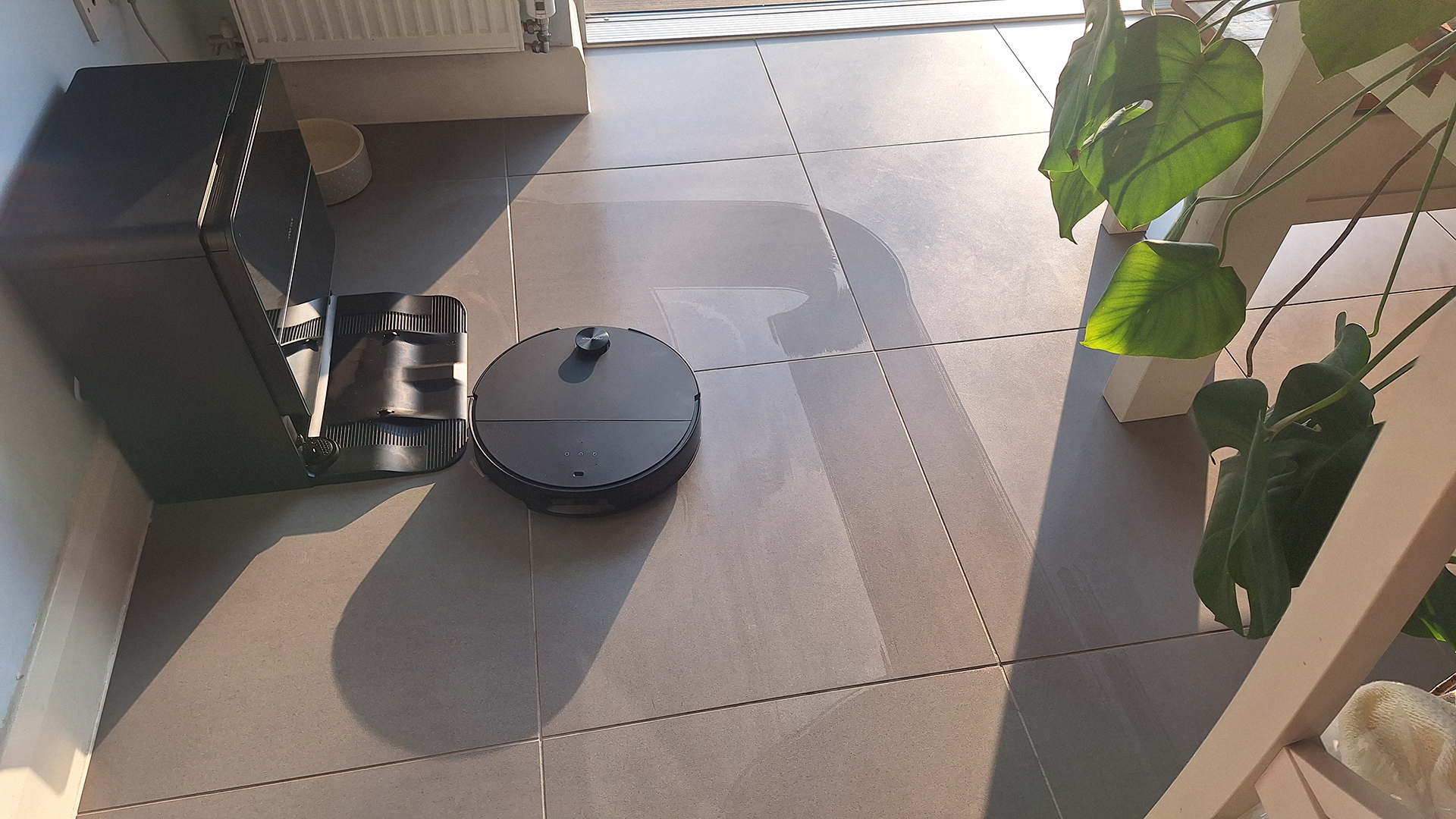
Why do I love the Roborock Saros 10 so much? It’s an ultra-capable all-rounder that requires minimal effort and maintenance from me. The vacuuming is efficient and effective, and the navigation and object avoidance is reliable — even when faced with the complicated corner of my kitchen that includes a thin rug, a table and multiple dining chairs, and also acts as the dog’s preferred toy discard area. The mopping is also effective and thorough, clearing pawprints and smudges with ease.
The dock is also a standout. It auto-empties the dust cup, and has enough oomph that I’ve never experienced a hair blockage during this process (not true of all self-empty robovacs I’ve used). It’ll also top up the onboard water tank from its larger dock reservoir — adding the right amount of cleaning fluid as it does so — and clean and dry the mop pads when it’s done cleaning. Opting for a slightly older flagship model is my #1 tip for saving money when shopping for a robot vacuum.
Advertisement
What’s the difference between the Saros 10 and 10R?
The Roborock Saros 10 and 10R are very similar in terms of specs and performance, but there are a couple of design differences. The first is that the 10R uses a different navigation system; one which doesn’t require a raised LiDAR puck. So instead of a puck that can pop up and down, there’s no puck at all. On test, we found this robovac navigated just as accurately as the 10. Both bots are the same height, and both are equally good at cleaning under the sofa.
The second difference is the mop pad style. While the 10 has a vibrating, D-shaped pad, the 10R boasts two, spinning pads. If I had to choose, I’d say I slightly prefer the dual mop-pad setup, but there’s barely anything in it. In terms of wet cleaning, neither of these robot vacuums will let you down.
The NotePin S AI wearable, seen here on the wrist of CNET’s Katie Collins, could be really useful for my job. And it’s on sale for Prime Day.
Andrew Lanxon/CNET
I took over the role of CNET’s editorial leader earlier this year, and while I’ve participated in Prime Day sales as a TV reviewer and general deals editor here for (literally) decades, this is my first Prime Day as EIC. In case you’re wondering what purchases a person like me is considering this time around, here’s a sampling.
iPad 11-inch A16 ($300): My artistic daughter has been asking for an iPad and if my wife approves, I’ll likely get her this basic version, our top pick for most people. I’d also get her the Apple Pencil (on sale for $60). We’d save both of these for Christmas presents.
Advertisement
Belkin Portable Charger Bank ($38): My family and I always need portable chargers. Half our devices call for Lightning and the other half for USB-C. This does both and I like the built-in cables.
Plaud NotePin S AI Notetaker ($152): In my new role I take more meetings than ever, and I also have plenty of valuable face-to-face conversations in the office and beyond. I currently depend on the Otter app on my phone and Gemini+Google Meet recordings at work to take notes (with appropriate permission, of course). This AI wearable could be my “secret weapon” to consolidate everything in one place.
JBL Go 4 Bluetooth Speaker ($38): I actually bought this one a few days ago when it was $40 – still a great deal, but now even better. It’s no longer one of our best Bluetooth speakers but it’s good enough for my (other) daughter, who wants one for the beach. At this price, I won’t be too annoyed if (when?) it gets destroyed by sand and surf. And yes, I got her the pink one which I know she’ll love. We’re saving this for her birthday.
Anker Solix F2000 portable power station ($749): I own a travel trailer and upgraded to solar with an inverter, but at a recent (shady) campsite, I still had to break out my loud, annoying propane generator. Sure, I could just add more standard 12V LiPo4 batteries, but this portable power station is so much more versatile. It includes a 30A RV outlet, and the wheels make it worth the extra $50 over the Bluetti AC200L. No way my wife approves this one, but it stays on the list anyway because I’m camping tech obsessed.
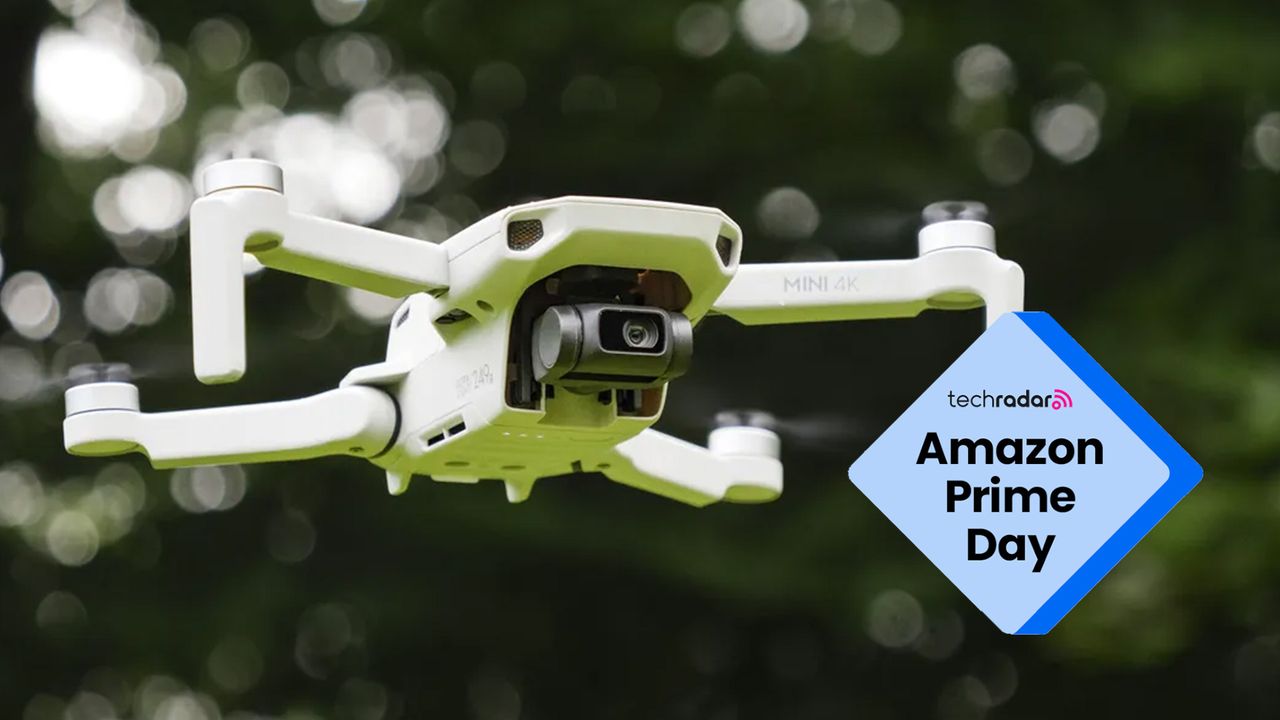
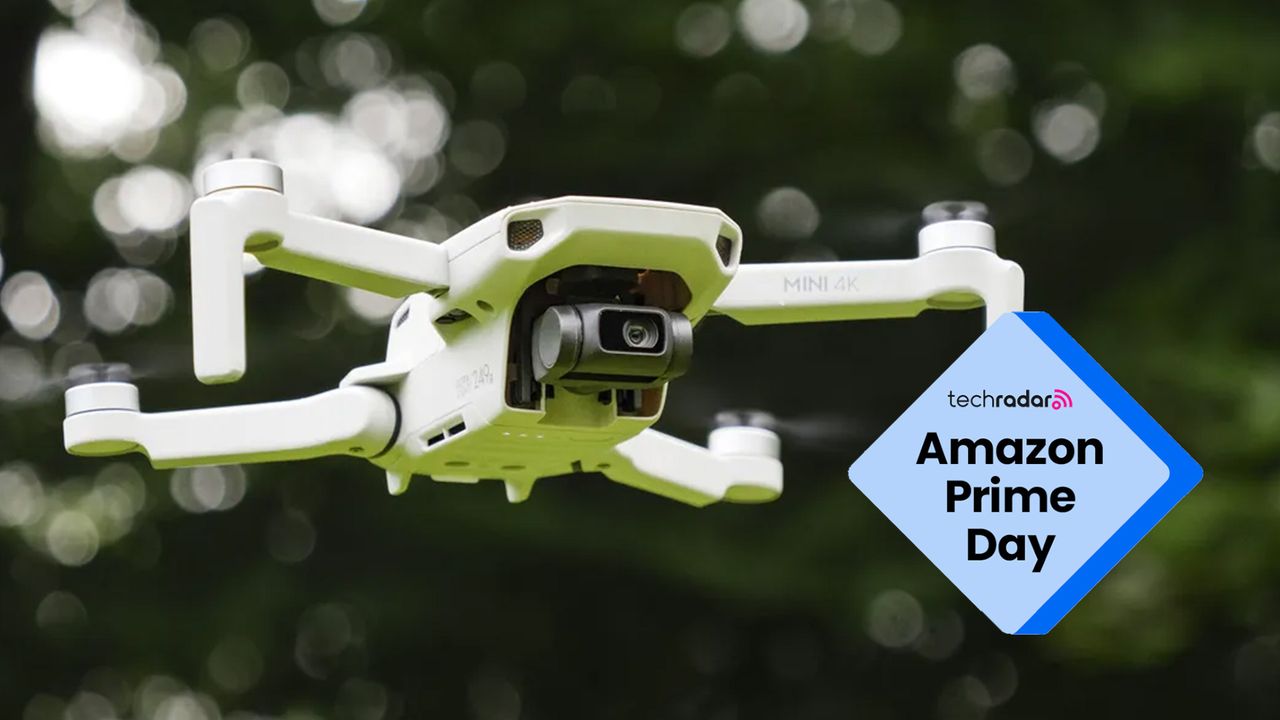
My first DJI drone was the flagship DJI Mavic Pro that launched in 2016. At the time, it was the brand’s smallest consumer market drone ever made, replacing the bulky DJI Phantom, and that meant it wasn’t cheap at $999 / £999.
It didn’t take long after unboxing it for me to crash it into a wall. I was excited; the controls were inverted. Back then, there was no way I could simply fork out for a replacement drone — but luckily it just needed a new arm rather than a whole new drone (phew).
Since then, DJI has expanded its consumer drone range considerably, from the ultra-lightweight Mini Series to the more accessible Neo Series for casual flyers. The most beginner-friendly of the lot is the DJI Neo, which you can find at Amazon for as low as $139 (was $199) in the US and £113 (was £169) in the UK for the drone itself.
The AI boom has encouraged everyone and their uncle to launch a data center business. But spinning up a data center isn’t easy.
Even if you solve the problem of securing the GPUs, network switches, and storage, you still have to get everything configured, running and be able to cater to customers’ various needs. Getting getting a data center ready to provide cloud-computing services AI inference and training services can take months of work. And the longer you take to get to market, the higher the cost of having all those precious GPUs sitting idle.
Network automation startup Netris claims it can make that problem disappear for neoclouds. The company provides software that runs on network switches, and it also offers a platform that connects to switches to help neocloud operators reduce the time it takes to go live by automating setup, configuration and operations. The platform also provides network abstraction, so hardware configurations can be changed as required, and it isolates servers and resources at the hardware layer so neoclouds can serve multiple customers (multi-tenancy).
If that sounds like a solution to an obvious problem, you’re not wrong. Until recently, data centers were largely the domain of large infrastructure operators like Equinix, NTT, Digital Realty, Oracle, Microsoft, AWS, or Google. Those companies pretty much solved network setup, configuration and multi-tenancy for themselves by hiring ranks of engineers or building the automation themselves. Small neocloud businesses rarely have such resources at their disposal.
Advertisement
“As a GPU cluster operator, you need to make configuration changes to every link, every day. At traditional data centers, they were using something called SDN [software-defined networking] to do this, but SDN is falling short, because it’s a software technology,” Netris’ CEO Alex Saroyan told TechCrunch. “For AI, software is not okay, because the amount of traffic is so high, everything must be hardware accelerated. So you need something like SDN, but completely hardware accelerated. This is what we do, and this is what what we’ve been doing for eight years.”
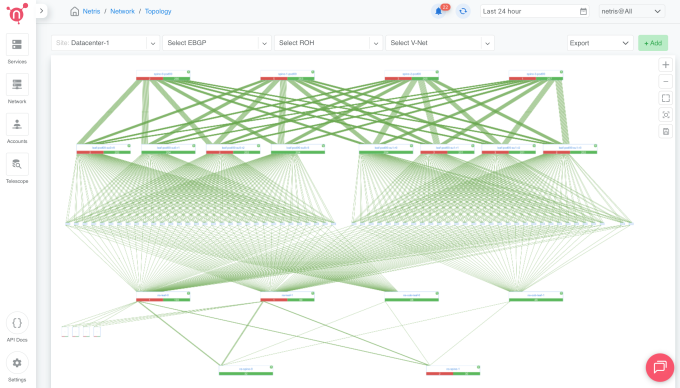
An abstracted view of a data center’s topology. Image Credits: NetrisImage Credits:Netris /
Saroyan said Netris’ platform is vendor-agnostic, compatible with networking equipment and standards used at data centers, both for Nvidia and AMD’s servers.
The startup’s promise has found many believers, one of which is Nvidia. Two years ago, the chipmaking giant was so impressed by a demo of Netris’ technology that it recommended the company to several customers. Today, Netris is live at more than 35 GPU clusters around the world (about a million GPUs total), operated by the likes of Lightning AI, Foxconn, Visionbay, Hewlett Packard Enterprise, Tensorwave, Telus, and others.
To build on that momentum, Netris has now raised $15 million in a Series A round from Andreessen Horowitz, TechCrunch has exclusively learned.
Notably, there’s no AI at work here. Saryoan said the company only uses algorithms it had developed previously for running and configuring automation and operations.
Advertisement
“We started way before AI. We understood the challenge early on, and we started developing this algorithm early on. AI is not deterministic, right? Sometimes it likes to do things on its own. It’s good for creative work, but for changing many thousands of switch configurations, you don’t need to be creative. You need to be very persistent and repeatable.”
a16z partner Guido Appenzeller is joining the company’s board. Looking forward, Netris aims to use the funding to hire more engineers and sales staff, add support for more hardware vendors, and implement more functionality in its algorithm.
When you purchase through links in our articles, we may earn a small commission. This doesn’t affect our editorial independence.



-Reviewer-Photo-SOURCE-Nena-Farrell.jpg)












































You must be logged in to post a comment Login