

Business
Alnylam Pharmaceuticals, Inc. (ALNY) Discusses ALN-6400 RNAi Therapy Targeting Plasminogen for Rare Bleeding Disorders – Slideshow



Business
Tesla Shares Advance More Than 3 Percent as EV Maker Maintains Leadership in Electric Vehicles

Tesla Inc. shares rose more than 3 percent on Friday, closing at $386.80 after gaining $11.68, as investors responded positively to the company’s continued dominance in electric vehicles and progress in autonomous driving technology.
The gain reflected ongoing confidence in Tesla’s position as the leading electric vehicle manufacturer with a vertically integrated business model. The company’s focus on innovation, manufacturing efficiency and energy solutions has sustained investor interest despite competitive pressures.
Tesla’s vehicle deliveries have remained strong, supported by its expanding product lineup and global manufacturing footprint. Its ability to scale production while maintaining quality has been a key differentiator in the electric vehicle market.
The company’s energy storage and solar businesses have shown significant growth, providing diversification beyond automotive revenue. Tesla’s integrated energy solutions address both consumer and utility-scale needs.
Vehicle Production and Deliveries
Tesla has reported robust vehicle production and delivery numbers across its models. The Model Y and Model 3 continue driving volume while Cybertruck production ramps up to meet demand.
The company’s manufacturing facilities in the United States, China and Germany support global distribution and reduce transportation costs. Its ability to adapt production to regional demand has enhanced efficiency.
New model development and refreshes keep the lineup competitive. Tesla’s approach to over-the-air updates provides continuous improvement and new features for existing owners.
Autonomous driving technology, including Full Self-Driving capability, represents a significant growth area. Regulatory approval and technical advancement will determine the pace of commercialization.
Energy Business Expansion
Tesla’s energy generation and storage segment has grown rapidly, with Megapack deployments supporting grid stability and renewable energy integration. The business provides high-margin revenue with strong demand.
Solar roof and Powerwall products offer residential energy solutions with increasing adoption. The company’s virtual power plant initiatives demonstrate innovative approaches to energy management.
Energy storage deployments have accelerated as utilities and businesses seek solutions for renewable integration and grid resilience. Tesla’s technology and manufacturing scale provide competitive advantages.
Market Position and Competition
Tesla maintains leadership in electric vehicle sales globally despite increasing competition from traditional automakers and new entrants. Its brand strength, charging network and technology ecosystem create significant barriers to entry.
The company’s Supercharger network has expanded through partnerships and open access initiatives. This infrastructure advantage supports customer ownership experience and generates additional revenue.
Traditional automakers have accelerated electric vehicle development but face challenges in matching Tesla’s vertical integration and software capabilities. New competitors focus on specific market segments and price points.
The global transition to electric vehicles continues, supported by government incentives and corporate sustainability goals. Tesla’s first-mover advantage and execution have positioned it favorably in this shift.
Investment Considerations
Tesla’s share price performance reflects its unique position as both an automaker and technology company. Its valuation incorporates expectations for vehicle growth, energy business expansion and autonomous driving potential.
The stock appeals to growth-oriented investors seeking exposure to electric vehicles, renewable energy and artificial intelligence. Its volatility reflects the high expectations and execution risks inherent in its ambitious vision.
Risks include production challenges, competitive responses, regulatory hurdles and capital requirements for expansion. Tesla’s ability to deliver on multiple fronts simultaneously will influence long-term success.
Analysts maintain varied outlooks, with some highlighting significant upside potential while others express caution about valuation and execution. The company’s fundamental progress and market leadership support positive long-term views.
Industry Trends
The electric vehicle market continues expanding globally with improving battery technology, charging infrastructure and consumer acceptance. Government policies and corporate commitments support the transition from internal combustion engines.
Autonomous driving technology development has accelerated across the industry. Regulatory frameworks and technical challenges will determine adoption timelines and competitive dynamics.
Renewable energy integration and energy storage solutions gain importance as grids adapt to variable generation sources. Tesla’s dual role in vehicles and energy storage positions it uniquely in this ecosystem.
Supply chain localization and battery technology advancement remain focus areas for electric vehicle manufacturers. Tesla’s investments in these areas support cost reduction and supply security.
Future Outlook
Tesla’s strategic direction encompasses vehicle production scaling, energy business growth and autonomous technology development. Its ability to execute across these fronts will shape its trajectory.
The company continues investing in manufacturing capacity, research and development, and global expansion. Its vertical integration provides advantages in cost control and innovation speed.
Investors will monitor vehicle delivery numbers, energy deployment figures and progress on autonomous capabilities. Management guidance will provide insight into execution priorities and market conditions.
The electric vehicle and renewable energy sectors’ fundamental growth drivers remain strong. Tesla’s technology leadership and brand strength position it for continued market leadership.
As the company advances its ambitious goals, its contribution to sustainable transportation and energy solutions will expand. Tesla’s progress will be watched closely by investors, competitors and policymakers worldwide.


Nick Ackerman is a former financial advisor using his experience to provide coverage on closed-end funds and exchange-traded funds. Nick has previously held Series 7 and Series 66 licenses and has been investing personally for over 14 years.He contributes to the investing group CEF/ETF Income Laboratory along with leader Stanford Chemist, and Juan de la Hoz and Dividend Seeker. They help members benefit from income and arbitrage strategies in CEFs and ETFs by providing expert-level research. The service includes: managed portfolios targeting safe 8%+ yields, actionable income and arbitrage recommendations, in-depth analysis of CEFs and ETFs, and a friendly community of over a thousand members looking for the best income ideas. These are geared towards both active and passive investors. The vast majority of their holdings are also monthly-payers, which is great for faster compounding as well as smoothing income streams. Learn More.
Analyst’s Disclosure: I/we have a beneficial long position in the shares of ECF, GDV either through stock ownership, options, or other derivatives. I wrote this article myself, and it expresses my own opinions. I am not receiving compensation for it (other than from Seeking Alpha). I have no business relationship with any company whose stock is mentioned in this article.
Seeking Alpha’s Disclosure: Past performance is no guarantee of future results. No recommendation or advice is being given as to whether any investment is suitable for a particular investor. Any views or opinions expressed above may not reflect those of Seeking Alpha as a whole. Seeking Alpha is not a licensed securities dealer, broker or US investment adviser or investment bank. Our analysts are third party authors that include both professional investors and individual investors who may not be licensed or certified by any institute or regulatory body.

Form 4 Broadcom Inc For: 26 June
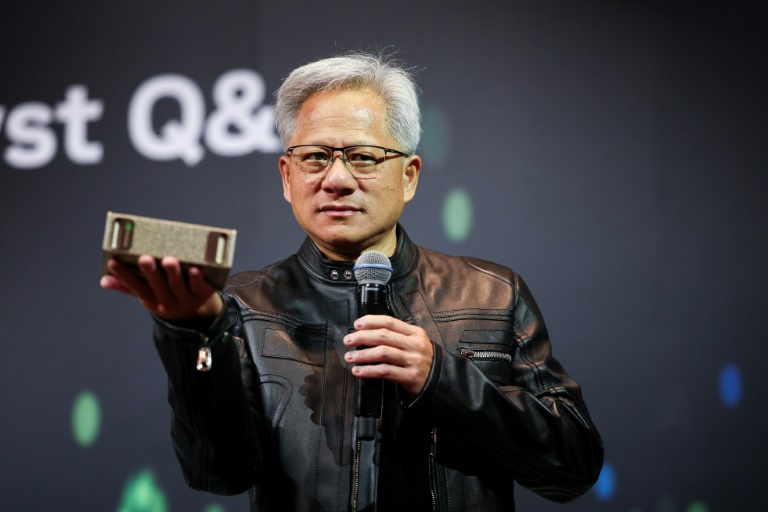
Two of the most talked-about names in technology investing right now sit on opposite ends of the corporate life cycle, even as both are increasingly framed as plays on artificial intelligence: Nvidia, the established chip giant that has powered the AI boom for years, and SpaceX, the rocket and satellite company that completed the largest initial public offering in history earlier this month.
For investors weighing which stock might fit their portfolio in 2026, the comparison comes down less to which company is “better” and more to how much risk, and how much patience, an investor is willing to bring to the table. Here’s what the available numbers and analyst commentary show about each.
Nvidia: a proven, profitable AI bet
Nvidia has spent the past several years transforming from a gaming-focused chipmaker into what many on Wall Street consider the backbone of the artificial intelligence economy. Nvidia’s revenue reached $130 billion in its most recent fiscal year, with operating margins exceeding 55%, reflecting strong pricing power and continued demand for AI computing capacity.
That scale has translated into one of the largest market valuations in corporate history. Nvidia currently sits at roughly $5 trillion in market capitalization, generating more than $250 billion in revenue over the past 12 months and about $160 billion in net income, with its most recent quarterly revenue growing 85% year over year.
Analysts broadly agree that Nvidia’s business is well established, even if opinions differ on how much further the stock can run from current levels. Multiple analysts have maintained strong buy ratings on Nvidia, with some price targets suggesting the stock could approach $357 by the end of 2026 under optimistic scenarios. Not everyone shares that optimism, however. CFRA analyst Keith Snyder initiated coverage of Nvidia with a sell rating and a $115 price target, citing a premium valuation that leaves limited room for execution shortfalls.
The central risk most frequently cited for Nvidia isn’t about its current business, but about how much future growth is already reflected in its share price. The primary risk for Nvidia is valuation compression — the market already assumes continued dominance in AI infrastructure spending, and any slowdown in enterprise AI adoption, increased competition, or a cyclical reduction in data center spending could pressure the stock’s multiple even if earnings keep growing.
SpaceX: a massive, newly public bet on the future
SpaceX’s path to the public markets looked nothing like Nvidia’s gradual rise. SpaceX priced its IPO at $135 per share on June 11, 2026, and began trading the next day in what became the largest IPO in history, raising $75 billion at an initial valuation of approximately $1.77 trillion. With about 13.1 billion shares outstanding, that pricing gave SpaceX an initial market value of nearly $1.8 trillion.
The stock’s early trading has been volatile. SPCX surged 19.2% on its first day of trading and reached an all-time high of $225.64 within four days — a 67% gain from the IPO price — before pulling back sharply. As of June 22, 2026, the stock was trading around $165.78, down roughly 27% from that peak, within a 52-week range of $135 to $225.64.
Unlike Nvidia’s single-focus chip business, SpaceX’s revenue comes from several distinct operations at very different stages of maturity. SpaceX’s Starlink division operates on a subscription model, generating $6.8 billion in annualized revenue from 4.2 million subscribers and growing 86% year-over-year, while its Launch Services segment brings in $4.9 billion annually with roughly 65% global market share. Its Starship program, meanwhile, represents future optionality with no material current revenue. Overall, SpaceX’s 2026 revenue of $18.2 billion is a fraction of Nvidia’s, but its 58% growth rate is dramatically higher than Nvidia’s current pace.
SpaceX has also moved into AI more directly through a corporate acquisition. Before going public, SpaceX acquired xAI, the business behind the Grok AI platform and the social media platform X, and that AI division generated about $3.2 billion in revenue in 2025, growing at a 22% pace — solid, though notably slower than Nvidia’s AI-driven growth.
Bulls and skeptics on both sides
Some prominent voices on Wall Street see SpaceX’s growth potential as enormous. CNBC’s Jim Cramer has said mismatched supply and demand for SpaceX shares could quickly drive the stock to a $6 trillion valuation, while hedge fund billionaire Ron Baron has projected that orbital AI data centers could eventually push SpaceX’s value to $14 trillion within a decade.
Others remain far more cautious about how much of that future is already priced in. For context, Palantir Technologies currently carries the highest valuation in the S&P 500 at 60 times sales, and SpaceX was roughly 50% more expensive than that at its IPO price. One financial analysis was blunt about the disconnect between SpaceX’s valuation and its current financial results. If SpaceX deserved to be valued at 40% of Nvidia’s price based on comparable financial performance, it would need roughly $100 billion in revenue and $64 billion in profits — but in 2025, SpaceX’s revenue totaled less than $20 billion, with adjusted EBITDA of $6.6 billion, leading one analysis to conclude that SpaceX’s stock price is based more on hype than current business results.
Two different kinds of risk
Ultimately, the decision between the two stocks comes down to what kind of uncertainty an investor is comfortable holding. Nvidia stock, despite trading at elevated valuations, already has a proven financial foundation — investors may debate whether it’s expensive, but few question whether the underlying business is real. SpaceX stock carries more uncertainty, having recently entered public markets while still facing major execution challenges involving launches, infrastructure, regulation and satellite deployment.
A broader industry comparison framed the tradeoff similarly: Nvidia suits investors seeking proven AI exposure, while SpaceX suits investors seeking earlier-stage exposure to the broader space economy, given the two companies’ low fundamental correlation and very different risk profiles.
The bottom line
Neither stock is without significant risk, and neither is guaranteed to outperform the other in 2026. Nvidia offers an established, highly profitable business whose primary risk is whether its sky-high valuation can be sustained if AI spending growth slows. SpaceX offers exposure to a much larger, longer-term opportunity in space and satellite infrastructure, but at a valuation that — by traditional financial measures — runs well ahead of its current revenue and profits.
This article is not financial or investment advice. Given the volatility and uncertainty surrounding both stocks, investors are encouraged to review company filings, consult a qualified financial professional, and consider their own risk tolerance and time horizon before making any investment decisions.
Form 144 CREDIT ACCEPTANCE CORP For: 26 June

Alphabet Inc. shares traded virtually unchanged on Friday, closing at $342.28 after a modest gain of $0.09, as investors assessed the company’s progress in artificial intelligence integration and core search business performance.
The stability reflected ongoing confidence in Alphabet’s dominant position in online search and advertising while it invests heavily in artificial intelligence capabilities across its products. The company’s diverse portfolio, including YouTube, cloud computing and other bets, provides multiple growth avenues.
Alphabet has reported consistent revenue growth driven by advertising and cloud services. Its focus on AI innovation, including Gemini models, aims to maintain technological leadership in an increasingly competitive landscape.
The company’s “Other Bets” segment continues exploring emerging technologies with potential for significant future impact. While currently loss-making, these investments reflect Alphabet’s commitment to long-term innovation.
Search and Advertising Performance
Google Search remains the foundation of Alphabet’s business, generating substantial advertising revenue through its dominant market position. The company continues enhancing search capabilities with AI features to improve user experience and advertiser value.
YouTube’s advertising and subscription revenue have grown steadily, benefiting from increased video consumption and creator ecosystem expansion. The platform’s scale provides significant data advantages for AI development.
Cloud computing services have shown accelerating growth as enterprises adopt Google Cloud Platform for its AI and data analytics capabilities. The segment’s expansion demonstrates Alphabet’s competitiveness in enterprise technology.
Advertising remains sensitive to economic conditions and advertiser spending patterns. Alphabet’s ability to demonstrate return on investment for advertisers supports sustained revenue despite market fluctuations.
Artificial Intelligence Initiatives
Alphabet has integrated AI capabilities across its products, with Gemini models powering various features in Search, Workspace and other services. The company’s approach emphasizes responsible development and practical applications.
Investment in AI research and infrastructure continues at significant levels. Google’s data resources and computing power provide advantages in training and deploying advanced models.
The company balances innovation with safety considerations, implementing various measures to address potential risks. Its approach to AI development reflects ongoing industry discussions about responsible practices.
Partnerships and collaborations with other organizations expand AI applications across different sectors. These efforts aim to create value while addressing societal concerns about the technology.
Regulatory and Legal Challenges
Alphabet faces ongoing regulatory scrutiny worldwide, including antitrust investigations and legal challenges related to its market dominance. Successful navigation of these issues remains important for long-term operations.
The company has made various concessions and adjustments in response to regulatory pressure. Its ability to adapt business practices while maintaining core strengths will influence future outcomes.
Legal proceedings related to advertising practices and app store policies continue in multiple jurisdictions. Resolution of these matters could provide greater certainty for strategic planning.
Investment Considerations
Alphabet’s shares appeal to growth-oriented investors seeking exposure to digital advertising, cloud computing and artificial intelligence. The company’s strong cash flow and consistent profitability support its premium valuation.
Risks include regulatory outcomes, competitive pressures in key markets and execution challenges in new initiatives. Alphabet’s diversified business model and financial strength provide some resilience.
Longer-term investors value the company’s innovation track record and market leadership. Its ability to adapt to technological changes while generating strong returns has been a historical strength.
Analysts generally maintain positive outlooks, citing Alphabet’s execution capabilities and growth opportunities. However, high expectations require consistent delivery on multiple fronts.
Industry Trends
The digital advertising industry continues evolving with changing consumer behaviors and platform dynamics. Alphabet’s ability to maintain relevance across channels supports its market position.
Cloud computing adoption accelerates as businesses digitize operations and leverage data analytics. Alphabet’s investments in infrastructure and AI capabilities position it competitively in this market.
Artificial intelligence integration across industries creates new opportunities and challenges. Companies like Alphabet with substantial data resources and computing power are well-positioned to benefit.
Privacy regulations and data governance requirements influence business models across technology sectors. Alphabet’s emphasis on user privacy aligns with evolving expectations.
Future Outlook
Alphabet’s strategic direction focuses on enhancing core businesses while investing in emerging technologies. Its ability to balance innovation with profitability will influence long-term success.
The company continues refining its product offerings and exploring new frontiers in technology. Its track record of adapting to change supports optimism for future performance.
Investors will monitor upcoming earnings reports and product announcements for signs of continued execution. Management guidance will provide insight into growth priorities and market conditions.
The technology sector’s fundamental growth drivers remain strong. Alphabet’s market leadership, financial resources and innovation capabilities position it for sustained relevance and growth.
As the company navigates regulatory challenges and competitive dynamics, its focus on user experience and technological advancement continues differentiating it in the market. Alphabet’s progress will be watched closely by investors and industry participants.

US president Donald Trump has vowed to impose a 100% import tariff on any European country that introduces a digital services tax on American technology giants.
Writing on Truth Social, Trump said “Numerous European countries” had been discussing bringing in such a levy and some were close to doing so.
He warned that the punitive penalties would be applied immediately and would completely “supersede” any existing bilateral trade agreements.
While the post targets nations planning the “imminent implementation” of new levies, the precise implications for the UK were not immediately clear, given London has had such a tax in place for some time.
“Please let this statement serve to represent that any Country that imposes such a Tax will immediately be met with a 100% TARIFF on any and all Goods sent to the United States of America,” he wrote.
Britain’s 2% Digital Services Tax (DST) on major search engines, social media platforms, and online marketplaces was introduced in April 2020.
The tax applies to tech multinationals like Apple, Google, Meta, and Amazon, specifically targeting firms with global digital revenues exceeding £500 million and UK revenues over £25 million.
It raised more than £800 million in 2024–25, up from £678 million in 2023–24, according to the Treasury.
The Department for Business and Trade and the Treasury have been contacted for comment.
Friday’s tariff warning is the latest in several announcements from President Trump’s administration of new import taxes since the US Supreme Court struck down many of his previous duties in February.
Earlier this month the US announced new tariffs of 10-12.5% on dozens of countries accounting for almost all its imports over concerns they are not doing enough to tackle forced labour.

JPMorgan Names Petno, Rohrbaugh as Co-Presidents and Possible Dimon Successors

Zuckerberg asks Meta to explore working with Polymarket and Kalshi, NYT reports
Business
Meta Stock Jumps More Than 2% Friday as Buy Rating and New Qualcomm Chip Deal Boost Investor Confidence
Shares of Meta Platforms climbed Friday, rising 2.34%, or $12.72, to $555.58 in midday trading, as a fresh analyst endorsement and a newly disclosed chip-supply partnership with Qualcomm helped reverse some of the social media giant’s recent losses.
The gain comes after a difficult stretch for Meta stock, which has fallen sharply from its highs over the past year even as the broader company continues to post strong revenue growth tied to its advertising business.
A stock well off its highs
Friday’s bounce remains modest set against the backdrop of Meta’s performance over the past 12 months. Meta shares hit a 52-week high of $796.25 and a 52-week low of $520.26 over the past year. At Friday’s price near $556, the stock remains far closer to that low than to its peak, reflecting a broader pullback in megacap technology valuations that has weighed on Meta alongside its industry peers.
A fresh vote of confidence from Wall Street
Part of Friday’s strength traces back to a reaffirmed bullish call from a closely watched analyst. Piper Sandler analyst Thomas Champion reiterated a Buy rating on Meta on June 25, maintaining an $800 price target that implies roughly 16% upside from recent trading levels.
That vote of confidence joins a broader set of Wall Street price targets that remain well above where the stock currently trades. Meta Platforms carries a consensus price target of $834.43 based on the ratings of 37 analysts, with the most recent ratings coming from RBC Capital, Rosenblatt and Wells Fargo, whose average target of $863.33 implies roughly 58% upside from recent levels.
Not every analyst has remained equally optimistic in recent months, however. JP Morgan cut its price target on Meta from $825 to $725 on April 30, 2026, marking the most recent downgrade tracked among major Wall Street firms.
A new chip deal with Qualcomm
Beyond the analyst commentary, Friday’s gains followed a notable infrastructure announcement from one of the chip industry’s biggest names. Qualcomm used its investor day this week to unveil a new line of data center processors, along with a multi-year agreement to supply Meta with central processing units for its next-generation server fleet.
The centerpiece of that deal is a newly introduced chip aimed squarely at the kind of AI workloads Meta and other large technology companies are racing to support. Qualcomm introduced the Dragonfly C1000 CPU, a chiplet-design processor featuring more than 250 cores, with commercial availability expected in 2028. The chip is designed with frequencies exceeding 5 GHz and supports PCIe Gen 7 connectivity, as Qualcomm seeks to diversify beyond its core mobile chipset business.
Qualcomm’s chief executive framed the agreement as part of a larger strategic push into AI infrastructure. Cristiano Amon, president and CEO of Qualcomm, said the company is “well positioned” for the shift toward AI inference workloads in the data center, citing multi-year agreements with leading customers.
A cautious response from Meta itself
While the Qualcomm announcement generated significant attention across the chip sector, Meta’s own public response to the deal has been notably measured. The company has declined to detail specifics about timing or how the new chips will fit into its broader infrastructure strategy. A Meta spokesperson told Data Center Knowledge that the company is “embracing a flexible, portfolio-based approach, combining hardware from a range of partners with our own rapidly advancing MTIA silicon program.”
That statement suggests Qualcomm’s chips will represent one piece of a broader hardware strategy for Meta rather than a wholesale shift away from the company’s in-house silicon efforts. Industry analysts have also cautioned against reading too much into the deal’s near-term significance. Matt Kimball, vice president and principal analyst for data center technologies at Moor Insights & Strategy, told Data Center Knowledge, “One customer win doesn’t change the server CPU market overnight.”
The broader advertising business remains the bigger story
Beneath the headline-grabbing AI infrastructure deals, Meta’s underlying business has continued to show strength, particularly in its core advertising operations. Meta’s most recent quarterly revenue grew 33% year-over-year to $56.31 billion, with ad impressions up 19% and average price per ad up 12% simultaneously — an unusual combination given that greater inventory supply typically compresses unit pricing, suggesting AI-driven targeting improvements are sustaining strong advertiser returns.
Other analysts following the stock have echoed that optimism around Meta’s advertising momentum. Evercore ISI analyst Mark Mahaney reiterated a Buy rating on Meta on June 17, keeping a $930 price target and citing the company’s expanding subscription strategy alongside strong ad momentum.
A volatile year for the stock
Friday’s gain comes after a choppy stretch of trading for Meta in recent weeks. Options market data from Cboe showed mixed sentiment in Meta shares as recently as Wednesday, when the stock was down 0.8% on the day, following a separate session in which shares fell 0.26%.
That recent softness followed a sharp pullback from Meta’s spring highs. Piper Sandler has separately noted that Meta shares delivered only mid-single-digit returns over the trailing year while experiencing valuation multiple compression of roughly 10%, even as the firm’s advertising buyer survey pointed to accelerating market growth heading into 2026.
What’s driving sentiment more broadly
Friday’s rebound in Meta shares also appears tied to a broader improvement in sentiment toward technology stocks more generally. Market commentary pointed to renewed enthusiasm tied to digital advertising demand, alongside spillover excitement from Qualcomm’s own surge following its data center announcements. Qualcomm shares jumped 15% in extended trading after the company unveiled its multigenerational CPU deal with Meta, introduced a new AI inference architecture, and nearly doubled its non-handset revenue forecast for fiscal 2029.
Looking ahead
With Meta’s stock still trading well below the consensus analyst price target and roughly 30% off its 52-week high, investors appear to be weighing the company’s continued advertising strength and emerging infrastructure partnerships against broader uncertainty about technology valuations following a volatile stretch across the sector. Whether Friday’s gains mark the start of a sustained recovery or another temporary bounce within a wider trading range will likely depend on how Meta’s advertising business performs in the months ahead, and on how investors continue to price the company’s enormous spending on AI infrastructure relative to its returns.

Alex Tuch excited to join Capitals after losing to team in ’18 Stanley Cup Final

Drone vs. shoplifter: Watch how Redmond PD tracks an alleged thief from high in the sky

‘Rare natural phenomenon’ spotted over Darlington after heatwave


-

 Entertainment6 days ago
Renter of Home in Anne Heche Crash Denies Settlement With Son
-
 Sports3 days ago
Two goals and an assist by sheer aura: Cristiano Ronaldo just entered the World Cup chat
-

 Tech4 days ago
Microsoft accidentally kills epic Outlook email threads
-

 Business6 days ago
Soccer-U.S. defends Iran World Cup travel restrictions, says discussions ongoing
-

 Fashion5 hours ago
Weekend Open Thread: Staud – Corporette.com
-

 Politics16 hours ago
The House | Manchesterism won’t survive the painful trade-offs unless it gets citizens on board
-

 Politics7 days ago
Andy Burnham and the meaning of Makerfield
-

 Politics21 hours ago
Potential 2028er World Cup attendee leaderboard
-

 Tech1 day ago
A Look At A Gaggle Of Transputer Boards
-
Crypto World3 days ago
Bitcoin (BTC) Dips Below $62K, Ethereum (ETH) Plunges 6% Daily: Market Watch
-

 Business15 hours ago
Asia stock markets slide as tech shares slump
-

 Crypto World3 days ago
Securitize Wraps Roubini's SEC-Registered ETF as Dubai VARA Digital Security
-
 Crypto World1 day ago
Dell (DELL) Shares Tumble Over 5% Following Analyst Downgrade to Hold
-
Business3 days ago
Entergy settles forward sale agreements, raises $672 million in cash proceeds
-
 Crypto World7 days ago
Can Charles Hoskinson Really Rescue Cardano?
-
 Business7 days ago
Wall Street Week Ahead: Investors see Micron earnings as pulse check of AI rally momentum
-

 Entertainment7 days ago
Jose Alvarado Wants Taylor Swift at More Knicks Games
-

 Crypto World6 hours ago
RTX holders must register wallets before token distribution begins
-

 Crypto World7 days ago
HIVE shares jump as $220M AI deal speeds Bitcoin mining pivot
-
 Crypto World9 hours ago
Hyperliquid Named on Singapore MAS Investor Alert Register
You must be logged in to post a comment Login