
Security teams log 54% of successful attacks and alert on just 14%. The rest move through your environment unseen.
The Picus whitepaper shows how breach and attack simulation tests your SIEM and EDR rules so threats stop slipping by detection.




Remember a few years ago when both Texas and Florida passed laws trying to tell social media companies they couldn’t moderate political content? Those cases eventually made their way to the Supreme Court, where the Court (as it’s been known to do) kinda punted: sending the cases back to the lower courts on technical legal grounds, claiming that the plaintiffs, NetChoice and CCIA, had mistakenly filed the cases as “facial” challenges, rather than “as applied.” It’s not worth going into the legal weeds again about the difference here, especially since the ruling had tons of important and useful language making it clear that content moderation is protected by the First Amendment in the case dubbed “Moody” after Florida’s former Attorney General.
But, the two cases have continued to bounce around the courts over the past few years, and the district court in Florida has rejected both the plaintiffs and the state’s motions for summary judgment, but in doing so has again made some great arguments about how content moderation gets First Amendment protections. The case is still before Judge Robert Hinkle, who made the original ruling finding the law unconstitutional five years ago.
Now, after discovery, Hinkle is reviewing the amended complaint that tries to deal with Moody’s limits on “facial” challenges. He starts out by reinforcing that content moderation is obviously protected by the First Amendment:
Collecting third-party speech content into a single speech product is what social-media platforms do. As the Supreme Court said, the collection “is itself expressive, and intrusion into that activity must be specially justified under the First Amendment.” Id. The defendants’ contrary assertion was rejected in NetChoice I (this court’s preliminary-injunction order), and in NetChoice II (the Eleventh Circuit’s opinion affirming that order in relevant part), and in Moody (the Supreme Court’s opinion agreeing with the Eleventh Circuit in relevant part).
Florida tried to argue that because recommendation engines try to keep users on the platform, and that decisions are made by “algorithms” that somehow changes the equation. The court points out that this is technically illiterate, because humans still set the editorial guidelines:
The defendants say platforms decide which content to show any given user primarily based on the user’s viewing habits, showing the user the content most likely to keep the user on the platform longer. Perhaps so. See Moody, 603 U.S. at 735 (“The selection and ranking is most often based on a user’s expressed interests and past activities.”). And the defendants say this decision is made by algorithms, devoid of human involvement. Not so. Humans adopt the standards and guidelines, establish algorithms that incorporate them, and keep a great deal of content off the platforms on this basis, even though, as the defendants emphasize, the remaining content is organized to a substantial extent by algorithms based on a user’s viewing habits. This record establishes without genuine dispute that the six platforms specifically addressed in the plaintiffs’ motion have standards or guidelines that have a significant role in selection and organization of content. “And because that is true, they receive First Amendment protection.” Moody, 603 U.S. at 740.
Moody reiterated this point in discussing Texas’s similar legislation. The Court said the parties treated Facebook’s News Feed and YouTube’s homepage as the heartland applications of the Texas law—much as those and other platforms’ similar features are the heartland applications of the Florida law. See id. at 744. The Court said that at least on the record then before the Court, “the editorial judgments influencing the content of those feeds” were “protected expressive activity” that Texas could not “interfere with . . . simply because it would prefer a different mix of messages.” Id. (emphasis added). The Court said “influencing,” not “fully determining.” The record now before this court makes clear that editorial judgments of the six platforms addressed in the plaintiffs’ motion at least influence the content of their feeds. The First Amendment applies.
While Justice Barrett made some technically questionable statements in a concurrence about whether AI-driven algorithms might change the equation, Judge Hinkle says that even if she were right, it wouldn’t matter here:
But the defendants are plainly incorrect when they assert, in substance if not explicitly, that the First Amendment does not apply when there is mixed curation—some driven by human editorial discretion and some by algorithms or artificial intelligence. Responding to Justice Barrett’s concurrence, the Court said this case does not deal with “feeds whose algorithms respond solely to how users act online—giving them the content they appear to want, without any regard to independent content standards.” Moody, 603 U.S. at 736 n.5 (emphasis added). The Court continued, “Like them or loathe them, the Community Standards and Community Guidelines make a wealth of user-agnostic judgments about what kinds of speech, including what viewpoints, are not worthy of promotion. And those judgments show up in Facebook’s and YouTube’s main feeds.” Id. Justice Barrett joined that footnote.
And then the key point: the First Amendment protects content moderation. Full stop.
The unmistakable upshot is this: the First Amendment applies to mixed curation. The defendants’ contrary assertion is inconsistent with Moody, the many precedents discussed in Moody, and any coherent view of the First Amendment. This does not mean platforms are not subject to government regulation, but it does mean regulation must pass appropriate First Amendment scrutiny.
The judge also finds that there are constitutional problems with how vague the law is in some areas. And, in others, finds that the law would be impossible to comply with. In discussing the law’s prohibition on “post-prioritization or shadow banning algorithms” for any posts “by or about” a candidate for office, the court finds the provision baffling — saying its plain meaning makes no sense, and that Florida’s defense of it makes even less sense:
But the provision prohibits a platform from using “post-prioritization or shadow banning algorithms” for content by or about a user known to be a candidate. “‘Post-prioritization’ means action by a social media platform to place, feature, or prioritize certain content or material ahead of, below, or in a more or less prominent position than others in a newsfeed, a feed, a view, or in search results.” Fla. Stat. § 501.2041(1)(e) (emphasis added). Unless a platform shuts down completely, compliance with this provision is literally impossible; posts can only be ahead of or below other posts, and posts can only be in a more or less prominent position than other content.
The defendants say, though, that the provision does not mean what it says— that it requires posts by or about candidates to be placed in chronological order. Perhaps Florida courts will rewrite the provision in this way, but they have not done so to this point. One doubts the Florida legislature really intended to require all candidate posts to go to the top, allowing candidates and their supporters to flood every user’s feed, rendering platforms useless, or nearly so. And if that is not what the provision means, one is at a loss to divine any plausible meaning.
Thus, the court says these provisions are likely unconstitutionally vague.
Still, NetChoice/CCIA don’t win their own summary judgment motion, in part because the court says that their amended complaint is still a “quasi-facial challenge” which runs into the same issues the original challenge faced at the Supreme Court, and because of that the court holds off on granting summary judgment, meaning the case continues to move forward to trial, even as the judge makes it pretty clear this law is a complete constitutional mess.
So this is about as good a ruling as NetChoice and CCIA could realistically hope for, given the procedural mess the Supreme Court handed down in Moody. Hinkle has made it abundantly clear that he thinks Florida’s law is a vague, unconstitutional disaster that can’t survive contact with the First Amendment. And yet, because the Supreme Court decided that “facial vs. as-applied” was the hill to die on, he can’t just say so and end it. Instead, a law that everyone — including the judge — can see is unconstitutional gets to march all the way to trial.
That’s the real legacy of Moody’s procedural punt: it didn’t save these laws, but it did make killing them slower, costlier, and more painful than it has any right to be.
Filed Under: 1st amendment, as applied challenge, content moderation, facial challenge, florida, free speech, james uthmeier, moody, moody v. netchoice, robert hinkle, sb 7072, social media
Companies: ccia, netchoice


If you spend any time on social media, you’ve likely seen plenty of videos of suspected shoplifters — in the Seattle area and beyond — trying to make a getaway with armloads of merchandise. Often, these suspects fight off store employees or shoppers and evade capture.
But it’s rare to see a drone get in on the action.
A shoplifting call this week at a Target store in Redmond, Wash., prompted such a response as part of that city’s Drone as First Responder (DFR) program. And because the Redmond Police Department apparently knows such content makes for good social video, they shared the footage online (below).
Redmond PD said the suspect was “reported removing security tags and concealing merchandise in a stolen backpack.” As soon as a 911 call came in, a drone was launched, arriving on scene before officers on the ground.
In the video posted to X, the male suspect dashes out of the Target and sprints across nearby parking lots. High above, the drone tracks his every move as a remote operator relays coordinates to responding officers. The aerial footage even captures the live audio dialogue between responders.
The suspect is tracked to a nearby hotel and then a park-and-ride lot where he boards a bus. The video switches to ground-level body-cam footage as officers board the bus and safely apprehend the suspect.
Redmond PD said in its post that the alleged shoplifter stole approximately $330 in merchandise.
This isn’t the department’s first viral high-tech chase. Earlier this year, the department shared drone video of a reckless driver eluding police at high speeds.
“Multiple drones were deployed remotely from docking locations throughout the city by a single Drone as First Responder (DFR) pilot, allowing officers to maintain continuous visual contact with the vehicle as it drove recklessly across Redmond,” Redmond PD shared on Facebook.
Redmond first integrated drones into its policing in 2019. In November 2024, the Federal Aviation Administration granted the department approval to operate drones without a visual observer and beyond visual line of sight. Redmond was the first agency in Washington to receive this authorization after extensive testing and FAA coordination, according to the department.

Redmond Police Chief Darrell Lowe has been vocal about his department’s embrace of technology, previously speaking to GeekWire about leveraging tools ranging from drones to artificial intelligence.
With a staff of approximately 85 officers, as of December, Lowe employs two full-time drone pilots operating from a flight control center equipped with autonomous drones from Seattle-based Brinc and Skydio. Integrated directly into the department’s dispatch system, the drones can launch and arrive on-scene in under two minutes.
The department also maintains a public web dashboard that tracks real-time data from the program, including total DFR calls, response times, and the number of suspects located. According to the tracker, the department has logged 1,360 DFR calls so far this year, with shoplifting accounting for 82 of those responses.
Ctrl-Alt-Speech is a weekly podcast about the latest news in online speech, from Mike Masnick and Everything in Moderation‘s Ben Whitelaw.
Subscribe now on Apple Podcasts, Overcast, Spotify, Pocket Casts, YouTube, or your podcast app of choice — or go straight to the RSS feed. To get extended episodes with additional coverage, support us on Patreon.
In a special bonus episode for our Patreon supporters, Mike and Ben discuss some of their favorite must-read books about online speech, platform power, and content moderation. This free teaser covers their first two picks: It’s Complicated by Danah Boyd and Behind the Screen by Sarah T. Roberts.
To hear the full episode with all six books, become a Ctrl-Alt-Speech supporter on Patreon.
Filed Under: books, content moderation, trust and safety


The idea of loading a comedy podcast onto the original 160 by 144 pixel screen of a Game Boy Color feels like a stretch even before any hardware enters the picture. The handheld dates back to 1998. It carries no wireless hardware, runs on an 8-bit processor, and originally shipped without a backlight. Still, Throaty Mumbo set out to make live YouTube playback happen on that exact platform and recorded the entire process.
Early tests began with a static image to get a feel for things, then he loaded a full-color Mario graphic onto an EverDrive cartridge to check if the Game Boy Color could handle images more advanced than those included. That tiny victory paved the stage for some movement. So the next step was to replace the screen, which involved removing the old non-backlit display and installing a brand new backlit LCD panel. Disassembling the item required some caution because those ribbon wires and plastic clamps don’t like to be messed with, but once the replacement panel was installed and the system turned up, the improvement was much improved visibility.
Sale

With a reasonable view in front of him, the next step was to get some video up and running. He tested a couple homemade players, and it came out that one of them prioritized frame rate and produced smooth animation at the expense of some color depth. Another person attempted to jam more colors per scanline but suffered a slight decrease in frame rate, approximately five or six frames per second. Both of these DIY players employed specially encoded data sent through the cartridge slot, but getting the audio and video to sync perfectly proved challenging. These experiments verified, however, that the console could decode and display movies when the data arrived in the correct format and at the appropriate speed.
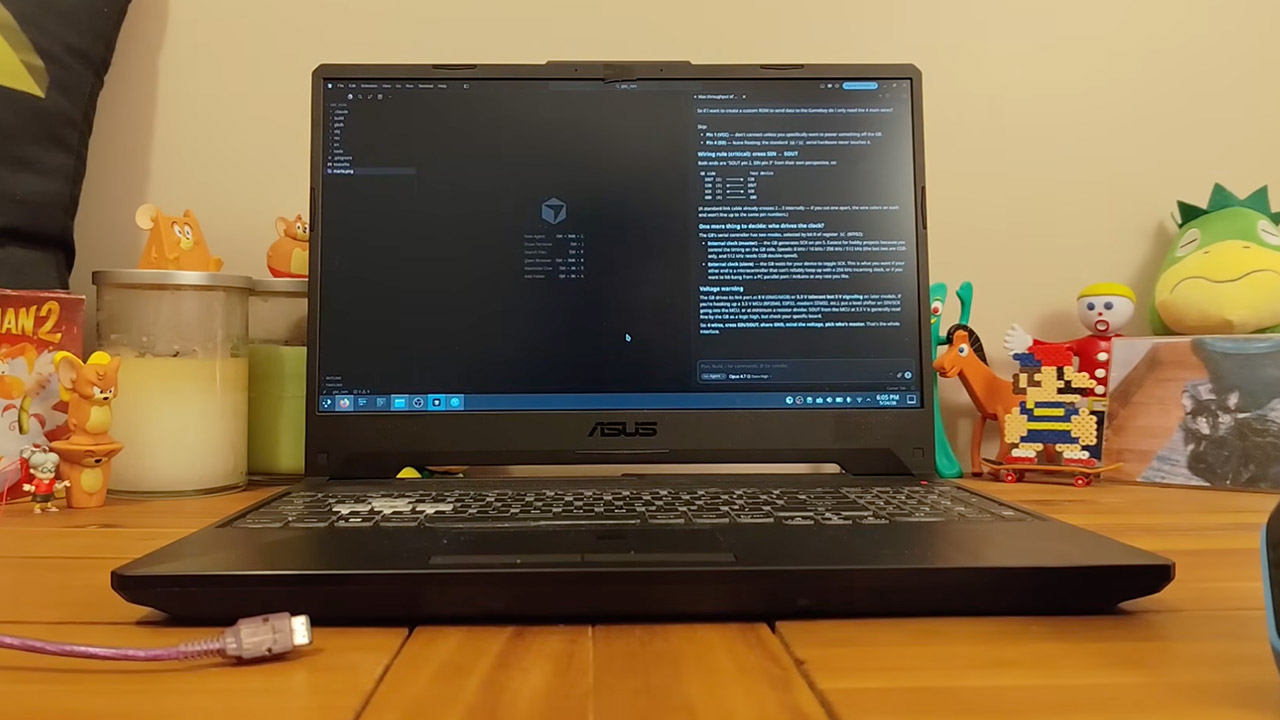
The next challenge would be getting new video data into the machine without needing to recreate complete segments in a cartridge from start. So, first, he tried routing everything through the Game Boy Color’s link cable connector. A PC transmitted frames to the handheld, which attempted to decode them in real time. What happened was that the link cable maxed out at 64 kbps, so throughput remained low, and the handheld’s processor struggled to keep up, resulting in graphics that sometimes took ages to show. Yes, the system worked for short demos, but it was far from capable of streaming video in real time.

However, a shift to wireless transformed the game, as he created a modified cartridge based on the GB Interceptor design. Then he added a Raspberry Pi Pico 2 microcontroller based on the RP2350 chip, which is wired directly to the breakout and accurately handles the timing for the cartridge bus, allowing it to respond to all memory reads from the Game Boy Colour in perfect sync with its clock. Then he added an ESP12F Wi-Fi module as a bridge, allowing the handheld to receive data without requiring a physical cable to be attached.
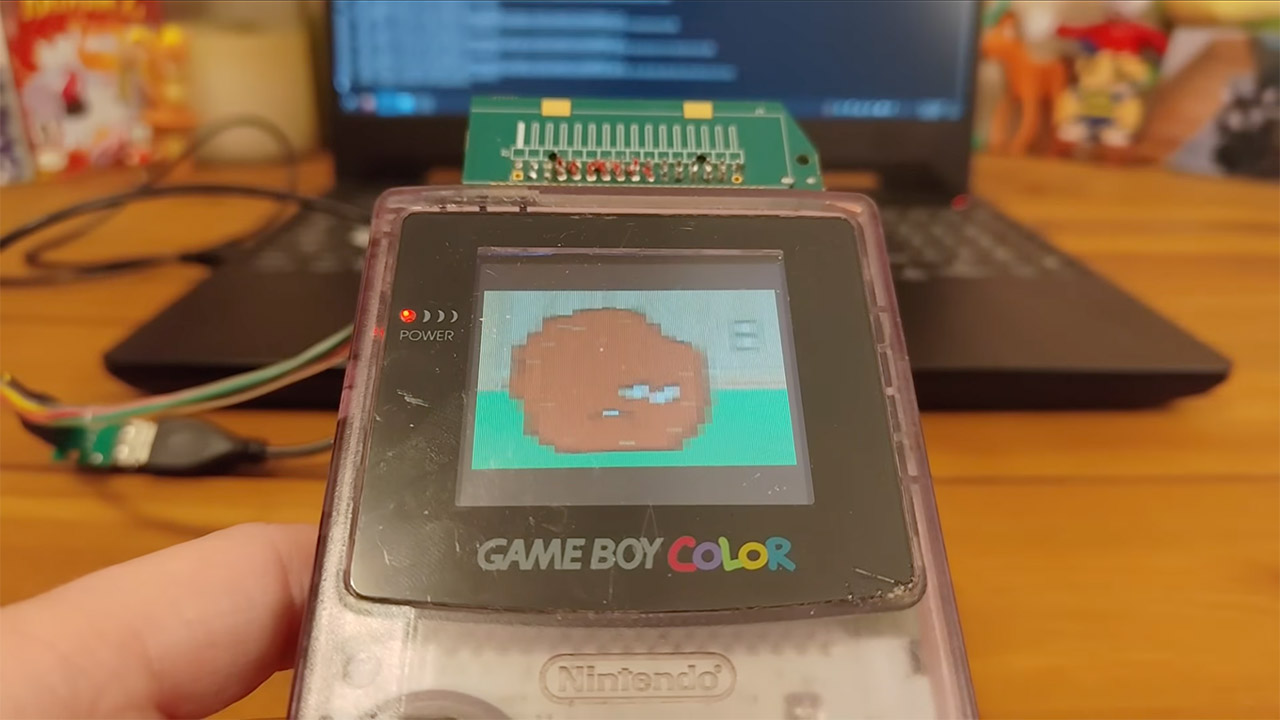
The entire pipeline works as follows: a nearby computer captures a copy of a YouTube stream using normal streaming tools, converts the video frames into a format that the Game Boy Color can read, and then sends the packed data via Wi-Fi. The ESP module then captures the stream and sends it to the RP2350 over an extremely fast SPI connection. From there, the microcontroller just sends the data to the Game Boy Color, as if a cartridge ROM were feeding it the pixels, much like a real game cartridge. Then there’s the GBC Tube software, which provides the user with an interface for searching for videos using an on-screen keyboard. Search results appear as low-resolution image thumbnails… and picking a title returns the video ID to the computer, which initiates the encoding and streaming process in the other way.

Audio takes a separate path, with the RP2350 spitting the sound from the incoming stream and sending it to a small I2S amp and speaker inside the shell. The video and audio are not precisely synced, however there may be some drift if you watch for an extended period of time. You still have two display options while watching: the high frame rate keeps the action moving smoothly, and the high color mode, which will produce richer colors but may sacrifice some smoothness in the process.


Seattle’s startup scene has the talent and the capabilities. What it’s short on is a culture of risk-taking and the support systems for the people willing to make the leap.
Those were recurring themes from a cross-section of the city’s tech community at a World Cup watch party on the GeekWire deck on Tuesday. For this summertime installment of our occasional Geek on the Street feature, asked attendees to finish this sentence: “Our startup ecosystem would be better if …”
Keep reading for answers, which have been edited for brevity and clarity.

Our startup ecosystem would be better if … “we had more resources for early-stage founders,” said Jen Haller, partner and chief of staff at Ascend, which backs early-stage founders building venture-scale companies. She noted that the community needs more “opportunities for them to learn how to build, to set up the structure of their company, to raise money.”
While there are many resources for startups, even very early ones, the city has a blind spot when it comes to supporting and providing development pipelines for less experienced founders.
She said the region also lacks ways to fund good companies that aren’t on a venture-scale path, the ones that won’t deliver the outsized returns that VCs chase.
“There are a lot of amazing companies being built that aren’t traditionally VC-investable,” she said. “We’re really missing ways to fund those founders and those ideas.”

Our startup ecosystem would be better if … “people took more risks,” said Matthew Barclay, a veteran of Google and Microsoft who is now co-founder at a stealth AI company. “That goes for the investors in this ecosystem.”
Seattle has a reputation for favoring safe bets, although Barclay cited some local investors who are taking the kind of risks more common in the Bay Area, particularly on the pre-seed side. The problem, he said, is that too many of the bigger names stay reluctant to roll the dice, and too much of the engineering talent is content with comfortable big-tech salaries.
“If there were more of a culture of taking risks here, you’d see that it would be the next level up,” he said. “We have the talent, the money is here, it’s just that risk-taking that I think is holding us back.”

Our startup ecosystem would be better if … people would “take more risks — be crazy,” said Emeka Alozie, a Seattle startup founder and mentor.
He wants to walk the city and feel that bold new companies are growing up around him, the way startups feel omnipresent in San Francisco. Seattle needs a visible culture of risk-taking, he said, and capital will follow.
“The capital will come once it feels like this is the place where, holy smokes, how can the next innovation not happen here?” he said.
But that requires making the leap feel possible, especially when the corporate path still feels like the safer bet.
“We need to create a safe space, a safe culture, a safe infrastructure, a safe climate to produce what is extraordinarily risky,” he said, “because it’s very safe to just get a job that pays you $200,000.”

Our startup ecosystem would be better if … “we had a truly centralized resource portal,” said Shannon Swift, founder and CEO of Swift HR Solutions, a human resources consulting firm.
Swift, who served as board member and chair of the Northwest Entrepreneur Network before it was acquired by the Washington Technology Industry Association in 2014, said the region once had organizations where founders knew exactly where to go for what they needed.
She said all the components of a startup ecosystem are here — the problem is that they’re not connected. The community would benefit from a single centralized hub to fill that gap again.

Our startup ecosystem would be better if … “people went off vibes,” said Jordan Baker, managing general partner at Athenaeum Ventures, a firm that focuses on identifying mispriced talent.
“I don’t want to see your pro forma. I don’t want to see a P&L,” he said. “I don’t want to see made-up numbers. I want to see an incredible founder with grit who’s going to bash their head against the wall every single day until success appears.”
Baker called it “blasphemous” to expect polished financials from a pre-seed company with no product, no customers, and no revenue. “That is why SF beats us: because they invest off of vibes,” he said, “and that’s something Seattle could do a little bit more.”
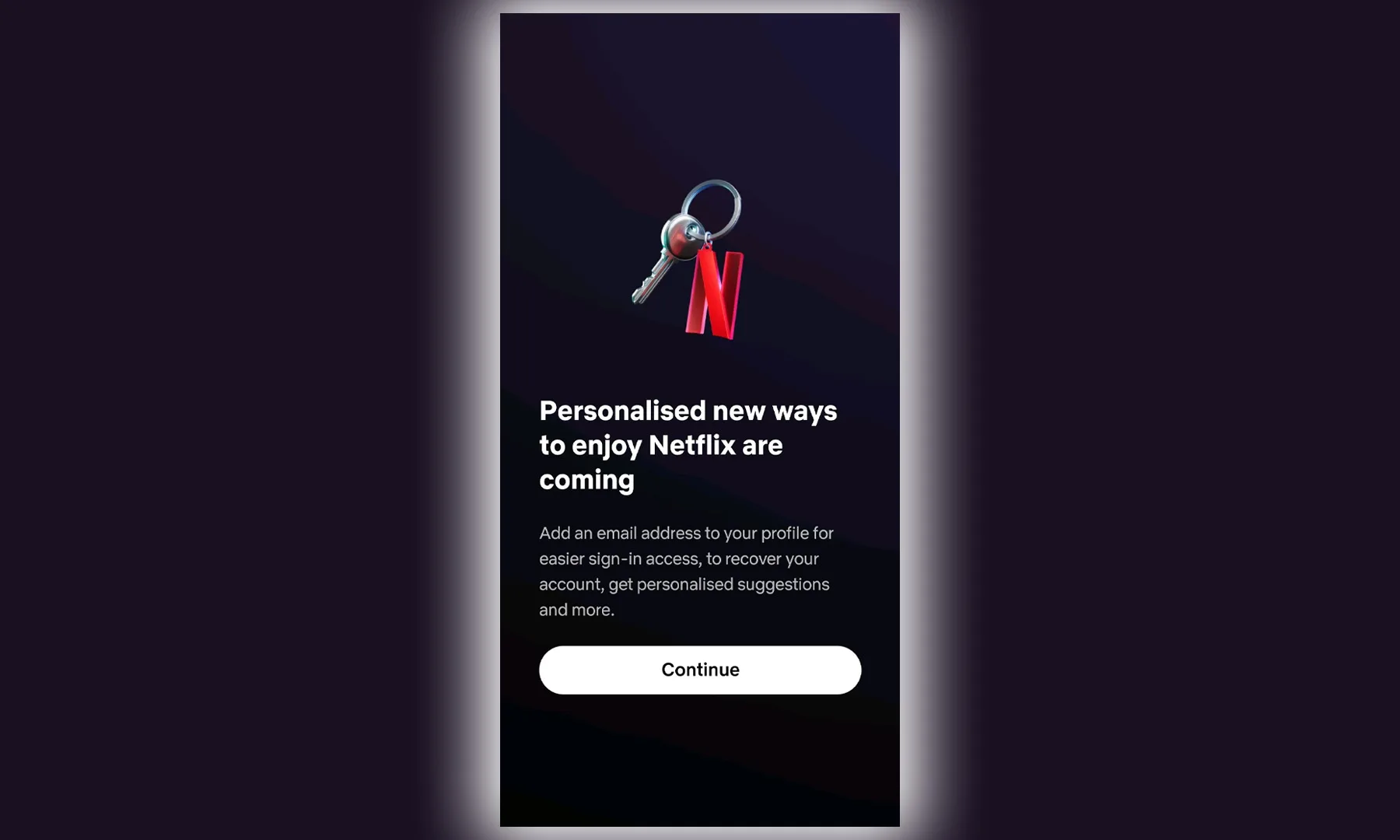
Netflix’s password-sharing crackdown isn’t over just yet. The streaming giant is now rolling out another change that could make shared household accounts a little more cumbersome, this time by asking every profile on an account to have its own email address. While the move isn’t designed to stop families from sharing a subscription, it does add another layer of identity verification that many users probably weren’t asking for.
As spotted first by CordCuttersNews, Netflix has begun introducing profile-specific email addresses, allowing each user on a shared household account to link their own email instead of relying solely on the primary account holder. Existing users are being prompted to add an email when switching profiles, while new profiles will require one during setup.
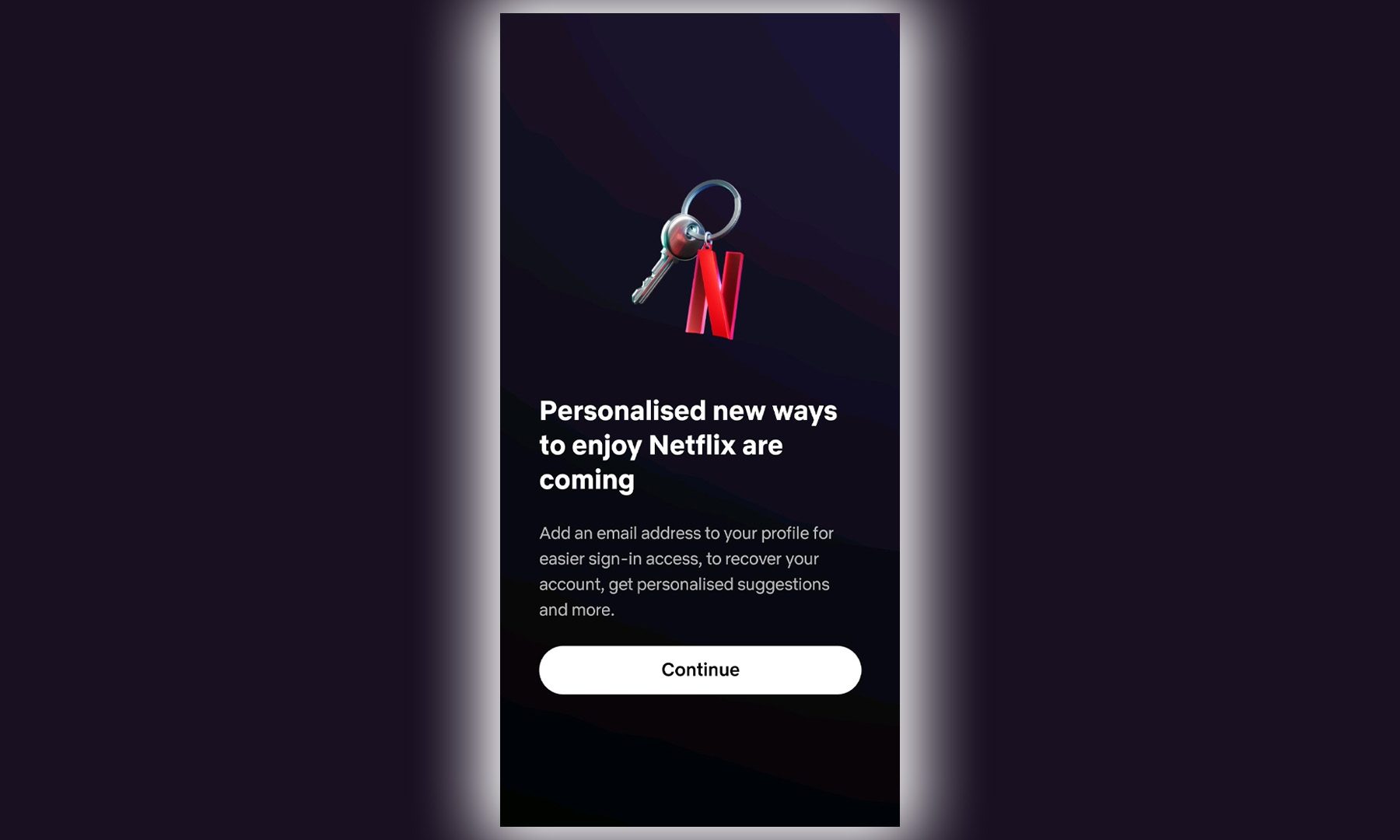
Netflix says the feature is meant to improve account security and make profile management easier. Individual email addresses will help users recover their own profiles, receive personalized notifications, and simplify future profile transfers if they decide to start their own subscription. The company also says it will make it easier to verify identities when logging into new devices, a change that naturally aligns with Netflix’s ongoing efforts to curb account sharing outside the home.

The rollout appears to be happening gradually across supported devices and regions, meaning not everyone will see the prompts immediately. Existing viewing history, recommendations, and watchlists will remain tied to each individual profile.
Unsurprisingly, the rollout hasn’t gone down well with users. Reddit is already filled with complaints from people who find the new email prompt unnecessarily intrusive. A few users have shared what appears to be a temporary workaround by disabling Feature Testing under Account > Security on the web, but since Netflix hasn’t officially acknowledged it, there’s no guarantee the fix will last.

The change doesn’t stop families from sharing a household account, but it does reinforce Netflix’s long-term strategy of giving every profile its own identity. For some, adding an email is a one-time task. For others, especially households with profiles created years ago for children or less tech-savvy family members, it’s simply another layer of friction. From Netflix’s perspective, it makes profiles easier to secure and eventually transfer. For users, it’s one more reminder that sharing a family account isn’t quite as effortless as it used to be


Parents watch their children reach for screens earlier each year. Short videos and social platforms pull attention hard, and the effects show up in shorter focus, less interest in slower activities, and early exposure to material that simply does not belong in a young life. One father decided the standard options did not fit what he wanted for his seven-year-old son. He took an older laptop and shaped it into something different.
The machine began life as a Corsair Voyager A1600, a beast of a machine with more power than was required to handle the majority of what we were going to throw at it. He ensured that it had enough horsepower to keep things working smoothly even when he had multiple instructional programs open at the same time. A few modifications in the BIOS settings were required to reduce the fans to a whisper and get the trackpad to behave properly by eliminating accidental touches, because when precision is required, we prefer to use a separate mouse.
Sale

As it is, the system feels robust, responsive, and quiet, with no annoying fan noises. Kubuntu was chosen as the foundation operating system because it provides a consistent day-to-day functioning with relatively low memory requirements and complete control over the screen’s appearance. Installation was a bit of a trial and error process using a few different USB tools before it finally clicked, but once installed, the system was smooth sailing, with no need for constant babysitting. The upgrade process is fairly methodical, as opposed to the all-at-once events that some other platforms are known for, which is exactly what we desired.

The desktop has been reduced down to its minimal bones, with a few large icons for the programs the child actually uses displayed prominently. The usual comprehensive menu, including all loaded apps, is not available; nevertheless, a simple clock remains visible. There are no superfluous panels or notice sections that take up space. The concept is that the child opens what they need and stays there, while adults may still access the whole menu or a terminal via a few keyboard commands when something needs to be changed.
Safety was a top priority. Before any software is launched, a free service is utilized to filter out the bad stuff, including DNS filtering to prevent known adult content, malware sites, and other trouble locations. Only allowed web activities are accessible in the browser as direct shortcuts, because at 7 years old, we weren’t about to turn them loose on the wide web. The browser only allows access to pre-selected games or utilities; everything else is restricted and inaccessible.

The majority of the space is taken by a collection known as GCompris, which has dozens of activities to keep the child entertained. There are games to assist improve early reasoning, alphabet practice, elementary math, science explorations, and creative projects all in one place. The images are clear, and the feedback is kind, so even if the child makes a mistake, they are rewarded for trying again. KidPix brings drawing to life, allowing you to transform a blank sheet into a work of art complete with stamps, sounds, and all the colors. A basic paint software is included for when they wish to get more creative with shapes and fills.
Scratch Jr allows kids to bring games to life by dragging blocks to move their characters, adjust the scene, and narrate simple stories. Meanwhile Teach Your Monster has a way of sneaking in some reading and math practice through delightful small adventures that don’t feel like work at all. Other fun options to look into include a fancy dress-up game with a potato head character, a simple maze where a mouse chases pizza, a classic Minesweeper puzzle that keeps them thinking, a calculator that they probably already enjoy using, and a word processor that gets them typing away at an early stage. Not to add a small weather monitor on the desktop that connects the screen to what’s happening directly outside the window.
[Source]


Amazon Web Services and Microsoft Azure are now so important to Europe’s digital economy that they may be required to comply with additional rules when doing business with customers in the EU. Otherwise, they could face hefty fines.
Read Entire Article
Source link


The U.S. Cybersecurity and Infrastructure Security Agency (CISA) is giving federal agencies until Sunday to patch a vulnerability in Cisco Unified Communications Manager Server that is being actively exploited.
Identified as CVE-2026-20230, the security issue is server-side request forgery (SSRF) and has been added to the agency’s catalog of Known Exploited Vulnerabilities (KEV).
Per Binding Operational Directive (BOD) 26-04, the remediation is deemed urgent and must addressed by Sunday, June 28.

Cisco marked CVE-2026-20230 with critical severity and released a patch on June 3, warning that it could be exploited remotely and without authentication via specially crafted HTTP requests.
At the time, the company noted that a proof-of-concept exploit existed, but had found no evidence of active exploitation.
Last weekend, threat detection startup Defused observed the vulnerability being exploited in attacks to write arbitrary text files to affected endpoints.
It is currently unknown what type of threat actor is leveraging CVE-2026-20230 in attacks.
CISA has also added CVE-2026-12569 to the KEV catalog, an improper input validation flaw impacting the PTC Windchill and FlexPLM software products.
Both are product lifecycle management (PLM) systems developed by PTC specifically for the manufacturing, engineering, retail, footwear, apparel, and consumer products industries.
CVE-2026-12569 is a critical-severity remote code execution (RCE) vulnerability that can be exploited through the deserialization of untrusted data.
PTC disclosed the issue on June 18 and published a security advisory, pointing customers to the complete list of vulnerable Windchill and FlexPLM versions and urging them to immediately take remediation steps.
According to the vendor, the flaw affects all versions up to 11.0 and multiple versions of the 11.1, 11.2, 12.0, 12.1, and 13.0 release branches.
CISA set the same June 28 deadline for federal agencies to patch CVE-2026-12569.
Agencies and organizations bound by BOD 26-04 should take immediate action to secure their systems by applying available security updates and vendor-recommended mitigations, or stop using the products mentioned by the set deadline.

Security teams log 54% of successful attacks and alert on just 14%. The rest move through your environment unseen.
The Picus whitepaper shows how breach and attack simulation tests your SIEM and EDR rules so threats stop slipping by detection.


In the immediate aftermath of Microsoft’s announcement that it was raising prices of the Xbox Series X and S for the third time this generation, a tiny trend broke out on our technology news feed. A smattering of stories appeared encouraging readers to run out and buy an Xbox console before the price hike goes into effect on August 1. Combine this deadline with the allure of active Prime Day deals on Xbox consoles, and the message from these articles is clear: The best and most fiscally responsible time to buy an Xbox is right now, so go do it.
Allow me to play devil’s advocate.
While it often makes sense to plan purchases around known price hikes, it’s a dumb time to buy an Xbox. Yes, even with discounts offering an Xbox Series S for $350 and an Xbox Series X for $573 — hell, especially at these prices. In 2020, the Xbox Series S launched at $300 and the Xbox Series X was $500. Over the past couple of years, I personally picked up a Series X for less than $400 and a Series S for $250. These consoles are now in their sixth year, and normally around this time in the generation, hardware prices would be dropping and we’d be getting cool colorways and bundles. Today’s discounted Xbox prices are obscene for a console entering its sixth year.
It’s worth noting that today’s marketplace is uniquely unmoored, fueled by a memory and storage shortage that’s driving up hardware prices across the tech industry. However, Microsoft is a core part of the problem here. The company is exacerbating the RAM shortage with massive investments in AI data centers, and its feigned ignorance around spiking Xbox console prices is laughable.
Corporate chicanery aside, it’s simply not a great time to buy into the Xbox ecosystem. You could say there’s never been a worse time, in fact. Microsoft is in disarray following years of layoffs and studio closures, falling console profits, and executive-level changes to the Xbox business in 2026. Just this month, news broke that Double Fine, Ninja Theory and Compulsion Games are in imminent danger of being shut down, while new Xbox CEO Asha Sharma and Chief Content Officer Matt Booty set the stage for more layoffs in July.
On the software side of things, Xbox doesn’t have a ton of exclusive games, as its first-party titles are widely available on PC. Its recent hits like Avowed, Indiana Jones and the Great Circle and Keeper are all available on Steam, and Xbox is legally obligated to distribute its largest first-party franchises (i.e., Call of Duty) across platforms. That’s not to mention the push to get its games on PlayStation and Switch, no matter how short-lived that may end up being. One of Microsoft’s loudest marketing points has been the fact that its games will work on subsequent consoles and eventually come to PC, and even if they’re not saying it out loud any more, the company is a leader in platform-agnostic cloud play. When everything is an Xbox and Xbox games are available anywhere, you don’t really need an Xbox at all.
There is zero reason to rush out right now and buy a six-year-old gaming console for more than its launch price, just because it’s going to become even more expensive soon. If you haven’t needed an Xbox before now, chances are, you still don’t need one. This might be rich coming from a consumer tech blog, but there is no real-world achievement for collecting every piece of contemporary gaming hardware — the closest we get is clout, but the returns on social media likes and comments are hollow and diminishing. Unlike Xbox prices, which are only rising. The actual smart move is to wait until the next generation hits — which is apparently very soon — and either pick that up or grab a Series console that will then be priced to clear.
This is nothing against the media outlets that’ve run stories encouraging people to take advantage of Prime Day Xbox console prices. Truthfully, there is a very small market for this advice and it’s fine to show these six people where the best deals are at the moment. But as general-audience advice, it sucks.
Besides, aren’t you saving up for a Steam Machine right now?

Microsoft has quietly extended free Windows 10 security updates for consumers by another year, pushing the Extended Security Updates (ESU) program’s end date from October 12, 2026, to October 12, 2027. “The ESU support page was updated with that date, and Microsoft’s blog post on the program has a new editor’s note confirming the change,” reports Ars Technica. From the report: The prevalence of Windows across so many devices and form factors has given Microsoft a massive customer base for decades, but it has also stymied the company’s efforts to roll out new operating systems. Microsoft famously extended the support window for Windows XP numerous times throughout the 2010s as it became apparent that millions of PCs would never be updated. Windows 10 isn’t quite as entrenched as XP was, but it has still been a slog getting people to upgrade to Windows 11 even nearly five years after release.
Unlike many past Windows updates, Windows 11 required some users to buy new PCs with specific CPU technologies and a Trusted Platform Module (TPM). Microsoft was widely criticized for excluding perfectly serviceable PCs, and that’s turning into a problem in 2026. The AI-driven shortage of storage and memory has made system upgrades vastly more expensive, potentially slowing upgrades. Some have also avoided Windows 11 due to Microsoft’s intense focus on AI features.
The result is that Windows 10 remains stubbornly popular. According to StatCounter data, Windows 10 is still running on about 26 percent of PCs, while Windows 11 sits at 72 percent. That means there are still hundreds of millions of active Windows 10 installs, but those machines will be up to date for at least an additional year.




Renter of Home in Anne Heche Crash Denies Settlement With Son

Two goals and an assist by sheer aura: Cristiano Ronaldo just entered the World Cup chat


Microsoft accidentally kills epic Outlook email threads


Soccer-U.S. defends Iran World Cup travel restrictions, says discussions ongoing


Weekend Open Thread: Staud – Corporette.com


The House | Manchesterism won’t survive the painful trade-offs unless it gets citizens on board


Andy Burnham and the meaning of Makerfield


Potential 2028er World Cup attendee leaderboard


A Look At A Gaggle Of Transputer Boards
Bitcoin (BTC) Dips Below $62K, Ethereum (ETH) Plunges 6% Daily: Market Watch


Asia stock markets slide as tech shares slump


Securitize Wraps Roubini's SEC-Registered ETF as Dubai VARA Digital Security

Dell (DELL) Shares Tumble Over 5% Following Analyst Downgrade to Hold
Entergy settles forward sale agreements, raises $672 million in cash proceeds

Can Charles Hoskinson Really Rescue Cardano?

Wall Street Week Ahead: Investors see Micron earnings as pulse check of AI rally momentum


Jose Alvarado Wants Taylor Swift at More Knicks Games


RTX holders must register wallets before token distribution begins


HIVE shares jump as $220M AI deal speeds Bitcoin mining pivot

Hyperliquid Named on Singapore MAS Investor Alert Register


You must be logged in to post a comment Login