

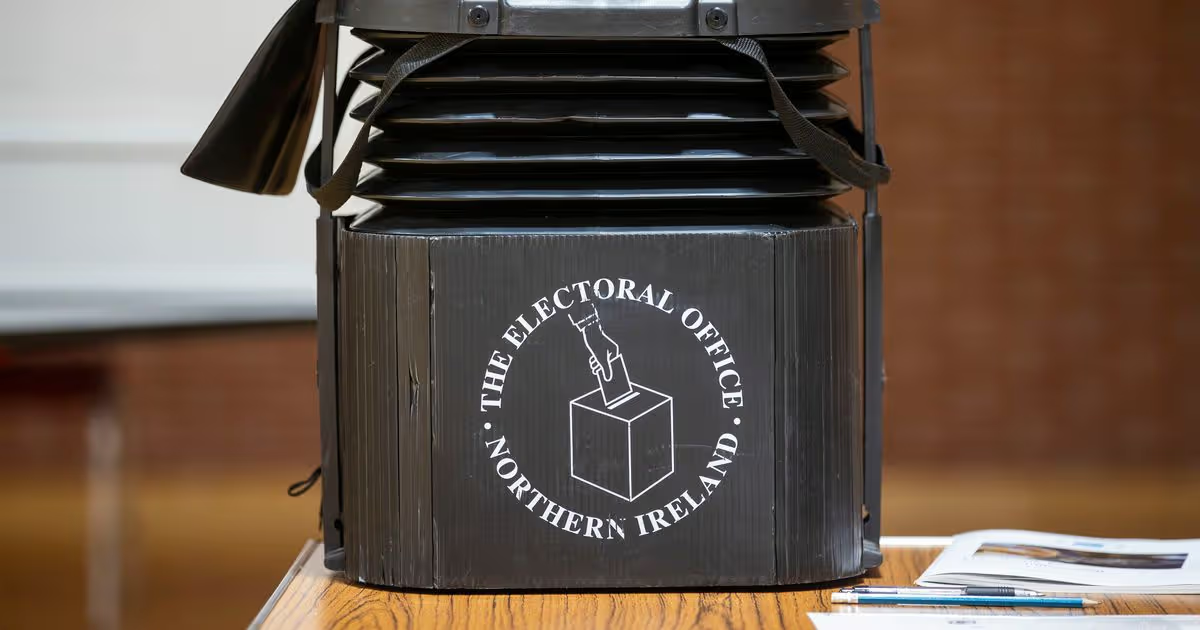
The changes will allow 16 and 17 year olds in NI to vote in the next General Election
Plans to lower the voting age to 16 in UK-wide elections and introduce tougher measures against electoral intimidation have been set out in a new Bill, which will apply in Northern Ireland.
Announcing the proposals, the Government said: “These changes aim to remove practical barriers that prevent people from taking part.”
If passed, the legislation would allow 16 and 17-year-olds in Northern Ireland to vote in Westminster elections for the first time.
Sixteen and 17-year-olds can already vote in Assembly and local council elections in Scotland and Wales, but not in Northern Ireland. The change would extend the franchise here for UK Parliamentary contests.
The Government said the Bill would also crack down on harassment and intimidation and make rules around voter ID fairer and more accessible.
Steve Reed, Secretary of State for Housing, Communities and Local Government, said: “The Representation of the People Bill will usher in a new era for our democracy – one that protects against foreign interference and empowers young people.
“With growing threats from abroad, now is the time to make changes to make our elections secure and get young people engaged in them.
“Our new laws will make this a reality – strengthening the safeguards on our elections and introducing once in a generation changes to finally give 16 and 17 year olds the voice they deserve.“
Among the additional measures are what the Government described as “much-needed measures to protect candidates, campaigners, and electoral staff from abuse and intimidation, deterring people from taking part in public life”. The Government said harassment of elected representatives has “risen to shocking levels in recent years”, with women and minority ethnic representatives facing a disproportionate level of abuse.
Under the proposals, courts would be given the power to impose tougher sentences for offences involving electoral intimidation. The requirement for candidates acting as their own election agents to publish their home address would also be removed. Ministers said: “These new measures play an important part in the programme of work being driven forward by the Defending Democracy Taskforce, tackling the harassment of elected representatives.”
The Bill also “commits to explore new technologies and the harnessing of existing digital and data capabilities across Government to deliver improvements in voter registration”. The Government said this would “address the gap of some 7-8 million eligible people who are either unregistered or incorrectly registered to vote”.
In Northern Ireland, voter registration and electoral administration are overseen by the Electoral Office for Northern Ireland, with separate arrangements to Great Britain in areas such as individual registration and the long-standing use of photographic identification at polling stations.
Samantha Dixon, Minister for Democracy, said: “I know from speaking to so many passionate young people just how keen they are to get involved in our democracy. With democracy taught as part of the national curriculum – millions of young people will have the knowledge and confidence to take part in our democratic process for the first time.
“This landmark Bill will make their voices heard, while cracking down on those who wish to intimidate people taking part in our democracy and subvert our elections with illicit foreign money.”
The reforms will be delivered during the lifetime of the current Parliament, with the Government aiming for them to be in place before the next UK Parliamentary general election.
Separately, ministers confirmed they are partnering with local councils in England to pilot two flexible voting options at council elections in May 2026, with the outcome to be evaluated before any wider rollout.
The Government said teaching about democracy and elections already forms a central part of the citizenship curriculum at key stages 3 and 4 and can be taught in primary schools. It added: “We are going further by implementing the changes to citizenship proposed by the Curriculum and Assessment Review and making citizenship compulsory in primary school.
“Our new curriculum will ensure every child can identify misinformation and disinformation from a young age, and learn about law, rights, democracy and government from primary school.”
As part of the wider strategy, ministers said they will work with the Electoral Commission, devolved governments and civil society to consider further steps to support schools, colleges and youth groups in delivering practical voter and civic education.
The Government said evidence from the Scottish independence referendum “suggests that lowering the voting age leads to high levels of turnout and engagement amongst young people, strengthening the culture of participation from an early age”. It added that the Bill follows “extensive engagement with younger people”.
In a provision specific to Northern Ireland, eligible Irish companies making political donations to parties here will be subject to equivalent checks. In November, the Security Minister told MPs he would coordinate a new Counter Political Interference and Espionage Action Plan to disrupt and deter spying.
For all the latest news, visit the Belfast Live homepage here and sign up to our politics newsletter here.
















































You must be logged in to post a comment Login