

Business
Southeast Asia’s Fintech Surge: Innovation Engine or Fragmentation Trap?


Southeast Asia has consolidated its position as the world’s most dynamic fintech market heading into the second half of 2026. A Money20/20 survey of more than 130 senior fintech leaders across Asia found that Southeast Asia was identified as the primary growth target by 22.9% of respondents — making it the leading destination despite a slight pullback from the prior year’s 31.4%, a sign of market maturation rather than retreat.
The drivers are structural and well-documented: a 670-million population with a median age around 30, high mobile penetration, and a legacy banking system that left hundreds of millions underserved. Fintech is now embedded in e-commerce platforms, reflecting evolving consumer behaviour where users expect financial services to be available seamlessly without switching between applications. Approximately 77% of consumers in Southeast Asia already use embedded finance through digital wallets, buy-now-pay-later services, or in-app loans, with around 75% considering it essential to their digital experience.
From payments to infrastructure
The region’s most consequential development is the rapid buildout of cross-border payment infrastructure — a direct response to the chronic friction of operating across 11 jurisdictions with distinct currencies, regulators, and banking ecosystems.
By December 2025, there were 29 QR and person-to-person payment linkages within ASEAN and with external partners, recording millions of transactions and hundreds of millions of dollars in transfers — figures cited by the 2026 Joint Statement of ASEAN finance ministers and central bank governors as evidence of maturing adoption.
Thailand sits at the centre of this buildout. In late 2025 and into 2026, the Bank of Thailand deepened bilateral QR linkages with China’s Weixin Pay, Alipay, and UnionPay QR, and advanced ASEAN Regional Payment Connectivity efforts — including the official launch of Thailand-China cross-border QR payment acceptance, enabling Chinese tourists to pay Thai merchants in RMB and Thai users to pay in CNY via linked wallets.
The growth trajectory is steep: QR cross-border payments in Thailand increased by more than 300% in 2024 compared to 2023, and in Malaysia by 550% over the same period. The tailwind from intra-ASEAN tourism is significant — intra-ASEAN visitors accounted for 42% of total regional arrivals in 2023, up from 36% in 2019, with tourism contributing roughly 8% of regional GDP and 12% of employment.
The longer-term architecture is Project Nexus, a multilateral framework backed by the Bank for International Settlements. Rather than requiring each payment system operator to build custom bilateral connections for every partner country, Project Nexus requires only a single connection to the Nexus platform — a design with significant implications for scalability. The Reserve Bank of India has already joined, potentially connecting India’s Unified Payments Interface — the world’s largest instant payment system — to the ASEAN network.
The fragmentation problem
For all the momentum, a fundamental tension persists. The same market heterogeneity that drove fintech innovation also constrains it. Vietnam’s Deputy Prime Minister, speaking at the ASEAN Future Forum 2026, warned that ASEAN would struggle to build a strong fintech ecosystem if countries remained divided by fragmented data systems, incompatible standards, and governance gaps.
ASEAN’s fintech ecosystem is expanding rapidly, but growth remains uneven due to fragmented regulation, infrastructure gaps, and highly concentrated funding that limits firms’ ability to scale and extend services to underserved populations. A fintech that achieves product-market fit in Thailand still faces a materially different regulatory stack in Indonesia, Vietnam, or the Philippines — requiring duplicated compliance infrastructure and slowing regional expansion.
Cross-border payment interoperability remains constrained by regulatory barriers, particularly around processing payments with one leg outside domestic jurisdictions, making bilateral linkages complex and difficult to scale. Existing linkages were described at the 2026 Asian Banker Summit as operationally difficult to implement, while multilateral frameworks such as Nexus are viewed as more promising but still face unresolved challenges for wholesale use cases.
A different model of disruption
What distinguishes Southeast Asian fintech is its departure from the adversarial Western playbook. Rather than pitting challengers directly against legacy banks, the region has moved toward an “impact era” in which commercial success and social good are increasingly inseparable. Fintech firms are collaborating with traditional banks while still competing in certain areas, building ecosystem infrastructure rather than chasing outright disruption — visible in practice in the partnership between Singapore’s Grab Financial and Thailand’s Kasikornbank to expand digital wallet and e-money services across the region.
The Money20/20 APAC survey found that 90.6% of executives affirmed financial inclusion and social good as a core business strategy — a figure that would have been implausible in a Western fintech context five years ago, and one that reflects both genuine intent and the commercial reality that the largest untapped markets in Southeast Asia are the unbanked and underbanked.
Thailand’s position
Thailand is one of the fastest-growing fintech markets in ASEAN and has one of the world’s largest consumer bases for fintech mobile banking. Internet and mobile banking remain the most popular e-payment channels, with transaction volumes continuing to climb through late 2025, per Bank of Thailand data.
Thailand’s foundation for digital finance is reflected in near-universal financial account ownership at 96% and mobile phone penetration at 100%. The Bank of Thailand has been instrumental in fostering fintech startups through regulatory sandboxes, and PromptPay — the real-time payment network enabling instant transactions via national IDs, phone numbers, or QR codes — has significantly accelerated cashless adoption.
The central bank’s cross-border ambitions extend well beyond the China linkage. BOT has expanded PromptPay’s coverage to other ASEAN countries as part of the ASEAN Payment Connectivity initiative, with linkages also forged beyond ASEAN to countries with strong economic ties — particularly those with large flows of migrant workers and tourists.
The outlook
The structural case for Southeast Asian fintech remains intact. Demographic tailwinds, rising incomes, and a policy environment broadly supportive of digital financial services create durable demand. The cross-border payment buildout — particularly Nexus and the expanding QR linkage network — could materially reduce the cost of regional expansion for both fintechs and the small businesses they serve.
The constraint is not demand but architecture. Proposals for an ASEAN-wide fintech sandbox to allow cross-border financial technology solutions to be tested in a controlled environment remain aspirational. Without convergence on data standards, KYC/AML frameworks, and licensing reciprocity, the region risks consolidating into a collection of sophisticated national markets rather than an integrated economic bloc. That distinction matters for investors underwriting regional growth stories — and for the millions of small enterprises and migrant workers whose access to affordable financial services depends on whether the infrastructure eventually connects.
Other People are Reading


NEW YORK — The Dow Jones Industrial Average surpassed the 52,000 mark on Thursday, reaching 52,098.49 in morning trading as investors responded to positive economic signals and corporate earnings performance.
The milestone reflects broader market optimism amid moderating inflation, steady employment and corporate adaptability in a changing economic environment. The blue-chip index, which tracks 30 major American companies, has shown resilience despite periodic volatility from geopolitical tensions and policy uncertainty.
The Dow’s advance comes as major companies across sectors report results that demonstrate operational strength and forward-looking guidance. Technology, financial services and industrial firms have contributed significantly to recent gains.
Analysts attribute the index’s performance to a combination of factors including cooling inflation pressures, resilient consumer spending and expectations for measured Federal Reserve policy adjustments. The market has priced in potential rate cuts later in the year, supporting equity valuations.
Market Drivers and Sentiment
Strong corporate earnings have underpinned recent market gains. Companies across the Dow components have demonstrated pricing power, cost management and innovation in response to economic conditions.
The index’s composition, with significant representation from established industrial, financial and consumer companies, provides exposure to various economic cycles. This diversity helps moderate volatility compared to more concentrated indices.
Trading volumes have remained healthy as institutional and retail investors participate in the rally. Market breadth has improved, with gains spreading beyond a handful of mega-cap names.
Global factors, including trade developments and international economic performance, influence Dow components with significant overseas exposure. Currency movements and commodity prices also play important roles.
Economic Backdrop
U.S. economic indicators have presented a mixed but generally positive picture. Employment remains solid, consumer spending continues despite inflationary pressures, and manufacturing shows signs of stabilization.
The Federal Reserve has maintained a data-dependent approach to monetary policy. Recent communications suggest patience regarding rate adjustments while monitoring inflation progress toward the 2 percent target.
Housing market conditions, corporate investment decisions and consumer confidence levels continue influencing broader economic activity. The Dow’s performance serves as one indicator of market expectations for future growth.
Component Performance
Several Dow components have reported results exceeding expectations. Technology and financial firms have benefited from digital transformation trends and interest rate environments.
Industrial companies have shown resilience through supply chain management and operational efficiency. Consumer goods producers have navigated changing preferences and cost pressures effectively.
Energy sector representation provides exposure to commodity cycles. Performance in this area varies with global supply and demand dynamics.
The index’s price-weighted methodology means higher-priced stocks have greater influence on its movement. This structure differs from market-cap weighted indices and affects how individual company performance impacts the overall average.
Investor Considerations
The Dow’s milestone provides a psychological boost but represents just one measure of market performance. Broader indices and sector-specific trends offer additional context for investors.
Long-term investors focus on underlying economic fundamentals and corporate earnings power rather than short-term index levels. The Dow’s historical performance demonstrates markets’ ability to recover from downturns and achieve new highs over time.
Risk management remains important given periodic volatility from economic data releases, geopolitical events and corporate news. Diversification across asset classes helps manage portfolio risk.
Historical Context
The Dow Jones Industrial Average, first calculated in 1896, serves as one of the oldest and most recognized market benchmarks. Its composition has evolved over time to reflect changes in the American economy.
Milestones like crossing 1,000, 10,000 and now 52,000 have marked significant periods in market history. Each advance reflects economic growth, corporate innovation and investor confidence.
The index has weathered numerous challenges including world wars, recessions, pandemics and technological disruptions. Its long-term upward trajectory underscores the resilience of American enterprise.
Broader Market Environment
Major U.S. stock indices have shown strength in recent trading sessions. Technology-heavy indices have benefited from artificial intelligence enthusiasm while traditional sectors demonstrate recovery.
International markets present varied performance based on regional economic conditions and policy responses. Global interconnectedness means developments in one market influence others.
Bond markets, currency exchange rates and commodity prices provide additional context for equity performance. Interest rate expectations remain a key driver across asset classes.
Future Outlook
As the year progresses, attention will focus on corporate earnings, Federal Reserve decisions and economic data releases. These factors will influence whether the Dow can sustain its position above 52,000.
The index’s performance will continue reflecting the health of major American corporations and overall economic conditions. Its movements remain closely watched by investors, policymakers and the public.
The Dow’s advance to new highs demonstrates market adaptability and confidence in long-term growth prospects. Continued corporate innovation and economic resilience support positive outlooks.
While short-term volatility is expected, the index’s historical performance suggests capacity for further gains over time. Investors remain focused on fundamentals and individual company prospects rather than index levels alone.
The milestone serves as a reminder of markets’ long-term growth tendency despite periodic setbacks. American companies’ ability to innovate and adapt continues driving economic progress and market performance.

Something has shifted in the way power operates behind the scenes of global business, and most chief executives, perhaps to the quiet despair of their technology and security chiefs, have yet to grasp it.
The theft of sensitive information is no longer a fringe activity. It has become a conspicuous, if alarming, feature of high-stakes commercial life, enabled, whether directly or inadvertently, by a growing market of private intelligence firms, former state-security personnel and sophisticated hackers operating in the legally ambiguous “grey zone”.
What was once the preserve of nation-state espionage has migrated into the commercial sector. Even systems long assumed to be unreachable, such as restricted government databases, sensitive investigative files and secured state records, are proving more vulnerable than anyone cared to admit. For any business that operates across borders, the consequences are no longer theoretical, and the case for treating cyber-security as a board-level discipline rather than an IT afterthought has rarely been stronger.
The courts are beginning to reveal the scale of the problem.
In December 2024, the Israeli surveillance firm NSO Group was found liable by a US federal court for hacking the smartphones of roughly 1,400 WhatsApp users, among them journalists, diplomats and government officials, using its Pegasus spyware. The following May, a Californian jury ordered the company to pay more than $167 million in punitive damages to Meta, WhatsApp’s owner, the first time a commercial spyware maker had been held legally liable in an American court. A judge later cut the punitive figure to $4 million but granted a permanent injunction barring NSO from targeting WhatsApp users, a ruling rights groups described as a landmark moment in the fight against spyware abuse.
The Waymo v Uber affair makes a related point closer to the commercial mainstream. A former Google engineer, Anthony Levandowski, was criminally convicted of stealing trade secrets after downloading thousands of confidential files on self-driving car technology, a dispute that Uber and Waymo ultimately settled for an equity stake worth around $245 million. It is a reminder that proprietary corporate intelligence can be compromised even within internal systems that are meant to be watertight, a lesson UK firms have absorbed the hard way as breaches at the likes of Capita have drawn multimillion-pound regulatory penalties.
A more recent matter, before prosecutors in Milan, pushes the issue further still. Dozens of individuals, reportedly including lawyers at major international firms and a senior in-house legal executive at a large European energy company, have been placed under investigation by the Italian authorities over an alleged private intelligence operation accused of illegally accessing restricted Interior Ministry databases.
All of those named are presumed innocent, and the existence of an inquiry is not a finding of guilt. Separately, prosecutors have examined whether the alleged network created exposure for foreign actors inside Italian government systems.
That last point deserves particular attention. The allegation is not of a conventional data breach. It concerns the alleged deliberate misuse of public infrastructure for private ends, with the secondary, and far more troubling, prospect of national-security consequences. It is the kind of systemic vulnerability that has already prompted British institutions to act, as when Companies House suspended part of its online filing service over a security flaw that risked exposing director data.
The line between legitimate competitive intelligence and criminal conduct has always been contested. What is changing is how often, and how far, that threshold is allegedly being crossed.
For any organisation operating across multiple jurisdictions, that shift demands serious attention, not as a compliance footnote, but as a strategic risk that now reaches all the way to the boardroom.
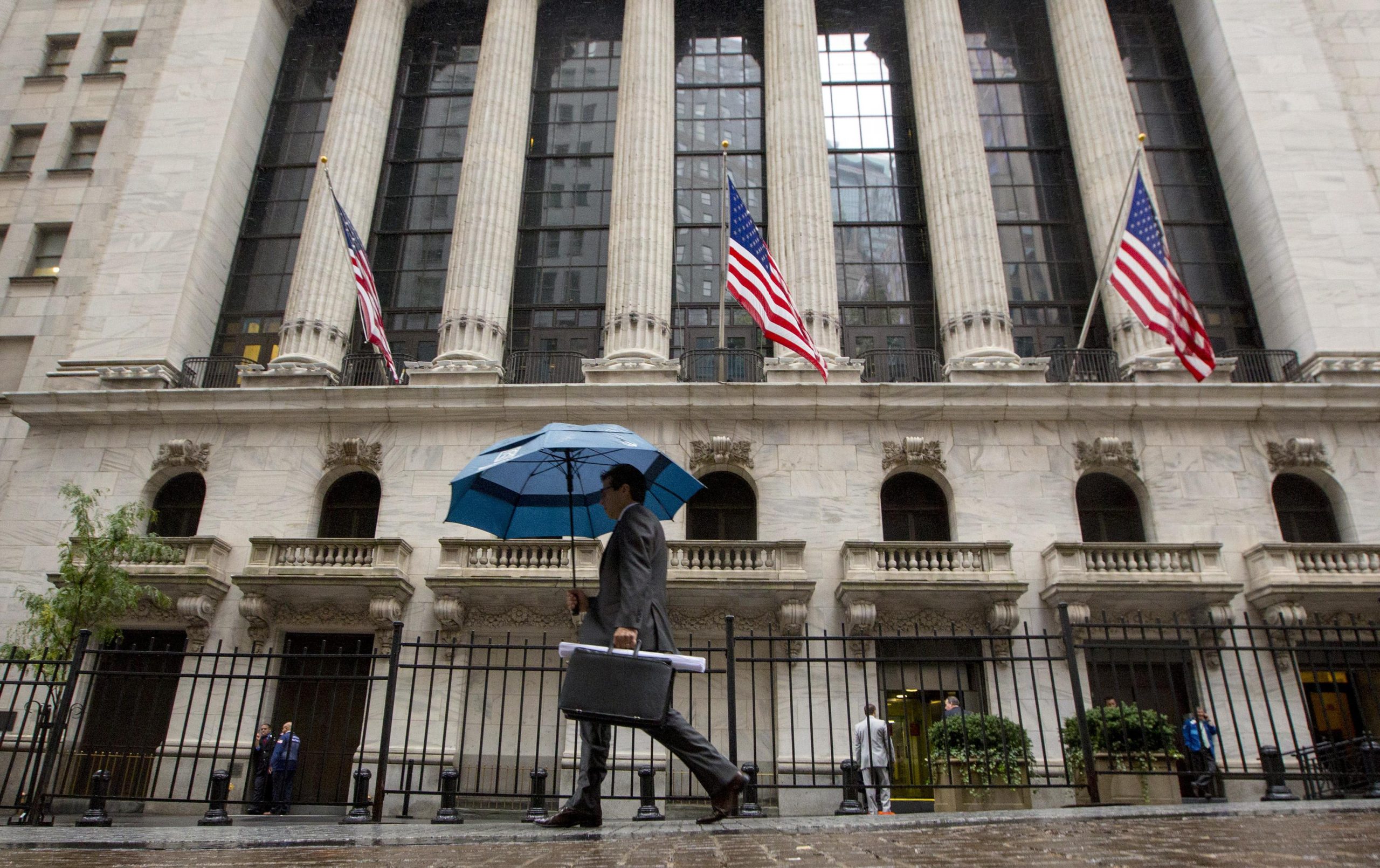
The Nasdaq Composite rose 91.99 points, or 0.36%, to close at 25,568.63 on Thursday, recovering from earlier in the week’s turbulence as memory chip giant Micron Technology delivered a blowout earnings report that reignited optimism around AI infrastructure spending.
Micron’s Earnings Spark a Rally
Stock futures climbed Thursday, boosted by Micron’s blowout earnings report, as Wall Street also monitored the release of the Federal Reserve’s preferred inflation gauge. Micron crushed Wall Street expectations in its fiscal third-quarter results, driven by strong demand and pricing for memory chips used in artificial intelligence data centers.
That result followed a remarkable run for the stock throughout 2026. Micron has had an astronomical run in 2026, with shares hitting a new all-time high on Monday and ending Tuesday at $1,051.77 per share, even after Tuesday’s broader chip-sector selloff had pushed shares down sharply heading into the earnings report.
A Volatile Week Leading Up to Thursday
Thursday’s gains came after a genuinely turbulent stretch for technology stocks earlier in the week. The Nasdaq Composite pulled back on Wednesday as Micron Technology shares fell, with investors looking ahead to the release of the chipmaker’s earnings after the bell. The tech-heavy index slipped 0.43% to end at 25,476.64, while the S&P 500 declined 0.10% to 7,358.22. The Dow Jones Industrial Average added 182.06 points, or 0.35%, to end at 51,848.90.
That followed an even sharper decline earlier in the week. The Nasdaq (-2.21%) and S&P 500 (-1.44%) faced losses Tuesday as a global rout in technology stocks weighed on major indexes, with most of those declines driven by fears about the high-flying semiconductor sector. The selling started before the day even began, as South Korea’s chip-heavy KOSPI index fell nearly double digits on the day.
Falling Oil Prices Provided an Offsetting Tailwind
Beyond the chip-sector volatility, easing energy prices have continued supporting the broader market throughout the week. Oil prices continued their decline Wednesday. International benchmark Brent crude futures lost 4.33% to settle at $73.74 per barrel, seeing its lowest level since before the U.S. and Israel first launched airstrikes against Iran at the end of February. U.S. West Texas Intermediate futures slid 3.92% to settle at $70.34 a barrel.
President Donald Trump said Wednesday that Iran has informed him there will be no tolls, insurance costs, or other charges for commercial ships passing through the Strait of Hormuz, adding further reassurance to markets already encouraged by the declining oil prices.
A Notable Senate Vote on Iran War Powers
Beyond the market-moving economic data, a significant political development unfolded in Washington late Wednesday tied to the broader Iran situation. Republican senators switched their votes on an Iran war powers resolution late Wednesday, hours after a contentious meeting that reportedly included a heated exchange with President Trump over opposition to the measure. Senators Bill Cassidy of Louisiana and Rand Paul of Kentucky had previously voted to advance the resolution, which would have given Congress the ability to block U.S. military action in Iran, but both ultimately withdrew their support following a closed-door lunch at the White House.
Alphabet Set to Join the Dow
In a significant index-composition development, Alphabet will replace Verizon in the Dow Jones Industrial Average, S&P Global said Tuesday, further expanding mega-cap technology’s presence in the blue-chip average. The change reflects the continued growth of Alphabet’s market value relative to Verizon’s, even as Alphabet itself shed earlier gains to close down 0.2% on Wednesday after the announcement.
JPMorgan Announces Major Leadership Changes
Beyond the market-wide moves, JPMorgan Chase promoted two senior executives into newly created co-president roles, marking another step in CEO Jamie Dimon’s long-running succession planning. Doug Petno and Troy Rohrbaugh, who have jointly led the bank’s commercial and investment banking division since 2024, were named co-presidents effective immediately. Petno will become CEO of the commercial and investment banking division, while Rohrbaugh will lead consumer and community banking, replacing Marianne Lake, a 25-year JPMorgan veteran who will retire from the company.
SpaceX Continues Its Volatile Post-IPO Trading
Among the most closely watched individual stocks this week has been SpaceX, which completed the largest initial public offering in history on June 12, raising $75 billion through the sale of 555.5 million shares at $135 each. SpaceX inched up Wednesday and managed to close above its IPO price of near $150, though it was down more than 1.5% Thursday morning. The wild swings so far partially reflect news of a $25 billion debt sale that, according to Bloomberg, met a “skeptical audience” in the bond market, judging by its premium pricing.
Gold Falls Below $4,000 for the First Time in Months
Beyond equities, the broader market turbulence has also weighed heavily on precious metals prices this week. Gold futures with August delivery dipped below $4,000 for the first time in seven months, deepening their downturn amid the broader stock market slump, with the metal last trading around $3,987.30 — marking its first time below the $4,000 level since November 18, 2025.
Volatility Gauge Spiked Amid the Tech Selloff
The week’s turbulence in technology stocks was reflected clearly in broader market volatility measures. The Cboe Volatility Index jumped nearly 13% to 19.49 on Tuesday, while tech volatility rose more sharply than broad-market volatility, suggesting investors were specifically hedging against a technology-led shakeout even as the broader market showed more resilience.
What’s Ahead This Week
With Thursday’s session benefiting from Micron’s strong results, attention now turns to additional economic data due before the week concludes. May Personal Consumption Expenditures price data, the Federal Reserve’s preferred inflation gauge, along with the final estimate of first-quarter GDP and May durable goods orders, were all scheduled for release Thursday, with the University of Michigan’s final June consumer sentiment reading set to follow Friday.
With markets having weathered a sharp chip-sector selloff earlier in the week before rebounding on Micron’s blowout results, investors will be watching closely for confirmation that this week’s volatility reflected temporary profit-taking on crowded AI and semiconductor positioning rather than a more fundamental shift in sentiment toward the broader technology trade. Given the S&P 500’s technology sector had climbed 27% over the prior three months heading into this week’s turbulence, market participants will likely continue monitoring whether Thursday’s recovery can be sustained into next week, particularly as additional inflation data and any further developments in the Iran situation continue to shape the broader macro backdrop for risk assets.


I focus on investment ideas about companies that pay a (healthy) dividend and have a clear potential for capital appreciation. I like to find good businesses which reward shareholders. The shares of the company should be for a temporary reason undervalued in relation to its fundamentals, peers and/or historical levels. Technically and fundamentally there needs to be high odds for capital appreciation preferably by foreseeable catalysts. These elements provide a simple filter to invest in companies that reward shareholders in two ways. I often cover HVAC related stocks. That’s the industry I was professionally involved in before turning into a full-time private investor.
Analyst’s Disclosure: I/we have a beneficial long position in the shares of APC either through stock ownership, options, or other derivatives. I wrote this article myself, and it expresses my own opinions. I am not receiving compensation for it (other than from Seeking Alpha). I have no business relationship with any company whose stock is mentioned in this article.
Seeking Alpha’s Disclosure: Past performance is no guarantee of future results. No recommendation or advice is being given as to whether any investment is suitable for a particular investor. Any views or opinions expressed above may not reflect those of Seeking Alpha as a whole. Seeking Alpha is not a licensed securities dealer, broker or US investment adviser or investment bank. Our analysts are third party authors that include both professional investors and individual investors who may not be licensed or certified by any institute or regulatory body.

Caroline Bentham, 37, who has lived with her mother Mary in Yorkshire for nearly seven years, says the experience has been really positive – although she “never imagined this would be me in my 30s”.
She split from her partner in 2019 and was only supposed to live with her mum for six to 12 months while she started her PhD. But then the pandemic hit, along with various other life events, and she says it “kept making sense” to stay.
The transition to living together again was a “real challenge” at first, she says, as her mum struggled to give up control in areas like the kitchen. They also had “lots of arguments” as they worked out “how to be around each other”.
“It might sound cliché but we had to learn a new way of communicating,” she says.
One of the biggest benefits of living with her mother is the emotional support they give each other, Caroline says. But she admits the arrangement is sometimes not great for her self-esteem and there is “definitely a stigma about living with parents”.
Tips for adults who live with their parents
-
Agree practical expectations around finances, chores, visitors, quiet times and shared spaces
-
Recognise that living at home does not mean reverting to dependence and contribute where you can, financially and/or in terms of housework
-
Don’t assume old family roles still apply: what worked when you were 16 is unlikely to work when you are 36
Source: Relate
Christodoulidi says one of the overlooked advantages of living as an adult with a parent is the chance to know each other differently.
“Parents often begin to see their child as another adult, while adult children gain a fuller understanding of their parents as people rather than simply as parents.”
She also says society needs to ditch the stereotype that adult children who still live at home have “failed to launch”.
Natasha says it helps to remind herself that living with her family is a “temporary” situation that will “lead to a better outcome in the future”.
The extra time she gets to spend with her parents is a “blessing”, she adds.
“One day I’ll move out, get married and have my own family, and I won’t have as much time with them,” she says.

The Nasdaq has closed lower, dragged down by losses in big tech shares, while the S&P closed near flat and the Dow closed higher as investors digested new economic data.

China auto demand remains weak but recovery window is approaching – Morgan Stanley

A gauge of Asian equities was down 1.1%, while South Korea’s tech-heavy Kospi dropped over 3%. US futures were little changed. The moves followed a choppy session on Wall Street, marked by heightened volatility in the tech sector. The S&P 500 ended flat, failing to sustain an early rally fueled by Micron Technology Inc., as Apple Inc.’s shares slid 6.1%. The iPhone maker led the Magnificent Seven lower after it raised prices on Macs, iPads and home devices.
Oil was in focus again after a projectile strike on a vessel in the Strait of Hormuz saw Brent crude climb on Thursday, snapping a three-day decline. Prices edged lower in early Asia trading. Meanwhile, bond traders priced in slightly lower expectations for a Federal Reserve interest-rate hike in the months ahead after the central bank’s favored inflation gauge rose less than estimated.
The equity market’s recent swings highlight investors’ growing unease over whether the tech giants that have powered the rally for much of the past two years can continue to justify the high expectations embedded in share prices. Concerns over AI spending have driven sharp moves in chip stocks this week, and while those worries eased after Micron’s results, volatility in the sector remains high.
“A few cracks have developed in the tech sector recently,” said Matt Maley at Miller Tabak. “Therefore, we believe it will be extremely important to watch how these hyperscalers trade going forward because if they continue to decline, it’s going to make it very tough for the rest of the market to advance.”

The Nasdaq 100 Index finished up 0.8% on Thursday, after having climbed as much as 2.1%. Besides Micron’s rally following its blockbuster results and outlook, Qualcomm Inc. shares also jumped after it forecast annual sales of more than $15 billion from artificial intelligence components in data centers by fiscal 2029.
That optimism was missing in early Asian trading, with shares of SK Hynix Inc., Samsung Electronics Co. and Kioxia Holdings Corp. among the biggest drags on the regional benchmark. Elsewhere, OpenAI is leaning toward holding off on an initial public offering until 2027, the New York Times reported, citing three people involved in the company’s deliberations.Meanwhile, the Fed’s preferred inflation gauge, the personal consumption expenditures price index, rose 0.4% in May, below economists’ median estimate for a 0.5% increase. The annual rate accelerated to 4.1%, well above the Fed’s 2% target. A separate report showed the US economy grew at an annualized 2.1% pace in the first quarter, faster than previously estimated.
Interest-rate swaps linked to future Fed rate decisions showed a drop in wagers on a hike this year, pricing in about 34 basis points of tightening by the December policy meeting versus some 36 basis points at Wednesday’s close. The chance of a rate increase next month dwindled to about one-in-three.
Federal Reserve Bank of New York President John Williams said interest rates are well positioned to bring inflation back toward the central bank’s target.
“The worst of inflation and consumer angst may be mostly behind us,” said Brian Jacobsen at Annex Wealth Management. “As long as gasoline prices trend lower, inflation expectations will likely follow suit.”
In commodities, gold was steady after rebounding above $4,000 an ounce in the previous session as traders tempered expectations for interest-rate hikes.

Fresh allegations of sexual harassment at mining sites highlight the need to stamp out a “toxic culture of cover-up” in the industry, a state politician says.

The early tender results represent about 45% of the $2.1 billion outstanding across four bond series maturing between 2030 and 2033. Debt capital market executives said it was a good response from investors because a large portion of them are comfortable holding the bonds due to their attractive yields and Vedanta’s improving refinancing profile.

Bitcoin Sparks $600M Hourly Liquidations With $65,000 Set To Become Resistance

How Motherhood ‘Changed’ Brittany Mahomes’ Life

Which teams are already eliminated from the World Cup 2026?


-

 Fashion6 days ago
Weekend Open Thread: Miami – Corporette.com
-

 Entertainment5 days ago
Renter of Home in Anne Heche Crash Denies Settlement With Son
-
 Sports2 days ago
Two goals and an assist by sheer aura: Cristiano Ronaldo just entered the World Cup chat
-

 Tech4 days ago
Microsoft accidentally kills epic Outlook email threads
-

 Business5 days ago
Soccer-U.S. defends Iran World Cup travel restrictions, says discussions ongoing
-

 Politics6 days ago
Andy Burnham and the meaning of Makerfield
-

 NewsBeat6 days ago
Keir Starmer Allies Question His Chances For No 10
-

 Tech7 hours ago
A Look At A Gaggle Of Transputer Boards
-
Crypto World2 days ago
Bitcoin (BTC) Dips Below $62K, Ethereum (ETH) Plunges 6% Daily: Market Watch
-

 Crypto World2 days ago
Securitize Wraps Roubini's SEC-Registered ETF as Dubai VARA Digital Security
-
Business2 days ago
Entergy settles forward sale agreements, raises $672 million in cash proceeds
-
 Business6 days ago
Wall Street Week Ahead: Investors see Micron earnings as pulse check of AI rally momentum
-
 Crypto World6 days ago
Can Charles Hoskinson Really Rescue Cardano?
-

 Crypto World6 days ago
HIVE shares jump as $220M AI deal speeds Bitcoin mining pivot
-

 Crypto World6 days ago
Jake Chervinsky accuses CME of protecting derivatives monopoly
-

 Entertainment6 days ago
Jose Alvarado Wants Taylor Swift at More Knicks Games
-
 Tech5 days ago
Signal’s Meredith Whittaker says AI chatbots ‘are not your friends’ and calls Copilot agents a backdoor
-

 Sports13 hours ago
India vs Bangladesh LIVE Score, Women’s T20 World Cup: Bangladesh Opt To Bat; India Enter ‘Do-Or-Die’ Stage As Semi-Final Race Heats Up
-

 Tech3 days ago
Nearly 7,000 fake Amazon domains registered ahead of Prime Day 2026, researchers warn
-

 Business5 days ago
MHP SE 2026 Q1 – Results – Earnings Call Presentation (OTCMKTS:MHPSY) 2026-06-20
You must be logged in to post a comment Login