

Business
Team USA’s Historic World Cup Start Inspires Nation Through Faith and Unity

CHICAGO — The United States men’s national team has captured national attention with a strong start to the 2026 World Cup, blending athletic achievement with public expressions of faith that have resonated with American fans.
After winning its first two group stage matches since 1930, the team has advanced to the knockout rounds with momentum and unity. Former professional soccer player and Seattle Sounders chaplain Jesse Bradley highlighted how the squad’s spiritual commitment has contributed to their success and inspired supporters.
Bradley noted the team’s practice of holding Bible studies and prayer sessions following matches. These gatherings have fostered camaraderie and focus among players from diverse backgrounds, creating a cohesive unit on and off the field.
The U.S. team’s performance has coincided with growing popularity of soccer in America. The sport’s surge, fueled by the home World Cup, has brought new audiences to stadiums and screens nationwide.
Team’s Spiritual Foundation
Players have spoken openly about their faith playing a central role in their preparation and performance. The integration of spiritual practices with athletic training has created a holistic approach that emphasizes mental resilience and team bonding.
Bradley emphasized how these faith-based activities have helped the team maintain perspective amid the pressures of international competition. The chaplain’s experience working with professional athletes has shown the positive impact of spiritual support on performance and well-being.
The public nature of the team’s expressions of faith has drawn both praise and discussion. Supporters appreciate the authenticity and values demonstrated by the players, while the approach has sparked broader conversations about faith in sports.
Historic Achievement
The U.S. team’s strong group stage results mark significant progress for American soccer on the world stage. Victories against strong opponents have validated years of investment in player development and infrastructure.
Reaching the knockout rounds with confidence positions the team for deeper runs. The combination of experienced veterans and emerging talent creates a balanced squad capable of competing at the highest levels.
The home advantage of co-hosting the tournament has energized players and fans alike. Large crowds and national support have contributed to the team’s motivation and performance.
Growing Popularity of Soccer
Soccer’s rise in the United States has been accelerated by the 2026 World Cup. Youth participation, professional leagues and grassroots programs have expanded significantly in recent years.
Major League Soccer has grown in stature and viewership, attracting international talent and developing homegrown stars. The league’s success has helped build infrastructure and fan bases across the country.
The World Cup’s presence on American soil has introduced the sport to new audiences. Stadium atmospheres and national team success have created lasting impressions and increased engagement.
Faith in Sports Context
The intersection of faith and athletics has a long tradition in American sports. Many athletes across various disciplines publicly acknowledge spiritual influences on their performance and character.
Team USA’s approach reflects broader trends of athletes seeking meaning and community beyond competition. Faith-based initiatives in professional sports have grown, providing support systems for players facing unique pressures.
Chaplains like Bradley play important roles in supporting athlete well-being and team dynamics. Their work often extends beyond religious services to mentorship and crisis support.
National Unity Through Sport
The U.S. team’s success has transcended typical sports fandom, bringing together Americans from diverse backgrounds. Shared national pride in the team’s achievements has created unifying moments during a polarized time.
Soccer’s multicultural nature mirrors America’s diversity, with players representing various ethnic and cultural heritage. This representation strengthens connections between the team and broader society.
The World Cup’s timing has aligned with summer celebrations, amplifying national interest and participation. Public viewing parties and community events have fostered collective experiences around the tournament.
Looking Ahead
As the knockout stages begin, the U.S. team will face increasingly difficult opponents. Their combination of skill, resilience and unity positions them well for competitive matches.
Continued success could further boost soccer’s popularity and inspire greater investment in American player development. The tournament’s legacy will extend beyond final results to lasting impacts on the sport’s growth.
The team’s public faith has become part of their identity and narrative. This authenticity resonates with many fans seeking positive role models in professional athletics.
Bradley’s perspective as both former player and chaplain provides valuable insight into the team’s dynamics. His observations highlight how spiritual elements contribute to performance and team cohesion.
The 2026 World Cup represents a milestone for American soccer. The national team’s strong showing validates years of development and creates excitement for future international competitions.
As the tournament progresses, Team USA’s journey will continue captivating audiences. Their blend of athletic excellence and spiritual commitment offers an inspiring story for the nation.


Cyber attacks used to feel distant. They were something that happened to big banks or government agencies. Not anymore. Ransomware hits hospitals. Phishing emails slip into small business inboxes. Even home networks are vulnerable.
Behind the scenes, a handful of companies spend their days (and nights) trying to stay one step ahead. Here are ten cybersecurity firms that are shaping how we defend ourselves against modern threats.
1. Check Point Software Technologies
Check Point has been a leader in security for many years. That experience shows. Its firewalls and threat prevention tools sit quietly in the background of many large networks, just doing the work.
What makes Check Point different is its focus on deep, layered protection. It brings together network security, cloud security, and endpoint tools under a single management roof. That helps security teams see patterns they would otherwise miss. If you had to pick one cyber security company that understands long‑term, policy‑driven defense, Check Point would be high on the list.
2. Palo Alto Networks
Palo Alto is the name you keep hearing in serious security discussions. They helped push the idea that firewalls should understand applications and users, not just ports and IP addresses.
Today, their reach goes far beyond the data center. Cloud security, secure access for remote workers, automated response—it’s all there. Many teams like Palo Alto because its tools don’t just alert. They try to reduce noise and highlight what really matters in a messy environment.
3. CrowdStrike
If you talk to incident responders, CrowdStrike comes up quickly. Its Falcon platform lives on endpoints, laptops, servers, and cloud workloads and watches for signs of attack in real time.
CrowdStrike’s strength lies in speed. It’s built to see suspicious behavior early and shut it down fast. The company also invests heavily in threat intelligence. That research often shapes how the rest of the industry talks about new attack groups and campaigns.
4. Fortinet
Fortinet is known for blending strong security features with serious performance. Its FortiGate firewalls use custom hardware to push a lot of traffic, even when deep inspection and SSL decryption are switched on.
But Fortinet does more than perimeter firewalls. The “security fabric” idea ties together switches, access points, endpoints, and more. For organizations that want one vendor to cover a big chunk of their stack, Fortinet is a regular contender.
5. Cisco Secure
Cisco may be famous for routers and switches, but its security arm is big in its own right. Firewalls, email security, DNS protection, zero trust access—these all contribute.
The real win for Cisco customers is integration. If your network is already Cisco, the security tools can plug into the same identity and policy sources. That can make complex things like segmentation and access control a bit less painful. Not easy. Just less painful.
6. Microsoft (Defender and beyond)
For a long time, people laughed at the idea of Microsoft as a security leader. That’s changed. Completely.
Microsoft has quietly turned Windows Defender into a serious endpoint platform. It pairs that with identity protection in Entra, cloud security in Defender for Cloud, and a huge amount of telemetry from Office, Azure, and more. Because attackers often exploit Microsoft services, having the vendor itself monitoring for patterns at that scale is significant.
7. SentinelOne
SentinelOne is one of the newer endpoint security players. It focuses on using behavior and automation rather than just signatures and static rules.
The charm here is autonomy. The agent is built to make quick decisions on the device itself, even if it’s offline. It can roll back changes, isolate systems, and block processes in seconds. For understaffed teams, that kind of automation can be the difference between a small incident and a disastrous week.
8. Zscaler
Zscaler came at security from a different angle. Instead of defending a central office, it assumes people work from anywhere. Rather than pushing all traffic back to a head office, Zscaler runs a huge cloud service that sits between users and the internet.
In practice, that means secure web gateways, zero trust access to internal apps, and strong inspection without the old “VPN hairpin” headaches. As more companies go hybrid or fully remote, this model looks less like an experiment and more like the default.
9. Okta
Okta doesn’t scan packets or endpoints. Its job is identity. Who are you, and what should you be allowed to touch?
In a world full of SaaS apps, cloud consoles, and remote sign‑ins, identity has become the new perimeter. Okta’s single sign‑on and multi‑factor authentication tools help companies tighten that perimeter without tormenting users too much. When attackers steal passwords or try to move laterally inside a network, a strong identity layer makes life harder for them.
10. Cloudflare
Most people know Cloudflare for speeding up websites. It also plays a major role in security.
Cloudflare runs one of the largest global networks on the planet. It uses that to absorb DDoS attacks, filter malicious traffic, and provide secure access to internal apps without clunky VPNs. It also offers DNS filtering and email security. Because so much web traffic already flows through Cloudflare, it has a broad view of emerging attacks in the wild.
Final Words
Modern threats don’t stay still. Ransomware groups rebrand. Phishing lures get sharper. Attackers learn from each other. The companies above are in a constant race to keep up and sometimes to get ahead.
No single vendor can solve every problem. But the right mix of tools, backed by knowledgeable people, can improve your chances. In the end, that’s what matters: making it just hard enough and expensive enough that attackers decide to move on to an easier target.
Blue Moon Metals: Exciting For A Trade, Not A Hold

Amazon's AI Spending Is Building A Stronger Moat

Caspian Sunrise delays 2025 results, faces trading suspension

Cognition Therapeutics: Clearer FDA Path, But Potential Dilution Risks Remain
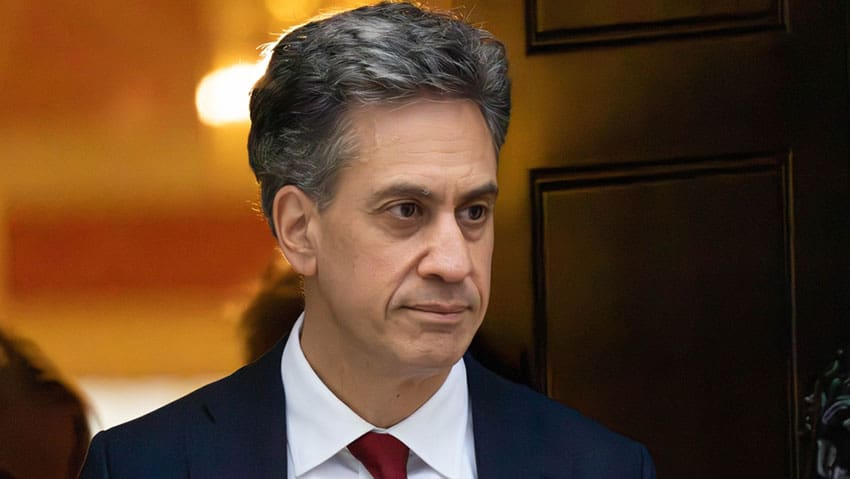
Britain’s largest trade union has thrown its weight behind Ed Miliband to become the next chancellor, a move that sharpens an increasingly bitter contest for control of the Treasury under a prospective Andy Burnham government.
Andrea Egan, general secretary of Unison, has backed the energy secretary as one of two frontrunners to replace Rachel Reeves in No 11. Her endorsement matters: Unison is the largest union in the country, with more than 1.3 million members concentrated in the public sector. Yet the support is far from unanimous across the movement, with two other big unions, GMB and Unite, lining up against him.
The jockeying between supporters of Miliband and his most likely rival, Wes Streeting, comes as Burnham prepares to deliver his first major policy speech since being elected as the MP for Makerfield. The former Greater Manchester mayor will set out his thinking on devolution and the economy in Manchester on Monday, but he is under mounting pressure to name his chancellor, a choice that investors, MPs, unions and business groups all regard as the single most consequential decision he will make in office. For business owners watching from the sidelines, the identity of the next occupant of No 11 will shape everything from the autumn Budget to the future ownership of Britain’s utilities. We have set out the runners and riders for the Treasury here.
Egan did not mince her words. “Andy Burnham has a historic opportunity to rebuild our country in the interests of workers and communities, but that chance will be squandered if his government is made up of politicians determined to continue the same failed approach,” she said.
“We need a chancellor who will rewire the economy and properly invest to improve the lives of the majority. Of those reported to be in the running, only Ed Miliband could enact the kinds of policies trade unions and our members urgently need.”
Burnham is assembling his inner circle of advisers and ministers, having entered the Commons only a week ago. Sir Keir Starmer’s announcement on Monday that he intends to resign as prime minister, swiftly followed by Streeting’s endorsement of Burnham, has made it overwhelmingly likely that the outgoing Manchester mayor will walk into No 10 as soon as next month.
Labour’s ruling national executive committee confirmed on Thursday that a new leader would be named on 17 July if only one candidate comes forward. Should a rival secure the backing of 81 Labour MPs and force a contest, the party will hold a full leadership election and declare the result on 29 August.
The new prime minister’s first appointment is already drawing fire. Burnham has chosen his former cabinet colleague and long-standing friend James Purnell as chief of staff, a decision that has irritated parts of the Labour left, who are wary of Purnell’s Blairite pedigree.
Attention has now turned squarely to who will run the Treasury, a brief that extends well beyond setting tax policy in this autumn’s Budget. The next chancellor will be charged with reigniting growth and overseeing the de-privatisation of some of Britain’s largest utilities, an agenda with direct consequences for investors and the wider business community.
The two leading contenders, Streeting and Miliband, hail from different wings of the party and would almost certainly pursue different priorities. Streeting, like Purnell, is a Blairite who, as health secretary, welcomed private sector involvement in the NHS. He is regarded as the more business-friendly option and the candidate most likely to reassure international investors, though some on the left worry he would be lukewarm on returning water and energy companies to public ownership.
Miliband, by contrast, is seen as more ideologically aligned with Burnham’s programme. But he has drawn anger from sections of both the unions and the business community over his approach to net zero. Some investors believe he would prove anti-business, pointing back to his time as Labour leader, when he drew a sharp line between companies he cast as “producers” and those he branded “predators”.
Unions with a strong presence in the North Sea oil industry have been exasperated by Miliband’s refusal to soften his pledge not to issue new exploration licences. They also fear he will decline to approve the Jackdaw and Rosebank megafields, even though waving them through would not technically breach that promise, since both already hold licences. The two projects, analysed in detail by the Institute for Government, have become a lightning rod in the wider argument over energy security and the pace of the transition.
One senior union official told the Financial Times on Thursday: “There are ongoing discussions to try to stop Ed Miliband. There is a GMB-Unite axis on this.”
Unison’s endorsement will strengthen Miliband’s standing within the labour movement, and he is not without other backers. Smaller unions, including the TSSA, are expected to issue similar messages of support in the coming days, while the National Education Union came out for him earlier on Thursday.
Even so, Miliband and Streeting are not the only names in the frame. Other possible candidates include Shabana Mahmood, the home secretary, Yvette Cooper, the foreign secretary, Pat McFadden, the work and pensions secretary, John Healey, the former defence secretary, and Jonathan Reynolds, the chief whip.
Allies of Reeves insist she would like to stay put, arguing she is best placed to keep markets calm while giving Burnham’s platform her full support. Her own appetite for the job has not gone unnoticed in the City, and her position has fed into a broader debate about fiscal devolution as Burnham eyes No 10.
Asked by the BBC on Wednesday about her chances of remaining in cabinet, Reeves said: “I’m not going to pre-empt the decisions that the new prime minister will make. I’m backing Andy and I think he’d be a great prime minister, but those are his decisions, not mine to make.”
She later told the British Chambers of Commerce annual conference: “I hope that whoever is chancellor in the future, whenever that future may be, sticks to what I’m doing. Because it is beginning to bear fruit, and we are seeing that investment return to the economy, that growth return to the economy, and crucially, that stability, so that businesses can plan and invest in the future.”
Allies of Burnham, however, are adamant that he will not keep her in place. For Britain’s businesses, the only certainty is that the answer is coming, and soon.

Paul Jones
Harvard alumni and former New York Times journalist. Editor of Business Matters for over 15 years, the UKs largest business magazine. I am also head of Capital Business Media’s automotive division working for clients such as Red Bull Racing, Honda, Aston Martin and Infiniti.

The RAC says it now costs £83.59 to fill up a 55-litre family car with petrol and £92.75 for diesel, However, this is still £10.50 and £14.40 respectively more than it did at the end of February before the conflict began.
The RAC’s head of policy, Simon Williams, said: “Fuel prices are falling steadily in reaction to the drop in the price of oil and wholesale petrol and diesel costs which is good news for drivers who’ve had a torrid time at the pumps this year.
“But our analysis of wholesale data shows the reduction should be faster and greater, particularly for diesel. Drivers really ought to see average prices of below 150p for unleaded and below 160p for diesel in the next week or so.”
Despite the conflict, petrol and diesel prices remained below the levels reached in the summer of 2022 following Russia’s invasion of Ukraine, when petrol reached 191.5p a litre and diesel hit 199p.
Because transporting oil is a slow process, price movements in the wholesale markets take about a fortnight to show at the pump.
Fuel retailers have denied accusations of price gouging during the conflict. The official markets regulator said it had “not seen evidence of retailers actively changing their pricing strategies to take advantage of the crisis”.
A government scheme called Fuel Finder, external lets drivers compare the cost of fuel offered by petrol stations across the UK.
Luke Bosdet, the head of policy at the AA, said the group had been surprised at the speed that prices had fallen and put it down to the scheme.
On 20 May Prime Minister Sir Keir Starmer said a planned 5p increase in fuel duty due in September would be postponed until 31 December because of the conflict.
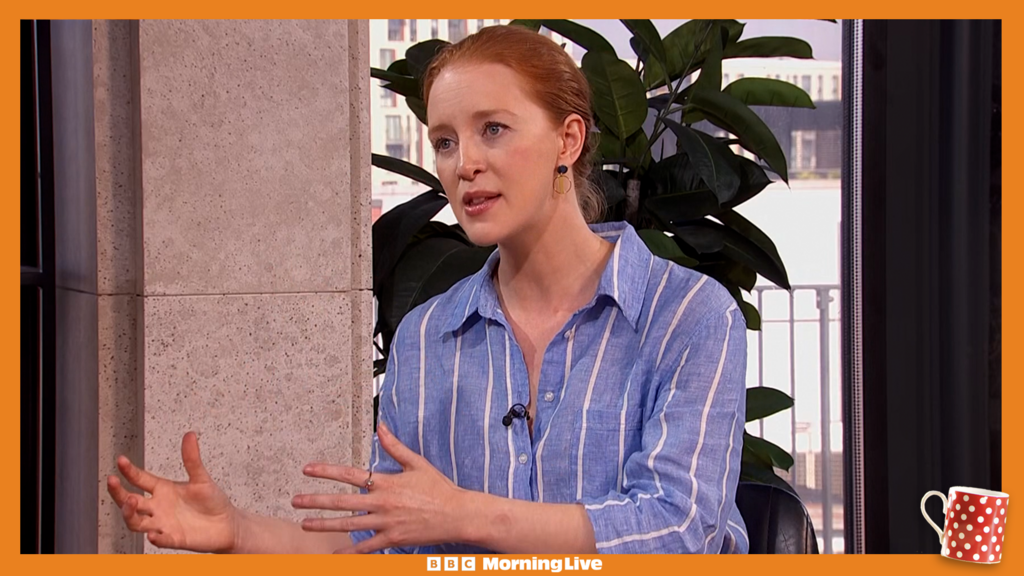
How do you escape an overdraft? Finance expert Ioan Bain explains
Business
Okta's Agentic AI Monetization Overly Buoyed – Painful Correction Likely (Rating Downgrade)

Okta's Agentic AI Monetization Overly Buoyed – Painful Correction Likely (Rating Downgrade)

Jazz Pharmaceuticals: Why It's Time To Cash Out (Rating Downgrade)

Katie Price sends desperate plea for her missing cat days after another pet death

10 Cybersecurity Companies Leading the Fight Against Modern Threats

Noah and Bron Partner to Add Stablecoin On- and Off-Ramps


-

 Fashion7 days ago
Weekend Open Thread: Miami – Corporette.com
-

 Entertainment6 days ago
Renter of Home in Anne Heche Crash Denies Settlement With Son
-
 Sports3 days ago
Two goals and an assist by sheer aura: Cristiano Ronaldo just entered the World Cup chat
-

 Tech4 days ago
Microsoft accidentally kills epic Outlook email threads
-

 Business6 days ago
Soccer-U.S. defends Iran World Cup travel restrictions, says discussions ongoing
-

 Politics8 hours ago
The House | Manchesterism won’t survive the painful trade-offs unless it gets citizens on board
-

 Politics13 hours ago
Potential 2028er World Cup attendee leaderboard
-

 Politics6 days ago
Andy Burnham and the meaning of Makerfield
-

 NewsBeat7 days ago
Keir Starmer Allies Question His Chances For No 10
-

 Tech19 hours ago
A Look At A Gaggle Of Transputer Boards
-
Crypto World2 days ago
Bitcoin (BTC) Dips Below $62K, Ethereum (ETH) Plunges 6% Daily: Market Watch
-

 Crypto World2 days ago
Securitize Wraps Roubini's SEC-Registered ETF as Dubai VARA Digital Security
-
 Crypto World21 hours ago
Dell (DELL) Shares Tumble Over 5% Following Analyst Downgrade to Hold
-
Business3 days ago
Entergy settles forward sale agreements, raises $672 million in cash proceeds
-
 Business6 days ago
Wall Street Week Ahead: Investors see Micron earnings as pulse check of AI rally momentum
-
 Crypto World6 days ago
Can Charles Hoskinson Really Rescue Cardano?
-

 Entertainment6 days ago
Jose Alvarado Wants Taylor Swift at More Knicks Games
-

 Crypto World7 days ago
HIVE shares jump as $220M AI deal speeds Bitcoin mining pivot
-

 Crypto World6 days ago
Jake Chervinsky accuses CME of protecting derivatives monopoly
-

 Sports1 day ago
India vs Bangladesh LIVE Score, Women’s T20 World Cup: Bangladesh Opt To Bat; India Enter ‘Do-Or-Die’ Stage As Semi-Final Race Heats Up
You must be logged in to post a comment Login