
Business
Jazz Pharmaceuticals: Why It's Time To Cash Out (Rating Downgrade)




CLSE: Buy Rating Maintained As Masterful Maneuvers Reinforce Thesis


As an individual investor nearing retirement I am trying to build my financial assets in order to have a fulfilling retirement. I am interested in trading both long and short; or at least using inverse ETFs, to take advantage of market declines. Having long term and short term trading strategies, proper execution of my trading plan, and absolute investing results are my goals. I see my articles as a way to keep me focused on developing winning trades. I also expect to learn much from the feedback that is provided in the comments section.
Analyst’s Disclosure: I/we have a beneficial long position in the shares of MCD, COF.PR.N either through stock ownership, options, or other derivatives. I wrote this article myself, and it expresses my own opinions. I am not receiving compensation for it (other than from Seeking Alpha). I have no business relationship with any company whose stock is mentioned in this article.
I own COF, COF.PR.N and MCD
Seeking Alpha’s Disclosure: Past performance is no guarantee of future results. No recommendation or advice is being given as to whether any investment is suitable for a particular investor. Any views or opinions expressed above may not reflect those of Seeking Alpha as a whole. Seeking Alpha is not a licensed securities dealer, broker or US investment adviser or investment bank. Our analysts are third party authors that include both professional investors and individual investors who may not be licensed or certified by any institute or regulatory body.

Ransom notes tied to Nancy Guthrie kidnapping released six months into unsolved case
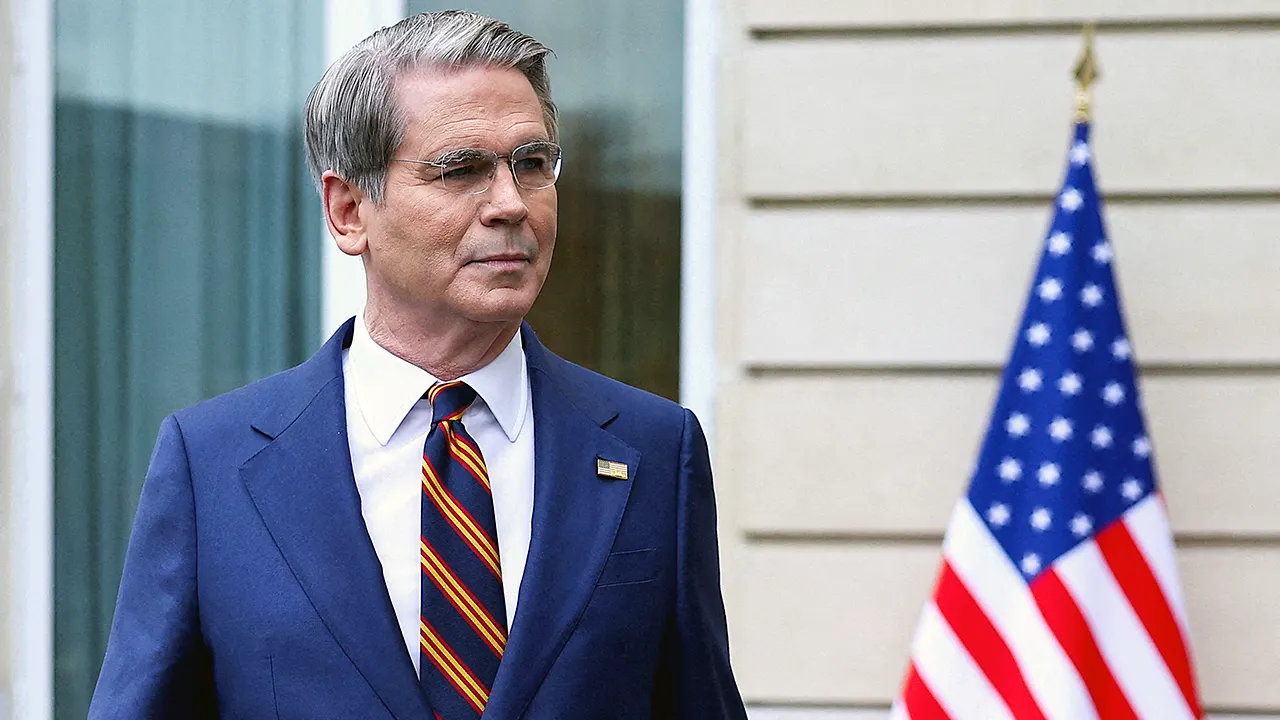
Treasury Secretary Scott Bessent spoke Thursday about the U.S. competition with China, and the latest GDP read.
Treasury Secretary Scott Bessent said in an interview on Thursday that he expects economic growth to pick up later this year with core inflation trending lower, while he warned that there have been growing tensions with China over artificial intelligence and rare earths.
Bessent spoke with FOX Business’ Edward Lawrence following Thursday’s release of the initial estimate of second quarter GDP growth, which showed GDP slowed to 1.5% annualized growth from 2.1% in the first quarter.
The Treasury secretary said that the GDP “number is very noisy because a lot of that was very technical,” explaining that releases from the Strategic Petroleum Reserve to ease energy prices came out of GDP and that “core GDP was actually quite strong.”
“We’re seeing manufacturing is doing well, the jobs numbers are strong, the consumer is strong. So it was a technical adjustment in the number, I wouldn’t worry about it,” Bessent said, adding that he thinks GDP is “going to be substantially above 2% for the year.”
US ECONOMIC GROWTH SLOWS UNEXPECTEDLY IN SECOND QUARTER
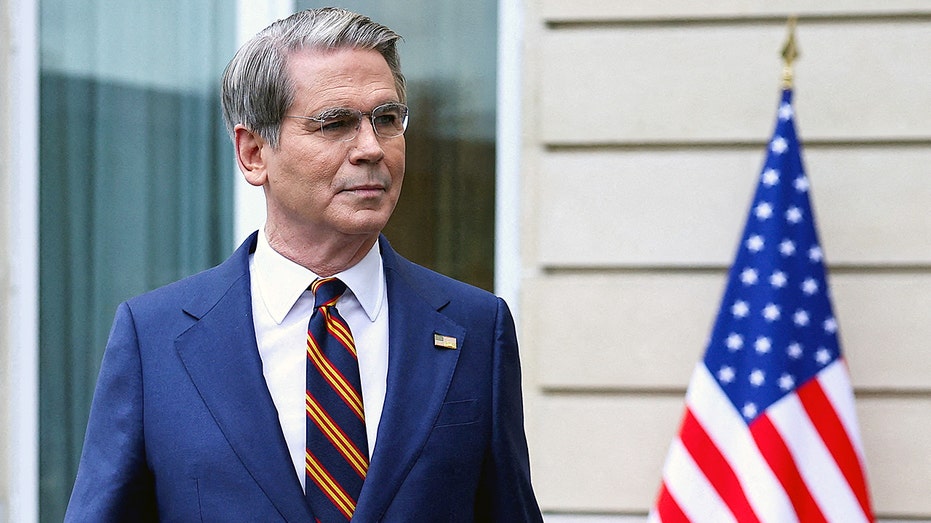
Treasury Secretary Scott Bessent (REUTERS/Abdul Saboor/File Photo)
Thursday also saw the release of the June personal consumption expenditures (PCE) index which showed the Federal Reserve’s preferred inflation gauge slowed to an annual rate of 3.7% last month, down from 4.1% in May.
Core PCE, which excludes volatile food and energy prices, also declined to 3.3% from 3.4% the prior month. Both measures remain well above the Fed’s 2% target.
Bessent said that he sees the trend in core inflation as important, saying the report showed it and service inflation declining.
“Energy can be volatile,” Bessent added, saying that “we’ll get to the other side of the Iran war, and you know it will come down.”
FED’S FAVORED INFLATION GAUGE SHOWED PRICES PULLED BACK IN JUNE
The Treasury secretary was also asked about recent economic friction between the U.S. and China over issues like AI development and supplies of rare earth minerals that are used in advanced tech and military hardware.
“The good thing is the overall relationship comes down from the top, and President Trump, Xi Jinping have a very good relationship. But, you know, that’s not an excuse for them to do things underneath the surface,” Bessent said.
“Sometimes I describe it as a water polo match where our leaders could be hitting the ball back and forth, but under the water, the Chinese seem to have done a lot of kicking lately. And you know, if we have to, we’ll kick back,” the Treasury secretary explained.
“We expressed our concern that the rare earths are not flowing as freely as they could, that they have taken some measures that are detrimental to U.S. businesses. And we said that if this continues, we will push back,” he added.
FED POLICYMAKERS LEAVE RATES UNCHANGED AMID ELEVATED UNCERTAINTY
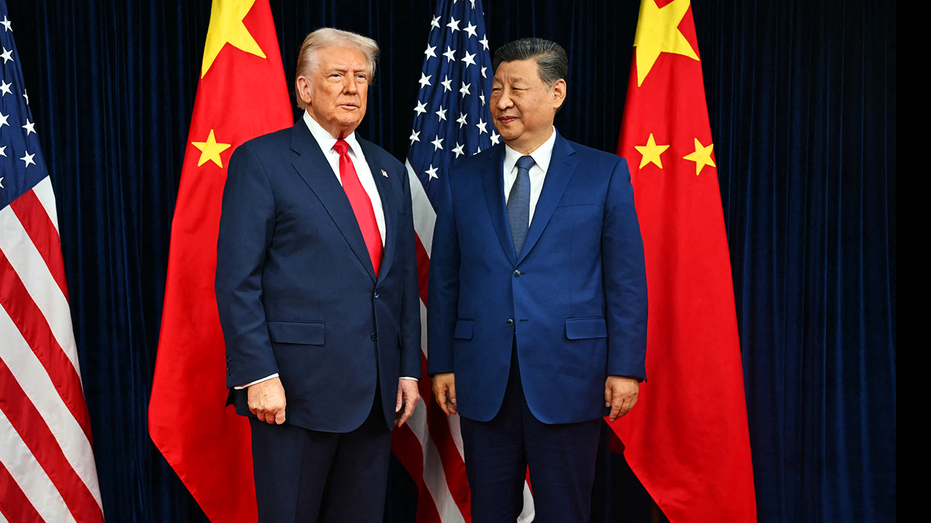
President Donald Trump invited Chinese President Xi Jinping to Washington in late September after their meeting this spring. (ANDREW CABALLERO-REYNOLDS/AFP / Getty Images)
Bessent said that “we expressed our concern over Chinese AI that there is large-scale distillation” of American AI models that are making their way back into the U.S., adding that “we like open source, but open source has got to be legal – it’s not an excuse for IP theft.”
Lawrence asked Bessent if the Trump administration has raised the issue of U.S. tech companies’ AI model watermarks appearing in Chinese models.
“Well, we’ve done that at the staff level, and the good news is we are ahead of the Chinese in AI, I believe by a substantial amount, and they are number two,” Bessent said.
GET FOX BUSINESS ON THE GO BY CLICKING HERE
He added that the two superpowers do need to have conversations “because we want to make sure that non-state actors do not get a hold of a powerful model, that everyone increases their resiliency and that we cooperate towards those goals.”
Business
(VIDEO) Michael B. Jordan Reimagines “The Thomas Crown Affair” in First Trailer Ahead of 2027 Theatrical Debut
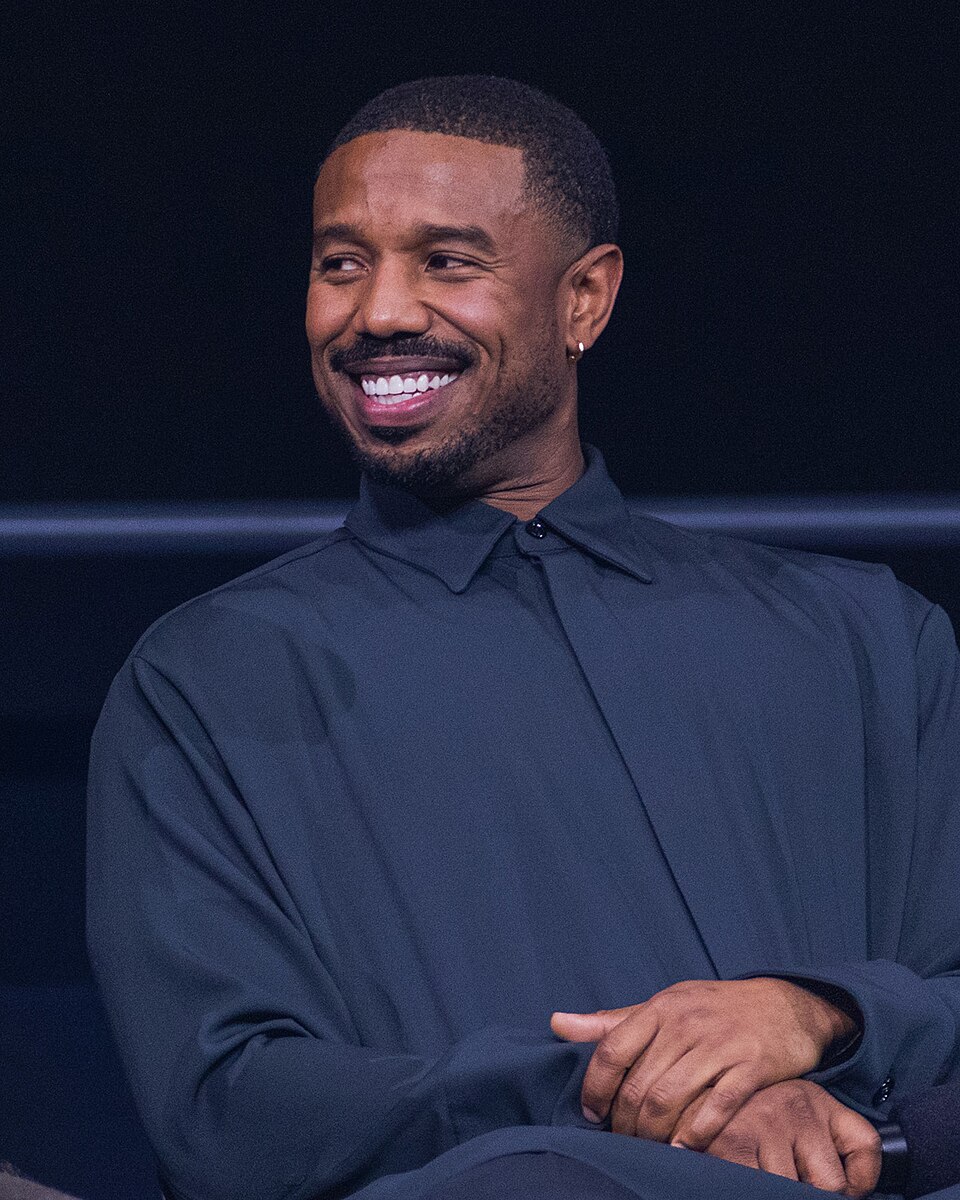
Amazon MGM Studios has released the first trailer for its upcoming remake of “The Thomas Crown Affair,” offering the earliest public look at director and star Michael B. Jordan’s take on the classic art-heist story ahead of the film’s March 5, 2027, theatrical release. Because the movie remains more than seven months from its debut and has not yet been screened for critics, a full review is not yet possible; this preview instead covers what has been revealed so far through the trailer and interviews with the director.
The project marks the third screen version of the story centered on a wealthy art thief named Thomas Crown, following the 1968 original starring Steve McQueen and Faye Dunaway and a 1999 remake led by Pierce Brosnan and Rene Russo. Jordan both directs and stars in the new version, playing the title character opposite Adria Arjona, who portrays a former FBI agent tracking Crown across a series of elaborate heists. Kenneth Branagh appears as a separate antagonist whose presence threatens to unravel Crown’s plans over the course of the film. The supporting cast also includes Lily Gladstone, Danai Gurira, Pilou Asbæk, Ruth Negga and Aubrey Plaza.
Drew Pearce wrote the screenplay, working from an earlier draft by Wes Tooke and Justin Britt-Gibson, adapting original material by Alan Trustman that formed the basis of the 1968 film. Bradford Young serves as cinematographer, while Jon Batiste, an Oscar, Emmy and Grammy winner, composed the score. The original 1968 film was nominated for the Academy Award for best original score and won the Oscar for best original song for “The Windmills of Your Mind,” a legacy that has fueled some anticipation around Batiste’s contribution to the new version.
Jordan has been explicit in interviews that he views the project as a substantial reworking of the story’s core premise rather than a straightforward remake. “I didn’t want a reboot. I wanted a reimagination,” Jordan told Variety in November. “The first two films were about rich white guys stealing for fun. That doesn’t land today. Ours is more personal.” According to reporting on the film’s plot, Jordan’s version reframes Crown’s motivation for his heists: rather than stealing purely for the thrill of the act, as in the earlier films, this Crown is driven by a desire to return stolen or improperly sold artifacts to the communities and creators from which they originated.
Jordan first previewed footage from the film for audiences at CinemaCon in April, roughly one month after winning the Academy Award for best actor for his role in “Sinners.” He received an enthusiastic reception from the crowd during that presentation. Speaking about the long road to bringing the project to the screen, Jordan described it as a longtime personal ambition. “I’ve been dreaming about making this movie for years,” Jordan said, recalling that he first saw the Brosnan-Russo version of the film as a 12-year-old.
In a separate interview with Deadline, Jordan reiterated his intention to distinguish the new film clearly from its predecessors rather than simply retreading familiar territory. “That’s a baby of mine that I’ve been wanting to make for a really long time, so I’m excited about it,” Jordan said. “I think it’s not going to be what exactly people are expecting as well. When you’re re-imagining something, it’s not a remake. It’s not a reboot.”
Reaction to the newly released trailer has been mixed among early viewers and entertainment writers who have weighed in publicly. Some commentary has expressed skepticism about the tonal shift suggested by the trailer’s footage, with one reader comment responding to Deadline’s coverage arguing that the new version appeared to have moved toward a more conventional action-adventure framing at the expense of the romantic, cat-and-mouse tension that defined the earlier films. Other outlets covering the trailer’s release focused more on specific plot elements carried over from prior versions, including speculation about whether Jordan’s take would preserve or omit a psychologist subplot from the 1999 film that some viewers had previously found unnecessary to the central story.
The film is being positioned as a significant theatrical release for Amazon MGM Studios, arriving as part of a broader slate that includes an adaptation of Colleen Hoover’s novel “Verity,” scheduled for an October 2026 release. Studio executives have reportedly drawn comparisons between “The Thomas Crown Affair” and the studio’s earlier science-fiction hit “Project Hail Mary” in terms of its anticipated box-office potential, according to entertainment industry reporting on the project.
With filming completed and the marketing campaign now underway following the trailer’s release, additional details about the film, including further casting information, festival screenings or press events, are expected to emerge in the months leading up to its March 2027 theatrical debut. A full critical assessment of the film itself will not be possible until reviewers have had the opportunity to see the finished movie, which is expected to occur closer to its release date next spring.

Peruvian ex-president Humala released from prison after court overturns conviction
Business
Our commitment for press freedom, and autonomy of public broadcast is absolute: Prakash Javadekar
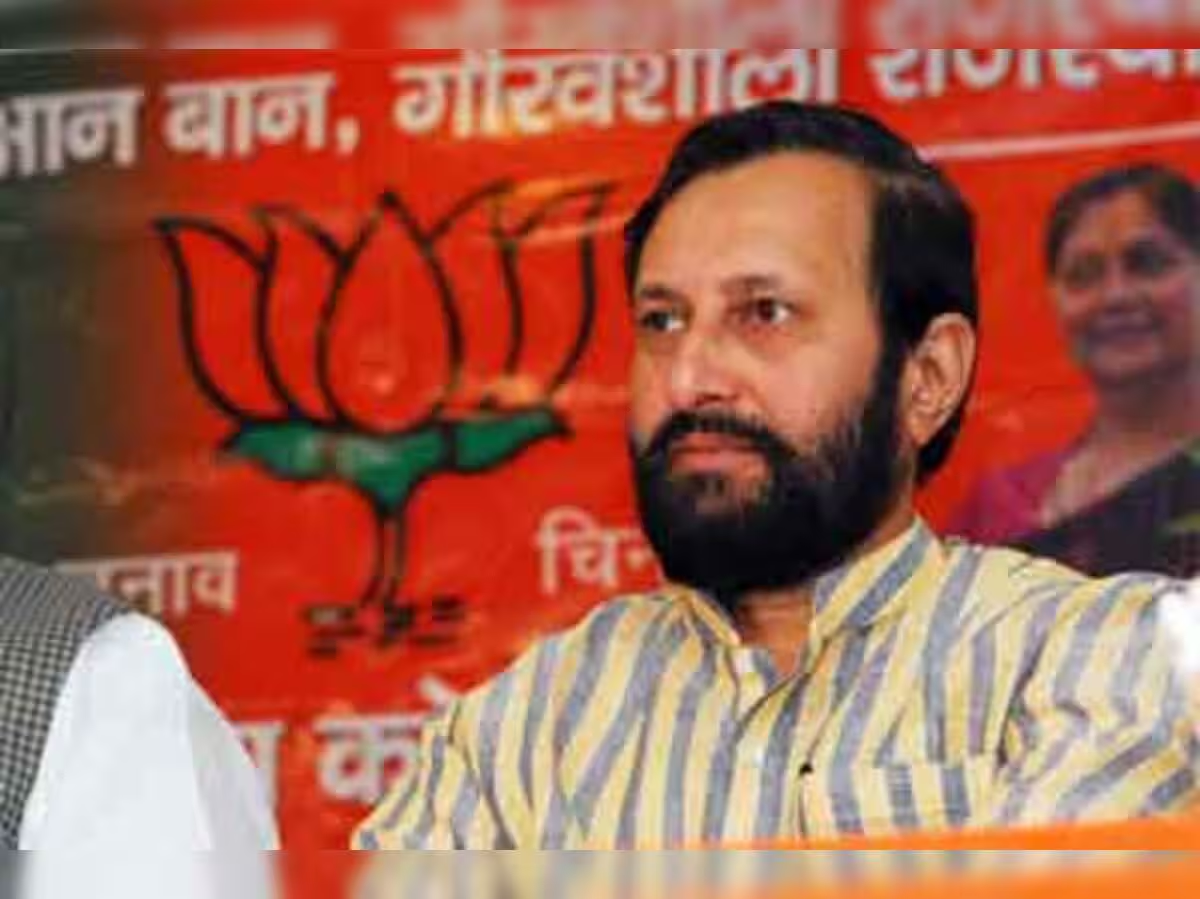
He spoke to ET on the Bharatiya Janata Party government’s approach towards media, social media, media controls and much more. Edited excerpts…
In terms of communication and messaging, the BJP’s electoral campaign has been termed an object lesson in the field. How can you translate that into the governmental structure?
All communication needs of the government will be handled in our ministry through a social media hub. I am offering this service to all ministers. Their facebook, twitter and other social media outreach will be handled by the new media wing, and the social media and communication hub.
The advantage that the party saw in reaching out through all communication media has been tremendous, and it was felt that the government too use the available platforms. Therefore, this new hub will provide all the help needed by various ministers and ministries for setting up and operating their facebook pages, twitter handles and the outreach throughsocial media. Traditional media is important, of course, but social media vehicles have to be spruced up.
What are your priority areas as far as this (I&B) ministry is concerned?
We have to ensure transparency, make our vehicles more effective. We want to be accessible and accountable too. Now there is a stage three and stage four of digitisation, we will take a call on this only after taking all things into account. The issue is that digitisation increases the revenue of paid channels, but customers want fewer advertisements.
Now 11 crore new settop boxes are required, which provides a great case for indigenisation, rather than just import them. I will take it up with the finance and commerce ministers on how this could be done.
During the elections, an interview of Prime Minister Narendra Modi set off questions on the autonomy of the public broadcaster. As I&B minister, how will you deal with it?
Right off the bat, I would like to say that our commitment for press freedom, and the autonomy of public broadcast is absolute. But freedom or autonomy has its own responsibilities.
Media has the responsibility of being neutral and objective. There’s always a concern that when the government is spending so much, it must reach the public. The public broadcaster is a tool for public awareness. Having said all of this, let me categorically state that we have no plans to enforce controls on the media.
Modi has been described as a “post TV” Prime Minister, in that he reaches out to his audience or voter directly. How would you recast the role of the traditional media?
This is a lesson for everyone on how to put your point across, in the way the Prime Minister does. Minister for law and communications Ravi Shankar Prasad and I have been deputed as spokespersons for the government and we will shortly come up with a communications plan to suit everyone’s needs. This government is different from the way it approaches issues and problems.
For instance, Modiji’s design for the Cabinet. Yesterday, there were some issues related to environment and power. Piyush Goel holds the power, coal and renewable energy portfolio, I hold the environment portfolio, and between the two of us and 10 officials we sorted things which the previous government had tied up in knots in a Group of Ministers (GoM) set up. The emphasis is on synergy. For the media too, there will be things to learn from the new government and its functioning.

US Treasury undertakes intervention in yen market, FT reports
Business
Dow Slips as Apple Sinks 8% Despite a Record Quarter While Amazon Soars 12% on AWS Strength This Friday

The Dow Jones Industrial Average slipped 0.18% Friday morning, falling 95.67 points to 52,112.39, as investors sorted through a dramatic split in reaction to earnings from Apple and Amazon, two of the market’s most closely watched technology giants, released after Thursday’s closing bell.
Apple shares fell roughly 8% to around $307.89 despite the company reporting a record fiscal third-quarter 2026 performance, according to financial analysis from 24/7 Wall St. The decline came after Apple’s results fell short of investor expectations specifically in its Services division and its China business, an area facing intensifying competitive pressure from domestic manufacturers. The stock had been trading just below record highs heading into the earnings release, having recently cleared the $5 trillion valuation threshold and briefly reclaimed the title of world’s most valuable publicly traded company. Rick Rodda, an analyst quoted by TheStreet, characterized the market’s reaction bluntly. “The results appear not quite good enough to justify such lofty valuations,” Rodda said.
Amazon told a starkly different story. Shares of the e-commerce and cloud computing giant jumped as much as 12% to roughly $263.07, according to 24/7 Wall St., after the company delivered a blowout quarter powered substantially by strength in Amazon Web Services, its cloud computing division. The strong results helped fuel a broader rebound across technology stocks Friday morning, according to TheStreet, easing some of the concerns that had built up in recent weeks about the sustainability of massive capital spending on artificial intelligence infrastructure.
The divergence between the two companies reflected a common underlying dynamic playing out in opposite directions, according to 24/7 Wall St.’s analysis. Both Apple and Amazon face the same tight global supply of memory chips and advanced semiconductors driven by surging AI-related demand, but Amazon has been able to convert that dynamic into stronger cloud revenue growth, while Apple has faced more direct cost and margin pressure on the hardware side of its business as component prices have climbed.
Friday’s mixed earnings reaction followed an extraordinary session in Asian markets overnight. South Korea’s KOSPI index jumped nearly 18% overnight, triggering trading halts, as chip stocks across the region rebounded sharply following Thursday’s blowout earnings report from Microsoft, according to Yahoo Finance. That Microsoft rally, in which shares surged roughly 15% for the company’s best single-day performance in nearly 18 years, had already begun reshaping sentiment toward the broader technology sector before Apple’s and Amazon’s results added further volatility to Friday’s session.
The S&P 500 gained 0.67% and the Nasdaq Composite advanced 1.32% in early Friday trading, according to TheStreet, while the Russell 2000, tracking smaller-capitalization companies, climbed 1.37%. The overall market gains came even as the Dow’s more modest performance reflected its comparatively lighter weighting toward the technology names driving much of Friday’s volatility.
Friday’s trading capped one of the busiest stretches of corporate earnings season, with Amazon, Apple and Coinbase all reporting results after Thursday’s closing bell alongside Microsoft and Meta Platforms’ results from earlier in the week. Thursday’s session itself had already produced a substantial rally, with the Dow surging 613.92 points, or 1.2%, to close at 52,208.06, while the S&P 500 climbed 1.7% to 7,437.64 and the Nasdaq Composite jumped 2.8% to 25,122.18, according to CNBC.
Analysts at JPMorgan noted Wednesday that hedge funds and other large investors had likely finished unwinding their positions in technology, chip and memory stocks as part of a broader effort to reduce leverage, a dynamic the bank suggested was a favorable signal for continued stabilization in the semiconductor trade heading into the new trading week.
The Invesco QQQ Trust, an exchange-traded fund tracking the Nasdaq 100 that holds both Apple and Amazon among its largest individual weightings, found itself caught between the two companies’ offsetting moves Friday, according to 24/7 Wall St., muting what would otherwise have been a cleaner overall gain for the technology-focused fund. The QQQ had closed Thursday at $683.55, up 3.3% ahead of the two companies’ earnings reports, and remained up 11% for the year heading into Friday’s session.
Falling oil prices provided additional support to broader market sentiment heading into the week’s final trading session, following easing tensions after Iran discussed the future of the Strait of Hormuz with Saudi Arabia and Oman earlier in the week, according to CNBC.
With Apple and Amazon’s contrasting results now fully digested by markets and a busy earnings season largely behind investors heading into August, market participants are likely to continue watching closely whether the artificial intelligence infrastructure spending trend that has driven much of this year’s technology-sector volatility can settle into a more stable pattern in the weeks ahead, particularly given the sharp divergence in how individual companies’ earnings have been received even within the same broader AI-driven investment cycle.

Operator
Good morning, and welcome to Brunswick Corporation’s Second Quarter 2026 Earnings Conference Call [Operator Instructions]. Today’s meeting will be recorded. If you have any objections, you may disconnect at this time.
I would now like to introduce Stephen Weiland, Senior Vice President and Deputy CFO of Brunswick Corporation.
Stephen Weiland
Deputy CFO & Senior VP
Good morning, and thank you for joining us.
With me on the call this morning are David Foulkes, Brunswick’s Chairman and CEO; and Ryan Gwillim, Brunswick’s CFO.
Before we begin with our prepared remarks, I would like to remind everyone that during this call, our comments will include certain forward-looking statements about future results. Please keep in mind that our actual results could differ materially from these expectations.
For details on the factors to consider, please refer to our recent SEC filings and today’s press release. All of these documents are available on our website at brunswick.com.
During our presentation, we will be referring to certain non-GAAP financial information. Reconciliations of GAAP to non-GAAP financial measures are provided in the appendix to this presentation and the reconciliation sections of the unaudited consolidated financial statements accompanying today’s results. I will now turn the call over
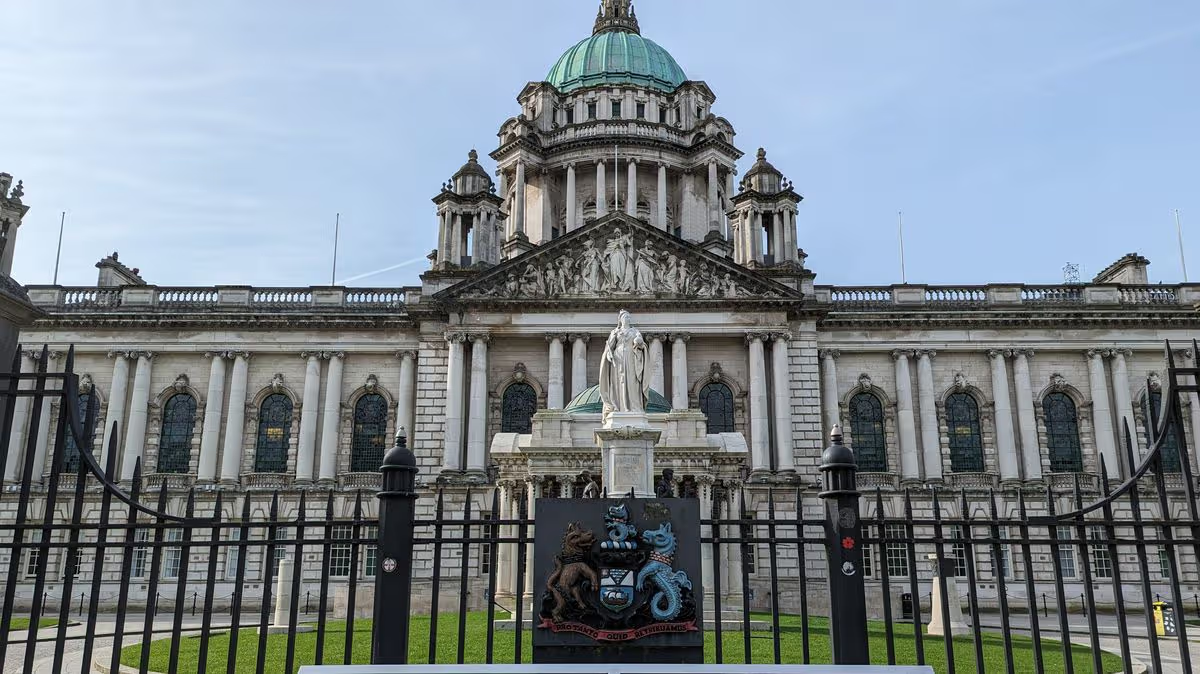
Five key moments from Belfast Council in July

CLSE: Buy Rating Maintained As Masterful Maneuvers Reinforce Thesis

NEAR lets users pay for AI services by staking tokens

Renter of Home in Anne Heche Crash Denies Settlement With Son

No Jackpot Winner as $257 Million Prize Rolls Over to $269 Million Monday Draw

Weekend Open Thread: Staud – Corporette.com

Why You Are Still Broke: 7 Financial Mistakes Blocking Your Success#broke#truth#working@creativeugo

While America Argues, Japan Just Moved On XRP. Here’s What It’s COSTING Us

Buddy, do you think this makes you look cool? calebhammercomposer #money #finance #financialaudit
-
 Sports5 days ago
Commonwealth Games boxing: Jadumani Singh seals dominant 5-0 win over Pakistan’s Sumama Rehman to enter quarter-finals | Commonwealth Games News
-

 Business2 days ago
Why Trees Belong on the Risk Register
-

 Tech5 days ago
Intel is reversing course and bringing hyper-threading back to its server chips
-

 Fashion8 hours ago
Weekend Open Thread: Wit & Wisdom
-

 Politics5 hours ago
Meta enters AI-training agreement with far-right ‘propaganda rag’ Newsmax
-

 Crypto World6 days ago
Ripple bought a bank in pieces. The $4 billion audit
-

 Politics5 days ago
Luke Littler dismantles Gerwyn Price to retain title in Blackpool
-

 Politics4 days ago
The Part of the Electric Transition Nobody Wants to Discuss
-

 News Videos5 days ago
BITCOIN JUST ENTERED THIS CRITICAL ZONE…
-

 Crypto World6 days ago
XRP Ledger adds $2.6B as RWA inflows rank second
-
 Entertainment3 days ago
‘Stargate’ Creator’s New Sci-Fi Series Returns for Season 3 Tomorrow
-

 Business3 days ago
Major shareholder moves on Canyon
-

 Politics6 days ago
Spain sweeps the board at 2026 World Cup with individual awards
-

 News Videos2 days ago
Bitcoin Enters the 3rd Stage of the Bear Market
-

 Entertainment6 days ago
Sara Gilson Killed By Husband After Viral “Pedophile” TikTok Video
-

 Crypto World3 days ago
Kraken Enables Retail Access to Jersey Mike’s IPO via Tokenized Shares
-

 Tech7 days ago
Anthropic launches Claude Opus 5, a cheaper AI model for coding, agents and enterprise workflows
-

 Tech4 days ago
New macOS Sequoia & Sonoma security updates for older Macs
-

 News Videos3 days ago
Claude: Build Financial Dashboards in Minutes (2026)
-

 Politics1 day ago
Luke Littler’s dominance sparks GOAT debate
You must be logged in to post a comment Login